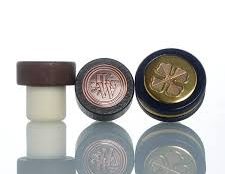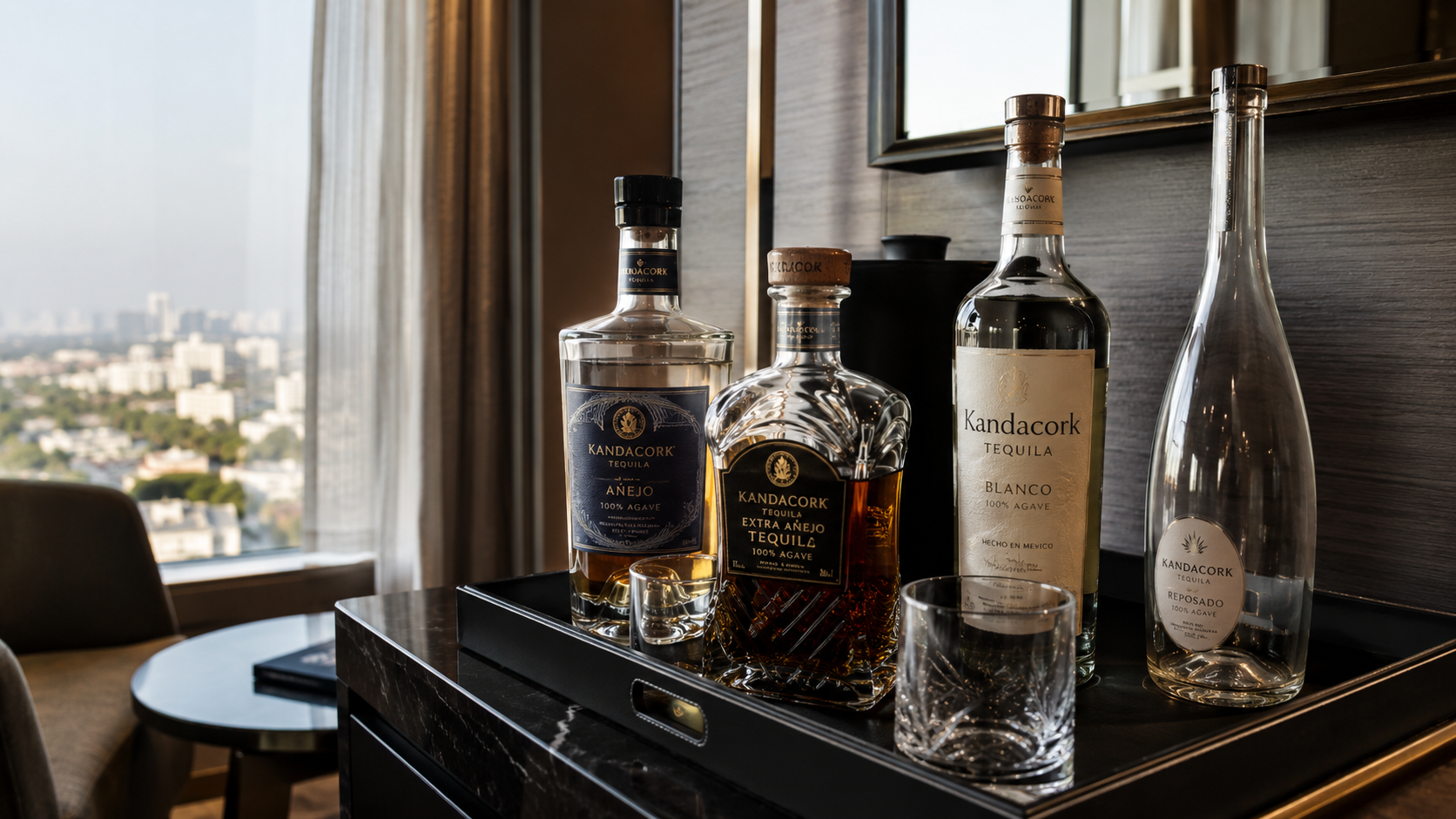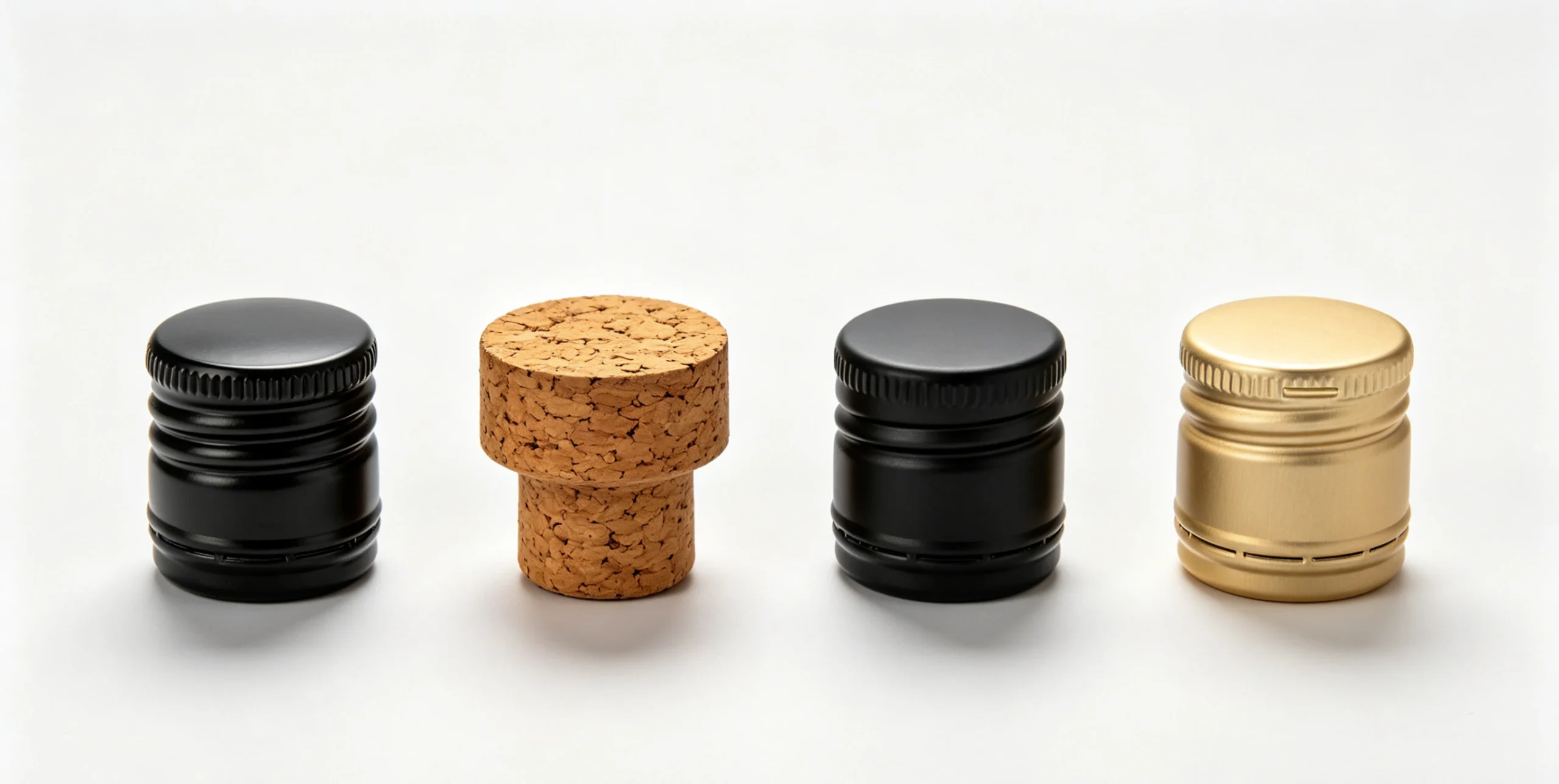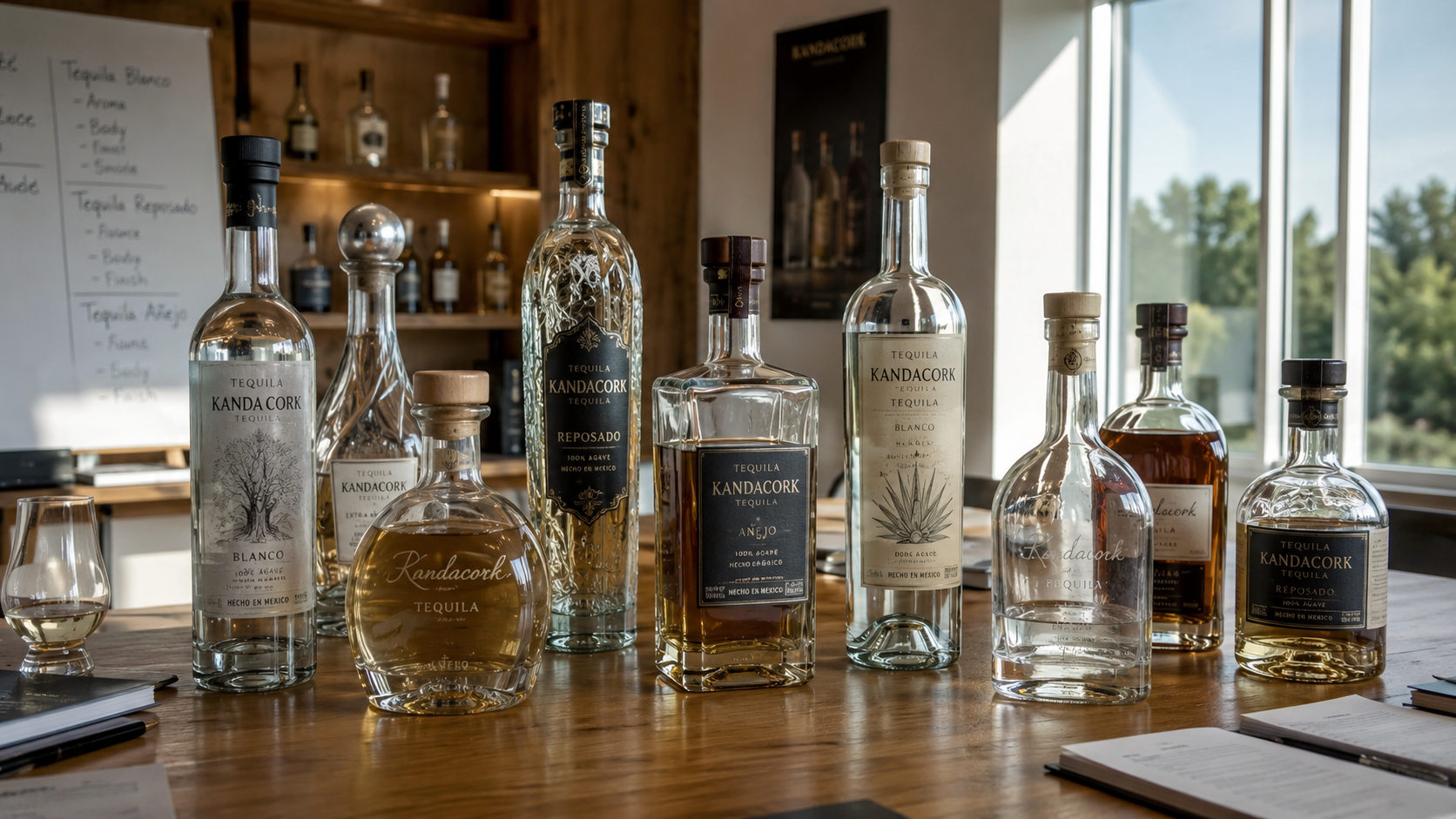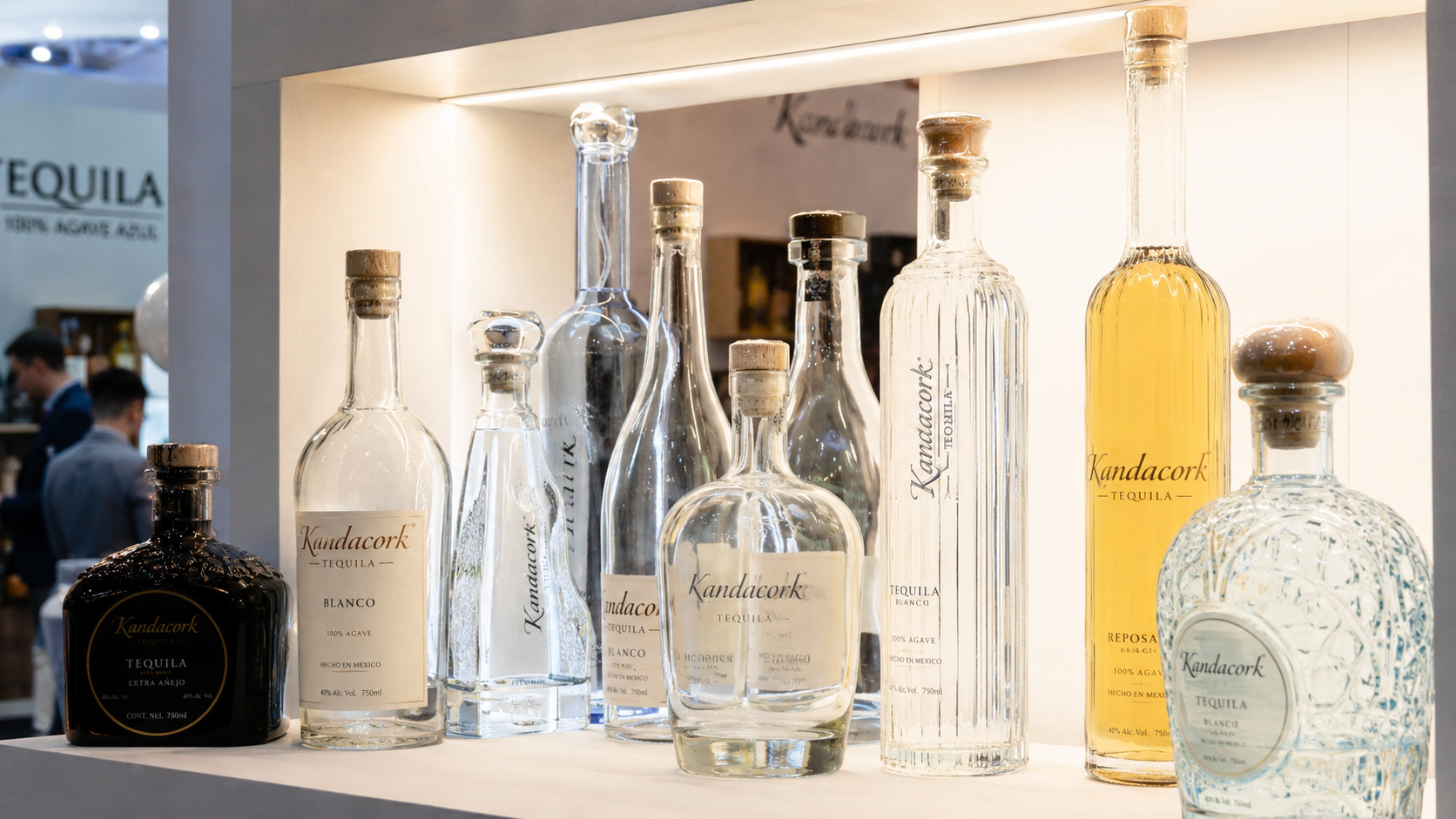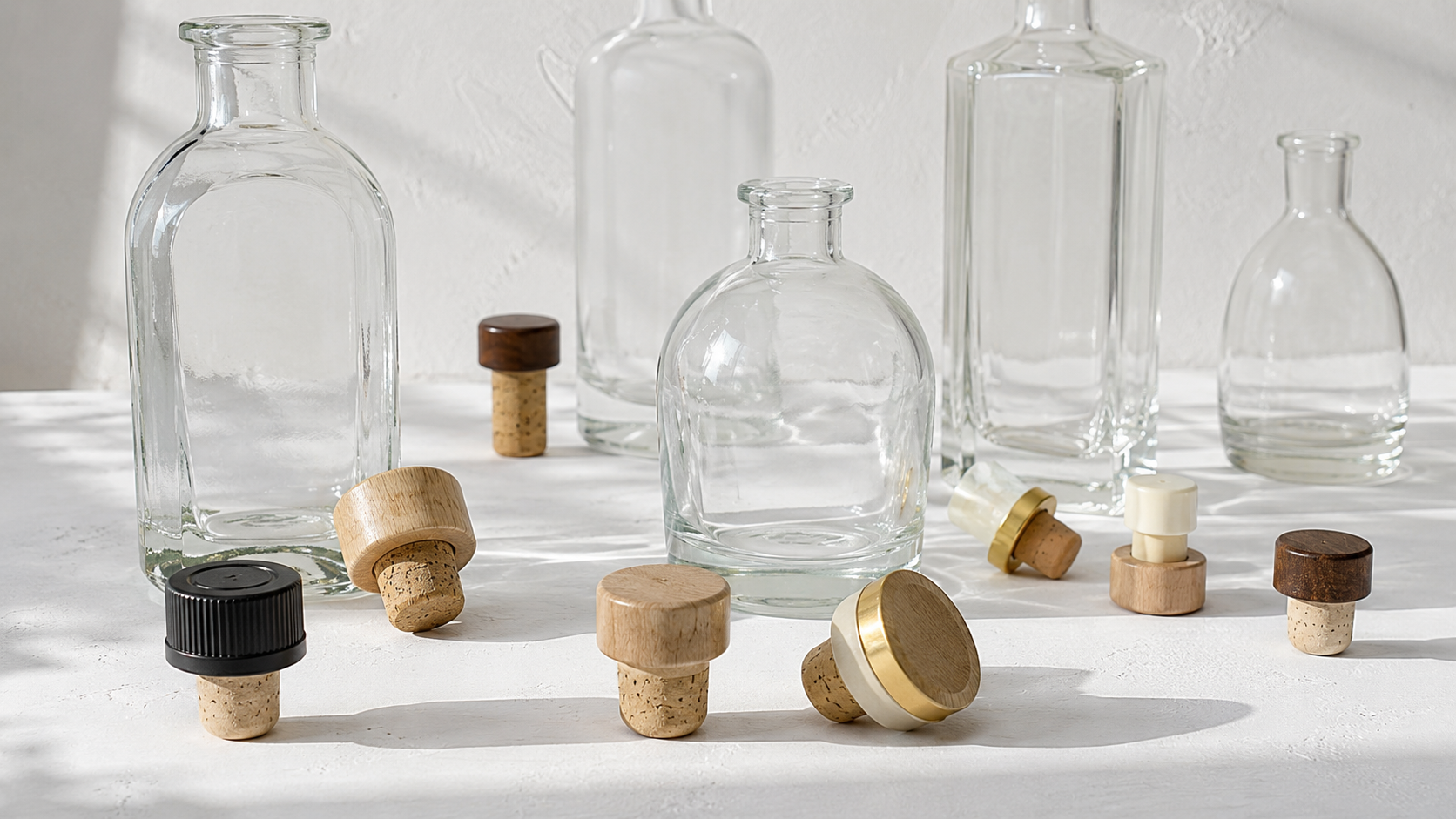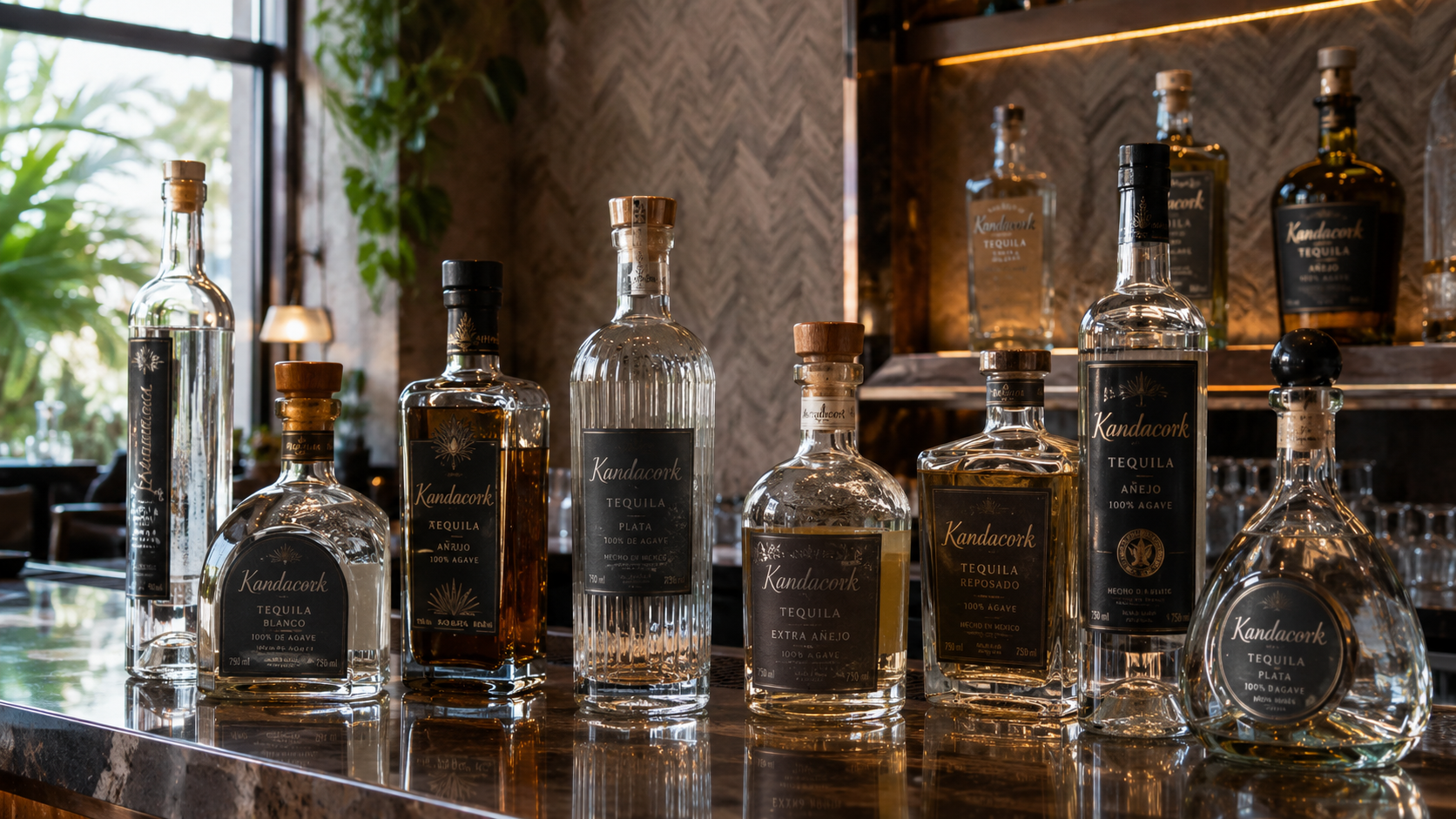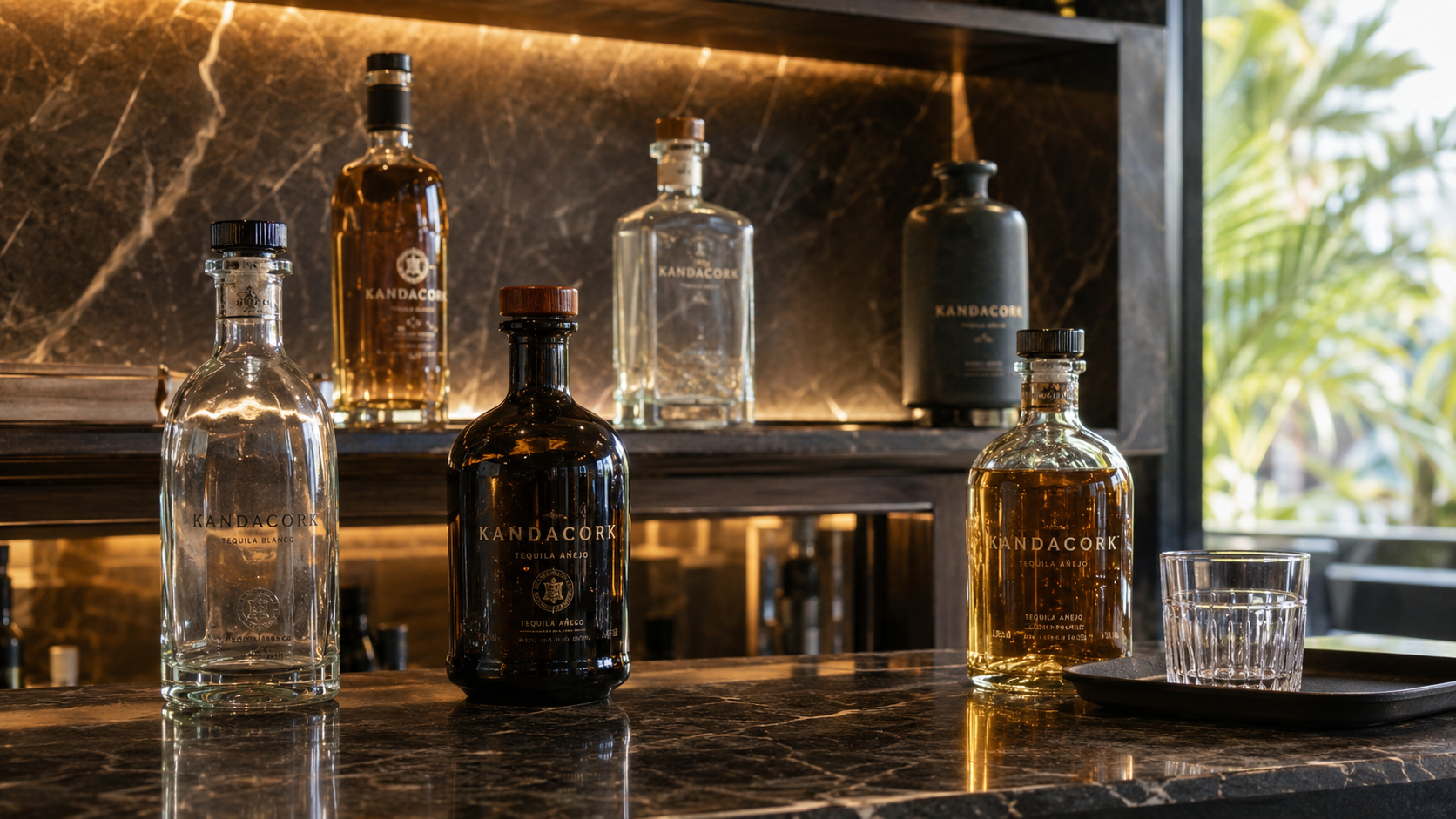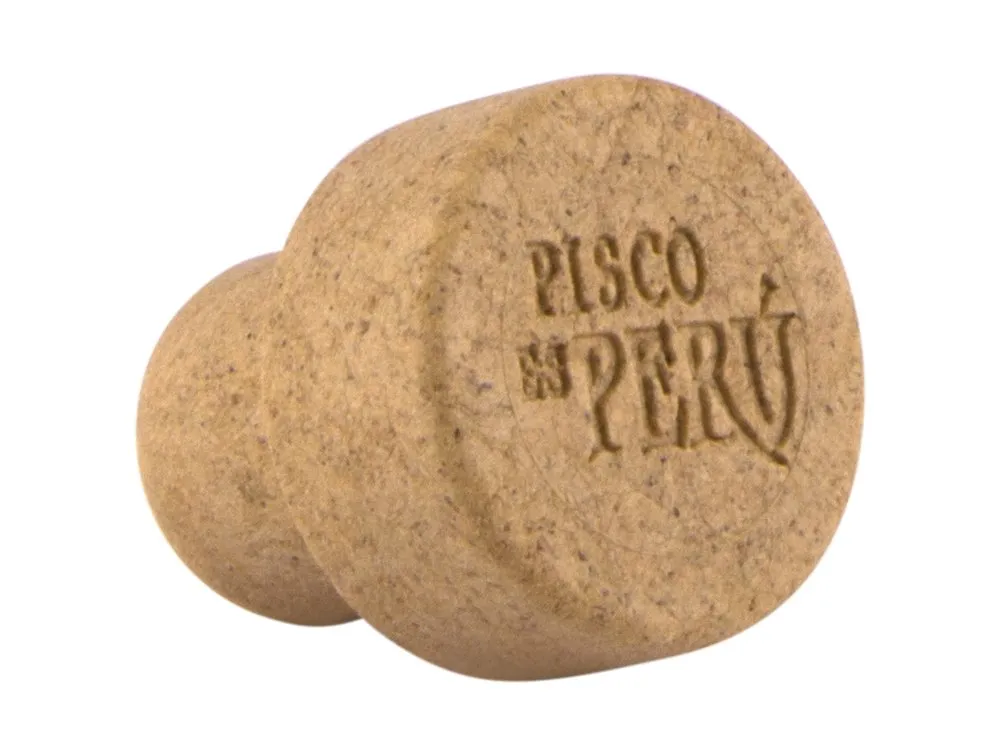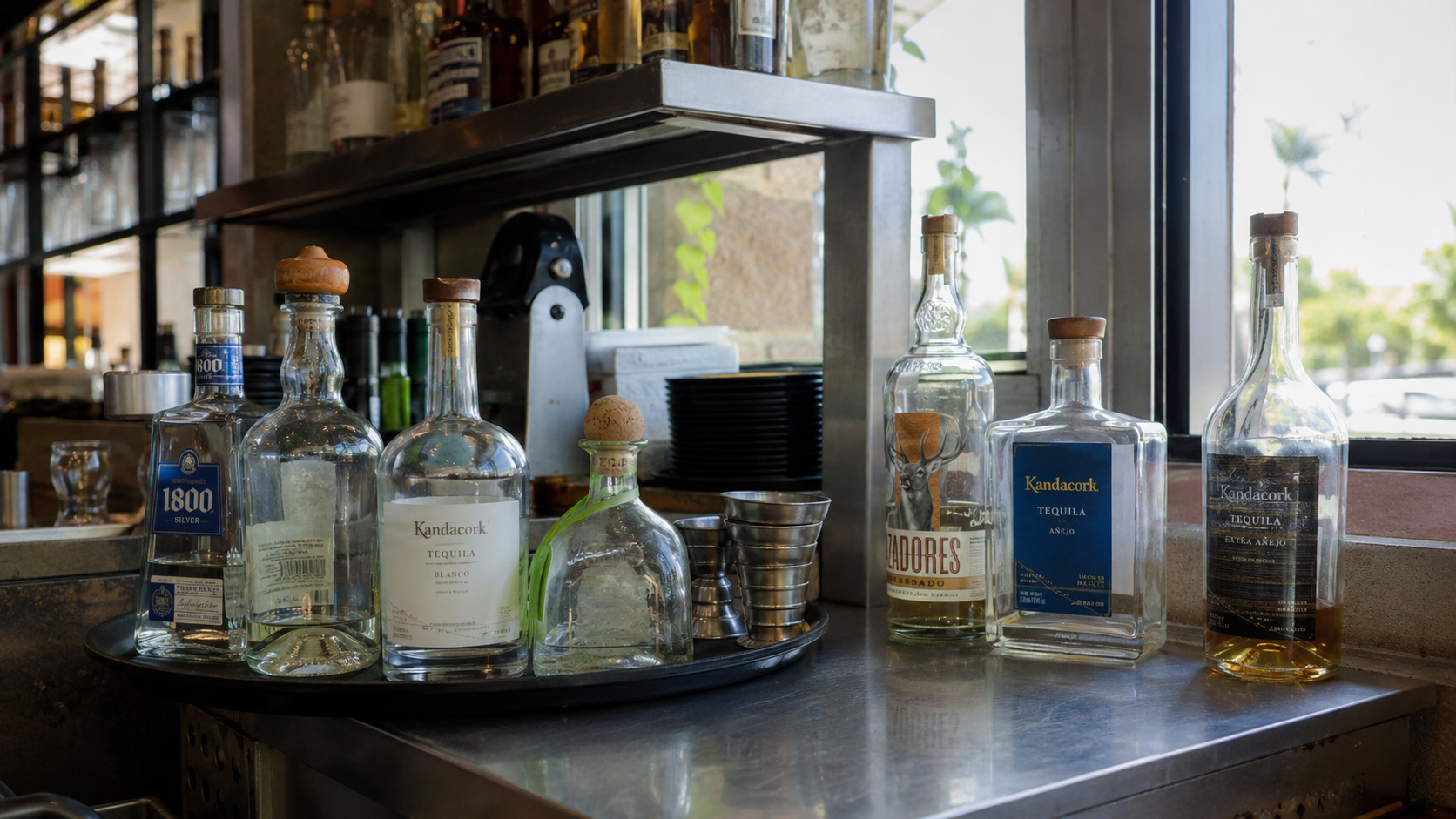
Anodized aluminium stoppers can create a refined surface finish and strong brand detail for spirits packaging. This guide explains finish options, logo methods, color consistency, handling protection and inspection points for bulk orders.
What Are Anodized Aluminium Stoppers?
Anodized aluminium stoppers are bottle closures made with an aluminium head that has been finished through anodizing. The aluminium top is usually combined with a cork, synthetic cork, polymer, or TPE shank that fits inside the bottle neck.
The aluminium head creates the visible brand impact. It can be matte, brushed, polished, engraved, embossed, debossed, printed, or color-matched to a packaging system. The shank provides the functional seal. It controls insertion force, pull-out feel, compression, resealing performance, and compatibility with the glass neck.
This is why buyers should evaluate the stopper as a complete closure system rather than a decorative cap. A beautiful aluminium top cannot solve poor neck fit. A technically stable shank may also fail commercially if the visible stopper does not support the bottle’s intended price position.
Common sourcing terms include anodized aluminium stoppers, anodized aluminum bottle stoppers, aluminium bar top stoppers, custom logo aluminium bottle stoppers, T-top closures, T-cork stoppers, anodized aluminium closures for liquor bottles, and bulk aluminium bar top stoppers. Both “aluminium” and “aluminum” are useful because international buyers use different spellings depending on their market.
Why Spirits Brands Choose Anodized Aluminium Stoppers
Spirits brands choose anodized aluminium stoppers because they combine premium appearance with practical customization. A closure is one of the few packaging elements that customers touch directly. Its weight, finish, texture, and opening feel can reinforce the quality message created by the bottle, label, and secondary packaging.
A matte black anodized stopper can make a whisky bottle look stronger and more serious. A brushed silver stopper can make vodka packaging feel clean and modern. Champagne, rose gold, or botanical green can support premium gin and liqueur packaging. Bronze and copper tones can help rum, tequila, and mezcal bottles feel warmer, richer, and more crafted.
Anodized aluminium stoppers also work well for product families. A brand can use one bottle shape and one stopper structure while changing the anodized color for different SKUs, aging levels, flavors, or market editions. This keeps packaging development efficient while giving each product a clear identity.
For private-label spirits buyers, a custom aluminium stopper can upgrade a standard bottle without requiring a custom glass mold. A stock bottle paired with a custom stopper, coordinated decoration, and a well-matched capsule can still look premium and brand-specific.
Anodized Aluminium Stoppers vs Other Closure Types
| Closure Type | Best For | Premium Feel | Branding Options | Key Buying Consideration |
|---|---|---|---|---|
| Anodized aluminium stopper | Premium whisky, gin, vodka, rum, tequila, mezcal | High | High | Balance finish quality, logo method, and neck fitment |
| Coated aluminium stopper | Color-specific packaging and special editions | High | High | Confirm coating adhesion and scratch resistance |
| Plastic top stopper | Economy and mid-range spirits | Low to medium | Medium | Useful for cost-sensitive projects |
| Wood top stopper | Craft spirits and heritage packaging | High | Medium | Natural appearance requires careful consistency control |
| Zinc alloy stopper | Luxury and collectible spirits | Very high | High | Heavier and often more expensive |
| ROPP aluminium cap | Threaded spirits bottles and high-speed lines | Medium | Medium | Requires compatible bottle finish and capping process |
For many premium spirits brands, anodized aluminium stoppers offer a strong balance of appearance, customization, weight, cost, and production practicality. They feel more refined than many basic plastic closures while remaining lighter and more flexible than some heavy decorative metal stoppers.
How Anodizing Improves Aluminium Stopper Heads
Anodizing is an electrochemical process that forms a protective oxide layer on aluminium. Unlike ordinary paint, anodizing modifies the metal surface itself. The Aluminum Anodizers Council describes anodizing as a process that creates a decorative, durable, corrosion-resistant anodic oxide finish.
For spirits stoppers, anodizing is mainly valued for metallic color, surface depth, finish durability, and premium visual texture. It can create black, silver, gold, champagne, rose gold, bronze, copper, gunmetal, blue, green, and other metallic finishes.
Anodized aluminium is especially useful when a brand wants a metal finish that does not look like simple paint. It can support minimalist vodka packaging, dark whisky packaging, botanical gin packaging, and warm rum or tequila packaging.
Anodizing does not automatically improve sealing. The anodized surface is applied to the aluminium head. Sealing performance depends on the shank material, bottle neck inner diameter, compression, insertion depth, and tolerance control.
Anodized vs Coated vs Brushed vs Polished Finishes
Different aluminium finishes create different brand effects. Buyers should choose a finish based on appearance, durability, logo visibility, handling risk, and the bottle’s overall design language.
| Finish Type | Best Use | Main Advantage | What Buyers Should Check |
|---|---|---|---|
| Anodized aluminium | Premium metallic color systems | Durable metallic appearance and color depth | Batch color consistency |
| Brushed aluminium | Whisky, vodka, gin, minimalist packaging | Elegant texture and tactile direction | Brush direction and surface uniformity |
| Polished aluminium | Luxury spirits and gift packaging | Bright reflective appearance | Fingerprints and visible surface marks |
| Matte coated aluminium | Black, white, or custom color packaging | Broad color flexibility | Coating adhesion and scratch resistance |
| Printed aluminium | Graphic-heavy packaging | Strong logo visibility | Ink adhesion and abrasion resistance |
| Embossed or debossed aluminium | Heritage and luxury spirits | Tactile premium branding | Tooling quality and logo detail |
A custom finish should always be approved with physical samples. Metallic color can shift under daylight, retail lighting, photography lighting, and warehouse lighting. Digital renderings are useful for direction, but they cannot fully show reflection, texture, logo contrast, or hand feel.
For buyers comparing closure categories, Kandacork’s aluminium bar-top stoppers page provides a focused starting point for metallic stopper options, shank matching, and custom branding possibilities.
Best Spirits Categories for Anodized Aluminium Stoppers
Whisky and Bourbon
Whisky and bourbon bottles often benefit from darker, heavier, and more tactile packaging cues. Matte black, gunmetal, bronze, dark gold, and brushed silver are strong choices for these categories.
Anodized aluminium stoppers pair well with heavy-base glass, amber liquid, textured labels, embossed glass, wooden gift boxes, and premium cartons. For aged whisky or bourbon, the stopper should feel stable in the hand and provide a confident pull-out experience.
Gin
Gin brands often use clear glass, botanical labels, and fresh color systems. Silver, green, rose gold, champagne, and light blue anodized finishes can support botanical, modern, or premium positioning.
For craft gin, the stopper can act as a color anchor. A green anodized aluminium stopper may suggest herbs and botanicals, while rose gold can support floral, luxury, or limited-edition packaging. Brands developing both bottle structure and closure style can coordinate with Kandacork Spirits Bottle to align glass shape, stopper finish, and overall shelf presentation.
Rum
Rum packaging often uses warm, aged, and vintage-inspired tones. Bronze, copper, aged gold, and black anodized aluminium stoppers work well for dark rum, spiced rum, aged rum, and cask-finished products.
Darker metallic finishes should be checked carefully for scuff resistance. If the bottles are exported in tight cartons or handled through multiple distribution stages, the packing structure should protect the anodized surface from rubbing.
Vodka
Vodka packaging usually emphasizes clarity, precision, and simplicity. Brushed silver, matte white, black, ice blue, and polished aluminium finishes are common choices.
For vodka bottles, small defects are easy to notice because the design is often clean and minimal. Color consistency, logo alignment, surface smoothness, and cap-to-label coordination should be confirmed before bulk production.
Tequila and Mezcal
Tequila and mezcal packaging often uses bold storytelling, heritage cues, and handcrafted details. Black, gold, copper, bronze, and engraved aluminium tops can support premium tequila, cristalino tequila, mezcal, and limited releases.
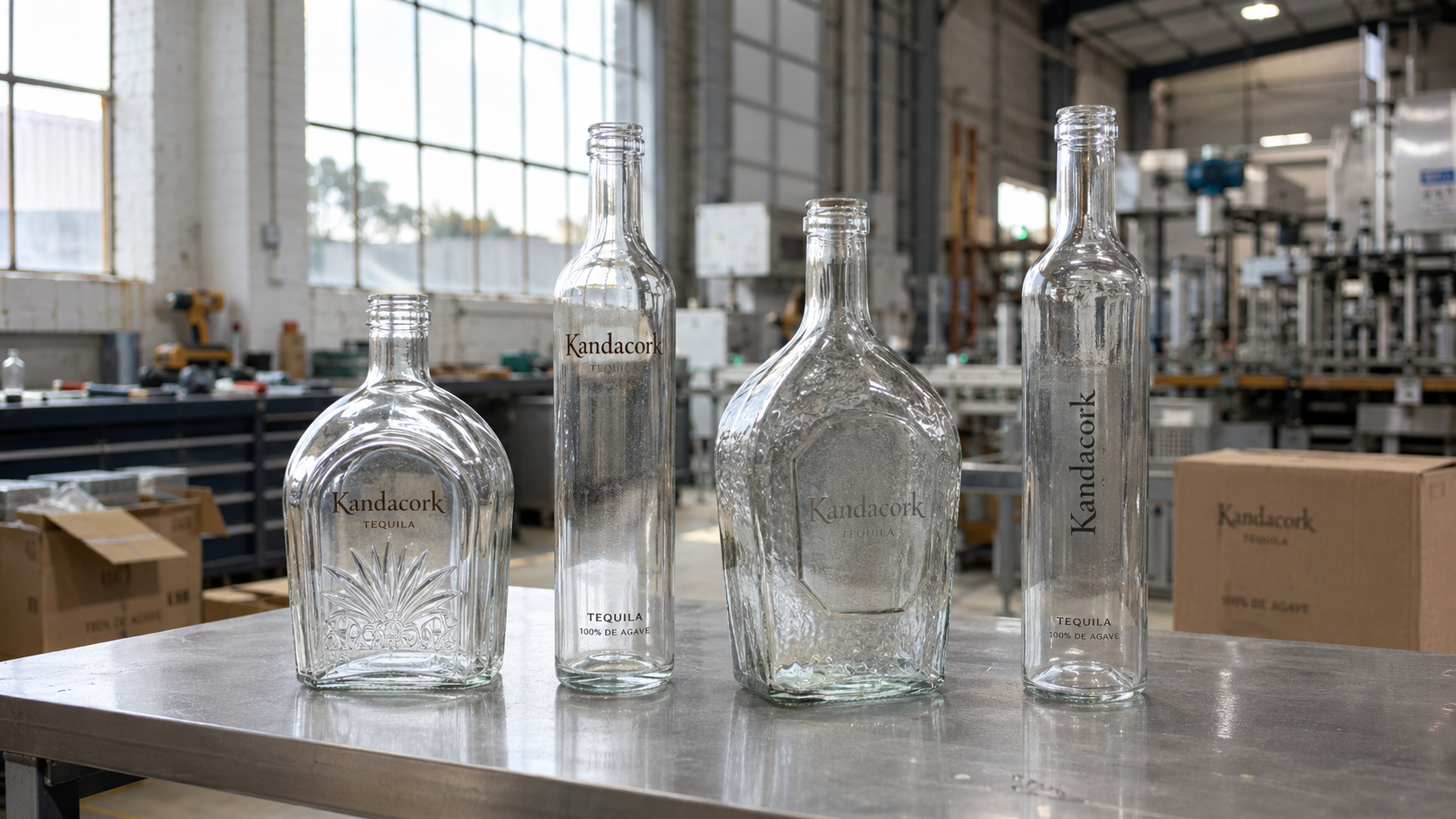
Because many tequila and mezcal bottles use distinctive shapes, buyers should confirm bottle drawings early. The stopper head, shank, capsule, and bottle neck must work together.
Logo Branding Options for Anodized Aluminium Stoppers
Custom logo branding is one of the main reasons buyers choose anodized aluminium stoppers. The aluminium head gives brands a strong surface for decoration and helps the closure become part of the bottle’s identity.
Common branding methods include laser engraving, embossing, debossing, top printing, side printing, hot stamping, decorative inserts, metal medallions, and color-filled logo details. Laser engraving often works well on anodized surfaces because it can create clean contrast and precise detail. Embossing and debossing are suitable for luxury brands that want tactile packaging. Printing is useful when the logo requires color, but ink adhesion and abrasion resistance should be tested.
For brands that need coordinated artwork across closures, capsules, labels, and secondary packaging, Kandacork Decor can support decoration planning so the stopper finish works with the wider packaging system.
Logo approval should always use physical samples. A logo that looks clear in a digital file may appear too subtle on a dark anodized surface or too reflective on polished aluminium. Buyers should review samples under realistic lighting and compare them with the label, glass color, capsule, and carton.
Bottle Neck Fitment and Shank Selection
A stopper’s appearance attracts attention, but fitment determines whether it works in real use. The shank must match the bottle neck inner diameter, sealing depth, and tolerance range.
Common shank options include natural cork, synthetic cork, micro-agglomerated cork, TPE, polymer, and composite materials. Natural cork supports traditional and premium positioning, but it requires careful quality control. Synthetic cork and polymer shanks can offer more predictable dimensions and batch consistency. TPE-style shanks may provide flexible fit for certain bottle neck designs.
The most important fitment factors are bottle neck inner diameter, shank diameter, shank length, insertion depth, head diameter, shoulder clearance, extraction force, and repeated-use behavior. If the bottle is already selected, the stopper must be engineered around the bottle. If the bottle and stopper are developed together, the packaging team has more freedom to optimize the complete system.
Buyers comparing stopper types can review Kandacork’s broader bottle stoppers and closures range to understand how aluminium, plastic, wood, metal, glass, cork, and ROPP systems differ in structure and use case.
Typical Specifications for Custom Anodized Aluminium Stoppers
A clear specification sheet helps avoid incorrect samples, unclear quotations, color disputes, and production delays. Buyers sourcing anodized aluminum bottle stoppers wholesale should define the technical and branding requirements before sampling.
| Specification Item | Buyer Input |
|---|---|
| Bottle capacity | 500ml / 700ml / 750ml / custom |
| Bottle neck inner diameter | Confirm from technical drawing or physical bottle |
| Stopper head diameter | Standard or custom |
| Stopper head height | Standard or custom |
| Head shape | Round / flat top / dome top / stepped / custom |
| Head material | Aluminium |
| Finish | Anodized / brushed / polished / coated |
| Anodized color | Black / silver / gold / bronze / copper / custom |
| Logo method | Laser engraving / embossing / debossing / printing / insert |
| Shank material | Natural cork / synthetic cork / polymer / TPE |
| Shank diameter | Confirm by bottle neck test |
| Shank length | Confirm by sealing depth |
| Target spirit | Whisky / gin / vodka / rum / tequila / mezcal / liqueur |
| Alcohol percentage | Buyer to confirm |
| Tamper-evident requirement | Capsule / shrink sleeve / none / custom |
| Packing method | Bulk packed / tray packed / protected export carton |
| Target quantity | Trial order / MOQ / bulk order |
| Approval standard | Physical sample / golden sample / pre-production sample |
Small changes in head size, color, logo method, or shank material can affect cost, MOQ, production time, and performance. This is why serious packaging projects should move from visual direction to technical specification as early as possible.
Need a Custom Anodized Aluminium Stopper for Your Spirits Bottle?
Send Kandacork Closures your bottle drawing, neck inner diameter, logo artwork, finish reference, target quantity, and target market. The team can recommend stopper structure, shank material, logo method, finish options, packing method, and sample approval steps.
This is especially useful for buyers developing a new premium spirits bottle, upgrading an existing closure system, or sourcing custom logo aluminium bottle stoppers for multiple SKUs. For integrated glass and closure programs, Kandacork Glass can help coordinate bottle development with stopper selection, decoration, and export packaging.
Quality Checks Before Bulk Production
A professional stopper project should include quality checks before mass production. These checks reduce the risk of leakage, color disputes, poor logo appearance, line problems, and export damage.
Important checks include golden sample approval, aluminium head size verification, shank diameter measurement, shank length measurement, bottle neck fitment testing, insertion force testing, extraction force testing, leak and inversion testing, color consistency review, logo position inspection, logo depth inspection, surface scuff review, abrasion resistance review, alcohol exposure review, packing simulation, carton drop-risk evaluation, and filling-line compatibility review.
For export orders, packing quality is critical. Aluminium tops can rub against dividers, capsules, or neighboring components if cartons are poorly designed. Protective packing helps preserve the anodized finish from factory to warehouse to retail shelf.
Kandacork’s colors and finishes guide is useful for buyers comparing surface effects such as matte, gloss, brushed, metallic, coated, printed, and anodized closure finishes.
Common Mistakes When Ordering Anodized Aluminium Stoppers
Many stopper problems begin before production. Buyers can reduce risk by avoiding common sourcing mistakes.
Choosing color before checking logo contrast is a frequent issue. A dark logo on a dark anodized surface may look good in a digital file but disappear on the physical stopper.
Ignoring bottle neck tolerance is another common problem. Two bottles may look the same externally but have different inner neck dimensions. A stopper should be tested with real bottles, not only with drawings.
Approving only digital renderings can also create problems. Metallic surfaces change under different lighting conditions. Physical samples are necessary for color, reflection, logo depth, and hand feel.
Forgetting capsule compatibility may cause production delays. If the stopper is used with a shrink sleeve, capsule, or tamper-evident system, the head size and neck finish must be checked together.
Not testing export packing can damage the final appearance. Anodized surfaces are durable, but rough handling and poor packing can still cause scuffs. Carton structure, dividers, and protective layers should be reviewed before bulk shipment.
MOQ, Sampling, and Lead Time Considerations
MOQ for anodized aluminium stoppers depends on head shape, finish color, logo method, tooling needs, shank material, and packing requirements. A standard head with laser engraving may have a different MOQ from a custom-molded aluminium head with embossing and a special anodized color.
A practical sourcing process usually includes design review, bottle neck review, finish confirmation, logo method selection, sample production, fitment testing, golden sample approval, pre-production confirmation, and bulk production.
For serious spirits launches, buyers should not wait until the final packaging stage to develop the stopper. Closure development affects bottle compatibility, carton height, capsule design, label alignment, product photography, and brand presentation.
Buyer Checklist Before Requesting a Quote
To receive an accurate quote for anodized aluminium stoppers, prepare the following information:
- Spirit category
- Bottle capacity
- Bottle drawing
- Physical bottle sample if available
- Bottle neck inner diameter
- Preferred stopper head shape
- Preferred aluminium finish
- Anodized color reference
- Logo artwork in vector format
- Preferred logo method
- Shank material preference
- Target quantity
- Target market
- Alcohol percentage
- Tamper-evident capsule or shrink sleeve needs
- Packing and export requirements
- Launch timeline
The more complete the information, the faster a supplier can recommend a suitable stopper structure, finish, and sample plan.
Packaging Design, Sidewall Details, and Line Compatibility
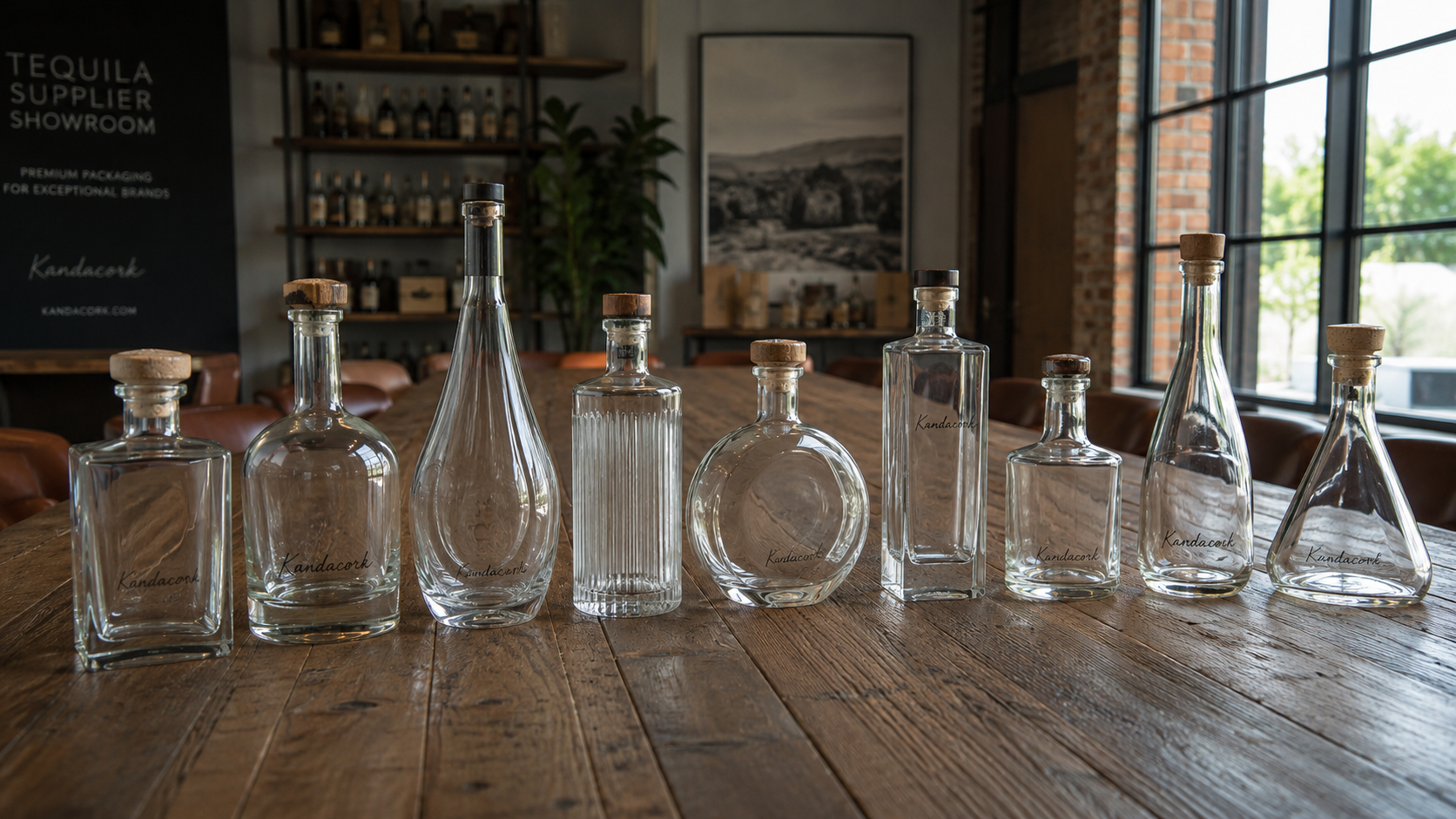
An anodized aluminium stopper should work with the full bottle design. Head diameter, top shape, sidewall texture, logo position, capsule height, label layout, and carton clearance all affect the final packaging result.
Sidewall details can improve grip and add brand recognition. Smooth sidewalls create a clean modern look. Ribbed or knurled textures can improve handling and provide a technical feel. Embossed or debossed side details can make the stopper more distinctive, especially for premium spirits and gift packaging.
Buyers planning detailed closure decoration can use Kandacork’s sidewall design options to understand how texture, print zones, ribs, relief details, and band heights can be adapted across different closure constructions.
Line compatibility should also be reviewed before mass production. Manual corking, semi-automatic corking, automatic corking, capsule application, shrink tunnels, case packing, and palletizing can all affect stopper design. A closure that looks perfect in a sample box must still perform reliably in real filling and logistics conditions.
Industry Standards and Compliance References
Anodized aluminium stoppers sit at the intersection of metal finishing, packaging design, food-contact review, and supply-chain identification. Buyers do not need to become technical specialists, but they should understand which references may matter during project development.
The International Aluminium Institute is commonly referenced for aluminium industry knowledge, material data, and sustainability context. For packaged products sold through retail and distribution channels, GS1 standards may be relevant for barcodes, product identification, and supply-chain consistency.
For spirits packaging, food-contact expectations should be reviewed according to the target market. In the United States, the U.S. Food and Drug Administration provides information on food-contact substances. In the European Union, the European Commission’s food contact materials framework is an important reference for materials intended to come into contact with food and beverages.
These references do not replace project-specific testing or legal review. They help buyers ask better questions about intended use, alcohol content, material suitability, traceability, and documentation before bulk production.
Are Anodized Aluminium Stoppers Sustainable?
Aluminium is widely valued because it can be recycled repeatedly without losing its core material properties. The Aluminum Association highlights aluminium recycling as an important part of the material’s sustainability profile.
For bottle stoppers, sustainability should be evaluated carefully because the complete closure may include aluminium, cork, synthetic cork, polymer, adhesive, coating, or decorative inserts. Recyclability depends on the full structure, separation method, and local recycling infrastructure.
Brands should avoid broad sustainability claims unless the full packaging system has been reviewed. Practical improvements may include lighter aluminium heads, efficient packing, material reduction, reduced overpacking, and closure designs that balance premium appearance with responsible material use.
For buyers developing wider packaging programs beyond spirits closures, Kandacork Eco Glass can support glass packaging considerations where material efficiency, decoration-ready surfaces, and export packaging need to be evaluated together.
Food Contact and Compliance Considerations
For spirits packaging, the stopper system should be reviewed as a food-contact packaging component. The parts that may interact with the bottle opening and vapor space can include the shank, adhesive, liner, or related closure materials.
Buyers should request material declarations, test reports, and compliance documents based on the target market. The supplier should understand the spirit type, alcohol percentage, intended market, contact conditions, filling process, storage conditions, and documentation requirements before bulk production.
This is especially important for export-focused brands. A spirits bottle stopper manufacturer should be able to discuss packaging safety, material suitability, intended use, and document expectations before the order moves into mass production.
Why Work with Kandacork Closures?
Kandacork Closures supports spirits brands that need custom closure and stopper solutions for premium bottles. For anodized aluminium stoppers, the value is not only the visible metal top. The value is the complete development process: design review, finish matching, bottle neck fitment, logo decoration, sampling, quality control, and export-ready production.
Kandacork Closures can help brands develop aluminium bar-top stoppers for whisky, vodka, gin, rum, tequila, mezcal, brandy, liqueurs, and specialty spirits. Whether the project requires a minimalist brushed silver stopper, a matte black engraved closure, a rose gold gin stopper, or a bronze rum stopper, the goal is the same: a closure that looks premium, fits correctly, and supports commercial positioning.
For new spirits projects, Kandacork Closures can review the bottle neck, suggest shank options, recommend finish directions, and prepare samples for approval. For established brands, the team can help upgrade current closures with improved surface finish, stronger logo detail, or more consistent batch performance.
If your project also requires custom bottles, jars, or multi-category packaging support, Kandacork Glass Packaging can help align glass structure, closures, decoration, and export-ready presentation across a broader packaging program.
FAQ
What are anodized aluminium stoppers?
Anodized aluminium stoppers are bottle closures with an anodized aluminium top and a cork, synthetic cork, or polymer shank. They are used for premium spirits bottles that need metallic appearance, custom branding, and reliable resealing performance.
Are anodized aluminium stoppers suitable for spirits bottles?
Yes. Anodized aluminium stoppers are suitable for whisky, vodka, gin, rum, tequila, mezcal, brandy, liqueurs, and other spirits. The key is matching the shank to the bottle neck and confirming performance through physical samples.
Do anodized aluminium stoppers seal better than plastic stoppers?
No, not automatically. The anodized aluminium head improves appearance and surface durability, but sealing depends on shank material, bottle neck tolerance, compression, and closure design.
Can anodized aluminium stoppers be customized with a logo?
Yes. Anodized aluminium stoppers can be customized with laser engraving, embossing, debossing, top printing, side printing, hot stamping, decorative inserts, or metal medallions.
Will anodized aluminium stoppers scratch or fade?
Anodized aluminium is generally more durable than many simple painted surfaces, but it can still be damaged by rough handling or poor packing. Buyers should approve physical samples and test scuff resistance before bulk production.
What colors are available for anodized aluminium stoppers?
Common colors include silver, black, gold, champagne, rose gold, bronze, copper, gunmetal, blue, green, and custom metallic tones. Color feasibility depends on aluminium material, surface texture, anodizing process, and batch control.
What information is needed to quote custom anodized aluminium stoppers?
Buyers should provide bottle drawings, bottle samples if available, neck inner diameter, target quantity, stopper head style, finish reference, logo artwork, shank preference, spirit type, alcohol percentage, target market, and packing requirements.
Are anodized aluminium stoppers recyclable?
The aluminium head may be recyclable, but the complete stopper is often a mixed-material component. Recyclability depends on the full structure, separation method, and local recycling system.
What is the difference between anodized aluminium and coated aluminium stoppers?
Anodizing forms an oxide layer on the aluminium surface, while coating adds a separate paint or powder layer. Anodized aluminium is often chosen for metallic depth and durability, while coating can offer broader color flexibility.
Can anodized aluminium stoppers be used with tamper-evident capsules?
Yes. Many spirits brands pair anodized aluminium stoppers with shrink sleeves, capsules, or other tamper-evident systems. The stopper head size, bottle neck, capsule material, and application process should be checked together.
What is the best logo method for anodized aluminium stoppers?
Laser engraving is often effective because it creates clean contrast on many anodized surfaces. Embossing and debossing are better for tactile luxury branding, while printing is useful when the logo requires color.
How can buyers reduce risk before bulk ordering?
Buyers should approve a golden sample, test bottle neck fitment, confirm logo contrast, check insertion and extraction force, review packing, and verify compliance documents before mass production.
Conclusion
Anodized aluminium stoppers are a strong choice for spirits brands that want premium metallic appearance, custom logo branding, durable finish options, and a refined consumer experience. They can help whisky, vodka, gin, rum, tequila, mezcal, and liqueur brands create packaging that feels distinctive and retail-ready.
The most successful projects treat the stopper as a complete packaging component. Finish, shank material, bottle neck fitment, logo method, sample approval, packing, and compliance documentation all affect the final result.
Kandacork Closures helps spirits brands develop custom anodized aluminium stoppers that combine visual appeal with production practicality. To start a project, prepare your bottle drawing, finish reference, logo artwork, target quantity, and target market, then request a custom stopper recommendation through the Kandacork Closures quote page.