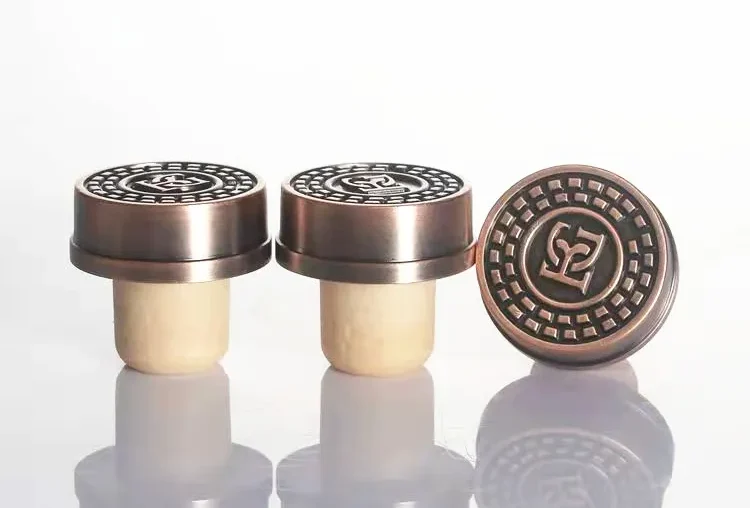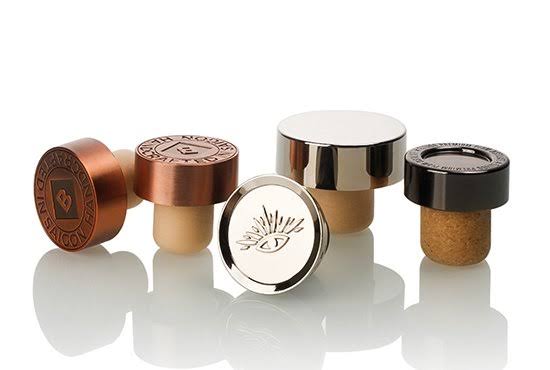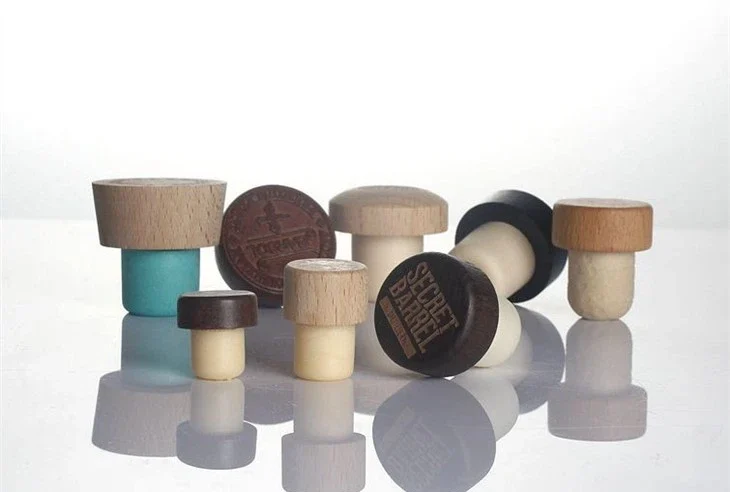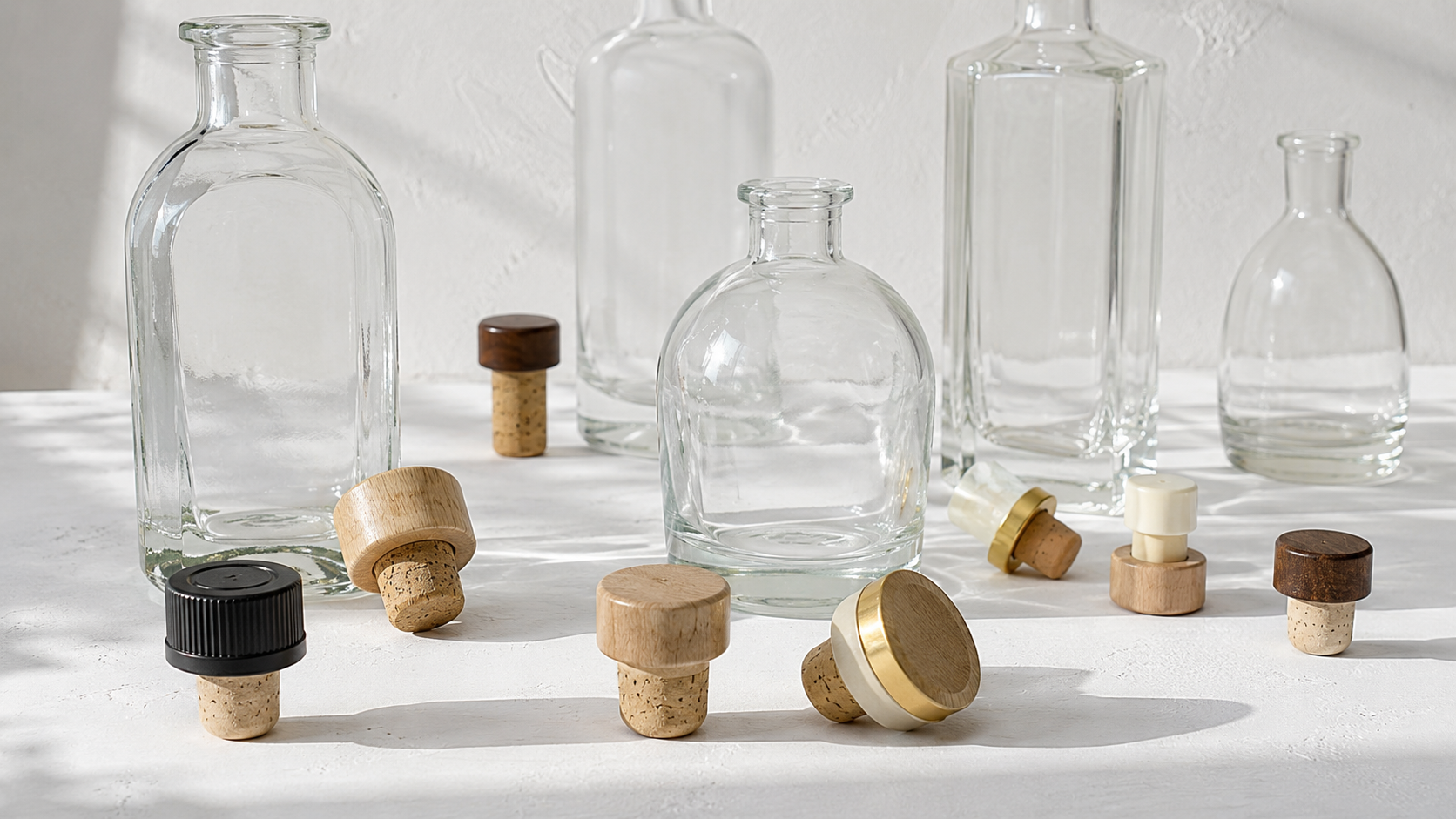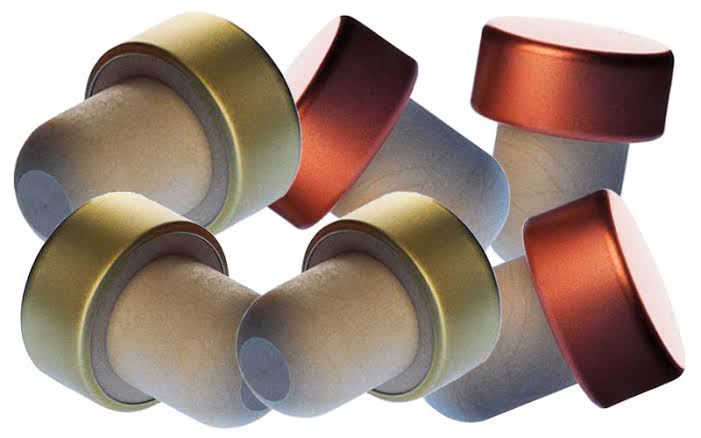
Different wood types can create different visual effects, textures and brand impressions for spirits bottle stoppers. This guide compares practical wood options and explains how buyers should consider machining, finish, logo method and bulk consistency.
Quick Answer: Best Wood Types for Bottle Stoppers
| Brand Need | Recommended Wood Types | Best Fit |
|---|---|---|
| Premium spirits packaging | Walnut, oak, mahogany, dark-stained maple | Whiskey, rum, brandy, tequila, luxury liqueurs |
| Clean minimalist design | Maple, beech, bamboo | Gin, vodka, wellness drinks, fragrance, cosmetics |
| Traditional wine presentation | Oak, cherry, walnut, olive wood | Wine bottles, tasting room gifts, event packaging |
| Large-volume production | Beech, maple, engineered wood | Custom closures requiring consistency and cost control |
| Limited-edition packaging | Zebrawood, olive wood, koa, bocote, purpleheart | Gift sets, collector bottles, premium launches |
| Sustainability positioning | Bamboo, FSC-certified wood, responsibly sourced wood | Natural beverages, olive oil, eco-conscious packaging |
Best overall recommendation: choose walnut for premium spirits, maple for clear logo visibility, oak for wine and heritage packaging, and beech for consistent bulk wooden bottle stopper production.
For most commercial projects, walnut, maple, oak, and beech are the safest starting points because they balance appearance, machinability, finish compatibility, and batch consistency. For premium spirits, wooden heads are often paired with cork, synthetic, or hybrid shanks to create refined bar top stoppers that feel substantial while fitting the bottle neck correctly.
What Is the Best Wood Type for Bottle Stoppers?
The best wood type for bottle stoppers depends on the product category, brand style, production volume, and closure structure. Walnut is ideal for premium and luxury packaging. Maple is excellent for clean branding and logo visibility. Oak is strong for wine and spirits because of its connection to barrels and aging. Beech is practical for consistent bulk production. Bamboo supports modern, natural, and sustainability-driven packaging.
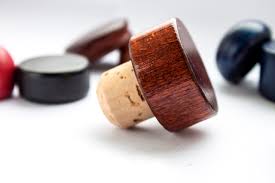
A wooden stopper usually includes two functional zones: the decorative wood top and the sealing insert or shank. The wood top creates the visible and tactile value, while the insert provides bottle fit, compression, and sealing performance. Common insert options include natural cork, micro-agglomerated cork, synthetic cork, silicone, polymer, and metal components.
This is why brands should not select wood in isolation. The wood species, insert material, adhesive, coating, bottle neck finish, filling conditions, target market, and packaging style should be evaluated together.
Key Factors When Choosing Wood for Bottle Stoppers
Hardness and Durability
Hardness affects how well the stopper resists dents, scratches, handling marks, and shipping damage. Bottle stoppers are touched frequently, especially in spirits, wine, hospitality, and gift packaging. A soft or unstable material can reduce the perceived quality of the entire bottle.
Hardwoods are usually better than softwoods for commercial wooden bottle stoppers. Walnut, maple, oak, cherry, beech, and mahogany can be machined into clean shapes and finished to a premium standard. They also provide a stronger hand feel than many softwood options.
However, hardness should be balanced with processing behavior. Some dense exotic woods are visually impressive but harder to bond, finish, engrave, or source consistently. For large production runs, the best wood type for bottle stoppers is often the one that combines beauty with predictable manufacturing performance.
Grain Pattern and Visual Consistency
Grain pattern strongly influences brand perception. Fine and even grain looks clean and modern. Open grain feels rustic and traditional. Dramatic figure or color variation creates a handcrafted or limited-edition effect.
For small-batch products, natural variation can be part of the story. For larger-volume retail packaging, visual consistency becomes more important. A brand may not want one stopper batch to look dark and another to look pale if the bottles are displayed together in the same channel.
Before confirming a material, buyers should define an acceptable color and grain range. This is especially important for walnut, oak, cherry, olive wood, and exotic species. Clear appearance standards help avoid production disputes and ensure the finished closure matches the approved sample.
Moisture Control and Dimensional Stability
Wood reacts to moisture. If it is not properly dried, stored, and processed, it may shrink, swell, crack, warp, or show finish defects. Dimensional stability is especially important for bar-top closures, T-top stoppers, and custom wooden caps that require accurate bonding with an insert.
The USDA Forest Products Laboratory’s Wood Handbook is a recognized technical reference for wood behavior, including moisture relations and dimensional changes. For packaging buyers, this matters because wood instability can affect appearance, fit, finish, and long-term closure quality.
Commercial buyers should ask whether the wood is kiln-dried, stabilized, laminated, or otherwise controlled before machining. Moisture content, storage conditions, and the production environment can all affect final quality. For export packaging, dimensional stability is even more important because closures may move through different climates during shipping and storage.
Finish Compatibility
The same wood type can look very different depending on the finish. A natural matte finish highlights organic texture. A satin finish feels refined and modern. A glossy lacquer can create a luxury effect. Staining can align the closure with brand colors. Painting can provide full color control, although it may hide natural grain.
Maple and beech are strong choices when the brand needs a clean surface, consistent staining, or clear laser engraving. Walnut and mahogany are strong choices when the brand wants dark luxury. Oak works well for rustic and barrel-inspired packaging, but its open grain may require more preparation for a smooth high-gloss finish.
Brands should request samples using the final finish process. Raw wood blocks are not enough because sanding, staining, coating, engraving, printing, and hot stamping can all change the final appearance.
Logo and Decoration Compatibility
Wooden bottle stoppers can be customized with laser engraving, hot stamping, pad printing, embossing, staining, painting, color coating, side printing, decorative inserts, or metal badges. The best method depends on wood color, grain, surface smoothness, and brand identity.
Laser engraving usually works best when there is strong contrast. Maple and beech often provide clear logo visibility. Walnut may require deeper engraving, color filling, or an alternative decoration method if the brand mark needs to stand out sharply.
For projects requiring more advanced decoration, buyers should review stopper materials together with custom branded bottle closures so the logo method, wood surface, coating, and bottle design work as one complete packaging system.
Insert and Seal Compatibility
The wood top does not usually seal the bottle by itself. The sealing function comes from the insert or shank. This may be cork, synthetic cork, silicone, polymer, or another engineered component.
For spirits bottles, bar-top stoppers often combine a wood top with a cork or synthetic shank. For wine gift stoppers, the design may use a reusable insert. For olive oil or gourmet food packaging, the insert must be suitable for the product, bottle neck, and intended use.
Closure engineering matters. The supplier should check bottle neck finish, insertion depth, pull force, bonding strength, tolerance range, and storage conditions. A premium-looking wood top will not protect the brand experience if the stopper feels loose, cracks during use, or does not fit the bottle correctly. This is why technical cap and neck compatibility review is important before bulk production.
Best Wood Species for Wooden Bottle Stoppers
Walnut Bottle Stoppers
Walnut is one of the most popular premium wood types for bottle stoppers. It has a dark brown tone, refined grain, and strong association with luxury interiors, whiskey bars, and high-end packaging.
Walnut works well for whiskey, rum, brandy, wine, liqueur, and limited-edition spirits. It pairs naturally with amber glass, black labels, cream labels, gold foil, copper accents, and heavy-base bottles.
For brands that want a mature and elegant identity, walnut is often one of the strongest choices. It performs especially well with matte, satin, and natural finishes.
Maple Bottle Stoppers
Maple is light, clean, and versatile. It is a strong option for brands that want a modern, minimalist, fresh, or natural appearance. Because of its lighter color, maple is also useful for laser engraving, staining, painting, and color matching.
Maple bottle stoppers can work well for gin, vodka, tequila, wellness beverages, fragrance, cosmetics, and premium food packaging. It offers good surface clarity and can support both natural and highly customized designs.
For B2B buyers, maple is attractive because it can provide a consistent base for branding across production batches.
Oak Bottle Stoppers
Oak has a strong connection to wine, whiskey, barrels, cellars, and traditional craftsmanship. This makes oak a natural choice for wine and spirits packaging.
Oak has more visible grain than maple or beech. This gives it texture and character. It can support rustic, craft, heritage, and barrel-aged product positioning.
The main consideration is surface finish. Oak’s open grain may need additional preparation if the brand wants a smooth, polished, or glossy look. For natural or rustic packaging, that visible grain can be an advantage.
Cherry Bottle Stoppers
Cherry has a warm reddish-brown tone and a smooth, refined appearance. It can feel boutique, handcrafted, and premium without being as dark as walnut.
Cherry bottle stoppers are suitable for boutique wine, craft spirits, tasting room products, seasonal gift bottles, and gourmet packaging. The wood pairs well with cream labels, natural paper textures, amber glass, and classic typography.
Brands should consider that cherry may deepen in color over time. This can be attractive, but the approved sample and production expectations should account for natural variation.
Beech Bottle Stoppers
Beech is a practical and consistent option for custom wooden bottle stoppers. It has a light color, fine texture, and relatively uniform appearance. This makes it useful for larger production runs where repeatability is important.
Beech can be stained, painted, lacquered, engraved, or left natural. It is often a strong choice when the brand wants a clean design and stable commercial supply.
For buyers comparing cost, appearance, and production consistency, beech is often one of the most efficient wood options.
Mahogany Bottle Stoppers
Mahogany has a rich reddish-brown tone and a classic luxury feel. It can work well for premium spirits, heritage packaging, and high-end gift sets.
Mahogany communicates warmth, tradition, and value. It can support rum, brandy, whiskey, and luxury liqueur packaging.
Because mahogany sourcing can vary, brands should confirm availability, documentation, and responsible sourcing before using it for large-scale production.
Bamboo Bottle Stoppers
Bamboo is widely used in packaging because it has a clean natural look and strong sustainability associations. Although bamboo is technically a grass, it can perform well in closure applications when properly processed.
Bamboo bottle stoppers are suitable for natural beverages, olive oil, wellness products, cosmetics, fragrance, and eco-positioned packaging. The visual style is modern, light, and clean.
Brands should avoid unsupported sustainability claims. If bamboo is used for environmental positioning, the claim should be backed by supplier documentation, certification, or sourcing details.
Exotic Wood Bottle Stoppers
Exotic woods such as zebrawood, bocote, olive wood, koa, purpleheart, black palm, and similar species can create strong visual differentiation. These woods are best for limited editions, premium gift sets, collector bottles, and special launches.
The advantage is uniqueness. The challenge is consistency, price, sourcing, and documentation. Some exotic woods may also require additional testing for finishing, engraving, bonding, or export requirements.
For large-volume production, exotic woods should be evaluated carefully before final approval. In some cases, stained maple, engineered wood, or selected walnut may provide a more reliable commercial solution.
Buyer Decision Matrix for Wood Stopper Selection
| Buyer Priority | Best Wood Choice | Why It Works |
|---|---|---|
| Luxury appearance | Walnut, mahogany | Dark, rich, refined, premium |
| Logo visibility | Maple, beech | Light surface, strong engraving contrast |
| Wine heritage | Oak, cherry | Traditional, warm, cellar-oriented |
| Cost consistency | Beech, maple | Better repeatability for bulk orders |
| Natural positioning | Bamboo, olive wood, maple | Clean, organic, lifestyle-oriented appearance |
| Limited editions | Exotic woods | Distinctive grain and collector appeal |
| Spirits packaging | Walnut, oak, mahogany | Strong fit for premium bottles and bar-top closures |
This decision matrix helps buyers narrow material choices before requesting custom wooden bottle stopper samples.
Best Wood Types for Wine, Spirits, Olive Oil, and Fragrance Bottle Stoppers
Wine Bottles
Recommended wood types for wine bottle stoppers include oak, walnut, cherry, and olive wood. Oak connects directly to barrels and wine aging. Walnut creates a premium gift impression. Cherry adds warmth. Olive wood supports a Mediterranean or artisanal story.
Wine brands, tasting rooms, and event packaging projects often use wooden stoppers for gift value and table presentation. For larger retail programs, the closure should also be tested for fit, insert performance, and packaging consistency.
Spirits Bottles
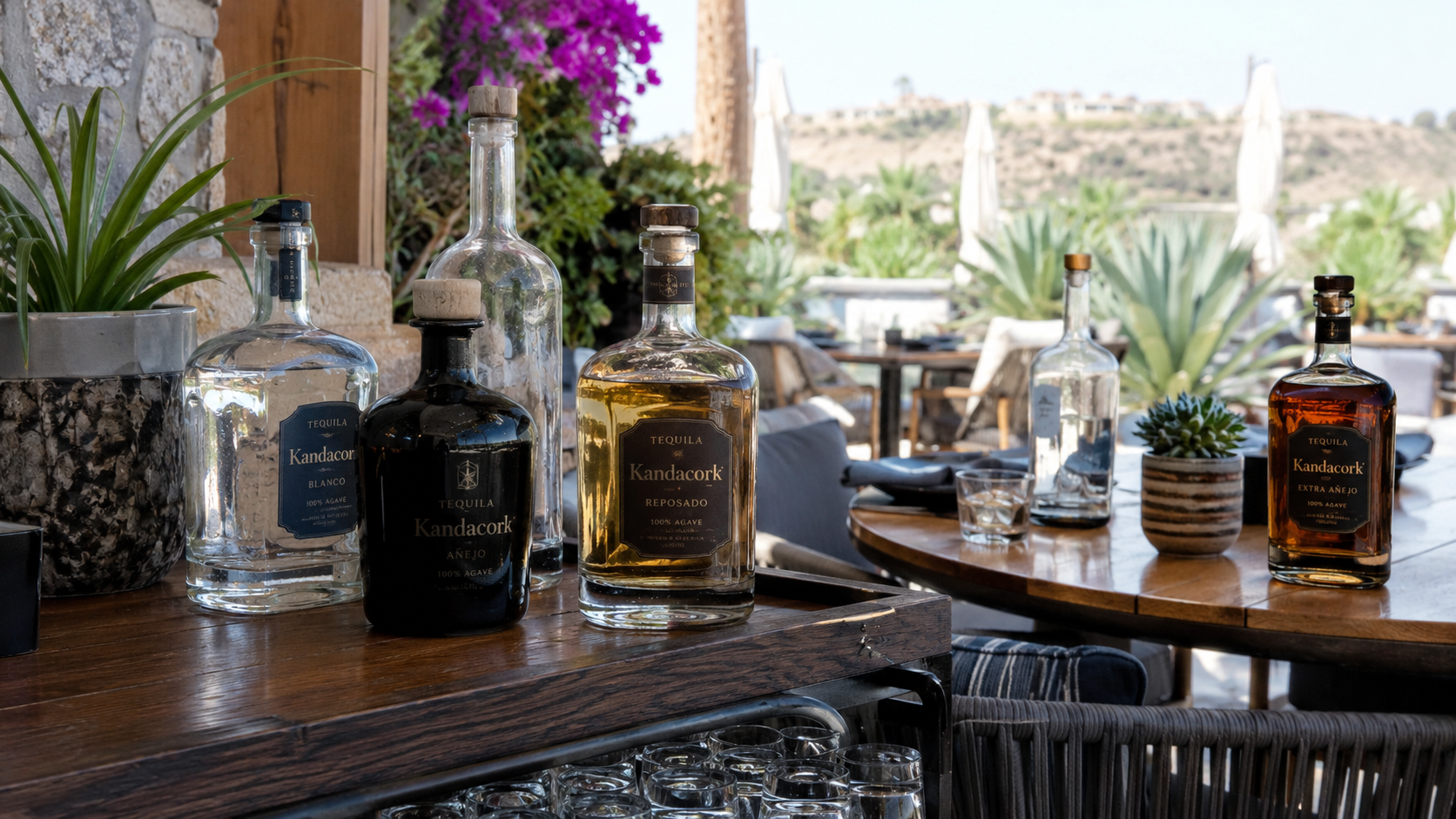
Recommended wood types for spirits bottle stoppers include walnut, oak, mahogany, dark-stained maple, and selected exotic woods. These materials help create a premium bar-top closure and a stronger sense of product value.
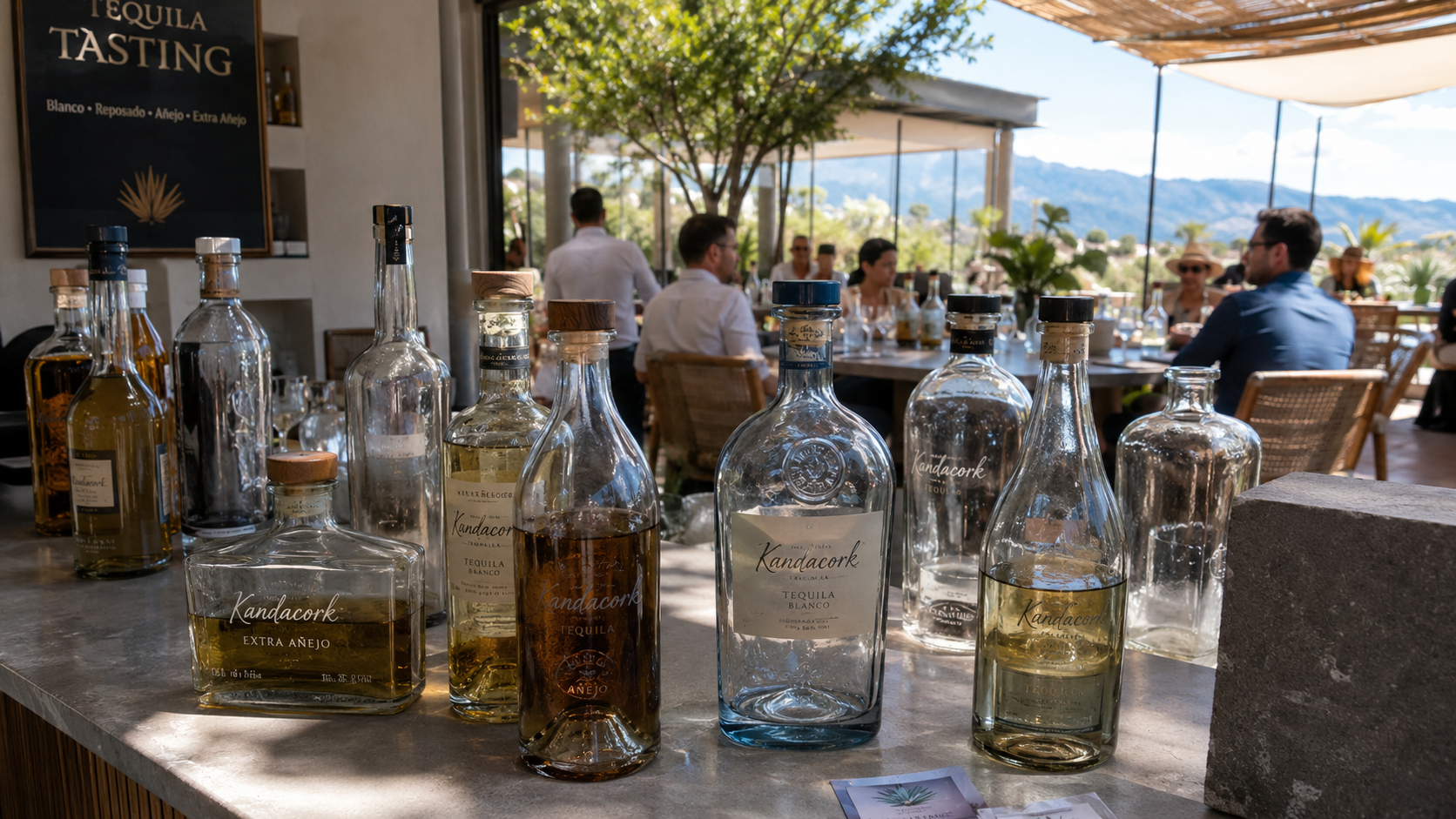
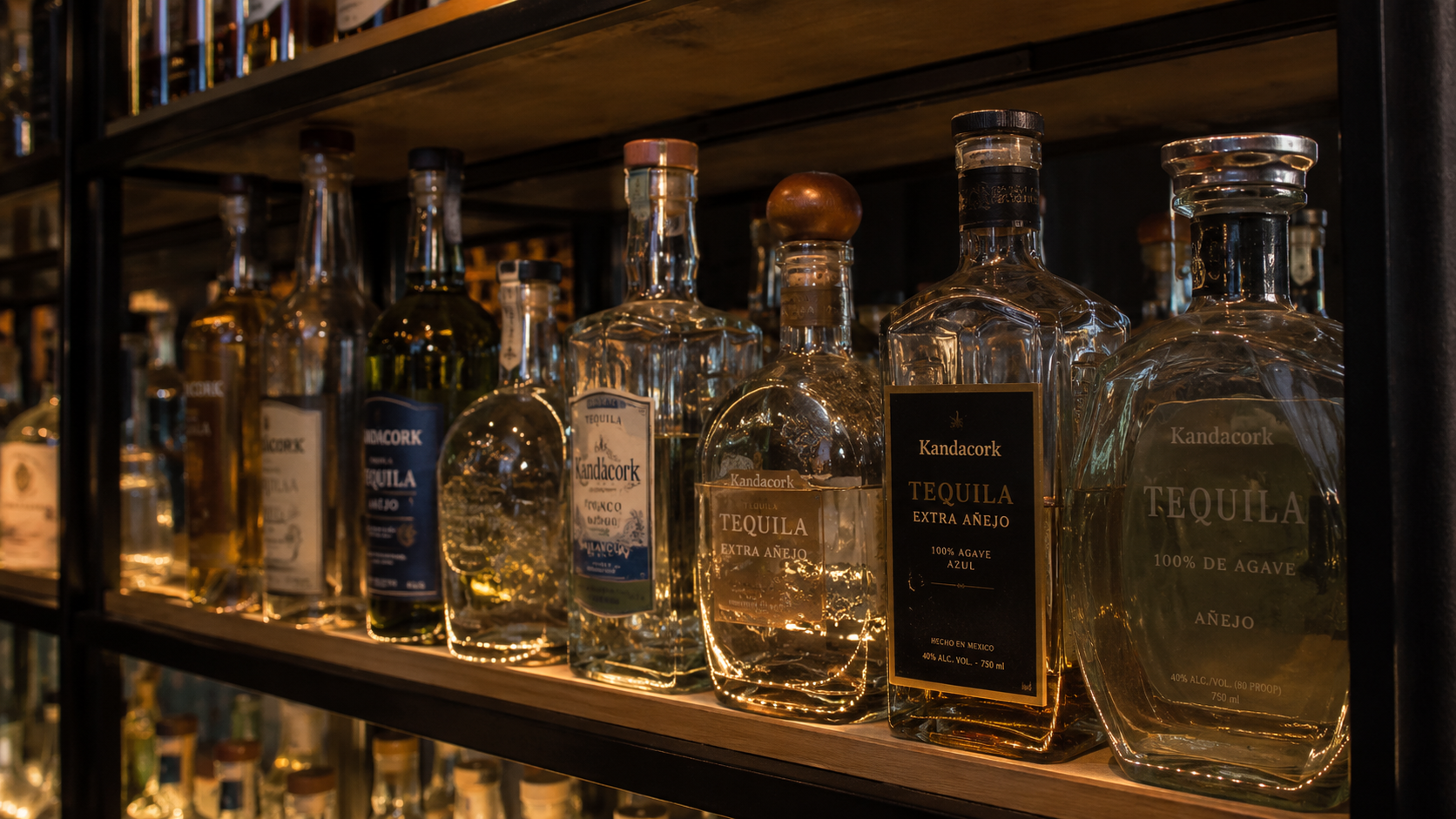
A wooden stopper can improve the unboxing, opening, and pouring experience. It can also make the bottle feel more collectible. For whiskey, rum, tequila, gin, brandy, and liqueur, the stopper should match the bottle shape, label design, capsule, secondary packaging, and price position. Brands developing closure programs alongside custom spirits bottles should confirm stopper height, neck transition, capsule fit, and overall shelf silhouette together rather than treating the closure as a separate accessory.
Olive Oil and Gourmet Food Bottles
Recommended wood types for olive oil, vinegar, syrup, and gourmet food bottles include beech, maple, bamboo, and olive wood. These woods create a clean, culinary, and natural impression.
For food-related packaging, the complete closure system should be evaluated carefully. Buyers should check the wood finish, insert material, adhesive, coating, and intended contact conditions.
Fragrance and Cosmetic Bottles
Recommended wood types for fragrance and cosmetic closures include maple, beech, walnut, stained wood, and lacquered wood. In this category, surface quality and visual consistency are especially important.
The closure should match the sensory identity of the product. A natural wood cap can support a botanical fragrance. A dark walnut cap can support luxury. A light maple or beech cap can support clean beauty and minimalist packaging. For brands that need coordinated color, logo, surface, and pack decoration, stopper development can be aligned with bottle decoration and branding so the full packaging system feels consistent.
Food-Safe Wooden Bottle Stoppers: What Buyers Should Check
Food-contact suitability depends on the complete closure system, not only the wood species. Buyers should evaluate the wood top, coating, adhesive, insert, colorant, and any surface treatment.
In the United States, the FDA food-contact substance framework considers packaging components and substances applied to packaging surfaces based on intended use. In the European Union, food-contact materials are governed by framework rules such as Regulation EC No. 1935/2004. For B2B packaging buyers, this means documentation should be discussed early.
Before confirming a wood type for bottle stoppers, buyers should ask:
- Does the wood or finish directly contact the product?
- What insert material provides the seal?
- Is the coating suitable for the intended use?
- Is adhesive used between the wood top and insert?
- Can the supplier provide material declarations?
- Does the target market require additional testing?
- Are sustainability or food-safe claims supported by evidence?
This section is especially important for brands exporting to multiple regions or selling through retailers with packaging documentation requirements.
Sustainability and Responsible Wood Sourcing
Sustainability matters in modern packaging. Buyers may want FSC-certified wood, responsibly sourced timber, bamboo, reclaimed wood, or lower-impact material options.
However, sustainability language must be specific. Instead of using vague claims such as “eco-friendly,” brands should define the sourcing basis. The Forest Stewardship Council explains that FSC Chain of Custody certification supports traceability for certified or controlled forest-based materials. For wooden bottle stoppers, buyers may also request supplier declarations, bamboo sourcing details, recycled-content claims, or responsible forestry evidence.
A sustainable wooden bottle stopper should support both brand messaging and procurement credibility. For products positioned around lower-impact packaging, brands can also consider how closures coordinate with eco-conscious glass packaging so the material story remains consistent across the bottle, stopper, decoration, and secondary packaging.
Wood Dust, Manufacturing Control, and Workplace Safety
Wood stopper manufacturing involves cutting, turning, sanding, finishing, and polishing. These processes can produce wood dust, especially when working with hardwoods and exotic species. OSHA identifies wood dust as a workplace exposure concern when particles from cutting or sanding become airborne.
For buyers, this does not mean wood stoppers are unsafe as packaging components. It means responsible manufacturing matters. A professional closure supplier should control machining quality, dust management, finish application, inspection, and packaging cleanliness.
This production discipline supports better surface quality, cleaner decoration, and more reliable bulk wooden bottle stopper orders.
Specification Summary for Custom Wooden Bottle Stoppers
| Specification Area | Buyer Should Confirm |
|---|---|
| Wood species | Walnut, maple, oak, cherry, beech, mahogany, bamboo, exotic wood |
| Bottle type | Wine, spirits, olive oil, fragrance, cosmetics, gourmet food |
| Closure type | Bar-top stopper, T-top stopper, reusable stopper, decorative cap |
| Insert material | Natural cork, synthetic cork, silicone, polymer, metal |
| Surface finish | Natural, matte, satin, gloss, stained, painted, lacquered |
| Logo method | Laser engraving, hot stamping, pad printing, embossing, color fill |
| Production need | MOQ, tolerance, color range, grain range, order volume |
| Documentation | Material declaration, sourcing evidence, compliance requirements |
| Testing focus | Bottle fit, pull force, bonding strength, finish durability, appearance approval |
If the project requires predictable compression, stable pull-out feel, or a more uniform insert structure, buyers may compare cork shanks with synthetic stopper options before confirming the final specification.
How to Choose a Wood Stopper for Bulk Bottle Closure Production
Bulk production requires more discipline than sample development. A stopper that looks good in a small sample batch may not be suitable for thousands or millions of units unless the material and process are controlled.
Buyers should define the following before production:
- Bottle neck finish and technical drawing
- Product category and filling conditions
- Target market and compliance needs
- Preferred wood color and grain range
- Stopper shape and dimensions
- Insert material and insertion depth
- Logo method and decoration area
- Surface finish and coating type
- Annual order quantity or launch volume
- Sustainability or certification requirements
- Packaging, shipping, and storage conditions
These details help the closure supplier recommend a practical wood type, confirm tolerance expectations, and reduce production risk.
Custom Wooden Bottle Stopper Manufacturer for B2B Packaging Projects
Working with a custom wooden bottle stopper manufacturer is different from buying craft blanks or finished gift stoppers. A B2B closure project requires material planning, engineering review, sample approval, decoration testing, production tolerance control, and packaging coordination.
Kandacork Closures supports custom wood stopper development for beverage and lifestyle packaging brands. The process may include species comparison, shape design, insert matching, surface finishing, logo testing, sample confirmation, and bulk production planning.
A professional supplier should help answer practical questions:
- Which wood type fits the brand style?
- Which insert works with the bottle neck?
- Which finish will protect the wood surface?
- Which logo method gives the clearest result?
- Which material supports the target order quantity?
- Which sourcing option supports the brand’s sustainability message?
- Which tolerance range is realistic for production?
For full packaging programs, stopper selection may also need to coordinate with bottle structure, decoration, caps, cartons, and export packing. In those cases, a broader glass packaging coordination approach can help buyers keep the bottle, closure, decoration, and supply process aligned.
Common Mistakes to Avoid
One common mistake is choosing the wood only by appearance. A species may look beautiful but be difficult to source, finish, bond, or reproduce consistently.
Another mistake is ignoring moisture control. Poorly dried or poorly stored wood can crack, swell, shrink, or warp after production.
Some buyers also forget to test logo visibility. A subtle engraving may disappear on dark walnut. A fine mark may lose detail on open-grain oak. Branding should always be tested on the final material and finish.
Another risk is choosing an exotic wood without confirming availability. A limited-edition stopper may work well with rare wood, but a long-term retail program usually needs stronger supply stability.
Brands should also avoid unsupported claims. Food-safe, sustainable, recyclable, natural, and eco-friendly claims should be backed by documentation and aligned with the final closure system.
Request a Custom Wooden Stopper Sample
Before confirming bulk production, brands should request physical samples. A proper sample should include the final wood type, final shape, insert structure, surface finish, logo method, and bottle fit.
Sampling helps evaluate:
- Hand feel
- Color and grain consistency
- Logo clarity
- Insert fit
- Pull force
- Surface quality
- Bonding strength
- Packaging compatibility
- Overall brand impression
For closures that must pass internal quality review or retailer approval, buyers should also consider fit, leakage risk, compression behavior, and transport conditions. Kandacork Closures can support sealing and leakage tests during project development so the selected wooden stopper is reviewed as part of a complete closure system.
Send Kandacork Closures your bottle drawing, preferred wood style, target finish, logo method, insert requirement, destination market, and estimated order volume to develop a custom wooden stopper sample before mass production.
Why Work With Kandacork Closures for Custom Wooden Bottle Stoppers
Kandacork Closures helps brands develop custom wooden bottle stoppers that connect material choice with brand identity and packaging performance.
For B2B buyers, the right wood type for bottle stoppers should support the product’s price position, visual story, sealing structure, production volume, and compliance expectations. Kandacork Closures can assist with wood selection, stopper design, insert matching, finish development, logo customization, sampling, testing, and bulk production planning.
Whether your brand is comparing walnut, maple, oak, cherry, beech, mahogany, bamboo, or exotic woods, Kandacork Closures can help turn a design direction into a production-ready bottle closure.
FAQ
What wood is best for bottle stoppers?
The best wood for bottle stoppers is usually a stable hardwood such as walnut, maple, oak, cherry, beech, or mahogany. These woods offer good durability, attractive grain, and strong finishing potential for commercial packaging.
Are hardwoods better than softwoods for bottle stoppers?
Yes. Hardwoods are usually better for bottle stoppers because they resist dents, wear, and handling damage more effectively than many softwoods. They also provide a more premium feel for beverage and spirits packaging.
Can wooden bottle stoppers be used for spirits bottles?
Yes. Wooden bottle stoppers are commonly used for spirits bottles, especially whiskey, rum, tequila, gin, brandy, and liqueur packaging. The wood top is usually paired with a cork, synthetic cork, silicone, or polymer insert.
Are wooden bottle stoppers food safe?
Wooden bottle stopper safety depends on the complete closure system. Buyers should evaluate the wood treatment, coating, adhesive, insert material, and whether any part of the closure contacts the product.
Which wood looks most premium for bottle closures?
Walnut, mahogany, oak, and selected exotic woods often create the most premium appearance. Walnut feels elegant and dark, mahogany feels classic, oak feels traditional, and exotic woods create strong visual differentiation.
Which wood is best for logo engraving?
Maple and beech are often strong choices for logo engraving because their lighter color can create better contrast. Walnut and darker woods can also be engraved, but logo visibility should be tested before production.
Which wood is best for large-volume bottle stopper orders?
Beech and maple are often practical for large-volume bottle stopper orders because they offer clean appearance, good machinability, and strong batch consistency. Walnut may also work well for premium programs if sourcing is stable.
What is the most sustainable wood for bottle stoppers?
The most sustainable option depends on sourcing documentation. FSC-certified wood, responsibly sourced timber, bamboo, and reclaimed wood may support sustainability goals when the claims are properly documented.
Do wooden bottle stoppers seal the bottle by themselves?
Usually no. The wood top provides the visual and tactile part of the stopper, while the insert provides the sealing function. Common inserts include cork, synthetic cork, silicone, polymer, or metal components.
Can Kandacork Closures customize wooden bottle stoppers?
Yes. Kandacork Closures can support custom wooden bottle stoppers with species selection, custom shapes, insert matching, surface finishes, logo decoration, sampling, testing, and bulk production planning.
Conclusion
Choosing the best wood type for bottle stoppers requires a balance of design, durability, sourcing, finish quality, compliance, and closure performance. Walnut, maple, oak, cherry, beech, mahogany, bamboo, and exotic woods each offer different advantages.
For commercial packaging, the best choice is not simply the most beautiful wood. It is the material that matches the bottle, supports the brand story, works with the sealing insert, accepts the required finish, and can be produced consistently at the required volume.
Kandacork Closures helps brands compare wood types, develop custom stopper designs, test finishes, and build production-ready bottle closures for beverage, spirits, wine, gourmet food, fragrance, and lifestyle packaging.