Introduction
Aluminium stopper projects should start with a clear specification covering appearance, fit and production details. This checklist helps spirits brands define material, finish, shank type, logo method, neck compatibility and inspection requirements.
What Are Custom Aluminium Bottle Stoppers?
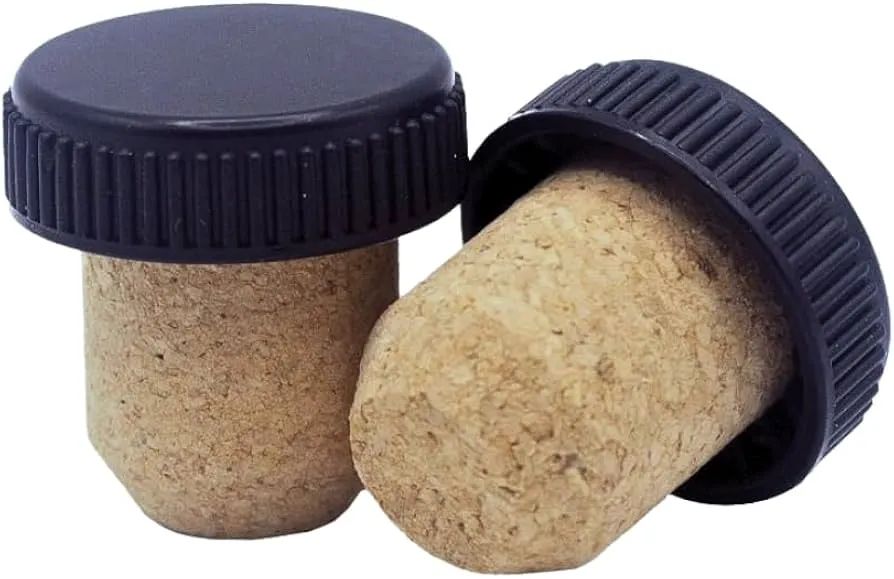
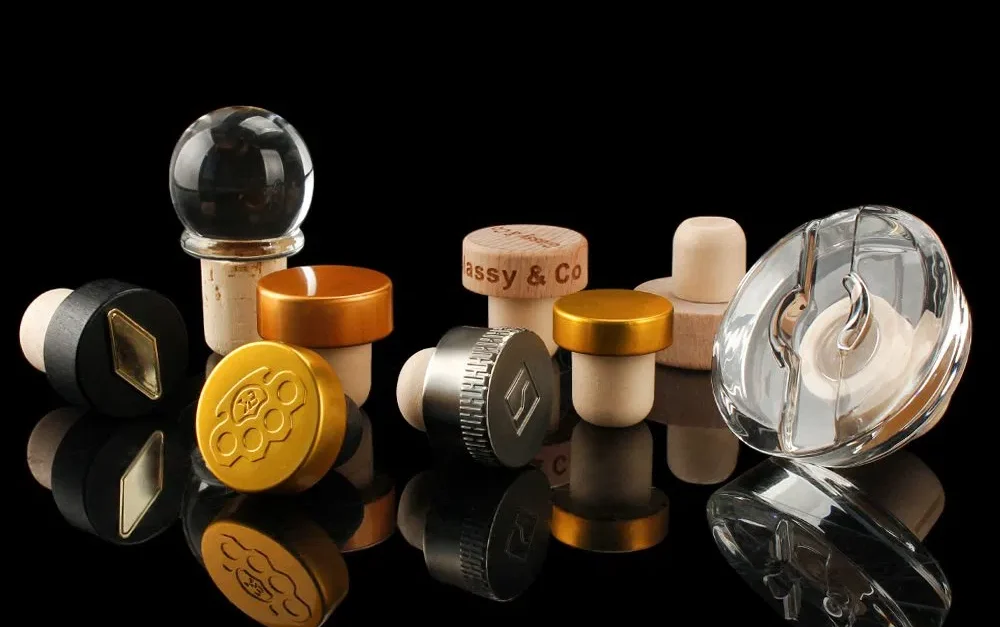
Custom aluminium bottle stoppers are closures made with a visible aluminium top and a sealing shank that fits into the bottle neck. The aluminium head carries the brand image, while the shank provides insertion resistance, recorking feel and sealing behavior.
These closures are also known as aluminium bar-top stoppers, aluminium T-corks, aluminium T-top stoppers, metal bar-top closures and aluminum top cork stoppers. In most spirits packaging projects, these names describe a similar closure format: a decorated head attached to a cork, synthetic cork, TPE or polymer shank.
The aluminium head affects visual quality. The shank affects technical performance. Both parts must be designed together because a premium-looking stopper will not succeed if it feels loose, sits crooked, scratches easily or does not match the bottle neck.
Why Spirits Brands Choose Aluminium Bottle Stoppers
Spirits brands choose custom aluminium bottle stoppers because they combine premium appearance, flexible decoration and scalable production. Aluminium is lightweight, durable and suitable for brushed, polished, matte, anodized, coated and color-matched finishes.
The stopper can also become part of the brand identity. Logos can be laser engraved, embossed, debossed, printed or decorated with foil effects. This turns the closure into a visible branding surface instead of a generic bottle accessory.
For B2B buyers, aluminium stoppers are practical because they can be used across craft spirits, premium spirits, private-label ranges, limited editions, gift packaging and export bottle programs. When fitment is confirmed correctly, they support both shelf presentation and repeatable closure performance.
Best Applications for Aluminium Bar-Top Stoppers
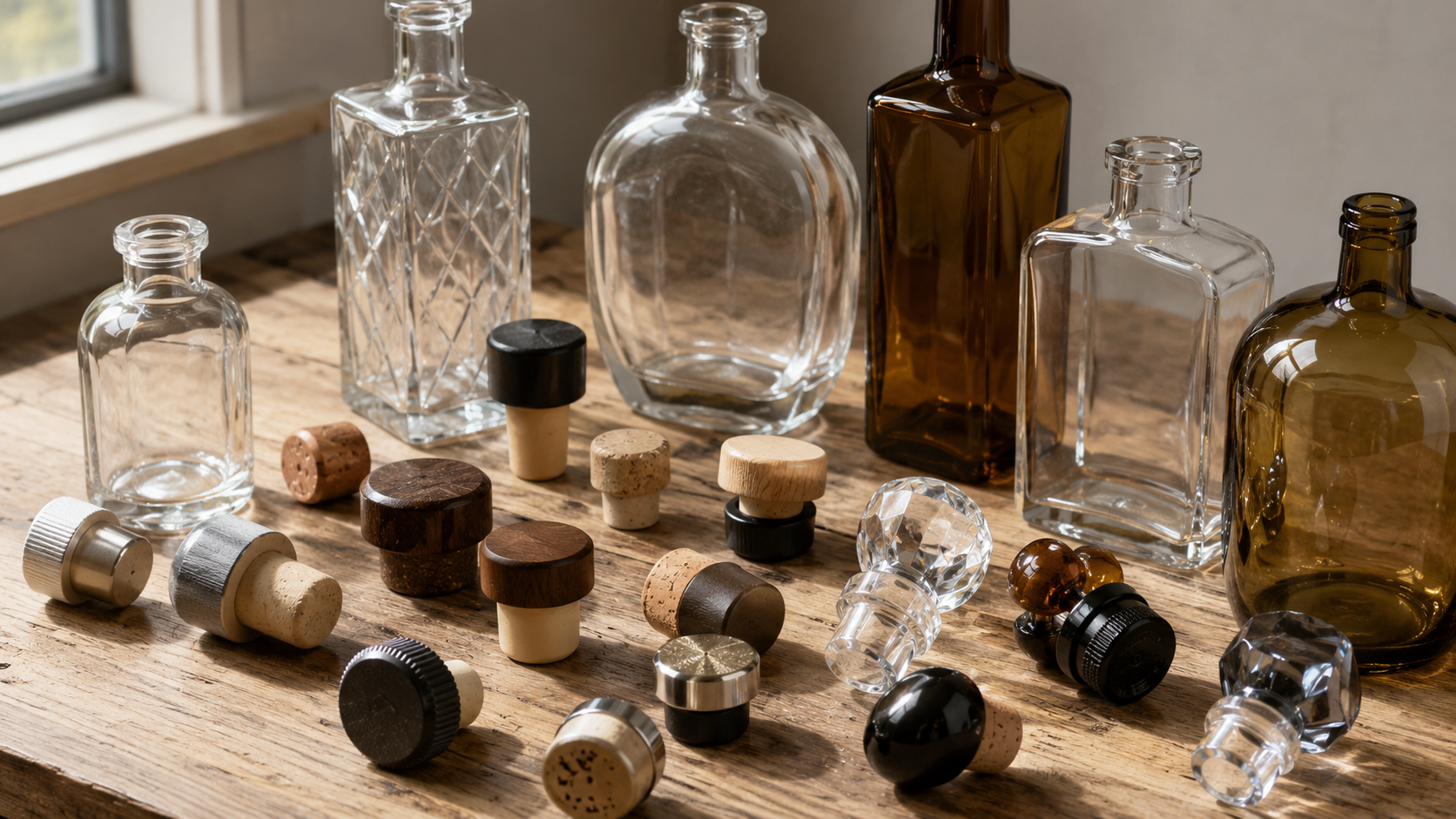
Custom aluminium bottle stoppers are widely used for whisky, bourbon, gin, rum, vodka, tequila, mezcal, brandy, cognac, liqueur and specialty spirits packaging.
For whisky and bourbon, aluminium stoppers work well with heavy-base glass bottles, square bottles and short-neck premium spirits bottles. Brushed silver, matte black, bronze and copper finishes can create a strong premium signal.
For gin, aluminium stoppers can support botanical, minimalist, colorful or contemporary packaging. Silver, white, green, black or custom color finishes can coordinate with label artwork, glass decoration and botanical positioning. When the bottle is still being developed, coordinating the stopper with Kandacork Spirits bottle formats can help the closure, neck finish and shelf presentation work as one packaging system.
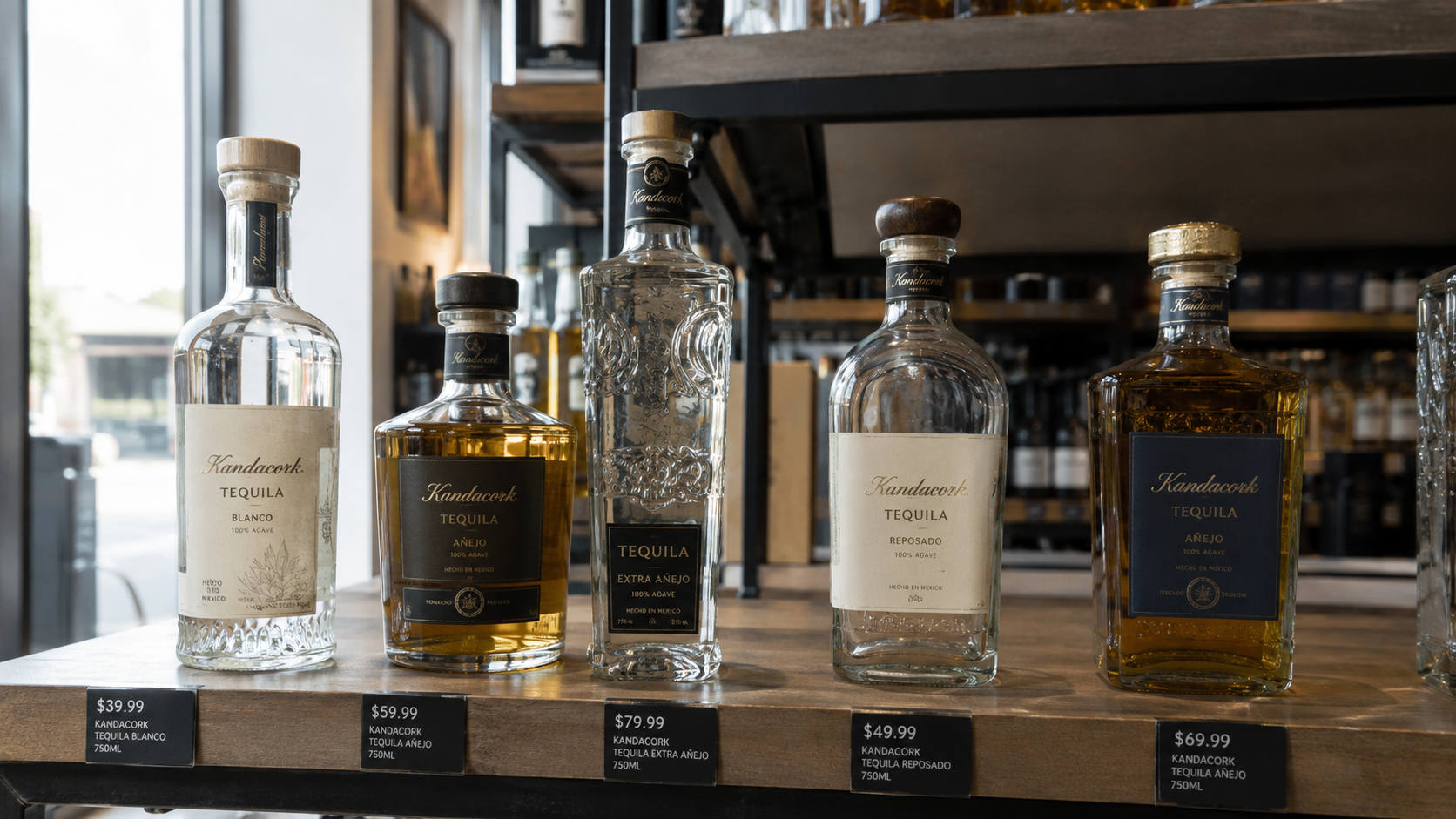
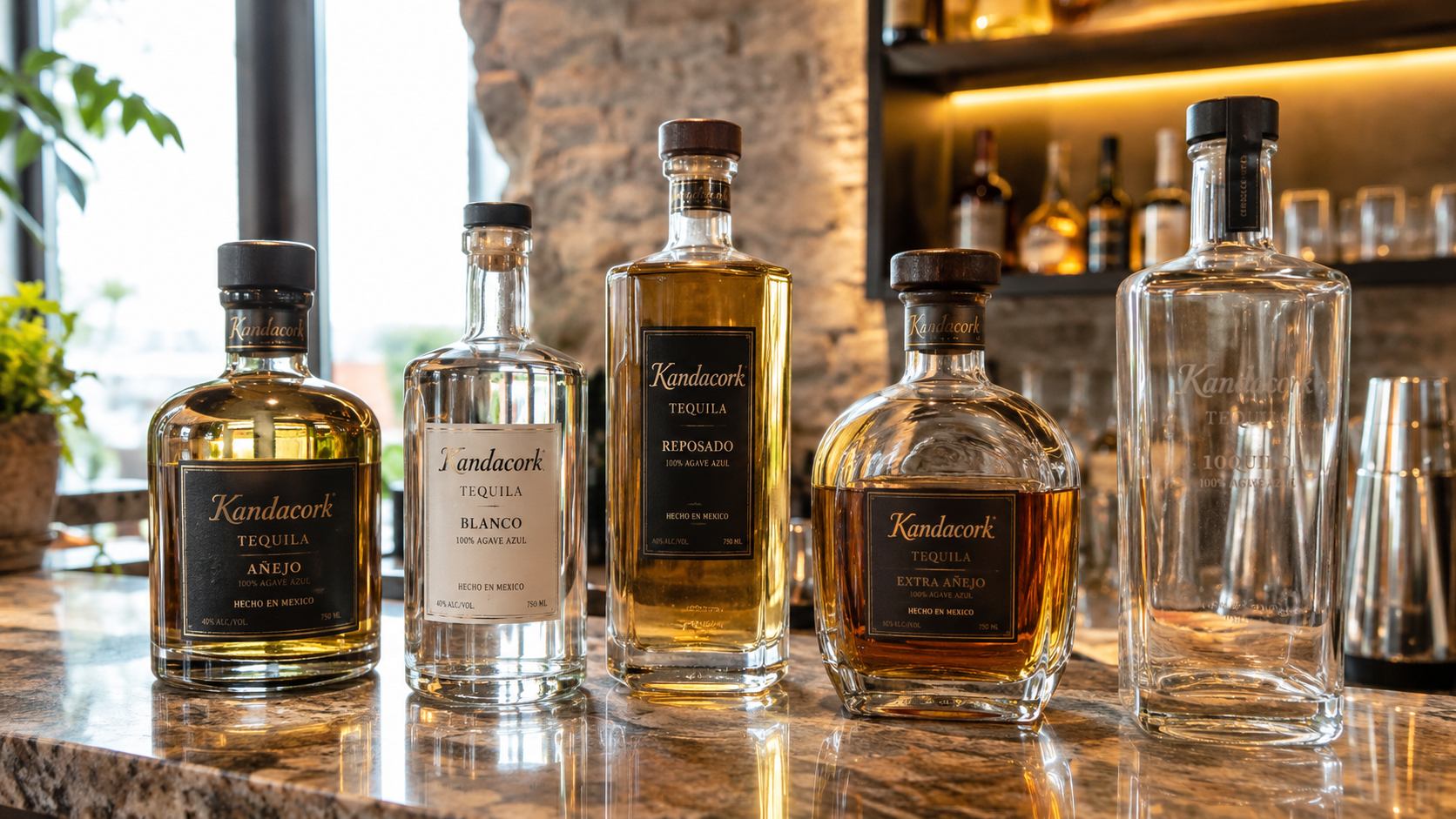
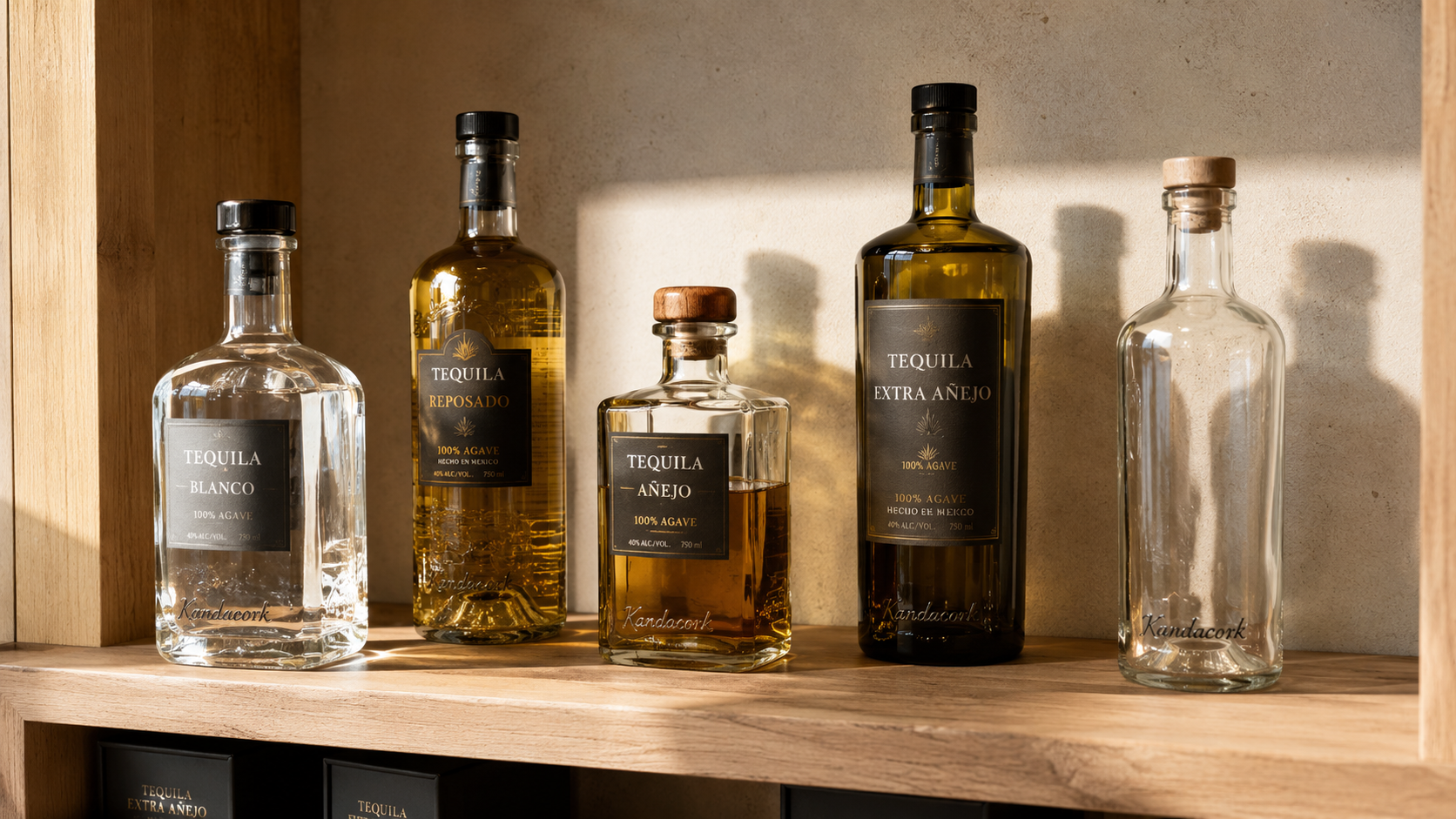
For rum, gold, bronze, copper and darker metallic tones can support aged, spiced or luxury positioning. For vodka, polished aluminium and black aluminium finishes often match clear glass, frosted bottles and tall cylindrical shapes. For tequila and mezcal, aluminium bar-top stoppers offer a modern alternative to wood, plastic or heavy metal closures.
Key Specifications Buyers Should Confirm
Before ordering custom aluminium bottle stoppers, buyers should confirm both visual and technical requirements. A stopper should be selected according to the bottle, product category, filling process, target market and desired consumer experience.
| Specification | Why It Matters | What the Buyer Should Provide |
|---|---|---|
| Bottle inner neck diameter | Controls shank fit and insertion resistance | Bottle drawing or physical bottle sample |
| Neck finish tolerance | Helps prevent loose or overly tight fit | Technical drawing or bottle supplier specification |
| Shank material | Affects compression, opening feel and sealing behavior | Synthetic cork, natural cork, TPE or polymer preference |
| Aluminium head shape | Defines closure style and grip experience | Reference photo, drawing or custom design brief |
| Surface finish | Controls shelf appearance and brand positioning | Matte, polished, brushed, anodized or coated reference |
| Logo method | Affects branding clarity and durability | AI, PDF, EPS or SVG artwork |
| Order quantity | Impacts MOQ, pricing and production planning | Estimated sample and bulk quantity |
| Target market | Affects documentation and compliance expectations | US, EU, UK, China or other destination |
| Packing requirement | Protects surface quality during shipping | Carton, tray, bag or export packing request |
This information helps Kandacork Closures recommend a closure based on real packaging requirements instead of appearance alone.
Procurement Checklist for Custom Aluminium Bottle Stoppers
A clear procurement checklist helps buyers reduce sampling delays and avoid unsuitable stopper choices.
| Buyer Checklist | Required Information |
|---|---|
| Bottle fitment | Bottle drawing, sample bottle, inner neck diameter and neck finish tolerance |
| Branding | Vector logo, logo placement and preferred decoration method |
| Finish | Matte, polished, brushed, anodized, coated or color reference |
| Shank | Synthetic cork, natural cork, TPE or polymer preference |
| Order plan | Sample quantity, bulk quantity and target launch date |
| Target market | Destination country and documentation needs |
| Packing | Inner packing, carton packing, pallet requirements and shipping method |
| Approval standard | Golden sample, finish tolerance and logo approval details |
This checklist is especially useful for whisky, gin, rum, vodka and tequila projects where bottle design, closure fit and brand presentation must be approved together.
Aluminium Head and Sealing Shank Structure
A typical aluminium bar-top stopper has three key parts: the aluminium head, the sealing shank and the assembly interface.
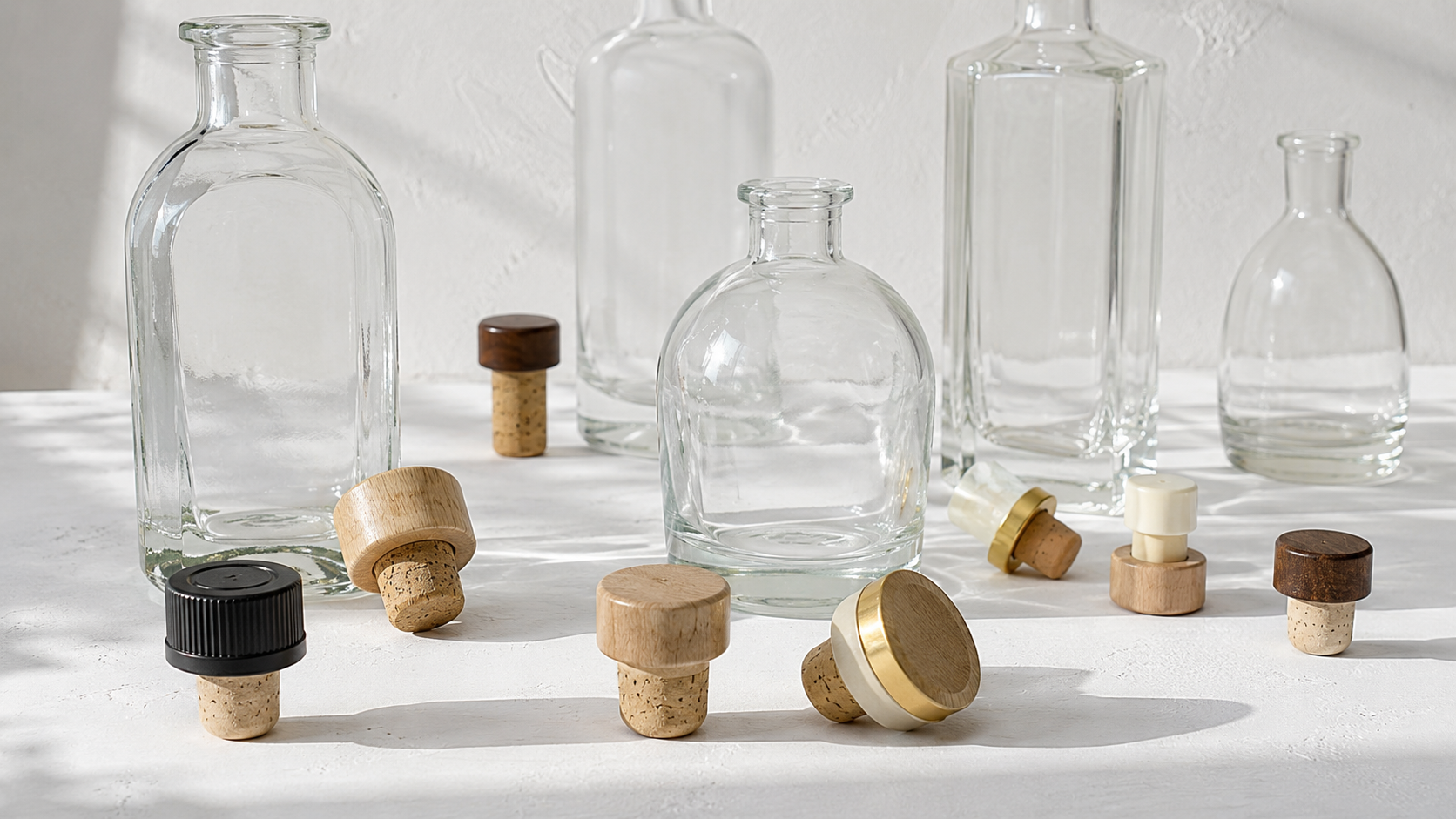
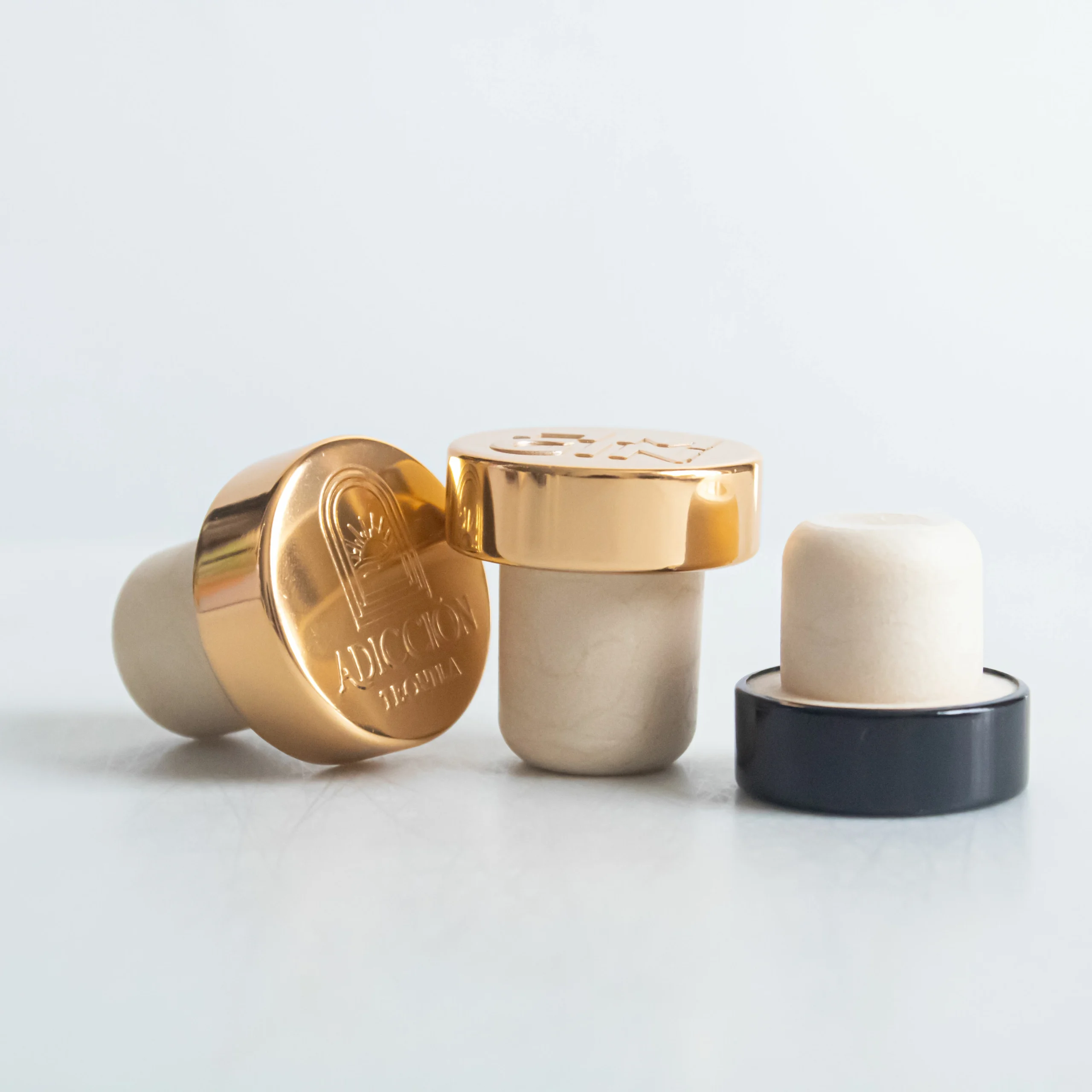
The aluminium head is the visible top. It may be flat, rounded, tall, short, cylindrical, stepped or custom shaped. This part carries the finish, color and brand decoration.
The shank is inserted into the bottle neck. It may be made from synthetic cork, natural cork, micro-agglomerated cork, TPE or another suitable polymer. For projects that require stable compression and clean repeatability, custom synthetic bottle stoppers can be a practical reference point when comparing shank behavior.
The assembly interface connects the head and shank. It must be stable enough to handle insertion, removal, recorking and shipping vibration. Poor assembly can lead to crooked stoppers, loose shanks or inconsistent opening feel.
How to Choose the Right Shank Material
The best shank material depends on the bottle neck, spirits category, filling process and brand positioning. Synthetic cork is often selected for consistency, natural cork for a traditional premium cue, and TPE or polymer shanks for controlled elasticity and repeatable fit.
Synthetic cork shanks are common in bulk spirits packaging because they provide stable dimensions and predictable compression. They are practical for buyers who need repeatable performance across large production runs.
Natural cork shanks create a classic, heritage feel. They can work well for whisky, rum, brandy and craft spirits brands that want a more traditional closure story. However, natural material variation should be considered during testing.
TPE and polymer shanks can provide controlled flexibility and uniform performance. They may be suitable for projects where consistent insertion resistance, reliable recorking or modern closure engineering is a priority.
There is no universal best shank material. The correct choice should be confirmed by reviewing the bottle drawing, testing real bottle samples and approving the desired opening feel.
Bottle Neck Fitment Comes First
Bottle neck fitment is the most important technical step when ordering custom aluminium bottle stoppers. The stopper must match the bottle’s inner neck diameter, neck tolerance and finish. If the shank is too small, the closure may feel loose. If it is too large, insertion may be difficult and the consumer may struggle to open the bottle.
Fitment should be checked before bulk production. The best approach is to send bottle drawings or real bottle samples to Kandacork Closures. This allows the stopper dimensions and shank material to be reviewed against the actual bottle.
Fitment also depends on the use case. A limited-edition gift bottle assembled by hand may have different closure requirements from a high-volume spirits bottle running on an automated filling line. Export shipping, storage temperature and repeated opening can also influence the final stopper choice.
Common Fitment Problems and Solutions
| Problem | Possible Cause | Recommended Solution |
|---|---|---|
| Stopper feels loose | Shank diameter too small or bottle neck tolerance too wide | Review inner neck diameter and test a larger shank |
| Stopper is hard to insert | Shank diameter too large or material too firm | Adjust shank size or choose a different shank material |
| Stopper leans in the bottle | Poor shank alignment or uneven neck finish | Check assembly tolerance and test with real bottle samples |
| Stopper scratches easily | Insufficient packing protection or delicate finish | Use protective packing and inspect finish durability |
| Logo looks unclear | Artwork too detailed or wrong decoration method | Simplify artwork or choose a more suitable branding method |
| Bulk order differs from sample | Finish variation or unclear approval standard | Confirm a golden sample before mass production |
This troubleshooting approach gives buyers a practical way to identify issues before they become expensive production problems.
Custom Logo Options for Aluminium Bottle Stoppers
Custom aluminium bottle stoppers can be decorated in several ways. The best method depends on logo design, finish, quantity, durability requirement and budget.
Laser engraving is suitable for fine text, minimalist brand marks and premium metallic effects. It creates a clean and durable appearance.
Embossing creates a raised logo on the aluminium head. This gives the closure a tactile premium effect and can make the stopper feel more distinctive.
Debossing creates a recessed logo. It is often used for luxury spirits packaging because the branding looks subtle and refined.
Silk screen printing and pad printing can add color logos, text or decorative elements. These methods are useful when the closure must match label colors or brand identity systems.
Hot foil effects can add gold, silver, copper or other metallic accents. This method works well for whisky, rum, brandy and gift packaging projects. For brands that need bottle decoration, stopper graphics and packaging artwork to align, Kandacork Decor can support a coordinated decoration direction across the wider pack.
For the best result, buyers should provide vector artwork. AI, PDF, EPS and SVG files are usually more suitable than low-resolution JPG or PNG files.
Branding Method Comparison
| Branding Method | Best For | Main Advantage | Buyer Note |
|---|---|---|---|
| Laser engraving | Fine logos and text | Clean, durable metallic effect | Works best with simple artwork |
| Embossing | Raised brand marks | Strong tactile premium feel | May require tooling |
| Debossing | Subtle luxury branding | Refined recessed effect | Good for minimalist packaging |
| Silk screen printing | Color logos | Supports visible brand colors | Color matching should be sampled |
| Pad printing | Curved or smaller surfaces | Flexible logo placement | Useful for side decoration |
| Hot foil effect | Luxury accent details | Premium metallic highlight | Best for gold, silver or copper effects |
This comparison helps buyers quickly understand which decoration method fits their brand style and production plan.
Aluminium Stopper Finish Options
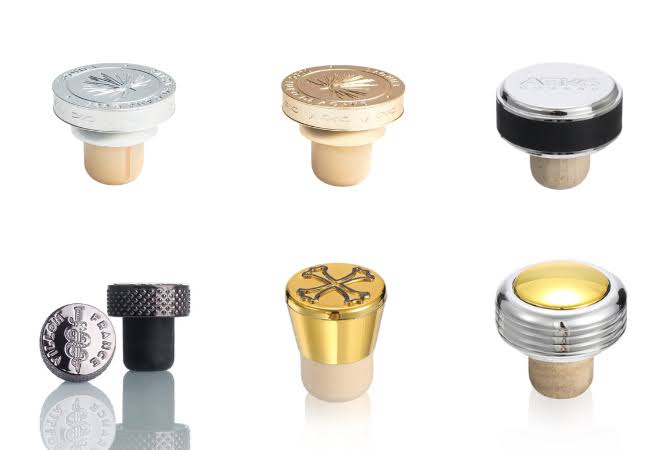
The finish of the aluminium head has a major impact on shelf appearance. A brushed aluminium finish suggests precision and modern quality. A polished finish creates a brighter and more premium look. A matte finish feels understated and contemporary.
Anodized aluminium can create strong color effects while maintaining a metallic character. Black, silver, gold, bronze, copper and custom tones are common choices. Coating can also be used when the brand needs a specific color direction. Kandacork Closures can help buyers compare colors and finishes for spirits closures before sample approval.
Color consistency matters, especially for luxury spirits packaging. The stopper may need to match label foil, bottle decoration, carton printing or capsule color. Buyers should approve physical samples before bulk production when exact color matching is important.
Sidewall, Grip and Consumer Feel
The top surface is not the only branding area. Sidewall texture, height, profile and grip can also influence how the closure feels in the hand. A smooth aluminium sidewall can look clean and minimalist, while a ribbed, grooved or textured sidewall can improve grip and add visual detail.
For bar-top stoppers, sidewall design should be matched to the head shape, bottle neck proportion and closure diameter. Tall heads can create stronger shelf presence, while shorter heads may suit compact bottles, miniatures or understated luxury packs. Buyers who want a more distinctive closure profile can explore sidewall design options for spirits closures as part of the stopper development process.
A good stopper should look right, feel balanced and open comfortably. If the closure is too slippery, too sharp or too bulky for the bottle, the premium effect may be reduced.
Buyer Goal and Stopper Recommendation
Different spirits brands need different closure directions. A premium whisky bottle, botanical gin bottle and private-label vodka project may all use aluminium stoppers, but the ideal design may be different.
| Buyer Goal | Recommended Stopper Direction |
|---|---|
| Premium metallic appearance | Aluminium head with engraved or debossed logo |
| High-volume consistency | Synthetic cork or polymer shank |
| Heritage spirits image | Natural cork shank with brushed or bronze aluminium head |
| Strong shelf contrast | Matte black or anodized aluminium finish |
| Gift-box presentation | Polished, foil-decorated or embossed aluminium top |
| Minimalist vodka packaging | Silver, black or white aluminium head with laser engraving |
| Luxury rum or brandy packaging | Gold, bronze, copper or dark metallic finish |
| Private-label spirits line | Standard aluminium head with custom logo and tested shank fit |
This decision table helps buyers connect brand goals with practical closure specifications.
Aluminium vs Wood, Plastic, Heavy Metal and Glass Stoppers
Custom aluminium bottle stoppers are one option among several spirits closure materials. The right choice depends on brand positioning, closure weight, visual style, budget and filling environment.
Aluminium is best when the brand wants a modern metallic look, flexible decoration, moderate weight and scalable production. It works well for premium, craft and private-label spirits packaging.
Wood stoppers are best when the brand wants a natural, warm or craft image. They can suit whisky, rum and tequila packaging, but natural grain and color may vary.
Plastic stoppers are usually more cost-sensitive. They offer color flexibility but may not provide the same premium feel as aluminium, wood or metal.
Heavy metal stoppers can create strong weight and sculptural detail. They are suitable for luxury projects but may increase cost and closure weight. For buyers comparing more substantial closure options, custom metal bottle stoppers can provide a useful benchmark.
Glass or crystal stoppers can look elegant and decorative. They are often used for decanters and gift packaging, but they need careful handling and may not suit every filling environment.
How Kandacork Closures Develops a Custom Aluminium Stopper
Kandacork Closures follows a practical development process to help buyers move from concept to production with fewer delays.
The process begins with requirement review. The buyer provides the bottle type, spirits category, target quantity, logo artwork, preferred finish and market destination.
Next, the bottle neck is assessed. Kandacork Closures reviews bottle drawings or physical bottle samples to understand inner neck diameter, tolerance and fitment requirements.
After that, the head shape and finish are recommended. Buyers can choose from standard aluminium head styles or request a more customized shape depending on the project.
The logo method is then selected. Kandacork Closures reviews whether laser engraving, embossing, debossing, printing or foil decoration is most suitable for the artwork and finish.
Samples are produced for fitment and visual approval. The buyer checks the stopper with the real bottle, reviews the logo effect and confirms the finish. Once the sample is approved, a golden sample can be confirmed as the production reference.
Bulk production follows the approved specification. During production, key inspection points include head finish, logo clarity, shank dimensions, assembly alignment and packing condition. Finally, export packing is arranged to protect the aluminium surface during shipment.
MOQ, Sampling and Production Lead Time
MOQ for custom aluminium bottle stoppers depends on head shape, logo method, surface finish, shank material, tooling and order complexity. A standard aluminium head with a common finish may have a different MOQ from a fully custom molded head with special decoration.
Sampling is highly recommended before bulk production. A sample allows the buyer to check finish, logo position, color, shank fit, opening feel and compatibility with the bottle.
Production lead time depends on design complexity, sample approval speed, raw material availability, surface treatment, logo method and order quantity. Buyers should begin closure development early, especially for seasonal launches, limited editions and export spirits programs.
A practical workflow includes requirement review, bottle drawing confirmation, stopper recommendation, sample production, sample testing, final approval, bulk production, inspection and export packing.
Quality Control for Custom Aluminium Bottle Stoppers
Quality control should include both visual inspection and functional testing. The aluminium head should be checked for scratches, dents, coating defects, color variation and logo clarity.
The shank should be checked for diameter, length, alignment, compression and assembly strength. A poorly aligned shank may cause the stopper to sit crooked in the bottle. A weak assembly may create problems during opening or recorking.
Fit testing should be done with real bottle samples whenever possible. Even small differences in inner neck diameter can change the stopper’s performance.
Export packing should also be reviewed. Aluminium surfaces can be scratched if stoppers are not protected properly. Inner bags, trays, dividers, cartons and pallet protection can help maintain surface quality during shipping.
Food Contact and Market Compliance
Food-contact considerations matter for any closure component used near the bottle opening or product contact area. Requirements vary by target market, material structure and buyer documentation needs.
For the United States, buyers often review FDA information on packaging and food contact substances. For the European Union, food-contact materials should be reviewed under the relevant European Commission food contact materials framework.
Spirits brands selling in the U.S. may also need to consider TTB distilled spirits labeling requirements as part of broader packaging and market-entry planning. While labeling rules are separate from closure engineering, they influence the overall commercial readiness of the bottle.
For custom aluminium bottle stoppers, buyers should discuss shank material, coatings, adhesives, documentation, traceability and destination market before production. Compliance should be addressed early rather than after the order is complete.
Sustainability and Aluminium Closure Design
Aluminium has a strong recyclability story, and The Aluminum Association notes that aluminium can be recycled repeatedly, with a large share of aluminium ever produced still in use today through recycling systems. Buyers can review broader industry context through The Aluminum Association recycling information.
Still, packaging claims should be specific and responsible. A brand should avoid vague sustainability language unless the claim is supported by the actual closure structure and the recycling systems in the target market.
Sustainability is not only about material choice. A closure that fits correctly, avoids leakage, reduces rejected batches and protects surface quality during shipping can also reduce waste.
For spirits brands, practical sustainability can include sample approval before mass production, durable finishes, efficient packing, recyclable material selection and improved batch consistency. For complete bottle-and-closure packaging programs, Kandacork Glass can support broader glass bottle development alongside closure selection.
Traceability and Batch Consistency
Traceability helps buyers manage quality across production runs. For larger spirits programs, private-label supply chains and export orders, buyers may need to know which closure batch was used for a specific filling run.
Batch records can support investigation if there is a fitment issue, finish concern or shipment problem. The GS1 Global Traceability Standard provides a useful reference for how industries design and implement traceability systems.
For closure procurement, the principle is simple: product specifications, approved samples, batch labels, packing information and shipment records should be clear enough to support repeat orders and quality review.
Coordinating Closures With the Wider Packaging System
A stopper should not be selected in isolation. It should match the bottle neck, glass weight, label design, carton, capsule, shipping method and retail positioning. A premium stopper on an unsuitable bottle can look unbalanced, while a good bottle with a weak closure can reduce perceived value.
For multi-category packaging programs, Kandacork Glass Packaging can support broader glass packaging coordination where bottles, closures, decoration and accessories need to work together across a product range.
This integrated approach is useful for brands launching multiple SKUs, seasonal editions, gift packs or private-label lines. When the bottle, stopper and decoration are developed together, the final package is more likely to look intentional and perform consistently.
What Should Buyers Send for a Quotation?
To request a quotation, send the bottle drawing, bottle sample or neck finish dimensions. Also provide the target spirits category, order quantity, logo file, preferred aluminium finish, shank material preference, destination market and packaging requirements.
For logo decoration, vector artwork is preferred. For color matching, provide physical samples, color references or clear finish examples. For fitment review, send real bottle samples whenever possible.
If the project has a launch deadline, share the timeline early. Custom aluminium bottle stoppers should be developed alongside the bottle and label, not after all other packaging decisions are complete.
Request a Custom Aluminium Bottle Stopper Quote
Send your bottle drawing, sample bottle, artwork file, preferred finish and estimated order quantity through the Kandacork Closures quotation page. The team can review your requirements and recommend custom aluminium bottle stoppers matched to your spirits bottle, branding goals and bulk production plan.
FAQs
What are custom aluminium bottle stoppers?
Custom aluminium bottle stoppers are premium bottle closures made with an aluminium top and a sealing shank. They are commonly used for whisky, gin, rum, vodka, tequila, brandy, liqueur and other spirits bottles.
Are aluminium bottle stoppers suitable for spirits packaging?
Yes. Aluminium bottle stoppers are suitable for spirits packaging when the shank material, bottle neck dimensions and closure fit are confirmed before bulk production.
Can I add my logo to aluminium bottle stoppers?
Yes. Logos can be added through laser engraving, embossing, debossing, silk screen printing, pad printing or hot foil effects. The best method depends on the artwork, finish and branding goal.
What is the best shank material for aluminium bottle stoppers?
The best shank material depends on the bottle and brand positioning. Synthetic cork is often used for consistency, natural cork creates a traditional premium feel, and TPE or polymer shanks can support controlled fit and repeatable performance.
What is the difference between aluminium bar-top stoppers and aluminium T-top stoppers?
In many spirits packaging projects, aluminium bar-top stoppers and aluminium T-top stoppers refer to the same closure style: an aluminium top connected to a sealing shank that fits into the bottle neck.
How do I know whether the stopper will fit my bottle?
The best way is to test the stopper with a real bottle sample or review the technical bottle drawing. Inner neck diameter, tolerance and shank compression should be checked before bulk production.
What affects the MOQ of custom aluminium bottle stoppers?
MOQ is affected by head shape, surface finish, logo method, color customization, tooling, shank material, order quantity and packing requirements.
How long does a custom aluminium stopper project take?
Lead time depends on design complexity, tooling, sample approval, finish process, decoration method and order quantity. Buyers should begin stopper development early in the packaging timeline.
Are aluminium bottle stoppers recyclable?
Aluminium is widely recyclable, but recyclability claims should be based on the exact closure structure and the recycling systems in the target market.
How do I order custom aluminium bottle stoppers in bulk?
Send Kandacork Closures your bottle drawing or sample, logo artwork, preferred finish, shank material, order quantity and target market. The team can review fitment, recommend specifications and prepare a quotation.
What is the difference between aluminium and aluminum bottle stoppers?
Aluminium and aluminum refer to the same material. Aluminium is commonly used in British English, while aluminum is commonly used in American English. Global buyers may use either term when searching for custom aluminium bottle stoppers or custom aluminum bottle stoppers.
Conclusion
Custom aluminium bottle stoppers are a practical choice for spirits brands that want premium appearance, custom branding and reliable closure performance. They can support whisky, gin, rum, vodka, tequila, brandy, liqueur and private-label packaging when the stopper is matched carefully to the bottle.
The best closure should not be selected by appearance alone. Buyers should confirm bottle neck fitment, shank material, aluminium head finish, logo method, MOQ, sampling, quality control, compliance needs and export packing before placing a bulk order.
Kandacork Closures helps brands develop custom aluminium bottle stoppers from concept to production. To start a project, prepare your bottle drawing, sample bottle, logo artwork, preferred finish and target quantity so the closure recommendation can be matched to your real packaging requirements.