Introduction
Wooden stoppers with cork shanks need accurate bottle neck matching to achieve stable sealing and a comfortable opening feel. This guide explains cork shank size, compression, insertion force, leakage testing and sample approval.
What Are Wooden Stoppers with Cork Shanks?
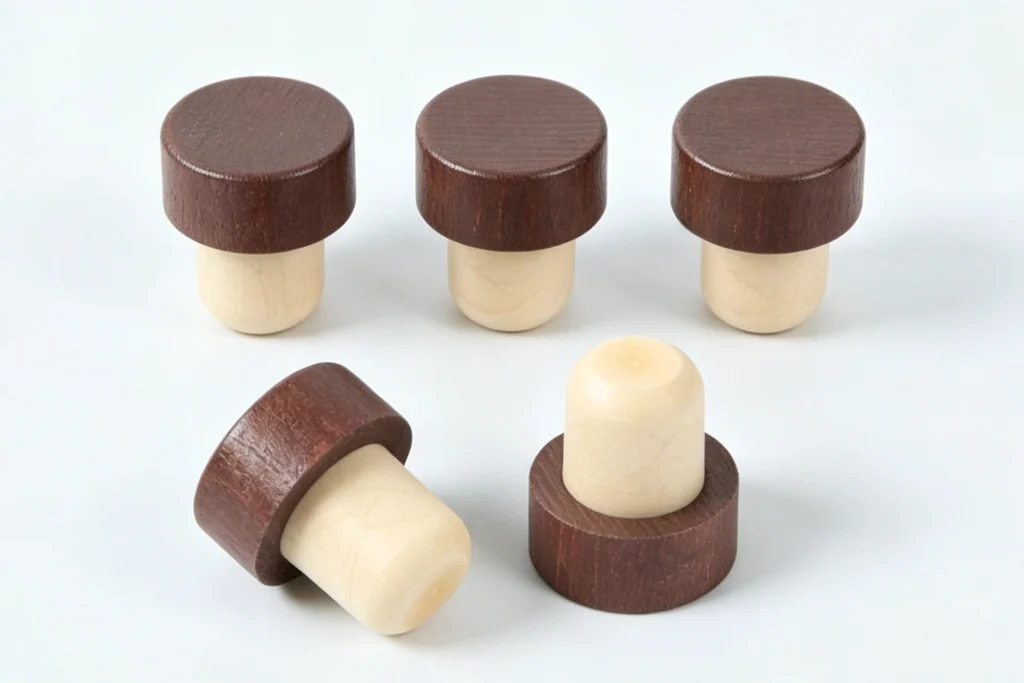
Wooden stoppers with cork shanks are bottle closures made from a visible wooden head and a cork-based insert that fits into the neck of the bottle. They are also called wood top corks, wooden bar-top stoppers, T-top cork closures, wood head cork stoppers, or cork shank bottle closures.
The wooden head provides the visual and tactile value. It can be natural, stained, painted, varnished, matte, glossy, engraved, printed, hot stamped, or shaped into a custom profile. The cork shank provides compression against the inner bottle neck, helping the stopper remain secure during normal handling and resealing after opening.
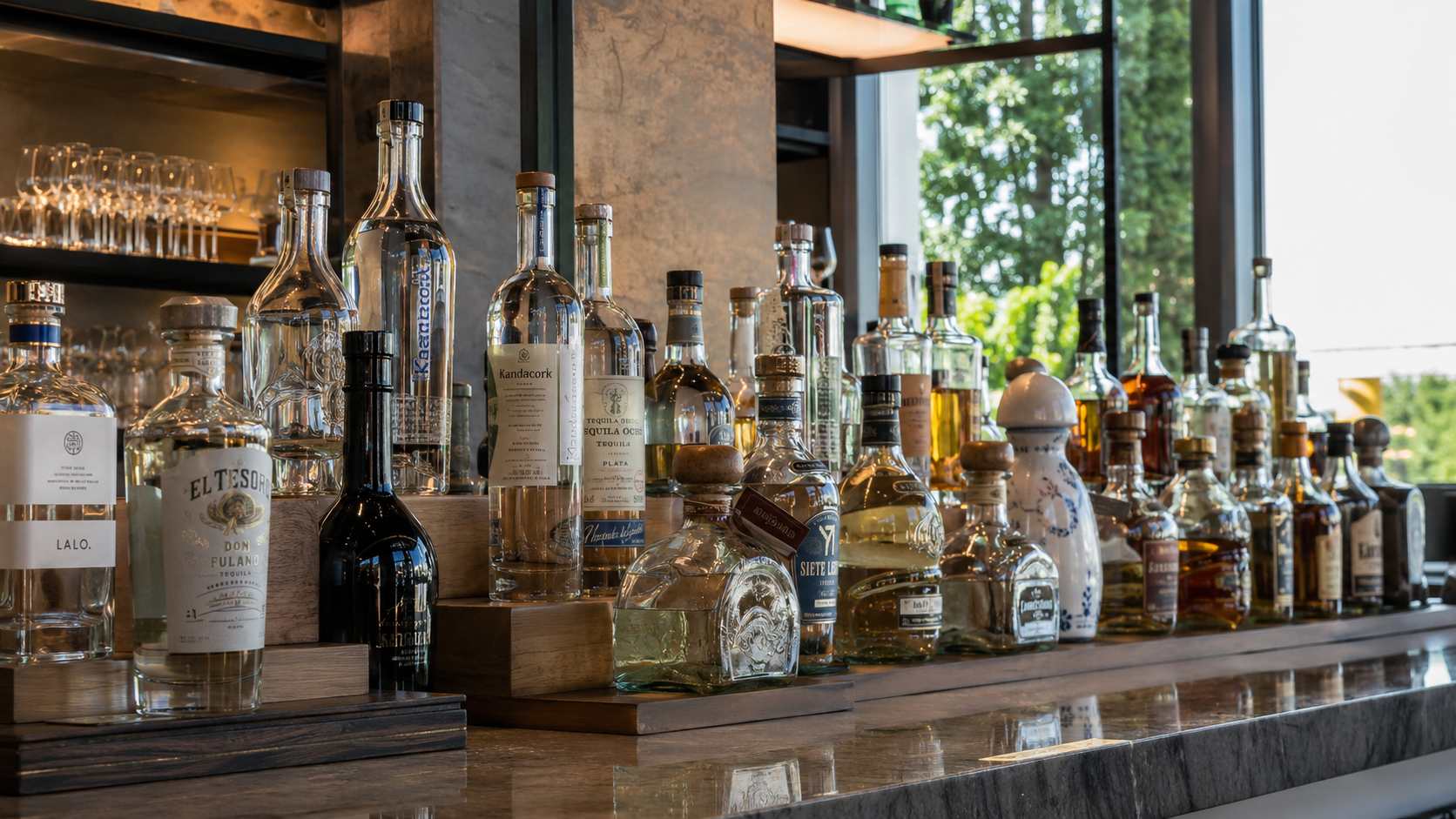
This combination is especially useful for premium spirits because it balances function and brand presentation. A whisky brand may prefer a dark stained wood head with a natural cork shank. A botanical gin may use a lighter natural wood finish. A tequila or vodka line may choose a black matte head with metallic decoration for a more modern identity.
Why Spirits Brands Choose Wooden Stoppers with Cork Shanks
Spirits brands choose wooden stoppers with cork shanks because they offer natural texture, strong hand feel, and premium packaging value. Compared with a basic plastic cap, a wood top cork gives the bottle a more crafted and memorable opening experience.
The cork shank also supports a familiar pull-and-reseal action. Spirits bottles are often opened and closed many times after purchase, so the stopper needs to feel secure without being difficult to remove. A properly matched cork shank helps create that balance.
For B2B buyers, the value is both commercial and technical. Wooden stoppers with cork shanks can support premium positioning, custom packaging, bottle compatibility, visual differentiation, gift-pack appeal, and repeatable bulk production. They are suitable for new product launches, brand refreshes, export programs, craft spirits, and private-label projects.
How to Choose Wooden Stoppers with Cork Shanks
Choosing wooden stoppers with cork shanks should begin with bottle fit. Appearance matters, but the closure must first match the neck finish, inner diameter, insertion depth, and filling process.
| Buyer step | What to decide | Why it matters |
|---|---|---|
| Confirm bottle neck data | Inner diameter, neck finish, insertion depth, and tolerance | Prevents loose fit, leakage, or excessive insertion force |
| Choose cork shank type | Natural cork, micro-agglomerated cork, synthetic, or hybrid | Affects appearance, compression, consistency, and resealing |
| Select wooden head style | Shape, diameter, height, wood species, and finish | Controls shelf appeal, grip, and brand impression |
| Confirm decoration method | Engraving, printing, hot stamping, color filling, or inserts | Supports logo clarity and production readiness |
| Test samples | Fit, pull-out force, resealing, finish, and logo quality | Reduces risk before bulk production |
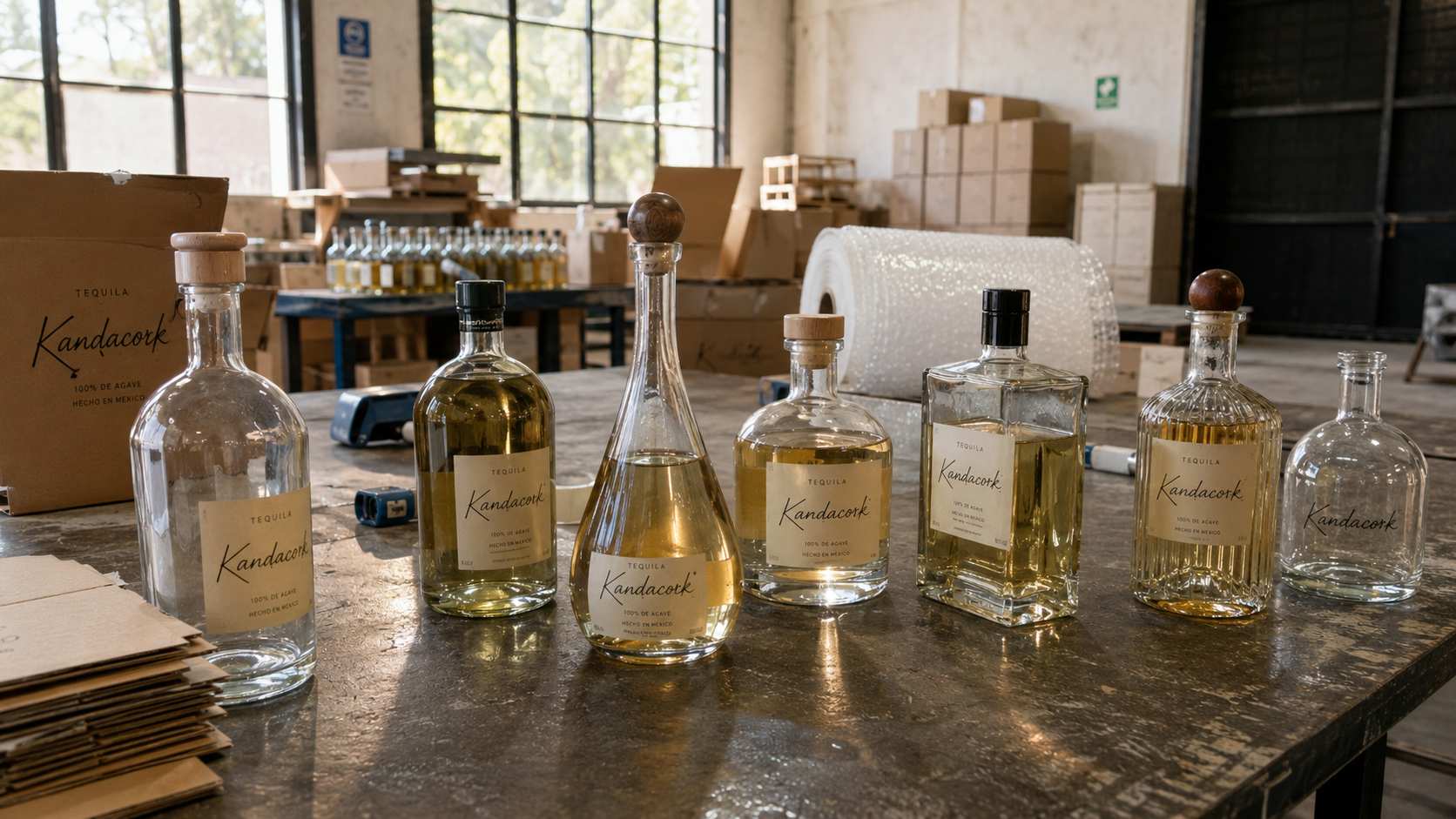
Kandacork Closures typically starts by reviewing bottle drawings or physical bottle samples. The team can then recommend shank dimensions, wooden head style, finish direction, decoration method, and sample testing steps before mass production.
Technical Specifications Buyers Should Confirm
A clear specification sheet helps prevent sourcing delays and closure-fit problems. Before ordering custom wooden stoppers with cork shanks, buyers should confirm the main product attributes with the supplier.
| Specification | Buyer should confirm |
|---|---|
| Shank material | Natural cork, micro-agglomerated cork, synthetic, or hybrid |
| Shank diameter | Matched to the actual bottle neck inner diameter |
| Insertion depth | Confirmed by bottle neck design and desired stopper seating height |
| Wooden head size | Diameter, height, shape, and grip profile |
| Wood type | Beech, birch, maple, or another suitable wood option |
| Finish | Natural, stained, painted, matte, glossy, varnished, or soft-touch |
| Decoration | Laser engraving, hot stamping, pad printing, embossing, debossing, or insert |
| Fit testing | Insertion force, pull-out force, resealing, leakage, and carton clearance |
| Documentation | Material declaration, coating details, batch traceability, and inspection criteria |
| Production details | Sample quantity, MOQ, lead time, packaging method, and launch schedule |
This level of detail is especially important for spirits brands, bottle decorators, packaging distributors, and private-label buyers that need consistent performance across multiple batches or SKUs.
Wooden Head and Cork Shank: How the Closure Works
A wooden stopper has two jobs. It must look right for the brand, and it must fit correctly inside the bottle. The wooden head and cork shank must therefore be developed together.
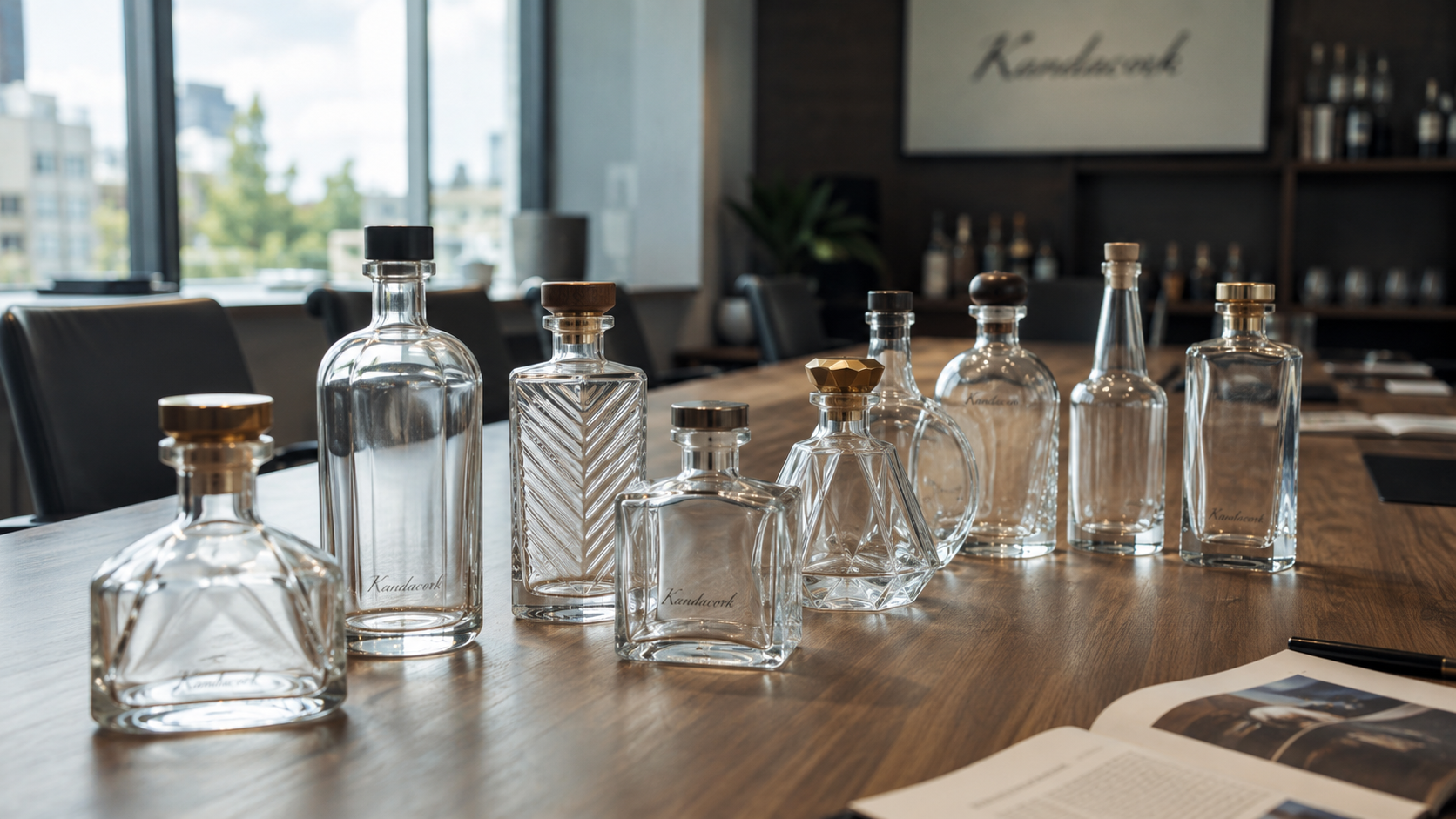
The wooden head controls appearance, grip, logo visibility, and consumer perception. It can be flat, domed, beveled, mushroom-shaped, cylindrical, faceted, tall, low-profile, or custom-machined. It can also be designed to match the bottle shoulder, label style, capsule color, gift box, or secondary packaging.
The cork shank controls functional performance. It affects insertion force, pull-out force, sealing contact, resealing feel, and closure stability. If the shank is too small, the stopper may feel loose. If it is too large, it may be difficult to insert or remove.
For premium spirits packaging, the stopper should feel secure but not forced. The consumer should be able to remove it smoothly and reseal it with confidence. That balance depends on accurate bottle neck review and controlled shank sizing.
Main Cork Shank Options
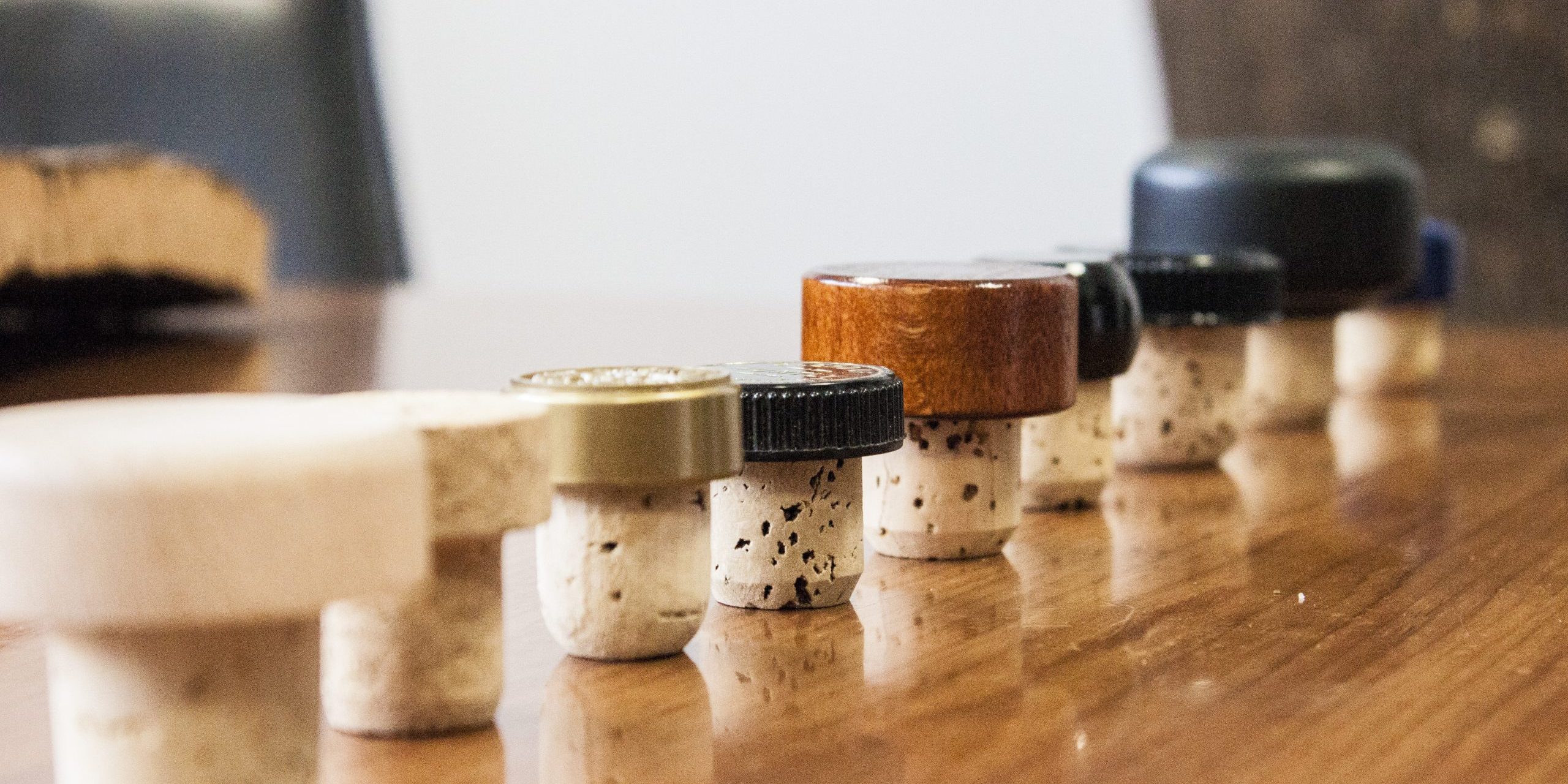
Natural Cork Shank
A natural cork shank is chosen for traditional appearance, natural texture, and premium packaging value. It is often suitable for craft spirits, aged whisky, rum, brandy, small-batch releases, and heritage-style bottles.
Natural cork gives each stopper a more organic look. This can support a craft or luxury brand story, especially when paired with visible wood grain. However, because cork is a natural material, buyers should define acceptable limits for surface appearance, pores, color range, and dimensional tolerance.
Natural cork shanks are best for brands that want authenticity, tactile appeal, and a classic closure experience.
Micro-Agglomerated Cork Shank
A micro-agglomerated cork shank is made from processed cork granules formed into a more consistent structure. It can offer a practical balance between cork-based appearance and improved production consistency.
This option is useful for mid-volume and higher-volume spirits programs where the buyer wants cork character but also needs reliable sizing, compression, and batch repeatability. It can work well for private-label spirits, export packaging, and scalable premium product lines.
Buyers should evaluate density, surface quality, compression behavior, pull-out force, insertion feel, and resealing performance before approving micro-agglomerated cork shanks for bulk production.
Synthetic or Hybrid Shank Alternatives
Some projects may compare cork shanks with synthetic or hybrid shank options. Synthetic shanks may provide tighter dimensional repeatability and can be considered when production consistency is the main priority.
However, cork shanks remain highly attractive for spirits brands that want a more natural material story, traditional opening feel, and premium packaging language. For many craft, luxury, and heritage-positioned spirits, wooden stoppers with cork shanks offer the right balance of design and function.
Cork Shank Comparison
| Shank type | Best for | Main advantage | Watch point |
|---|---|---|---|
| Natural cork shank | Craft spirits, aged rum, whisky, brandy | Authentic natural appearance and traditional feel | More visual variation than engineered materials |
| Micro-agglomerated cork shank | Premium bulk programs, private label, export lines | Better dimensional consistency with cork-based structure | Less rustic appearance than natural cork |
| Synthetic or hybrid shank | Large-volume lines or special technical needs | Strong repeatability and controlled dimensions | Less natural material story |
| Custom cork-based shank | Premium custom spirits packaging | Can be matched to bottle, brand, and filling needs | Requires sample testing before approval |
Buyers comparing wider stopper categories can also review other bottle stoppers and closures to decide whether wood, plastic, metal, glass, screw caps, or ROPP closures better fit the brand and filling line.
Matching Cork Shank Size with Bottle Neck Finish
The most important technical step is matching the cork shank to the bottle neck. A stopper may look excellent, but if the fit is wrong, the packaging may fail during filling, shipping, retail handling, or consumer use.
Buyers should confirm the bottle neck inner diameter, stopper shank diameter, insertion depth, compression ratio, and bottle tolerance. The closure should also be tested for insertion force, pull-out force, resealing behavior, and leakage risk under expected handling conditions.
Common market sizes such as 19.5 mm and 22.5 mm are useful references, but they should not replace actual bottle testing. Two bottles may look similar from the outside but have different internal neck profiles. A closure that fits one bottle may not fit another bottle correctly.
International cork testing references such as ISO cork stopper physical test standards show why dimensions, recovery, and physical behavior matter when cork components are used in closure applications. For a spirits stopper project, the practical goal is not only to meet a nominal size but to confirm repeatable performance with the real bottle.
Bottle Fit Testing Checklist
| Test item | What to check | Buyer benefit |
|---|---|---|
| Neck inner diameter | Actual internal bottle neck measurement | Confirms shank size direction |
| Insertion depth | How far the cork shank enters the bottle | Controls seating position and visual height |
| Insertion force | How easily the stopper enters the neck | Supports production efficiency |
| Pull-out force | How firmly the stopper removes | Improves consumer experience |
| Resealing feel | Performance after repeated opening and closing | Confirms practical use after purchase |
| Leakage risk | Stability during handling and transport | Reduces packaging failure risk |
| Carton clearance | Fit with box, shipper, and display packaging | Prevents secondary packaging problems |
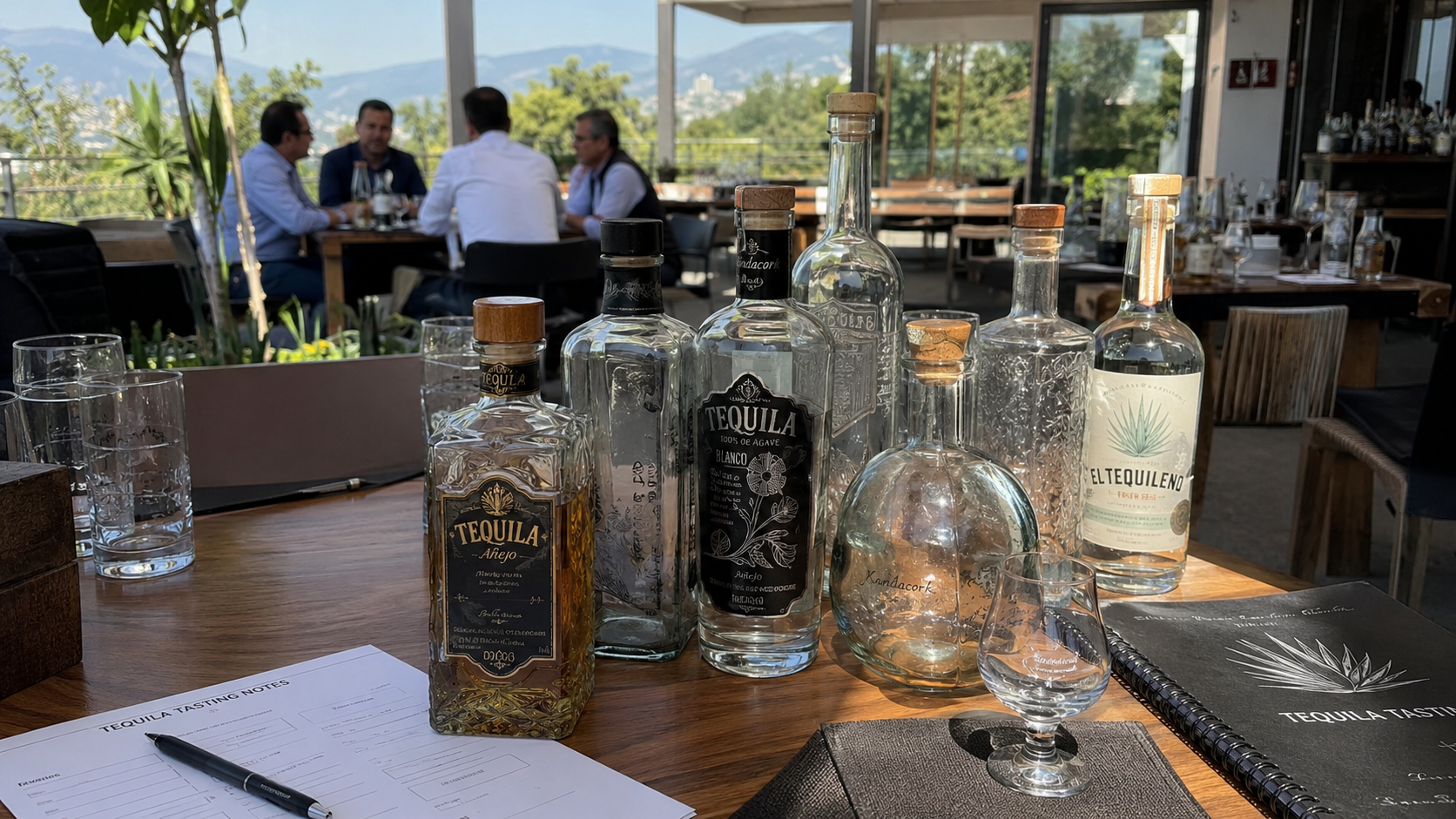
Kandacork Closures recommends testing real bottle samples before bulk production. This helps confirm final shank size, stopper height, top alignment, carton clearance, and consumer opening experience.
Wood Types, Head Shapes, and Surface Finishes
The wooden head is the most visible part of the stopper, so it should support the brand’s market position. The choice of wood type, head shape, finish, and decoration method can change how the whole bottle is perceived.
Common wood choices include beech, birch, maple, and other suitable hardwoods. Buyers compare these materials based on grain pattern, machining quality, finish absorption, color stability, availability, and price level.
Beech and birch are popular for many wooden stoppers because they can be machined cleanly and finished in different colors. Maple and other wood options may be selected for smoother grain, lighter color, or a more refined visual effect.
Popular head shapes include flat-top, domed, beveled, mushroom, cylindrical, faceted, tall, low-profile, and fully custom designs. A flat top is practical for engraving or hot stamping. A domed top creates a softer classic look. A taller head gives stronger shelf presence, while a low-profile stopper can keep the bottle silhouette elegant and compact.
Finish options include natural wood, clear varnish, matte coating, glossy coating, walnut stain, black stain, painted color, brand-matched finish, and soft-touch coating. Buyers can coordinate stopper colors with custom closure colors and finishes to create a more consistent bottle, label, capsule, and secondary packaging system.
Wood Finish Selection Guide
| Finish type | Best use | Brand effect |
|---|---|---|
| Natural wood | Craft gin, organic spirits, botanical liqueurs | Clean, natural, approachable |
| Walnut stain | Whisky, rum, brandy | Warm, aged, premium |
| Black matte finish | Tequila, vodka, limited editions | Modern, bold, luxury |
| Clear varnish | Broad premium spirits | Polished, protected, refined |
| Painted color | Private label or brand-matched packaging | Consistent, recognizable, commercial |
| Soft-touch finish | Luxury and gift packaging | Smooth, tactile, high-end |
When sustainability claims are important, buyers should confirm whether wood-origin documentation, recycled content claims, or chain-of-custody expectations apply. The Forest Stewardship Council chain-of-custody system is one recognized framework for tracing certified forest-based materials through supply chains.
Logo Branding and Decoration Options
Wooden stoppers with cork shanks can become a strong branding element when the wooden head is decorated correctly. The stopper top can carry a logo, emblem, crest, batch mark, brand icon, product symbol, or decorative pattern.
Laser engraving is a strong option for natural or stained wood. It creates a permanent mark and supports a craft or heritage style. Hot stamping can add metallic detail for luxury spirits. Pad printing works well for color logos. Color filling can make engraved artwork more visible. Embossed, debossed, or inserted decorative elements can be used for premium custom projects.
The best decoration method depends on logo detail, wood grain, surface coating, production quantity, and target price point. A fine-line logo usually needs a smoother surface and careful sample approval. A bold mark can work well on more textured or stained wood.
For complex decoration, bottle labels, capsules, cartons, and gift boxes should be evaluated as one brand system. Brands that need coordinated closure decoration can connect stopper design with spirits bottle decoration and branding so the wood head, bottle surface, label, and secondary packaging support the same visual language.
Performance Factors Buyers Should Test
A premium closure must perform consistently, not only look attractive in a sample photo. Before approving bulk wooden stoppers with cork shanks, buyers should test both appearance and function.
Seal reliability should be the first priority. The cork shank must maintain suitable contact with the bottle neck without creating excessive insertion force. The stopper should remain stable during normal handling and should reseal smoothly after repeated opening.
Pull-out force is another important detail. If the stopper is too loose, it may feel low quality or create leakage risk. If it is too tight, the opening experience may become frustrating. A premium spirits stopper should feel secure, controlled, and easy to use.
Appearance consistency should also be defined before mass production. Wood grain and cork texture naturally vary, so buyers should approve a realistic production range rather than one perfect sample. This helps avoid disputes and keeps expectations clear.
Other test points include odor neutrality, alcohol compatibility, cork dust risk, finish durability, logo abrasion resistance, batch consistency, and compatibility with cartons or gift boxes.
Compliance, Safety, and Quality Documentation
Wooden stoppers with cork shanks are packaging components that may come into contact with beverage products. Buyers should review food-contact suitability, material information, coating details, adhesive use, and documentation requirements for the target market.
For U.S. projects, the FDA explains that food-contact substances include packaging components and materials that come into contact with food, including substances applied to packaging surfaces such as adhesives or colorants. Buyers can use FDA food-contact packaging guidance as a starting point when discussing material suitability with suppliers.
For European markets, the European Commission states that Regulation (EC) No 1935/2004 provides the general principles of safety and inertness for food-contact materials. Spirits brands selling into the EU should consider relevant European food-contact material legislation when reviewing closure components, coatings, and supporting documentation.
Cork-specific guidance is also relevant. The European Directorate for the Quality of Medicines & HealthCare provides a technical guide for cork materials and articles for contact with food, which is useful for understanding how cork-based materials are discussed in food-contact applications.
Quality documentation can include material declarations, coating information, batch traceability, inspection criteria, dimensional checks, sample approval records, and packaging specifications. These details are especially important for export brands, private-label programs, and premium spirits sold through regulated retail channels.
Bulk Sourcing Checklist
To receive an accurate recommendation and quote, buyers should prepare a complete project brief before requesting samples.
Send the bottle drawing if available. Include the neck finish, inner diameter, outer diameter, bottle height, and any tolerance data. If drawings are not available, send physical bottle samples for measurement and stopper-fit testing.
Define the preferred wooden head shape, diameter, height, wood type, finish color, and decoration method. If the final style is not yet decided, share reference images, target retail positioning, and the spirit category.
Confirm the preferred cork shank direction. Natural cork may be best for craft and heritage positioning. Micro-agglomerated cork may be better for scalable premium production. Alternative shank materials may be considered when special filling-line requirements apply.
Also provide the target order quantity, forecast volume, destination market, filling method, packaging timeline, sample deadline, and required documentation. Buyers ready to start sampling can send these details through the custom closure quote page.
Request a Custom Stopper Sample
To request a custom stopper sample, send Kandacork Closures your bottle drawing, physical bottle sample, target stopper diameter, cork shank preference, wooden head style, finish color, logo artwork, expected order quantity, and launch timeline.
The team can review bottle fit, recommend shank size, suggest suitable wooden head options, prepare decoration samples, and support pre-production approval. This process helps reduce risk before bulk ordering and gives buyers a clearer path from concept to production.
For new spirits brands, this step can prevent costly packaging delays. For established brands, it can help improve closure quality, visual consistency, and supplier coordination across multiple SKUs.
Kandacork Closures Capabilities
Kandacork Closures can match cork shank size to supplied bottle drawings or physical bottle samples. This helps buyers confirm fit before moving into bulk production.
Kandacork Closures supports custom wooden head shapes, stained finishes, painted finishes, matte surfaces, glossy coatings, and brand-matched colors for spirits packaging.
Kandacork Closures can prepare pre-production samples for fit, pull-out force, resealing feel, finish appearance, and logo approval.
Kandacork Closures supports logo decoration methods such as laser engraving, hot stamping, pad printing, color filling, and premium decorative inserts.
Kandacork Closures also helps buyers compare material directions when wood is not the only option. Depending on the product tier, budget, and production line, brands may compare wood top corks with custom plastic T-top stoppers or custom metal stoppers before finalizing the packaging system.
Integrating the Stopper with the Full Spirits Package
A stopper performs best when it is developed as part of the complete bottle package, not as a separate accessory. The bottle shape, neck finish, label area, shoulder profile, closure height, carton structure, and retail display should be reviewed together.
Brands developing a new spirits line can coordinate stopper design with custom spirits bottle packaging so the bottle format and closure style work as one system. This is especially useful for whisky, rum, gin, tequila, and liqueur projects where bottle silhouette and closure profile strongly influence shelf recognition.
For projects that require integrated sourcing, Kandacork Glass packaging can help align glass bottles, closures, decoration, and packaging project direction. Buyers focused on recycled-content or sustainability-led bottle programs can also explore eco-conscious glass packaging options as part of the overall brand strategy.
Common Mistakes to Avoid
Choosing a stopper only by appearance is one of the most common mistakes. A beautiful wooden head cannot solve poor cork shank fit. Bottle compatibility, compression, insertion depth, and pull-out force should always be tested.
Approving color from a digital image is another common problem. Wood grain, stain absorption, and coating gloss can look different under factory lighting, retail lighting, and product photography. Physical samples provide a more reliable approval standard.
Using one stopper across different bottle molds without testing can also create problems. Even small differences in internal neck dimensions can affect fit and resealing performance.
Ignoring carton clearance may cause secondary packaging issues. A taller wooden head can improve shelf presence, but it must still fit the gift box, shipper, and retail display format.
Skipping resealing tests is also risky. Spirits bottles are opened and closed multiple times. The stopper should feel secure after repeated use, not only during the first insertion.
Why Work with Kandacork Closures
Kandacork Closures helps spirits brands, packaging buyers, bottle suppliers, and private-label producers develop custom wooden stoppers with cork shanks for premium bottle packaging.
Instead of choosing a generic catalog stopper, buyers can build a closure around the actual bottle neck, brand style, spirit category, decoration needs, and production schedule. This is especially valuable for whisky, rum, gin, tequila, brandy, vodka, liqueur, and craft spirits that need a distinctive shelf presence.
For a craft distillery, the right choice may be a natural wooden head with a natural cork shank and laser-engraved logo. For a private-label spirits line, it may be a black stained wood top with micro-agglomerated cork and hot-stamped branding. For a premium export project, the priority may be documentation, finish consistency, and pre-production testing.
Kandacork Closures can support stopper design, cork shank selection, wood finish development, logo decoration, sample testing, quality control, and bulk production planning.
FAQ
Are wooden stoppers with cork shanks suitable for spirits bottles?
Yes. Wooden stoppers with cork shanks are suitable for many spirits bottles when shank diameter, insertion depth, cork compression, pull-out force, and resealing performance are tested with the actual bottle neck before bulk production.
What is the best cork shank for a wooden stopper?
The best cork shank depends on brand positioning and production requirements. Natural cork works well for traditional craft packaging, while micro-agglomerated cork can provide more consistent structure for scalable premium production.
What sizes are common for wooden stoppers with cork shanks?
Common market sizes include 19.5 mm and 22.5 mm, but the correct size depends on the actual bottle neck. Buyers should confirm the neck inner diameter, insertion depth, and shank compression before bulk ordering.
Can wooden stoppers with cork shanks be customized with a logo?
Yes. Wooden heads can be customized with laser engraving, hot stamping, pad printing, embossing, debossing, color filling, side marking, or decorative inserts.
How do I prevent leakage or loose fit?
Start with accurate bottle neck data and physical samples. Then test shank diameter, insertion depth, compression, pull-out force, leakage risk, and resealing behavior before bulk production.
Are wooden stoppers better than plastic or metal stoppers?
Wooden stoppers are often better for brands that want natural texture, premium presentation, and a craft or luxury opening experience. Plastic and metal closures may be better for lower cost, special visual effects, or specific production requirements.
What information should I send when requesting a quote?
Send the bottle drawing, physical bottle sample if available, target stopper size, preferred cork shank type, wooden head shape, finish color, logo artwork, order quantity, destination market, filling method, sample deadline, and launch schedule.
Conclusion
Wooden stoppers with cork shanks are both a branding feature and a functional sealing system. The wooden head creates the visual and tactile impression, while the cork shank controls fit, sealing contact, pull-out feel, and resealing performance.
For spirits brands, the best closure is not chosen from appearance alone. It should be developed through bottle-neck review, shank selection, wood finish planning, logo decoration, sample testing, and quality confirmation.
Kandacork Closures helps brands source custom wooden stoppers with cork shanks for premium spirits bottles, craft releases, private-label programs, and bulk packaging projects. To begin a project, share your bottle specifications, preferred design direction, logo artwork, order quantity, and launch timeline for sample development and production planning.