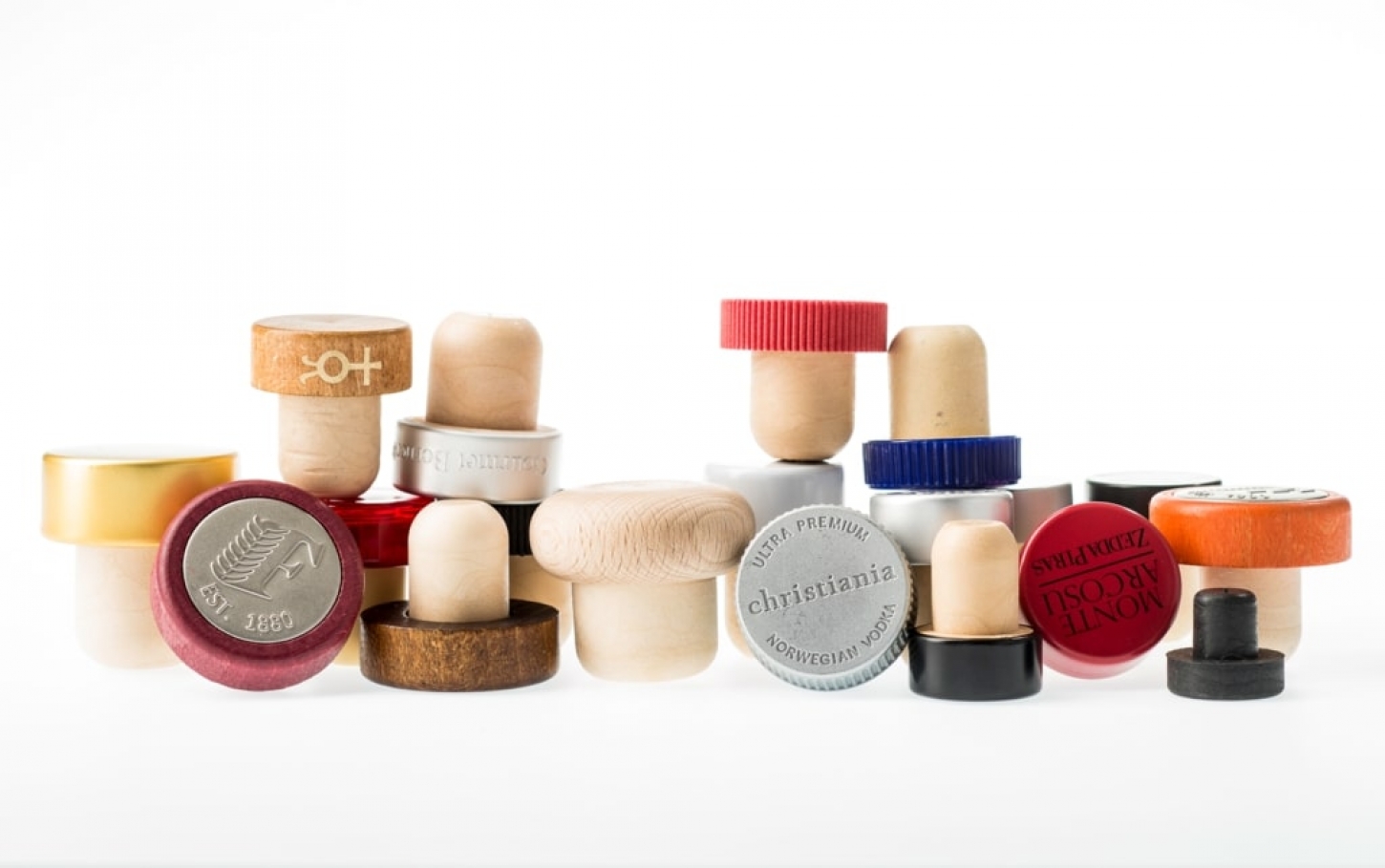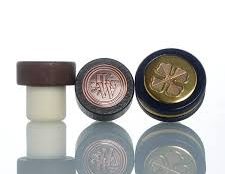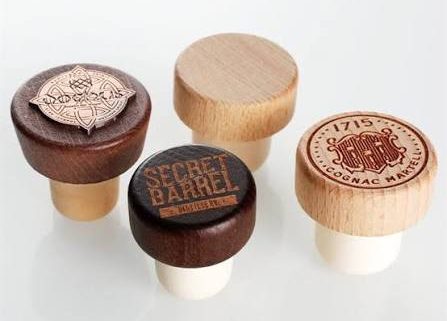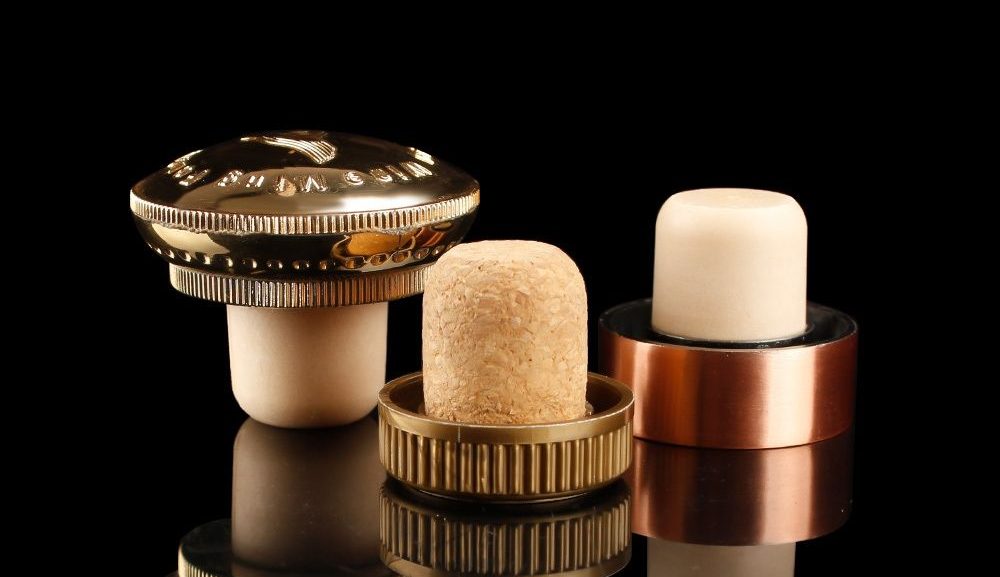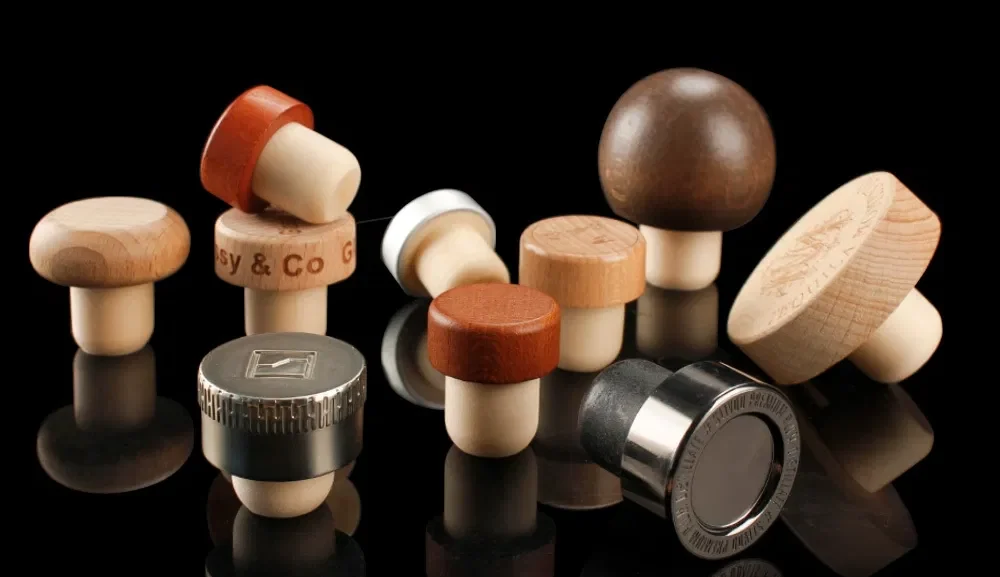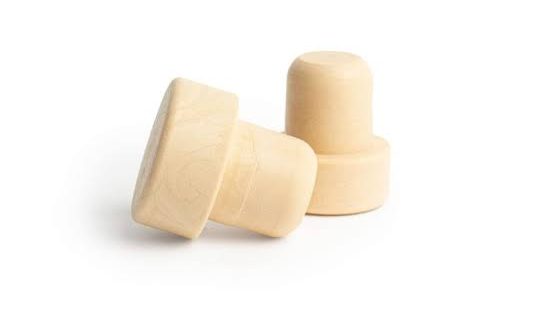
Bottle neck compatibility determines whether a spirits closure sits accurately, feels stable, opens with controlled resistance, and reseals securely.
A correctly matched bottle-and-closure system feels precise and intentional. Poor fit can cause stopper wobble, uneven neck gaps, excessive opening force, cap drag, leakage, or inconsistent performance on the bottling line.
For distilleries, spirits brands, private-label buyers, importers, distributors, bottlers, and packaging buyers, closure selection should therefore begin with more than appearance. Wood grain, metallic weight, color, and logo decoration only create a premium experience when the closure also works correctly with the bottle neck. Buyers can review different custom spirits bottle closures and stoppers before narrowing the choice according to bottle geometry, filling equipment, branding requirements, and target opening experience.
A bottle drawing or neck specification can support an initial compatibility review before custom samples, decorated tooling, or bulk closures are ordered.
Quick Answer: How Does Bottle Neck Compatibility Affect Premium Packaging?
Bottle neck compatibility affects four parts of the premium packaging experience:
- Visual precision: whether the closure sits straight, centered, and at the intended height.
- Grip stability: whether it feels secure instead of loose or unstable.
- Controlled opening, release, and sound: whether it opens smoothly with repeatable force and appropriate sensory feedback.
- Resealing performance: whether the closure remains stable and secure after repeated use.
These characteristics depend on bottle bore geometry, neck-finish tolerances, closure dimensions, sealing materials, and application settings.
A decorative closure may look premium in isolation, but an incompatible bottle-and-closure system will quickly reduce perceived quality.
What Makes a Spirits Closure Feel Premium?
Visual Precision
Consumers often evaluate a package visually before they touch it.
A compatible closure should:
- Sit level relative to the bottle
- Maintain an even gap around the neck
- Avoid visible leaning or eccentricity
- Match the bottle neck proportionally
- Align cleanly with a capsule or sleeve
- Leave sufficient clearance inside a gift box
A bar-top stopper that sits too high may expose part of its sealing shank. One that sits too low may interfere with a neck label, capsule, decorative collar, or external bottle finish.
Logo decoration makes alignment even more important. A straight wordmark, embossed crest, or geometric pattern can make a small amount of tilt immediately visible.
The closure should therefore be approved on a fully assembled bottle and viewed from several angles. Evaluating the bottle and closure as separate components does not confirm that the completed package will appear balanced.
When the bottle structure is still under development, closure dimensions should also be coordinated with the bottle supplier. An integrated custom spirits bottle development process can help align the neck finish, stopper proportions, glass weight, decoration, and filling-line requirements before tooling is finalized.
Grip Stability
A premium closure should feel stable when the consumer grips it.
Side-to-side movement or rocking can make an expensive stopper feel poorly engineered. Possible causes include:
- An undersized sealing shank
- Insufficient insertion depth
- Low compression recovery
- An oversized bottle bore
- Internal neck taper
- Glass ovality
- A heavy closure head with a high center of gravity
The fit must provide enough retention for stability without making the package unreasonably difficult to open.
This balance is particularly important for glass, ceramic, and Zamak closure heads. Their weight can increase perceived value, but it also creates greater leverage when the stopper is pulled or twisted.
Closure weight should therefore be evaluated together with head diameter, grip design, bonding structure, shank dimensions, and bottle-neck geometry. The heaviest closure is not automatically the most premium solution.
Controlled Opening, Release, and Sound
The opening action should feel deliberate rather than loose, harsh, or unpredictable.
A bar-top stopper should resist accidental movement while remaining removable by hand. It should not require tools, extreme twisting, or sudden force.
A threaded closure should engage and open without:
- Cross-threading
- Grinding
- Cap drag
- Thread jumping
- Sudden loss of resistance
- Inconsistent removal torque
- Irregular tamper-band separation
The correct opening range depends on the bottle, closure construction, sealing material, filling conditions, intended consumer, and expected frequency of use.
Excessive resistance does not necessarily communicate luxury. It may indicate excessive interference, an unsuitable shank material, a narrow bore section, excessive insertion depth, or an uncontrolled application process.
Sound also contributes to the opening experience. Depending on the closure system, consumers may expect a restrained cork release, a clean pilfer-band break, a smooth metallic thread sound, or a light click during reclosing.
Sound should not replace dimensional testing. However, scraping, cracking, grinding, or rattling may indicate an incompatible interface, damaged component, or assembly problem.
Resealing Performance
Many spirits bottles remain in use for weeks or months after opening.
The closure should continue to provide:
- Stable engagement
- Appropriate compression
- Controlled opening resistance
- Low lateral movement
- Secure reclosing
- Consistent visual seating
A stopper that works well during the first opening but becomes loose after several cycles may not support the intended consumer experience.
Repeated-use testing is especially important for synthetic shanks, polymer inserts, liners, threaded closures, and heavy decorative tops.
Which Technical Variables Control Premium Closure Feel?
| Premium experience | Main technical drivers | Common failure |
|---|---|---|
| Visual precision | Closure sit height, insertion depth, finish height, head diameter | Uneven gap, exposed shank, tilted closure |
| Grip stability | Bore profile, shank diameter, insertion depth, closure weight | Wobble or lateral movement |
| Controlled opening | Compression, shank hardness, bore taper, application torque | Closure too loose or too difficult to open |
| Clean release and sound | Surface friction, thread engagement, tamper-band design | Scraping, tearing, grinding, sudden release |
| Resealing | Material recovery, liner compression, thread re-engagement | Loose fit after repeated use |
Changing one variable can affect several parts of the consumer experience.
Increasing stopper diameter, for example, may improve retention. It may also increase insertion force, extraction force, surface abrasion, bonding stress, and pressure on the bottle finish.
Bottle neck compatibility should therefore be evaluated as a complete system rather than corrected by changing one dimension in isolation.
Why Nominal Neck Size Is Not Enough
A nominal neck-finish or bore size is only a starting point.
Two bottles described with the same general size may perform differently because of:
- Different tolerance ranges
- Different internal tapers
- Glass ovality
- Mold-to-mold variation
- Narrow sections below the mouth
- Different sealing-land profiles
- Different finish heights
- Surface irregularities
The Complete Bore Profile Matters
A bottle bore may change below the opening.
It can have:
- A wide entry followed by a narrower section
- A progressive internal taper
- A local pinch point
- Uneven internal walls
- Variation between mold cavities
For a bar-top stopper, the relevant measurement is not only the diameter at the bottle mouth. The bore should be understood across the full depth engaged by the sealing shank.
CETIE, the International Technical Centre for Bottling, publishes technical guidance for spirits closures that treats the bottle finish, stopper, application equipment, and related components as a coordinated system. This reflects an important packaging principle: visible and functional components must remain compatible after assembly and application.
Tolerance Stacking
Tolerance stacking occurs when acceptable variations in the bottle and closure combine.
Consider two possible combinations:
- A bottle at its maximum bore diameter with a stopper at its minimum shank diameter
- A bottle at its minimum bore diameter with a stopper at its maximum shank diameter
The first combination may create insufficient retention or stopper wobble. The second may produce excessive insertion and extraction force.
Both components may comply with their individual drawings, yet the assembled package may still perform inconsistently.
Compatibility should therefore be approved across realistic minimum and maximum conditions—not only with one ideal bottle and one ideal closure.
Is the “1 mm Larger” Stopper Rule Always Correct?
No.
Making a stopper shank approximately 1 mm larger than the bottle bore may be a useful initial reference for some bottle-and-stopper combinations, but it is not a universal engineering rule.
The correct relationship also depends on:
- Bore taper
- Shank engagement depth
- Glass ovality
- Local pinch points
- Shank hardness
- Compression recovery
- Surface treatment
- Target extraction force
- Production tolerances
- Repeated-use requirements
A stopper selected only from the bottle-mouth diameter may fit an early sample but perform inconsistently across a larger production batch.
Physical testing should confirm the full bore profile, shank behavior, opening force, and actual bottle variation before bulk production. Buyers researching this issue in more detail can review the technical factors covered in the bar-top stopper fit guide.
How Compatibility Requirements Change by Closure System
Different closure systems require different validation priorities.
For cork or synthetic bar-top stoppers, the key variables are bore profile, shank diameter, material hardness, insertion depth, extraction force, and compression recovery.
For heavy decorative bar-tops, the review must also cover closure-head weight, balance, bonding strength, sit height, and transport protection.
For continuous-thread closures, compatibility depends on thread engagement, liner contact, application torque, removal torque, and torque retention.
For ROPP closures, the glass finish must work with the closure skirt, liner, roller-head settings, thread formation, and pilfer band.
For non-refillable systems, buyers must also validate insert retention, flow performance, valve operation, leakage, and tamper evidence.
A detailed comparison of bar-top stoppers, screw caps, and ROPP closures can help packaging teams decide which system best fits their product positioning, route to market, bottling equipment, and security requirements.
No closure format is automatically more premium than another. A lightweight aluminum stopper with accurate seating and controlled opening can create a better experience than a heavier closure attached to an unsuitable sealing shank.
Premium Closure Fit Troubleshooting
| Observed problem | Likely causes | What to check |
|---|---|---|
| Closure wobbles | Shank too small, shallow insertion, low recovery, heavy head | Bore profile, shank diameter, insertion depth |
| Stopper is difficult to remove | Shank too large or hard, narrow bore, pinch point | Bore at multiple depths, hardness, extraction force |
| Stopper releases too easily | Oversized bore, undersized shank, weak recovery | Bottle and shank tolerances, repeated-use fit |
| Closure sits too high or unevenly | Excessive interference, glass ovality, poor insertion alignment | Compression, sit height, finish geometry, equipment setup |
| Cap drags or cross-threads | Thread mismatch, cap deformation, poor orientation | Thread profile, closure feeding, application settings |
| Leakage appears after shipping | Torque loss, poor liner contact, weak retention, vibration | Torque retention, inversion, temperature, transport testing |
Troubleshooting should identify the root cause before a material, mold, or closure dimension is changed.
Leakage, for example, should not automatically be corrected by increasing stopper diameter. The cause may instead be a local bore restriction, insufficient insertion, poor material recovery, or variation among production bottles.
Projects showing several interacting fit problems may benefit from a structured cap and neck compatibility service that reviews drawings, physical samples, sealing contact, opening performance, and application conditions before bulk production.
How to Validate Bottle and Closure Compatibility
A practical validation process can be organized into six stages.
Step 1: Review the Technical Drawings
Begin with controlled bottle and closure drawings rather than catalog descriptions alone.
Depending on the closure system, review:
- Bore diameter
- Bore dimensions at relevant depths
- Internal taper
- External finish diameter
- Finish height
- Sealing surface
- Thread profile
- Neck ring
- Ovality allowance
- Critical gauge points
For private-mold bottles, confirm that the drawing reflects the current mold revision.
The closure drawing should define the dimensions and tolerances affecting fit, including shank diameter, shank length, liner profile, skirt height, head dimensions, and assembly points.
Step 2: Measure Multiple Production Bottles
Drawings show intended dimensions. Physical bottles reveal actual manufacturing variation.
Do not approve fit using only one bottle. Where practical, evaluate samples representing:
- Different mold cavities
- Different production batches
- Different pallets
- Different manufacturing dates
- The intended commercial glass supplier
Measure the part of the neck that actually contacts the sealing component.
For bar-top stoppers, this may require bore measurements at several depths. For threaded and ROPP systems, the external finish, sealing land, thread geometry, and finish height become more important.
Step 3: Approve Visual Seating
Inspect the assembled package for:
- Closure centering
- Correct sit height
- Even neck gap
- Head-to-neck proportion
- Logo alignment
- Capsule clearance
- Neck-label clearance
- Gift-box fit
Use decorated or dimensionally representative samples whenever possible. Changes in coating thickness, decorative inserts, metal construction, or bonding structure may affect the final appearance.
Step 4: Test Application and Opening
For bar-top stoppers, evaluate:
- Insertion depth
- Insertion consistency
- Closure alignment
- Shank condition
- Initial extraction force
- Extraction after repeated cycles
For continuous-thread systems, application and removal torque should be measured rather than assessed only by hand.
ASTM D2063/D2063M-24 provides methods for evaluating torque retention in packaging systems with continuous-thread closures. It applies to threaded systems and should not be treated as a test method for friction-fit bar-top stoppers.
For ROPP closures, review:
- Roller-head settings
- Downward pressure
- Thread formation
- Skirt appearance
- Liner contact
- Bridge integrity
- Removal torque
- Pilfer-band separation
A hand-applied laboratory sample does not prove compatibility with commercial application equipment.
Step 5: Test Leakage and Repeated Use
Evaluate the package under conditions relevant to its intended storage and distribution.
Possible checks include:
- Upright storage
- Side storage
- Inverted storage
- Repeated opening and reclosing
- Temperature conditioning
- Vibration
- Simulated distribution
ASTM D5094/D5094M-24 can support gross-leakage evaluation for rigid or semi-rigid containers using threaded or lug-style closures in upright, inverted, or side orientations.
It does not directly cover friction-fit bar-top stoppers. Bar-top systems require a project-specific leakage, inversion, extraction, resealing, and product-exposure protocol agreed among the bottle supplier, closure supplier, filler, and brand owner.
The test liquid should represent the intended product as closely as practical. Alcohol concentration, formulation, temperature, and storage orientation may influence sealing materials.
After testing, inspect more than leakage. Also check closure movement, torque change, loss of extraction force, shank deformation, head separation, surface damage, capsule movement, and gift-box abrasion.
Step 6: Complete a Filling-Line Trial
Final approval should include the intended commercial filling and closure-application process.
A filling-line trial should evaluate:
- Closure feeding
- Orientation
- Corking or capping speed
- Insertion consistency
- Torque or roller settings
- Sensor detection
- Reject rates
- Capsule application
- Tamper-evident performance
- Operator handling
- Changeover requirements
The final approved specification should cover the actual bottle, closure, product, application line, neck decoration, and secondary packaging.
What Should a Closure Supplier Be Able to Verify?
Before bulk production, a capable closure supplier should be able to support:
- Bottle drawing and tolerance review
- Physical bottle measurement
- Bore-profile or neck-finish assessment
- Stopper insertion or closure application requirements
- Extraction force or removal torque evaluation
- Leakage and repeated-use testing
- Filling-line compatibility
- Batch consistency and change control
A documented quality-management system can support production repeatability, but certification does not replace bottle-specific compatibility testing.
The bottle manufacturer, closure supplier, bottler, decorator, and brand owner should also agree on who controls each critical dimension, who performs each test, and who approves the complete package.
What to Send for Compatibility Review, Samples, or a Quote
| Information | Why it is needed |
|---|---|
| Bottle technical drawing | Defines nominal dimensions and tolerances |
| Multiple production bottles | Shows actual manufacturing variation |
| Bottle supplier and mold reference | Supports traceability |
| Preferred closure system | Identifies critical fit requirements |
| Preferred head and sealing materials | Affects weight, compression, and decoration |
| Spirit type and alcohol level | Supports material and testing review |
| Filling conditions and equipment | Determines application requirements |
| Opening-force or torque expectations | Defines the intended consumer experience |
| Capsule or tamper-evident requirements | Confirms dimensional clearance |
| Initial and annual quantities | Supports tooling and production planning |
| Destination markets | Helps identify documentation requirements |
| Sampling deadline and launch date | Supports project scheduling |
For an early review, a bottle drawing or neck specification may be sufficient to identify initial closure options.
For matched samples or a production quotation, the supplier will normally require physical bottles, filling information, decoration requirements, estimated quantities, and testing expectations.
Frequently Asked Questions
Can two bottles with the same stated bore size use the same stopper?
Not automatically. The bottles may have different tolerances, internal tapers, ovality, pinch points, or engagement depths. The stopper should be tested with production bottles from both sources.
How much larger should a stopper shank be than the bottle bore?
There is no universal difference that works for every project. The correct interference depends on shank material, hardness, compression recovery, bore profile, insertion depth, extraction requirements, and storage conditions.
Why does a premium stopper wobble?
Common causes include an undersized shank, shallow insertion, excessive bottle bore, low material recovery, internal glass variation, or a closure head that is too heavy for the sealing structure.
Why is a stopper difficult to remove?
The shank may be too large, too hard, or inserted too deeply. The bottle may also contain a narrow section, strong taper, or local pinch point below the mouth. Measurements should cover the full engagement zone.
When is a filling-line trial required?
Complete a line trial before bulk launch when introducing a new bottle, closure, sealing material, liner, insert, or application process. Repeat the trial when a critical component or equipment setting changes.