Quick Answer
To choose bar-top stoppers for vodka bottles, first confirm the bottle’s inner neck diameter, then test stopper shank fit, sealing performance, pull-out force, odor neutrality, color transfer, and capsule compatibility. Vodka needs extra care because clear liquid makes cork dust, particles, residue, and discoloration easier to see. For premium vodka, aluminum, glass-effect, metal, or synthetic-shank closures are often preferred. For private label vodka, plastic or aluminum stoppers may offer better cost control and supply consistency.
Need help checking stopper fit? Send your bottle drawing or bottle sample to Kandacork Closures for material and shank recommendations.
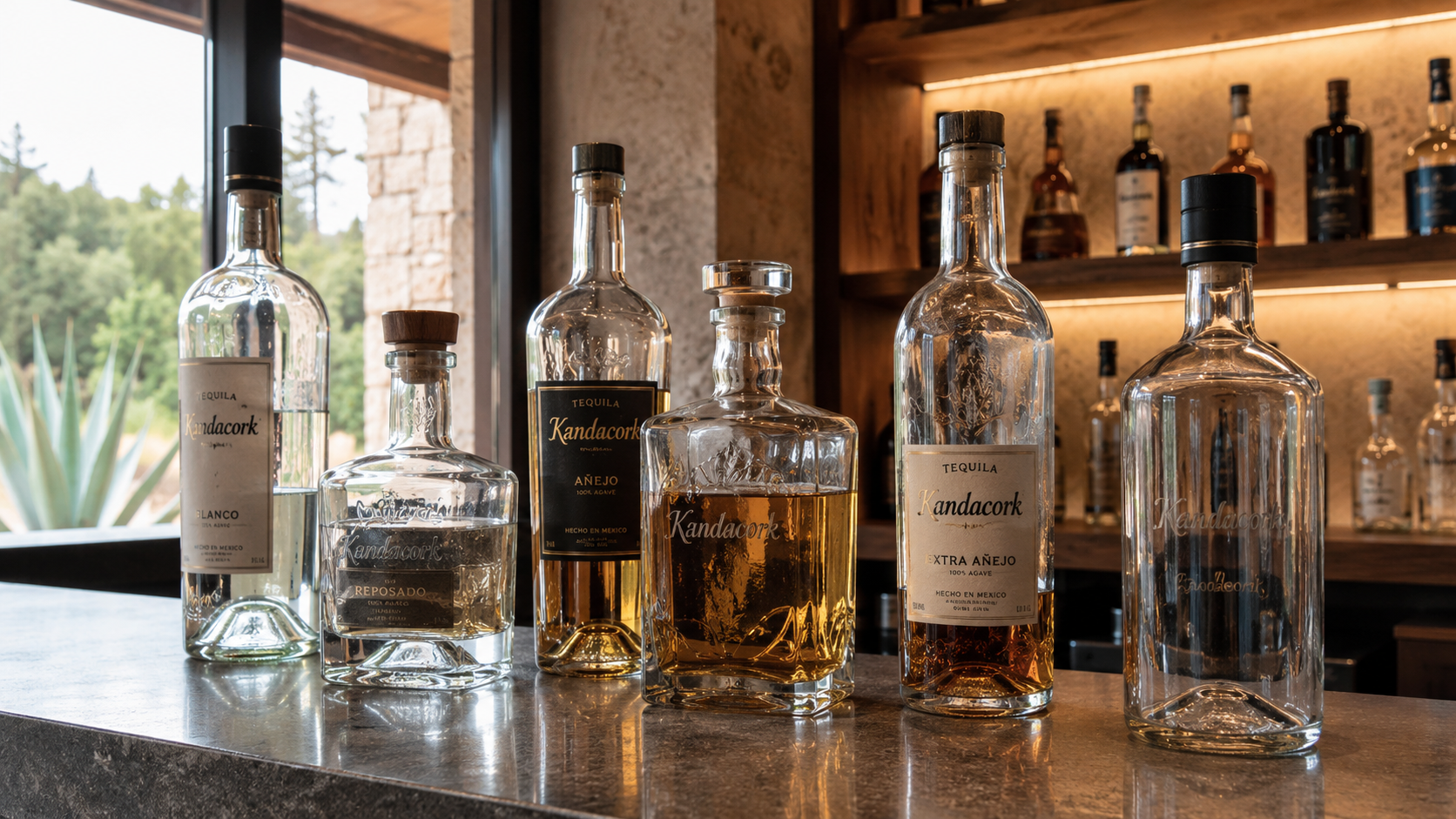
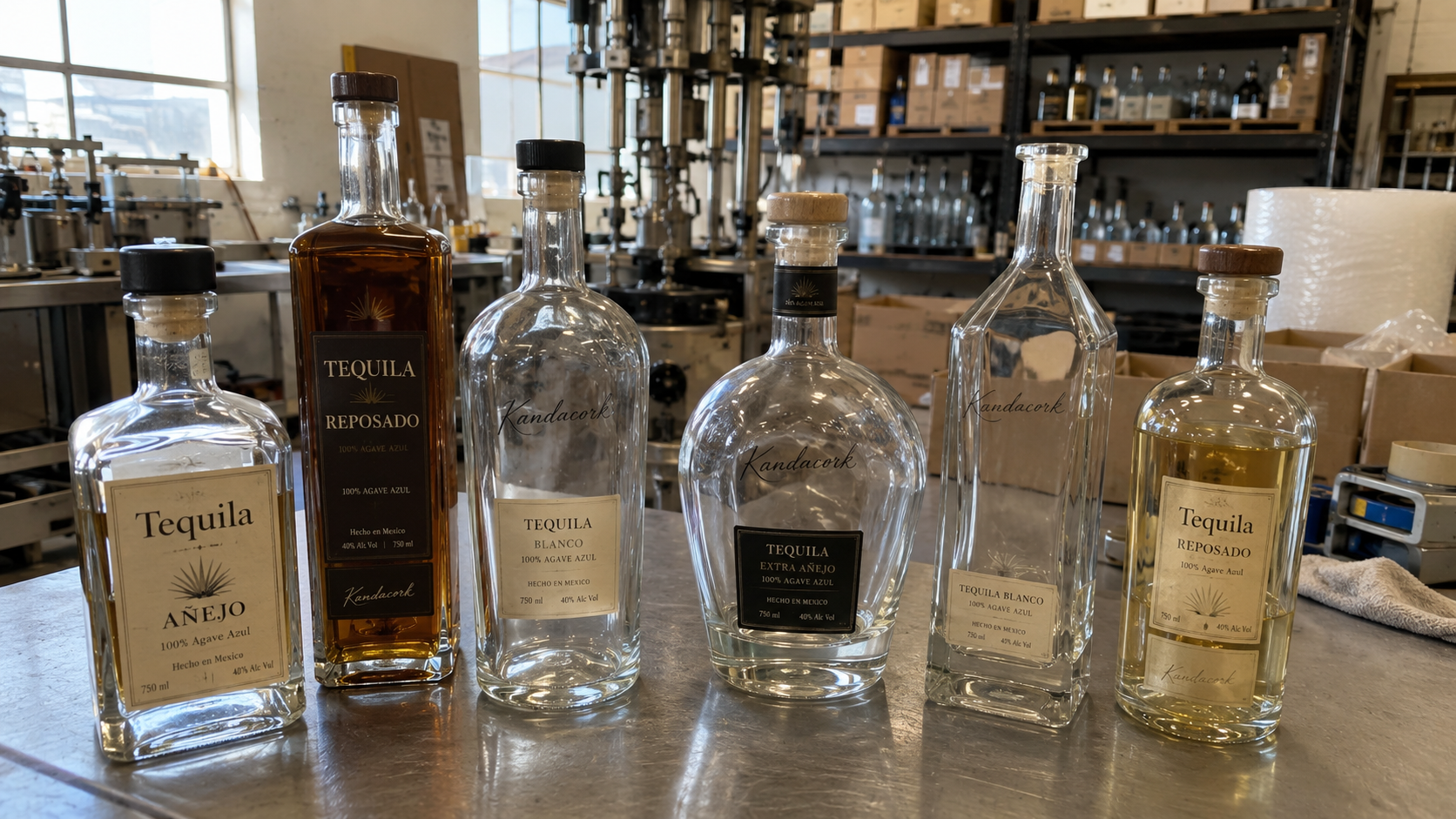
Image suggestion: Vodka bottle with bar-top stopper
Alt text: bar-top stoppers for vodka bottles
What Most Vodka Stopper Guides Miss
Many online guides explain bar-top cork sizing or general spirits closures, but they often miss vodka-specific packaging risks. Vodka is a clear spirit with a neutral sensory profile, so closure selection must consider more than appearance and price.
A strong buying process should answer these questions:
- Will the stopper fit the actual inner neck diameter?
- Is the shank suitable for clear spirits?
- Could cork dust, particles, residue, or discoloration become visible?
- Does the closure create any unwanted odor?
- Will the capsule, sleeve, or neck band work with the stopper head?
- Can the supplier provide samples, material information, and QC support?
- What details are needed for an accurate quotation?
This is why bar-top stoppers for vodka bottles should be selected through a technical review, not only by catalog image.
What Makes Vodka Bottle Stoppers Different?
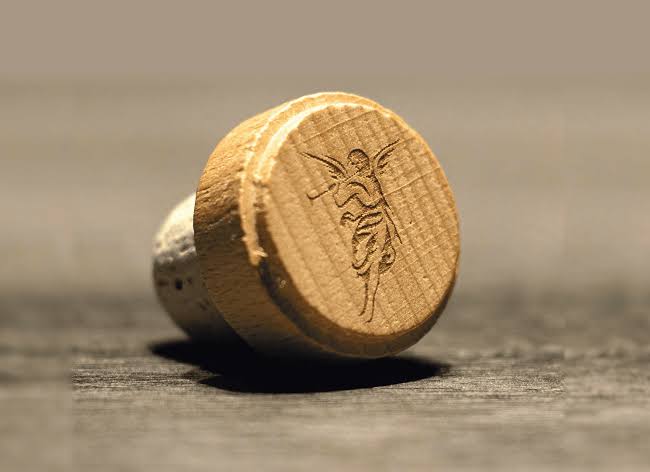
Bar-top stoppers, also called T-top stoppers or T-bar closures, usually include two parts: the visible top head and the sealing shank. The top head may be made from aluminum, plastic, wood, glass-effect material, zinc alloy, or another decorative material. The shank is inserted into the bottle neck and is commonly made from natural cork, micro-agglomerated cork, synthetic cork, or engineered material.
Vodka packaging often communicates clarity, coldness, precision, and purity. A wooden stopper with natural grain variation may suit whisky or rum, but a luxury vodka brand may prefer brushed aluminum, glass-effect material, or a clean synthetic shank for a more controlled appearance.
The key difference is visibility. In dark spirits, minor particles or color variation may be less obvious. In vodka, they can affect perceived quality immediately. Bar-top stoppers for vodka bottles should therefore be evaluated for clean appearance, odor neutrality, color stability, precise fit, and reliable sealing.
Bar-Top Stopper vs Screw Cap vs ROPP Cap
Different vodka closures serve different commercial goals. A premium brand may choose a bar-top stopper for a reusable opening experience and stronger shelf presentation. A high-volume value brand may prefer a screw cap for cost control. A bottler focused on tamper evidence and filling speed may choose a ROPP cap.
| Closure Type | Best For | Key Advantage | Main Limitation |
|---|---|---|---|
| Bar-top stopper | Premium vodka, craft vodka, private label, gift packs | Strong branding and reusable experience | Requires stopper-bottle fit testing |
| Screw cap | Economy vodka and high-volume retail lines | Cost control and convenience | Lower premium impression |
| ROPP cap | High-speed bottling and tamper-evident needs | Efficient production and security | Less tactile luxury appeal |
For projects still comparing closure types, this guide to bar-top stoppers, screw caps, and ROPP closures can help buyers understand when each format is more suitable. Choose bar-top stoppers for vodka bottles when premium presentation, reusability, and custom branding matter more than the lowest unit cost or maximum filling-line speed.
Vodka Stopper Material Comparison
The stopper material should match the bottle design, brand tier, production volume, target market, and filling-line requirements. A luxury vodka bottle may need a heavy metal or glass-effect stopper, while a private label vodka program may prioritize cost, color consistency, and stable supply.
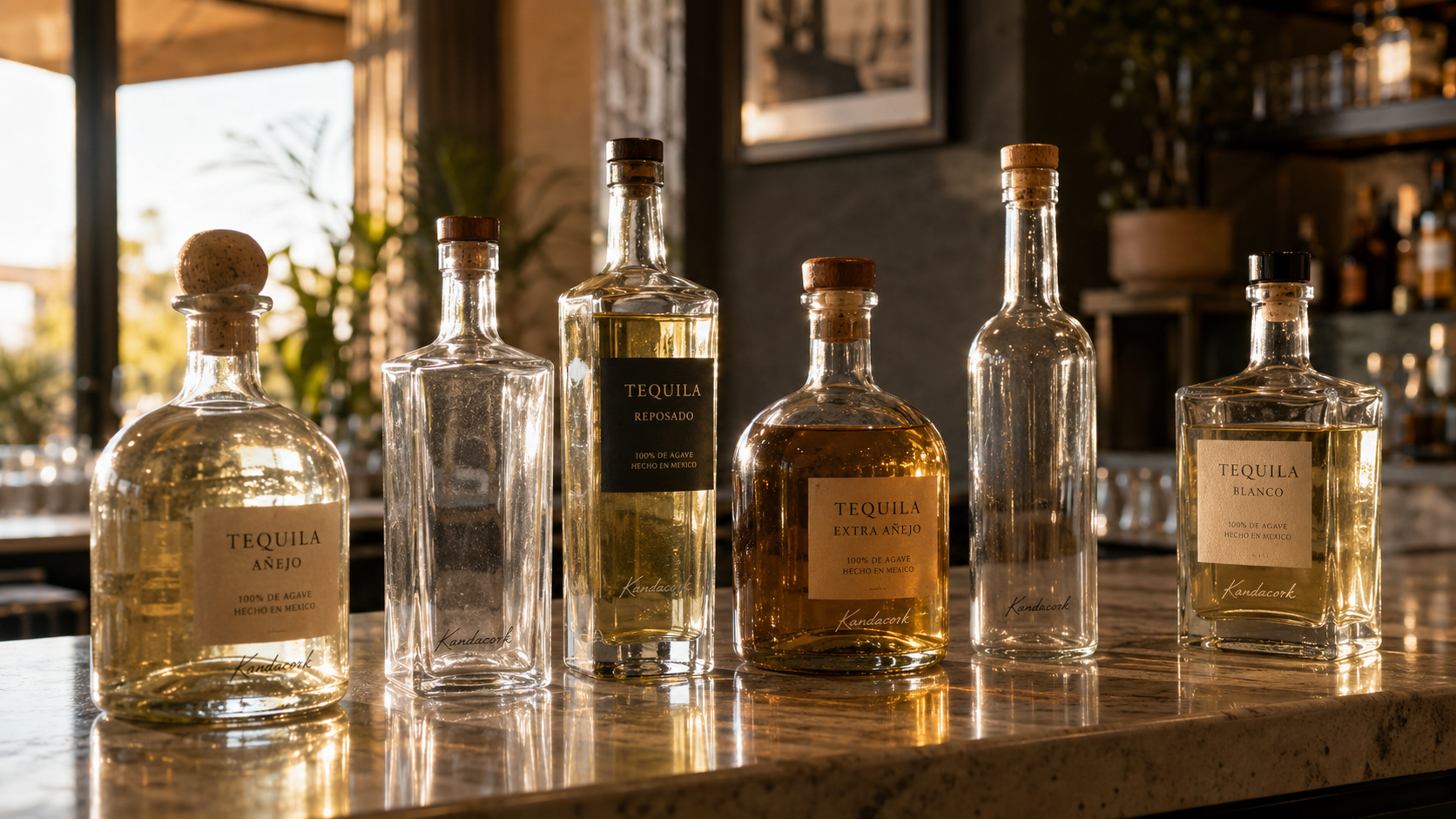
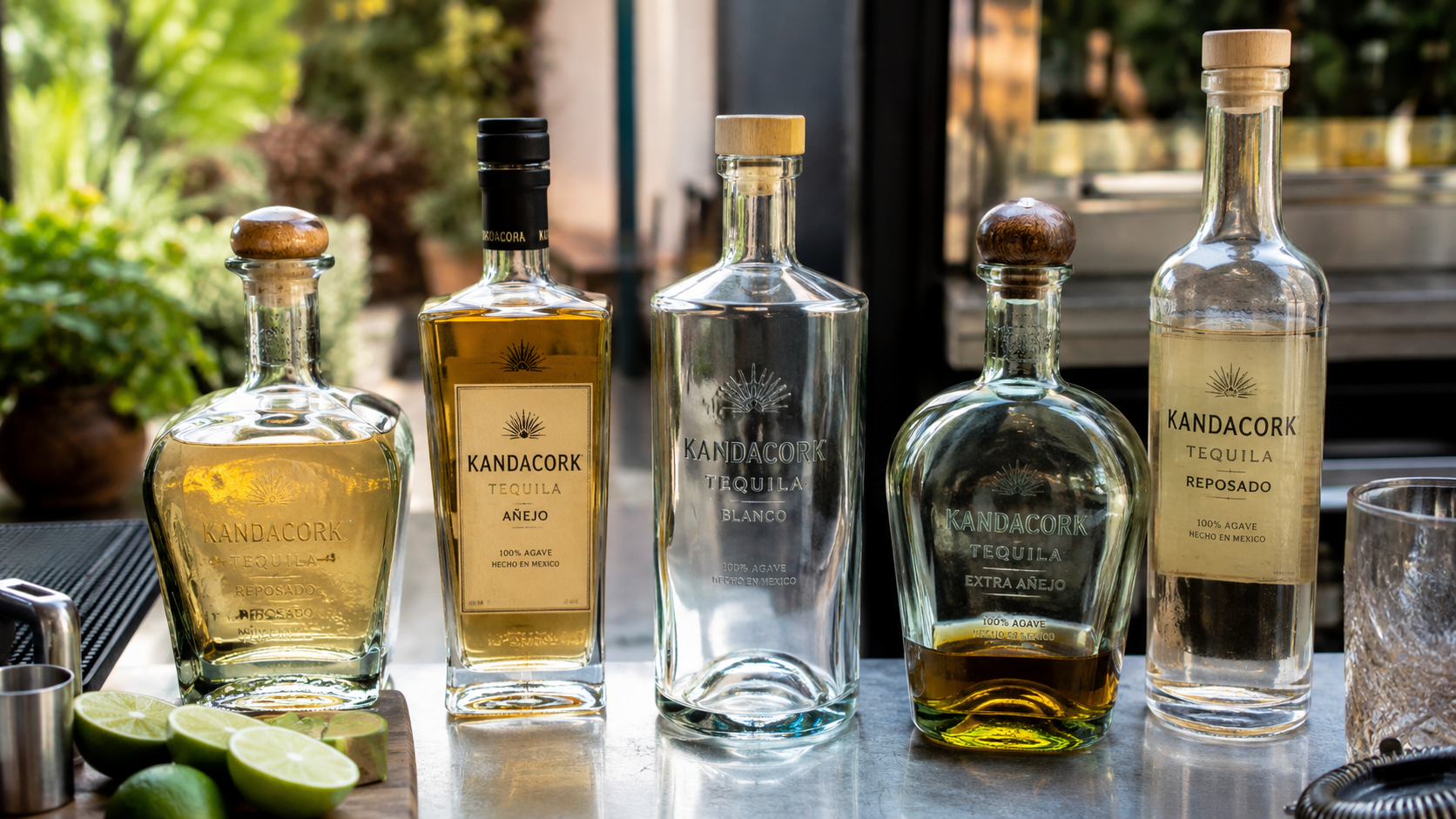
Kandacork Closures supplies custom spirits bottle closures and stoppers for vodka, whisky, gin, rum, tequila, brandy, liqueur, and other premium packaging projects where fit, material, decoration, and export supply need to work together.
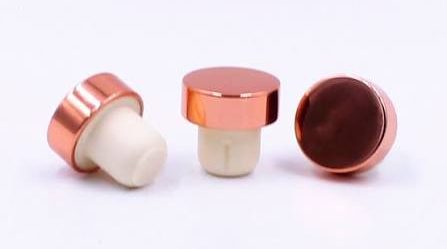
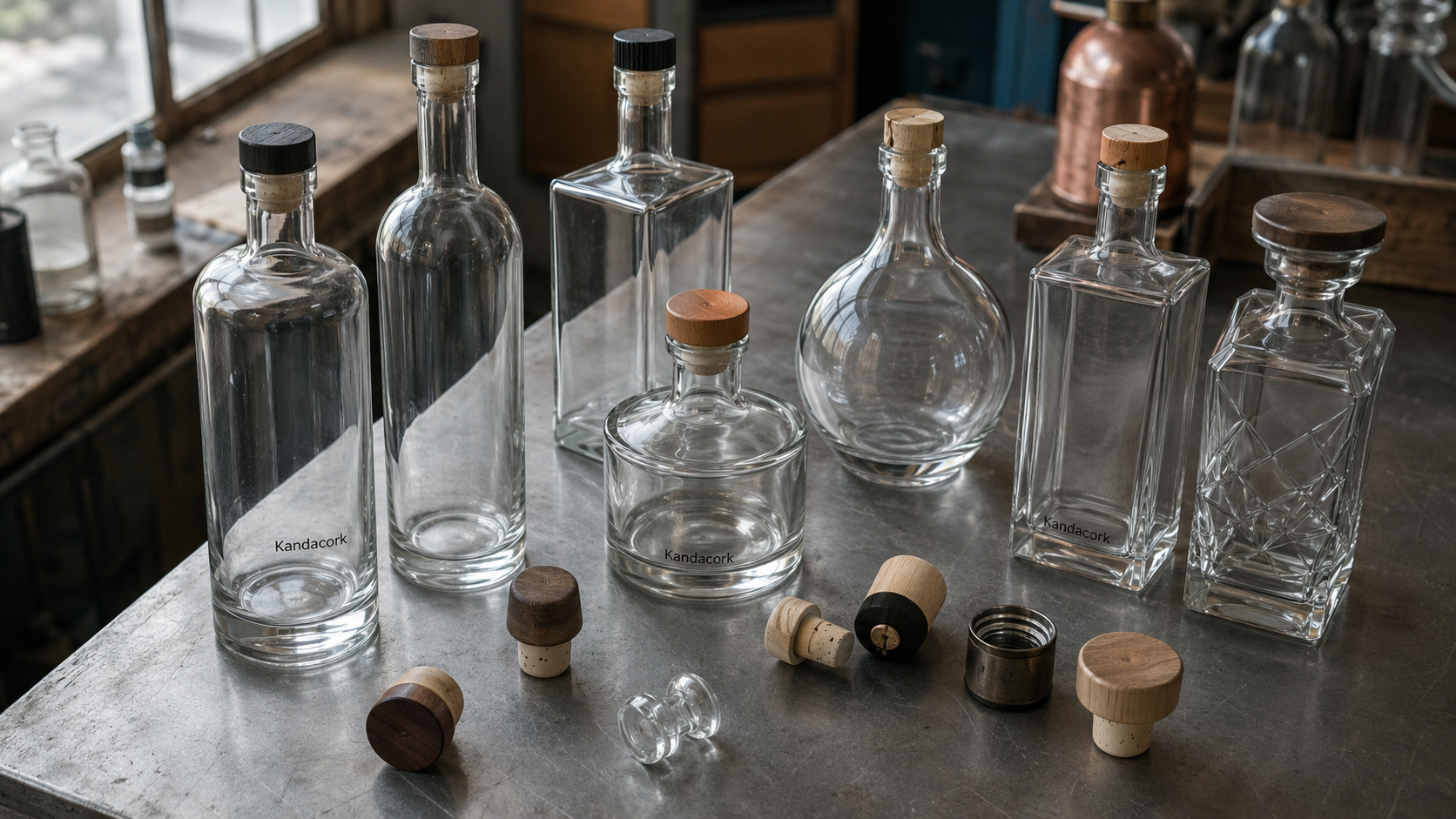
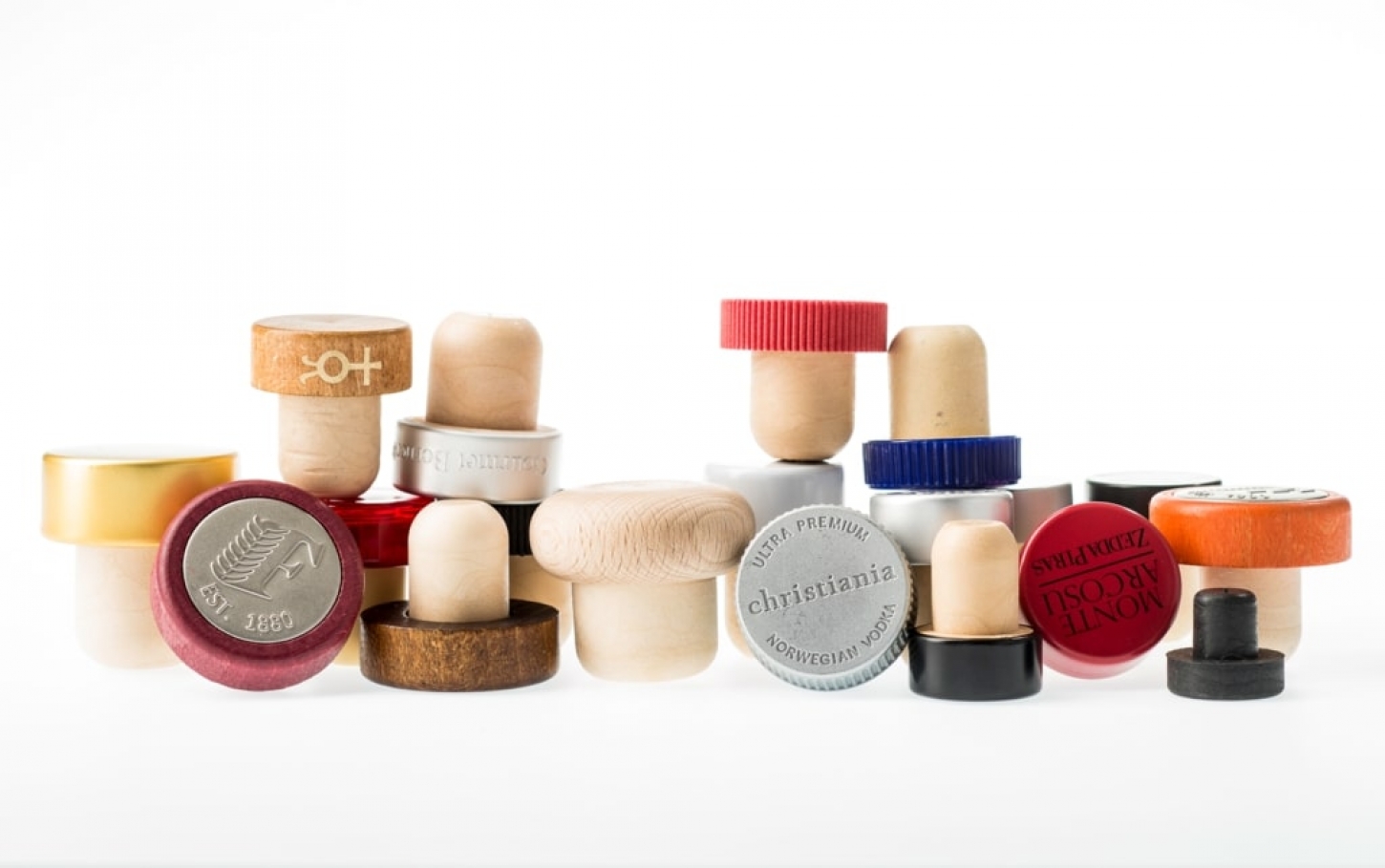
Image suggestion: Aluminum, plastic, glass-effect, wood, and metal stopper samples
Alt text: vodka bottle stopper material comparison
| Material | Best Choice For | Use With Caution When |
|---|---|---|
| Aluminum top | Premium, modern, minimalist vodka | Surface scratching, coating durability, or color consistency is not controlled |
| Plastic top | Private label vodka, flavored vodka, high-volume programs | The brand requires a heavy luxury hand feel |
| Glass-effect top | Luxury clear bottles, ice-like vodka packaging, gift packs | Export packing protection is weak or impact risk is high |
| Wooden top | Craft vodka, natural vodka, grain-to-glass positioning | Odor, coating, or color stability has not been tested |
| Metal or zinc alloy top | Luxury, collectible, limited-edition vodka | Top weight may affect fit, handling, or packing |
| Natural cork shank | Traditional closure feel | Clear vodka may show particles, dust, or discoloration |
| Micro-agglomerated cork shank | Controlled cork appearance and better consistency | Buyer has not tested odor and liquid compatibility |
| Synthetic shank | Clean, repeatable fit for vodka packaging | Alcohol-contact suitability has not been confirmed |
Aluminum Bar-Top Stoppers
Aluminum is one of the most suitable options for modern vodka packaging. It works well with clear glass, frosted bottles, heavy-base bottles, metallic labels, and minimalist brand systems. Decoration options may include laser engraving, embossing, debossing, printing, and surface coating.
Buyers should check surface consistency, scratch resistance, logo clarity, coating durability, and head-to-shank bonding before approving bulk production.
Plastic Bar-Top Stoppers
Plastic stoppers are practical for private label vodka, flavored vodka, and commercial-volume projects. They can be molded in custom colors, finished in matte or gloss surfaces, and used to separate multiple SKUs within the same vodka family.
The main evaluation points are mold precision, dimensional stability, color consistency, surface quality, and suitability for the target sales market.
Glass-Effect and Metal Stoppers
Glass-effect stoppers create a strong vodka identity because they match ideas of ice, clarity, coldness, and purity. Metal and zinc alloy stoppers provide a heavier hand feel and stronger luxury signal.
These options are attractive for premium and limited-edition vodka, but buyers should evaluate weight, packing protection, impact resistance, surface finish, and shank performance before bulk production.
Wood and Cork-Based Options
Wooden tops can work for craft vodka or natural brand concepts, but they should be tested carefully. Vodka’s clear appearance and neutral aroma make odor, coating quality, color transfer, and grain variation more noticeable.
Natural cork and micro-agglomerated cork can provide a traditional closure feel. Synthetic shanks are often preferred for vodka when clean appearance, dimensional repeatability, and consistent sealing are high priorities.
Material Recommendation by Vodka Brand Type
| Vodka Project Type | Recommended Stopper Direction | Reason |
|---|---|---|
| Economy vodka | Plastic top or screw-cap alternative | Controls cost and supports large-volume production |
| Private label vodka | Aluminum or plastic bar-top stopper | Allows customization with stable supply |
| Craft vodka | Wood, aluminum, or custom plastic top | Supports a distinctive brand story |
| Premium vodka | Brushed aluminum or glass-effect stopper | Matches clean, modern positioning |
| Luxury vodka | Metal, zinc alloy, glass-effect, or custom-molded stopper | Creates stronger shelf impact |
| Flavored vodka | Color-coded plastic or aluminum top | Helps differentiate multiple flavors |
| Gift-pack vodka | Aluminum, glass-effect, or decorated metal stopper | Adds presentation value for retail and duty-free channels |
This table is a starting point. Final selection should always be confirmed through bottle drawings, real bottle samples, and physical closure testing.
How to Choose the Correct Stopper Size
The most important technical step is matching the stopper shank to the bottle’s inner neck diameter. Buyers should not choose bar-top stoppers for vodka bottles based only on catalog images or the outside neck finish.
The shank must be large enough to compress and seal, but not so large that insertion becomes difficult or glass stress increases. Bottle tolerance, shank material, insertion depth, and pull-out feel all affect the final result. For a deeper technical reference, review this bottle-neck and closure matching guide before confirming stopper samples.
Image suggestion: Bottle inner neck diameter and stopper shank diagram
Alt text: vodka bottle inner neck diameter stopper fit
| Bottle Inner Neck Diameter | Common Stopper Shank Direction | Buyer Note |
|---|---|---|
| Around 18.5 mm | Around 19.5 mm shank | Common for some spirits bottles; confirm with real samples |
| Around 21.5 mm | Around 22.5 mm shank | Often used for larger premium bottles; test pull-out force |
| Custom inner neck | Custom shank or adjusted specification | Send bottle drawings and samples before production |
The 1 mm rule is only a starting reference. Final fit depends on glass tolerance, cork hardness, synthetic shank elasticity, insertion depth, storage conditions, and pull-out force requirements.
A fit review should check inner neck diameter, glass tolerance range, shank diameter, insertion depth, insertion force, pull-out force, repeated opening, leak resistance, and capsule clearance.
Not sure whether your bottle needs a 19.5 mm, 22.5 mm, or custom shank? Kandacork Closures can review your bottle sample before bulk production.
Clear-Spirit Compatibility and Compliance Checks
Vodka packaging requires careful control of visual and sensory risks. Because the liquid is clear, particles, cork dust, residue, or discoloration can be highly visible. Because vodka usually has a neutral aroma profile, unwanted closure odor may also be easier to detect.
Buyers should ask whether the stopper shank is suitable for clear spirits, whether the material has been tested with alcoholic products, and whether there is any risk of color transfer from cork, wood, coating, adhesive, or ink.
Food-contact and market compliance should also be discussed before bulk ordering. For U.S. projects, buyers may review FDA food-contact material guidance. For EU projects, European Commission food-contact materials rules are relevant because packaging materials should be evaluated for safety and inertness.
Before ordering vodka bottle stoppers, ask the supplier:
- Are the materials suitable for food-contact packaging?
- Can you provide material declarations?
- Are coatings, plastics, corks, adhesives, and inks suitable for alcoholic beverages?
- Can you support documentation for the target export market?
- Is batch traceability available?
- What QC standards are used before shipment?
These questions are especially important for importers, distributors, private label buyers, and brands selling across multiple markets.
Sample Testing and Approval Workflow
Sample testing is essential before placing a bulk order. The goal is to confirm that the stopper fits correctly, protects the vodka experience, and matches the intended packaging design.
Image suggestion: Stopper samples tested with vodka bottle necks
Alt text: vodka stopper sample testing before bulk order
A practical approval workflow includes:
- Send the bottle drawing and physical bottle sample if available.
- Confirm inner neck diameter, tolerance, and insertion depth.
- Select two or three stopper material options.
- Prepare initial closure samples.
- Run dry fit, filled-bottle leak, pull-out, odor, particle, and color-transfer checks.
- Test capsule, sleeve, or neck-band compatibility.
- Approve logo position, decoration method, and finish.
- Confirm pre-production samples.
- Begin bulk production with agreed QC standards.
| Test Item | Purpose |
|---|---|
| Dry fit test | Confirms basic insertion and neck fit |
| Filled-bottle leak test | Checks sealing performance with vodka inside |
| Pull-out force test | Confirms opening feel and consumer usability |
| Repeated open-close test | Checks reusable performance |
| Odor evaluation | Identifies unwanted closure smell |
| Particle inspection | Checks cork dust, residue, or contamination risk |
| Color transfer review | Important for clear vodka |
| Capsule compatibility test | Ensures tamper-evident packaging works |
| Transport review | Checks stability during shipping |
| Visual inspection | Confirms surface finish and decoration quality |
For vodka projects, odor, clarity, particle, and color-transfer checks should not be skipped.
Branding, Decoration, and Tamper-Evident Options
A stopper is one of the most visible branding elements on a vodka bottle. It can repeat the logo, match the label, support the bottle shape, and improve shelf recognition.
Common decoration methods include laser engraving, embossing, debossing, screen printing, pad printing, hot stamping, metallic coating, matte coating, gloss coating, Pantone color matching, and custom mold development.
For premium vodka, decoration should usually be precise rather than overcomplicated. Clean logo placement, controlled surface finishing, and consistent color matching often create a stronger luxury impression than excessive decoration.
Bar-top stoppers do not always provide tamper evidence by themselves. Vodka brands selling through retail, duty-free, distributors, or regulated markets may need shrink capsules, tear-tab capsules, security sleeves, neck bands, or decorative overcaps. The stopper head diameter, capsule length, shrink behavior, opening method, and label clearance should be tested together.
Supplier Evaluation Scorecard
A reliable supplier should help buyers evaluate the complete closure system, not only quote a unit price. This matters for spirits brands, distilleries, bottlers, importers, distributors, private label buyers, and packaging procurement teams that need stable quality and export-ready supply.
| Evaluation Item | Why It Matters |
|---|---|
| Bottle drawing review | Reduces risk before sampling |
| Bottle sample testing | Confirms real-world fit |
| Material range | Allows comparison of aluminum, plastic, wood, metal, cork, and synthetic options |
| Clear-spirit experience | Important for vodka and other white spirits |
| Decoration capability | Supports brand consistency |
| Food-contact documentation | Helps with market and importer review |
| QC process | Reduces dimensional and visual defects |
| MOQ flexibility | Supports launch-stage and private label projects |
| Custom mold support | Enables unique premium designs |
| Export packing experience | Prevents scratches, deformation, or transit damage |
| Communication speed | Improves sampling and quotation efficiency |
For buyers building a wider bottle, stopper, decoration, and export packaging program, the broader Kandacork group can also support complete spirits packaging programs across glass bottles, closures, decoration, and project coordination.
Supplier Red Flags to Watch Before Ordering
Not every stopper supplier is prepared for vodka bottle projects. Packaging buyers should be cautious if a supplier focuses only on appearance or unit price without asking technical questions.
Watch for these red flags:
- The supplier quotes without asking for inner neck diameter.
- No bottle drawing or physical bottle sample is requested.
- The supplier cannot clearly explain shank material options.
- There is no pre-production sample approval process.
- Fit testing is skipped before decoration approval.
- Food-contact or material declaration support is unclear.
- The supplier cannot explain tolerance or QC standards.
- There is no export packing plan for coated, metal, or glass-effect stoppers.
- Communication is slow during sampling and technical review.
- The supplier treats all spirits bottles as if they have the same closure needs.
For vodka, these risks matter because small fit, odor, color, or particle problems can quickly affect product appearance and brand trust.
RFQ Checklist for Vodka Bottle Bar-Top Stoppers
Before requesting a quote, prepare the following information:
- Bottle drawing
- Physical bottle sample if available
- Inner neck diameter and tolerance
- Bottle capacity and shape
- Vodka alcohol percentage
- Target sales market
- Preferred stopper head material
- Preferred shank material
- Logo artwork
- Pantone color or finish reference
- Decoration method preference
- Capsule or tamper-evident requirement
- Estimated order quantity
- Required sample quantity
- Packing requirements
- Filling-line information
- Target launch date
A complete RFQ helps the supplier recommend suitable options and prepare more accurate pricing.
Copyable Quote Request Template
Use this simple format when contacting a vodka bottle stopper supplier:
Please quote bar-top stoppers for vodka bottles.
Bottle inner neck diameter: ___ mm
Bottle capacity: ___ ml
Bottle sample available: Yes / No
Bottle drawing available: Yes / No
Stopper material preference: aluminum / plastic / glass-effect / wood / metal / not sure
Shank preference: natural cork / micro-agglomerated cork / synthetic / not sure
Quantity: ___ pcs
Decoration: laser engraving / printing / embossing / debossing / color coating / not sure
Target market: ___
Capsule or tamper-evident requirement: Yes / No
Required sample date: ___
Target production date: ___
If you are unsure about material or shank type, send the bottle information first. Kandacork Closures can help recommend suitable bar-top stoppers for vodka bottles based on your brand position, bottle neck, quantity, and market requirements.
Common Mistakes to Avoid
The first mistake is choosing by appearance only. A stopper may look attractive but still fail if it leaks, smells unsuitable, fits poorly, or scratches easily.
The second mistake is assuming one stopper size fits every bottle. Even bottles with the same capacity may have different inner neck diameters and tolerance ranges.
The third mistake is ignoring clear-spirit risks. Vodka makes particles, color transfer, residue, and closure odor easier to notice.
The fourth mistake is approving decoration before fit testing. Fit should be confirmed before final artwork, mold investment, or bulk decoration.
The fifth mistake is comparing suppliers only by unit price. A lower-cost stopper may become expensive if it causes leakage, shipment damage, color inconsistency, production delays, or repacking.
The sixth mistake is forgetting tamper-evident packaging. If the bottle needs a capsule, sleeve, or neck band, the full closure system must be tested together.
Why Choose Kandacork Closures
Kandacork Closures supports spirits brands, distilleries, bottlers, importers, distributors, private label buyers, and packaging procurement teams that need customized closure solutions for vodka bottle projects.
For bar-top stoppers for vodka bottles, Kandacork Closures can help compare stopper materials, review bottle neck fit, prepare samples, support custom decoration, and provide quotation guidance based on project requirements. Its closure development and OEM/ODM support helps buyers consider the full packaging system: bottle, shank, stopper head, capsule, decoration, carton packing, export handling, and commercial launch needs.
Request Vodka Bottle Stopper Samples
Ready to test bar-top stoppers for your vodka bottle? Send Kandacork Closures your bottle drawing, inner neck diameter, sample bottle, artwork, target quantity, and market requirements.
Our team can help compare materials, check stopper fit, prepare samples, and quote custom closure options for vodka packaging projects.
CTA Button Text: Request Vodka Stopper Samples
Conclusion
Choosing bar-top stoppers for vodka bottles requires more than selecting an attractive closure. The stopper must match the bottle neck, seal properly, remain neutral, support the brand identity, work with decoration and tamper-evident packaging, and perform reliably through filling, storage, and transport.
For vodka brands, the most important priorities are clear-spirit compatibility, precise fit, clean appearance, odor neutrality, reliable shank performance, and supplier capability. By reviewing these details before bulk production, buyers can reduce packaging risk and create a stronger product presentation.
FAQ
What is the best bar-top stopper for vodka bottles?
Yes. Synthetic shanks can be suitable for vodka when tested for fit, sealing performance, odor neutrality, and alcohol-contact suitability. They are often preferred when consistent sizing, clean appearance, and repeatable closure performance are important.
Can vodka bottles use wooden bar-top stoppers?
Yes. Wooden stoppers can work for craft vodka or natural brand concepts. However, buyers should test wood finish, odor, color stability, coating quality, and capsule compatibility before bulk production.
How do I know what stopper size my vodka bottle needs?
Measure the inner neck diameter and review the bottle tolerance range. Then test stopper samples for insertion force, pull-out force, leakage resistance, repeated opening, capsule clearance, and overall handling feel.
What should I send for a vodka stopper quote?
Send the bottle drawing, physical bottle sample if available, inner neck diameter, bottle capacity, target market, preferred material, artwork, finish reference, quantity, tamper-evident requirement, and production timeline.