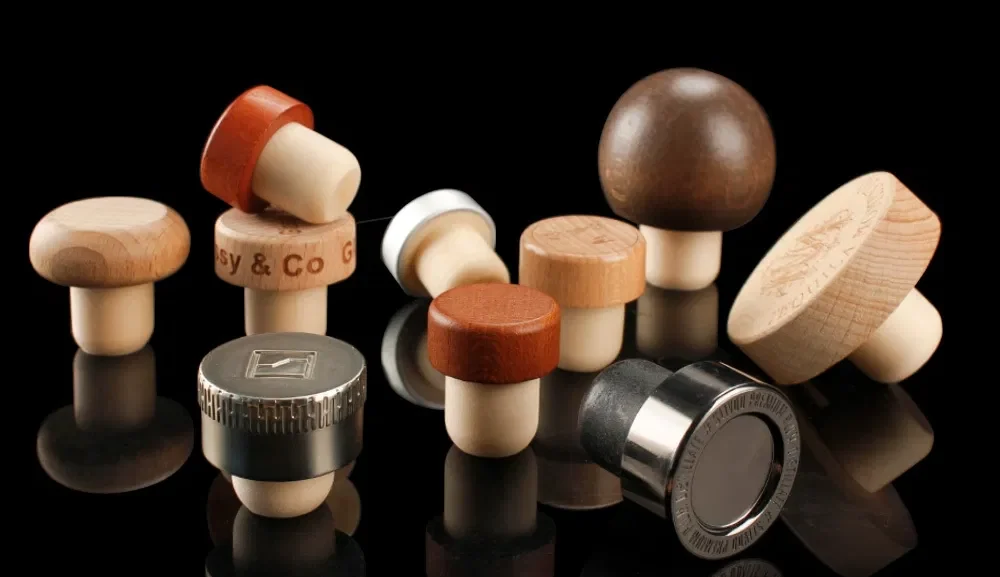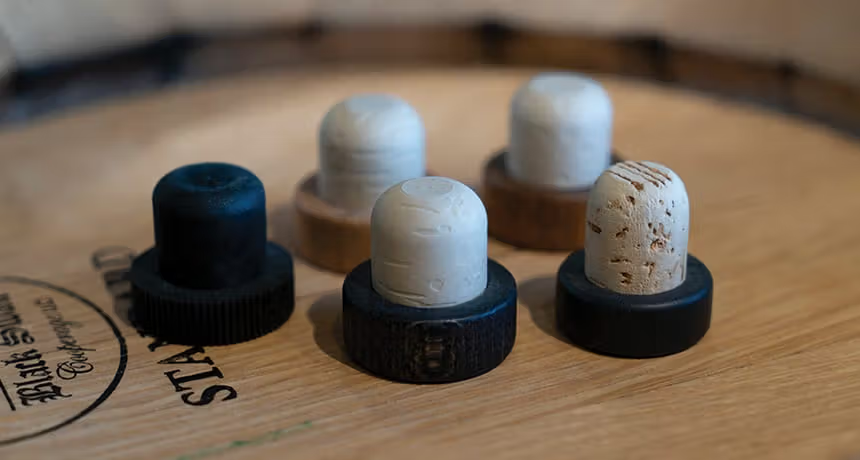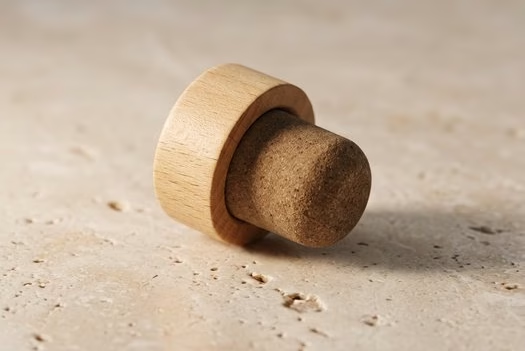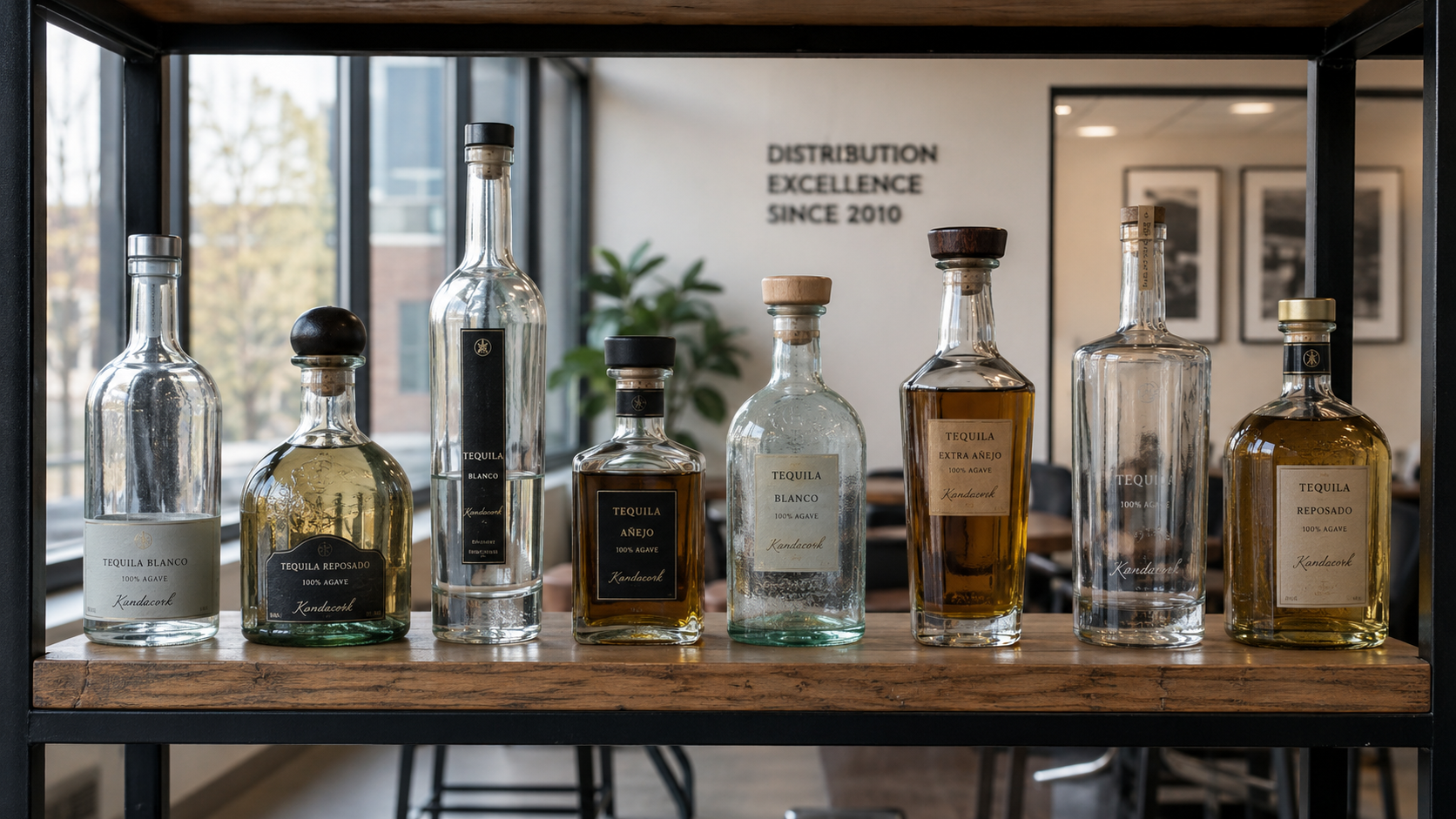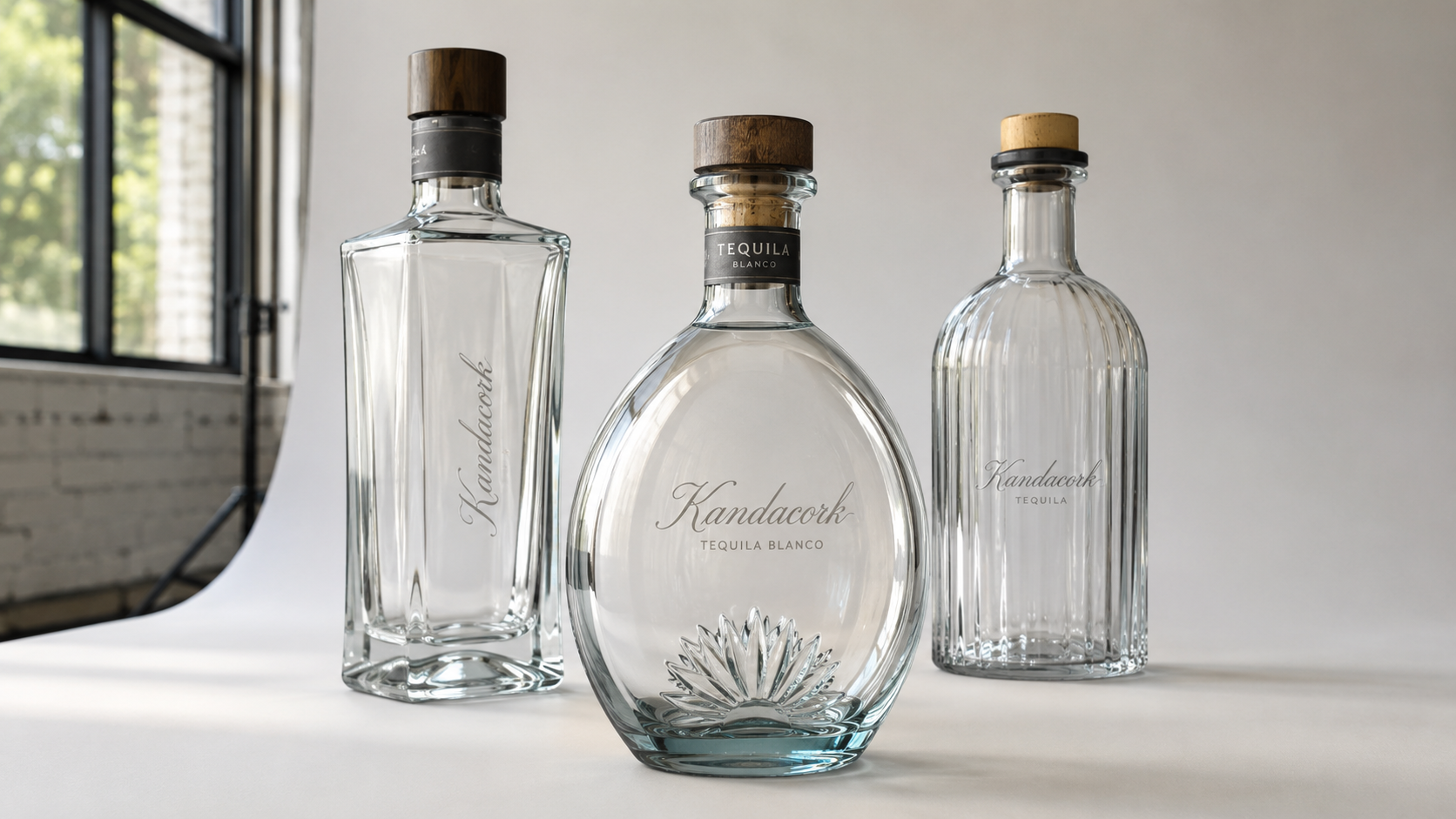
Spirits bottle closure leak testing should combine dimensional inspection, torque or extraction-force measurement, filled-bottle storage, product compatibility, and distribution validation.
The correct test plan depends on the bottle neck, sealing mechanism, spirit formulation, filling equipment, storage conditions, and shipping route. A torque measurement or short water test alone cannot qualify every cork stopper, screw cap, ROPP closure, or non-refillable system.
For distilleries, spirits brands, private-label buyers, importers, bottlers, distributors, and packaging procurement teams, closure testing should confirm that the finished package can:
- Retain liquid and aroma
- Remain secure during storage and transportation
- Open consistently for the consumer
- Maintain tamper-evident and functional performance
- Remain repeatable across production lots
Reliable qualification evaluates the complete packaging system:
Bottle neck + closure + sealing component + spirit formulation + application process + distribution conditions
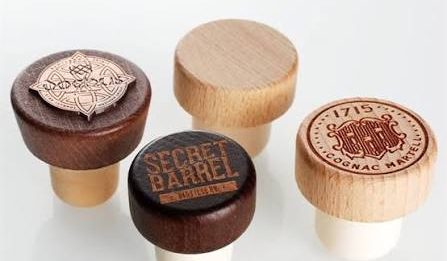
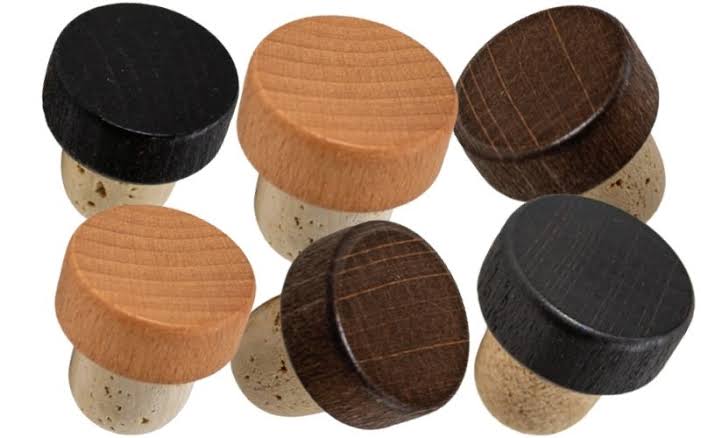
Buyers beginning a new project can first review available spirits bottle closures and stoppers before matching a closure structure to the bottle finish, product, filling line, and target market.
Which Closure Tests Does Your Project Need?
The closure’s sealing mechanism determines which measurements and tests are most important.
| Closure type | Sealing mechanism | Main risks | Priority tests |
|---|---|---|---|
| Natural cork or T-top stopper | Radial compression against the bottle bore | Bore variation, natural material variation, low or excessive extraction force | Bore and stopper dimensions, insertion depth, extraction force, horizontal storage |
| Micro-agglomerated cork | Controlled cork-body compression | Density variation, surface-treatment interaction, force changes during aging | Dimensions, pull-out force, leakage, product aging |
| Synthetic stopper | Elastic polymer compression | Stress relaxation, swelling, shrinkage, chemical interaction | Fit, extraction force, side storage, compatibility aging |
| Continuous-thread screw cap | Liner compression and thread engagement | Under-torque, over-torque, back-off, liner mismatch | Application torque, removal torque, torque retention, leakage |
| ROPP closure | Aluminum shell formed onto the glass finish | Spinner caps, poor thread formation, bridge failure, uneven liner contact | Forming inspection, removal torque, bridge performance, leakage |
| Non-refillable closure | Multiple seals, valves, inserts, and tamper components | Assembly errors, valve leakage, component movement, security failure | Leakage, valve function, tamper evidence, functional cycling |
ROPP and non-refillable systems can overlap, but they do not describe the same function. ROPP refers to a roll-on application method, while non-refillable describes an anti-refill or security function. Buyers comparing these systems can review the detailed guide to ROPP and non-refillable closures for spirits bottles.
No universal torque value, vacuum level, test duration, or sample quantity is suitable for every spirits package. Acceptance criteria should be developed using the actual bottle, closure, spirit, filling line, and distribution conditions.
Minimum Test Plan by Project Risk
The amount of testing should increase as the number of new or unverified packaging variables increases.
| Project situation | Minimum recommended evaluation | Additional validation to consider |
|---|---|---|
| Approved stock bottle with an established closure | Dimensional confirmation, fit, basic leakage, opening performance | First-production-run inspection |
| New bottle with an existing closure | Bottle-neck measurement, torque or pull-out testing, side storage | Filled-product aging |
| New bottle with a new closure | Complete dimensional, mechanical, leakage, and compatibility review | Bottling-line trial and distribution testing |
| High-ABV or flavored spirit | Actual-product compatibility, aging, weight monitoring | Temperature cycling |
| Air freight or high-altitude distribution | Seal-integrity and packed-product review | Reduced-pressure simulation |
| Parcel or e-commerce shipping | Static leakage, vibration, and impact evaluation | Applicable parcel-distribution testing |
| Non-refillable or security closure | Leakage, valve function, component retention, tamper evidence | Functional cycling and anti-refill evaluation |
Testing also affects development cost and lead time. A standard closure on an established bottle may require only fit confirmation, basic leakage testing, and production checks. A new bottle finish, customized liner, decorated stopper, or non-refillable system may require additional sample rounds, product aging, tooling adjustments, and a bottling-line trial.
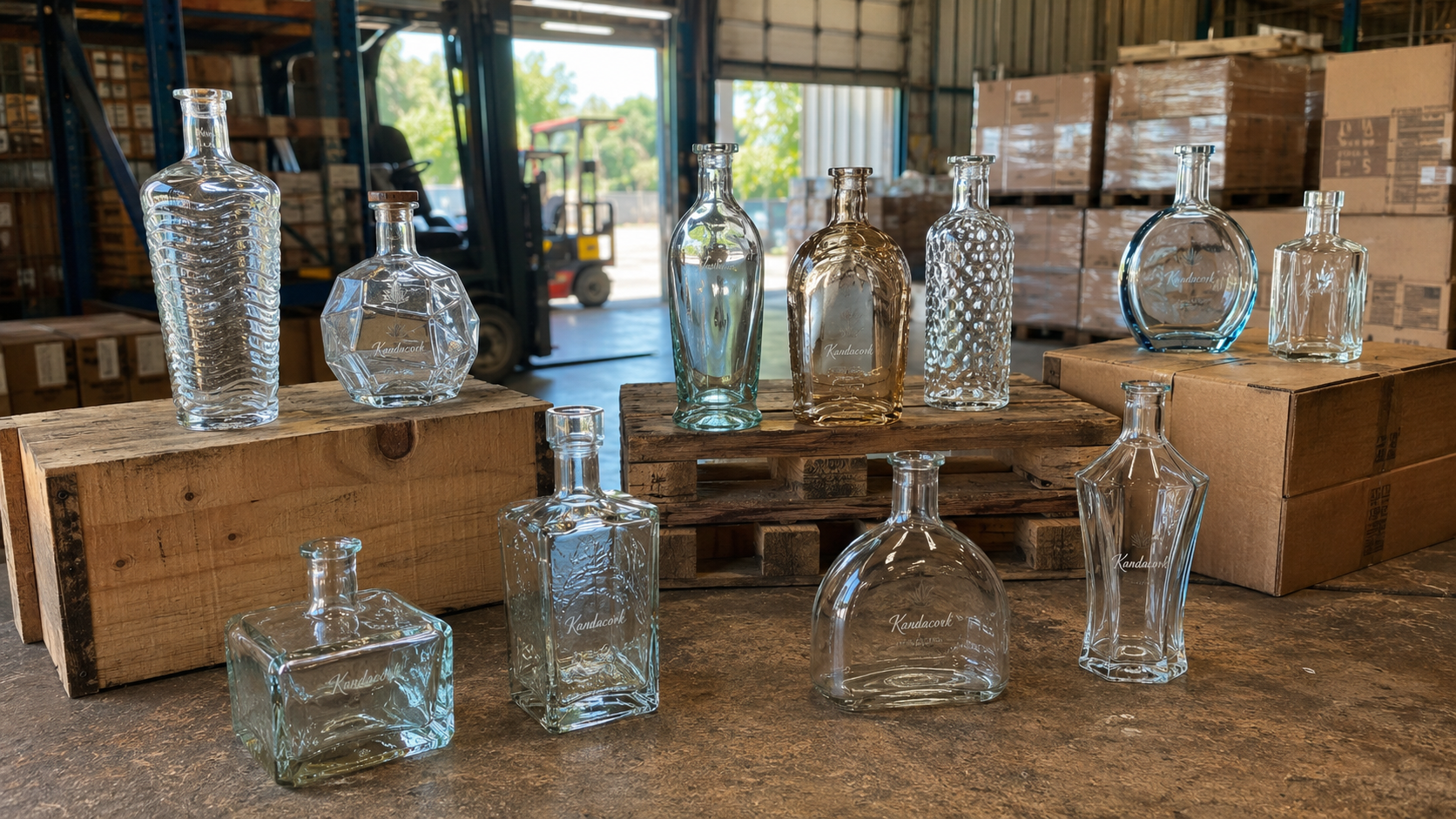
For projects requiring a new bottle mold or a coordinated bottle-and-closure program, buyers can align closure testing with custom spirits bottle development so that neck geometry, filling requirements, decoration, and export packaging are reviewed as one project.
Providing accurate drawings, representative bottles, product details, and filling information at the beginning can reduce unnecessary sample revisions.
Why Do Spirits Bottle Closures Leak?
Most leakage problems result from interactions between the bottle, closure, sealing material, product, and application process.
For a deeper review of failure causes before mass production, buyers can also consult the guide to preventing spirits bottle closure leakage before bulk orders.
Bottle-neck variation
Important bottle dimensions may include:
- Internal bore diameter
- Neck outside diameter
- Sealing-land width
- Thread or ROPP profile
- Neck height
- Ovality
- Surface flatness
- Glass seams and local irregularities
For T-top and bar-top stoppers, bore variation changes radial compression. A bore that is too large may reduce holding force, while a bore that is too small may increase insertion and opening force.
For threaded and ROPP closures, finish variation can affect thread engagement, liner compression, and cap-forming quality.
A bottle drawing shows the intended specification. Representative physical bottles reveal actual production variation. Both should be reviewed before closure approval.
Closure and sealing-component variation
Closure performance can also change because of differences in:
- Stopper-shank diameter
- Cork or polymer density
- Liner thickness and hardness
- Shell dimensions
- Thread geometry
- Surface treatment
- Material recovery after compression
- Valve or insert position
A closure supplier should control the characteristics that directly affect sealing, not only the closure’s external appearance.
Incorrect application
A technically suitable closure may fail when applied incorrectly.
Common application problems include:
- Insufficient or excessive torque
- Uneven capping-head pressure
- Worn capping chucks
- Incorrect ROPP roller settings
- Inconsistent stopper insertion depth
- Off-center stopper placement
- Product contamination on the sealing surface
- Variation between capping heads
- Excessive production-line speed
Hand-applied samples can demonstrate initial compatibility, but final approval should include closures applied using the intended production equipment.
Product incompatibility
Ethanol, sugar, flavor oils, botanical extracts, and other formulation components may affect liners, adhesives, elastomers, synthetic stoppers, surface treatments, and valve materials.
Possible effects include:
- Swelling or shrinkage
- Softening or cracking
- Reduced compression
- Adhesive weakening
- Discoloration
- Odor transfer
- Product absorption
- Changes in torque or extraction force
Water can support preliminary screening, but final compatibility testing should use the intended spirit or a technically justified representative liquid.
Storage and distribution stress
A bottle may pass immediate inspection and fail after exposure to:
- Temperature changes
- Air freight or high altitude
- Truck vibration
- Parcel handling
- Impact
- Extended horizontal storage
- Carton compression
- Material relaxation over time
Export programs, e-commerce shipments, and premium bottles with heavy decorative components may require more extensive validation than locally distributed standard packages.
Core Leak, Torque, and Compatibility Tests
A practical qualification program does not need every available laboratory method. It needs the methods that address the package’s actual failure risks.
Kandacork’s closure leakage and torque testing support can be used to review cap torque, liner fit, stopper pull-out force, bottle-neck compatibility, and leakage risk before sampling or bulk production.
Visual and dimensional inspection
Visual and dimensional inspection should occur before pressure, storage, or distribution testing.
Check:
- Closure seating height
- Stopper insertion depth and centering
- Liner position
- Thread engagement
- ROPP thread and knurl formation
- Tamper-band alignment
- Bottle-neck chips or cracks
- Glass seams
- Product contamination
- Uneven sealing contact
Critical dimensions should be compared with approved drawings and tolerances.
This stage identifies obvious mismatches and creates measurable evidence for later root-cause analysis.
Torque and extraction-force testing
Torque testing applies mainly to continuous-thread and ROPP closures.
Application torque is the rotational force used to install a threaded closure.
Removal torque is the rotational force required to open it.
Torque retention evaluates how removal torque changes after application, conditioning, storage, or distribution.
Torque is a process measurement, not proof that the package is leak-free. A cap can produce an acceptable torque result and still leak because of poor liner contact, finish damage, thread mismatch, or contamination.
For natural cork, micro-agglomerated cork, and synthetic stoppers, mechanical evaluation normally includes:
- Stopper dimensions
- Insertion depth
- Insertion force
- Extraction force
- Immediate and aged measurements
- Variation between individual samples
A stopper may lose holding force after material relaxation or become harder to remove after product exposure.
Individual readings and ranges are more useful than an average alone. An acceptable average can conceal excessive variation between bottles or closures.
Orientation, storage, and weight-loss testing
Upright, horizontal, and inverted storage can identify gross leakage and slow seepage.
A controlled protocol should define:
- Test product or liquid
- Fill level
- Closure application method
- Storage orientation
- Temperature
- Observation period
- Acceptance criteria
Inspect the bottle neck, closure, label, supporting surface, and carton where applicable.
Record:
- Visible liquid
- Dampness or residue
- Label or carton staining
- Product odor
- Closure movement
- Changes in appearance
For gradual losses, filled packages can be weighed before and after controlled storage and compared with appropriate controls. Weight change may indicate vapor or liquid loss, although further inspection may be needed to identify the leak path.
Vacuum or pressure testing
Vacuum and internal-pressure methods create a pressure differential across the assembled package.
Depending on the equipment, leakage may be detected through:
- Bubble formation
- Vacuum decay
- Pressure decay
- Another instrument signal
These methods can reveal leak paths that do not become visible during short static-storage testing.
Pressure, vacuum level, and hold time should reflect the bottle strength, closure design, headspace, and expected distribution environment. Test values should not be copied from an unrelated package or industry.
Glass bottles tested under internal pressure require suitable guarding and safety controls.
Filled-product compatibility and temperature aging
Final compatibility testing should use the intended spirit whenever practical.
After exposure, inspect for:
- Liner swelling or shrinkage
- Stopper deformation
- Material softening
- Cracking
- Adhesive failure
- Discoloration
- Odor transfer
- Product absorption
- Changes in removal torque
- Changes in extraction force
Temperature cycling can be added to evaluate expansion, contraction, material recovery, liner compression, and closure movement.
After conditioning, repeat the relevant mechanical and leakage measurements rather than relying only on visual inspection.
Distribution testing
Closure performance should also be evaluated as part of the finished shipping package.
Filled bottles should be packed using the intended:
- Cartons
- Dividers
- Inserts
- Retail boxes
- Pallet or parcel configuration
The selected protocol may include vibration, impact, compression, temperature, or reduced-pressure exposure according to the actual shipping route.
The International Safe Transit Association test procedures provide recognized frameworks for packaged-product distribution testing. The selected procedure should match the package size, shipping method, and expected distribution environment.
After testing, inspect for:
- Closure movement
- Wet cartons
- Product odor
- Label staining
- Damaged tamper features
- Glass contact damage
- Changes in torque or extraction force
A package that passes static leakage testing may still fail after repeated vibration or impact.
Applicable Standards—and Their Limits
Standards provide useful terminology, procedures, and measurement controls. They do not create one universal specification for every spirits bottle.
| Standard or procedure | Relevant use | Important limitation |
|---|---|---|
| ASTM D2063/D2063M | Torque-retention measurement for continuous-thread closures | Does not establish the correct torque for every package |
| ASTM D3474 | Calibration and use of packaging torque meters | Reliable torque measurement does not prove seal integrity |
| ASTM D4991 | Vacuum leakage testing of empty rigid containers | Filled-product and closure compatibility require separate evaluation |
| ISTA parcel procedures | Distribution testing for packaged products | The procedure must match the actual shipment system |
The official ASTM D2063/D2063M torque-retention standard can support controlled manual measurement of continuous-thread closure torque retention. It should not be treated as a universal torque specification or a substitute for filled-package leak testing.
The test method should be selected because it addresses a defined package risk—not simply because an equipment supplier or competitor lists the standard.
Five-Stage Pre-Production Approval Process
| Stage | Main action | Required output |
|---|---|---|
| Drawing and specification review | Review dimensions, materials, product, application equipment, and distribution conditions | Preliminary compatibility assessment and proposed test plan |
| Initial sample testing | Check fit, seating, torque or extraction force, gross leakage, and functionality | Sample approval or adjustment request |
| Filled-product aging | Condition samples with the intended spirit and repeat relevant tests | Compatibility and aged-performance evidence |
| Bottling-line trial | Apply closures using production equipment and sample different capping heads or run stages | Validated application window and production-consistency evidence |
| Distribution validation | Test the finished package using an appropriate shipping protocol | Final approved specification and release criteria |
The final approval record should define:
- Approved bottle and closure
- Material construction
- Critical dimensions
- Application settings
- Test procedures
- Acceptance criteria
- Approved reference samples
- Inspection requirements
- Lot traceability
- Change-control rules
A closure approved on one bottle should not automatically be treated as approved for every bottle with a similar nominal finish.
Diagnosing Closure Failures
A useful test program should help explain why a package failed, not only record that it failed.
| Failure observed | Possible causes | Recommended investigation |
|---|---|---|
| Leakage at one point on the neck | Ovality, damaged sealing land, folded liner | Measure the finish and inspect the seal-contact area |
| Passes upright but fails horizontally | Slow seepage, insufficient liner contact, product interaction | Extend aging and inspect sealing materials |
| Passes water testing but fails with spirit | Product-material interaction or different wetting behavior | Repeat testing with the intended product |
| Screw cap loosens after vibration | Low application torque, back-off, weak thread engagement | Review capping settings and torque retention |
| ROPP cap spins | Poor rolling, bottle-finish mismatch, inadequate thread formation | Inspect rollers, formed threads, cap dimensions, and glass finish |
| Stopper lifts after temperature exposure | Insufficient compression or product interaction | Compare bottle bore, stopper diameter, and aged extraction force |
| Opening force is excessive | High torque, tight stopper fit, or material swelling | Adjust application settings or closure specification |
| Results vary between production lots | Component or process inconsistency | Compare dimensions, materials, cavities, and production records |
Failed samples should be photographed and documented before opening, cleaning, or disassembly. Disturbing the seal interface too early can remove evidence needed for root-cause analysis.
What Should a Closure Test Report Include?
A supplier’s statement that a package “passed” has limited value unless the tested components and conditions are clearly documented.
A useful report should include:
- Bottle drawing, part number, and production lot
- Closure part number and production lot
- Spirit or test liquid
- Application torque, insertion depth, or equipment settings
- Conditioning time and temperature
- Storage orientation
- Individual measurements and observed variation
- Failure photographs where applicable
- Acceptance criteria
- Test conclusion and limitations
- Corrective action where required
- Reviewer and test date
The report should allow the test to be reproduced and help future production lots be compared with the approved package.
How to Evaluate a Spirits Closure Supplier
A qualified supplier should provide engineering evidence, documented testing, production control, and technical support.
| Evaluation area | Positive evidence | Warning sign |
|---|---|---|
| Bottle review | Reviews drawings and measures physical bottle samples | Selects the closure from nominal diameter alone |
| Engineering | Identifies critical sealing dimensions and risks | Cannot explain how the closure forms its seal |
| Testing | Uses calibrated equipment and documented methods | Provides undocumented pass claims |
| Product compatibility | Recommends testing with the intended spirit | Relies only on short water tests |
| Line support | Can support a production-line trial | Approves only hand-applied samples |
| Traceability | Tracks materials, lots, and production records | Cannot identify the source of a failed lot |
| Change control | Documents material and process changes | Changes construction without buyer approval |
| Failure analysis | Retains samples and supports root-cause investigation | Replaces failed samples without technical analysis |
Buyers should also confirm:
- Sample availability
- Tooling requirements
- Minimum order quantity
- Development and production lead times
- Manufacturing capacity
- Export packaging
- Pre-shipment inspection
- Complaint-response procedures
- Repeat-order consistency
Be cautious when a supplier promises that a closure is “100% leak-proof” without defining the bottle, product, application method, storage conditions, and test limits.
What to Send for Samples or a Quotation
A technically complete inquiry helps the supplier recommend a suitable closure and reduces repeated sample rounds.
Bottle information
Provide:
- Bottle drawing
- Representative physical bottles
- Neck-finish designation
- Bore or sealing dimensions
- Bottle supplier
- Known dimensional concerns
Spirit information
Include:
- Spirit category
- Alcohol by volume
- Sugar content where relevant
- Flavor oils or botanical extracts
- Fill temperature
- Headspace
- Intended shelf life
- Planned storage orientation
Closure and decoration requirements
Specify:
- Preferred closure type
- Top material
- Color
- Printing
- Embossing
- Laser decoration
- Tamper-evidence requirements
- Non-refillable requirements
- Target opening experience
Production and commercial information
Include:
- Capping or insertion equipment
- Line speed
- Destination markets
- Transport mode
- Initial order quantity
- Estimated annual volume
- Required certifications
- Target delivery date
- Known leakage, torque, or opening problems
Kandacork Closures & Stoppers can use this information to review bottle compatibility, discuss suitable closure structures, recommend relevant tests, and prepare samples or a project quotation.
Frequently Asked Questions
Is torque testing enough to prove that a spirits bottle will not leak?
No. Torque testing measures an application or opening parameter. Leak resistance also depends on bottle-finish dimensions, liner contact, closure construction, product compatibility, storage, and distribution conditions.
Should leakage testing use water or the actual spirit?
Water is useful for preliminary fit and leakage screening. Final compatibility and aging tests should use the intended spirit or a technically justified representative liquid.
How is a T-top stopper tested?
Typical evaluation includes bottle-bore and stopper measurement, insertion depth, insertion force, extraction force, horizontal or inverted storage, filled-product compatibility, and aged retesting.
Can one closure fit bottles from different glass suppliers?
Possibly, but each bottle source should be validated. Bottles with the same nominal finish may have different bore dimensions, ovality, sealing surfaces, and manufacturing tolerances.
When should closure testing be repeated?
Testing should be repeated when changing the bottle, closure design, material, liner, stopper dimensions, product formulation, supplier, filling conditions, capping machinery, shipping package, or distribution route.