Spirits bottle closure leak testing should evaluate the complete filled package—not only the cap or stopper.
A reliable qualification plan normally combines dimensional inspection, torque or pull-out-force measurement, side and inverted storage, vacuum or pressure testing, and inspection after temperature and transport conditioning.
The correct sequence depends on the closure’s sealing mechanism. Cork and synthetic stoppers rely mainly on compression inside the bottle bore. Screw caps and ROPP closures depend on liner contact, thread engagement, application settings and torque retention. Non-refillable systems may also depend on insert retention, valve function and several sealing interfaces.
For distilleries, bottlers, private-label buyers, importers, distributors and packaging teams evaluating custom spirits bottle closures and stoppers, the objective is to approve a closure system that remains secure during filling, storage, shipping, retail display and intended consumer use.
Key Takeaways
- Test the final bottle, closure, sealing material and liquid together.
- Use torque testing for threaded caps and force testing for compression-fit stoppers.
- Define the method and acceptance criteria before testing begins.
- Repeat critical checks after temperature and transport conditioning.
- Confirm performance on the intended filling line before approving bulk production.
Which Closure Test Should You Use?
Each test answers a different question. Buyers should understand what a method can demonstrate and what it cannot prove on its own.
| Test method | What it can confirm | What it cannot confirm alone | Common application |
|---|---|---|---|
| Visual and dimensional inspection | Bottle-finish conformity, closure dimensions and visible defects | Liquid-tightness or long-term sealing performance | All closure types |
| Upright, side and inverted storage | Gross leakage, slow seepage, staining and closure movement | Very small leak paths or future torque loss | All liquid closures |
| Application and removal torque | Cap-application consistency, opening force and torque retention | Actual liquid containment | Screw caps and ROPP closures |
| Insertion and pull-out-force testing | Stopper retention, compression consistency and opening force | Product compatibility or leak-path size | Cork and synthetic stoppers |
| Vacuum bubble testing | Visible leak paths under a pressure differential | A validated quantitative leak rate | Suitable rigid bottle systems |
| Vacuum-decay testing | Repeatable pressure-change data for a validated package | Universal suitability for every bottle, closure and liquid | Selected nonporous packages |
| Pressure-decay testing | Pressure retention through a defined sealing interface | Long-term material compatibility | Suitable rigid bottle systems |
| Mass-loss testing | Slow evaporation or seepage over time | The precise location of a leak | Extended-storage studies |
| Temperature conditioning | Performance changes caused by expansion, contraction or material relaxation | Vibration and impact damage | Export and shelf-life validation |
| Transport simulation | Cap back-off, stopper movement, impact damage and carton contamination | Long-term chemical compatibility | Finished bottles and shipping cartons |
The selected method must be validated for the actual bottle, closure, spirit, headspace, filling process and distribution route. A pressure level, test duration or acceptance limit suitable for one package should not automatically be applied to another.
Why Do Spirits Bottle Closures Leak?
Most leakage failures can be traced to four areas:
- Bottle and closure dimensions do not match.
- The closure is applied incorrectly.
- The sealing material is unsuitable for the product.
- Storage or distribution conditions change the package.
Dimensional Mismatch
The bottle finish and closure must operate within an approved tolerance range.
Critical dimensions may include:
- Bottle-bore diameter.
- Neck-finish diameter and height.
- Thread pitch and profile.
- Sealing-land width and flatness.
- Stopper shank diameter.
- Liner position and thickness.
- Closure shell dimensions.
- Tamper-band geometry.
An oversized bottle bore can reduce stopper compression. An uneven sealing land can prevent a cap liner from making uniform contact. Incorrect thread geometry may reduce engagement or produce inconsistent opening torque.
Glass variation should also be considered. Bottles from different mold cavities may have slightly different finish dimensions even when they share the same nominal specification. A structured glass bottle neck and closure matching review can help buyers identify these risks before ordering production closures.
Incorrect Closure Application
A threaded closure may leak when application torque is too low because the liner is not compressed sufficiently.
Excessive torque can also create problems by:
- Damaging bottle or cap threads.
- Deforming the closure shell.
- Displacing the liner.
- Increasing stress on the glass finish.
- Breaking tamper-evident bridges.
- Making the bottle difficult to open.
ROPP closures require controlled top pressure and correctly adjusted rollers. Poor forming can produce incomplete threads, low opening torque, spinning caps or damaged tamper bands.
Cork and synthetic stoppers rely on controlled compression. A stopper that is too small may seep or move. Excessive compression can increase insertion and extraction force.
For threaded systems, a dedicated screw cap leakage prevention guide can provide additional detail on liner selection, bottle fit, torque control and pre-production testing.
Material Incompatibility
The functional seal may be created by cork, a polymer stopper, an elastomeric ring, a cap liner, a valve or several components working together.
Material selection should consider:
- Alcohol by volume.
- Flavor oils and botanical extracts.
- Sugar content.
- Product acidity.
- Contact duration.
- Storage temperature.
- Intended shelf life.
- Reclosing requirements.
Water can support preliminary fit and gross-leak screening. Final qualification should consider the intended spirit or an agreed simulant when alcohol, flavor compounds, sugar or extended contact could change the sealing material.
Storage and Distribution Stress
A package may pass immediately after filling and fail later because of:
- Temperature expansion or contraction.
- Liner relaxation.
- Cork or polymer deformation.
- Vibration and impact.
- Atmospheric-pressure changes.
- Side or inverted storage.
For export projects, the filled bottle and shipping carton should be evaluated as one packaged-product system. When the bottle structure, neck finish, closure and secondary packaging are still being developed together, broader custom spirits bottle and packaging support can help align the complete pack before production.
Closure-Specific Test Priorities
Cork and Synthetic Stoppers
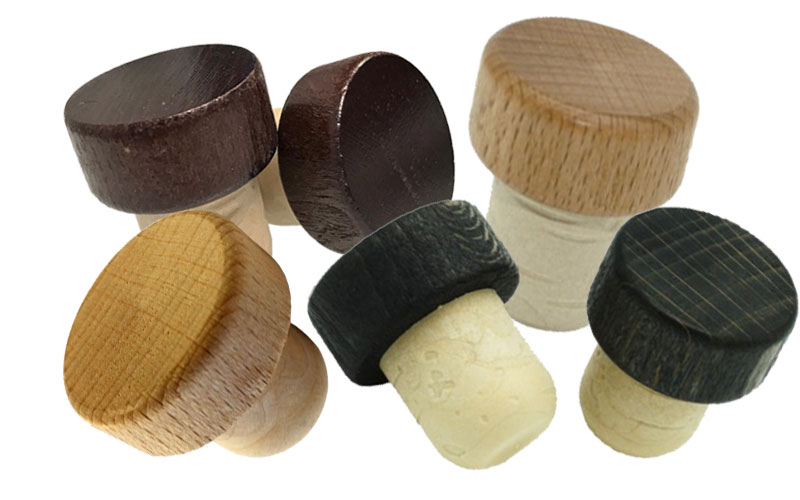
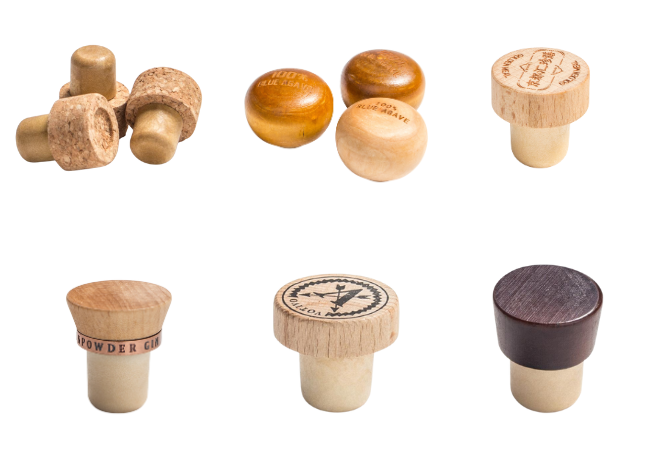
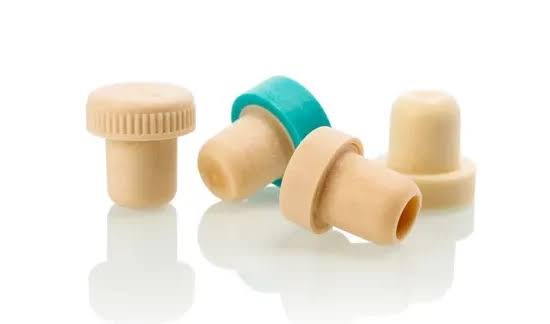
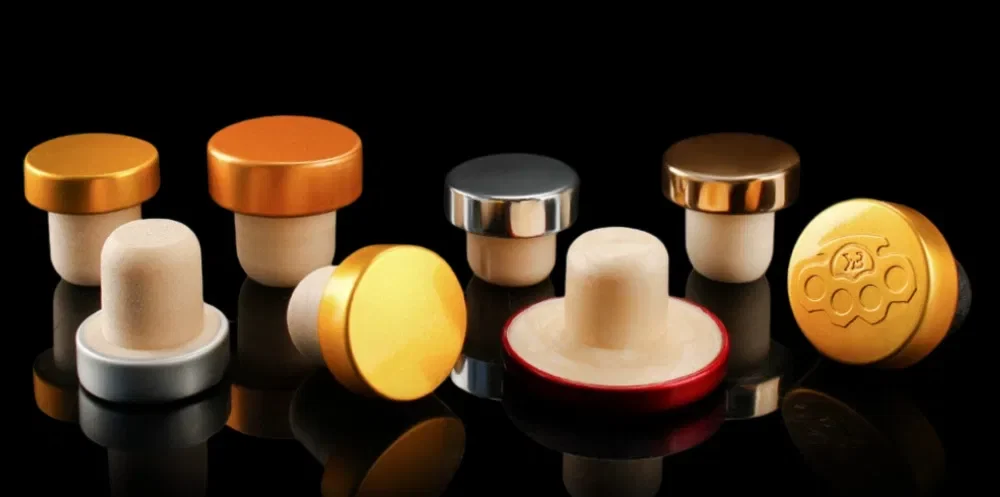
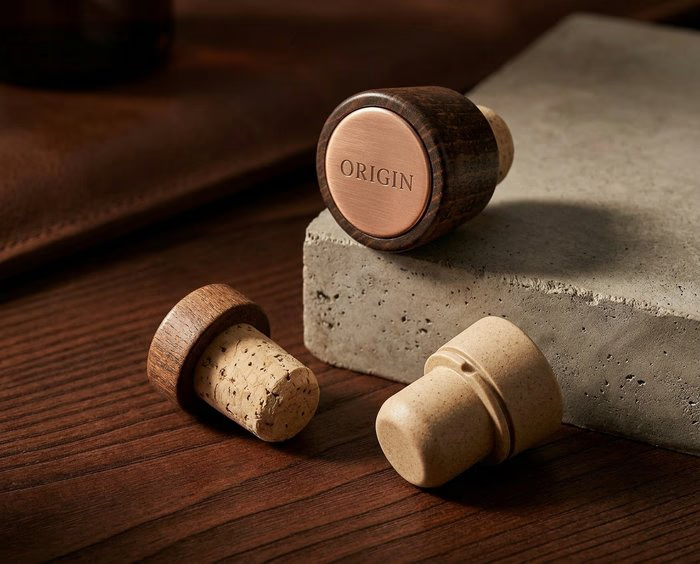
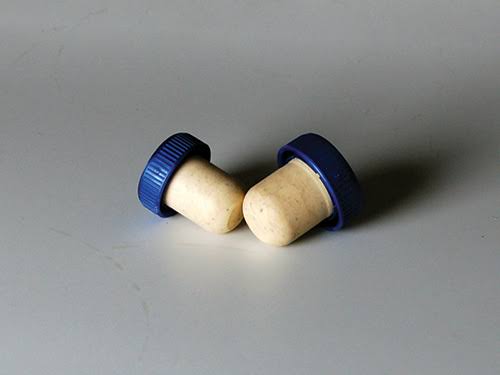
Bar-top stoppers seal through compression against the internal bottle bore.
The main risks are insufficient compression, seepage during side storage, excessive extraction force and poor recovery. Priority checks include bore and stopper measurements, insertion depth, pull-out force, orientation storage and decorative-head retention.
Continuous-Thread Screw Caps
Screw caps usually rely on liner contact with the sealing land and correct thread engagement.
The main risks are under-application, over-application, liner displacement and cap back-off. Prioritize bottle-finish inspection, application and removal torque, torque retention, orientation storage and an appropriate leak test.
ROPP Closures
ROPP performance depends on the aluminum shell, liner, bottle finish, top pressure and roller setup.
The main risks are incomplete thread formation, spinning caps, low opening torque and tamper-band failure. Priority checks include formed-thread inspection, opening torque, inverted storage and post-vibration evaluation.
Glass and Non-Refillable Closures
Glass stoppers often depend on a polymer or elastomeric sealing ring. Non-refillable closures may combine a cap, insert, valve, pourer and tamper-evident assembly.
Testing should focus on component retention, insertion and removal force, valve operation, inversion, repeated pouring, reclosure and tamper-evident performance.
A single cap-torque result cannot qualify a multi-component closure system.
Need Help Selecting a Test Method?
Kandacork’s sealing and leakage testing support helps buyers review bottle drawings, closure structures, spirit alcohol percentage, filling methods, target markets and expected order quantities before approving samples.
CTA: Request a Closure Compatibility Review
Core Leakage and Mechanical Tests
Visual and Dimensional Inspection
Inspection should begin before filling.
Check for:
- Chipped or uneven glass.
- Damaged sealing surfaces.
- Incorrect thread profiles.
- Bottle-bore variation.
- Closure distortion.
- Liner displacement.
- Stopper defects.
- Misalignment.
- Incorrect tamper-band formation.
Measurements should be compared with approved bottle and closure drawings. Where practical, include bottles from several mold cavities and closures from more than one production lot.
Orientation Storage
Filled samples can be stored upright, horizontally and inverted for defined periods.
Inspect them at scheduled intervals for:
- Wet threads or neck surfaces.
- Residue beneath the cap or capsule.
- Label or carton staining.
- Product odor.
- Stopper movement.
- Measurable product loss.
ASTM D5094/D5094M covers qualitative gross-leakage testing for certain rigid and semi-rigid liquid containers with threaded or lug-style closures. It evaluates the ability of a container-closure system to resist leakage during upright, inverted or side storage and distribution conditions.
Its scope should not automatically be extended to cork, synthetic, glass or complex non-refillable closures without a validated project-specific procedure.
Vacuum and Pressure Testing
Vacuum and pressure methods create a controlled differential across the sealing interface.
A bubble test can reveal visible gross leak paths. Vacuum-decay and pressure-decay systems instead monitor a measurable pressure change.
Vacuum-decay results can be affected by package geometry, headspace, liquid volatilization, chamber design and test sensitivity.
The test record should identify:
- Applied vacuum or pressure.
- Stabilization time.
- Test duration.
- Bottle orientation.
- Conditioning conditions.
- Acceptance threshold.
The selected setup must be validated for the specific bottle and closure. An unsuitable chamber, excessive pressure or poorly defined threshold can produce misleading results.
Torque Testing
Torque testing supports the qualification and production control of threaded closures.
The most useful measurements are application torque, removal torque and torque retention after an agreed conditioning period.
Torque results must be interpreted together with leakage results. A cap can meet its torque target and still leak because of an unsuitable liner, damaged sealing land, incorrect dimensions or poor thread engagement.
Stopper Force Testing
Compression-fit stoppers require force measurements rather than cap torque alone.
Evaluate:
- Insertion force and depth.
- Initial pull-out force.
- Pull-out force after conditioning.
- Variation among samples.
- Shank recovery.
- Decorative-head retention.
The approved force range should provide sufficient retention without creating an unacceptable consumer opening experience.
Mass-Loss Testing
Slow evaporation or seepage may not create visible droplets.
Filled bottles can be weighed before and after controlled storage. Use a calibrated balance, consistent conditioning, control samples, defined measurement intervals and an agreed allowable variation.
Environmental and Distribution Validation
Temperature Conditioning
Temperature can affect internal pressure, liner compression, stopper dimensions, polymer flexibility, adhesive strength and closure torque.
Depending on the supply chain, testing may include elevated temperature, low temperature, temperature cycling and room-temperature recovery.
After conditioning, repeat the relevant leakage, torque, pull-out-force and visual checks.
Vibration, Impact and Pressure Changes
Transportation can cause cap back-off, stopper movement, tamper-band damage, bottle contact and carton contamination.
The selected transport procedure should reflect the shipping method, package format, handling system and commercial risk. Samples should be as close as possible to actual production bottles, closures and cartons.
Post-conditioning inspection may include:
- Leakage checks.
- Torque or pull-out-force measurement.
- Stopper-position inspection.
- Tamper-band inspection.
- Carton examination.
- Evaluation after a recovery period.
Air freight and high-altitude routes may also create a pressure differential between the bottle headspace and the surrounding environment. Where this risk is relevant, include reduced-pressure conditioning in the qualification plan.
How Should Acceptance Criteria Be Defined?
A test plan is incomplete without agreed pass/fail criteria.
Possible requirements include:
- No visible droplets.
- No wet bottle neck or threads.
- No continuous bubble stream.
- No label, capsule, divider or carton staining.
- No product odor inside the carton.
- No closure movement after vibration.
- Removal torque within the approved range.
- Pull-out force within the approved range.
- No liner displacement.
- No decorative-top separation.
- No mass loss above the agreed limit.
- No delayed leakage after conditioning.
The brand owner, bottler, closure supplier and test laboratory should agree on the method, sample quantity, conditioning, inspection intervals and acceptance limits before testing begins.
Common Failure Symptoms
| Test result | Likely causes | What to investigate |
|---|---|---|
| Leakage around a screw-cap edge | Low torque, unsuitable liner or damaged sealing land | Torque, liner contact, finish dimensions and capper settings |
| Cap loosens after vibration | Poor torque retention, thread mismatch or contamination | Delayed torque, thread engagement and line cleanliness |
| Cork leaks during side storage | Oversized bore, undersized stopper or poor recovery | Bore diameter, stopper dimensions and conditioned pull-out force |
| Stopper is difficult to remove | Excessive compression or high-friction material | Bore tolerance, shank diameter and material selection |
| Leakage appears after heat exposure | Liner relaxation, stopper deformation or pressure increase | Conditioned torque or force, headspace and material suitability |
| ROPP cap spins | Incorrect roller setup, low top pressure or shell variation | Formed threads, capper heads and closure dimensions |
| Decorative top separates | Weak adhesive or inconsistent assembly | Pull-off strength and bonding controls |
| Visual inspection passes but the bottle leaks | Hidden sealing-interface defect | Orientation, vacuum, pressure or extended-storage testing |
Corrective action should address the identified root cause. Changing the closure without checking the bottle finish, sealing material and application process may leave the real problem unresolved.
Engineering Investigation Sequence
When leakage appears only after conditioning or transport, use a structured investigation rather than changing several variables at once.
- Confirm the failure with retained or replicate samples.
- Record where and when the leakage first appears.
- Measure the bottle finish and closure dimensions.
- Review application torque, insertion force or capper settings.
- Inspect the liner, stopper or sealing ring after disassembly.
- Compare results across bottle lots, closure lots and machine heads.
- Change one controlled variable.
- Repeat the original failure condition.
- Document the correction and final approval result.
Closure Approval Workflow
| Stage | Buyer action | Supplier evidence | Release decision |
|---|---|---|---|
| Specification review | Provide bottle, liquid, filling-line and market information | Closure drawing, material data and tolerances | Approve sample development |
| Laboratory qualification | Agree on test methods and acceptance criteria | Dimensional, torque, force and leakage records | Approve line trial |
| Filling-line trial | Evaluate different machine heads and operating stages | Application settings and trial results | Approve reference samples |
| Production control | Confirm inspection frequency and release requirements | Batch records, calibration status and retained samples | Continue or hold production |
| Pre-shipment verification | Review test reports, packaging condition and traceability | Final report and lot identification | Release shipment |
Information to Include in an RFQ
Provide:
- Bottle drawing and physical samples.
- Neck-finish designation.
- Preferred closure type.
- Bottle capacity and fill volume.
- Spirit category and alcohol percentage.
- Relevant formulation details.
- Initial quantity and annual forecast.
- Filling-line equipment and speed.
- Storage orientation and shipping method.
- Target markets.
- Temperature or altitude exposure.
- Tamper-evident requirements.
- Opening-force expectations.
- Decoration requirements.
- Required tests and reports.
- Sample approval deadline.
Supplier Capability Checklist
Ask the supplier for:
- Closure and bottle-finish drawings.
- Material and liner specifications.
- Critical dimensional tolerances.
- Recommended application settings.
- Available testing methods.
- Calibration controls.
- Batch traceability.
- Retained-sample procedures.
- Nonconformance controls.
- Corrective-action procedures.
Independent laboratory testing may be appropriate for formal standards-based testing, contractual approval, major export programs, unfamiliar materials or disputed failures.
Frequently Asked Questions
What is the best leak test for a spirits bottle closure?
There is no single best method for every closure. Most projects require dimensional inspection, torque or pull-out-force testing, storage-orientation testing and an appropriate vacuum or pressure method.
Is an inverted-bottle test sufficient?
No. It can identify visible gross leakage but may not detect small leak paths, delayed material relaxation, torque loss or transport-related failure.
Can water be used instead of the actual spirit?
Water is useful for preliminary screening. Final approval should consider the intended spirit or an agreed simulant when alcohol, flavor oils, sugar or extended contact may affect the sealing material.
Does increasing cap torque prevent leakage?
Not always. Low torque may reduce liner compression, but excessive torque can damage the closure, bottle finish, liner or tamper band.
Who should perform the final validation?
The supplier should verify component dimensions and relevant mechanical performance. The bottler or brand owner should validate the complete filled package on the intended line and under representative storage and distribution conditions.