Introduction
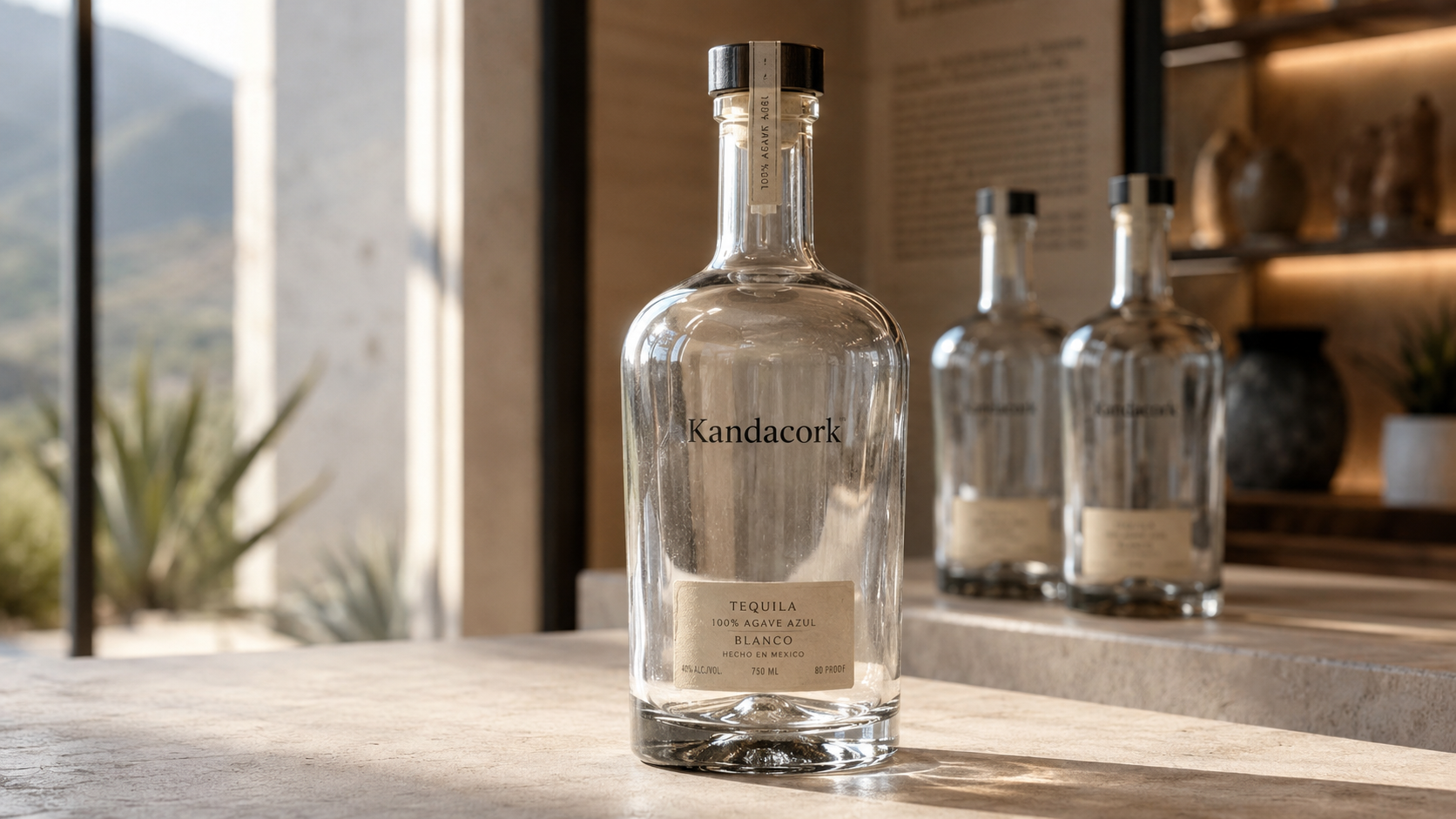
Synthetic stoppers are often selected when buyers need consistent fit, repeatable production and stable performance across bulk orders. This guide explains how compression, shank size, neck tolerance and sample testing affect bar-top closure fit.
Executive Summary
Synthetic stoppers create stable fit when the stopper shank, bottle inner neck bore, material hardness, compression recovery, and insertion depth are correctly matched. For spirits brands, stable closure performance should be confirmed through real bottle samples, filled-bottle leakage tests, pull-out force checks, cap height review, and resealing tests.
For B2B buyers, the best result comes from treating the stopper and bottle as one packaging system. A reliable synthetic stopper should protect the liquid, support consistent shelf appearance, open smoothly, and reseal securely after use.
Quick Answer: How Do Synthetic Stoppers Create Stable Fit?
Synthetic stoppers create stable fit by matching the stopper shank to the bottle’s inner neck bore. The shank compresses slightly inside the bottle neck to create friction, sealing contact, and retention force.
The most important fitment factors are bottle inner neck diameter, shank diameter, shank length, insertion depth, material hardness, compression recovery, pull-out force, product compatibility, and filled-bottle testing.
A good synthetic stopper should feel secure when closed, open smoothly, resist leakage, maintain consistent cap height, and reseal properly after first use.
| Buyer Question | Short Answer |
|---|---|
| What creates stable fit? | Correct matching between bottle inner neck bore and stopper shank |
| What causes leakage? | Poor shank compression, weak recovery, neck variation, or incorrect insertion depth |
| What should buyers test? | Filled-bottle leakage, pull-out force, cap height, temperature exposure, and resealing |
| Who needs custom synthetic stoppers? | Spirits brands, distilleries, private-label buyers, packaging teams, and beverage distributors |
What Are Synthetic Stoppers?
Synthetic stoppers are engineered bottle closures made with synthetic cork, polymer, TPE, TPR, or other elastomeric materials. In spirits packaging, they are commonly used as bar-top closures, T-top closures, or T-corks.
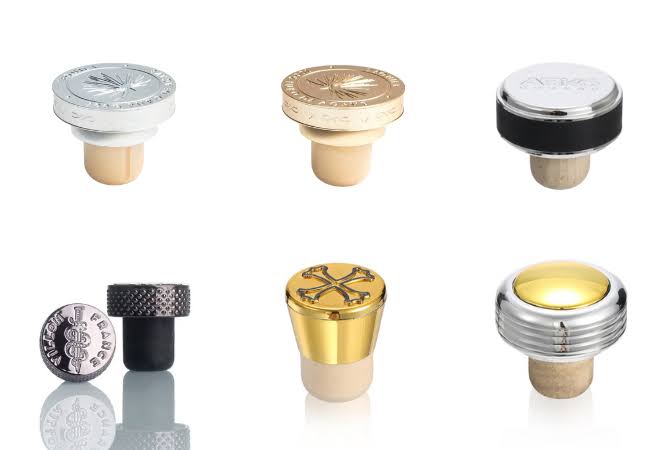
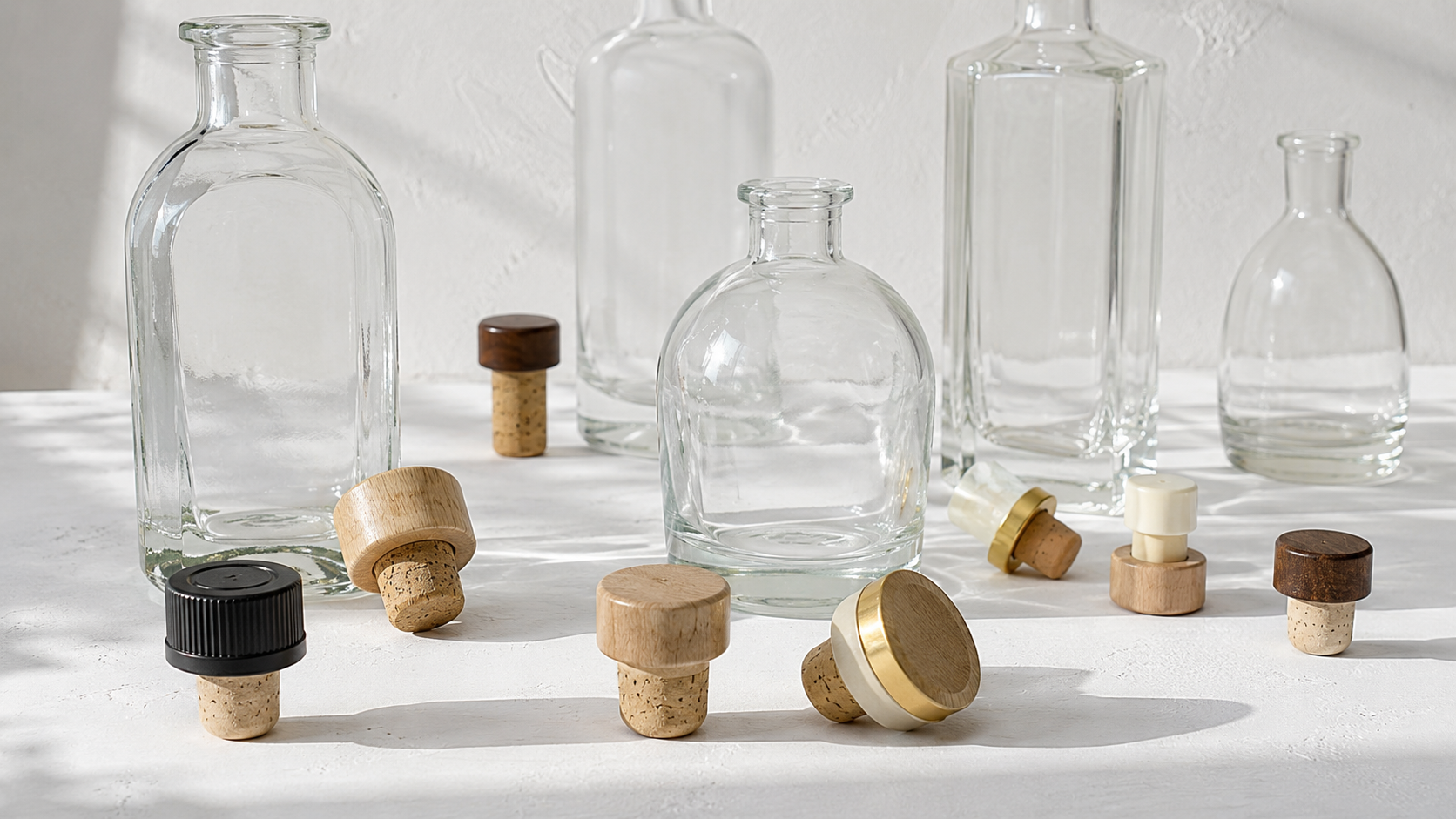
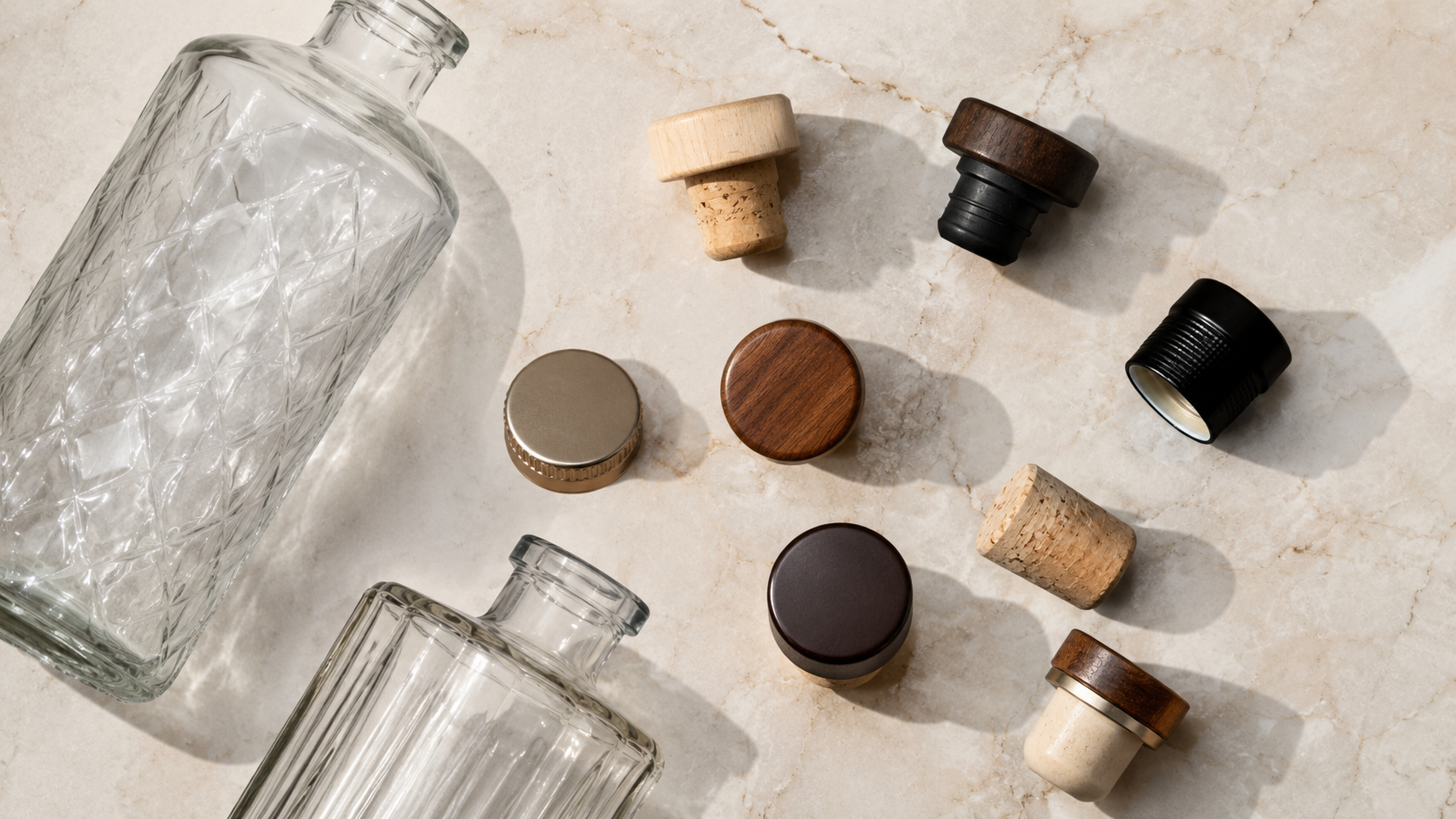
A typical bar-top stopper includes a visible top cap and a functional shank. The top cap may be made from wood, plastic, aluminum, glass, ceramic, or composite material. The shank enters the bottle neck and creates the sealing contact.
The top cap affects visual identity, grip, decoration, and shelf appearance. The shank affects stable fit, leakage resistance, retention, and opening force.
For buyers comparing custom options, Kandacork’s synthetic bar-top stoppers are designed for spirits brands that need consistent dimensions, repeatable production quality, and flexible presentation across different bottle formats.
How Synthetic Stoppers Achieve Stable Fit in Spirits Bottles
Stable fit is created through controlled interference between the stopper shank and the inner wall of the bottle neck. In many bar-top closure applications, the shank is slightly larger than the inner neck bore. When inserted, the shank compresses and creates contact pressure against the glass.
This contact pressure helps hold the stopper in place. It also helps reduce leakage risk and supports a confident opening feel.
The fit must be balanced. If the shank is too small, the stopper may feel loose or leak. If the shank is too large, it may be difficult to insert, difficult to remove, or unstable after bottling. A closure that fits well in an empty bottle may also perform differently after filling, packing, transport, or temperature exposure.
That is why stable bottle-neck fit should be confirmed with real bottle samples and filled-bottle tests before bulk production.
Why Stopper Size Alone Is Not Enough
Many buyers begin with a simple size question: what synthetic stopper size do I need? Size is important, but it is not the full answer.
Two bottles with the same capacity may have different inner neck bores. A 750 ml whisky bottle, a 700 ml rum bottle, and a 500 ml liqueur bottle may all require different shank designs. Even bottles with similar shapes can vary by neck depth, mouth finish, glass tolerance, and filling-line requirements.
Two stoppers with the same nominal diameter may also perform differently. Material hardness, elasticity, surface finish, compression recovery, and shank length can all change the final fit.
The cap diameter and shank diameter should not be confused. Cap diameter affects appearance and handling. Shank diameter affects sealing, retention, leakage resistance, and pull-out force.
For secure closure fit, the shank is the most important functional component.
Key Fitment Factors for Synthetic Stoppers
Bottle Inner Neck Bore
The inner neck bore is the internal diameter of the bottle opening. It is the starting point for stopper selection.
Buyers should not rely only on bottle capacity or bottle photos. A bottle drawing should show the inner neck diameter, mouth finish, and neck depth. Actual bottle samples should also be tested because glass tolerances may vary between production batches.
Shank Diameter
The shank diameter determines how tightly the synthetic stopper fits inside the bottle neck. A slight interference fit is often needed to create compression and retention.
If the shank diameter is too small, the closure may not create enough sealing contact. If it is too large, it may require excessive insertion force or create an uncomfortable opening experience.
Shank Length and Insertion Depth
Shank length affects how much surface area contacts the inside of the bottle neck. Insertion depth affects both sealing performance and visual alignment.
If the shank sits too shallow, the closure may feel unstable. If it sits too deep, the cap may look uneven or interfere with the bottle finish. Correct insertion depth helps maintain consistent cap height across the production run.
Material Hardness
Material hardness affects insertion force, pull-out force, and resealing performance. Softer synthetic materials may compress more easily, while firmer materials may provide stronger retention.
In technical packaging discussions, hardness is often evaluated through Shore hardness. The right hardness depends on the bottle neck, target opening feel, product type, and filling process.
Compression Recovery
Compression recovery is the material’s ability to return toward its original form after being compressed. A synthetic shank with good recovery can maintain contact with the glass neck over time.
This matters during storage, shipping, and temperature changes. Poor compression recovery may cause a stopper to become loose after bottling.
Compression Set
Compression set refers to permanent deformation after compression. If the shank takes too much set, it may not maintain reliable stopper retention.
For spirits brands, compression set is important because bottles may remain sealed for long periods before opening. A closure must remain reliable throughout storage, transport, and retail display.
Pull-Out Force
Pull-out force is the force required to remove the stopper from the bottle. It directly affects consumer experience.
A premium spirits closure should feel secure, controlled, and intentional. If the pull-out force is too low, the stopper may feel cheap. If it is too high, the bottle may be difficult to open.
Product Compatibility
Different liquids place different demands on closures. High-proof alcohol, botanical extracts, flavored spirits, oils, syrups, and acidic liquids may interact differently with closure materials.
Compatibility testing should consider alcohol content, aroma profile, storage position, temperature exposure, and intended shelf life.
Fitment Diagnosis Table
| Issue | Likely Cause | Recommended Fix |
|---|---|---|
| Stopper feels loose | Shank diameter is too small or material recovery is weak | Increase shank diameter, adjust material hardness, or test a new shank compound |
| Leakage during shipping | Weak sealing contact, neck variation, or poor insertion depth | Test filled bottles, review neck bore tolerance, and adjust shank interference |
| Stopper pops up after bottling | Excess compression, internal pressure, or poor seating | Review insertion depth, shank size, fill conditions, and storage temperature |
| Stopper is difficult to remove | Pull-out force is too high | Reduce shank interference, use a softer material, or adjust shank surface design |
| Uneven cap height | Inconsistent insertion depth or bottle neck variation | Confirm neck depth, bottling-line settings, and stopper dimensional tolerance |
| Cap looks misaligned | Top design, shank seating, or manual insertion variation | Improve assembly control, test top balance, and review insertion method |
| Stopper reseals poorly | Shank material lacks recovery after repeated use | Select material with better compression recovery and test repeated opening cycles |
Stable Fit Examples by Spirits Category
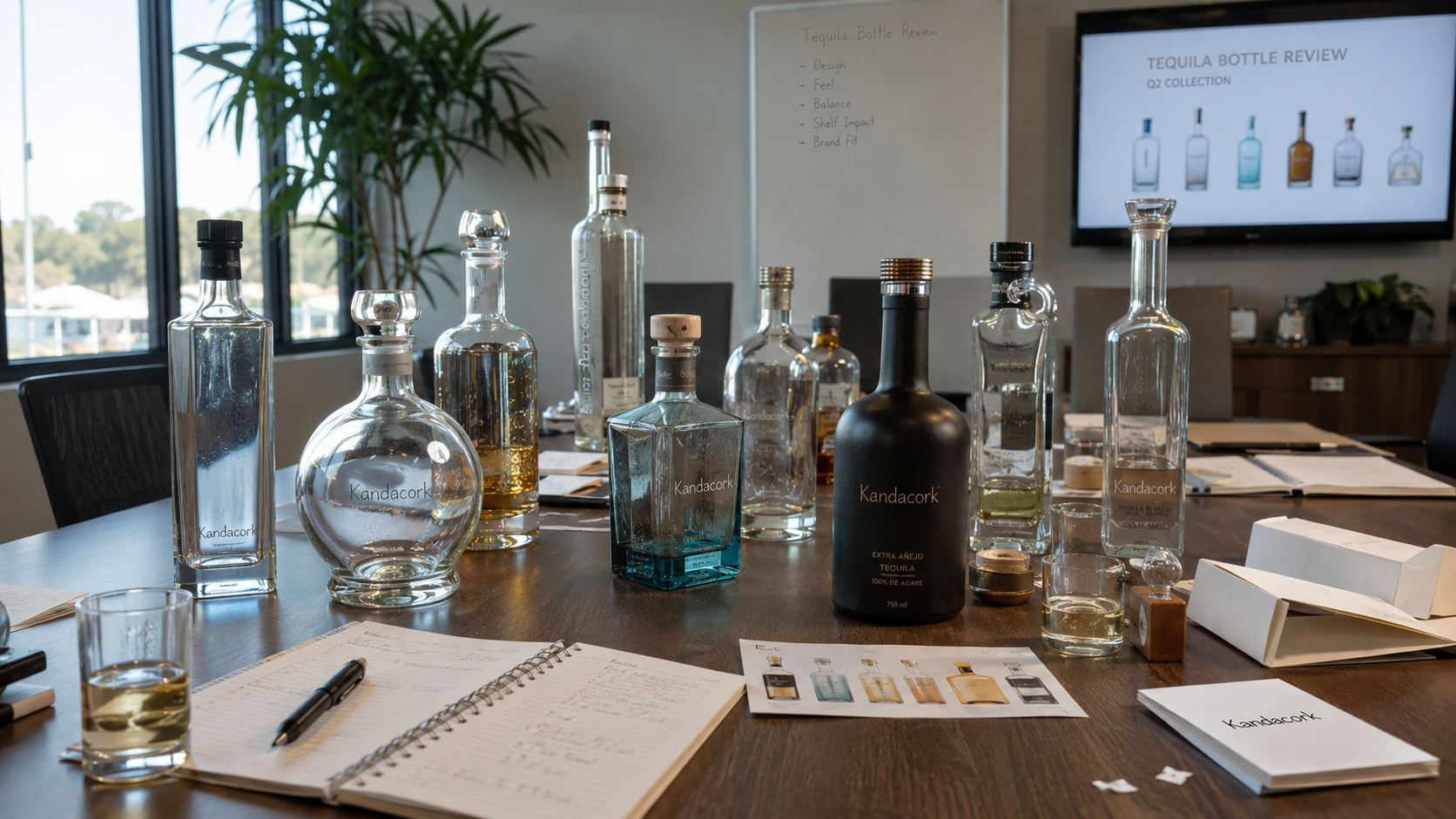
Different spirits categories often require different closure priorities. A custom synthetic stopper supplier should consider not only the bottle dimensions, but also the brand style, product formula, price point, and expected consumer experience.
| Spirits Category | Recommended Closure Direction | Fitment Priority |
|---|---|---|
| Whisky | Wood-top synthetic stopper | Firm pull, premium feel, stable cap height, traditional presentation |
| Vodka | Aluminum-top synthetic stopper | Clean appearance, smooth opening, tight visual tolerance |
| Gin | Aluminum or plastic-top synthetic stopper | Modern look, color consistency, botanical compatibility |
| Rum | Wood-top or custom-top synthetic stopper | Warm presentation, reliable resealing, strong shelf identity |
| Tequila | Aluminum, wood, or custom-top stopper | Premium appearance, controlled opening force, export packaging consistency |
| Brandy | Wood-top synthetic stopper | Classic style, secure retention, refined opening feel |
| Liqueur | Plastic or custom-top synthetic stopper | Easy resealing, compatibility with sugar and flavor compounds |
| Mini spirits | Plastic-top synthetic stopper | Cost control, high-volume consistency, small-format compatibility |
For bottle structure, capacity planning, and category-specific glass development, spirits brands can coordinate closure decisions with a dedicated spirits bottle packaging program instead of treating the stopper as a last-stage accessory.
Synthetic Stoppers vs Natural Cork Stoppers for Stable Fit
Natural cork has a long history in wine and spirits packaging. It offers a traditional appearance and is often associated with premium quality. However, natural cork is a biological material, so variation in density, elasticity, and appearance is expected.
Synthetic stoppers are engineered for more controlled dimensions and repeatable performance. They can support consistent bottle-neck fit across larger production runs because the shank material and geometry can be more predictable.
Synthetic closure materials can also reduce the risk of cork taint associated with TCA, a compound historically connected with natural cork contamination. However, synthetic materials still need proper evaluation for sensory neutrality, sealing performance, food-contact suitability, and compatibility with the beverage.
The best closure is not always synthetic or natural in every case. The best closure is the one that fits the bottle, protects the product, supports the brand image, and performs reliably in the supply chain.
| Factor | Synthetic Stoppers | Natural Cork Stoppers |
|---|---|---|
| Dimensional consistency | Generally high | Naturally variable |
| Visual appearance | Clean, controlled, customizable | Traditional and organic |
| Fit repeatability | Strong when properly designed | Depends on cork quality and variation |
| Decoration flexibility | High with plastic, aluminum, wood, or custom tops | Strong with wood or premium finishes |
| TCA risk | Reduced compared with natural cork | Possible if not controlled |
| Premium perception | Strong with the right top design | Traditionally strong |
| Best use cases | Scalable spirits packaging, private label, modern brands | Heritage spirits, natural positioning, traditional presentation |
Choosing the Right Top Material
The visible top of a synthetic stopper affects brand positioning. A closure can communicate modernity, tradition, luxury, simplicity, or craft identity before the customer even opens the bottle.
| Top Material | Best For | Advantages | Considerations |
|---|---|---|---|
| Plastic top | Private-label spirits, large-volume orders, promotional packaging | Cost-efficient, lightweight, color-flexible | May look less premium than metal or wood |
| Aluminum top | Vodka, gin, tequila, contemporary spirits | Clean, sleek, modern, premium appearance | Requires careful finish and color matching |
| Wood top | Whisky, rum, brandy, craft spirits | Warm, classic, premium, tactile | Natural material appearance may vary |
| Glass or ceramic top | Luxury spirits, limited editions, gift packaging | Distinctive and premium | Heavier and may require longer development |
| Custom shaped top | Brand-led packaging and shelf differentiation | Strong visual identity | Requires tooling, sampling, and longer approval time |
Plastic-Top Synthetic Stoppers
Plastic-top synthetic stoppers are a practical option for scalable spirits programs. They are lightweight, cost-efficient, and available in many shapes and colors.
They are especially useful for private-label spirits, promotional bottles, small-format bottles, and brands that need consistent color matching across large orders.
Kandacork’s plastic bar-top stoppers can support molded shapes, color-matched heads, and brand decoration while keeping the closure line-friendly for bulk spirits packaging.
Aluminum-Top Synthetic Stoppers
Aluminum-top synthetic stoppers create a clean and modern look. They are often used for vodka, gin, tequila, and contemporary spirits packaging.
Aluminum tops can support metallic finishes, matte finishes, color coating, and logo decoration. They work well for brands that want a premium appearance without a traditional wood-top style.
For secure closure performance, the aluminum cap must be matched with the correct synthetic shank. The visual top may attract attention, but the shank still controls sealing and retention.
For projects that require a sleek metallic finish, aluminum bar-top stoppers can help balance shelf impact, durability, and controlled bottle-neck fit.
Wood-Top Synthetic Stoppers
Wood-top synthetic stoppers combine traditional appearance with engineered shank performance. They are popular for whisky, rum, brandy, craft spirits, and heritage-style packaging.
Wood adds warmth and tactile value. A synthetic shank can support more controlled fit while the top cap provides a natural premium impression.
This combination is useful for brands that want a classic look but also require consistent sealing and scalable production. Kandacork’s wooden bar-top stoppers can be considered when the brand needs a tactile, heritage-style top paired with reliable stopper performance.
Custom Decoration and Brand Presentation
The stopper is part of the bottle’s identity. A well-designed closure can make a spirits bottle more recognizable on the shelf and more memorable in the customer’s hand.
Common customization options include top printing, side printing, embossing, debossing, hot stamping, color matching, matte finish, gloss finish, metallic finish, and custom cap shapes.
For brand owners, the closure should match the bottle shape, label design, liquid color, price point, and target retail channel. A premium whisky closure may need a heavy wood-top feel, while a modern vodka closure may need a clean aluminum top with minimal decoration.
When closure decoration needs to align with label systems, secondary packaging, or retail identity, decoration and branding planning can help keep the full package visually consistent.
Information Needed for a Synthetic Stopper Specification
A clear specification helps reduce development time and improves sampling accuracy. Packaging engineers, procurement teams, and brand managers should prepare the following details before requesting synthetic cork stopper samples or bulk closure production.
| Specification Item | What to Provide |
|---|---|
| Bottle inner neck bore | Measurement from actual production bottle samples |
| Bottle drawing | Neck bore, neck depth, mouth finish, tolerance, and capacity |
| Shank diameter | To be selected after compression and fitment testing |
| Shank length | Matched to neck depth and desired cap height |
| Top material | Plastic, aluminum, wood, glass, ceramic, composite, or custom |
| Opening feel | Soft, medium, firm, premium pull, or easy reseal |
| Product type | Whisky, vodka, gin, rum, tequila, brandy, liqueur, syrup, oil, or specialty beverage |
| Alcohol content | Required for compatibility review |
| Decoration method | Printing, embossing, debossing, hot stamping, color matching, or custom tooling |
| Test requirements | Leakage, pull-out force, temperature exposure, transport simulation, and resealing |
| Market documentation | Food-contact and export-market requirements |
If the project also involves custom bottle development, teams can coordinate closure dimensions with Kandacork Glass so the neck finish, stopper shank, decoration area, and export packaging are considered together.
How to Test Synthetic Stoppers Before Bulk Production
Testing is essential before mass production. A synthetic stopper that looks correct in a catalog may not perform correctly with a specific bottle.
The first step is to review the bottle drawing. The drawing should include the inner neck bore, mouth finish, neck depth, and dimensional tolerances.
The second step is to test actual bottle samples. Real samples help confirm whether the stopper seats correctly, seals properly, and creates the desired pull-out force.
The third step is to test filled bottles. Filled-bottle testing is important because liquid weight, alcohol vapor, storage conditions, and shipping movement can affect closure behavior.
A complete test process should include bottle neck measurement, manual insertion test, line insertion test, cap height review, leakage test, inverted bottle observation, pull-out force check, temperature exposure, transport simulation, repeated opening test, sensory review, and material documentation review.
Sample Approval Checklist
| Test Item | Why It Matters |
|---|---|
| Bottle drawing review | Confirms neck bore, depth, mouth finish, and tolerance |
| Actual bottle sample test | Verifies real-world fit beyond drawings |
| Manual insertion test | Checks basic seating, alignment, and opening feel |
| Bottling-line test | Confirms production compatibility and insertion consistency |
| Filled-bottle leakage test | Evaluates seal performance under real product conditions |
| Inverted bottle test | Identifies leakage risk during handling and transport |
| Pull-out force check | Measures consumer opening experience |
| Temperature exposure test | Reviews performance under storage and shipping variation |
| Repeated resealing test | Checks usability after first opening |
| Sensory review | Helps detect odor or taste concerns |
| Documentation review | Supports food-contact and market requirements |
Transport testing can also be informed by recognized packaging methods such as ASTM paper and packaging standards, especially when filled bottles must survive vibration, compression, drops, and export handling.
Buyer Checklist Before Requesting a Quote
A complete request helps Kandacork Closures recommend the right synthetic stoppers faster and more accurately.
Prepare the bottle capacity, such as 50 ml, 100 ml, 375 ml, 500 ml, 700 ml, 750 ml, or 1 liter.
Prepare the bottle drawing with inner neck bore, mouth finish, neck depth, and tolerances.
Send actual bottle samples whenever possible.
Share the product type, such as whisky, vodka, gin, rum, tequila, brandy, liqueur, syrup, oil, or specialty beverage.
Provide the alcohol content or formulation details that may affect compatibility.
Define the target opening feel, such as soft, medium, firm, premium, or easy reseal.
Choose the preferred top material, such as plastic, aluminum, wood, glass, ceramic, or composite.
Share logo, color, finish, embossing, debossing, printing, or custom shape requirements.
Provide the estimated order quantity and production timeline.
Mention the destination market and any food-contact documentation needs.
For buyers sourcing closures together with bottles, cartons, or multi-category glass packaging, Kandacork Glass Packaging can help align the closure decision with broader packaging requirements.
Food-Contact and Compliance Considerations
Closures used for beverage packaging may be part of the food-contact packaging system. This means material suitability should be reviewed according to the product type, filling conditions, storage conditions, and sales market.
In the United States, the FDA provides information on packaging and food contact substances, including materials and components that may come into contact with food. For spirits brands, this makes closure material selection, documentation, and intended-use review especially important.
For products sold in the European Union, the European Commission explains that [food contact materials]( sold in the European Union, the European Commission explains that food contact materials must not endanger health, change the composition of food, or negatively affect taste or smell. EFSA also provides scientific information on food contact material safety, which is relevant when brands evaluate packaging components for regulated markets.
For spirits packaging, compliance review should consider whether the stopper material is suitable for alcohol contact, whether it may affect odor or taste, and whether documentation is available for the intended market.
This is especially important for export brands, private-label spirits, and products sold through retail chains that require packaging documentation.
Sustainability and Material Recovery Considerations
Sustainability is increasingly part of closure and bottle development. A synthetic stopper should not be evaluated only by price or appearance. Buyers may also need to consider material separation, recyclability, weight reduction, logistics efficiency, and compatibility with the rest of the packaging system.
The International Organization for Standardization provides guidance through ISO 18604 packaging and material recycling, which is useful when packaging teams discuss recovery and recyclability requirements.
For spirits closures, practical sustainability decisions may include choosing lighter top materials, avoiding unnecessary multi-material complexity, selecting decoration methods that do not interfere with recovery routes, and designing bottle-and-closure systems that remain durable during distribution.
Why Stable Closure Fit Improves Commercial Results
Reliable stopper retention is not only a technical feature. It affects operations, sales, logistics, customer experience, and brand reputation.
For operations teams, well-fitted synthetic stoppers can reduce bottling-line interruptions, rejected goods, repacking, leakage claims, and inconsistent cap height.
For brand teams, consistent closure fit supports a cleaner retail appearance. When every closure sits evenly and aligns with the bottle design, the package looks more professional.
For customers, the closure improves trust. It should feel secure when purchased, open with confidence, and reseal reliably after use.
For distributors and retailers, leak-resistant closure performance helps reduce damaged cartons, stained labels, and shelf-quality complaints.
A well-fitted stopper can make a spirits bottle feel more premium even before the customer tastes the product.
Request a Stable Fit Recommendation from Kandacork Closures
Kandacork Closures helps spirits brands develop synthetic stoppers for stable fit, custom presentation, and reliable packaging performance.
To recommend the right closure, Kandacork Closures can review your bottle drawing, actual bottle samples, target top material, spirits category, alcohol content, decoration requirements, and order quantity.
The result is a custom stopper solution designed around the complete bottle system, not just a generic closure size.
Kandacork Closures supports whisky, vodka, gin, rum, tequila, brandy, liqueur, and specialty beverage packaging projects. Options include plastic-top synthetic stoppers, aluminum-top synthetic stoppers, wood-top synthetic stoppers, and customized decorative bar-top closures.
For brands preparing a new bottle launch or improving an existing package, early fitment review can reduce risk and improve final presentation. Buyers can request a custom closure quote with bottle drawings, samples, target materials, decoration requirements, and order details.
FAQ
How do synthetic stoppers create a stable fit?
Synthetic stoppers create a stable fit by compressing the shank inside the bottle’s inner neck bore. This controlled contact creates sealing pressure, friction, and retention force.
What is the most important measurement for synthetic stopper fit?
The most important measurement is the bottle’s inner neck bore. This internal opening determines the shank diameter needed for stable compression and proper sealing.
Should the stopper shank be larger than the bottle opening?
In many bar-top closure applications, the shank is slightly larger than the bottle opening so it can compress inside the neck. The exact size difference should be confirmed through sample testing.
What causes synthetic stoppers to leak?
Leakage can be caused by an undersized shank, poor compression recovery, inconsistent bottle neck dimensions, insufficient insertion depth, temperature change, or product incompatibility.
Why does a stopper pop up after bottling?
Stopper pop-up may happen because of excess compression, internal pressure, poor insertion depth, material recovery, or unsuitable shank design. Filled-bottle testing can help identify the cause.
Are synthetic stoppers suitable for premium spirits?
Yes. Synthetic stoppers can be suitable for premium spirits when the shank fit, top material, decoration, and opening feel are matched to the bottle and brand position.
Can one synthetic stopper fit several bottle models?
Sometimes, but it should not be assumed. Similar bottle capacities may have different inner neck bores, neck depths, and tolerances. Each bottle model should be tested.
What is the difference between a T-top closure and a synthetic stopper?
A T-top closure describes the structure: a top cap with a shank that enters the bottle neck. A synthetic stopper describes the material used for the shank or closure body. Many spirits closures are both T-top closures and synthetic stoppers.
How do I know if the opening feel is right?
The stopper should feel secure when closed and controlled when opened. It should not feel loose, but it should not require excessive force. Pull-out force testing helps confirm the right opening feel.
Are synthetic stoppers reusable?
Many synthetic bar-top stoppers are designed for resealing after opening. Reuse performance depends on shank material, bottle fit, product type, and repeated opening behavior.
When should I request custom synthetic stopper samples?
Request samples when you have a bottle drawing, actual bottle samples, target top material, product type, and estimated order quantity. Sampling should happen before bulk closure production.
Conclusion: Stable Fit Starts With the Bottle and Stopper Together
The best synthetic stoppers are not chosen by size alone. Stable fit comes from the correct relationship between the bottle neck, stopper shank, material behavior, insertion depth, and real-world testing.
For spirits brands, this matters because the closure affects sealing, shelf appearance, opening feel, shipping performance, and consumer trust. A secure stopper protects the product, supports brand quality, and reduces packaging risk.
Kandacork Closures helps B2B buyers develop custom synthetic stoppers for stable fit, premium appearance, and reliable spirits packaging. If you are preparing a new bottle project or improving an existing closure, start with your bottle drawing, real bottle samples, product details, and brand requirements. From there, Kandacork Cloures can help recommend a closure solution built for both performance and presentation.