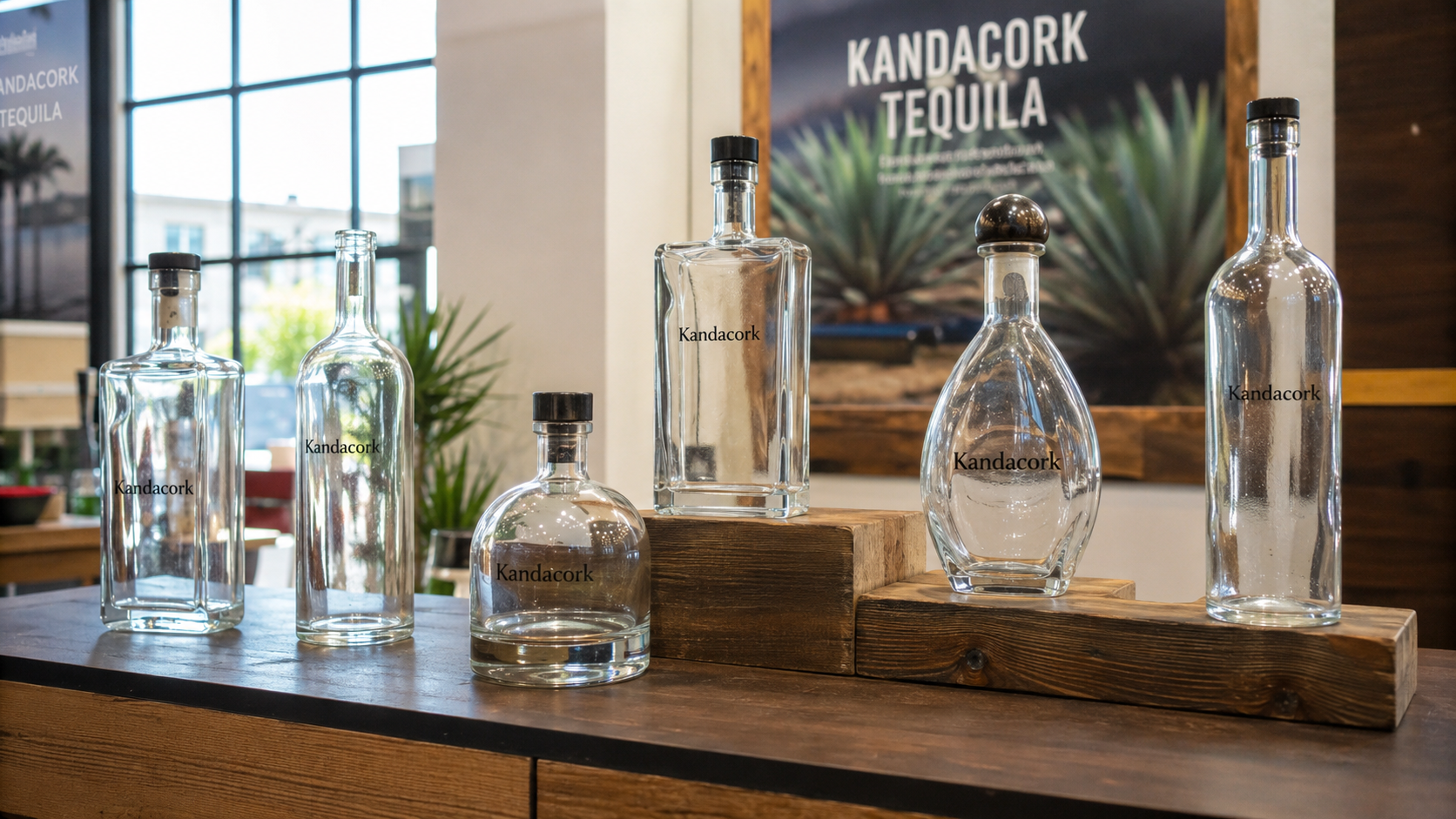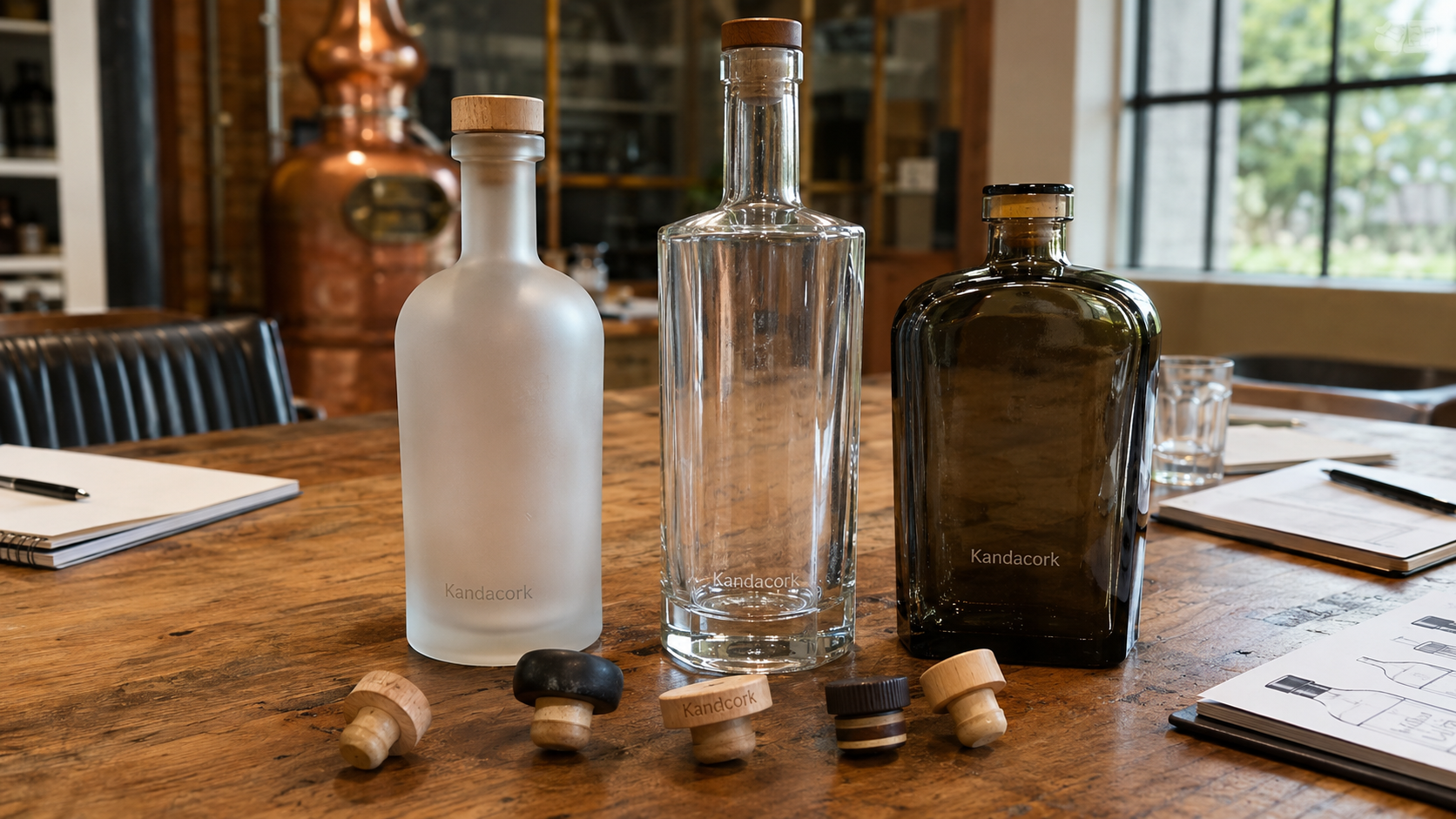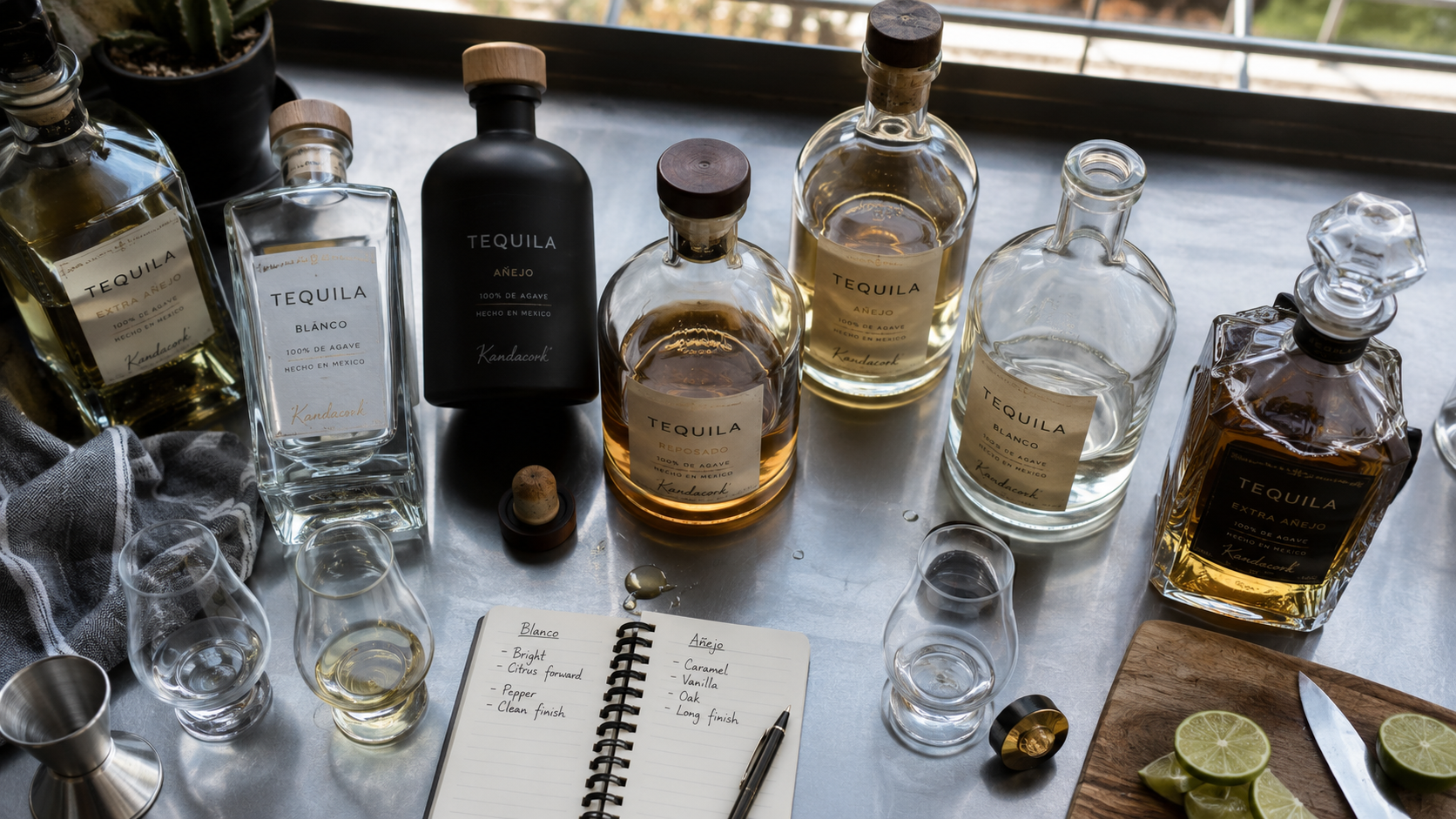
Synthetic T-top stoppers can offer consistent fit and controlled appearance for whisky packaging projects. This guide explains how shank size, compression, top design, neck tolerance and sample testing should be reviewed before production.
What Are Synthetic Stoppers for Whisky Bottles?
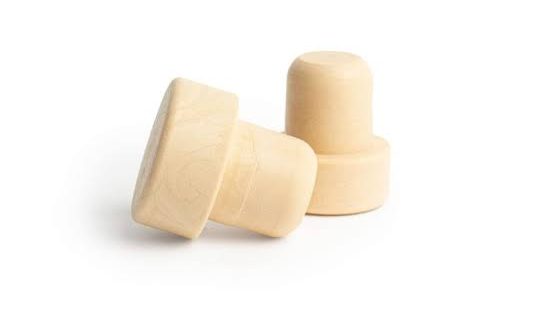
Synthetic stoppers for whisky bottles are closures made with a synthetic cork-style shank and a visible top cap. The shank fits inside the bottle neck and provides compression against the inner glass wall. The cap sits above the bottle mouth and gives the package its visual and tactile finish.
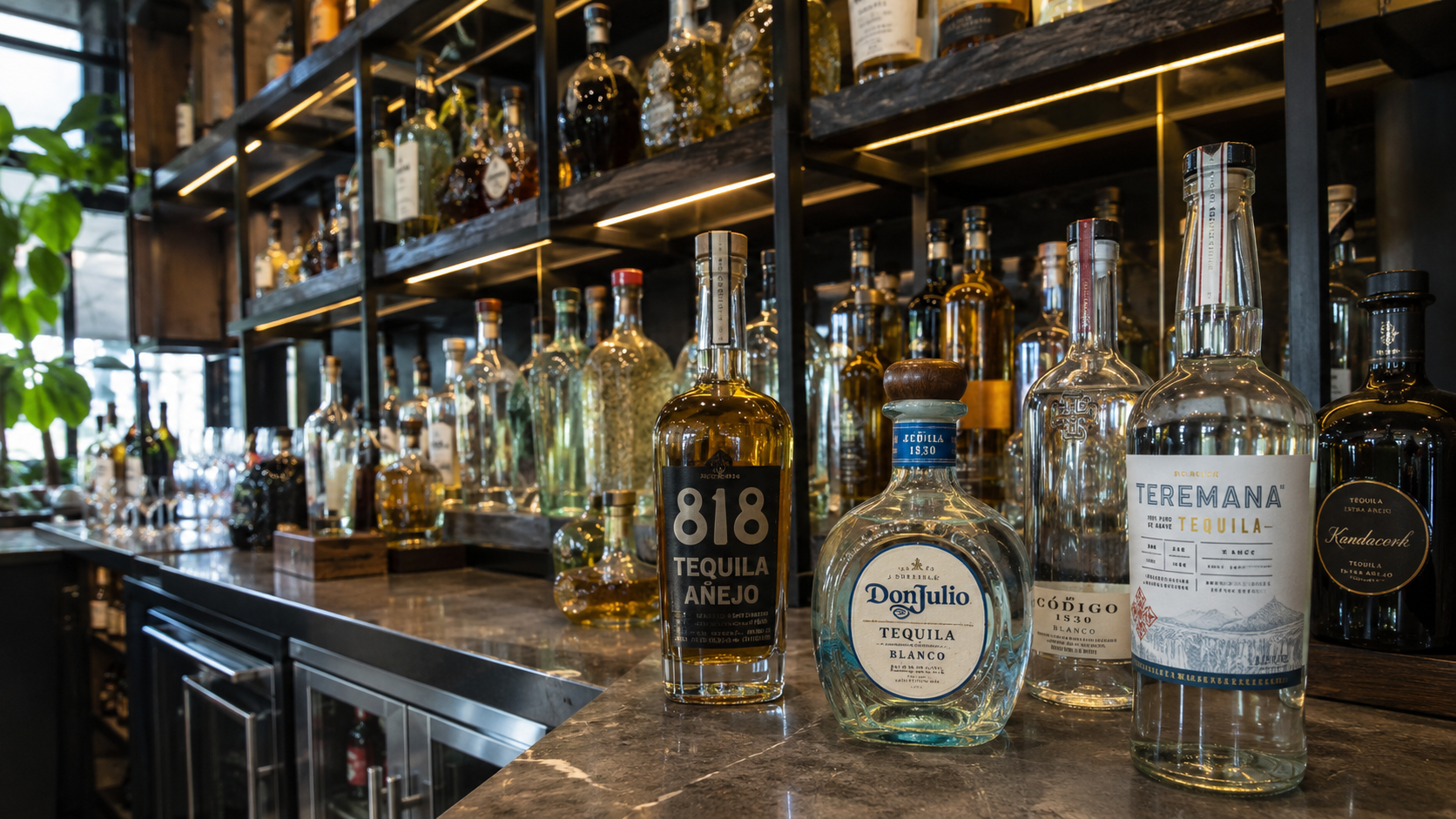
These closures are also called synthetic cork stoppers, synthetic shank stoppers, T-top stoppers, bar-top closures, T-corks, and whisky bottle stoppers. In commercial spirits packaging, they are widely used for whisky, bourbon, rye, malt whisky, blended whisky, rum, tequila, vodka, gin, brandy, liqueurs, and premium gift bottles.
The synthetic shank is designed for dimensional consistency. Compared with natural cork, it can reduce variation in diameter, compression, color, grain, and surface texture. This makes synthetic stoppers useful when a brand needs stable fit across repeated orders, multiple bottle formats, or export supply programs.
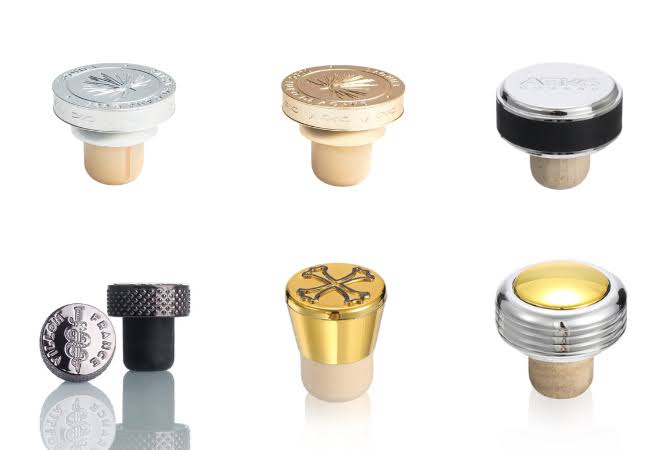
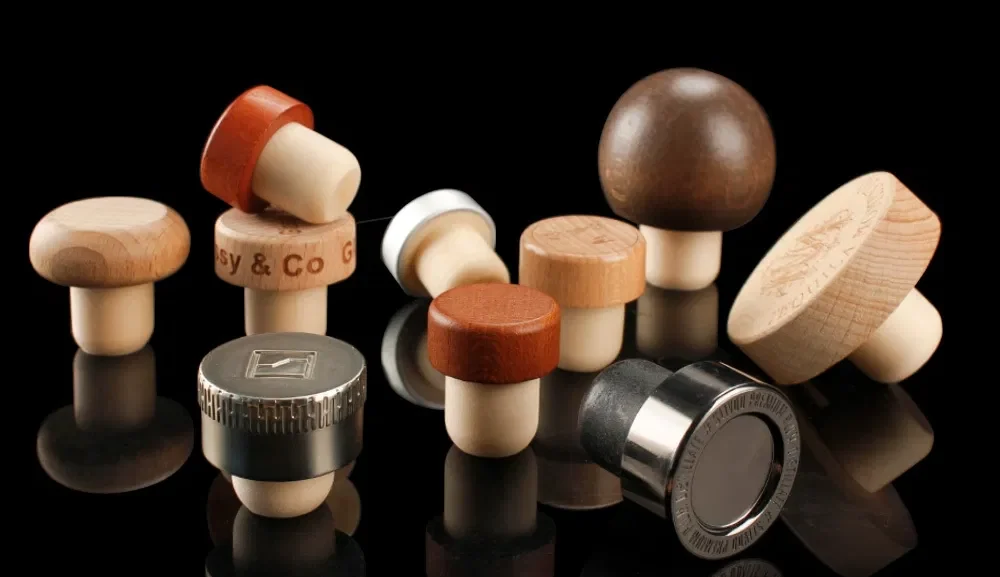
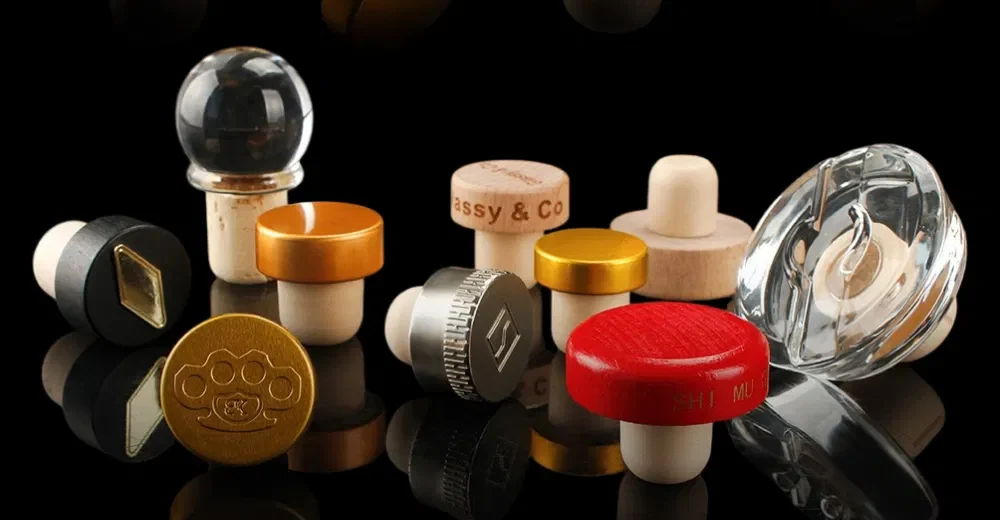
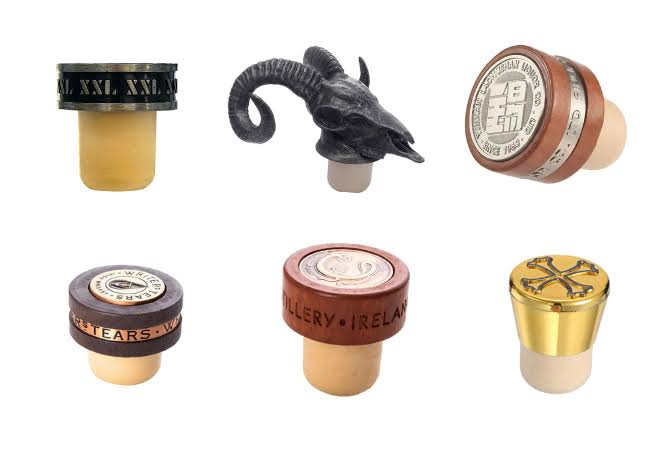
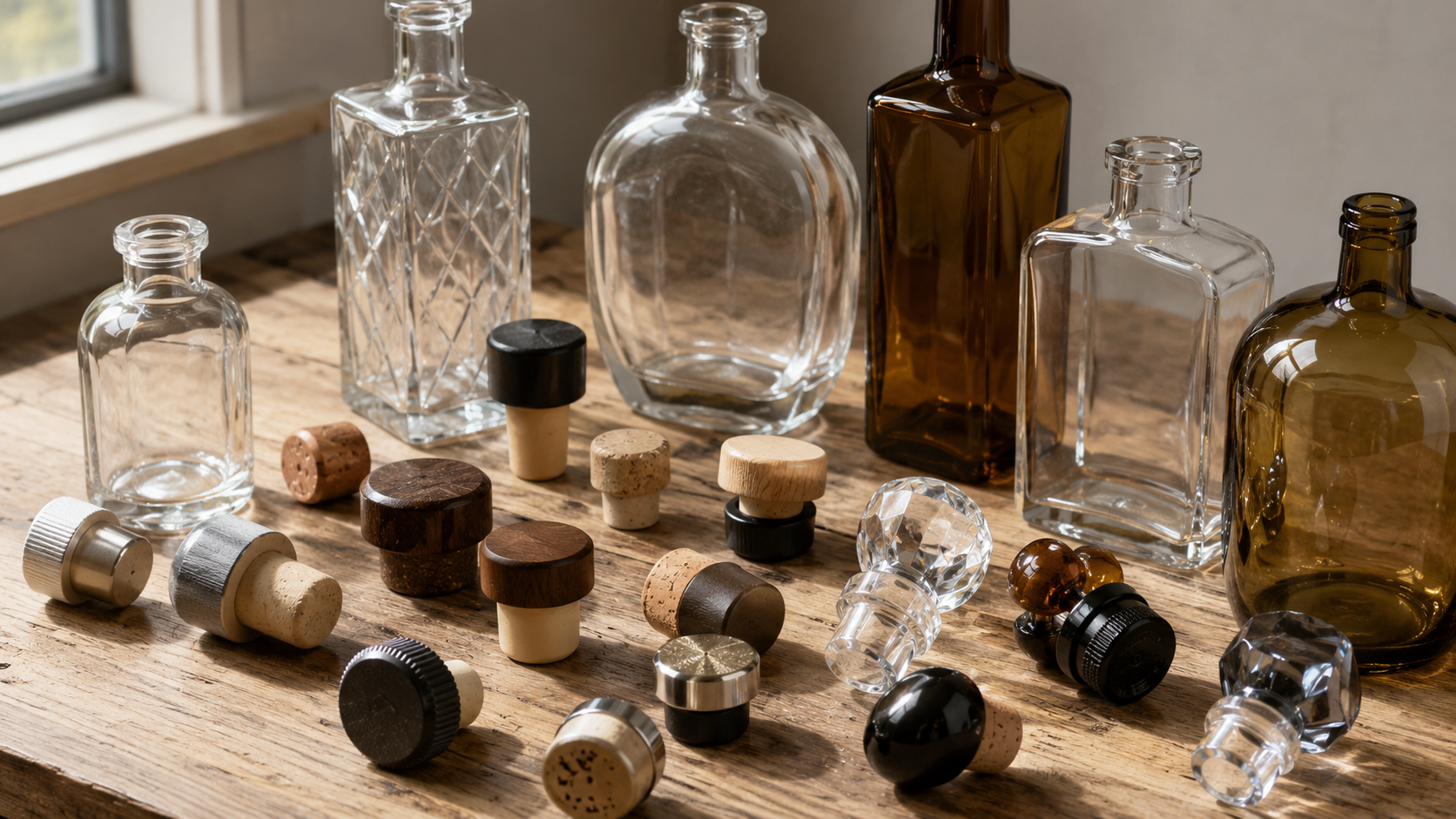
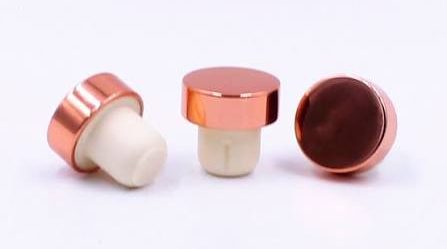
The decorative top can be simple or premium depending on the brand. Common options include plastic caps, wood-look caps, natural wood tops, aluminum tops, metal-effect tops, matte finishes, glossy finishes, embossed logos, printed logos, and custom molded shapes.
Why Whisky Brands Use Synthetic Stoppers
Whisky is usually opened, poured, resealed, and stored over time. The closure must therefore feel secure when opened and dependable when replaced. A good whisky stopper should not feel cheap, loose, overly tight, or inconsistent from bottle to bottle.
Synthetic stoppers for whisky bottles are popular because they combine controlled fit with flexible presentation. They can support a traditional whisky image when paired with a wood-look or natural wood top, or they can create a modern premium feel with matte black, aluminum, metallic, or custom colored caps.
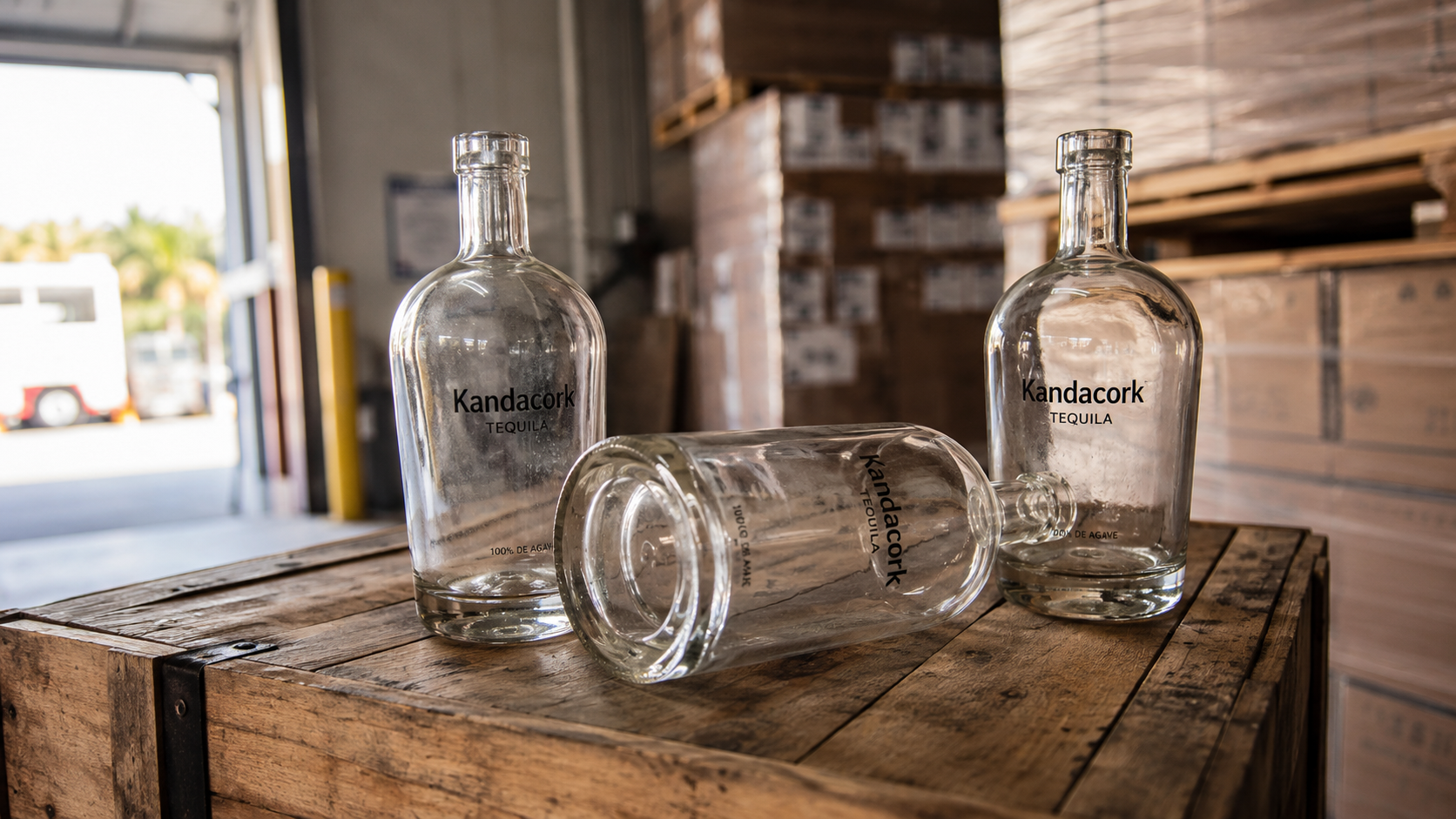
For commercial buyers, consistency is a major advantage. A brand may need thousands or millions of closures that seat at the same height, fit the same bottle neck, support the same pull-out feel, and arrive ready for line trials or manual bottling. Kandacork Closures supports buyers with a broader range of spirits closures and bottle stopper solutions so the stopper can be matched with the wider packaging system.
Synthetic stoppers also help brands manage visual identity. A craft bourbon may use a warm wood-style top to reinforce a small-batch story. A premium malt whisky may use a satin black or metal-effect stopper for restrained luxury. A private-label whisky may choose a cost-efficient molded top with logo printing for flexible SKU development.
Key Buying Factors for Whisky Bottle Stoppers
The best synthetic stopper is not chosen by appearance alone. It is selected through bottle neck review, material matching, fit testing, branding evaluation, and production planning.
The most important buying factors include bottle neck inner diameter, glass neck tolerance, shank diameter, shank length, compression range, rib profile, seating height, insertion force, pull-out force, cap weight, cap diameter, cap material, decoration method, tamper-evident compatibility, and export packing conditions.
| Buying factor | Why it matters | Risk if ignored |
|---|---|---|
| Bottle neck inner diameter | Determines the required shank compression | Loose fit, leakage, or excessive insertion force |
| Glass neck tolerance | Shows how much the bottle opening may vary | Some bottles seal well while others fail |
| Shank diameter | Controls sealing pressure inside the neck | Poor resealing or difficult opening |
| Shank length | Affects contact area and seating depth | Stopper tilt, rocking, or weak seal |
| Pull-out force | Shapes the consumer opening experience | Cheap feel or frustrating opening |
| Insertion force | Affects manual or machine filling performance | Slow production, rejects, or damaged closures |
| Cap style | Influences shelf appeal and brand perception | Weak visual identity or poor premium feel |
| Tamper-evident compatibility | Supports market and retail requirements | Rework, delays, or compliance risk |
A stopper that looks correct in a rendering can still fail in production if it is mismatched to the glass finish. For whisky projects, physical samples should be tested before bulk production.
Request a Whisky Stopper Fit Review
A fit review helps prevent common closure problems before mass production. Buyers should send the bottle drawing, neck inner diameter, physical bottle sample, spirit type, ABV, filling method, stopper reference image, logo artwork, target quantity, and destination market.
Kandacork Closures can review the bottle and recommend a synthetic shank size, cap structure, decoration method, sampling route, and bulk production plan. For new whisky launches, limited editions, private-label programs, or export projects, early closure review can reduce delays and improve packaging consistency. Buyers can begin by sharing project details through the custom closure quote page.
Synthetic Stopper Fit Testing for Whisky Bottles
Testing confirms whether the stopper performs as well as it looks. For whisky packaging, fit testing should cover both functional performance and consumer experience.
| Test item | What it checks | Why it matters |
|---|---|---|
| Insertion force | Pressure needed to insert the stopper | Supports smooth manual or machine bottling |
| Pull-out force | Strength needed to remove the stopper | Creates a secure but comfortable opening feel |
| Leak resistance | Sealing performance under stress | Reduces leakage risk during storage and transport |
| Temperature cycling | Behavior under changing conditions | Identifies loosening, seepage, or material movement |
| Vibration simulation | Stability during shipping | Supports export and palletized distribution |
| Seating height | Stopper position above the bottle mouth | Protects premium shelf appearance |
| Cap alignment | Visual match between cap, neck, label, and capsule | Improves luxury presentation |
| Resealing check | Performance after repeated opening and closing | Reflects real consumer use |
Leak checks should be designed around the actual bottle and closure system. For structured laboratory evaluation, packaging teams may reference recognized methods such as ASTM D3078, which is used for gross leak detection by bubble emission in flexible packaging. The exact test plan should be adapted to the bottle, closure, liquid, shipping route, and buyer’s quality requirements.
For whisky, pull-out feel is especially important. If the stopper removes too easily, the bottle may feel low value or insecure. If it is too difficult to remove, the consumer experience becomes frustrating. The target is a secure, intentional opening that matches the price tier of the product.
Synthetic Stopper vs Natural Cork vs Screw Cap
There is no single best closure for every whisky bottle. The correct choice depends on brand positioning, filling method, market expectations, budget, and packaging format.
| Closure type | Best use | Main advantages | Main limitations |
|---|---|---|---|
| Synthetic T-top stopper | Premium whisky, bourbon, rye, private-label spirits | Consistent fit, resealable, customizable, scalable | Requires fit testing with bottle samples |
| Natural cork stopper | Heritage whisky and traditional craft brands | Natural material story, premium perception | More variation in density and appearance |
| Agglomerated cork stopper | Cost-conscious cork-style packaging | Cork-based look with controlled cost | May feel less premium than selected natural cork |
| Plastic bar-top stopper | Mid-range spirits, flexible private-label SKUs | Cost-efficient, color-matched, line-friendly | Must be designed carefully for premium appearance |
| Wooden bar-top stopper | Craft bourbon, rye, and gift packaging | Warm, traditional, tactile brand feel | Wood finish consistency needs review |
| Aluminum bar-top stopper | Modern premium whisky and export spirits | Clean, durable, high-end visual effect | Higher finish and specification control required |
| ROPP closure | Mass-market spirits and high-speed filling | Tamper evidence, automation, secure seal | Different consumer experience from bar-top closures |
| Screw cap | Standard spirits and travel retail formats | Convenient, efficient, familiar | May feel less premium for some whisky positions |
For value-driven programs, plastic bar-top stoppers can provide flexible color matching and efficient production. For craft and heritage whisky projects, wooden bar-top stoppers can add warmth and tactile character. For modern premium bottles, aluminum bar-top stoppers can create a clean, high-value finish.
Materials and Cap Styles for Premium Whisky Stoppers
The cap is the most visible part of the stopper. It should match the bottle shape, shoulder design, glass color, label material, capsule, carton, and retail price point.
A heavy-base bourbon bottle often works well with a wood, black, or metal-effect top. A tall premium malt whisky bottle may need a slimmer cap profile that feels refined rather than bulky. A square private-label whisky bottle may benefit from a simple cap geometry that keeps production efficient while still looking branded.
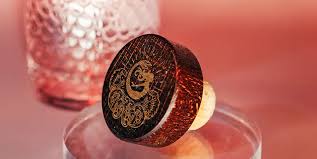
Decoration should be selected according to the cap material. Printing can work well for clean logos and color systems. Embossing or debossing can create a tactile premium effect. Hot stamping can support metallic accents. Laser marking may suit wood or metal-effect surfaces when the brand wants a more permanent, precise impression.
For brands that need label, closure, carton, and secondary packaging to work together, custom decoration and branding support can help align logo placement, color systems, finish direction, and premium shelf presentation.
Whisky-Specific Packaging Examples
A craft bourbon bottle often uses a broad shoulder, heavy glass base, warm label color, and a wood or black bar-top closure. In this case, a synthetic shank with a wood-style cap can provide reliable resealing while supporting a small-batch visual identity.
A premium malt whisky bottle may use darker glass, refined typography, restrained color, and a satin or metal-effect top. The stopper should feel polished but not excessive, especially when the brand wants quiet luxury rather than decorative complexity.
A private-label whisky program may need one closure system that can work across several labels or markets. A synthetic shank with a customizable molded top can help control cost while still allowing color, logo, and finish variation.
A gift-box whisky bottle needs strong visual consistency. The stopper should align with the carton, capsule, bottle silhouette, and label finish. Even a small mismatch in cap color, cap diameter, or seating height can reduce the perceived value of the set.
An export whisky bottle needs extra review for leakage, vibration, packing method, pallet loading, and tamper-evident compatibility. The stopper should be approved as part of the full bottle system before shipping. For bottle development, buyers often coordinate closures with custom glass formats from a specialist whisky bottle packaging supplier.
Compliance and Tamper-Evident Planning
A synthetic stopper is only one part of a compliant spirits package. Many markets require tamper-evident protection or a similar security feature for distilled spirits. This may involve a capsule, shrink sleeve, tear band, strip stamp, ROPP closure, non-refillable system, or another approved device.
For the United States, the Alcohol and Tobacco Tax and Trade Bureau provides federal guidance for distilled spirits packaging, including requirements related to tamper-evident closures for distilled spirits. For material safety, buyers should also consider food-contact requirements. In the United States, polymer materials and closure-related components may fall under relevant sections of 21 CFR Part 177.
For brands selling into Europe, packaging components should be reviewed against the general safety and inertness principles in EU Regulation 1935/2004. These rules help ensure that food-contact materials do not transfer substances to food or beverages in a way that could endanger human health or change the product in an unacceptable way.
Quality systems also matter for repeat orders. A recognized framework such as ISO 9001 can support more consistent production control, documentation, inspection, corrective action, and supplier communication. Final compliance decisions should always involve the brand owner, importer, regulatory advisor, or legal team for the target market.
Bulk Sourcing Checklist for Whisky Brands
A clear project brief helps the supplier recommend the right stopper faster and reduces sampling delays.
Buyers should prepare the bottle drawing, inner neck diameter, bottle sample, bottle capacity, spirit type, ABV, filling method, target market, stopper reference image, preferred cap material, shank preference, logo artwork, color requirements, finish requirements, first order quantity, annual forecast, packing requirement, export destination, and required documentation.
For larger orders, buyers should also confirm sample quantity, pre-production approval process, inspection method, packing standard, carton labeling, export pallet requirement, acceptable tolerance range, and delivery schedule.
When the bottle, stopper, decoration, and carton are sourced separately, alignment becomes more complex. For integrated spirits packaging projects, a coordinated partner such as Kandacork Glass can help buyers think through the full bottle-and-closure presentation rather than treating the stopper as a separate accessory.
Common Mistakes When Buying Synthetic Whisky Stoppers
Choosing only by appearance
A stopper may look premium but fail in fit, sealing, or opening feel. Always test function before approving the design.
Assuming one size fits every bottle
A 19.5 mm or 22.5 mm shank does not automatically fit every whisky bottle. Neck tolerance, bore depth, shank material, and bottle design all matter.
Ignoring pull-out force
Opening feel is part of the consumer experience. A stopper should feel secure, smooth, and intentional.
Forgetting tamper-evident compatibility
The stopper may need to work with a capsule, shrink sleeve, tear band, or other security component. Plan this early, not after the stopper has already been approved.
Skipping pre-production samples
Prototype samples and mass-production closures may differ if material, mold, decoration, or finish changes. Always confirm pre-production samples before bulk orders.
Separating closure design from brand design
The stopper should match the glass bottle, label, carton, and brand story. Treat it as a visible brand component, not only as a sealing part.
Sustainability and Packaging Design Considerations
Whisky buyers increasingly consider packaging weight, material selection, recyclability, transport efficiency, and long-term brand responsibility. A synthetic stopper should therefore be reviewed not only for price and appearance, but also for how it fits the complete packaging strategy.
Lightweight caps may reduce material use and shipping weight. Durable stoppers may support reuse after opening. Clear material separation can support better end-of-life handling in some markets. For brands building sustainability-led packaging stories, matching the closure with glass bottle strategy, decoration choices, and secondary packaging is important.
For projects that place stronger emphasis on glass packaging and sustainability positioning, eco-focused glass packaging support can help align bottle material, closure selection, and brand presentation.
Why Work With Kandacork Closures
Kandacork Closures supports spirits brands, distilleries, bottlers, importers, design agencies, and packaging distributors with closure development for whisky and other premium spirits.
For synthetic stoppers for whisky bottles, the team can help review bottle neck drawings, recommend shank options, develop cap styles, create branded samples, evaluate fit, refine decoration, and prepare repeatable bulk production. The goal is not only to supply a closure, but to help the buyer build a bottle system that looks premium, seals reliably, and performs through distribution.
Kandacork Closures can support synthetic whisky stoppers, wooden stoppers, aluminum stoppers, plastic stoppers, screw caps, ROPP closures, capsules, shrink sleeves, and other spirits closure solutions. This allows buyers to compare different closure routes before locking the final specification.
FAQ
Are synthetic stoppers suitable for premium whisky bottles?
Yes. Synthetic stoppers are suitable for premium whisky bottles when the shank fit, cap weight, finish, logo quality, and sealing performance match the bottle design. They can support a premium opening feel while giving the brand more control over appearance and repeat production.
What size synthetic stopper fits a whisky bottle?
What size synthetic stopper fits a whisky bottle?
The correct size depends on the bottle neck inner diameter, shank diameter, shank length, compression, glass tolerance, and pull-out force. Buyers should not choose size by appearance alone. Bottle drawings and physical samples are recommended before bulk production.
Are synthetic stoppers for whisky bottles reusable?
Yes. Most bar-top synthetic stoppers are designed to reseal the bottle after opening. This makes them practical for whisky, bourbon, rye, rum, tequila, brandy, vodka, gin, and liqueur bottles.
Do synthetic stoppers affect whisky flavor?
A properly specified synthetic stopper should be reviewed for odor neutrality, flavor neutrality, and alcohol compatibility. Buyers should request suitable material information and conduct testing before large orders.
Can synthetic whisky stoppers be customized with a logo?
Yes. Custom options may include logo printing, embossing, debossing, hot stamping, laser marking, color matching, sidewall decoration, and custom cap design depending on the selected material and order requirements.
What should I send to get a quote?
Send the bottle drawing, neck inner diameter, bottle samples, spirit type, ABV, target market, preferred stopper style, logo artwork, finish requirements, estimated order quantity, and annual forecast.
What is the difference between a T-top stopper and a bar-top closure?
In spirits packaging, these terms are often used in similar ways. Both usually describe a closure with a wider decorative top and an inserted shank that seals inside the bottle neck.
Are synthetic stoppers better than natural cork?
Synthetic stoppers are not always better; they are different. They offer consistent dimensions, controlled appearance, and scalable production. Natural cork offers traditional material appeal. The best choice depends on brand positioning, bottle design, and performance requirements.
Do whisky bottles with synthetic stoppers still need tamper-evident packaging?
In many markets, distilled spirits require tamper-evident protection or another approved security device. The synthetic stopper should be planned together with capsules, shrink sleeves, tear bands, or other tamper-evident components.
What are the best synthetic stoppers for whisky brands buying in bulk?
The best bulk synthetic stoppers for whisky brands are closures that match the bottle neck, pass fit and leak testing, support the desired cap design, meet branding requirements, and can be produced consistently across repeat orders.
Conclusion
Choosing synthetic stoppers for whisky bottles is both a design decision and a packaging engineering decision. The right closure affects fit, sealing, opening feel, resealing, compliance planning, shelf appeal, export stability, and repeat supply.
A successful whisky stopper should match the bottle neck, support the brand story, pass functional testing, work with tamper-evident components, and remain consistent across bulk production. For distilleries, private-label spirits companies, importers, and packaging buyers, this makes early stopper review essential.
Kandacork Closures helps buyers develop and source custom synthetic stoppers for whisky bottles with fit review, sample support, branding options, and bulk production planning. To begin, prepare your bottle drawing, bottle sample, stopper style reference, logo artwork, target quantity, and market requirements, then request a custom closure recommendation.