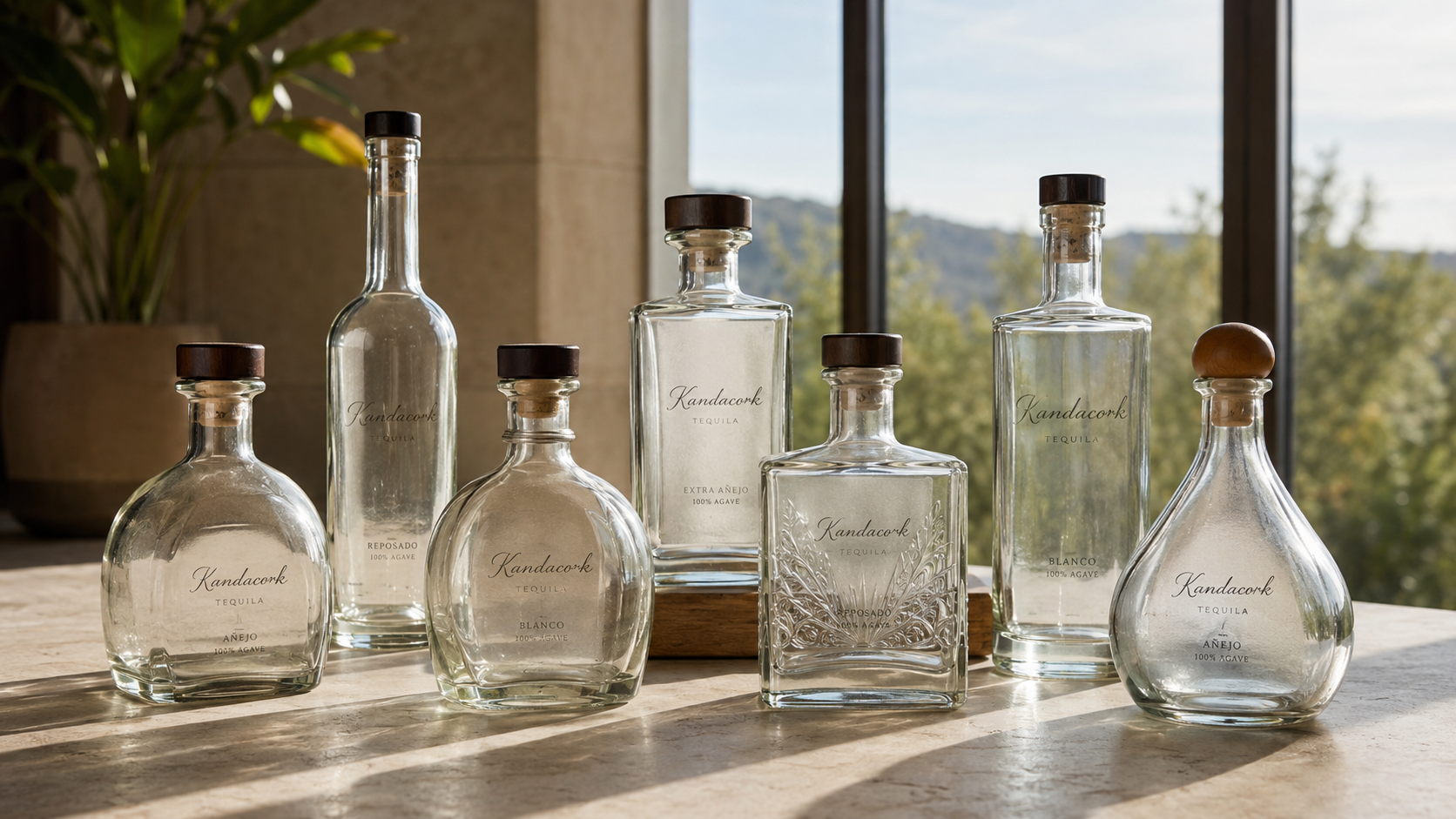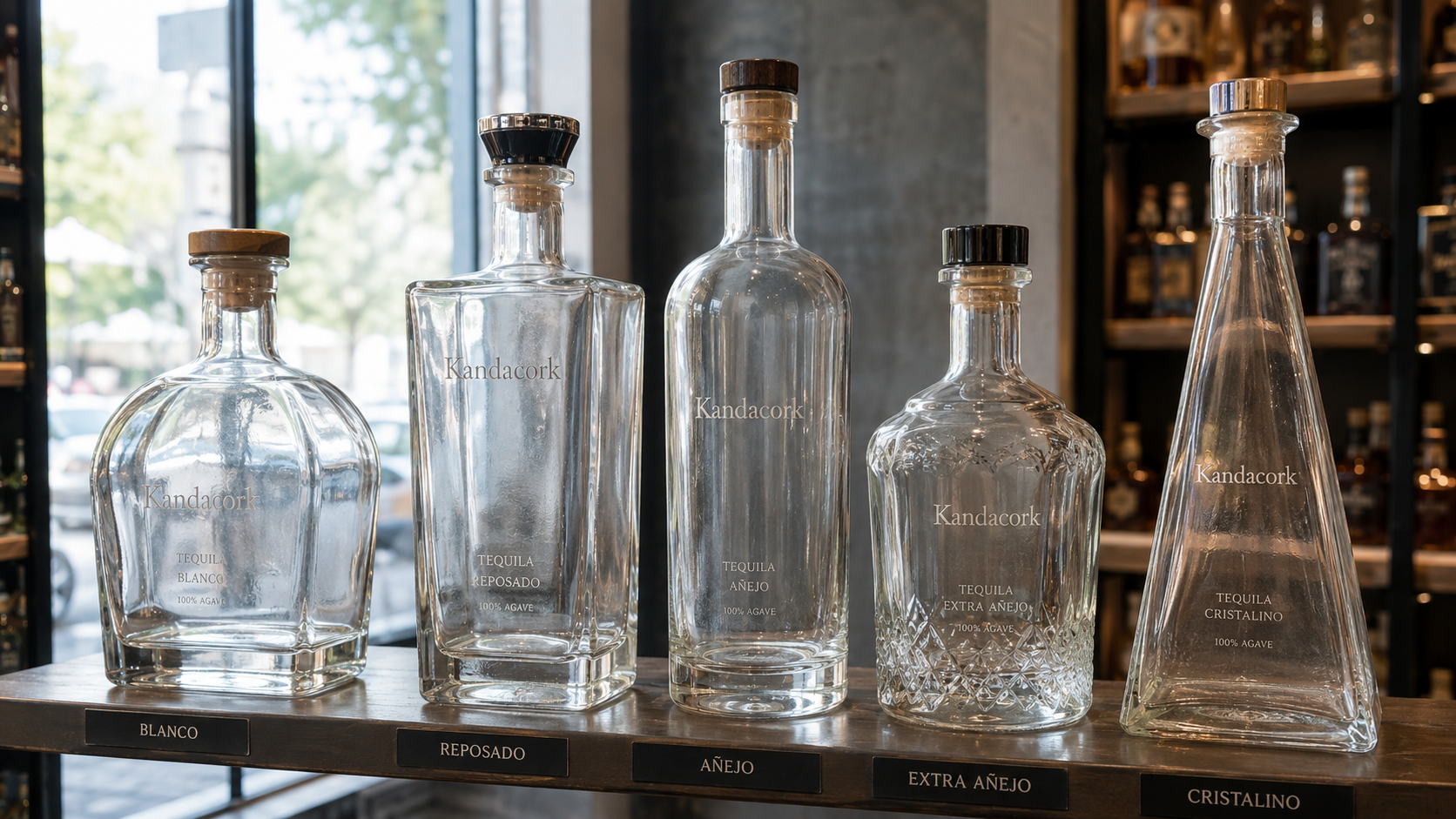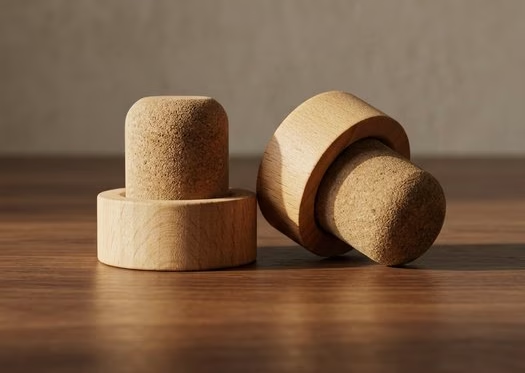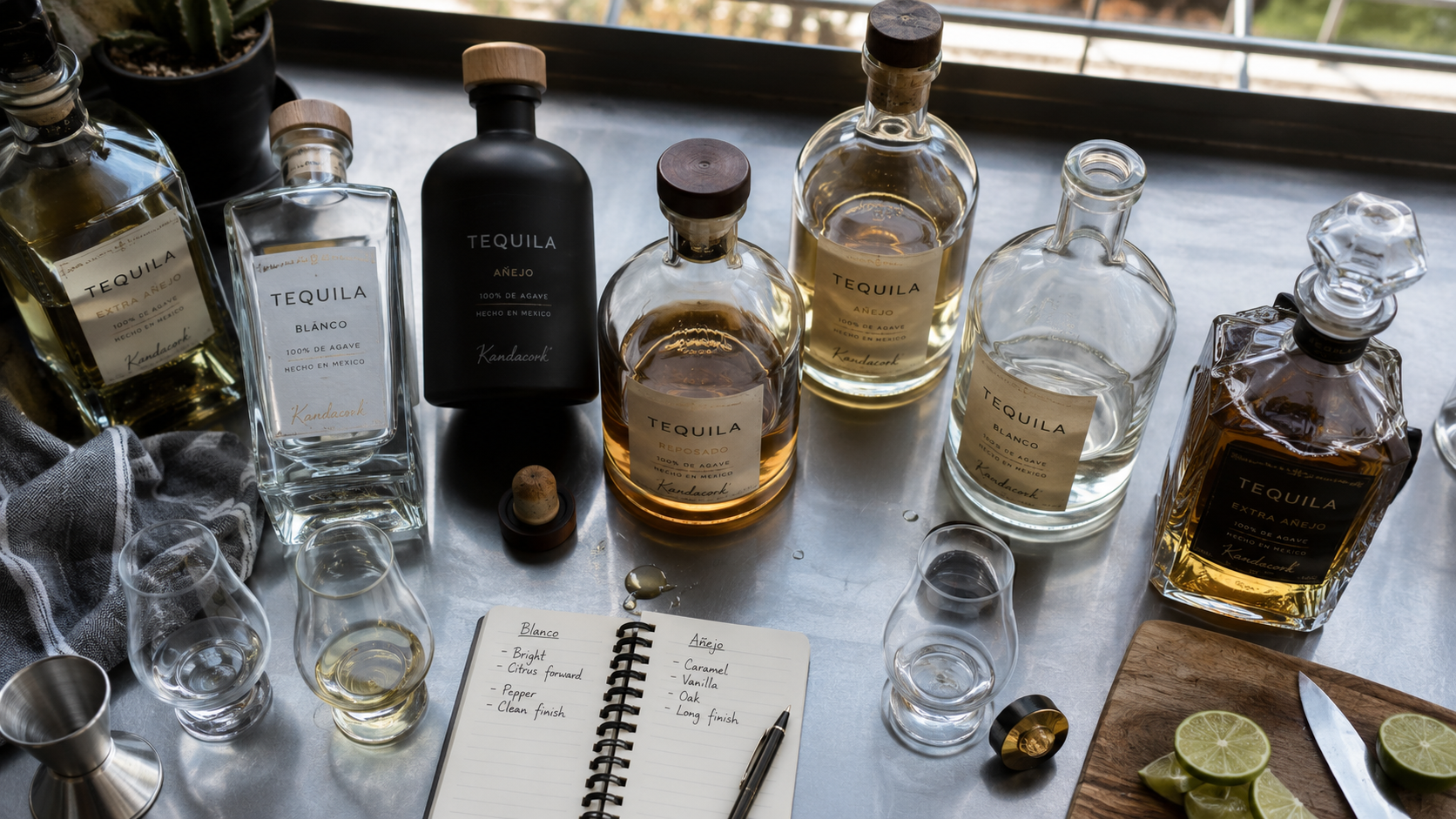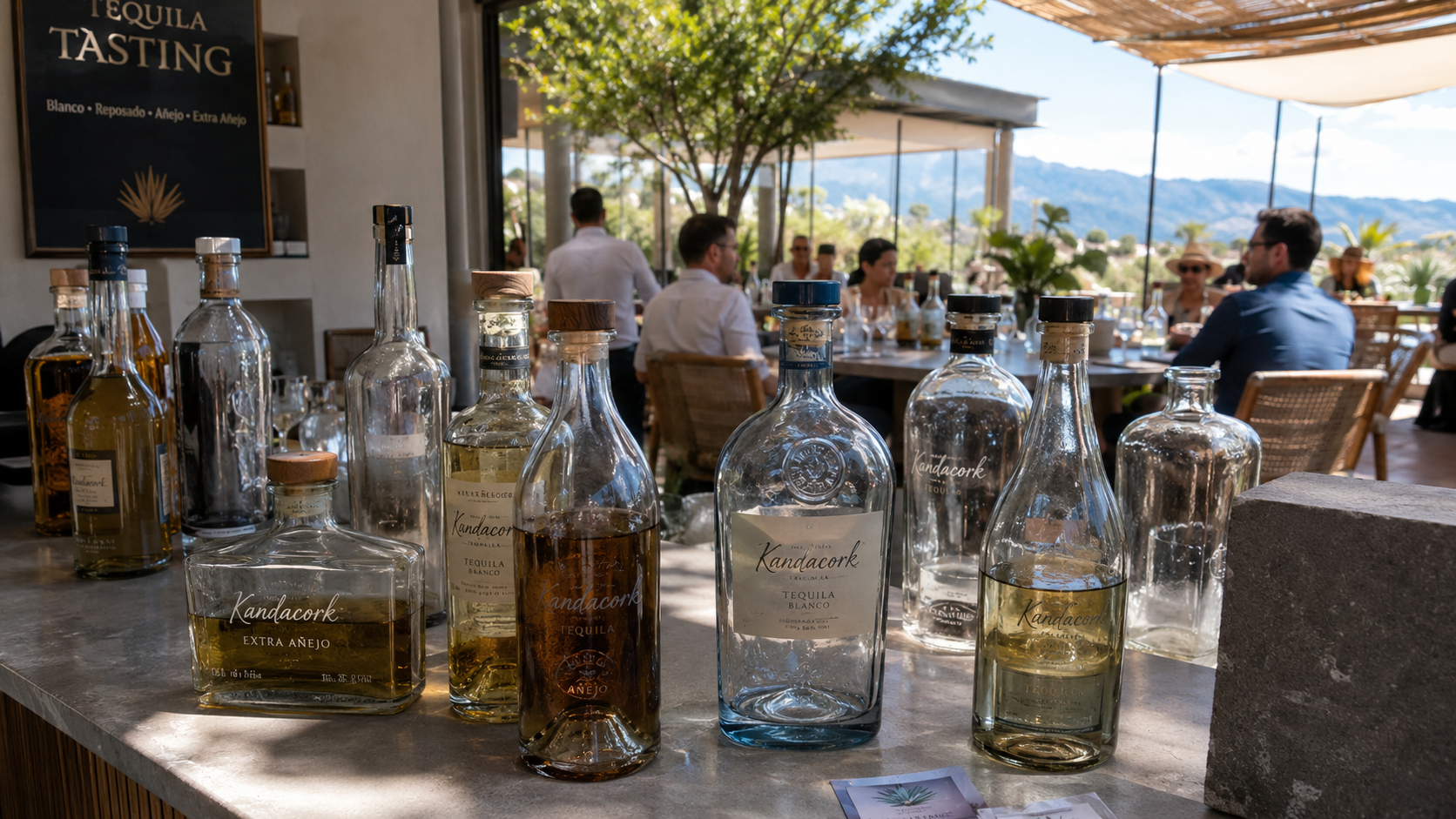
Wooden stopper design ideas matter because the stopper is one of the first physical details a buyer, bartender, retailer, or consumer notices when handling a bottle. For spirits, wine, liqueurs, olive oil, vinegar, and specialty beverages, a wooden stopper is not only a decorative cap. It is part of the closure system, the brand identity, the opening experience, and the perceived value of the full package.
For commercial bottle projects, the best wooden stopper design should match the bottle neck, shank material, filling process, retail positioning, decoration style, and export packaging requirements. A beautiful stopper that does not fit the neck correctly can create leakage risk. A technically reliable stopper that looks generic may fail to support a premium brand story. The strongest result comes from aligning design and performance from the beginning.
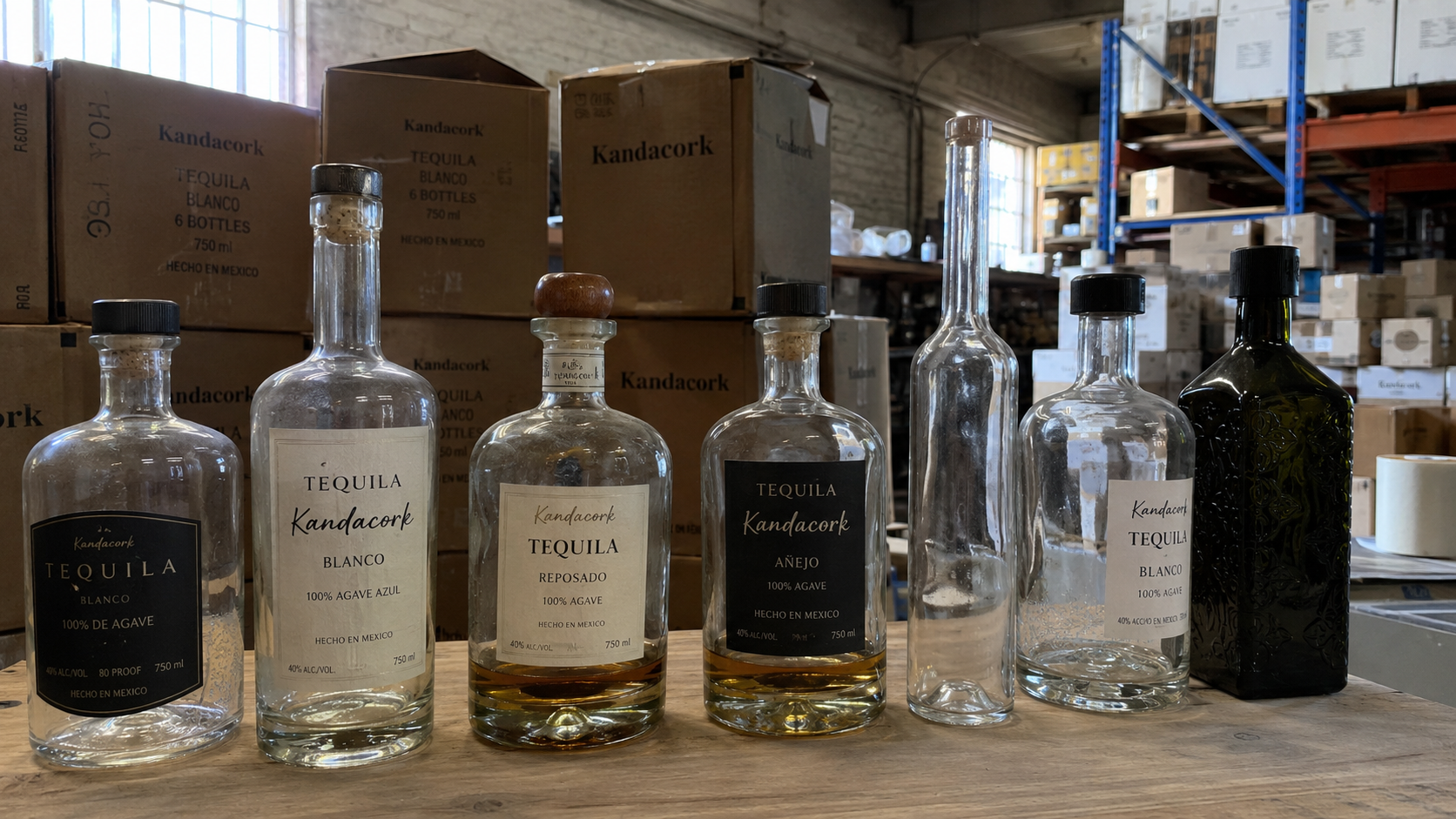
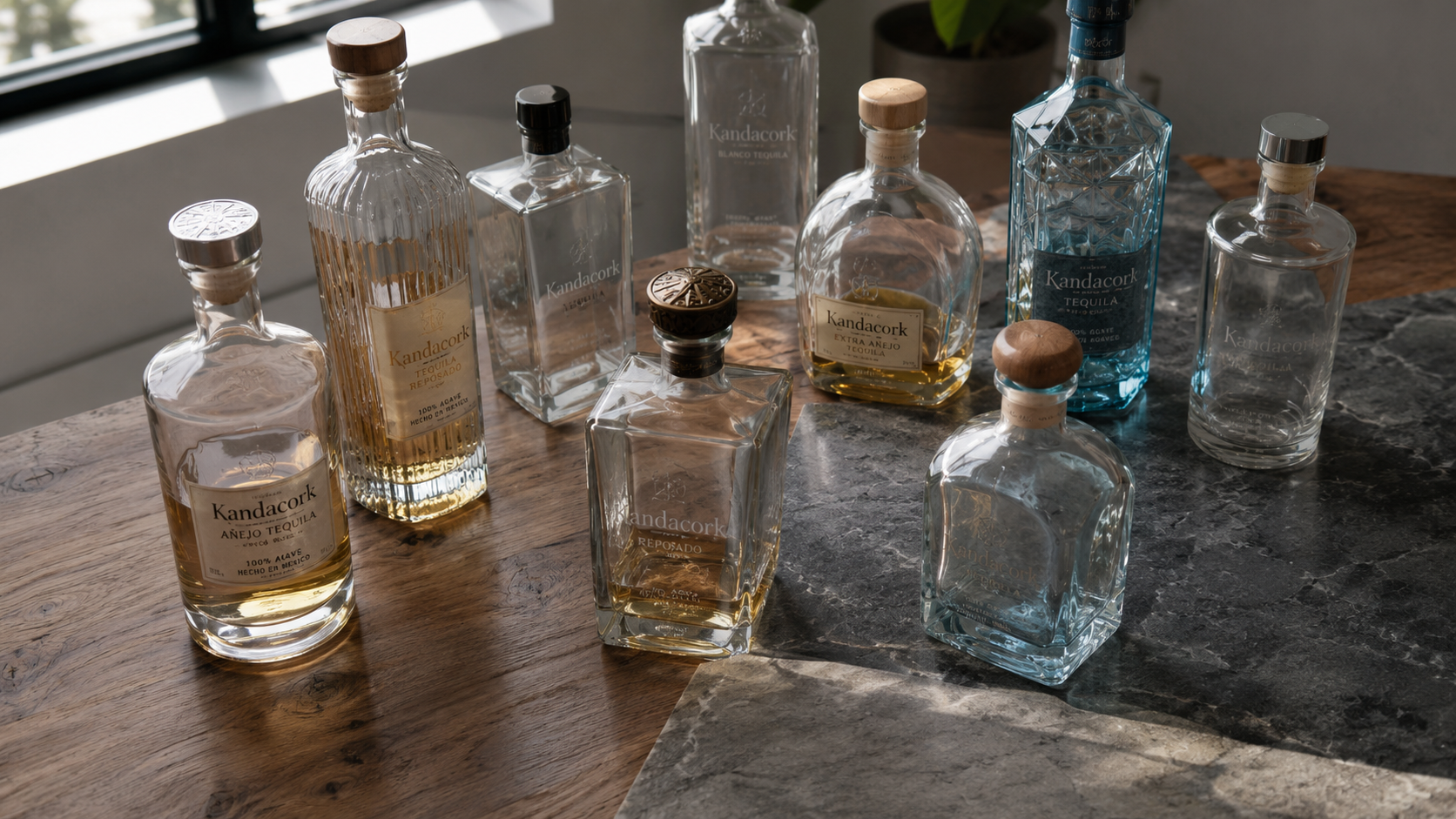
Kandacork Closures supports brands with custom spirits closure solutions including wood, plastic, metal, cork, synthetic shank, and bar-top formats. For brands comparing premium wood options, Kandacork’s wooden bar-top stoppers help buyers move from design inspiration to practical sampling, neck-fit review, branding, and bulk production.
Quick Answer: Which Wooden Stopper Design Should You Choose?
Choose a flat-top wooden stopper for minimalist gin, vodka, olive oil, vinegar, and clean-label packaging.
Choose a domed wooden stopper for whisky, rum, brandy, cognac-style packaging, and heritage spirits.
Choose a beveled wooden stopper for square bottles, heavy-base bottles, and premium glass with strong shoulders.
Choose a faceted wooden stopper for craft spirits, tequila, mezcal, limited editions, and design-led bottle projects.
Choose a barrel-inspired wooden stopper for bourbon, whisky, aged rum, and products with oak-aging or maturation stories.
Choose a laser-engraved wooden stopper when the brand needs a logo, monogram, batch number, gift-pack message, or limited-edition mark.
Choose a metal medallion wooden stopper for collector bottles, travel retail packs, anniversary releases, and luxury gifting.
For B2B buyers, wooden stopper design ideas should never be selected by appearance alone. The final design should be confirmed through bottle neck review, cork or synthetic shank testing, decoration sampling, packaging clearance checks, and production approval.
Best Wooden Stopper Design by Use Case
| Use Case | Recommended Wooden Stopper Design | Why It Works |
|---|---|---|
| Modern gin or vodka | Flat-top or pale wood stopper | Clean, simple, and easy to engrave |
| Luxury whisky or rum | Domed, dark-stained, or medallion stopper | Communicates maturity, value, and heritage |
| Craft tequila or mezcal | Faceted or natural grain stopper | Adds texture, authenticity, and shelf distinction |
| Limited-edition spirits | Laser-engraved or metal-inlay stopper | Supports batch identity and collector appeal |
| Sustainable packaging | Natural grain wooden stopper | Highlights organic material and sourcing intent |
| Flavor product line | Color-coated wooden stopper | Helps separate SKUs and improve shelf recognition |
| Gift packaging | Domed, engraved, or medallion stopper | Creates a more personal and premium presentation |
| Olive oil or vinegar | Natural wood or flat-top stopper | Feels practical, clean, and artisanal |
This type of use-case planning helps buyers connect design language with real packaging goals. A spirits brand may prioritize premium shelf impact, while an olive oil or vinegar brand may care more about natural texture, grip, and kitchen-friendly presentation.
What Makes a Wooden Bottle Stopper Design Premium?
A premium wooden bottle stopper combines visual appeal, tactile quality, closure performance, and brand consistency. The wooden head creates the visible design, while the cork or synthetic shank supports the seal inside the bottle neck.
A good stopper should have a balanced cap diameter, comfortable grip, smooth finish, controlled color, clear decoration, and reliable neck fit. It should also match the bottle silhouette. A heavy-base whisky bottle may need a darker, more substantial stopper, while a botanical gin bottle may look better with a pale, minimalist wood cap.
The best wooden stopper design ideas answer practical buyer questions. What product category is being packaged? What bottle neck finish will the stopper fit? What brand message should the closure communicate? What decoration method will be used? Can the shape, color, and logo effect be repeated consistently in bulk production?
When these questions are reviewed early, the stopper becomes a functional branding asset instead of a last-minute accessory.
Match the Stopper to the Bottle First
A wooden stopper should be developed together with the bottle, not after the bottle is already finalized. Bottle neck diameter, internal taper, shoulder shape, capsule plan, label height, gift-box insert, and carton clearance can all influence the final stopper design.
For brands sourcing custom spirits bottles, closure planning should begin during bottle selection or mold development. This makes it easier to align the glass shape, neck finish, stopper height, shank structure, decoration method, and export packaging before samples are approved.
This is especially important for premium spirits. Whisky, rum, tequila, gin, vodka, brandy, and liqueur bottles often rely on the full top-of-bottle presentation to communicate value. The consumer may see the cap before reading the label, and the bartender may handle the closure repeatedly in service environments.
Wooden Stopper Shape Comparison for Bottle Brands
| Wooden Stopper Design | Best For | Visual Effect | Buyer Note |
|---|---|---|---|
| Flat-top wooden stopper | Gin, vodka, olive oil, minimalist spirits | Clean, modern, simple | Strong option for top laser engraving |
| Domed wooden stopper | Whisky, rum, brandy, heritage products | Classic, soft, premium | Test logo placement on curved surface |
| Beveled wooden stopper | Square bottles, heavy-base bottles | Structured, sharp, luxury | Control edge tolerance and finish quality |
| Undercut wooden stopper | Luxury spirits, refined packaging | Elegant shadow line | Check capsule and neck-band compatibility |
| Double-ridge wooden stopper | Rum, whisky, bitters, vintage bottles | Traditional, tactile, collectible | Review groove finishing consistency |
| Faceted wooden stopper | Craft spirits, tequila, limited editions | Bold, geometric, distinctive | Confirm orientation requirements |
| Barrel-inspired wooden stopper | Bourbon, whisky, aged rum | Heritage, oak-aged, craft-focused | Avoid overly novelty styling |
| Metal medallion wooden stopper | Collector bottles, gift packaging | High-value, decorative, premium | Review assembly precision and cost |
This comparison helps packaging teams move from visual inspiration to specification-ready closure planning. It also makes internal decision-making easier when brand, procurement, production, and quality teams need to approve the same stopper concept.
Flat-Top Wooden Stopper Design Ideas for Minimalist Brands
A flat-top wooden stopper is one of the most versatile designs for commercial bottle packaging. It has a simple top surface, clean sides, and a balanced profile that fits many bottle shapes.
This design works well for gin, vodka, botanical spirits, olive oil, vinegar, premium water, and modern private-label beverages. It supports clean label systems, restrained typography, and simple brand marks.
The flat top also gives buyers a practical branding surface. Laser engraving, hot stamping, pad printing, debossing, or a small printed logo can be applied more easily than on highly curved surfaces.
For brands that want wooden stopper design ideas with low design risk, the flat-top stopper is often the safest starting point. It is simple, scalable, and suitable for both small-batch launches and bulk closure programs.
Domed Wooden Bottle Stoppers for Classic Premium Appeal
A domed wooden bottle stopper has a curved top that feels traditional, smooth, and comfortable in the hand. It is a strong choice for products that need warmth, heritage, and premium shelf presence.
Domed wooden stoppers are often used for whisky, rum, brandy, cognac-style spirits, aged liqueurs, and gift packaging. The rounded form pairs well with heavy-base bottles, amber glass, dark labels, and classic shoulder shapes.
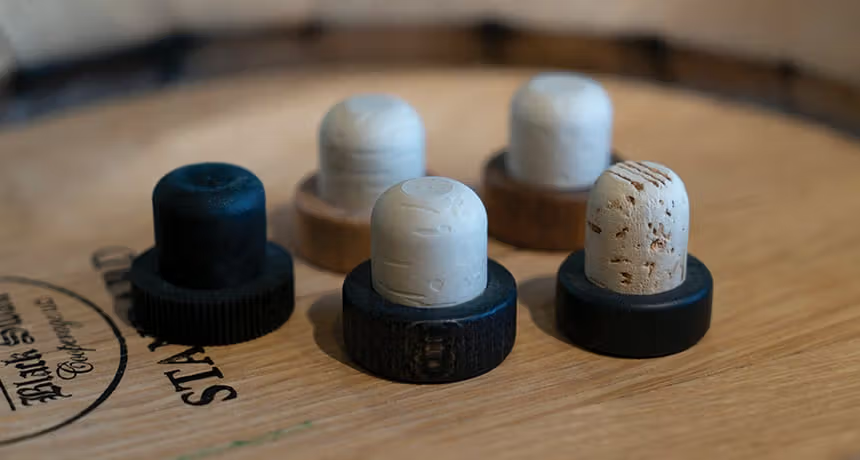
This design can be finished in natural wood, walnut tone, oak tone, dark stain, or satin varnish. It can also include subtle top engraving or a small metal insert for a more refined appearance.
For a commercial bottle program, the curved surface should be sampled before production. Logo size, engraving depth, and burn contrast may look different on a dome than on a flat top.
Beveled Wooden Stopper Designs for Premium Bottle Geometry
A beveled wooden stopper uses angled edges to create a stronger transition between the top of the closure and the side wall. This design makes the bottle top look more structured and intentional.
Beveled wooden stoppers are especially suitable for square bottles, rectangular bottles, heavy-base glass, and bottles with angular shoulders. They also fit brands that use geometric labels, framed typography, or architectural packaging design.
A steep bevel can create a luxury look. A softer bevel can keep the stopper modern and approachable. Buyers can choose natural wood for craft appeal, dark stain for premium spirits, or color coating for stronger brand recognition.
The main production consideration is edge control. If the bevel is too sharp, the stopper may be more vulnerable to chipping or uneven finishing. For bulk orders, sample approval should include shape, edge smoothness, finish consistency, logo placement, and carton clearance.
Undercut Wooden Stoppers for Refined Luxury Packaging
An undercut wooden stopper has a slightly recessed lower section beneath the main wooden head. This creates a clean shadow line above the bottle neck.
This detail can make a simple wooden stopper look more refined. It is useful for luxury gin, whisky, rum, tequila, premium liqueurs, and limited-edition bottle projects.
The undercut profile works well when the bottle also uses a neck label, capsule, decorative band, or gift-box insert. It gives the stopper visual separation from the neck while keeping the overall shape controlled.
Before approving this design, buyers should check stopper height, undercut depth, neck-band clearance, shrink capsule fit, and carton compatibility. A beautiful profile can create operational issues if it interferes with other packaging components.
Double-Ridge Wooden Stopper Ideas for Vintage Bottle Packaging
A double-ridge wooden stopper includes raised bands, grooves, or ring-like details around the side of the wooden head. This gives the closure a vintage, tactile, and collectible character.
This design is suitable for rum, whisky, bitters, herbal liqueurs, brandy, and apothecary-style packaging. The ridges can suggest barrel hoops, old-world corking traditions, or heritage bottle design.
Double-ridge wooden stopper design ideas are useful when the closure needs more personality than a basic cap. They improve grip and create a more memorable opening experience.
The main challenge is finishing consistency. Stain, varnish, or coating can collect unevenly in grooves if production is not controlled. Buyers should review physical samples under realistic lighting and request clear tolerance standards for groove depth, surface finish, and color consistency.
Faceted Wooden Bottle Stoppers for Craft Spirits and Limited Editions
Faceted wooden stoppers use multiple flat sides to create a geometric profile. Hexagonal, octagonal, and custom faceted shapes can make a bottle stand out quickly on shelf.
This design works well for craft spirits, tequila, mezcal, gin, limited editions, and design-focused private-label projects. It combines a handmade material feel with a modern structural appearance.
Faceted wooden stoppers can be natural, stained, varnished, matte black, or color coated. Top engraving is usually straightforward, while side decoration requires more careful artwork placement.
A key buyer issue is orientation. If the stopper’s front face must align with the bottle label, the assembly process should be discussed before sampling. Random orientation may be acceptable for some products, but premium launches often need stricter visual alignment.
Barrel-Inspired Wooden Stoppers for Whisky, Bourbon, and Rum
A barrel-inspired wooden stopper is one of the strongest wooden stopper design ideas for aged spirits. It connects naturally with oak barrels, maturation, cellar aging, and craft production.
This design may use rounded sides, ridge details, dark stain, toasted wood effects, or metal ring accents. It is especially suitable for whisky, bourbon, aged rum, brandy, and aged tequila.
The design should support the product story without becoming a novelty item. A subtle barrel cue often looks more premium than an exaggerated miniature barrel shape.
For bulk production, buyers should review stopper diameter, head height, shank alignment, stain consistency, and packaging clearance. Barrel-inspired shapes may be wider or taller than standard stoppers, so carton and gift-box fit should be confirmed early.
Natural Grain Wooden Stoppers for Sustainable and Artisanal Positioning
Natural grain wooden stoppers highlight the organic texture, tone, and pattern of wood. They are ideal for brands that want a craft, sustainable, farm-to-bottle, or handmade identity.
This style pairs well with clear glass, recycled-look glass, amber glass, kraft labels, paper labels, botanical artwork, and minimalist packaging. It can be used for spirits, olive oil, vinegar, non-alcoholic beverages, and specialty food packaging.
Natural grain gives every stopper a slightly unique appearance. This can be a strength, but buyers should define acceptable variation before bulk production. Color range, grain density, knots, surface marks, and finish quality should be included in the approval standard.
Responsible sourcing can also support brand credibility. The Forest Stewardship Council explains how FSC paper and packaging sourcing can support sustainability claims when certified materials and proper chain-of-custody documentation are relevant to the project.
Dark-Stained Wooden Stoppers for Luxury Spirits Packaging
Dark-stained wooden stoppers create a strong premium signal. They work well with whisky, rum, tequila, brandy, cognac-style spirits, liqueurs, and high-value gift sets.
Popular finish directions include walnut, ebony, dark oak, espresso, smoked wood, satin black, and gloss black. Matte dark finishes often feel modern and refined, while glossy finishes can look more decorative and formal.
Dark wood pairs well with amber glass, black labels, gold foil, copper details, embossed paper, and heavy-base bottles. It can help a product feel more expensive before the consumer reads the label.
The main buyer concern is finish consistency. Dark stain can expose sanding marks, surface defects, or uneven coating. Samples should be checked under retail lighting, not only under factory lighting.
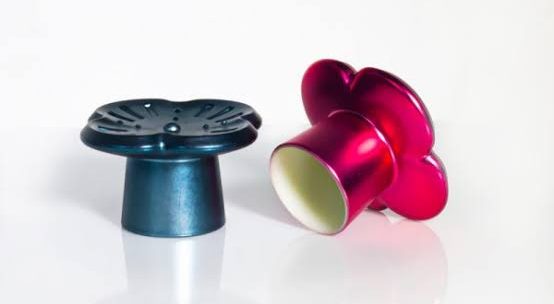
Color-Coated Wooden Stopper Design Ideas for Brand Recognition
Color-coated wooden stoppers are useful when the closure needs to match a brand color system. This is common for flavored spirits, seasonal editions, product families, and private-label ranges.
A gin brand may use pale green, blue, white, or botanical colors. A liqueur brand may use different stopper colors to separate flavors. A tequila or mezcal brand may use black, cream, terracotta, or deep red to support the label design.
Color coating provides stronger visual control than natural wood, but it reduces visible grain. Buyers should decide whether the main goal is natural material storytelling or precise brand color recognition.
For production, review color matching, coating adhesion, scratch resistance, logo contrast, and decoration compatibility. Some coatings work better with printing, while others work better with laser marking or hot stamping.
Laser-Engraved Wooden Bottle Stoppers for Custom Logo Branding
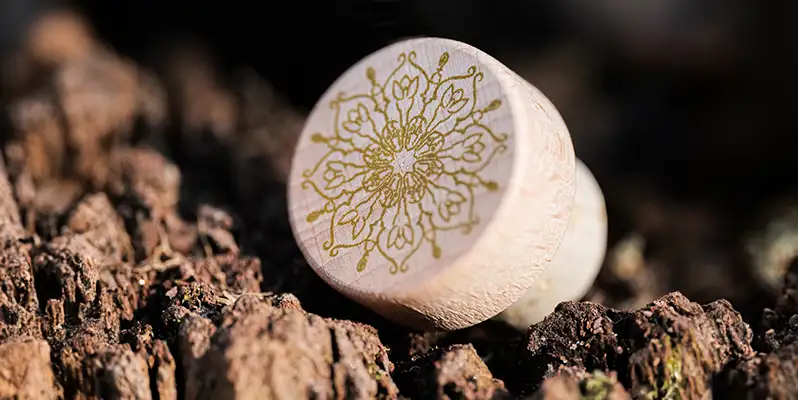
Laser engraving is one of the most popular branding methods for wooden bottle stoppers. It creates a permanent mark on the top, side, or both surfaces of the wooden head.
Laser-engraved wooden stoppers are suitable for logos, distillery names, batch numbers, monograms, wedding gifts, limited editions, and promotional packaging. They work especially well on flat-top, beveled, domed, and faceted designs.
For best results, use simplified artwork. Fine lines, gradients, small text, and complex crests may lose clarity on a small stopper surface. A clear vector logo normally performs better.
When the stopper needs to coordinate with glass decoration, label-free branding, foil, coating, or badge details, buyers can align the closure artwork with wider bottle decoration and branding work. This helps the cap, bottle body, label area, and secondary packaging feel like one complete brand system.
Metal Medallion Wooden Stoppers for Ultra-Premium Bottle Projects
A metal medallion wooden stopper combines the warmth of wood with the perceived value of metal. This design can make a bottle feel more collectible and gift-ready.
It is suitable for luxury whisky, collector rum, limited-edition gin, aged tequila, anniversary releases, and high-end gift-box packaging. Metal details may include top medallions, side rings, embossed inserts, debossed emblems, or decorative bands.
The main advantages are visual contrast, weight, and premium brand signaling. The main challenges are cost, lead time, assembly precision, and quality control.
For projects that require a heavier or more metallic closure effect, Kandacork also develops custom metal stoppers for premium spirits bottles. Comparing wood, wood-and-metal, and full metal options during concept development can help buyers choose the right balance of cost, weight, durability, and brand impact.
Wood Finish Comparison for Custom Wooden Bottle Stoppers
| Wood Finish | Best Use | Visual Character | Production Consideration |
|---|---|---|---|
| Natural wood | Craft, sustainable, artisanal brands | Warm, organic, varied | Define acceptable grain and tone range |
| Light stain | Gin, vodka, olive oil, clean-label packaging | Fresh, modern, soft | Check logo contrast |
| Dark stain | Whisky, rum, tequila, luxury spirits | Premium, mature, bold | Control surface preparation |
| Matte varnish | Modern premium products | Smooth, understated | Review scratch resistance |
| Gloss varnish | Decorative and gift packaging | Polished, reflective | Check fingerprints and glare |
| Color coating | Product families and flavor ranges | Controlled, brand-specific | Confirm color matching and coating adhesion |
| Metal inlay | Collector and ultra-premium bottles | High-value, dimensional | Review assembly and transport durability |
A finish should be chosen for both design and production reasons. Natural wood creates warmth and variation. Dark stain creates premium contrast. Color coating improves SKU recognition. Matte varnish can feel more modern, while gloss varnish can feel more decorative. The right choice depends on the product category, bottle color, label material, and brand positioning.
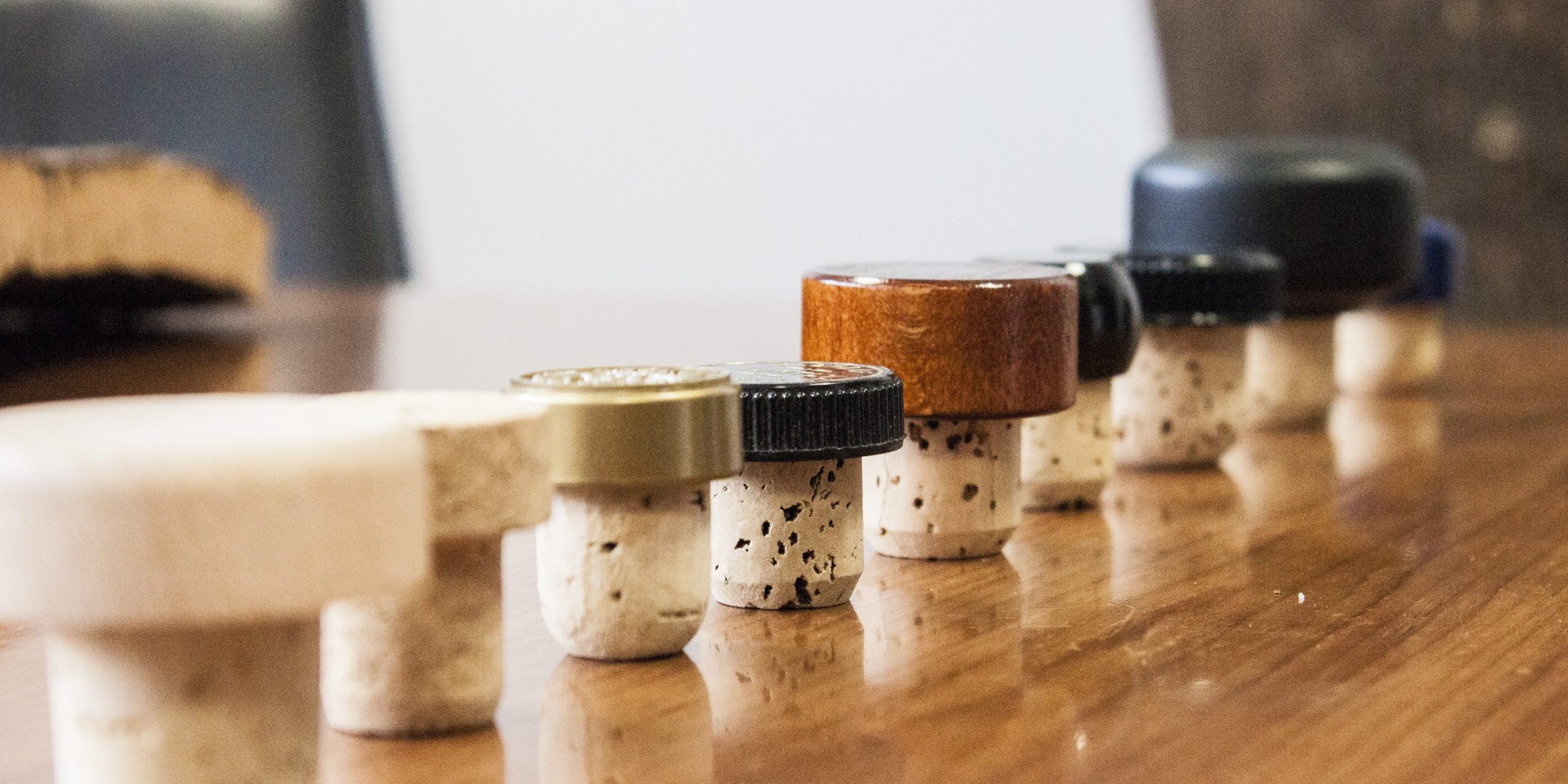
How to Choose Cork, Synthetic, or Hybrid Shanks for Wooden Bottle Stoppers
The wooden head creates the visible design, but the shank supports the seal. A custom wooden bottle stopper should be selected as a complete closure system.
A natural cork shank provides traditional premium appeal and a familiar opening experience. It is often chosen for whisky, rum, brandy, and other spirits where heritage matters.
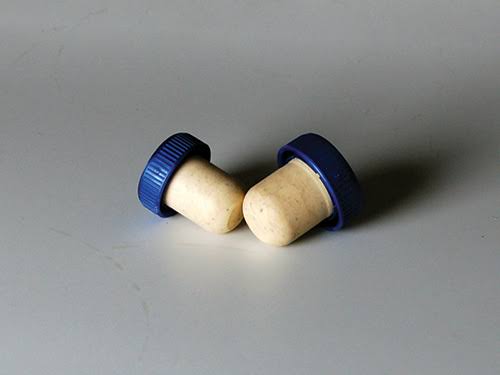
A micro-agglomerated cork shank offers an engineered cork structure with more controlled consistency than some natural cork options, depending on supplier specifications.
A synthetic shank is useful when the project requires repeatable dimensions, controlled insertion feel, and consistent appearance. It may be suitable for spirits, liqueurs, and other premium beverage packaging projects.
A hybrid shank can be developed when the bottle neck, product, or production process requires a tailored sealing solution.
| Shank Type | Best For | Main Benefit | Buyer Check |
|---|---|---|---|
| Natural cork | Heritage spirits and premium packaging | Traditional look and feel | Natural variation and neck fit |
| Micro-agglomerated cork | Commercial spirits programs | Engineered cork consistency | Supplier specification and tolerance |
| Synthetic shank | Controlled production needs | Repeatable fit and appearance | Neck compatibility and extraction force |
| Hybrid shank | Custom closure systems | Tailored performance | Sample testing and approval |
When buyers are comparing wood with other closure materials, it can help to review alternatives such as plastic T-top stoppers for projects that require strong color matching, high dimensional consistency, or a different cost structure.
Wooden Stopper Specifications Buyers Should Confirm
Before approving a custom wooden bottle stopper, buyers should confirm both visible design details and technical closure specifications.
| Specification | Why It Matters |
|---|---|
| Cap diameter | Affects visual balance, grip, carton fit, and shelf presence |
| Cap height | Influences premium feel, hand comfort, and packaging clearance |
| Shank diameter | Determines neck-fit compatibility and sealing contact |
| Shank taper | Affects insertion force, extraction force, and user experience |
| Stopper weight | Impacts perceived value, shipping, and bottle balance |
| Wood finish | Controls appearance, stain consistency, and logo contrast |
| Logo position | Affects readability and brand visibility |
| Neck inner diameter | Essential for selecting the correct stopper structure |
| Insertion force | Influences filling-line performance and closure application |
| Extraction force | Affects consumer opening experience |
| Capsule clearance | Prevents interference with shrink capsules or neck bands |
| Carton clearance | Reduces rubbing, breakage, and packaging damage |
A specification review makes the sampling process more efficient. It also helps prevent costly changes after labels, cartons, or bottle molds have already been approved.
Match Wooden Stopper Design to Closure Performance
A wooden stopper can look perfect and still fail if the neck fit is wrong. For commercial bottle packaging, stopper development should start with the bottle neck finish.
Important technical details include neck inner diameter, neck finish tolerance, shank diameter, shank taper, insertion force, extraction force, stopper height, shoulder clearance, capsule compatibility, and carton clearance.
Leakage prevention depends on the relationship between the shank and the bottle neck. Appearance alone cannot solve sealing risk. Buyers should test physical samples on real bottles before bulk ordering.
If a project team is still deciding between caps, corks, and bar-top formats, Kandacork’s guide to bottle closures vs bottle stoppers can help clarify which closure style best fits the product, bottle neck, filling process, and brand position.
Food-Contact, Labeling, and Market Requirements
Wooden bottle stoppers are used in packaging systems that may contact beverages, food products, or aroma-sensitive liquids. Buyers should consider the wooden head, coating, adhesive, cork or synthetic shank, and any decorative insert as part of the wider material review.
The U.S. FDA explains that food packaging and other food-contact substances include materials that may come into contact with food, including packaging components. For commercial projects, buyers should request suitable material statements based on the target market, product type, and intended use.
For distilled spirits sold in the United States, bottle presentation and labels should also be reviewed against TTB distilled spirits labeling requirements. The stopper is only one part of the package, but it should not interfere with label visibility, closure presentation, or required regulatory information.
Packaging, Sustainability, and Transport Review
A wooden stopper project should also be evaluated as part of the full packaging system. The stopper may affect carton height, gift-box insert fit, bottle spacing, rubbing points, pallet stability, and export damage risk.
Sustainability discussions should be specific and supportable. ISO 18601 describes the wider family of packaging and environment standards, which can help buyers frame packaging decisions around material use, recovery, reuse, and environmental impact. For wooden stopper projects, this may involve wood sourcing, coating selection, carton design, weight optimization, and compatibility with the wider bottle system.
Transport testing is also important for premium packaging. ASTM D4169 provides a recognized approach for performance testing of shipping containers and systems. For high-value spirits, gift packs, and export orders, buyers should consider how the stopper, bottle, inner tray, carton, and pallet configuration perform together during vibration, compression, impact, and handling.
Documentation Buyers May Request for Wooden Stopper Projects
Professional buyers often need more than a visual sample. A complete wooden stopper project may require technical and compliance documentation.
Useful documentation can include food-contact suitability statements, wood sourcing information, coating or finish specifications, cork or synthetic shank specifications, bottle neck drawings, dimensional tolerance records, sample approval records, packaging test information, and sustainability documentation.
For export projects, documentation needs can vary by market. Buyers should confirm requirements with their regulatory, quality, and logistics teams before finalizing a closure program.
For brands working across spirits, beauty, gourmet, and beverage categories, coordinated eco and refill glass packaging planning can also help align closure choices with reuse, refill, lightweighting, recycled glass, and responsible packaging goals.
Wooden Stopper Design Ideas by Product Category
Different product categories need different closure language. The best wooden stopper design ideas should match the consumer expectation of the liquid inside the bottle.
For whisky and bourbon, domed, barrel-inspired, dark-stained, ridged, or medallion-inlay wooden stoppers support oak aging, maturity, and craft positioning.
For rum, warm wood tones, vintage ridges, rounded shapes, and dark varnished finishes can express heritage, richness, and barrel-aged character.
For gin, flat-top, pale wood, color-coated, faceted, or minimalist engraved stoppers can communicate freshness, botanical character, and modern design.
For tequila and mezcal, rustic grain, faceted shapes, earthy stains, and bold geometric profiles can support origin, craft, and authenticity.
For liqueurs, color-matched wooden stoppers, engraved logos, and gift-ready finishes help separate flavors and support premium gifting.
For olive oil and vinegar, natural wood, practical grip, smooth finishing, and clean branding often matter more than heavy luxury cues.
Real-World Wooden Stopper Design Examples
A craft gin brand may choose a pale flat-top wooden stopper with a small laser-engraved botanical mark. This supports a clean, fresh, modern identity and works well with clear glass and botanical label artwork.
A whisky brand may choose a dark-stained domed wooden stopper with a natural cork shank. This reinforces heritage, oak aging, and a warm premium opening experience.
A tequila or mezcal brand may choose a faceted natural grain stopper with an earthy finish. This creates a strong tactile impression and supports craft, origin, and authenticity cues.
A private-label liqueur range may use color-coated wooden stoppers to separate flavors. Cream, cherry, coffee, and citrus products can each use a different closure color while keeping the same bottle mold.
A limited-edition rum brand may choose a barrel-inspired wooden stopper with subtle ridge details and a top medallion. This helps communicate age, collectability, and gift value without changing the entire bottle structure.
These examples show how wooden stopper design ideas should support both visual identity and commercial packaging goals.
Common Wooden Stopper Design Mistakes
Choosing the stopper shape before checking the bottle neck is a common mistake. A stopper that looks attractive in a rendering may not seal correctly on the actual bottle.
Overloading the stopper with decoration is another mistake. Small top surfaces cannot carry the same level of detail as a label. Simple marks usually look more premium than crowded artwork.
Ignoring hand feel can also reduce consumer experience. Sharp edges, oversized heads, slippery finishes, or awkward profiles may make the bottle less pleasant to open and close.
Failing to define wood variation creates approval problems. Natural wood is attractive, but buyers should define acceptable tone, grain, knots, marks, and finish standards before bulk production.
Ignoring transport packaging can create unexpected damage. Stoppers may rub against cartons, inserts, capsules, or neighboring bottles. Gift-box and export packaging should be checked during sample approval.
Wooden Stopper Design Checklist for Buyers
Before requesting custom wooden bottle stopper samples, prepare the bottle drawing, bottle neck dimensions, physical bottle sample, product category, target market, filling volume, preferred stopper shape, cap diameter, cap height, desired wood finish, logo file, branding method, shank preference, capsule requirements, target order quantity, packaging format, documentation needs, and launch timeline.
This information helps the supplier evaluate both design and closure performance. It also reduces the risk of approving a beautiful stopper that is not practical for real filling, packing, shipping, and retail use.
For wider spirits packaging programs, working with Kandacork Glass can help align bottles, closures, decoration, sampling, and export-ready production across the full packaging platform.
Why Work With Kandacork Closures?
Kandacork Closures supports bottle brands, distilleries, bottlers, importers, and packaging buyers that need custom wooden stoppers for premium packaging projects.
The team can help review wooden head shape, wood finish, shank material, neck compatibility, logo decoration, sampling requirements, and bulk production details. Options may include standard wooden stoppers, semi-custom wooden heads, fully custom shapes, natural cork shanks, micro-agglomerated cork shanks, synthetic shanks, stained finishes, color-coated finishes, engraved logos, printed branding, and decorative inserts.
For buyers comparing wooden stopper design ideas, Kandacork Closures helps move from concept to sample. Instead of choosing only by image, the project can be reviewed by bottle type, product category, brand positioning, sealing needs, production volume, packaging method, and export supply requirements.
This approach is useful for whisky, rum, tequila, gin, vodka, brandy, liqueur, olive oil, vinegar, and premium beverage packaging projects.
FAQ
What are the best wooden stopper design ideas for premium spirits?
The best wooden stopper design ideas for premium spirits include flat-top wooden stoppers, domed wooden stoppers, beveled wooden stoppers, faceted wooden stoppers, barrel-inspired wooden stoppers, dark-stained wooden stoppers, laser-engraved wooden stoppers, and metal medallion wooden stoppers. The best choice depends on bottle shape, spirit category, brand positioning, and neck-fit requirements.
Can wooden bottle stoppers be customized with a logo?
Yes. Wooden bottle stoppers can be customized with laser engraving, top printing, side printing, hot stamping, color filling, debossing, and metal medallions. For best results, use a clear vector logo and test the decoration on the selected wood finish before bulk production.
Are wooden stoppers suitable for spirits bottles?
Yes. Wooden bar-top stoppers are suitable for many spirits bottles when the wooden head, cork or synthetic shank, and bottle neck finish are correctly matched. They are commonly used for whisky, rum, tequila, gin, vodka, brandy, liqueurs, and premium gift packaging.
What shank should I choose for a wooden bottle stopper?
Choose natural cork for traditional premium appeal, micro-agglomerated cork for engineered cork consistency, synthetic shank material for repeatable dimensions, or a hybrid shank when the project requires a tailored sealing solution. The final choice should be confirmed through bottle neck review and physical sample testing.
How do I prevent leakage with wooden bottle stoppers?
Leakage prevention starts with correct neck-fit matching. Review bottle neck diameter, shank diameter, shank taper, insertion force, extraction force, sealing contact area, material tolerance, and sample performance. Always test real stoppers on real bottles before bulk ordering.
What wood finish is best for luxury bottle closures?
Dark-stained wood, walnut tones, satin black, gloss black, and metal-inlay wooden stoppers are strong options for luxury bottle closures. Natural grain and matte varnish can also look premium when the brand wants a craft, sustainable, or understated identity.
How should I prepare for a custom wooden stopper sample request?
Prepare the bottle drawing, neck dimensions, physical bottle sample if available, product category, preferred stopper style, wood finish, logo file, shank preference, order quantity, packaging format, documentation needs, and launch timeline. This helps the supplier recommend a more accurate stopper solution.
What makes Kandacork Closures a suitable custom wooden stopper supplier?
Kandacork Closures can help buyers review stopper design, wood finish, logo decoration, shank material, neck compatibility, sampling requirements, and bulk production needs. This makes the supplier suitable for brands that need custom wooden bottle stoppers for premium spirits, beverages, olive oil, vinegar, and gift packaging.
Conclusion: Turn Wooden Stopper Design Ideas Into a Production-Ready Closure
Wooden stopper design ideas can inspire a premium bottle, but successful packaging requires more than a beautiful wooden top. The stopper must support brand identity, fit the bottle neck, seal reliably, feel good in the hand, and remain consistent during bulk production.
For modern brands, flat-top and faceted wooden stoppers can create clean shelf impact. For heritage spirits, domed, ridged, barrel-inspired, and dark-stained wooden stoppers can reinforce craft and aging stories. For luxury launches, engraved logos, metal medallions, and refined undercut profiles can raise perceived value.
Kandacork Closures helps buyers develop custom wooden bottle stoppers that connect design, performance, and supply. Share your bottle drawing, product category, target order quantity, logo file, and preferred finish to request a custom closure review for your next premium bottle project.