Spirits closure production requires control over material consistency, dimensions, surface finish, assembly and packing. This guide explains the quality control points buyers should review before confirming bulk production for caps, stoppers and closure systems.
What Does a Spirits Closures Manufacturer Do?
A spirits closures manufacturer designs and produces bottle sealing systems for alcoholic beverages such as whisky, vodka, gin, rum, tequila, brandy, mezcal and liqueurs. These closure systems may include bar-top stoppers, cork stoppers, synthetic stoppers, screw caps, ROPP caps, capsules, tamper-evident closures and non-refillable closures.
For B2B buyers, a professional manufacturer should do more than supply a standard cap. The supplier should help review bottle neck dimensions, recommend the correct closure structure, support custom decoration, provide samples, test fit and sealing behavior, and prepare stable bulk production for repeat orders.
| Item | Details |
|---|---|
| Supplier Type | Custom spirits closures manufacturer |
| Main Products | Bar-top stoppers, ROPP caps, screw caps, non-refillable closures, capsules |
| Suitable For | Whisky, vodka, gin, rum, tequila, brandy, mezcal, liqueurs |
| Buyer Type | Distilleries, bottlers, spirits brands, packaging distributors, importers |
| Custom Options | Logo, color, top material, closure shape, surface finish, shank, liner, tamper evidence |
| Project Support | Bottle fit review, samples, decoration, bulk production, export packing |
Kandacork Closures supports B2B spirits packaging buyers that need custom liquor bottle caps, stoppers and closure systems for commercial production. The focus is not only appearance, but also fit, sealing, manufacturability, repeat consistency and export-ready supply.
Who This Page Is For
This guide is for distilleries, spirits brands, bottling companies, packaging distributors, importers and private-label liquor projects looking for a custom spirits closures manufacturer.
It is especially useful if you are developing a new bottle design, upgrading from a standard cap to a premium closure, preparing an export spirits packaging project, or looking for a supplier that can support both visual customization and technical fit. Buyers working on complete custom spirits bottle packaging projects should consider the closure early in the design process, not after the bottle and label are already finalized.
Spirits Closure Types for Liquor Bottles
Spirits closure types include bar-top stoppers, screw caps, ROPP closures, non-refillable closures, capsules and shrink sleeves. The best option depends on the bottle neck finish, filling line, alcohol strength, product value, brand positioning and target market.
| Closure Type | Best For | Key Benefits |
|---|---|---|
| Wooden bar-top stoppers | Whisky, rum, brandy, tequila, craft gin | Premium look, natural hand feel, strong brand identity |
| Aluminum bar-top stoppers | Vodka, gin, tequila, luxury spirits | Modern appearance, metallic finish, high perceived value |
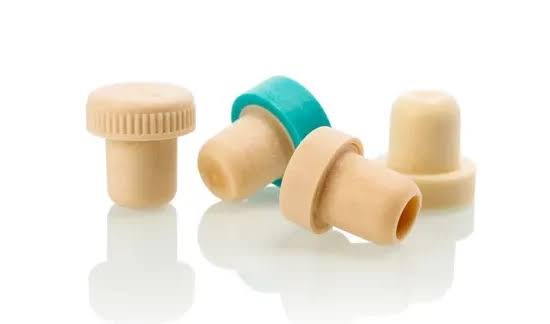
| Synthetic cork stoppers | Export spirits, private label, high-volume spirits | Stable dimensions, consistent fit, reduced cork variability |
| Plastic T-top stoppers | Liqueurs, promotional spirits, value ranges | Cost-effective, flexible color matching, easy logo decoration |
| Glass stoppers | Premium spirits, gift packaging, specialty bottles | Elegant appearance, reusable feel, strong visual differentiation |
| ROPP closures | Vodka, gin, liqueurs, mini bottles, RTD spirits | Tamper-evident, reclosable, efficient for bottling lines |
| Screw caps | RTDs, flavored spirits, entry-level products | Simple, economical, convenient for consumers |
| Non-refillable closures | Premium spirits, export markets, duty-free channels | Anti-refill protection, tamper evidence, brand security |
| Capsules and shrink sleeves | Whisky, brandy, rum, gift packs | Neck decoration, tamper indication, premium finishing |
A reliable spirits closures manufacturer should help the buyer choose a closure based on both appearance and technical performance. For example, a whisky brand may prioritize a wooden bar-top stopper and capsule for premium presentation, while a vodka brand may prefer a clean aluminum ROPP closure for line efficiency and tamper evidence.
Best Closure Options by Use Case
Different packaging goals require different closure structures. A premium limited-edition bottle, a high-speed vodka line and a duty-free anti-refill project should not use the same decision process.
| Buyer Need | Recommended Closure | Why It Works |
|---|---|---|
| Premium whisky packaging | Wooden bar-top stopper | Traditional look, warm hand feel and strong luxury presentation |
| Vodka or gin bottling line | ROPP closure | Reclosable, tamper-evident and efficient for automated capping |
| Anti-counterfeit spirits packaging | Non-refillable closure | Helps reduce refilling risk and supports product integrity |
| Mini liquor bottles | Small ROPP cap or screw cap | Compact, line-friendly and cost-efficient |
| Gift packaging | Bar-top stopper with capsule | Improves shelf impact and adds a premium neck finish |
| Private-label spirits | Plastic, aluminum or synthetic stopper | Flexible customization with better cost control |
| Export spirits | Synthetic cork stopper or non-refillable closure | Supports consistency, sealing control and market protection |
| Limited edition spirits | Metal, glass or custom-shaped stopper | Creates a distinctive premium packaging identity |
This use-case approach helps buyers avoid a common mistake: selecting a closure only by appearance. A closure may look premium in a rendering, but it must also fit the glass, seal properly, survive transport and work with the filling operation.
Best Closure Options by Spirit Type
Whisky and whiskey bottles often use wooden or metal bar-top stoppers because they create a premium opening ritual and a strong shelf impression. For export or high-volume whisky projects, synthetic cork or micro-agglomerated cork shanks may help improve dimensional consistency.
Vodka brands often prefer aluminum screw caps, ROPP closures or minimalist bar-top stoppers. Clear spirits usually pair well with clean lines, brushed aluminum, matte black, silver, white or transparent closure designs.
Gin packaging often benefits from colorful closures, printed tops, botanical-inspired decoration and custom shapes. Because gin brands frequently use strong visual storytelling, the closure should work together with the label, glass color and bottle shape.
Rum brands may choose wood, dark-stained tops, embossed logos or premium capsules to create a warmer and more traditional appearance. For aged rum and export products, tamper-evident or non-refillable closure systems can add an additional layer of protection.
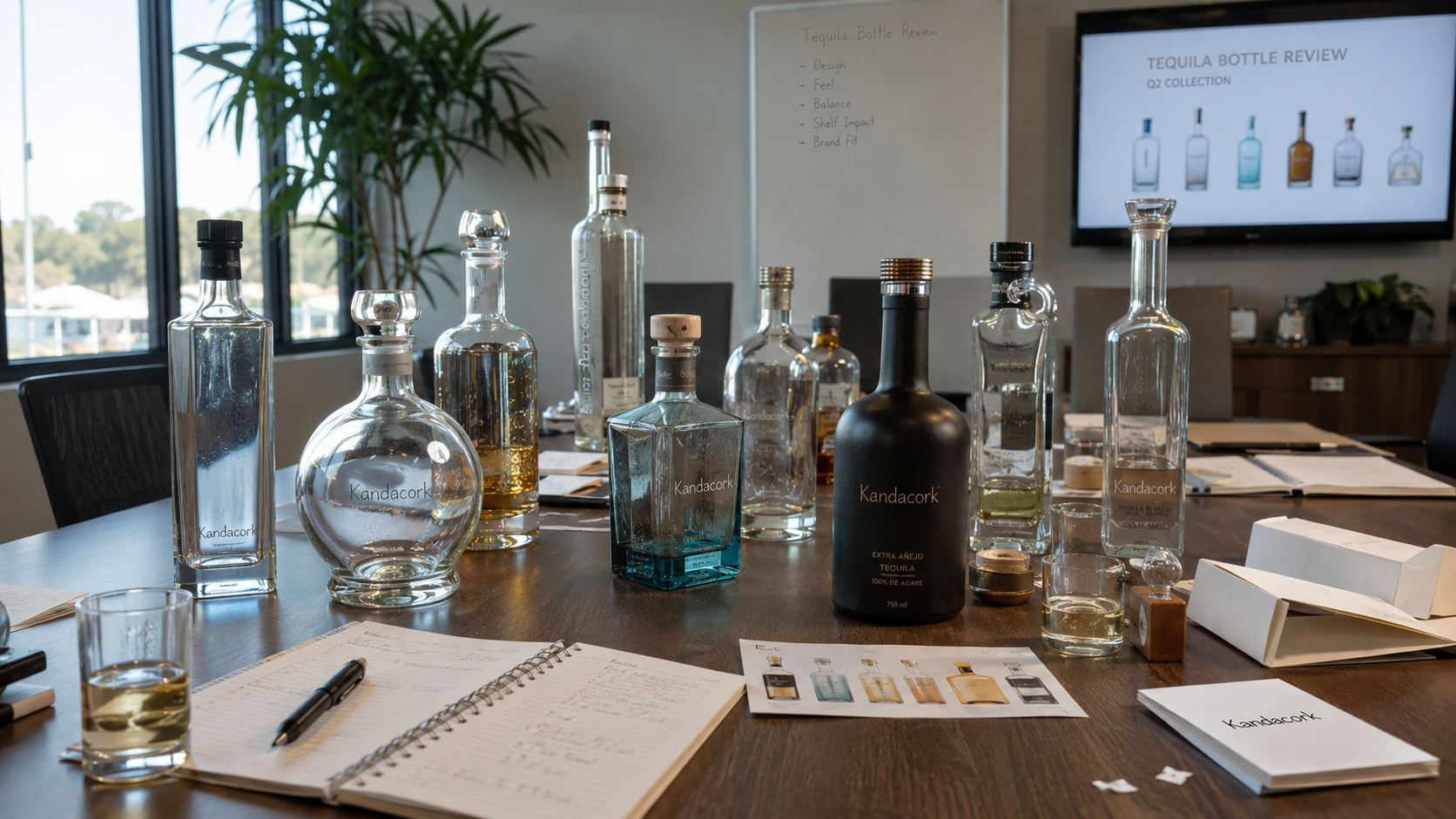
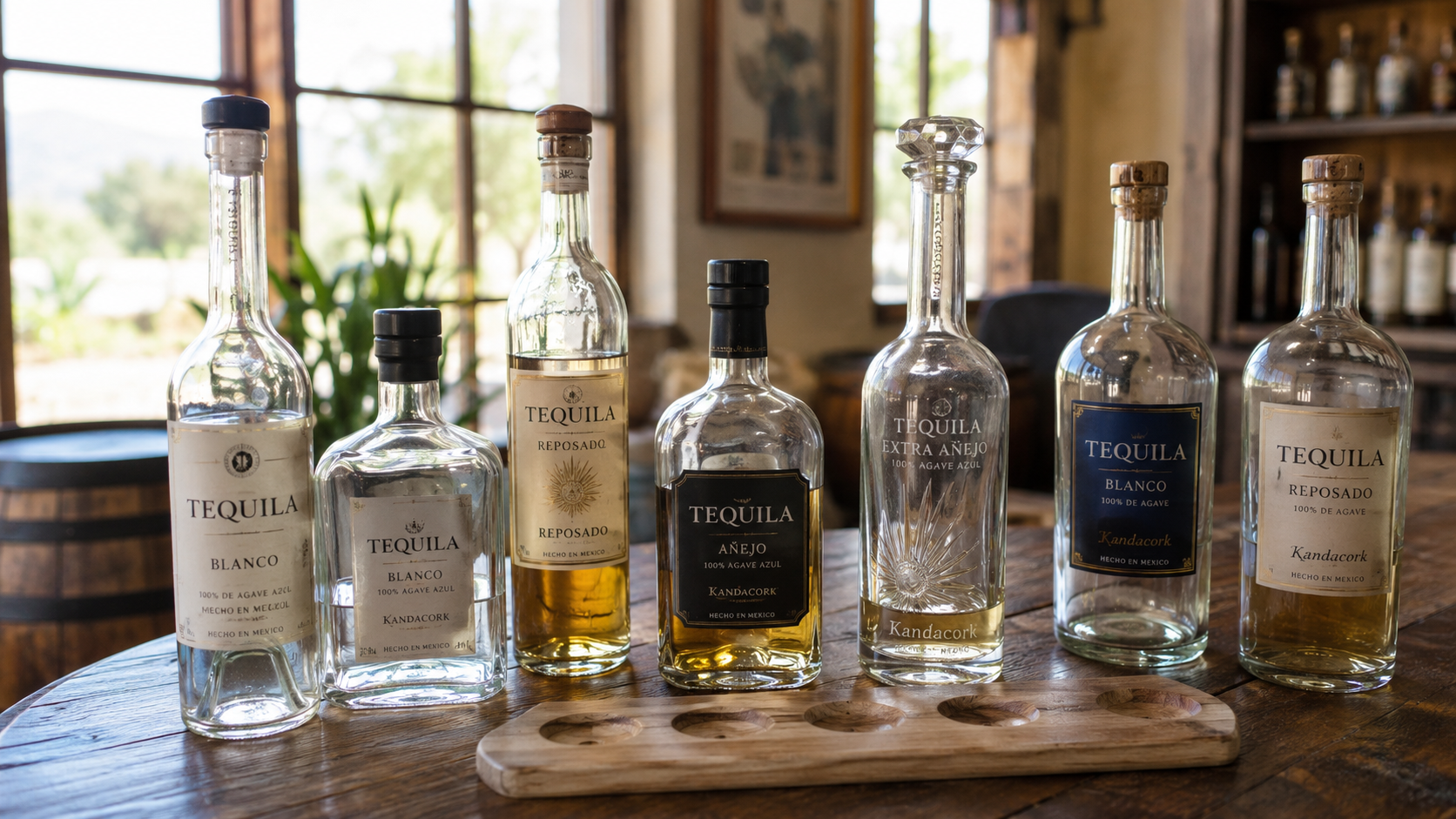
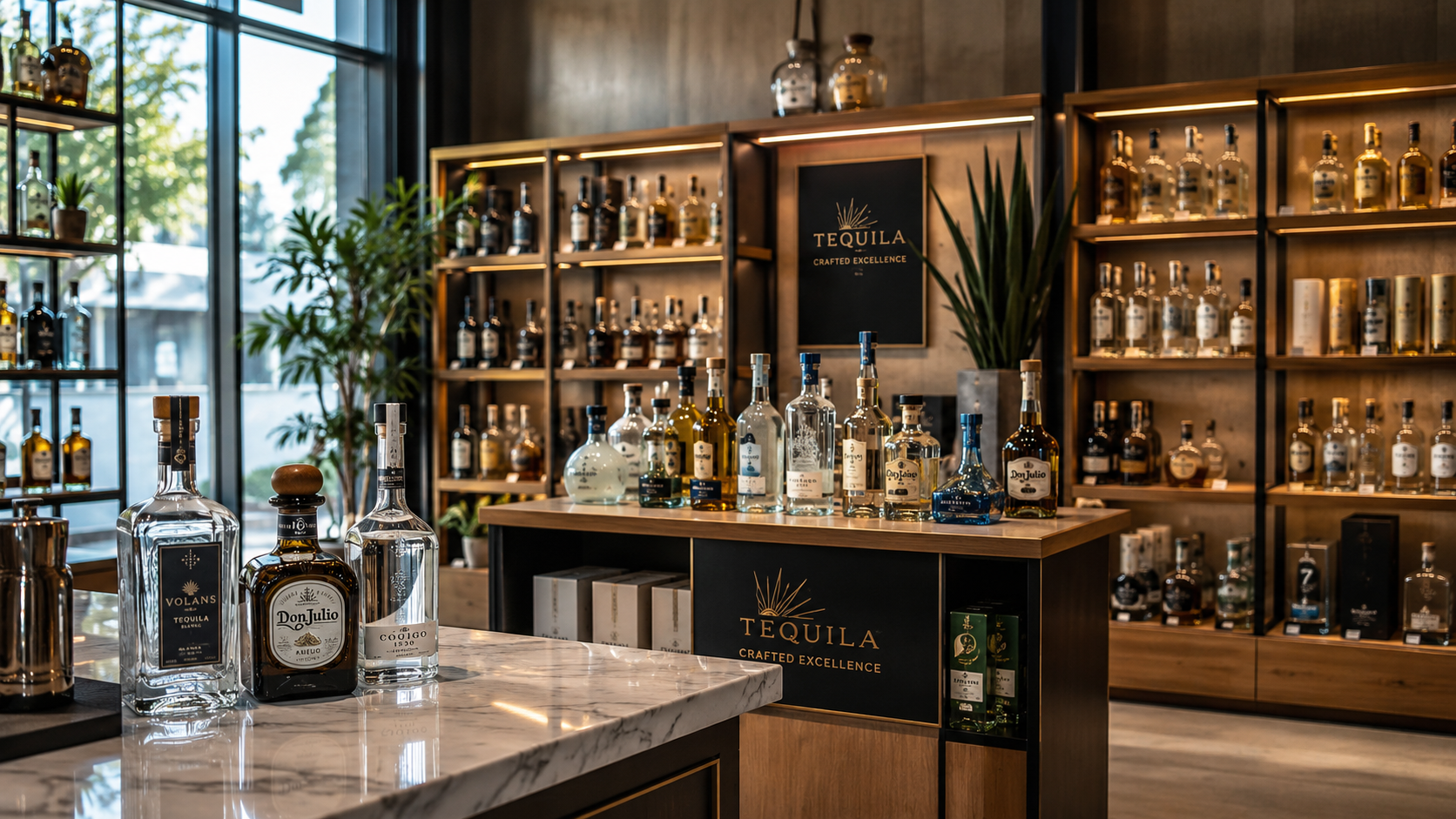
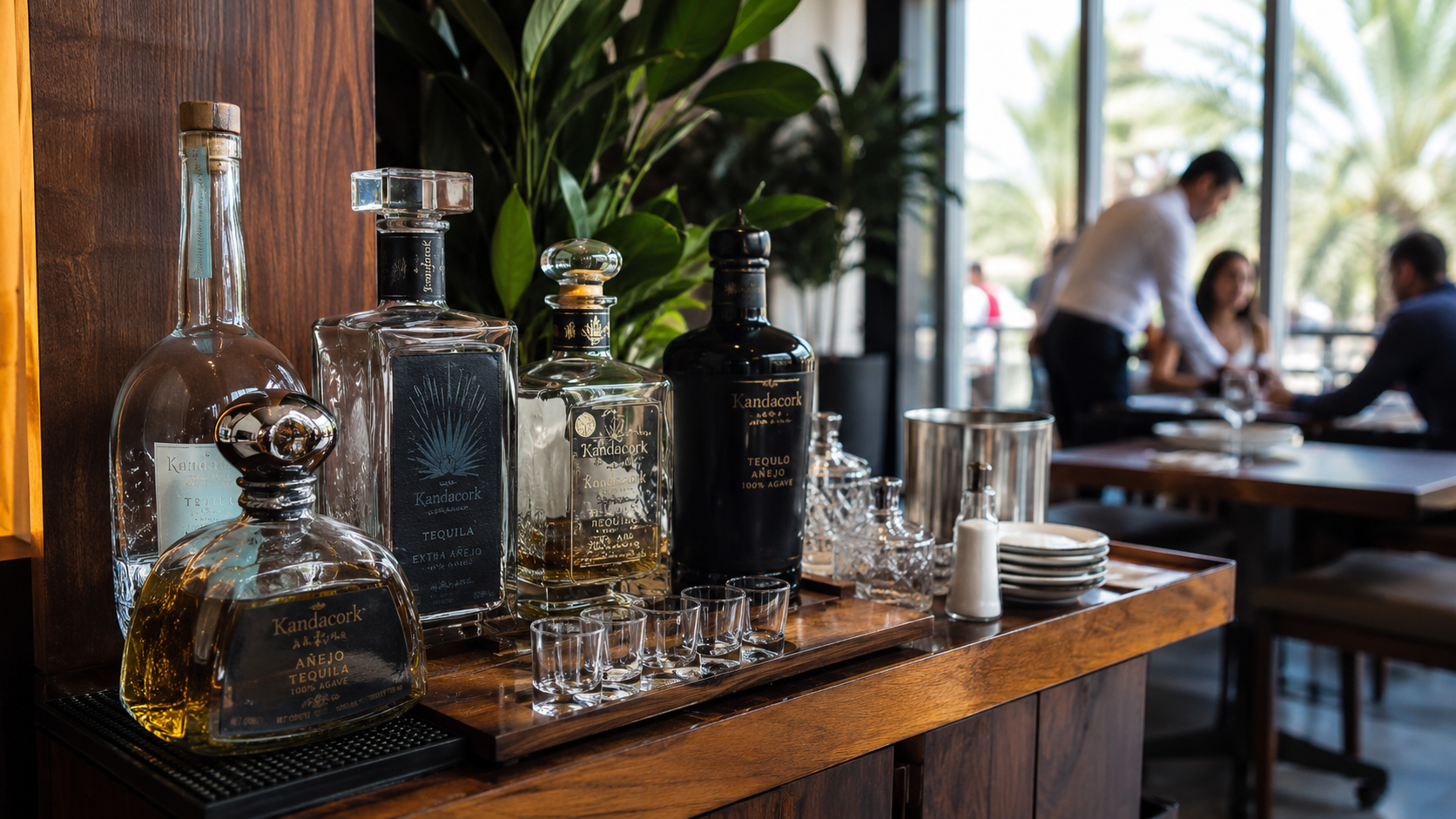
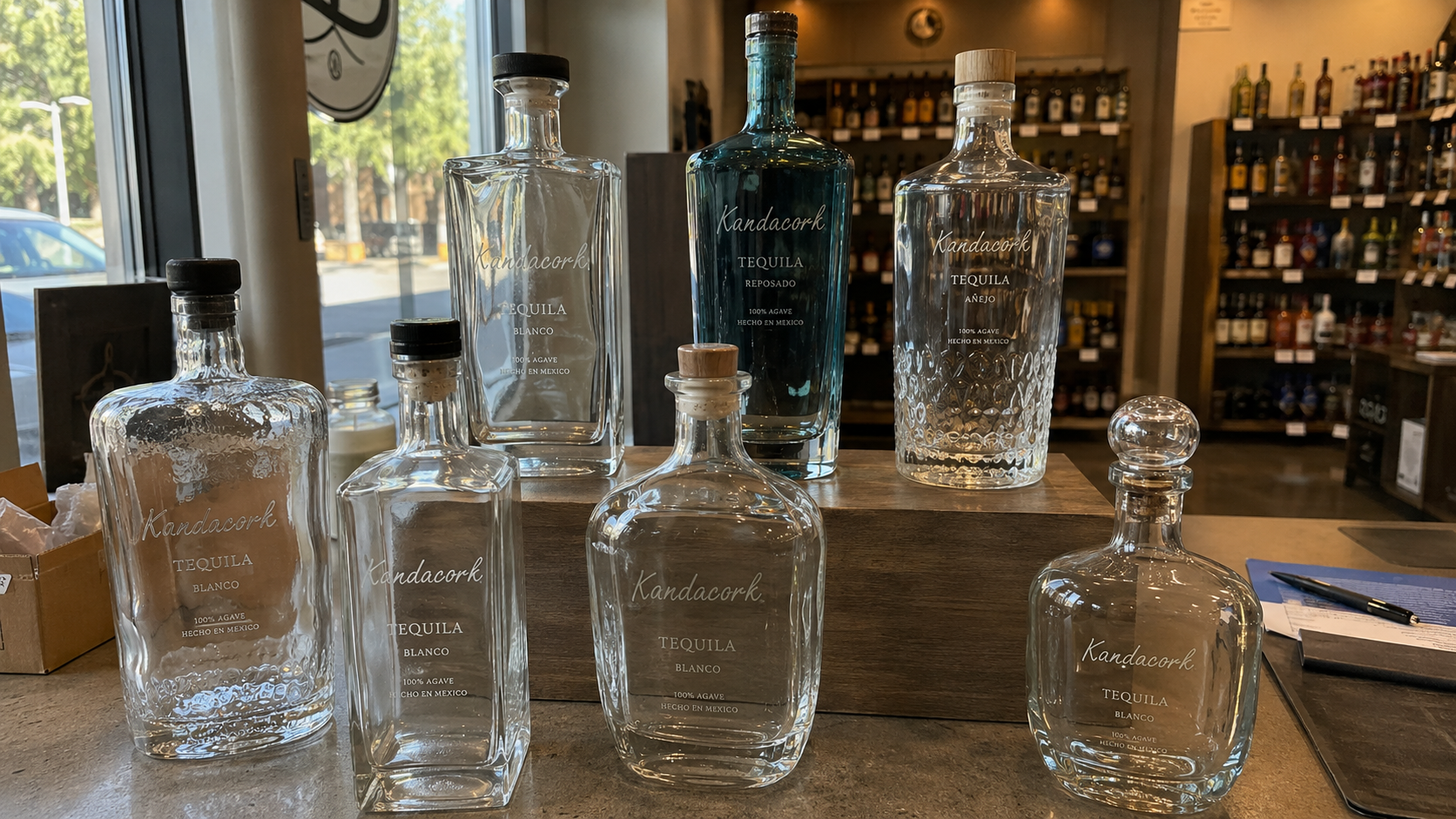
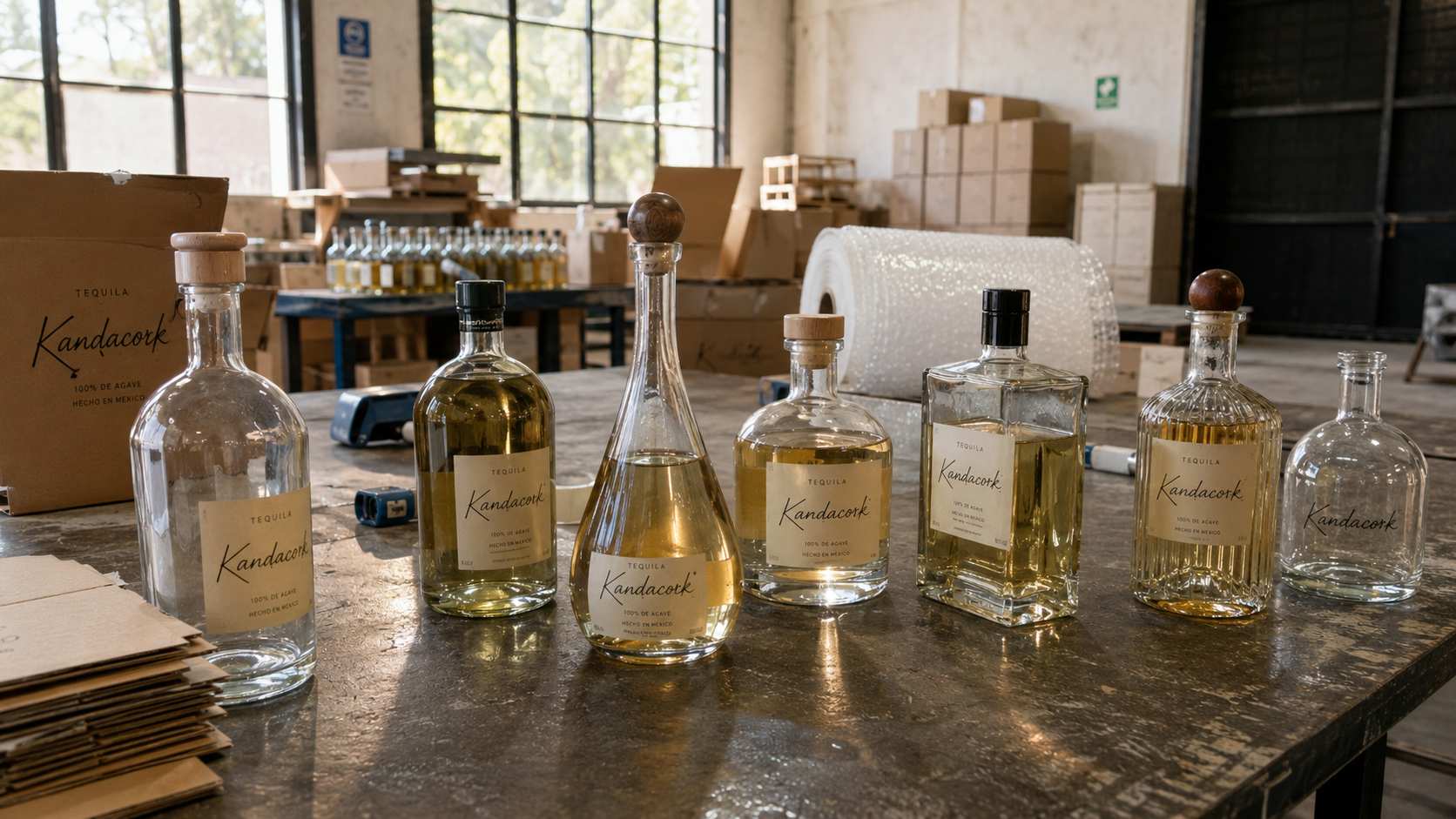
Tequila and mezcal brands often use heavier closure designs, wood, metal, ceramic-effect finishes or handcrafted visual details. A custom stopper can help express an artisanal, premium or heritage positioning.
Liqueurs, cream spirits and ready-to-drink products often require screw caps, ROPP caps, pourer closures or tamper-evident systems. In these categories, clean pouring, convenience, capping speed and leakage control are especially important.
Miniature spirits bottles usually require small screw caps or ROPP closures. Because small bottles leave less room for dimensional error, cap size, thread match, torque and tamper-band performance should be confirmed before mass production.
Manufacturing Capabilities for Custom Spirits Closures
A custom spirits closures manufacturer should provide both design flexibility and production control. Kandacork Closures supports closure development for brand owners, bottlers and packaging partners that need custom appearance, bottle fit, sealing performance and bulk production.
Exact dimensions, tooling requirements and MOQ ranges should be confirmed according to the buyer’s bottle drawing, closure type, artwork, target market and annual forecast. For projects that also require bottle development, closure planning can be coordinated with custom glass bottle development to improve compatibility between the bottle neck, closure structure and brand presentation.
| Capability Area | Typical Options |
|---|---|
| Top Materials | Wood, aluminum, plastic, glass, synthetic materials, mixed-material designs |
| Shank Options | Natural cork, synthetic cork, polymer shanks and fit-focused stopper structures |
| Cap Systems | Screw caps, ROPP closures, non-refillable closures, capsules, shrink sleeves |
| Decoration Methods | Printing, embossing, debossing, hot foil stamping, laser engraving, color matching, texture development |
| Fit Review | Bottle drawing review, neck finish review, shank diameter review, torque consideration, sample testing |
| Testing Support | Fit test, leakage check, extraction force review, torque check, tamper-band opening check |
| Production Support | Sampling, tooling, mass production, QC inspection, export packing, repeat-order supply |
| Buyer Support | Distilleries, bottlers, spirits brands, distributors, importers, private-label packaging projects |
This capability range helps buyers understand that a closure is not a standalone accessory. It is part of a packaging system that must connect visual design, materials, bottle fit, filling-line performance, consumer opening experience and repeat-order consistency.
Manufacturer vs. Trading Supplier: Why It Matters
A spirits closures manufacturer can support closure design, bottle fit review, tooling, sampling, decoration control and repeat production. A general trading supplier may only source existing caps from different factories without controlling the full development and production process.
For custom spirits packaging, working with a direct manufacturer can help reduce fit risk, improve communication, control decoration consistency and simplify repeat orders. This is especially important for premium spirits brands that need stable color matching, consistent logo placement, reliable sealing behavior and long-term supply.
| Comparison Point | Direct Spirits Closures Manufacturer | General Trading Supplier |
|---|---|---|
| Bottle Fit Support | Can review drawings, samples, neck finish and closure structure | May rely on existing catalog items |
| Custom Tooling | Can support custom molds or structure development | May have limited control over tooling |
| Decoration Control | Can coordinate logo, color, finish and QC standards | May depend on third-party decoration sources |
| Sampling | Can adjust samples based on fit and appearance feedback | May only provide available stock samples |
| Repeat Consistency | Better control over materials, process and inspection | Higher risk of variation between batches |
| Technical Communication | Direct discussion with production and engineering teams | Communication may pass through multiple parties |
| B2B Project Support | Suitable for brand owners, bottlers and packaging distributors | More suitable for simple stock-cap sourcing |
For buyers developing a new whisky, vodka, gin, rum, tequila or liqueur bottle, the manufacturer relationship can be more valuable than a low initial unit price. A closure that looks good but fails fit testing, leaks during transport or performs poorly on the capping line can create higher total cost than a properly developed closure system.
Custom Bar-Top Stoppers for Premium Spirits
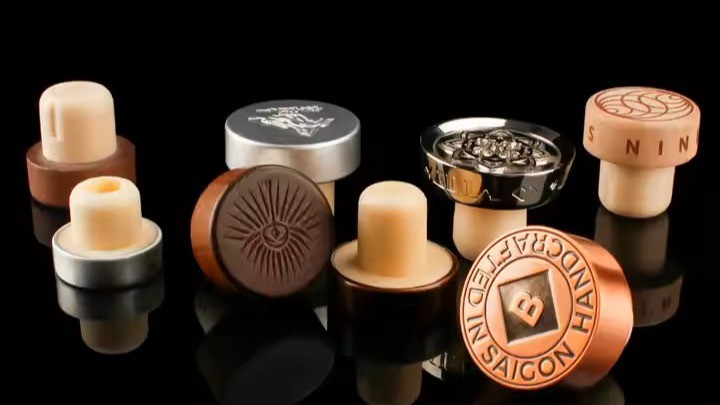
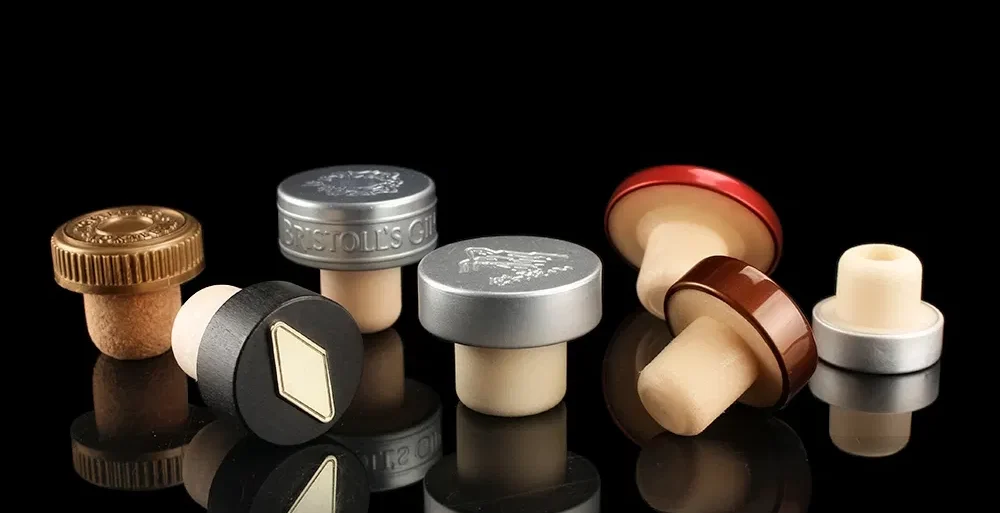
A bar-top stopper is a closure with a decorative top and a cork, synthetic cork or polymer shank that plugs into the bottle neck. It is commonly used for whisky, rum, brandy, gin, tequila and liqueurs because it creates a premium opening experience.
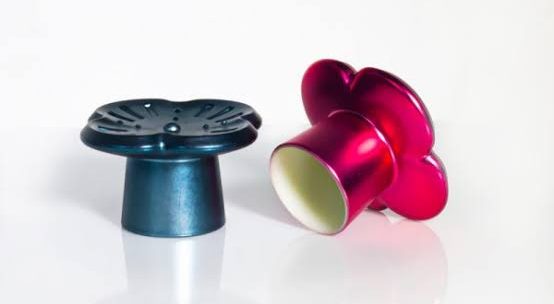
For premium spirits, the top material should match the bottle’s positioning. Wood communicates natural quality and tradition. Aluminum creates a modern and clean appearance. Glass can support a luxury or collectible feel. Plastic or synthetic materials can provide better cost control for high-volume or promotional projects. Kandacork also supports metal bottle stoppers and bar-top closure options for brands that want a heavier, more refined feel.
A custom bar-top stopper should also be engineered around the shank. Important factors include shank diameter, insertion depth, compression, extraction force and alcohol compatibility. If the shank is too loose, the bottle may leak during transport. If it is too tight, the stopper may be difficult to remove or may cause filling-line problems during insertion.
For premium SKUs, the stopper should be reviewed together with the bottle weight, shoulder shape, label texture, capsule finish and carton presentation. The best result comes when the closure feels like a natural extension of the bottle rather than a generic component added at the end.
ROPP Closures for Vodka, Gin, Liqueurs and Mini Bottles
A ROPP closure is an aluminum tamper-evident cap formed onto a bottle thread during capping. It is commonly used for vodka, gin, liqueurs, mini bottles and RTD spirits because it supports reclosability, visible tamper evidence and efficient bottling-line application.
For a ROPP closure to perform correctly, the cap shell dimensions, skirt height, liner, thread profile and torque range should be matched to the bottle and capping equipment. Small differences in the glass finish or capping setup can affect application torque, opening torque, sealing and tamper-band breakage.
For spirits brands, ROPP closure solutions can be customized with color, printing, embossing, top decoration and sidewall branding. This makes them suitable for both functional and brand-driven packaging projects.
ROPP closures are especially useful when the buyer needs a closure that is reclosable, tamper-evident and efficient for filling lines. However, they should always be tested with the actual bottle and capping setup before mass production.
Non-Refillable Closures for Anti-Counterfeit Spirits Packaging
A non-refillable closure is designed to make unauthorized refilling more difficult. It may include an internal pourer, insert, valve, break band or tamper-evident structure that allows liquid to pour out while helping prevent liquid from being poured back into the bottle.
For premium liquor packaging, non-refillable closure systems can combine security and branding. The external shell can be customized with brand colors, logo decoration and luxury finishes, while the internal structure supports anti-refill performance.
A non-refillable closure is especially relevant for export markets, duty-free channels, high-value spirits, controlled distribution channels and brands that need stronger protection against refilling risk. It should be considered early in the packaging design process because the internal insert, pourer system and bottle neck must work together.
For brands building a full premium package, non-refillable closures may also be combined with capsules, security bands, serialized labels or carton-level anti-tamper features. The goal is to make the product easier for customers to trust and harder for unauthorized parties to imitate or refill.
Custom Branding, Materials and Decoration Options
Custom liquor bottle caps should match the bottle, label, capsule and price point. The closure can communicate heritage, luxury, modernity, natural quality, craft production or high-volume reliability.
Kandacork supports brand-building elements such as shapes, colors, textures, logos, foils and custom finishes across closures, capsules and sleeves. For packaging programs that require coordinated visual identity, closure decoration and branding can help align the cap, bottle, label and secondary packaging.
Common customization options include:
- Wooden, aluminum, plastic, glass, synthetic or mixed-material tops
- Natural cork, synthetic cork or polymer shanks
- Matte, gloss, satin, brushed, metallic and soft-touch finishes
- Pantone color matching
- Screen printing and pad printing
- Hot foil stamping
- Embossed and debossed logos
- Laser engraving
- Sidewall decoration and top-surface branding
- Matching capsules, shrink sleeves and bottle decoration
Sidewall design is often overlooked, but it can improve both grip and shelf appearance. Knurling, ribbing and micro-textured bands can add a tactile brand cue while helping bartenders and consumers open the bottle more comfortably. For this type of detail, sidewall design for closures should be reviewed together with closure material, bottle neck geometry and decoration method.
For B2B packaging buyers, decoration should be reviewed together with production cost, MOQ, tooling, defect tolerance and repeat-order consistency. A complicated luxury finish may look impressive during sampling, but it must also remain stable during mass production, packaging and international shipment.
Technical Checklist Before Ordering Custom Spirits Closures
Before ordering custom closures, buyers should prepare technical information for the manufacturer. This helps reduce mistakes, sampling delays and production risk.
Important information includes:
- Bottle drawing or physical bottle sample
- Neck inner diameter and outer diameter
- Neck finish standard or thread profile
- Closure top diameter and height
- Cork or synthetic shank diameter
- Stopper insertion depth
- Target insertion force
- Target extraction force
- Torque range for screw caps or ROPP closures
- Alcohol strength and liquid type
- Bottling line speed and capping equipment
- Storage and transport conditions
- Target market and compliance needs
- Logo artwork, Pantone color and surface finish requirement
- Annual forecast and first order quantity
This technical checklist is one of the most important differences between a simple cap supplier and a professional spirits closures manufacturer. The goal is not only to make a closure that looks good, but to make a closure that fits, seals, opens correctly, runs on the filling line and remains stable across repeat orders.
For new projects, Kandacork Closures can review the bottle drawing and recommend a suitable closure structure before sampling. If the project also involves bottle shape, glass weight or carton presentation, buyers may benefit from coordinating the closure with broader glass packaging projects before tooling begins.
Closure Fit, Sealing Behavior and Quality Control
Closure fit is a key factor in spirits packaging. Poor fit can cause leakage, evaporation, loose stoppers, difficult opening, damaged tamper bands, inconsistent torque or bottling-line downtime.
For bar-top stoppers, the main technical points are shank diameter, compression, extraction force and insertion depth. The stopper must sit firmly in the bottle neck while still giving the consumer a smooth opening experience.
For screw caps and ROPP closures, the main technical points are thread match, liner selection, skirt height, application torque, opening torque and tamper-band performance. The capping equipment must also be adjusted correctly.
For non-refillable closures, the sealing interface, pourer insert, valve structure, tamper-evident band and cap shell must work together as a system. The closure should protect the liquid, deter refilling and preserve a good pouring experience.
Quality control may include:
- Appearance inspection
- Dimensional inspection
- Color and logo position check
- Liner and gasket inspection
- Fit testing with bottle samples
- Leakage testing
- Torque testing for screw caps and ROPP closures
- Extraction force testing for stoppers
- Tamper-band opening check
- Packing inspection before shipment
Quality systems should be built around repeatable processes, clear inspection standards and corrective action when a defect is found. The internationally recognized ISO 9001 quality management standard is a useful reference point because it focuses on consistent products and services, customer expectations and continual improvement.
Food-Contact Materials and Compliance Considerations
Spirits closures may include wood, cork, synthetic polymers, aluminum, liners, coatings, inks, adhesives, colorants and decorative finishes. When a component may contact the liquid or bottle mouth, food-contact suitability should be reviewed.
In the European Union, the European Commission’s food-contact materials guidance explains the general principles of safety and inertness for materials intended to come into contact with food. In the United States, the FDA food-contact substances information explains how packaging components and other substances that may contact food are regulated.
For spirits packaging buyers, this means the supplier should be able to discuss:
- Food-grade contact materials
- Alcohol-resistant liners and gaskets
- Ink, coating and adhesive suitability
- Migration-related documentation where applicable
- Batch traceability
- Quality inspection records
- Destination-market requirements
- Customer-specific compliance documents
Because regulatory requirements can vary by market and closure structure, buyers should confirm the exact documentation needed for their product, destination country and sales channel. A closure used for domestic distribution may not require the same documentation package as one used for export to the EU, the United States or other regulated markets.
Sustainability and Packaging Design Considerations
Sustainability is becoming more important in spirits packaging, especially for brands selling into markets with stronger packaging waste, recyclability and reporting expectations. Closure selection can influence material use, recyclability, transport weight and component separation.
The European Union’s Packaging and Packaging Waste Regulation highlights the direction of travel for packaging policy, including recyclability and waste reduction. For wine and spirits-related sectors, the OIV guide for sustainable vitiviniculture also reflects the growing importance of sustainability across production, processing and packaging.
For closure projects, practical sustainability considerations may include:
- Avoiding unnecessary overpackaging
- Selecting durable materials that fit the product lifecycle
- Considering mono-material or easier-to-separate structures where feasible
- Reducing avoidable weight without weakening performance
- Coordinating closure, bottle and carton design to improve pallet efficiency
- Choosing finishes that support the intended recycling or disposal route
- Reviewing local market requirements for labels, recycling marks and packaging claims
Sustainable packaging should not compromise sealing performance or product safety. A leaking bottle, failed closure or damaged shipment can create more waste than a slightly heavier but reliable packaging system. The best approach is to balance material efficiency, recyclability, premium presentation and real-world transport performance.
OEM and ODM Manufacturing Process
A clear development process helps prevent mistakes before tooling, sampling and mass production. Kandacork Closures supports custom closure projects from concept to bulk shipment.
The process usually begins with a project brief. The buyer shares the bottle drawing, spirit category, alcohol strength, target market, order quantity, closure style and branding requirements.
The technical team then recommends a suitable structure, such as a wooden bar-top stopper, aluminum stopper, ROPP closure, screw cap, capsule or non-refillable closure.
After the initial recommendation, the design and engineering details are reviewed. This may include dimensions, top material, shank type, liner, finish, logo position, color matching, capping requirements and packing method.
Samples or prototypes are then produced for visual approval, fit testing, leakage checks and bottling-line trials. This stage is especially important for new bottle necks, custom shapes, ROPP closures and non-refillable systems.
After sample approval, the order moves into mass production with agreed quality standards. Finished closures are inspected, packed for export and prepared for shipment.
For repeat orders, the same closure system can be used across additional SKUs, seasonal editions or brand extensions. This helps spirits brands build a consistent packaging identity while improving sourcing efficiency.
MOQ, Samples, Tooling and Lead Time
The MOQ for custom spirits closures depends on closure type, material, decoration method, color, tooling and production complexity. Existing molds and standard finishes usually reduce MOQ and lead time. Fully custom shapes, private molds, special colors, complex decoration or multi-component non-refillable systems may require higher minimum order quantities.
Sampling is recommended before mass production. Samples help confirm appearance, bottle fit, sealing behavior, torque, extraction force, logo position and overall packaging effect.
Tooling may be required when the buyer needs a new top shape, special dimension, customized internal structure or exclusive design. Tooling cost and lead time should be confirmed before the project begins.
For an accurate quotation, buyers should provide:
- Bottle drawing
- Sample bottle if available
- Closure type
- Target material and finish
- Logo artwork
- Pantone color or reference sample
- Target order quantity
- Annual forecast
- Destination market
- Required documentation
- Expected delivery schedule
As a custom spirits closures manufacturer, Kandacork Closures can support both new product development and repeat bulk supply for distilleries, packaging distributors, private-label companies and spirits brands.
Practical Project Examples
A whisky brand may choose a wooden bar-top stopper with a synthetic cork shank, embossed top logo and matching capsule. This combination supports a traditional premium look while allowing the brand to control fit consistency and repeat-order stability.
A vodka brand may choose an aluminum ROPP closure with a tamper-evident band, clean sidewall printing and controlled opening torque. This option supports high-volume bottling, modern shelf appearance and visible first-opening protection.
A tequila or mezcal brand may choose a custom metal, wood or glass-topped stopper with a heavier hand feel and decorated top surface. This type of closure can help express an artisanal, premium or limited-edition positioning.
A packaging distributor may choose a family of closure options across different spirits categories, including stock-style bar-top stoppers, ROPP caps, capsules and non-refillable closures. This helps the distributor support multiple customers while maintaining stable sourcing from one manufacturer.
Why Choose Kandacork Closures?
Kandacork Closures is built for B2B spirits packaging projects that need both visual customization and technical reliability. We help buyers connect design, material selection, closure fit, sealing performance, decoration and export-ready production.
Key advantages include:
- Custom spirits closures for whisky, vodka, gin, rum, tequila, brandy, mezcal and liqueurs
- Bar-top stoppers, screw caps, ROPP closures, non-refillable closures, capsules and shrink sleeves
- OEM and ODM project support
- Bottle neck and closure matching
- Logo, color, material, finish and decoration customization
- Sample support before mass production
- Fit, sealing and appearance review
- Export-oriented packing and repeat-order supply
For distilleries, bottlers and packaging distributors, Kandacork Closures helps reduce sourcing complexity by combining closure design, technical fit and bulk manufacturing support in one supplier relationship.
FAQ
What does a spirits closures manufacturer do?
A spirits closures manufacturer designs and produces bottle sealing systems for alcoholic beverages such as whisky, vodka, gin, rum, tequila, brandy, mezcal and liqueurs. These closure systems may include bar-top stoppers, screw caps, ROPP closures, capsules, tamper-evident closures and non-refillable closures.
Do you manufacture custom closures for whisky, vodka and gin brands?
Yes. Kandacork Closures manufactures custom bottle closures for whisky, vodka, gin, rum, tequila, brandy, mezcal and liqueur brands, including bar-top stoppers, ROPP caps, screw caps, capsules and non-refillable closures.
What is the best closure for whisky bottles?
Premium whisky bottles often use wooden or metal bar-top stoppers with cork or synthetic shanks. This closure style provides a traditional opening ritual, strong shelf presence and a premium hand feel. For export markets, brands may also consider tamper-evident capsules or non-refillable closure systems.
Are ROPP closures suitable for spirits?
Yes. ROPP closures are suitable for vodka, gin, liqueurs, mini bottles, RTD spirits and some other liquor packaging formats. They are reclosable, tamper-evident and efficient for bottling lines when the cap, liner, neck finish and torque range are correctly matched.
What is the difference between screw caps and ROPP closures?
A standard screw cap is usually pre-threaded and applied to a matching bottle thread. A ROPP closure is an aluminum cap formed onto the bottle thread during capping. ROPP closures are often used when brands need strong tamper evidence and efficient line application.
What is the difference between tamper-evident and non-refillable closures?
A tamper-evident closure shows whether the bottle has been opened. A non-refillable closure adds an internal insert, pourer or valve system that helps prevent liquid from being poured back into the bottle. Many non-refillable closures also include tamper-evident features.
What is the MOQ for custom spirits closures?
The MOQ depends on closure type, material, color, decoration method, tooling and order complexity. Existing molds and standard finishes usually allow lower MOQs, while custom shapes, exclusive tooling and complex decoration may require higher quantities.
Can Kandacork match my bottle neck finish?
Yes. Kandacork Closures can review the bottle drawing, neck dimensions, thread profile and sample bottle to recommend a closure structure that fits the bottle and supports sealing, opening and production-line performance.
Can custom liquor bottle caps include a logo?
Yes. Custom liquor bottle caps can include printed, embossed, debossed, hot-stamped, engraved or color-matched logo decoration. The best method depends on the closure material, order quantity, budget, finish requirement and brand positioning.
What information is needed for a custom closure quotation?
For an accurate quotation, provide the bottle drawing, sample bottle if available, spirit type, alcohol strength, target market, closure type, logo artwork, color requirement, expected order quantity and delivery schedule.
Can Kandacork Closures provide samples before mass production?
Yes. Sampling is recommended before mass production, especially for custom shapes, new bottle necks, ROPP closures, non-refillable closures and automatic bottling-line projects. Samples help confirm appearance, fit, sealing behavior, torque and opening performance.
What closure is best for premium spirits?
Premium spirits often use wooden, aluminum, glass or custom mixed-material bar-top stoppers. For high-security markets, premium spirits may also use tamper-evident capsules, ROPP caps or non-refillable closure systems.
Can one closure design be used for multiple spirit products?
Yes. One closure family can often be adapted across whisky, rum, gin, vodka or liqueur SKUs by changing color, logo, finish, top material or capsule design. This helps brands maintain a consistent packaging identity while reducing development complexity.
Why choose a direct manufacturer instead of a trading supplier?
A direct spirits closures manufacturer can support closure design, bottle fit review, tooling, sampling, decoration control and repeat production. This can reduce communication delays, improve quality consistency and lower the risk of fit or sealing problems during bulk production.