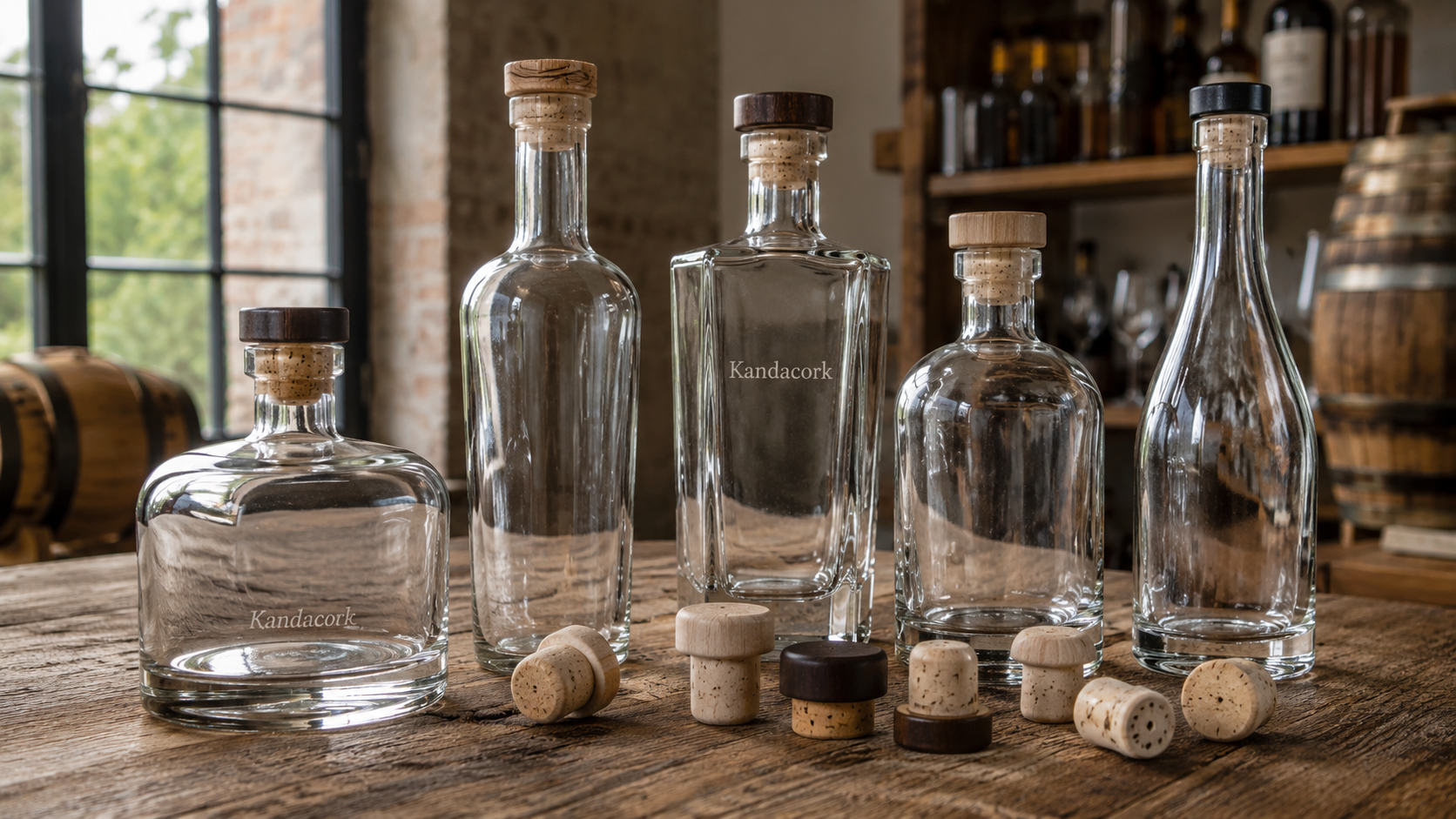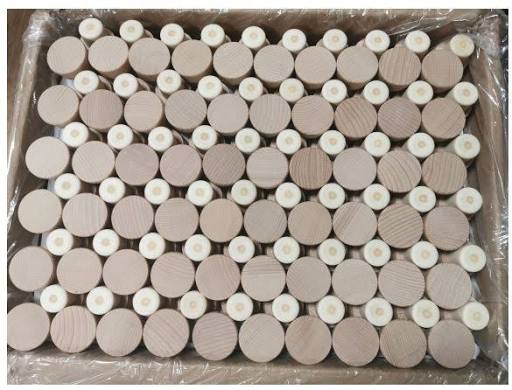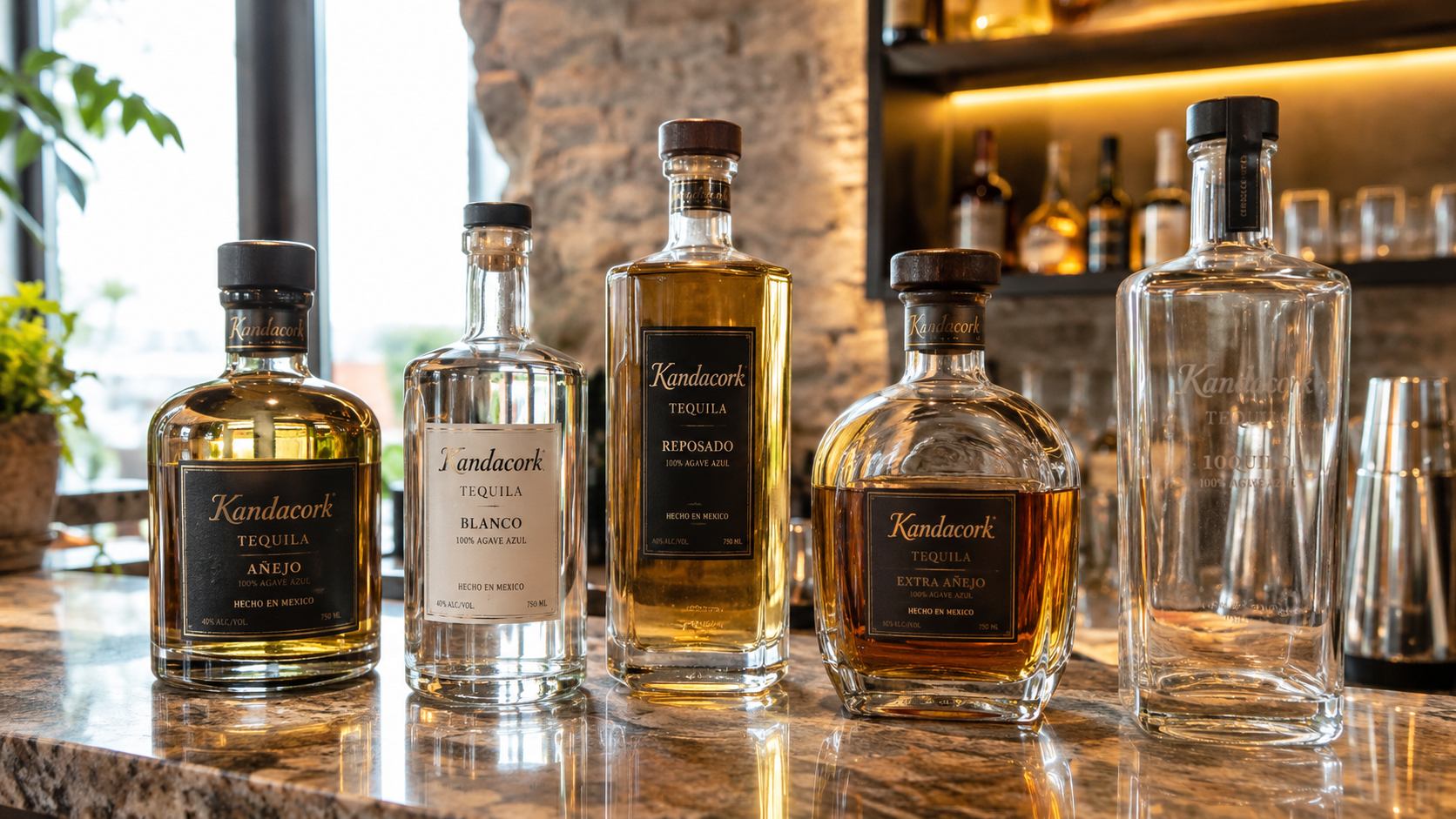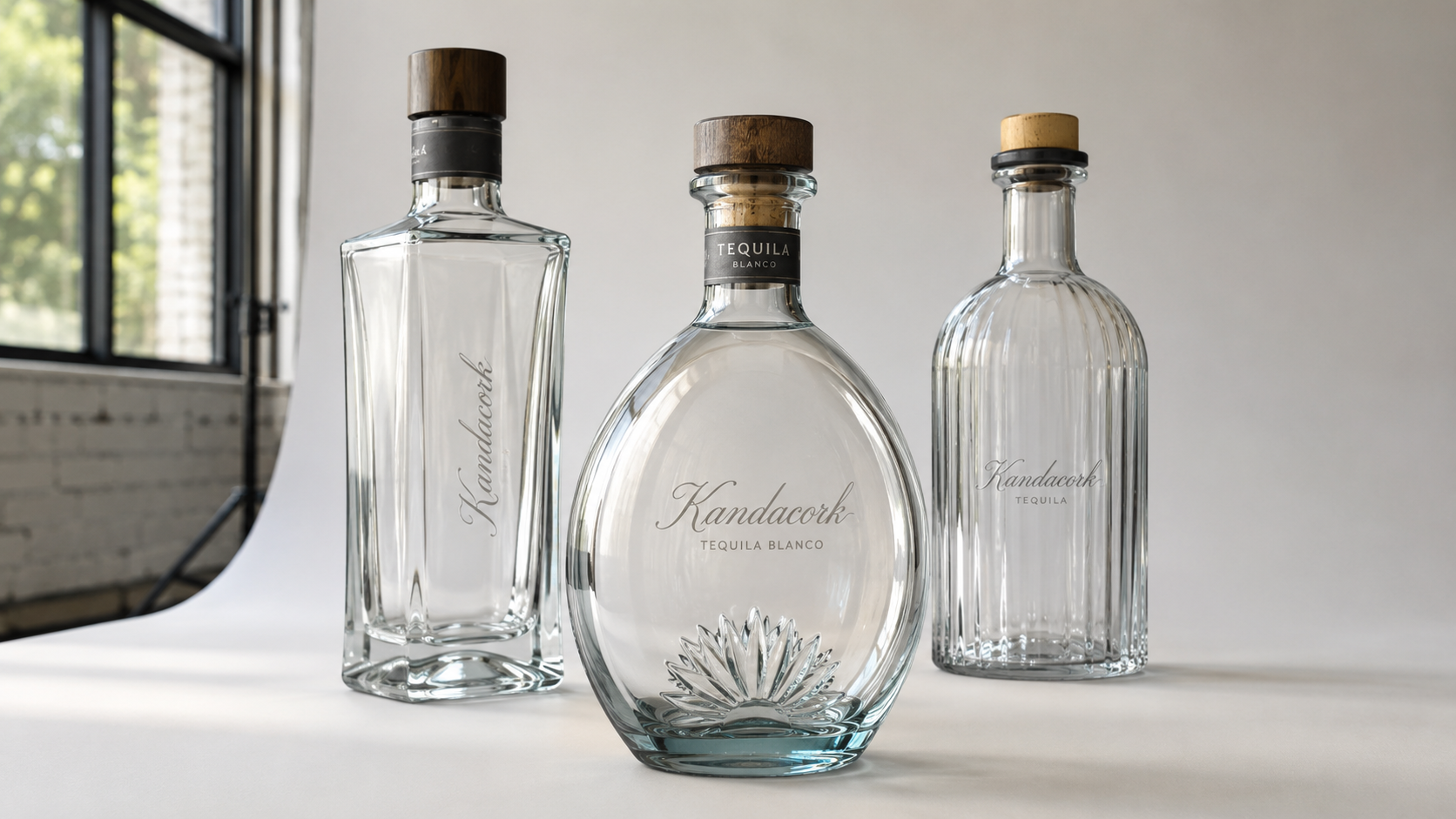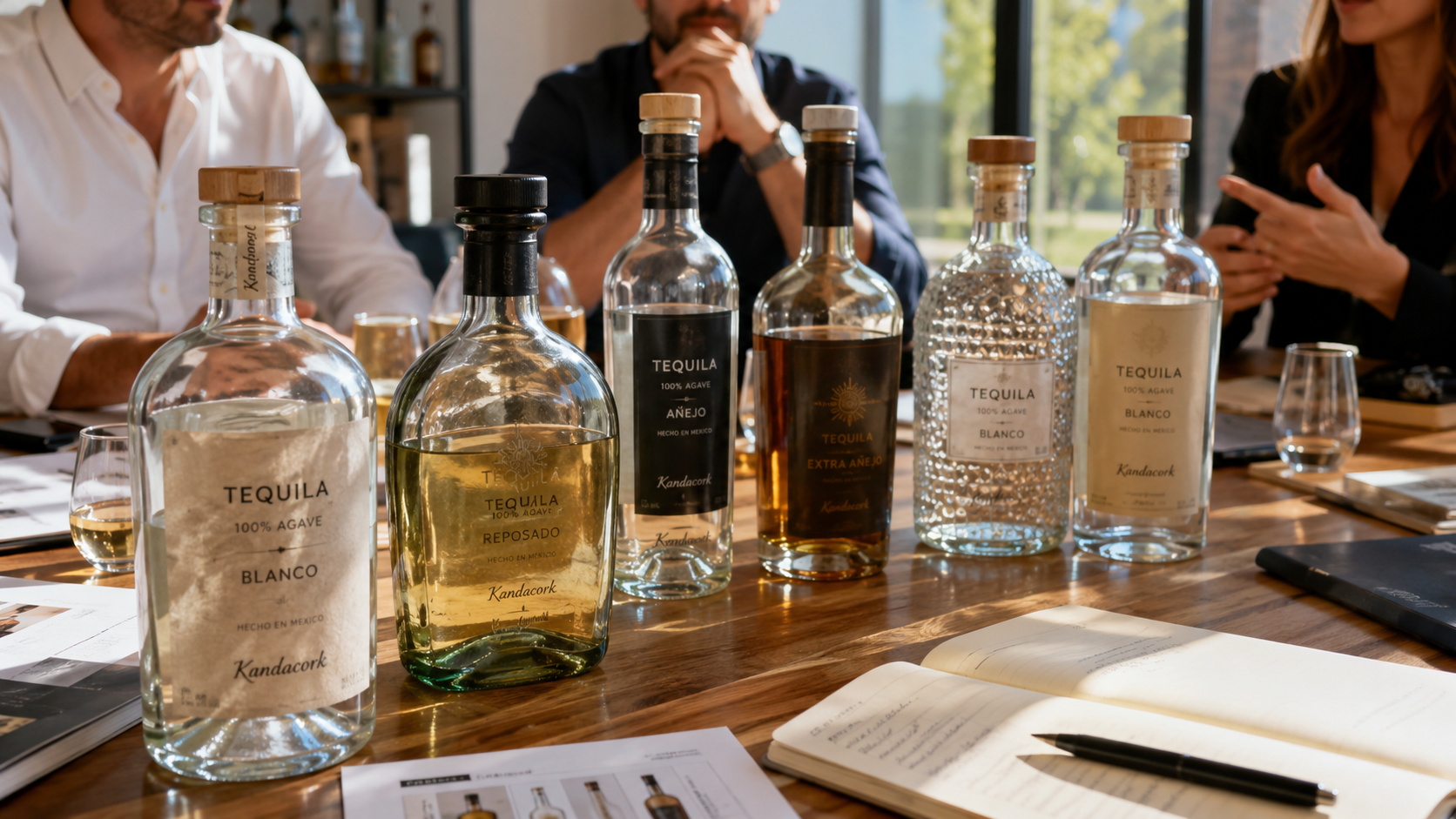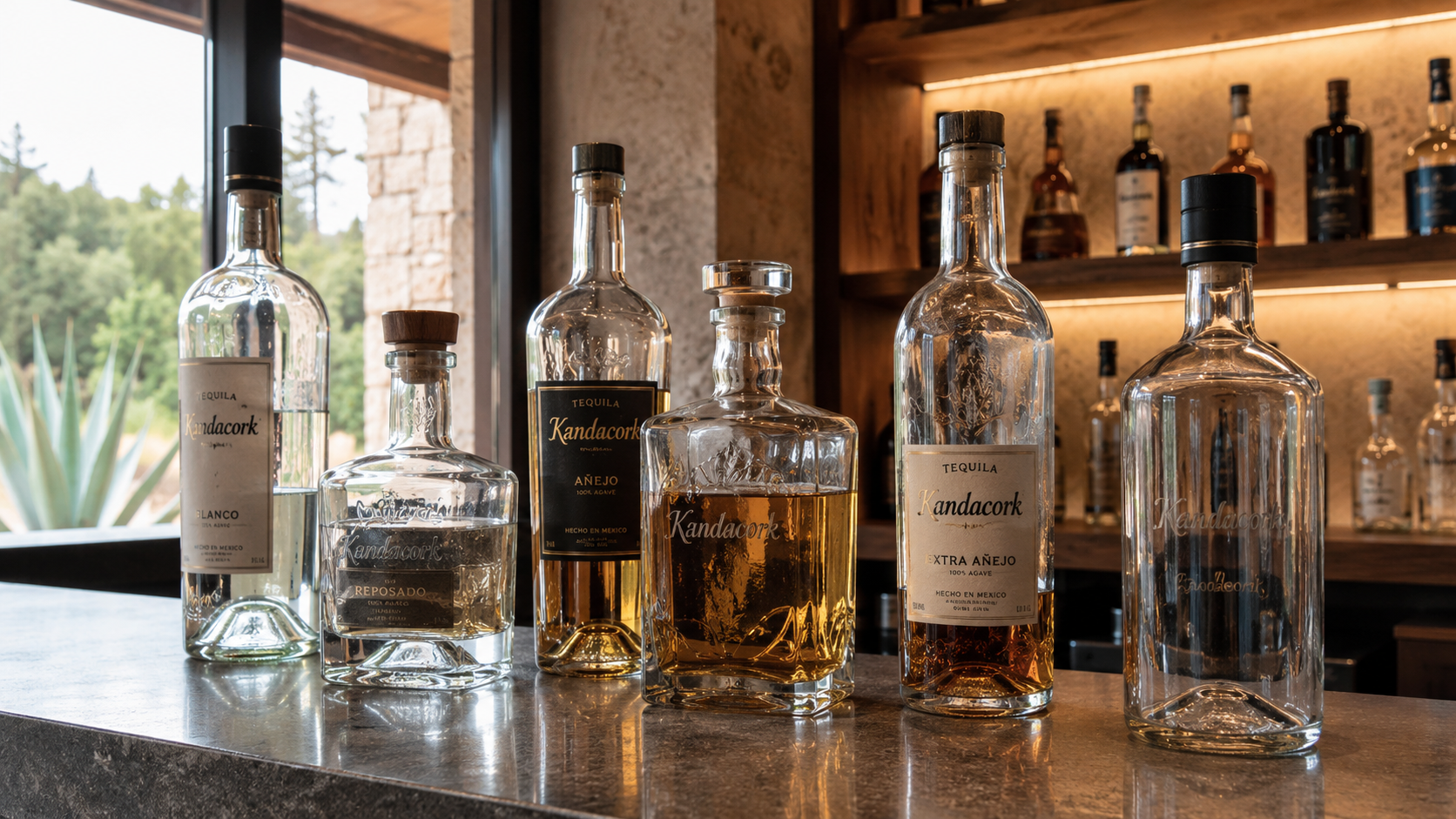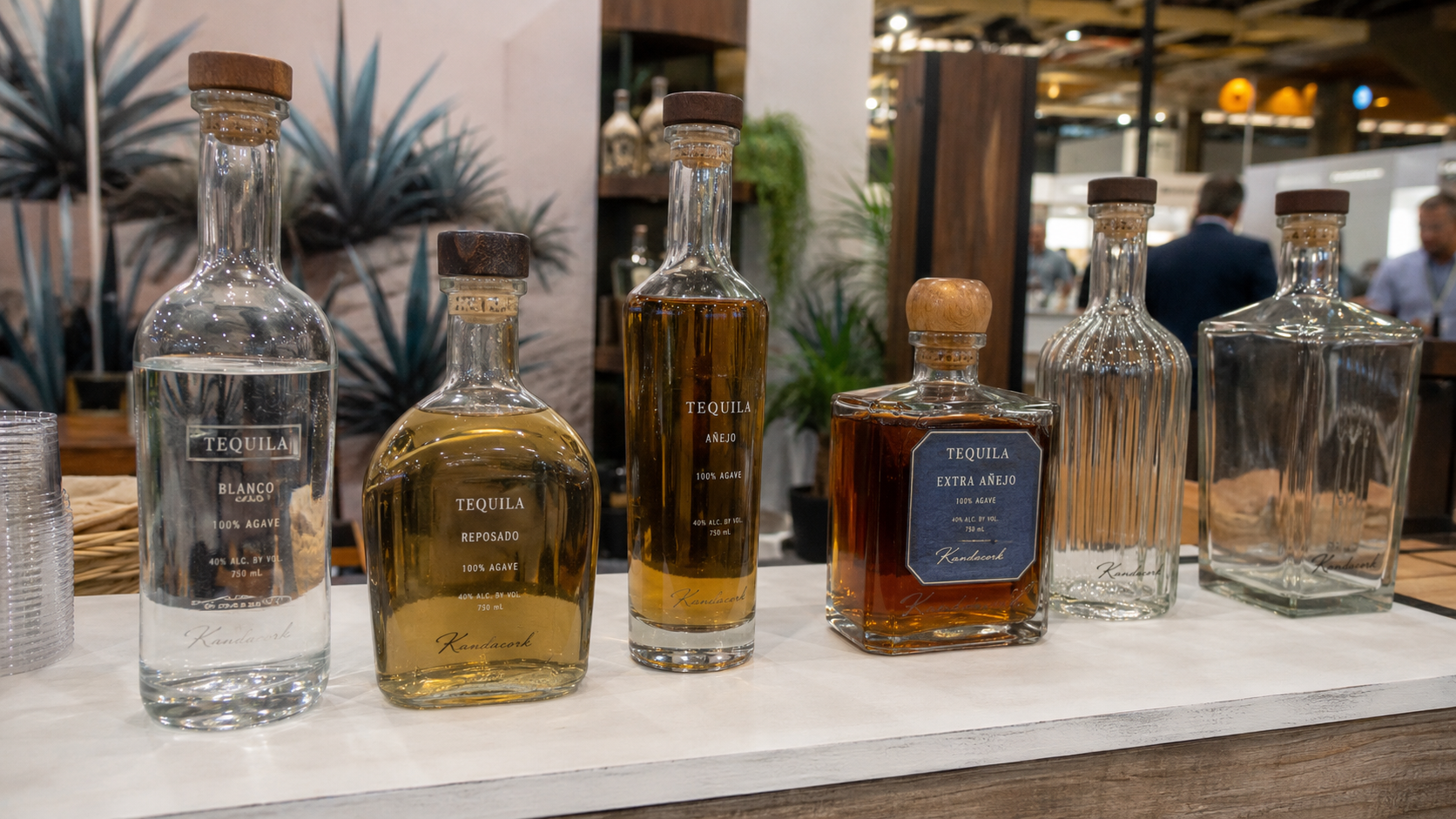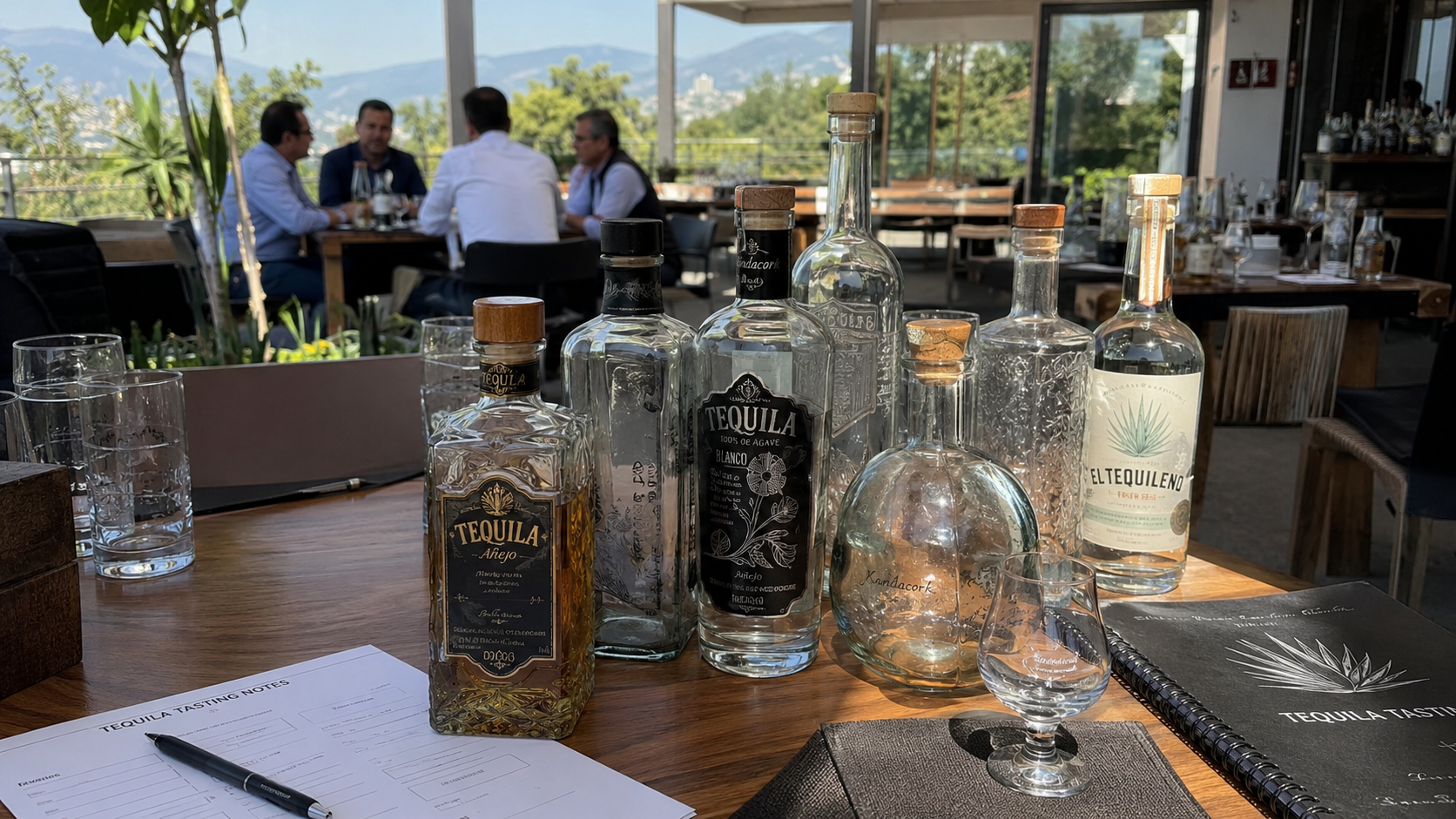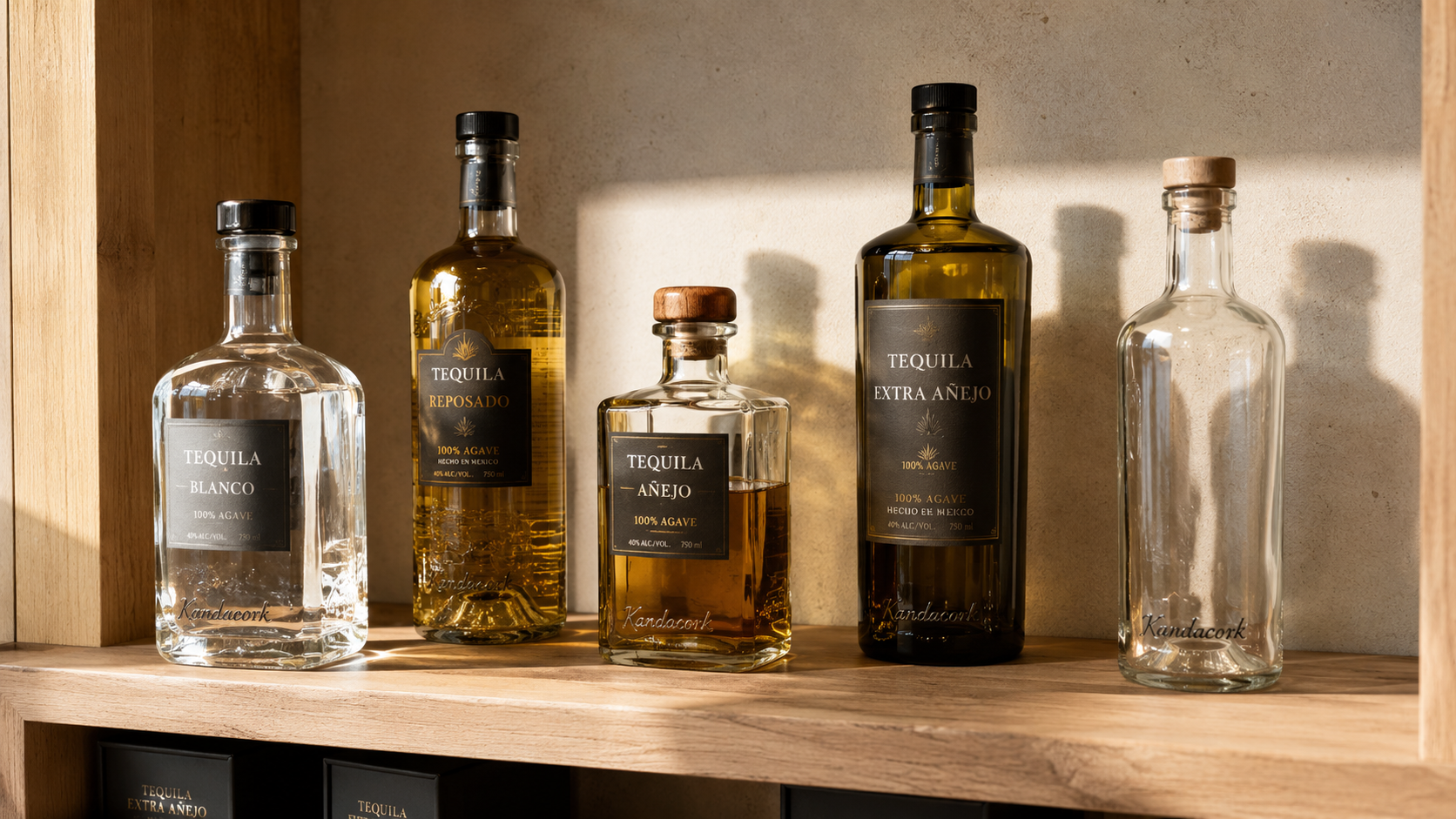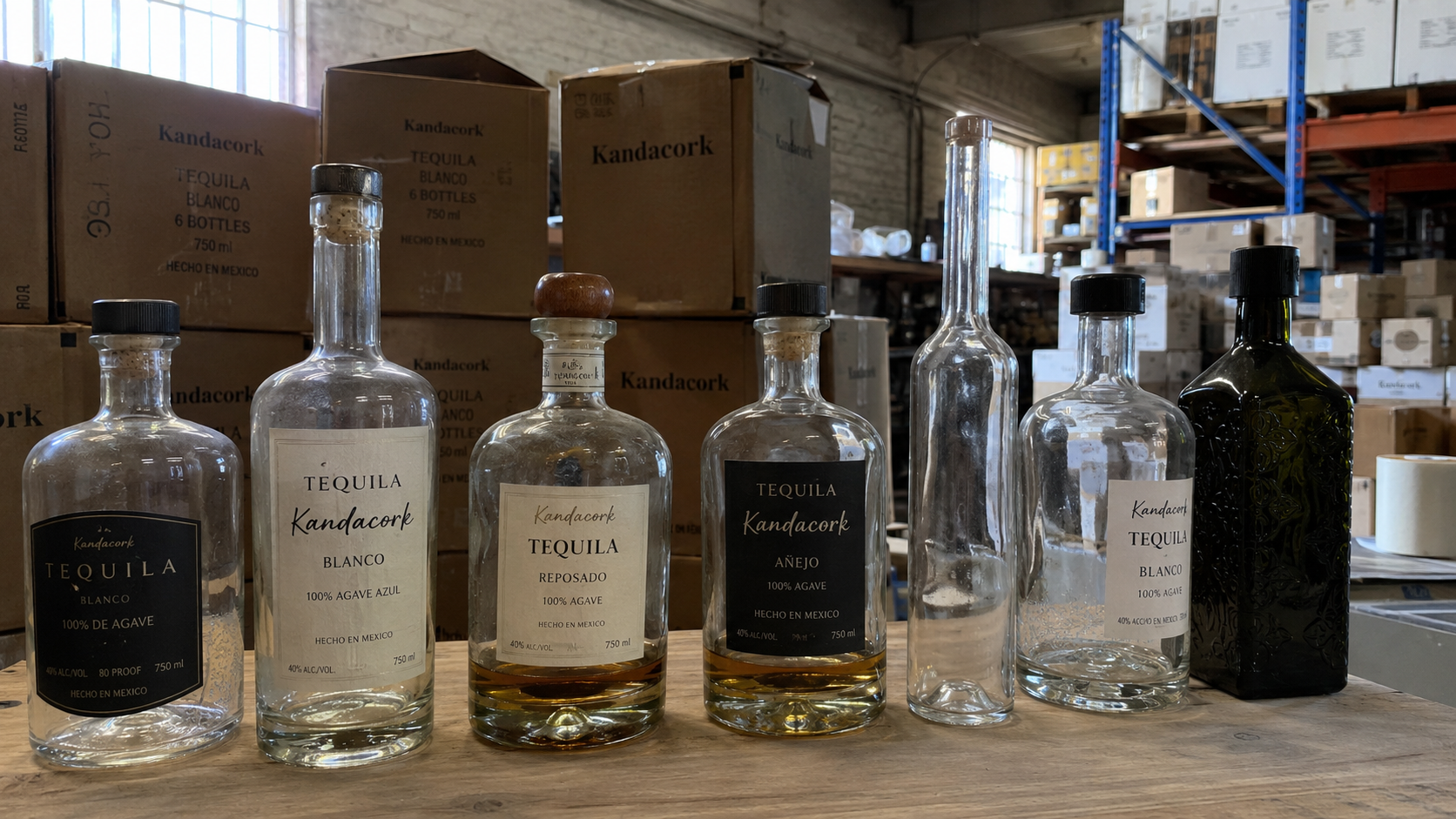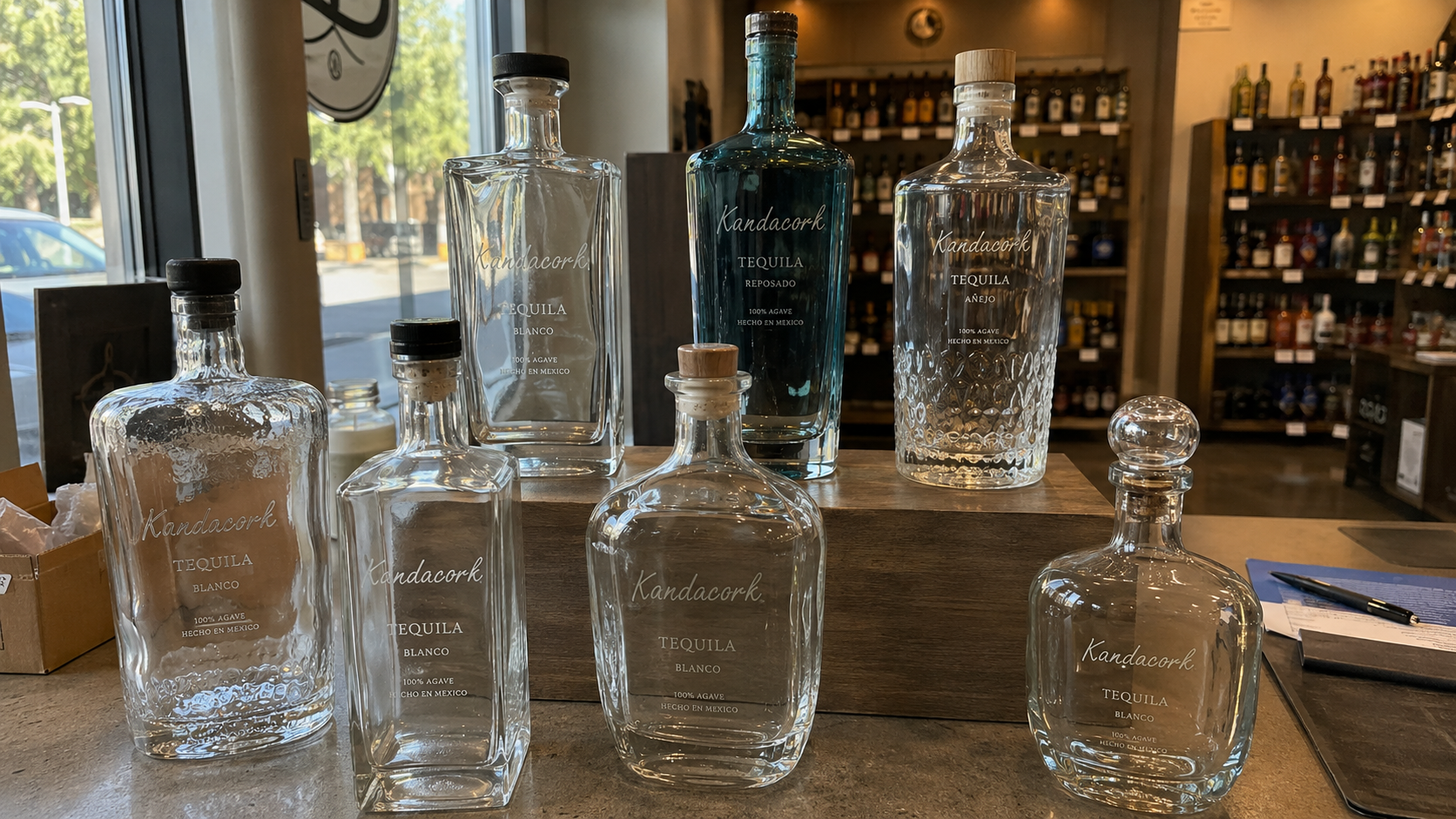
Modern aluminium stoppers can support clean, minimal and premium spirits packaging styles. This guide reviews common finish directions, color options, logo methods and production details that buyers should consider before sampling.
What Are Modern Spirits Aluminium Stoppers?
Modern spirits aluminium stoppers are bar-top closures made with an aluminium head and a fitted shank. The head creates the visible premium design, while the shank fits inside the bottle neck to provide compression, resealability, and controlled opening resistance.
These closures are also called aluminium bottle stoppers, aluminum bottle stoppers, aluminium bar-top closures, T-top closures, spirits bottle stoppers, or custom spirits closures. Although the terms vary by region, buyers usually look for the same benefits: attractive appearance, accurate fit, reliable sealing, consistent quality, and custom branding.
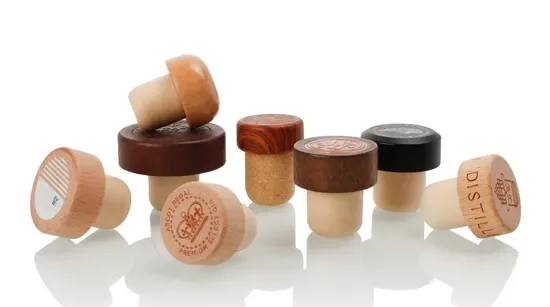
The aluminium head can be brushed, polished, matte coated, anodized, color matched, engraved, embossed, debossed, printed, textured, or combined with decorative inserts. The shank can be made from natural cork, agglomerated cork, micro-agglomerated cork, or synthetic material depending on bottle design, filling method, production volume, and brand positioning.
For buyers comparing a wider closure and stopper range, aluminium stoppers are especially useful when the packaging goal is clean, contemporary, metallic, premium, or luxury. They support minimalist bottle design, high-end shelf presentation, limited-edition packaging, and customized brand storytelling.
Why Aluminium Stoppers Work Well for Premium Spirits
Spirits brands choose aluminium stoppers because they combine appearance, durability, customization, and functional performance. Compared with plain corks or standard plastic closures, aluminium bar-top stoppers give the bottle a more finished and premium appearance.
A matte black aluminium stopper can make a gin or vodka bottle look modern and minimal. A brushed silver stopper can support a clean premium image. A gold, copper, bronze, or champagne finish can add warmth and luxury to whisky, rum, tequila, brandy, or aged spirits packaging. Gunmetal and dark grey finishes are often used for bold, architectural, or contemporary spirits designs.
Modern spirits aluminium stoppers are also lighter than many heavy metal alternatives while still delivering a premium metallic appearance. For larger production programs, this balance between shelf impact and operational efficiency can be valuable.
The biggest advantage is customization. A spirits brand can add a logo, crest, initials, batch symbol, geometric pattern, textured sidewall, or color-matched finish. This turns the stopper into part of the brand identity instead of a generic packaging part.
Best Applications for Modern Spirits Aluminium Stoppers
| Spirit category | Recommended stopper style |
|---|---|
| Whisky | Tall aluminium head, gold or copper finish, engraved top logo |
| Vodka | Brushed silver, polished aluminium, or clean cylindrical head |
| Gin | Matte black, satin color, minimalist logo decoration |
| Rum | Bronze, copper, champagne gold, or warm metallic finish |
| Tequila | Textured sidewall, custom top mark, premium synthetic shank |
| Mezcal | Tactile finish, artisanal detail, natural or synthetic shank |
| Liqueur | Color-matched aluminium head with decorative top branding |
| Limited edition spirits | Custom head shape, anodized finish, embossed or engraved logo |
This application guide helps buyers match the closure to the spirit category, bottle style, retail positioning, and target consumer experience. For a complete packaging program, stopper selection should also align with the bottle shape, glass color, label design, capsule or neck finish, carton style, and channel strategy. Brands developing new glass containers can coordinate closure decisions with spirits bottle development so the stopper and bottle feel like one complete pack.
Quick Selection Guide for Aluminium Stoppers
| Buyer need | Recommended aluminium stopper feature |
|---|---|
| Minimalist premium bottle | Low-profile brushed or matte aluminium head |
| Luxury shelf presence | Taller head with gold, copper, or champagne finish |
| Strong brand recognition | Top engraving, embossing, debossing, or sidewall branding |
| Automated bottling | Synthetic shank with controlled dimensions |
| Export shipment | Fit validation, leakage testing, and protective packing |
| Limited-edition launch | Custom head shape, special finish, and unique decoration |
| Cost-controlled premium look | Standard aluminium head with semi-custom decoration |
This type of guide is useful for procurement teams, packaging designers, and brand owners who need to make decisions before requesting samples or quotations. It also helps reduce unnecessary redesign because the closure brief becomes clearer at the beginning of the project.
Modern Design Options for Aluminium Bar-Top Stoppers
The first design decision is head shape. Common options include flat-top, low-profile, tall, domed, cylindrical, tapered, stepped, and fully custom geometric profiles. A slim flat-top stopper can make the bottle look clean and architectural, while a taller head can increase perceived value and provide a more substantial grip.
The head diameter should match the bottle neck and shoulder proportion. A head that is too small may look weak on a premium bottle. A head that is too large may appear unbalanced, create packing issues, or distract from the bottle design.
Surface finish is another important choice. Brushed aluminium creates a refined technical look. Polished aluminium gives a brighter premium effect. Matte black is widely used for modern gin, vodka, and limited-edition spirits. Gold, copper, bronze, and champagne finishes work well for aged spirits, heritage packaging, and luxury presentations.
For projects where closure color must match the bottle, label, capsule, or gift box, controlled colors and finishes are important. A stopper that looks correct under studio lighting should also remain consistent in production batches, retail environments, and export markets.
Sidewall decoration can add both texture and grip. Ribbed, knurled, grooved, debossed, or engraved sidewalls can make the stopper feel more premium when the consumer opens the bottle. Well-planned sidewall design options also help brands add recognition when bottles are viewed from an angle, displayed behind a bar, or arranged in cartons.
For more complex artwork, closure decoration can be coordinated with specialist decoration and branding support so the stopper, bottle graphics, label, and secondary packaging feel visually consistent.
Aluminium Stopper Specification Table
| Specification | Why it matters |
|---|---|
| Head diameter | Controls bottle proportion, grip, and shelf presence |
| Head height | Affects premium feel and visual balance |
| Head shape | Supports brand style and bottle silhouette |
| Shank diameter | Determines compression fit inside the bottle neck |
| Shank length | Affects insertion depth, stability, and resealing |
| Shank material | Influences consistency, cost, and opening experience |
| Surface finish | Defines premium appearance and brand identity |
| Decoration method | Improves logo visibility and product recognition |
| Packing method | Protects aluminium surfaces from scratches during transport |
| Fit testing | Reduces leakage, loose fit, and line compatibility issues |
This specification table gives buyers a practical checklist before confirming samples or bulk production. For premium spirits, the closure should not be selected by appearance alone. Fit, sealing performance, consumer opening feel, and line compatibility are just as important as color and logo placement.
Shank Options and Bottle-Neck Fit
The aluminium head creates the visual impact, but the shank determines how the stopper performs. For this reason, shank selection is one of the most important technical decisions in aluminium stopper development.
Natural cork shanks provide a traditional appearance and familiar opening feel. They can suit premium spirits brands that want a natural or craft impression. However, natural material variation should be considered during testing.
Agglomerated cork and micro-agglomerated cork can provide a more consistent structure for larger production runs. These options are often selected when brands want a cork-based closure with better uniformity and cost control.
Synthetic shanks are widely used for modern spirits aluminium stoppers because they can offer stable dimensions, consistent compression, clean appearance, and reliable performance on automated bottling lines. Buyers that require tighter dimensional consistency may compare cork-based inserts with synthetic bottle stoppers before finalizing the structure.
The correct fit depends on the bottle neck bore, neck finish, shank diameter, shank length, insertion depth, insertion force, extraction force, and storage conditions. A stopper that looks excellent can still create serious problems if it fits too tightly, feels too loose, leaks during transport, or performs inconsistently on the filling line.
Technical Checklist Before Ordering Aluminium Stoppers
Before placing a bulk order, buyers should confirm the technical details that affect fit, sealing, and production performance.
| Technical item | What to confirm |
|---|---|
| Bottle drawing | Neck finish, bore size, tolerances, and shoulder design |
| Physical bottle sample | Real fit and visual proportion |
| Shank diameter | Compression fit and insertion resistance |
| Shank length | Stability and seated position |
| Extraction force | Consumer opening feel and resealability |
| Insertion force | Bottling-line compatibility |
| Leakage test | Product protection during storage and transport |
| Surface durability | Scratch risk, coating quality, and decoration durability |
| Packing method | Protection against abrasion before application |
| Filling-line speed | Compatibility with feeding and insertion equipment |
This checklist is especially important for export spirits packaging, premium surface finishes, and high-volume production runs. It can also help purchasing teams compare quotations more accurately because the same technical assumptions are used across all sample and production discussions.
Aluminium Stoppers vs Other Spirits Closures
Different spirits closures serve different packaging goals. Aluminium is not automatically the best option for every bottle, but it is one of the strongest choices for modern premium spirits packaging.
| Closure type | Best for | Main limitation |
|---|---|---|
| Aluminium stopper | Modern premium spirits, custom branding, metallic appearance | Requires accurate bottle-neck fit |
| Wooden stopper | Natural, craft, traditional, or warm brand image | Less metallic and less minimalist |
| Plastic stopper | Cost-sensitive spirits or utility packaging | Lower premium perception |
| Zamak stopper | Heavy luxury appearance and substantial hand feel | Higher weight and often higher cost |
| ROPP cap | Tamper-evident screw-cap applications | Less premium bar-top opening experience |
| Synthetic stopper | Consistent performance and clean fit | May need premium head design for stronger shelf appeal |
Aluminium stoppers are ideal when a brand wants a clean metallic appearance, customized decoration, modern shelf impact, and a resealable bar-top experience. Wooden stoppers are better for natural or craft positioning. ROPP caps are better when screw-cap security and tamper evidence are the main priorities.
Sealing Performance and Product Protection
A stopper must protect the product as well as complete the bottle design. Spirits may be stored for long periods, shipped across climates, displayed in retail environments, and opened and closed repeatedly by consumers. Poor closure fit can lead to leakage, evaporation, aroma loss, inconsistent opening force, or customer complaints.
Modern spirits aluminium stoppers should be evaluated for dimensional consistency, shank compression, seated position, extraction force, leakage resistance, and compatibility with the bottle neck. For export markets, brands should also consider warehouse temperature, transport vibration, carton pressure, and case orientation.
Food-contact safety is another important issue. The United States FDA food-contact guidance explains that packaging substances intended to contact food or beverages are subject to regulatory review. In Europe, the European Commission food-contact material framework and EFSA food-contact material assessments are important reference points for safety and risk evaluation.
For spirits packaging buyers, this means closure materials, coatings, colorants, adhesives, liners, and direct-contact components should be reviewed according to the target market. A professional supplier should be able to support technical discussions about material selection, food-contact suitability, testing expectations, and documentation.
Bottling-Line Compatibility
Packaging teams often focus on how the stopper looks, while operations teams need to know how it runs. Both views matter.
A closure that looks excellent in a rendering may still create production problems if it feeds poorly, scratches easily, inserts inconsistently, or requires too much force on the line. Modern spirits aluminium stoppers should be tested with real bottles, and line trials are recommended for high-volume production.
Important line considerations include hopper feeding, stopper orientation, insertion pressure, shank friction, head height tolerance, head diameter consistency, and final seated position. The stopper should also be packed to protect decorated aluminium surfaces before application.
For premium finishes such as matte black, brushed silver, polished aluminium, champagne gold, or anodized color, scratch control is very important. A small surface mark can be highly visible on a premium spirits bottle.
Custom Aluminium Stopper Development Process
A successful custom aluminium stopper project should follow a structured development process. This reduces risk and helps the buyer move from design idea to production-ready closure.
The project normally begins with a packaging brief. The buyer should provide the bottle drawing, bottle sample if available, spirit category, target market, annual volume, preferred finish, logo file, decoration requirements, filling method, and expected launch date.
The next stage is concept and engineering. Kandacork Closures can help review the head shape, diameter, height, shank material, shank dimensions, surface finish, logo placement, color target, and technical fit.
Sampling comes next. Samples allow the brand to check appearance, logo clarity, surface finish, hand feel, seated position, extraction force, and bottle proportion. For larger orders, bottle-fit testing and line testing should be completed before final production approval.
After approval, production should follow confirmed standards for color, dimensions, decoration, surface finish, packing, and inspection. Quality management principles such as those described in ISO 9001 are useful reference points when buyers evaluate consistency, documentation, corrective actions, and repeat-order control.
Common Mistakes to Avoid
Many closure problems begin before production. Buyers can reduce risk by avoiding common mistakes during stopper selection.
One common mistake is choosing the stopper by appearance only. A beautiful aluminium head is not enough if the shank does not fit the bottle correctly.
Another mistake is ignoring neck bore tolerance. Bottle drawings are useful, but physical bottle samples are often needed because real production tolerances can affect fit.
Some brands skip line testing and only check the stopper by hand. This can create problems when the closure is applied at production speed.
Another risk is selecting a premium finish without planning surface protection. Matte, polished, anodized, and metallic coatings should be packed carefully to reduce abrasion.
Brands should also avoid confirming bulk production before sample approval. The better approach is to test appearance, fit, opening force, leakage, and packing protection before mass production.
Information to Prepare Before Requesting a Quote
Buyers can receive a faster and more accurate recommendation by preparing the right information before contacting a supplier.
| Information needed | Why it helps |
|---|---|
| Bottle drawing | Confirms neck finish, bore size, and dimensions |
| Bottle sample | Allows real fit and visual proportion testing |
| Spirit category | Helps match design style and closure performance |
| Target market | Supports compliance and documentation planning |
| Preferred finish | Guides color, coating, and surface treatment |
| Logo file | Supports engraving, embossing, printing, or debossing |
| Order quantity | Affects tooling, MOQ, pricing, and lead time |
| Filling method | Helps evaluate manual or automated application |
| Launch schedule | Supports sampling, approval, and production planning |
For the most accurate quotation, buyers should share both design requirements and technical bottle information. This helps avoid delays, incorrect sampling, and unnecessary redesign. When the closure must coordinate with a custom glass bottle, secondary packaging, or display program, additional packaging information from Kandacork Glass can help align stopper development with the complete bottle system.
How to Choose the Right Aluminium Stopper Supplier
The best aluminium stopper supplier is not simply the one that offers the lowest price. Spirits packaging is brand-sensitive, and the stopper is highly visible. Poor fit, weak decoration, inconsistent color, or scratched surfaces can reduce the value of the finished bottle.
A good supplier should understand spirits packaging, bottle-neck fit, surface finishing, shank selection, decoration methods, food-contact expectations, and bulk supply management. The supplier should also be able to support sampling, technical review, fit testing, and repeat-order consistency.
When comparing suppliers, buyers should review experience with spirits closures, ability to read bottle drawings, custom tooling capability, natural cork and synthetic shank options, finish control, logo decoration options, quality inspection, packing protection, and export logistics.
Kandacork Closures supports spirits brands with bottle-drawing review, aluminium head design, shank matching, surface finish selection, logo decoration, sample development, and bulk production planning. This helps buyers reduce fit risk, improve packaging consistency, and create a stopper that supports both brand presentation and bottling performance.
For custom projects, Kandacork Closures can help align the closure with the bottle shape, spirit category, price positioning, decoration method, and target market. This is especially useful when buyers need a stopper that looks premium but also performs reliably during filling, packing, shipping, and retail display.
Sustainability and Material Considerations
Aluminium is widely recognized as a recyclable material. The Aluminum Association notes that aluminium can be recycled repeatedly without losing its inherent material properties. This makes aluminium attractive for brands that want packaging components with a stronger sustainability story.
However, sustainability claims should be accurate and market-specific. A stopper is often a multi-material component because it may include aluminium, cork, synthetic polymer, coating, adhesive, or decorative elements. Brands should avoid vague claims and focus on practical improvements.
Useful sustainability considerations may include lightweight closure design, responsible material selection, reduced product loss through better sealing, optimized packing, and clear recycling communication where applicable. For projects where glass selection, closure design, and packaging weight are developed together, sustainable glass packaging context can help brands consider the broader packaging system rather than the stopper alone.
For modern spirits aluminium stoppers, sustainability should support brand value while still respecting technical performance, compliance, logistics, and practical end-of-life realities.
Frequently Asked Questions
Are aluminium stoppers suitable for premium spirits?
Yes. Aluminium stoppers are suitable for premium spirits because they combine a modern metallic appearance with customization, resealability, and reliable bottle-neck fit. They are commonly used for whisky, vodka, gin, rum, tequila, mezcal, liqueurs, and limited-edition spirits packaging.
What makes modern spirits aluminium stoppers different from standard closures?
Modern spirits aluminium stoppers combine premium head design, custom surface finish, precise shank engineering, and brand decoration. Compared with basic closures, they are designed to improve shelf appeal, opening experience, product recognition, and packaging value.
What size aluminium stopper do I need for my spirits bottle?
The correct size depends on the bottle neck bore, neck finish, shank diameter, shank length, insertion depth, and extraction force. Buyers should provide bottle drawings or samples before production. Fit testing is recommended before confirming bulk orders.
Can aluminium stoppers be customized with a logo?
Yes. Aluminium stoppers can be customized with laser engraving, embossing, debossing, screen printing, color matching, textured sidewalls, and special finishes. The best method depends on logo size, brand style, order quantity, and desired surface effect.
Which finish is best for premium aluminium stoppers?
The best finish depends on brand positioning. Matte black works well for modern gin and vodka, brushed silver suits clean premium designs, and gold, copper, or bronze finishes often support whisky, rum, tequila, and luxury spirits packaging.
Are aluminium bar-top stoppers compatible with automated bottling lines?
Yes, they can be compatible with automated bottling lines when the stopper dimensions, shank material, head shape, packing method, and insertion force are designed correctly. For high-volume spirits production, line trials are strongly recommended before bulk orders.
Can aluminium stoppers be used for export spirits packaging?
Yes. Aluminium stoppers can be used for export spirits packaging when fit, sealing, surface durability, packing protection, and compliance requirements are reviewed. Export projects should include leak testing, transport protection, and material documentation for the target market.
What is the MOQ for custom aluminium stoppers?
MOQ depends on head design, finish, decoration method, shank type, tooling requirements, and order complexity. Standard or semi-custom aluminium stoppers may have lower minimums, while fully custom shapes, colors, or logo treatments usually require higher production quantities.
How long does custom aluminium stopper development take?
Development time depends on design complexity, tooling, sampling, decoration approval, and fit testing. Buyers should allow time for bottle-drawing review, physical samples, surface finish confirmation, line testing, and final production approval before launch.
Are aluminium stoppers better than wooden stoppers?
Aluminium stoppers are better for modern, metallic, minimalist, or premium designs. Wooden stoppers are better for natural, warm, traditional, or craft-inspired packaging. The best option depends on bottle shape, brand identity, product category, and target consumer.
What information should I provide before requesting a quote?
You should provide the bottle drawing, bottle sample if available, neck bore size, target stopper style, logo file, preferred finish, shank material preference, order quantity, target market, filling method, and expected delivery schedule.
Conclusion
Modern spirits aluminium stoppers are small packaging components with a large commercial impact. They influence shelf presence, consumer perception, opening experience, sealing reliability, production efficiency, and brand recognition.
For spirits brands, the right stopper should match the bottle design, protect the product, support the brand identity, and work smoothly through filling, packing, shipping, and retail display. It should look premium, feel intentional, and perform consistently.
Kandacork Closures helps brands develop custom aluminium stoppers with suitable head design, surface finish, shank structure, bottle-neck fit, decoration method, sample planning, and bulk supply support. For buyers developing whisky, vodka, gin, rum, tequila, mezcal, liqueur, or limited-edition spirits packaging, a well-engineered aluminium stopper can make the bottle more distinctive, more reliable, and more commercially ready.
To start a custom aluminium stopper project, prepare your bottle drawing, bottle sample, preferred finish, logo file, order quantity, filling method, and target launch schedule, then request a custom closure quote from Kandacork Closures.