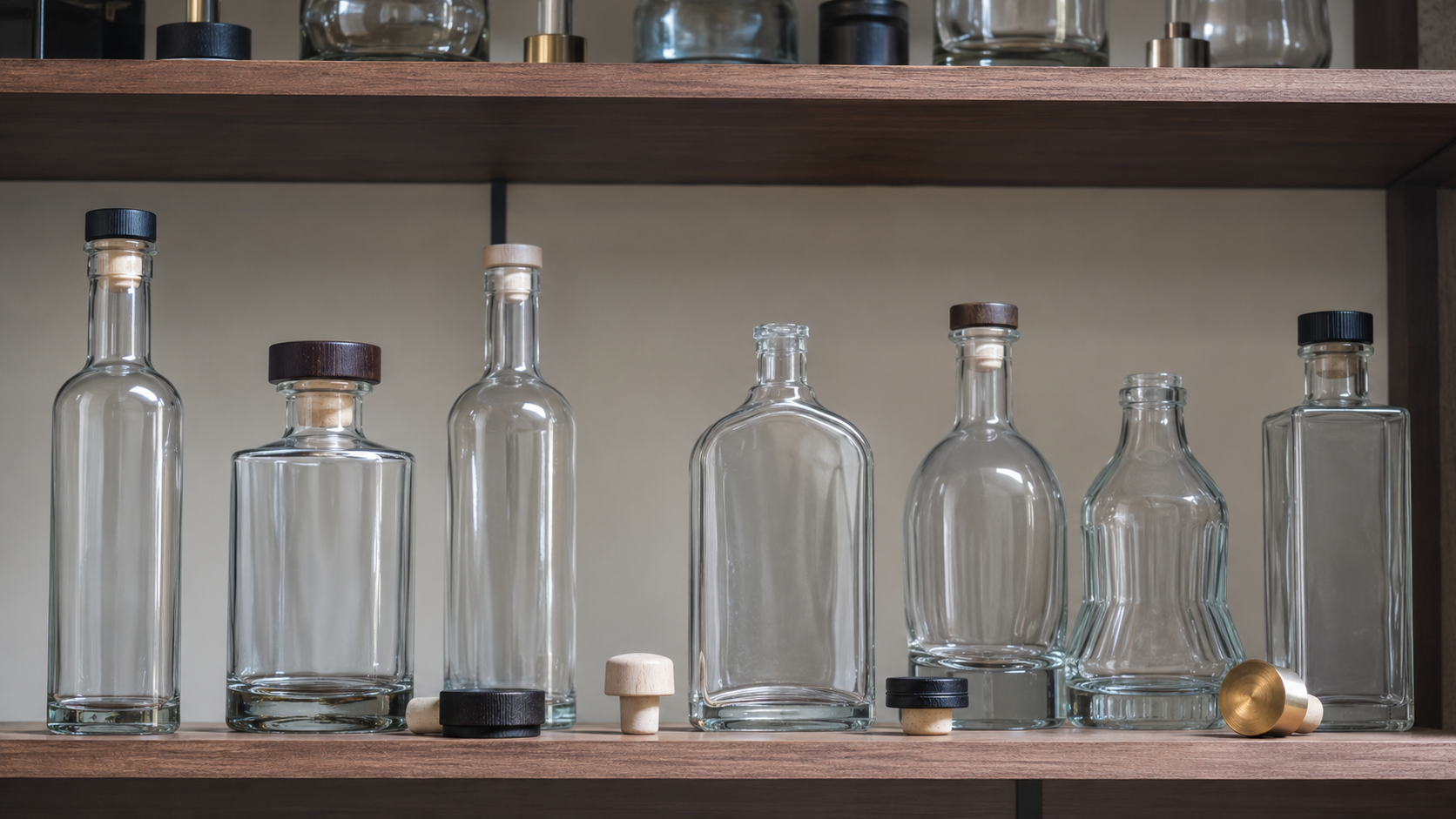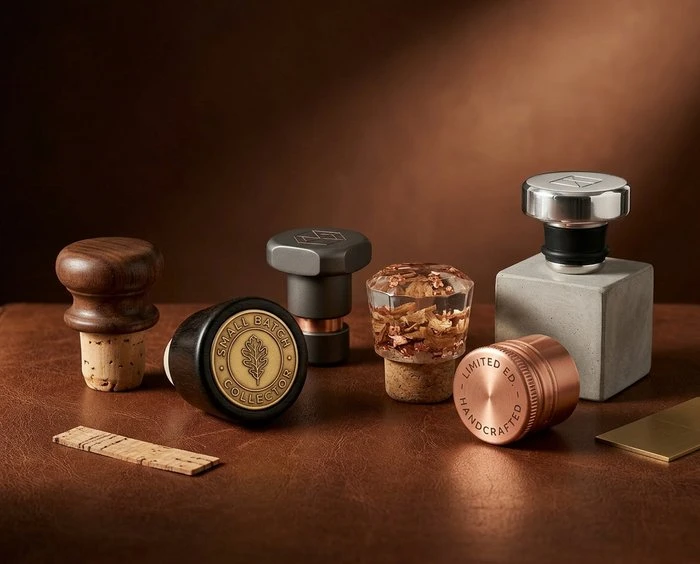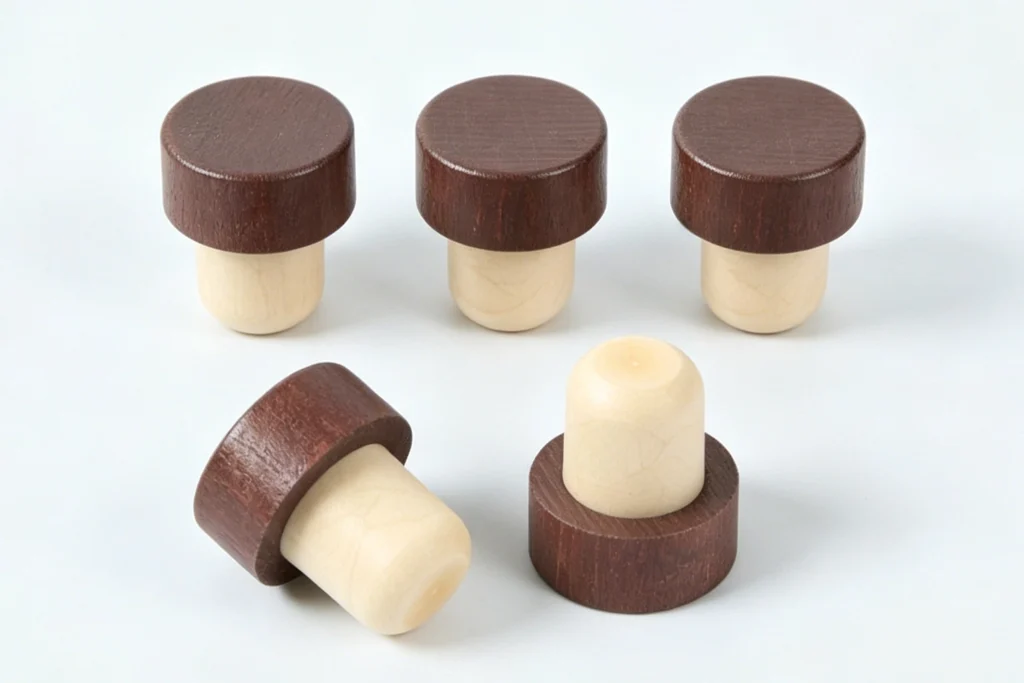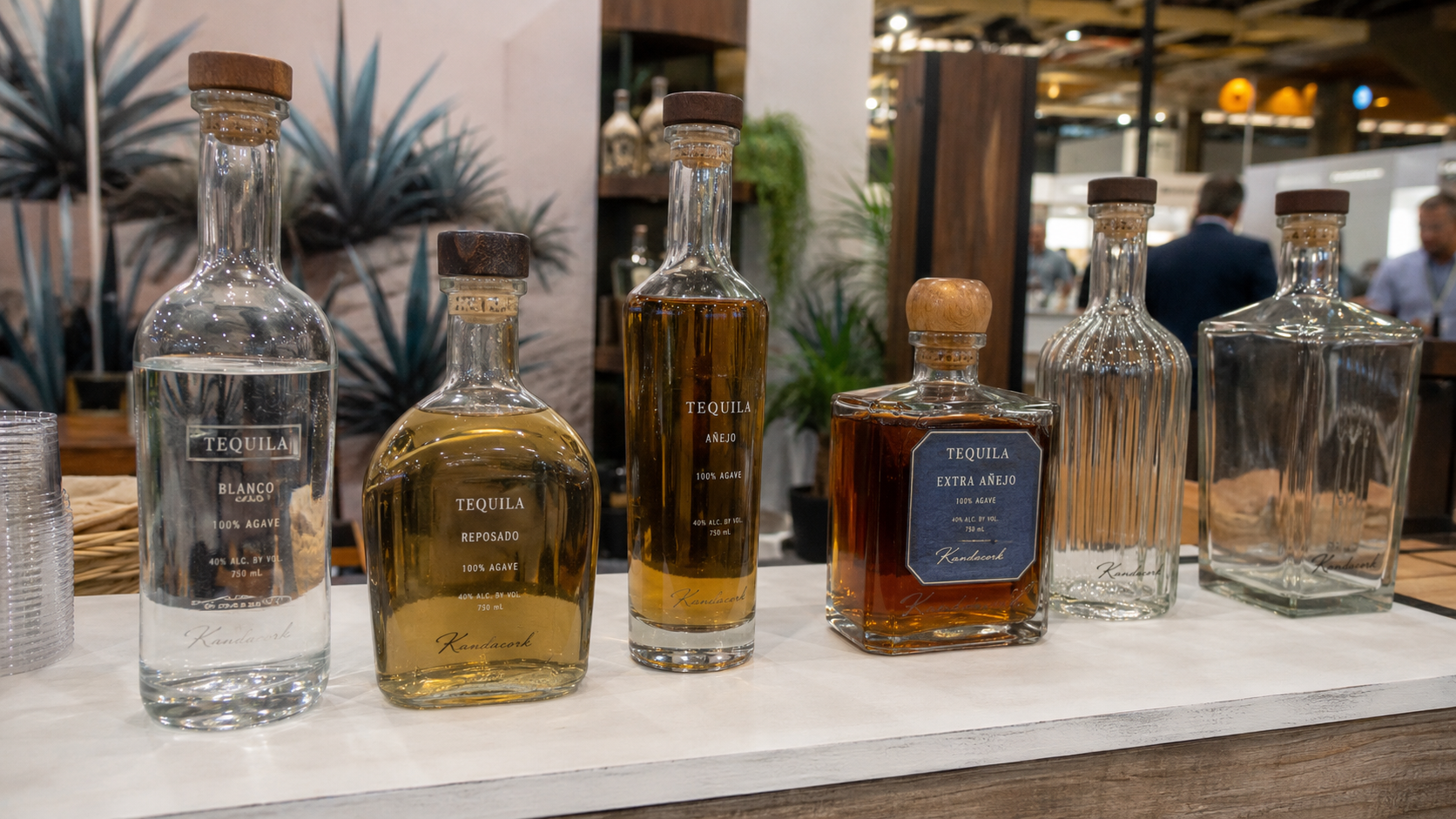
Synthetic stoppers can be produced with different surface appearances, from smooth technical finishes to cork-look textures. This guide explains how material appearance affects branding, buyer perception, fit consistency and repeat production requirements.
Quick Answer
Synthetic stoppers are the broader category of engineered bottle closures. Synthetic cork stoppers are cork-like synthetic closures designed to imitate cork appearance, compression, and pull-out feel. For spirits bottles, choose based on bottle neck fit, leakage resistance, alcohol compatibility, brand style, decoration needs, and repeat-order consistency.
In simple terms, all synthetic cork stoppers are synthetic stoppers, but not all synthetic stoppers are synthetic cork stoppers.
What Is a Synthetic Stopper?
A synthetic stopper is an engineered bottle closure made with non-natural-cork sealing materials. In spirits packaging, synthetic stoppers are commonly used for bar-top closures, T-top stoppers, decorative bottle stoppers, and custom closure systems.
Common materials include polymer, TPE, EVA, silicone, plastic, and other elastomeric compounds. The sealing shank can be combined with a plastic top, wooden top, aluminum top, zinc alloy top, ceramic top, glass top, or custom decorative head.
The main advantage of synthetic stoppers is production control. Compared with natural materials, synthetic materials can offer more predictable dimensions, repeatable color, stable surface finish, and flexible decoration. This matters for brands that need consistent closures across multiple SKUs, bottle sizes, markets, or repeat production runs.
For brands that need controlled compression, clean repeatability, and scalable sourcing, synthetic bottle stoppers for spirits packaging can provide a practical starting point for custom or standard closure development.
What Is a Synthetic Cork Stopper?
A synthetic cork stopper is a synthetic closure designed to look, feel, or function like a traditional cork-style stopper. It may use a cork-effect synthetic shank, a cork-like surface texture, or a bar-top structure that creates the familiar pull-out experience associated with premium spirits.
Synthetic cork stoppers are commonly used when a brand wants a classic cork-style presentation but also wants controlled dimensions and consistent production. They are suitable for whisky, rum, brandy, gin, liqueur, and limited-edition spirits bottles.
In the comparison of synthetic stoppers vs synthetic cork stoppers, synthetic cork stoppers usually support a warmer and more traditional brand impression. They can be paired with wood tops for heritage packaging, metal tops for luxury positioning, or plastic tops for cost-efficient private-label orders.
A synthetic cork stopper is especially useful when the consumer should immediately recognize a cork-like closure and experience a controlled, premium pull-out action.
Synthetic Stoppers vs Synthetic Cork Stoppers: Main Differences
| Factor | Synthetic Stoppers | Synthetic Cork Stoppers |
|---|---|---|
| Category scope | Broad closure category | Cork-like synthetic closure type |
| Common materials | Polymer, TPE, EVA, silicone, plastic, mixed materials | Synthetic cork-look shank or cork-effect material |
| Appearance | Modern, flexible, highly customizable | Traditional, cork-like, familiar |
| Best use | Custom branding, multi-SKU lines, modern bottle designs | Cork-style presentation and premium opening ritual |
| Fit control | High when tooling and material are matched correctly | High with cork-like compression behavior |
| Decoration options | Strong options for color, logo, texture, and top shape | Strong options when paired with custom tops |
| Brand feeling | Clean, technical, modern, scalable | Classic, warm, familiar, premium |
| Buyer concern | Material compatibility, fit, and design flexibility | Cork-like look, fit, and consistent pull feel |
| Typical bottles | Vodka, gin, tequila, RTD spirits, liqueur, specialty bottles | Whisky, rum, brandy, gin, liqueur, premium gift bottles |
This comparison shows why synthetic stoppers vs synthetic cork stoppers should not be treated as a simple better-or-worse decision. The right option depends on the bottle, liquid, brand story, price point, decoration requirements, and supply plan.
Which Closure Is Better for Spirits Bottles?
For spirits bottles, synthetic stoppers are often better when the brand needs design flexibility, modern styling, repeatable color, and scalable customization. Synthetic cork stoppers are often better when the brand wants a traditional cork-like appearance and a premium pull-out ritual.
Unlike many wines, most spirits do not rely on long-term oxygen exchange after bottling. For whisky, rum, vodka, gin, tequila, brandy, and liqueur, the closure mainly needs to protect the liquid, prevent leakage, maintain aroma neutrality, fit securely, and support shelf appeal.
That means buyers should evaluate synthetic stoppers vs synthetic cork stoppers through practical packaging questions:
- Does the stopper fit the bottle neck correctly?
- Does it seal securely during storage and transport?
- Does it remove smoothly without feeling loose or too tight?
- Does the material remain compatible with the alcohol content?
- Does the closure match the desired brand image?
- Can the supplier maintain consistency across repeat orders?
- Can the design support future SKUs or seasonal launches?
A closure that looks attractive but fails fit testing can create leakage, production delays, customer complaints, and unnecessary rework. Stopper selection should always include bottle review, sample testing, and confirmation before bulk production.
Spirits Category Use-Case Guide
| Spirit Category | Recommended Closure Direction | Reason |
|---|---|---|
| Whisky / Whiskey | Synthetic cork stopper or synthetic shank with wood or metal top | Supports premium pull-out experience and traditional shelf appeal |
| Vodka | Modern synthetic stopper | Matches clean, minimalist, or high-end contemporary branding |
| Gin | Colored synthetic stopper or cork-style stopper | Works for botanical branding, custom colors, and classic bottle styles |
| Rum | Synthetic cork stopper with wood or metal top | Reinforces warm, heritage-style packaging |
| Tequila / Mezcal | Custom synthetic stopper | Supports distinctive shapes, textures, and strong brand identity |
| Brandy | Synthetic cork stopper | Matches classic premium positioning and gift packaging |
| Liqueur | Synthetic stopper | Offers flexible color, cost control, and decorative options |
| Private-label spirits | Standard or custom synthetic stopper | Balances speed, MOQ, branding, and repeat supply |
This table helps buyers connect the synthetic stoppers vs synthetic cork stoppers decision to real product positioning rather than choosing only by material name.
For projects where the bottle, decoration, and closure must be developed together, a complete spirits bottle packaging program can help keep neck finish, closure style, decoration area, and carton protection aligned from the beginning.
Synthetic Stoppers, Synthetic Cork Stoppers, and Natural Cork
Many buyers comparing synthetic stoppers vs synthetic cork stoppers are also considering natural cork. Each option has a different role in spirits packaging.
Natural cork offers a traditional material story and a familiar premium association. It may be attractive for brands that want a natural closure identity. However, natural cork can vary in appearance, density, and compression behavior because it is a natural material.
Synthetic cork stoppers offer a cork-like visual and pull-out experience with more controlled dimensions and repeatability. They can be a good choice when the brand wants traditional styling but also needs consistent bulk production.
Synthetic stoppers provide the broadest design range. They are useful for custom colors, special top shapes, modern branding, multi-SKU packaging systems, and repeatable production specifications.
| Closure Type | Main Advantage | Main Consideration |
|---|---|---|
| Natural cork | Traditional natural material story | More natural variation in appearance and performance |
| Synthetic cork stopper | Cork-like look with controlled production | Must be matched carefully to bottle neck and brand style |
| Synthetic stopper | Broad design freedom and repeat consistency | May not deliver a traditional cork-like feel unless designed for it |
For spirits brands, natural cork may support heritage storytelling, synthetic cork stoppers may support classic presentation with better repeatability, and synthetic stoppers may support modern customization and scalable sourcing.
Choose Synthetic Stoppers When You Need Design Flexibility
Synthetic stoppers are a strong choice when the brand wants a distinctive closure that does not need to imitate cork.
A vodka brand may choose a clean white synthetic stopper with a glossy top and printed logo. A gin brand may choose a colored stopper that matches its botanical label system. A tequila or mezcal brand may choose a matte black stopper with a textured top. A modern liqueur brand may select a synthetic stopper that supports bright color matching across several flavors.
Synthetic stoppers can support many decoration methods, including logo printing, embossing, debossing, hot stamping, heat transfer decoration, laser marking, matte finishing, gloss finishing, metallic effect, custom color matching, and custom top shapes.
For brands with several bottle sizes or multiple SKUs, synthetic stoppers can create a consistent family look. This is especially useful for product lines that need one closure concept across different flavors, markets, or seasonal editions.
If the project uses molded heads, cost-sensitive SKU ranges, or color-coded product families, plastic T-top stoppers for spirits bottles can support consistent dimensions, flexible branding, and efficient bulk production.
Choose Synthetic Cork Stoppers When You Want a Cork-Like Experience
Synthetic cork stoppers are a better fit when the brand wants consumers to see and feel a cork-style closure.
The act of pulling a stopper from a bottle can signal quality, tradition, and craftsmanship. This experience is important for many whisky, rum, brandy, and premium gin bottles. A synthetic cork stopper can preserve that familiar ritual while offering more controlled production than natural cork.
Synthetic cork stoppers are especially suitable for premium whisky bottles, heritage rum bottles, brandy bottles, classic gin bottles, liqueur bottles, gift packaging, limited-edition spirits, and private-label spirits with premium positioning.
When comparing synthetic stoppers vs synthetic cork stoppers, buyers should think about consumer expectation. A minimalist vodka may benefit from a clean synthetic stopper. A heritage rum or classic whisky may benefit from a synthetic cork stopper with a wooden or metal top.
For premium lines that need weight, shine, or a luxury tactile cue, custom metal bottle stoppers can be paired with suitable shank options to create a more distinctive closure system.
Key Technical Factors Buyers Should Compare
A stopper is not only a visual component. It is a functional closure that must match the bottle and protect the product.
Bottle Neck Fit
Bottle neck fit is the first technical factor. Buyers should confirm the inner neck diameter, neck finish, stopper shank diameter, shank length, seating depth, and acceptable tolerance range.
A stopper that is too loose may leak or feel low quality. A stopper that is too tight may be difficult to insert or remove. In bulk spirits packaging, even small dimensional mismatches can affect filling-line efficiency and consumer experience.
Dimensional Tolerance
Glass bottle necks can vary slightly between molds, production batches, and suppliers. A suitable stopper should account for realistic neck bore variation.
For custom projects, buyers should provide bottle drawings or physical bottle samples. If the bottle supplier can provide neck tolerance data, the closure supplier can make a more accurate recommendation.
Compression and Recovery
Compression describes how the stopper deforms when inserted into the bottle neck. Recovery describes how well the material pushes back to maintain contact with the glass.
Synthetic stoppers and synthetic cork stoppers may behave differently depending on formulation, shank structure, and surface design. The correct choice should be validated with actual bottle samples, not only digital drawings.
Insertion Force and Extraction Force
Insertion force affects filling-line handling. Extraction force, often called pull-out force, affects consumer experience.
A stopper should feel secure but not excessive. If the stopper removes too easily, the bottle may feel unsafe or low quality. If it is too difficult to remove, the consumer may assume the package is defective.
Premium spirits closures should feel controlled, smooth, and intentional.
Leak Resistance
Leak resistance is critical for spirits packaging. Bottles may experience vibration, temperature changes, angled handling, carton movement, and long-distance transport.
A supplier should help buyers review stopper fit, shank structure, and material behavior before mass production. Leak checks are especially important for export orders, gift boxes, and e-commerce packaging.
Alcohol Compatibility
Spirits usually have higher alcohol content than many other beverages. Closure materials should be reviewed for compatibility with alcohol strength, aroma profile, color, and storage conditions.
For flavored spirits, liqueurs, high-proof products, and products with botanical extracts, compatibility review is especially important.
Sensory Neutrality
A good closure should not introduce unwanted odor or flavor. Sensory neutrality is important for gin, vodka, premium whisky, aged rum, brandy, and other spirits where aroma is part of the product value.
Buyers should request material information and conduct sensory checks before confirming bulk production.
Filling-Line Compatibility
A closure should work not only in the final bottle but also during production. Buyers should consider insertion equipment, capping speed, stopper seating depth, manual or automatic application, and packaging workflow.
A stopper that performs well in a small hand sample may still need adjustment for a large filling line.
Brand Appearance, Decoration, and Shelf Impact
A spirits closure sits at the top of the bottle, so it becomes part of the brand’s first visual impression. The wrong closure can make a premium bottle look unfinished. The right closure can connect the bottle shape, label, capsule, color system, and outer packaging into one coherent brand experience.
For modern spirits, a synthetic stopper can support clean geometry, bold color matching, sharp logo placement, and a consistent product family. For heritage spirits, a synthetic cork stopper can support warmth, tradition, and a familiar hand-feel.
Buyers should consider how the closure looks from the front, side, and top. This matters for retail shelves, back bars, product photography, gifting, and e-commerce thumbnails.
Color and finish choices should also be reviewed carefully. A matte black top can feel modern and premium. A brushed metallic top can signal luxury. A natural-look top can feel warmer and more traditional. A colored synthetic top can help distinguish flavors or editions.
When closure appearance must match labels, cartons, capsules, or screen-printed bottle artwork, coordinated spirits packaging decoration and branding can help prevent mismatched colors, finishes, and logo treatments.
Standard vs Custom Synthetic Stoppers
When comparing synthetic stoppers vs synthetic cork stoppers, buyers should also decide whether to use a standard stopper model or develop a custom stopper.
A standard stopper is usually faster and more cost-effective. It may be suitable for new brands, small-batch spirits, test launches, or private-label projects with a tight schedule.
A custom stopper is better when the brand needs a unique top shape, exclusive logo effect, special material combination, exact color matching, or long-term packaging differentiation.
Key sourcing factors include existing mold availability, custom mold requirements, minimum order quantity, sample lead time, bulk production lead time, decoration method, color matching process, packaging method, repeat order specification, and export carton protection.
For commercial projects, the best value is not always the lowest unit price. A well-matched stopper can reduce leakage risk, improve shelf presentation, support repeat orders, and strengthen brand identity.
To keep closure color, coating, and finish decisions practical during sampling, brands can review colors and finishes for spirits closures before finalizing bulk production specifications.
Compliance and Food-Contact Documentation
Spirits closures are part of a food and beverage packaging system. Buyers should request appropriate food-contact documentation based on the target market, product type, material, and buyer requirements.
For U.S. projects, packaging teams commonly review food-contact material expectations with reference to the FDA food-contact substance framework. For EU-market projects, buyers often consider the general principles of safety and inertness in Regulation (EC) No 1935/2004 for food-contact materials.
Useful documentation may include food-contact material declarations, material safety information, migration or compliance documentation when applicable, BPA-free or phthalate-free confirmation when relevant, organoleptic testing information, batch inspection records, dimensional inspection reports, fit-test data, insertion-force data, extraction-force data, leak-test records, and packaging specifications.
Quality management also matters. For suppliers and buyers managing repeat orders, the process approach behind ISO 9001 quality management systems is relevant because spirits packaging projects depend on controlled specifications, inspection records, corrective action, and batch-to-batch consistency.
This is an important gap in many articles about synthetic stoppers vs synthetic cork stoppers. Competitor content often focuses on appearance, natural cork comparison, or wine aging, but spirits packaging buyers also need compliance, testing, and export documentation.
Packaging, Transport, and Export Readiness
A stopper may fit the bottle in the sample room but still need validation for transport. Spirits bottles can face vibration, warehouse handling, temperature variation, carton compression, and long-distance distribution before they reach the customer.
For export projects, closure choice should be reviewed together with the bottle, carton, divider, pallet pattern, and loading method. A loose closure can cause leakage. An overly tight closure can create consumer complaints. Poor carton protection can damage the closure finish even if the stopper itself performs well.
Packaging teams that use laboratory distribution simulations may reference standards such as ASTM D4169 for performance testing of shipping containers and systems when designing test plans for packaged goods.
Sustainability expectations also affect packaging choices. Glass remains widely used for premium spirits because it supports product visibility, weight, recyclability, and shelf presence. The Glass Packaging Institute’s glass recycling information highlights glass recyclability, which is one reason many spirits brands review bottle, closure, and secondary packaging together rather than treating the stopper as a separate component.
For projects that require bottle development and closure matching at the same time, integrated custom spirits glass packaging can help align neck finish, stopper fit, bottle weight, decoration, and export packing earlier in the development process.
Kandacork Closures’ Suggested Selection Process
Kandacork Closures helps spirits brands compare synthetic stoppers and synthetic cork stoppers based on actual packaging requirements, not only product photos.
The selection process may include:
- Buyer shares bottle drawing or physical bottle sample
- Neck inner diameter and seating depth are reviewed
- Suitable shank size and material options are recommended
- Top material and visual style are selected
- Sample options are prepared for fit review
- Buyer checks insertion, extraction, leakage, and appearance
- Logo, color, and surface finish are confirmed
- Packaging and export requirements are reviewed
- Bulk production specifications are documented for repeat orders
This process helps reduce sourcing risk. Instead of choosing only from photos, buyers can confirm whether the stopper fits the bottle, supports the brand design, and meets practical production needs.
Final Decision Matrix: Which Option Should You Choose?
| Buyer Priority | Better Option | Why |
|---|---|---|
| Modern appearance | Synthetic stopper | More freedom in color, shape, and surface finish |
| Traditional cork-like opening | Synthetic cork stopper | Provides a familiar pull-out ritual |
| Multi-SKU color matching | Synthetic stopper | Easier to standardize across product lines |
| Heritage spirits branding | Synthetic cork stopper | Supports classic whisky, rum, and brandy presentation |
| Fast private-label launch | Standard synthetic stopper | Faster sampling and lower tooling risk |
| Premium custom packaging | Custom synthetic stopper or custom synthetic cork stopper | Depends on desired visual identity and bottle fit |
| Strong shelf differentiation | Custom synthetic stopper | Allows unique top shape, texture, color, or decoration |
| Cork-style presentation with repeatability | Synthetic cork stopper | Combines familiar appearance with controlled production |
| Export packaging project | Tested synthetic stopper or synthetic cork stopper | Must pass fit, leakage, and carton protection review |
This matrix gives buyers a practical way to make the final synthetic stoppers vs synthetic cork stoppers decision based on business priorities, not only material descriptions.
Buyer Checklist Before Requesting a Quote
Before asking for a custom stopper quote, prepare the following information:
- Spirit category
- Bottle drawing or physical bottle sample
- Neck inner diameter
- Bottle neck finish
- Target stopper style
- Preferred top material
- Preferred shank material
- Logo artwork
- Brand color reference
- Surface finish preference
- Expected order quantity
- Target launch date
- Destination market
- Testing requirements
- Packing requirements
A complete request helps Kandacork Closures recommend suitable synthetic bottle stoppers faster and provide a more accurate quotation.
If your project also requires recycled-content glass, bottle-lightweighting discussion, or coordinated closure and bottle development, eco-focused glass packaging options can be reviewed alongside the stopper specification.
FAQs
Are synthetic stoppers and synthetic cork stoppers the same?
No. Synthetic stoppers are the broader category. Synthetic cork stoppers are one type of synthetic stopper designed to provide a cork-like appearance, compression behavior, or pull-out experience.
Which is better for spirits bottles?
Synthetic stoppers are usually better for modern design flexibility, custom colors, and multi-SKU branding. Synthetic cork stoppers are usually better when the brand wants a classic cork-like presentation and premium opening ritual.
Are synthetic cork stoppers better than natural cork?
Synthetic cork stoppers can be better for dimensional consistency, repeat production, and reduced natural-material variability. Natural cork may still be preferred when a brand wants a renewable-material story, traditional cork identity, or specific wine-aging behavior.
Do spirits need oxygen transmission like wine?
Usually, no. Most spirits do not need bottle aging through oxygen exchange in the same way some wines do. For spirits, closure fit, leak resistance, aroma neutrality, and premium opening experience are usually more important.
Can synthetic stoppers be customized?
Yes. Synthetic stoppers can be customized with different top materials, colors, logos, surface finishes, and decoration methods. They are suitable for private-label spirits, brand launches, gift packaging, and repeat bulk orders.
What testing should buyers request?
Buyers should consider fit testing, insertion-force testing, extraction-force testing, leak testing, dimensional inspection, alcohol compatibility review, sensory checks, and packaging transport review before confirming a bulk order.
What information does Kandacork Closures need for a quote?
Kandacork Closures usually needs the bottle drawing or sample, neck dimensions, stopper style, logo artwork, color requirement, order quantity, destination market, and expected launch schedule.
Conclusion
Synthetic stoppers vs synthetic cork stoppers is not only a material comparison. It is a packaging decision that affects sealing, appearance, consumer experience, compliance, customization, and bulk supply.
Synthetic stoppers offer broad design flexibility, modern styling, color matching, and scalable customization. Synthetic cork stoppers provide a cork-like look and familiar opening ritual with more controlled production than natural cork.
For spirits brands, the best choice depends on bottle neck fit, brand positioning, material compatibility, decoration needs, testing requirements, and order planning.
Kandacork Closures can help review your bottle drawing, neck dimensions, closure style, logo artwork, order quantity, and destination market requirements. Whether you need standard synthetic stoppers, custom synthetic stoppers, or synthetic cork stoppers for spirits bottles, contact Kandacork Closures for fit review, sampling, quotation, and bulk production planning.