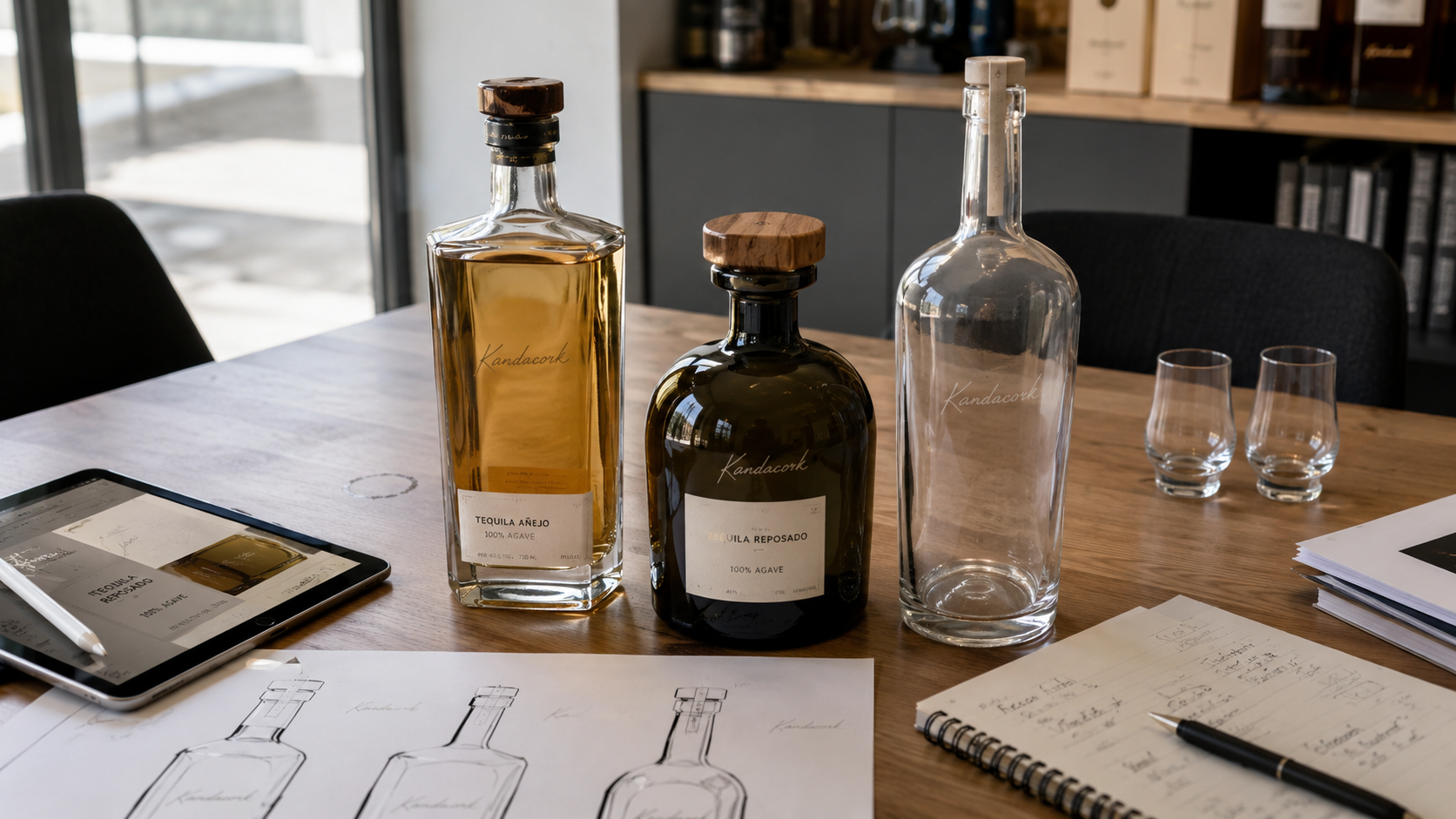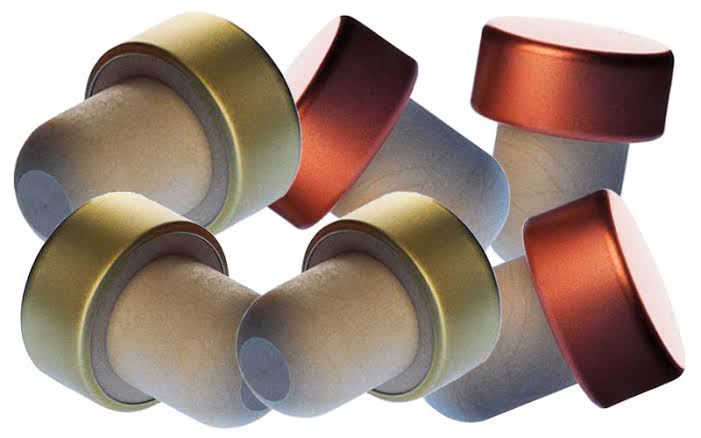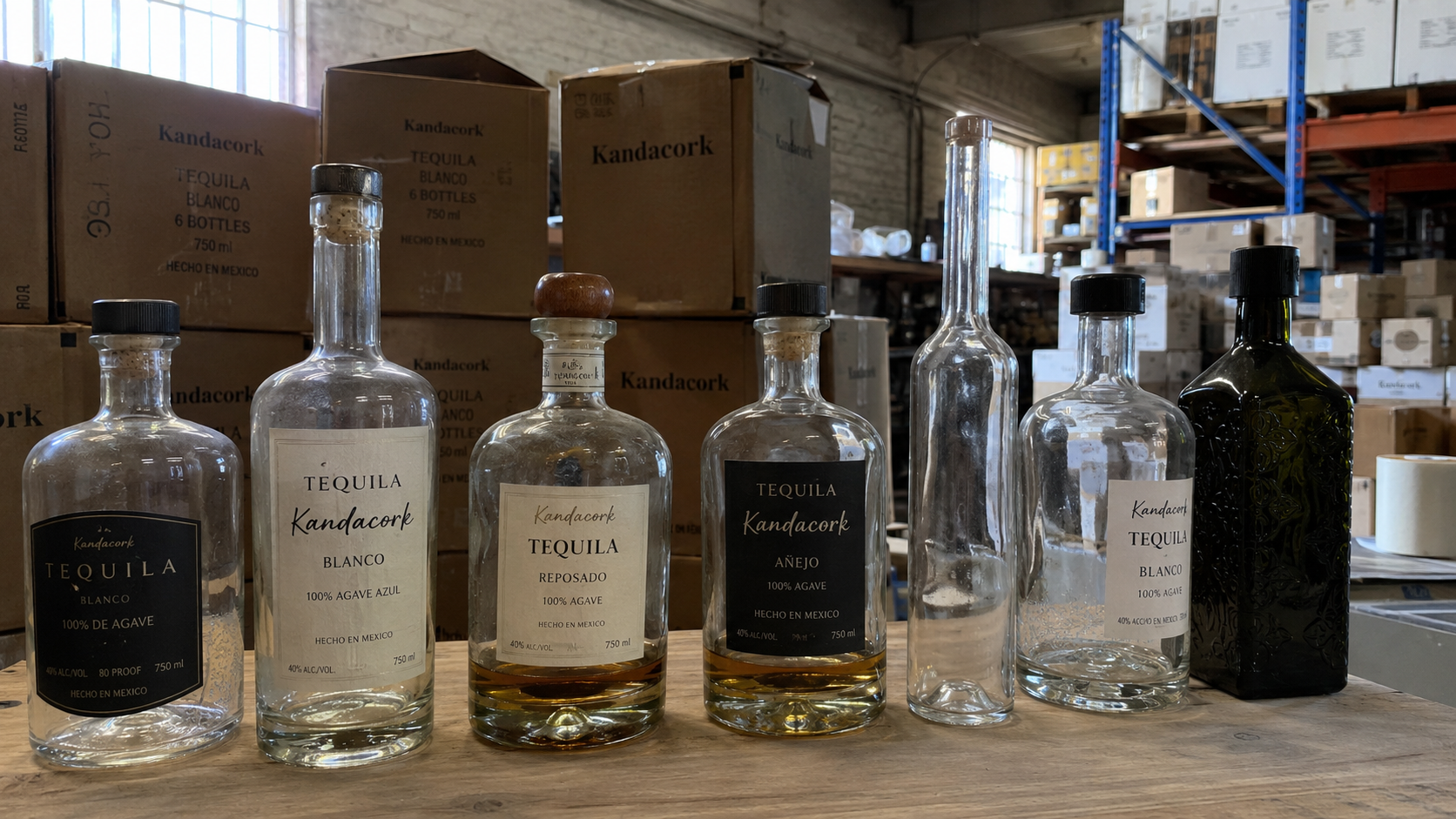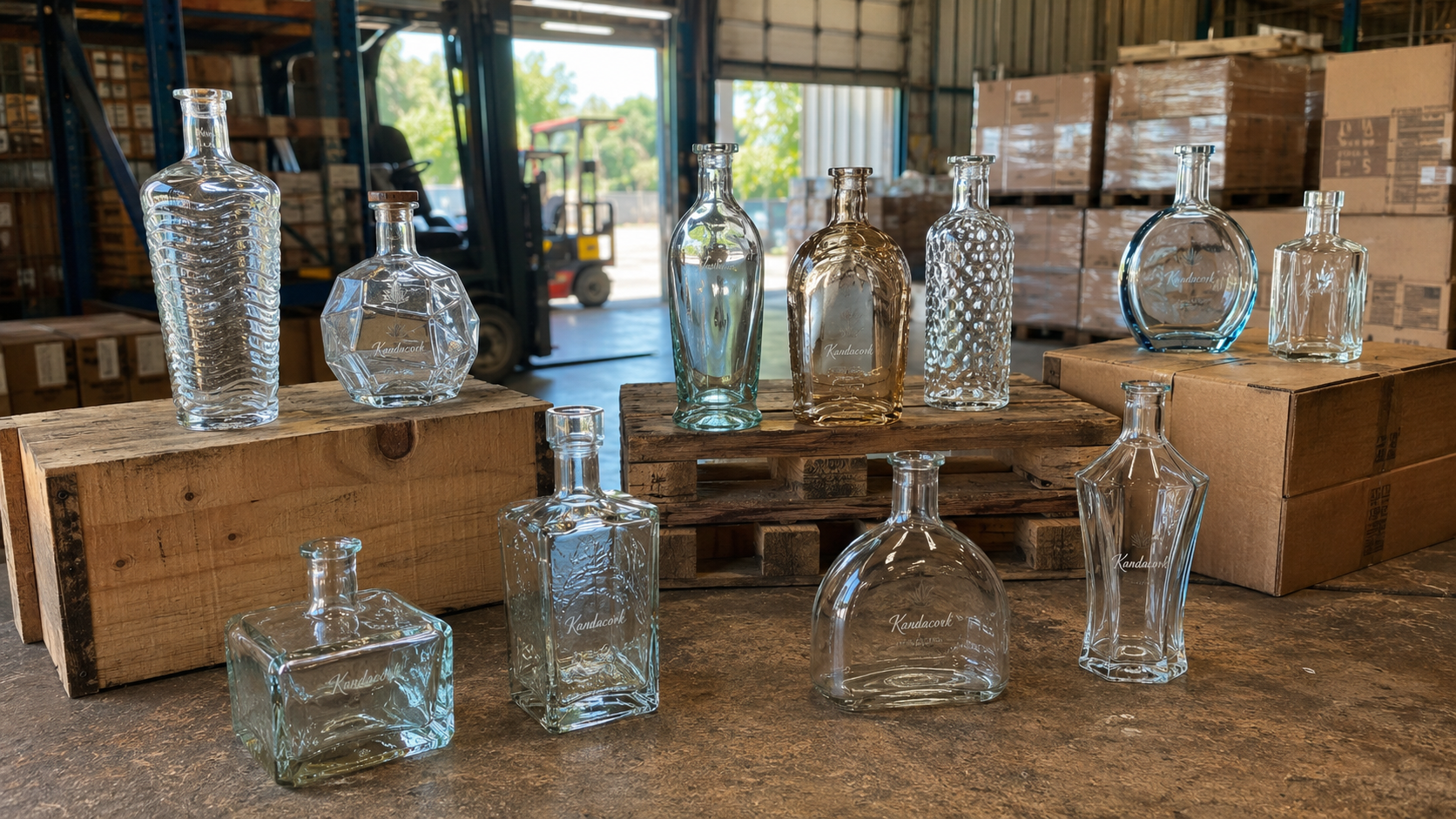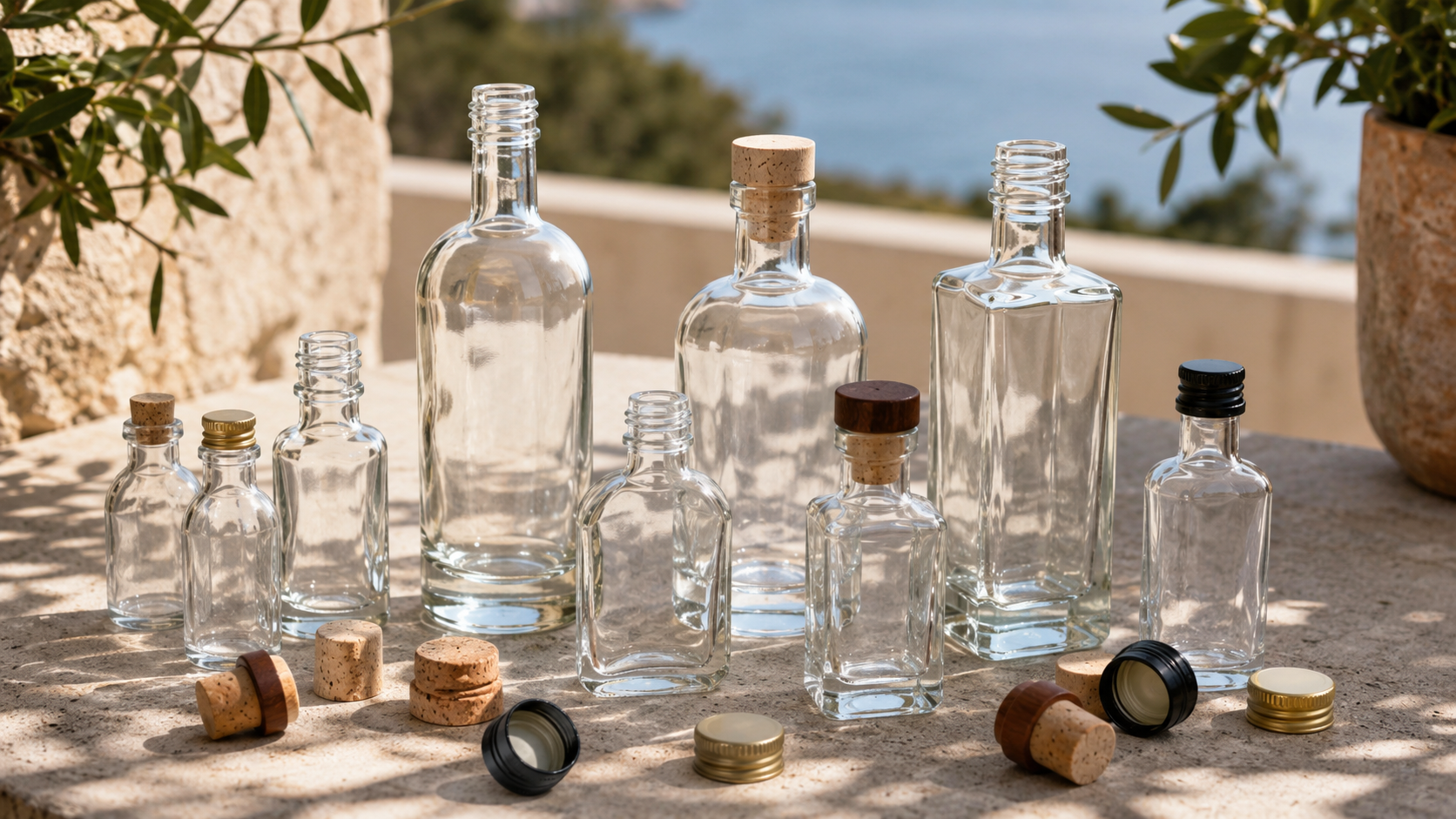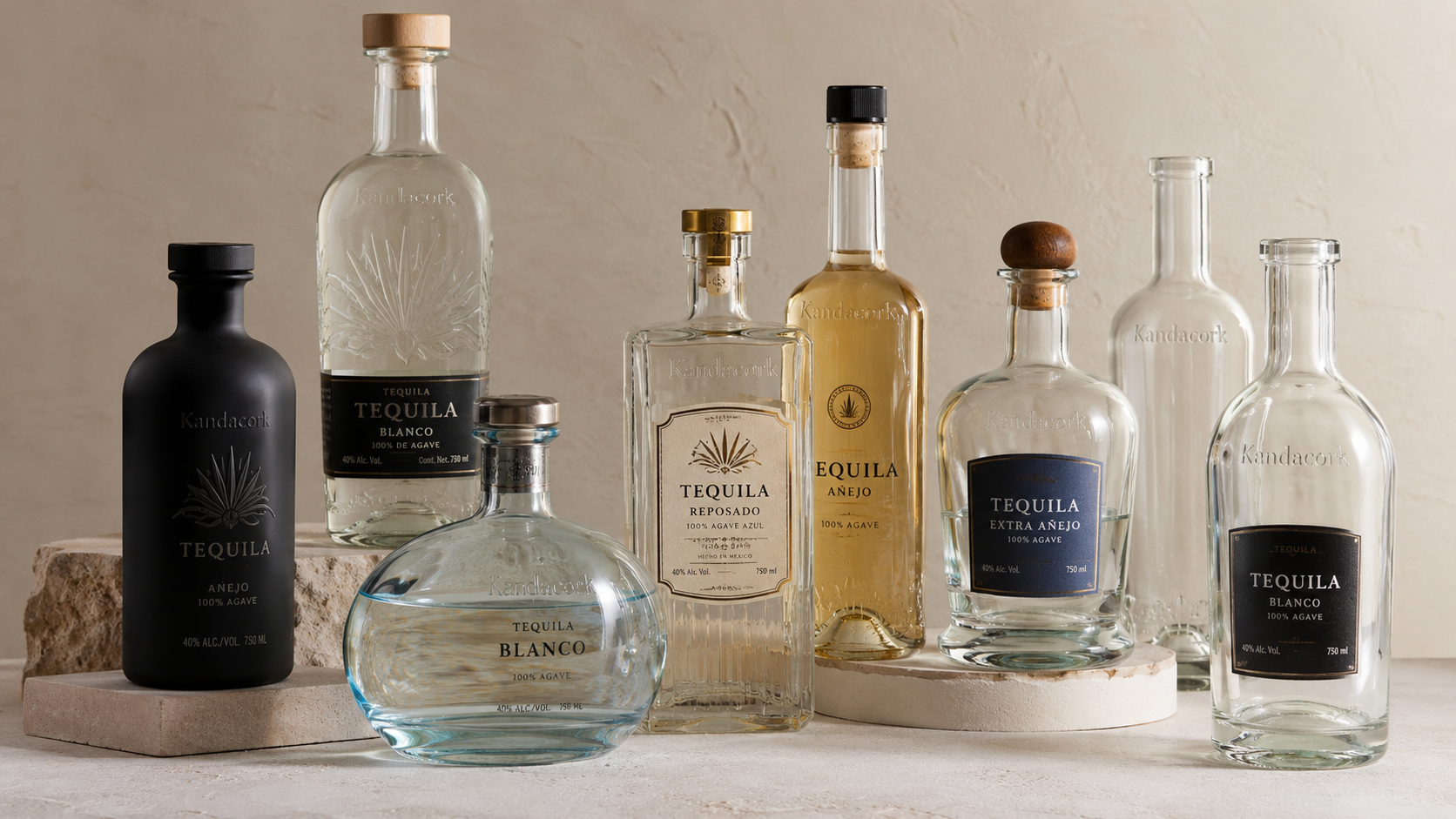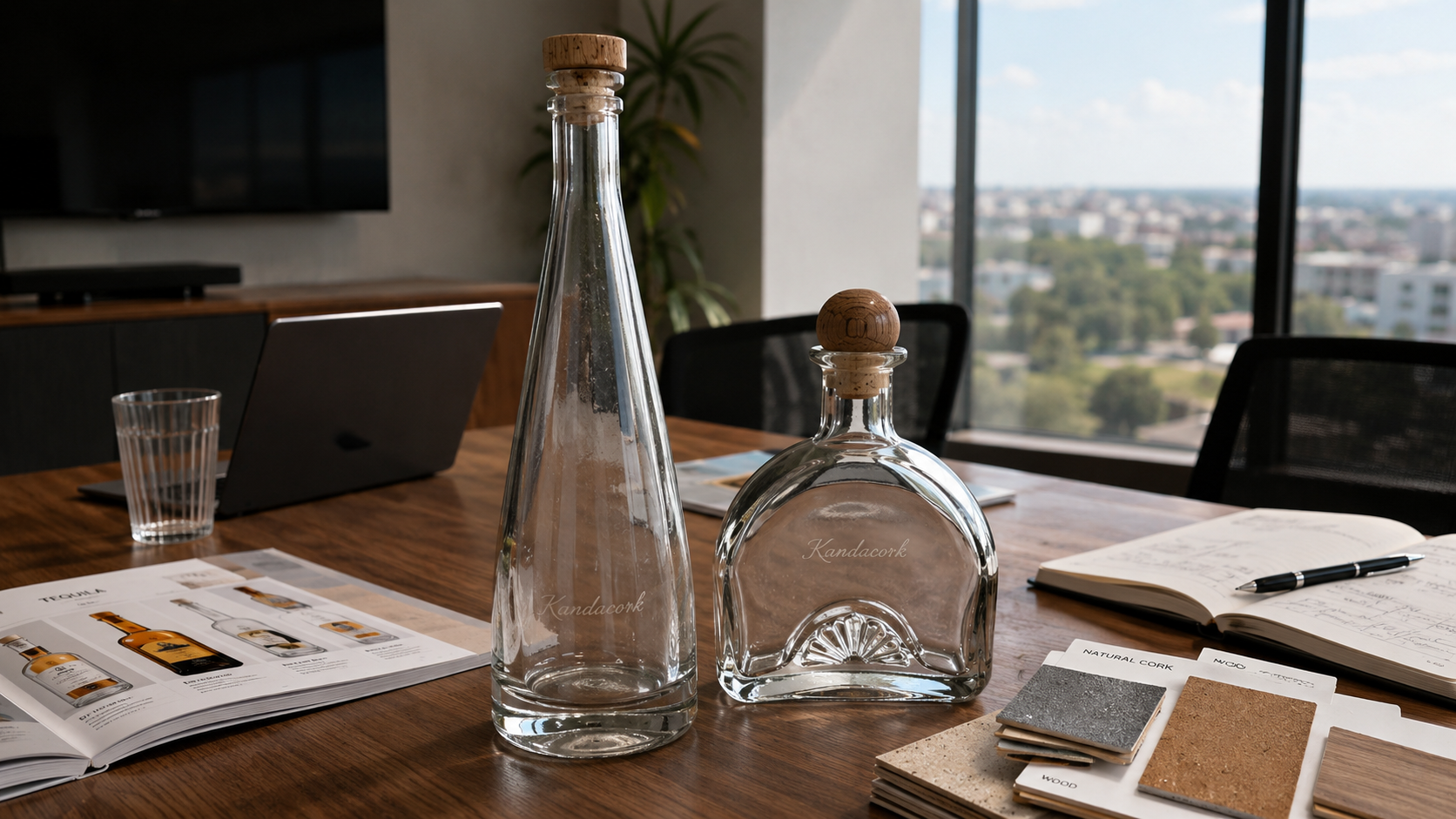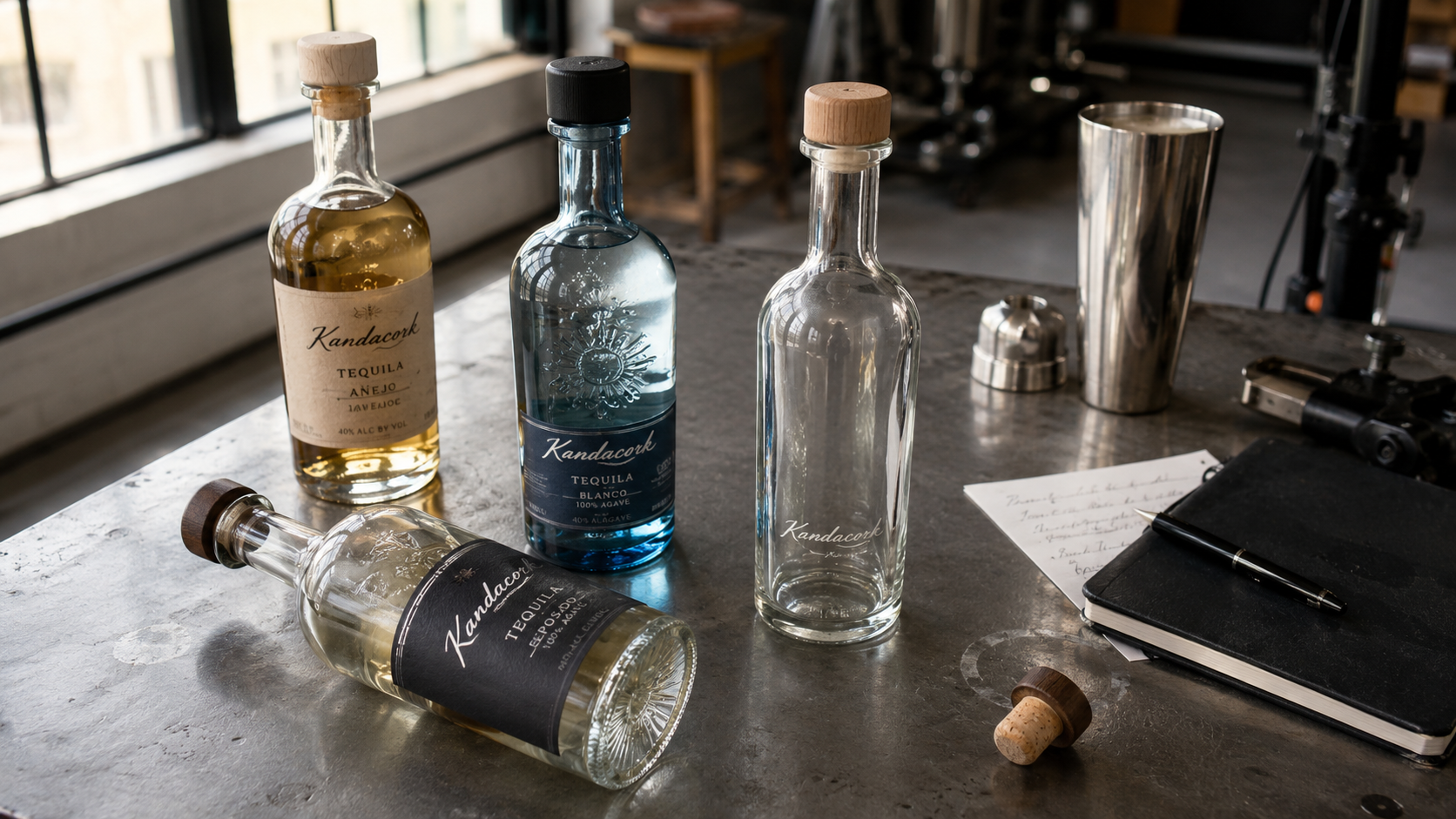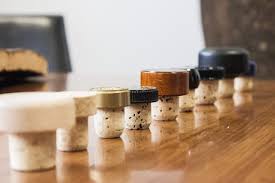
A bar-top stopper may look premium in a sample photo but still fail on a real bottle. It can feel loose, insert too tightly, leak after filling, sit unevenly on the neck, or conflict with a capsule or tamper-evident band. For spirits brands, distilleries, private label buyers, importers, distributors, bottlers, and packaging procurement teams, these problems often begin before sampling.
A bar-top stopper neck fit checklist helps buyers confirm the most important technical details before requesting samples. Instead of choosing a stopper only by appearance, a common size, or a supplier’s catalog description, buyers should check the bottle inner diameter, bore depth, shank material, pull-out feel, leakage risk, filling method, and supplier production capability.
Kandacork Closures helps spirits packaging buyers review bottle drawings, physical bottle samples, stopper materials, decoration requirements, and bulk production feasibility before sample approval. For projects requiring stable fit and repeatable performance, buyers can compare custom synthetic bar-top stoppers as one practical closure direction before moving into sample testing.
Quick Answer: What Should Buyers Check Before Sampling?
Before sampling a bar-top stopper, confirm the bottle neck inner diameter, bore depth, neck tolerance, shank diameter, shank length, shank material, insertion force, pull-out feel, leakage performance, capsule compatibility, filling method, and supplier tolerance control.
The key point is simple: a bar-top stopper seals inside the bottle neck, so the actual inner bore matters more than the bottle’s outer appearance. The best sample request starts with real neck data, material direction, and clear performance expectations.
If you already have bottle drawings or physical bottles, Kandacork Closures can review the neck data and recommend initial shank options before sample production.
Bar-Top Stopper Neck Fit Checklist Before Sampling
Use this checklist before requesting samples or quotations.
| Check Item | What to Confirm | Why It Matters |
|---|---|---|
| Bottle inner diameter | Actual bore ID, not only neck finish | Determines shank size and compression |
| Bore depth | Available insertion depth inside the neck | Prevents short-neck and over-insertion issues |
| Neck tolerance | Variation allowed in bottle production | Affects bulk fit consistency |
| Shank diameter | Cork, synthetic cork, or polymer shank size | Controls sealing, tightness, and leakage risk |
| Shank length | Total insertion engagement | Affects stability and pull-out feel |
| Shank material | Natural cork, micro-agglomerated cork, synthetic cork, or polymer | Impacts compression, consistency, and brand positioning |
| Top diameter | Visible stopper head size | Affects appearance, grip, and capsule fit |
| Insertion force | Manual or machine stoppering pressure | Impacts filling speed and handling |
| Pull-out feel | Consumer opening resistance | Influences premium perception and usability |
| Leakage test | Filled, inverted, sideways, and transport checks | Reduces shipping claims and distributor complaints |
| Capsule compatibility | Shrink sleeve, neck band, or tamper-evident seal fit | Prevents late-stage packaging redesign |
| Supplier QC control | Batch tolerance and pre-production sample process | Helps avoid sample-to-production mismatch |
This bar-top stopper neck fit checklist should be used before sample production, not after the first sample fails.
What Is Bar-Top Stopper Neck Fit?
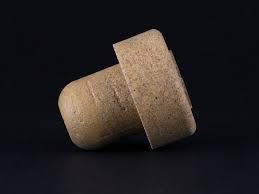
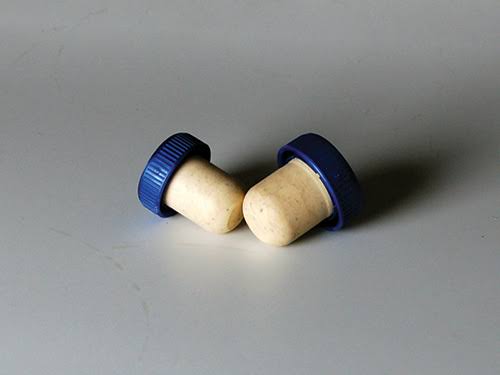
Bar-top stopper neck fit describes how the sealing shank of a bar-top closure interacts with the internal neck of a bottle. A bar-top stopper is also called a T-top stopper, T-cork, bar-top cork, spirits bottle stopper, or bottle closure.
The closure usually has two main parts. The visible top supports branding, grip, color, decoration, and shelf appeal. It may be made from wood, plastic, metal, glass, ceramic, zamac, or composite material.
The shank is the technical sealing part. It enters the bottle neck and creates compression against the internal bore. The shank may be natural cork, micro-agglomerated cork, synthetic cork, or polymer. Its diameter, length, density, recovery behavior, and surface consistency determine whether the stopper feels secure and performs reliably.
For spirits packaging, the best stopper is not simply the most premium-looking option. It is the closure that fits the real bottle neck, supports the filling process, protects the product during distribution, and delivers the right consumer opening experience.
Neck Finish vs Inner Diameter: What Buyers Must Confirm
One common sampling mistake is confusing neck finish with inner diameter. Neck finish describes the bottle’s closure interface, but it does not always show the exact internal bore where the stopper shank seals.
| Item | Meaning | Effect on Stopper Fit |
|---|---|---|
| Neck finish | Bottle neck style or closure interface | Useful for classification, but not enough for shank selection |
| Inner diameter / bore ID | Actual internal opening of the bottle neck | Critical for stopper shank diameter |
| Bore depth | Depth available for shank insertion | Affects stability, leakage resistance, and seating |
| Neck tolerance | Accepted production variation | Determines whether bulk closures fit consistently |
| Outer neck diameter | External bottle neck measurement | Important for capsules, sleeves, and top proportion |
A 19.5 mm, 21.5 mm, or 22.5 mm stopper cannot be selected by appearance alone. Two bottles may have similar outer necks but different internal bore dimensions. A small difference can affect sealing, insertion, and pull-out force.
Before sampling, buyers should request a bottle drawing from the glass manufacturer and measure real bottle samples whenever possible. For buyers comparing bottle-mouth structure, stopper seating depth, and fit review logic, Kandacork Closures also explains related matching principles in its glass stopper neck finish matching guide.
How to Measure Bottle Neck Fit Before Sampling
A reliable fit review starts with both drawing data and physical bottle measurement. The bottle drawing should show the inner neck diameter, bore depth, outer neck diameter, neck height, and tolerance range. However, drawings alone are not always enough because production bottles may vary slightly by batch, mold, or glass process.
Use calipers, a bore gauge, or suitable inspection tools to check the internal neck diameter. Measure more than one bottle. For better accuracy, check the bore near the lip and deeper inside the neck, especially in the sealing zone where the shank will compress.
Record the minimum, maximum, and average bore ID. If the bottle neck becomes narrower deeper inside the bore, note the pinch point. This information helps the closure supplier avoid recommending a shank that fits near the lip but becomes too tight during full insertion.
Before requesting custom samples, send the supplier:
- bottle drawing or CAD file
- measured inner diameter
- bore depth
- neck tolerance range
- number of bottles measured
- minimum, maximum, and average bore data
- photos or videos of existing stopper fit problems, if available
This measurement step gives the bar-top stopper neck fit checklist real technical value and helps reduce unnecessary sampling rounds.
Common Bar-Top Stopper Sizes Are Only Starting Points
Many spirits packaging projects use common bar-top stopper shank sizes such as 18.5 mm, 19.5 mm, 21.5 mm, or 22.5 mm. These sizes can help buyers begin a supplier discussion, but they are not final answers.
A general fit rule is that the stopper shank usually needs slight compression inside the bottle neck. However, final fit depends on more than diameter. Buyers must also consider shank material, bore tolerance, bore depth, filling method, insertion force, pull-out resistance, leakage testing, transport conditions, and capsule requirements.
A synthetic shank and a natural cork shank with the same nominal diameter may not feel the same in the bottle. A short-neck bottle and a long-neck bottle may require different insertion engagement. A premium whiskey bottle may need a firmer pull-out feel than a small liqueur bottle.
Rule of Thumb: Shank Size Is Only the Starting Point
A common starting point is to test a stopper shank that is slightly larger than the bottle’s inner opening so the shank can compress and seal. This rule can help buyers shortlist sample sizes, but it should never replace physical testing.
Final approval must be based on the actual bottle, shank material, bore depth, insertion force, pull-out feel, leakage testing, filling-line behavior, and transport conditions. The right sample is not the one that only enters the bottle. It is the one that performs consistently from sampling to bulk production.
Shank Material Comparison
Shank material affects sealing, compression, consistency, cost, and brand positioning. The right choice depends on the bottle, spirit category, production volume, and desired consumer experience.
| Shank Material | Best For | Fit Consideration |
|---|---|---|
| Natural cork | Premium craft spirits, heritage packaging, limited editions | Requires quality control, grading, odor control, and variation review |
| Micro-agglomerated cork | Cork-based positioning with better consistency | Useful for larger runs that still need a cork story |
| Synthetic cork | Private label, export programs, repeat orders, scalable production | Offers strong dimensional consistency and predictable compression |
| Polymer | Modern custom closures, color control, design-led packaging | Provides controlled geometry and flexible appearance options |
Natural cork can support a premium sensory experience, but buyers should ask about grading, moisture control, odor control, and TCA-related quality management. Synthetic cork and polymer shanks may be more suitable when dimensional consistency and repeatable bulk production are the main priorities.
The best material is not always the most expensive one. It is the material that matches the bottle neck, brand position, filling process, and distribution requirements.
Common Bar-Top Stopper Fit Problems and How to Prevent Them
Many sampling failures are preventable if buyers check fit requirements before production.
| Problem | Possible Cause | Prevention |
|---|---|---|
| Stopper feels loose | Small shank diameter, wide bore, low compression, poor recovery | Test real bottles, review tolerance, adjust shank size or material |
| Stopper is too tight | Oversized shank, rigid material, shallow bore depth | Reduce shank diameter, adjust density, shorten shank, or review bottle bore |
| Bottle leaks after filling | Poor compression, shallow insertion, bottle neck inconsistency | Perform filled-bottle leakage and transport testing |
| Stopper inserts by hand but fails on line | Excessive force, poor orientation, inconsistent seating | Run line trials before bulk approval |
| Stopper looks too small or too large | Wrong top diameter or head height | Review full bottle mockups, not only loose samples |
| Capsule does not fit | Wide top, short neck, shoulder clearance conflict | Review stopper, neck, and tamper-evident system together |
| Bulk production differs from sample | Weak tolerance control or material inconsistency | Require pre-production samples and supplier QC confirmation |
An empty bottle test is not enough for commercial approval. Buyers should test filled bottles under realistic storage, handling, and transport conditions. For export programs, internal checks may also be aligned with recognized packaging transport test methods, such as ISTA testing guidance for vibration, handling, and distribution simulation.
3-Bottle Fit Test Before Sample Approval
Before approving a stopper sample, test more than one bottle. A single bottle may not show the full tolerance range of the production batch. A simple 3-bottle test can reveal whether the stopper fit is stable enough for further approval.
| Bottle Sample | What to Check | Why It Matters |
|---|---|---|
| Bottle 1 | Initial insertion and seating | Confirms basic stopper fit |
| Bottle 2 | Pull-out feel and shank compression | Checks consistency across samples |
| Bottle 3 | Filled leakage and handling test | Reduces approval and transport risk |
If all three bottles show different pull-out feel, the issue may come from bottle tolerance, shank material variation, or an unsuitable shank size. In that case, buyers should not approve the sample immediately. They should review bore measurements, shank specifications, and material options with the supplier.
For higher-volume projects, buyers may test more bottles from different production batches before final approval.
Practical Example: Why One Bottle Drawing Is Not Enough
A bottle drawing is useful, but it does not always show the full production reality. In a spirits closure project, the approved drawing may show a target bore ID, while physical bottles from the production batch show slight variation near the sealing zone. If the stopper is selected only from the drawing, it may fit one bottle well but feel tighter or looser on another bottle from the same batch.
This is why buyers should measure several real bottles and record the minimum, maximum, and average bore ID before approving samples. For private label spirits, export orders, or repeat production, this simple step can reduce leakage risk, sample revisions, and production delays.
Fit Testing Before Bulk Production
A bar-top stopper sample should be tested as part of the complete packaging system. The bottle, closure, liquid, filling process, carton, and distribution route all matter.
Insertion Test
The stopper should enter the bottle smoothly without excessive force. It should seat evenly on the neck and remain visually aligned. If insertion requires too much pressure, manual bottling becomes inefficient and automatic equipment may experience jams or inconsistent seating.
Pull-Out Test
Pull-out feel affects consumer perception. A stopper that is too loose may feel unsafe or low quality. A stopper that is too tight may frustrate consumers or cause product spillage during opening.
The ideal pull-out feel depends on the spirit category, bottle size, shank material, and brand positioning.
Leakage Test
Leakage testing should use filled bottles. Test bottles upright, sideways, and inverted. Review leakage after temperature changes, vibration, and carton handling.
For export spirits packaging, this step is especially important because bottles may experience long-distance shipping, warehousing, pallet movement, and seasonal temperature variation.
Line Trial
If the project uses a filling line, test the stopper on the actual or similar equipment. Check feeding, orientation, insertion depth, surface damage, and stoppering speed.
Line trials often reveal problems that hand sampling does not show.
Packing and Transport Test
A stopper that performs well on a desk may fail after transport. Packing pressure, carton direction, vibration, and pallet movement can affect closure performance. Buyers should test filled and packed bottles under realistic handling conditions before final approval.
Tamper Evidence and Food-Contact Review
Spirits closures may need to meet regulatory, distributor, and retail requirements. In the United States, the Alcohol and Tobacco Tax and Trade Bureau provides guidance on distilled spirits bottle closure and tamper-evident requirements. Buyers should confirm the destination market’s rules before approving the final closure system.
If the stopper shank or any closure material may contact the product, food-contact suitability should also be reviewed. Similar rules may apply in other markets, especially when stopper materials, liners, coatings, or inserts interact with the liquid.
For cork-based closures, buyers may also review cork quality expectations and TCA-related risk management through recognized cork industry references. The goal is not to make sampling complicated. The goal is to identify regulatory or material concerns before bulk production begins.
Branding and Decoration Checks Before Sampling
Bar-top stoppers are often selected because they provide more branding space than many standard caps. The top can become a signature design feature for the bottle.
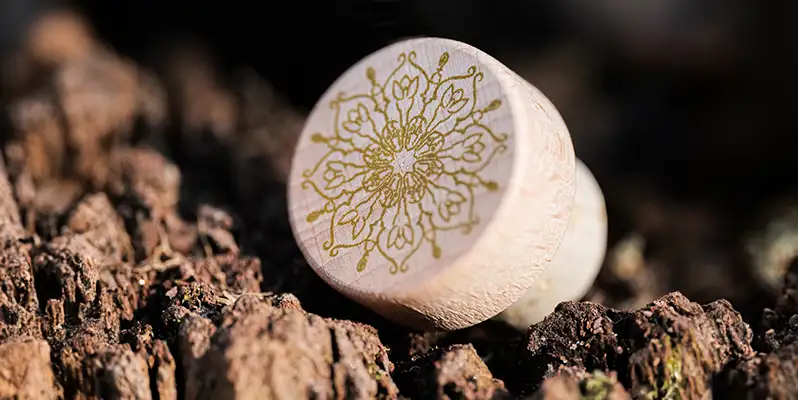
Before sampling, confirm the decoration method. Common options include laser engraving, embossing, debossing, hot stamping, pad printing, screen printing, color coating, metal plating, and molded logo design. For buyers comparing wider bottle, closure, and decoration coordination, Kandacork’s integrated packaging network can also support complete spirits bottle projects through Kandacork Glass.
The top surface must fit the artwork. A flat wooden top may support laser engraving well. A curved metal top may require adjusted logo placement. A small plastic top may need simplified artwork. Fine logo details should be reviewed before producing decorated samples.
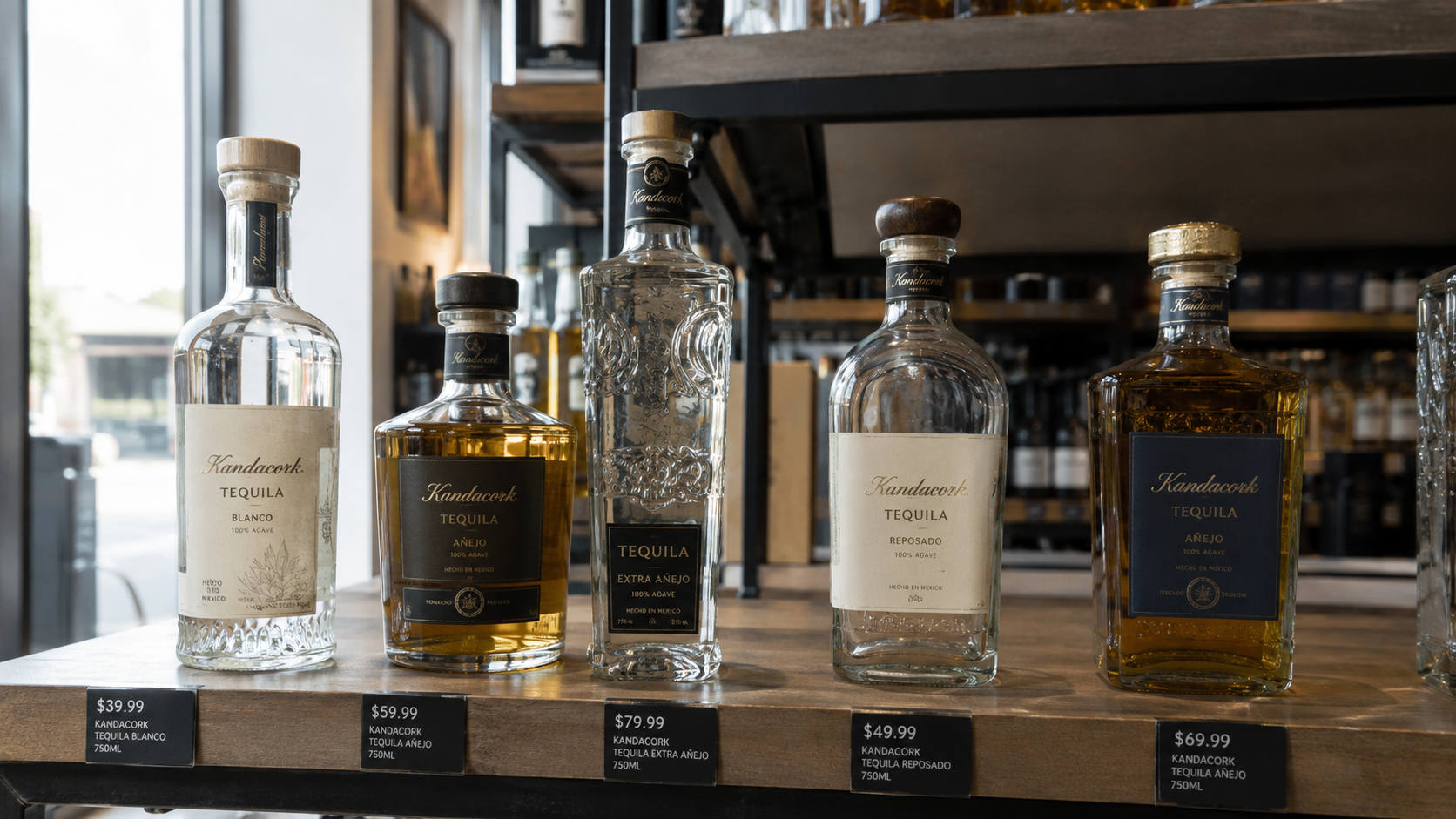
Buyers should also check the full packaging system. The stopper should align with the label, bottle shoulder, capsule, neck band, gift box, and retail display. A closure that looks attractive by itself may not look right once the full bottle is assembled.
Bar-Top Stopper Supplier Evaluation Scorecard
A strong closure supplier should do more than send random samples. Use this scorecard to evaluate whether a supplier can support technical review, customization, and repeatable production.
| Capability | Basic Supplier | Strong Supplier |
|---|---|---|
| Neck drawing review | Only asks for size | Reviews inner diameter, bore depth, tolerance, and bottle structure |
| Sample support | Sends stock samples | Recommends test options based on bottle data |
| Material advice | Offers one shank type | Compares cork, synthetic cork, and polymer options |
| Decoration | Basic logo printing | Supports engraving, embossing, hot stamping, color matching, and finish review |
| Fit testing | Leaves testing to buyer | Helps review insertion, pull-out, leakage, and capsule compatibility |
| QC control | General inspection | Controls shank tolerance, material consistency, and batch approval |
| Export support | Standard carton | Reviews packing, transport, and distributor requirements |
| Commercial support | Price only | Supports sampling, quotation, MOQ, lead time, and repeat orders |
For spirits brands and packaging buyers, supplier capability directly affects project success. A low-cost sample is not valuable if the supplier cannot reproduce the same fit in bulk production.
Kandacork Closures can help buyers connect technical fit, custom stopper design, logo decoration, and bulk order planning through custom spirits packaging support before production approval.
Need Help Confirming Stopper Fit?
Send Kandacork Closures your bottle drawing, physical bottle sample, bore ID, target quantity, filling method, and decoration requirements. Our team can help recommend initial shank options before sample production and support the next step toward sample approval or quotation.
What to Send Before Requesting Samples
A complete sample request helps the supplier recommend the right stopper faster. Before contacting Kandacork Closures, prepare as much of the following information as possible.
Bottle capacity:
Spirit type:
Bottle neck inner diameter:
Bore depth:
Outer neck diameter:
Bottle drawing available: Yes / No
Physical bottle sample available: Yes / No
Preferred shank material:
Preferred top material:
Logo decoration method:
Color or finish reference:
Target quantity:
Destination market:
Filling method:
Need capsule or tamper-evident seal: Yes / No
Expected sample timeline:
Quotation required: Yes / No
If you do not have all the information, start with bottle drawings, physical bottles, and target quantity. A capable closure supplier can review the available data and suggest the next step.
Sample Approval Workflow for Bar-Top Stoppers
A focused approval workflow helps buyers reduce delays and avoid repeated sample rounds. The goal is not only to receive a sample, but to decide whether the sample is ready for quotation and bulk planning.
| Stage | Check | Pass / Adjust / Reject Criteria |
|---|---|---|
| Fit review | Bore ID, bore depth, neck tolerance | Select initial shank size if data is clear; request more measurements if data is incomplete |
| Physical test | Insertion, seating, pull-out feel | Pass if smooth and secure; adjust if tight or loose; reject if unstable |
| Filled test | Leakage, inversion, transport handling | Pass if no leakage; retest if inconsistent; reject if repeated leakage occurs |
| Decoration review | Logo, color, top material, finish | Approve if clear and durable; revise if logo or finish does not match brand requirements |
| Line trial | Feeding, seating, stoppering speed | Pass if stable on equipment; adjust if jamming, scratching, or misalignment occurs |
| Pre-production review | Final material, dimensions, packing, QC | Move to quotation and bulk planning only after the approved sample represents final production |
This process turns the bar-top stopper neck fit checklist into a practical sourcing workflow. Buyers comparing closure structures, sealing behavior, and sourcing direction can also review Kandacork Closures’ guide to bar-top stoppers vs screw caps and ROPP closures before finalizing the closure route.
FAQ
How do I know what size bar-top stopper I need?
Measure the bottle’s inner neck diameter and bore depth, then test the stopper shank on real bottles. Final size should be approved by insertion feel, pull-out force, leakage testing, and filling-line behavior.
Is neck finish the same as inner diameter?
No. Neck finish describes the bottle’s closure interface, while inner diameter is the internal opening where the stopper shank seals. For bar-top stoppers, inner diameter is one of the most important fit measurements.
Should I choose natural cork or synthetic cork for spirits?
Choose natural cork for a traditional or premium craft feel. Choose synthetic cork when dimensional consistency and repeatable fit are more important. Micro-agglomerated cork and polymer shanks can also work depending on volume, design, and performance requirements.
What causes bar-top stopper leakage?
Common causes include incorrect shank diameter, poor compression, shallow insertion, bottle neck tolerance variation, unsuitable material, or lack of filled-bottle testing. Leakage should be checked before bulk production.
Can Kandacork Closures recommend a stopper from my bottle sample?
Yes. Buyers can send bottle drawings, physical bottle samples, neck dimensions, logo artwork, preferred materials, target quantity, filling method, and destination market details. Kandacork Closures can recommend suitable stopper structures, shank materials, decoration options, and sample directions.
Conclusion: Confirm Fit First, Then Sample With Confidence
A bar-top stopper is both a functional closure and a brand detail. It must seal the bottle, support the consumer experience, work with the filling process, match the full packaging design, and remain consistent during bulk production.
A clear bar-top stopper neck fit checklist helps spirits brands and packaging buyers reduce sampling errors, leakage risk, production delays, and supplier miscommunication. By confirming bottle neck data, shank material, insertion behavior, pull-out feel, leakage testing, capsule compatibility, and supplier capability before sampling, buyers can make faster and more confident sourcing decisions.
Kandacork Closures helps spirits brands, distilleries, private label buyers, importers, distributors, bottlers, and packaging procurement teams connect technical fit with custom closure design and commercial production planning.
To request samples or a quotation, prepare your bottle drawing, physical bottle sample if available, neck dimensions, preferred stopper material, logo artwork, target quantity, filling method, and destination market. With the right information, the sampling process becomes more accurate, more efficient, and better aligned with bulk production.