Quick Answer: How Do You Match Bar-Top Stoppers With Heavy Glass Bottles?
To match bar-top stoppers with heavy glass bottles, measure the bottle’s internal neck bore, confirm the neck finish, choose a compatible shank material, and select a stopper head that looks proportionate to the bottle weight and shape. Then test insertion force, pull-out force, leakage, seating height, alcohol compatibility, and resealing before approving bulk production.
A stopper should not be selected by catalog size or appearance alone. Heavy glass bottles often have thick walls, broad shoulders, custom neck finishes, and higher retail expectations. The safest process is to test the bottle and closure as one complete packaging system.
Quick Sizing Guide for Bar-Top Stoppers
The bottle neck bore is the starting point for stopper selection. Many spirits bottle projects begin with a shank that is slightly larger than the internal neck diameter, but this is only an initial reference. Actual bottle samples must be tested because glass tolerance, shank material, insertion depth, and filling conditions can all affect the final fit.
| Bottle Neck Bore | Common Starting Shank Size | Buyer Note |
|---|---|---|
| 18.5 mm | 19.5 mm | Test insertion, pull-out force, seating height, and leakage. |
| 21.5 mm | 22.5 mm | Common for spirits bottles, but tolerance must be confirmed. |
| Custom bore | Custom shank | Send bottle samples and drawings for review. |
| Thick or tapered neck | Trial shank required | Measure at different depths, not only at the top opening. |
For many spirits bottles, 18.5 mm and 21.5 mm are common bar-top neck bore references. A 19.5 mm or 22.5 mm shank may be used as a starting point, but final approval should always depend on sample testing, not size theory alone.
Why Heavy Glass Bottles Need Better Stopper Matching
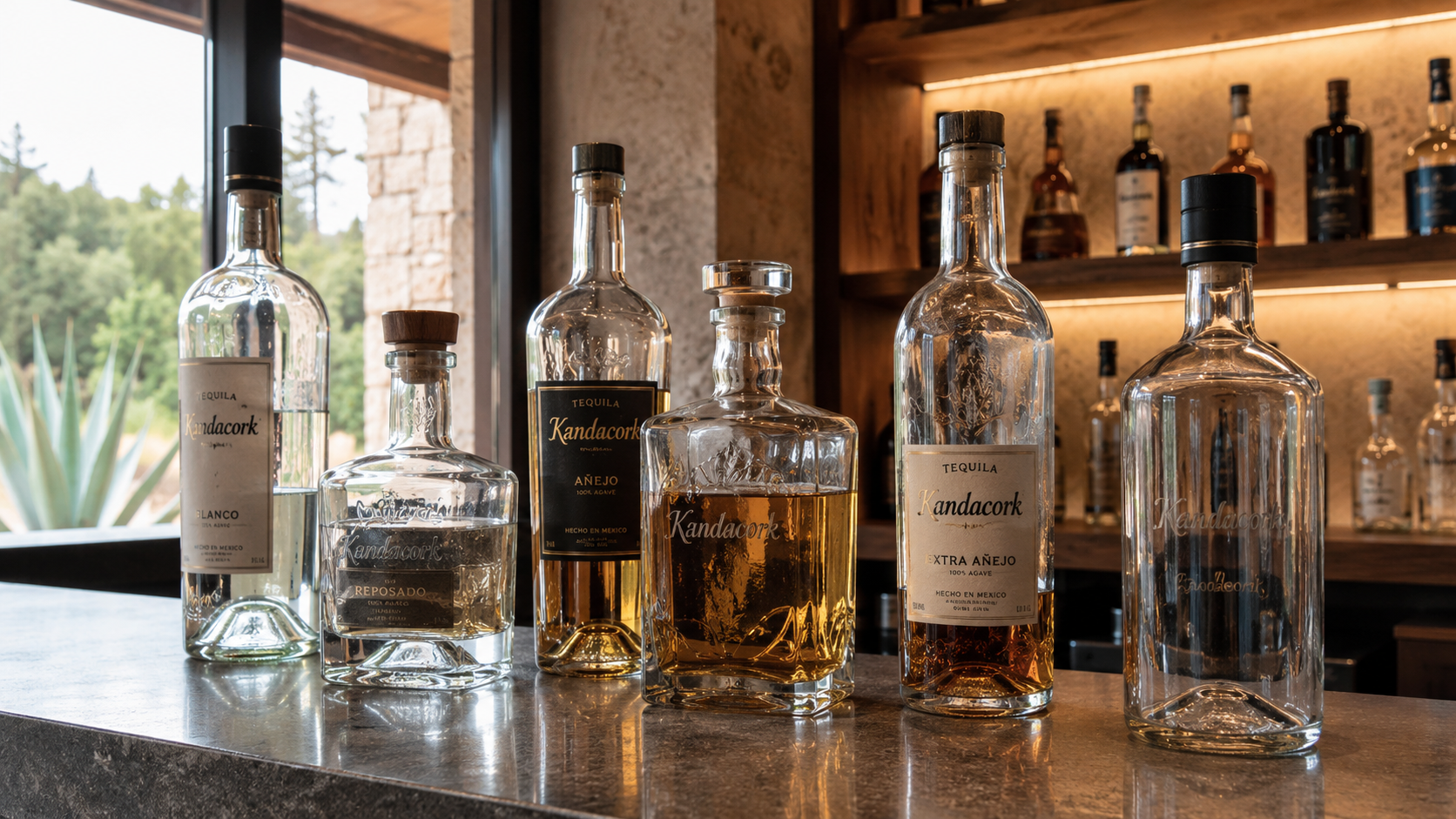
Heavy glass spirits bottles use thick bases, broad shoulders, clear walls, and decanter-style shapes to signal higher value. But that value depends on a closure that fits securely, seals reliably, opens smoothly, and looks balanced on the bottle.
For spirits brands, distilleries, bottlers, importers, distributors, private label buyers, and packaging teams, matching bar-top stoppers with heavy glass bottles is both a technical and commercial packaging decision. The stopper must support bottle design, shelf presentation, filling-line use, transportation, and consumer experience.
A poorly matched stopper can look undersized, feel loose, leak during shipping, sit unevenly on the bottle mouth, or fail during repeated opening and closing. A well-matched stopper supports the bottle’s positioning, protects the product, and gives the consumer a more confident opening experience.
Kandacork Closures helps buyers evaluate custom spirits bottle closures and stoppers by reviewing bottle samples, comparing stopper materials, supporting fit testing, and preparing production-ready closure specifications.
For buyers developing bottles and closures together, working with an integrated spirits packaging partner such as Kandacork Spirits can also help align bottle shape, neck finish, closure fit, decoration, and export-ready packaging from the beginning of the project.
What Makes Bar-Top Stoppers Different for Heavy Glass Bottles?
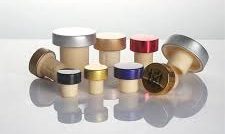
A bar-top stopper, also called a T-top closure, T-cork, or spirits bottle stopper, usually has two parts: a decorative head and an inserted shank.
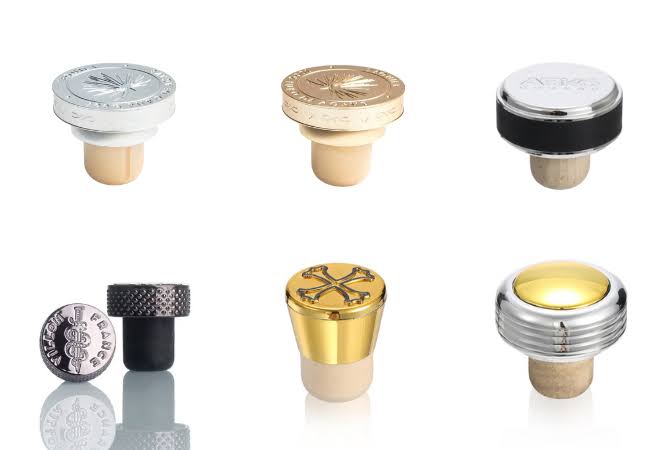
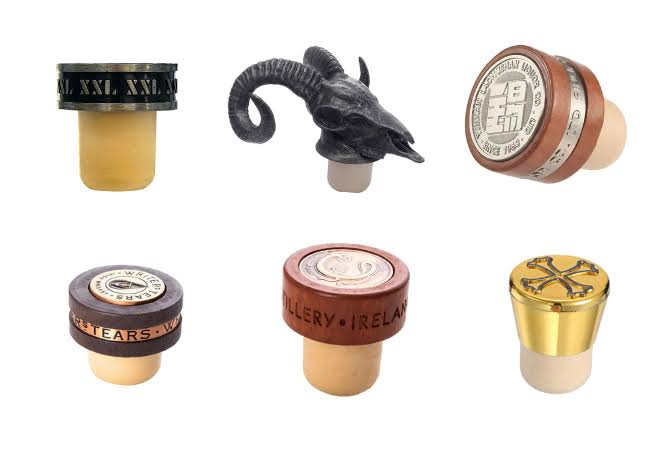
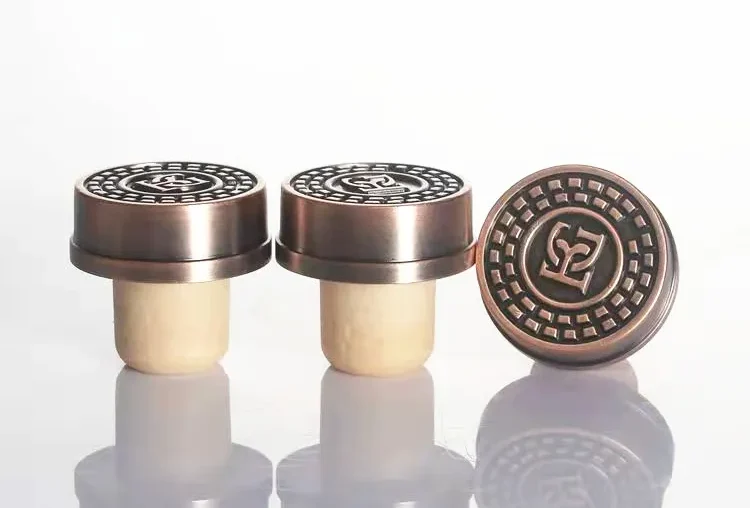
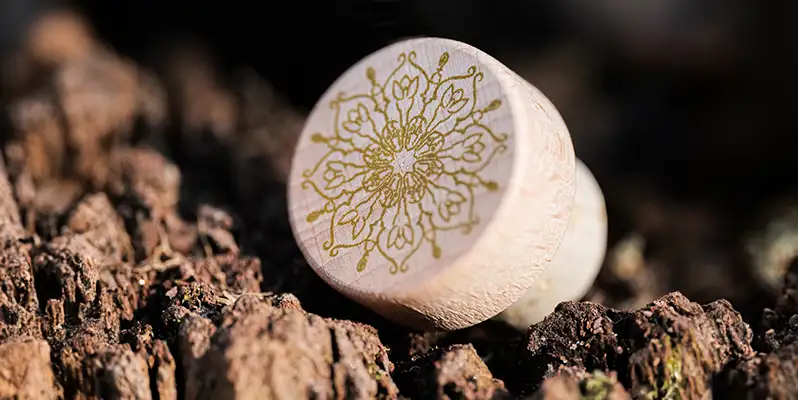
The head affects appearance, opening feel, shelf impact, and product identity. It may be made from wood, metal, Zamak, aluminum, glass, plastic, ceramic, or a custom material.
The shank is the functional part inserted into the bottle neck. It may be natural cork, micro-agglomerated cork, synthetic cork, or a polymer-based insert. The shank controls compression, friction fit, leakage resistance, resealing, and pull-out force.
For heavy glass bottles, these two parts must be evaluated together. A premium metal head with the wrong shank may leak. A correct shank with an undersized head may look weak on a broad-shouldered bottle. A glass stopper may look elegant, but it still needs careful testing for sealing, seating, and transport safety.
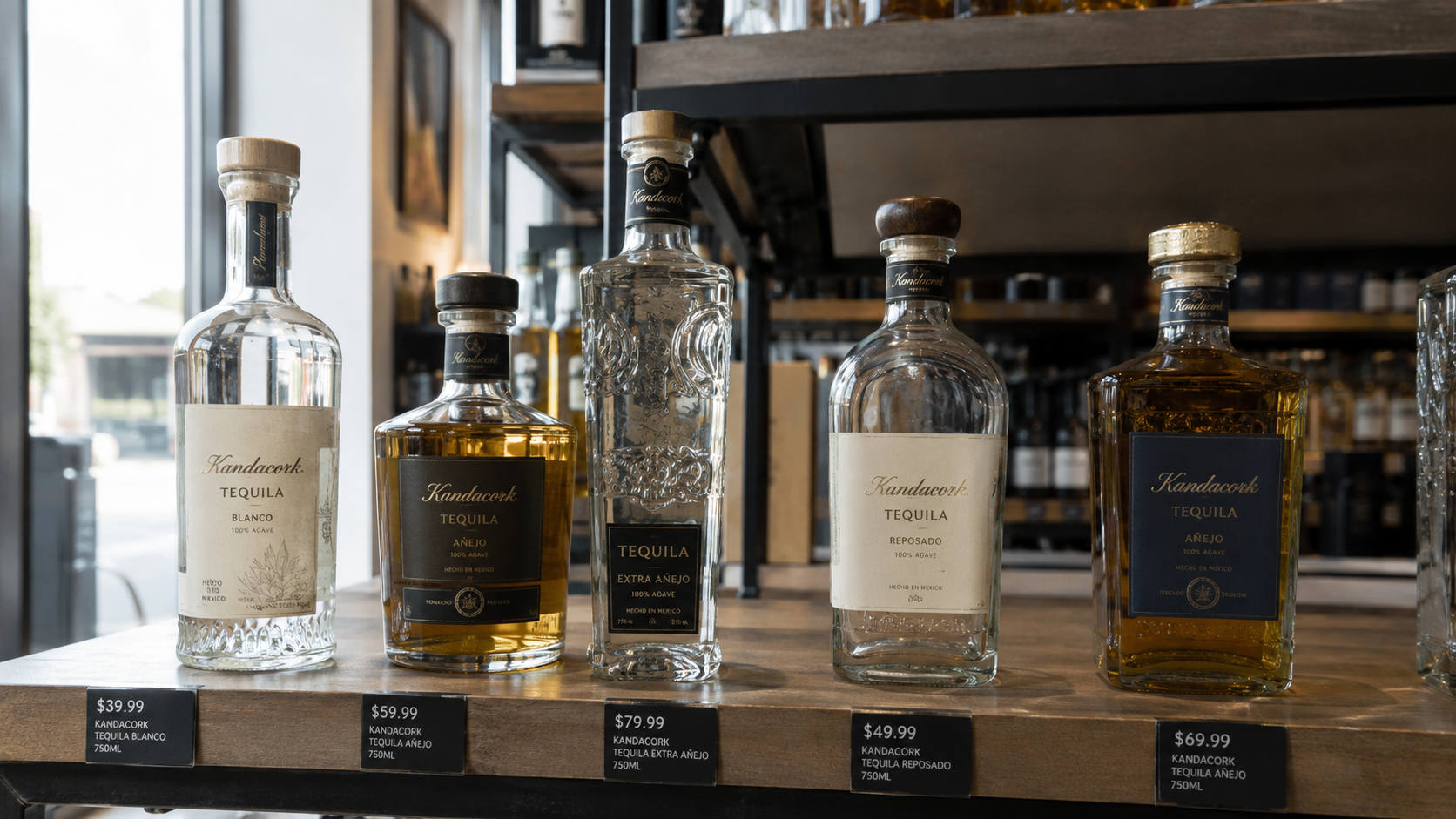
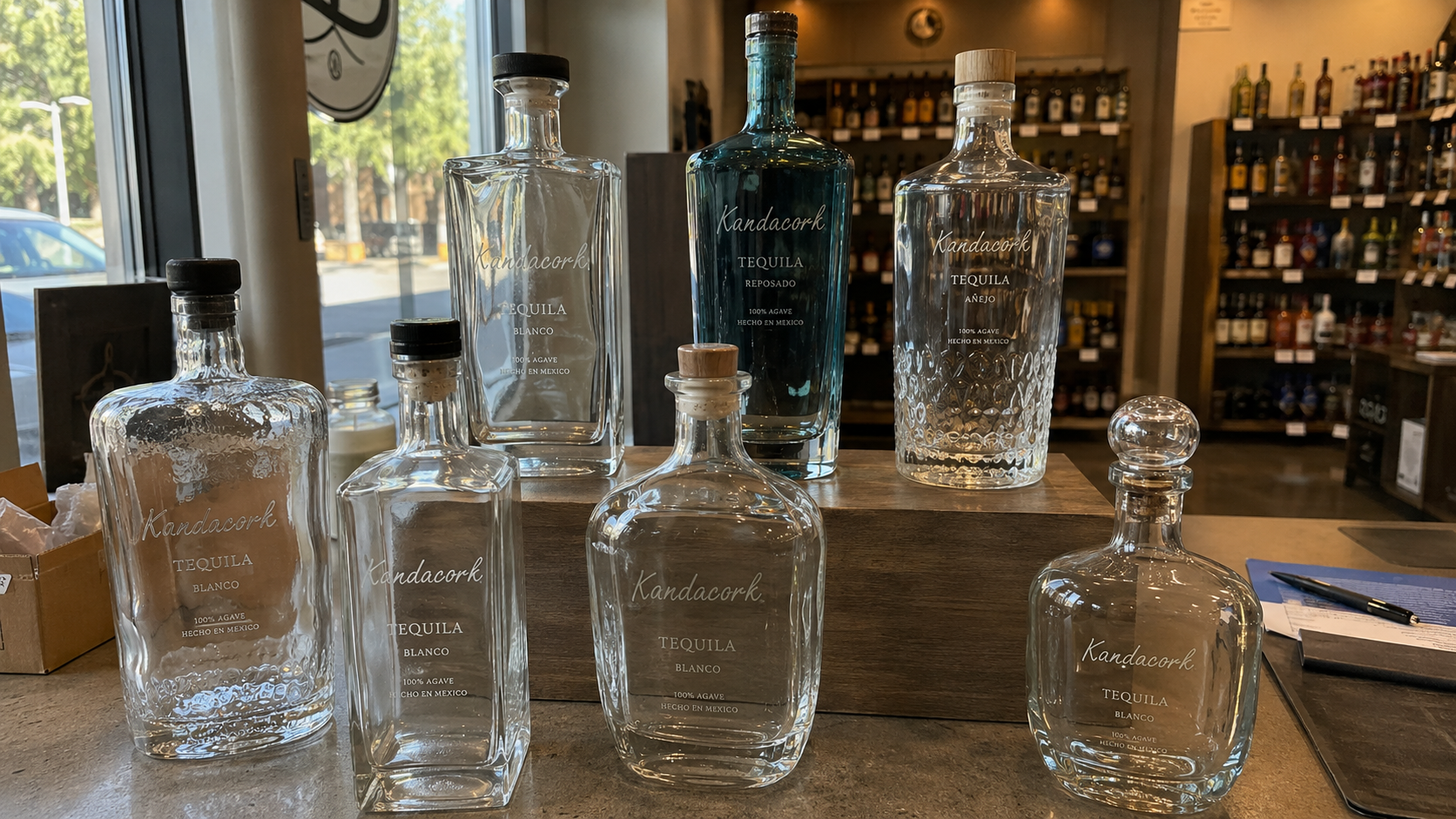
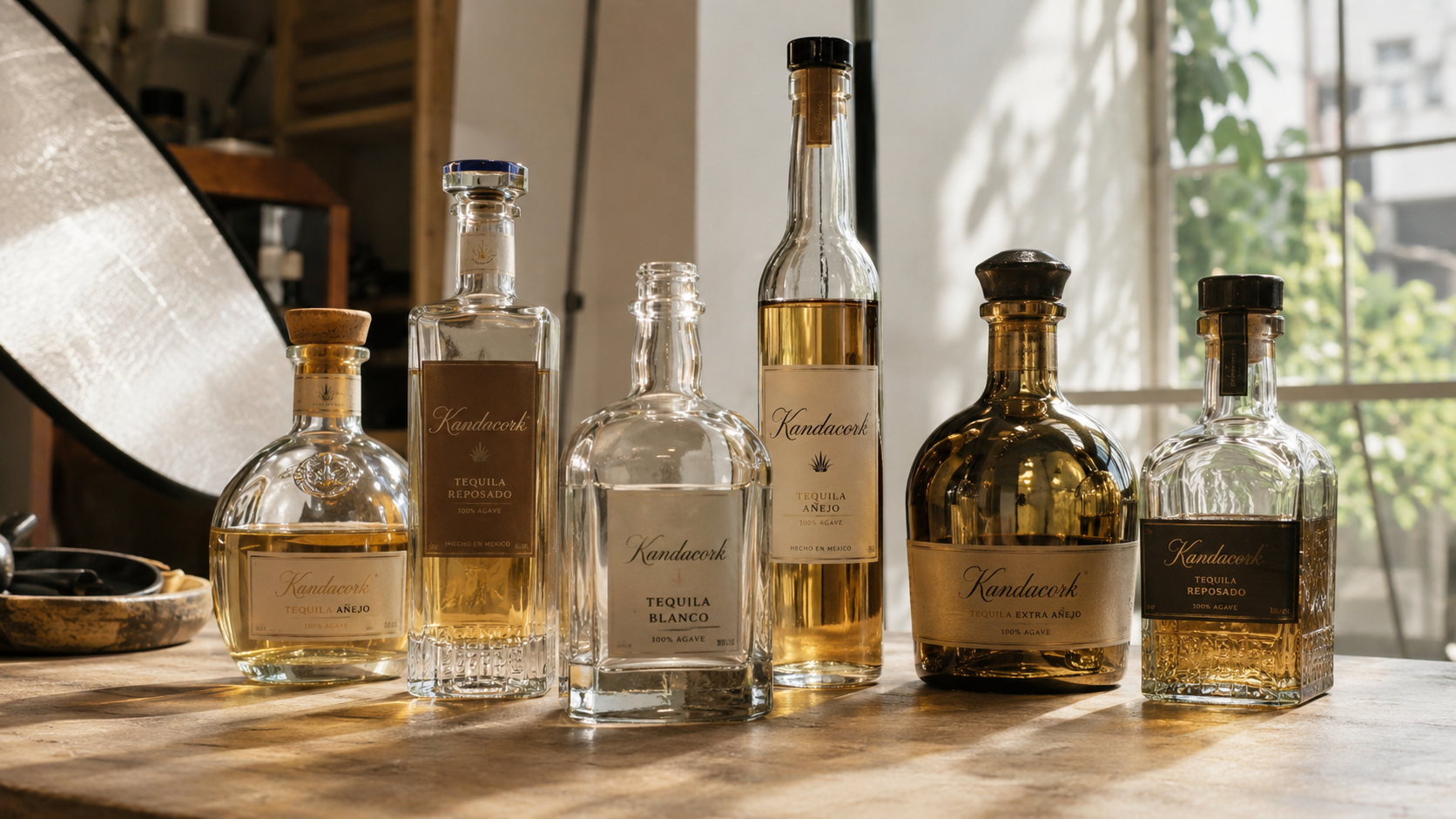
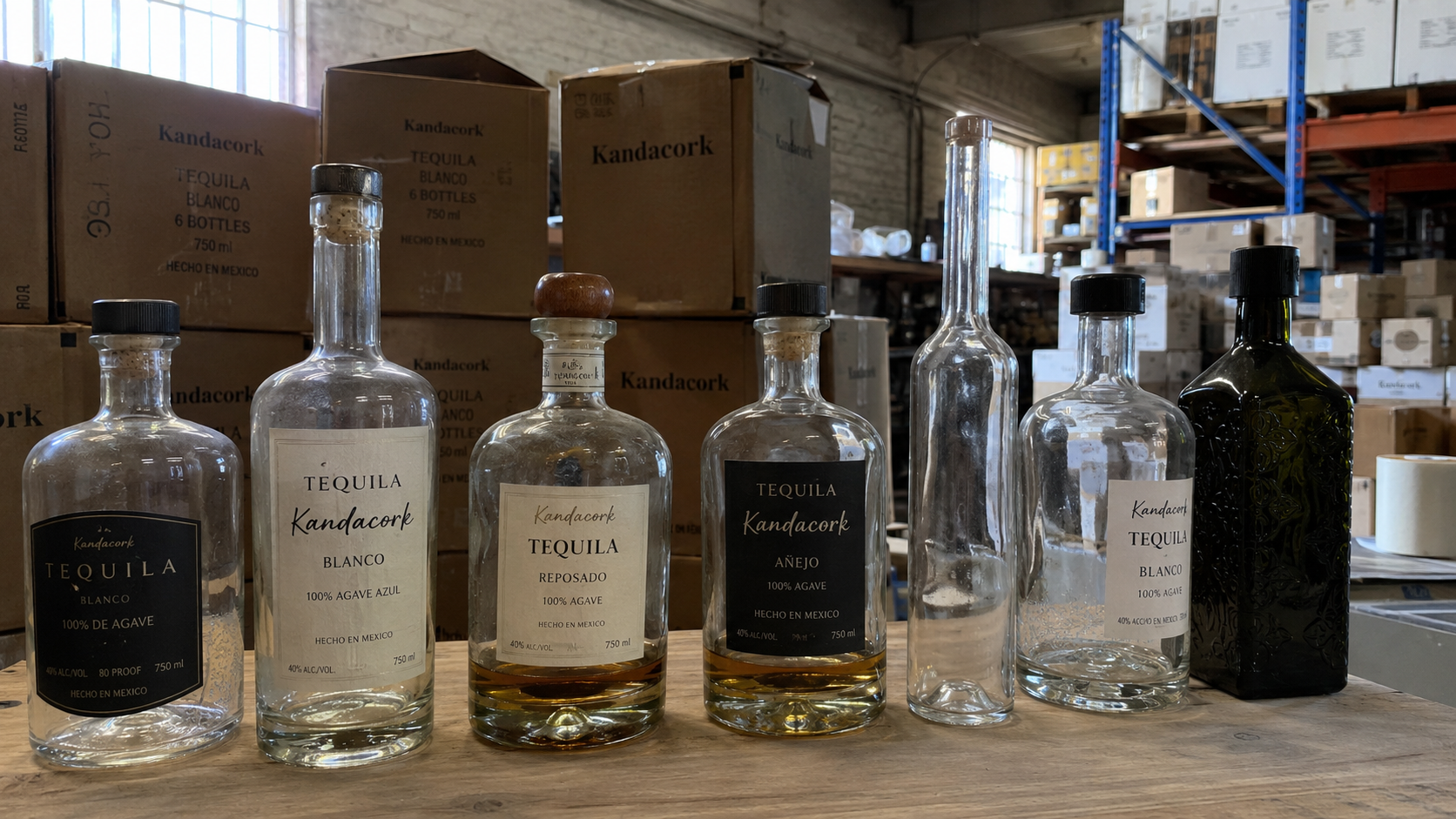
Heavy bottles usually carry higher visual expectations. The stopper should match the bottle body, shoulder width, neck height, label style, capsule, gift box, and product category. A whisky bottle, rum bottle, tequila decanter, botanical gin bottle, and private label liqueur bottle may all need different stopper proportions.
How to Measure Bottle Neck Bore Before Selecting a Stopper
Accurate measurement helps prevent loose fit, hard insertion, and leakage. The top opening is important, but it is not the only dimension that matters.
Use calipers to check the internal neck diameter. Measure more than one bottle from the same batch because glass bottles can vary slightly. If the bottle neck is tapered, measure at different depths, including the top opening, middle insertion area, and expected sealing area.
Before requesting samples or a quotation, record the following details:
- Internal neck bore
- Neck finish type
- Neck height
- Top land width
- Insertion depth
- Bottle capacity
- Bottle weight
- Bottle drawing
- Actual bottle samples
- Expected filling method
In real closure development, Kandacork Closures recommends checking more than one bottle from the same glass batch because small neck tolerance differences can change insertion force and pull-out feel. This is especially important for custom molded heavy glass bottles, where the neck may be thick, tapered, or slightly inconsistent between molds.
For custom heavy glass bottles, physical samples are essential. Drawings are useful, but they may not reveal tolerance differences, surface variation, or fit issues that appear during real stopper testing.
Check Neck Finish Before Choosing a Stopper
Neck finish compatibility should be confirmed before selecting bar-top stoppers. A bar-top stopper is normally used for bottles designed with a cork-mouth or bar-top finish. Bottles designed for screw caps, ROPP closures, or threaded caps usually require different closure systems.
If a buyer wants to change from a screw cap or ROPP cap to a bar-top stopper, the bottle finish must be reviewed first. The neck finish affects insertion depth, sealing area, seating height, top land contact, and tamper-evident options.
This is especially important for heavy glass bottles with custom necks. A stopper may appear suitable in diameter but still fail if the neck finish does not provide enough sealing depth or stable seating. Buyers comparing closure systems can review how bar-top stoppers, screw caps, and ROPP closures differ before confirming the bottle finish.
For export spirits, neck finish should also be reviewed together with filling-line requirements and destination-market packaging expectations.
Heavy Bottle Matching Matrix
Different heavy bottle styles create different closure risks. The stopper should be selected according to bottle shape, product category, positioning, and production requirements.
| Bottle Type | Main Closure Risk | Recommended Stopper Direction |
|---|---|---|
| Heavy base whisky bottle | Stopper looks too small or too light | Wood, metal, or Zamak head with balanced diameter |
| Wide-shoulder rum bottle | Head proportion may look weak | Larger wood or antique metal head |
| Luxury tequila decanter | Weight, breakage, and seating risk | Metal or glass stopper with transport testing |
| Thick-neck gin bottle | Bore tolerance and insertion variation | Synthetic or micro-agglomerated cork shank testing |
| Gift-box spirits bottle | Stopper may interfere with insert or carton | Check head height, diameter, and packing clearance |
| Private label spirits bottle | Cost and repeatability pressure | Standardized shank with custom head decoration |
This matrix helps buyers avoid choosing closures based only on catalog photos. The best stopper must match the bottle’s physical design, commercial positioning, and production environment.
Stopper Head Material Comparison
The stopper head should match the bottle’s visual weight without creating handling or transport problems. For heavy glass spirits bottles, the goal is balance, not simply maximum weight.
| Head Material | Best For | Watch Out For |
|---|---|---|
| Wood | Whisky, rum, gin, brandy, craft spirits | Color consistency, coating quality, moisture control |
| Metal / Zamak | Luxury spirits, limited editions, collector bottles | Weight, pull force, coating adhesion, transport stability |
| Glass | Decanter-style bottles, premium gift packaging | Breakage risk, precise seating, carton protection |
| Aluminum | Modern gin, vodka, tequila, export spirits | Surface finish, color matching, scratch resistance |
| Plastic / Polymer | Cost-sensitive private label or high-volume projects | Premium feel, surface quality, product perception |
Wooden bar-top stoppers are often a strong option for heavy glass bottles because they provide warmth and a high-end appearance without excessive weight. For whisky and other aged spirits, buyers can compare material direction, shank choices, and bottle-fit logic in this wooden bar-top stoppers buyer guide.
Metal and Zamak heads create stronger luxury impact, but they require more testing for pull-out feel and shipping stability. Glass stoppers are visually powerful for decanter-style bottles, while aluminum can support a clean modern look. Polymer heads are practical for cost-controlled projects when design and finish are carefully handled.
Shank Material Comparison
The shank controls compression, sealing, resealing, and pull-out resistance. It should be selected after bottle bore, neck finish, and insertion depth are confirmed.
| Shank Material | Strengths | Best Use Cases | Buyer Consideration |
|---|---|---|---|
| Natural cork | Traditional, premium, renewable appearance | Craft spirits, heritage whisky, rum, brandy | Natural variation requires quality control |
| Micro-agglomerated cork | More consistent than natural cork | Premium and mid-premium spirits | Good balance of cork appearance and dimensional control |
| Synthetic cork | Stable size and predictable compression | Export spirits, private label, high-volume projects | Less natural story, but strong repeatability |
| Polymer insert | Controlled sealing and engineered performance | Custom closures and technical packaging projects | Must be tested with actual bottle and product |
The best shank material depends on bottle bore, alcohol strength, filling method, storage conditions, export route, and consumer resealing expectations.
Fit and Performance Testing Checklist
Before approving bar-top stoppers for bulk production, buyers should request structured testing. Heavy bottles increase the cost of failure because packaging problems are more visible and more expensive to correct.
| Test Item | Why It Matters | What to Check |
|---|---|---|
| Manual insertion test | Confirms basic fit | Stopper should not feel too loose or too tight |
| Bottling-line insertion test | Confirms production compatibility | Works with actual equipment speed and pressure |
| Seating height inspection | Protects finished appearance | No tilt, gap, rocking, or uneven height |
| Pull-out force test | Controls opening experience | Smooth, secure, and comfortable removal |
| Leak test | Reduces storage and shipping risk | Upright, side, and inverted testing where relevant |
| Alcohol compatibility test | Confirms material stability | Use real product, not only water |
| Repeated open-close test | Checks consumer resealing | Stopper should remain secure after repeated use |
| Transport simulation | Supports export safety | Vibration, carton pressure, and temperature change |
A sample that passes visual review but fails functional testing should not be approved for bulk production. For projects involving glass heads or insert structures, buyers may also review a glass stopper neck finish matching guide to understand how neck fit, sealing area, and stopper structure work together.
Common Matching Problems
Loose fit is one of the most common problems. It may happen when the bottle bore is larger than expected, the shank compresses too easily, or the insertion depth is too short.
Hard insertion is another common issue. If the shank is too large, too rigid, or mismatched with the neck profile, the stopper may be difficult to insert by hand or on the filling line.
Leakage can occur even when the stopper appears seated. Vibration, side storage, temperature change, poor compression, or glass tolerance variation can all increase leakage risk.
Tilted seating affects retail presentation. A stopper that rocks, sits unevenly, or leaves a visible gap can make an expensive bottle look poorly finished.
Poor visual proportion is also important. A stopper may fit technically but still look too small, too tall, too light, or too heavy for the bottle body and shoulder.
Compliance and Documentation Buyers Should Ask For
For closures that contact spirits directly, buyers should ask suppliers for food-contact material declarations and material specifications based on the destination market. Documentation should be reviewed before approving samples for commercial production, especially when the project involves export markets, private label distribution, or long shipping routes.
For U.S. spirits projects, this may involve FDA food-contact packaging expectations and TTB packaging requirements. For European sales, buyers may review EU food-contact material principles such as Regulation EC 1935/2004. ISO 9001-style quality systems can also support dimensional consistency, approved sample retention, and batch traceability.
Useful documents may include food-contact material declarations, material specifications, coating or ink information, quality inspection reports, batch traceability, approved sample records, and export packing details.
Supplier Capability Scorecard
A strong closure supplier should offer more than catalog products. For heavy glass bottles, supplier capability directly affects fit, performance, and launch reliability.
| Evaluation Item | Why It Matters |
|---|---|
| Bottle sample review | Prevents poor fit and seating problems |
| Neck bore measurement support | Helps identify tolerance and taper issues |
| Multiple shank options | Allows better matching for different bottle bores |
| Multi-material head production | Supports bottle design and category positioning |
| Custom logo decoration | Improves decoration consistency and product identity |
| Fit and leakage testing | Reduces bulk order and export risk |
| Food-contact documentation | Supports destination-market requirements |
| Export packing experience | Protects heavy bottles and decorated stoppers |
| Golden sample retention | Improves repeat production consistency |
| Sampling and RFQ support | Helps buyers move from research to quotation |
For technical projects, Kandacork Closures can support dimensional checks, visual inspection, material review, and quality and testing for bottle closures before the buyer moves from sample approval to commercial supply.
What to Include in Your Bar-Top Stopper RFQ
A complete RFQ helps the supplier respond faster and more accurately. It also reduces the risk of sample delays, incorrect sizing, or repeated revisions.
Include the following information:
- Bottle drawing
- Physical bottle samples
- Bottle capacity
- Bottle weight
- Neck bore
- Neck finish type
- Insertion depth
- Preferred stopper head material
- Preferred shank material
- Logo artwork
- Surface finish requirement
- Product type
- Alcohol strength
- Filling method
- Filling-line speed if available
- Target order quantity
- Destination market
- Packing method
- Launch timeline
- Target budget or price range
If the bottle is custom molded, do not rely only on drawings. Physical bottle samples are the safest way to confirm closure fit, seating height, visual proportion, and bulk production feasibility.
How Kandacork Closures Supports Custom Stopper Projects
If your bottle uses a heavy base, thick neck, broad shoulder, custom finish, or gift-box structure, prepare bottle samples, drawings, target stopper material, order quantity, and destination market before requesting custom stopper samples.
For custom heavy glass bottles, Kandacork Closures usually recommends reviewing several bottle samples from the same batch before confirming the shank. This helps identify neck tolerance, taper, seating height, insertion depth, and leakage risk before bulk production.
Kandacork Closures can help review bottle dimensions, compare stopper head materials, recommend shank options, support logo decoration, prepare samples, and develop closure specifications for spirits packaging projects.
Available development directions may include wooden bar-top stoppers, metal stoppers, Zamak heads, aluminum heads, glass stoppers, polymer heads, natural cork shanks, micro-agglomerated cork shanks, and synthetic shank solutions.
The goal is not only to make the stopper look refined. The goal is to make it fit correctly, seal reliably, open comfortably, and perform consistently in production.
Conclusion
Matching bar-top stoppers with heavy glass bottles is not only about choosing a shank diameter. It is about matching the whole packaging system: bottle neck bore, finish type, stopper head material, shank compression, pull-out force, leakage resistance, decoration, production method, documentation, export packing, and consumer experience.
A heavy glass bottle creates a higher expectation. The stopper must support that expectation with the right appearance, fit, and performance.
The safest process is to test early. Send bottle samples, drawings, product details, artwork, order quantity, and destination-market requirements before approving bulk production.
For spirits brands, distilleries, bottlers, private label buyers, importers, distributors, and packaging buyers, a well-matched stopper can reduce packaging risk while improving retail presentation and consumer experience. To start a closure review, prepare your bottle drawing, physical samples, neck bore, preferred stopper material, order quantity, and destination market, then request custom bar-top stopper samples or a quotation from Kandacork Closures.
FAQ
What size bar-top stopper fits an 18.5 mm spirits bottle neck?
A 19.5 mm shank is often used as a starting test size for an 18.5 mm bottle bore. Final approval should be based on physical samples, insertion force, pull-out force, leakage testing, and seating height inspection.
What size bar-top stopper fits a 21.5 mm spirits bottle neck?
A 22.5 mm shank is often used as a starting test size for a 21.5 mm bottle bore. Buyers should still test the stopper with real bottles because glass tolerance and shank material can affect performance.
Should a heavy glass liquor bottle use a heavier stopper?
Not always. A heavier stopper may look more substantial, but it can also affect opening comfort, packing stability, and transport safety. The stopper should look proportionate while remaining practical for filling, shipping, and consumer use.
Are wooden bar-top stoppers good for heavy glass bottles?
Yes. Wooden bar-top stoppers are often a strong choice for heavy glass bottles because they offer a high-end appearance without excessive weight. They are suitable for whisky, rum, gin, brandy, craft spirits, and private label projects.
Why does a bar-top stopper leak during shipping?
Leakage may be caused by loose shank fit, bottle bore variation, insufficient insertion depth, poor compression, unsuitable shank material, temperature change, vibration, or side-storage pressure. Leak testing should be done before bulk approval.
Why is the stopper tight on some bottles but loose on others?
This usually happens because glass bottle neck tolerances vary between bottles, molds, or batches. Measuring multiple samples and testing at different insertion depths can help identify the issue.
What information should I send for a custom bar-top stopper quotation?
Send bottle drawings, physical bottle samples, neck bore, neck finish, insertion depth, bottle weight, product type, alcohol strength, preferred stopper material, logo artwork, target order quantity, destination market, and launch timeline.