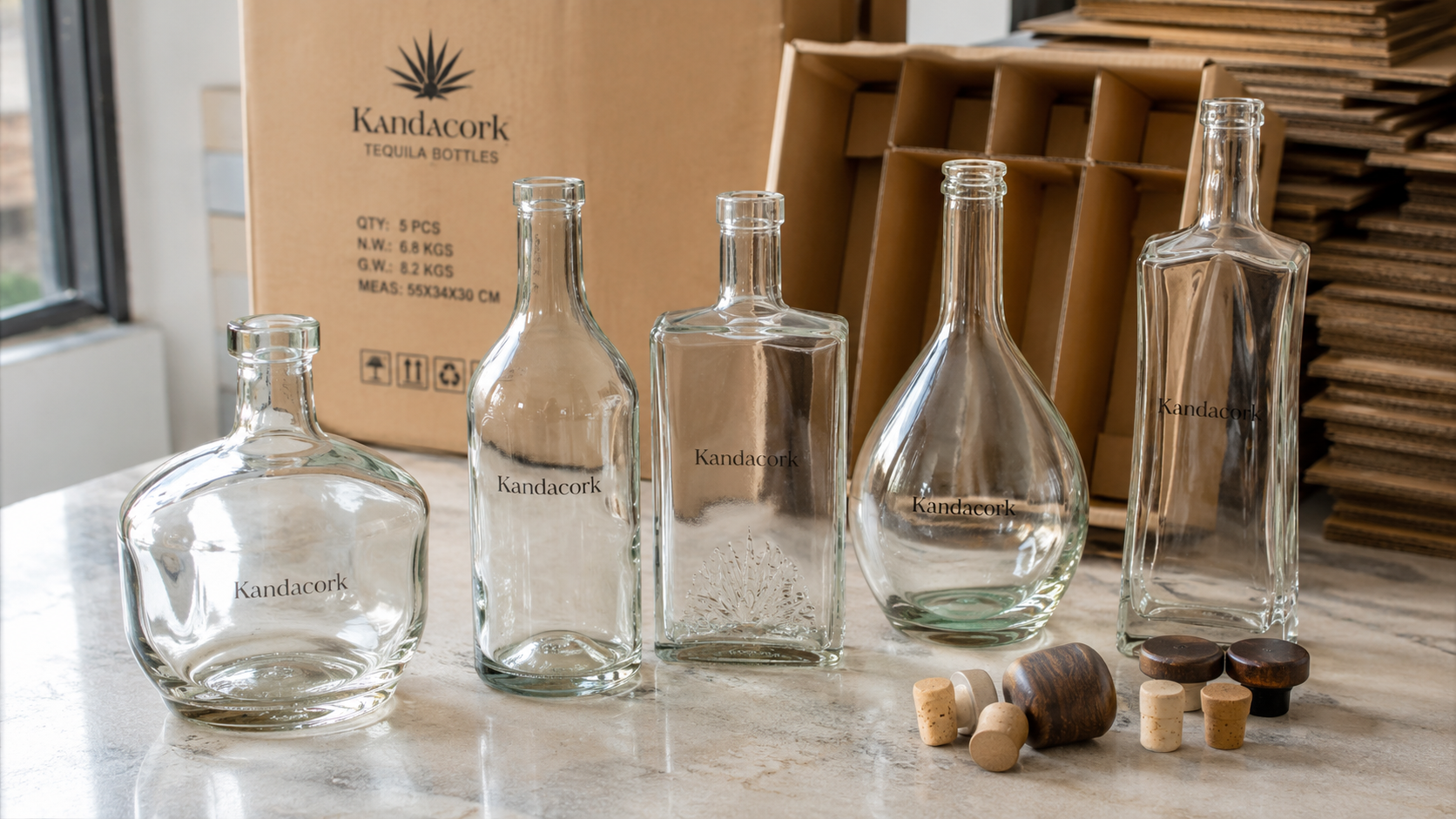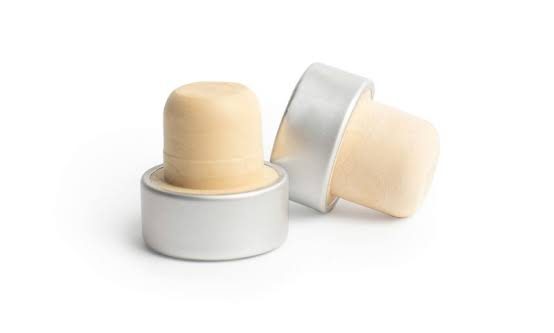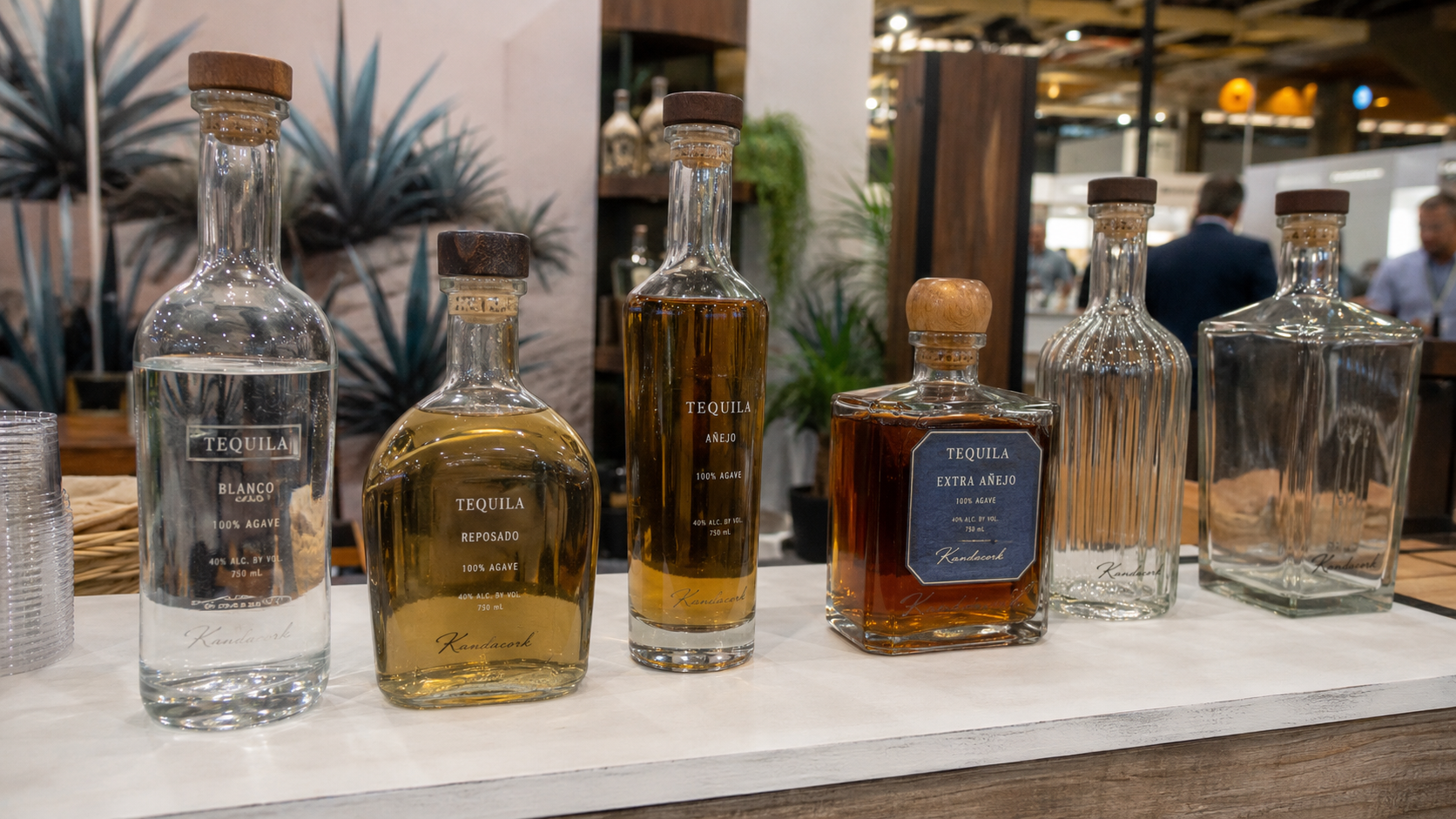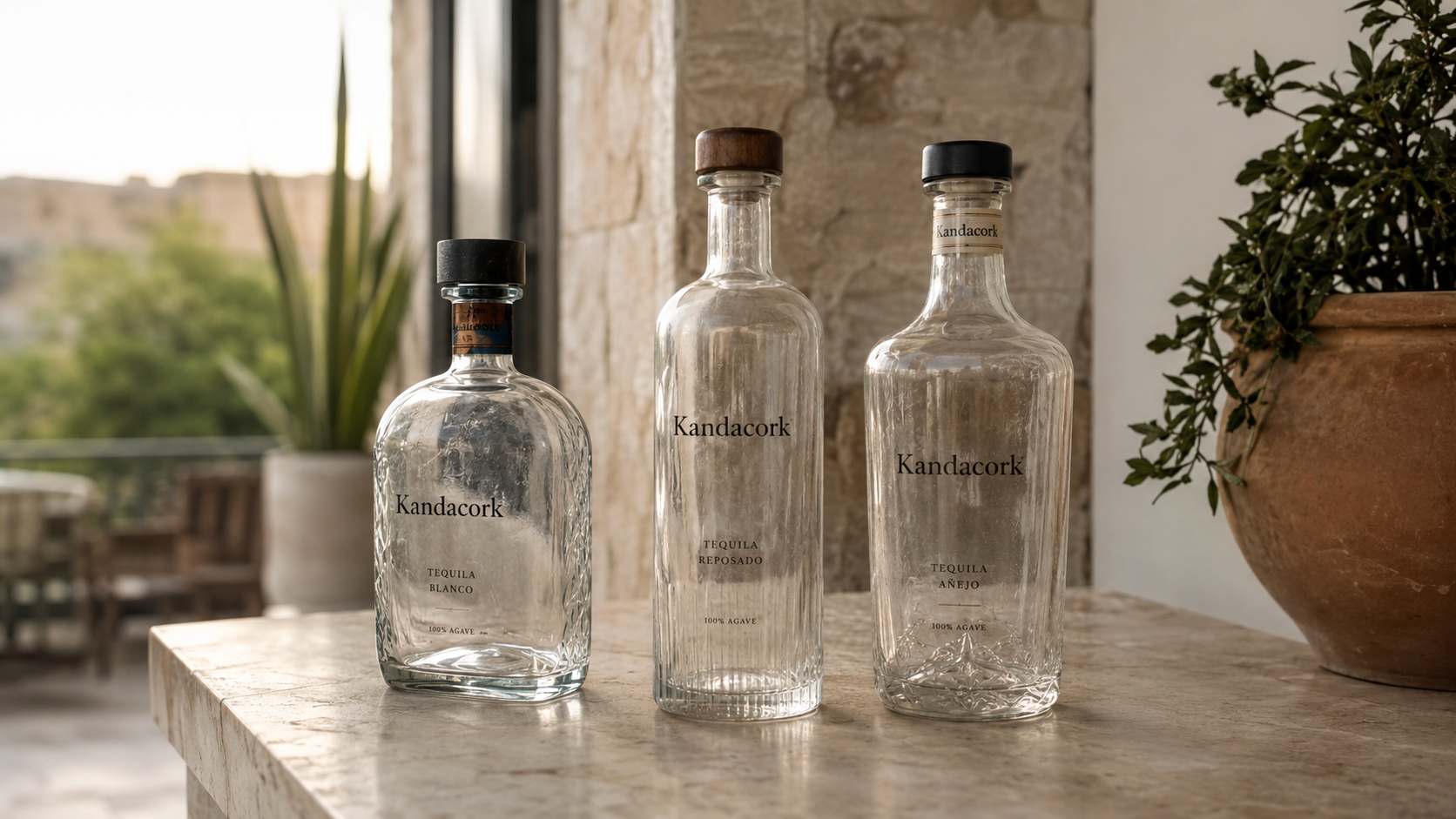
Screw cap liners for spirits are small components with a major influence on sealing performance, product stability, and customer experience. Use this guide before requesting samples, approving a liner material, or placing a bulk order for spirits screw caps.
The visible cap supports shelf appeal, but the liner is the hidden sealing layer that helps reduce leakage, evaporation, aroma loss, oxidation risk, and contamination. For spirits brands, distilleries, bottlers, private-label buyers, and packaging distributors, the wrong liner can create problems during filling, warehousing, export shipping, retail display, and consumer use.
A vodka bottle may need a clean, low-odor liner. A gin may need better botanical aroma retention. A whiskey may require stable torque and low evaporation. A rum or liqueur may need extra compatibility testing because of sugar, colorants, acids, flavor oils, or botanical extracts.
Kandacork Closures supports buyers with bottle-matched caps, liners, sampling, decoration coordination, and bulk supply. Brands can begin with the Kandacork Closures team when they need practical guidance for liquor bottle closure development, liner selection, and production-ready sourcing.
Quick Answer: How to Choose Screw Cap Liners for Spirits
The best screw cap liners for spirits are alcohol-compatible liners that seal evenly against the bottle neck finish, maintain torque after storage, resist leakage during shipping, and do not affect aroma, taste, or color.
For most projects, the buyer should evaluate the spirit type, alcohol by volume, formula complexity, bottle finish, cap format, liner material, filling temperature, application torque, removal torque, tamper-evident needs, and distribution route. A liner should be tested with the actual spirit, not only with water, because ethanol, botanicals, sugar, oils, acids, and colorants may interact differently with packaging materials.
If your project already uses aluminum screw closures, start by reviewing the screw cap closure range and matching the cap format to the bottle finish, liner type, capping machine, and shipment conditions.
What Is a Screw Cap Liner?
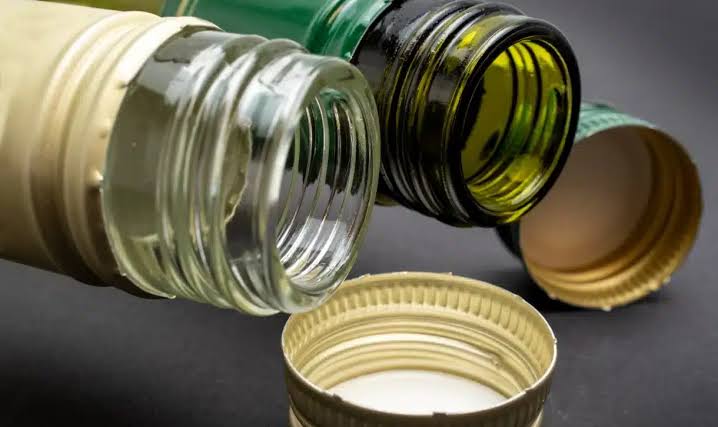
A screw cap liner is the sealing material inside the top of a closure. When the cap is applied, the liner compresses against the glass sealing land to create a protective interface between the liquid and the outside environment.
In spirits packaging, the liner helps prevent leakage, reduce evaporation, protect aroma, support reclosure, and improve the stability of the packed product. The liner works together with the cap shell, thread profile, bottle neck finish, liner thickness, application torque, and filling process.
A premium cap cannot compensate for the wrong liner. A good liner also cannot fix a poor bottle finish or inaccurate torque setting. Reliable spirits packaging comes from the complete closure system, not from one component alone.
Why Spirits Need Special Liner Compatibility
Spirits are more demanding than water or dry products because they contain ethanol. Some formulas also contain botanical oils, sugar, acids, fruit extracts, caramel color, cream ingredients, spices, coffee, or barrel-derived compounds.
These ingredients can influence liner swelling, odor transfer, sealing force, torque retention, and long-term package stability. For this reason, screw cap liners for spirits should be tested with the final commercial liquid.
Food-contact suitability also matters. Buyers selling into the United States should consider FDA food-contact material principles, while brands entering European markets should consider the framework of Regulation (EC) No 1935/2004 for materials and articles intended to contact food. These references do not replace project-specific compliance review, but they highlight why liner materials must be suitable for the intended product and market.
Common Screw Cap Liner Materials for Spirits Bottles
Different liner materials offer different sealing, barrier, and compatibility advantages. The right choice depends on the product formula, cap format, bottle finish, and shipment route.
| Liner Type | Main Benefit | Compatibility Risk | Best-Fit Spirits Use |
|---|---|---|---|
| F-217 foam liner | Good compression and clean sealing | Low to medium | Vodka, whiskey, rum, standard spirits |
| LDPE cone liner | Strong mechanical seal | Medium | Mini bottles, samples, liquid spirits |
| PE foam liner | Cost-effective compression seal | Medium | Short-run spirits and private-label packaging |
| Saranex-style liner | Balanced barrier performance | Low to medium | Gin, premium spirits, export products |
| Tin or high-barrier liner | Strong oxygen barrier | Low to medium | Premium whiskey, botanical spirits, long storage |
| PTFE-faced liner | Strong chemical resistance | Low | High-proof spirits, complex liqueurs, extracts |
| Induction liner | Tamper evidence and freshness support | Project-dependent | Specialty spirits packaging after testing |
F-217 Foam Liners
F-217 foam liners are widely used because they offer good compressibility, cushioning, and clean sealing between the cap and bottle finish. They may be suitable for many standard liquor bottles when compatibility testing confirms performance.
For vodka, whiskey, rum, and many private-label spirits, F-217 can provide a balanced starting point. It is not automatically suitable for every formula, especially high-proof alcohol, botanical spirits, or sweet liqueurs. Buyers should confirm leak resistance, odor neutrality, and torque stability before approving production.
LDPE Cone Liners
LDPE cone liners create a mechanical seal inside the bottle neck. Instead of relying only on a flat top seal, the cone shape contacts the inner neck opening.
This can be useful for mini bottles, samples, and certain liquid spirits where the bottle finish supports cone sealing. The bottle neck must be consistent and dimensionally suitable. If the opening is irregular or the cap is mismatched, the cone may not seat evenly.
PE Foam Liners
PE foam liners are flexible, lightweight, and economical. They can provide basic to moderate sealing performance when the product, cap, and bottle are compatible.
For screw cap liners for spirits, PE foam may be considered for cost-sensitive projects, shorter distribution chains, or private-label programs. Buyers should be cautious when using basic foam liners for high-proof alcohol, export shipments, or complex flavored spirits.
Saranex-Style and High-Barrier Liners
Barrier performance matters when a brand needs stronger control over oxygen exposure, aroma retention, or long-term shelf quality. Wine closure research is useful here because it explains how liner structures influence oxygen transmission. The Australian Wine Research Institute screw cap closure guidance discusses Saranex and Saran Tin liner concepts, which can help packaging teams understand barrier behavior.
Spirits are not wine, so these references should not be copied directly into a specification. A gin, whiskey, rum, or liqueur should still be tested with its own alcohol level, formula, bottle finish, cap, and shipment conditions.
A Saranex-style liner may be useful for premium spirits, botanical gin, aged rum, or export products where aroma retention and shelf confidence matter. Tin-style and other high-barrier liners may be considered for products requiring stronger oxygen protection or longer storage stability.
PTFE-Faced Liners
PTFE-faced liners are used where chemical resistance is a priority. They may be considered for high-proof spirits, botanical concentrates, liqueurs, extracts, and formulas with strong oils or acidic ingredients.
This type of liner is usually more specialized and may cost more than standard foam options, but it can reduce compatibility risk for demanding products. When a formula is complex or sensitive, Kandacork Closures can help evaluate whether a specialty liner should be tested as part of the closure development process.
Best Liner Focus by Spirit Type
The best screw cap liners for spirits depend on the liquid inside the bottle. A neutral vodka does not create the same packaging challenge as a botanical gin, aged rum, tequila, or sweet liqueur.
| Spirit Type | Main Packaging Risk | Recommended Liner Focus |
|---|---|---|
| Vodka | Odor neutrality and clean taste | Low-odor F-217 or tested PE liner |
| Gin | Botanical aroma loss and oil interaction | Saranex-style or tested barrier liner |
| Whiskey | Evaporation and premium opening feel | Torque-stable liner with aroma retention |
| Rum | Sugar, color, and flavor interaction | Compatibility-tested foam or barrier liner |
| Tequila | Tamper evidence and export stability | ROPP-compatible liner with stable seal |
| Brandy | Aroma retention and premium presentation | Barrier-focused or torque-stable liner |
| Liqueur | Sugar, acids, oils, and colorants | PTFE-faced or specialty-tested liner |
| Mini spirits | Small finish and leakage risk | LDPE cone or compact tested liner system |
ROPP Caps vs Continuous-Thread Screw Caps
A liner decision is connected to the cap format. The two common screw closure options for spirits are ROPP caps and continuous-thread screw caps.
ROPP means roll-on pilfer-proof. ROPP aluminum caps are applied by capping equipment that forms the thread around the bottle finish. They are widely used in spirits packaging because they support tamper evidence, strong shelf appeal, high-volume production, and export stability.
Continuous-thread screw caps are applied by twisting onto a matching threaded neck finish. They are often used for smaller batches, samples, gift sets, private-label bottles, RTD formats, and specialty spirits.
The liner must match the closure format. ROPP closure solutions need liners that perform under machine application and maintain seal integrity after thread formation. Continuous-thread liners must compress correctly under twist-on torque and support clean reclosure after opening.
Matching the Liner with Bottle Neck Finish
Many leakage problems are not caused by the liner alone. They happen because the cap, liner, and glass bottle finish do not match.
Before ordering screw cap liners for spirits, buyers should confirm the bottle neck diameter, thread profile, finish height, sealing land width, cap skirt height, liner inner diameter, liner thickness, application torque, and removal torque.
The sealing land is especially important. This is the surface where the liner compresses against the glass. If the sealing land is narrow, chipped, uneven, or poorly matched to the liner, leakage risk increases.
For projects that involve new bottles or a full packaging redesign, teams may also need to align closure fit with bottle shape, capacity, decoration area, label panels, and export cartons. The Glass Packaging Institute is a useful industry reference for glass container context, while Kandacork Group resources for spirits bottle design and bottle supply can support buyers who need bottle and closure coordination from the start.
Procurement Specification for Screw Cap Liners for Spirits
A clear specification helps suppliers recommend the right liner faster. It also reduces sampling errors, delays, and mismatched components.
| Specification Item | Example Detail |
|---|---|
| Cap type | ROPP aluminum cap or continuous-thread screw cap |
| Bottle finish | Neck diameter, thread profile, finish height, sealing land |
| Liner requirement | F-217, Saranex-style, PTFE-faced, LDPE cone, or tested equivalent |
| Product details | Spirit type, ABV, oils, sugar, acids, botanicals, colorants |
| Capping requirement | Application torque, removal torque, equipment type |
| Testing requirement | Leak, torque, temperature, transport, sensory, compatibility |
| Decoration requirement | Printing, embossing, color matching, top logo, side artwork |
| Order stage | Sample request, pilot run, production approval, bulk order |
This section is especially useful for procurement teams, packaging engineers, purchasing managers, and spirits founders preparing to request closure samples.
Practical Testing Before Bulk Orders
Testing is the most important step before confirming bulk screw cap liners for spirits. A closure that looks good in a catalog may fail after filling, storage, or export shipping.
| Test Area | What to Check | Why It Matters |
|---|---|---|
| Product compatibility | Swelling, odor, color change, liner deformation | Confirms alcohol and formula compatibility |
| Leak testing | Upright, inverted, and side-position storage | Detects seal failure before shipment |
| Torque testing | Application torque and removal torque | Balances seal strength and consumer opening |
| Torque retention | Torque after storage and temperature cycling | Shows whether the cap loosens over time |
| Temperature testing | Warm storage, cold storage, temperature changes | Simulates warehouse and shipping conditions |
| Transport testing | Vibration, carton staining, cap back-off | Reduces export and delivery risk |
| Sensory testing | Aroma, taste, visual changes | Protects premium product quality |
Packaging teams can also use recognized methods as part of an internal quality plan. For example, ASTM D2063/D2063M covers torque retention measurement for container and continuous-thread closure systems, making it relevant when evaluating application torque, removal torque, and torque stability under controlled conditions.
Product Compatibility Testing
The bottle should be filled with the actual spirit, not only with water. Samples should be stored upright, inverted, and on their side. The liner should be checked for swelling, discoloration, odor, taste impact, visible deformation, leakage, or cap loosening.
For flavored spirits and liqueurs, compatibility testing should be longer and more detailed because the formula is usually more complex. A small change in citrus oil, botanical extract, sugar level, colorant, or acid content can affect liner behavior.
Leak, Torque, and Transport Testing
Leak testing should include freshly capped bottles and bottles stored for a defined period. Some closures pass immediately after capping but fail after torque relaxation, vibration, or temperature change.
Application torque must be high enough to create a reliable seal, but not so high that the liner becomes over-compressed or the consumer struggles to open the bottle. Removal torque should be checked after filling, after storage, and after transport simulation.
For export spirits, torque retention is especially important. Long shipping routes can expose bottles to vibration, heat, cold, pressure changes, and carton compression. After transport testing, buyers should inspect leakage, carton staining, cap loosening, liner movement, and overall bottle appearance.
Decoration, Branding, and Shelf Presentation
A spirits closure must seal well, but it also has to support the brand image. Metal color, top printing, embossing, sidewall artwork, matte finish, brushed finish, pilfer band design, and tactile detail can all influence perceived quality.
For premium and private-label spirits, liner choice should be coordinated with cap decoration and production feasibility. A beautiful cap is not enough if it does not run reliably on the capping line. Buyers can review custom color and finish options for closure appearance, while broader decoration and branding support can help align bottle graphics, closure artwork, and shelf presentation.
Coordinating Closures with Bottles and Packaging
Screw cap liners for spirits perform best when bottle, closure, and packaging decisions are made together. A cap supplier should understand the neck finish, glass tolerance, fill volume, closure artwork, capping equipment, case pack, pallet pattern, and destination market.
Kandacork’s closures and stoppers portfolio helps buyers compare screw caps, ROPP caps, non-refillable systems, capsules, shrink sleeves, and bar-top closures. For larger projects, integrated glass packaging programs can help coordinate bottles, closures, decoration, sampling, quality review, and export packing under one group structure.
Sustainability may also influence the final packaging brief. Brands considering recycled-content glass, lightweighting, refill concepts, or circular packaging targets can review eco glass packaging options alongside closure performance requirements.
Common Mistakes When Choosing Screw Cap Liners for Spirits
Choosing by price only is one of the most common mistakes. A low-cost liner can become expensive if it causes leakage, shipment rejection, product loss, or brand damage.
Testing with water instead of the real spirit is another major risk. Water may pass a basic leak test, but it cannot show how ethanol, botanical oils, sugar, acids, or colorants will affect the liner.
Ignoring the bottle neck finish can also cause failure. A cap and liner can only perform well if the glass finish is accurate and compatible.
Forgetting removal torque creates consumer experience problems. A bottle may be sealed, but if it is too difficult to open, the closure still fails from a market perspective.
Treating wine liner data as automatically valid for spirits is also risky. Wine closure science is useful, especially for oxygen transmission and liner structures, but spirits have different alcohol levels, formulas, storage needs, and consumer expectations.
Buyer Checklist: What to Send Before Sampling
To receive accurate closure and liner recommendations, buyers should prepare detailed packaging information before requesting samples.
| Information Needed | Why It Matters |
|---|---|
| Spirit type | Different spirits create different sealing risks |
| Alcohol by volume | Higher ABV may require stronger compatibility testing |
| Formula details | Sugar, oils, acids, botanicals, and colorants affect liner choice |
| Bottle capacity | Cap size and liner design depend on bottle format |
| Bottle neck finish drawing | Confirms thread, finish height, and sealing land |
| Physical bottle samples | Allows real fit and torque testing |
| Cap type | ROPP and continuous-thread caps need different liner matching |
| Filling temperature | Heat can affect liner compression and torque |
| Capping machine type | Machine settings influence closure performance |
| Tamper-evident requirement | Determines closure structure and cap format |
| Decoration needs | Printing, embossing, and color matching affect cap selection |
| Target market | Export markets may need stronger testing |
| Shipping route | Long-distance transport increases leakage risk |
| Order quantity | Supports sampling, production planning, and lead time control |
Request Screw Cap Liner Samples from Kandacork Closures
Kandacork Closures helps spirits brands move from closure selection to production-ready packaging. Buyers can request screw cap liner samples by sharing the bottle drawing, physical bottle sample, spirit type, ABV, formula risk factors, cap format, decoration needs, and target order quantity.
The sample process can help confirm cap fit, liner compression, sealing performance, torque range, tamper-evident design, and visual appearance before mass production.
For new spirits brands, this reduces packaging risk during launch. For established brands, it supports redesigns, cost optimization, premium upgrades, and export packaging improvement.
Send your bottle neck finish drawing, spirit type, ABV, target cap format, liner requirements, decoration details, and order quantity to request a custom closure quote before bulk production.
FAQ
What are screw cap liners for spirits?
Screw cap liners for spirits are sealing materials placed inside bottle caps. They compress against the bottle finish to help prevent leakage, evaporation, aroma loss, contamination, and unstable shelf performance.
What is the best liner for liquor bottles?
The best liner depends on the spirit type, alcohol content, bottle finish, cap design, filling process, and shipping conditions. F-217, LDPE cone, PE foam, Saranex-style, high-barrier, and PTFE-faced liners may all be suitable in different projects.
Can one liner work for whiskey, vodka, gin, rum, and liqueur?
One liner may work across several spirits, but it should not be assumed. Neutral vodka, botanical gin, aged whiskey, sweet rum, and flavored liqueur can interact differently with liner materials.
Do spirits bottles need oxygen barrier liners?
Some spirits are less oxygen-sensitive than wine, but oxygen barrier performance can still matter for aroma retention, oxidation control, premium shelf life, and export packaging stability.
How do I prevent screw cap leakage on spirits bottles?
Use a liner that matches the product formula, cap type, and bottle neck finish. Control application torque, test with the actual spirit, and run leak, torque, temperature, and transport tests before bulk production.
Are ROPP caps better than standard screw caps for spirits?
ROPP caps are often preferred for spirits because they provide tamper evidence, strong shelf appeal, and reliable production performance. Continuous-thread screw caps can also work well for samples, small batches, gift sets, and specialty bottles.
Should I test screw cap liners before placing a bulk order?
Yes. Sample testing helps confirm alcohol compatibility, sealing performance, torque stability, odor neutrality, liner condition, and transport resistance before mass production.
What information should I send for liner matching?
Send the spirit type, ABV, formula details, bottle neck finish drawing, physical bottle samples, cap type, filling temperature, capping machine details, tamper-evident requirements, decoration needs, target market, shipping route, and order quantity.
Conclusion: Choose Screw Cap Liners for Spirits as a Complete System
Screw cap liners for spirits are technical sealing components, not simple accessories. They affect leakage control, evaporation, aroma retention, oxidation protection, product stability, consumer experience, and brand trust.
The right liner depends on alcohol content, formula complexity, cap type, bottle neck finish, torque control, filling conditions, and distribution environment. A premium cap cannot solve a poor liner match, and a good liner cannot fix an incompatible bottle finish.
For the best result, choose the closure system as a whole. Review the bottle drawing, select the right cap format, match the liner material, test with the real spirit, and confirm performance before bulk production.
Kandacork Closures helps spirits brands, distilleries, private-label buyers, and packaging distributors source screw caps, ROPP closures, compatible liners, and premium closure solutions for reliable, market-ready spirits packaging.