For spirits brands, a stopper is more than a closure. It is part of the first-touch experience, the shelf presentation, the resealing function, and the customer’s perception of quality. When packaging buyers compare aluminium stoppers vs metal stoppers, they are usually deciding which closure will support the right balance of appearance, weight, sealing reliability, production efficiency, compliance, and cost.
The simplest distinction is that aluminium stoppers are one type of metal stopper. In real spirits packaging projects, however, “metal stoppers” often refers to a wider group of decorative T-top closures made from aluminium, zinc alloy, zamak, stainless steel, plated metal, or mixed-material structures.
Aluminium stoppers are usually the better choice for brands that want a lightweight, modern, cost-efficient metallic finish. Broader metal stoppers are often better for brands that need a heavier luxury feel, sculptural detailing, gift-pack impact, or limited-edition value. For buyers sourcing custom aluminium bar-top stoppers, the decision should always connect material choice with bottle neck fit, shank design, decoration method, market requirements, and filling-line performance.
Quick Answer: Aluminium Stoppers vs Metal Stoppers
Aluminium stoppers are best for spirits bottles that need a clean metallic look, moderate weight, consistent color control, and scalable customization. Metal stoppers are better when the project needs extra weight, a more luxurious hand feel, complex shapes, or collectible packaging value.
The stopper head affects appearance, grip, weight, and brand perception. The cork, micro-agglomerated cork, synthetic cork, or polymer shank controls most of the sealing performance. A well-developed aluminium stopper with the right shank can perform better than a heavy metal stopper that does not match the bottle neck correctly.
For whisky, rum, gin, vodka, tequila, brandy, liqueur, and premium ready-to-drink spirits, the best closure is not simply the most expensive one. It is the one that fits the bottle, supports the brand story, runs reliably on the line, and feels right in the customer’s hand.
Aluminium Stoppers vs Metal Stoppers: Buyer Comparison
| Factor | Aluminium stoppers | Broader metal stoppers |
|---|---|---|
| Material scope | Aluminium head with cork, synthetic cork, or polymer shank | Aluminium, zinc alloy, zamak, stainless steel, plated metal, or mixed materials |
| Weight | Usually lighter and easier to scale across SKUs | Often heavier, depending on alloy, wall thickness, and shape |
| Brand style | Modern, clean, precise, technical, contemporary | Luxury, sculptural, heritage, collectible |
| Cost profile | Often more cost-efficient for premium ranges | Can be higher due to casting, plating, tooling, polishing, and protective packing |
| Customization | Brushing, anodizing, laser engraving, printing, embossing, color matching | Casting, plating, engraving, inserts, raised emblems, textured forms |
| Best use cases | Gin, vodka, tequila, rum, whisky, liqueur, private-label spirits | Luxury whisky, aged rum, extra añejo tequila, cognac, limited editions |
| Bottling-line fit | Strong when shank dimensions and head tolerances are controlled | Strong when weight, balance, and insertion behavior are tested |
| Sustainability position | Aluminium has strong recyclability potential | Depends on alloy, coating, plating, separability, and local recycling systems |
| Luxury impact | Premium and modern | Stronger heavy-feel and collector appeal |
This comparison shows why aluminium stoppers vs metal stoppers is not only a material question. It is a packaging strategy question. A practical buyer should consider stopper head design, shank behavior, closure weight, retail price position, production volume, and market expectations together.
What Are Aluminium Stoppers?
Aluminium stoppers are bar-top or T-top closures made with an aluminium head and a cork, agglomerated cork, synthetic cork, or polymer shank. The aluminium head remains visible above the bottle neck, while the shank compresses inside the glass finish to create a resealable closure.
Aluminium bar-top stoppers are common in premium spirits packaging because they deliver a clean metallic appearance without excessive closure weight. They are especially suitable for modern gin bottles, vodka bottles, tequila bottles, rum bottles, whisky bottles, liqueur bottles, and multi-SKU private-label ranges.
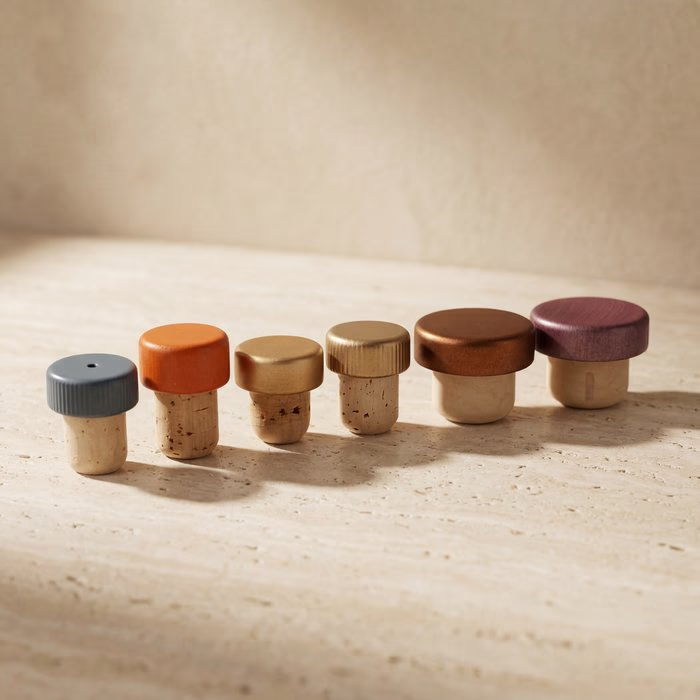
Common aluminium stopper finishes include brushed silver, polished silver, matte black, anodized colors, champagne gold, copper tone, gunmetal, textured sidewalls, laser-engraved logos, embossed tops, debossed icons, and printed brand details.
Aluminium is also useful when a brand needs portfolio consistency. A distillery may use the same stopper structure across several expressions while changing the top color, sidewall finish, logo treatment, or shank specification for each SKU.
What Are Metal Stoppers?
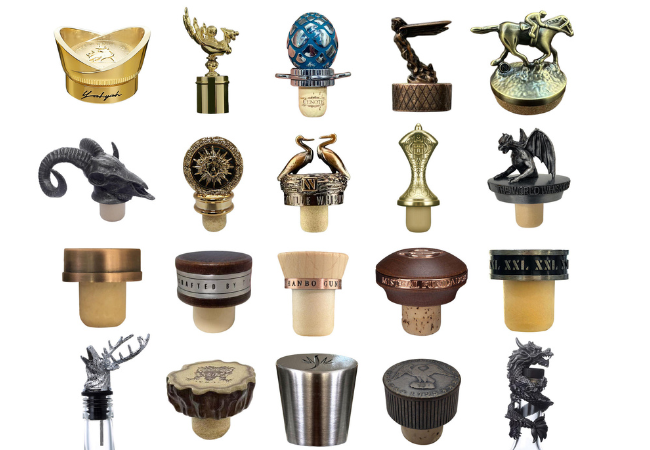
Metal stoppers are a broader closure category. They may include aluminium stoppers, but the phrase often refers to premium decorative stopper heads made from zinc alloy, zamak, stainless steel, plated metal, or multi-material structures. Buyers evaluating custom metal stoppers usually care about weight, shape, finish depth, brand visibility, and high-end presentation.
A metal stopper typically combines a decorative head with a cork or synthetic shank. The head creates the visual and tactile experience. The shank creates the fit and seal.
Metal stoppers are common in higher-value spirits where weight and ceremony matter. They are often used for aged whisky, premium rum, tequila extra añejo, cognac, brandy, luxury gin, special-edition vodka, travel retail packs, and collector bottles.
A heavier metal stopper can make a bottle feel more substantial. It can also carry a sculptural icon, family crest, brand emblem, embossed seal, or custom form that becomes part of the product identity. The tradeoff is that broader metal stoppers may require more tooling, tighter finish control, more scratch protection, longer sampling, and higher packaging cost.
Which Is Better for Premium Spirits Bottles?
For modern premium spirits, aluminium stoppers are often the stronger choice because they offer a refined metallic look, stable production repeatability, and flexible branding. They suit bottles that need a polished but efficient premium closure.
For luxury or limited-edition spirits, broader metal stoppers may be stronger because they can provide more weight, deeper texture, and higher gift value. A premium gin brand with a clear bottle and botanical label may choose a brushed aluminium stopper to keep the design fresh and contemporary. A dark heavy-base rum bottle may use a bronze-tone metal stopper to reinforce maturity and shelf presence.
The best choice depends on brand positioning. Aluminium communicates modern premium value. Heavier metal communicates luxury, weight, and ceremony. A buyer comparing aluminium stoppers vs metal stoppers should ask how the closure will support the product’s target price, retail channel, consumer occasion, and long-term sourcing plan.
Best Choice by Spirits Category
Different spirits categories have different visual codes and handling expectations. The right stopper should support both the product story and the bottling requirement.
| Spirit category | Recommended stopper direction |
|---|---|
| Gin | Brushed, silver, black, or colored aluminium stoppers for modern botanical, craft, or premium positioning |
| Vodka | Matte or polished aluminium stoppers for clean, minimal, technical, or high-purity branding |
| Whisky | Heavy metal stoppers for luxury releases; aluminium stoppers for modern premium or travel-friendly lines |
| Rum | Bronze-tone, dark metal, or heavier metal stoppers for aged rum; aluminium for contemporary rum ranges |
| Tequila | Metal stoppers for gift packs and extra añejo products; aluminium for scalable blanco, reposado, or premium SKUs |
| Brandy and cognac | Heavier metal stoppers for heritage, ceremony, and gift presentation |
| Liqueur | Colored aluminium stoppers for flavor differentiation, seasonal products, and multi-SKU ranges |
| RTD spirits | Lightweight aluminium closures for modern, scalable, and cost-sensitive premium packaging |
This category-based approach helps buyers avoid generic material selection. A stopper should support how the bottle is displayed, opened, resealed, shipped, and remembered.
Design and Brand Positioning
Closure material should support the bottle’s visual language. Aluminium stoppers work well with minimalist labels, frosted glass, clear glass, tall cylindrical bottles, short modern bottles, metallic label systems, and color-coded product ranges. They can look technical, clean, bright, and contemporary.
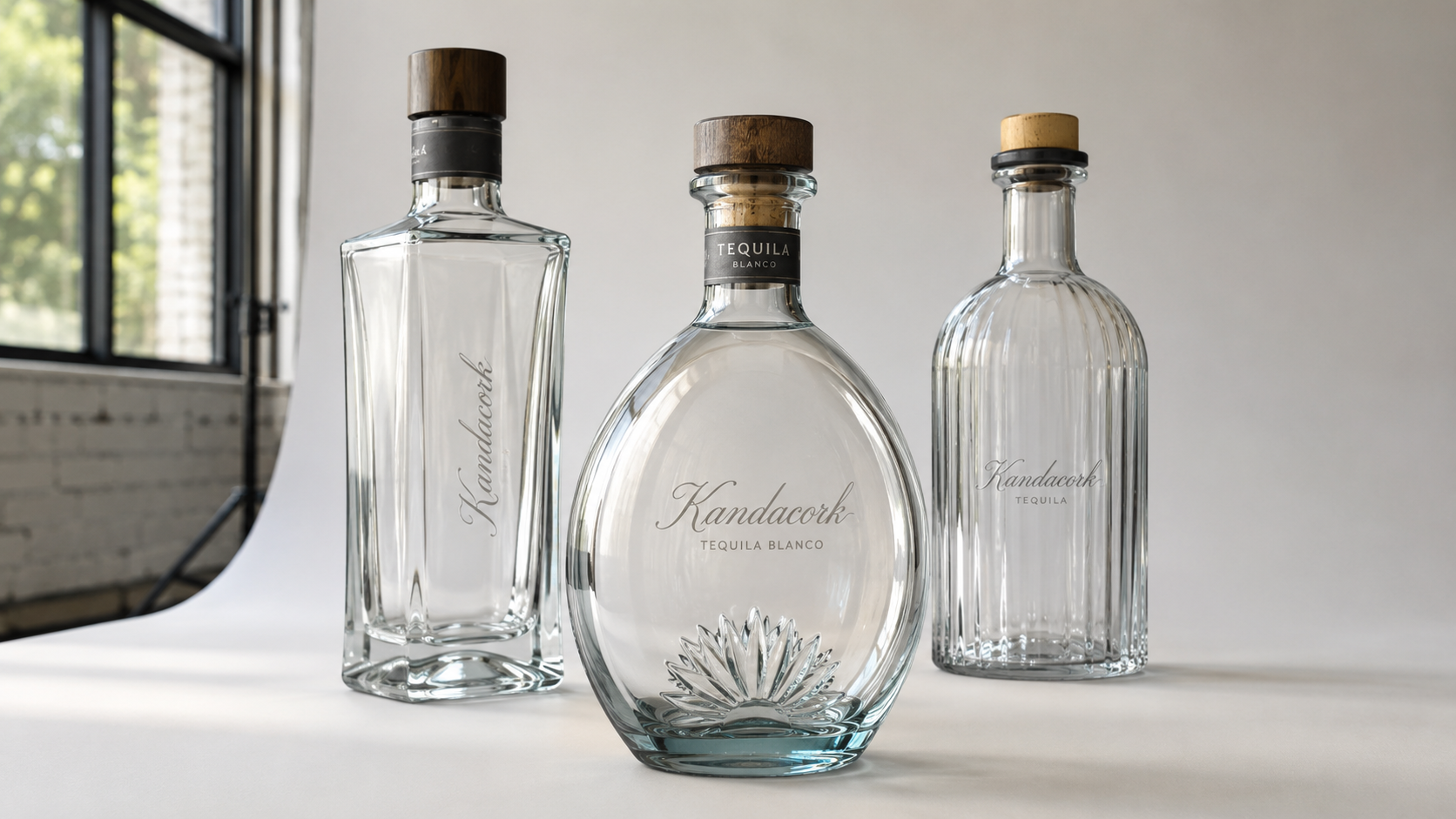
A matte black aluminium stopper can support a premium vodka brand with a monochrome label. A brushed silver aluminium stopper can complement a craft gin bottle with a botanical design. A gold-tone aluminium closure can help a tequila or liqueur bottle feel more festive without becoming too heavy.
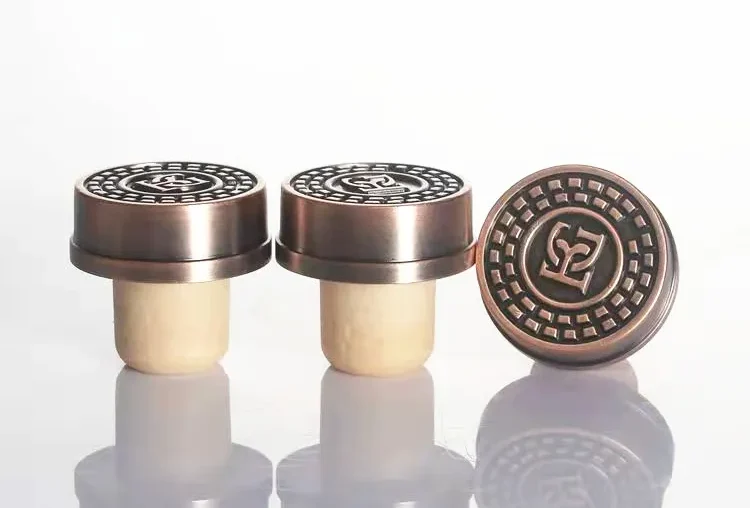
Broader metal stoppers are stronger when the stopper itself needs to become a brand asset. A cast metal top can hold a crest, animal icon, embossed seal, geometric symbol, or sculptural form. This is useful for whisky, rum, tequila, brandy, cognac, and limited-edition spirits that rely on giftability and shelf drama.
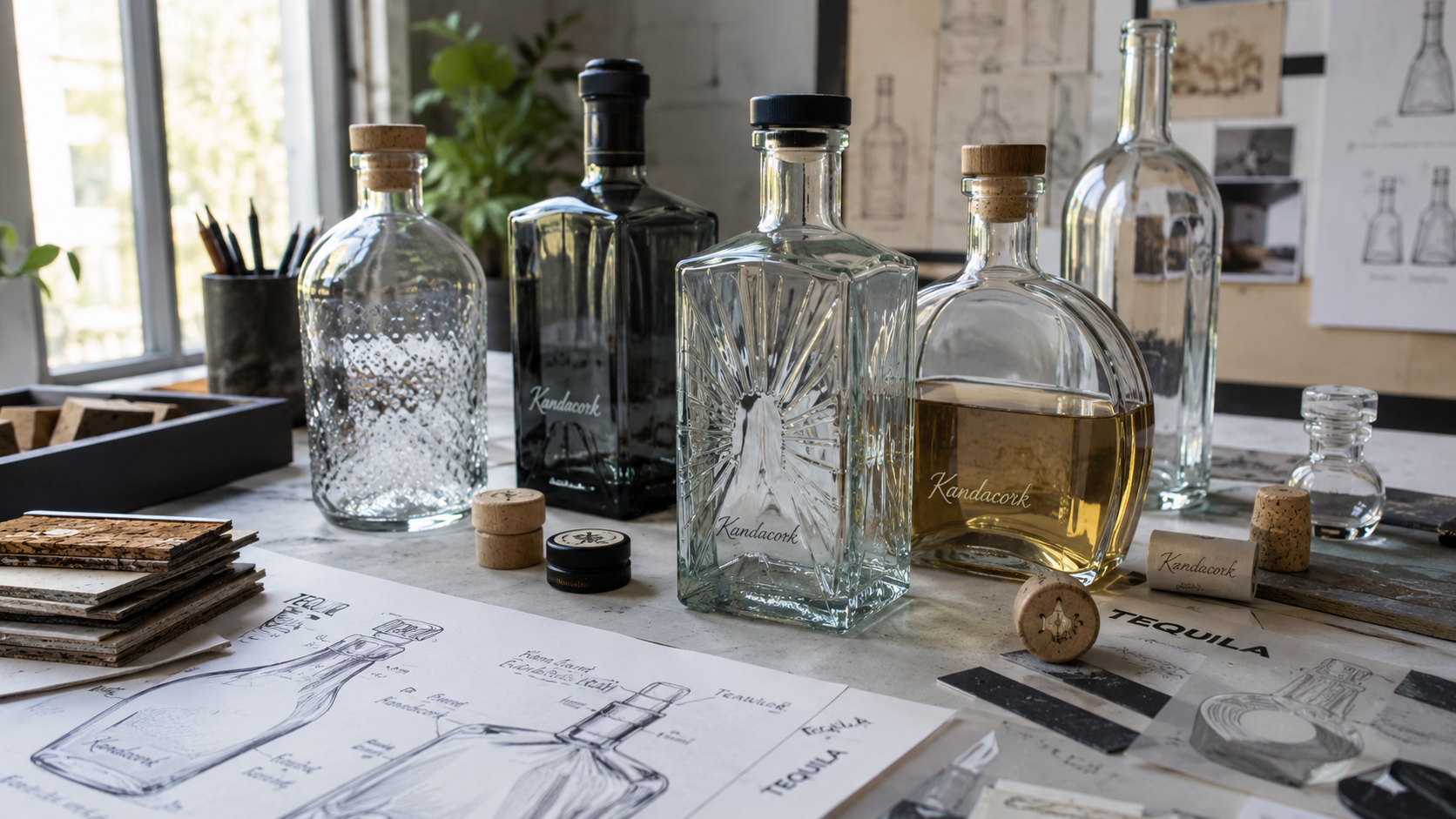
For wider packaging alignment, closure selection should also connect with bottle shape, decoration, label materials, capsule color, carton design, and secondary packaging. Brands that need bottle development beyond the closure can coordinate with spirits bottle packaging specialists so the bottle silhouette and stopper concept are developed as one system.
Sealing Performance: The Shank Matters More Than the Head
Many buyers focus first on the stopper head, but sealing performance depends mostly on the shank. The head affects appearance, grip, weight, and perceived quality. The shank affects compression, leak resistance, insertion force, extraction force, resealing behavior, and storage performance.
Common shank options include natural cork, micro-agglomerated cork, synthetic cork, and polymer-based shanks. Each option has different elasticity, compression behavior, dimensional stability, and visual appeal. Natural cork gives a traditional premium impression. Micro-agglomerated cork offers more uniformity. Synthetic cork and polymer shanks can provide consistent dimensions and controlled performance for large production runs.
For aluminium stoppers vs metal stoppers, the head material does not automatically determine seal quality. A lightweight aluminium stopper can seal very well when the shank matches the bottle neck. A heavy metal stopper may perform poorly if the shank is too loose, too tight, or incompatible with the glass finish.
Important technical checks include bottle neck inner diameter, shank diameter, taper, compression rate, insertion force, pull-out force, storage angle, fill level, spirit strength, temperature change, and transport vibration. Buyers comparing alternative shank systems can also review synthetic bottle stoppers when dimensional consistency and repeatable sealing behavior are priorities.
Bottling-Line Compatibility
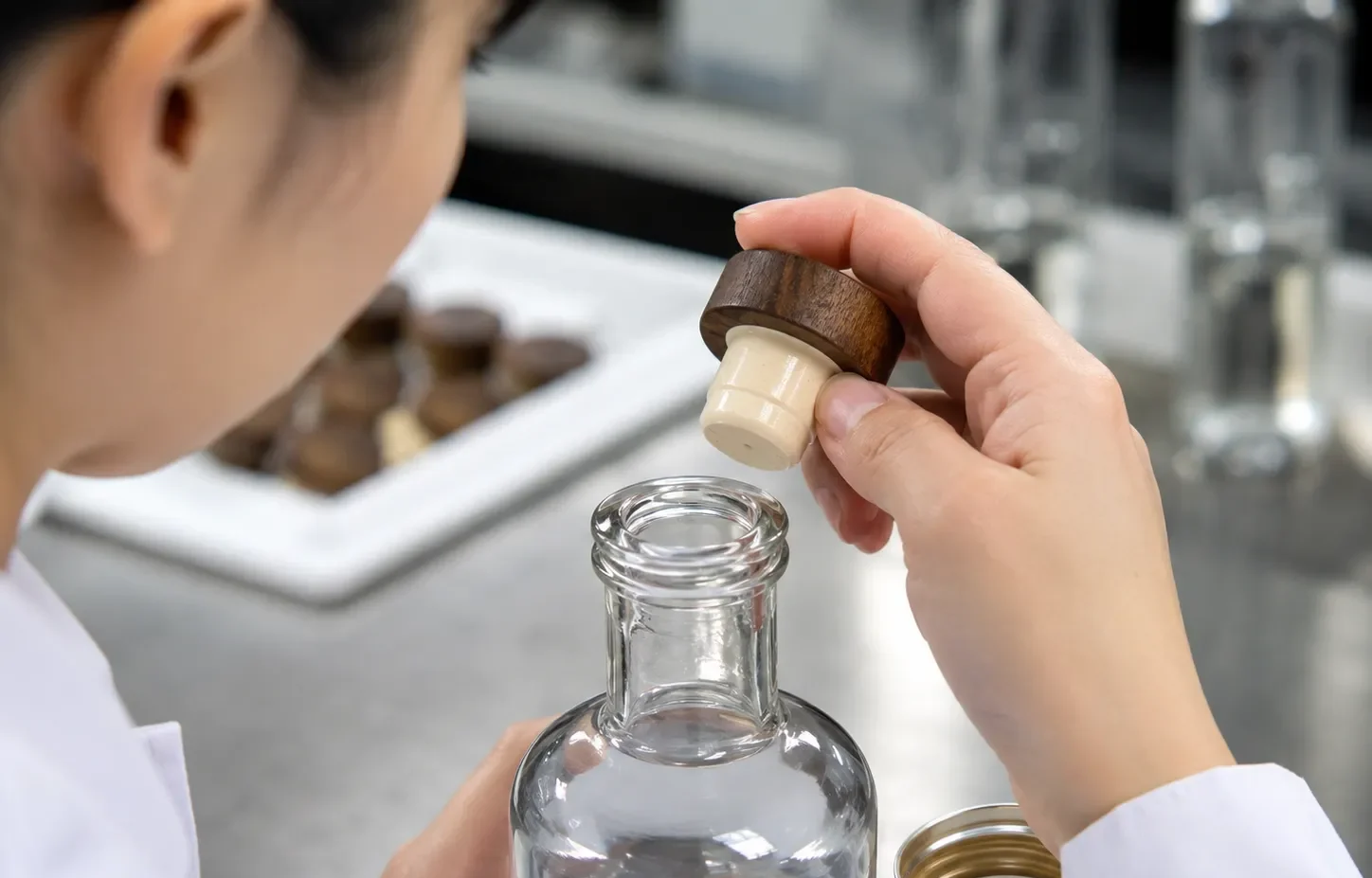
A stopper must work not only in the customer’s hand but also on the filling line. Before bulk production, buyers should test stopper samples with the actual bottle, shank material, filling equipment, and closing process. This helps confirm whether the closure can be inserted consistently without excessive force, damage, misalignment, or loose fit.
Aluminium stoppers are often practical for scalable bottling because they can provide stable dimensions and manageable weight. Broader metal stoppers can also work well, but heavier heads may require additional testing for balance, feed orientation, handling, packing, and display stability.
For automated or semi-automated bottling lines, the buyer should check stopper height, head diameter, shank tolerance, weight variation, surface protection, and machine compatibility. Even a beautiful stopper can create production problems if it does not match the line setup.
Quality Control Checklist for Custom Stoppers
Quality control should begin before mass production, not after finished stoppers arrive. For both custom aluminium stoppers and custom metal bottle stoppers, buyers should confirm practical test items with the supplier.
Key quality control points include bottle neck inner diameter, shank diameter and taper tolerance, stopper head height, head diameter tolerance, insertion force, extraction force, leak testing, alcohol compatibility, surface scratch inspection, logo position accuracy, color consistency, head-to-shank adhesion strength, packing protection, pre-shipment inspection, batch traceability, and production sample retention.
This checklist helps prevent common problems such as loose fit, difficult opening, finish scratching, logo misalignment, and inconsistent stopper performance across different batches. Quality expectations should be measurable, documented, and confirmed against approved samples. The quality management principles behind ISO 9001 are useful because they emphasize consistent processes, customer expectations, and continual improvement.
Manufacturing and Customization Options
Aluminium stoppers offer many branding options. Buyers can customize head diameter, head height, sidewall profile, top shape, texture, color, logo method, and shank material.
Common aluminium stopper decoration methods include laser engraving, brushing, polishing, anodizing, pad printing, screen printing, embossing, debossing, lacquer coating, and color matching. For brands that want more detailed closure graphics, textures, or coordinated packaging decoration, decoration and branding support can help align the stopper, bottle surface, label, capsule, and carton presentation.
Broader metal stoppers can support more complex manufacturing methods, including die casting, CNC shaping, electroplating, antique finishing, raised logos, recessed emblems, textured sidewalls, decorative inserts, and custom molds. A simple logo may look sharp with laser engraving on brushed aluminium. A heritage crest may look stronger as a raised metal emblem. A premium tequila closure may need a plated finish with a textured sidewall. A luxury whisky closure may require a heavy cast shape and protective individual packaging.
Sidewall texture is especially important for grip and brand recognition. Ribbing, knurling, relief patterns, and print zones should be matched to the closure structure, head diameter, and capping method. Buyers can use sidewall design options to make the stopper feel more distinctive without compromising handling or line performance.
Cost, MOQ, and Lead Time
Aluminium stoppers are often attractive because they deliver a premium metallic appearance with good cost control. They are especially practical for brands that need multiple colors or consistent closure design across several product lines.
However, cost depends on the full specification, not just the head material. Head size, wall thickness, finish process, logo method, shank type, mold requirements, MOQ, packing method, and inspection standards all affect final unit cost.
Broader metal stoppers may cost more when they require custom molds, casting, plating, polishing, complex assembly, decorative inserts, or heavier protective packaging. They may also increase shipping weight.
A craft gin brand may choose aluminium bar-top stoppers because they look premium while remaining scalable. A mature whisky brand launching a collector release may choose a heavier metal stopper because the closure supports a higher retail price and stronger gifting experience.
Buyers should clarify sample lead time, mold lead time, MOQ by finish, available shank sizes, logo options, surface tolerance, packaging format, payment terms, inspection requirements, and shipping method before confirming an order.
Sustainability and Compliance
Sustainability claims should be specific and accurate. Aluminium is widely recognized for its recyclability, and the International Aluminium Institute explains that aluminium can be recycled repeatedly without loss of quality. This makes aluminium attractive for brands that want a recyclable metallic closure head.
However, a finished stopper is not always a single-material item. It may combine aluminium or metal with cork, synthetic cork, plastic, adhesive, coating, lacquer, plating, or inserts. Local recycling systems may not process small mixed-material closures in the same way they process larger aluminium packaging. Responsible packaging language should avoid vague claims such as “eco-friendly” unless the brand can support them.
Compliance is also important. The U.S. FDA defines food-contact substances to include packaging and components that come into contact with food. In the European Union, the European Commission explains that food-contact materials, including metal, must comply with safety rules. The EFSA also evaluates possible health risks from chemical transfer based on migration and toxicological data.
For spirits closures, buyers should request relevant documentation for the target market. This may include material declarations, food-contact compliance statements, coating information, migration test reports where applicable, batch traceability, and supplier quality records. In the comparison of aluminium stoppers vs metal stoppers, compliance should never be assumed based on appearance alone.
Glass, Decoration, and Closure as One Packaging System
A stopper performs best when it is designed as part of the full packaging system. The head diameter should visually match the bottle shoulder and neck. The finish should coordinate with the label, capsule, carton, and glass color. The weight should feel appropriate for the bottle size and price level.
Premium bottle projects often begin with glass selection. Brands comparing closure options may also need custom glass packaging support to confirm capacity, bottle weight, base thickness, neck finish, and decoration area before stopper sampling begins. For buyers prioritizing lower-impact packaging decisions, eco glass packaging considerations can also influence bottle weight, decoration choices, shipping efficiency, and material messaging.
This system view is especially important for export spirits. A stopper that looks excellent in a studio rendering still needs to survive assembly, filling, packing, ocean freight, warehouse handling, retail display, and consumer use.
Before Requesting a Quote, Prepare These Details
A clear project brief helps the supplier recommend the right stopper faster and reduces sampling delays. Buyers should prepare the bottle drawing or neck finish dimensions, bottle capacity, bottle shape, spirit category, alcohol strength, target retail price, preferred stopper head material, desired hand feel, shank preference, logo artwork, finish target, MOQ, delivery schedule, destination market, filling-line method, and packing requirements.
For custom aluminium stoppers for spirits bottles, this information helps control design, cost, and lead time. For custom metal stoppers for liquor bottles, it also helps determine whether a mold, plating process, or special assembly structure is needed.
When possible, buyers should provide physical bottles or approved technical drawings before final sampling. Neck finish tolerances can vary by bottle model, and a small difference in inner diameter can affect insertion force, extraction force, and leak resistance.
Which Stopper Should You Choose?
Choose aluminium stoppers if your brand needs a modern metallic look, moderate weight, strong logo flexibility, good color consistency, and scalable production. They are suitable for premium gin, vodka, tequila, rum, whisky, liqueur, and private-label spirits.
Choose broader metal stoppers if your brand needs heavier hand feel, custom sculptural design, luxury positioning, gift-pack impact, or limited-edition differentiation. They are especially useful for aged spirits, collector bottles, travel retail, and high-value launches.
If the priority is modern shelf appeal, aluminium is often the smarter choice. If the priority is luxury weight and custom shape, broader metal may be stronger. If the priority is sealing performance, focus first on shank and bottle neck compatibility. If the priority is production efficiency, test samples on the actual bottling line before mass production.
Buyers who need to compare bar-top stoppers, screw caps, capsules, ROPP caps, and non-refillable systems can review the broader bottle stoppers and closures range before confirming the best closure family for the product.
Common Mistakes to Avoid
The first mistake is choosing by appearance only. A stopper can look perfect in a rendering but fail during insertion, shipping, or resealing if the shank does not match the bottle neck.
Another common mistake is assuming all metal stoppers behave the same. Aluminium, zinc alloy, zamak, stainless steel, plated metal, and mixed-material heads differ in weight, cost, tooling, surface behavior, scratch risk, and production complexity.
Buyers should also avoid ignoring extraction force. If the stopper is too tight, consumers may struggle to open the bottle. If it is too loose, the bottle may leak or feel low quality.
Heavy stoppers should be tested carefully. A heavy head on a tall bottle can affect handling, packing, display balance, and transit performance. Surface protection also matters. Brushed, polished, plated, painted, or anodized metal surfaces can be damaged if packing does not prevent friction.
Finally, sustainability claims should be checked before marketing. Aluminium has strong recycling advantages, but a mixed-material closure still needs accurate, market-specific communication.
Kandacork Closures: Custom Aluminium and Metal Stopper Support
Kandacork Closures supports spirits brands with custom aluminium stoppers, custom metal stoppers, wooden stoppers, plastic stoppers, synthetic stoppers, screw caps, ROPP closures, capsules, and non-refillable closure systems.
For buyers comparing aluminium stoppers vs metal stoppers, the development process should start with the bottle neck finish, spirit category, stopper style, shank material, logo process, target MOQ, filling method, and destination market. This helps reduce closure mismatch risk, improve bottle-neck compatibility, align stopper weight with brand positioning, and support sample approval before mass production.
A typical project may include material recommendation, head design, shank matching, color development, logo application, functional samples, line trials, quality inspection, export packaging, and bulk production planning.
To choose the right stopper, prepare your bottle drawing, neck finish, target spirit category, logo artwork, preferred finish, order quantity, and filling-line requirements. Kandacork Closures can help match the stopper head, shank, decoration method, and packaging format to your brand and bottling needs. Buyers can submit details through a custom closure quote request to begin sampling and technical review.
FAQ
Are aluminium stoppers the same as metal stoppers?
No. Aluminium stoppers are one type of metal stopper. The wider metal stopper category may also include zinc alloy, zamak, stainless steel, plated metal, and multi-material decorative closures.
Are aluminium stoppers good for premium spirits bottles?
Yes. Aluminium stoppers are suitable for premium spirits when the brand needs a clean metallic look, moderate weight, stable dimensions, and flexible logo customization. They work well for gin, vodka, tequila, rum, whisky, liqueur, and private-label spirits.
Are metal stoppers more expensive than aluminium stoppers?
They can be. Heavy metal stoppers, zinc alloy castings, special plating, inserts, sculptural heads, and custom molds usually increase tooling and unit cost. Aluminium can often provide a premium metallic look with better cost control.
Which stopper is better for luxury whisky or aged rum?
For luxury whisky or aged rum, a heavier metal stopper may create a stronger premium hand feel. Aluminium can still work well when the brand design is modern, minimalist, or focused on clean metallic detailing.
What controls sealing performance?
The shank controls most sealing performance. The stopper head affects appearance, grip, and weight, but the cork, micro-agglomerated cork, synthetic cork, or polymer shank must match the bottle neck finish.
Can aluminium and metal stoppers be customized with a logo?
Yes. Common logo options include laser engraving, embossing, debossing, pad printing, screen printing, hot stamping, sidewall texture, top-surface decoration, and custom metallic finishes.
Do aluminium stoppers support sustainability goals?
They can support sustainability goals because aluminium has strong recyclability potential. However, brands should also consider the shank, coating, adhesive, local recycling system, and whether the finished closure can be separated or recovered.
What information is needed before ordering custom stoppers?
Buyers should prepare bottle neck dimensions, bottle drawings, spirit category, preferred material, shank type, logo artwork, surface finish, MOQ, destination market, compliance needs, filling-line details, and target delivery schedule.