Aluminium stopper OEM projects require clear communication between design, tooling, sampling and production teams. This guide explains the key requirements buyers should prepare, including material, finish, shank fit, logo method and packing details.
What Is the Best Aluminium Stopper for Spirits Bottles?
The best aluminium stopper for spirits bottles is one that matches the bottle neck inner diameter, uses the correct cork or synthetic shank, supports the required brand finish, and passes insertion, extraction, and leak testing before mass production.
For premium spirits packaging, the stopper should be selected as part of the full closure system. The aluminium head, shank material, bottle neck, capsule, seal, carton packing, and filling-line process all affect the final result.
Buyers should not choose a stopper only by color or catalog image. The safest process is to review bottle drawings, test physical samples, confirm the opening feel, and approve the final specification before bulk production.
What Are Aluminium Stoppers for Spirits Bottles?
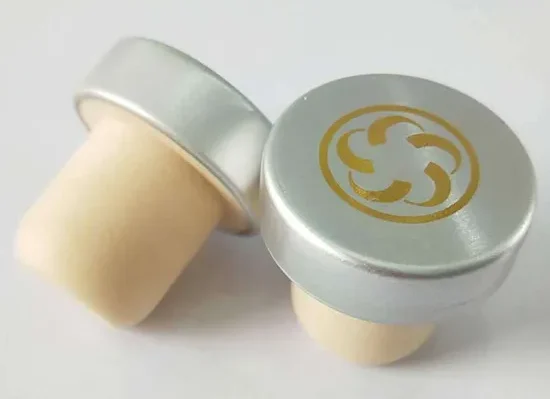
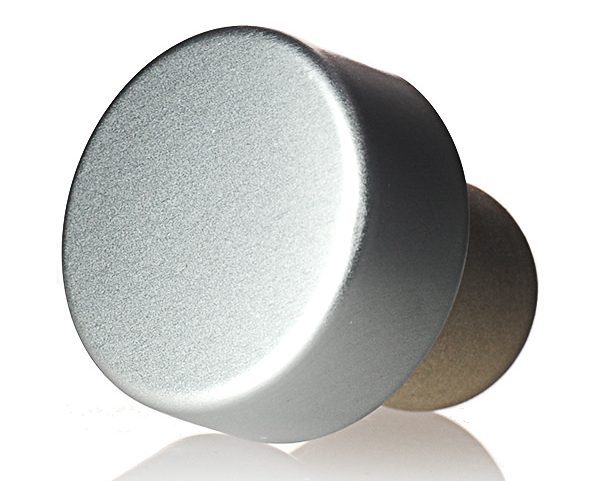
Aluminium stoppers for spirits bottles are bar-top closures made with a decorative aluminium head and a sealing shank inserted into the bottle neck. The aluminium head creates the visible premium finish, while the shank provides the resealing function.
These closures are also known as aluminium bottle stoppers, aluminum stoppers for spirits bottles, aluminium bar-top stoppers, T-top stoppers, T-cork closures, bar-top closures, and custom spirits bottle stoppers. International buyers often use both “aluminium” and “aluminum” depending on region, so both spellings are common in global packaging sourcing.
A standard aluminium stopper includes:
- An aluminium head for decoration, branding, and hand feel
- A cork, synthetic cork, or polymer shank for sealing
- An assembly structure that connects the head and shank securely
For spirits brands, aluminium stoppers are popular because they combine metallic shelf appeal with the familiar pull-out opening experience of a bar-top closure.
Why Spirits Brands Choose Aluminium Bar-Top Stoppers
Spirits brands choose aluminium bar-top stoppers when they want a modern, premium, and consistent closure appearance. Aluminium offers a clean metallic surface that works well with frosted glass, clear glass, dark glass, heavy-base bottles, embossed bottles, and luxury gift packaging.
Compared with many plastic closures, aluminium gives a stronger premium signal. Compared with heavy metal closures, aluminium can provide a metallic look with lower weight. Compared with wooden tops, aluminium often offers more color consistency and a sharper modern design language.
Aluminium stoppers are especially useful for:
- Whisky and bourbon bottles with a contemporary premium style
- Vodka bottles that need silver, white, black, or matte finishes
- Gin bottles with botanical colors, clear glass, or apothecary shapes
- Rum bottles that combine vintage glass with modern metallic accents
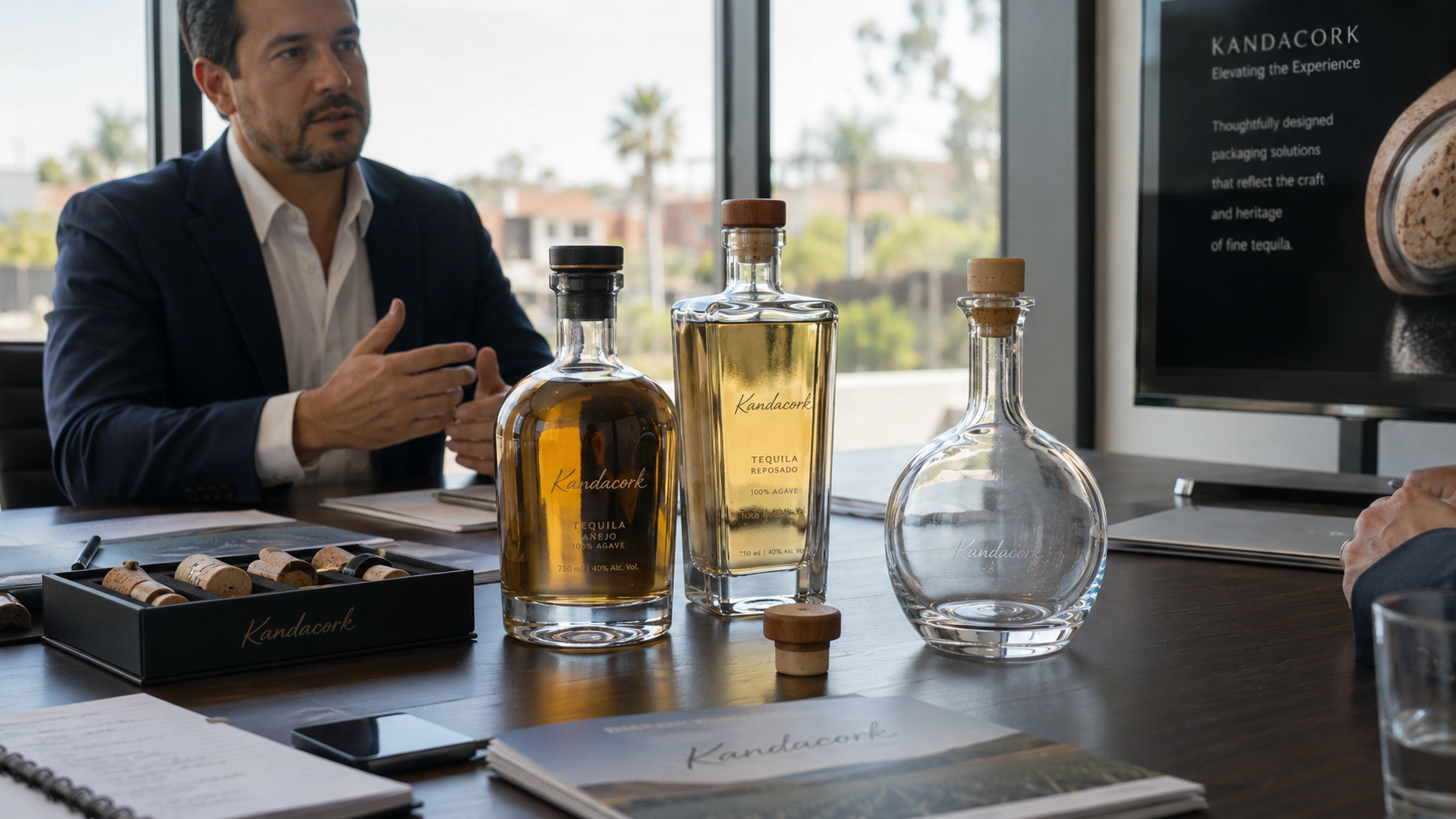
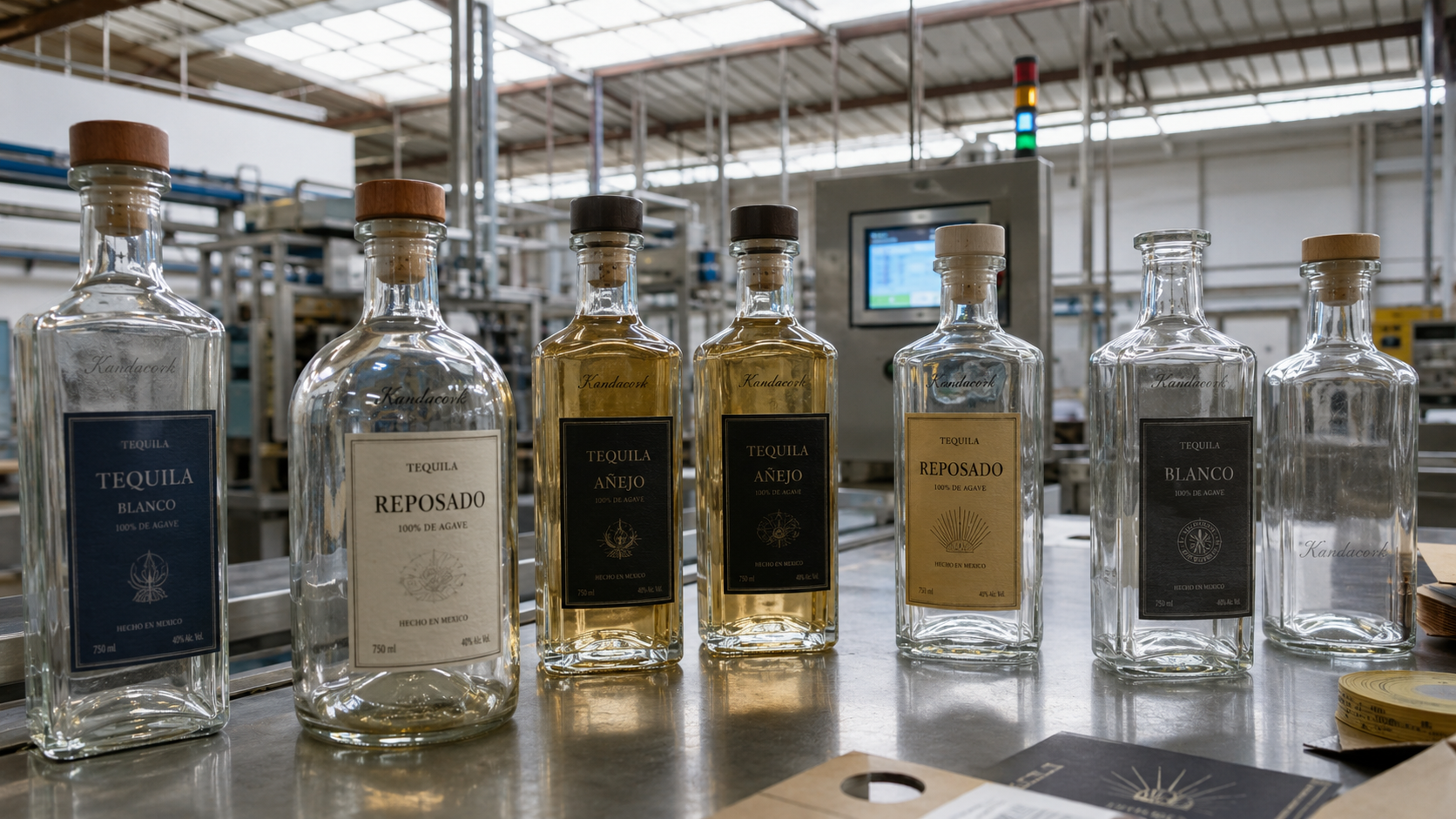
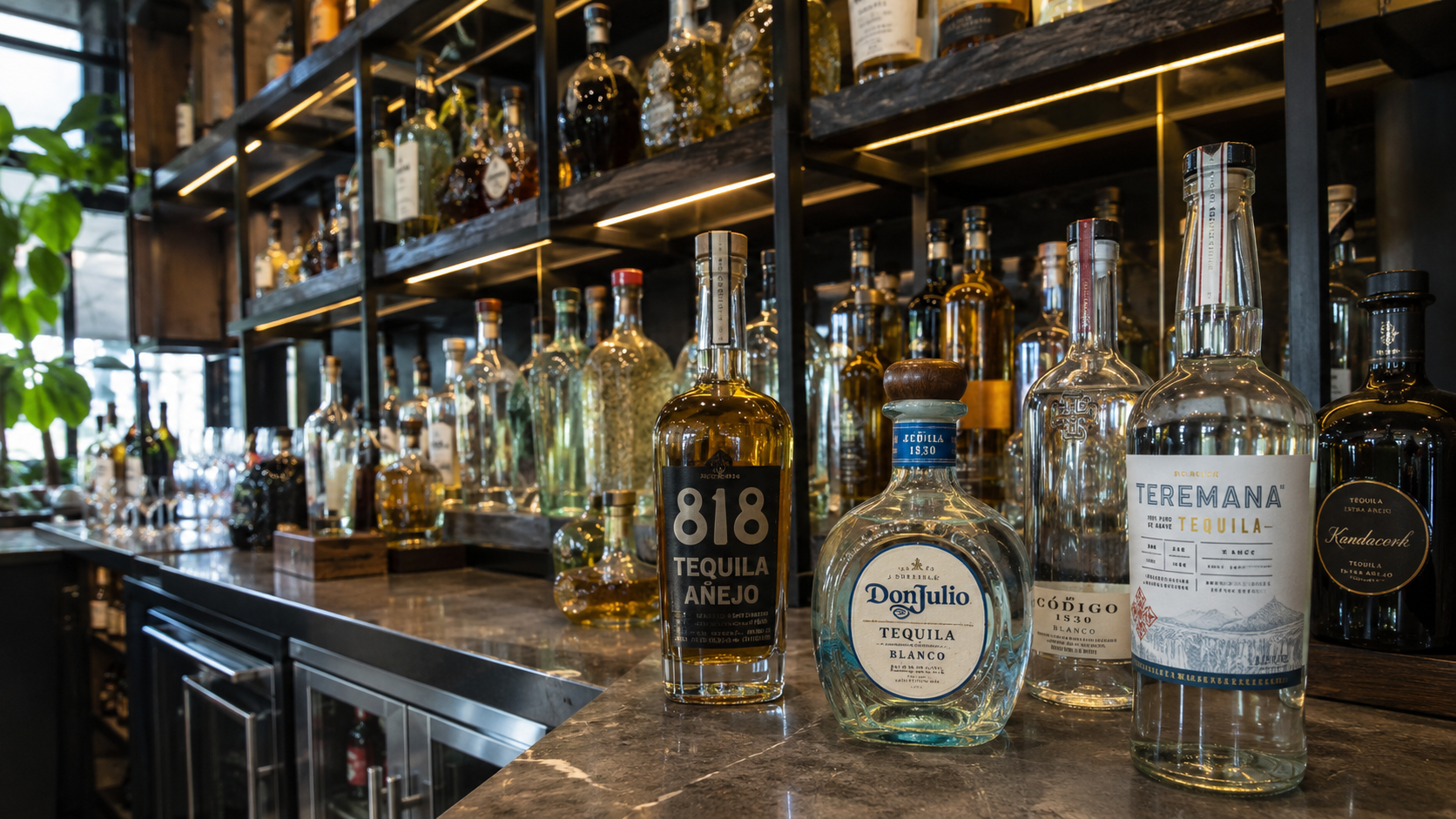
- Tequila and mezcal bottles that need strong shelf recognition
- Brandy, cognac, and liqueur bottles that require refined resealable closures
- Private-label spirits projects that need consistent closure families across multiple SKUs
For brands developing a full packaging system, bottle structure and closure fit should be considered together. Integrated suppliers such as Kandacork Spirits can help packaging teams align bottle shape, neck finish, closure style, decoration, and secondary packaging from the early concept stage.
Aluminium Stopper Construction: Head, Shank, and Neck Fit
A high-quality aluminium stopper is not selected by appearance alone. The head design, shank material, and bottle-neck fit must work together.
Aluminium Head Design
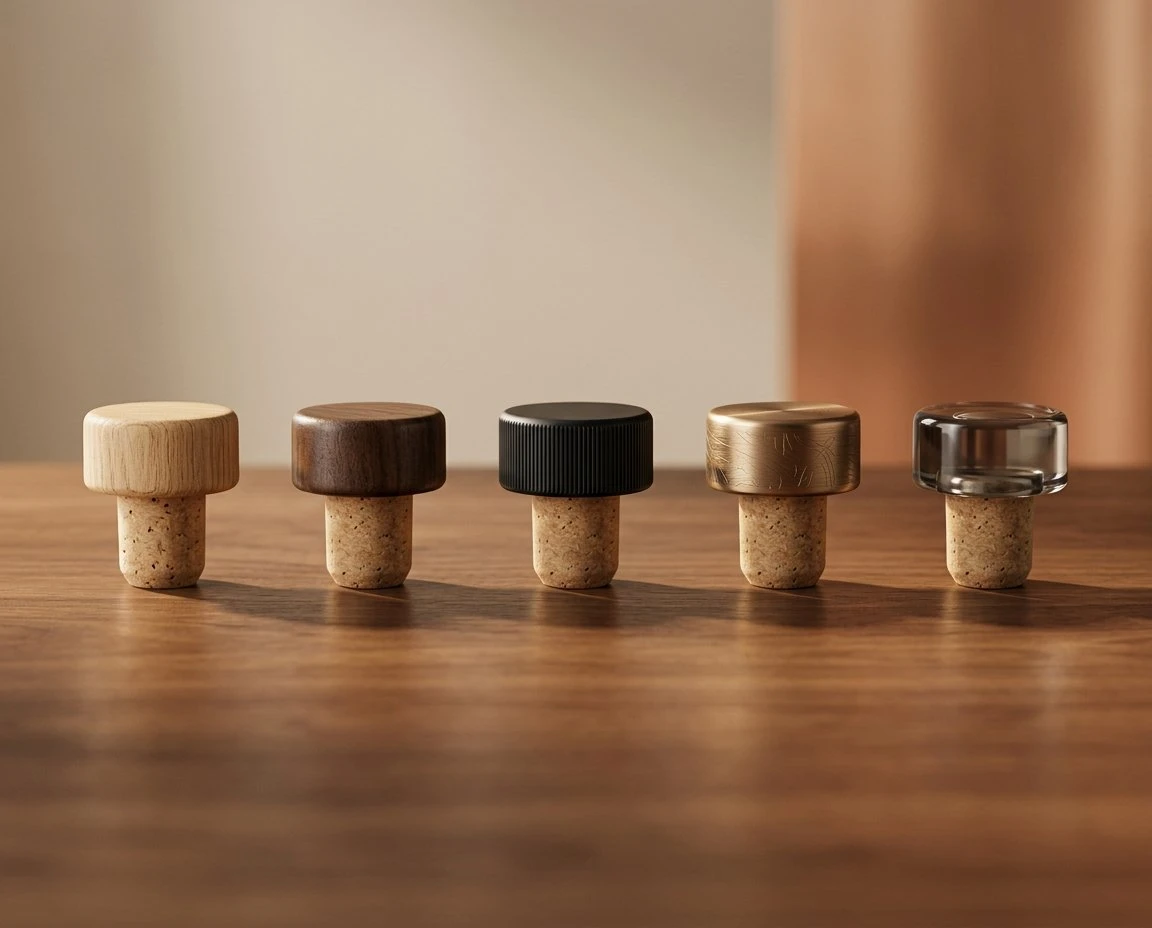
The aluminium head is the visible top of the closure. It may be round, square, short, tall, flat, domed, ribbed, knurled, or custom-shaped. Surface options may include brushed aluminium, polished silver, matte black, metallic gold, rose gold, anodized color, soft-touch coating, printed decoration, or engraved detail.
The head diameter should feel balanced with the bottle shoulder, neck height, and label design. A wider aluminium top can communicate strength and luxury. A smaller low-profile head can create a clean minimalist look.
Shank Options
The shank is the sealing part that enters the bottle neck. It controls insertion feel, extraction feel, resealing behavior, and dimensional stability.
Natural cork shanks provide a traditional sensory experience. They are often selected for whisky, rum, brandy, and craft spirits where heritage and natural material cues are important.
Agglomerated cork shanks offer a cork-based option with more controlled dimensions and cost efficiency.
Synthetic cork shanks provide stable dimensions, low dust risk, and repeatable performance across larger production runs.
TPE or polymer shanks can be engineered for controlled sealing behavior, stable extraction force, and consistent line performance.
The best shank depends on bottle neck dimensions, product category, brand positioning, target market, export conditions, and production volume.
Neck Compatibility
Bottle-neck compatibility is the most important technical factor when selecting aluminium stoppers for spirits bottles. A stopper that is too loose may leak or feel low quality. A stopper that is too tight may cause difficult insertion, bottle damage, or poor consumer opening experience.
Buyers should confirm:
- Bottle neck inner diameter
- Neck finish tolerance
- Stopper seat depth
- Shank diameter and length
- Insertion force
- Extraction force
- Leak resistance
- Closure stability after transport
- Compatibility with stoppering equipment
Packaging teams comparing different closure formats can review the wider bottle stopper and closure range before deciding whether aluminium bar-top stoppers, wooden stoppers, plastic stoppers, metal stoppers, ROPP closures, capsules, or non-refillable systems are the best match for the project.
Aluminium Stopper Material Comparison
| Stopper structure | Best for | Main advantage | Key concern |
|---|---|---|---|
| Aluminium head with natural cork shank | Whisky, rum, brandy, craft spirits | Traditional opening feel and premium natural cue | Cork variation and fit control |
| Aluminium head with agglomerated cork shank | Mid-range spirits and private label | Cost-effective cork appearance | Batch consistency and dust control |
| Aluminium head with synthetic cork shank | Vodka, gin, tequila, high-volume spirits | Stable dimensions and repeatable sealing | Less natural sensory feel |
| Aluminium head with TPE or polymer shank | Export projects and controlled production | Engineered fit and consistent extraction | Material validation and market suitability |
This comparison helps buyers match closure construction to product positioning instead of choosing only by surface appearance.
Aluminium vs Wood, Plastic, Glass, and Other Metal Stoppers
Aluminium Stoppers vs Wooden Stoppers
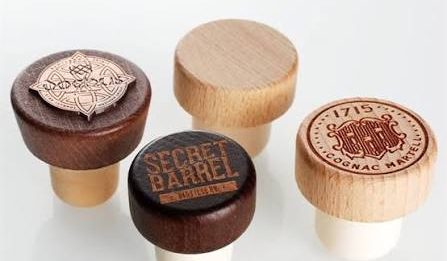
Wooden stoppers create warmth, craft character, and traditional premium cues. Aluminium stoppers create a cleaner, sharper, and more modern effect. For whisky or rum, wood may support heritage positioning. For vodka, gin, or contemporary tequila, aluminium may create a stronger modern identity.
Aluminium Stoppers vs Plastic Stoppers
Plastic stoppers can be economical and lightweight, but they may not provide the same premium feel. Aluminium heads offer better metallic appearance, stronger shelf presence, and more refined customization options such as embossing, debossing, anodizing, and laser engraving.
Aluminium Stoppers vs Glass Stoppers
Glass stoppers can look elegant, but they are usually more fragile and require more specific bottle compatibility. Aluminium bar-top stoppers are more flexible for OEM spirits packaging because head shape, finish, and shank structure can be adjusted for different bottle lines.
Aluminium Stoppers vs Heavy Metal Stoppers
Zinc alloy and other heavy metal tops can create luxury weight, but they may increase cost and shipping weight. Aluminium gives brands a premium metallic appearance while keeping the closure lighter and easier to scale for larger production.
Aluminium Bar-Top Stoppers vs ROPP Closures
ROPP closures are roll-on pilfer-proof screw caps often used when tamper evidence, machine application, and controlled opening torque are priorities. Aluminium bar-top stoppers are selected when the brand wants a cork-style opening experience, resealability, and premium hand feel. For projects where a screw-cap format is more suitable, custom ROPP closures for spirits bottles may be a better technical route.
Best Use Cases by Spirits Category
| Spirits project | Recommended aluminium stopper direction |
|---|---|
| Premium whisky | Brushed, black, or bronze aluminium head with natural cork or agglomerated cork shank |
| Modern vodka | Polished silver, matte black, white, or minimal aluminium head with synthetic shank |
| Botanical gin | Color-matched aluminium head with synthetic cork or cork-based shank |
| Premium rum | Gold, bronze, black, or dark metallic aluminium head with cork-based shank |
| Tequila or mezcal | Textured, engraved, or bold-color aluminium head with stable synthetic shank |
| Brandy or cognac | Refined metallic finish with balanced weight and smooth extraction feel |
| High-volume private label | Standard aluminium head with synthetic cork for repeatable production |
The best closure choice depends on the complete brand system. A whisky bottle may need heritage cues and tactile weight, while a vodka bottle may need clean geometry and bright metallic contrast.
Customisation Options for Brand Owners
Customisation is one of the main reasons buyers choose aluminium stoppers for spirits bottles. The closure can become a brand asset rather than a generic component.
Common customization options include:
- Pantone color matching
- Brushed aluminium finish
- Polished metallic finish
- Matte coating
- Anodized color
- Embossed logo
- Debossed logo
- Laser engraving
- Screen printing
- Sidewall ribbing or knurling
- Decorative top inserts
- Color-matched closure families
For luxury spirits, the closure should match the bottle, label, capsule, carton, and retail environment. A matte black aluminium stopper may suit a modern vodka bottle. Brushed gold may support premium rum or whisky. Satin silver may work well for gin, tequila, or minimalist liqueur packaging.
Packaging teams that need coordinated logos, effects, and visual language can explore custom branding for spirits closures to align aluminium stopper decoration with labels, capsules, glass embossing, and cartons. When the project needs more detailed surface direction, a dedicated colors and finishes guide can help buyers compare matte, satin, brushed, polished, metallic, and specialty effects before sampling.
For bottle-level decoration, label-free branding, or coordinated visual systems across glass and closure components, Kandacork Decor can support decoration planning so the stopper, bottle, and secondary packaging feel like one unified brand system.
How to Choose the Right Aluminium Stopper
The safest way to choose aluminium stoppers for spirits bottles is to start with the bottle, not the catalog image.
Match the Closure to the Bottle Neck
The bottle neck inner diameter, tolerance, and seat depth determine the correct shank size. Bottle capacity alone is not enough. A 700ml, 750ml, or 1L spirits bottle may use different neck finishes depending on the glass manufacturer and design.
Select the Right Shank Material
Natural cork works well for traditional premium spirits. Synthetic cork is useful for controlled production and larger orders. TPE or polymer shanks may be suitable when repeatable sealing behavior is a priority.
Define the Desired Opening Feel
Premium spirits should open smoothly. The stopper should not feel loose, unstable, or excessively tight. Extraction force should feel intentional and repeatable, especially for bottles used frequently in bars, restaurants, and tasting rooms.
Check Filling-Line Compatibility
If the closure will run on semi-automatic or automatic equipment, test it with the actual stoppering process. Buyers should confirm insertion behavior, machine adjustment, stopper alignment, feeding performance, and rejection risk.
Review Brand Positioning
A closure for a limited-edition whisky should not be evaluated the same way as a high-volume vodka line. Premium projects may prioritize tactile detail, finish quality, and decoration depth. Larger-volume projects may prioritize consistency, cost control, and operational efficiency.
Test Before Mass Production
Samples should be tested for appearance, fit, leakage, extraction force, carton packing, and transport behavior. Fit testing is especially important for export spirits bottles exposed to temperature changes, vibration, and long shipping routes.
Buyer Decision Matrix
| Buyer requirement | Recommended focus | Why it matters |
|---|---|---|
| Luxury shelf impact | Custom aluminium head shape and premium finish | Improves perceived value |
| Reliable resealing | Correct shank material and fit testing | Reduces leakage and loose closure risk |
| High-volume bottling | Dimensional consistency and filling-line trials | Supports production efficiency |
| Export distribution | Transport testing and stable shank behavior | Helps reduce shipment-related issues |
| Strong branding | Embossing, debossing, engraving, or color matching | Makes the closure part of brand identity |
| Compliance-sensitive market | Tamper-evident system review | Helps meet market packaging expectations |
This matrix gives procurement teams a practical way to compare options before requesting samples.
Common Mistakes When Buying Aluminium Stoppers
Many closure problems happen because the stopper is selected too late in the packaging development process. The bottle, closure, filling line, and export route should be considered together.
Common mistakes include:
- Choosing by appearance before checking neck dimensions
- Assuming all 700ml or 750ml bottles use the same stopper size
- Approving a digital rendering without reviewing a physical sample
- Ignoring insertion force and extraction force
- Selecting a shank material without considering export conditions
- Forgetting tamper-evident requirements in the target market
- Skipping line trials before mass production
- Not checking carton protection for international shipping
- Providing low-resolution logo files for engraving or embossing
- Comparing suppliers only by unit price instead of full performance
Avoiding these mistakes can reduce leakage, production delays, inconsistent branding, and costly rework.
Aluminium Stoppers for Different Spirits Categories
Whisky and Bourbon
Whisky and bourbon brands often use aluminium stoppers when they want a modern premium closure. Brushed aluminium, matte black, bronze, and gold finishes work well with heavy-base glass, textured labels, and gift cartons.
Vodka
Vodka packaging often relies on clarity, minimalism, and clean geometry. Aluminium bar-top closures can support silver, white, black, frosted, polished, or high-gloss design systems.
Gin
Gin bottles often use botanical colors, clear glass, embossed glass, apothecary shapes, or tall modern silhouettes. Aluminium stoppers can be color-matched to botanical label details, capsule accents, or glass decoration.
Rum
Rum packaging may use amber glass, vintage shapes, dark labels, and premium gift boxes. Aluminium stoppers can modernize the pack while preserving strong shelf presence.
Tequila and Mezcal
Tequila and mezcal bottles often need distinctive closures to stand out in retail and hospitality settings. Aluminium heads can support bold colors, engraved symbols, textured sidewalls, and premium metallic finishes.
Brandy, Cognac, and Liqueurs
For brandy, cognac, and liqueurs, aluminium bar-top stoppers can provide refined appearance without the weight and cost of heavier metal tops.
For projects where the glass bottle is still being developed, Kandacork Glass can support custom spirits bottle sourcing, standard mold selection, bottle decoration planning, and closure matching so the stopper is not treated as an afterthought.
Compliance, Tamper Evidence, and Food-Contact Considerations
Aluminium stoppers for spirits bottles should be evaluated as part of the full packaging system. The stopper, shank, bottle neck, capsule, seal, and label all contribute to market readiness.
In the United States, the Alcohol and Tobacco Tax and Trade Bureau guidance on tamper-evident closures states that distilled spirits bottles and containers must use a tamper-evident closure or similar device. A bar-top stopper alone may not satisfy every market requirement, so brands may need capsules, shrink sleeves, tear bands, seals, or other tamper-evident systems.
Food-contact safety also matters. The European Commission guidance on food contact materials explains that packaging materials intended to contact food must be safe and must not endanger health, change food composition in an unacceptable way, or negatively affect taste or smell. For spirits closures, buyers should review direct contact materials, including the shank, liner, coating, or polymer components.
A responsible supplier should support material review, batch consistency, production traceability, and documentation based on the buyer’s target market.
Sustainability Considerations for Aluminium Spirits Closures
Aluminium is valued in packaging because it can be recycled repeatedly as a material. The Aluminum Association recycling resource explains why aluminium can be remelted and reformed without changing its fundamental material properties.
However, sustainability claims must be accurate. A spirits stopper is usually a mixed-material component made from aluminium plus cork, synthetic cork, polymer, or adhesive. The aluminium head may be recyclable, but the full closure’s recyclability depends on local recycling systems, separability, and exact material structure.
Brands should avoid vague claims such as “fully recyclable” unless the complete closure design and target-market recycling conditions support that statement. A more responsible approach is to communicate lightweight metallic construction, durable design, reduced material waste, responsible sourcing, and design-for-recycling principles.
For brands building lower-impact packaging ranges, Kandacork Eco Glass can help connect closure selection with glass weight, recycled content, refill concepts, and circular packaging goals.
OEM Manufacturing Process at Kandacork Closures
A successful aluminium stopper project follows a structured development process.
Bottle Review
The process begins with the bottle drawing, neck finish dimensions, or physical bottle sample. Kandacork Closures reviews the neck opening, closure seat, and packaging goal before recommending a stopper structure.
Concept and Engineering
The aluminium head shape, shank type, dimensions, color, and decoration method are selected according to the bottle design, spirits category, and brand positioning.
Prototype Sampling
Samples allow buyers to check appearance, hand feel, fit, and extraction behavior. This stage is important for new bottle development, private-label packaging, and replacement closure sourcing.
Fit Testing and Line Trials
The stopper should be tested with the actual bottle and, where possible, on the intended filling or stoppering line. This helps confirm insertion performance, sealing stability, and production handling.
Final Specification Confirmation
After testing, the buyer confirms dimensions, finish, logo artwork, shank material, packaging method, quantity, and production timeline.
Mass Production and Quality Control
During production, the supplier checks dimensions, surface finish, logo accuracy, color consistency, shank assembly, and packing quality.
Export Packing and Delivery
For international spirits projects, export cartons, palletization, and shipping protection matter. Closures should arrive clean, organized, and ready for bottling operations.
Quality management should also be repeatable. The ISO 9001 quality management standard is widely used as a framework for improving processes, meeting customer expectations, and maintaining consistent product quality.
MOQ, Sampling, and Lead-Time Factors
MOQ for aluminium stoppers for spirits bottles can vary depending on head shape, tooling requirements, finish, logo method, shank type, and order customization level. A standard finish may require a lower commitment than a fully custom head shape with embossing and special color matching.
Sampling time is affected by the complexity of the closure. A simple color and shank confirmation may be faster than a custom mold, engraved top, or multi-step surface finish.
Lead time can be influenced by:
- Custom tooling
- Surface treatment
- Logo process
- Shank material availability
- Quantity
- Packaging requirements
- Inspection requirements
- Export schedule
For accurate pricing, provide bottle drawings, artwork, order quantity, destination market, and required delivery timing. This allows Kandacork Closures to evaluate the real production route instead of quoting from incomplete information.
Quality Control Checklist for Aluminium Bar-Top Stoppers
Before approving aluminium stoppers for spirits bottles, buyers should review a clear quality checklist.
Key inspection points include:
- Aluminium head diameter, height, and shape
- Shank diameter, length, and material
- Color consistency against approved sample
- Brushed, polished, anodized, or coated surface quality
- Logo position, depth, sharpness, and alignment
- Bond strength between head and shank
- Insertion force and extraction force
- Leak resistance and closure stability
- Carton packing and product protection
- Batch traceability and inspection records
This checklist helps prevent common sourcing problems such as loose fit, inconsistent color, crooked logos, scratched surfaces, weak assembly, or poor line performance.
Glass compatibility should also be considered. The Glass Packaging Institute represents the North American glass container industry and promotes packaging education, recycling, and industry standards. For spirits packaging buyers, this reinforces a practical point: the glass bottle and closure should be developed as one system, not as separate components.
Buyer Checklist Before Requesting a Quote
To receive an accurate quotation, buyers should prepare the following information:
- Bottle capacity
- Bottle drawing
- Bottle neck inner diameter
- Physical bottle sample if available
- Target spirit category
- Destination market
- Expected order quantity
- Preferred aluminium head shape
- Preferred shank material
- Required color or surface finish
- Logo artwork or brand mark
- Decoration method preference
- Sampling deadline
- Mass production timeline
- Filling-line requirements
- Packing and export requirements
The more complete the information, the faster a supplier can recommend the correct aluminium stopper structure and provide realistic sampling and production guidance. Buyers ready to move from specification to sampling can contact Kandacork Closures with bottle drawings, target quantity, finish references, and artwork files.
Recommended Image Content for This Page
Images should help buyers understand structure, finish, fit, and application. Useful image topics include:
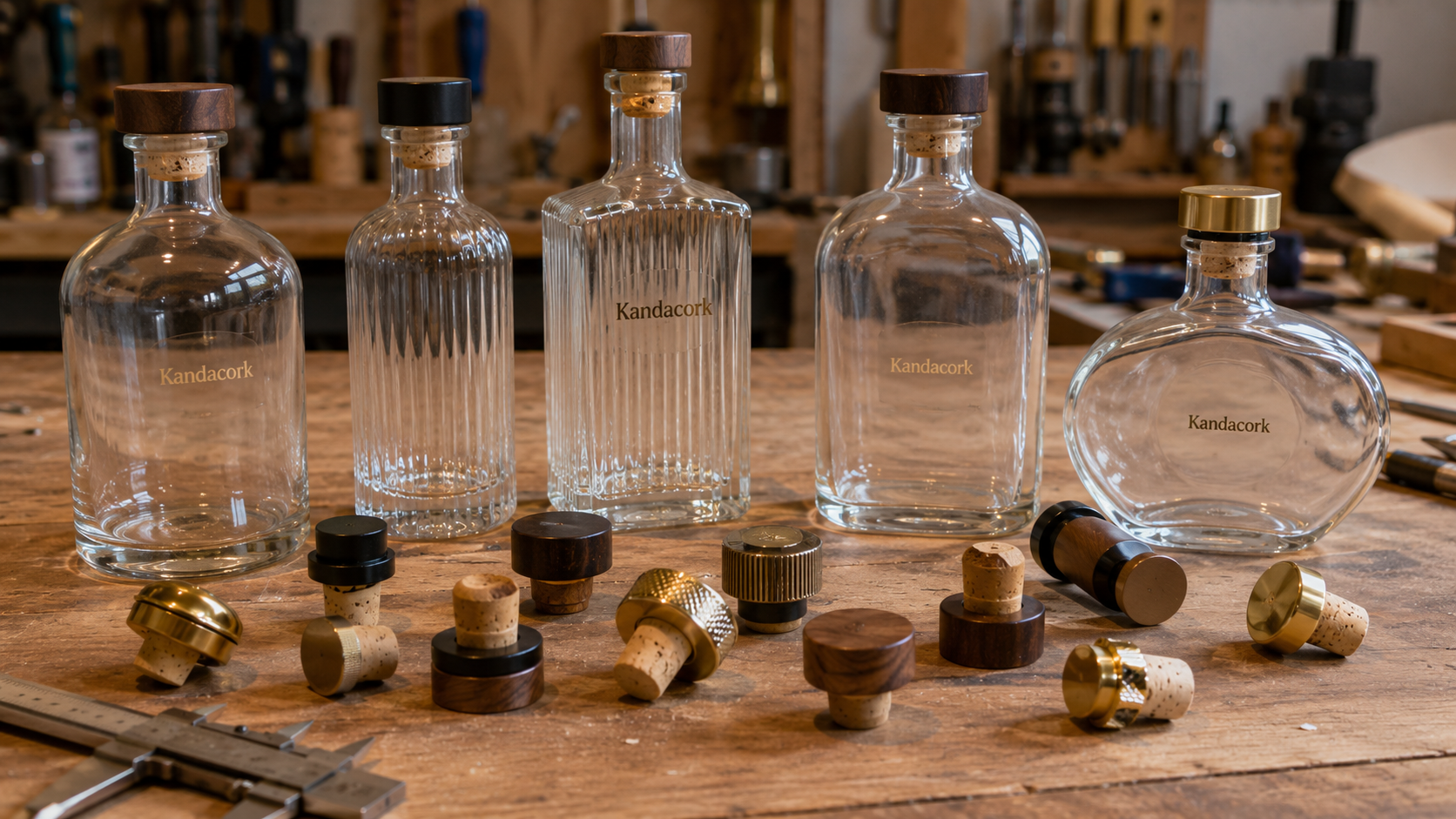
- Aluminium stopper with metal head and synthetic cork shank
- Aluminium stopper fit testing for a spirits bottle neck
- Brushed, matte, polished, and anodized aluminium stopper finishes
- Aluminium stoppers used on whisky, gin, rum, tequila, and vodka bottles
- Engraved aluminium bottle stopper with custom brand mark
- Side-by-side comparison of aluminium, wood, plastic, and metal stopper heads
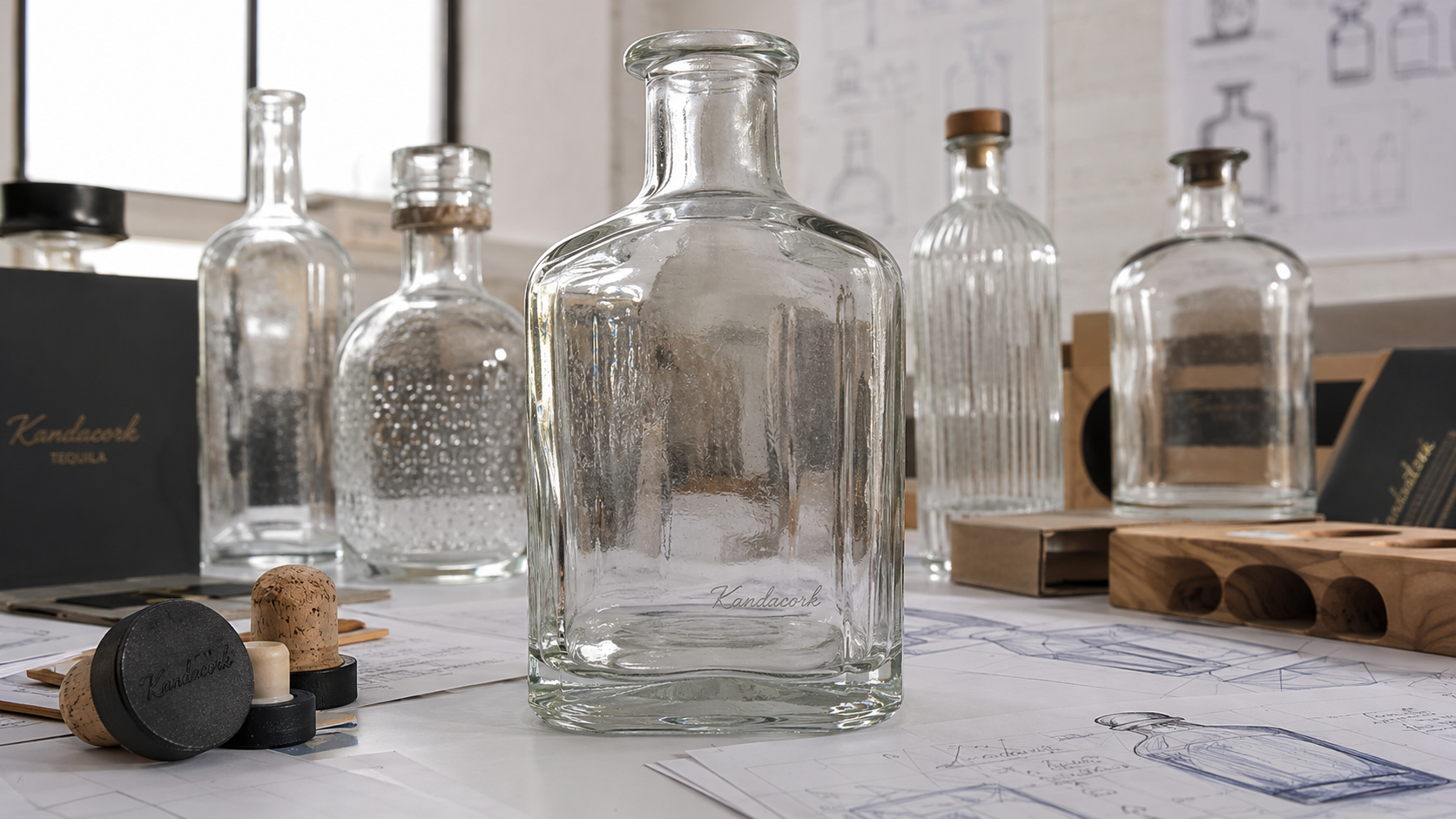
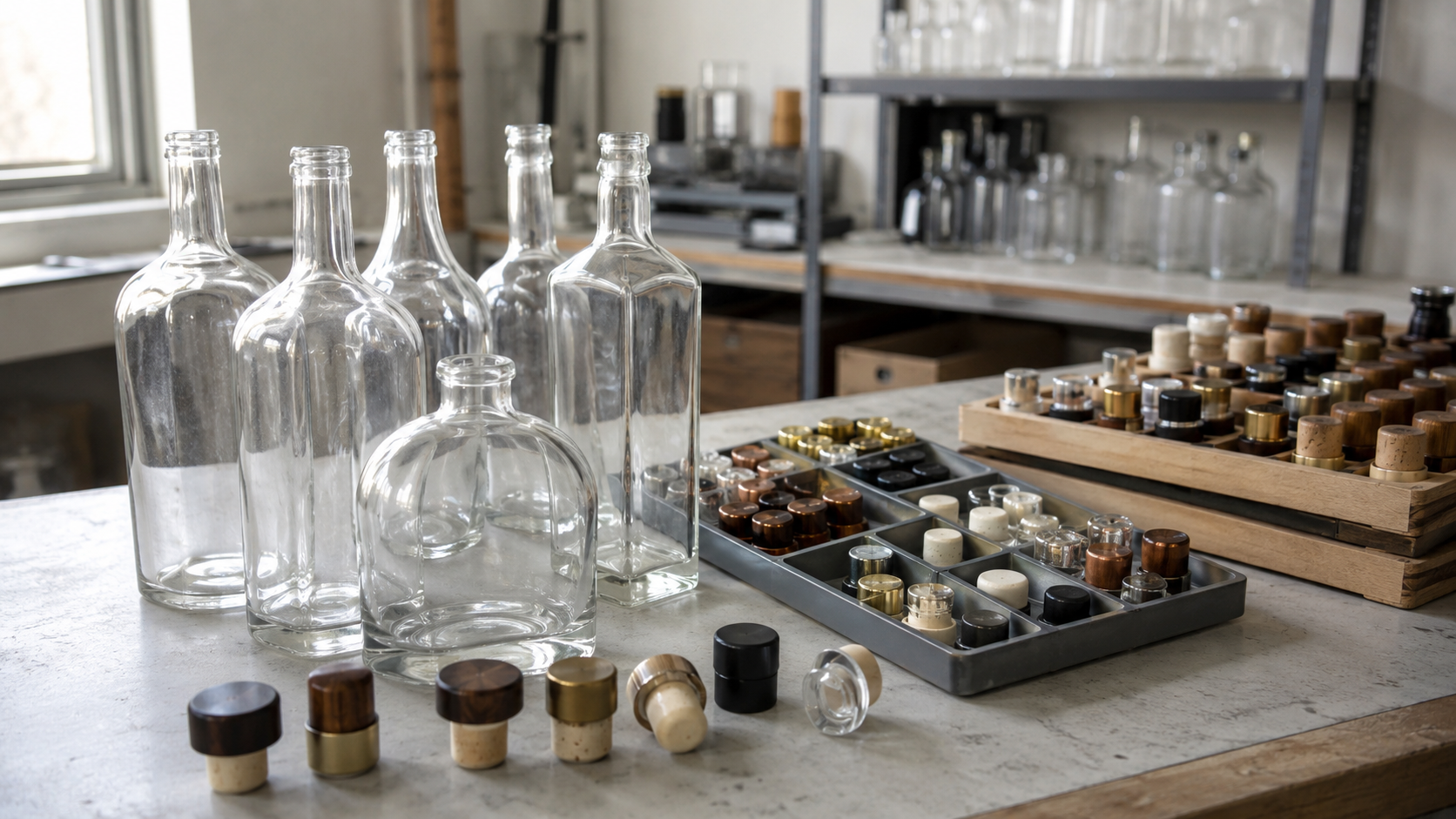
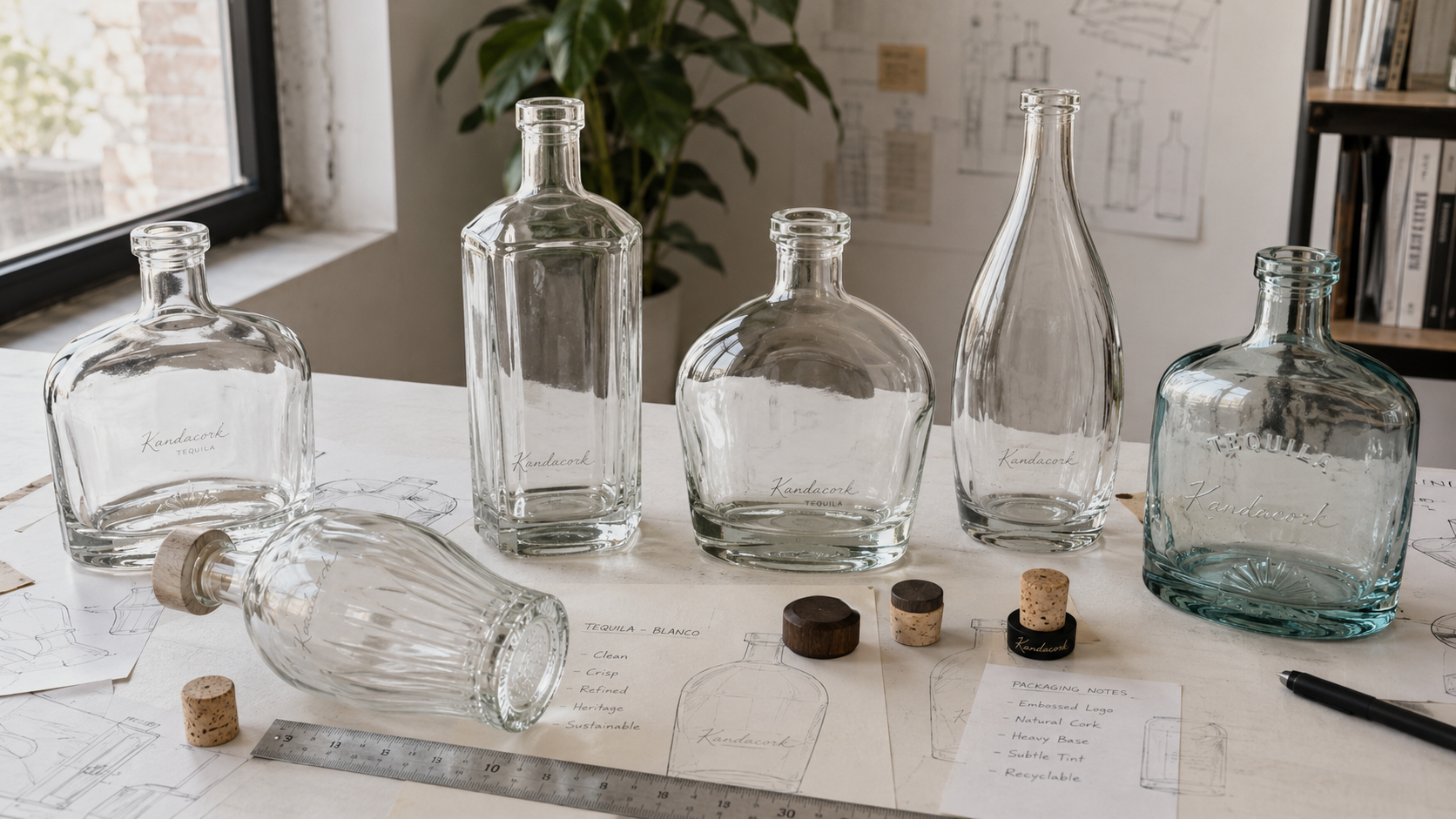
- Closure sampling setup with bottle drawings, shank samples, and finish swatches
Descriptive image names and alt text should explain what the buyer is seeing. Avoid generic image names such as “image1.jpg” or “product-photo.jpg.”
Why Work with Kandacork Closures?
Kandacork Closures supports brand owners, distilleries, bottlers, importers, and packaging partners that need custom closures for spirits bottles. The company provides aluminium bar-top stoppers, wooden stoppers, plastic stoppers, synthetic cork stoppers, metal stoppers, ROPP closures, screw caps, capsules, shrink sleeves, and closure matching support.
For aluminium stoppers for spirits bottles, Kandacork Closures focuses on bottle-neck matching, shank selection, surface finishing, logo decoration, sampling, and production consistency. This makes the company suitable for both new spirits packaging development and replacement closure sourcing.
A strong closure supplier should not only ask what color the buyer wants. It should ask what bottle is used, what market the product enters, what filling equipment is used, what opening feel is expected, and what brand message the closure must communicate.
FAQ
What are aluminium stoppers for spirits bottles?
Aluminium stoppers for spirits bottles are premium bar-top closures made with an aluminium head and a cork, synthetic cork, or polymer shank. They plug into the bottle neck, create a resealable closure, and add a metallic brand detail to whisky, vodka, gin, rum, tequila, liqueur, and other spirits packaging.
Are aluminium bar-top stoppers suitable for whisky, gin, rum, and tequila?
Yes. Aluminium bar-top stoppers are suitable for many spirits categories, including whisky, bourbon, gin, vodka, rum, tequila, mezcal, brandy, cognac, and liqueurs. The key is matching the stopper size, shank material, and finish to the bottle neck and brand positioning.
What shank material should I choose?
Choose natural cork for a traditional premium feel, agglomerated cork for a cost-effective cork-based option, and synthetic or TPE shanks for dimensional consistency and predictable sealing performance. The best shank depends on bottle neck, production volume, target market, and opening-feel preference.
How do I know which aluminium stopper size fits my bottle?
Start by measuring the bottle neck inner diameter and reviewing the bottle drawing. The stopper shank must be matched to the neck finish with the correct interference fit. For best results, test physical samples and run line trials before mass production.
Can aluminium stoppers be customized with a logo?
Yes. Aluminium stoppers can be customized with embossed logos, debossed logos, laser engraving, screen printing, color matching, anodized finishes, brushed surfaces, polished effects, knurled sidewalls, and decorative top inserts.
Are aluminium stoppers recyclable?
The aluminium head is recyclable as a material, and aluminium can be recycled repeatedly. However, a complete spirits stopper often combines aluminium with cork, synthetic cork, polymer, or adhesive. The recyclability of the full closure depends on separability, local recycling systems, and the exact material structure.
Do aluminium stoppers provide tamper evidence?
Not always by themselves. Aluminium bar-top stoppers often need to be paired with capsules, shrink sleeves, seals, or other tamper-evident devices depending on the market. Buyers should confirm local rules before finalizing the closure system.
What affects the MOQ for custom aluminium stoppers?
MOQ can be affected by head shape, tooling, surface finish, logo process, shank material, color matching, and packaging requirements. A standard aluminium stopper may have a different MOQ from a fully custom embossed or anodized stopper.
What information is needed for a quotation?
Prepare the bottle drawing, neck dimensions, bottle sample, target quantity, spirit type, destination market, preferred head design, shank material, logo artwork, finish requirement, sampling schedule, and mass production timeline.
Conclusion: Build a Better Spirits Closure System
Aluminium stoppers for spirits bottles combine brand presentation, resealing performance, and technical packaging requirements. The right stopper should look premium, fit the bottle correctly, open smoothly, protect the product, and support efficient bottling.
For buyers, the best sourcing process starts with the bottle neck and ends with tested samples, approved decoration, and reliable mass production. Kandacork Closures helps spirits brands develop custom aluminium bar-top stoppers that match bottle design, brand identity, and production needs.
If your spirits bottle project needs a premium metallic closure, prepare your bottle drawing, target quantity, finish reference, and logo requirements, then request aluminium stopper samples and technical matching support before moving to bulk production.