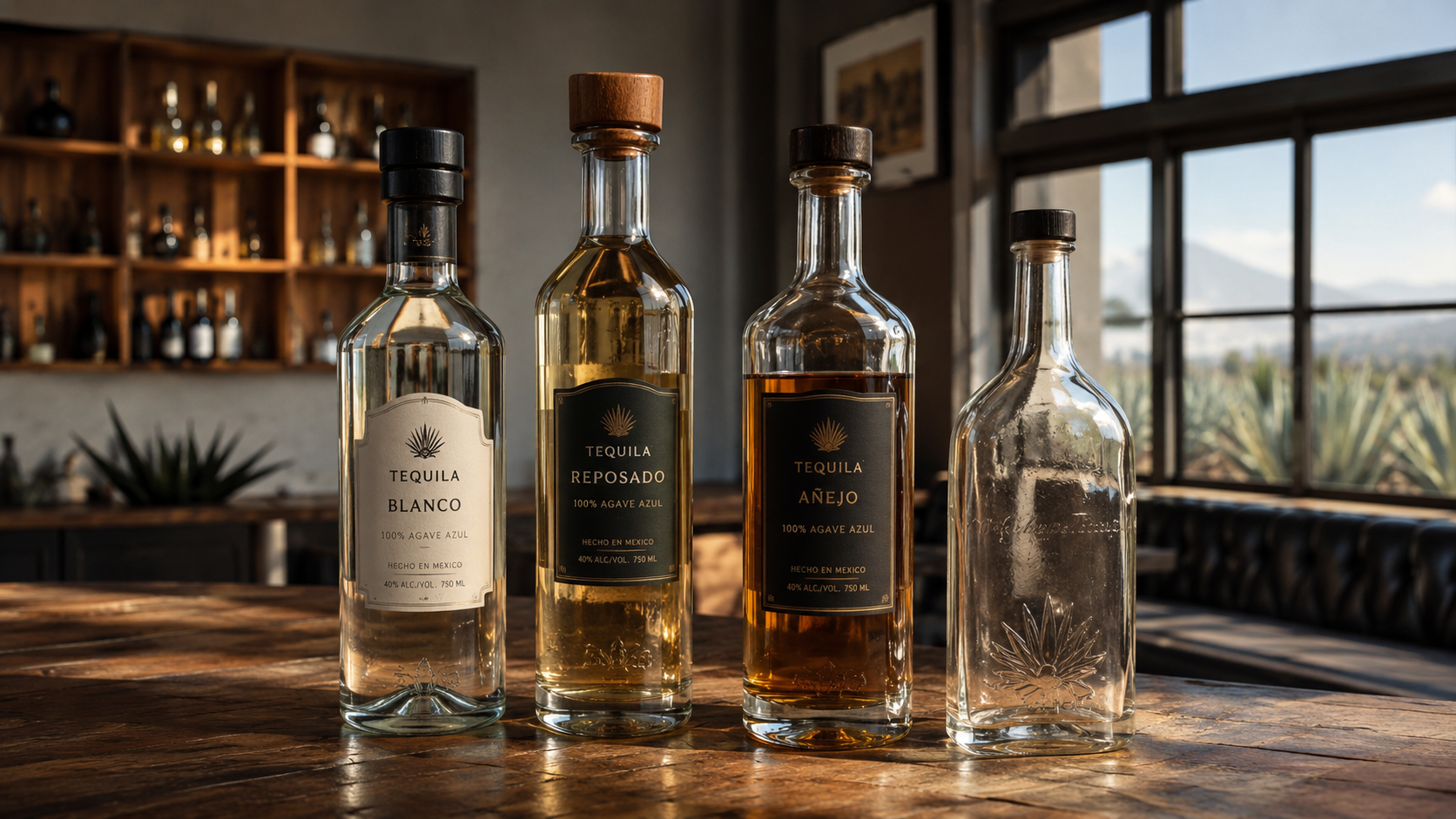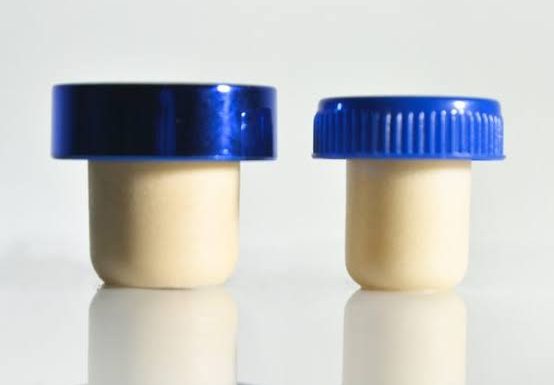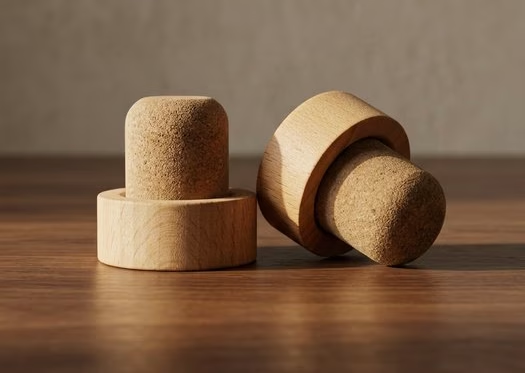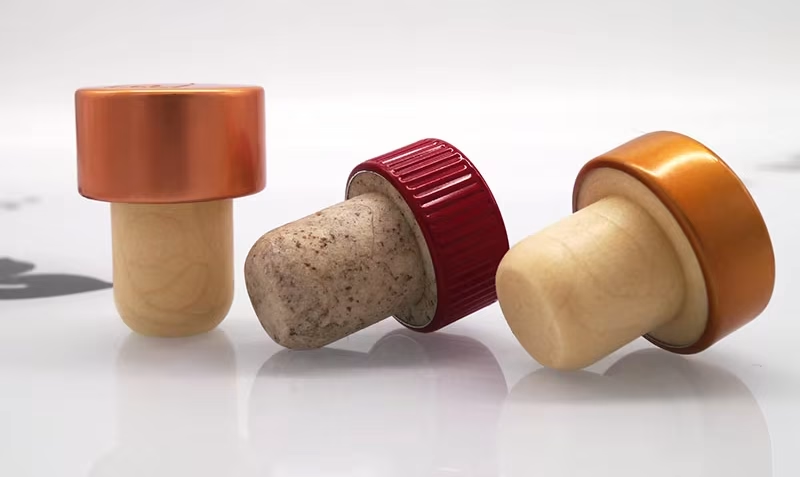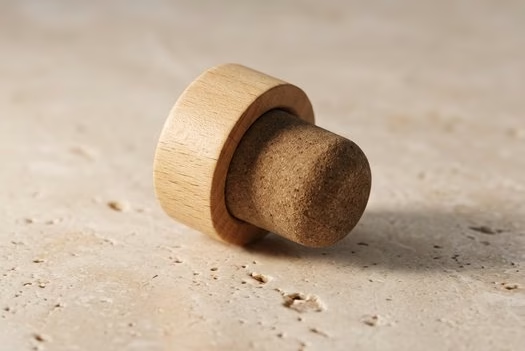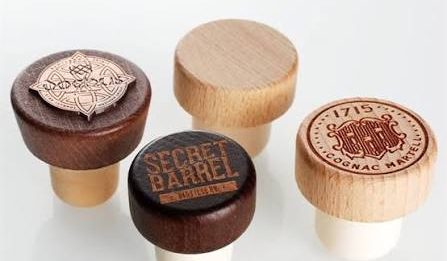
Bottle drawings are the first technical checkpoint before selecting a stopper, screw cap, ROPP cap, capsule, or decorative closure for spirits packaging.
For distilleries, spirits brands, private label buyers, bottlers, importers, distributors, and packaging teams, a drawing helps confirm whether the closure can seal, insert, thread, cover, and run correctly on the filling line. When the project also involves custom bottles, decoration, and export packaging, buyers may need to coordinate the closure review with a complete spirits bottle packaging system so the final pack works as one unit.
This guide explains how to read bottle drawings for closure projects, including neck finish dimensions, tolerances, stopper fit, cap compatibility, sample testing, and RFQ preparation.
Quick Answer: What Should You Check First?
The most important part of a bottle drawing for closure fit is the neck finish.
When reading bottle drawings for closure projects, first check the neck finish code, inner diameter, outer diameter, finish height, sealing surface, thread profile, stopper-fit area, and tolerance range. Then compare these details with the closure type, shank size, liner requirement, cap system, capsule height, and filling-line method.
For spirits packaging, the closure area directly affects sealing performance, pull force, opening torque, tamper evidence, shelf appearance, and bulk production reliability.
Need an early closure recommendation? Review the available custom spirits bottle closures and stoppers before choosing a closure direction for sampling.
What Is a Bottle Drawing in a Closure Project?
A bottle drawing is a technical document that shows the bottle’s shape, dimensions, capacity, material, finish, tolerances, and closure-related geometry. It may include front views, side views, top views, bottom views, section views, and detailed neck finish drawings.
In a closure project, the drawing helps suppliers understand whether the bottle can work with bar-top stoppers, natural cork stoppers, synthetic stoppers, glass stoppers, screw caps, ROPP caps, tamper-evident closures, capsules, or decorative closure heads.
A drawing is useful during early-stage review because it allows the closure supplier to recommend possible directions before physical samples are produced, shipped, or tested.
However, a drawing should not replace sample testing. The drawing shows design intent, while real bottle samples reveal actual manufacturing variation, neck ovality, glass surface quality, stopper pull force, cap torque, and filling-line behavior.
How to Read Bottle Drawings for Closure Projects in 7 Steps
A practical drawing review should follow a clear sequence. This prevents buyers from focusing only on bottle appearance while missing closure-critical details.
| Step | What to Check | Why It Matters |
|---|---|---|
| 1 | Drawing revision, date, unit, and scale | Confirms you are reviewing the correct technical file |
| 2 | Bottle capacity, material, and finish type | Helps match the closure to the bottle and product category |
| 3 | Neck finish code or neck detail | Determines stopper, cap, or capsule compatibility |
| 4 | T, E, I, H, S, and sealing land | Defines closure engagement, insertion, and sealing |
| 5 | Tolerances and section view | Shows the real fit range, not only nominal dimensions |
| 6 | Closure type and filling method | Connects the drawing to production requirements |
| 7 | Sample testing plan | Confirms real-world fit before bulk production |
This workflow is useful for buyer teams that need to compare closure options before requesting samples or quotations.
Start with the Title Block and Drawing Views
Before reviewing the neck finish, read the title block. This area usually appears in the corner of the drawing and contains basic project information.
Check the bottle item number, drawing number, revision number, drawing date, unit of measurement, scale, material, nominal capacity, overflow capacity, and supplier or mold reference.
The revision number is especially important. If your bottle supplier sends an old drawing but the production bottle uses a newer mold revision, the closure supplier may recommend the wrong stopper or cap. Even small changes to the bore, sealing land, thread profile, or finish height can affect closure fit.
The drawing views also matter.
The front view shows bottle height, shoulder profile, body shape, and visual proportions. This helps evaluate whether the closure head diameter and bottle silhouette look balanced.
The side view helps confirm label panel depth, shoulder slope, and neck transition. These details matter when the closure includes a large head, capsule, sleeve, or decorative top.
The top view shows the mouth opening, finish diameter, and roundness of the closure area. This is useful for checking stopper insertion and cap alignment.
The section view is one of the most valuable views for closure projects. It shows internal geometry, wall thickness, bore shape, and stopper insertion depth. For cork, synthetic, and glass stoppers, the section view can be more important than the front view.
Why the Neck Finish Controls Closure Fit
The neck finish is the top section of the bottle where the closure engages, seals, threads, inserts, or covers the container.
For screw caps, it includes the thread and sealing surface. For bar-top stoppers, it includes the bore, mouth, and internal neck geometry. For capsules, it also includes the outside neck height and shoulder transition.
When reading bottle drawings for closure projects, do not focus only on the bottle’s visual shape. A beautiful bottle can still create closure problems if the neck finish is unclear.
The closure area controls whether the bottle can be sealed safely, opened consistently, decorated correctly, and processed efficiently on the filling line. For spirits brands, it also affects perceived quality. A premium whiskey, gin, rum, tequila, vodka, brandy, or liqueur bottle should not have a stopper that feels loose, a cap that sits unevenly, or a capsule that wrinkles around the neck.
Key Bottle Drawing Dimensions: T, E, I, H, S, and Sealing Land
The most useful bottle drawing dimensions for closure matching are usually T, E, I, H, S, and the sealing land. These dimensions help buyers and suppliers move from general bottle size to real closure compatibility.
T Dimension: Outside Thread Diameter
The T dimension usually refers to the outside diameter across the thread. It is one of the most important measurements for screw caps and threaded closures.
If the T dimension does not match the cap finish, the closure may not engage correctly. It may cross-thread, sit too high, fail torque testing, or create leakage risk.
For ROPP caps and screw caps, the T dimension should be reviewed together with the thread profile, finish height, liner type, and capping equipment.
E Dimension: Neck Diameter Below the Thread
The E dimension usually refers to the outside neck diameter below the thread. It helps define thread depth and closure engagement.
This dimension is useful when comparing cap systems because the cap must fit over the finish and compress correctly against the sealing surface. If the E dimension is too large or too small within tolerance, the cap may feel tight, loose, or inconsistent.
I Dimension: Inner Diameter or Bore
The I dimension is critical for stopper projects. It refers to the inner diameter of the bottle opening or bore.
For spirits stoppers, the inner diameter affects shank compression, insertion depth, sealing behavior, and pull force. A cork shank needs enough compression to seal but not so much that insertion becomes difficult or opening force becomes excessive.
For natural cork, synthetic cork, and glass stoppers, the I dimension should be checked carefully. If the bore is tapered, oval, or inconsistent, the supplier may need to adjust shank size, material, or sample range. Buyers who need more detail on push-fit behavior can also review how bar-top stoppers fit spirits bottle necks before confirming stopper samples.
H Dimension: Finish Height
The H dimension usually refers to the height of the finish. It affects how a cap seats, how a tamper-evident band positions, how a capsule covers the neck, and how deep a stopper may insert.
A small difference in finish height can change the final closure appearance. For premium spirits packaging, this can affect shelf impact and brand perception.
S Dimension: Thread Start or Finish Reference
The S dimension is often used to understand thread start position or finish geometry. It can affect closure orientation, thread engagement, and how consistently the cap applies during production.
This dimension is especially relevant for screw caps, ROPP caps, and decorated closures where alignment matters.
Sealing Surface or Land
The sealing surface, also called the land, is the top surface of the bottle finish. It must be flat, clean, and compatible with the closure liner or stopper design.
For screw caps, the liner needs proper compression against the sealing land. For stoppers, the upper mouth condition affects insertion feel and sealing reliability. If the drawing does not show the sealing land clearly, ask the bottle supplier for a detailed neck finish drawing.
How to Read Tolerances and Avoid Fit Problems
A bottle drawing does not only show nominal dimensions. It should also show tolerance ranges.
A nominal inner diameter may be 19.5 mm, but the actual production range may be 19.2 mm to 19.8 mm. That range can change the correct stopper shank recommendation.
Tolerances matter because real bottles are produced in batches. Glass containers can vary in height, diameter, bore, wall thickness, verticality, and mouth parallelism. These variations may be acceptable for bottle production but still important for closure matching.
When reviewing bottle drawings for closure projects, check whether the drawing includes plus/minus tolerance, minimum and maximum dimensions, bore tolerance, thread tolerance, finish height tolerance, ovality control, wall thickness variation, verticality, and mouth alignment.
Tolerance stacking is a common hidden risk. A bottle with the largest allowed bore and a stopper with the smallest allowed shank may feel loose. A bottle with the smallest allowed bore and a stopper with the largest allowed shank may feel too tight.
Good closure suppliers review the full tolerance window, not only the nominal value.
Industry standards help buyers avoid vague closure discussions. CETIE finish data sheets can support glass finish review, while ISBT Threadspecs help beverage teams use consistent finish terminology.
However, standards do not replace closure supplier testing. Liner behavior, cork compression, ROPP application, opening torque, leakage risk, and capsule appearance still depend on the actual bottle and closure combination.
Closure Matching Matrix for Spirits Packaging
Different closure types use bottle drawing information in different ways. A bar-top stopper does not read the drawing the same way as a ROPP cap. A capsule does not depend on the same details as a synthetic shank.
| Closure Type | Drawing Data to Check | Main Risk | Sample Test Needed |
|---|---|---|---|
| Bar-top stopper | I dimension, bore taper, insertion depth, mouth finish | Loose or tight fit | Pull force, leakage, hand feel |
| Natural cork stopper | Bore tolerance, compression range, mouth smoothness | Natural material variation | Insertion, extraction, seal test |
| Synthetic stopper | Bore size, straightness, insertion depth | Over-compression or weak grip | Fit consistency and leakage |
| Glass stopper | Bore precision, insert area, sealing zone | Poor seal or unstable fit | Fit test and leakage test |
| Screw cap | T, E, H, S, thread profile, sealing land | Cross-threading or leakage | Opening torque and reseal test |
| ROPP cap | Finish height, thread profile, TE band area | Application torque issue | Capping-line and torque test |
| Capsule | Neck height, shoulder transition, outside neck diameter | Wrinkles or uneven appearance | Visual fit and shrink/roll test |
| Decorative closure | Head diameter, neck height, bottle silhouette | Poor visual balance | Appearance and assembly review |
This matrix helps buyer teams connect the drawing to real closure decisions. It also helps identify what information should be sent before requesting samples.
How Different Spirits Closures Use Bottle Drawing Data
Stopper Projects
For bar-top stoppers, the most important drawing details are the inner diameter, bore shape, insertion depth, mouth condition, and tolerance range.
A natural cork stopper behaves differently from a synthetic stopper. Natural cork has elasticity and visual appeal, but it also has natural material variation. Synthetic shanks can offer more dimensional consistency and controlled performance. Glass stoppers require precise fit because the insert system must work with the bottle bore and sealing requirement.
A spirits closure must do more than seal. It must support the brand experience. A premium whiskey stopper should feel secure and deliberate. A gin or liqueur closure may need stronger decorative appeal. A private label spirits project may need a balance of cost, MOQ, production speed, and reliable fit.
Screw Cap and ROPP Cap Projects
For screw caps and ROPP caps, the drawing review focuses on the thread finish, finish height, tamper-evident area, liner compression, and capping equipment compatibility.
A common mistake is assuming that the nominal diameter is enough. Two bottles may look similar, but the thread profile, finish height, sealing surface, and tamper-evident band area may differ.
For ROPP caps, the cap must be formed correctly around the bottle finish during application. The bottle drawing should be reviewed together with filling-line information, including capping head type, application torque, line speed, and quality-control requirements. For threaded cap projects, a detailed guide to screw cap thread finish matching can help buyers understand why nominal diameter alone is not enough.
Capsule and Decorative Closure Projects
Capsules and decorative closures depend on more than the mouth opening. They depend on the full neck and shoulder geometry.
When reviewing a drawing for capsule fit, check neck height, shoulder transition, outside neck diameter, closure head diameter, and decoration area. A capsule may wrinkle, sit unevenly, or interfere with the shoulder if the bottle shape is not reviewed carefully.
Decorative closures also need visual balance. A large wood, metal, zamac, ceramic, or composite closure head may look premium on one bottle but oversized on another. The drawing helps compare closure head diameter with the bottle shoulder, body width, and overall silhouette.
Bottle Drawing vs Physical Bottle Sample
Bottle drawings are essential, but they are not the final proof of compatibility.
A drawing tells the supplier what the bottle is designed to be. A physical sample shows what the bottle actually is.
| Review Method | What It Confirms | What It Cannot Confirm |
|---|---|---|
| Bottle drawing | Design intent, nominal dimensions, finish structure | Actual batch variation |
| Neck finish drawing | T/E/I/H/S details, thread or bore geometry | Real surface quality |
| 3D rendering | Visual shape and design direction | Closure fit or tolerance |
| Physical bottle sample | Actual bore, thread, surface, pull force, torque | Full production-batch consistency |
| Pilot run | Filling-line behavior and application performance | Long-term market performance |
For this reason, a technical review should use drawings for early screening and physical samples for final approval. This approach reduces unnecessary sample rounds and gives both the buyer and supplier a more reliable basis for decision-making.
Common Mistakes When Reading Bottle Drawings for Closure Projects
A bottle drawing can prevent closure problems only when buyers read the right details. These are the most common mistakes in spirits closure projects.
The first mistake is treating nominal diameter as the only requirement. A 24 mm or 28 mm opening does not guarantee cap compatibility. Thread style, finish height, sealing land, tolerance, and application method still matter.
The second mistake is ignoring thread series differences. A closure may appear to fit by hand but fail leakage, opening torque, or shipping tests if the thread profile is not correct.
The third mistake is selecting a stopper from one bottle sample without checking the tolerance range. One sample may fit well, while another production bottle from the same mold range may feel loose or too tight.
The fourth mistake is using a 3D rendering instead of a technical neck finish drawing. Renderings show appearance, not bore, tolerance, thread profile, or sealing surface.
The fifth mistake is requesting a quotation without filling-line information. Manual filling, semi-automatic capping, and high-speed automatic lines may require different closure tolerances, liners, torque targets, or sample tests.
Red Flags Before Requesting Closure Samples
A bottle drawing is not always complete. Before requesting closure samples, check for these red flags:
- No neck finish code
- No inner diameter
- No tolerance range
- No detailed section view
- No sealing surface detail
- Unclear unit of measurement
- Old revision date
- Only a rendering, not a technical drawing
- No stopper insertion depth
- No thread profile detail
- No capsule coverage area
- No filling or capping method information
If any of these details are missing, the supplier may still provide a preliminary recommendation, but the sampling risk will be higher.
For high-value spirits projects, it is better to clarify the drawing before making tooling, decoration, or bulk closure decisions. If the project is still unclear, a dedicated bottle closure matching service can help identify which neck, bore, finish, and sample details should be confirmed first.
What to Send for a Closure Review
To receive a faster and more accurate recommendation, prepare a complete closure review package.
Send the following information:
- Bottle drawing
- Detailed neck finish drawing
- Physical bottle samples, if available
- Target closure type
- Spirit category
- Filling volume
- Market destination
- Filling method
- Capping method
- Decoration requirements
- Estimated order quantity
- Target launch schedule
- Reference images or brand direction
For brand-driven projects, visual references are useful. A closure for a luxury whiskey, craft gin, aged rum, tequila, vodka, brandy, or liqueur may require different material choices and finishing options.
Closure RFQ Checklist
Before requesting a quotation, prepare the following information:
| RFQ Item | Details to Provide |
|---|---|
| Bottle drawing | File name, drawing number, revision date |
| Neck finish drawing | Finish code, T/E/I/H/S, tolerances |
| Physical samples | Available or not available |
| Target closure type | Stopper, screw cap, ROPP cap, capsule, decorative closure |
| Spirit category | Whiskey, gin, rum, vodka, tequila, brandy, liqueur, other |
| Filling volume | 50 ml, 200 ml, 500 ml, 700 ml, 750 ml, 1 L, or custom |
| Target market | Domestic, export, duty-free, retail, gifting, private label |
| Filling method | Manual, semi-automatic, automatic |
| Capping method | Hand application, mechanical capping, ROPP application, shrink/roll capsule |
| Decoration requirement | Color, logo, embossing, material, top design |
| Estimated order quantity | Sample quantity and bulk order forecast |
| Launch schedule | Sampling deadline and production timeline |
| Special concerns | Leakage, torque, pull force, capsule appearance, export shipping |
Use this checklist before contacting a closure supplier, or send the completed information through a custom closure quote request for a faster sample recommendation and quotation.
Practical Example: Stopper vs ROPP Cap Drawing Review
A whiskey stopper project starts with the bore, insertion depth, mouth finish, tolerance range, stopper head material, and pull force target. The supplier may recommend several shank diameters or materials to test sealing, opening feel, and visual balance.
A vodka ROPP cap project starts with the thread profile, finish height, sealing land, tamper-evident band area, liner requirement, and capping equipment. The supplier may request physical bottles to test application torque, opening torque, and leakage performance.
The same bottle drawing can support both reviews, but each closure type reads different risk points. This is why buyers should clearly state the intended closure type before asking for a sample or quotation.
Supplier Capability Checklist
A qualified closure supplier should be able to read bottle drawings and translate technical details into practical recommendations.
Before choosing a supplier, ask:
- Can the supplier review both drawings and physical bottles?
- Can they explain stopper, cap, capsule, and decorative closure requirements?
- Can they evaluate tolerances and sealing risk?
- Can they recommend material options based on spirit category and brand position?
- Can they provide samples before bulk production?
- Can they support decoration, color matching, embossing, or custom tops?
- Can they coordinate with the bottle manufacturer or bottler when needed?
For business buyers, supplier capability is not only about price. It is about reducing project risk, improving sampling efficiency, and protecting the launch schedule.
FAQ
What is the most important part of a bottle drawing for closure fit?
The neck finish is the most important part. It includes the bore, thread or stopper-fit geometry, finish height, sealing surface, and tolerance range. These details determine whether the closure can seal, insert, thread, or cover the bottle correctly.
What dimensions matter most for closure fit?
The most important dimensions are T, E, I, H, S, the sealing land, and the tolerance range. For spirits stoppers, I dimension and insertion depth are especially important. For screw caps and ROPP caps, thread profile and finish height are critical.
Can a closure supplier quote from a bottle drawing only?
A supplier can usually provide an early quotation or recommendation from a clear bottle drawing. However, physical bottle samples are recommended before final approval because real bottles may vary from nominal dimensions.
Why does inner diameter matter for spirits stoppers?
Inner diameter controls stopper shank compression, insertion depth, sealing behavior, and opening feel. Even small bore variations can make a stopper feel too loose, too tight, or inconsistent across production bottles.
What should I send before requesting closure samples?
Send the bottle drawing, neck finish drawing, physical bottles if available, closure type, spirit category, filling method, capping method, decoration direction, order quantity, and target launch schedule.