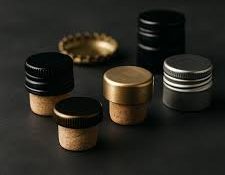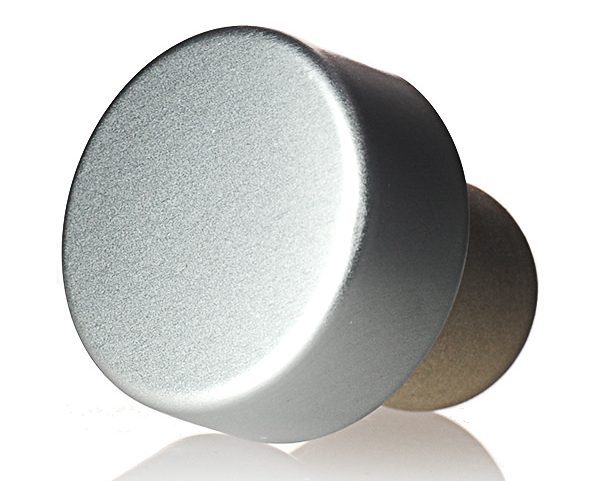
Screw cap thread finish matching is the process of confirming that a screw cap’s diameter, thread style, liner system, finish height, sealing surface, and tamper-evident structure fit the bottle neck correctly before production. For real packaging buyers, the goal is not just to find a cap that screws on. The goal is to confirm a closure system that seals reliably, opens consistently, runs on the filling line, protects the product, and supports the final brand presentation.
For spirits, beverages, oils, sauces, cosmetics, and specialty liquids, a small mismatch between the bottle neck and cap can lead to leakage, cross-threading, loose caps, poor torque, failed tamper evidence, or delayed bulk production. This guide explains how to evaluate screw cap thread finish matching from a buyer’s perspective, including neck finish codes, T/E/I/S/H dimensions, liners, ROPP closures, torque control, leakage testing, and the information suppliers need before quoting.
Kandacork Closures supports brands with custom screw caps for spirits bottles, liquor bottles, liqueur bottles, RTD packaging, olive oil bottles, and premium glass packaging projects that require stable fit, reliable sealing, and custom branding.
Who This Guide Is For
This guide is useful for packaging buyers, distilleries, beverage producers, food brands, oil brands, cosmetics companies, bottle manufacturers, closure suppliers, procurement teams, and filling-line operators.
It is especially relevant when you are preparing a bulk screw cap order, changing cap suppliers, developing a custom bottle, comparing CT caps with ROPP caps, testing bottle cap compatibility, or troubleshooting leakage and torque problems. If your project also involves bottle structure, neck finish design, or full packaging coordination, teams working on spirits bottle development should review closure fit early instead of treating the cap as a final accessory.
What Is Screw Cap Thread Finish Matching?
Screw cap thread finish matching means pairing a screw cap with the correct bottle neck finish so the cap can apply smoothly, compress the liner correctly, maintain sealing pressure, provide the intended opening feel, and support tamper evidence where required.
A bottle neck finish includes the external thread, sealing land, bore opening, neck height, bead structure, and dimensional tolerance. A cap includes the internal thread, skirt height, liner cavity, material thickness, tamper band, and decoration area. These parts must work together.
In B2B packaging, the matching process should be treated as a technical approval step. A cap can look correct in a photo but fail during filling-line trials if thread engagement, liner compression, capping torque, or bottle tolerance is wrong.
How to Read Screw Cap and Bottle Neck Finish Codes
Most screw cap and bottle neck finish codes use a two-part format, such as 24-410, 28-400, 38-400, or 31.5 ROPP.
The first number usually refers to the nominal diameter in millimeters. For example, a 28-400 closure is designed for a 28 mm bottle neck finish.
The second number refers to the finish style or thread series. It can describe thread turn, finish height, thread engagement, and closure structure. Common continuous thread finishes include 400, 410, 415, 425, and 430.
Diameter alone is not enough. A 28-400 cap and a 28-410 cap may share the same nominal diameter, but the thread style and finish height can differ. The cap may screw on partially yet still leak, sit too high, cross-thread, or fail removal-torque testing.
| Finish Code | Common Category | Typical Use | Matching Risk |
|---|---|---|---|
| 18-400 | Small bottles and sample bottles | Essential oils, samples, compact liquids | Small tolerance changes can affect sealing |
| 20-410 | Cosmetics and personal care | Serums, lotions, dispensing closures | Often confused with 20-400 |
| 24-400 | General bottles | Food, beverage, household products | Confirm liner and thread engagement |
| 24-410 | Liquid dispensing | Pumps, sprayers, disc-top caps | Not interchangeable with 24-400 |
| 28-400 | Beverage, food, and general packaging | Standard screw caps, jars, liquid bottles | Check sealing land and liner compression |
| 28-410 | Dispensing packaging | Pumps, sprayers, flip-top caps | Height and thread style differ from 28-400 |
| 31.5 ROPP | Spirits, wine, and olive oil | Aluminum tamper-evident closures | Requires correct bead, thread, and rolling setup |
| 38-400 | Food jars and beverage bottles | Sauces, drinks, powders, wide-mouth packaging | Torque and liner compression are critical |
This table helps buyers narrow the discussion, but it should not replace technical review. Bottle cap compatibility must still be confirmed through drawings, samples, and closure fit testing.
Key Neck Finish Measurements: T, E, I, S, and H
Professional screw cap thread finish matching often uses T, E, I, S, and H dimensions. These measurements help suppliers and buyers communicate clearly about the bottle neck.
| Measurement | What It Checks | Why It Matters |
|---|---|---|
| T dimension | Outside thread diameter | Controls thread engagement and cap fit |
| E dimension | Neck outside diameter | Helps define thread depth and cap clearance |
| I dimension | Inner bore diameter | Affects filling, pouring, inserts, and flow reducers |
| S dimension | Thread start | Influences cap alignment and cross-thread risk |
| H dimension | Finish height | Affects liner compression, cap skirt, and tamper band fit |
The T dimension is usually checked first because it controls how the cap engages with the thread. If the T dimension is too large, the cap may be difficult to apply. If it is too small, the cap may feel loose or fail to hold torque.
The E dimension helps define thread depth and clearance. The I dimension matters when the package uses pourers, non-refillable inserts, filling nozzles, or flow-control components. The S dimension affects the way the cap starts on the thread, which is important for cross-thread prevention. The H dimension affects cap skirt coverage, liner compression, tamper band position, and final appearance.
Standards and industry references are useful because they create a common dimensional language. For example, ASTM International publishes specifications covering thread configuration and dimensions for plastic bottles with screw-type closures, including dimensional tolerances.
CT Caps vs ROPP Caps
Continuous thread caps and ROPP caps are both screw-type closure systems, but they behave differently during application.
| Feature | Continuous Thread Cap | ROPP Cap |
|---|---|---|
| Thread style | Pre-formed internal thread | Thread formed during capping |
| Common material | Plastic or metal | Aluminum |
| Common use | General packaging, cosmetics, food, beverage | Spirits, wine, olive oil, premium beverages |
| Tamper evidence | Optional, depending on design | Commonly integrated |
| Application method | Screwed onto matching finish | Rolled onto bottle with capping equipment |
| Main risk | Wrong finish series or liner mismatch | Poor rolling, bead mismatch, or incorrect bottle finish |
A continuous thread cap usually has a pre-formed internal thread. It screws onto a bottle with a matching external neck finish. These caps are common across food, cosmetics, household, beverage, and specialty packaging.
A ROPP cap, or roll-on pilfer-proof cap, is typically an aluminum closure formed onto the bottle during capping. The capping equipment rolls the cap shell around the bottle thread and tamper bead. Because of this, the bottle finish, bead position, cap skirt height, liner, and capping setup must be reviewed together. Kandacork Closures also supports ROPP closures for spirits, wine, olive oil, mini bottles, liqueurs, and premium beverage packaging.
For metallic screw capping, CETIE guidance is especially relevant because it discusses component relationships, closure function, and good practice for metallic screw cap application on glass finishes.
Why Liner Selection Matters
The liner is often the difference between a cap that fits visually and a cap that seals commercially.
A liner must suit the product chemistry, storage conditions, sealing land, application torque, and shelf-life expectation. Alcoholic products may require liners that resist alcohol and help protect aroma. Oils may require liners that resist swelling and grease exposure. Acidic sauces, syrups, functional beverages, and cosmetic liquids may require additional compatibility review.
For food-contact projects, buyers should consider applicable market requirements for closure components, gaskets, liners, and indirect food-contact materials. In the United States, 21 CFR Part 177 includes regulations for certain polymer materials and closures with sealing gaskets used with food containers.
A cap can match the finish code but still leak if the liner is too hard, too soft, too thin, chemically unsuitable, or unable to compress evenly against the bottle’s sealing surface.
Screw Cap Thread Finish Matching Process for Bulk Orders
Start with the bottle drawing. It should show the neck finish code, thread diameter, finish height, bore size, sealing land, bead details, and tolerance range. For glass bottles, confirm whether the finish is designed for continuous thread caps, ROPP caps, bar-top closures, non-refillable systems, or specialty dispensing closures.
Next, review the cap drawing. Check cap diameter, internal thread, skirt height, liner cavity, tamper band design, bridge structure, shell thickness, coating, and decoration area. For aluminum screw caps, also review knurling, embossing, sidewall printing, top printing, and compatibility with capping equipment.
Then test real samples. Drawings are essential, but physical testing confirms whether the cap starts smoothly, tightens evenly, reaches the target torque, compresses the liner correctly, and looks clean on the finished bottle. This is where cap and neck compatibility support can help buyers reduce mismatch risks before mold confirmation, sample approval, or bulk closure production.
Finally, evaluate application torque and removal torque across multiple samples. If application torque is too low, the cap may loosen or leak. If it is too high, the liner may deform, the thread may strip, or the consumer may struggle to open the bottle. A single good sample is not enough; repeatability across a sample batch is the real signal.
Common Matching Problems and Practical Fixes
| Problem | Likely Cause | What to Review |
|---|---|---|
| Cap feels loose | Wrong finish series, low torque, poor thread engagement | T dimension, cap thread, application torque |
| Cap cross-threads | Thread start mismatch, damaged finish, capping misalignment | S dimension, thread profile, capping head |
| Cap tightens but leaks | Poor liner compression, uneven sealing land, wrong torque | Liner, H dimension, sealing surface |
| Tamper band fails | Bead mismatch, wrong skirt height, bridge issue | H dimension, bead position, tamper band structure |
| Cap looks uneven | Thread mismatch, shoulder interference, cap deformation | Finish height, cap skirt, bottle tolerance |
| Opening torque changes after shipping | Torque loss, liner relaxation, temperature effect | Torque retention, liner material, transport testing |
When a cap feels loose, do not assume the solution is simply a tighter cap. The issue may be wrong finish series, insufficient thread engagement, poor liner compression, or bottle tolerance variation.
When a cap tightens but leaks, the problem may not be thread fit. It may come from the sealing land, liner material, application torque, bottle mouth damage, or product compatibility. Over-tightening can create new problems by deforming the liner or damaging the thread.
When a tamper band fails, check the cap skirt, bridge design, bead position, and capping pressure. For premium beverage and spirits packaging, visible tamper evidence is part of both quality control and consumer trust.
For high-risk projects, combine sample review with sealing and leakage tests before approving production. Inverted storage, side storage, vibration, temperature cycling, carton pressure, and transport simulation can reveal problems that are not visible during a simple desk review.
Matching for Spirits and Premium Packaging
Spirits packaging needs both technical performance and premium shelf impact. A screw cap may need to protect alcohol aroma, prevent leakage, support tamper evidence, run on the filling line, survive export shipping, and carry brand decoration.
For vodka, gin, rum, tequila, whisky, brandy, liqueurs, RTD spirits, and olive oil, aluminum screw caps and ROPP closures are often selected because they support clean reclosure, metallic finishes, embossing, debossing, custom color, top printing, and sidewall decoration.
However, decoration should never be approved before the closure fit is confirmed. A beautifully printed cap that sits too high, opens inconsistently, or leaks after shipping will still fail as packaging. For projects requiring custom colors, metallic coatings, logo effects, or coordinated bottle-and-cap presentation, surface decoration and branding should be planned after technical fit is stable.
When the glass bottle itself is still under development, neck finish review should happen early. Teams coordinating bottle shape, finish engineering, and complete pack presentation can benefit from integrated spirits packaging support so the bottle, closure, decoration, cartons, and export packing are planned as one system.
Standards, Quality Control, and Industry References
A strong screw cap matching process should use recognized terminology and repeatable quality-control logic. Industry organizations and standards bodies help buyers and suppliers speak the same technical language.
The Glass Packaging Institute represents the North American glass container industry and is widely associated with glass packaging education, technical communication, and finish-drawing references. For glass bottle projects, using consistent neck finish terminology helps reduce confusion between bottle factories, closure suppliers, and filling partners.
Quality systems also matter. ISO 9001 provides a recognized framework for quality management, customer requirements, process control, and continual improvement. In closure matching, that thinking translates into documented drawings, controlled samples, batch repeatability, inspection records, and corrective actions when fit issues appear.
The practical lesson is simple: do not approve a bulk screw cap order from appearance alone. Use drawings, measurements, sample testing, torque checks, leakage review, and supplier communication to confirm repeatable performance.
What to Send a Screw Cap Supplier
To speed up quotation and reduce errors, send complete project details. Useful information includes the bottle drawing, neck finish code, physical bottle samples, product type, alcohol level or product chemistry, fill volume, filling temperature, capping method, liner requirement, tamper-evident requirement, decoration method, sample quantity, order volume, and destination market.
If the bottle and closure come from different suppliers, provide both drawings as early as possible. If the bottle is custom, ask for neck finish confirmation before the glass mold is finalized. If the cap is custom printed or embossed, confirm the technical fit before final decoration approval.
For broader bottle-and-closure coordination across glass, caps, accessories, and export packing, custom glass packaging planning can help align the physical package with production and market requirements.
Why Work with Kandacork Closures?
Kandacork Closures supports B2B buyers who need screw caps, aluminum closures, ROPP caps, liners, tamper-evident systems, and custom closure solutions for premium packaging projects.
The value is not only the cap itself. The value is technical matching, sample coordination, liner review, decoration support, sealing evaluation, and production planning. Kandacork Closures can help buyers compare closure options, review bottle neck compatibility, prepare samples, and reduce the risk of ordering caps that look right but fail in production.
For early-stage projects, the closure matching service helps identify the right closure direction before sampling. For projects ready for commercial discussion, buyers can request a closure quote with bottle drawings, samples, closure requirements, target quantity, and market details.
FAQ
What is screw cap thread finish matching?
Screw cap thread finish matching is the process of confirming that a screw cap fits a bottle neck finish correctly. It includes cap diameter, thread style, finish height, liner compression, sealing surface, torque behavior, and tamper-evident structure.
How do I match a screw cap to a bottle neck finish?
Start by confirming the full neck finish code, not only the diameter. Then review the bottle drawing, cap drawing, T/E/I/S/H dimensions, liner, skirt height, tamper band, torque range, capping method, and sample performance.
Will a 28-400 cap fit a 28-410 bottle?
Usually, no. A 28-400 cap and a 28-410 cap may share the same nominal diameter, but they use different finish styles. The cap may screw on partially but fail to seal correctly or perform consistently.
Why does a cap leak even when the finish code matches?
A cap can leak because of poor liner compression, an uneven sealing land, incorrect torque, bottle tolerance variation, product incompatibility, or capping machine issues. Matching the finish code is only the first step.
Can the same screw cap fit glass and plastic bottles?
Sometimes, but not always. Glass and plastic bottles can have different tolerances, sealing surfaces, thread behavior, and application requirements. Sample testing is recommended before using one closure across different bottle materials.
Do aluminum ROPP caps need a special neck finish?
Yes. ROPP caps need a bottle finish designed for roll-on application. The thread, bead, finish height, liner, and capping equipment must match the aluminum closure design.
What should I send before ordering bulk screw caps?
Send the bottle drawing, neck finish code, physical bottle samples if available, product type, liner requirement, capping method, decoration needs, order quantity, and shipping conditions. This allows the supplier to review compatibility before bulk production.
Conclusion
Screw cap thread finish matching is one of the most important steps in bottle packaging development. A cap must match the bottle diameter, thread style, finish height, liner requirement, tamper-evident structure, and production process.
For packaging buyers, the safest approach is to combine technical review with real sample testing. Do not rely only on photos or nominal size codes. Check drawings, test samples, measure torque, inspect leakage, and confirm production compatibility.
Kandacork Closures helps brands reduce packaging risk by supporting screw cap selection, thread finish review, liner matching, sample testing, custom branding, and bulk closure development. The right closure match can protect your product, improve user experience, and support a smoother path to production.