Custom Capsules and Shrink Sleeves for Better Bottle Neck Packaging
Bottle neck capsule projects require careful control of size, material, artwork and application performance. This checklist helps spirits brands prepare the key details needed for sampling, shrink testing, production and export packing.
Product Summary
Custom capsules and shrink sleeves are bottle neck packaging components used to finish, decorate, protect, and seal the closure area of spirits bottles. They can be used for premium visual presentation, tamper-evident protection, color matching, logo display, closure coverage, and better shelf impact.
For a complete packaging system, the capsule or sleeve should be evaluated together with the bottle, closure, label, decoration, filling line, and export packing plan. A shrink sleeve that looks attractive on a drawing may perform differently once it is applied with heat to a real bottle. A capsule that appears premium on its own may still fail if the diameter, drop length, or stopper clearance is wrong.
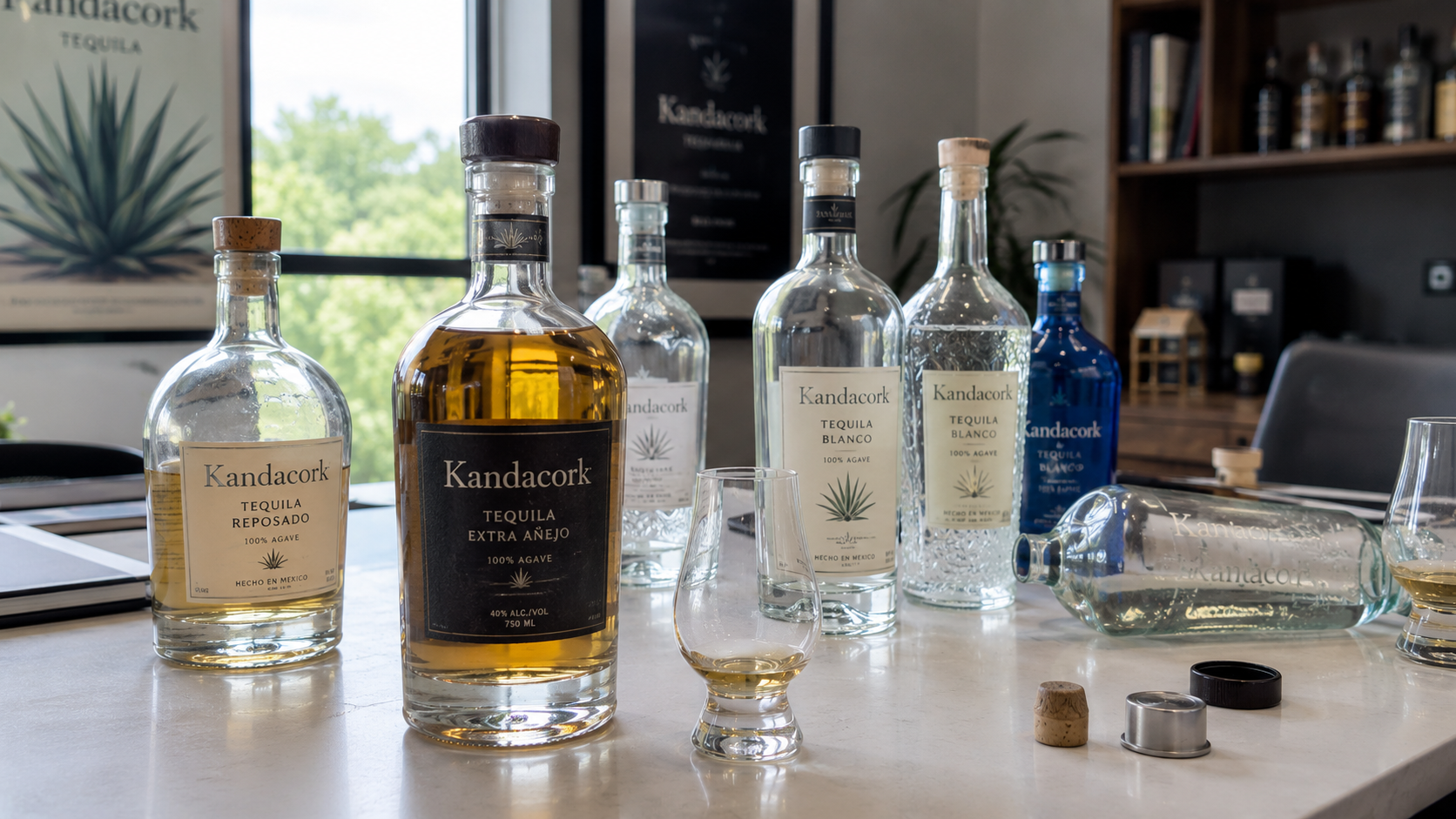
Kandacork Closures supports distilleries, spirits brands, bottlers, importers, packaging distributors, and private-label teams that need bottle-matched neck packaging and practical sample development.
What Are Custom Capsules and Shrink Sleeves?
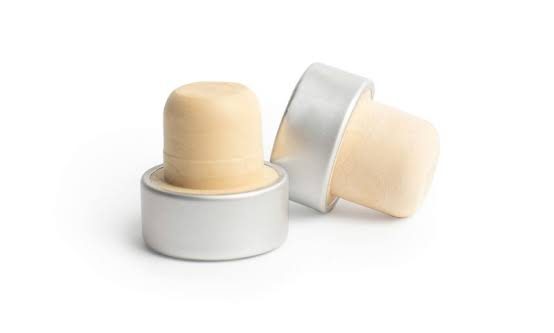
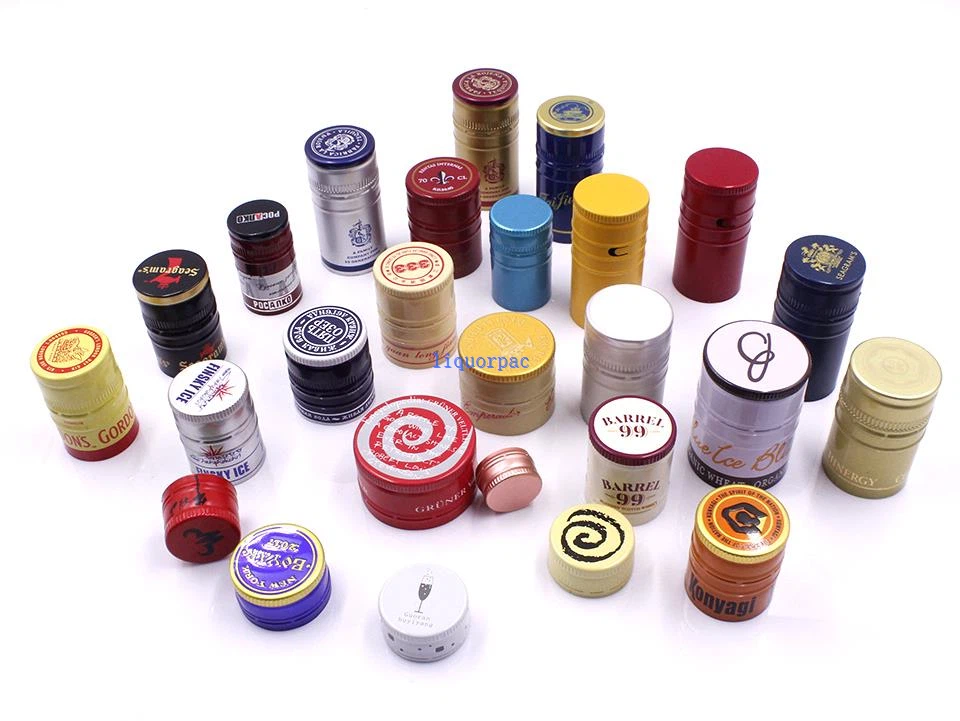
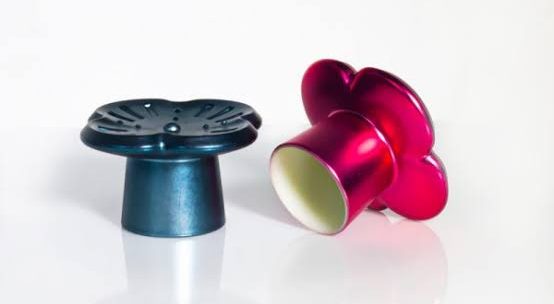
Custom capsules are decorative neck covers placed around the closure area of a bottle. They can be made from aluminum, foil-style material, PVC, PET, PET-G, or other packaging films depending on the required appearance, structure, shrink behavior, and production method.
Shrink sleeves are heat-applied films that contract around the bottle neck, closure, or shoulder area. They are often used as tamper-evident neck bands, printed shrink sleeves, decorative bottle sleeves, branded security seals, or closure protection bands.
In packaging conversations, buyers may use several related terms:
- Bottle capsules
- Heat shrink capsules
- Shrink bands
- Tamper-evident shrink sleeves
- Liquor bottle neck bands
- Printed bottle neck sleeves
- PVC capsules
- PET-G shrink sleeves
- Foil capsules
- Custom neck packaging
These terms can overlap, but they are not always identical. A capsule usually suggests a more finished or premium neck cover. A shrink sleeve usually suggests a flexible film that shrinks tightly after heat application.
For spirits packaging, custom capsules and shrink sleeves are especially useful because they improve appearance, protect the closure area, support tamper-evident presentation, and help the bottle look consistent from cap to label.
Capsules vs Shrink Sleeves: Which Option Should You Choose?
Choose capsules when the project needs a premium, structured, or luxury neck finish. Capsules are often used on whisky, aged rum, brandy, cognac, tequila, gin, and gift-ready spirits where appearance and tactile quality are important.
Choose shrink sleeves when the project needs flexible fit, visible tamper evidence, custom print coverage, or scalable application. Shrink sleeves are often used for private-label spirits, RTD spirits, mini bottles, export packaging, promotional releases, and closure protection.
Many projects do not treat capsules and shrink sleeves as competitors. Instead, they compare them as two different ways to finish the same area of the bottle. The best option depends on bottle shape, closure type, application method, material preference, and brand position.
| Buyer Need | Recommended Option | Why It Works |
|---|---|---|
| Premium whisky or aged rum presentation | Aluminum or foil-style capsule | Creates a structured luxury neck finish |
| Cost-effective tamper-evident packaging | PVC shrink band | Practical, flexible, and widely used |
| Complex shoulder or curved bottle neck | PET-G shrink sleeve | Provides stronger shrink conformity |
| Full neck branding | Printed shrink sleeve | Offers more graphic coverage |
| Bar-top stopper presentation | Custom capsule | Gives the stopper and neck a premium transition |
| Mini bottle or RTD spirits sealing | Shrink sleeve | Works well for smaller formats and scalable runs |
| Export or retail security appearance | Tamper-evident shrink sleeve | Makes opening evidence easier to see |
Best Neck Packaging by Bottle Type
Different spirits bottles need different neck packaging solutions. A premium whisky bottle may need a structured metallic capsule, while an RTD spirits bottle may need a scalable printed shrink sleeve.
| Bottle Type | Recommended Neck Packaging | Packaging Goal |
|---|---|---|
| Premium whisky bottle | Aluminum capsule or foil-style capsule | Luxury finish and gift-ready appearance |
| Craft gin bottle | Printed shrink sleeve or color-matched capsule | Strong shelf identity and brand color control |
| Aged rum bottle | Metallic capsule or tamper-evident shrink sleeve | Premium finish with security presentation |
| Tequila bottle | Custom capsule for bar-top stopper or printed neck band | Closure decoration and authentic brand feel |
| Brandy or cognac bottle | Foil-style capsule or embossed capsule | Heritage look and high-end presentation |
| Mini spirits bottle | Shrink sleeve or shrink band | Compact sealing and consistent production |
| RTD spirits bottle | Printed shrink sleeve | Scalable branding and closure protection |
| Private-label spirits bottle | PVC, PET, or PET-G shrink sleeve | Flexible customization without a custom mold |
For bottle sourcing, closure matching, and brand-category alignment, many buyers coordinate capsules with dedicated spirits bottle packaging support so the neck finish fits the whole bottle concept from the beginning.
Why Bottle Neck Packaging Matters for Spirits Brands
The bottle neck is one of the first details a buyer notices when handling a spirits bottle. It affects perceived quality, shelf visibility, opening trust, and brand consistency.
Custom capsules and shrink sleeves can solve several practical packaging problems:
- They cover the transition between closure and bottle neck.
- They create a cleaner retail presentation.
- They help protect the closure area from dust and handling marks.
- They provide space for logo, color, and pattern branding.
- They can support tamper-evident opening design.
- They help standard bottles look more customized.
- They improve consistency across different bottle sizes.
For new spirits brands, this can be a cost-effective upgrade. Instead of immediately investing in a custom glass mold, a brand can improve the closure, label, capsule, sleeve, and decoration system first.
For established distilleries, custom capsules and shrink sleeves can help maintain premium brand cues across seasonal releases, private-label SKUs, limited editions, and export-market packaging.
Material Options for Custom Capsules and Shrink Sleeves
Material choice affects appearance, shrink performance, print result, cost, application method, and sustainability expectations. The right material should be selected after reviewing the bottle, closure, label, application equipment, and destination market.
Aluminum Capsules
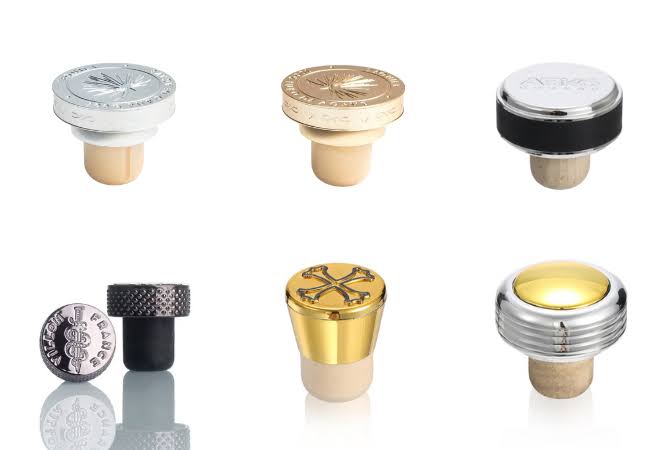
Aluminum capsules are often used for premium spirits because they provide a clean, structured, metallic appearance. They can support elegant color finishes, embossing, debossing, top-disc decoration, and refined brand details.
They are suitable for brands that want a stronger luxury signal, especially for whisky, brandy, cognac, rum, tequila, and gift packaging.
Foil-Style Capsules
Foil-style capsules create a classic, heritage-inspired appearance. They can work well for craft spirits, vintage-style packaging, limited editions, and brands that want a traditional premium look.
Foil-style finishes can pair well with paper labels, dark glass, embossed bottles, wooden stoppers, and antique-inspired visual identities.
PVC Shrink Sleeves
PVC shrink sleeves are widely used because they are flexible, cost-effective, and suitable for many decorative and tamper-evident applications. They are commonly used for colored shrink bands, printed neck bands, and basic closure protection.
PVC can be practical for many packaging projects, but buyers should confirm destination-market expectations, recycling goals, and brand sustainability requirements before choosing it.
PET and PET-G Shrink Sleeves
PET and PET-G shrink sleeves are often selected when buyers need stronger shrink performance, clear print quality, or better conformity around shaped bottles. PET-G is common in shrink sleeve packaging because of its shrink behavior and suitability for curved surfaces.
For spirits brands using distinctive bottle shapes, PET-G may offer a better balance of visual quality and fit stability after heat application.
How to Choose the Right Material
The best material is not always the cheapest or most premium option. It is the material that works on the actual bottle under real application conditions.
Review these factors before making a decision:
- Bottle capacity and neck shape
- Closure diameter and closure height
- Capsule or sleeve coverage area
- Desired finish: matte, gloss, metallic, transparent, or printed
- Required tamper-evident function
- Application method: hand heat gun, steam tunnel, or hot-air tunnel
- Artwork complexity and print distortion risk
- Sustainability and recycling expectations
- Export-market packaging requirements
- MOQ, lead time, and production budget
For projects with broader sustainability goals, buyers can compare material and label choices against the APR Design Guide and the RecyClass Design for Recycling Guidelines to understand how sleeves, labels, inks, adhesives, and closures may affect recycling streams.
Customization Options for Capsules and Shrink Sleeves
Custom neck packaging gives brands another surface for visual identity. Even a small capsule or sleeve can carry important design cues when color, finish, and artwork are matched correctly.
Common customization options include:
- Custom diameter
- Custom height
- Custom drop length
- Solid color matching
- Pantone color reference
- Matte finish
- Gloss finish
- Metallic effect
- Transparent film
- Printed logo
- Sidewall text
- Top disc artwork
- Pattern printing
- Hot foil effect
- Embossing or debossing
- Tear tab
- Vertical perforation
- Horizontal perforation
- Easy-open design
For premium spirits, the top disc is especially important. Bottles are often viewed from above in bars, retail shelves, gift boxes, and display cartons. A well-designed top disc can strengthen brand recognition before the front label is even visible.
For printed shrink sleeves, artwork should be prepared carefully. Curved bottle shoulders and heat shrink behavior can distort logos, borders, circles, and fine lines. Brands that require more advanced surface effects can coordinate sleeve graphics with spirits decoration and branding so the capsule, label, printing, coating, and glass decoration work as one design system.
Tamper-Evident Features for Bottle Neck Packaging
Tamper-evident packaging should make opening evidence visible and easy to understand. A buyer should be able to see whether the closure area has been disturbed.
Common tamper-evident features include:
- Perforation lines
- Tear tabs
- Breakable shrink bands
- Closure-covering sleeve height
- Easy-open direction
- Visible break pattern after opening
For spirits bottles, the sleeve must match the closure design. A sleeve that sits too low may not protect the opening area. A sleeve that sits too high may interfere with the consumer’s hand position or make the bottle harder to open.
In the United States, distilled spirits plants and importers should consider applicable requirements from the Alcohol and Tobacco Tax and Trade Bureau when reviewing tamper-evident closures or similar devices. Requirements can vary by product category and destination market, so buyers should confirm local rules with qualified compliance professionals.
A good tamper-evident sleeve should feel secure but not frustrating. The consumer should understand where to open it, how to remove it, and whether the package was previously opened.
How to Measure Bottle Neck Capsules and Shrink Sleeves
Accurate measurement is one of the most important steps in any custom capsules and shrink sleeves project. Poor measurements can cause loose fit, wrinkles, poor shrink results, distorted graphics, or difficult opening.
Packaging teams that exchange product dimensions across buyers, suppliers, warehouses, and retailers can use the GS1 Package and Product Measurement Standard as a reference for consistent measurement communication.
Measure the Closure Diameter
Measure the widest part of the closure that the capsule or sleeve must pass over. This could be a screw cap, ROPP closure, bar-top stopper head, non-refillable closure, or decorative cap.
Measure the Bottle Neck Diameter
Measure the glass neck where the sleeve or capsule will sit after application. If the neck is tapered, measure several points instead of using one dimension.
Confirm Capsule or Sleeve Height
Height controls how much of the closure and neck area will be covered. A short band may only provide tamper-evident coverage. A taller capsule may create a full premium neck finish.
Define Drop Length
Drop length shows how far the capsule or sleeve extends below the closure. It must be long enough to look intentional but short enough to avoid label interference or shoulder wrinkling.
Check Shoulder Clearance
If the sleeve reaches the shoulder, test it carefully. Bottles with steep shoulders, curves, embossing, or irregular geometry may require a different film, shorter sleeve height, or adjusted heat process.
Confirm Label Clearance
The capsule or sleeve should not cover required label information, tax marks, batch codes, decorative labels, or compliance details unless the design intentionally includes that coverage.
Test With Real Bottle and Closure Samples
The safest specification comes from the actual bottle, closure, and application method. Drawings are useful, but physical samples reveal fit and shrink behavior more accurately.
Technical Specification Checklist
Before ordering custom capsules and shrink sleeves, prepare a technical checklist. This helps the supplier recommend the right material, size, printing method, and sample direction.
Key details include:
- Bottle capacity, such as 50 ml, 200 ml, 375 ml, 500 ml, 700 ml, 750 ml, or 1 L
- Bottle neck finish diameter
- Closure outer diameter
- Closure height
- Capsule or sleeve height
- Coverage area
- Sleeve layflat width, if available
- Film material
- Film thickness
- Shrink ratio
- Perforation type
- Tear-tab direction
- Print method
- Color reference
- Finish requirement
- Application method
- Production quantity
- Packing method
- Destination market
If some details are unknown, buyers can still begin with a bottle sample, closure sample, artwork direction, and target quantity. For new bottle development, integrated custom glass bottle and closure packaging coordination can help align the neck finish, closure, decoration, and carton plan before sampling starts.
Matching Capsules and Shrink Sleeves With Closure Types
A capsule or sleeve should never be selected only from a catalog image. It must match the closure type, bottle neck, filling process, opening experience, and shelf presentation.
Bar-Top Stoppers
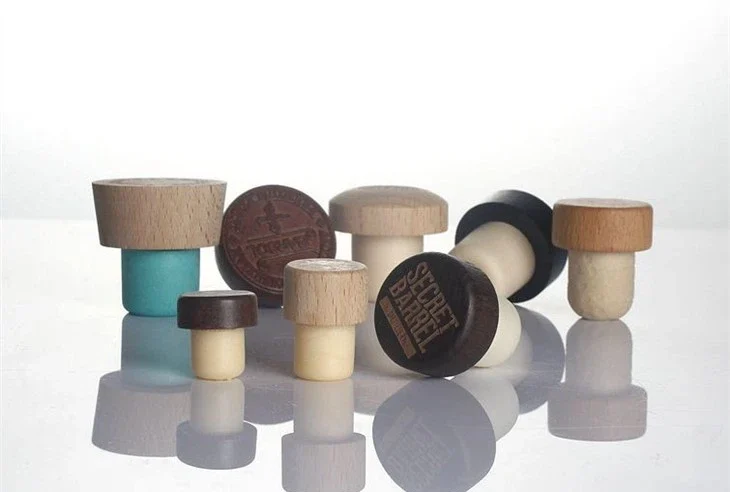
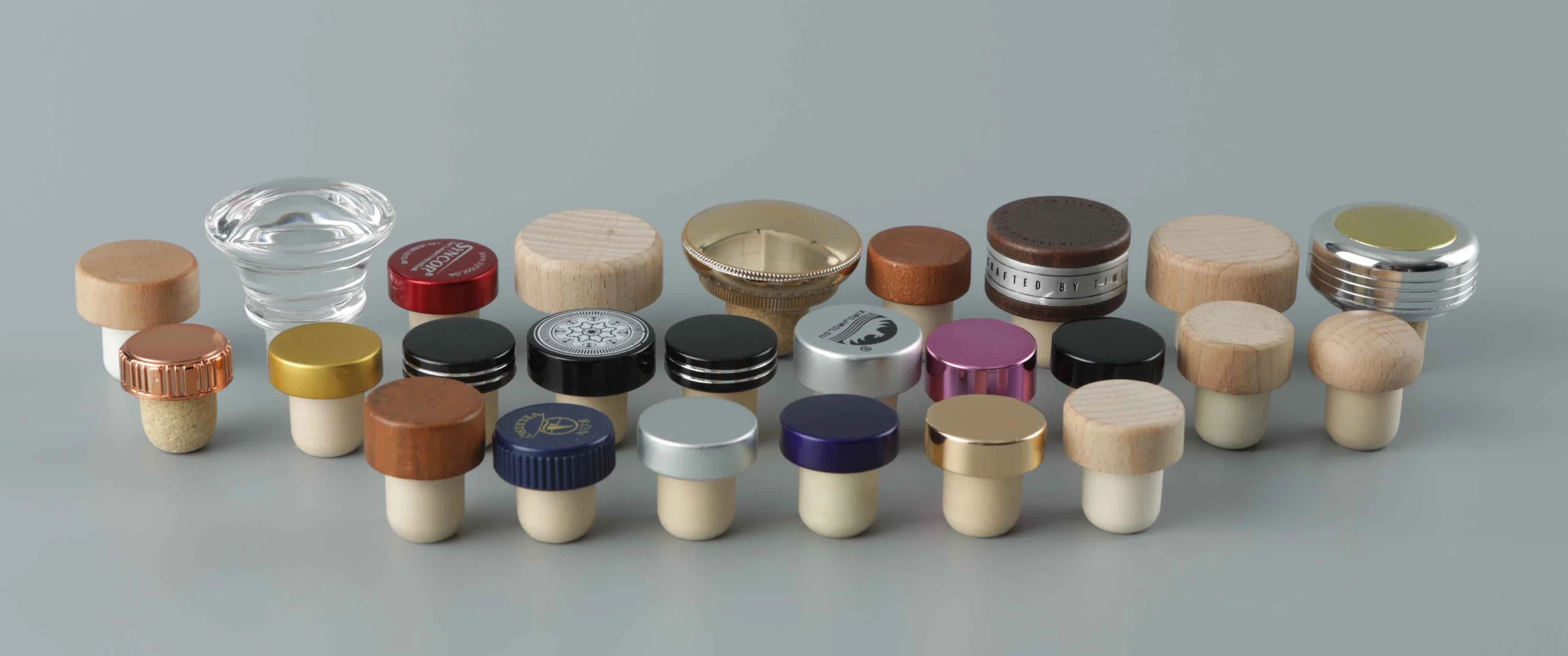
Bar-top stoppers are widely used for whisky, rum, tequila, gin, brandy, and premium liqueurs. The stopper head may be wood, metal, glass, synthetic material, or a composite structure.
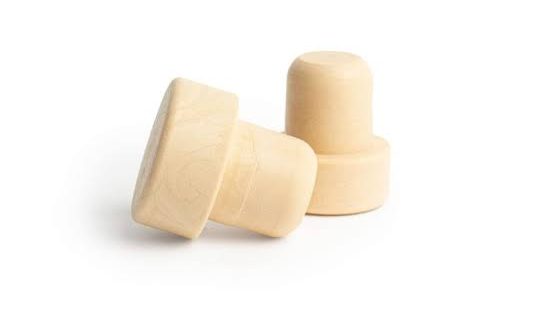
For bar-top stoppers, capsule height and diameter must account for the stopper head shape, cork or synthetic shank insertion depth, and consumer pulling motion. The sleeve or capsule should not interfere with removal. Brands using natural or premium stopper finishes can review capsule compatibility with wooden bar-top stoppers during sample development.
Screw Caps
Screw caps require attention to thread area, torque, opening direction, and tamper band function. If a shrink sleeve is added, it should not hide functional details or make the cap difficult to twist.
ROPP Closures
ROPP closures often include built-in tamper-evident bands. A decorative sleeve may still be used, but the sleeve design should not conflict with the closure’s own break function. For aluminum pilfer-proof cap projects, review sleeve height and torque behavior together with custom ROPP closures before production approval.
Non-Refillable Closures
Non-refillable closures may have larger or more complex structures. The sleeve must fit the closure body while avoiding interference with the pourer or anti-refill system. Spirits brands that need anti-refill protection can evaluate capsule coverage with non-refillable closures to avoid fit or opening conflicts.
Mini Bottles and RTD Closures
Mini bottles and RTD spirits formats require high consistency because small size leaves less room for error. Sleeve height, position, and shrink control must be checked carefully before scaling up.
Application Methods: Heat Gun, Steam Tunnel, and Hot-Air Tunnel
The same capsule or sleeve can perform differently depending on how it is applied. Heat level, bottle position, sleeve placement, line speed, and operator technique all influence the final result.
Hand Heat Gun Application
A heat gun can be useful for samples, small runs, product photography, gifting, and early packaging tests. It is flexible, but results may vary between operators.
Steam Tunnel Application
Steam tunnels provide even heat and are often used for shrink sleeve applications that need smooth conformity around curved surfaces. Steam can be helpful for shaped bottles and complex shoulder areas.
Hot-Air Tunnel Application
Hot-air tunnels are common in production lines. They can be efficient, but the temperature, airflow, and conveyor speed must be controlled carefully to avoid uneven shrinking.
Application Testing
Before bulk approval, test the sleeve under realistic production conditions. Confirm position before shrinking, final sleeve height, graphic alignment, tear-tab function, color appearance, and opening performance.
Common Packaging Problems and Solutions
Sleeve wrinkles near the shoulder
Likely cause: The sleeve extends too far onto a curved shoulder, the film is unsuitable, or heat is applied unevenly.
Solution: Reduce sleeve height, adjust material, test a different shrink ratio, improve sleeve positioning, or use a more suitable heat method.
Sleeve feels loose after shrinking
Likely cause: The sleeve diameter is too large, shrink ratio is insufficient, or heat exposure is not enough.
Solution: Recheck bottle and closure dimensions, adjust sleeve size, and test the sleeve using the intended application method.
Tear tab is hard to find or open
Likely cause: The tear-tab direction is poorly positioned, the perforation is weak, or the design hides the opening point.
Solution: Move the tear tab to a natural hand position, make the opening direction visible, and test consumer opening before approval.
Logo or graphics look distorted
Likely cause: Artwork was not adjusted for shrink distortion on curved or tapered surfaces.
Solution: Keep key logos in lower-distortion areas, avoid fine circular details near high-shrink zones, and review physical samples.
Sleeve interferes with the label
Likely cause: Sleeve height or drop length overlaps with label placement.
Solution: Confirm label clearance during drawing review and test all components together before production.
Color does not match the closure or label
Likely cause: Screen colors, print substrate, film transparency, heat application, and coating can all affect final appearance.
Solution: Use Pantone references, physical color samples, and production-like proofs before mass approval.
Sample Review and Bulk Approval Checklist
A sample review helps prevent costly mistakes before mass production. Buyers should approve the sample only after checking appearance, fit, function, and production compatibility.
Review these points before bulk approval:
- Capsule or sleeve fit on the real bottle
- Closure diameter compatibility
- Final height and drop length
- Smooth shrink result
- Logo position and artwork alignment
- Color accuracy under real light
- Finish appearance
- Tear-tab function
- Perforation strength
- Tamper-evident visibility
- Label clearance
- Carton and packing protection
- Filling-line application consistency
- Export-market requirements
For bulk spirits packaging, sample approval should be treated as a technical checkpoint, not just a visual review. Packaging teams with environmental packaging targets can also reference the work of ISO/TC 122/SC 4 Packaging and Environment when discussing broader lifecycle considerations, optimization, reuse, recycling, and packaging system design.
What Information Should You Send for a Quote?
To receive a faster and more accurate quote for custom capsules and shrink sleeves, prepare the following information:
- Bottle drawing or bottle sample
- Closure type
- Closure diameter
- Bottle neck diameter
- Required capsule or sleeve height
- Material preference
- Finish preference
- Printing requirements
- Logo or artwork file
- Pantone color reference
- Target quantity
- Application method
- Destination market
- Timeline
- Packing or export requirements
If you are not sure which material, size, or finish to choose, send the available bottle and closure details first. Kandacork Closures can review the project and recommend a practical sample direction.
Request Custom Capsules and Shrink Sleeves From Kandacork Closures
Kandacork Closures helps spirits packaging buyers develop custom capsules and shrink sleeves that match the bottle, closure, label, and production method. The goal is to reduce fit problems, improve final presentation, and support reliable bulk production.
For a smoother project, provide as much information as possible at the beginning:
- Bottle drawing or physical sample
- Closure sample or closure specification
- Desired capsule or sleeve height
- Artwork file or logo direction
- Preferred material and finish
- Required tamper-evident feature
- Estimated order quantity
- Filling-line or application method
- Destination market and timeline
After reviewing the information, Kandacork Closures can help recommend sample specifications, check bottle neck compatibility, and support bulk production planning. Buyers who need full bottle, closure, sleeve, and accessory coordination can also review multi-category glass packaging solutions for broader project planning.
Why Choose Kandacork Closures?
Kandacork Closures supports spirits packaging buyers that need bottle-matched closures, stoppers, caps, capsules, shrink sleeves, and custom neck finishing solutions.
The advantage is coordination. Custom capsules and shrink sleeves should not be selected separately from the bottle and closure. They should be reviewed together with the neck finish, stopper head, cap diameter, label position, filling method, artwork, and packing plan.
Kandacork Closures can help buyers review complete bottle closures and stoppers for projects that require:
- Bar-top stoppers
- Wooden stoppers
- Aluminum stoppers
- Synthetic stoppers
- Screw caps
- ROPP closures
- Non-refillable closures
- Custom capsules and shrink sleeves
- Printed neck bands
- Tamper-evident shrink sleeves
- Bottle neck compatibility
- Sample development
- Bulk packaging requirements
For distilleries, private-label spirits brands, packaging distributors, and importers, this integrated approach can reduce sampling mistakes and improve final packaging consistency. To begin a project, buyers can contact Kandacork Closures with bottle drawings, closure dimensions, artwork direction, quantity targets, and destination-market requirements.
FAQs
What is the difference between a bottle capsule and a shrink sleeve?
A bottle capsule is a decorative neck cover, while a shrink sleeve is a heat-applied film that contracts around the bottle neck or closure. Capsules are often used for premium structure and appearance. Shrink sleeves are often used for flexible fit, printed branding, and tamper-evident packaging.
Are shrink sleeves tamper-evident?
Shrink sleeves can be tamper-evident when they cover the opening area and include suitable perforation, tear tabs, or breakable bands. The sleeve should show visible damage after opening and should be tested with the real bottle and closure.
Can custom capsules be printed with a logo?
Yes. Custom capsules can often include logo printing, top disc decoration, sidewall text, color matching, metallic effects, embossing, debossing, and special finishes. The available options depend on material, order quantity, and production method.
What material is best for spirits bottle shrink sleeves?
The best material depends on the bottle shape, closure type, budget, application equipment, print design, and sustainability goals. PVC, PET, and PET-G are common options, but the final choice should be confirmed through sample testing.
How do I measure a bottle neck for shrink sleeves?
Measure the closure diameter, bottle neck diameter, required sleeve height, drop length, shoulder shape, and label clearance. If the bottle neck is tapered or irregular, measure multiple points and test the sleeve on a real bottle.
Can capsules and shrink sleeves fit bar-top stoppers?
Yes. Capsules and shrink sleeves can be designed for bar-top stoppers, but the stopper head diameter, insertion depth, neck finish, and opening motion must be checked before production.
What causes wrinkles after shrinking?
Wrinkles are usually caused by incorrect sleeve size, unsuitable material, uneven heat, excessive shoulder coverage, poor sleeve positioning, or complex bottle geometry. Testing the sleeve with the actual bottle and application method is the best prevention.
Do I need samples before production?
Yes. Samples are strongly recommended before mass production. They help confirm fit, print color, shrink behavior, tamper-evident function, tear-tab placement, and final appearance.
What should I prepare before requesting a quote?
Prepare bottle drawings, closure dimensions, target material, required height, artwork files, finish requirements, quantity, application method, destination market, and delivery timeline. If some information is missing, Kandacork Closures can help review the available details.
Conclusion: Build a Better Neck Finish Before Bulk Production
Custom capsules and shrink sleeves can transform the final look and function of a spirits bottle. They improve bottle neck presentation, support brand identity, create tamper-evident appearance, and help the package feel complete across retail, hospitality, gifting, and export channels.
The key is not only choosing a material or color. The key is matching the capsule or sleeve with the bottle neck, closure, label, artwork, application method, and production plan.
To start a custom capsules and shrink sleeves project, send Kandacork Closures your bottle drawing, closure dimensions, artwork file, material preference, target quantity, and application requirements. The team can review bottle neck fit, recommend sample specifications, and support bulk production planning for packaging that looks professional, performs reliably, and strengthens the final brand experience.