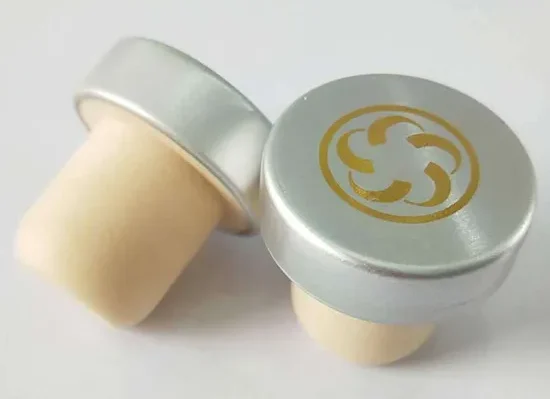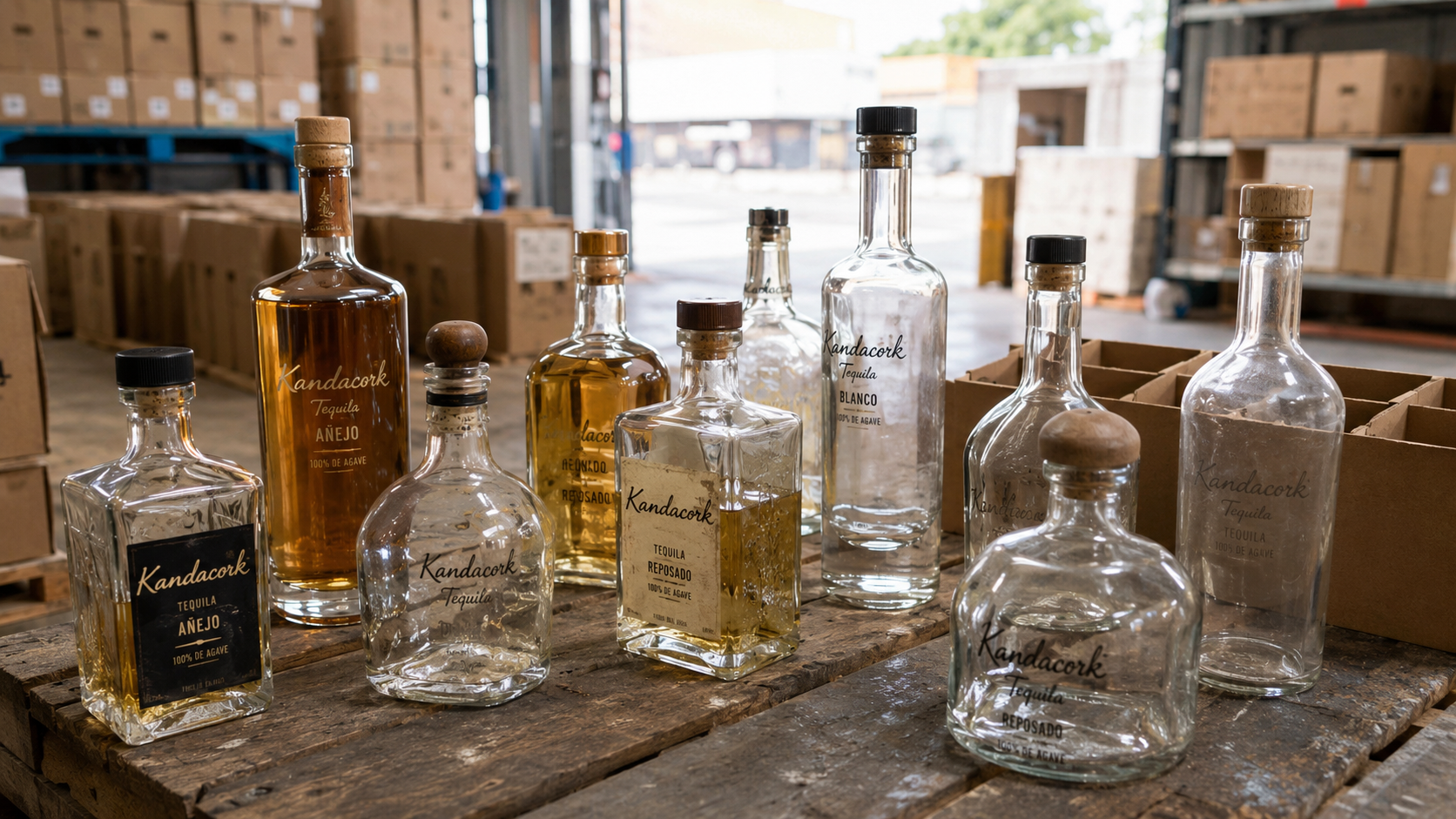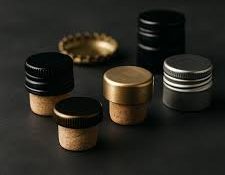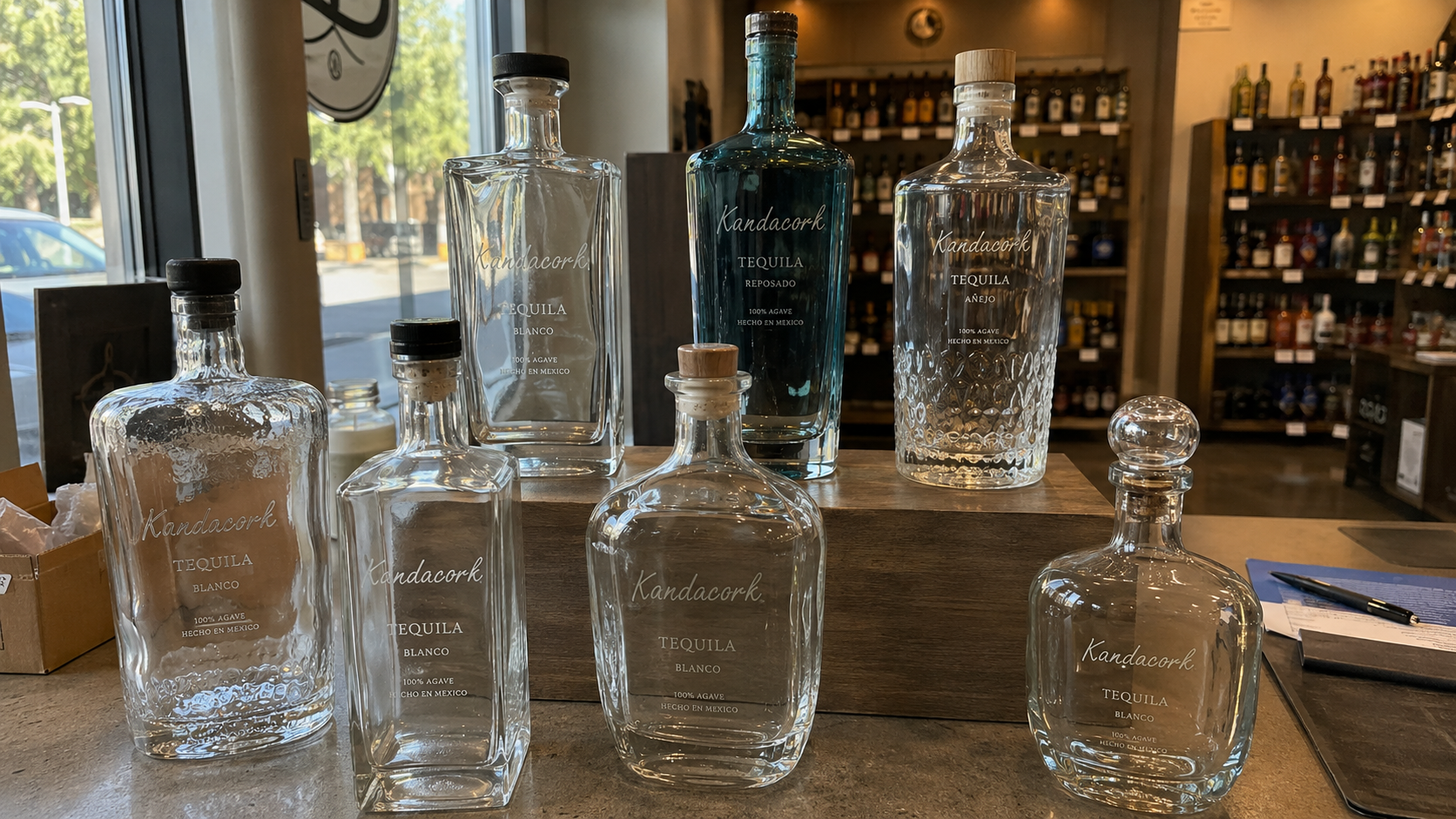
Cap and neck compatibility means that the bottle finish, closure, sealing component, spirit formulation, and capping equipment work together reliably from filling through distribution and consumer opening.
A closure can appear to fit and still leak. A bar-top stopper can look correctly sized but become loose after conditioning. A ROPP closure can match the nominal diameter but spin because the bottle finish or roller setup is incorrect.
Before approving samples or bulk production, spirits brands, distilleries, bottlers, importers, and private-label buyers should verify controlled drawings, manufacturing tolerances, functional materials, filled-package performance, and commercial-line results.
Buyers can first compare the main types of spirits closures and stoppers before selecting a structure for technical review.
Have a bottle drawing or physical sample? Request a preliminary cap and neck compatibility review before finalizing the closure specification.
Five Checks to Complete Before Ordering
Before approving a spirits bottle closure, confirm that:
- The complete bottle neck specification matches the closure drawing.
- The liner, stopper shank, or insert is suitable for the intended spirit.
- Representative bottles and closures—not one ideal pair—have been tested.
- Leakage, torque, extraction force, and tamper evidence meet defined limits.
- The final assembly performs consistently on the intended bottling equipment.
A successful hand-fitting test is useful, but it is not final evidence of compatibility.
What Does Bottle and Closure Compatibility Cover?
| Compatibility area | What buyers need to verify |
|---|---|
| Dimensional | Thread profile, finish height, sealing land, internal bore, taper, ovality, bead geometry, and insertion depth |
| Sealing | Liner compression, stopper compression, thread engagement, insert retention, torque, or ROPP thread formation |
| Material | Suitability of liners, cork, synthetic shanks, adhesives, coatings, inserts, and valves for the intended spirit |
| Production | Capper, corker, ROPP rollers, pressure, torque, alignment, feeding, and commercial line speed |
Food-contact documentation confirms that a material is intended for specified applications and conditions of use. It does not prove bottle fit, sealing performance, torque retention, stopper retention, or filling-line compatibility.
Buyers should request documentation covering the actual component, product category, alcohol level, destination market, and intended conditions of use.
Spirits Closure Compatibility Matrix
Different spirits closures rely on different sealing interfaces. Buyers should not apply screw-cap approval criteria to bar-top stoppers or assume that closures sharing a nominal diameter are interchangeable.
| Closure type | Critical bottle features | Main validation priorities |
|---|---|---|
| Continuous-thread screw cap | Thread profile, finish height, sealing land, and tamper bead | Liner compression, application torque, removal torque, and leakage |
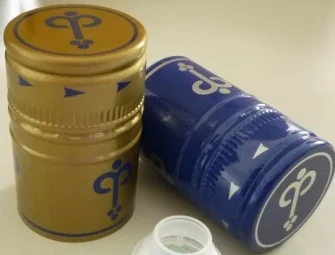
| ROPP or BVS closure | Complete roll-on finish, bead geometry, finish height, mouth surface, and pilfer-band zone | Thread formation, liner seal, bridge integrity, and tamper evidence |
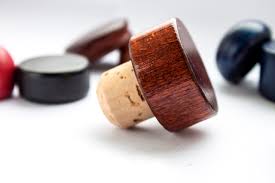
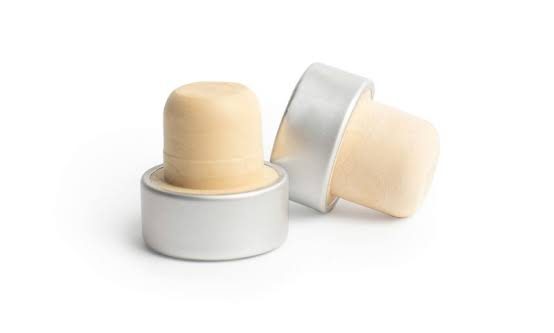
| Bar-top stopper | Internal bore diameter, taper, ovality, pinch points, and usable neck depth | Shank compression, insertion depth, extraction force, leakage, and resealing |
| Non-refillable closure | Internal bore, neck bead, retention zone, and pour path | Insert retention, valve function, flow, leakage, and anti-refill performance |
12 Cap and Neck Compatibility Mistakes Buyers Should Avoid
1. Selecting a Closure by Nominal Diameter Alone
Buyer assumption: A 30 mm cap should fit any bottle described as having a 30 mm neck.
Why it fails: Nominal diameter does not define the thread profile, finish height, sealing land, liner position, internal bore, or tamper-evident geometry. Two closures with the same stated diameter may use different internal constructions.
Risk: The cap may bottom out before sealing, sit crooked, engage too few threads, or miss the retaining bead.
Buyer action: Request the complete bottle neck drawing and matching closure drawing. Confirm both revision numbers and test physical assemblies before approving a quotation.
For threaded closures, a screw cap thread finish matching guide can help buyers identify the dimensions that must be confirmed before sampling.
2. Treating Similar Neck-Finish Descriptions as Interchangeable
Buyer assumption: Closures with the same nominal diameter or a similar finish name should be interchangeable.
Why it fails: Thread height, pitch, thread-start position, bead geometry, sealing surface, and finish height may differ.
A description such as “30 mm ROPP” may still be incomplete. ROPP, BVS, and other roll-on systems can use different neck profiles and pilfer-band zones even when their nominal diameters are similar.
Risk: Incomplete thread formation, spinning caps, leakage, cap back-off, or tamper-band failure.
Buyer action: State the complete finish designation and controlled bottle drawing. Do not approve a closure using only “28 mm,” “30 mm,” or “ROPP” as the technical specification.
Projects using roll-on aluminum caps should complete a dedicated ROPP closure fitment review covering the shell, liner, bottle finish, pilfer band, and capping equipment.
3. Approving Compatibility from Photos or Renderings
Buyer assumption: If a closure looks correct in a rendering, it should function correctly on the bottle.
Why it fails: Renderings show external appearance but rarely reveal the internal features responsible for sealing.
Similar-looking closures may use different:
- Threads
- Liners
- Plug seals
- Internal ribs
- Inserts
- Tamper bands
Digital models may also omit manufacturing tolerances and normal glass variation.
Risk: A visually attractive package that leaks, sits unevenly, or cannot run consistently on the filling line.
Buyer action: Use renderings for aesthetic approval. Use controlled drawings, measured samples, filled-bottle tests, and production trials for technical approval.
4. Checking Only Whether the Closure “Goes On”
Buyer assumption: A closure is compatible if it can be screwed, rolled, or pressed onto the bottle.
Why it fails: Physical assembly does not confirm that the sealing element is working.
A closure may:
- Bottom out before adequate liner compression
- Engage too few threads
- Rock on the finish
- Contact only part of the sealing land
- Miss the bottle bead
- Sit at the wrong height
Risk: Leakage, poor alignment, inconsistent opening force, or tamper-evident failure.
Buyer action: Inspect seating height, vertical alignment, liner impression, thread engagement, tamper-band position, and opening behavior. Repeat the assessment after filled samples have been conditioned.
5. Ignoring the Bottle Mouth and Sealing Land
Buyer assumption: A flexible liner will compensate for minor bottle-neck defects.
Why it fails: The sealing land must provide a sufficiently flat, clean, and consistent contact surface.
Typical problems include:
- Wavy or sloped bottle mouths
- Mold seams
- Chips and burrs
- Uneven glass distribution
- Finish-height variation
- Product residue after filling
Applying more torque is not a reliable correction. Excessive torque may damage the liner or threads and create an unacceptable consumer opening force.
Risk: Slow leakage, uneven compression, closure damage, or difficult opening.
Buyer action: Establish bottle-mouth acceptance criteria and inspect representative glass from normal production lots.
6. Treating the Liner, Stopper Shank, or Insert as Generic
Buyer assumption: Any food-contact liner or stopper should perform with any alcoholic beverage.
Why it fails: The functional component must suit the bottle geometry, spirit formulation, storage orientation, temperature exposure, and target shelf life.
For screw caps, verify liner material, thickness, compression, recovery, and product resistance.
For bar-top stoppers, critical variables include shank material, diameter, length, compression, recovery, insertion depth, and extraction force.
For non-refillable systems, the insert, valve, cap, and bottle neck must be validated as one functional assembly.
Risk: Swelling, softening, loss of retention, odor transfer, leakage, or changing opening performance.
Buyer action: Request the exact functional-material specification and evidence that it is intended for the proposed product and conditions of use.
7. Approving One Ideal Bottle and One Ideal Closure
Buyer assumption: One successful assembly proves that the package is production-ready.
Why it fails: Commercial components vary within their permitted tolerances.
Variation may come from:
- Glass forming
- Neck ovality
- Closure molding
- Metal-shell forming
- Liner cutting
- Cork density
- Synthetic compounds
- Tool wear
- Production-lot differences
One ideal assembly may place both components near the center of their tolerance ranges and hide a design with insufficient operating tolerance.
For Bar-Top Stoppers, Measure More Than the Mouth
A bar-top stopper review should:
- Measure the internal bore at multiple insertion depths.
- Check taper and ovality.
- Identify internal pinch points.
- Compare several bottle samples.
- Test more than one shank size where necessary.
- Confirm insertion, extraction, leakage, and resealing performance.
A detailed bar-top stopper sizing guide explains why the internal bottle profile matters more than the mouth diameter alone.
Risk: Development samples perform well while bulk production produces intermittent leaks, loose stoppers, or excessive extraction force.
Buyer action: Use representative samples from normal production and include minimum and maximum critical dimensions where practical.
8. Using One Torque Number Instead of an Operating Window
Buyer assumption: One application-torque target is enough to control a continuous-thread closure.
Why it fails: Application torque and removal torque are different measurements. Removal performance can change because of liner relaxation, product contact, temperature, storage time, thread friction, plastic creep, and vibration.
ASTM D2063/D2063M provides a recognized method for evaluating removal-torque retention in continuous-thread container and closure systems under defined environmental conditions.
Risk: Low torque may allow leakage or cap back-off. Excessive torque may damage components or make the package difficult to open.
Buyer action: Establish upper and lower limits and record:
- Bottle and closure lot
- Capping equipment
- Machine setting
- Time after application
- Conditioning temperature
- Storage orientation
- Individual readings
- Average and range
- Pass/fail criteria
Do not approve a torque specification from one reading on one bottle.
9. Ignoring the Filling and Capping Line
Buyer assumption: A closure that works during manual testing will perform identically during automated production.
Why it fails: Commercial equipment introduces speed, pressure, alignment, feeding, and repeatability requirements.
For screw caps, performance may depend on chuck design, downward pressure, cap presentation, torque control, and bottle centering.
For bar-top stoppers, insertion force and bottle support affect final seating and shank condition.
For ROPP closures, the final thread is formed around the bottle neck during application. Incorrect roller position or pressure can create spinning caps, damaged bridges, weak threads, or poor tamper-band engagement.
Buyer action: Complete a trial using the intended production equipment and planned line speed. Record approved settings, reject criteria, and inspection results.
10. Testing with Water Instead of the Actual Spirit
Buyer assumption: Passing a water leakage test proves that the closure is suitable for the finished beverage.
Why it fails: Water does not reproduce every interaction created by alcohol, botanical oils, flavors, sugar, acids, or other formulation components.
A closure that performs with water may behave differently after contact with a high-proof spirit, botanical gin, cream liqueur, or flavored product.
Risk: Leakage, material softening, odor transfer, loss of retention, or changing opening force after storage.
Buyer action: Use the intended spirit for final validation whenever practical. Where this is not possible, agree on a technically appropriate simulant, conditioning period, temperature, and storage orientation.
11. Failing to Control Drawings, Materials, and Revisions
Buyer assumption: Once the initial samples are approved, future production will remain functionally identical.
Why it fails: A change in liner density, resin, shell thickness, stopper compound, mold, coating, insert, or tooling condition can alter closure performance even when the commercial product name remains unchanged.
A physical sample without an associated specification does not define materials, tolerances, or acceptance limits.
Risk: Previously compatible components become inconsistent after a supplier or production change.
Buyer action: Control:
- Bottle drawing and revision
- Closure drawing and revision
- Functional-material codes
- Critical dimensions and tolerances
- Decoration construction
- Test methods and limits
- Approved sample date
- Change-notification requirements
Keep approved samples linked to measurable technical documents.
12. Ordering Bulk Production Before a Pilot Trial
Buyer assumption: Drawing approval and a few hand-fitted samples are sufficient for mass production.
Why it fails: A pilot trial is where the bottle, closure, sealing component, product, decoration, equipment, and secondary packaging are evaluated together.
Buyers coordinating bottles, closures, decoration, and export preparation can also review an integrated spirits packaging approach to ensure that component specifications remain aligned across the complete project.
Risk: Bulk closures require rework or replacement, filling schedules are delayed, or filled bottles fail during distribution.
Buyer action: Complete representative sample testing, actual-product validation, and a commercial line trial before authorizing mass production.
Do Not Approve Bulk Production Unless You Have
- Matching controlled bottle and closure drawings
- Representative samples from relevant production lots
- Confirmed liner, stopper, or insert specifications
- Defined test methods and acceptance limits
- Filled-package performance results
- Production-line approval
- Agreed change-control requirements
Missing evidence does not automatically mean the closure will fail. It means the buyer does not yet have enough evidence to approve the commercial risk.
Closure Failure Diagnosis and First Checks
| Failure symptom | First check | Possible cause | Approval decision |
|---|---|---|---|
| Cap sits crooked | Inspect thread start and seating | Finish mismatch or poor capper centering | Stop approval until alignment is corrected |
| Closure spins | Inspect formed thread and equipment setup | Stripped thread or incomplete ROPP formation | Repeat the forming or line trial |
| Filled bottle leaks | Inspect liner impression and sealing land | Weak compression, low torque, or glass defect | Repeat filled-package testing |
| Cap backs off | Measure conditioned removal torque | Low application torque, vibration, or liner relaxation | Reset and validate the torque window |
| Cap is difficult to open | Measure conditioned opening force | Excessive torque or thread interference | Adjust application and retest |
| Tamper band fails | Inspect bead and band engagement | Incorrect closure height or band-zone geometry | Reject the current fit |
| Stopper is loose or too tight | Measure bore profile and extraction force | Bore variation, shank mismatch, or incorrect insertion | Test a revised stopper construction |
Recommended Compatibility Testing Matrix
| Test | What it verifies | Evidence to retain |
|---|---|---|
| Dimensional inspection | Conformity with controlled drawings and tolerances | Inspection report with sample and lot identification |
| Manual fit assessment | Seating, alignment, engagement, insertion, and visible defects | Photos and technical notes |
| Leakage test | Seal integrity in expected storage orientations | Method, conditions, duration, and pass/fail results |
| Torque or extraction-force test | Retention and consumer opening performance | Individual readings, average, range, and limits |
| Product-contact test | Material and functional compatibility with the spirit | Product, temperature, orientation, duration, and observations |
| Transport conditioning | Resistance to vibration, temperature, and orientation changes | Conditioning record and post-test inspection |
| Production-line trial | Repeatability at intended machine settings and speed | Trial report, settings, reject data, and approved samples |
Standardized test methods can provide useful frameworks, but the selected method and acceptance limits should be appropriate for the specific closure, bottle, spirit, equipment, and distribution route.
Recommended Technical Review Workflow
A structured compatibility investigation should begin with the failed assembly rather than an immediate assumption that either the bottle or closure is defective.
A practical review should:
- Identify the bottle, closure, liner, stopper, insert, and product lots.
- Compare the supplied components with their controlled drawings.
- Inspect seating, liner contact, threads, bore profile, or retention features.
- Review the application equipment, settings, and production speed.
- Reproduce the reported failure using representative samples.
- Change one relevant variable at a time.
- Confirm the corrective action using filled packages and production equipment.
- Document the final approved construction, test limits, and machine settings.
This process helps separate dimensional mismatch from material, application, handling, and equipment-related failures.
How to Evaluate a Spirits Closure Supplier
Compare suppliers by technical risk and total project cost—not unit price alone.
| Evaluation category | Weight | Evidence to request | Red flag |
|---|---|---|---|
| Drawing and tolerance review | 20% | Controlled closure drawing and bottle-neck review record | Recommends a closure from photos alone |
| Material documentation | 15% | Liner, stopper, insert, and food-contact declarations | Cannot identify the exact functional material |
| Sample-matching capability | 15% | Matched samples linked to the bottle specification | Does not request drawings or physical bottles |
| Testing support | 15% | Defined leakage, torque, retention, or extraction test report | Promises performance without test conditions |
| Filling-line support | 10% | Machine-setting guidance and trial record | Treats manual fit as final approval |
| Batch traceability | 10% | Lot records for materials and finished closures | Cannot trace production batches |
| Change control | 10% | Written drawing, tooling, and material notification procedure | Makes substitutions without revalidation |
| Corrective-action support | 5% | Documented investigation and response process | Cannot explain how failures are investigated |
What to Send Before Requesting Samples or a Quotation
A complete RFQ reduces assumptions and helps the supplier recommend the correct closure construction.
Bottle and product information
- Spirit category and alcohol by volume
- Bottle capacity and material
- Complete neck-finish designation
- Bottle drawing and revision
- Physical bottle samples
- Intended storage orientation
- Destination markets
Closure and decoration requirements
- Preferred closure system
- Liner, natural cork, synthetic shank, or insert preference
- Tamper-evident or non-refillable requirements
- Top, skirt, logo, color, and decoration specifications
- Required compliance and test documents
Production and commercial information
- Capper, corker, or ROPP equipment
- Planned filling-line speed
- First-order quantity
- Estimated annual volume
- Testing and acceptance requirements
- Target launch date
Where the bottle neck has not been finalized, involve the closure supplier before bottle tooling or commercial glass production.
Frequently Asked Questions
Can any 28 mm cap fit a 28 mm bottle?
No. Nominal diameter does not confirm thread profile, finish height, sealing land, liner contact, or tamper-band geometry. The complete bottle neck drawing and closure specification must be compared and physically tested.
Is “30 mm ROPP” a complete closure specification?
Not always. Buyers should also confirm the complete neck profile, finish height, sealing surface, pilfer-band zone, liner construction, bottle drawing, and forming requirements. Closures sharing a nominal 30 mm diameter may not be interchangeable.
Why does a cap screw onto a bottle but still leak?
The cap may bottom out before sufficient liner compression occurs. Other causes include an incorrect thread profile, low application torque, bottle-mouth defects, liner damage, or contamination on the sealing surface.
How Is a Bar-Top Stopper Matched to a Spirits Bottle?
The supplier should measure the internal bore at multiple depths and evaluate taper, ovality, pinch points, shank dimensions, insertion depth, extraction force, leakage, and resealing performance.
Does a ROPP Closure Require a Production-Line Trial?
Yes. ROPP thread and pilfer-band formation depend on the bottle finish, aluminum shell, liner, roller position, pressure, alignment, and line speed. Manual fit cannot reproduce the commercial forming process.