Introduction: Why Color Consistency Matters in Spirits Closures
Bar-top stopper color consistency is a key quality factor in premium spirits packaging. For spirits brands, distilleries, private label buyers, importers, distributors, bottlers, and packaging buyers, the stopper is more than a functional closure. It is part of the bottle’s visual identity, shelf appeal, opening experience, and perceived brand value.
Many stopper guides explain material types, bottle fit, or decoration options. This guide focuses on a more specific buyer problem: how to keep the approved stopper color consistent across sampling, mass production, shipment, and repeat orders. For buyers comparing stopper structures, materials, and custom finishes, Kandacork Closures provides custom bar-top stoppers for spirits bottle projects that require both visual control and functional fit.
A small color shift can change the way the whole package is perceived. A matte black top may not match the label. A gold aluminum stopper may look warmer or cooler than the foil on the gift box. A stained wooden top may vary because of natural grain. A painted plastic top may look approved during sampling but drift during bulk production if pigment, coating, or process conditions are not controlled.
Color inconsistency can delay launch schedules, increase rejected lots, create supplier disputes, and weaken brand presentation across markets. For custom spirits closures, the goal is not simply to choose an attractive color. The goal is to create a color standard that can be repeated from first sample to future reorder.
Kandacork Closures helps packaging buyers approach closure color control through material selection, finish specification, sample approval, bottle fit testing, production QC, and batch traceability.
Quick Answer: How to Control Bar-Top Stopper Color Consistency
To control bar-top stopper color consistency, define a physical color reference, specify the exact material and finish, approve a golden sample, use visual and measurable color checks, test the stopper on the actual bottle, and retain batch samples for future comparison.
A practical control process includes:
- Define a physical color standard before sampling.
- Confirm material, finish, and decoration method.
- Approve lab, pre-production, and golden samples.
- Use visual checks and Delta E measurement where suitable.
- Test the color-approved stopper on the actual bottle.
- Retain production samples for reorder comparison.
This process gives both buyer and supplier a shared quality standard. It reduces subjective color disputes and improves batch-to-batch appearance control.
What Causes Color Variation in Bar-Top Stoppers?
Color variation can come from material properties, surface finishing, decoration methods, production batches, and viewing conditions. Understanding these causes helps buyers create clearer specifications and evaluate supplier capability more accurately.
Material Differences
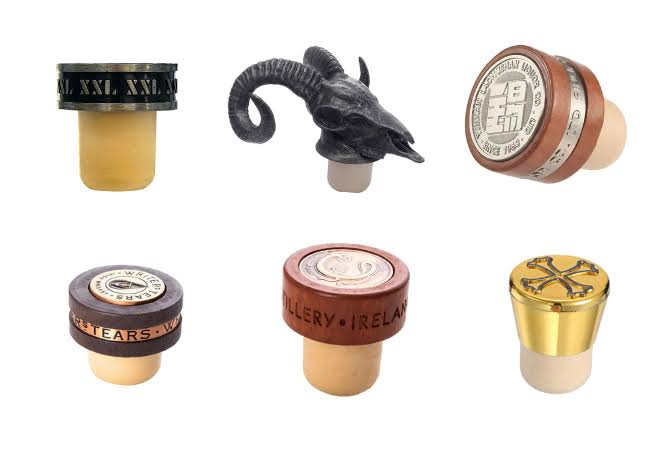
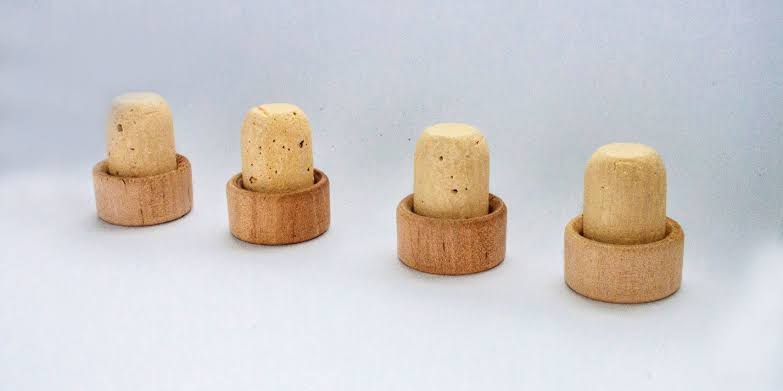
Different stopper materials behave differently in color control. Wood can vary because of grain, density, and stain absorption. Plastic depends on resin grade, pigment masterbatch, molding temperature, and coating method. Aluminum can shift in appearance because of brushing, polishing, anodizing, or spray coating. Zinc alloy and other metals depend on plating thickness, antique treatment, and polish consistency.
Even cork and synthetic shanks can influence perceived quality. Natural cork may show tone variation, while micro-agglomerated cork usually provides a more uniform appearance.
Surface Finish Differences
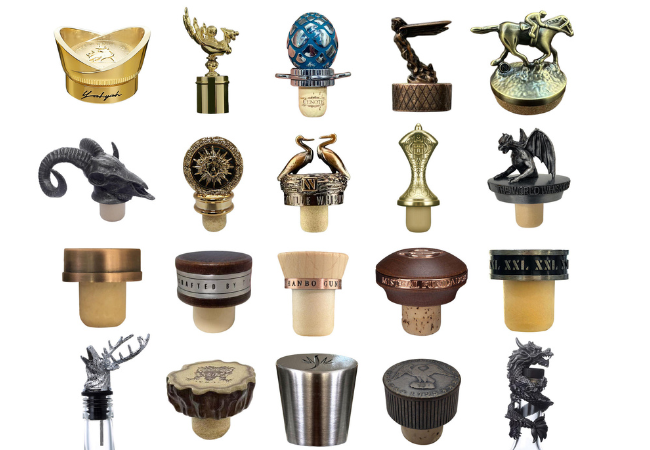
Color should never be approved without finish. Matte black, glossy black, soft-touch black, anodized black, and stained black wood may all be described as black, but they look different in real packaging.
Glossy finishes reflect more light. Matte finishes appear softer. Metallic surfaces shift with viewing angle. Textured surfaces create shadows. For this reason, color and finish must be specified together.
Decoration Differences
Printing, hot foil stamping, embossing, debossing, and laser engraving all affect the final appearance. A silver logo may look brighter on a smooth plastic top than on a textured wooden top. A laser mark may show different contrast depending on grain or coating thickness.
For accurate bar-top stopper color consistency, the approved sample should include the final material, color, finish, logo, and decoration method.
Lighting and Production Batch Differences
A stopper can look different under daylight, factory light, office light, retail lighting, or photography lighting. This is especially true for metallic, glossy, transparent, and textured finishes.
Production factors also matter. Pigment concentration, coating viscosity, curing time, spraying distance, polishing pressure, mold temperature, or plating conditions can all affect the final result. Reliable suppliers control these variables through documented process settings and inspection records.
Material-by-Material Color Consistency Guide
| Stopper Material | Main Color Risk | Control Method | Best Fit |
|---|---|---|---|
| Wood | Grain variation, stain absorption, natural tone difference | Wood sorting, stain formula, sanding and coating control | Craft spirits, whiskey, rum, brandy, premium natural packaging |
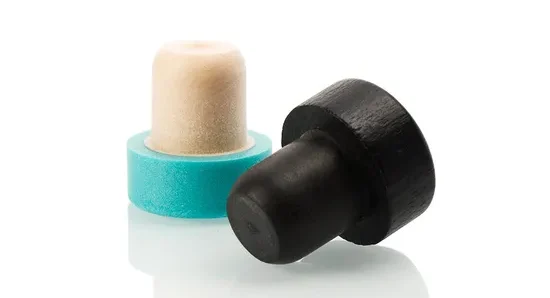
| Plastic | Pigment variation, molding variation, coating inconsistency | Resin control, masterbatch ratio, mold setting, Delta E check | High-volume custom colors and modern spirits packaging |
| Aluminum | Reflection, anodizing variation, polishing difference | Surface preparation, anodizing or coating control, visual approval | Premium gin, vodka, tequila, and minimalist designs |
| Zinc alloy / metal | Plating tone, antique effect, polish depth | Plating thickness control, polishing standard, retained sample | Luxury closures, sculptural tops, limited editions |
| Glass / resin | Tint, transparency, bubbles, inclusions | Clarity inspection, tint control, light review | Decorative premium bottles and gift packaging |
| Cork / synthetic shank | Visible tone, cork grade variation, contact appearance | Cork grade control, synthetic color control, bottle fit testing | Traditional spirits and clear spirits review |
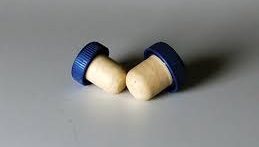
Wood gives a natural premium look, but buyers should accept a realistic visual range because every piece may not look identical. Plastic is often more repeatable for solid custom colors when resin and pigment are controlled. For buyers comparing molded color, matte coating, synthetic shanks, and repeat-order stability, Kandacork Closures also offers a practical guide to plastic bar-top stoppers for spirits bottles.
Aluminum and metal can be very consistent, but metallic reflection must be reviewed under real lighting. Glass-like and resin tops need clarity and tint control. Cork and synthetic shanks should be checked for both appearance and bottle fit.
Define the Color Standard Before Sampling
Many color problems begin with vague communication. Terms like “premium gold,” “dark brown,” “natural wood,” or “brand blue” are useful for creative direction, but they are not enough for production.
Use a Physical Master Reference
A physical reference is more reliable than a digital image. Screen color changes by monitor, brightness, calibration, and file format. For custom bar-top stoppers, buyers should provide a real color reference whenever possible.
Useful references include an approved stopper sample, Pantone chip, RAL reference, label proof, bottle coating sample, capsule sample, gift box sample, previous production sample, or complete packaging mockup.
A physical reference helps the supplier understand not only the color, but also the material effect, gloss, texture, and expected finish.
Use Pantone, RAL, CIELAB, and Brand References Correctly
Pantone and RAL are useful for early color communication. CIELAB data can support more objective quality control. In CIELAB, L* describes lightness, a* describes the red-green axis, and b* describes the yellow-blue axis.
Professional color measurement principles from entities such as CIE and NIST are commonly used in colorimetry and quality control. For technical background, NIST’s overview of CIE fundamentals for color measurements explains the evolution of CIELAB color spaces and color difference formulae. For spirits packaging, these references help buyers and suppliers compare approved samples with production parts more clearly.
However, numerical data should not replace real-world approval. Wood grain, metallic finishes, soft-touch coatings, transparent materials, and embossed surfaces still need trained visual review.
Specify Finish Together with Color
A strong color specification should include material, finish, decoration, and application.
Better examples include:
- Matte black spray coating on wooden bar-top stopper.
- Glossy red lacquer on plastic top.
- Brushed silver aluminum with laser engraved logo.
- Antique gold zinc alloy with embossed crest.
- Natural beech wood with clear satin coating.
- Deep blue soft-touch finish with silver hot foil logo.
These descriptions are more useful than “black stopper” or “gold cap.” They reduce misunderstanding and make sample development more efficient.
Use Delta E and Visual Approval Together
Delta E, often written as ΔE, is a numerical value used to describe the difference between two colors. In packaging QC, it can help compare a production sample with an approved standard.
For solid plastic, coated, painted, or printed surfaces, a project-specific Delta E tolerance can help control bar-top stopper color consistency. A spectrophotometer may also help check whether the production batch is drifting lighter, darker, warmer, or cooler than the approved sample.
However, Delta E is not enough for every closure. Visual approval is still necessary for natural wood, brushed aluminum, metallic gold, antique plating, soft-touch coating, transparent resin, embossed logos, and laser engraving. These surfaces change with lighting, angle, texture, and reflection.
The best approach is to combine measurement with controlled visual review. This creates a practical balance between technical control and real packaging appearance.
Golden Sample System: From Lab Sample to Reorder
A golden sample is the approved physical reference used to guide bulk production and future reorders. It is one of the most important tools for maintaining bar-top stopper color consistency.
A good sample approval system usually includes four stages.
| Stage | Purpose | Key Control Point |
|---|---|---|
| Lab sample | Confirms early color and finish direction | Compare several material and finish options |
| Pre-production sample | Confirms the real production route | Use intended mold, material, finish, and decoration process |
| Golden sample | Becomes the approved reference | Buyer and supplier keep labeled samples |
| Retained production sample | Supports reorder comparison | Compare future batches against approved production history |
The golden sample should be labeled with project name, material, finish, decoration method, color reference, approval date, and version number. For repeat orders, the supplier should compare new production against both the golden sample and retained production samples.
This system prevents a common problem: approving one sample and receiving a different appearance in bulk production.
Practical Example: Matching a Custom Black Bar-Top Stopper
A spirits brand may request a matte black wooden bar-top stopper for a premium gin or whiskey bottle. At first glance, “matte black” sounds simple. In production, it requires several control steps.
The buyer should provide a bottle sample, label proof, black color reference, logo artwork, and finish expectation. Kandacork Closures would review the wood type, grain visibility, stain absorption, coating gloss, logo contrast, and bottle neck fit before preparing samples. For buyers comparing natural wood appearance, staining, engraving, and bottle-fit review, the guide to wooden bar-top stoppers for whisky bottles explains related material and finish decisions.
During lab sampling, several black finish options may be compared: stained black wood, spray-coated matte black, soft-touch black, or black with clear protective coating. After the buyer selects the preferred direction, a pre-production sample should confirm the real coating, logo process, shank size, and assembly appearance on the actual bottle.
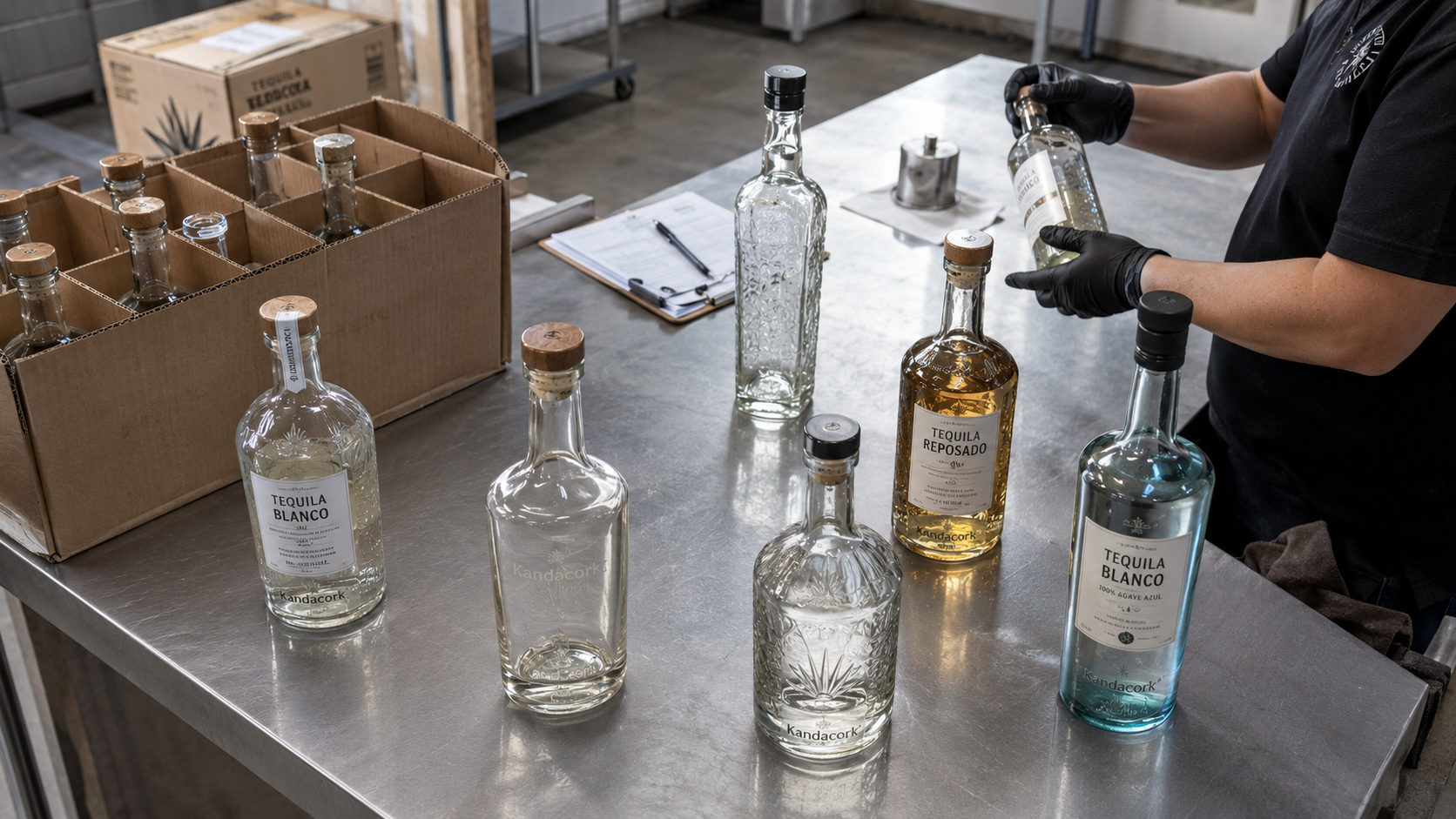
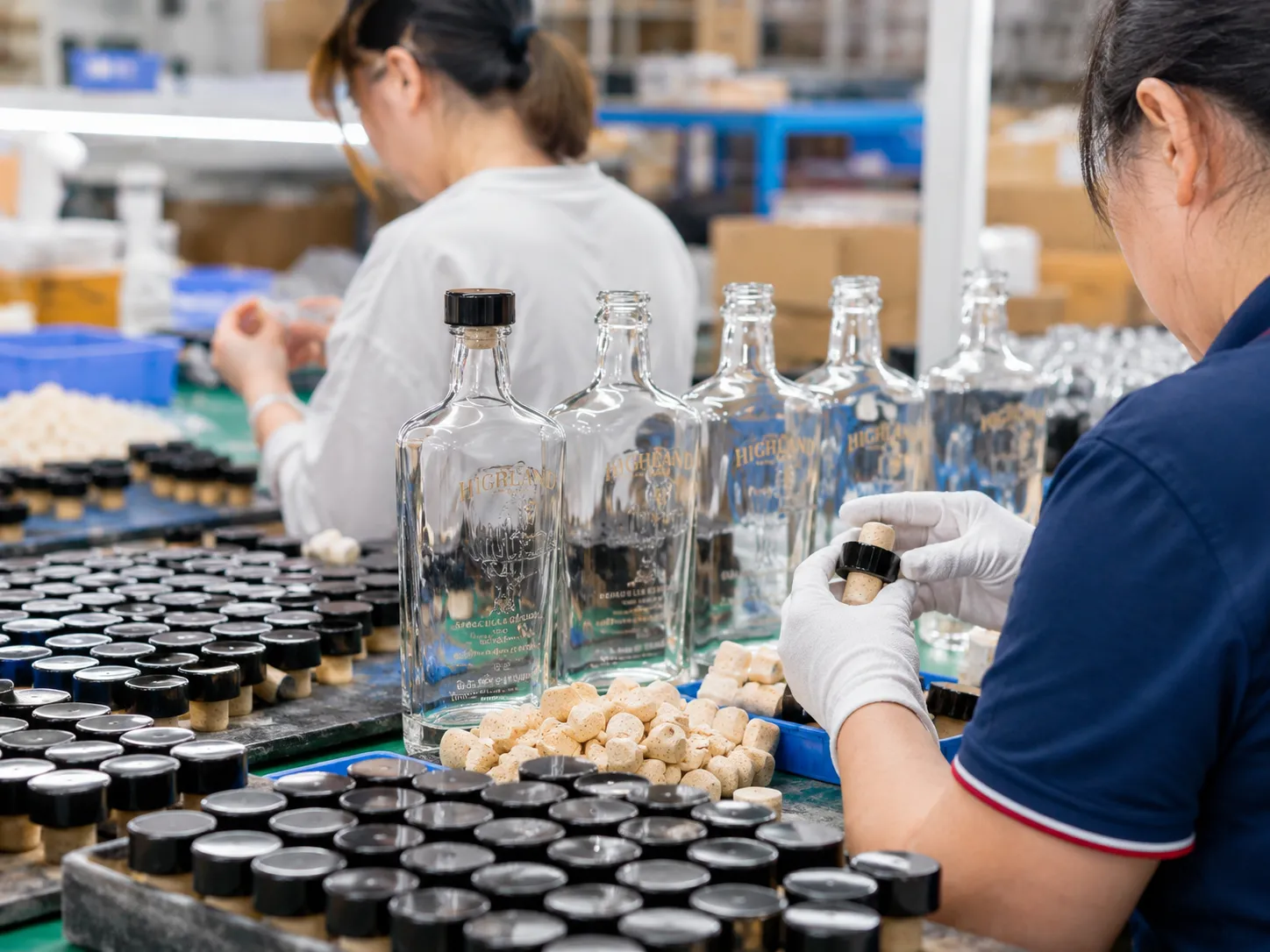
Once approved, the final sample becomes the golden sample. In real production, Kandacork Closures checks not only the top color, but also gloss level, logo contrast, surface defects, shank fit, sitting height, insertion feel, pull-out feel, and packaging protection before shipment. This process helps the buyer maintain the same closure appearance in future repeat orders.
Why Approved Samples May Look Different in Bulk Production
Approved samples may look different from bulk production when the sample and mass production are not made under the same conditions.
Common causes include handmade lab samples, changed production molds, different coating lines, new pigment or resin batches, natural wood grain variation, changed polishing or brushing levels, altered anodizing or plating conditions, or missing golden samples.
The stopper may also look different if the buyer approved it alone but did not test it on the actual bottle. A color that looks correct on a desk may appear too dark, too warm, or too glossy when assembled with glass, label, capsule, and carton.
Pre-production samples reduce this risk because they confirm the actual material, finish, decoration, bottle fit, and production route before bulk manufacturing begins.
Why Bottle Fit Should Be Checked with Color Approval
Color approval should not be separated from bottle fit approval. A stopper can pass color review but still fail packaging approval if it sits too high, tilts, pops up, changes the bottle silhouette, or feels unstable during opening.
For bar-top closures, the cap diameter, shank diameter, bottle neck finish, insertion feel, pull-out feel, and sealing performance should be reviewed together. This is especially important when the top material, coating thickness, or shank structure changes between sample versions.
A color-approved wooden top may look premium, but if the shank diameter does not match the bottle neck correctly, the final package will not feel reliable. A metallic top may match the brand color, but if it changes the visual balance of the bottle shoulder and neck, the complete package may still need adjustment.
For this reason, Kandacork Closures recommends approving the stopper on the actual bottle, not as a loose component only. Buyers working with custom bottle necks can use Kandacork’s cap and neck compatibility service to review neck finish, shank diameter, sitting height, insertion feel, and closure performance before bulk production.
Supplier QC Workflow for Bulk Orders
A reliable bar-top stopper supplier should control color throughout production, not only during final inspection.
Incoming Material Inspection
The supplier should inspect resin, pigment, wood, cork, aluminum, zinc alloy, coatings, lacquer, foil, ink, and packaging materials before production starts.
For wood, inspection may include tone, grain, moisture, and defect sorting. For plastic, resin and pigment control are important. For metal, surface preparation and plating materials affect the final appearance.
First Article Inspection
The first production parts should be checked before full production continues. First article inspection should confirm color, gloss, surface finish, dimensions, logo position, decoration quality, shank fit, insertion feel, pull-out feel, and surface defects.
A good-looking stopper is not acceptable if it does not fit the bottle correctly. Appearance and function should be approved together.
In-Process Inspection
During production, the supplier should check color drift, coating uniformity, logo alignment, surface scratches, bubbles, dust, edge defects, and mixed-batch risk.
In-process inspection helps catch problems before they affect the full order.
Final Inspection and Reorder Traceability
Final inspection should confirm visual consistency, dimensions, fit, surface quality, decoration, packaging protection, carton labeling, quantity, and retained samples.
For future repeat orders, batch records should include material, pigment, coating, decoration process, inspection notes, and shipment date. This helps prevent color drift across reorders.
How to Evaluate a Bar-Top Stopper Supplier
Many suppliers can say they offer custom colors. Fewer can explain how they control color from sample to reorder.
Before selecting a supplier, buyers should ask:
- Can you match a physical color sample?
- Can you recommend the most repeatable material for our color target?
- Can you provide pre-production samples?
- Do you keep golden samples and retained production samples?
- How do you control coating, pigment, wood sorting, plating, or lacquer?
- Can you test the stopper on our actual bottle?
- Can you provide QC photos or inspection reports?
- Can you support repeat orders with batch traceability?
A supplier that can answer these questions clearly is more suitable for long-term spirits packaging programs. The best partner should understand not only closure production, but also bottle fit, brand color, decoration methods, packing protection, and reorder stability.
Quote and Sample Request Checklist
To receive accurate samples and quotation, buyers should provide clear project information.
| Buyer Should Provide | Why It Matters |
|---|---|
| Bottle drawing or physical bottle sample | Confirms neck fit and stopper proportion |
| Neck inner diameter | Helps select correct shank size |
| Target color reference | Reduces vague color communication |
| Surface finish requirement | Defines matte, gloss, metallic, soft-touch, or textured appearance |
| Logo artwork | Determines printing, engraving, embossing, or foil process |
| Order quantity | Affects production route and pricing |
| Launch timeline | Supports sampling and production planning |
For Kandacork Closures, this information helps the technical and sampling teams recommend the right stopper structure, material, finish, decoration process, and QC approach before quotation.
Request a Color-Matched Stopper Sample
Send Kandacork Closures your bottle drawing, physical color reference, finish requirement, logo artwork, and order quantity. The team can review your bottle neck finish, stopper material options, decoration method, color-matching route, and sample approval steps.
For new spirits launches, private label programs, export orders, and repeat production, early sample approval helps reduce color risk before mass production. It also gives both buyer and supplier a practical reference for future batch-to-batch consistency. Buyers can request a custom closure quote with drawings, sample photos, color references, artwork, and target quantity for project review.
Color Consistency and Complete Spirits Packaging
A stopper should not be approved alone. It should be reviewed as part of the complete bottle system.
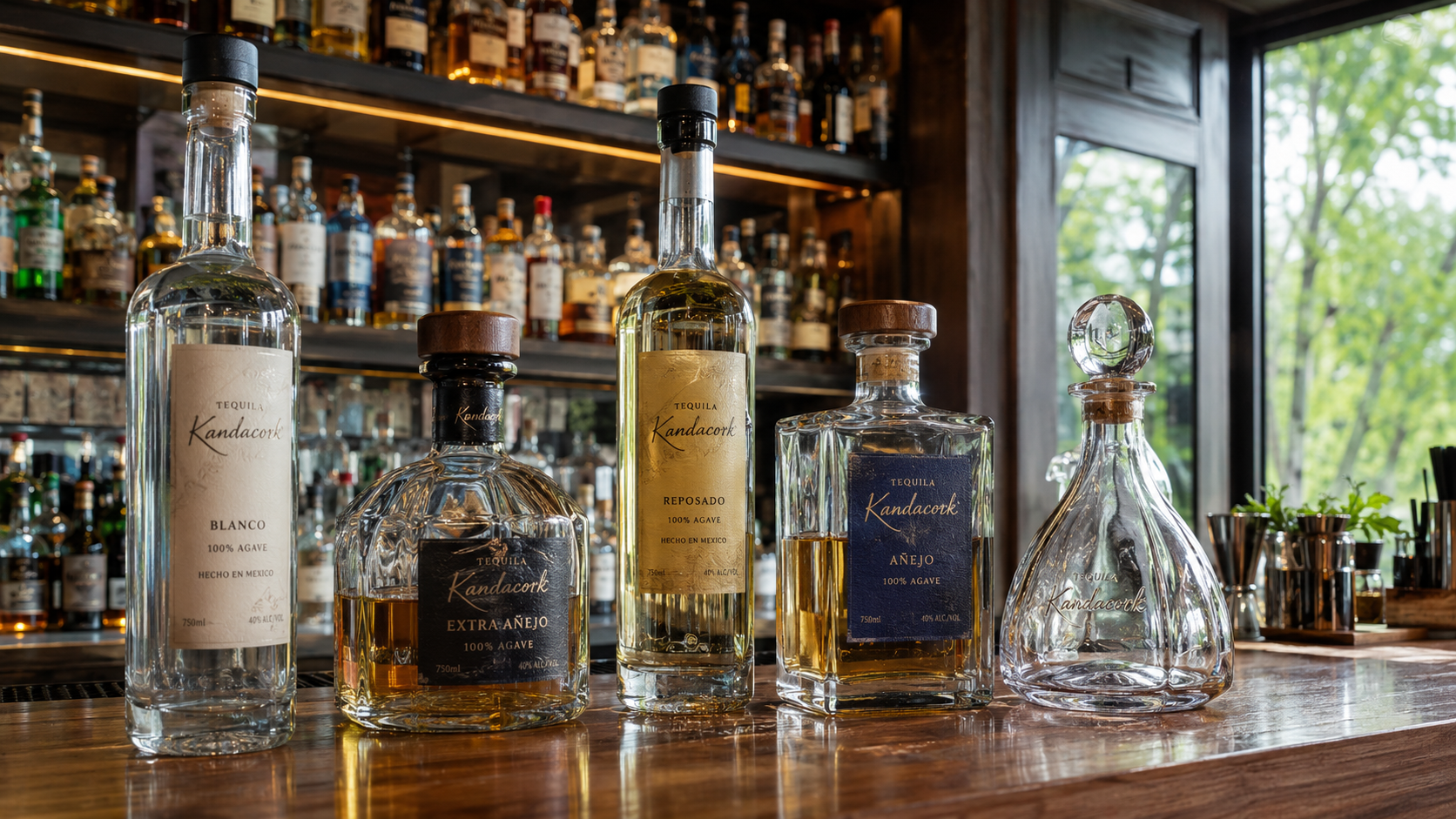
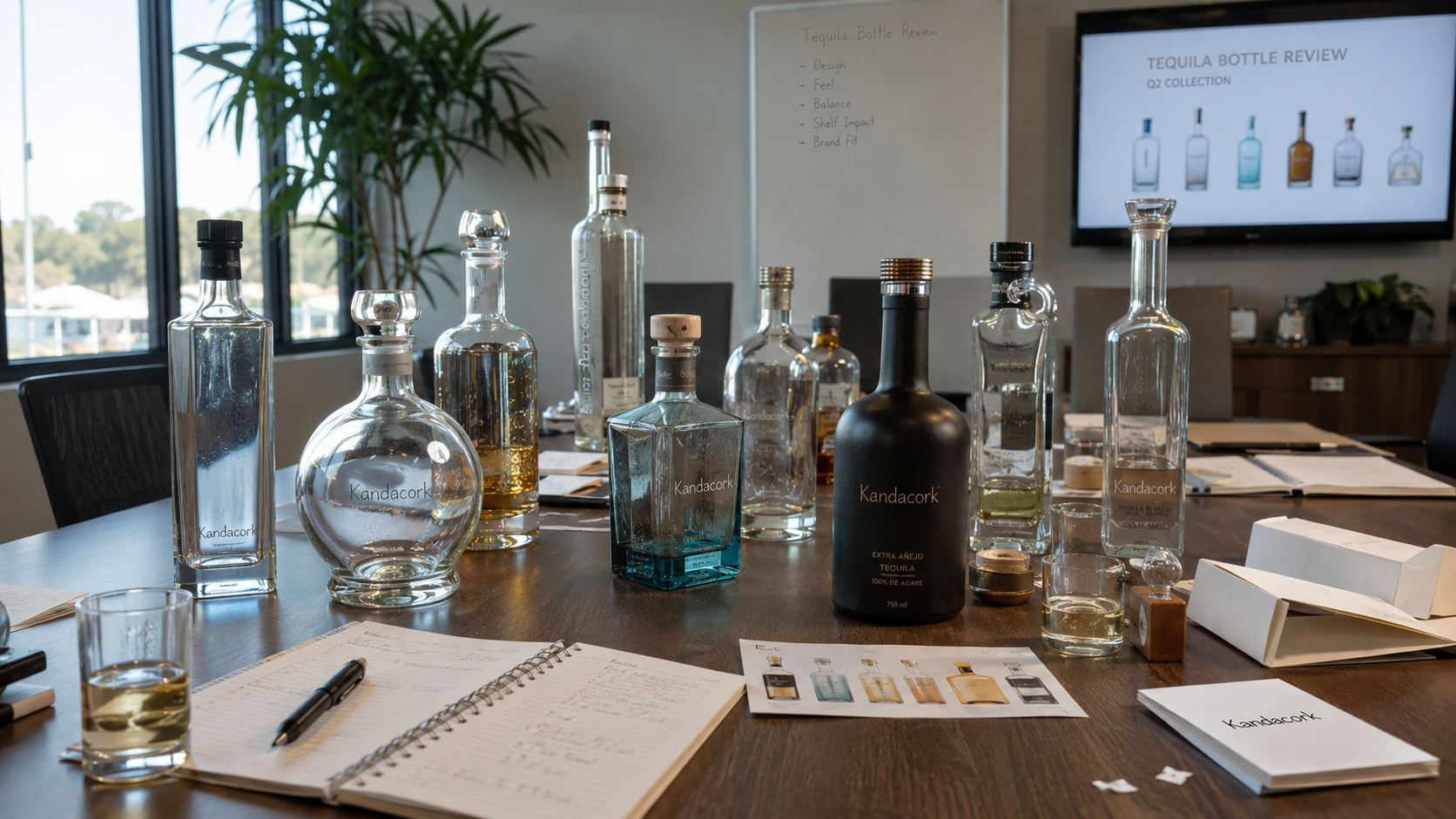
Buyers should check stopper color together with bottle glass color, bottle coating, label paper, label ink, capsule, shrink sleeve, tamper-evident band, gift box, carton, retail display lighting, and product liquid color. For complete bottle-and-closure planning, Kandacork Spirits also provides guidance on spirits bottle closure systems that helps buyers compare T-top closures, cork stoppers, screw caps, ROPP systems, capsules, and security inserts.
A dark walnut stopper may look premium on an amber whiskey bottle but too heavy on a clear gin bottle. A silver aluminum top may look modern with a minimalist vodka label but too cold for a heritage rum brand. A matte black stopper may appear luxurious, but if the label black is warmer or glossier, the mismatch can reduce the premium effect.
Complete packaging review helps buyers avoid expensive corrections after mass production.
Common Mistakes to Avoid
Many color problems are preventable. Buyers should avoid approving only digital renderings, using vague color names, ignoring finish differences, changing material after sample approval, skipping pre-production samples, approving the stopper without testing the actual bottle, forgetting logo decoration color, ignoring lighting conditions, failing to retain samples, and choosing a supplier only by unit price.
The lowest-cost stopper can become expensive if it causes launch delays, rejected lots, repacking, or inconsistent shelf presentation.
When to Request Samples from Kandacork Closures
Buyers should request samples when developing a new spirits bottle, changing stopper material, matching a brand color, preparing a private label project, testing a new bottle neck, or planning a repeat order that must match a previous production batch.
Sample development is especially important for custom wooden bar-top stoppers, painted tops, lacquered tops, metallic aluminum closures, zinc alloy tops, soft-touch finishes, logo printing, hot foil stamping, embossing, debossing, laser engraving, premium gift packaging, and high-volume private label programs.
Early sample testing helps identify color, fit, finish, and decoration risks before bulk production.
FAQ
How do you control color consistency on bar-top stoppers?
Use a physical color standard, approve a golden sample, specify material and finish, measure color where suitable, inspect production batches, test the closure on the actual bottle, and retain samples for reorders.
What causes color variation in bar-top stoppers?
Common causes include material variation, coating thickness, pigment batch changes, wood grain, metallic reflection, decoration process variation, production conditions, and inconsistent viewing light.
Is Delta E enough for stopper color approval?
No. Delta E helps measure color difference, but metallic, wood, textured, transparent, glossy, and embossed stoppers also need visual approval.
Which stopper material offers the best color repeatability?
Plastic and controlled coated surfaces usually provide strong repeatability for solid custom colors. Aluminum and metal can also be consistent when finishing is controlled. Natural wood offers a premium look but allows more natural variation.
Why should bottle fit be checked during color approval?
Bottle fit affects the final packaging appearance and user experience. A stopper should be checked for shank diameter, insertion feel, pull-out feel, sitting height, sealing performance, and visual balance on the actual bottle.
Why can sample color differ from bulk production?
Sample color can differ if the sample was handmade, the final production route changed, material batches changed, coating conditions changed, wood grain varied, or the supplier did not retain a proper golden sample.
What should buyers send for a color-matched stopper quotation?
Buyers should send the bottle drawing or sample, neck size, physical color reference, finish requirement, logo artwork, order quantity, and launch timeline.