Quick Answer: What Is Bar-Top Stopper Pull-Out Force?
Bar-top stopper pull-out force is the force required to remove a T-top or bar-top closure from a bottle neck after insertion. For spirits bottle projects, this force should be tested together with bottle neck inner diameter, stopper shank diameter, insertion force, leakage resistance, repeated opening, and shipping conditions.
The best result is not the highest possible force. The best result is controlled opening resistance that keeps the stopper secure, prevents leakage, supports repeated resealing, and still feels comfortable for the consumer.
If you are preparing a bulk spirits bottle project, use this guide to review bottle drawings, physical samples, shank materials, and pull-out force before confirming production.
Why Pull-Out Force Matters Before Bulk Orders
A bar-top stopper is both a functional closure and a visible brand detail. It protects the liquid, supports premium shelf presentation, and creates the consumer’s first physical interaction with the bottle.
For whisky, rum, gin, vodka, tequila, brandy, liqueur, and craft spirits, the stopper must seal securely, survive shipping, and open smoothly. A closure that looks premium but performs poorly can still create leakage, hard opening, stopper separation, carton staining, or distributor complaints.
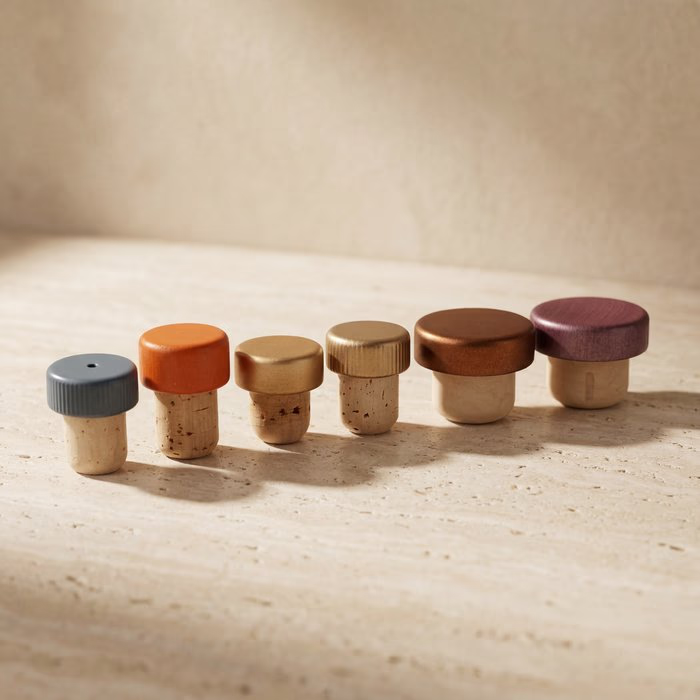
This is why bottle projects should not approve a stopper only by appearance. Buyers comparing custom bar-top stoppers for spirits bottles should confirm fit, sealing, pull-out force, insertion behavior, repeated opening, decoration quality, and bulk supply consistency before final approval.
For commercial buyers, the practical question is simple: will this stopper work on real bottles, in real filling conditions, across the full order quantity?
Pull-Out Force Is Not the Same as Bottle Fit
Many bar-top stopper guides focus on basic bottle fit. They explain the cap, the shank, and the relationship between bottle neck opening and stopper diameter. That information is useful, but fit alone does not prove closure performance.
A stopper can fit the neck but still be difficult to remove. It can feel tight but still leak if the shank does not contact the glass evenly. It can work on one sample but fail when neck tolerance changes in production.
For spirits packaging, buyers should separate three performance checks:
| Technical Item | What It Means | Why It Matters |
|---|---|---|
| Insertion force | The force needed to push the stopper into the bottle neck | Affects manual application, filling-line speed, seating height, and production consistency |
| Pull-out force | The force needed to remove the stopper after insertion | Affects opening feel, stopper security, and consumer experience |
| Leakage performance | The stopper’s ability to prevent seepage, evaporation, or liquid escape | Affects export safety, carton cleanliness, shelf appearance, and product protection |
A professional stopper approval process reviews all three. Pull-out force should not be treated as a single isolated number. It should be evaluated as part of the complete bottle-and-closure system.
Why the Neck Size + 1mm Rule Is Only a Starting Point
Many buyers use a simple early rule: choose a stopper shank slightly larger than the bottle neck opening. In some basic projects, the “neck size + 1mm” approach may help with initial screening.
However, it should not be used as final approval for spirits bottle projects.
Actual stopper performance depends on more than one diameter value. Bottle neck tolerance, glass variation, shank material, compression recovery, surface friction, stopper length, top weight, and shipping conditions can all change the final extraction force.
For example, a synthetic shank and a natural cork shank with the same nominal diameter may not feel the same after insertion. A bottle neck with slight ovality or internal taper may compress the shank unevenly. A heavy decorative top may require stronger top-to-shank bonding if the opening resistance is high.
The +1mm rule can help start the conversation. Sample testing confirms whether the selected stopper is truly suitable for bulk production.
Key Factors That Affect Pull-Out Force
Bottle Neck Inner Diameter and Tolerance
The bottle neck inner diameter, often called the bore, is the starting point for stopper selection. A smaller bore increases compression on the stopper shank and may increase bar-top stopper pull-out force. A larger bore reduces compression and may increase leakage or loose-fit risk.
However, buyers should not rely only on one drawing value. Glass bottle production involves tolerance. Two bottles with the same nominal neck size may behave differently when tested with the same stopper.
For custom spirits bottles, heavy glass bottles, vintage-style bottles, and imported bottle projects, buyers should test several physical bottle samples from the intended production batch.
A supplier should review not only the bottle opening size but also the neck depth, internal profile, finish type, and real bottle samples. The inner neck may have slight taper, pinch points, or surface variation that affects stopper compression.
Stopper Shank Diameter and Length
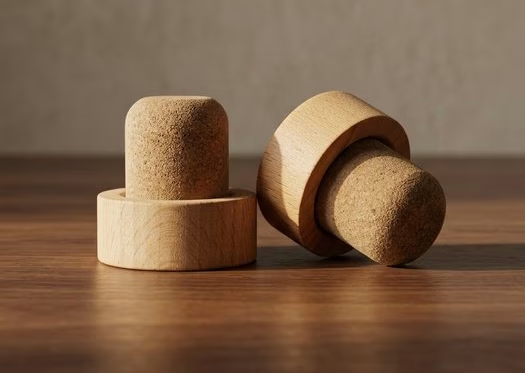
The shank is the inserted part of the bar-top stopper. Its diameter has a direct effect on pull-out force. A larger shank usually creates stronger compression and a firmer hold. A smaller shank may insert easily but may not seal securely.
Oversizing the shank is not always the solution. If the shank is too large, the stopper may be difficult to insert, the seated height may become inconsistent, and the consumer may experience a hard opening.
Shank length also matters. A longer shank provides more contact area inside the bottle neck and may improve holding stability. But if the neck is shallow or internally tapered, excessive shank length can create insertion problems.
For bulk spirits bottle projects, stopper shank diameter and length should be selected through real bottle-and-stopper sample testing rather than catalog size alone.
Shank Material and Compression Recovery
Different shank materials have different compression, recovery, friction, and dimensional consistency.
Natural cork offers a traditional premium image and tactile feel. It is widely used for whisky, rum, brandy, and craft spirits. However, natural cork can show more variation than engineered materials.
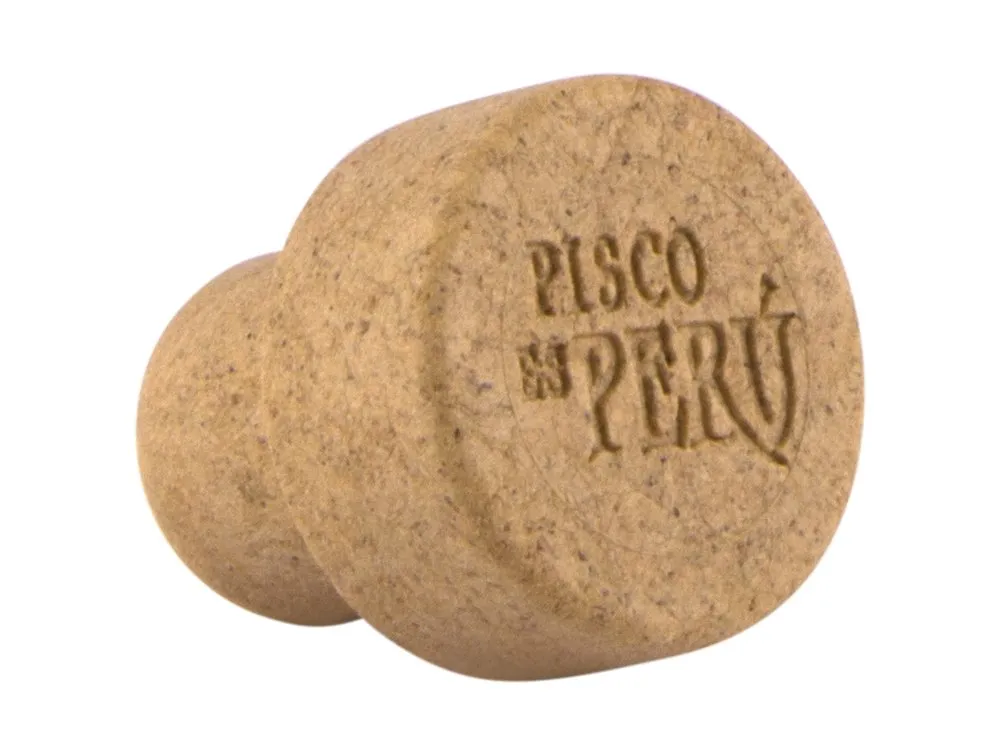
Micro-agglomerated cork provides a cork-based appearance with more controlled density. It can be a strong choice for mid-premium and premium spirits where brands want a natural cork story with improved consistency.
Synthetic cork offers predictable dimensions and stable performance. It is often used for export projects, private label programs, and high-volume spirits packaging where repeatability matters.
Polymer shanks can be engineered for specific dimensional and friction requirements. They may suit modern spirits brands, custom color projects, or packaging programs that require tighter process control.
No material is automatically best for every bottle. The correct choice depends on bottle neck dimensions, brand positioning, filling method, shipping route, order quantity, and target opening feel.
Surface Treatment and Friction
Surface friction plays a major role in stopper removal force. Coatings, lubricants, cork texture, synthetic surface finish, dust, humidity, and storage time can all influence the final opening feel.
A surface that is too dry or rough may create excessive opening resistance. A surface that is too smooth may reduce grip and sealing stability.
The ideal surface condition supports smooth insertion while maintaining reliable holding strength. For export packaging, surface performance should be checked after realistic storage and handling, not only on fresh samples.
Top Weight, Bonding, Filling, and Shipping Conditions
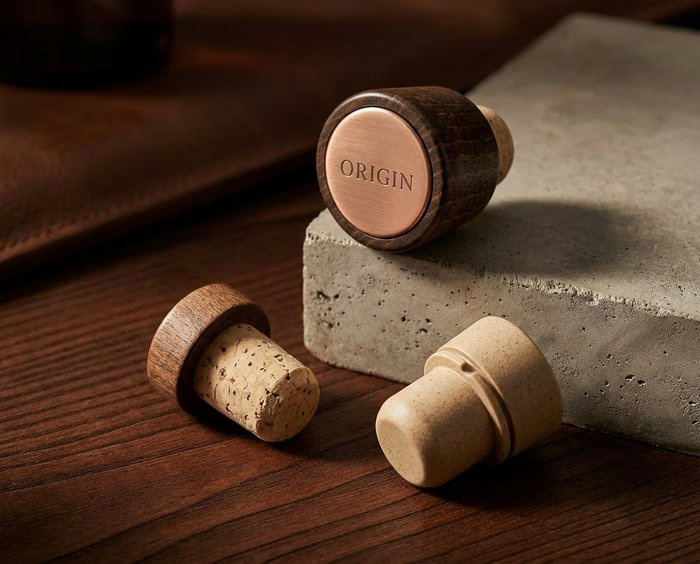
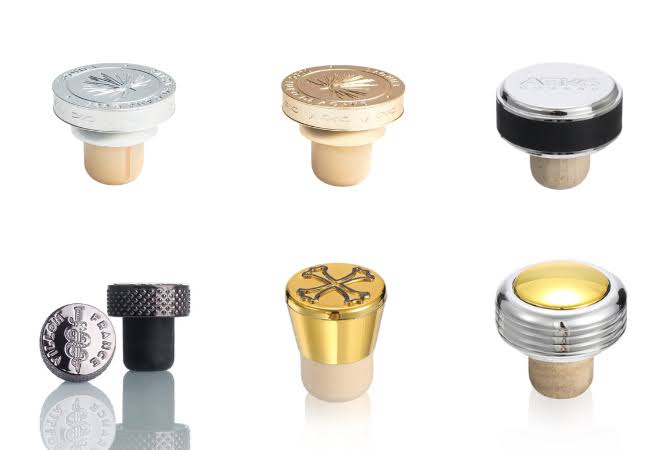
Bar-top stoppers may use wood, plastic, aluminum, Zamak, ceramic, glass-like, or custom molded tops. These materials influence visual positioning, hand feel, weight, and structural stress.
A heavy decorative top can make a bottle feel premium, but it also increases stress on the top-to-shank connection. If pull-out force is high and bonding strength is weak, the top may separate from the shank during opening.
Filling and distribution conditions also matter. Spirits packaging may experience alcohol vapor, warehouse temperature changes, container shipping, vibration, pressure variation, and long distribution cycles.
For private label, export, and distributor-led projects, extraction force testing should be combined with leakage checks, repeated opening tests, and transport handling review.
What Happens If Pull-Out Force Is Too Low or Too High?
The best stopper is not the tightest stopper. It is the stopper that performs within a controlled and repeatable force window.
| Problem | If Pull-Out Force Is Too Low | If Pull-Out Force Is Too High |
|---|---|---|
| Consumer experience | Stopper feels loose or unstable | Bottle is hard to open |
| Sealing risk | Leakage, seepage, evaporation, stopper pop-up | Possible shank deformation or poor resealing |
| Packaging impact | Wet cartons, stained labels, damaged gift boxes | Top-to-shank separation or poor premium feel |
| Production impact | Higher inspection failures | Slow insertion, inconsistent seated height |
| Commercial risk | Distributor claims and launch delays | Consumer complaints and higher rejection risk |
Low pull-out force is especially risky for export shipments, e-commerce spirits packaging, premium cartons, and gift boxes. High pull-out force is especially risky for luxury tops, hand-applied closures, and bottles designed for repeated opening.
The practical goal is secure closure performance with comfortable consumer use.
What to Measure Inside the Bottle Neck
For accurate sample approval, buyers should measure more than the top opening of the bottle. The internal neck profile affects compression, sealing, insertion behavior, and stopper removal force.
| Measurement Point | Why It Matters |
|---|---|
| Mouth inner diameter | Determines the starting point for shank size selection |
| Inner diameter below the mouth | Shows whether the shank has enough sealing contact inside the neck |
| Neck depth | Confirms whether the selected shank length is suitable |
| Neck ovality | Uneven compression may cause leakage or unstable opening feel |
| Neck conicity | A tapered neck can change insertion force and pull-out force |
| Internal pinch points | Local high compression may create hard opening or uneven sealing |
| Mouth surface condition | Rough or irregular glass can affect friction and stopper seating |
CETIE finish data sheets are useful references for understanding bottle finish dimensions and neck profiles in alcohol, spirits, liquors, and fortified wine packaging. However, physical bottle samples are still essential because real production bottles may vary from drawings.
How to Test Bar-Top Stopper Pull-Out Force Before Bulk Orders
Review the Bottle Drawing
Start with the bottle drawing. Confirm the inner neck diameter, bore tolerance, neck depth, finish type, and any special neck profile.
If the bottle is a custom design, check whether the neck finish follows a recognized finish reference or requires special stopper development.
Test Physical Bottle Samples
Physical bottle samples are essential. Drawings provide useful data, but real bottles reveal production variation.
Buyers should send multiple bottle samples whenever possible. Testing only one bottle may hide tolerance issues that appear later during mass production.
Prepare Representative Stopper Samples
The test stopper should match the intended production structure as closely as possible. It should use the intended shank material, shank diameter, top material, top size, surface finish, and decoration method.
If the final project uses a heavy wooden top, aluminum top, molded logo, color coating, or capsule, the test sample should reflect that final structure. Buyers at an early closure-selection stage can also compare project variables with a broader bar-top closure project checklist before narrowing down sample options.
Measure Insertion and Pull-Out Behavior
Before measuring pull-out force, review insertion behavior. The stopper should seat correctly without excessive pressure, unstable height, tilting, or visible deformation.
Pull-out force testing measures how much force is needed to remove the stopper from the bottle neck. For spirits packaging, the real opening action often includes both twisting and pulling, so realistic testing may consider extraction force together with twist-and-pull opening feel.
Specialist closure testing systems can help packaging teams understand both axial extraction and twist-release behavior. Still, test results should always be compared with real human opening evaluation. Numbers are important, but the stopper must also feel right in the hand.
Run Repeated Opening, Leakage, and Handling Checks
Spirits bottles are usually opened and resealed multiple times. Repeated opening can change the interaction between the shank and glass. The stopper should remain stable after several use cycles.
Pull-out force testing should be combined with leakage and handling checks, including upright storage, angled or inverted leakage review where relevant, temperature change exposure, vibration handling, carton packing review, and capsule compatibility.
For export projects, the complete packaging system should be reviewed: bottle, stopper, capsule, label, carton, divider, and pallet plan. ASTM D4169 can be used as a recognized reference for understanding distribution testing conditions, while project-specific shipping checks should reflect the real route, product value, and packaging format.
Test Workflow for Bottle Project Approval
| Test Item | What It Checks | Why It Matters |
|---|---|---|
| Neck bore measurement | Actual bottle inner diameter | Prevents loose or over-tight fit |
| Neck tolerance check | Variation across bottle samples | Reduces batch-to-batch risk |
| Insertion force review | Ease of stopper application | Supports bottling efficiency |
| Pull-out force test | Opening resistance after insertion | Balances secure seal and consumer usability |
| Repeated opening test | Reuse and resealing performance | Important for spirits consumed over time |
| Leakage test | Sealing reliability | Reduces carton stains and claims |
| Transport handling review | Shipping stability | Supports importer and distributor confidence |
| Top-to-shank bonding check | Structural strength during opening | Prevents decorative top separation |
ISO 9727 and cork industry guidance can help explain cork extraction-force testing discipline. However, wine cork extraction references should not be copied directly as universal targets for spirits bar-top stoppers. Spirits closures have different structures, top weights, opening actions, and resealing expectations.
Suggested Pull-Out Force Test Record
A simple test record helps packaging buyers, bottlers, and suppliers make approval decisions based on evidence rather than impressions.
| Item | Record |
|---|---|
| Bottle sample number | |
| Bottle supplier or mold | |
| Neck inner diameter | |
| Neck depth | |
| Shank diameter | |
| Shank length | |
| Shank material | |
| Top material and weight | |
| Insertion feel | Easy / normal / hard |
| Pull-out feel | Loose / acceptable / hard |
| Leakage result | Pass / fail |
| Repeated opening result | Pass / fail |
| Top-to-shank bond | Pass / fail |
| Capsule compatibility | Pass / fail |
| Final decision | Adjust / approve / retest |
This record can be used during sample review, pre-production approval, and supplier communication. It also helps reduce confusion when several stopper materials or shank diameters are being compared.
Material Comparison: Which Shank Gives Better Force Control?
| Shank Material | Pull-Out Force Behavior | Best Use Case | Risk to Check |
|---|---|---|---|
| Natural cork | Premium feel with natural variation | Whisky, rum, brandy, craft spirits | Density variation and moisture response |
| Micro-agglomerated cork | More controlled than natural cork | Mid-premium and premium spirits | Grade selection and surface treatment |
| Synthetic cork | Predictable dimensions and compression | Export, private label, high-volume runs | Alcohol compatibility and long-term recovery |
| Polymer shank | Engineered fit and color control | Modern spirits packaging and custom projects | Surface finish and compression stability |
| Hybrid shank | Adjustable balance of cost, look, and performance | Custom closure programs | Structure validation and sample testing |
| Heavy top with cork or synthetic shank | Strong premium shelf appeal | Luxury spirits and gift packs | Top-to-shank bonding strength |
For most commercial projects, the best supplier recommendation should balance sealing stability, opening feel, production efficiency, visual design, and cost.
Supplier Capability Checklist for Packaging Buyers
A reliable closure supplier should support both design and technical performance. Before choosing a supplier, buyers should ask:
Can the supplier review bottle drawings and physical bottle samples?
Can the supplier recommend stopper shank diameter based on actual neck bore tolerance?
Can the supplier compare natural cork, micro-agglomerated cork, synthetic cork, polymer, and hybrid shank options?
Can the supplier review insertion force, pull-out force, leakage, repeated opening, and top-to-shank bonding?
Can the supplier provide pre-production samples, decoration support, export packing, and reorder consistency?
If a supplier can only provide catalog dimensions but cannot support bottle-specific testing, the buyer may face higher risk during mass production.
RFQ Checklist: What to Send Before Requesting Samples
A complete RFQ helps the supplier respond faster and recommend a better closure solution.
Before contacting Kandacork Closures, buyers can prepare:
- Bottle drawing
- Physical bottle samples if available
- Inner neck diameter and tolerance
- Neck depth and finish type
- Bottle capacity
- Spirits category and alcohol percentage
- Filling method
- Manual or automatic stopper insertion
- Preferred stopper top material
- Preferred shank material
- Target opening feel
- Logo artwork or decoration method
- Capsule or tamper-evident sleeve plan
- Estimated order quantity and target launch date
This information allows Kandacork Closures to review the project from both technical and commercial perspectives. If leakage, torque, or stopper opening feel is already a concern, a dedicated sealing and leakage review can help buyers check practical risks before bulk production.
Real-World Example: Premium Rum Bottle Project
A private label buyer developing a premium rum bottle may choose a heavy glass bottle, dark label, wooden bar-top stopper, and gift box. The first sample looks strong, but after repeated opening, the stopper feels slightly loose.
Instead of approving the visual design immediately, the buyer should review the bottle bore, test several bottle samples, compare natural cork and micro-agglomerated cork shanks, and check leakage after vibration handling. If the top is heavy, bonding strength should also be tested.
This early review can prevent leakage, wet cartons, distributor claims, and launch delays.
Real-World Example: High-Volume Vodka Export Project
A vodka importer may prioritize cost control, consistent fit, and stable export performance. In this case, a synthetic cork or polymer shank may be attractive because dimensional consistency is important across large production runs.
However, the buyer should still test bar-top stopper pull-out force with real bottles. If the shank is too loose, vibration during shipping may increase leakage risk. If the shank is too tight, bottling speed may slow down.
The best supplier recommendation should balance cost, sealing stability, opening feel, and repeat-order consistency. Buyers planning export programs can also review how an export-ready closure supplier supports bottle drawings, decoration requirements, order quantities, and destination-market needs.
How Kandacork Closures Supports Pull-Out Force Review
Kandacork Closures helps packaging buyers review bottle neck dimensions, compare shank materials, prepare stopper samples, and evaluate opening feel before bulk orders.
For projects involving custom tops, export shipments, premium spirits packaging, or private label bottle programs, buyers can send bottle drawings, physical samples, target opening feel, material preference, and estimated order quantity for a neck-fit and pull-out force review.
When the project also includes custom glass bottles, decoration, and closure coordination, buyers may benefit from reviewing the complete spirits bottle packaging system before finalizing closure specifications.
FAQ
What is bar-top stopper pull-out force?
Bar-top stopper pull-out force is the force required to remove a T-top or bar-top closure from a bottle neck after insertion. It helps determine whether the stopper feels secure, opens comfortably, and performs consistently.
Is higher pull-out force always better?
No. Higher pull-out force is not always better. If the stopper is too tight, it may be difficult to insert, hard to open, or at risk of top-to-shank separation. The goal is controlled force, not maximum tightness.
Why is the neck size + 1mm rule not enough?
The neck size + 1mm rule can help with early screening, but it does not account for neck tolerance, shank material, compression recovery, surface friction, stopper length, top weight, or shipping conditions. Final approval should be based on sample testing.
What causes a bar-top stopper to leak?
Common causes include oversized bottle bore, undersized shank, poor compression recovery, unstable surface friction, glass neck variation, temperature changes, vibration during shipping, or incorrect stopper material selection.
Can I choose stopper size using only bottle neck diameter?
Bottle neck diameter is the starting point, but it is not enough. Buyers should also check neck tolerance, neck depth, shank material, shank length, insertion force, leakage performance, and repeated opening behavior.
Should I test pull-out force before bulk ordering?
Yes. Pull-out force testing helps reduce leakage, stopper pop-up, hard-opening complaints, top separation, production delays, and export packaging risk.
What should I send to Kandacork Closures for sample testing?
Send bottle drawings, physical bottle samples, neck dimensions, spirits category, alcohol percentage, preferred stopper material, decoration requirements, capsule plan, target opening feel, and estimated order quantity.
Conclusion: Make Pull-Out Force Part of Sample Approval
Bar-top stopper selection should not stop at appearance or a simple size match. For a successful spirits bottle project, buyers should review bottle neck dimensions, stopper shank material, insertion behavior, pull-out force, leakage performance, repeated opening, top-to-shank bonding, decoration compatibility, and export packing.
For your next bottle project, prepare the bottle drawing, physical samples, target opening feel, material preference, and estimated order quantity. Kandacork Closures can help review the fit, recommend stopper options, and support a reliable path toward sample approval and production.