Synthetic Cork Appearance and Fit: What Spirits Brands Need to Know
Cork-look synthetic stoppers are used when brands want a cork-style visual effect with controlled material consistency. This guide explains appearance options, shank fit, compression behavior, sample testing and bulk quality checks for spirits bottle projects.
What Is a Synthetic Cork Stopper?
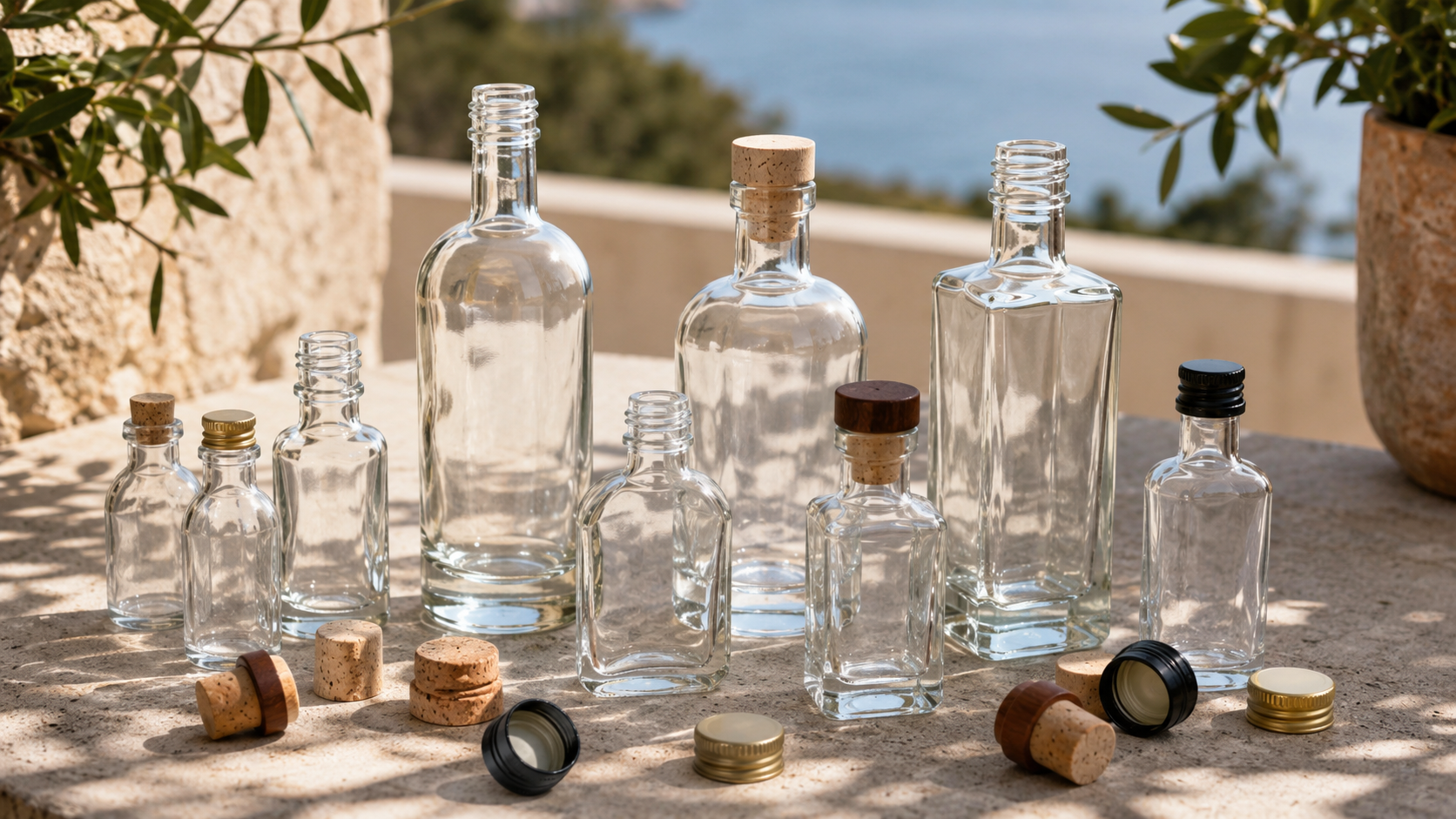
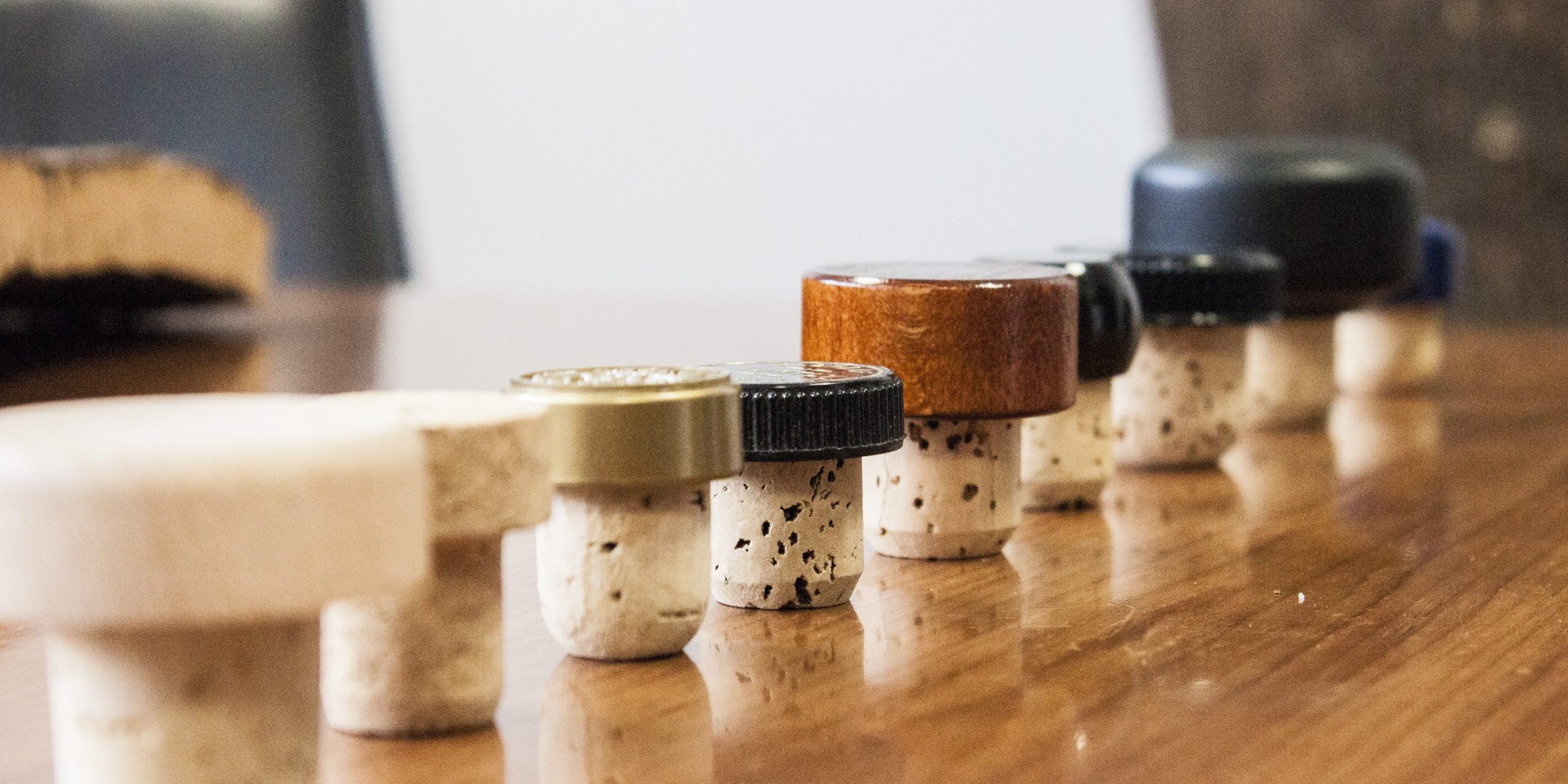
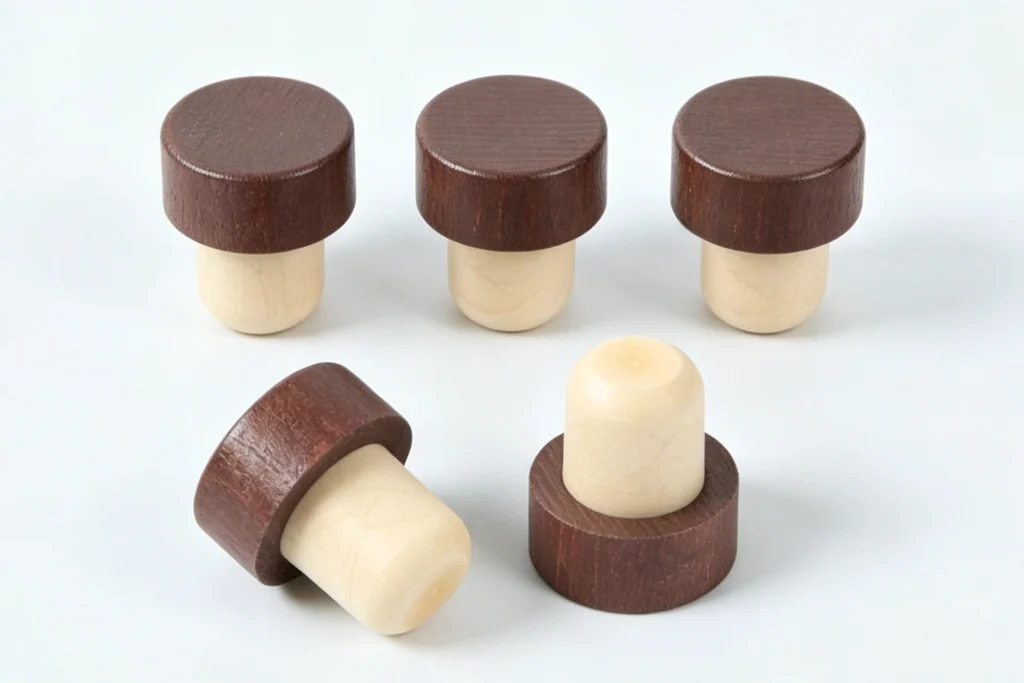
A synthetic cork stopper is a closure made from engineered polymer, composite, or synthetic cork-like material. In spirits packaging, the most common format is a bar-top stopper, also called a T-top stopper. This closure has a visible cap head and a lower shank that inserts into the bottle neck.
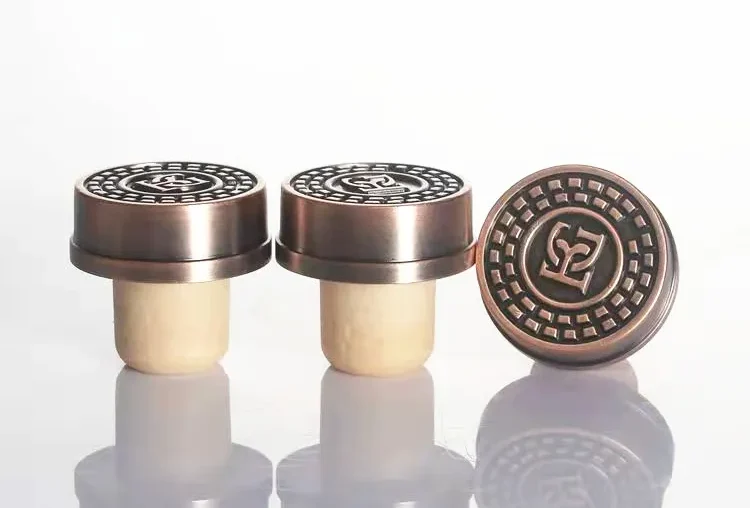
The cap head is the part consumers see and touch. It may use a plastic, wood-look, metal-look, glass-look, composite, or custom decorative surface. The shank is the insert portion that enters the bottle neck. Its diameter, length, compression behavior, and contact area affect stopper fit, sealing confidence, and pull-out feel.
For broader stopper selection, buyers often compare synthetic cork with synthetic bar-top stoppers, natural cork shanks, plastic T-top closures, glass stoppers, metal stoppers, and other closure systems. The right choice depends on bottle neck dimensions, category expectations, brand image, filling method, export needs, and target price point.
Why Appearance and Fit Must Be Evaluated Together
Appearance affects brand perception. Fit affects function. A successful spirits closure needs both.
A premium cap shape can make a bottle look more expensive, but visual appeal alone is not enough. If the stopper shank does not match the bottle neck inner diameter, the package may feel unreliable. A secure stopper can also fail visually if the cap is too wide, too narrow, too tall, or poorly matched to the bottle shoulder.
Synthetic cork appearance and fit should be considered as one decision because the stopper connects visual identity with sealing performance. The best closure should look intentional, sit evenly, feel comfortable to open, and support stable filling-line results.
This is especially important when the bottle, closure, label, capsule, and carton are sourced from different partners. A closure that looks attractive on its own may feel wrong once it is paired with the actual bottle. Buyers developing a complete custom spirits package can coordinate bottle shape, neck finish, decoration, and stopper direction through integrated spirits bottle packaging planning.
Synthetic Cork Appearance: What Buyers Should Evaluate
Synthetic cork appearance includes all visible and tactile features of the stopper. These details influence how customers perceive quality before they open the bottle.
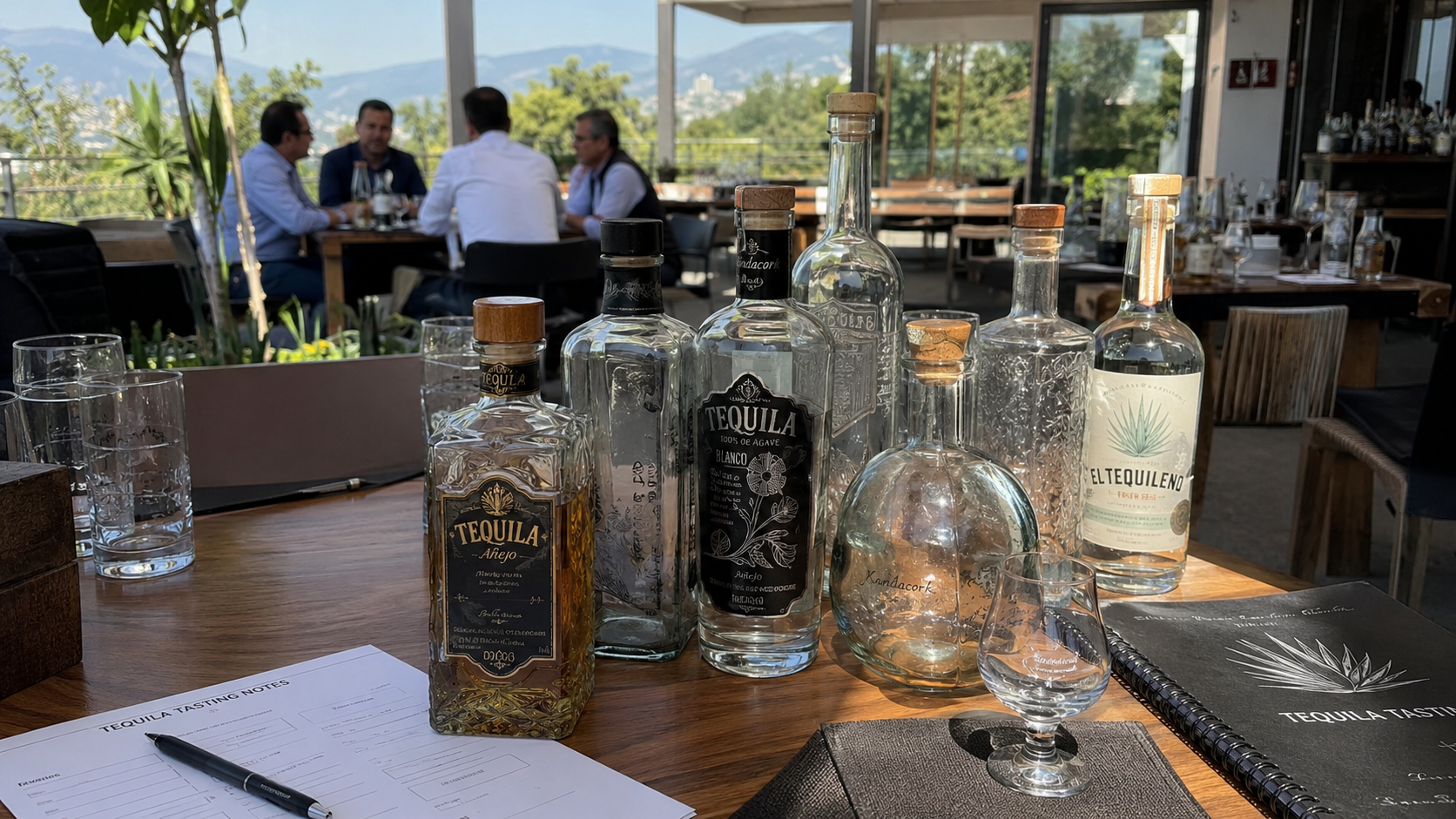
Important appearance factors include cap shape, cap height, cap diameter, surface finish, texture, color, logo decoration, top-view design, side-view balance, and compatibility with the bottle label or capsule. A matte black stopper may suit a modern vodka or gin bottle. A wood-look cap may fit whisky, rum, brandy, or craft spirits with a heritage feel. A metallic or high-gloss finish may work for luxury tequila, limited editions, gifting products, or nightlife-oriented packaging.
Color consistency is especially important for multi-SKU spirits lines. If one batch of stoppers appears slightly different from another, the full product range can look inconsistent on the shelf. To prevent this, brands should review color standards, approval samples, coating tolerances, and production repeatability. Kandacork Closures supports this type of visual control through custom closure colors and finishes for spirits packaging.
Logo decoration also influences premium value. Printing, hot foil stamping, embossing, debossing, molded marks, and side decoration can all turn a standard closure into a branded packaging component. The decoration method should match the cap surface, artwork detail, order quantity, and target retail positioning. For projects that need a coordinated visual system across cap tops, sidewalls, labels, cartons, and capsules, dedicated spirits packaging decoration support can help keep the design consistent from concept to production.
Synthetic Cork Fit: What Buyers Should Evaluate
Synthetic cork fit refers to how the stopper shank interacts with the inner wall of the bottle neck. The key measurement is the bottle neck inner diameter, often called the bore.
Fit is affected by bottle neck inner diameter, shank diameter, shank length, insertion depth, pull-out force, compression behavior, neck depth, and glass bottle tolerance. The stopper must be firm enough to seal and remain stable, but not so tight that it creates a difficult opening experience.
Many closure problems happen when buyers select a stopper by cap appearance before checking the bottle neck. The outside of the bottle neck may look standard, but the inner bore can vary by bottle supplier, mold, production batch, or region. A proper cap and neck compatibility review helps confirm whether the chosen cap head, shank size, bottle bore, neck depth, capsule, and filling-line conditions can work together before bulk production.
Appearance and Fit Comparison Table
| Evaluation Area | What to Check | Why It Matters |
|---|---|---|
| Cap shape | Width, height, top profile, side profile | Supports shelf appeal and bottle proportion |
| Surface finish | Matte, gloss, wood-look, metallic, textured | Influences premium feel and brand style |
| Logo decoration | Printing, embossing, debossing, hot foil, molded mark | Improves brand recognition and retail identity |
| Bottle neck | Inner diameter, neck depth, glass tolerance | Determines whether the shank can fit correctly |
| Shank size | Diameter, length, compression behavior | Affects sealing confidence and pull-out feel |
| Insertion depth | How far the stopper enters the neck | Controls seating height and closure stability |
| Capsule compatibility | Cap width, cap height, tamper band clearance | Prevents interference with secondary packaging |
| Sample testing | Actual bottle, actual stopper, decorated sample | Reduces production risk before bulk orders |
This comparison shows why synthetic cork appearance and fit cannot be separated. A stopper must satisfy both design and technical requirements before production approval.
Typical Fit Factors Buyers Should Confirm
A reliable synthetic cork stopper fit depends on more than one size measurement. Buyers should review the complete bottle-and-closure interface before placing a bulk order.
| Fit Factor | Buyer Should Confirm | Practical Reason |
|---|---|---|
| Bottle bore | Actual inner diameter from real bottle samples | Prevents loose or overly tight fit |
| Neck depth | Available internal depth for the shank | Helps control insertion and seating height |
| Shank diameter | Recommended size based on bottle bore and compression | Supports sealing contact and pull-out feel |
| Shank length | Suitable length for the bottle neck structure | Helps prevent instability or over-insertion |
| Pull-out feel | Firm but comfortable manual opening | Improves consumer experience |
| Seating height | Consistent cap position after insertion | Supports clean shelf appearance |
| Closure tolerance | Stable performance across several bottles | Reduces risk caused by glass variation |
| Filling-line compatibility | Insertion method, speed, and handling conditions | Supports smoother production |
These fit factors are especially important for custom synthetic cork stoppers for liquor packaging, premium spirits launches, and private-label programs where repeatability matters.
Bottle Neck Inner Diameter Comes First
The bottle neck inner diameter should be confirmed before selecting the stopper shank. This is one of the most important technical steps in spirits closure sourcing.
Some buyers only provide bottle volume, bottle finish style, or a product photo. These details are helpful, but they are not enough to confirm fit. A 700 ml or 750 ml spirits bottle can have different neck bore dimensions depending on the bottle mold and supplier.
The inner diameter controls how tightly the shank contacts the neck wall. If the shank is too small, the stopper may feel loose or unstable. If the shank is too large, the stopper may require too much force to insert or remove.
For accurate evaluation, buyers should provide the bottle drawing, neck inner diameter, neck depth, target closure height, filling method, and physical sample bottles if available. Brands developing new custom glass can also align closure requirements early with an integrated liquor packaging manufacturer so the glass bottle, neck finish, stopper, and decoration system are reviewed together.
How to Review Cap Proportion
Cap proportion affects how the finished bottle looks on shelf, in photography, and in the consumer’s hand. A stopper should look balanced with the bottle shoulder, neck length, label area, and overall bottle weight.
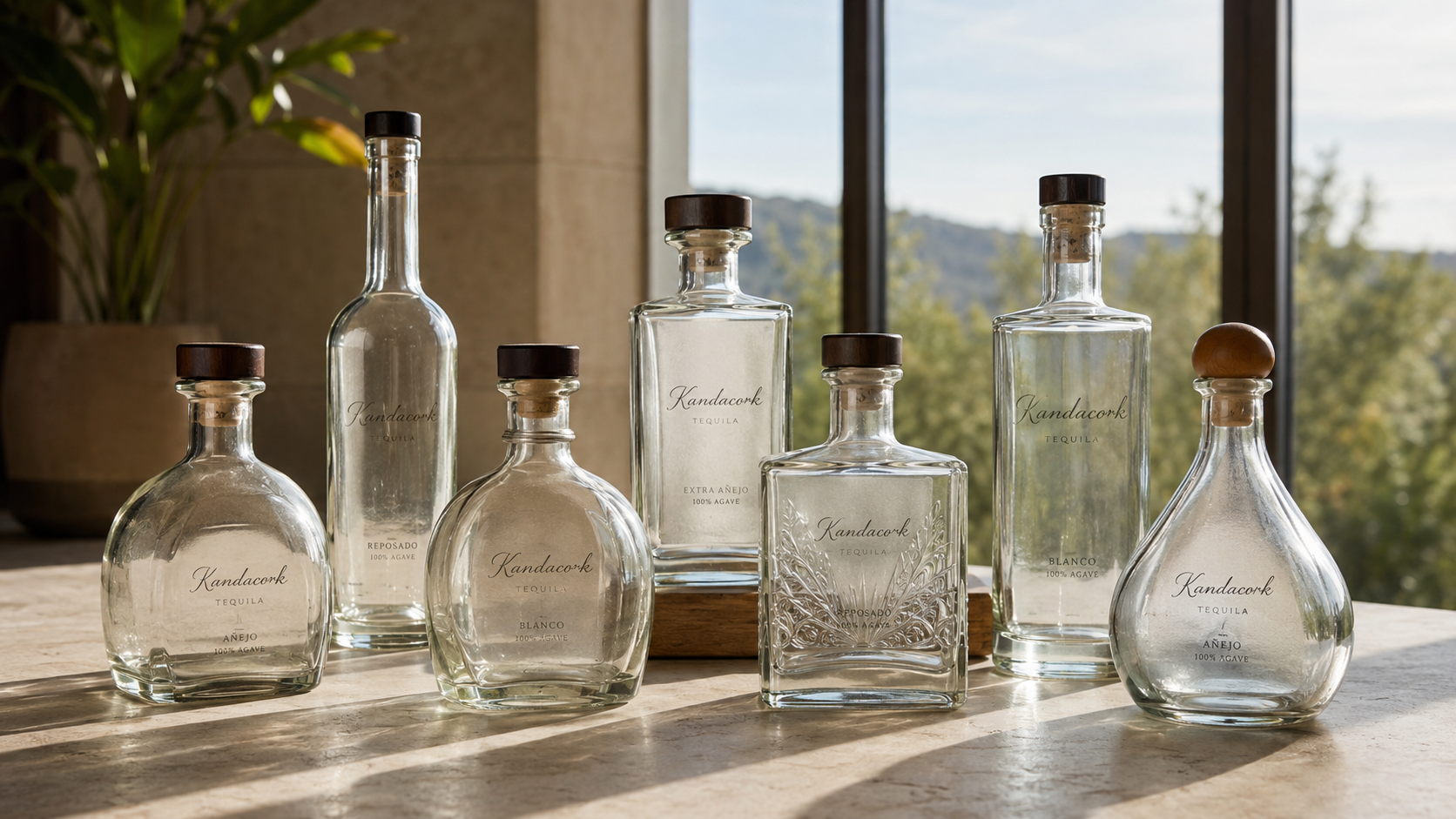
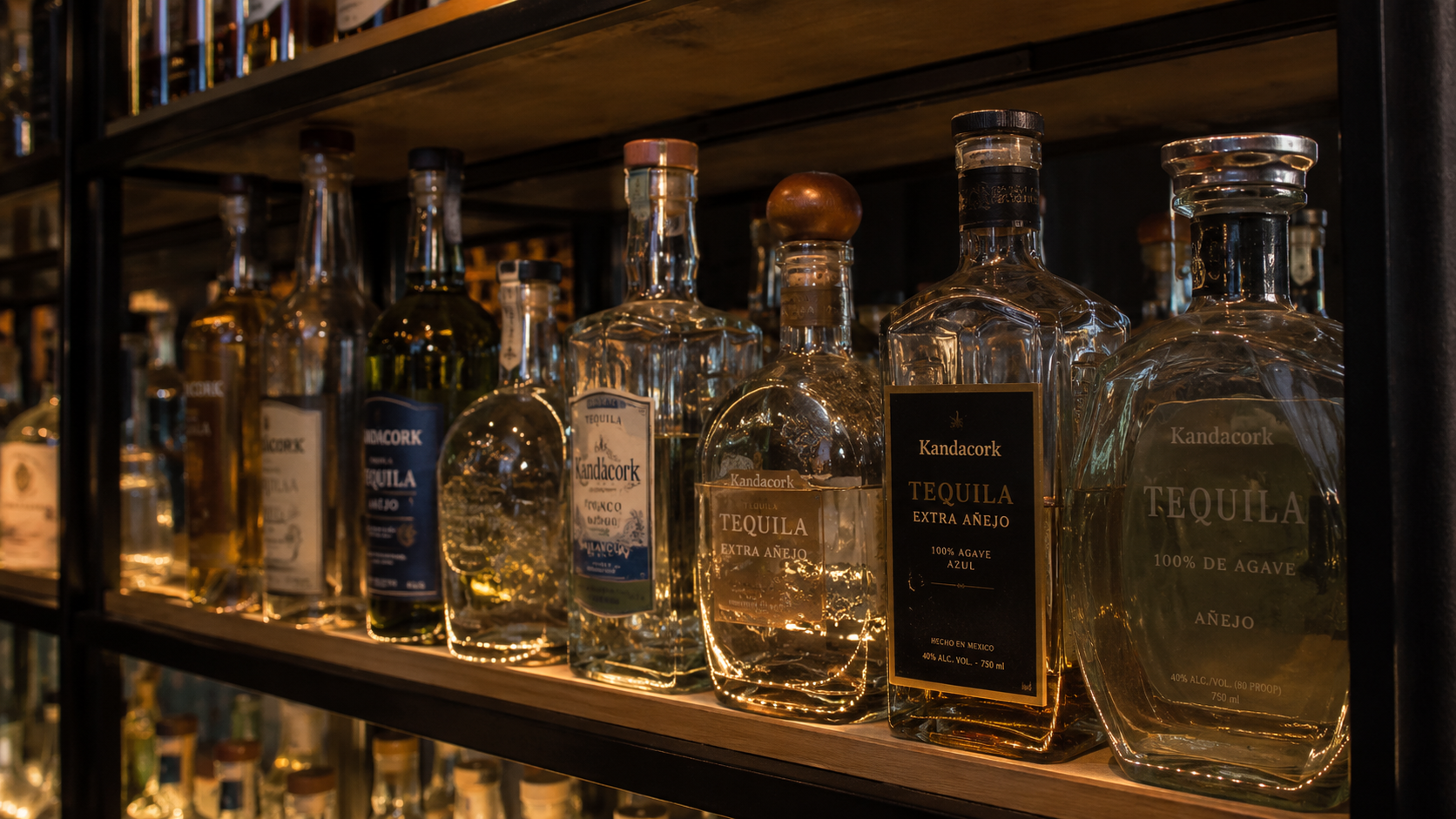
A heavy-base whisky bottle may need a wider or taller cap to match its premium weight. A slim gin bottle may look better with a refined, minimalist cap. A rum bottle with a vintage label may suit a warmer texture or wood-look finish. A tequila bottle may need a bold cap that supports gifting and bar display.
The top surface should also be reviewed. If the brand wants a logo on the cap top, the surface needs enough flat area for clean decoration. If the brand wants side decoration, the cap sidewall must support the selected process. Kandacork Closures develops sidewall design options for closure projects where grip, texture, logo placement, or wraparound details are part of the brand experience.
Common Mistakes When Choosing Synthetic Cork Stoppers
Many packaging issues can be avoided by reviewing the complete bottle-and-closure system early.
A common mistake is choosing the cap design before checking the bottle neck inner diameter. This can lead to a stopper that looks attractive but does not fit securely.
Another mistake is approving decoration from digital mockups only. Logo artwork can look sharp on a screen but may appear too small, shallow, blurred, or misaligned on a real cap surface.
Some buyers test only one bottle and one stopper. This may not reveal tolerance variation. A better approach is to test multiple bottles and multiple stopper samples.
Capsule compatibility is also easy to overlook. A cap that is too wide or too tall may interfere with shrink sleeves, tamper-evident bands, cartons, or dividers.
Color approval can also create problems. Digital colors are not reliable for final production. Physical color samples should be reviewed under realistic lighting.
Synthetic Cork Appearance and Fit Review Before Bulk Production
Bulk production should begin only after the stopper has been reviewed for both appearance and fit. A complete approval process should include dimensional review, undecorated fit samples, decorated samples, packaging compatibility checks, and written production specifications.
Buyers should confirm the cap material, cap color, surface finish, logo position, decoration method, shank size, shank length, packing method, and order tolerance before mass production. This is especially important for premium spirits bottle closure compatibility, export orders, and multi-SKU product lines.
A structured review helps prevent common problems such as inconsistent closure height, poor logo clarity, unstable fit, color mismatch, or capsule interference. It also gives the brand a clearer standard for future repeat orders.
Synthetic Cork Fit Testing Checklist
Fit testing helps confirm whether the stopper performs properly before bulk production.
Check the bottle neck inner diameter and compare it with the recommended shank diameter. Confirm the measurement from real bottles, not only from a catalog.
Test insertion by placing the stopper into the bottle under realistic conditions. The stopper should enter smoothly and seat evenly.
Review seating height from the front, side, and top. The cap should not lean, tilt, or sit at inconsistent heights.
Test pull-out feel by opening the bottle by hand. The resistance should feel firm and controlled, not loose or excessively tight.
Perform a leak and handling review based on the product’s expected filling, storage, shipping, and sales conditions. Kandacork Closures can support closure sealing and leakage testing for projects where export transit, high-value products, or strict quality expectations make fit verification especially important.
Check compatibility with capsules, shrink sleeves, tamper-evident bands, gift boxes, and shipping dividers. Repeat the test with multiple bottles and multiple stoppers to identify possible tolerance variation.
Synthetic Cork Appearance Testing Checklist
Appearance testing helps confirm whether the stopper supports the brand’s visual identity.
Review the cap color with the actual bottle and label. The stopper should match or intentionally contrast with the brand palette.
Inspect the surface finish under normal retail light, studio photography light, and bar display conditions.
Check logo clarity, alignment, depth, and position. Decorative details should appear clean and repeatable.
Review the top-view appearance. This matters for ecommerce photography, unboxing videos, and bar-top presentation.
Review the side-view appearance. The cap should sit evenly and align visually with the bottle neck and shoulder.
Test the touch feel. A stopper can look premium but feel too light, slippery, rough, or mismatched for the product.
Confirm batch consistency expectations before production. This is important for repeat orders and multi-market launches.
What to Send When Requesting a Synthetic Cork Quote
A clear quote request helps suppliers recommend the right synthetic cork appearance and fit faster.
Send the bottle drawing if available. The drawing should show the neck inner diameter, neck depth, and finish details.
Send physical bottle samples if possible. Real samples help confirm how the shank seats in the neck.
Provide the target cap style, such as matte black, wood-look, gloss, metallic, textured, or custom color.
Share logo artwork in a production-friendly format. Vector files are usually better for decoration review.
Confirm the preferred decoration method if known. Options may include printing, hot foil stamping, embossing, debossing, or molded branding.
Provide the target order quantity, sample quantity, destination market, launch schedule, and packaging requirements.
If a capsule, shrink sleeve, or tamper band will be used, provide those details early. The stopper must work with the complete packaging system.
When Synthetic Cork Is a Good Choice
Synthetic cork is a good choice when a spirits brand needs consistent sizing, repeatable appearance, custom branding, scalable production, and controlled stopper fit across repeat orders.
It is especially suitable for private-label spirits, multi-SKU product lines, export programs, and retail-ready packaging with consistent shelf presentation. Synthetic cork stoppers can also work well when brands want a specific color, logo decoration, matte finish, gloss finish, wood-look effect, metallic appearance, or modern cap design that may be harder to control with natural materials.
For brands that prioritize lightweight packaging, recycled glass use, or material-efficient bottle systems, closure selection should be reviewed with the full glass package. North American packaging industry guidance from the Glass Packaging Institute highlights the environmental value of glass recycling, which makes bottle and closure compatibility part of a broader packaging responsibility conversation.
When Extra Testing Is Needed
Extra testing is needed when the bottle neck is non-standard, the glass tolerance is uncertain, the cap is oversized, the product uses a capsule or shrink sleeve, or the closure must pass through high-speed filling and sealing operations.
Additional testing is also useful for premium packaging projects where the stopper must align with cartons, display boxes, gift sets, bar presentation, or ecommerce photography.
Brands should also request more detailed testing when working with unusual bottle shapes, very short necks, deep necks, heavy-base bottles, high-value limited editions, or destination markets with specific packaging documentation requirements.
For projects that involve custom bottle development, post-consumer recycled content, or glass weight reduction, a specialized glass packaging supplier can help connect closure requirements with bottle engineering, decoration choices, and packing methods.
Natural Cork Appearance vs Synthetic Cork Appearance
Natural cork offers organic texture, visible grain, and natural variation. Some spirits brands use this look to communicate tradition, craft, or heritage.
Synthetic cork offers controlled appearance, repeatable color, consistent dimensions, and flexible decoration. It can support modern, minimalist, luxury, or private-label packaging programs where visual consistency is important.
The better choice depends on the product story, price point, production process, and distribution plan. A small-batch craft spirit may prefer a natural look. A growing brand with multiple SKUs and export markets may prefer the consistency of synthetic cork.
Synthetic cork appearance and fit are especially useful when a brand wants predictable visual quality and practical bottle compatibility across repeated production runs.
Food-Contact and Compliance Considerations
Spirits bottle closures should be reviewed according to the intended application and destination market. Packaging buyers should consider food-contact material requirements, supplier documentation, migration testing expectations, and quality control standards.
In the United States, the U.S. Food and Drug Administration provides information on packaging and food contact substances. In the European Union, the European Commission food contact materials framework sets out requirements for materials intended to come into contact with food. EFSA also explains the role of scientific assessment for food contact materials used in packaging and related applications.
For spirits brands, compliance review should not be treated as a final afterthought. Closure material, decorative finish, intended use, alcohol contact conditions, destination market, and supplier documentation should be discussed before bulk ordering.
Why Quality Systems Matter
Synthetic cork appearance and fit are easier to control when the buyer and supplier agree on measurable specifications. These may include approved drawings, color standards, shank dimensions, cap dimensions, decoration artwork, packing method, sampling rules, and tolerance ranges.
International standards bodies such as ISO provide globally recognized approaches for managing standards and consistency across products, processes, services, and materials. For a spirits closure project, the practical lesson is straightforward: approval should be based on documented specifications, not only visual preference.
A clear specification helps both sides control repeat orders. It also supports better communication between brand owners, bottle factories, closure suppliers, decorators, filling lines, quality teams, and importers.
Why the Glass-Closure Interface Matters
The contact area between the bottle neck and stopper shank is central to closure performance. This area affects seating stability, sealing confidence, and opening feel.
In packaging research and beverage closure testing, the glass-closure interface is often discussed because small dimensional differences can influence performance. Organizations such as the International Association of Packaging Research Institutes focus on packaging research, food-packaging interaction, preservation, safety, and packaging performance, which reflects why packaging decisions should be treated as systems rather than isolated parts.
For spirits bottles, the same practical principle applies. The inner bore, neck depth, shank diameter, and compression behavior must work together. This is why buyers should avoid choosing stoppers from product images alone. Synthetic cork appearance and fit should be confirmed through physical samples, bottle testing, and production specification review.
Recommended Buying Process
Start by defining the bottle, spirit category, retail positioning, and destination market. A luxury whisky, modern gin, private-label vodka, and craft rum may all require different closure styles.
Confirm the bottle neck dimensions. The inner diameter and neck depth are essential for fit recommendation.
Choose the cap direction based on brand identity. Review shape, color, texture, finish, and decoration needs.
Match the shank to the bottle. Review shank diameter, shank length, insertion depth, and pull-out feel.
Request samples before bulk approval. Test undecorated samples for fit and decorated samples for final appearance.
Review the complete packaging system. Include labels, capsules, sleeves, cartons, gift boxes, and shipping dividers.
Approve production specifications in writing. Confirm drawings, artwork, colors, tolerances, packaging method, order quantity, and delivery requirements.
FAQ
How do you know if a synthetic cork stopper fits correctly?
A synthetic cork stopper fits correctly when the shank inserts smoothly, sits evenly, resists looseness, and opens with firm but comfortable pull-out force.
The cap should remain level after insertion. The stopper should not wobble, tilt, or require excessive force to remove. Buyers should test the stopper with the actual bottle, not only with catalog dimensions.
What bottle measurement is most important for stopper fit?
The most important measurement is the bottle neck inner diameter because it determines how the stopper shank contacts the inside of the neck.
Neck depth is also important because it affects insertion depth and seating height. A bottle drawing and physical bottle samples provide the best basis for stopper recommendation.
Can synthetic cork stoppers look premium?
Synthetic cork stoppers can look premium when the cap material, surface finish, color, logo decoration, and bottle proportion are designed as one complete packaging system.
A matte, wood-look, metallic, textured, or custom-colored cap can support different brand positions. Decoration methods such as embossing, debossing, or hot foil stamping can further improve perceived value.
Should buyers approve synthetic cork stoppers from photos only?
Buyers should not approve synthetic cork stoppers from photos only because photos cannot confirm fit, touch feel, pull-out resistance, color accuracy, or bottle compatibility.
A stopper that looks correct in a rendering may perform differently with the actual bottle neck, label, capsule, carton, and filling process.
What causes a synthetic cork stopper to feel too loose?
A synthetic cork stopper may feel too loose when the shank diameter is too small for the bottle neck inner diameter.
Loose fit can also result from bottle tolerance variation, incorrect shank material, insufficient insertion depth, or poor sample matching. The best solution is to measure the bottle bore, test alternative shank sizes, and confirm performance with several real bottles.
What causes a synthetic cork stopper to feel too tight?
A synthetic cork stopper may feel too tight when the shank diameter is too large, the neck bore is smaller than expected, or the shank material creates too much resistance.
Excessive tightness can make the bottle difficult to open. Fit should feel secure but comfortable because pull-out feel is part of the consumer experience.
Can synthetic cork stoppers be customized with a logo?
Synthetic cork stoppers can often be customized with a logo through printing, hot foil stamping, embossing, debossing, molded branding, or side decoration.
The best method depends on cap material, surface shape, logo complexity, and order quantity. Simple, clear artwork usually performs better than very fine details on small cap surfaces.
What should I send before requesting a quote?
Send the bottle drawing, neck inner diameter, neck depth, bottle samples if available, cap style preference, logo artwork, decoration method, order quantity, destination market, and launch schedule.
These details help the supplier recommend synthetic cork appearance and fit more accurately and reduce the risk of production changes later.
Final Recommendation
The best synthetic cork stopper is selected by reviewing appearance, fit, compliance, and production consistency together. A good stopper should look premium, fit the bottle neck securely, open comfortably, support logo decoration, and remain consistent across repeat orders.
For spirits brands developing whisky, vodka, gin, rum, tequila, brandy, liqueur, or private-label packaging, synthetic cork appearance and fit should be evaluated before bulk production. The most reliable process is to provide bottle dimensions, request samples, test the stopper with the actual bottle, review decoration quality, and confirm production specifications.
Kandacork Closures can help buyers review bottle compatibility, stopper design, decoration options, sample requirements, and production details so the final closure supports both brand presentation and practical bottling performance.