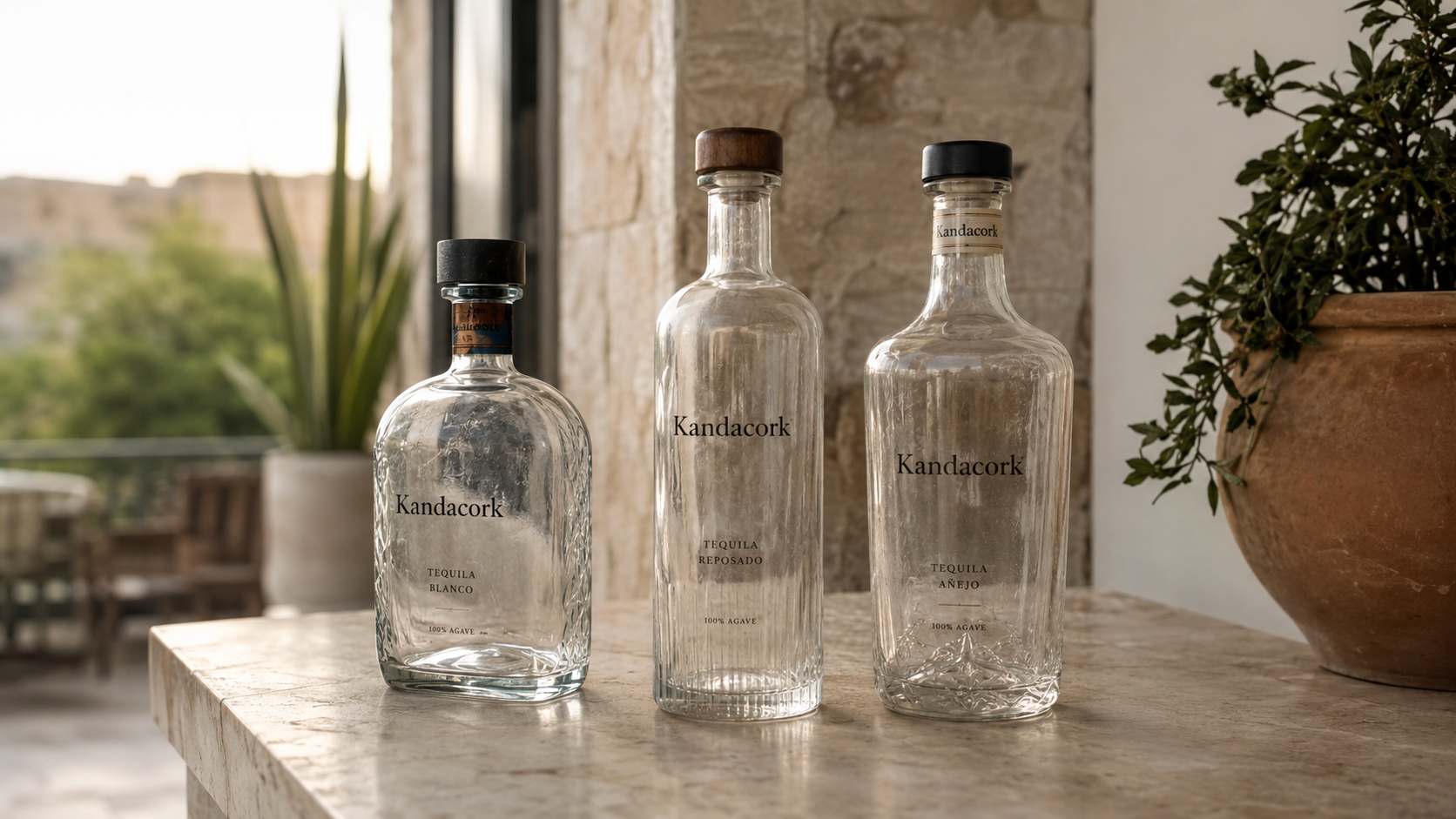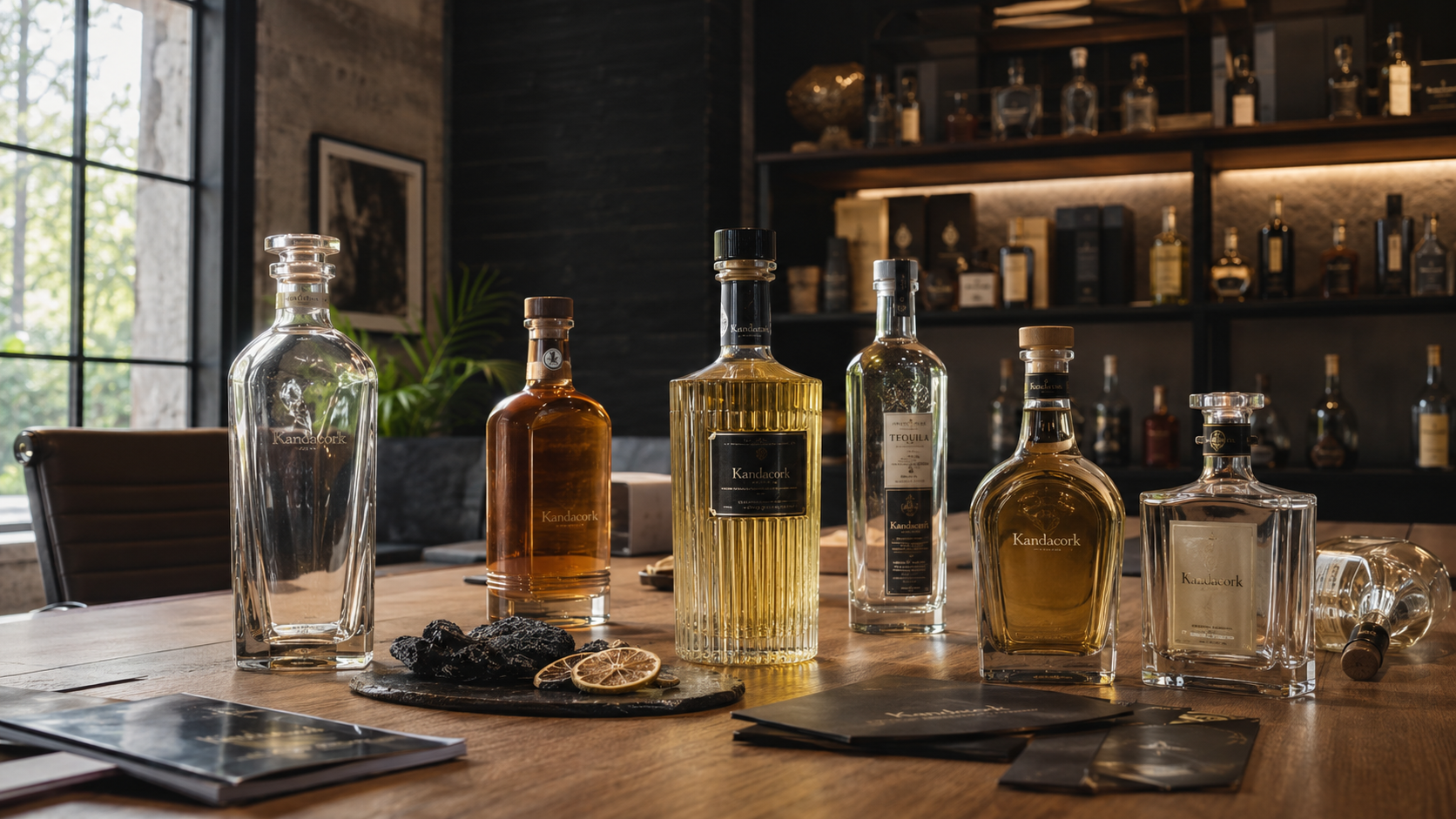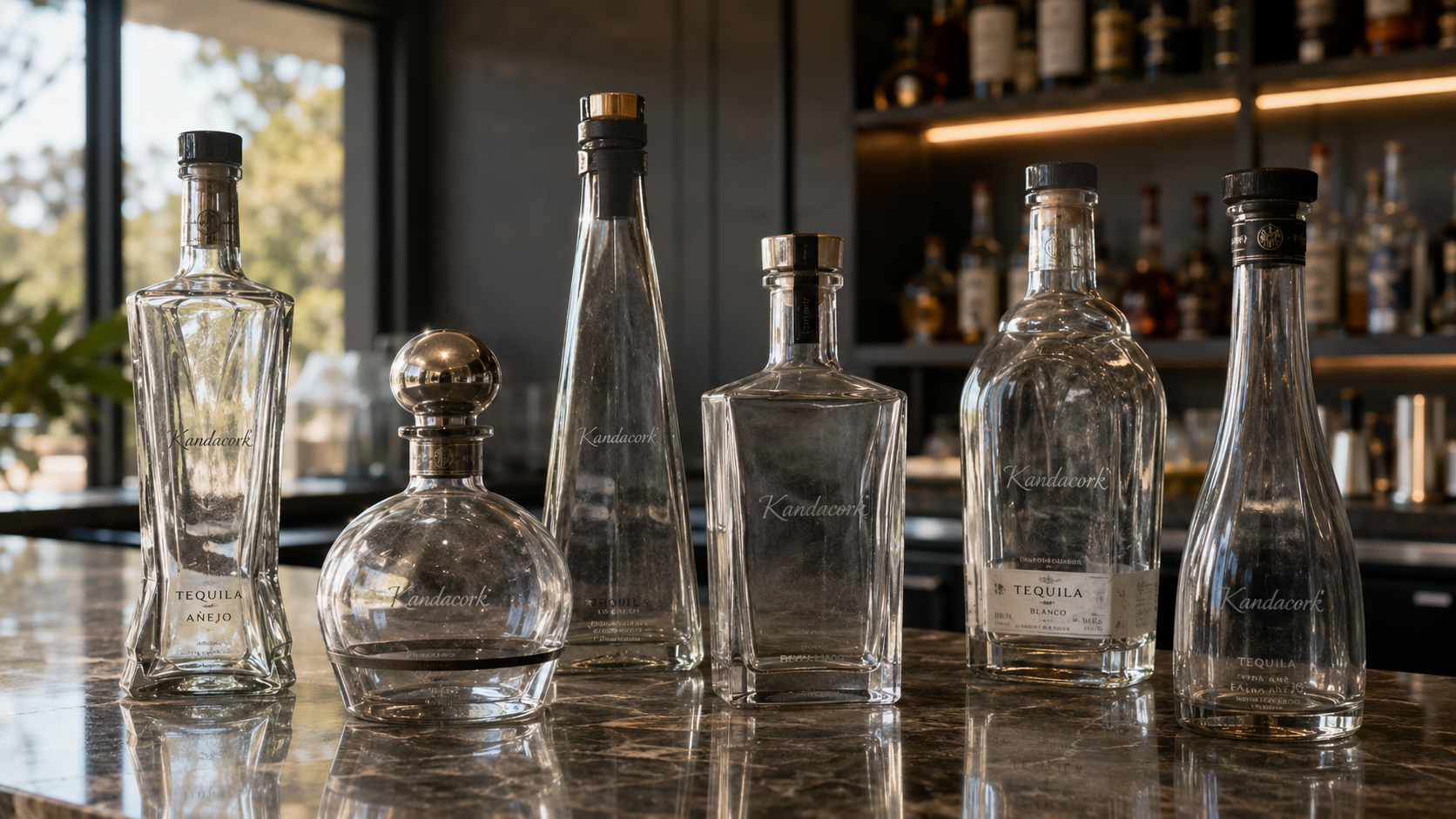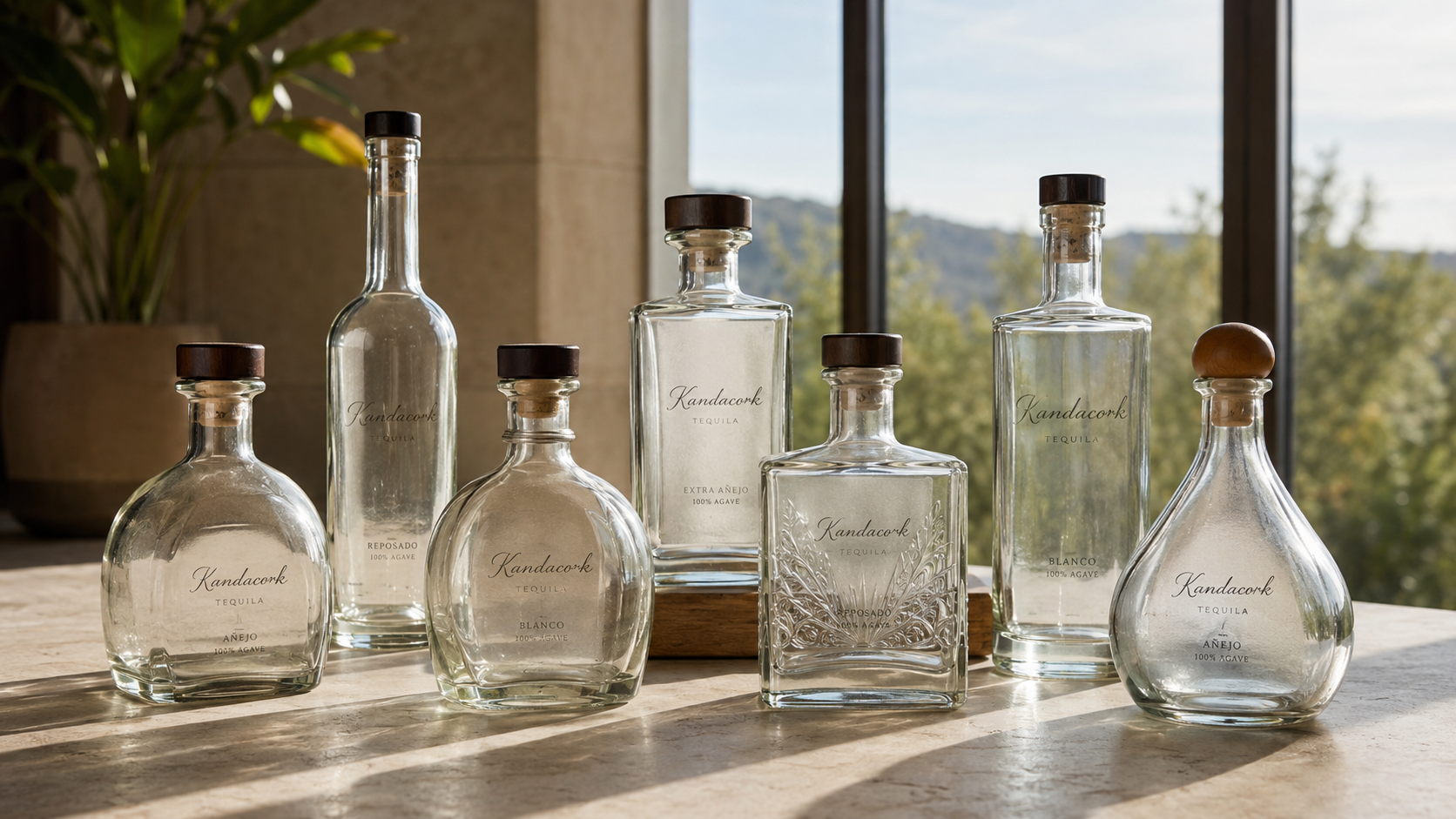
Choosing the wrong stopper can create real packaging problems: loose fit, difficult opening, inconsistent shelf appearance, decoration mismatch, extra sampling costs, or a closure that does not match the bottle’s retail position. For spirits brands comparing metal stoppers vs wooden stoppers, the best choice should balance brand image, bottle neck fit, shank material, decoration method, production efficiency, and bulk order reliability.
A stopper is not just a decorative top. It is a functional spirits bottle closure that affects sealing, resealing, hand feel, shelf appeal, and customer perception. For whisky, rum, gin, tequila, vodka, brandy, liqueur, and private-label spirits, the closure often becomes part of the product’s premium identity.
Kandacork Closures helps spirits brands, distilleries, bottlers, importers, and packaging buyers compare stopper materials based on both appearance and technical performance. The goal is to create a closure that looks premium, fits the bottle neck correctly, supports smooth production, and strengthens the brand story.
Quick Answer: Metal Stoppers or Wooden Stoppers?
Metal stoppers are best for spirits brands that want luxury weight, metallic finishing, detailed logo decoration, and high-impact shelf presence. Wooden stoppers are best for brands that want natural texture, craft appeal, warmth, and heritage positioning. For sealing performance, the shank material and bottle neck fit usually matter more than the visible stopper head.
Both options can be premium when designed correctly. The right choice depends on the spirit category, bottle shape, retail positioning, target consumer, decoration method, filling process, production scale, and packaging budget.
Best Choice at a Glance
| Buyer Goal | Recommended Stopper |
|---|---|
| Luxury weight and shine | Metal stopper |
| Natural craft image | Wooden stopper |
| Detailed 3D logo or crest | Metal stopper |
| Barrel-aged heritage look | Wooden stopper |
| Premium gift-box release | Metal or wood-and-metal stopper |
| Cost-controlled premium appearance | Wooden stopper or aluminium stopper |
| Modern minimalist bottle | Aluminium, stainless steel, or matte metal stopper |
| Warm tactile opening feel | Wooden stopper |
| Collectible limited edition | Zinc alloy metal stopper |
| Small-batch artisanal identity | Wooden stopper |
| Premium private-label spirits | Metal, wood, or hybrid stopper based on target price |
This table helps packaging teams narrow the options before requesting samples. However, the final stopper should always be confirmed with the actual bottle neck, shank structure, decoration method, and production requirements.
What Are Metal Stoppers?
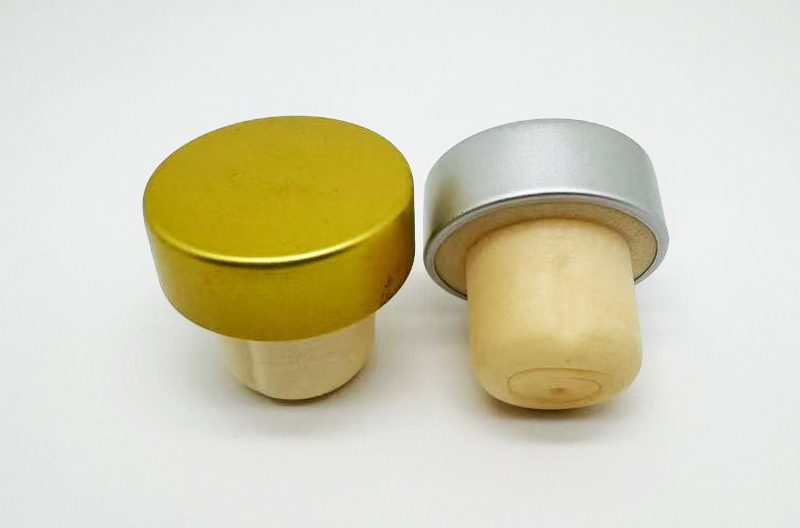
Metal stoppers are bar-top closures made with a metal head and a lower shank that fits into the bottle neck. The visible head creates the premium impression, while the shank provides insertion, grip, resealing, and pull-out performance.
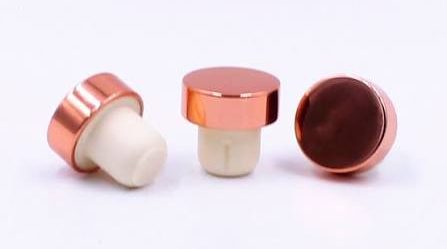
Common metal stopper head materials include zinc alloy, Zamak or Zamac, aluminium, and stainless steel. Zinc alloy and Zamak are often selected for luxury spirits because they provide weight, sculpted detail, and strong plating performance. Aluminium is lighter and suitable for modern premium packaging. Stainless steel can support a clean, durable, minimalist look.
For brands that need a stronger luxury signal, custom metal stoppers can support embossed logos, engraved crests, plated surfaces, antique finishes, and three-dimensional stopper heads. They are often used for whisky, tequila, vodka, rum, brandy, liqueur, collector editions, and gift-box releases.
What Are Wooden Stoppers?
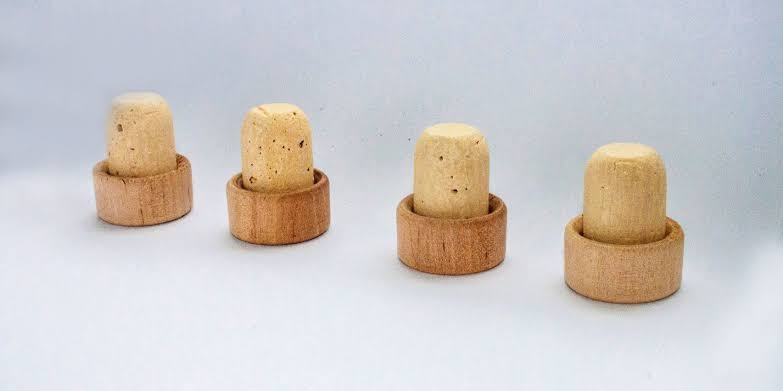
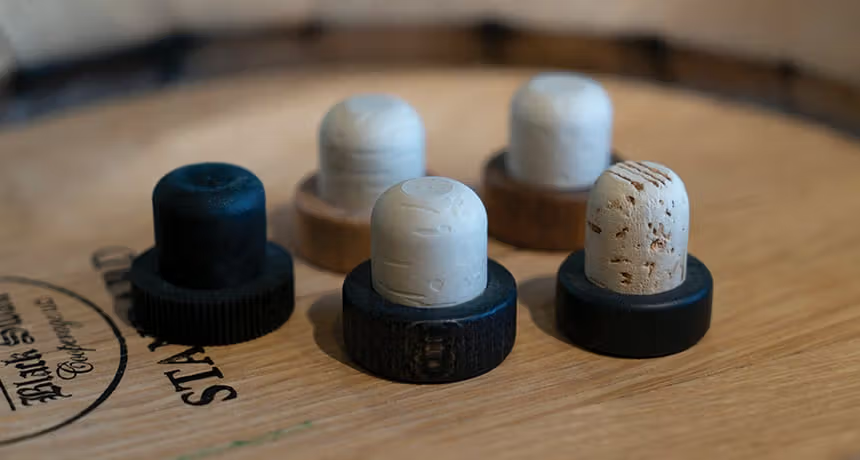
Wooden stoppers are bar-top closures made with a wooden head and a cork, synthetic, or hybrid shank. The wooden head creates the visible and tactile impression, while the shank controls bottle neck fit and resealing performance.
Wooden stoppers are widely used in spirits packaging because they communicate warmth, authenticity, craft quality, and natural character. They are especially suitable for aged whisky, bourbon-style spirits, dark rum, spiced rum, botanical gin, brandy, liqueur, artisanal tequila, and small-batch spirits.
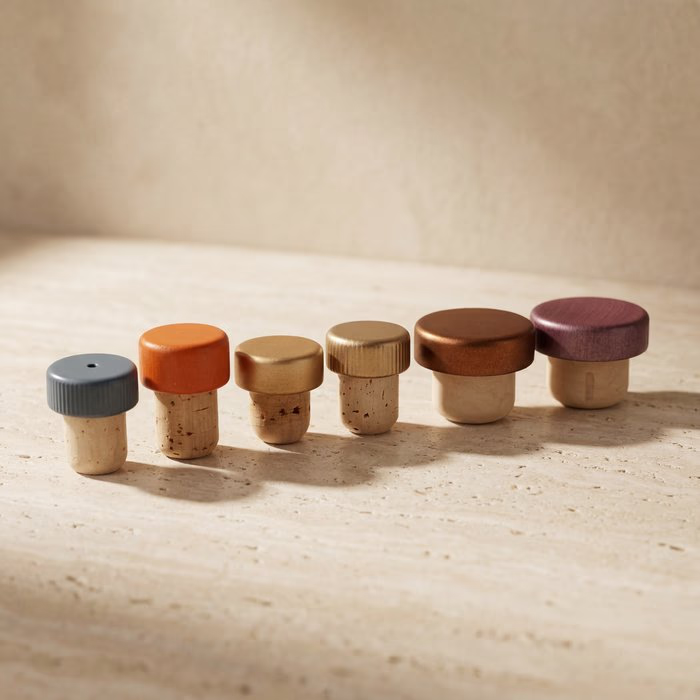
For brands that want a more natural or heritage-focused closure, custom wooden stoppers can be developed with stained finishes, laser engraving, printed branding, varnished surfaces, metal inserts, cork shanks, or synthetic shanks.
Metal Stoppers vs Wooden Stoppers: Side-by-Side Comparison
| Factor | Metal Stoppers | Wooden Stoppers |
|---|---|---|
| Brand image | Luxury, modern, bold, premium | Natural, warm, craft, heritage |
| Hand feel | Heavier, cooler, solid | Warmer, lighter, tactile |
| Best spirits | Tequila, vodka, luxury whisky, premium rum, gift packs | Whisky, rum, gin, brandy, craft spirits |
| Logo options | Embossing, debossing, engraving, plating, 3D molding | Laser engraving, printing, staining, inserts |
| Surface finish | Polished, brushed, matte, plated, antique | Natural grain, stained, painted, varnished |
| Cost level | Medium to high, depending on tooling and finish | Low to medium-high, depending on wood and decoration |
| Key advantage | Strong luxury impact and precise branding | Natural texture and authentic craft appeal |
| Key risk | Weight, plating consistency, mold cost | Wood grain variation, color consistency |
| Sealing factor | Depends on shank and bottle neck fit | Depends on shank and bottle neck fit |
| Best buyer profile | Premium, luxury, collectible, modern brands | Craft, heritage, natural, small-batch brands |
This comparison shows that neither option is universally better. Metal stoppers create a high-end visual statement. Wooden stoppers create warmth and authenticity. Both can perform well when the shank and bottle neck are correctly matched.
Which Stopper Looks More Premium?
Metal and wooden stoppers can both look premium, but they express premium value in different ways.
Metal stoppers suggest luxury, strength, precision, and modern design. A polished, plated, or sculpted metal stopper can make a bottle feel more expensive, especially when paired with thick glass, a heavy base, metallic labels, or a rigid gift box.
Wooden stoppers suggest craft, tradition, nature, and authenticity. A stained wooden stopper on a whisky or rum bottle can reinforce the story of barrel aging, small-batch production, and artisanal quality.
For many premium spirits brands, the strongest option is a hybrid stopper. A wooden stopper with a metal badge, metal collar, or engraved metal insert can combine natural warmth with luxury detail. A metal stopper with textured finishing can also soften the industrial look and create a more distinctive brand experience.
Which Stopper Seals Better?
The sealing performance of metal stoppers vs wooden stoppers depends mainly on the shank, not the visible top material. The stopper head affects appearance and hand feel. The shank affects insertion, compression, grip, resealing, and pull-out force.
Common shank options include natural cork, micro-agglomerated cork, synthetic cork, and synthetic shank systems. Natural cork supports traditional premium positioning. Micro-agglomerated cork offers more consistent structure. Synthetic shanks can provide stable dimensions and predictable production performance.
For projects that need controlled fit and repeatable performance, synthetic cork stoppers can be considered alongside natural cork and micro-agglomerated cork. The final choice should be tested with the real bottle neck before bulk production.
A stopper that looks beautiful but fits poorly may cause leakage risk, loose closure issues, difficult opening, uneven insertion, or inconsistent consumer experience. A well-matched stopper should insert smoothly, hold securely, reopen comfortably, and reseal reliably.
Technical Factors That Affect Stopper Performance
A custom bottle stopper should be reviewed as part of a complete closure system. The head material is only one part of the design. Fit, function, and production stability depend on several technical details.
Bottle neck inner diameter is one of the first details to confirm. Even small tolerance differences can affect insertion force and pull-out feel. A stopper that fits one bottle may not perform the same way on another bottle with a different neck finish.
Shank diameter must be matched to the bottle neck. If the shank is too small, the closure may feel loose. If the shank is too large, the stopper may be difficult to insert or remove.
Insertion depth affects stability and appearance. A shallow fit may reduce grip. An overly deep fit may interfere with the bottle neck, capsule, or final presentation.
Pull-out force affects consumer experience. Premium spirits packaging should feel secure but not difficult to open. The opening feel should match the product’s price point and brand image.
Closure height matters for cartons, gift boxes, display trays, and shipping protection. A tall metal stopper or sculpted custom stopper may require packaging clearance checks.
Surface consistency matters for both materials. Metal stoppers should be checked for plating quality, scratches, coating uniformity, and logo clarity. Wooden stoppers should be checked for grain variation, color matching, varnish quality, engraving accuracy, and moisture stability.
Transport testing is also important. Bottles may face vibration, temperature change, and pressure during shipping. A good stopper should remain secure through normal storage and export conditions.
Which Stopper Is Better for Custom Branding?
Metal stoppers are usually better for detailed logos, premium crests, molded shapes, plated finishes, and collectible designs. They can support embossing, debossing, engraving, laser marking, color filling, matte finishing, gloss finishing, antique effects, and three-dimensional brand icons.
Wooden stoppers are better for natural texture, warm surface effects, engraved branding, and craft-style identity. They can support laser engraving, hot stamping, printing, staining, painting, color coating, and decorative inserts.
If a brand has a complex logo, luxury emblem, shield, monogram, or 3D icon, metal may be the stronger choice. If the brand identity is based on nature, barrels, botanicals, handmade quality, or heritage storytelling, wood may create a more relevant impression.
Brands that also need label design, screen printing, coating, frosting, or premium bottle surface work can align stopper development with bottle decoration and branding so the closure, glass, label, and secondary packaging feel like one complete system.
Which Stopper Is More Cost-Effective?
Cost depends on material, head shape, mold complexity, surface finish, logo method, shank type, assembly process, inspection requirements, and order quantity.
Wooden stoppers can be cost-effective for many premium spirits projects. Standard wooden shapes with engraving, staining, or simple printing can create strong perceived value without the higher tooling cost of complex metal designs.
Metal stoppers may cost more when the project requires zinc alloy, custom molds, plating, polishing, heavy weight, multi-color finishing, or detailed embossing. However, they can also increase perceived value and help a bottle compete in a higher retail segment.
Aluminium stoppers can provide a balanced option. They offer a metallic appearance with lighter weight and efficient production characteristics, making them suitable for modern premium spirits that need both design appeal and cost control.
The most cost-effective stopper is not always the lowest-priced stopper. It is the closure that supports the bottle design, brand positioning, retail value, filling method, and bulk production plan with the lowest risk.
Which Stopper Works Better on the Bottling Line?
Both metal stoppers and wooden stoppers can work well on a bottling line if they are designed correctly. The key is compatibility between the stopper, bottle neck, filling process, packaging method, and shipping conditions.
Buyers should review stopper diameter tolerance, insertion force, pull-out force, shank compression, head height, head width, capper or plugging equipment, capsule compatibility, label clearance, gift box clearance, and carton protection.
A heavy metal stopper may require additional attention to bottle balance, packing orientation, and shipping protection. A wooden stopper may require additional attention to color variation, wood grain, surface coating, moisture control, and logo placement.
Before approving mass production, packaging teams should test real samples under practical conditions. Sample testing helps identify issues before bulk orders, including loose fit, overly tight insertion, off-center decoration, poor plating, unstable wood color, or carton interference.
Packaging Compatibility: Bottle, Closure, Decoration, and Carton
A premium stopper should not be selected separately from the bottle. The best result comes from matching the closure with bottle shape, glass weight, neck finish, label design, gift-box dimensions, and shipping method.
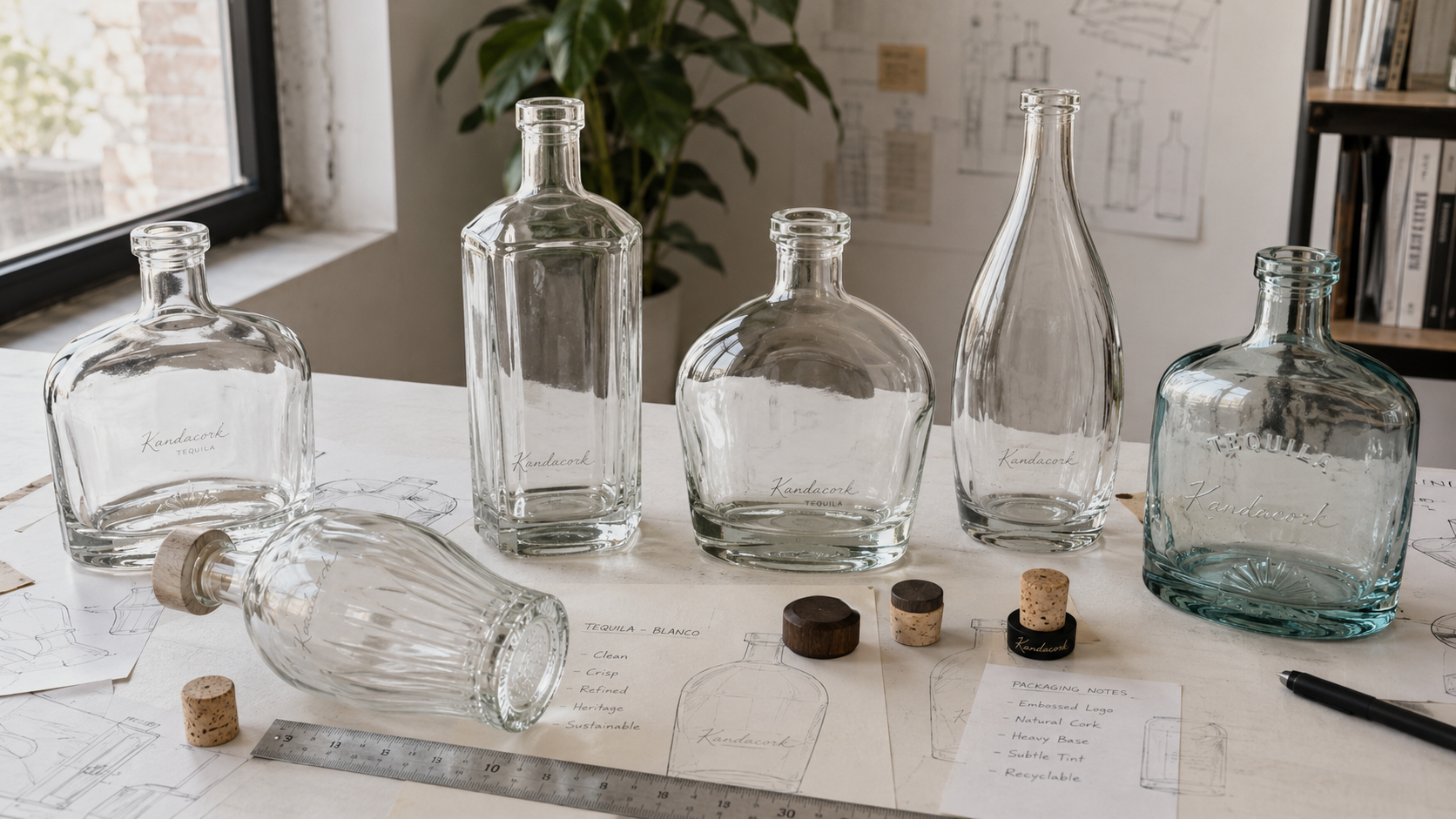
For brands developing new bottle structures, custom spirits bottle programs can help align the bottle form with the desired closure style. A heavy-base whisky bottle may support a more substantial metal stopper, while a craft gin bottle may feel more balanced with a lighter wooden or aluminium stopper.
For buyers who want a single packaging workflow, integrated glass bottle supply can help coordinate bottle sourcing, stopper development, and decoration planning. This reduces the risk of designing a beautiful closure that later conflicts with the bottle neck, label area, carton height, or filling-line setup.
Sustainability also matters in modern spirits packaging. According to the Glass Packaging Institute, glass can be recycled repeatedly without loss of quality or purity, making glass bottle and closure compatibility an important part of long-term packaging planning. Brands that need lighter-weight packaging, recyclable design thinking, or export-ready glass solutions can also consider glass packaging sustainability during early concept development.
Best Stopper Choice by Spirit Category
Whisky and Whiskey
Wooden stoppers are often a strong choice for whisky and whiskey bottles because they match the visual language of barrels, oak aging, craft production, and tradition. Dark stained wood, walnut-tone wood, natural cork shanks, and engraved wooden heads can create a classic premium effect.
Metal stoppers can also work well for luxury whisky, single-barrel editions, collector bottles, and gift-box packaging. A heavy zinc alloy stopper can reinforce the value of a thick glass bottle and create a more memorable opening experience.
Rum
Wooden stoppers are suitable for aged rum, dark rum, spiced rum, vintage rum, and craft rum packaging. Wood supports warmth, depth, natural texture, and heritage storytelling.
Metal stoppers are better when a rum brand wants a modern luxury appearance or a gift-ready image. Gold, bronze, antique brass, or dark metal finishes can work well with premium rum bottles and deep label colors.
Gin
Gin packaging can use either material depending on the brand story. Wooden stoppers work well for botanical gin, craft gin, natural gin, and small-batch gin brands. Light wood, painted wood, or engraved wood can support a fresh and artisanal image.
Metal stoppers are suitable for modern gin, luxury gin, and design-led gin packaging. Aluminium, stainless steel, matte black, or polished silver effects can pair well with clear glass, frosted glass, green glass, or minimalist labels.
Tequila and Mezcal
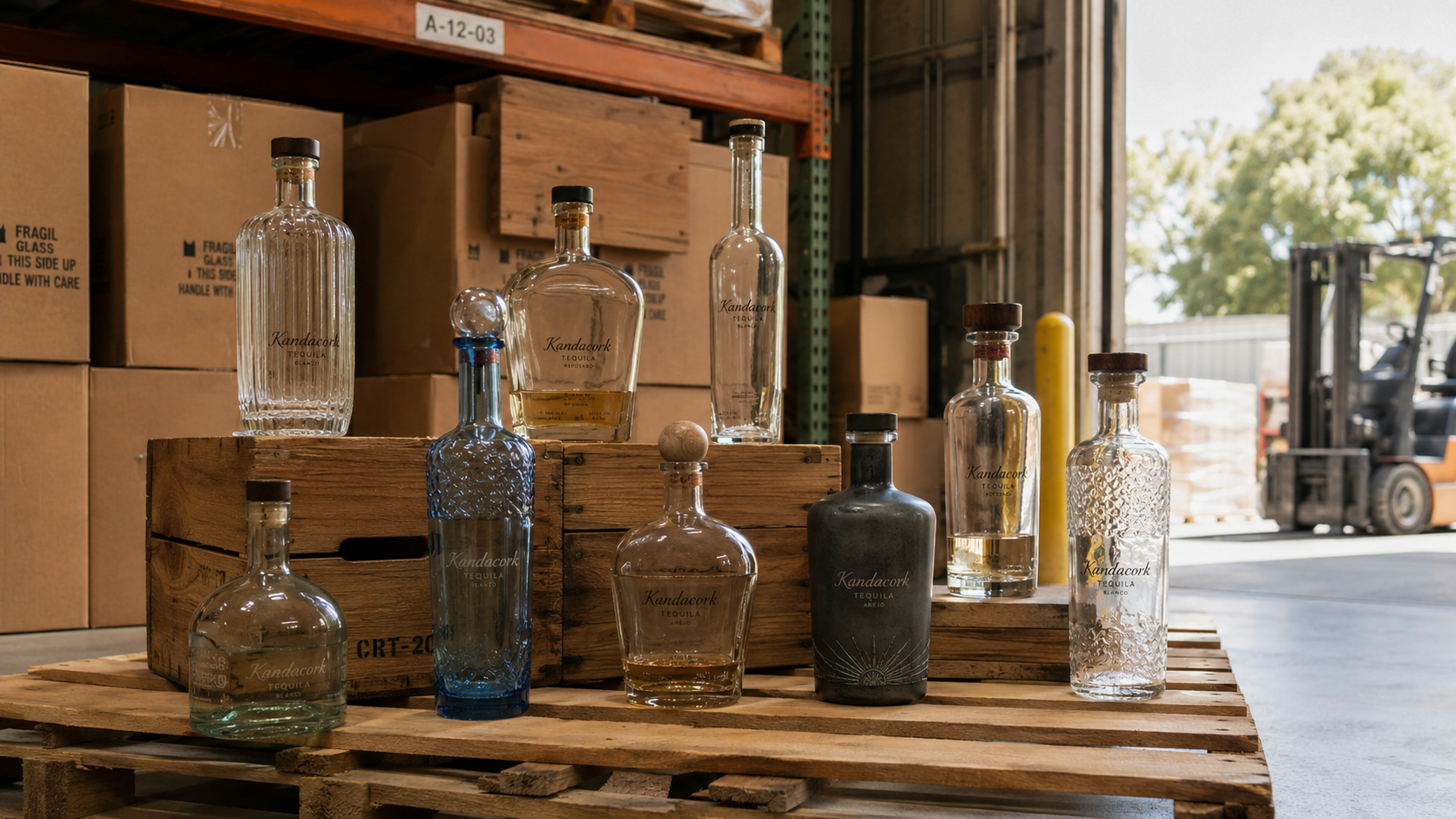
Tequila and mezcal brands often use expressive stopper designs. Wooden stoppers can support artisanal, rustic, agave-inspired, or handmade positioning. Metal stoppers can support sculpted logos, heavy hand feel, and premium collectible packaging.
For high-end tequila, a custom metal stopper or wood-and-metal stopper can create strong shelf differentiation. For artisanal mezcal, a wooden stopper with natural finish or engraved branding may feel more authentic.
Vodka
Vodka bottles often benefit from clean, modern, and minimal packaging. Metal stoppers are usually a strong match because they create a polished, precise, and contemporary appearance.
Wooden stoppers can still work for organic-style vodka, craft vodka, or brands that want a warmer alternative to cold industrial design.
Brandy and Liqueur
Brandy, cognac-style spirits, and liqueurs can use either metal or wood depending on the desired image. Wooden stoppers support tradition, warmth, and softness. Metal stoppers support gifting, luxury, and decorative impact.
For premium liqueurs, a wood-and-metal stopper can create a refined balance between elegance and approachability.
Compliance and Quality Considerations
Spirits bottle closures should be developed with food-contact expectations and export market requirements in mind. The U.S. FDA explains food-contact substances as materials that come into contact with food and are not intended to have a technical effect in the food. For beverage packaging buyers, this makes material selection, coating review, and supplier documentation important.
In the European market, the European Commission’s food-contact materials guidance highlights that food-contact materials should meet safety expectations and avoid affecting food quality, taste, smell, or appearance. For spirits closures, buyers should review the materials, coatings, adhesives, inks, and shank components used in the final closure system.
Quality management also matters during sourcing and production. ISO 22000 food safety management provides a recognized framework for food safety management systems across the food chain, while stopper buyers should still confirm project-specific specifications, inspections, and packaging tests with their supplier.
For wooden closures, responsible material sourcing can also support brand value. The Forest Stewardship Council wood guidance provides a recognized reference point for certified wood sourcing, which may be relevant for brands that want to align wooden stopper selection with broader sustainability expectations.
Buyer Checklist Before Ordering Custom Stopper Samples
Before requesting custom metal stoppers or custom wooden stoppers, buyers should prepare the following details:
- Bottle drawing or physical bottle sample
- Bottle neck inner diameter and neck height
- Spirit category and target market
- Target retail price and packaging position
- Preferred stopper head material
- Preferred shank material
- Logo file and branding requirements
- Desired surface finish
- Target opening and pull-out feel
- Filling-line or manual plugging method
- Capsule, shrink sleeve, or neck label requirements
- Gift box or carton clearance requirements
- Estimated order quantity
- Target launch schedule
- Export market and compliance expectations
This information helps the supplier recommend the right stopper structure, reduce sample revisions, and support smoother bulk production.
Sample Development Process for Spirits Brands
A practical sample process helps buyers compare metal stoppers vs wooden stoppers before committing to mass production.
The process usually starts with bottle review. The supplier checks the bottle drawing, neck finish, closure height, and brand requirements. If a physical bottle sample is available, fit testing becomes more accurate.
Next, the stopper concept is confirmed. The buyer selects head material, shank material, color, finish, logo method, and target style. At this stage, the supplier may recommend metal, wood, aluminium, cork, synthetic shank, or hybrid structures depending on the bottle and brand goal.
After that, samples are produced and tested. The buyer should check appearance, fit, opening feel, resealing feel, surface finish, logo clarity, capsule compatibility, and packaging clearance.
Once the sample is approved, the production specification should be confirmed. This includes dimensions, tolerance, color standard, shank material, decoration method, inspection criteria, packing method, and delivery schedule.
For brands seeking a closure partner that can support bottles, stoppers, and packaging decisions together, Kandacork Closures can act as a spirits bottle packaging supplier for custom closure projects from concept to export-ready production.
Why Work with Kandacork Closures?
Kandacork Closures is a custom bottle stopper manufacturer supporting spirits brands, distilleries, bottlers, importers, and private-label packaging teams with closure development for premium bottle projects.
The company can help buyers compare stopper materials by spirit category, bottle style, retail price point, logo method, shank structure, and production requirements. Instead of choosing only by appearance, buyers can review how each closure performs as part of a complete packaging system.
For metal stoppers, Kandacork Closures can support zinc alloy options, aluminium options, stainless steel-style effects, electroplated finishes, matte finishes, antique finishes, logo engraving, embossing, debossing, color filling, custom head development, shank matching, neck-fit review, sample testing, and bulk production.
For wooden stoppers, Kandacork Closures can support natural wood heads, stained finishes, color-coated finishes, varnished surfaces, engraved logos, printed branding, metal inserts, cork shanks, synthetic shanks, bottle compatibility review, and export supply.
Kandacork Closures can also help with pre-production sample confirmation, closure tolerance review, packaging compatibility checks, carton clearance review, and bulk inspection standards. This is important for brands that need consistent closure quality across larger production runs.
Request Samples for Your Bottle Project
If you are comparing metal stoppers vs wooden stoppers for a spirits bottle, the best next step is to test real samples on your bottle neck.
Send Kandacork Closures your bottle drawing, physical bottle sample, spirit category, target order quantity, logo file, finish preference, and decoration requirements. The team can help compare custom metal stoppers, custom wooden stoppers, cork shank options, synthetic shank options, aluminium stoppers, and hybrid stopper designs for your packaging project.
A sample review can help confirm appearance, fit, opening feel, resealing performance, surface finish, packaging clearance, and production feasibility before bulk ordering.
FAQ
Are metal stoppers better than wooden stoppers?
Metal stoppers are better when a spirits brand wants luxury weight, metallic finishing, detailed logo decoration, or strong shelf impact. Wooden stoppers are better when the brand wants warmth, natural texture, craft appeal, and heritage positioning.
Do metal and wooden stoppers use the same shank materials?
Yes. Both metal and wooden stoppers can be paired with natural cork, micro-agglomerated cork, synthetic cork, or synthetic shanks. The right shank depends on the bottle neck, sealing expectation, budget, and brand positioning.
Which stopper seals better for spirits bottles?
Sealing performance depends more on the shank and bottle neck fit than on the head material. A metal stopper and a wooden stopper can both seal well when the shank diameter, insertion depth, compression, and pull-out force are properly tested.
Which stopper is best for premium whisky bottles?
Wooden stoppers are often best for traditional whisky packaging because they connect naturally with barrel aging, oak, and craft positioning. Metal stoppers can be better for luxury whisky, collector editions, and gift-box products.
Which stopper is best for rum bottles?
Wooden stoppers are a strong choice for aged rum, dark rum, spiced rum, and vintage-style rum. Metal stoppers are suitable for luxury rum, premium gift packs, and brands that want a stronger high-end shelf presence.
Which stopper is best for tequila bottles?
For artisanal tequila or mezcal, wooden stoppers can create a natural and handcrafted appearance. For luxury tequila, sculpted metal stoppers or wood-and-metal stoppers can provide stronger shelf impact.
Which stopper is better for custom logo branding?
Metal stoppers are usually better for embossed, debossed, engraved, plated, and three-dimensional logo effects. Wooden stoppers are better for laser engraving, natural texture, printed branding, stained finishes, and craft-style presentation.
What is the best stopper for a luxury spirits bottle?
The best stopper for a luxury spirits bottle is usually a metal stopper, a wood-and-metal stopper, or a premium stained wooden stopper. The right choice depends on whether the brand wants modern luxury, collectible impact, natural warmth, or heritage character.
Can I order custom logo stoppers in bulk?
Yes. Custom logo stoppers can be produced in bulk after sample approval. Metal stoppers can support engraving, embossing, debossing, plating, and molded logos. Wooden stoppers can support laser engraving, printing, staining, color coating, and decorative inserts.
What information is needed before producing custom spirits stoppers?
Buyers should provide a bottle drawing or physical sample, bottle neck size, spirit category, target quantity, preferred stopper material, shank preference, logo file, surface finish requirement, and launch schedule. This helps the supplier recommend the correct closure structure.
Are wood-and-metal stoppers better than single-material stoppers?
Wood-and-metal stoppers can be better when a brand wants both natural warmth and luxury detail. They combine the tactile appeal of wood with the logo precision and premium highlight of metal. However, cost, tooling, and production complexity should be reviewed before final approval.
Are wooden stoppers suitable for bulk spirits production?
Yes. Wooden stoppers can be suitable for bulk spirits production when head dimensions, shank material, neck fit, surface finish, color consistency, and packing method are confirmed through samples and production checks.
Are metal stoppers too heavy for spirits bottles?
Not necessarily. Metal stopper weight depends on material and structure. Zinc alloy is heavier and suitable for luxury packaging, while aluminium is lighter and suitable for modern premium bottles that need a metallic appearance without excessive weight.
Can Kandacork Closures customize both metal and wooden stoppers?
Yes. Kandacork Closures can support custom metal stoppers, wooden stoppers, aluminium stoppers, cork shank options, synthetic shank matching, logo decoration, sample review, and bulk supply for spirits packaging projects.
Conclusion: Choose the Stopper That Fits the Brand, Bottle, and Production Line
The decision between metal stoppers vs wooden stoppers should not be based on appearance alone. Metal stoppers are ideal for luxury impact, weight, shine, and detailed branding. Wooden stoppers are ideal for warmth, craft identity, natural texture, and heritage appeal.
For the best result, evaluate the complete closure system: head material, shank type, bottle neck tolerance, sealing performance, opening feel, decoration method, production scale, and target market.
A well-designed stopper can make a spirits bottle look more premium, feel more valuable, and perform more reliably from filling line to consumer use. For brands developing whisky, rum, gin, tequila, vodka, brandy, or liqueur packaging, Kandacork Closures can help compare metal and wooden stopper options and develop a custom closure solution that fits both the bottle and the brand.