ROPP cap compatibility testing confirms whether an aluminum roll-on pilfer-proof cap, bottle neck finish, liner, pilfer band, and capping setup work together before bulk production. For spirits brands, distilleries, bottlers, importers, distributors, private label buyers, and packaging teams, this testing helps prevent leakage, spinning caps, hard opening, damaged tamper bands, and delayed shipments.
A ROPP cap is not only selected by diameter, color, or appearance. It is formed onto the bottle during capping. The aluminum shell is rolled around the glass neck finish, while the lower band is shaped to provide tamper evidence. Because of this, the cap, bottle, liner, and filling-line setup must be validated as one closure system.
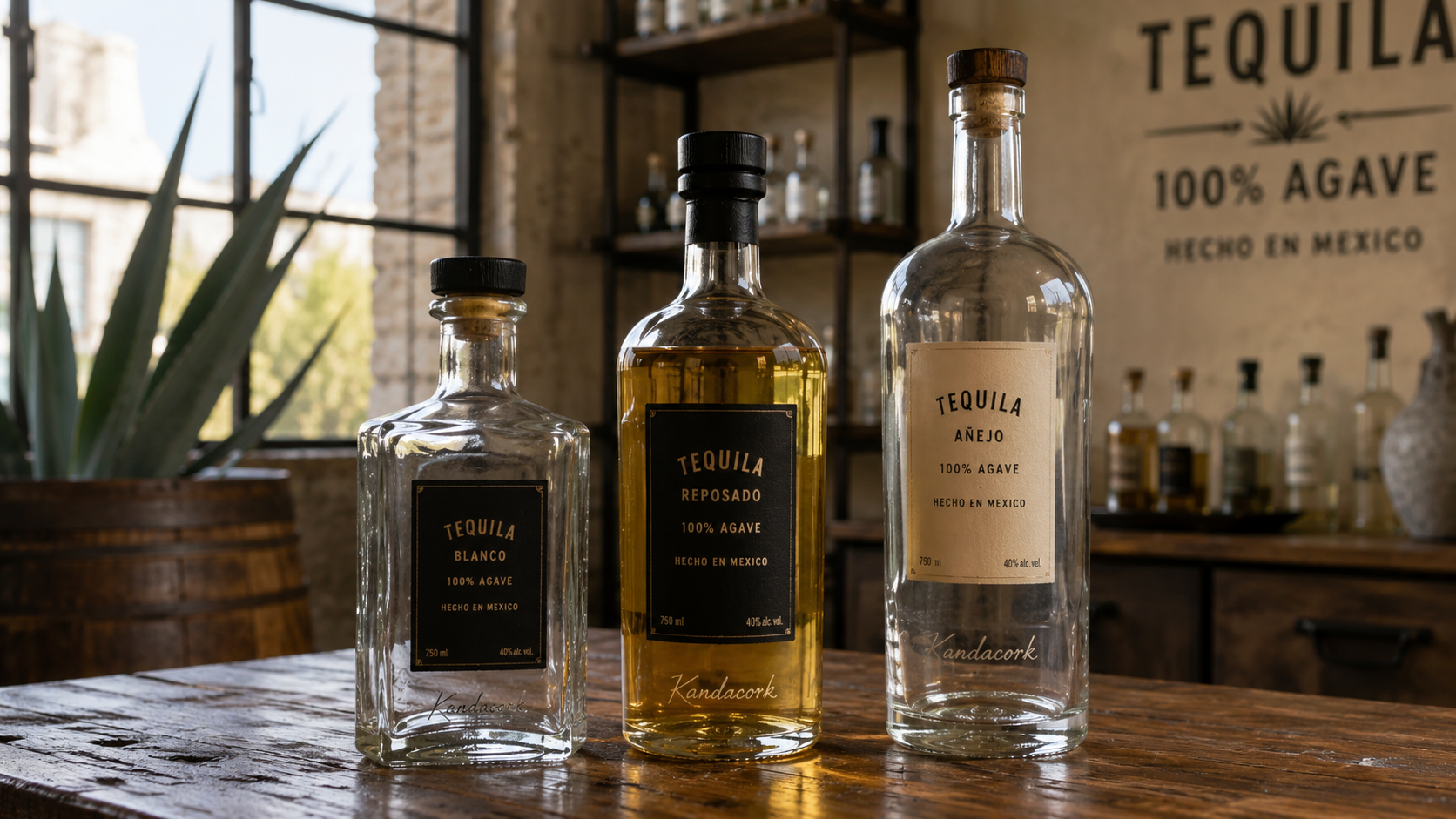
For spirits packaging, this is especially important. A leaking whisky, vodka, gin, rum, tequila, liqueur, or RTD cocktail bottle can damage cartons, stain labels, weaken shelf presentation, and create distributor complaints. Kandacork Closures & Stoppers supports custom ROPP closures with cap size selection, liner review, neck-fit matching, decoration options, sample approval, and quotation support.
Quick Answer: How Do You Test ROPP Cap Compatibility?
ROPP cap compatibility is tested by checking the bottle neck finish, selecting the correct cap diameter and skirt height, choosing a suitable liner, applying sample caps with production-intent ROPP capping equipment, measuring removal torque, inspecting the pilfer band, and running leak checks under realistic storage and transport conditions.
A practical test should answer five questions:
- Does the cap match the bottle neck finish?
- Does the liner seal the product without leakage?
- Does the pilfer band lock and break correctly?
- Is the opening torque acceptable for consumers?
- Can the package survive filling, storage, handling, and shipping?
Need to confirm whether your bottle neck finish works with a ROPP cap? Send Kandacork your bottle drawing and sample requirements for a cap-neck compatibility review.
What Is ROPP Cap Compatibility Testing?
ROPP cap compatibility testing is the process of confirming whether a roll-on pilfer-proof closure can seal, open, reseal, and show tamper evidence correctly on a specific bottle.
The test normally covers bottle neck finish dimensions, cap diameter, skirt height, liner compression, pilfer band engagement, removal torque, leak resistance, and capping machine setup. For buyers, the goal is not simply to see whether the cap can be placed on the bottle. The goal is to confirm whether the closure can perform consistently in production, storage, transport, retail handling, and first opening.
If your team is still comparing closure types or learning the basic structure of ROPP caps, Kandacork’s guide on what ROPP closures are can support early research before compatibility testing begins.
Buyers should request compatibility testing before bulk orders, before changing bottle suppliers, before switching liners, before moving to a new filling line, or when solving leakage and opening complaints.
Why ROPP Caps Need System Testing
A standard screw cap usually has pre-formed internal threads. A ROPP cap is different. During application, the capping head applies top pressure while rollers form the thread and tamper-evident band around the bottle neck.
A reliable ROPP closure result depends on several connected variables:
- Bottle neck finish
- Cap diameter and skirt height
- Liner material
- Aluminum shell specification
- Pilfer band design
- Roller pressure
- Top pressure
- Filling-line stability
- Storage and transport conditions
If one variable is wrong, the package may fail even when the cap looks correct. This is why ROPP closure testing should be treated as production-intent validation, not a simple visual fit check.
For a deeper explanation of removal torque, pilfer-band behavior, and neck-finish matching, see Kandacork’s ROPP torque and pilfer band guide.
When Should Buyers Test ROPP Cap Compatibility?
Buyers should run ROPP cap compatibility testing when launching a new spirits bottle, changing bottle suppliers, switching liners, using a new ROPP cap size, moving to a different filling line, preparing export shipments, or investigating leakage, torque, or pilfer-band complaints.
Testing is especially important before sample approval and bulk orders. A single successful hand-applied sample does not always prove that the cap will perform on a semi-automatic or automatic filling line. Compatibility should be confirmed with real bottles, actual or comparable capping equipment, and conditions that reflect the intended supply chain.
Key Compatibility Factors for ROPP Caps
Bottle Neck Finish
The bottle neck finish determines how the ROPP cap sits on the bottle, how the liner contacts the sealing land, how the thread is formed, and how the pilfer band locks under the bead.
Buyers should check the neck outside diameter, finish height, sealing land, retaining bead, roundness, verticality, and tolerance range. A technical drawing is useful for early review, but physical bottle samples are still necessary because real glass bottles may vary by mold, supplier, batch, or decoration process.
Cap Diameter and Skirt Height
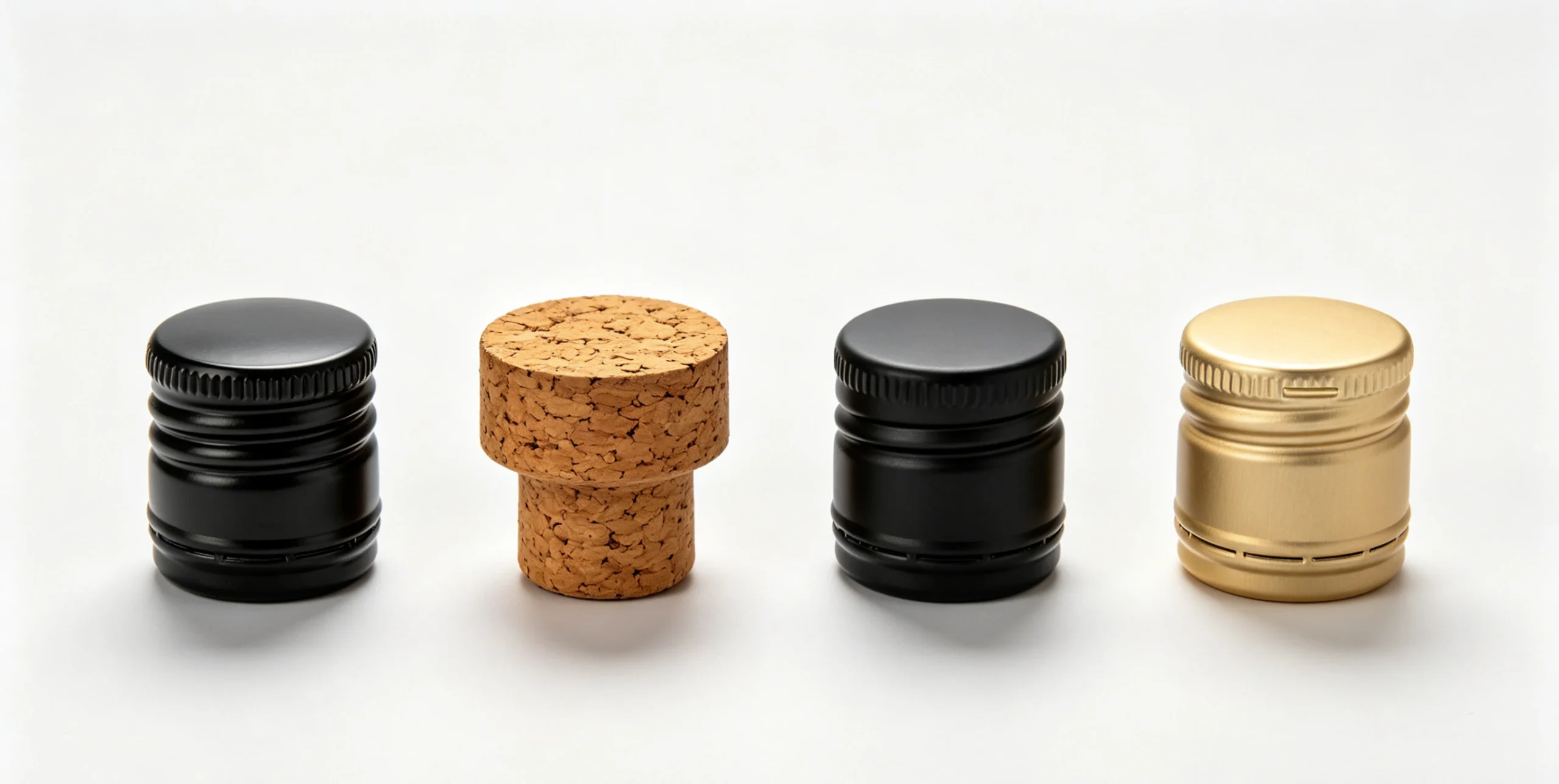
ROPP caps are usually specified by diameter and height, such as 28 mm, 30×35 mm, 30×44 mm, 30×60 mm, or other project-specific dimensions.
Diameter affects neck fit. Skirt height affects thread coverage, pilfer band position, decoration space, and visual proportion. A taller ROPP cap may create a premium look for spirits bottles, but it still needs to match the bottle finish and capping head.
Liner Compatibility
The liner is the sealing interface between the cap and the bottle. It must compress against the sealing land without tearing, slipping, shrinking, swelling, or creating product compatibility problems.
For alcohol packaging, liner selection should consider alcohol percentage, product viscosity, sugar content, flavoring oils, filling temperature, shelf life, storage conditions, and export distance. A high-proof vodka, botanical gin, sweet liqueur, and RTD cocktail may require different liner evaluation.
Pilfer Band Performance
The pilfer band provides visible tamper evidence. During capping, the lower part of the aluminum cap is rolled under the bottle bead. When the consumer opens the bottle for the first time, the bridges should break cleanly.
Testing should confirm that the band locks under the bead, remains intact before opening, breaks clearly during first use, and does not tear during transport. The cap should also reseal properly after the first opening.
Torque Range
Removal torque measures the force needed to open the closure. If the torque is too low, the cap may feel loose or create leakage risk. If the torque is too high, consumers may find the bottle difficult to open.
Torque should be measured after capping and again after conditioning. Liner compression, cap settling, temperature changes, and transport vibration can all affect opening performance.
Capping Machine Setup
ROPP closure performance depends heavily on the capping process. Even the correct cap and bottle can fail if the capping head is not adjusted properly.
Important setup factors include top pressure, thread roller pressure, skirt roller pressure, bottle centering, cap feeding stability, head alignment, roller wear, line speed, and bottle handling stability.
Six-Step ROPP Cap Testing Workflow
Step 1: Review the Bottle Drawing and Neck Finish
Start with the bottle technical drawing. Check the neck finish, sealing land, finish height, thread area, bead position, and tolerance notes. This helps identify obvious mismatch risks before producing samples.
Step 2: Send Physical Bottle Samples
Physical samples are essential. A drawing may show the intended dimensions, but actual bottles can vary. Send bottles from the same supplier and mold planned for production. If multiple bottle suppliers are being considered, test each bottle separately.
Step 3: Select Trial Cap Size and Liner
The supplier should recommend a cap diameter, skirt height, liner type, aluminum specification, and pilfer band design based on the bottle, product, and filling conditions. For premium spirits, custom color, printing, embossing, debossing, or top decoration should also be reviewed at this stage.
Step 4: Apply Caps With Production-Intent Equipment
Use a ROPP capping setup that reflects the final production process as closely as possible. Manual testing can help during early review, but final approval should consider the actual filling line or a comparable capping system.
Step 5: Inspect Forming, Torque, and Pilfer Band
After capping, inspect the finished package from multiple angles. Check cap seating, skirt smoothness, thread forming, decoration damage, pilfer band position, and liner condition.
Measure removal torque across multiple samples to confirm repeatability, not just one successful result.
Step 6: Run Leak, Storage, and First-Opening Checks
Leak testing should include upright, inverted, and side-position checks. For export spirits packaging, buyers should also consider vibration, carton handling, temperature variation, and distribution simulation. For broader packaged-product validation, ASTM D4169 is commonly used to evaluate shipping units under distribution hazards such as vibration, compression, drops, and impact.
Finally, open the bottle as a consumer would. The cap should open smoothly, the pilfer band should break clearly, and the closure should reseal after first opening.
ROPP Cap Testing Checklist
| Test Item | What It Checks | Why It Matters for Spirits Packaging |
|---|---|---|
| Neck finish inspection | Diameter, finish height, sealing land, bead | Prevents cap mismatch and leakage |
| Cap size confirmation | Diameter and skirt height | Ensures correct fit and visual proportion |
| Liner compression check | Seal contact and compression | Prevents alcohol leakage |
| Removal torque test | Opening force after capping | Balances security and consumer openability |
| Pilfer band test | Bridge break and bead engagement | Confirms tamper evidence |
| Inversion leak test | Leakage under non-upright storage | Useful for shipping and retail handling |
| Vibration check | Stability during transport | Important for export spirits |
| First-opening test | Opening feel and resealing | Protects premium brand experience |
| Decoration inspection | Scratches, scuffing, color damage | Maintains shelf appearance |
Recommended Test Records for ROPP Cap Approval
A useful ROPP closure test should leave a clear record. This helps purchasing teams, bottlers, brand owners, and suppliers confirm what was tested and whether the result can be repeated in production.
| Record Item | Why It Matters |
|---|---|
| Bottle supplier and mold | Confirms whether results apply to the production bottle |
| Bottle drawing version | Prevents approval based on outdated dimensions |
| Cap size and skirt height | Confirms the exact closure specification |
| Liner type | Links sealing performance to liner material |
| Capping equipment | Shows whether the test matches production setup |
| Removal torque result | Confirms opening performance |
| Leak test condition | Shows how leakage was checked |
| Pilfer band result | Confirms tamper-evident function |
| Visual inspection notes | Records scratches, deformation, or crooked forming |
| Approval status | Supports sample approval before bulk order |
This record is especially useful for private label buyers and importers managing suppliers across different countries. It reduces misunderstanding and gives both parties a clearer basis for quotation, sampling, and final approval.
Example: Why a Spirits Bottle Passed Visual Fit but Failed Leak Testing
A private label spirits buyer selected a 30×60 mm aluminum ROPP cap based mainly on bottle diameter and visual appearance. After sample capping, the closure looked correct. The cap sat straight, the color matched the brand design, and the pilfer band appeared properly positioned.
However, during an inversion leak check, several filled samples showed slow leakage around the neck area. The cap was not obviously loose, and the liner appeared intact.
Further review found that the bottle sealing land had small tolerance differences between samples. Some bottles allowed stable liner compression, while others did not provide enough consistent contact. The issue was not solved by changing only the cap color or increasing order quantity. It required a closer review of the bottle neck finish, liner compression, and capping pressure.
After adjusting the liner recommendation and capping setup, the buyer retested samples before bulk order approval. The revised samples showed more consistent sealing and a better first-opening result.
The lesson is simple: visual fit is not enough. ROPP cap compatibility testing should confirm sealing, torque, pilfer band performance, and repeatability across multiple production-intent samples.
Common ROPP Cap Problems and Root Causes
| Problem | Likely Cause | What to Check |
|---|---|---|
| Leakage | Poor liner compression, damaged sealing land, low forming pressure | Liner, neck finish, top pressure |
| Spinning cap | Weak thread forming or wrong neck finish | Roller setup, cap diameter, thread profile |
| Hard opening | Excessive forming pressure or high removal torque | Torque range, liner compression, capping head |
| Loose opening | Low removal torque or poor thread engagement | Roller pressure, cap fit, finish tolerance |
| Pilfer band breaks early | Over-forming, weak bridges, rough handling | Bridge design, bead engagement, carton handling |
| Pilfer band does not break | Poor bead engagement or incorrect band position | Neck bead, band height, roller setting |
| Crooked cap | Bottle not centered during capping | Guides, star wheel, capping head alignment |
| Scratched cap | Roller contact or weak surface finish | Coating durability, tooling contact |
| Metal tearing | Over-forming or unsuitable aluminum temper | Material, roller pressure, skirt design |
| Inconsistent opening | Bottle or cap tolerance variation | Batch control, finish dimensions, torque records |
This table helps buyers move from general supplier claims to specific technical questions. Instead of asking only whether a cap “fits,” buyers can ask how it was tested, what data supports approval, and whether the same result can be repeated in bulk production.
Spirits-Specific Testing Notes
Spirits brands should test ROPP closures differently from general beverage projects. Alcohol content, product value, export logistics, retail display, and first-opening experience all matter.
For whisky packaging, buyers often need premium appearance, stable export performance, and a clean opening experience. For vodka, torque consistency and high-volume filling stability are important. For gin, liner compatibility may need closer review because botanical oils and flavor compounds can affect sealing performance.
For rum and tequila, pilfer band strength and export handling should be considered. For liqueurs, sugar content and viscosity may increase sticky leakage risk around the closure area. Mini spirits bottles also require careful testing because smaller formats leave less tolerance margin for cap diameter, skirt height, forming pressure, and torque consistency.
For brands developing the full bottle, closure, decoration, and export packaging system together, Kandacork Spirits provides related custom glass packaging support for spirits bottles.
How to Evaluate a ROPP Cap Supplier Before Bulk Orders
A ROPP cap supplier should be evaluated on more than unit price. A low-cost closure can become expensive if it causes leakage, rework, delayed filling, rejected shipments, or distributor complaints.
Buyers should ask whether the supplier can support:
- Bottle neck finish review
- Physical sample testing
- Liner recommendation
- Cap size confirmation
- Pilfer band fitment review
- Torque and leak testing guidance
- Custom color matching
- Logo printing, embossing, or debossing
- Pre-production samples
- Batch consistency control
- Export packaging support
- Clear quotation and lead time communication
Kandacork Closures & Stoppers helps spirits brands, private label buyers, bottlers, importers, and packaging buyers evaluate custom ROPP closure options before sample approval and bulk orders.
What to Send When Requesting ROPP Cap Samples or a Quote
To speed up sample development and quotation, prepare the following information before contacting a supplier:
- Bottle technical drawing
- Physical bottle samples
- Target ROPP cap size
- Product type
- Alcohol percentage
- Fill volume
- Bottle material and finish
- Capping machine type
- Filling line speed
- Liner preference, if known
- Decoration artwork
- Cap color or finish requirement
- Estimated order quantity
- Export destination
- Testing requirement or internal QC standard
The more complete the information, the more accurately the supplier can recommend the right closure. Incomplete specifications often lead to repeated sampling, delayed approvals, or unexpected production issues.
FAQ
What is ROPP cap compatibility testing?
ROPP cap compatibility testing checks whether the cap, bottle neck finish, liner, pilfer band, and capping setup work together. It helps confirm sealing performance, opening torque, tamper evidence, and leak resistance before bulk production.
Why do ROPP caps leak?
ROPP caps may leak because of poor liner compression, damaged sealing land, incorrect neck finish, low forming pressure, unsuitable liner material, or inconsistent torque. Leakage should be investigated as a full closure-system issue, not only a cap defect.
Can I approve ROPP caps using only a bottle drawing?
No. A bottle drawing is useful for early review, but physical bottle samples should be tested before bulk approval. Real glass bottles can vary because of mold tolerance, production batches, decoration, and supplier differences.
What torque should a ROPP cap have?
There is no universal torque value for every ROPP cap. The correct range depends on cap size, bottle finish, liner, product type, capping equipment, and consumer openability requirements. Buyers should define a target range with their closure supplier and bottling partner.
What liner is best for alcohol bottles?
The best liner depends on alcohol percentage, product formula, storage conditions, and shelf-life requirements. High-proof spirits, botanical gin, sweet liqueurs, and RTD cocktails may require different liner evaluations.
What should I send to request ROPP cap samples?
Send the bottle drawing, physical bottle samples, target cap size, product type, alcohol percentage, capping equipment details, liner preference, decoration artwork, order quantity, and export destination.