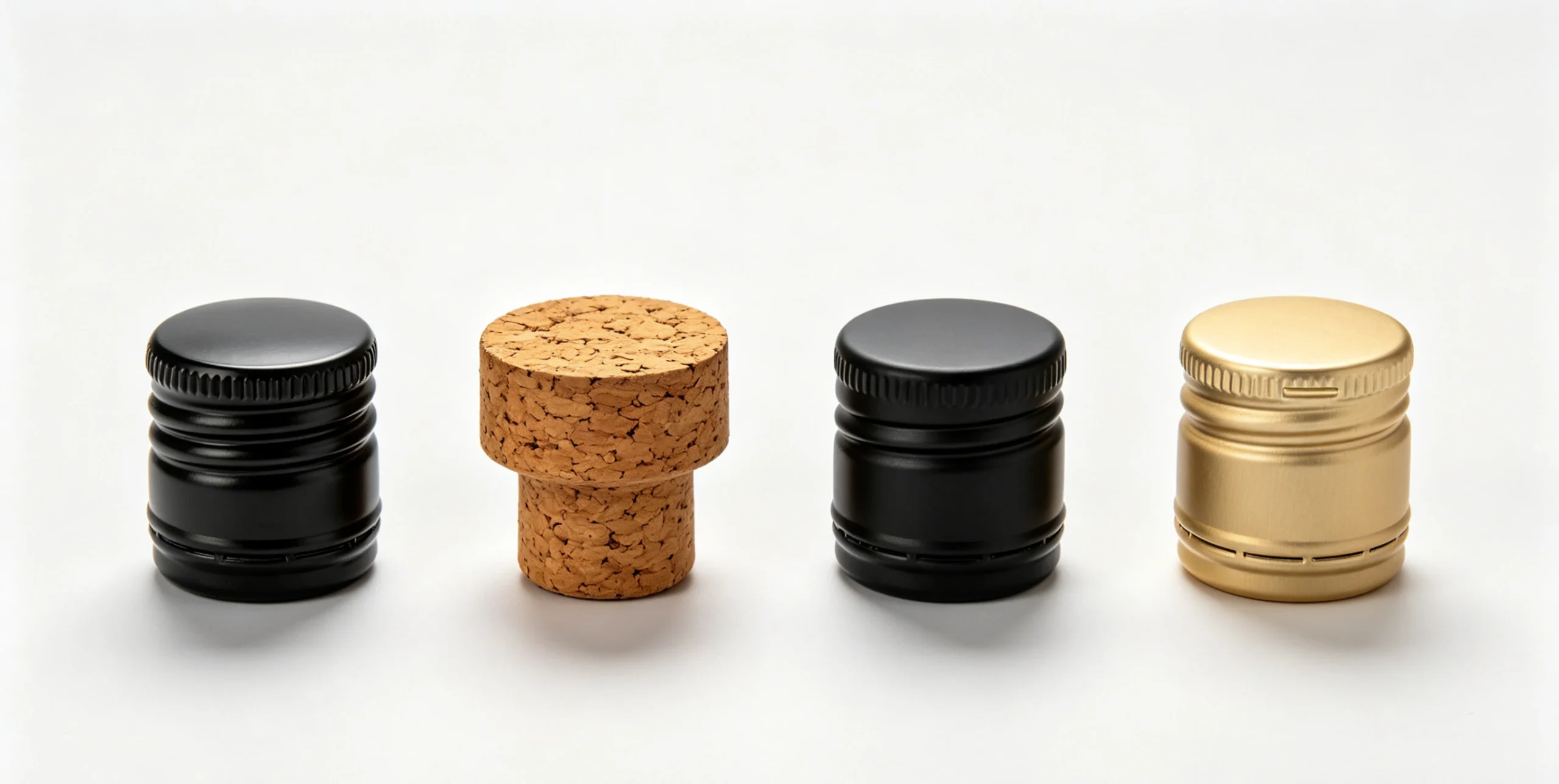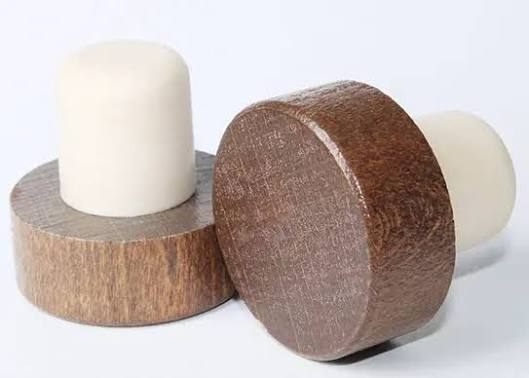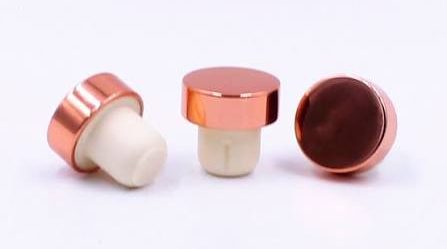
Synthetic stopper fit compression consistency is a critical detail in spirits packaging because it affects sealing performance, filling-line stability, opening feel, resealing quality, shelf appearance, and repeat-order reliability. A stopper may look like a small component, but it is part of a complete bottle-and-closure system. If the stopper shank does not compress correctly inside the neck, the bottle may leak, the stopper may sit unevenly, or the consumer may experience a weak or overly tight opening.
For brands developing whisky, vodka, gin, rum, tequila, brandy, liqueur, mini bottles, gift sets, and private-label spirits, selecting synthetic stoppers is not only a matter of appearance. The closure must match the bottle neck inner diameter, compress with predictable pressure, maintain a clean seating height, and perform consistently across bulk production.
This guide explains how synthetic stopper fit works, why compression consistency matters, what buyers should test before mass production, and how to prepare a reliable specification for custom spirits closures.
Quick Answer: What Is Synthetic Stopper Fit Compression Consistency?
Synthetic stopper fit compression consistency means that each stopper shank compresses evenly inside the bottle neck, creates a stable seal, maintains a consistent seating height, and delivers repeatable pull-out force across bulk spirits bottle production.
In practical terms, the stopper should not feel perfect on one sample bottle but inconsistent across a full order. A reliable stopper should behave predictably during insertion, storage, shipping, opening, and resealing.
For B2B packaging buyers, this consistency helps reduce leakage risk, avoid uneven shelf presentation, improve consumer experience, and support stable replenishment orders.
Why Stopper Fit Matters for Spirits Bottles
Spirits packaging is both functional and emotional. The closure protects the liquid, but it also shapes how customers perceive the product when they pick up, open, and reseal the bottle. A premium bottle can lose perceived value if the stopper feels loose, sits too high, leaks during transport, or requires excessive force to remove.
A correct synthetic stopper fit supports several business goals:
- Better leakage control during storage and export shipping
- More consistent seating height across retail shelves
- A secure but comfortable consumer opening feel
- Reliable resealing after first opening
- Reduced rejection risk during filling and packing
- More predictable quality across bulk production runs
- Better alignment between bottle design, closure design, and brand positioning
This is especially important for brands using bar-top stoppers, T-top stoppers, and decorative cap-top closures. The consumer handles the stopper directly, so fit, resistance, weight, and finish all influence the final packaging experience.
The Bottle and Stopper Must Be Treated as One System
A stopper does not perform in isolation. Its fit depends on the bottle neck, glass tolerance, shank material, shank geometry, insertion process, liquid contact conditions, and final packaging format.
The Australian Wine Research Institute emphasizes the importance of closure application, insertion depth, leakage control, and fit-related packaging checks for cylindrical closures. Although many technical references focus on wine, the same principle applies to spirits bottle stoppers: the closure must be evaluated with the actual bottle and intended production conditions.
For spirits brands, that means one catalog size is not enough. Buyers should confirm the real neck dimensions, test physical bottle samples, and review stopper behavior after insertion, storage, and repeated opening.
How Bottle Neck ID Affects Synthetic Stopper Compression
Bottle neck inner diameter, often called neck ID, is the internal opening where the stopper shank enters the bottle. It is one of the most important measurements for synthetic stopper fit compression consistency.
In most cases, the stopper shank is slightly larger than the bottle neck ID. When inserted, the shank compresses against the inner glass wall. This compression creates friction and helps hold the stopper in place.
If the neck ID is larger than expected, the stopper may feel loose or fail leakage testing. If the neck ID is smaller than expected, the stopper may be difficult to insert, sit too high, or feel too hard to remove.
Glass bottle tolerance is a major reason sample testing matters. Even when a drawing shows a target neck diameter, production bottles may vary slightly between molds, batches, or suppliers. The safest approval process is to test multiple bottles from the actual bottle supplier, not only one reference sample.
For new bottle development, closure fit should be reviewed alongside spirits bottle design so the neck finish, shoulder profile, cap diameter, label area, and final shelf appearance work together.
How Shank Diameter Controls Stopper Fit
The shank diameter is the diameter of the inserted part of the stopper. It directly affects compression, pull-out force, sealing pressure, resealing performance, and final seating height.
A larger shank usually creates more compression. This may improve retention, but it can also increase insertion force and make the stopper harder to remove. A smaller shank usually inserts more easily, but if it is too small, the stopper may not generate enough pressure to seal the bottle securely.
The best fit is not always the tightest fit. For premium spirits packaging, the ideal fit feels secure, opens smoothly, reseals reliably, and remains consistent across the full production batch.
ISO-style closure testing principles are useful because they encourage buyers to evaluate measurable factors rather than relying on appearance alone. For example, ISO quality control sampling plans for cylindrical stoppers reflect the broader importance of dimensional checks, sampling discipline, and performance verification in stopper quality control.
Synthetic Stopper Fit Specification Checklist
Before ordering bulk synthetic stoppers, buyers should define the technical details that affect fit and compression.
| Specification Item | Why It Matters |
|---|---|
| Bottle neck inner diameter | Controls how much the shank compresses inside the bottle |
| Bottle neck depth | Determines whether the shank can seat fully and evenly |
| Stopper shank diameter | Affects sealing pressure, pull-out force, and leakage resistance |
| Stopper shank length | Affects sealing contact area and insertion depth |
| Material hardness | Controls compression feel, recovery, and removal resistance |
| Compression recovery | Helps the stopper reseal after opening |
| Insertion force | Affects filling-line efficiency and manual assembly |
| Pull-out force | Affects consumer opening experience |
| Seating height | Affects shelf appearance and packaging consistency |
| Leak test result | Confirms whether the stopper protects the product during handling |
| Resealing test result | Confirms performance after repeated opening and closing |
| Capsule or sleeve compatibility | Ensures the closure works with the complete packaging system |
This checklist helps buyers move from visual selection to measurable closure approval.
Example Shank and Neck Fit Considerations
The following examples are general reference points only. Final dimensions should always be confirmed through actual bottle and stopper testing.
| Bottle Neck ID Example | Possible Shank Test Range | Main Fit Concern |
|---|---|---|
| 18.5–18.8 mm | Test around 19.0–19.5 mm | Avoid excessive pull-out force while keeping a secure seal |
| 19.0–19.3 mm | Test around 19.5–20.0 mm | Balance insertion feel, leak resistance, and seating height |
| 21.0–21.5 mm | Test around 21.5–22.5 mm | Confirm stable compression across bottle tolerance range |
| 22.0–22.5 mm | Test around 22.5–23.0 mm | Review resealing feel and cap top stability |
These ranges show why synthetic stopper fit compression consistency cannot be judged by a single size label. The complete bottle-and-stopper system must be tested.
Why the Tightest Stopper Is Not Always the Best Stopper
A common mistake is assuming that maximum tightness equals maximum quality. In real spirits packaging, a stopper that is too tight can cause several problems.
It may be difficult to insert during production. It may sit too high above the bottle neck. It may create inconsistent seating height. It may require excessive force to remove. It may also create a poor consumer experience, especially for products intended to be opened and resealed many times.
A stopper that is too loose creates the opposite problem. It may insert easily, but it may not seal securely. It may move during shipping, pull out too easily, leak during inverted testing, or feel low quality after opening.
The best synthetic stopper fit is controlled rather than extreme. It should be secure, repeatable, smooth to insert, comfortable to remove, stable after resealing, and visually consistent across bulk cartons.
Pull-Out Force and Consumer Opening Experience
Pull-out force is the force required to remove the stopper from the bottle. For spirits, this is not only a technical value. It is part of the brand experience.
A premium whisky or tequila stopper should not feel weak when opened. At the same time, it should not be so tight that the customer struggles to remove it. The goal is a controlled opening feel that communicates security and quality.
Pull-out force is affected by shank diameter, material hardness, surface friction, bottle neck ID, insertion depth, storage conditions, and repeated use. It may also change after the bottle has been opened and resealed several times.
For custom cap-top projects, buyers should also evaluate weight, grip, top diameter, edge finish, and visual alignment. For example, metal stoppers can create a premium hand feel, but the shank still needs to be tuned to the actual bottle neck for reliable sealing and comfortable opening.
Material Choice and Compression Behavior
Different synthetic materials behave differently under compression. Material choice affects sealing feel, recovery, production consistency, cost, and the way the stopper performs after repeated use.
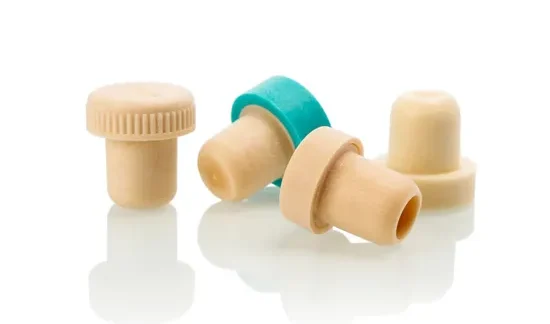
TPE synthetic stoppers are often selected for flexibility, elastic recovery, smooth touch, and controlled molding. They can support custom colors and stable dimensions, making them useful for spirits brands that want consistent stopper compression performance across bulk production.
EVA synthetic cork stoppers are commonly used for cost-effective and stable packaging programs. They can provide consistent appearance and predictable production performance for private-label spirits, promotional bottles, and distributor-led packaging projects.
Polymer foam synthetic cork structures may include a uniform outer skin and internal cell structure designed to support compressibility, memory, and sealing behavior. These structures are often discussed in wine closure applications, but the same performance ideas are relevant to spirits: compression behavior, recovery, dimensional stability, and bottle-to-bottle consistency.
Some projects combine molded heads with synthetic, TPE, synthetic-cork, or natural cork shanks. Plastic bar-top stoppers can be a practical option when buyers need stable geometry, flexible brand color matching, cost control, and repeatable supply across multiple SKUs.
Food-Contact and Market Compliance Considerations
Synthetic stoppers used for beverage packaging should be reviewed for their intended food-contact use and destination market requirements. Compliance expectations may vary depending on material, liquid type, alcohol strength, market, and buyer documentation needs.
For the U.S. market, the FDA inventory of food-contact substances listed in 21 CFR can help packaging teams understand how authorized food-contact substances are organized by intended use and conditions of use.
For European market planning, Commission Regulation (EU) No 10/2011 is a key reference for plastic materials and articles intended to come into contact with food.
For buyers, the practical takeaway is simple: stopper fit performance and material suitability should be reviewed together. A stopper should not only fit the bottle; it should also be appropriate for the liquid, storage condition, and destination market.
Common Synthetic Stopper Fit Problems and Solutions
| Fit Problem | Likely Cause | Practical Solution |
|---|---|---|
| Stopper feels loose | Shank diameter is too small or material is too soft | Test a larger shank diameter or adjust material hardness |
| Stopper leaks when inverted | Insufficient compression or short sealing contact area | Review neck ID, shank diameter, shank length, and leak-test method |
| Stopper sits too high | Shank is too large, neck is too shallow, or insertion force is too high | Adjust shank size, taper, material hardness, or insertion depth |
| Stopper is hard to remove | Excessive compression or high-friction surface | Reduce shank diameter or modify material and surface design |
| Stopper inserts unevenly | Bottle neck variation or unstable shank geometry | Measure multiple bottles and test revised samples |
| Stopper height varies across bottles | Glass tolerance or inconsistent insertion pressure | Confirm bottle tolerance and define a controlled insertion process |
| Stopper loses resealing feel | Poor elastic recovery after compression | Choose a material with stronger compression recovery |
| Stopper works in sample but fails in bulk | Sample testing was too limited | Test multiple bottles and approve pre-production samples |
This troubleshooting approach helps purchasing teams, packaging engineers, and brand owners make decisions based on real fit performance rather than assumptions.
Buyer Approval Criteria for Bulk Synthetic Stoppers
Before approving mass production, buyers should define what “pass” means for both function and appearance.
| Approval Point | Recommended Pass Standard |
|---|---|
| Stopper insertion | Smooth, repeatable, and suitable for the production process |
| Seating height | Consistent across approved bottle samples |
| Pull-out force | Secure but comfortable for consumer opening |
| Leak testing | No visible leakage under agreed test conditions |
| Resealing | Stable fit after repeated opening and closing |
| Cap top alignment | Straight, clean, and visually consistent |
| Surface finish | No obvious defects, contamination, or irregular color |
| Bulk carton consistency | Closure appearance and fit remain stable across sampled cartons |
These criteria are useful when several teams are involved in approval, including purchasing, brand design, production, quality control, and logistics.
Synthetic vs Natural Cork Fit Consistency
Natural cork has a long history in beverage packaging and can support a traditional, craft, or premium image. However, because it is a natural material, it may vary in density, surface texture, and compression behavior.
Synthetic stoppers are often chosen when buyers need more controlled dimensions, predictable compression, and repeatable performance in bulk orders. They can also reduce concerns related to cork taint in certain beverage categories.
The best choice depends on product positioning, bottle design, closure performance goals, budget, and supply chain requirements. For spirits brands that need repeatable bulk fit, stable seating height, controlled shank dimensions, and custom top decoration, synthetic stoppers are often a practical solution.
Branding, Decoration, and Shelf Presentation
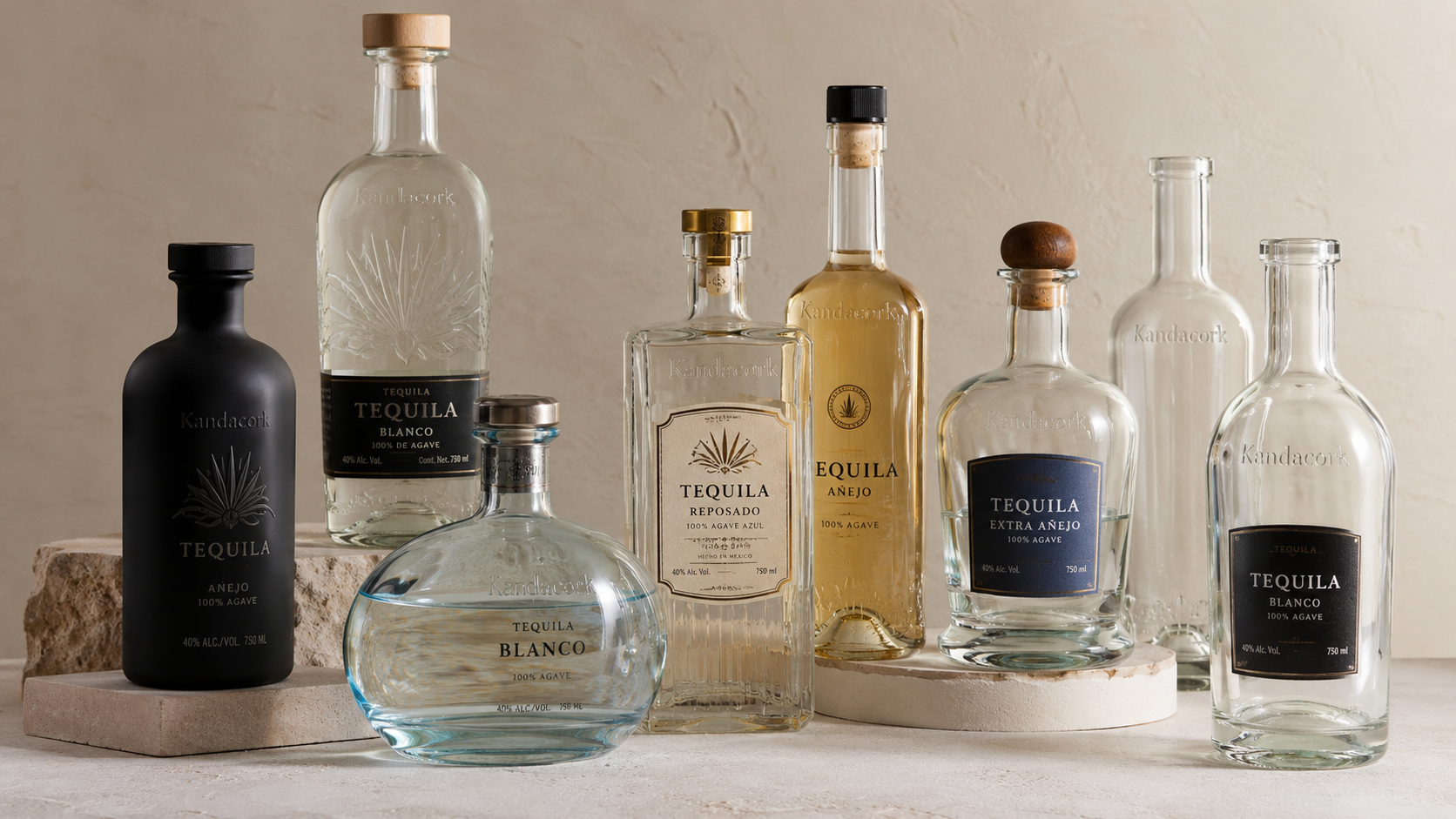
A spirits stopper is both a sealing component and a branding surface. The cap top can carry color, texture, logo detail, weight, and shape cues that reinforce the bottle’s positioning.
A wood-effect top may support a craft or heritage story. A metallic top may communicate luxury or limited-edition value. A solid-color plastic top can deliver clean consistency across high-volume ranges. Transparent or glass-like tops can help create a modern visual effect.
The functional and visual sides should be developed together. If the top looks premium but the shank fits poorly, the final product will still feel unfinished. If the shank performs well but the cap color, finish, or logo alignment feels inconsistent, the shelf impact may suffer.
For brands developing the complete visual identity, decoration and branding decisions should be coordinated with stopper size, cap top profile, sidewall details, capsule clearance, and label direction. Kandacork Closures also supports closure colors and finishes so the stopper can align with the bottle, label, neck finish, and carton presentation.
Glass Bottle Quality and Sustainability Context
Glass bottle quality has a direct effect on stopper performance. Neck dimensions, bore smoothness, glass thickness, and finish tolerance can all influence compression and pull-out force. A well-designed stopper may still perform inconsistently if the glass neck varies too much.
This is why closure matching should be considered early in packaging development rather than left until the final purchase stage. Buyers developing new bottle molds should review the neck finish with both the glass supplier and closure supplier before mass production.
The Glass Packaging Institute represents the North American glass container industry and promotes glass packaging, recycling policy, and industry education. From a practical packaging perspective, glass remains highly relevant for spirits because it supports premium shelf presentation, chemical stability, weight options, decoration flexibility, and recyclability.
For brands seeking a more coordinated packaging program, integrated glass packaging support can help align bottle design, closures, and decoration. Projects that prioritize recycled-content positioning or lower-impact packaging can also consider eco glass packaging when planning bottle and closure systems together.
Real-World Example: Private-Label Whisky Stopper Testing
A private-label whisky brand selects a synthetic bar-top stopper based on a bottle drawing that shows a 19 mm neck opening. The buyer chooses a 19.5 mm shank, and the first sample feels acceptable.
During further review, more bottle samples are measured. The actual neck ID varies from 18.7 mm to 19.3 mm. Some stoppers fit well, while others feel too tight. Several sit slightly higher after insertion.
The solution is not simply to choose a smaller stopper. The supplier should review the full system: glass tolerance, shank material, shank geometry, insertion depth, target pull-out force, and seating height.
After sample adjustment, the buyer can approve a stopper that performs more consistently across the real bottle range.
Real-World Example: Gin Brand with Multi-SKU Packaging
A gin brand uses the same closure style across classic gin, pink gin, citrus gin, and limited seasonal releases. The brand wants all bottles to look uniform on the shelf.
If stopper seating height varies between SKUs, the product line may look inconsistent even when the labels and bottles are well designed. In this case, synthetic stopper fit compression consistency supports visual brand control.
The buyer should test the stopper across all bottle variants, not only one bottle. Multi-SKU packaging requires stable closure height, cap top alignment, resealing feel, and compatibility with any capsule or shrink sleeve used in the final design.
Real-World Example: Rum Export Shipment
A rum exporter may ship bottles through long-distance routes where cartons experience vibration, temperature changes, and handling pressure. A stopper that feels acceptable in a short local test may not perform well during export.
For this type of project, leak resistance, compression recovery, and pull-out force after storage are especially important. The buyer should test real bottles with actual filled product when possible and review carton packaging conditions before approving mass production.
This approach helps reduce leakage complaints and improves confidence in repeat bulk orders.
Synthetic Stopper Fit Testing Checklist Before Bulk Production
Before mass production, buyers should test the actual stopper with the actual bottle. A drawing is useful, but physical testing is more reliable.
Use this checklist before approving a bulk order:
- Review bottle drawing and neck specification
- Measure bottle neck inner diameter from several samples
- Confirm stopper shank diameter and tolerance
- Confirm shank length and insertion depth
- Test insertion force on real bottles
- Test pull-out force after storage
- Perform inverted leak testing
- Test resealing after repeated openings
- Check seating height consistency
- Confirm compatibility with shrink capsules or sleeves
- Check cap top alignment and visual balance
- Review alcohol-contact suitability
- Test transport packaging and vibration risk
- Approve final pre-production samples
This process helps buyers identify fit problems before filling, labeling, packing, and export.
What to Send for a Custom Synthetic Stopper Quote
To speed up quotation and sample development, prepare the following details before contacting Kandacork Closures:
- Bottle type and spirits category
- Bottle drawing
- Physical bottle sample if available
- Bottle neck inner diameter
- Bottle neck depth
- Neck finish type
- Preferred stopper style
- Target shank diameter
- Target shank length
- Preferred shank material
- Top material preference
- Logo artwork
- Color reference
- Order quantity
- Destination market
- Filling-line requirements
- Capsule or sleeve requirements
- Sample testing needs
The more complete the information, the easier it is to control synthetic stopper fit compression consistency before mass production.
Request a Synthetic Stopper Fit Review
If you are developing a new spirits bottle, changing stopper suppliers, preparing a private-label program, or solving leakage and fit issues, it is worth reviewing the bottle and stopper together before production.
Send your bottle drawing, neck inner diameter, bottle sample, preferred stopper style, cap top material, logo artwork, and target order quantity to request a closure fit review. The team can help evaluate shank diameter, compression behavior, seating height, pull-out feel, resealing performance, and bulk production consistency before mass manufacturing.
This review is designed to help buyers reduce leakage risk, avoid inconsistent stopper height, improve opening feel, and confirm whether the selected synthetic stopper is suitable for bulk spirits bottle production.
FAQ
What makes a synthetic stopper fit correctly?
A synthetic stopper fits correctly when the shank compresses evenly inside the bottle neck, creates a stable seal, maintains consistent seating height, and provides a controlled pull-out feel. Correct fit depends on both the stopper design and the bottle neck specification.
What is synthetic stopper fit compression consistency?
Synthetic stopper fit compression consistency means that the stopper compresses and recovers in a repeatable way across bottles and production batches. It helps ensure stable sealing, smooth insertion, predictable opening feel, reliable resealing, and uniform appearance.
Should a synthetic stopper be larger than the bottle neck?
Usually, yes. The shank is often slightly larger than the bottle neck inner diameter so it can compress during insertion. This compression creates friction and helps hold the stopper securely in place.
How much compression should a synthetic stopper have?
There is no single compression value for every bottle. The correct amount depends on bottle neck ID, shank diameter, material hardness, shank length, insertion depth, pull-out force, and sealing requirements. Physical sample testing is the safest way to confirm the correct fit.
What shank diameter should I choose for a synthetic stopper?
The shank diameter should be selected based on the actual bottle neck inner diameter, bottle tolerance, stopper material, and target pull-out feel. Buyers should test several samples before confirming bulk production.
How do I know if a synthetic stopper is too tight?
A synthetic stopper may be too tight if it is difficult to insert, sits too high, requires excessive force to remove, or causes unstable filling-line performance. The tightest stopper is not always the best stopper.
How do I know if a synthetic stopper is too loose?
A stopper may be too loose if it moves easily, pulls out with little resistance, leaks during testing, or feels weak when resealed. Loose fit can reduce consumer confidence and increase leakage risk.
Can synthetic stoppers help prevent leakage during shipping?
Yes, synthetic stoppers can help reduce leakage risk when the shank diameter, compression, material recovery, and bottle neck fit are correctly matched. Buyers should still perform leak testing and transport-condition testing before bulk orders.
Why do synthetic stoppers fit differently in different bottles?
Synthetic stoppers may fit differently because glass bottle neck dimensions can vary between molds, batches, or suppliers. Even small neck ID differences can affect compression, seating height, and pull-out force.
Do synthetic stoppers work for whisky, gin, rum, vodka, and tequila bottles?
Yes. Synthetic stoppers are suitable for whisky, gin, rum, vodka, tequila, brandy, liqueur, mini bottle, gift set, and private-label spirits packaging. The key is matching the stopper shank to the actual bottle neck.
Can one synthetic stopper fit different bottle designs?
Sometimes, but it depends on the neck dimensions and tolerance range of each bottle. If one closure will be used across multiple SKUs, each bottle should be tested before approval.
Can Kandacork Closures customize synthetic stopper fit?
Yes. Kandacork Closures can support custom synthetic stopper development based on bottle neck dimensions, shank diameter, shank length, material selection, top design, branding, sample testing, and bulk order requirements.
Conclusion
Synthetic stopper fit compression consistency is essential for reliable spirits bottle packaging. A good stopper must do more than look attractive. It must match the bottle neck, compress correctly, seal securely, reseal reliably, and perform consistently across bulk production.
For packaging buyers, the safest approach is to treat the stopper and bottle as one complete system. Confirm the bottle neck inner diameter, shank diameter, shank length, material hardness, insertion force, pull-out force, leak resistance, resealing behavior, and seating height before mass production.
When fit, material, bottle tolerance, decoration, and approval testing are aligned early, synthetic stoppers can support both dependable closure performance and a stronger customer-facing brand experience.