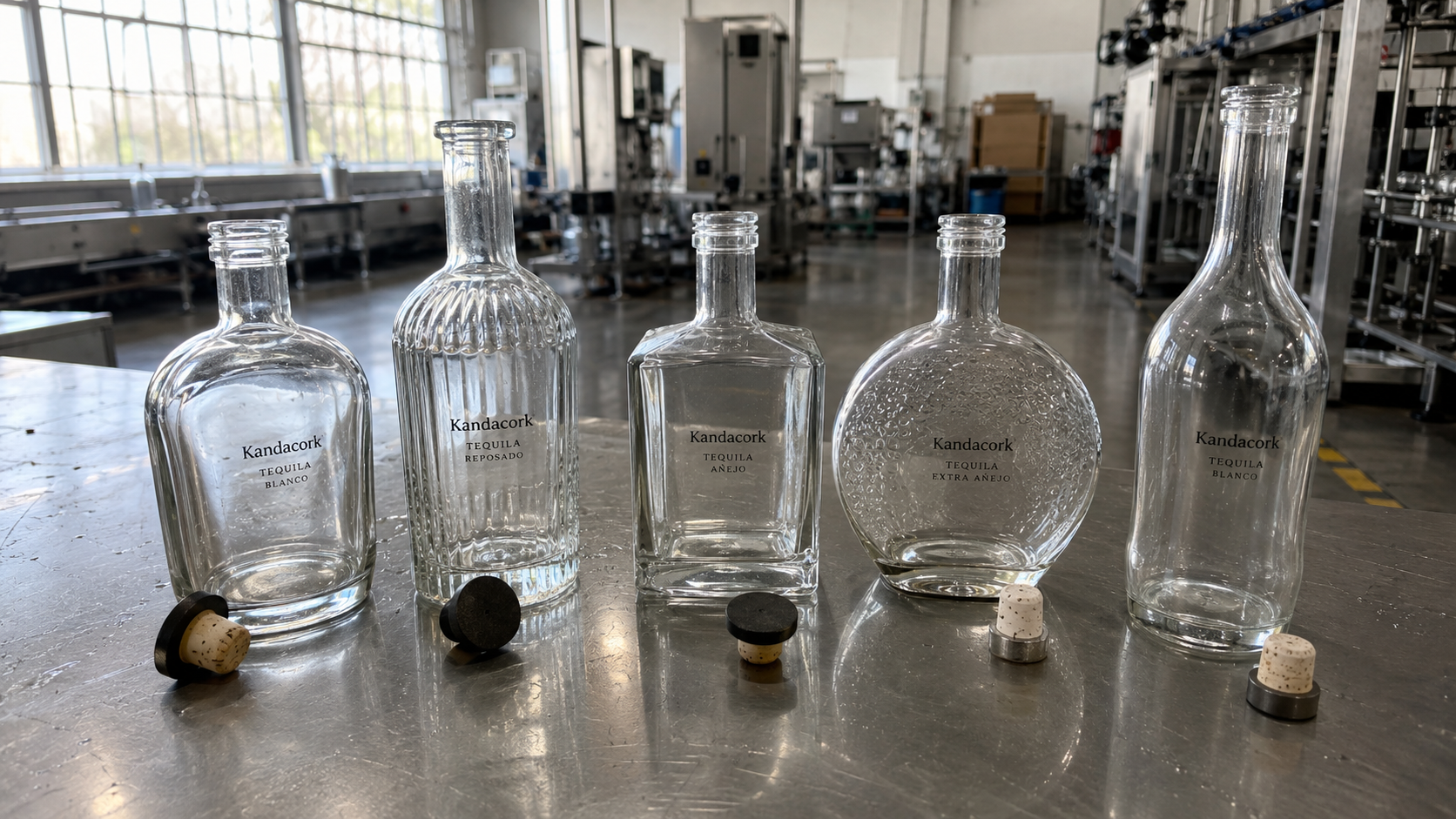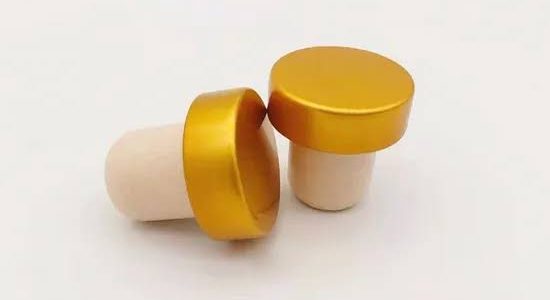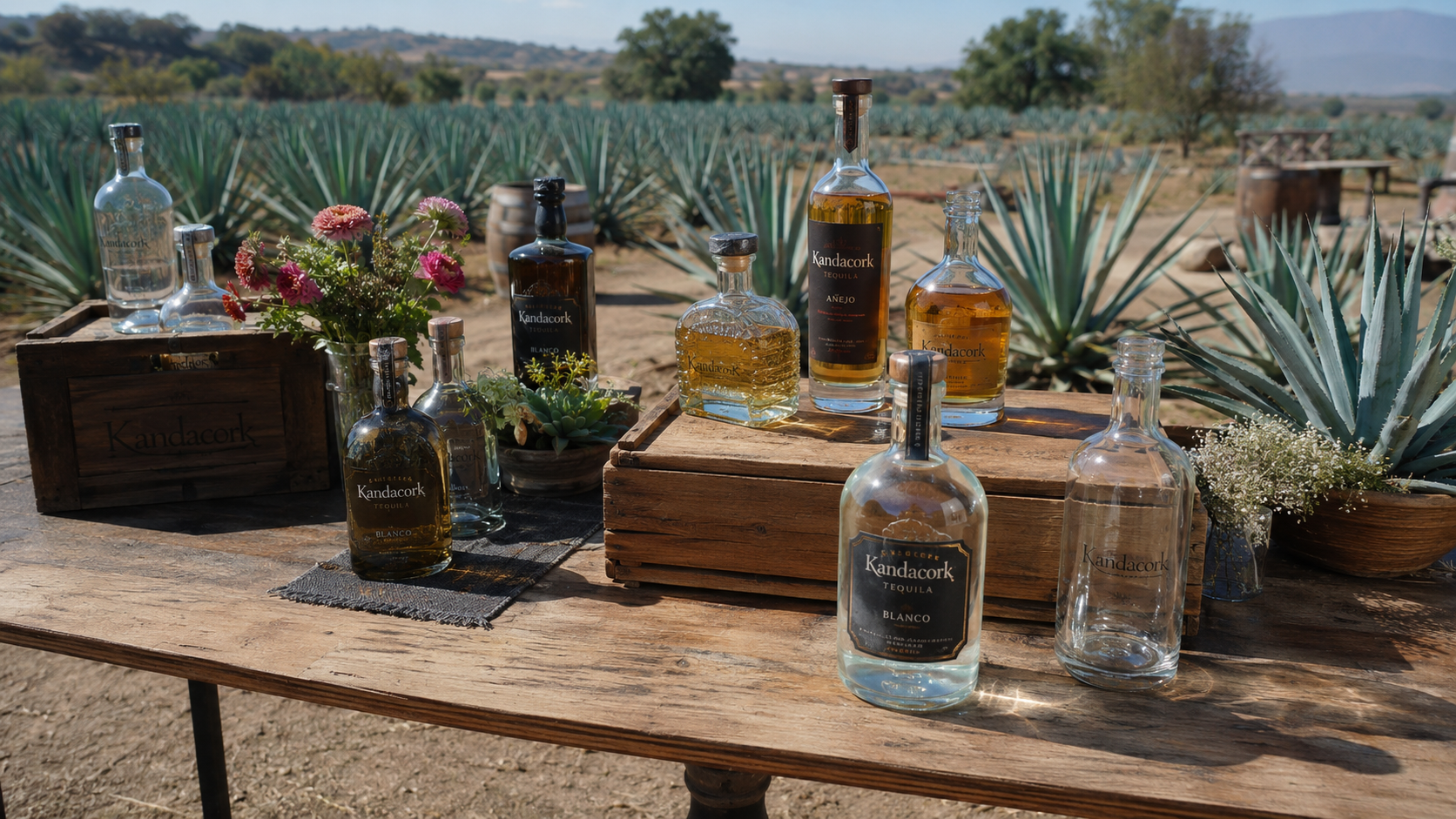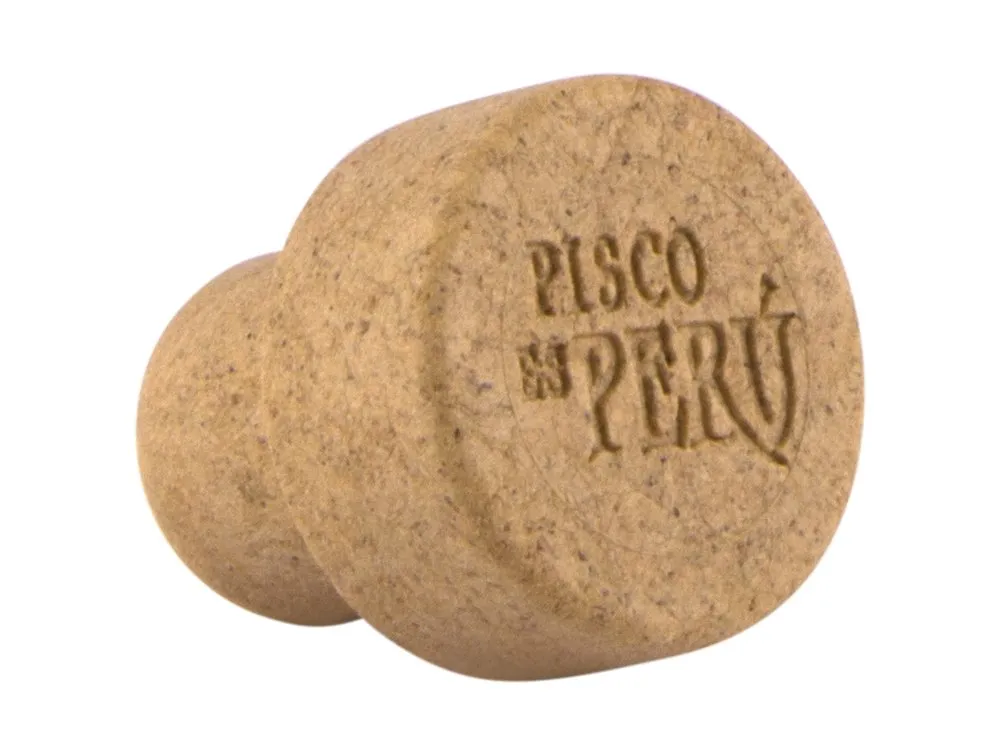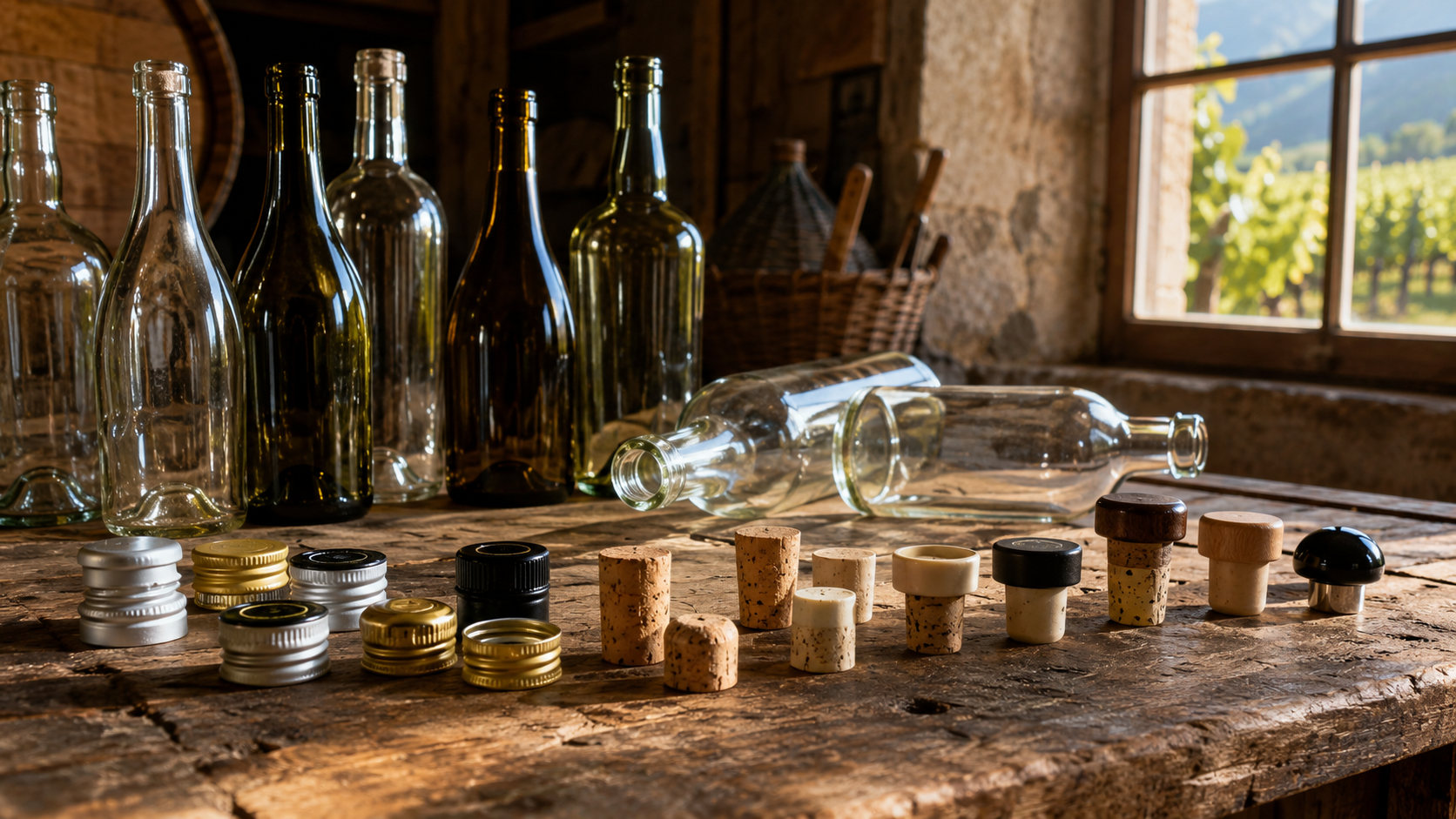
Liquor brands often compare several stopper materials before confirming a closure direction. This guide explains how wooden, metal, glass, plastic and synthetic stoppers differ in appearance, fit, weight, branding flexibility and production requirements.
What a Spirits Bottle Stopper Supplier Should Provide
A professional spirits bottle stopper supplier should provide more than a product catalog. The supplier should help evaluate stopper materials, shank structure, bottle neck fit, decoration method, packing method, quality control requirements and mass-production feasibility.
For B2B buyers, the most important value is application support. A reliable supplier helps determine whether a stopper fits the bottle, seals properly, matches the brand image and performs consistently during filling, packing, shipping and shelf display.
Typical supplier support includes closure material selection, cap and shank structure recommendation, bottle neck compatibility review, sample development, logo decoration, surface finishing, leakage review, export packing and repeat-order planning. These details matter because a closure that looks attractive in a photo may still fail during corking, transport or retail handling.
A basic marketplace seller may only provide available sizes. A professional custom closure supplier helps buyers reduce sourcing risk, especially when developing new bottles, premium spirits packaging or private-label alcohol products.
Quick Buyer Decision Guide
| Buyer Need | Recommended Stopper Direction | Why It Matters |
|---|---|---|
| Premium whiskey or bourbon packaging | Wooden or metal bar-top stopper | Adds weight, tradition and shelf value |
| Modern gin or vodka bottle | Aluminum, glass or clean plastic stopper | Supports minimalist, bright and premium design |
| High-volume liquor production | Synthetic shank, ROPP closure or stable molded stopper | Improves dimensional consistency and line efficiency |
| Custom brand launch | Logo-engraved, embossed or molded stopper | Builds stronger brand recognition |
| Export shipment | Tested cap and shank fit with protective packing | Helps reduce leakage, scuffing and transport rejection |
| Gift-box or limited-edition spirits | Glass, metal or decorative custom stopper | Creates a higher-end unboxing and display experience |
This decision table should be used as a starting point. Final stopper selection should always be confirmed with bottle samples, neck drawings and physical fit testing.
For brands developing the bottle and closure together, integrated custom spirits bottle development can help align bottle structure, neck finish, closure type, decoration area and secondary packaging from the beginning of the project.
Product Capability Overview
Kandacork Closures supports spirits brands that need custom closure design, technical matching and bulk supply. Buyers can compare materials, decoration methods and commercial requirements before starting a custom stopper project.
| Capability | Available Options |
|---|---|
| Stopper materials | Wood, aluminum, plastic, glass, metal, synthetic materials |
| Shank options | Natural cork, micro-agglomerated cork, synthetic shank |
| Closure categories | Bar-top stoppers, T-top closures, screw caps, ROPP closures, non-refillable closures |
| Decoration methods | Engraving, embossing, printing, hot stamping, laser marking, anodizing, color matching |
| Spirits applications | Whiskey, gin, vodka, rum, tequila, mezcal, brandy, cognac, liqueur |
| Buyer types | Distilleries, bottlers, importers, packaging distributors, private-label brands, bottle suppliers |
| Supply support | Sample development, fit review, bulk production, export packing, custom packaging support |
For buyers comparing different closure structures, the full bottle stoppers and closures range can help identify whether a bar-top stopper, screw cap, ROPP cap, capsule or non-refillable system is more suitable for the project.
Main Types of Spirits Bottle Stoppers
Wooden Bar-Top Stoppers
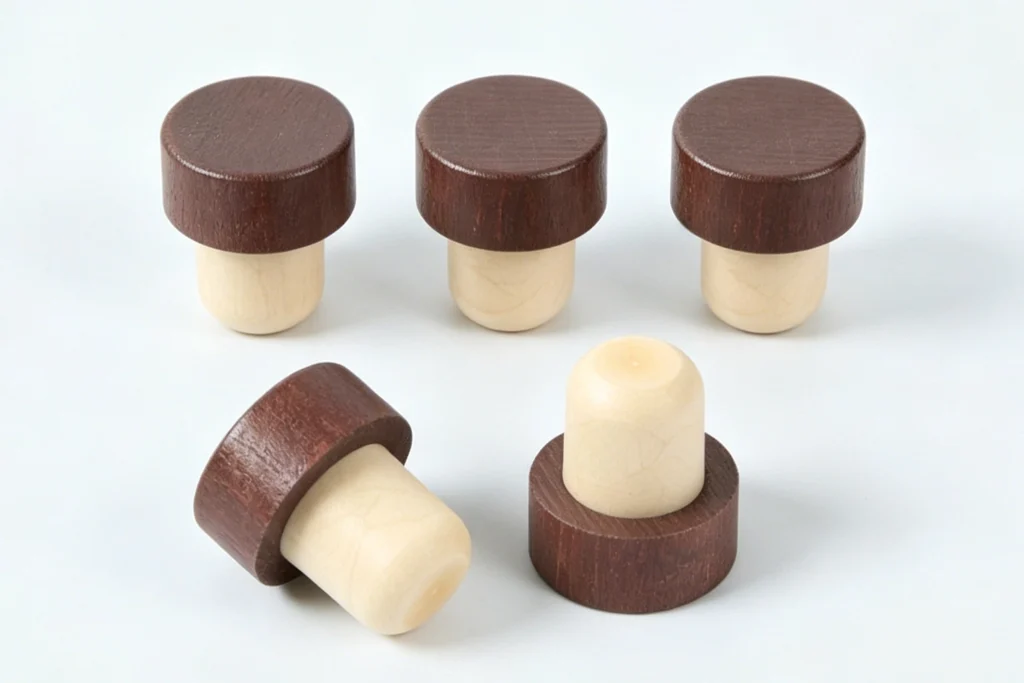
Wooden bar-top stoppers are widely used for whiskey, bourbon, rum, brandy, tequila, mezcal and craft spirits. They create a traditional, warm and premium appearance that works well with amber glass, heavy-base bottles, vintage labels and handcrafted brand stories.
Wood can be stained, laser engraved, debossed, printed or combined with cork and synthetic shanks. For premium whiskey packaging, wooden bar-top stoppers are popular because they offer a natural hand feel and strong shelf identity.
A spirits bottle stopper supplier should help confirm the wood type, color, finish, logo method, cap size and shank structure before bulk production. Small differences in cap diameter or shank fit can change how the closure feels during opening.
Aluminum Stoppers
Aluminum stoppers are suitable for modern, clean and high-end spirits packaging. They are commonly used for vodka, gin, tequila, liqueur and premium private-label spirits where sharp lines, metallic finishes and color consistency are important.
Aluminum bar-top stoppers can be anodized, brushed, polished, printed, embossed or laser marked. They work well for brands that want a modern visual identity and stable dimensional control across multiple bottle sizes.
For luxury vodka or gin packaging, aluminum closures can be combined with synthetic shanks, plastic inserts or decorative top details to balance appearance, cost and sealing performance.
Plastic and Synthetic Stoppers
Plastic and synthetic stoppers are practical for scalable spirits packaging. They can be molded into custom shapes, produced in consistent colors and matched to a wide range of bottle designs.
Plastic does not automatically mean low-end. With the right surface texture, color matching, logo treatment and cap shape, plastic T-top closures can support mid-range, premium and high-volume alcohol packaging projects.
Synthetic shanks are often selected when buyers need predictable compression, stable dimensions and repeatable fit. For large production runs, this consistency can reduce variation and improve compatibility with filling and packing operations.
Glass and Metal Stoppers
Glass stoppers are often used for luxury spirits, gift packaging, limited editions and collectible bottles. They create visual impact and can help the bottle feel more refined, decorative and display-ready.
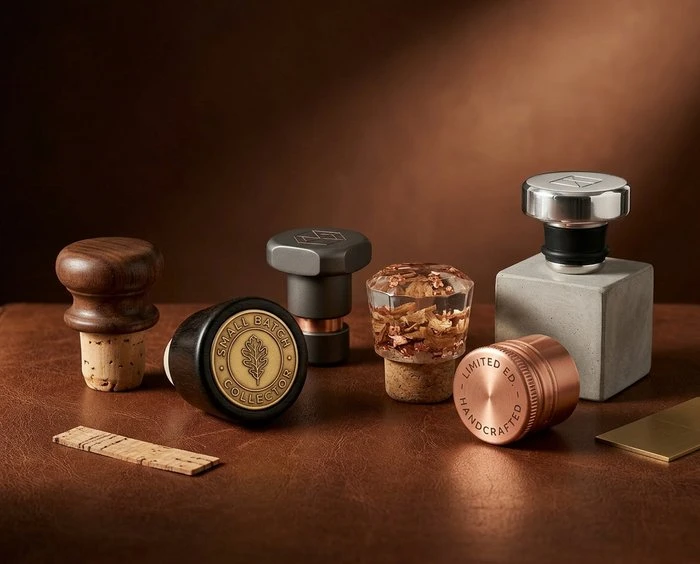
Metal stoppers create a strong premium impression and are often used for flagship spirits, limited releases and luxury gift sets. Metal tops can feel substantial in the hand and can support embossed logos, engraved details, plated finishes and decorative inserts.
For premium spirits packaging, glass and metal stoppers should be reviewed carefully for weight, finish durability, bottle compatibility and packing protection. Surface scratches, loose inserts or poor fit can quickly reduce perceived quality.
Natural Cork, Micro-Agglomerated Cork and Synthetic Shanks
The top of the stopper creates visual appeal, but the shank creates the seal. Common shank materials include natural cork, micro-agglomerated cork and synthetic materials.
Natural cork is valued for tradition and premium perception. Micro-agglomerated cork offers a more uniform structure while maintaining a cork-based look and feel. Synthetic shanks provide controlled compression, consistent diameter and predictable performance for bulk production.
A qualified spirits bottle stopper supplier should recommend the shank based on bottle neck dimensions, alcohol content, expected storage conditions, transport distance and consumer opening experience.
How to Choose the Right Spirits Bottle Stopper Supplier and Closure Type
The best stopper depends on the bottle, spirit category, brand level and production process. Buyers should not select a closure based only on appearance. A beautiful stopper still needs to seal correctly, insert smoothly, pull out comfortably and remain stable during shipment.
| Spirit Type | Common Stopper Choice | Recommended Branding Method | Buyer Notes |
|---|---|---|---|
| Whiskey and bourbon | Wooden or metal bar-top stopper with cork or synthetic shank | Engraving, debossing, hot stamping | Strong fit for heritage and premium positioning |
| Gin | Aluminum, glass or plastic T-top stopper | Color matching, printing, embossing | Suitable for botanical, clean or modern packaging |
| Vodka | Aluminum, glass, plastic stopper or ROPP closure | Metallic finish, minimal logo, smooth surface | Works well with clean lines and precise finish control |
| Rum | Wood, metal or custom molded plastic stopper | Embossing, staining, sidewall texture | Supports bold shapes and darker color palettes |
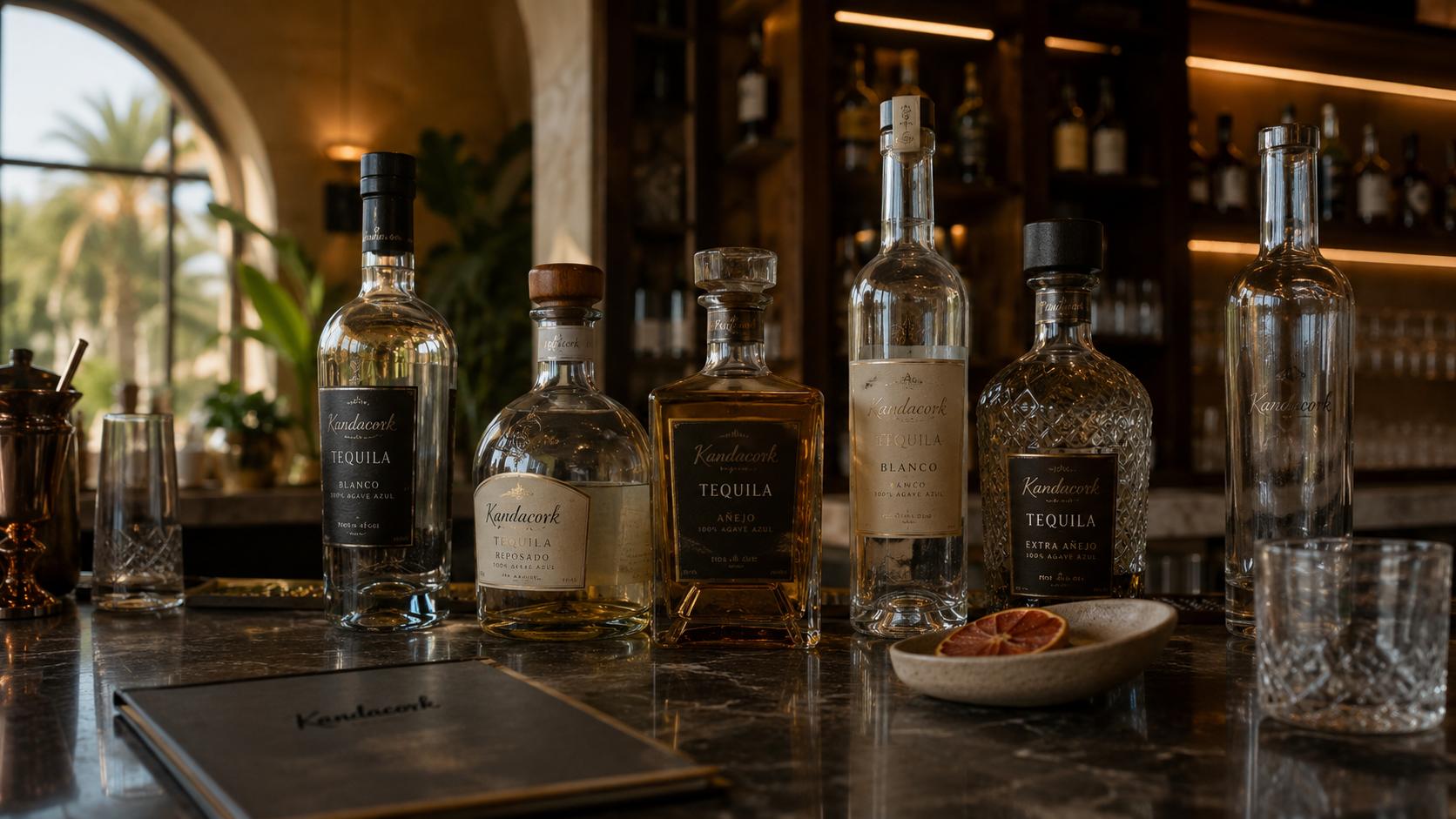
| Tequila and mezcal | Wood, metal, glass or decorative custom stopper | Molded logo, custom top shape, premium finish | Good opportunity for strong cultural and craft identity |
| Brandy and cognac | Glass, metal or premium wood stopper | Luxury decoration, gift-box matching | Requires strong visual consistency and protective packing |
| Liqueur | Glass, aluminum or decorative plastic stopper | Color matching, logo printing, specialty finishes | Useful for flavor lines and gift packaging |
A buyer should prepare the bottle drawing, neck finish details, empty bottle samples, preferred material, logo file, target quantity and destination market before requesting a quote. This helps the supplier review feasibility earlier and reduce unnecessary sampling rounds.
For projects where the closure must match coated glass, screen printing, metallic foils or premium labels, coordinated bottle decoration and branding support can help align stopper color, bottle finish, label artwork and carton presentation.
Supplier Selection Checklist
A reliable supplier should help buyers confirm both design and technical performance. Before choosing a spirits bottle stopper supplier, procurement teams should check whether the supplier can support bottle neck compatibility review, physical samples, custom logo decoration, multiple stopper materials, shank matching, bulk production, export packing and stable batch-to-batch quality.
A strong supplier should also communicate clearly about MOQ, tooling cost, lead time, sample approval, packing method and repeat-order capability. These practical details are especially important for distilleries, private-label spirits brands and packaging distributors that need more than a standard off-the-shelf stopper.
For buyers developing both the glass bottle and closure, working with a team experienced in glass spirits bottle packaging can reduce the risk of mismatched neck finishes, unsuitable closure proportions or decoration conflicts.
Supplier vs. Marketplace Seller for Spirits Bottle Stoppers
For simple sample testing, a marketplace seller may be enough. For custom spirits packaging, a professional supplier is usually a safer choice because the project involves material selection, bottle fit, decoration, packing and repeat production.
| Factor | Professional Supplier | Marketplace Seller |
|---|---|---|
| Bottle neck review | Usually supported | Usually limited |
| Custom decoration | Full process support | Limited options |
| Samples | Project-based sample support | Mostly stock sample only |
| Quality control | Batch and specification control | Varies by seller |
| Bulk export | More suitable for repeated orders | Less predictable |
| Technical advice | Stronger closure and packaging support | Often limited |
| Private-label projects | Better fit for brand development | Usually less flexible |
| Long-term supply | More stable for repeat purchasing | More dependent on available stock |
For buyers developing custom liquor packaging, this difference matters. A stopper that looks acceptable in a product photo may not fit correctly, match the brand finish or perform consistently during shipment.
Cap and Neck Compatibility for Spirits Bottle Stoppers
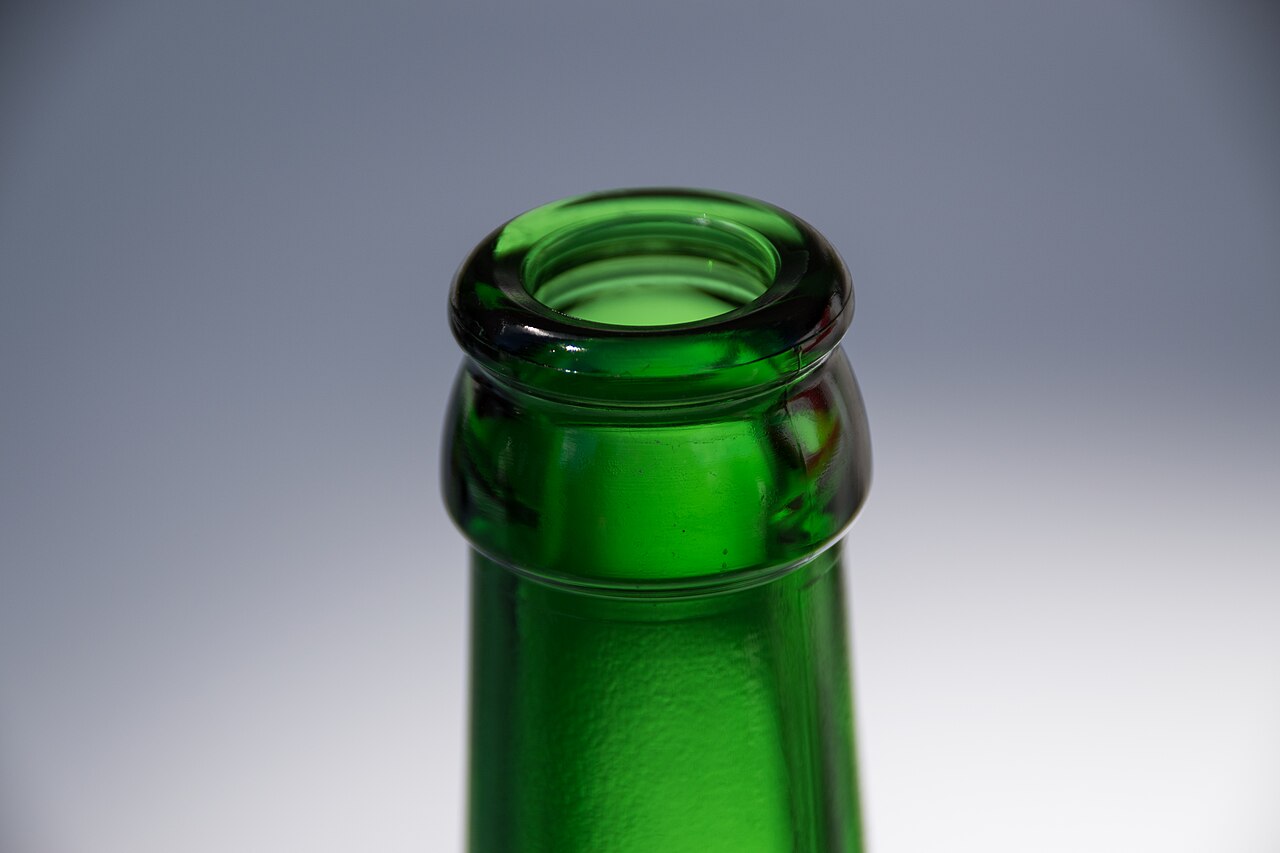
Cap and neck compatibility is one of the most important technical details in spirits packaging. The main measurements include cap diameter, shank diameter, shank length, neck opening, neck finish, taper and insertion depth.
A stopper should insert securely without excessive force. It should also pull out smoothly without feeling loose. If the shank is too small, the bottle may leak or the stopper may feel unstable. If the shank is too large, insertion can be difficult, line performance may suffer and glass stress may increase.
Professional closure development usually includes bottle drawing review, neck finish confirmation, physical bottle sample testing, shank diameter matching, insertion and extraction force review, leakage checks, carton stability review and pre-production sample approval.
This is especially important for custom glass bottles, heavy-base spirits bottles and irregular neck finishes. If a brand changes bottle suppliers, the stopper should be rechecked even if the closure design looks the same.
ROPP Closures, Screw Caps and Tamper-Evident Options
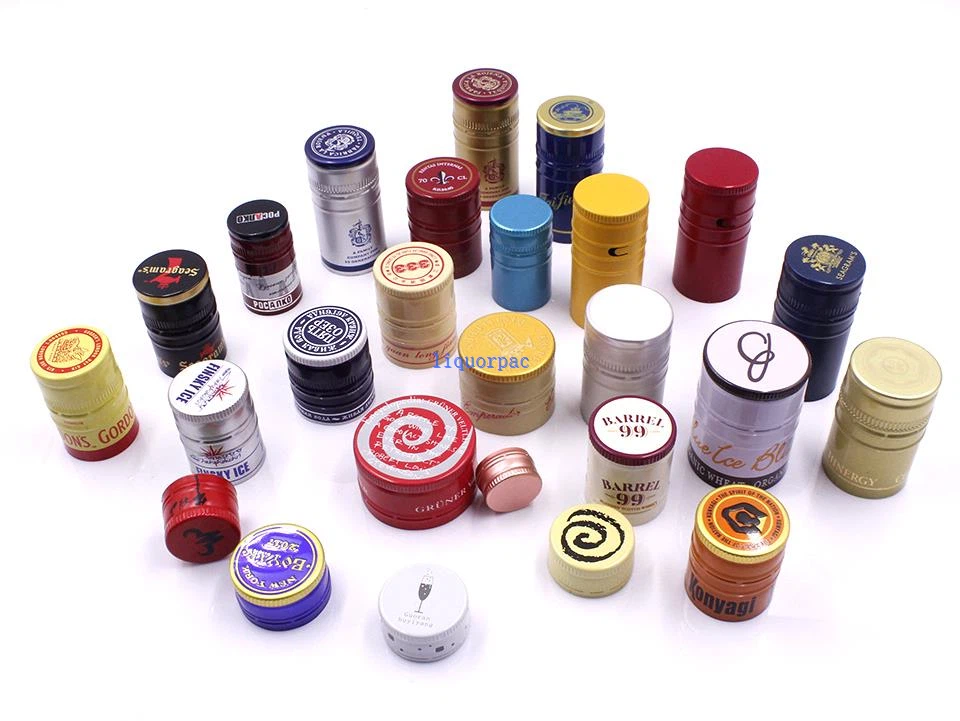
Bar-top stoppers are not the only option for spirits bottles. Some brands choose screw caps or ROPP closures when they need efficient line performance, tamper-evident presentation, resealability or a cleaner modern look.
Custom ROPP closures are commonly used on spirits bottles with roll-on neck finishes. They are often selected for vodka, gin, tequila, RTD spirits and export programs where automated bottling performance and visible security features are important.
In the United States, the Alcohol and Tobacco Tax and Trade Bureau notes that distilled spirits plants and importers are required to securely affix a tamper-evident closure or similar device to bottles or other containers of distilled spirits. Buyers should review closure and packaging decisions together with destination-market requirements before approving production.
Custom Branding Options for Spirits Bottle Stoppers
Custom branding turns a standard closure into a brand asset. For spirits packaging, the stopper is one of the most visible and tactile elements of the bottle. It can communicate quality before the product is opened.
Common customization options include logo engraving, embossing, debossing, hot-foil stamping, screen printing, pad printing, laser marking, wood staining, aluminum anodizing, brushed metal finishes, matte coating, gloss coating, Pantone color matching, molded top shapes, sidewall textures and decorative inserts.
For premium spirits, the stopper should be designed together with the bottle, label, capsule, gift box and secondary packaging. This creates a unified packaging system instead of a collection of separate components.
Sealing Performance, Food-Contact Safety and Quality Control
A professional spirits bottle stopper supplier should treat sealing performance as a core quality requirement. Spirits may be stored upright, packed in cartons, shipped across climates and handled through multiple distribution stages. The stopper must protect product appearance and packaging integrity from filling line to retail shelf.
Food-contact safety is also important. The U.S. Food and Drug Administration explains that food-contact substances include food packaging and its components when they are intended to contact food. For brands selling into Europe, the European Commission states that food-contact materials must not endanger health, change food composition or affect taste and smell in unacceptable ways.
Useful quality checks may include raw material inspection, dimensional tolerance control, cap and shank assembly checks, surface finish inspection, logo position and color checks, insertion and extraction testing, leakage review, carton drop checks, vibration checks, batch traceability and final inspection records.
The International Organization for Standardization describes quality management as a system focused on meeting customer expectations and improving performance over time. For packaging buyers, this makes ISO quality management a useful reference when evaluating whether a supplier can maintain consistent processes, documentation and corrective-action discipline.
MOQ, Samples and Lead Time from a Spirits Bottle Stopper Supplier
Custom closures usually follow a staged workflow. MOQ and lead time depend on material, mold requirements, decoration method, color complexity, tooling, order quantity and packing method.
A typical project begins with a brief covering bottle drawings, target market, spirit type, logo file and estimated volume. The supplier then recommends material, cap shape, shank type, decoration method and preliminary dimensions before preparing a quotation.
Samples are used for visual review, neck-fit testing, insertion performance, extraction feel, leakage checks and line trials. Once the buyer approves specifications, colors, tolerances and packing, bulk production can begin.
Buyers can speed up the process by preparing clear technical files. A bottle drawing, physical bottle samples, closure target size, artwork file and expected annual quantity allow the supplier to respond faster and reduce unnecessary revision cycles.
Before Requesting a Quote, Prepare These Details
Procurement teams can receive faster and more accurate quotations by preparing complete project information before contacting a supplier.
Recommended information includes bottle drawing or neck finish specification, empty bottle samples if available, spirit category, stopper material preference, cap diameter or reference sample, shank material preference, logo file in vector format, target order quantity, annual forecast, destination country, required documents, packing requirements and target launch date.
A clear brief helps the spirits bottle stopper supplier recommend the correct stopper structure, decoration process and sampling path. It also helps reduce unexpected tooling cost, color mismatch, fit problems and production delays.
Common Mistakes When Choosing Spirits Bottle Stoppers
Many packaging problems can be avoided during the sourcing stage. Buyers should review technical fit and production feasibility before confirming a custom design.
Common mistakes include choosing by appearance only, ignoring bottle neck tolerance, skipping physical sample testing, using one stopper across different bottle suppliers without retesting, confirming decoration before checking material feasibility, forgetting export packing protection and waiting too long to test the stopper on the filling line.
The safest approach is to confirm bottle fit, closure structure, logo effect, sealing behavior, packing method and bulk-production tolerance before mass production begins.
Sustainability and Packaging System Considerations
Sustainability in spirits packaging should be practical, measurable and aligned with the full package. A stopper may be small, but it interacts with the bottle, capsule, label, gift box, carton and distribution system. Brands should consider material choice, component separation, decoration coverage, recycled content, logistics weight and packaging claims together.
The Glass Packaging Institute notes that glass can be recycled endlessly with no loss in quality or purity. For spirits brands using glass bottles, this makes closure selection part of a broader packaging strategy: the stopper should support premium presentation without making filling, transport, reuse, recycling or material recovery unnecessarily difficult.
For brands with sustainability targets, coordinated eco glass packaging can help connect closure choice with bottle weight, recycled content, decoration method and export logistics.
Spirits Stopper Solutions by Application
Whiskey and Bourbon Bottle Stoppers
Whiskey and bourbon brands often choose wooden or metal bar-top stoppers because they support a premium, traditional and collectible look. A cork, micro-agglomerated cork or synthetic shank can be matched to the glass neck to create the desired pull-out feel.
For craft whiskey brands, the stopper can also support storytelling. A laser-engraved wood top, textured sidewall, antique metal insert or dark stained finish can help the bottle stand apart on crowded retail shelves.
Gin and Vodka Bottle Stoppers
Gin and vodka packaging often uses cleaner, brighter and more modern closure designs. Aluminum, glass and high-quality plastic stoppers work well for brands that want minimalist lines, metallic finishes, transparent effects or precise color matching.
For gin, the closure can echo botanical cues through color, texture or decorative detail. For vodka, the stopper often supports purity, sharpness and premium simplicity.
Rum and Tequila Bottle Stoppers
Rum and tequila packaging can be more expressive. Custom molded tops, darker stains, embossed logos, metallic medallions and bold sidewall textures can make the bottle feel more distinctive.
For tequila and mezcal brands, the closure may need to support both authenticity and premium shelf impact. A custom stopper can help create a memorable visual identity without changing the entire bottle mold.
Brandy, Cognac and Liqueur Bottle Stoppers
Brandy, cognac and liqueur products often rely on elegance, weight and giftability. Glass and metal stoppers are strong choices for limited-edition and high-value SKUs. Wooden stoppers can also work when the brand wants a classic, warm or artisanal look.
For gift boxes, protective packing matters. Heavy or delicate stoppers should be packed carefully to prevent scratching, impact marks and finish damage during international transport.
Why Choose Kandacork Closures as Your Spirits Bottle Stopper Supplier
Kandacork Closures supports B2B spirits packaging buyers that need custom closures, reliable samples, stable production and export-ready supply. The company provides custom spirits bottle stoppers, bar-top closures, screw caps, ROPP closures, non-refillable closures, capsules and shrink sleeves for premium bottle packaging projects.
Choosing Kandacork Closures as your spirits bottle stopper supplier can help reduce sourcing uncertainty. Instead of selecting a stopper only by appearance, buyers can review material options, bottle fit, shank structure, logo decoration, quality checks, packing and production requirements before ordering in bulk.
The company is suitable for distilleries developing new spirits packaging, whiskey brands, gin brands, vodka brands, rum brands, tequila brands, liqueur brands, private-label spirits companies, packaging distributors, bottle manufacturers, importers and design agencies supporting premium spirits launches.
A strong closure supplier should help protect both product quality and brand value. Kandacork Closures focuses on custom design, technical fit and scalable supply so spirits brands can move from packaging concept to commercial production with greater confidence.
FAQ
What is the best stopper for spirits bottles?
The best stopper depends on bottle neck size, spirit category, brand positioning and filling-line requirements. Whiskey and rum often use wooden or metal bar-top stoppers, while gin and vodka brands often choose aluminum, glass, plastic or ROPP closures. The final choice should be confirmed through bottle-fit and sealing tests.
How do I know which stopper size fits my bottle?
You need the bottle neck drawing, neck opening, finish details and physical bottle samples. The supplier should check shank diameter, shank length, insertion depth and pull-out feel before mass production.
Can spirits bottle stoppers be customized with a logo?
Yes. Common options include engraving, embossing, debossing, printing, hot stamping, laser marking, color matching and custom molded top shapes. The best method depends on the stopper material, logo complexity and target finish.
What is the difference between natural cork and synthetic cork shanks?
Natural cork offers traditional appearance and premium perception. Synthetic shanks provide more consistent dimensions and compression. Micro-agglomerated cork sits between the two, offering a cork-based look with more uniform structure.
Should I order samples before bulk production?
Yes. Samples are strongly recommended before bulk orders. They allow the buyer to test visual appearance, neck fit, insertion force, extraction force, leakage resistance and line compatibility.
What information is needed for a custom stopper quote?
Prepare the bottle drawing, real bottle samples if available, spirit type, target quantity, logo file, material preference, color requirements, packing method and destination market. This helps the supplier recommend the correct structure and quote accurately.
What MOQ is required for custom spirits bottle stoppers?
MOQ depends on stopper material, mold requirements, decoration process and order complexity. Standard or semi-custom designs usually have lower MOQs, while fully custom shapes, special finishes and multi-step decoration often require larger production runs.
Can Kandacork Closures supply stoppers for private-label spirits?
Yes. Kandacork Closures can support private-label spirits projects with custom stopper materials, logo decoration, color matching, bottle-fit review, sample development and bulk production planning.
Which stopper is suitable for premium whiskey packaging?
Premium whiskey packaging often uses wooden or metal bar-top stoppers with cork, micro-agglomerated cork or synthetic shanks. These options provide a traditional appearance, comfortable opening feel and strong shelf presence.
Can I use the same stopper for different spirits bottles?
Not always. Even if bottles look similar, the neck opening, taper, finish tolerance and insertion depth may differ. Each bottle should be tested with the stopper before bulk production.
What is the difference between a bar-top stopper and a screw cap?
A bar-top stopper uses a top cap and shank that presses into the bottle neck, while a screw cap uses threads or a closure finish to seal the bottle. Bar-top stoppers are common for premium spirits, while screw caps and ROPP closures are often used for efficiency, tamper evidence and high-volume production.
Start a Custom Spirits Stopper Project
Need custom stoppers for whiskey, gin, vodka, rum, tequila, brandy or liqueur bottles? Prepare your bottle drawing, neck finish, logo file, target quantity and packaging requirements, then share your closure brief with Kandacork Closures.
The team can help review stopper materials, shank options, decoration methods, samples and bulk supply plans for your next spirits packaging project.