A practical diagnosis guide for spirits brands, distilleries, bottlers, and packaging buyers choosing cork stoppers, ROPP caps, screw caps, and custom closures.
Bottle leakage is one of the most expensive packaging failures for spirits brands and bottlers. It can damage labels, stain cartons, create distributor complaints, and weaken the premium shelf presentation of whiskey, vodka, gin, rum, tequila, brandy, liqueur, and private label spirits.
Although the closure is often blamed first, leakage usually comes from the complete packaging system: bottle neck finish, sealing land, bore diameter, closure liner or cork shank, application torque, filling conditions, and transport stress.
This guide explains the bottle neck finish problems that cause leakage most often and shows packaging buyers what to check before ordering cork stoppers, synthetic stoppers, ROPP caps, screw caps, or custom spirits bottle closures and stoppers.
Quick Answer: What Bottle Neck Finish Problems Cause Leakage?
The most common bottle neck finish problems that cause leakage are incorrect neck finish, damaged sealing land, wrong bore diameter, out-of-round necks, poor thread engagement, incorrect ROPP bead design, finish height mismatch, and bottle batch variation.
In spirits packaging, leakage usually happens when the bottle neck and closure are not tested as one system before bulk production.
Leakage Diagnosis Flow: When Does the Leak Appear?
| When leakage appears | Most likely cause | First action |
|---|---|---|
| Immediately after filling | Wrong closure fit, poor torque, damaged sealing land | Inspect closure application and sealing surface |
| After side-lay storage | Bore mismatch, liner failure, poor compression | Test stopper fit or liner contact |
| After shipping | Torque back-off, temperature change, neck ovality | Compare pre-shipment and post-shipment samples |
| Only on some bottles | Batch variation or out-of-round necks | Measure multiple bottles from the same batch |
| Under tamper band | ROPP bead or roller issue | Review ROPP finish and capping setup |
Closure-Specific Leakage Symptoms
| Leakage symptom | Likely bottle neck problem | Closure type affected | What to check |
|---|---|---|---|
| Liquid appears under capsule | Damaged or uneven sealing land | ROPP cap, screw cap | Top sealing surface and liner contact |
| Cork feels loose | Oversized bore diameter | Bar-top cork, synthetic stopper | Bore ID and cork shank diameter |
| Cork shaves during insertion | Undersized bore or rough mouth | Cork stopper, synthetic stopper | Bore tolerance and insertion depth |
| Cap spins after application | Poor thread engagement | Screw cap | T dimension, thread profile, cap match |
| Tamper band fails | Incorrect ROPP bead or pilfer area | ROPP aluminum closure | Bottle drawing and roller setup |
| Leakage appears after shipping | Neck ovality, torque loss, or poor fit | Cork, ROPP, screw cap | Transport test and batch inspection |
| Only some bottles leak | Bottle tolerance variation | All closure types | Compare leaking and non-leaking bottles |
What Is a Bottle Neck Finish?
A bottle neck finish is the shaped top section of a bottle that connects with the closure. It may include the mouth, bore, sealing land, thread, bead, shoulder transition, and finish height.
For threaded bottles, packaging engineers often use dimensions such as T, E, I, S, and H to describe the neck finish. These measurements help define the thread diameter, bore diameter, neck height, and closure fit. GPI/SPI neck finish terminology is commonly used when matching bottles and closures.
For spirits bottles using cork stoppers, the most important neck dimensions are usually the bore inner diameter, mouth roundness, cork insertion depth, and finish quality. For ROPP aluminum closures, the critical areas include the top sealing land, roll-on area, skirt contact zone, and tamper-evident bead.
A bottle may look correct visually but still leak if the actual bottle neck finish does not match the closure design.
1. Incorrect Neck Finish
One of the most common bottle neck finish problems that cause leakage is using a closure designed for a different finish.
This often happens when a buyer selects a bottle for its shape and then chooses a closure for its appearance. The two parts may look compatible, but their dimensions may not match.
For example, a 28 mm screw cap is not automatically suitable for every 28 mm bottle neck. Thread style, finish height, liner contact, and cap depth all matter. A continuous thread cap, ROPP cap, and cork stopper each require different neck conditions.
When the neck finish is wrong, the cap may not create enough sealing pressure, the liner may not compress evenly, or the stopper may feel loose. The result can be leakage during inversion, filling-line handling, or transport.
Before ordering closures, confirm the bottle technical drawing, neck finish standard, bottle sample, closure type, liner or cork shank material, and filling equipment.
2. Damaged or Uneven Sealing Land
The sealing land is the top surface of the bottle mouth where a linered cap, ROPP liner, or sealing insert makes contact. If this area is chipped, tilted, rough, scratched, contaminated, or uneven, the liner may not seal completely.
Even a small defect can create a leakage channel. This can cause liquid to appear under the capsule, around the cap, or inside shipping cartons.
This problem is often difficult to see at first because the closure may still look properly applied. Leakage may appear only after inversion testing, side-lay storage, or transport vibration.
To diagnose this issue, inspect leaking bottles under strong light and compare them with non-leaking bottles from the same production batch. If the cap and liner look normal but leakage appears around the top, the sealing land should be checked carefully.
A high-quality closure cannot fully compensate for a damaged bottle mouth. For bulk spirits packaging, bottle finish inspection should be part of pre-production quality control.
3. Incorrect Bore Diameter for Cork or Synthetic Stoppers
For bar-top corks and synthetic stoppers, bore diameter is one of the most important sealing dimensions. If the bore is too large, the stopper may not generate enough compression. If the bore is too small, the stopper may shave, deform, or sit too high after insertion.
An oversized bore can lead to loose stopper fit, low pull-out force, cork seepage, poor reseal feel, or stopper movement during shipping. An undersized bore can cause difficult insertion, cork shaving, stopper deformation, or stress around the bottle mouth.
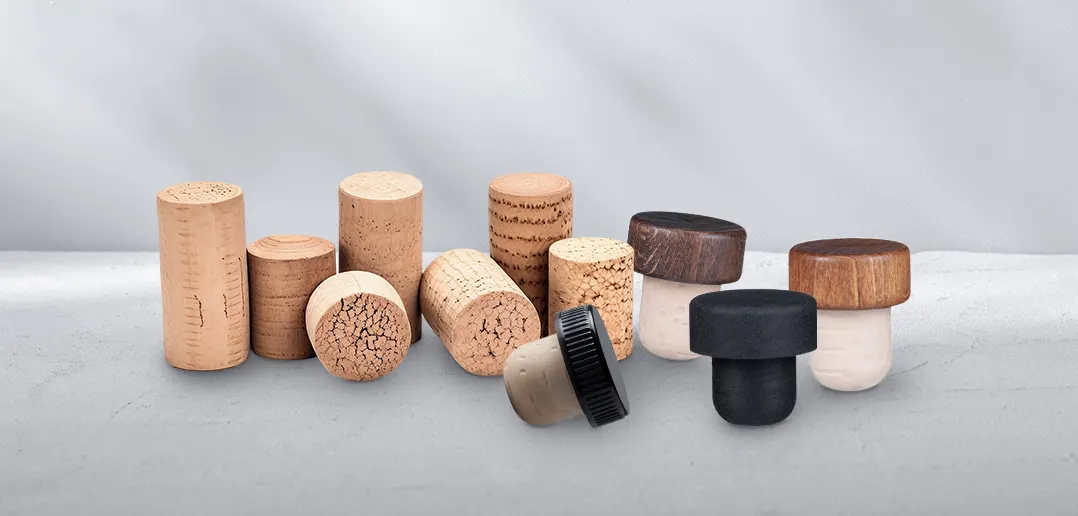
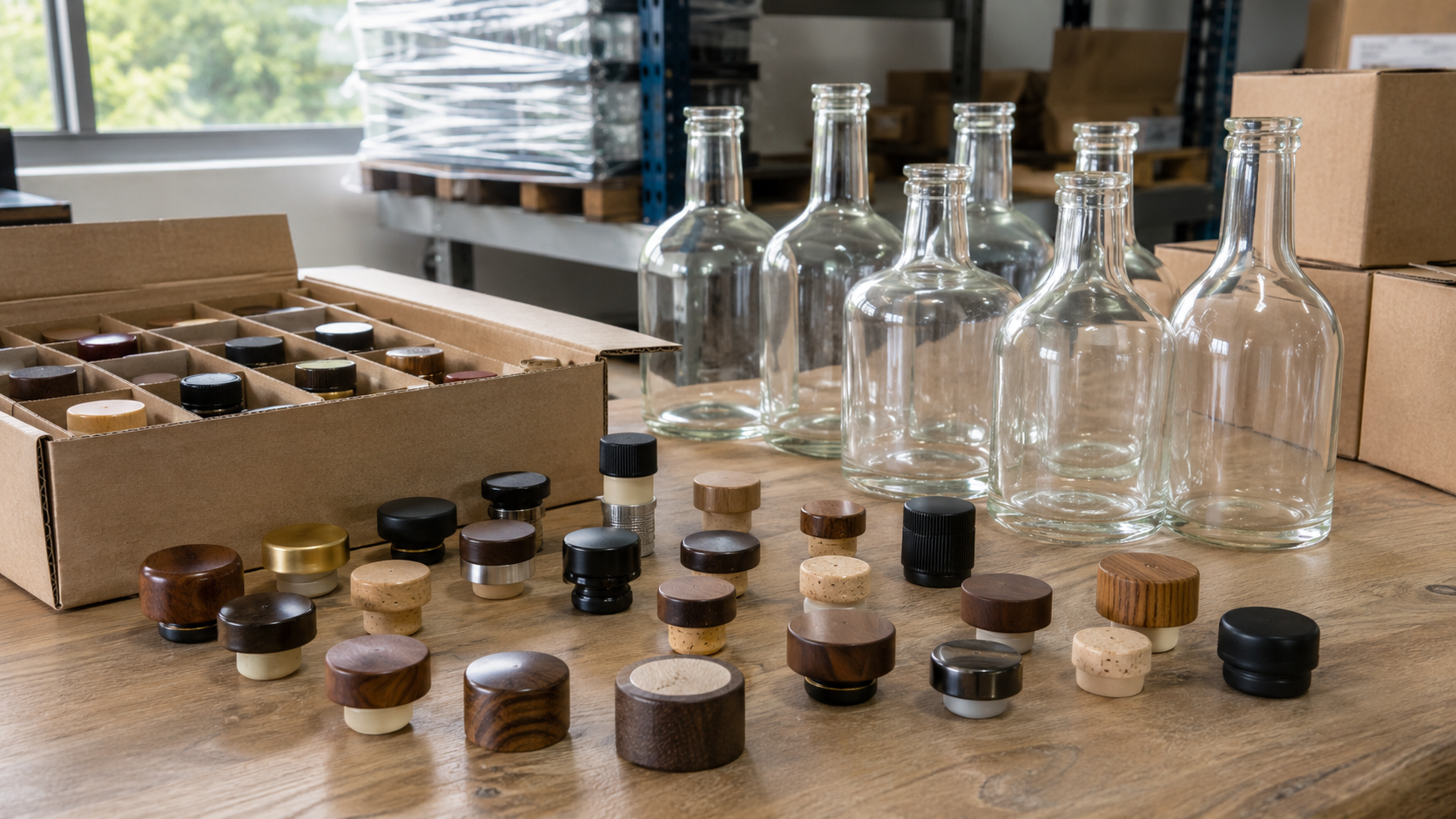
This is especially important for premium spirits packaging using natural cork bar-top stoppers, micro-agglomerated cork stoppers, synthetic shank stoppers, wooden-top stoppers, zamac-top stoppers, or custom decorative bar-top closures. For a deeper explanation of shank compression and neck-bore matching, see this guide on how bar-top stoppers fit spirits bottle necks.
The best solution is to confirm the actual bore inner diameter and tolerance range, then test closure samples on real production bottles. Nominal bottle size is not enough for stopper selection.
4. Out-of-Round Bottle Neck
A bottle neck may measure correctly in one direction but still be slightly oval. This is called an out-of-round neck.
Out-of-round necks can cause random leakage because the closure may seal well on one side and poorly on another. This problem can affect cork stoppers, synthetic stoppers, ROPP closures, and screw caps.
For cork stoppers, neck ovality creates uneven compression around the shank. For screw caps or ROPP closures, the liner may not receive equal pressure across the sealing surface.
This issue is easy to miss if only one measurement is taken. To diagnose it, measure the bore or outside neck diameter at several points while rotating the bottle. If the measurement changes noticeably, roundness may be part of the leakage problem.
If only a small percentage of bottles leak, bottle tolerance variation or ovality may be more likely than a complete closure design failure.
5. Poor Thread Engagement
Threaded caps depend on correct engagement between the bottle thread and cap thread. If the thread profile is shallow, damaged, inconsistent, or mismatched, the cap may not apply enough downward force to compress the liner.
Poor thread engagement can cause cap spinning, cap back-off, low removal torque, uneven liner compression, or leakage during transport.
Application torque and removal torque are important quality-control indicators for screw caps. A cap that feels tight immediately after application may still leak later because of liner relaxation, thread mismatch, or torque back-off.
For screw cap projects, buyers should check the bottle T dimension, thread finish series, cap thread profile, liner material, application torque range, removal torque target, and capping machine settings.
Too little torque can cause leakage. Too much torque can damage the liner, distort the cap, or create consumer-opening problems. The correct torque window should be tested before bulk production.
6. Incorrect ROPP Bead or Tamper-Evident Area
ROPP aluminum closures are widely used for spirits because they provide tamper evidence, a clean metal appearance, and efficient high-volume application. However, they require an accurate bottle neck finish.
A ROPP cap is not simply screwed onto the bottle. It is rolled onto the bottle neck by capping rollers. The cap skirt must form around the thread and tamper-evident bead correctly.
If the bead is too high, too low, too shallow, or inconsistent, the tamper band may fail. If the sealing land is poor, the liner may not seal. If the cap skirt does not match the finish height, the package may look correct but leak during distribution.
ROPP Troubleshooting Table
| ROPP issue | Possible cause | Buyer action |
|---|---|---|
| Band does not break cleanly | Wrong bead or roller setting | Check bottle drawing and capping head |
| Leakage under cap | Poor sealing land or liner contact | Test liner compression |
| Cap skirt wrinkles | Cap height or roller pressure mismatch | Adjust closure size and machine setup |
| Cap spins after rolling | Poor forming or wrong finish | Review ROPP finish standard |
| Tamper band sits too high or too low | Bead position or skirt length mismatch | Confirm cap height and neck finish |
Before confirming a ROPP closure order, test the actual bottle, cap, liner, and capping equipment together.
7. Finish Height Mismatch
Finish height affects how deeply a cap sits on the bottle and how well the liner contacts the sealing surface. If the closure is too shallow, it may not fully engage. If the closure is too deep, it may bottom out before the liner seals correctly.
Finish height can also affect decorative packaging components such as aluminum overcaps, PVC capsules, heat shrink capsules, wooden tops, metal decorative caps, tamper-evident sleeves, and pourer inserts.
Sometimes leakage is not caused by the main closure alone. A decorative cap, sleeve, or overcap may interfere with cap seating, stopper insertion, or tamper-band formation.
For premium spirits bottles, visual fit and sealing performance should be approved together. A closure that looks elegant but does not seal reliably is not ready for bulk production. If the project also requires bottle selection, decoration, and secondary packaging coordination, Kandacork’s spirits packaging team can help buyers review the wider packaging direction through complete spirits bottle packaging support.
8. Bottle Batch Variation
A closure may work well on sample bottles but fail during mass production. This often happens when production bottles differ slightly from the sample batch.
Possible causes include different glass molds, different bottle suppliers, updated bottle drawings, mold wear, mixed bottle batches, wider finish tolerance, or production handling damage.
For private label spirits buyers and importers, this is a common risk when bottles and closures are purchased from different suppliers.
Do not approve closures based on one bottle sample only. Test multiple bottles from the real production batch. For large orders, run a small pilot filling trial before approving full closure production.
Real-World Example: Leakage After Sea Shipment
A private label gin bottle may pass the filling-line inversion test but leak after sea shipment. The closure looks correctly applied, but only 3–5% of bottles show liquid under the capsule.
In this case, the issue may not be a complete closure design failure. More likely causes include neck ovality, inconsistent sealing land, torque back-off, temperature changes, or bottle batch variation.
The next step is to compare leaking and non-leaking bottles from the same batch. Check sealing land quality, measure neck roundness, inspect liner contact, and test removal torque after storage.
Closure Compatibility by Closure Type
| Closure type | Key neck requirement | Main leakage risk | What to test |
|---|---|---|---|
| Bar-top cork | Bore ID, roundness, insertion depth | Loose stopper, cork seepage | Pull-out force, side-lay test |
| Synthetic stopper | Bore tolerance, compression recovery | Poor reseal, inconsistent fit | Compression and alcohol resistance |
| ROPP cap | Sealing land, bead, cap height | Tamper-band failure, liner leakage | Roller setup and inversion test |
| Screw cap | Thread match, liner contact, torque | Cap back-off, low removal torque | Application and removal torque |
| Decorative cap | Clearance, insert fit | Interference with primary seal | Full-packaging fit test |
Pre-Bulk Order Test Protocol
A professional leakage prevention program should include both dimensional inspection and real packaging tests. For buyers building a more formal QC process, the related Kandacork guide on spirits bottle closure leakage prevention before bulk orders explains how neck finish checks, cork fit, torque testing, liners, and sample review work together.
Standards such as ASTM D4991 are useful references for understanding leakage testing under differential pressure conditions, especially where air transport or pressure changes may affect packaging integrity.
Stage 1: Drawing Review
Review the bottle drawing, closure drawing, neck finish standard, bore ID, finish height, thread profile, ROPP bead, and sealing land requirements.
Stage 2: Sample Fit Test
Fit closure samples onto empty bottles. Check cork insertion, cap seating, visual alignment, decorative clearance, and whether the closure sits at the correct height.
Stage 3: Filled Bottle Test
Fill bottles with test liquid or actual product. Run inversion testing, side-lay testing, and temperature cycling to check liner behavior, cork compression, and leakage resistance.
Stage 4: Line Trial
Test the closure on the actual filling line. Check capping or corking equipment settings, application torque, removal torque, pull-out force, rejection rate, and appearance after application.
Stage 5: Shipment Simulation
Simulate transport stress where possible. Check carton staining, bottle orientation, vibration effects, post-storage torque, and leakage after temperature or pressure changes.
Buyer Checklist Before Requesting Closure Samples
Before requesting closure samples or a quotation, prepare:
- Bottle technical drawing
- Neck finish standard or dimensions
- Bore ID for cork or stopper bottles
- Physical bottle samples
- Target closure type
- Alcohol percentage and fill volume
- Capping or corking equipment
- Shipping and storage conditions
- Decoration requirements
- Estimated order quantity
This information helps Kandacork Closures & Stoppers recommend the correct cork stopper, synthetic stopper, ROPP closure, screw cap, liner, cap height, decoration method, and testing plan.
What Kandacork Checks Before Recommending a Closure
Kandacork Closures & Stoppers supports spirits brands, distilleries, private label buyers, importers, distributors, bottlers, and packaging buyers with closure selection and compatibility review.
Before recommending a closure, Kandacork can review:
- Bottle drawing and neck finish standard
- Bore ID and cork shank fit
- ROPP bead and cap height
- Screw cap thread and liner contact
- Sealing land condition
- Decoration clearance
- Filling-line requirements
- Sample fit before bulk order
Instead of choosing a closure only by appearance, buyers can send bottle drawings and physical samples for spirits bottle closure fit testing and neck compatibility support. The team can help evaluate cork stopper fit, synthetic stopper sizing, ROPP cap matching, screw cap liner selection, decorative cap structure, and sample testing before bulk orders.
This reduces leakage risk, improves packaging consistency, and helps buyers move from design approval to production with more confidence.
Technical Review Note
This guide is prepared for spirits packaging buyers who need to match glass bottle neck finishes with cork stoppers, synthetic stoppers, ROPP closures, screw caps, and decorative caps before bulk production.
Kandacork recommends confirming closure fit with actual bottle samples and filling-line testing before mass orders. Drawings are useful, but real bottle samples are essential for checking sealing land quality, bore tolerance, cap seating, liner contact, stopper compression, and closure appearance.
FAQ
What bottle neck finish problems cause leakage?
Common bottle neck finish problems that cause leakage include incorrect neck finish, damaged sealing land, wrong bore diameter, out-of-round necks, poor thread engagement, incorrect ROPP bead design, finish height mismatch, and bottle batch variation.
Why does my spirits bottle leak during shipping?
A spirits bottle may leak during shipping because of vibration, temperature changes, pressure changes, torque loss, cork compression loss, poor liner contact, or bottle neck tolerance variation.
Why does a screw cap leak even when it feels tight?
A screw cap may feel tight but still leak if the liner is not compressed correctly, the thread engagement is poor, the sealing land is damaged, or torque drops after the closure settles.
What causes ROPP cap leakage?
ROPP cap leakage may be caused by incorrect ROPP neck finish, poor sealing land, wrong cap height, unsuitable liner, incorrect roller pressure, or tamper bead mismatch.
What should I send before requesting closure samples?
Send the bottle technical drawing, physical bottle samples, neck finish details, closure type, alcohol percentage, fill volume, capping equipment details, decoration requirements, and estimated order quantity.