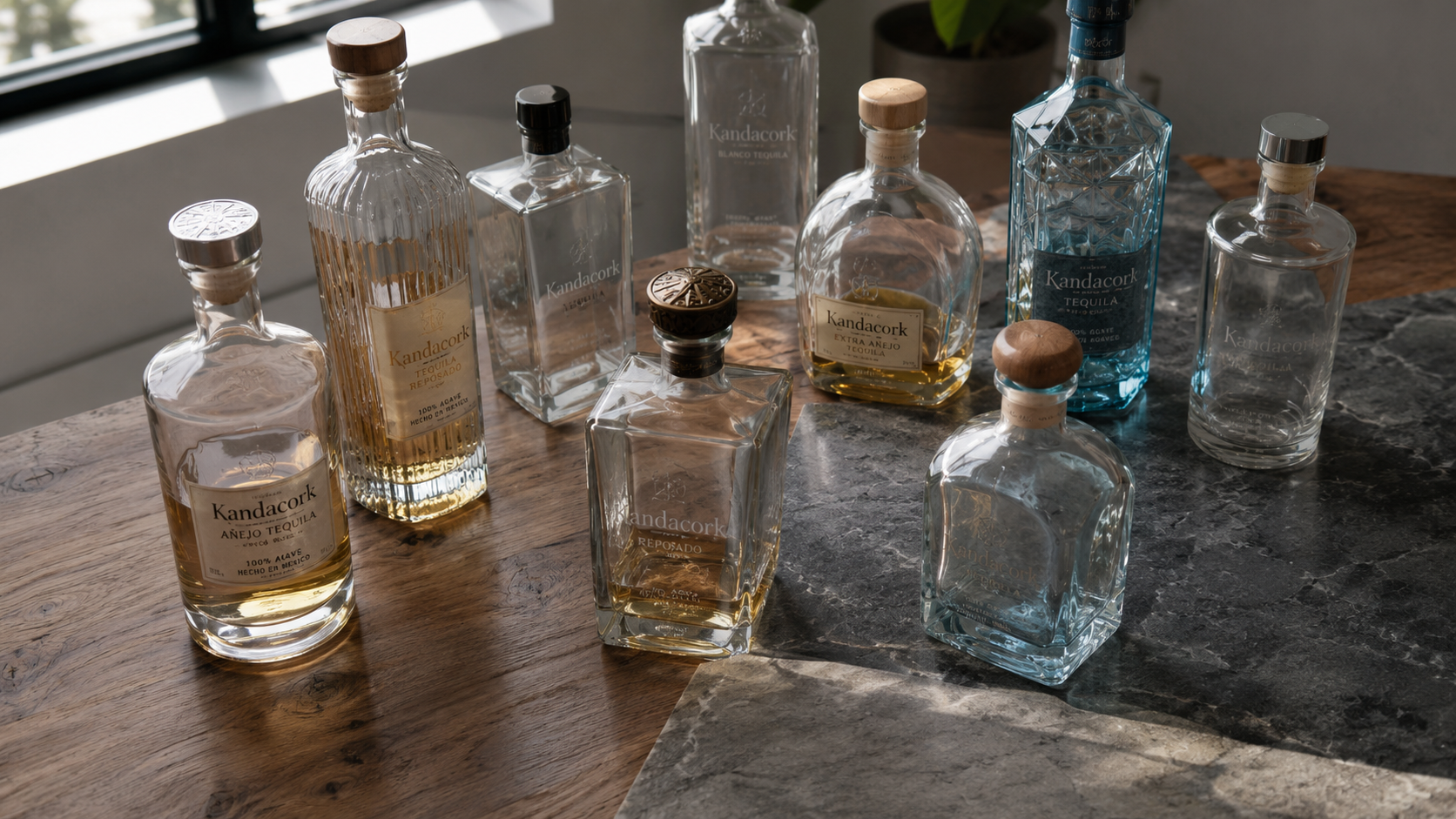
Direct Answer
Glass stoppers with cork shanks need precise fit testing to avoid loose closures, leakage or difficult opening. This guide explains cork shank size, compression, insertion feel, bottle neck tolerance and sample approval for spirits bottle projects.
Why This Closure Matters in Premium Packaging
For a premium bottle, the closure is not a small finishing detail. It is the part customers touch first, remove first, and often reuse after every pour. A clear, frosted, tinted, or faceted glass head can create immediate shelf appeal, while the cork shank determines how securely the stopper sits inside the bottle neck.
This is why many spirits and specialty packaging teams choose custom glass stoppers when they want a closure that looks luxurious but still performs as a practical resealing component. The goal is not only to decorate the bottle. The goal is to create a closure system that fits the bottle, protects the product experience, and supports the brand’s price position.
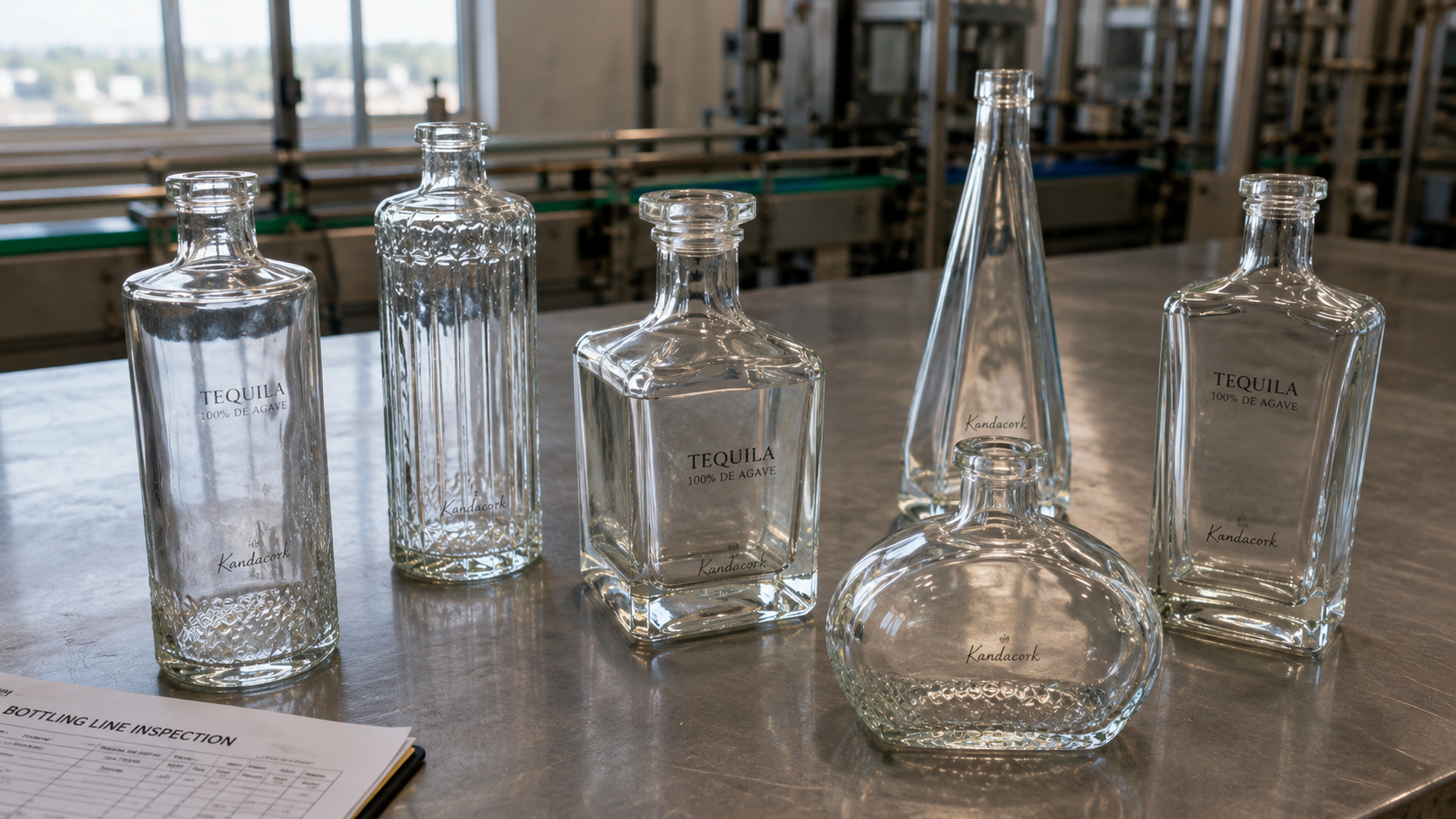
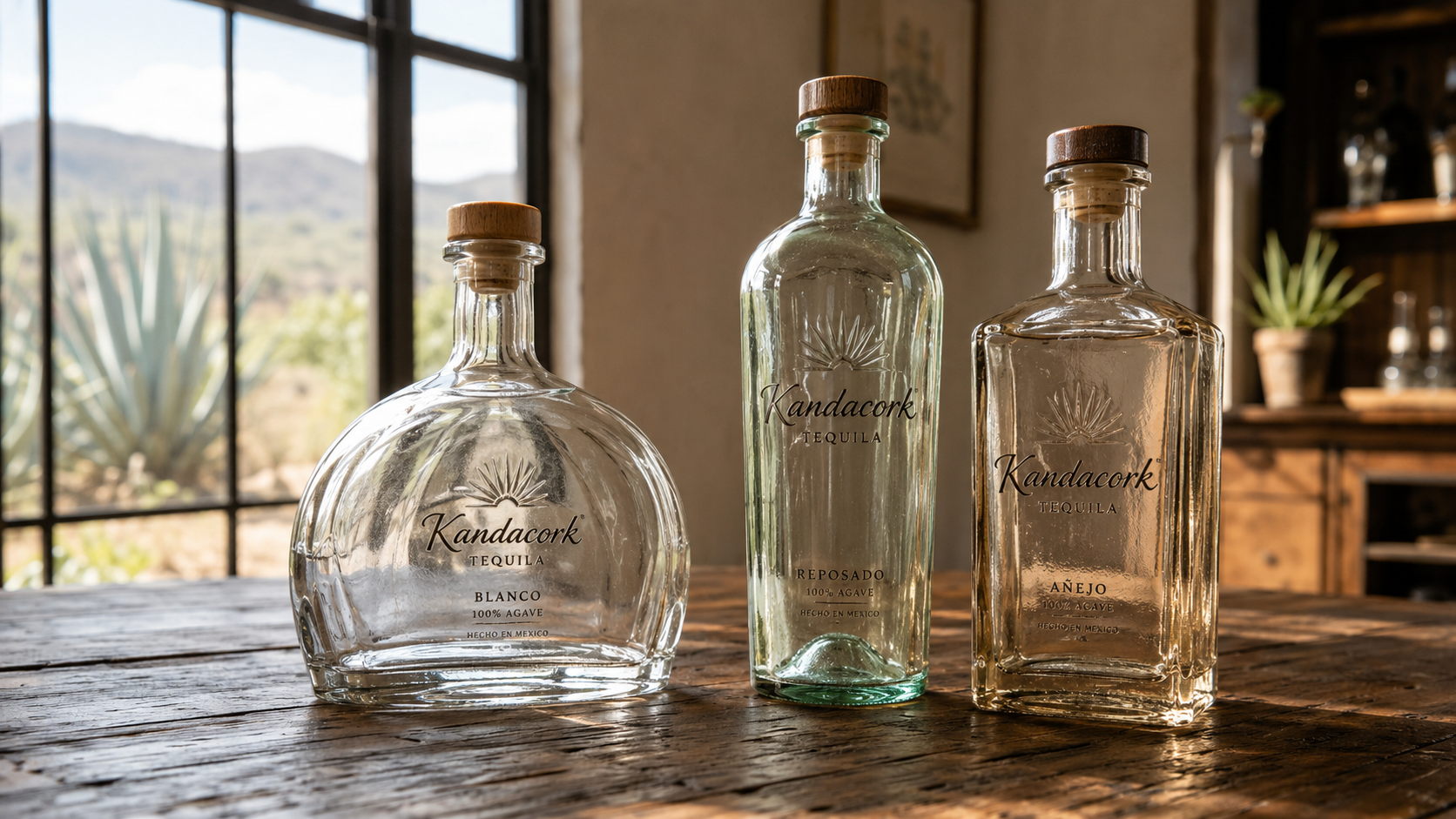
Glass stoppers with cork shanks are especially relevant for whisky, rum, tequila, gin, vodka, brandy, liqueurs, gourmet oils, vinegars, and limited-edition gift bottles. They work best when the stopper design, shank material, bottle neck tolerance, decoration, and export packing are considered together from the start.
What Are Glass Stoppers with Cork Shanks?
Glass stoppers with cork shanks are bottle closures made from two main elements: a visible glass head and a cork-style shank that enters the neck of the bottle. The glass head provides weight, clarity, texture, color, and brand character. The shank provides friction, compression, and resealing performance.
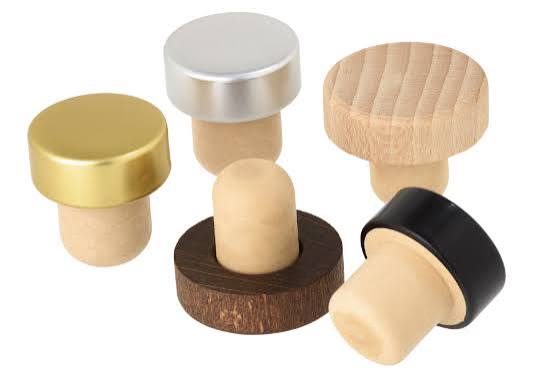
The shank may be natural cork, micro-agglomerated cork, synthetic cork, or a technical cork-like material. Natural cork offers a traditional premium feel. Synthetic cork provides strong dimensional consistency for larger production runs. Micro-agglomerated cork can balance a cork-based appearance with improved uniformity.
A glass stopper with a cork shank is different from a decorative retail wine stopper, a plain cork stopper, or a full glass decanter stopper. For commercial packaging, the key question is not simply whether the stopper looks attractive. The key question is whether the stopper fits the bottle neck consistently, opens comfortably, reseals properly, and survives real distribution conditions.
Glass Stopper, Cork Stopper, and Glass-Head Cork Shank Stopper
Buyers often see similar terms used for different products. Understanding the difference helps avoid sourcing mistakes.
A plain cork stopper is usually made from natural cork, micro-agglomerated cork, or synthetic cork. It can be effective, but it may not deliver the luxury visual effect expected from premium spirits.
A full glass stopper may be used for decanters or special bottles designed around a glass-to-glass fit or sealing ring. It can look highly refined, but it usually requires close bottle compatibility and careful sealing review.
A glass-head cork shank stopper combines the two ideas. The glass head adds visual value above the neck, while the cork shank creates the functional fit inside the neck. For many premium spirits projects, this structure offers a practical balance of appearance, customization, cost, and usability.
| Closure Type | Main Structure | Best Applications | Buyer Focus |
|---|---|---|---|
| Plain cork stopper | Cork or synthetic cork body | Wine, spirits, oils, general bottles | Practical but less visually distinctive |
| Full glass stopper | Glass body or glass head with special seal | Decanters and luxury bottles | Requires precise bottle compatibility |
| Glass stopper with cork shank | Glass head plus cork-style shank | Premium spirits and gift bottles | Requires fitment and pull-force testing |
| Custom bar-top stopper | Top material plus cork or synthetic shank | Scalable spirits programs | Balances branding, cost, and production consistency |
Why Brands Choose Glass Stoppers with Cork Shanks
Brands choose glass stoppers with cork shanks because they create a strong combination of premium appearance and functional resealing. The glass head can echo the bottle shape, match the liquid color, or reinforce the identity created by the label and carton. The cork shank gives the closure a familiar opening feel that many consumers associate with craft, quality, and tradition.
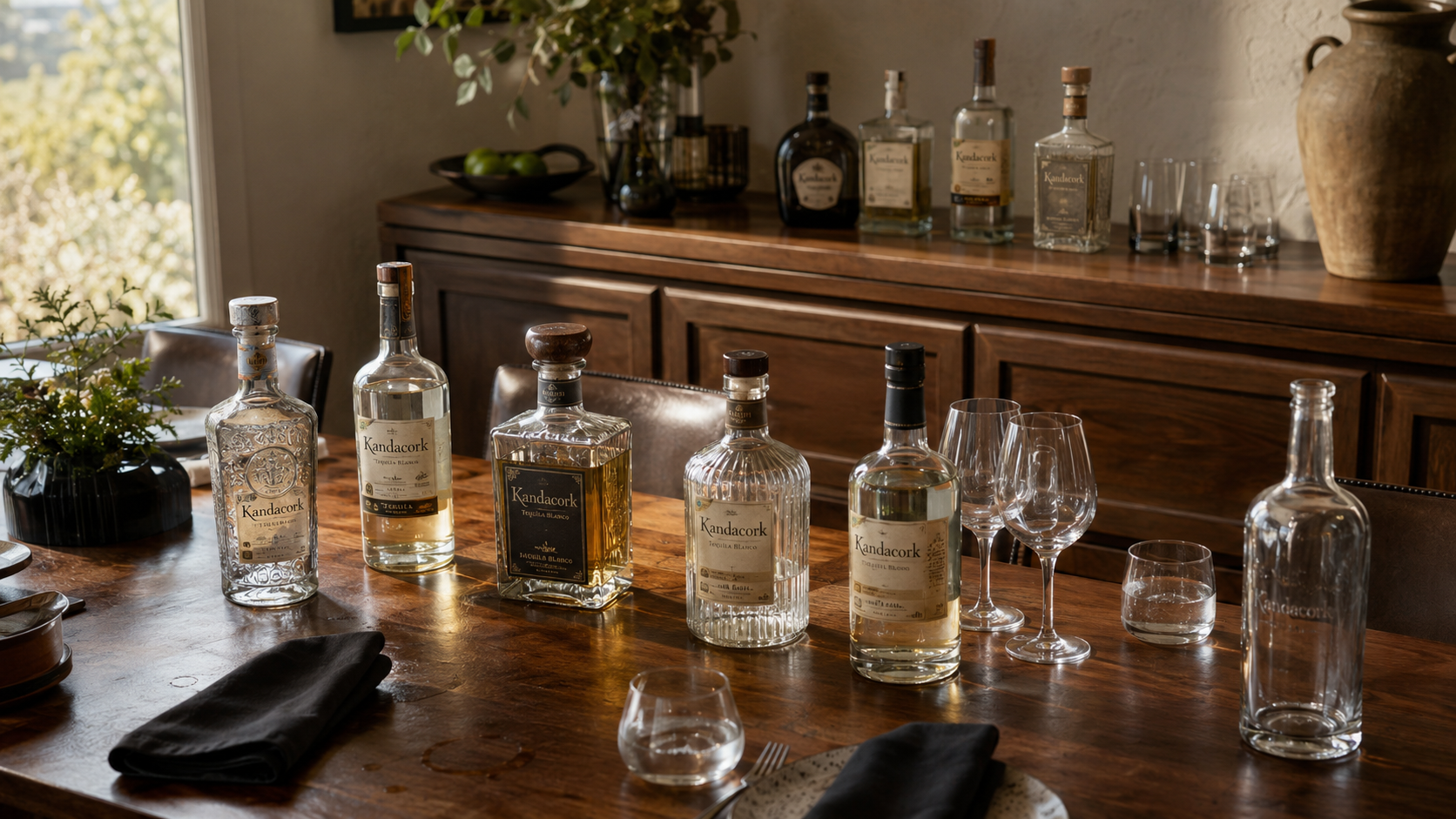
For whisky and brandy, glass stoppers can create a decanter-like impression. For rum, tequila, and mezcal, a custom glass head can reinforce a bold bottle silhouette or regional design language. For gin and vodka, clear or frosted glass can support a clean, modern, premium identity. For liqueurs, oils, and vinegars, the closure can make the package feel giftable and reusable.
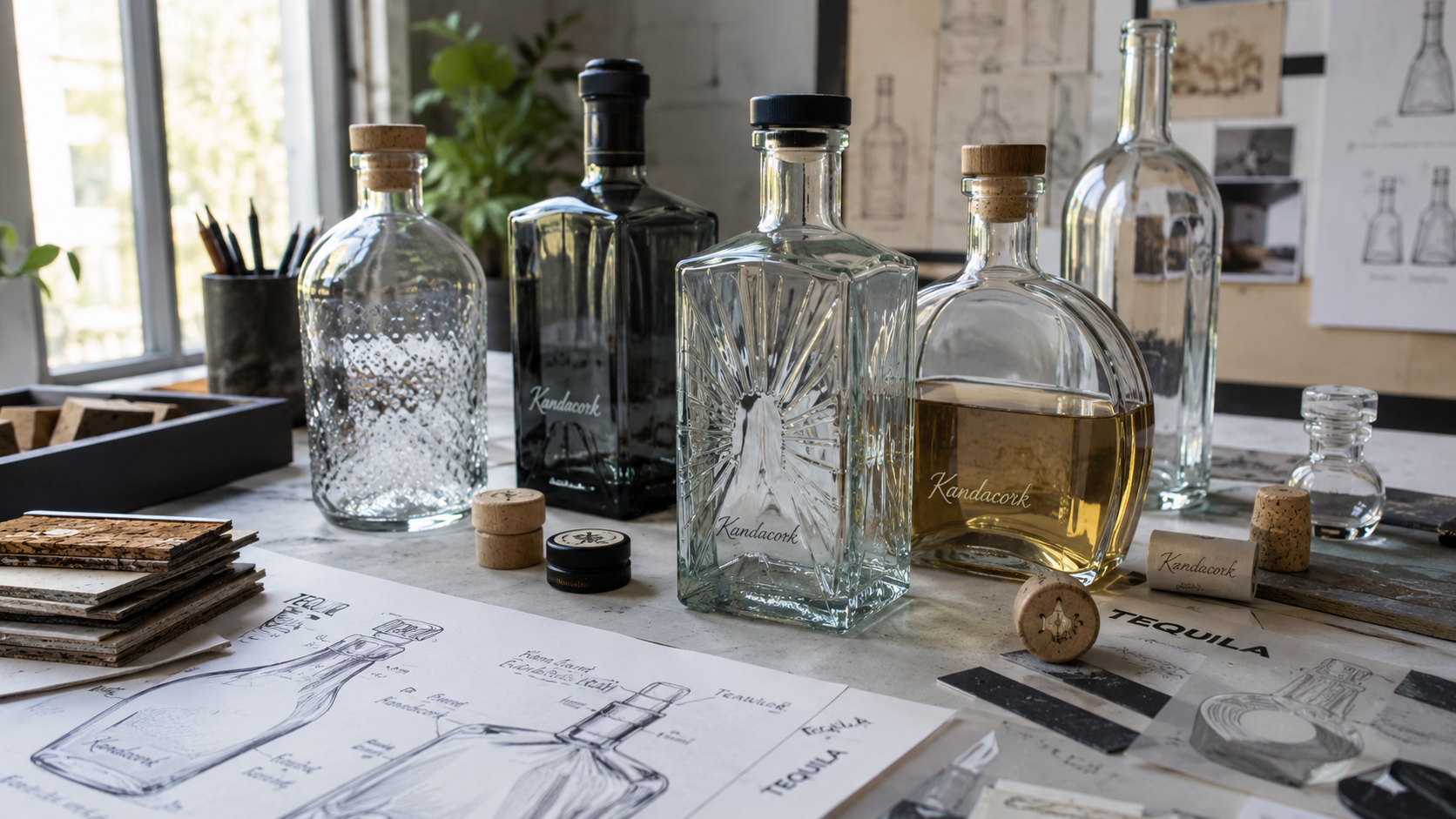
A strong packaging system also considers the bottle itself. Brands developing a new bottle can coordinate the stopper with spirits bottle development so the neck finish, shoulder shape, label panel, and closure are designed as one coherent package.
Key Components of a Glass Stopper with Cork Shank
A successful stopper depends on several components working together.
The glass head is the visible brand element. It may be round, square, oval, flat, domed, faceted, frosted, tinted, engraved, embossed, or custom molded. Its weight and proportions should feel appropriate for the bottle.
The cork shank is the functional sealing element. It must match the bottle neck internal diameter and create the right amount of compression. Too little compression can make the stopper loose. Too much compression can make the stopper hard to remove or difficult to reseat.
The connection between the head and shank must be stable and straight. Weak assembly, poor alignment, or uneven bonding can affect appearance and consumer confidence.
The seating height determines how the stopper rests on the bottle finish. A stopper that sits too high can look unfinished. A stopper that sits too low may interfere with the bottle lip or make opening uncomfortable.
The export packing must protect the glass head during shipment. Because glass heads are more fragile than wood or plastic tops, packaging should include suitable trays, dividers, cushioning, and carton strength.
Natural Cork, Synthetic Cork, or Micro-Agglomerated Cork?
The shank material affects appearance, compression, dimensional consistency, price, and opening feel. There is no universal best material; the right choice depends on the product and project goals.
Natural cork shanks are suitable for brands that want a traditional, tactile, premium character. They work well for whisky, brandy, rum, and heritage-style spirits. Natural cork has a strong material story, but it also needs careful grading because natural variation can affect density and fit.
Synthetic cork shanks are often preferred for scalable production. They can offer consistent dimensions, controlled compression, and repeatable pull-out force across large batches. For buyers comparing high-volume closure options, synthetic bottle stoppers can be useful when consistency and clean repeatability matter more than a traditional cork appearance.
Micro-agglomerated cork offers a balanced option. It keeps a cork-based look while improving uniformity compared with some natural cork formats. It can suit brands that want a cork story with better production control.
| Shank Material | Main Advantage | Possible Limitation | Best Use Case |
|---|---|---|---|
| Natural cork | Traditional, premium, tactile | More natural variation | Whisky, brandy, rum, luxury gifts |
| Synthetic cork | Consistent, scalable, controlled | Less natural appearance | Gin, vodka, tequila, liqueurs, larger runs |
| Micro-agglomerated cork | Cork look with improved uniformity | Requires careful fit testing | Premium spirits needing balance |
How to Match the Cork Shank to the Bottle Neck
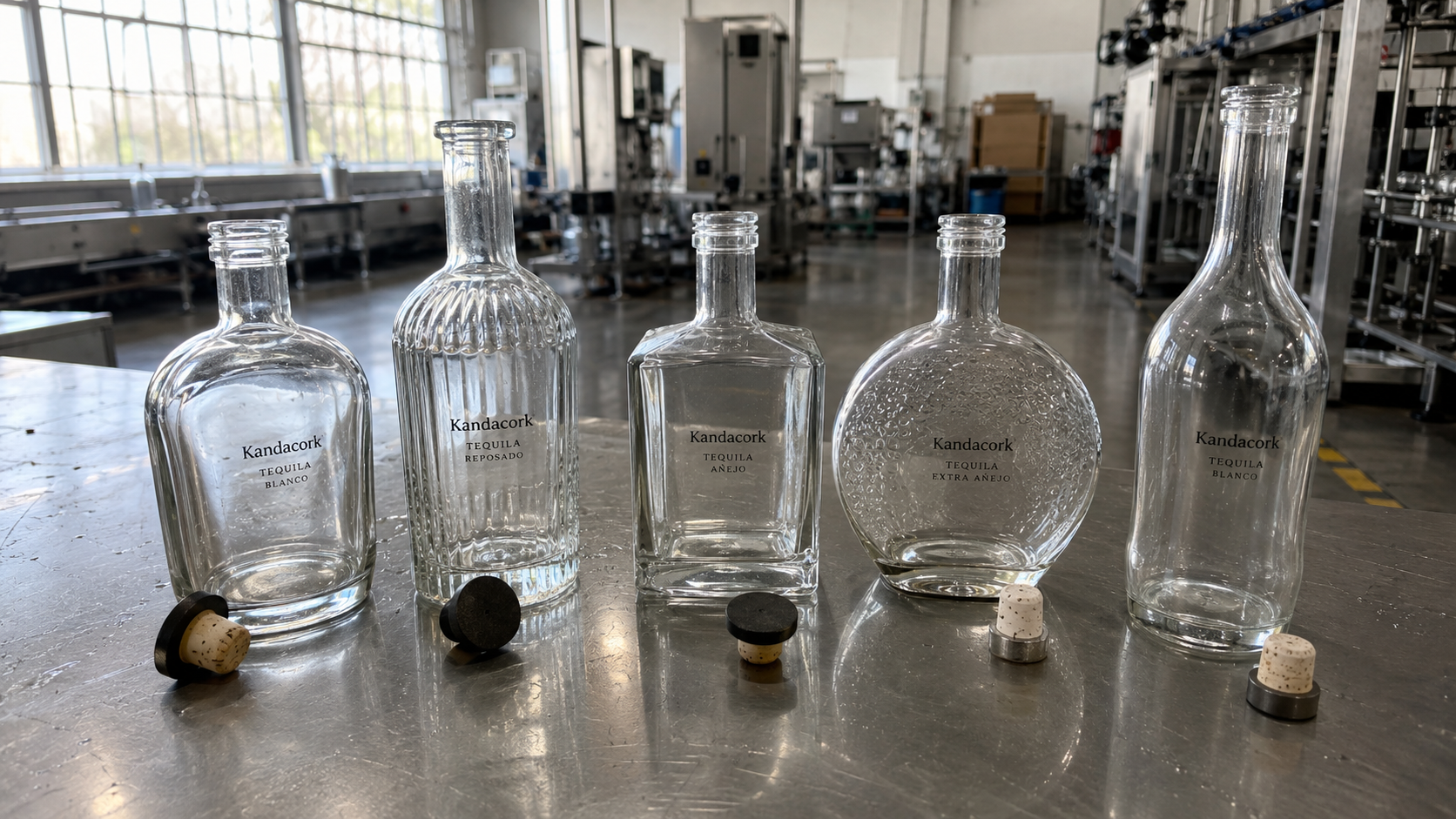
The most important technical step is matching the shank to the bottle neck internal diameter. Glass stoppers with cork shanks should never be selected from a photo alone.
Start with the bottle drawing. The drawing should show the internal neck diameter, finish tolerance, bore shape, and seating area. If a drawing is not available, send physical bottle samples for measurement. Even small variations in glass production can affect how a stopper feels.
The shank diameter must be chosen according to both the bottle neck and the material’s compression behavior. Natural cork, synthetic cork, and micro-agglomerated cork can respond differently inside the same neck.
Insertion depth is also important. A shallow insertion depth may feel unstable. Excessive insertion depth may make the stopper difficult to pull or visually unbalanced. The stopper should seat straight, open smoothly, and reseal without wobble.
For projects that need a broader comparison of closures, Kandacork Closures’ bottle closure systems for spirits can help buyers compare glass stoppers, cork stoppers, ROPP caps, non-refillable systems, and other closure formats before committing to one specification.
Technical Fitment Parameters to Confirm Before Production
Before mass production, buyers should confirm the closure as a working system, not just a styled component.
| Parameter | Why It Matters |
|---|---|
| Neck internal diameter | Determines the correct shank diameter |
| Neck tolerance range | Prevents loose or overly tight fit |
| Shank compression | Affects seal security and opening force |
| Insertion depth | Controls stability, resealing, and appearance |
| Pull-out force | Defines consumer opening comfort |
| Seating height | Affects finished bottle presentation |
| Head alignment | Prevents tilted or inconsistent appearance |
| Transport packing | Protects the glass head and closure assembly |
Pull-out force should feel secure but not aggressive. A stopper that removes too easily may feel unsafe. A stopper that is too tight may frustrate the user or increase the risk of spills.
Leak-risk testing should reflect the product and distribution route. Depending on the project, buyers may request inversion checks, vibration checks, storage observation, or transport simulation. Standards such as ASTM D999 vibration testing are often referenced when packaging teams evaluate how filled shipping containers respond to vibration during distribution.
Food Contact, Quality Control, and Compliance
Because the shank enters the bottle neck and may contact the liquid or vapor space, food-contact safety must be part of the buying process. Buyers should ask about shank material, adhesive system, odor control, migration considerations, and relevant documentation.
The European Directorate for the Quality of Medicines & HealthCare provides technical guidance for cork materials and articles intended for food contact, which highlights the importance of quality, safety, and harmonized technical expectations for cork used in food-contact applications. For projects sold in the United States, buyers may also review the FDA’s food-contact packaging guidance when assessing packaging materials and regulatory expectations.
Quality control should cover dimensional inspection, appearance inspection, odor review, assembly strength, fit testing, pull-out force, and packing safety. Many manufacturers also use quality-management frameworks such as ISO 9001 to organize repeatable processes, documented checks, and continuous improvement.
Custom Design and Branding Options
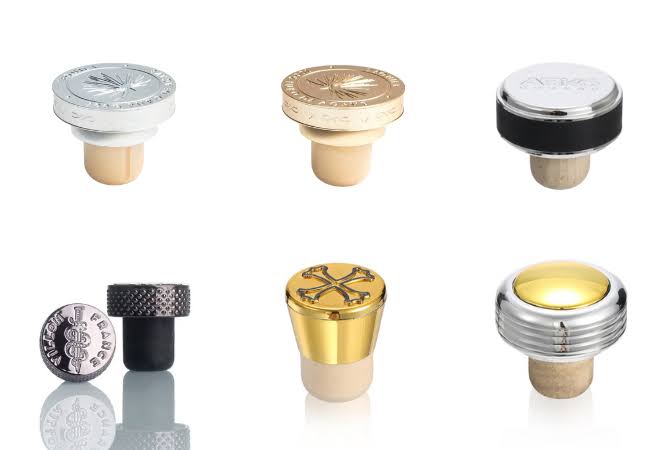
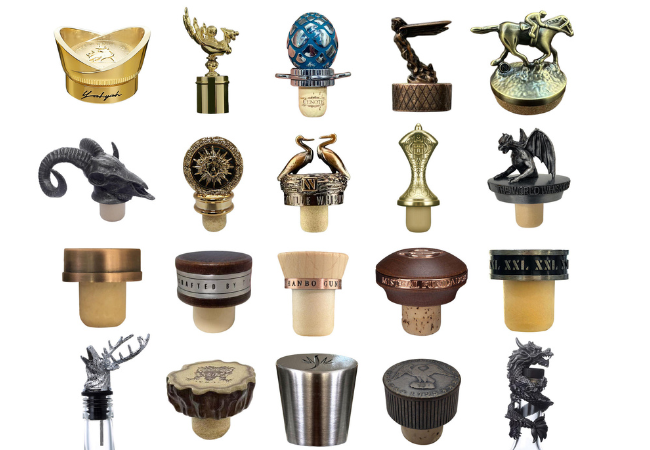
The glass head is where the brand can create strong differentiation. Common options include round heads, square heads, oval heads, flat-top heads, faceted crystal-style heads, frosted heads, tinted glass, and custom molded shapes.
Logo decoration can include engraving, embossing, debossing, screen printing, frosting, color effects, or decorative inserts. The best method depends on the head shape, logo detail, production quantity, and desired brand effect.
For brands that need coordinated visual systems, bottle decoration and branding can connect the stopper with label design, screen printing, embossing, color coating, cartons, and gift presentation. This is especially useful when the stopper must match the bottle body, shoulder decoration, neck label, capsule, or secondary packaging.
Custom head design should not make the stopper difficult to handle. A very heavy head may feel luxurious, but it must still be comfortable to open. A highly angular head may look distinctive, but it should not create sharp handling points or packing problems.
Application Examples by Product Category
Whisky and brandy brands often use glass stoppers with cork shanks to create a decanter-like impression. A faceted or heavy clear glass head can support a sense of age, craft, and gifting.
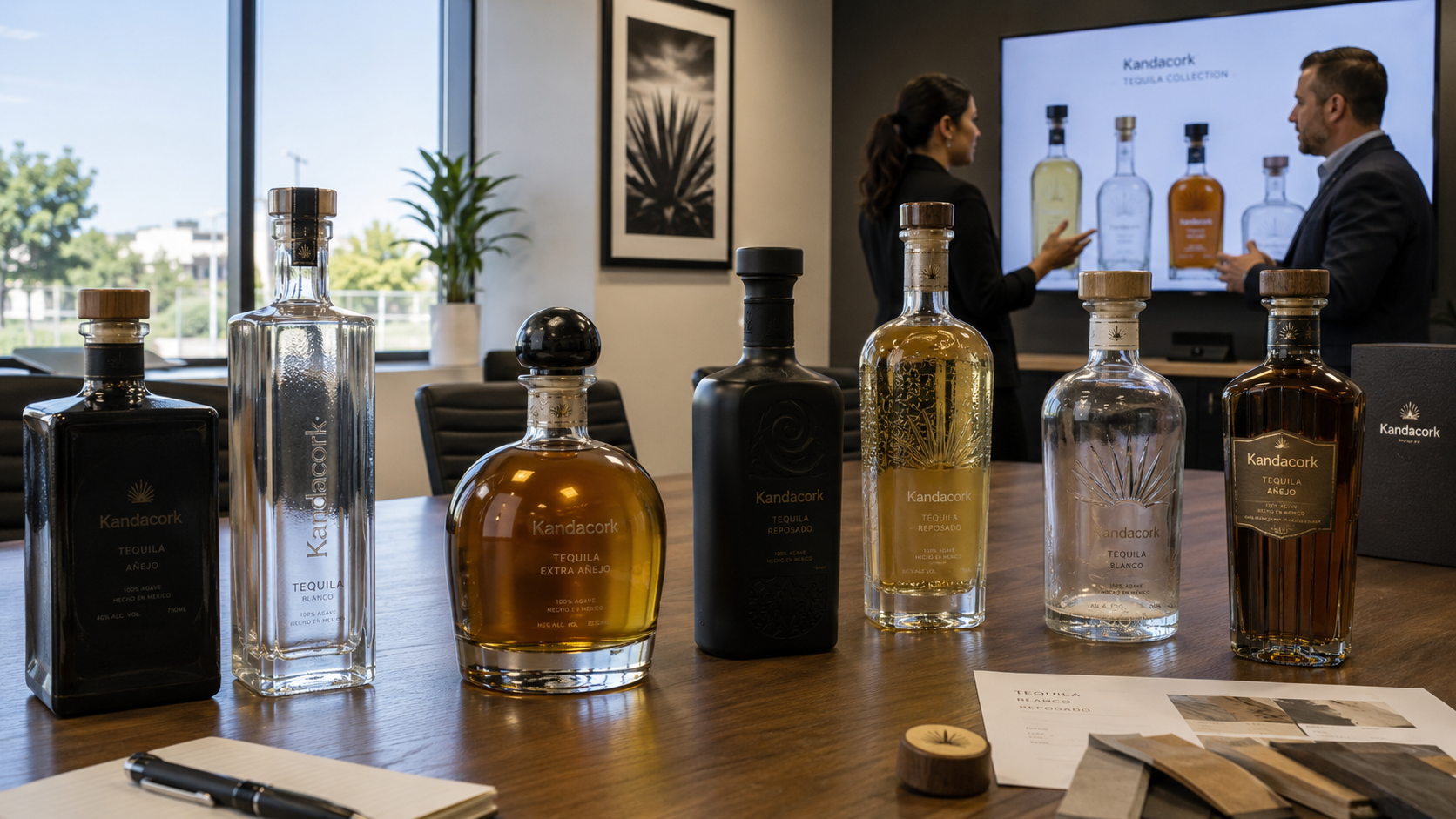
Rum and tequila brands may prefer tinted or sculpted glass heads that echo tropical, agave, heritage, or craft cues. The closure can become a visible brand mark from the top shelf or back bar.
Gin and vodka brands often benefit from clean clear glass, frosted surfaces, or minimalist geometry. The stopper should reinforce purity, clarity, and modernity without overpowering the bottle.
Liqueur, oil, vinegar, and gourmet beverage brands can use glass stoppers with cork shanks to make the package feel reusable and more premium. For multi-category packaging projects, Kandacork Glass Packaging can support matched glass containers, closures, and decoration-ready packaging for broader product lines.
Sustainability and Material Positioning
Glass and cork both carry strong sustainability associations, but packaging claims should be specific and supportable. Instead of using vague language such as “eco-friendly,” brands should explain the actual material choices and reuse or recycling opportunities.
The Glass Packaging Institute promotes glass packaging and recycling across the North American glass container industry, making it a useful entity when discussing glass, recyclability, and circular packaging. Cork can also support a renewable-material story when responsibly sourced and properly documented.
A stronger sustainability statement might say: “This package uses a reusable glass-head stopper with a cork-based shank and a recyclable glass bottle.” This is clearer than broad environmental claims and easier for buyers, retailers, and regulators to evaluate.
For brands building a sustainability-led spirits or gourmet packaging line, eco-focused glass packaging discussions can include material selection, container structure, and export-ready supply.
Common Purchasing Mistakes to Avoid
Do not choose glass stoppers with cork shanks only from a product image. A photo cannot confirm neck fit, compression, opening feel, leak risk, or export safety.
Do not assume one shank size fits every bottle with the same capacity. A 700 ml bottle and a 750 ml bottle may have different neck internal diameters and finish tolerances.
Do not confuse decorative retail wine stoppers with production-ready spirits closures. Retail stoppers may look attractive, but they may not be suitable for filling lines, export cartons, batch consistency, or brand-scale purchasing.
Do not skip sample testing. A small sample round can prevent costly problems before bulk production.
Do not treat the stopper separately from the bottle. The bottle neck, glass head, shank material, label, carton, and shipping method should be reviewed as one packaging system.
Comparing Glass, Plastic, and Metal Top Options
Glass is not the only possible top material. Some projects may use plastic, metal, wood, ceramic, or composite tops. The right choice depends on brand positioning, budget, weight, durability, decoration needs, and filling-line requirements.
Glass tops are ideal when a brand wants clarity, premium weight, and a decanter-style impression. Plastic tops can support cost-effective custom color, shape, and lightweight handling. For buyers comparing alternatives, plastic bar-top stopper options may be suitable for scalable programs that require practical branding and controlled cost.
Metal tops can create a heavier and more durable premium effect, especially for whisky, tequila, and travel retail projects. If a brand wants a colder touch, metallic color, or plated finish, custom metal stoppers may be worth comparing with glass-head cork shank designs.
How Kandacork Closures Supports Custom Projects
Kandacork Closures supports custom glass stoppers with cork shanks for spirits brands, distilleries, bottle suppliers, packaging buyers, importers, and private-label projects.
The process can begin with a bottle drawing, physical bottle sample, reference stopper, or design concept. Kandacork Closures can review the neck internal diameter, recommend shank material, develop the glass head style, arrange logo decoration, prepare samples, and support fitment testing.
For complete packaging programs, Kandacork Closures can coordinate with Kandacork Glass so the bottle, closure, decoration, and export packing are considered together. This helps buyers reduce mismatch risk and build a more consistent product presentation.
The goal is not only to supply a beautiful stopper. The goal is to deliver a closure that looks premium, fits correctly, opens smoothly, reseals reliably, and supports the product’s commercial positioning.
What to Prepare Before Requesting Samples
Before requesting samples, prepare the bottle drawing, bottle samples if available, product type, desired stopper style, preferred shank material, logo requirements, quantity estimate, target market, and packing requirements.
If you already have a reference stopper, send photos, dimensions, and comments about what you want to keep or improve. This helps the supplier understand whether the project is focused on appearance, fitment, cost, sustainability, or a complete packaging upgrade.
Buyers who are ready to move from design discussion to sampling can request a custom closure quote with the bottle drawing, target quantity, and project requirements.
FAQ
Are glass stoppers with cork shanks suitable for spirits bottles?
Yes. Glass stoppers with cork shanks can be suitable for spirits bottles when the shank is correctly matched to the bottle neck and tested before production. They are commonly used for whisky, rum, brandy, tequila, gin, vodka, and liqueur packaging.
How do I know what cork shank size I need?
You need the bottle neck internal diameter, tolerance range, and preferred insertion depth. A bottle drawing is the best starting point. If no drawing is available, physical bottle samples should be measured and tested.
What is the difference between a glass cork stopper and a glass stopper with cork shank?
A glass cork stopper is a broad term that can refer to many stoppers using both glass and cork. A glass stopper with cork shank is more specific: it has a decorative glass head and a cork or cork-like shank that fits inside the bottle neck.
Can the glass head be customized with a logo?
Yes. The glass head can often be customized with engraving, embossing, debossing, screen printing, frosting, tinting, or a custom molded shape. The best method depends on the stopper design, logo detail, order quantity, and desired brand effect.
Is natural cork or synthetic cork better for bulk orders?
Synthetic cork is often better for bulk orders when dimensional consistency and controlled opening feel are top priorities. Natural cork may be better when the brand wants a traditional premium story and tactile cork character.
Can glass stoppers with cork shanks be used for high-proof alcohol?
They can be used for spirits when the shank material, adhesive system, and fitment are reviewed for the alcohol type, storage conditions, and expected use. Sample testing is recommended before production.
Do glass stoppers with cork shanks leak?
They can leak if the shank is poorly matched to the bottle neck or if the closure is not tested under realistic handling conditions. Proper sample testing helps reduce leak risk by checking fit, pull-out force, resealing behavior, and transport conditions.
What affects the MOQ for custom glass stoppers with cork shanks?
MOQ depends on the glass head design, mold requirement, decoration method, shank material, packing method, and total project scope. A standard glass head usually requires less development than a fully custom molded head.
Conclusion
Glass stoppers with cork shanks are a strong choice for brands that want premium appearance, reliable resealing, and a memorable opening experience. They are especially useful for spirits, liqueurs, gourmet oils, vinegars, gift bottles, and limited-edition packaging.
The best results come from treating the stopper as a complete closure system. The glass head, cork shank, bottle neck, material choice, fitment tolerance, pull-out force, decoration, compliance, and export packing all need to work together.
For buyers developing a new spirits bottle, upgrading an existing package, or preparing a limited-edition launch, a properly engineered glass stopper with a cork shank can become a meaningful part of the final product experience.