Spirits brands need to compare closure options from both a design and production perspective. This guide helps buyers evaluate stopper tops, shank materials, screw caps, ROPP closures, logo methods, sampling needs and bulk order requirements before choosing the right closure system.
Why the Right Closure Supplier Matters
A bottle closure looks small, but it carries major responsibility. It must seal correctly, open comfortably, match the bottle neck, perform on the filling line, protect the brand image, and survive international transport.
Many sourcing problems happen when closures are selected only by appearance. A stopper may look premium but fit too loosely. A screw cap may appear correct but fail under torque testing. A capsule may match the color standard but wrinkle during shrinking. A wooden top may feel luxurious but need better surface protection for export cartons.
A professional bottle stopper and cap supplier helps buyers review these details before bulk production. This reduces leakage risk, improves consistency, and helps packaging teams avoid expensive delays near the launch date.
Complete Closure Solutions for Spirits Packaging
Modern spirits packaging often requires more than one component. A whisky bottle may need a wooden bar-top stopper, neck capsule, embossed top logo, color-matched carton, and export-safe packing. A vodka bottle may require an aluminum ROPP cap, tamper-evident band, decoration alignment, and line-trial confirmation.
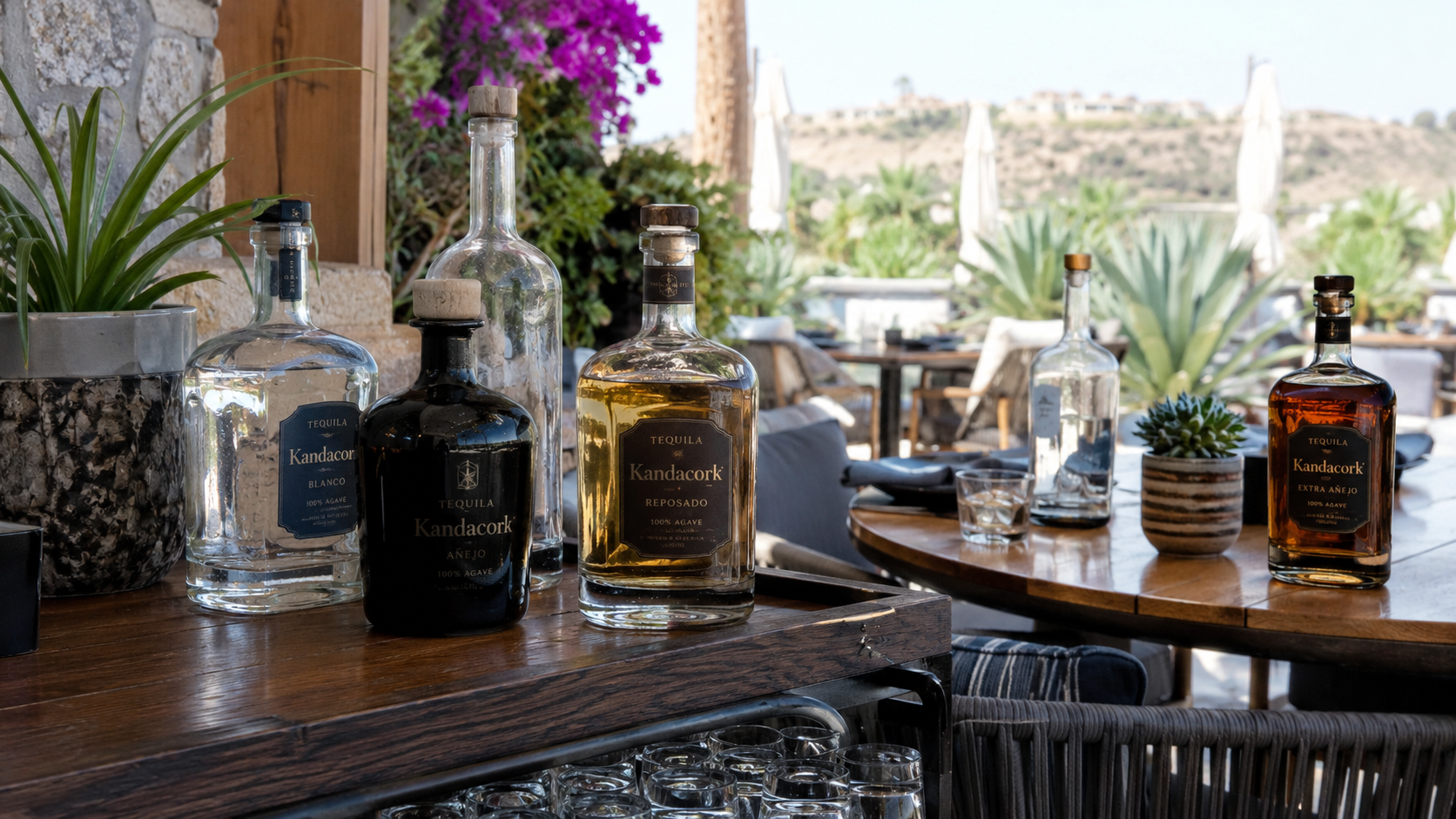
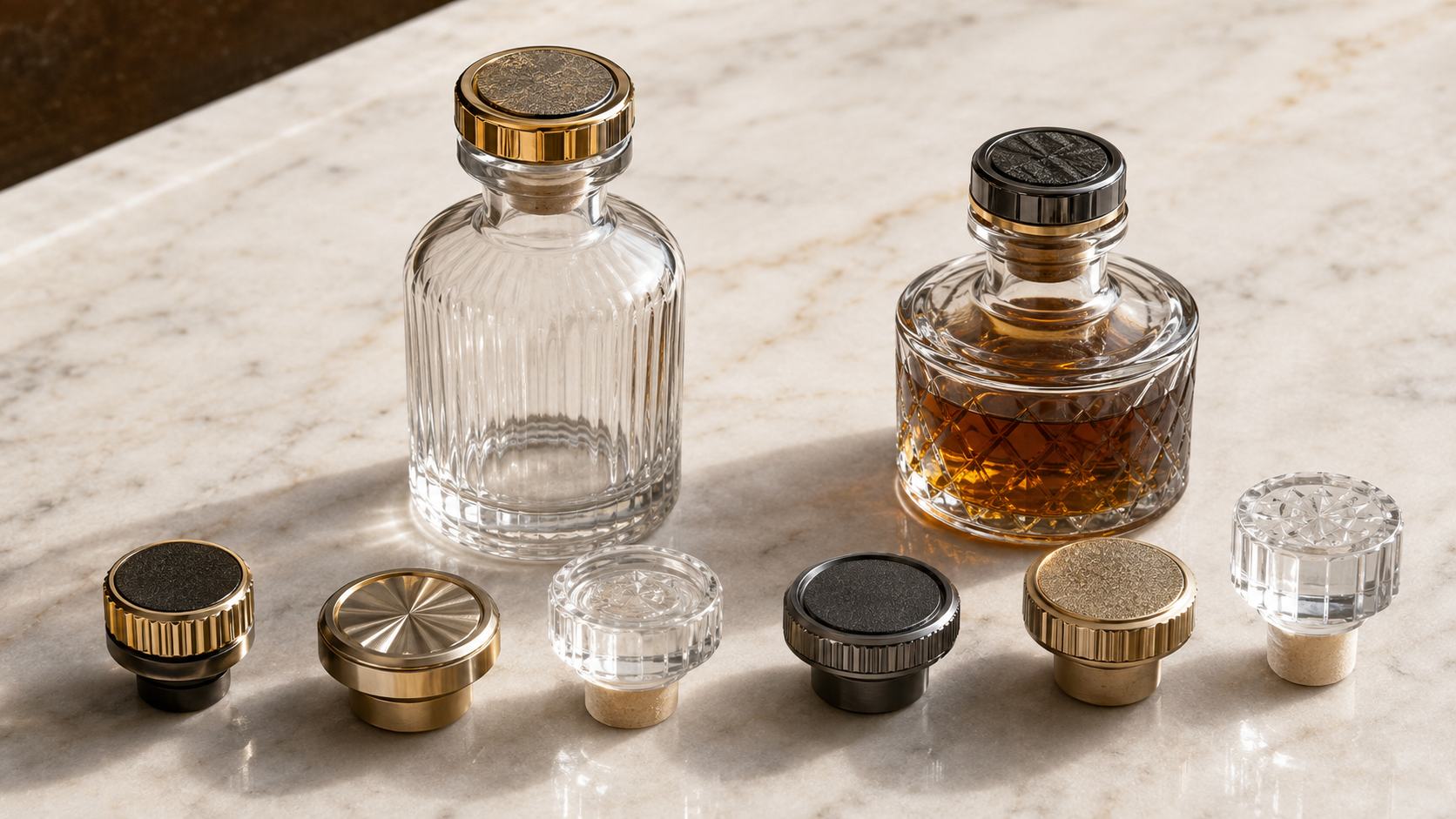
Kandacork’s complete closure and stopper range includes solutions for standard bottles, custom bottles, premium spirits, private-label projects, gift packaging, and high-volume bottling. These closure options can be matched to different bottle necks, market positions, decoration styles, and production requirements.
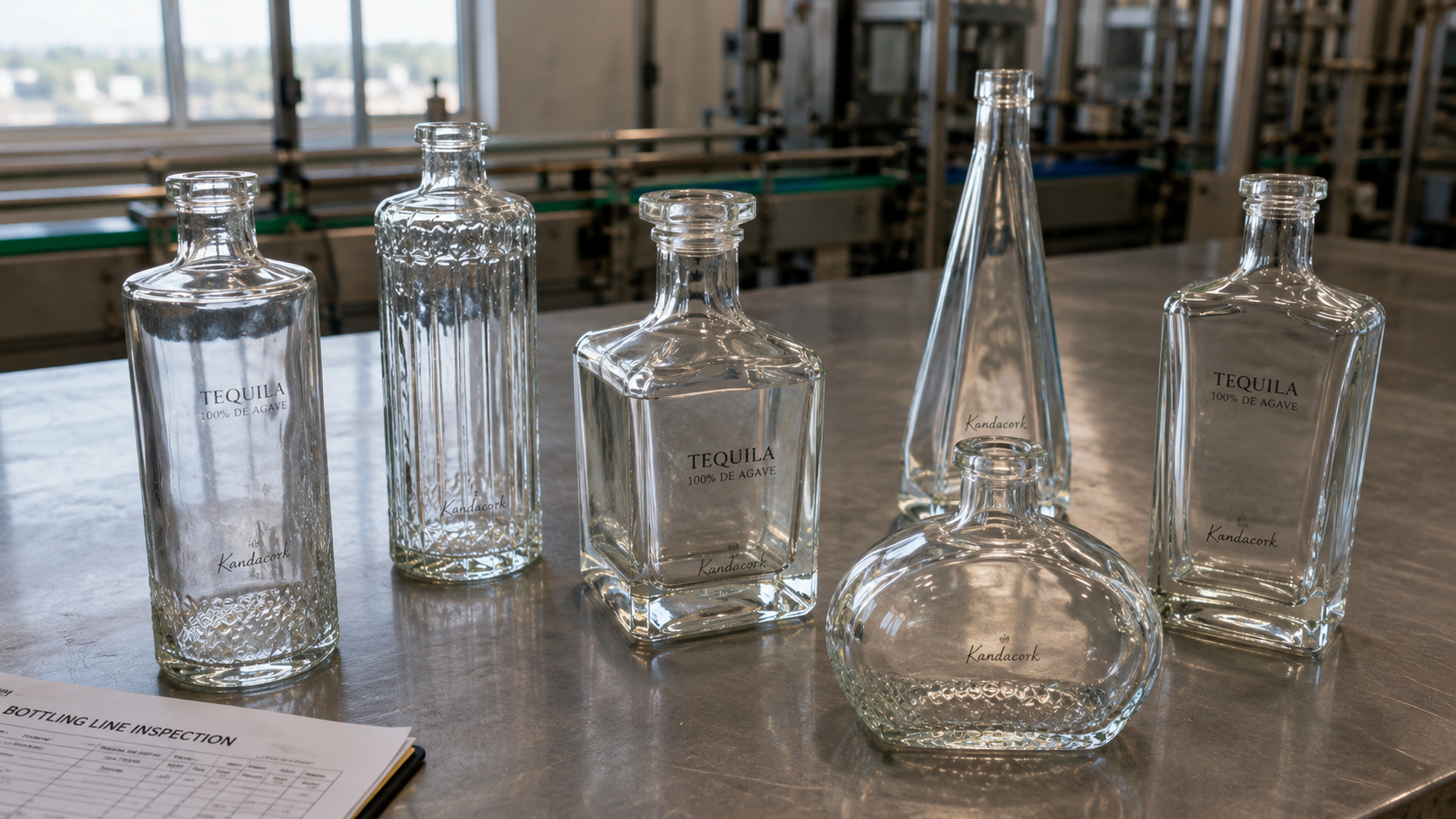
For projects that start with the bottle structure first, buyers can also coordinate closure selection with custom spirits bottle development to make sure the neck finish, stopper profile, cap size, and visual design work together from the beginning.
Main Types of Bottle Stoppers and Caps
Different spirits need different closure systems. The best option depends on the bottle neck, filling method, brand positioning, export market, and consumer experience.
Bar-Top Cork Stoppers
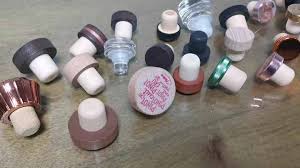
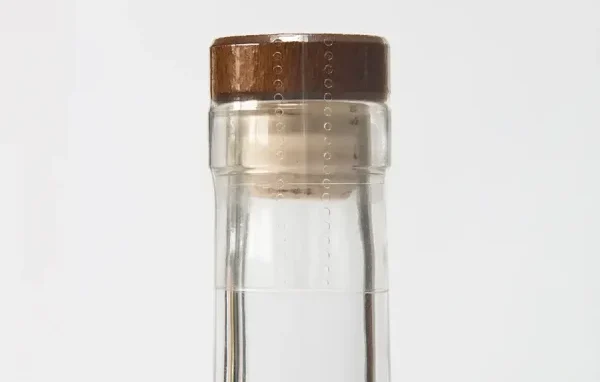
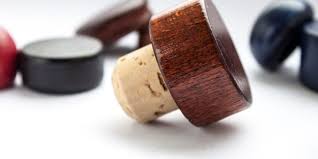
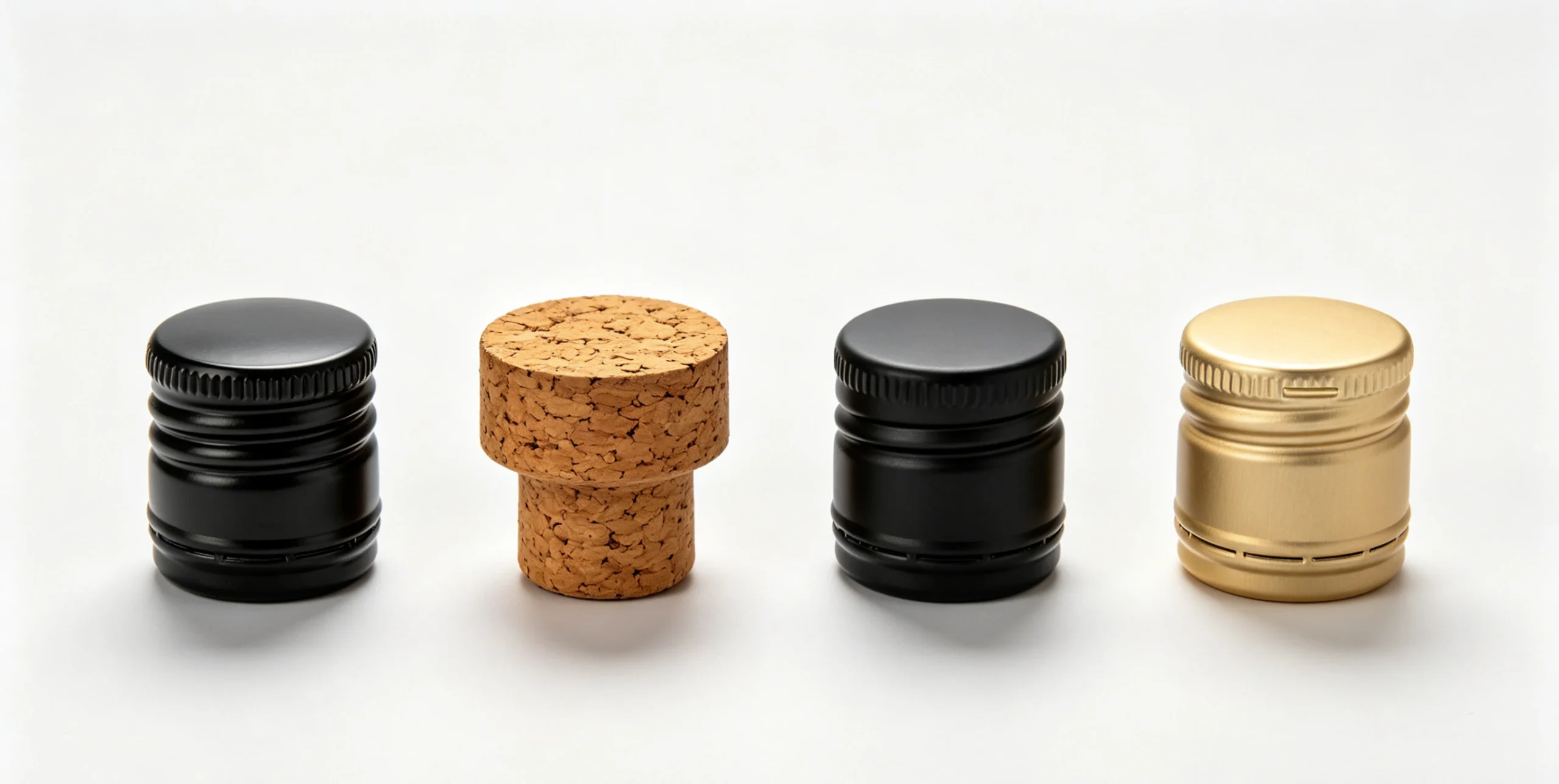
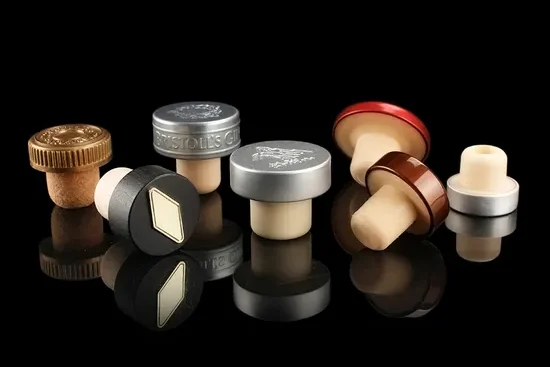
Bar-top cork stoppers, also called T-top stoppers, are widely used for premium spirits. They usually combine a top made from wood, aluminum, plastic, glass, ceramic, or metal with a cork or synthetic shank.
This closure style is common for whisky, rum, tequila, gin, vodka, brandy, cognac, liqueur, and craft spirits because it provides a premium opening feel and easy resealing. The top surface can be customized with engraving, embossing, debossing, printing, hot stamping, color coating, or metal inserts.
Important buying points include shank diameter, insertion depth, pull-out force, cork compression, surface finish, dimensional tolerance, and compatibility with the bottle neck.
Wooden Stoppers
Wooden stoppers are ideal for spirits brands that want a natural, craft, heritage, or luxury image. Oak, beech, ash, walnut, bamboo, and stained wood finishes can create different packaging personalities.
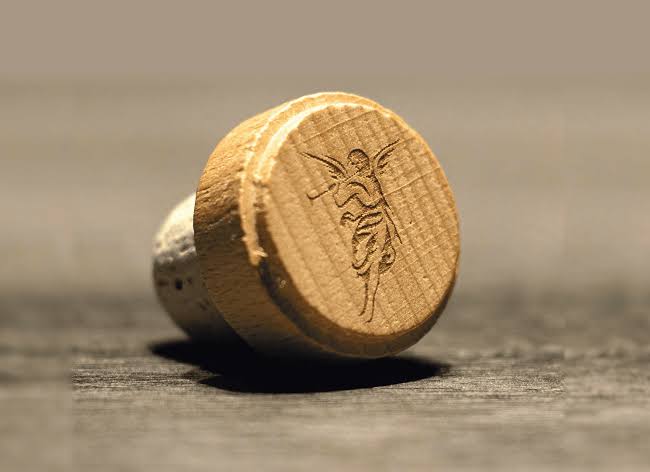
A wooden stopper can be paired with natural cork, micro-agglomerated cork, synthetic cork, or engineered shank materials. It can also support laser engraving, burned logos, metal medallions, carved shapes, painted finishes, and top embossing.
For whisky, bourbon, rum, brandy, tequila, and limited-edition spirits, wooden stoppers can turn the act of opening the bottle into a small brand ritual.
Aluminum Caps and ROPP Closures
Aluminum closures are often selected for brands that want a clean, modern, and scalable packaging solution. Aluminum heads can be used for bar-top stoppers, while aluminum screw caps and ROPP closures are suitable for production-driven filling projects.
ROPP means roll-on pilfer-proof. During application, the aluminum shell is formed around the bottle neck to create threading and a tamper-evident band. Kandacork supports custom ROPP closures for spirits bottles where torque control, neck finish, liner selection, and line compatibility are important.
Aluminum closures can support offset printing, screen printing, embossing, debossing, hot foil, matte coating, glossy coating, anodized finishes, and color matching.
Glass and Crystal Stoppers
Glass and crystal stoppers are commonly used for luxury spirits, decanters, collectible bottles, and gift packaging. They create strong visual value and can make the product feel more premium.
These stoppers require careful testing. The fit must be precise, the sealing method must be stable, and the packaging must protect the stopper during handling and export transport. Buyers should check bottle-neck tolerance, stopper weight, sealing insert, packaging protection, and long-distance shipping durability.
Plastic and Synthetic Closures
Plastic and synthetic closures are useful when consistency, cost control, and repeatable production are important. They are commonly used for mini bottles, promotional spirits, private-label products, RTD spirits, and high-volume beverage lines.
Plastic heads can be molded into many colors and shapes. Synthetic shanks can provide stable dimensions and predictable sealing performance. With the right surface finish and logo treatment, plastic stoppers can also serve premium and mid-range spirits projects.
Non-Refillable Closures
Non-refillable closures are used when product authenticity, anti-refill protection, market control, or anti-counterfeiting is a key concern. They are especially relevant for premium spirits and selected export markets.
These closures may include internal valve structures, pourer inserts, tamper-evident components, or special cap assemblies. Kandacork develops non-refillable closures for projects that need controlled pouring, brand protection, and compatibility with spirits bottle necks.
Capsules and Shrink Sleeves
Capsules and shrink sleeves complete the neck presentation. They can hide the transition between bottle and closure, improve tamper evidence, and create a more finished retail appearance.
PVC capsules, polylaminate capsules, tin capsules, aluminum capsules, and shrink sleeves can be customized with color, logo, printing, embossing, hot foil, and metallic effects. The capsule should match the closure height, bottle shoulder, label style, and shrink conditions.
Bottle Stopper and Cap Options at a Glance
| Closure Solution | Common Materials | Suitable Bottles | Custom Options | Key Testing Point |
|---|---|---|---|---|
| Bar-top cork stopper | Wood, aluminum, glass, plastic, cork, synthetic shank | Whisky, rum, tequila, gin, brandy, liqueur | Engraving, embossing, hot stamping, color coating | Shank diameter, pull-out force, neck fit |
| Wooden stopper | Wood head with cork or synthetic shank | Whisky, bourbon, rum, brandy, premium spirits | Laser engraving, stained finish, metal insert, custom shape | Wood finish, shank compression, appearance tolerance |
| Aluminum cap or stopper | Aluminum, liner, cork or synthetic insert | Vodka, gin, liqueur, spirits, specialty beverages | Printing, embossing, anodized color, tamper band | Torque, thread compatibility, liner selection |
| Glass or crystal stopper | Glass, crystal, sealing insert | Luxury spirits, decanters, gift packaging | Custom shape, polishing, decorative effects | Fit precision, transport protection, sealing method |
| Plastic or synthetic closure | PP, PE, synthetic cork, molded materials | Mini bottles, private label, promotional spirits | Molded color, printed logo, custom profile | Dimensional stability, cap fit, cost control |
| Non-refillable closure | Aluminum, plastic, internal valve, pourer insert | Premium spirits and export markets | Pourer design, color matching, logo decoration | Anti-refill function, pouring behavior, market suitability |
| Capsule or shrink sleeve | PVC, polylaminate, tin, aluminum, shrink film | Spirits, wine, premium beverage packaging | Printing, hot foil, embossing, full neck decoration | Shrink performance, height match, color consistency |
Closure Selection Guide by Use Case
Choose a bar-top cork stopper when the product needs a premium opening feel, strong shelf presence, and easy resealing. This is a strong option for whisky, rum, tequila, brandy, gin, and craft spirits.
Choose a wooden stopper when the brand wants a natural, handmade, heritage, or luxury image. Wooden tops work well when the product story involves aging, origin, craftsmanship, or tradition.
Choose an aluminum cap or ROPP closure when automated filling, tamper evidence, torque control, and repeatable sealing are important. This option is practical for scalable production and export supply.
Choose a glass or crystal stopper when the bottle is positioned as a luxury gift, decanter, collector item, or limited edition. This choice needs precise fit testing and protective packaging.
Choose a non-refillable closure when anti-refill function, product authenticity, or market control matters. The pour behavior and user experience should be tested before mass production.
Choose capsules or shrink sleeves when the brand needs a complete neck finish, added tamper evidence, or stronger shelf impact. These components should be planned together with the stopper or cap.
Technical Factors That Affect Closure Performance
Bottle-Neck Compatibility
The bottle neck determines which closure can work. Before ordering bulk closures, buyers should provide the bottle sample, technical drawing, neck finish, inner diameter, outer diameter, thread details, and filling method.
Even a small tolerance issue can create leakage, loose fit, high insertion force, poor torque performance, or breakage during transport. A supplier should review the closure and bottle together, not separately.
Sealing and Pull-Out Performance
Different products need different sealing performance. A high-proof spirit, low-proof liqueur, syrup-based product, flavored beverage, or specialty liquid may interact differently with cork, liners, plastic, adhesives, or decorative coatings.
For bar-top stoppers, pull-out force and insertion force affect both sealing and consumer experience. For screw caps and ROPP closures, torque range, liner compression, thread profile, and tamper-band behavior are critical.
Material Selection
Material choice affects both performance and perception. Wood feels natural and craft-driven. Aluminum feels precise, modern, and scalable. Glass feels premium and collectible. Plastic can be flexible, consistent, and cost-efficient. Natural cork communicates heritage, while synthetic cork can improve dimensional consistency.
The right bottle stopper and cap supplier should help buyers balance design, cost, function, production quantity, and market expectations.
Decoration and Brand Consistency
A closure is often one of the first physical touchpoints a consumer notices. The top surface, sidewall texture, color, finish, and opening feel all influence brand perception.
Kandacork supports closure branding options such as logo engraving, embossing, debossing, foil stamping, sidewall design, color coating, metallic effects, and custom shape development. For projects that need coordinated bottle decoration, buyers can also review glass decoration and branding as part of the wider packaging plan.
Filling-Line Compatibility
A closure that works in manual assembly may not work on an automated line. Automated bottling requires consistency in dimensions, feeding behavior, shank compression, torque control, and application speed.
Buyers should confirm whether the closure is suitable for the filling line, whether the capper can handle the closure, what torque range is recommended, and whether pilot testing is needed before bulk production.
Food-Contact, Quality, and Packaging Standards
For spirits packaging, buyers should separate decorative components from product-contact components. The stopper head may be decorative, while the shank, liner, valve, or sealing insert may come closer to the liquid or bottle opening.
In the United States, the FDA’s food-contact packaging guidance explains that food-contact substances can include packaging components, coatings, colorants, adhesives, and other materials that contact food. For EU-bound packaging, the European Commission’s food contact material rules are also important for buyers to review with their compliance team.
Quality management also matters. The ISO 9001 quality management standard is widely used as a reference for consistent processes, customer requirements, and continual improvement. While every project has its own compliance path, B2B buyers should ask for clear material information, sample approval records, production checks, and packaging confirmation before shipment.
For glass bottle projects, recyclability and material perception may also influence packaging strategy. The Glass Packaging Institute notes the recyclability benefits of glass packaging, which is one reason many spirits brands continue to use glass for premium bottle presentation.
For export packaging, buyers can also consider transit testing concepts. The ISTA test procedures are often referenced in distribution testing because shipping conditions can include vibration, impact, compression, temperature variation, and handling stress.
Kandacork Custom Development Process
Project Review
The process starts with the buyer’s bottle type, closure idea, target market, target quantity, spirit category, and branding requirements. If the buyer has a technical drawing, existing closure sample, or physical bottle sample, fit review becomes more accurate.
Closure Recommendation
Based on the project details, Kandacork recommends suitable closure types, materials, shank options, cap structures, decoration methods, and packaging solutions. The recommendation considers visual positioning, sealing performance, filling method, cost level, and production feasibility.
Sample Development
Samples are prepared for fit checking, appearance review, color confirmation, and decoration approval. For custom closures, sample development may include logo testing, color matching, mold review, material matching, and packaging evaluation.
Compatibility Testing
Before bulk production, buyers should confirm neck fit, insertion force, pull-out force, torque performance, leakage resistance, liner behavior, closure appearance, and transport packaging. This step helps reduce sourcing risk before mass production.
Bulk Production
After sample approval, production checks should cover size, appearance, logo position, surface finish, material consistency, color variation, and packaging condition. For export orders, closure protection should be planned according to the surface finish and shipment method.
Export-Ready Delivery
For international buyers, packing stability matters. Closures should be packed to reduce deformation, scratches, contamination, color transfer, and transport damage. Depending on the closure material and finish, protective inner bags, partitioned cartons, scratch-reduction wrapping, reinforced export cartons, and palletized shipment planning may be used.
Kandacork QC Checklist Before Bulk Production
| QC Item | Why It Matters | Checked Before Bulk Production |
|---|---|---|
| Bottle-neck fit | Helps prevent leakage, loose sealing, and poor assembly | Yes |
| Inner and outer diameter match | Confirms closure compatibility with the bottle neck | Yes |
| Pull-out force | Supports comfortable and secure opening | Yes |
| Insertion force | Reduces bottle-neck damage and assembly problems | Yes |
| Torque range | Supports screw cap and ROPP cap performance | Yes |
| Liner compatibility | Helps protect sealing behavior and product contact safety | Yes |
| Shank compression | Important for bar-top cork stoppers and synthetic stoppers | Yes |
| Logo position | Protects brand consistency across bulk production | Yes |
| Surface finish | Reduces visible scratches, color defects, and coating issues | Yes |
| Packaging method | Helps reduce export damage, deformation, and contamination | Yes |
Applications Across Spirits and Premium Packaging
Whisky and Bourbon
Whisky and bourbon brands often prefer wooden bar-top stoppers, natural-look cork shanks, and premium neck finishes. The closure should feel solid, easy to remove, and consistent with the product’s age, origin, and flavor story.
Vodka and Gin
Vodka and gin packaging often uses clean shapes, metallic finishes, glass stoppers, aluminum caps, or modern screw closures. Color matching and label coordination are especially important for shelf impact.
Rum, Brandy, and Cognac
Rum, brandy, and cognac packaging often benefits from heavier closures, darker wood tones, embossed tops, and luxury finishes. For export markets, the closure must also withstand warehouse storage and long-distance transport.
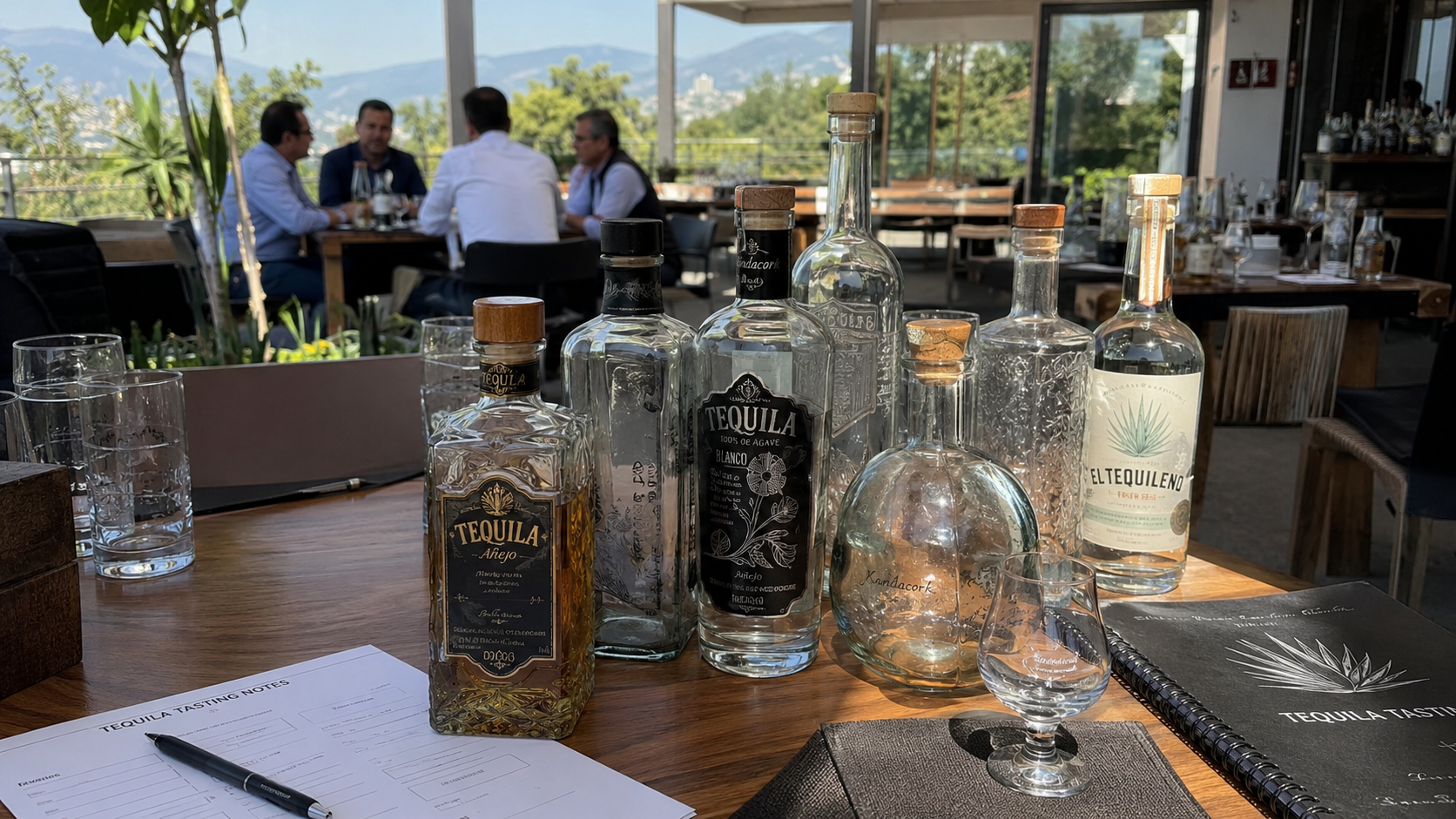
Tequila and Mezcal
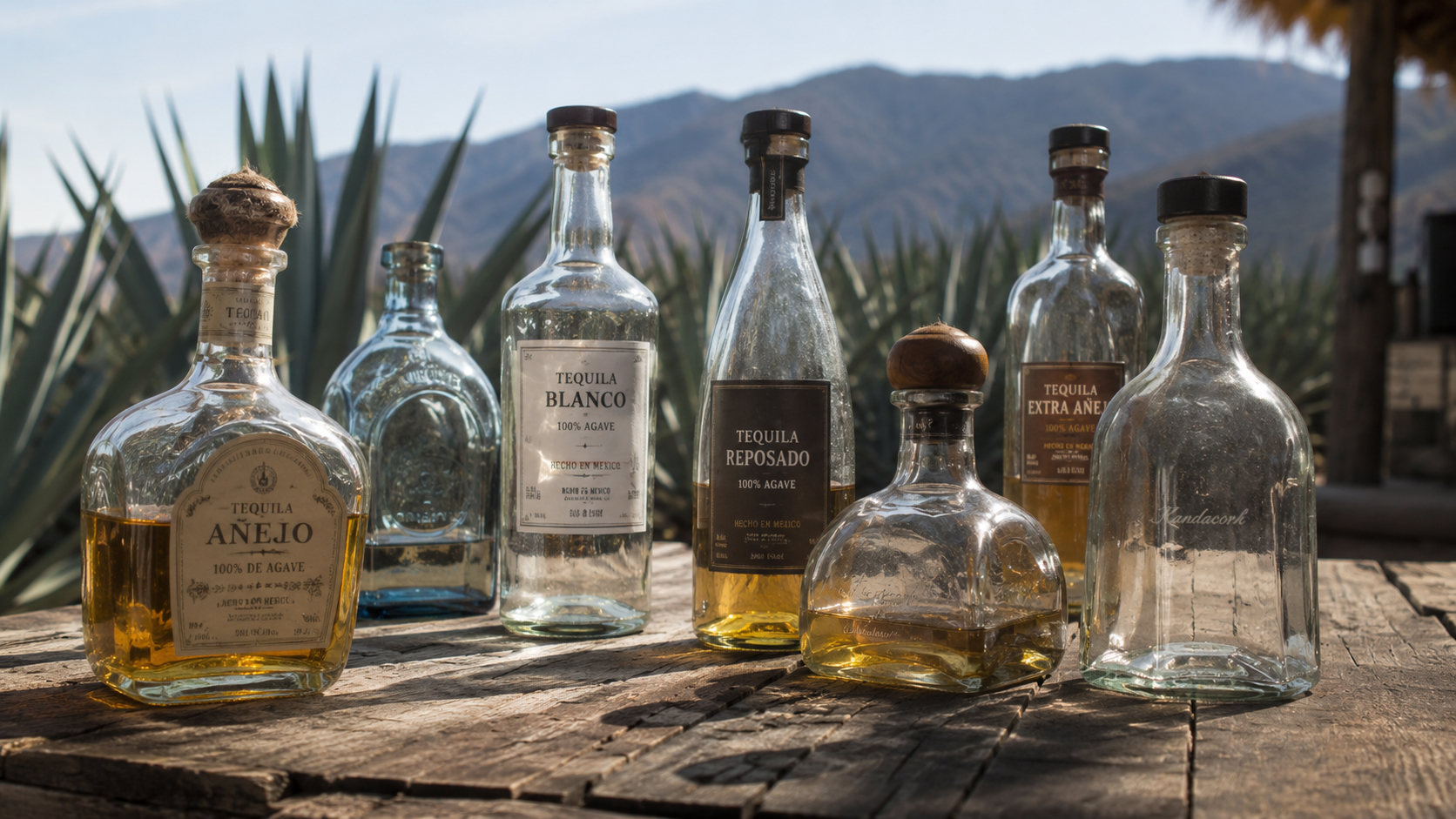
Tequila and mezcal brands often use bold stopper designs, custom shapes, natural materials, and handcrafted visual elements. A closure can become a key part of the product identity.
Liqueurs and Flavored Spirits
Liqueurs may require extra attention to product-contact compatibility because sugar, color, flavoring, and alcohol level can influence closure and liner selection.
Private-Label Spirits
Private-label buyers usually need reliable sourcing, flexible customization, fast sampling, and clear communication. A supplier should help simplify product development when bottles, closures, labels, cartons, and export shipping must be coordinated together.
Complete Packaging Coordination
Closures work best when they are developed as part of the full bottle system. Bottle shape, neck finish, closure height, label position, capsule length, decoration area, carton insert, and shipping method should all be considered together.
For brands that need one coordinated packaging direction, Kandacork Glass supports integrated spirits packaging programs across bottle development, closures, decoration, and bulk production. For buyers sourcing across spirits, cosmetics, home fragrance, gourmet products, and other categories, multi-category glass packaging can also help align bottle structure, decoration-ready surfaces, closures, and accessories.
This coordinated approach is useful when a buyer wants the closure, bottle, capsule, label, and carton to look like one complete brand system rather than separate purchased parts.
Buyer Checklist Before Requesting a Quote
To receive a faster and more accurate recommendation, prepare the following details before contacting a bottle stopper and cap supplier:
- Bottle capacity
- Bottle material
- Bottle-neck inner diameter
- Bottle-neck outer diameter
- Neck finish or technical drawing
- Closure type required
- Spirit or liquor category
- Alcohol level
- Filling method
- Manual or automatic capping
- Target market
- Logo file
- Preferred material
- Preferred color
- Decoration method
- Order quantity
- Sample requirement
- Packaging and shipping destination
If technical details are not available, clear bottle-neck photos or a physical bottle sample can help the supplier recommend the next step.
Common Sourcing Risks and Practical Solutions
Leakage During Transport
Leakage may happen because of poor neck fit, incorrect shank diameter, weak liner selection, unsuitable torque, or dimensional inconsistency. Fit review and sample testing help reduce this risk.
Loose or Over-Tight Closures
A stopper that feels too loose creates a poor user experience. A stopper that is too tight may damage the bottle neck or frustrate consumers. Pull-out force and insertion testing help find the right balance.
Poor Brand Match
A closure may look good alone but fail to match the bottle, label, carton, or price point. Material, color, logo, and finish should be reviewed as part of the complete packaging system.
Production Delay
Custom closures can involve tooling, sampling, color approval, logo testing, and packaging confirmation. Early project review helps reduce delays near bottling time.
Wrong Closure for the Market
Some markets expect tamper evidence, non-refillable systems, or specific food-contact documentation. Buyers should confirm market requirements before mass production and shipment.
FAQ
What is the difference between a bottle stopper and a bottle cap?
A bottle stopper usually seals the bottle by inserting a shank into the neck. A bottle cap usually seals through threading, crimping, torque, liner compression, or tamper-evident structure. Spirits packaging may use either option depending on the bottle design and market requirement.
Which closure is best for premium spirits?
For many premium spirits, bar-top cork stoppers, wooden stoppers, glass stoppers, and custom aluminum closures are popular choices. The best option depends on the bottle neck, spirit category, brand positioning, filling method, and target market.
Can Kandacork customize bottle stoppers with a logo?
Yes. Kandacork can support logo engraving, embossing, debossing, printing, hot stamping, metal inserts, color coating, and custom shapes. The best decoration method depends on the material, logo design, and production quantity.
What information is needed for closure matching?
The most important information includes bottle-neck size, inner diameter, outer diameter, neck finish, bottle drawing, closure type, filling method, and target quantity. A physical bottle sample is highly recommended for accurate matching.
Are screw caps suitable for spirits bottles?
Yes. Screw caps and ROPP closures are commonly used for spirits and specialty beverage packaging. They are especially useful when brands need tamper evidence, resealing, torque control, and production repeatability.
Do bottle stoppers require testing before bulk production?
Yes. Testing is strongly recommended. Buyers should confirm fit, seal, pull-out force, insertion force, appearance, packaging, and transport stability before approving mass production.
Can one supplier provide stoppers, caps, capsules, and shrink sleeves?
Yes. A supplier with a complete closure program can help coordinate multiple closure and neck-finishing components, including stoppers, caps, capsules, shrink sleeves, and decorative elements.
What is the MOQ for custom bottle stoppers and caps?
MOQ depends on closure type, material, decoration method, tooling requirement, and order complexity. Standard items usually have lower MOQ, while custom molds, special colors, and premium decorations may require higher quantities.
Is Kandacork suitable for private-label spirits projects?
Yes. Kandacork can support private-label spirits projects by helping buyers choose suitable stoppers, caps, capsules, shrink sleeves, decoration methods, and export packaging solutions based on brand position, target market, and order quantity.
Conclusion
Choosing the right bottle stopper and cap supplier is one of the most important steps in spirits packaging development. The closure must fit the bottle, protect the liquid, support the filling process, communicate the brand image, and meet the expectations of the target market.
Kandacork helps spirits brands, liquor brands, bottlers, private labels, and packaging distributors develop custom closure solutions for premium and production-ready projects. To begin a project, request a closure quote with your bottle drawing, neck dimensions, bottle photos, logo file, preferred material, target order quantity, and destination market.