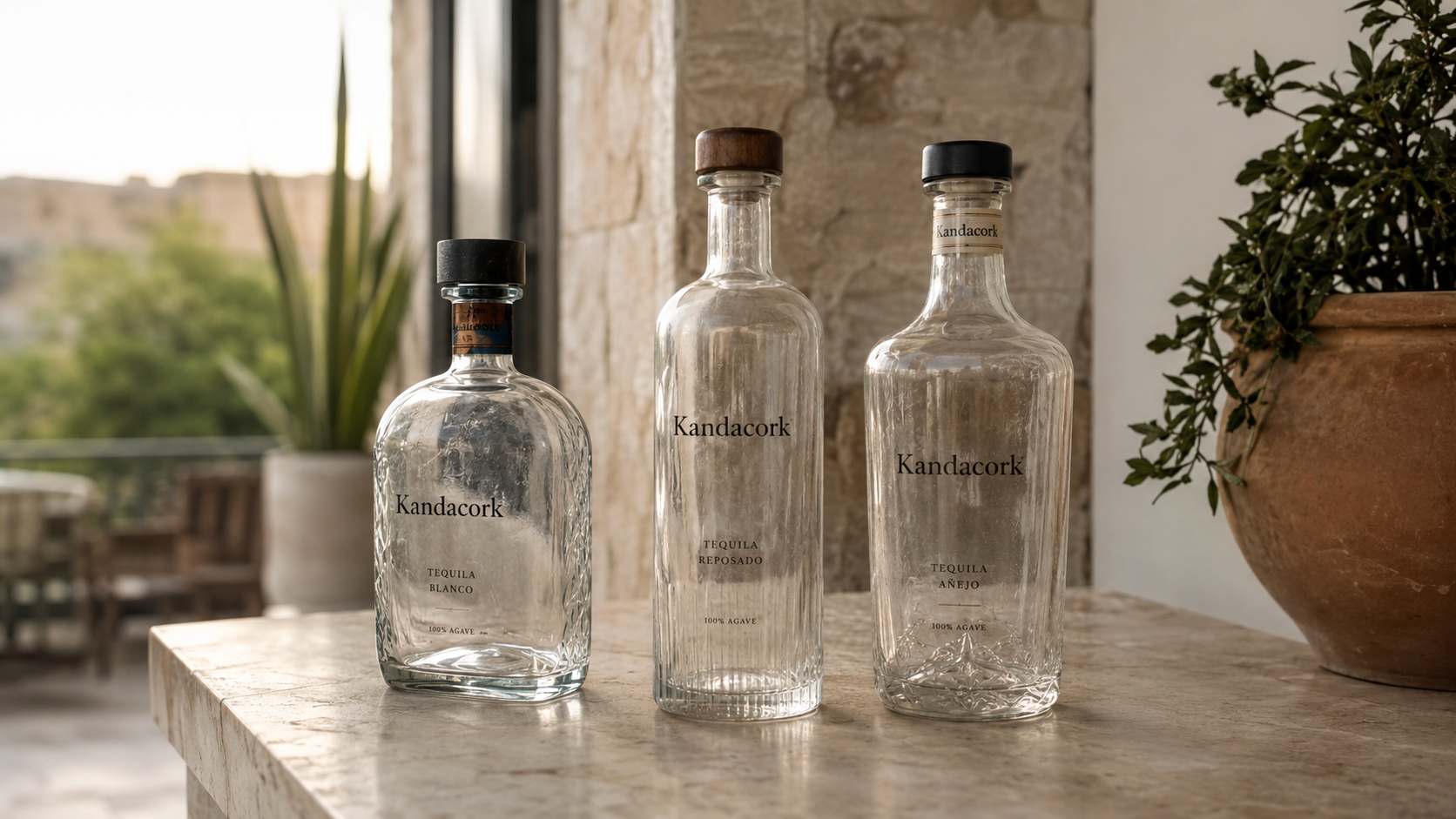
Quick Answer: How to Choose Bar-Top Stoppers for Whisky Bottles
To choose bar-top stoppers for whisky bottles, measure the bottle neck bore, test a slightly larger shank for controlled compression, compare natural cork, micro-agglomerated cork, and synthetic cork, select a head material that matches the whisky’s price position, and validate samples with leakage, pull-out, repeated opening, and packaging tests before ordering.
The right stopper should fit securely, open smoothly, reseal reliably, support the brand image, and work with the full packaging system, including bottle, capsule, label, carton, gift box, filling method, and export requirements. Buyers comparing custom spirits bottle closures and stoppers should evaluate both appearance and technical fit before confirming production.
For buyers comparing custom whisky bottle stoppers, Kandacork Closures helps review bottle fit, material options, logo decoration, sample testing, and quotation requirements before bulk production.
Buyer Decision Summary
| Decision Area | Buyer Should Confirm |
|---|---|
| Bottle fit | Inner neck bore, neck tolerance, insertion depth |
| Sealing | Shank material, compression, leakage behavior |
| Opening feel | Pull-out force, grip comfort, repeated resealing |
| Branding | Head material, logo method, color, finish, weight |
| Production | MOQ, lead time, sample approval, bulk QC |
| Export | Food-contact documents, packaging stability, transport testing |
A simple way to evaluate whisky bottle stoppers is to think in three steps: fit, feel, and finish. Fit means the shank matches the bottle neck. Feel means the closure opens and reseals with the right resistance. Finish means the head material, logo, color, and surface treatment match the whisky brand’s market position.
What Are Bar-Top Stoppers for Whisky Bottles?
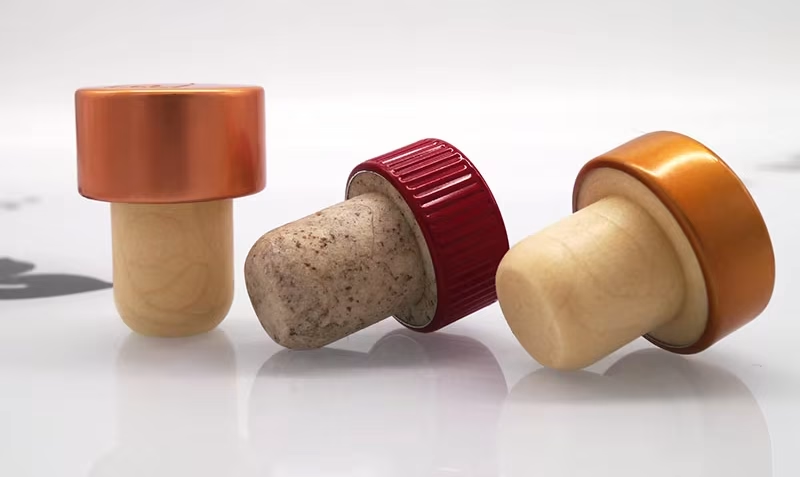
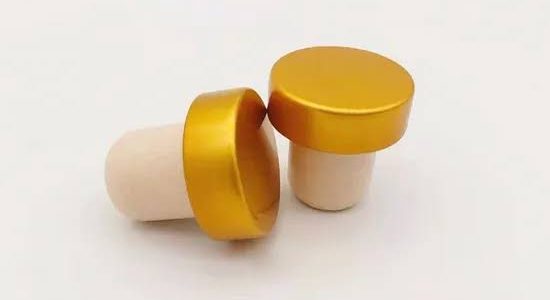
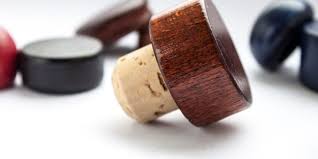
A bar-top stopper, also called a T-top stopper, bartop closure, bar-top cork, or spirits bottle stopper, is made from two main parts: the visible head and the sealing shank.
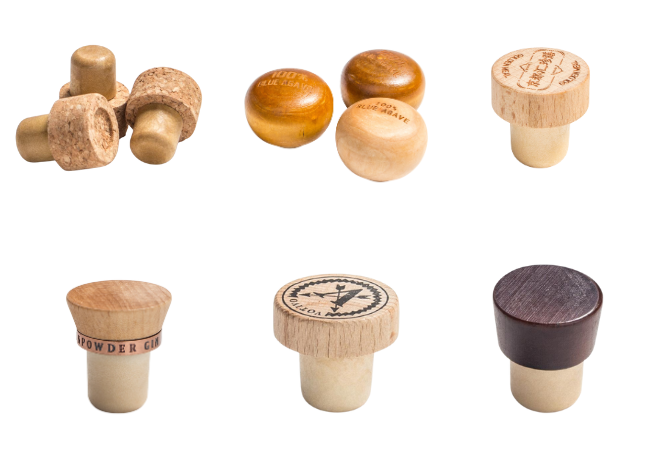
The head is the top component that consumers see and touch. It can be made from wood, plastic, aluminum, zinc alloy, glass, crystal, ceramic, or custom molded materials. The shank is inserted into the bottle neck and is usually made from natural cork, micro-agglomerated cork, synthetic cork, polymer, or a hybrid material.
Bar-top stoppers for whisky bottles are widely used because they provide a premium resealable closure and a traditional opening experience. They are common in craft whisky, single malt whisky, blended whisky, bourbon, rye whisky, premium private label whisky, limited editions, and gift packaging.
A whisky brand should consider bar-top stoppers when the closure needs to support craft, premium, traditional, or collectible positioning. However, the stopper must be evaluated as part of the whole packaging system, including bottle neck finish, capsule, shrink sleeve, tax strip, gift box, filling method, export route, and storage conditions. For broader project planning, buyers can also compare how the closure fits into a complete spirits bottle and closure system.
How to Measure Bottle Neck Bore Before Choosing a Stopper
The best fit is not decided by bottle capacity. It is decided by inner neck bore, glass tolerance, shank hardness, insertion depth, and pull-out force.
Before selecting bar-top stoppers for whisky bottles, prepare these details:
- Bottle inner neck diameter
- Bottle neck bore tolerance
- Neck finish type
- Insertion depth
- Bottle drawing or technical specification
- Physical bottle samples
- Filling and capping method
- Capsule, sleeve, carton, or gift box requirements
As a practical starting point, buyers often test a stopper shank slightly larger than the measured bottle neck bore. This helps create controlled compression and a secure seal. However, this should not be treated as an absolute rule. Glass tolerance, shank hardness, material recovery, insertion depth, and bottle neck profile all affect the final fit.
Use this practical workflow:
- Measure the inner neck diameter with accurate tools.
- Review the bottle drawing and tolerance range.
- Select several nearby shank diameters for sample testing.
- Insert each sample into production-equivalent bottles.
- Check insertion feel, vertical alignment, and head balance.
- Test pull-out force, leakage, and repeated resealing.
- Approve the stopper only when both appearance and performance are acceptable.
If the shank is too small, the stopper may feel loose or leak. If it is too large, insertion may be difficult, the shank may deform, or the neck may experience unnecessary stress.
For deeper technical preparation, buyers can use a glass bottle neck closure matching guide to organize bore measurement, tolerance review, and sample validation before requesting production quotes.
Fit Factors Buyers Should Check
| Fit Factor | What to Check | Why It Matters |
|---|---|---|
| Inner neck bore | Measure the actual bottle opening | Determines the starting shank size |
| Glass tolerance | Review drawing and sample variation | Prevents loose or over-tight fit |
| Shank hardness | Compare cork, synthetic, and micro-agglomerated options | Affects compression and pull-out force |
| Insertion depth | Test how far the shank enters the neck | Affects sealing, stability, and appearance |
| Pull-out force | Test repeated opening and resealing | Affects consumer experience |
| Head balance | Check head diameter, height, and alignment | Affects shelf look and perceived quality |
| Packaging clearance | Test with capsule, carton, tray, or gift box | Prevents packing and display problems |
This type of fit review is especially important for custom whisky bottles, heavy-base bottles, decanter-style bottles, thick glass bottles, and private label projects using bottles from multiple suppliers.
Stopper Shank Materials: Natural Cork vs Micro-Agglomerated vs Synthetic Cork
The shank controls the seal, insertion feel, pull-out force, and long-term performance. Choosing the right shank material is one of the most important decisions in whisky stopper sourcing.
Natural Cork Shank
Natural cork is often used for premium whisky because it supports heritage, craft, and natural material storytelling. It pairs well with wooden heads and traditional bottle designs.
The advantage of natural cork is its authentic appearance and premium perception. The limitation is natural variation in grain, density, and dimensions. Buyers should check odor neutrality, compression behavior, visual quality, and fit consistency before approving bulk orders.
Natural cork is often suitable for craft whisky, single malt whisky, bourbon, rye whisky, and limited releases where natural character is part of the product story.
Micro-Agglomerated Cork Shank
Micro-agglomerated cork is made from fine cork granules formed into a more controlled structure. It provides a balance between cork-based identity and stable technical performance.
For many bar-top stoppers for whisky bottles, micro-agglomerated cork is a practical commercial option. It can offer more consistent dimensions than some natural cork grades while keeping a cork-based material profile.
This shank type is suitable for mid-premium whisky, private label whisky, export programs, and repeat orders where consistency matters.
Synthetic Cork or Polymer Shank
Synthetic cork and polymer shanks are selected for dimensional consistency, predictable compression, and stable bulk performance. They are useful for high-volume whisky programs where buyers need repeatable insertion and controlled pull-out feel.
Synthetic materials should still be reviewed for alcohol compatibility, odor neutrality, food-contact suitability, and long-term appearance. For premium whisky packaging, the head material and surface finish should also support the required brand image.
Whisky Stopper Head Materials Compared
The stopper head affects appearance, hand feel, decoration method, cost, weight, and shelf impact.
| Head Material | Brand Impression | Decoration Options | Cost Level | Best Use Case |
|---|---|---|---|---|
| Wood | Traditional, warm, craft, premium | Laser engraving, staining, debossing, printing, varnishing | Medium | Craft whisky, bourbon, single malt, heritage packaging |
| Plastic | Practical, consistent, cost-efficient | Color matching, printing, molding | Low to medium | Entry-level whisky, private label, large-volume programs |
| Aluminum | Modern, clean, lightweight premium | Anodizing, brushing, embossing, printing | Medium to high | Contemporary whisky, premium private label, export packaging |
| Zinc alloy or metal | Heavy, luxury, collectible | Plating, embossing, debossing, sculpted shapes | High | Luxury whisky, limited editions, gift sets |
| Glass or crystal | Decorative, premium, display-focused | Molded shape, polishing, premium visual effects | High | Collector whisky, decanter-style bottles, high-end gifts |
Wooden bar-top stoppers are one of the most common whisky choices because they create a natural and traditional feel. Aluminum works well for modern premium packaging. Zinc alloy and metal tops create a heavier luxury impression. Plastic is suitable for cost-sensitive or high-volume programs. Glass and crystal can create strong display value but require careful transport protection.
Buyers comparing materials, sizing, logo options, samples, MOQ, and bulk supply can also review a custom bar-top closure supplier guide before confirming the final stopper direction.
Recommended Stopper Direction by Whisky Project Type
| Whisky Project | Recommended Stopper Direction |
|---|---|
| Craft whisky | Wood head with natural cork or micro-agglomerated cork |
| Bourbon or rye whisky | Wood head, stained finish, engraved or debossed logo |
| Premium private label whisky | Wood or aluminum head with consistent synthetic or micro-agglomerated shank |
| Luxury limited edition | Zinc alloy, metal, glass, crystal, or custom molded head |
| High-volume whisky | Standardized head with synthetic or micro-agglomerated shank |
| Gift-box whisky | Check head height, carton clearance, and transport protection |
| Export whisky | Prioritize material documentation, leakage testing, and packaging stability |
This table is only a starting point. The final stopper should always be confirmed by bottle fit, brand positioning, sample testing, order quantity, and market requirements.
Whisky-Specific Technical Requirements
Whisky packaging has requirements that are different from many other beverage categories.
Whisky usually has a higher alcohol content, so the stopper shank, adhesive, coating, ink, and decorative finish should be reviewed for alcohol compatibility. The closure should not create off-odor, taint, discoloration, or surface degradation.
Whisky bottles are normally stored upright, but they may be tilted during transport, retail handling, and consumer use. For this reason, leakage testing is still important even when the product is not designed for horizontal storage.
Premium whisky also depends on sensory cues. The stopper should feel stable in the hand, open with controlled resistance, and reseal confidently. A closure that feels loose, crooked, too light, or difficult to remove can weaken the perceived value of the bottle.
Buyers should also check compatibility with capsules, shrink sleeves, tax strips, tamper-evident bands, cartons, shelf trays, and rigid gift boxes. For export orders, documentation and transport stability become especially important.
For export projects, buyers should ask whether closure materials can be supported with food-contact statements, material declarations, and transport packaging records. Depending on the market, internal review may reference FDA food-contact resources for U.S. market context and EU food-contact material principles for European regulatory planning.
Testing Checklist Before Bulk Orders
Before approving bar-top stoppers for whisky bottles, buyers should test both appearance and function.
Use this checklist:
- The stopper fits real production-equivalent bottles.
- The shank diameter matches the measured neck bore.
- The stopper inserts smoothly without deformation.
- The head sits straight and looks balanced.
- Pull-out force feels stable and consumer-friendly.
- There is no leakage under basic handling tests.
- The stopper reseals after repeated opening.
- The head and shank bond remains secure.
- The material has no obvious off-odor.
- Logo decoration is clear and correctly positioned.
- The surface has no unacceptable scratches, dents, burrs, glue marks, or color variation.
- The stopper fits with capsules, sleeves, cartons, trays, and gift boxes.
For stoppers with separate heads and shanks, adhesive bond strength is important because consumers often twist and pull the closure during use. The head should not detach, rotate, or loosen after repeated handling.
A visual sample is not enough. A stopper should be approved only after fit, leakage, repeated opening, packaging compatibility, and appearance have been checked.
Stock or Custom Bar-Top Stoppers?
Stock stoppers are useful when the project has a short timeline, standard bottle neck, simple branding, or limited launch budget. They can be suitable for trial batches, small releases, and basic private label programs.
Custom stoppers are better when the closure is part of the brand identity. A custom wood, aluminum, metal, or glass stopper can help a whisky bottle stand out in retail, duty-free, gifting, and distributor presentations. Customization is also useful when the bottle neck is non-standard or when the brand requires a specific color, logo, finish, shape, or tactile feel.
The decision should not be based on unit price alone. Buyers should consider total project value, including bottle fit, sample accuracy, decoration quality, MOQ, lead time, repeat-order consistency, and export packaging.
Technical and Compliance Documents Buyers Should Ask For
For commercial whisky packaging, especially export-focused projects, buyers should request relevant documentation before placing large orders.
Ask the supplier for:
- Bottle drawing review or fit recommendation
- Material declaration
- Food-contact statement where applicable
- Sample approval record
- Pull-out or insertion test notes where available
- Leak test result or internal validation record
- Alcohol compatibility notes where relevant
- Transport packaging confirmation
- Bulk production QC standard
- Packing method and carton specification
- Export documentation support when required
These documents help buyers reduce sourcing risk, especially when dealing with private label whisky, distributor-led programs, international shipments, or repeat bulk orders.
What to Include in an RFQ for Whisky Bottle Stoppers
A complete RFQ helps suppliers respond faster and more accurately. It also reduces sampling delays and prevents incorrect quotations.
Bottle Information
Include the bottle drawing, physical bottle sample, inner neck diameter, tolerance, bottle capacity, neck finish, insertion depth, and bottle supplier information if available.
Stopper Requirements
Specify the target shank material, head material, head diameter, head height, shape preference, expected hand feel, and whether stock or custom options are preferred.
Branding Requirements
Provide logo artwork in vector format, decoration method, color reference, surface finish, engraving position, embossing or debossing needs, and packaging style.
Commercial and Testing Requirements
Include whisky type, ABV, filling method, target order quantity, sample quantity, export market, capsule or carton requirements, quality testing expectations, packing method, and target delivery date.
If your whisky bottle project already has a drawing, artwork, or sample bottle, Kandacork Closures can help review stopper fit, compare material options, and prepare a custom RFQ.
Supplier Capability Checklist
A qualified stopper supplier should support both design and technical validation. Before confirming a supplier, ask whether they can:
- Review bottle drawings and physical samples.
- Recommend shank materials and diameters.
- Provide samples before bulk production.
- Support wood, plastic, aluminum, zinc alloy, glass, cork, synthetic cork, and hybrid options.
- Explain insertion depth, compression, and pull-out force.
- Support custom logo decoration and color matching.
- Provide material documentation for food-contact review.
- Coordinate leakage, repeated opening, and transport-related checks.
- Maintain consistent color, finish, and dimensions in bulk production.
- Support private label buyers, importers, distributors, and repeat orders.
A low price is not enough if the supplier cannot control quality, documentation, lead time, and repeat production. For whisky packaging, closure failure can affect product image, logistics, and customer trust.
Why Work with Kandacork Closures
Kandacork Closures helps spirits brands, distilleries, private label buyers, importers, distributors, bottlers, and packaging teams develop custom closures for whisky and other premium spirits.
For bar-top stoppers for whisky bottles, Kandacork Closures can support material comparison, bottle neck-fit review, logo decoration, sample development, bulk production, and custom RFQ preparation. Buyers who want to understand the company’s broader development process can review its closure expertise and project support before starting a new packaging program.
The goal is to help buyers choose a stopper that looks appropriate for the brand, fits the bottle correctly, performs reliably, and supports commercial launch requirements.
FAQ
What size bar-top stopper do I need for a whisky bottle?
The correct size depends on the bottle’s inner neck diameter, tolerance, insertion depth, shank material, and desired pull-out force. Do not choose only by bottle capacity or appearance. Use a bottle drawing or physical sample before confirming the final stopper size.
Are natural cork or synthetic cork stoppers better for whisky?
Natural cork is often preferred for premium and traditional whisky positioning. Synthetic cork offers more consistent dimensions and controlled performance. Micro-agglomerated cork can provide a balanced option for many commercial whisky projects. The best choice depends on brand positioning, bottle fit, ABV, order volume, and testing requirements.
Can whisky bottle stoppers be customized with a logo?
Yes. Whisky bottle stoppers can be customized with laser engraving, embossing, debossing, hot stamping, pad printing, screen printing, color matching, metal plating, anodizing, and custom molded shapes. The best method depends on the head material, artwork, MOQ, and budget.
Do bar-top stoppers for whisky bottles need leak testing?
Yes. Leak testing is recommended before bulk production. Samples should be checked with real bottles or production-equivalent bottles under realistic handling, storage, and transport conditions.
What information should I send for a quotation?
Send the bottle drawing, inner neck diameter, target shank material, head material, logo artwork, decoration method, whisky ABV, order quantity, sample requirement, export market, packaging requirements, and target delivery date.