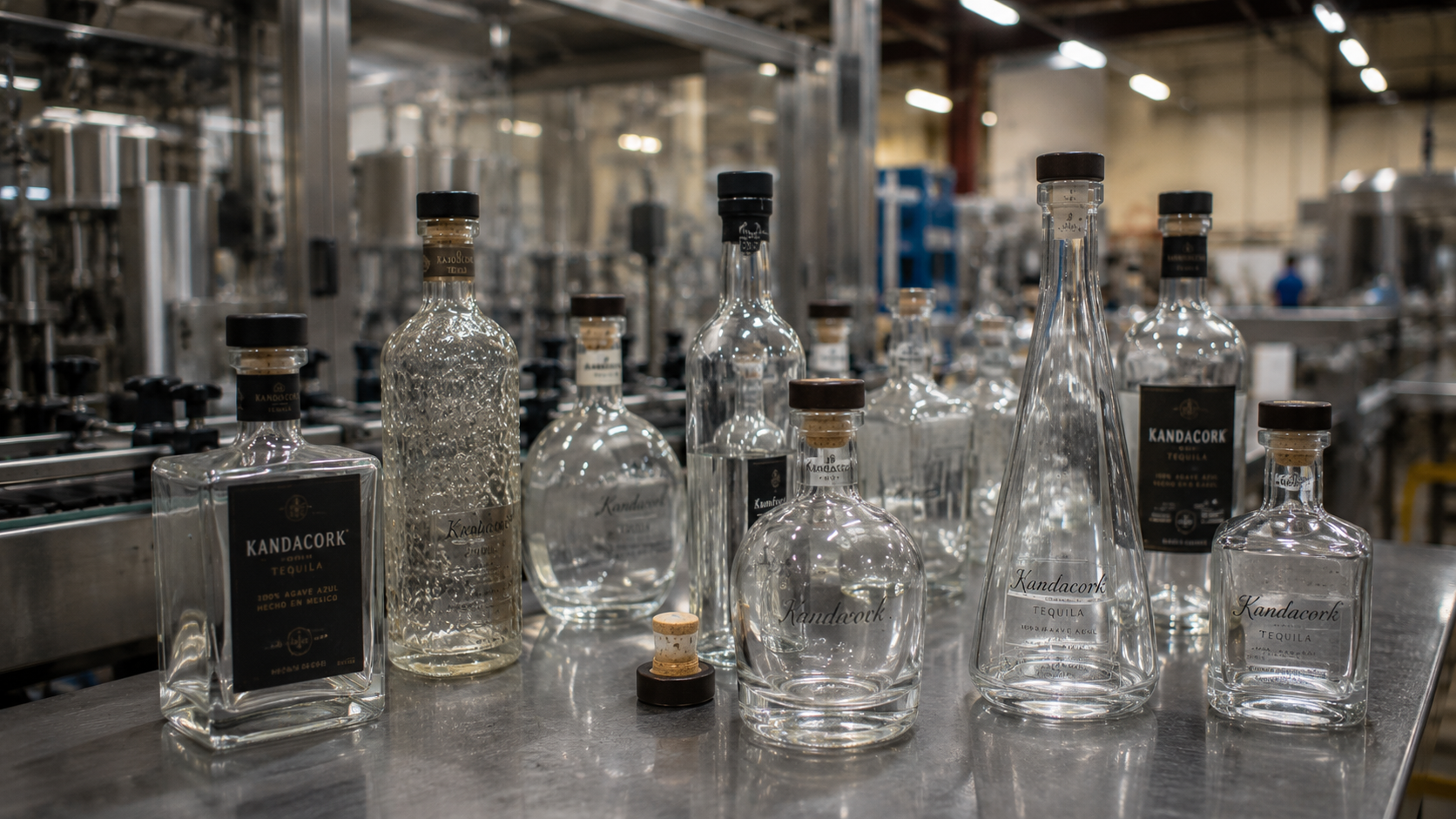
Anti-refill pour control closures combine functional dispensing with tamper-evident and brand protection requirements. This guide explains key design factors, including internal structure, flow control, neck compatibility, assembly and quality inspection.
What Are Anti-Refill Tamper-Evident Pour Control Closures?
Anti-refill tamper-evident pour control closures are engineered bottle closure systems that combine anti-refill protection, visible tamper evidence, and controlled dispensing in one package.
The anti-refill function helps prevent the bottle from being refilled after the original product has been poured out. This is usually achieved through an internal pourer insert, non-return valve, ball mechanism, labyrinth structure, double-valve system, or other one-way flow design.
The tamper-evident function gives a visible sign that the closure has been opened or interfered with. This may include a breakaway band, pilfer-proof ring, tear strip, tamper bridge, shrink sleeve, capsule, or other first-opening indicator. In broader packaging language, the U.S. eCFR describes tamper-evident packaging as using indicators or barriers that provide visible evidence when breached or missing, which is a useful reference point for understanding the function of visible opening protection in consumer packaging.
The pour control function manages how liquid flows from the bottle. A well-designed pourer can reduce dripping, glugging, splashing, and inconsistent serving. This is especially useful for bars, restaurants, tasting rooms, duty-free retail, and premium consumer packaging.
These closures may also be called non-refillable closures, NRF closures, anti-refill closures, tamper-evident pourer caps, non-refillable pourer closures, or controlled-pour spirits closures.
Why Spirits Brands Use Anti-Refill Closure Systems
Spirits bottles often move through long and complex distribution chains. A bottle may pass through exporters, importers, wholesalers, distributors, retailers, hospitality venues, duty-free operators, and final consumers. In each channel, the brand needs to protect the original product and maintain trust.
The OECD has identified illicit alcoholic beverages as a category that can include counterfeiting, refilling, falsification, and tampering, making package-level control especially relevant for premium spirits and distributor-heavy markets. This context helps explain why physical closure security is increasingly treated as part of brand protection rather than only as a packaging detail.
For premium and export spirits, anti-refill tamper-evident pour control closures support several commercial goals:
- Reduce refill fraud risk
- Protect original liquid quality
- Improve distributor and retailer confidence
- Support on-trade and hospitality security
- Improve consumer trust at first opening
- Deliver a cleaner and more controlled pour
- Strengthen premium bottle presentation
- Support layered brand protection and authentication systems
A secure closure cannot replace responsible distribution management, product authentication, or regulatory compliance. However, it gives the bottle a physical defense layer that works at the point of use, not only in documentation or supply-chain records.
Anti-Refill vs Tamper-Evident vs Pour Control: What Is the Difference?
These terms are often used together, but they are not the same. Understanding the difference helps buyers choose the right closure system instead of selecting a cap based only on appearance.
| Function | What It Does | What It Does Not Do | Best Use Case |
|---|---|---|---|
| Anti-refill | Makes reverse filling difficult after the bottle is emptied | Does not automatically prove authenticity by itself | Premium spirits, export channels, refill-risk markets |
| Tamper-evident | Shows visible evidence of opening or interference | Does not always prevent refilling | Retail, duty-free, distributor-heavy markets |
| Pour control | Manages flow rate, splash, drip, and serving behavior | Does not stop refilling unless paired with anti-refill design | Bars, restaurants, tasting rooms, consumer bottles |
| Authentication-ready | Supports QR codes, NFC tags, serialization, or security labels | Does not replace the physical security function | Premium, traceable, or regulated-market packaging |
A tamper-evident band can show that a bottle has been opened, but it may not stop someone from refilling it. A pourer insert can improve dispensing, but it may not provide strong security unless it is designed as part of a non-refillable system. A complete anti-refill tamper-evident pour control closure combines these functions into a more secure and practical package.
Buyer Needs and Closure Features
The best closure depends on the problem the buyer wants to solve. A premium whisky brand exporting to distributor-heavy markets may need a different structure from a liqueur brand focused on bar service or a tequila brand building a luxury gift pack.
| Buyer Need | Recommended Closure Feature | Why It Matters |
|---|---|---|
| Prevent bottle refilling | Anti-refill insert, valve, ball, or double-valve system | Reduces bottle reuse and counterfeit refill risk |
| Show first opening | Tamper-evident band, bridge, sleeve, or tear strip | Gives visible evidence of opening |
| Improve bar service | Controlled-pour insert | Reduces dripping, splash, and inconsistent serving |
| Support premium branding | Decorated aluminium, plastic, or composite shell | Improves shelf appeal and brand recognition |
| Protect export products | NRF closure with tamper evidence and authentication-ready layout | Adds layered security for complex distribution channels |
| Improve consumer confidence | Clear opening cues and smooth pouring experience | Supports trust and repeat purchase |
This decision logic is important because closure selection is not only about cap size. It involves bottle neck finish, spirit category, market risk, filling-line setup, decoration method, and user experience.
For buyers comparing formats across a complete range of stoppers, screw caps, ROPP caps, capsules, and sleeves, the broader bottle closure and stopper range can help clarify which solution fits the bottle and target channel.
How Anti-Refill Tamper-Evident Pour Control Closures Work
A closure’s performance depends on the interaction between the bottle neck, sealing land, bore diameter, internal insert, outer shell, tamper-evident component, and capping process.
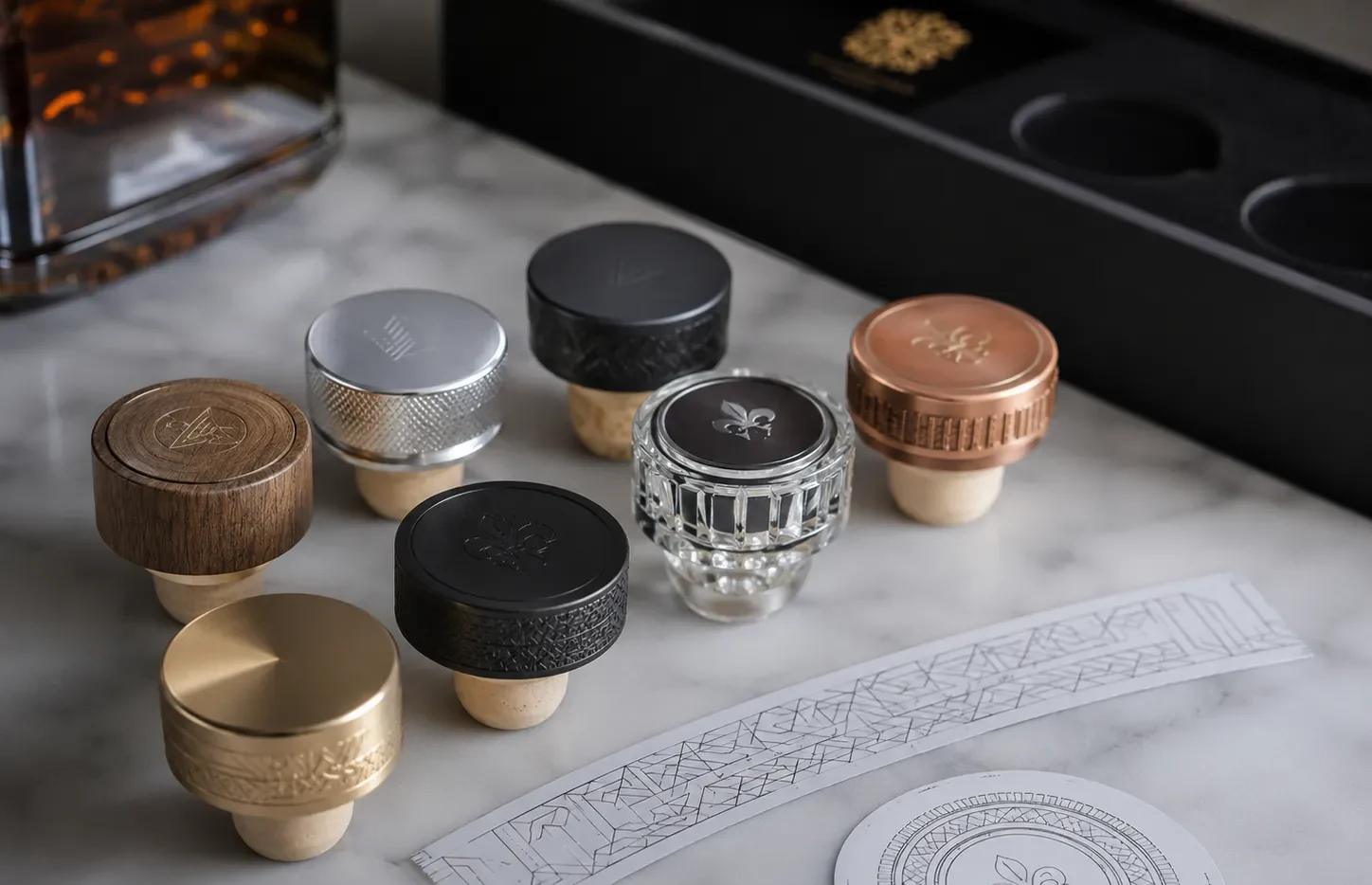
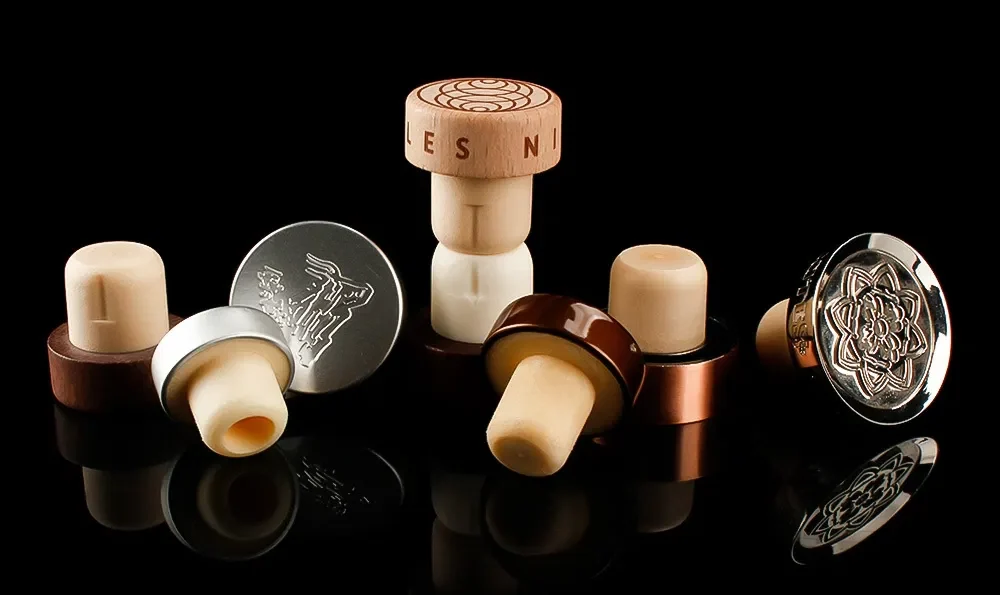
The outer shell provides structure and branding. It may be aluminium, plastic, or composite. It can be decorated with printing, embossing, debossing, hot foil, matte finish, gloss finish, metallic coating, brushed texture, or color matching.
The internal pourer controls liquid flow. Depending on the design, it may include a spout, valve, ball, channel, or flow-restricting structure. The goal is to allow smooth outward pouring while making reverse filling difficult.
The sealing element protects against leakage. This may involve a liner, plug, gasket, inner skirt, compression seal, or direct contact with the bottle’s sealing surface.
The tamper-evident component creates first-opening evidence. This may be a pilfer-proof band, bridge, tear-off feature, shrink sleeve, capsule, or visible break structure. The general packaging concept aligns with the definition used in 21 CFR 211.132 on tamper-evident packaging, where visible evidence of breach is central to the idea of tamper indication.
The anti-refill mechanism is usually hidden inside the closure. It works with the pourer and bottle neck to resist refilling attempts after the original product has been poured out.
The best anti-refill tamper-evident pour control closures are secure, easy to open, attractive on the bottle, compatible with the filling line, and pleasant to use.
Main Types of Anti-Refill Closures for Spirits
Non-Refillable ROPP Closures
ROPP closures, or roll-on pilfer-proof closures, are common in spirits packaging because they can provide strong tamper evidence and a premium aluminium appearance. In an anti-refill version, the ROPP closure is paired with a non-refillable insert or internal pourer system.
This format is suitable for whisky, vodka, rum, gin, tequila, brandy, and liqueurs that require scalable production and a clean metallic finish. Buyers should confirm cap diameter, cap height, thread profile, skirt design, liner needs, insert retention, ROPP roller setup, and capping-head compatibility before bulk production.
For projects where aluminium finish, tamper evidence, and machine application are priorities, custom ROPP closures for spirits bottles can be reviewed together with the bottle neck drawing and filling-line setup.
Non-Refillable Screw Caps
Non-refillable screw caps combine familiar resealing behavior with internal anti-refill protection. They may be suitable for spirits, liqueurs, RTD cocktails, private-label programs, and products where convenience is important.
The key is to ensure the screw cap is not only decorative but functional. Thread engagement, application torque, removal torque, sealing pressure, bore compatibility, and insert fit should be checked before production.
Tamper-Evident Pourer Caps
Tamper-evident pourer caps are designed for controlled dispensing and first-opening evidence. They are useful when pour quality matters as much as security.
For spirits brands, this type of closure can reduce messy pouring, over-pour risk, splash, and inconsistent flow. When combined with anti-refill construction, it becomes a stronger option for bars, hotels, restaurants, clubs, and tasting rooms.
Capsule-Covered NRF Systems
Some premium brands prefer to hide the technical closure system under a capsule, foil, or shrink sleeve. This can create a traditional, luxury, or craft appearance while still allowing anti-refill and tamper-evident performance.
This format is often used for premium whisky, tequila, rum, brandy, and limited-edition spirits. However, the capsule should not be treated as the only security layer. A capsule can show opening, but the internal non-refillable system provides stronger refill resistance.
Smart-Packaging-Compatible Closures
Anti-refill tamper-evident pour control closures can be designed with space for QR codes, serialized labels, NFC tags, tax stamps, or security markings. This supports digital product identity, traceability, consumer engagement, and distributor verification.
A QR code or NFC tag can connect the bottle to batch information, brand storytelling, authentication checks, loyalty programs, or product education. The GS1 Digital Link standard is one example of how product identifiers can connect physical packaging to online information and services.
Closure Type Selection Guide
| Closure Type | Best For | Not Ideal For |
|---|---|---|
| Non-refillable ROPP closure | High-speed filling lines, aluminium premium finish, strong tamper evidence | Bottles without compatible ROPP neck finish |
| Non-refillable screw cap | Resealable spirits, liqueurs, RTD spirits, private label | Projects needing maximum visible anti-refill security |
| Tamper-evident pourer cap | Bars, hospitality, tasting rooms, controlled serving | Brands that need a hidden luxury capsule presentation |
| Capsule-covered NRF closure | Premium whisky, tequila, rum, brandy, duty-free | Cost-sensitive mass-market packaging |
| Smart-packaging-compatible closure | Traceable products, export spirits, serialized packaging | Brands without a digital verification or engagement plan |
This table helps buyers compare closure options based on function rather than appearance alone. For complex projects, Kandacork Closures can review the bottle, filling method, target market, and branding goals before recommending a closure structure.
For spirits brands coordinating bottle shape, closure finish, and shelf presentation together, a specialist spirits bottle packaging partner can help align the cap with the wider bottle concept before sampling.
Which Spirits Products Benefit Most?
Anti-refill tamper-evident pour control closures are especially valuable for spirits that are premium, widely distributed, frequently served in hospitality, or exposed to refill risk.
Whisky and whiskey brands use secure closures to protect aged spirits, limited editions, export bottles, and luxury gift packs. The closure should reinforce the bottle’s premium value and protect the liquid inside.
Vodka brands often need refill protection in duty-free, nightlife, hospitality, and distributor-heavy markets. A clean aluminium or custom screw-cap format can support both security and modern shelf appeal.
Rum brands can use non-refillable pourer closures for aged rum, spiced rum, dark rum, and private-label rum programs. Controlled pouring also helps in bars and restaurants.
Gin brands benefit from closures that support both design and function. Botanical positioning, colored glass, premium labels, and decorative caps should work together with reliable sealing and controlled flow.
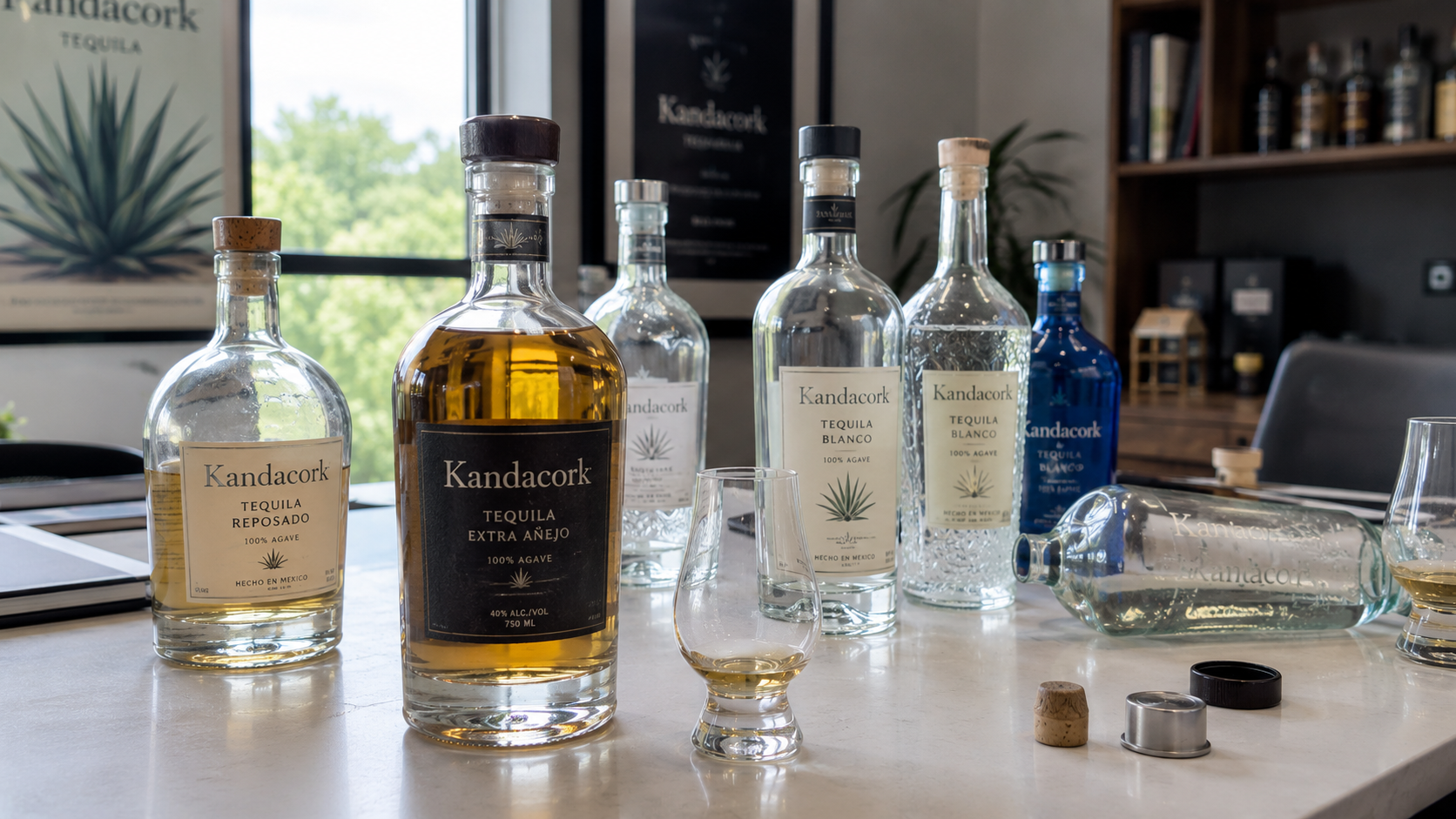
Tequila and mezcal brands often need secure closures because the category has strong premiumization and export demand. Anti-refill protection can help protect high-value bottles in complex distribution channels.
Liqueur and brandy brands may need more attention to pour behavior because viscosity, sugar content, and serving style can differ from standard spirits.
Mini bottles and sample-size spirits can also benefit from visible tamper evidence, especially in airline, hotel, gifting, event, and promotional channels.
How to Specify Anti-Refill Tamper-Evident Pour Control Closures for Bulk Orders
Before sourcing anti-refill tamper-evident pour control closures, buyers should confirm the bottle neck drawing, spirit type, closure diameter, required anti-refill function, tamper-evident structure, pour-flow target, decoration method, and filling-line setup.
Specification is important because a closure that works on one bottle may not perform correctly on another. Small differences in bore diameter, thread profile, bead shape, or sealing land can affect leakage, insert retention, opening torque, and tamper-band performance.
| Specification Item | Why It Matters |
|---|---|
| Bottle neck finish | Determines whether the closure can seal, lock, and apply correctly |
| Bore diameter | Affects insert fit, flow rate, and refill resistance |
| Sealing land | Impacts leakage control and sealing consistency |
| Cap diameter and height | Controls visual proportion, grip, capping setup, and decoration area |
| Application torque | Affects production consistency and closure security |
| Removal torque | Influences consumer opening experience |
| Pour-flow target | Helps prevent slow flow, splash, glugging, or excessive drip |
| Insert retention | Helps reduce looseness, removal risk, and refill vulnerability |
| Tamper-band design | Controls first-opening evidence and consumer confidence |
| Decoration method | Affects brand appearance, coating durability, and production cost |
| Filling-line setup | Determines whether the closure can be applied efficiently at scale |
For best results, buyers should share both technical drawings and physical samples. A bottle drawing helps evaluate dimensions, while a sample helps review real sealing behavior, cap appearance, and consumer-use performance.
For projects where logo application, surface finish, color matching, embossing, or capsule coordination are important, a dedicated decoration and branding resource can support a more consistent bottle-to-closure presentation.
How to Choose the Right Closure
The right closure starts with the bottle neck finish. Buyers should provide a technical drawing whenever possible. Important dimensions include outer diameter, inner bore, thread profile, bead shape, sealing land, neck height, and tolerance range.
Next, define the required security level. A domestic entry-level spirit may only need basic tamper evidence, while a premium export product may need anti-refill protection, visible first-opening evidence, controlled pouring, and authentication-ready packaging.
Then review the liquid type. Alcohol percentage, viscosity, sugar content, essential oils, and flavor compounds may influence liner selection, insert material, sealing performance, and long-term compatibility. Gin, rum, liqueur, vodka, and cream-based products may perform differently in closure tests.
Filling-line compatibility is critical. A closure that performs well by hand may fail on an automated line if application torque, capper pressure, ROPP roller setup, or closure feed system is incorrect. Buyers should evaluate both laboratory performance and real production performance.
Consumer experience also matters. A secure closure should still be easy to grip, open, reseal where required, and pour cleanly. Security should not create frustration for the end user.
For B2B buyers managing multiple closure formats across product lines, a spirits closure sourcing partner can help compare stoppers, screw caps, ROPP closures, non-refillable systems, capsules, and shrink sleeves before bulk commitment.
Technical Testing Before Bulk Production
Before ordering anti-refill tamper-evident pour control closures in bulk, buyers should request samples and test them with the actual bottle and liquid. This is especially important for custom bottles, new molds, decorated caps, export projects, and high-volume production.
Recommended tests include:
- Neck-fit test
- Bore compatibility review
- Insert retention test
- Leakage and inversion test
- Transportation vibration test
- Drop or impact simulation where appropriate
- Application torque test
- Removal torque test
- Tamper bridge or band break test
- Pour-flow rate test
- Drip-control test
- Refill-resistance review
- Alcohol compatibility test
- Hot and cold storage review
- Decoration abrasion test
- Filling-line trial
Each test answers a different buyer question. Leakage and inversion testing checks whether the closure seals under storage and transport stress. Insert retention testing checks whether the internal pourer remains fixed after opening and repeated pouring. Application torque testing confirms that the closure can be applied consistently on the filling line. Removal torque testing checks whether the consumer can open the bottle without excessive force.
Pour-flow testing reviews whether the liquid dispenses smoothly without glugging, splash, slow flow, or excessive dripping. Tamper-band break testing confirms that first-opening evidence is visible and repeatable. Decoration abrasion testing checks whether printing, coating, embossing, or metallic finishes can withstand handling, packing, transport, and retail display.
In beverage and food-chain contexts, quality systems often consider hazards, process control, and supply-chain responsibilities. The ISO overview of ISO 22000 food safety management is a useful reference for understanding why packaging, equipment, distribution, and process control should be considered as part of a broader product-safety environment.
For large orders, a pilot run is the safest approach. The goal is to confirm that the closure works in real filling, shipping, storage, retail, and consumer-use conditions before full-scale production.
Sample Approval Workflow
A structured sample approval process helps buyers reduce risk before committing to bulk production.
First, confirm bottle drawings and closure requirements. This includes bottle neck finish, cap size, required security function, pour-control target, spirit category, decoration goals, and filling-line information.
Next, review closure structure options. Kandacork Closures can recommend suitable formats such as non-refillable ROPP closures, screw caps with anti-refill inserts, tamper-evident pourer caps, or capsule-covered NRF systems.
Then, test samples with the actual bottle. Buyers should check neck fit, sealing, appearance, opening feel, pour behavior, tamper evidence, and compatibility with the filling process.
After that, approve decoration. Artwork, color matching, logo placement, embossing, coating, and surface finish should be confirmed before mass production.
Finally, complete pilot testing or pre-production review. This step helps confirm consistency before scaling to full-volume orders.
For brands developing a complete bottle and closure project together, a custom spirits packaging supplier can help align bottle drawings, closure structures, decoration requirements, sampling, and bulk production planning.
Custom Branding and Decoration Options
Closures are small, but they have a strong visual impact. On a premium spirits bottle, the cap influences shelf appeal, perceived quality, and brand recognition.
Kandacork Closures can support custom closure development with options such as logo printing, embossing, debossing, top-disc decoration, sidewall graphics, Pantone color matching, matte finish, gloss finish, metallic finish, brushed finish, smooth surface design, knurled texture, and coordinated capsule design.
For luxury packaging, decoration must be balanced with technical performance. Printing, coating, embossing, and finishing should be reviewed together with opening torque, abrasion resistance, tamper-evident performance, and line compatibility.
A well-designed closure should match the bottle, label, capsule, carton, and brand story. It should look premium without weakening security or production performance.
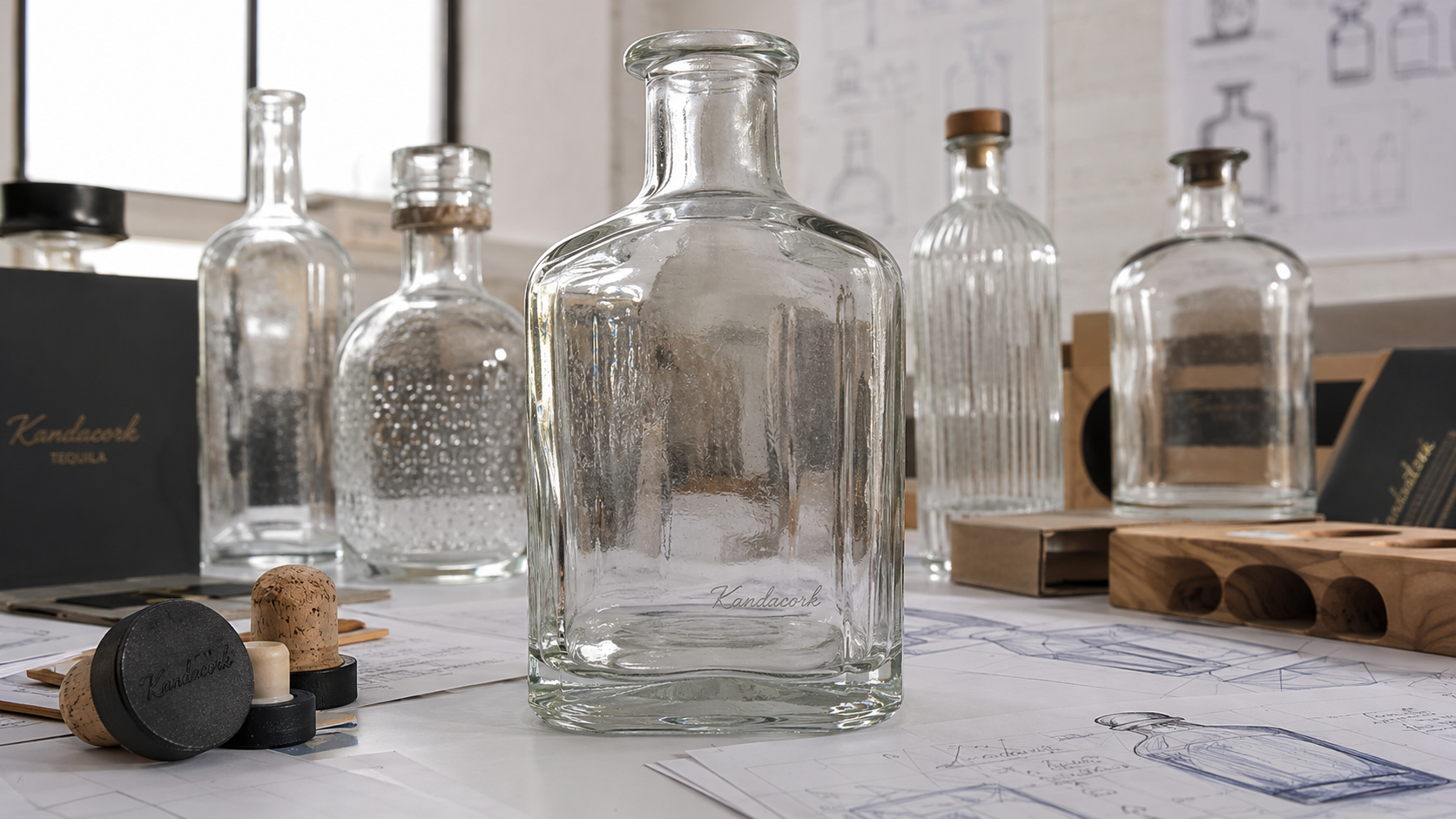
If the project also includes custom-molded bottles, premium heavy-base formats, miniatures, or complete spirits packaging coordination, the wider Kandacork Glass platform can support integrated bottle and closure planning.
Sustainability and Material Considerations
Security and sustainability should be considered together. A closure must protect the product, support packaging efficiency, and avoid unnecessary waste.
Aluminium closures are widely used in spirits packaging because they offer a premium appearance and strong decoration potential. Plastic components may be required for internal pourers, valves, liners, or sealing structures. Composite designs can combine appearance, strength, and technical performance.
Sustainability decisions should include material selection, lightweighting, recyclability, component separation, decoration durability, logistics efficiency, and compatibility with the wider bottle system. A closure that reduces leakage, refill fraud, product loss, and rejected shipments can also support waste reduction.
Glass recycling systems vary by region, but organizations such as the Glass Recycling Foundation highlight the importance of collaboration across the glass recycling value chain. For spirits brands using glass bottles, closure design should align with bottle material, label material, capsule choice, secondary packaging, and recycling communication.
When a packaging project requires glass engineering, decoration-ready surfaces, and matched closures across multiple product categories, Kandacork Eco Glass can support broader packaging system coordination.
Brand Protection and Authentication-Ready Packaging
Anti-refill tamper-evident pour control closures can be part of a layered brand protection strategy. Physical security can work together with tax stamps, serialized labels, security inks, QR codes, NFC tags, digital product identity, and distributor-level traceability.
Physical closure security helps protect the bottle from manipulation. Digital tools can help identify, track, and verify the product. When both are planned together, the package becomes harder to copy and easier to authenticate.
For example, a premium tequila brand may use a non-refillable pourer, tamper-evident band, embossed cap, serialized neck label, and QR code landing page. A whisky brand may use an aluminium ROPP closure, anti-refill insert, decorative capsule, and hidden security mark. A duty-free vodka brand may prioritize visible tamper evidence, clean opening cues, and carton-level traceability.
The right combination depends on product value, market risk, distribution structure, brand position, and budget.
Common Buyer Mistakes to Avoid
Choosing a closure only by appearance is one of the most common mistakes. A beautiful cap that does not fit the bottle or filling line can create leakage, opening problems, production delays, and customer complaints.
Treating tamper evidence as the same as anti-refill protection is another mistake. Tamper-evident packaging shows opening or interference. Anti-refill design helps resist bottle reuse. Premium spirits may need both.
Skipping neck drawings can also create risk. Photos are useful for visual reference, but they cannot replace technical dimensions. Small differences in bore size, thread profile, bead shape, or sealing land can affect closure performance.
Ignoring pour behavior is also risky. A closure may seal well but pour poorly. If the liquid glugs, splashes, drips, or pours too slowly, the consumer experience suffers.
Bulk ordering without samples is dangerous for custom packaging. Testing should happen before full production, especially for new bottle designs, new closure tooling, decorated caps, or international shipping.
What Information Should You Send for a Quote?
To get an accurate quote for anti-refill tamper-evident pour control closures, prepare technical, commercial, and branding details before contacting a supplier.
Useful information includes:
- Bottle drawing or neck finish drawing
- Physical bottle samples if available
- Fill volume
- Spirit category
- Alcohol percentage
- Closure diameter and height preference
- Required anti-refill function
- Required tamper-evident feature
- Desired pour speed or pourer style
- Material preference
- Color and finish requirements
- Logo or artwork files
- Target order quantity
- Filling and capping method
- Target market
- Shipping conditions
- Current closure issue, if replacing an existing cap
The more complete the information, the faster Kandacork Closures can review compatibility, recommend a closure structure, prepare samples, and support testing before bulk production.
Why Work With Kandacork Closures?
Kandacork Closures supports spirits brands that need secure, customized, and production-ready closure systems. The focus is not only on supplying a cap, but on matching closure function with bottle design, filling conditions, brand positioning, and market risk.
For a new spirits launch, Kandacork Closures can help evaluate bottle neck finish, closure style, anti-refill function, tamper-evident requirement, pour-control target, and decoration direction. For an existing product, the team can help review problems such as leakage, weak tamper evidence, poor pouring, difficult opening, cap looseness, or insufficient brand protection.
Anti-refill tamper-evident pour control closures are especially valuable when a bottle must communicate quality before opening and protect product integrity after entering the market. For broader product planning, custom liquor bottle closure solutions can help brands compare security, decoration, neck fit, and production requirements before placing a bulk order.
FAQ
What is an anti-refill closure?
An anti-refill closure is a spirits bottle closure designed to let liquid pour out while making reverse filling difficult. It usually uses a non-refillable insert, valve, ball, or internal channel system. Premium spirits brands use it to reduce refill fraud and protect product integrity.
What is the difference between tamper-evident and non-refillable closures?
Tamper-evident closures show visible evidence that a bottle has been opened or interfered with. Non-refillable closures are designed to resist refilling after use. A premium spirits bottle may need both visible tamper evidence and internal anti-refill protection.
Do anti-refill closures change how the spirit pours?
Yes. Anti-refill closures can affect pour speed, flow pattern, and drip behavior. A well-designed closure should provide smooth controlled pouring without excessive splash, glugging, dripping, or slow flow. Sample testing is recommended before bulk ordering.
Are pour control closures suitable for bars and hospitality?
Yes. Pour control closures are suitable for bars, hotels, restaurants, clubs, and tasting rooms because they help deliver more consistent serving and reduce messy pouring. When combined with anti-refill protection, they also help reduce bottle reuse risk.
Can anti-refill closures be customized with a logo?
Yes. Anti-refill closures can often be customized with logo printing, embossing, debossing, color matching, top-disc decoration, sidewall graphics, matte finish, gloss finish, metallic finish, or capsule coordination, depending on the closure structure and material.
Do non-refillable closures need a special bottle neck?
Non-refillable closures need a compatible bottle neck. Some designs work with standard spirits neck finishes, while others require specific bore size, bead shape, sealing land, thread profile, or neck height. A bottle drawing or sample is recommended.
Are ROPP closures good for anti-refill spirits packaging?
ROPP closures can be a strong option for anti-refill spirits packaging when paired with a compatible non-refillable insert and correct bottle neck finish. They are often selected for aluminium appearance, tamper evidence, and scalable filling-line performance.
What tests should be done before bulk ordering?
Important tests include neck fit, bore compatibility, insert retention, leakage, inversion, opening torque, application torque, tamper-band break, pour-flow rate, drip control, refill resistance, alcohol compatibility, decoration durability, and filling-line trials.
Can anti-refill closures be used for export spirits?
Yes. Anti-refill closures are often used for export spirits, duty-free products, hospitality channels, distributor-heavy markets, and premium retail bottles where refill fraud, product substitution, or bottle reuse may be a concern.
What is the MOQ for custom anti-refill closures?
MOQ depends on closure structure, material, decoration method, tooling needs, and order complexity. Standard finishes may support lower trial quantities, while custom colors, embossing, special inserts, or new tooling may require higher production volumes.
How long does custom closure sampling take?
Custom closure sampling time depends on whether the project uses an existing closure structure or requires new tooling. Buyers can speed up sampling by providing bottle drawings, physical samples, artwork files, target order quantity, and filling-line details at the start.
How do I start a custom closure project?
Start by sending the bottle drawing, bottle sample, spirit category, target closure function, decoration requirements, order quantity, and filling method. Kandacork Closures can review compatibility and recommend an anti-refill, tamper-evident, and pour-control solution.
Final Takeaway
Anti-refill tamper-evident pour control closures help spirits brands solve real packaging problems: refill fraud, weak opening evidence, inconsistent pouring, leakage risk, and insufficient shelf trust. For premium and export-ready spirits, the closure must protect the product, support the brand, and perform reliably in real distribution conditions.
By combining anti-refill engineering, visible tamper evidence, controlled dispensing, custom decoration, and bottle compatibility review, Kandacork Closures helps spirits brands create packaging that looks premium and works harder in the market.
Send your bottle drawing or physical bottle sample, spirit category, required closure function, decoration style, filling-line details, and target order quantity. Kandacork Closures can review neck compatibility, closure structure, decoration feasibility, sample testing requirements, and bulk production options before your project moves forward.