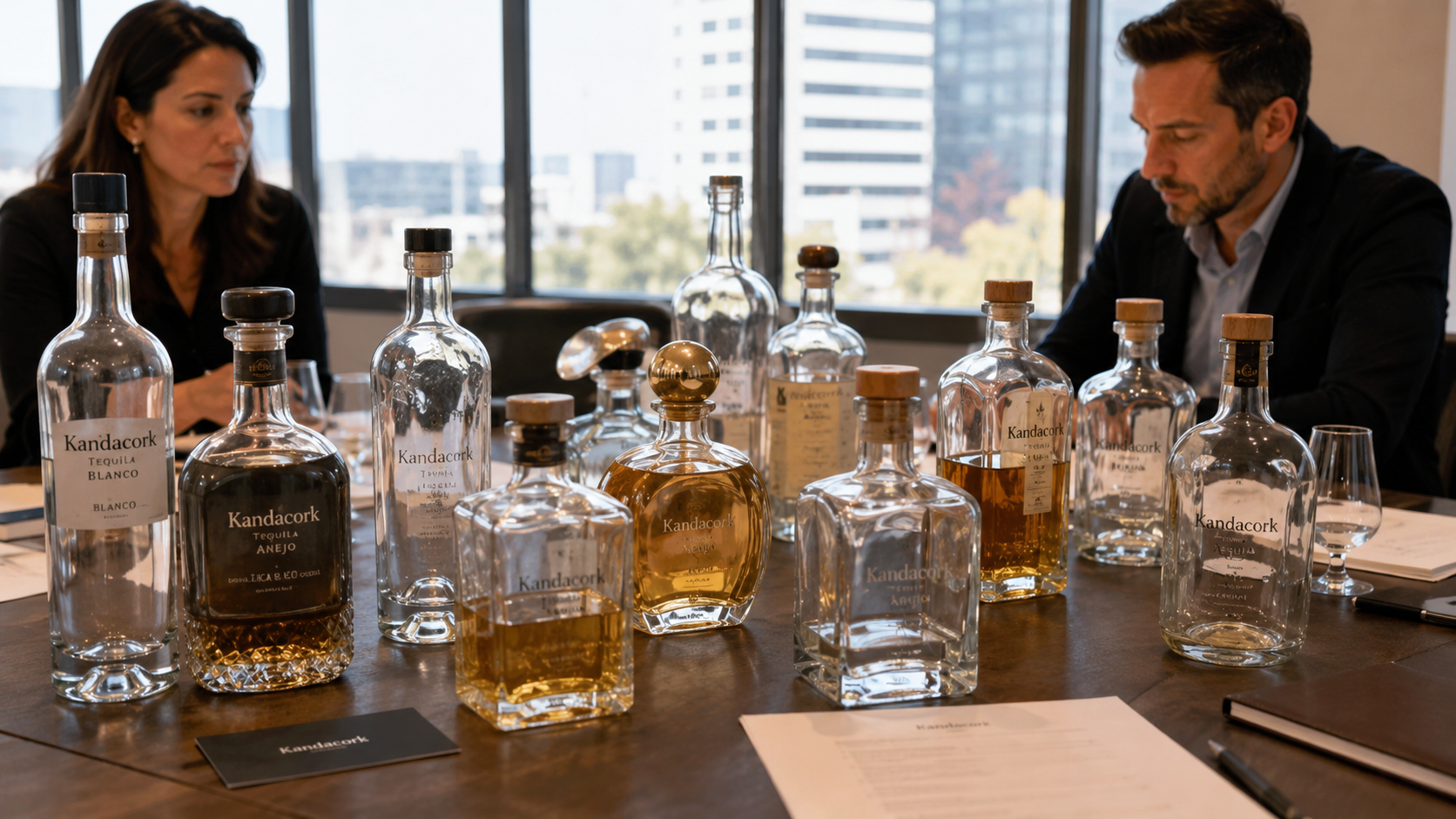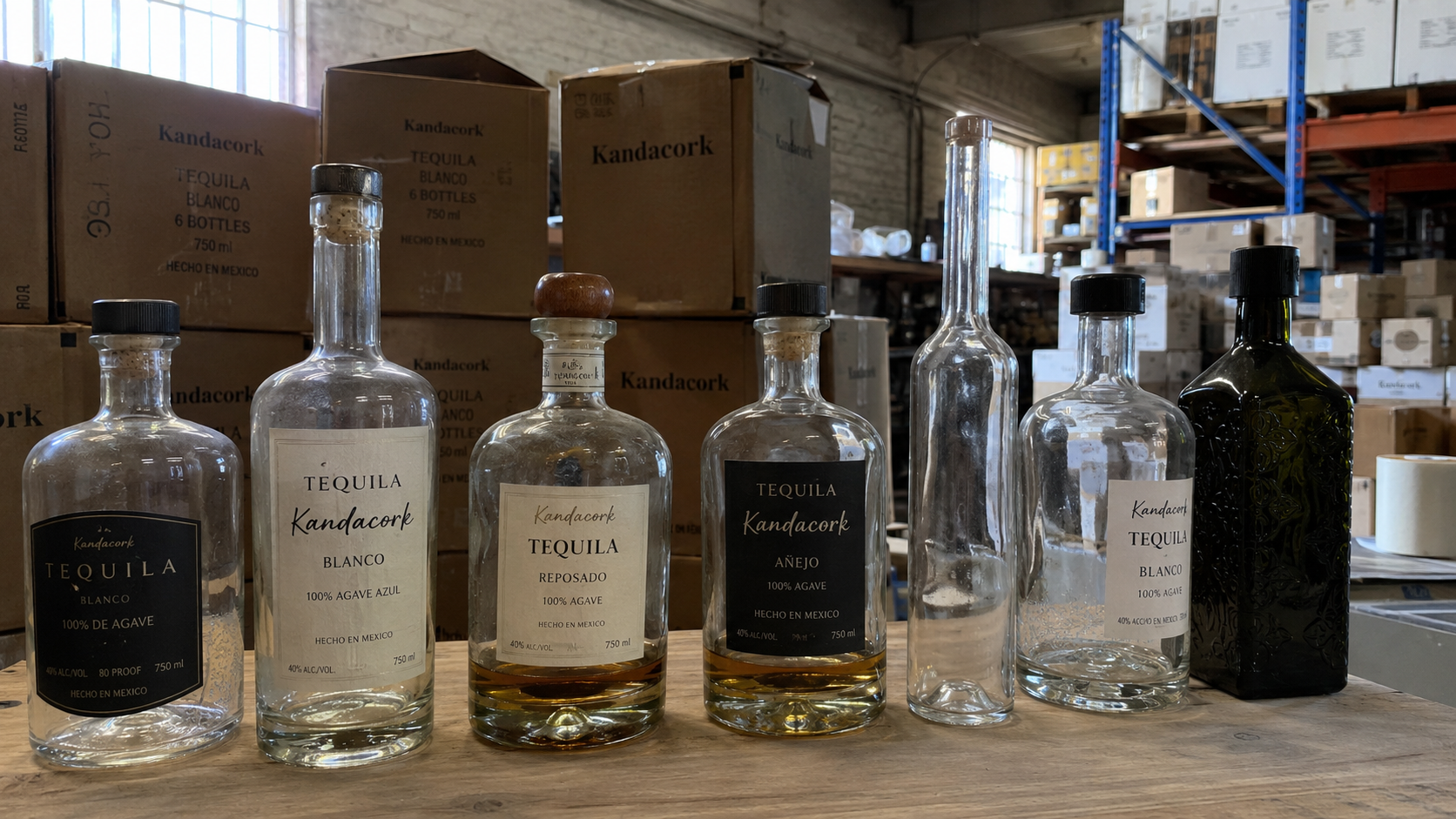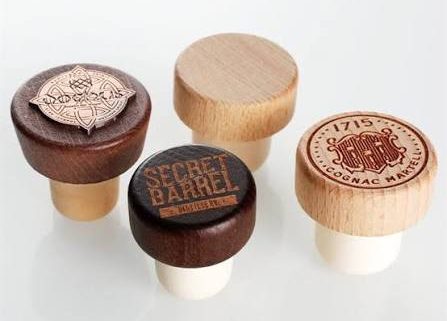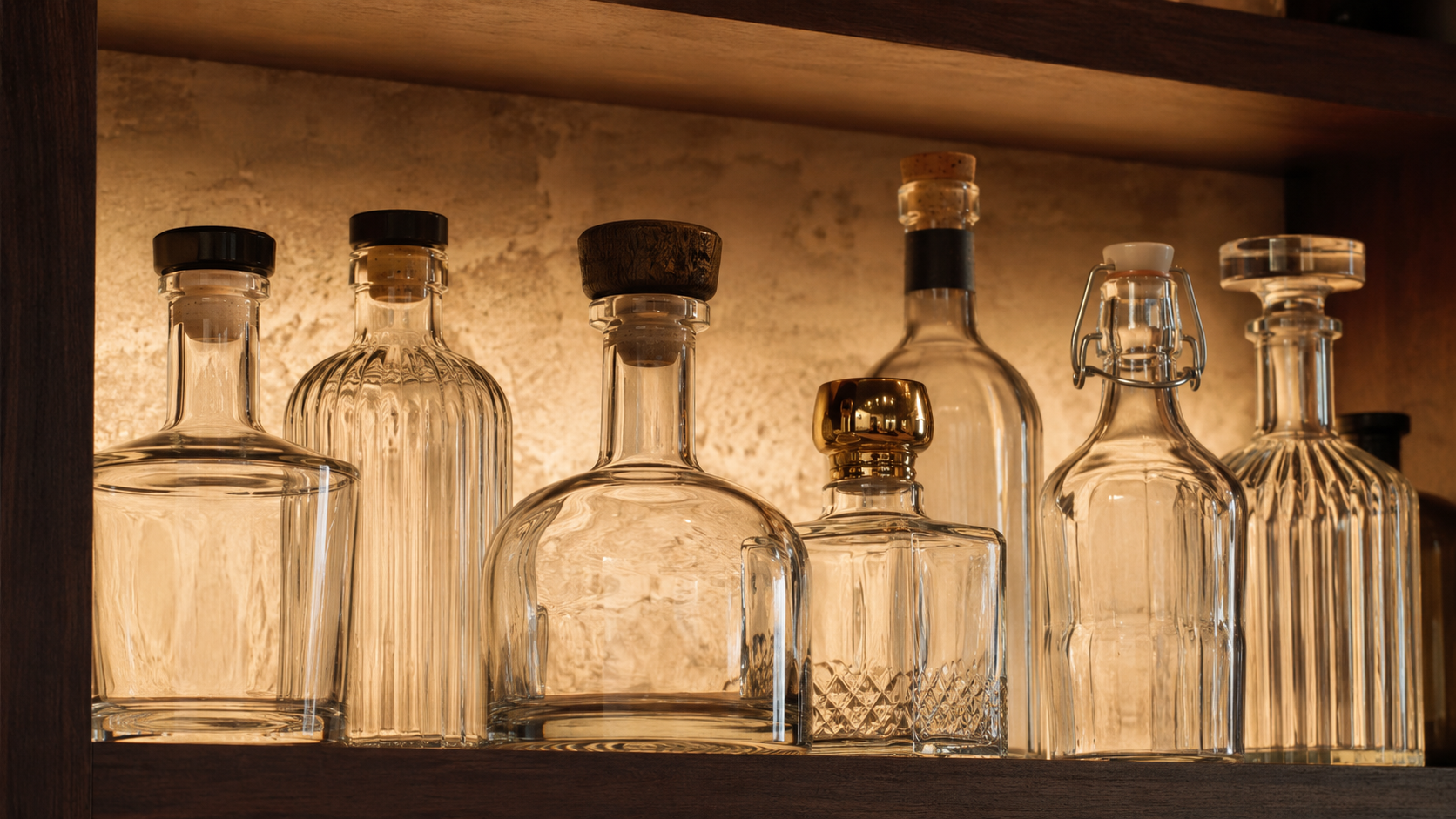
A liquor bottle closure system should be designed around the bottle, filling process, brand image and distribution needs. This guide helps buyers review closure type, material structure, sealing method, neck compatibility, testing requirements and packaging details.
Quick Answer: What Is the Best Liquor Bottle Closure Solution?
The best liquor bottle closure solution depends on the spirit type, bottle neck finish, brand position, alcohol strength, filling process, and sales channel. Premium whisky, rum, brandy, cognac, and tequila often use bar-top corks or T-top stoppers because they create a strong opening ritual. Vodka, gin, liqueurs, mini bottles, and RTD spirits often use screw caps or ROPP closures because they support efficient capping, clean presentation, and reliable reclosure.
Export, duty-free, and high-value spirits may also need tamper-evident or non-refillable closures for stronger brand protection. For direct-contact parts such as liners, shanks, inserts, or coatings, buyers should consider applicable food-contact expectations, including the U.S. FDA’s information on packaging and food contact substances.
What Are Liquor Bottle Closure Solutions?
Liquor bottle closure solutions are complete sealing systems designed for distilled spirits packaging. They may include the stopper, cap, liner, cork shank, pourer insert, tamper-evident band, capsule, shrink sleeve, decorative top, logo decoration, and export packaging.
A complete spirits bottle closure system should answer practical buyer questions:
- Does the closure fit the bottle neck correctly?
- Does it seal the product during storage and transport?
- Does it support the brand’s premium, craft, luxury, or value positioning?
- Does it work with the filling and capping equipment?
- Does it meet tamper-evident or anti-counterfeit requirements?
- Can it be customized with the brand logo, color, finish, or material?
A premium whisky bottle may need a wooden bar-top cork with a synthetic shank. A vodka brand may choose an aluminum screw cap or ROPP closure for clean appearance and high-speed bottling. A duty-free spirits brand may need a non-refillable closure to reduce refilling risks and strengthen consumer trust.
Kandacork Closure Customization Capabilities
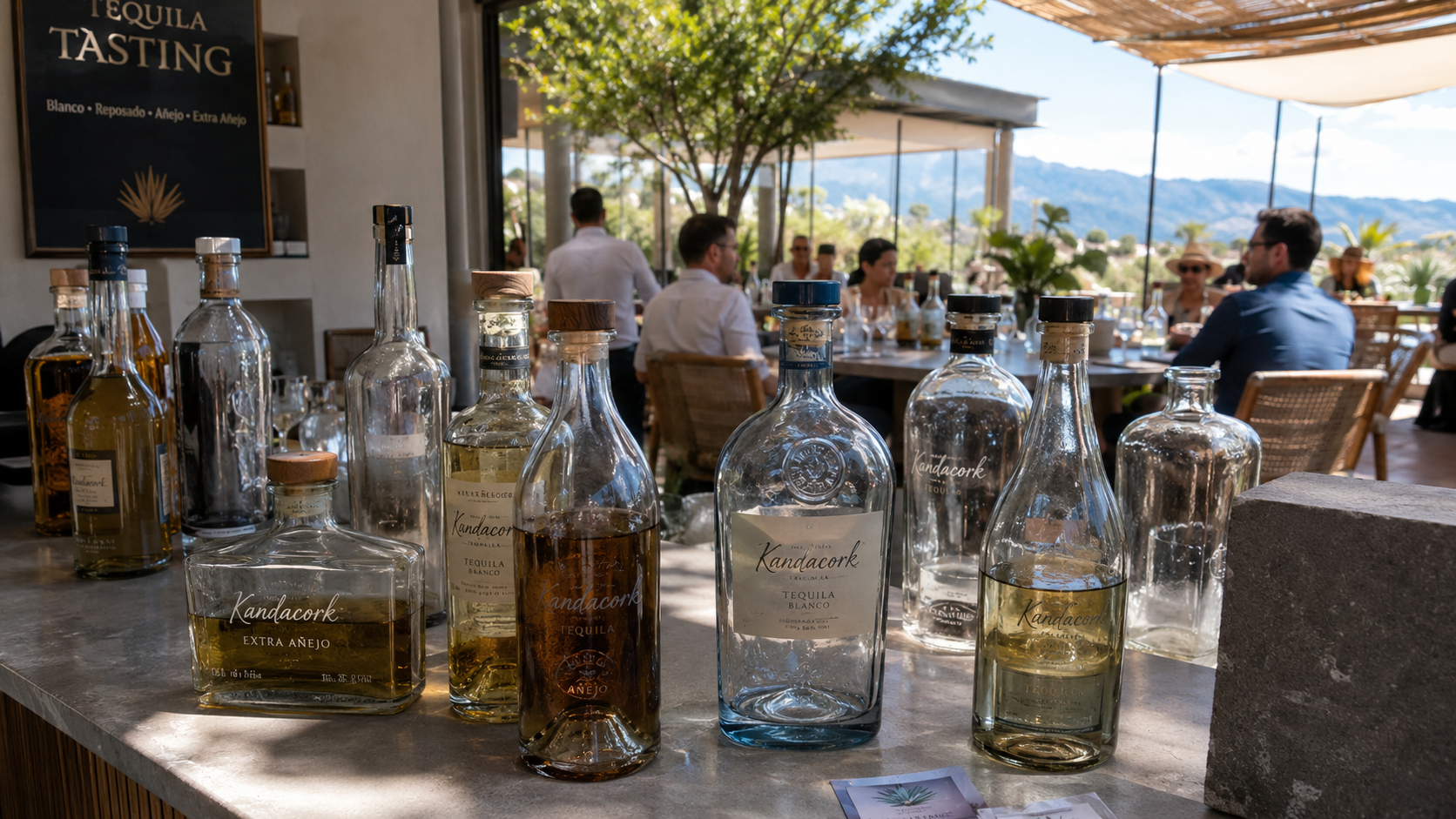
Kandacork Closures supports custom spirits bottle closure projects from early closure matching to sample development and bulk production coordination. Buyers can review a wide range of bottle stoppers and closures to compare materials, structures, decoration methods, and application scenarios before confirming a production direction.
| Custom Area | Available Options |
|---|---|
| Closure Types | Bar-top corks, T-top stoppers, screw caps, ROPP caps, capsules, shrink sleeves, decorative tops |
| Top Materials | Wood, aluminum, zinc alloy, glass, plastic, synthetic materials |
| Shank Options | Natural cork, synthetic cork, technical cork |
| Decoration | Printing, laser engraving, embossing, debossing, hot foil stamping, matte coating, metallic finishing |
| Buyer Support | Bottle neck review, sample matching, artwork confirmation, closure recommendation, bulk production coordination |
| Applications | Whisky, vodka, gin, rum, tequila, brandy, liqueur, mini bottles, private-label spirits |
| Commercial Focus | Custom liquor bottle caps supplier support for distilleries, distributors, importers, and spirits brands |
For custom closure projects, Kandacork Closures can support bottle-neck review, sample matching, logo decoration confirmation, and bulk production coordination. Standard closure projects may use existing structures to reduce development time, while fully custom caps, exclusive colors, zinc alloy tops, glass stoppers, or special molds may require longer sampling and higher MOQ.
A quality-focused closure project should also consider supplier process control, inspection records, and repeatability. The ISO 9001 quality management standard is widely used as a framework for consistent quality management, which is especially relevant when packaging components must remain stable across repeat orders.
Main Types of Liquor Bottle Closures for Spirits Bottles
Different spirits need different closure systems. The right choice depends on product positioning, bottle shape, closure material, sealing requirements, consumer opening experience, and target price level.
Bar-Top Corks and T-Top Stoppers
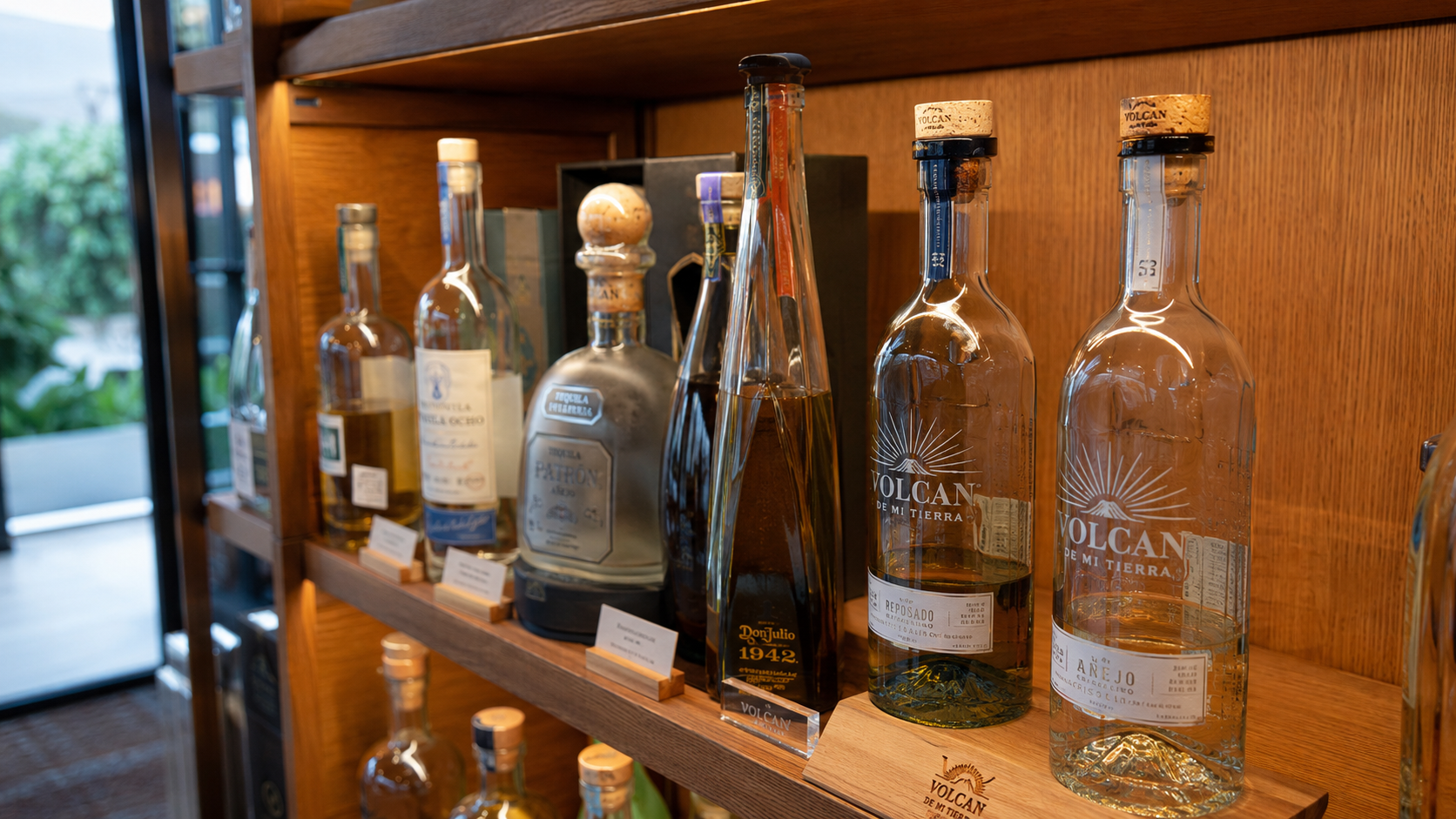
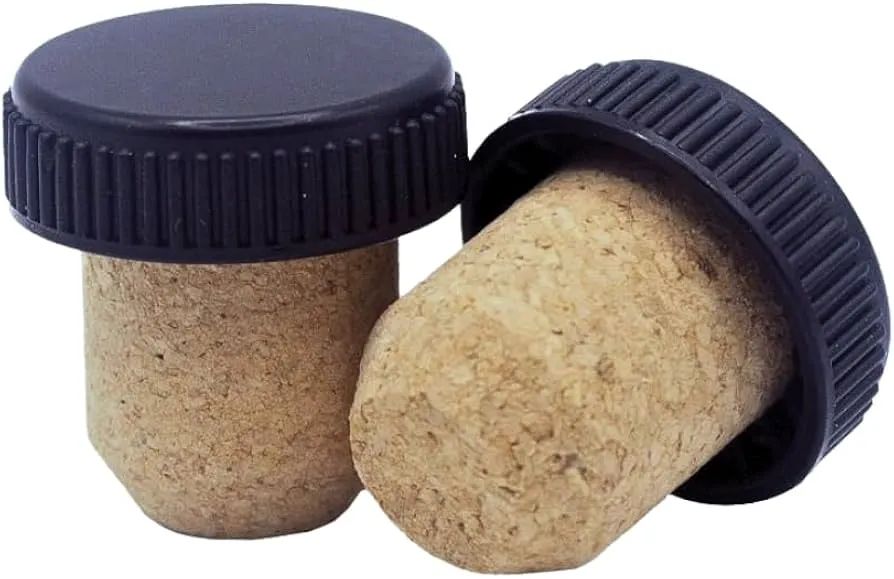
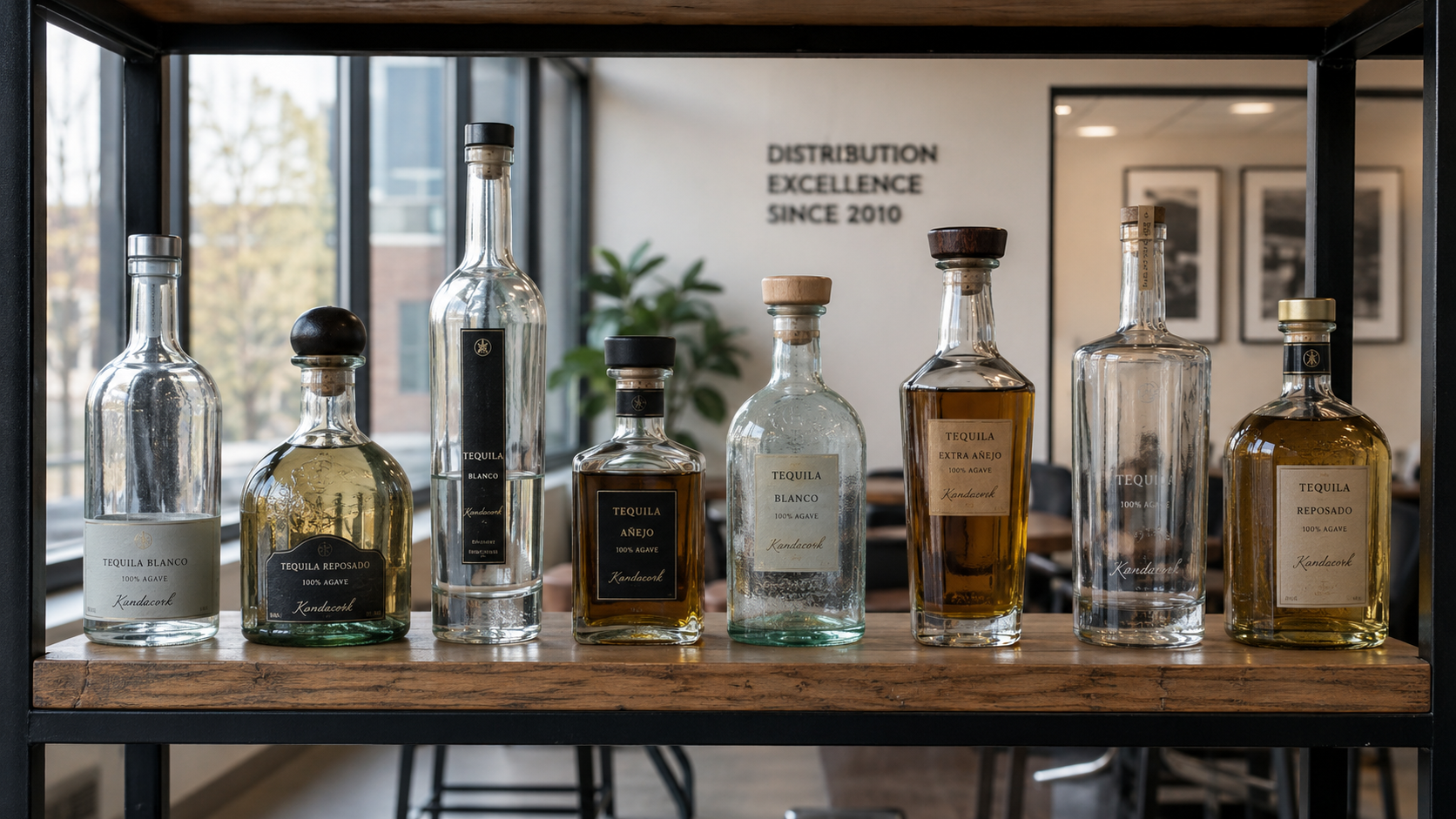
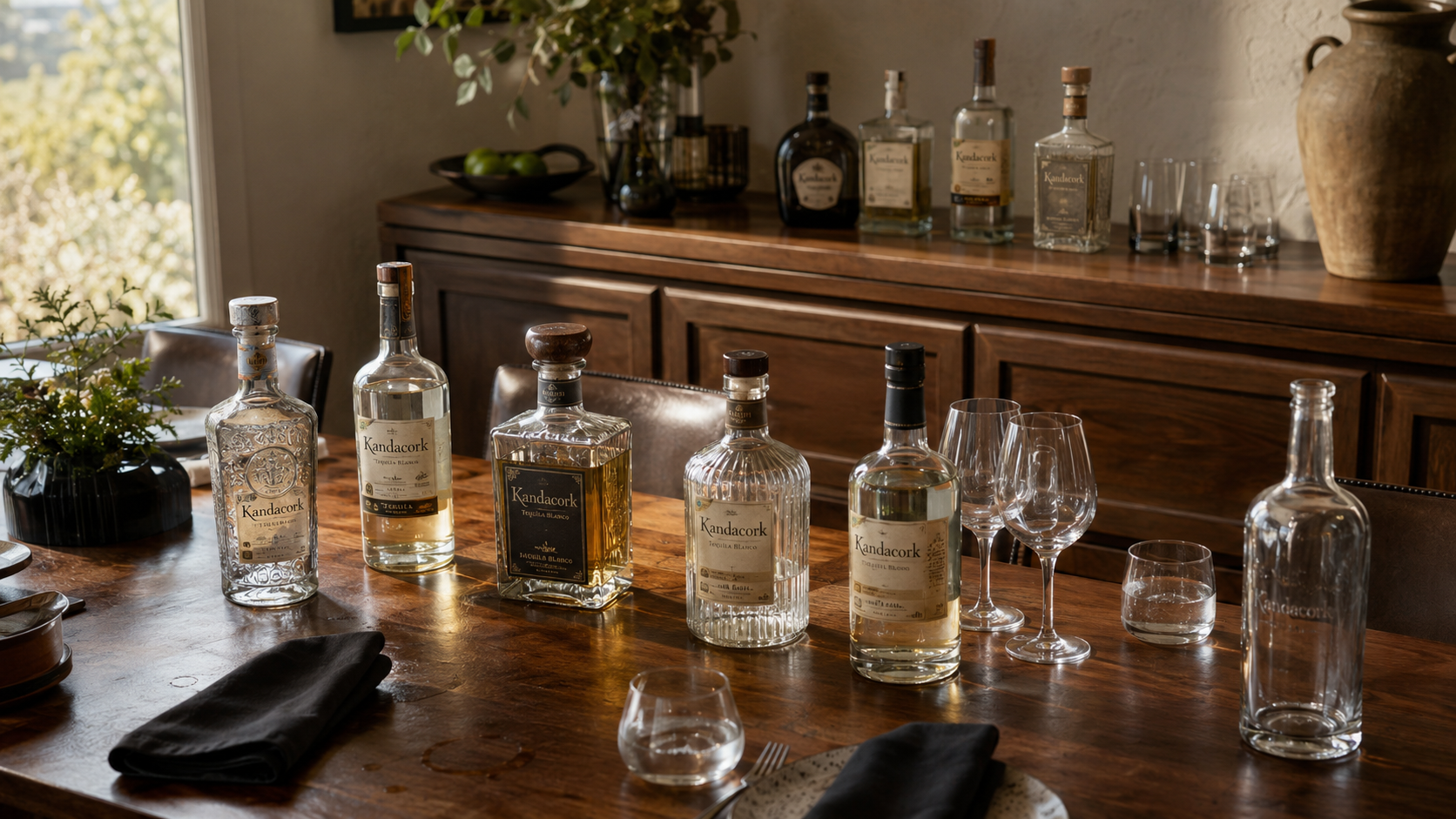
Bar-top corks, also called T-top stoppers, are widely used for whisky, rum, brandy, cognac, tequila, craft gin, and premium liqueurs. They usually combine a decorative top with a cork, synthetic cork, or technical cork shank.
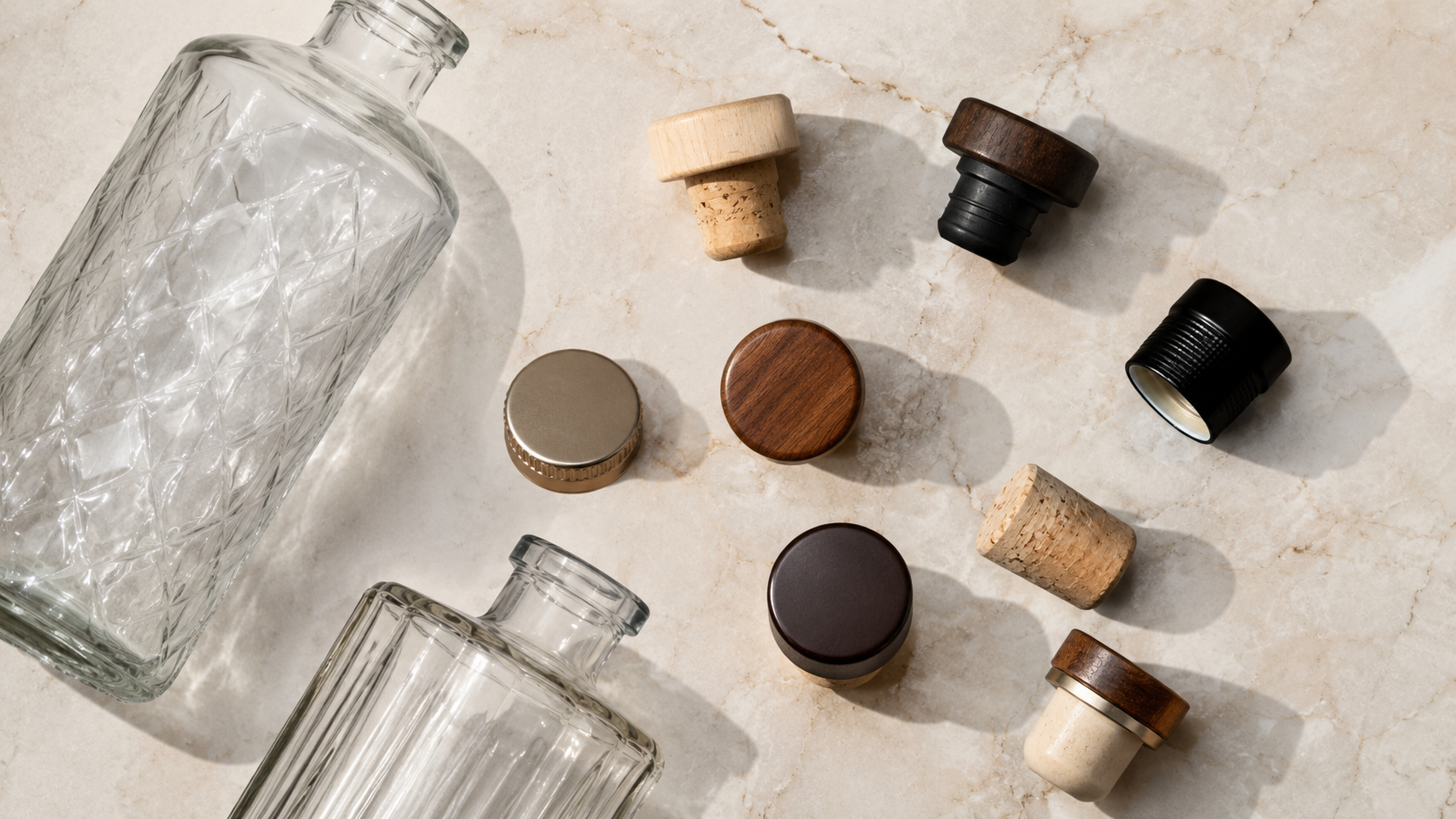
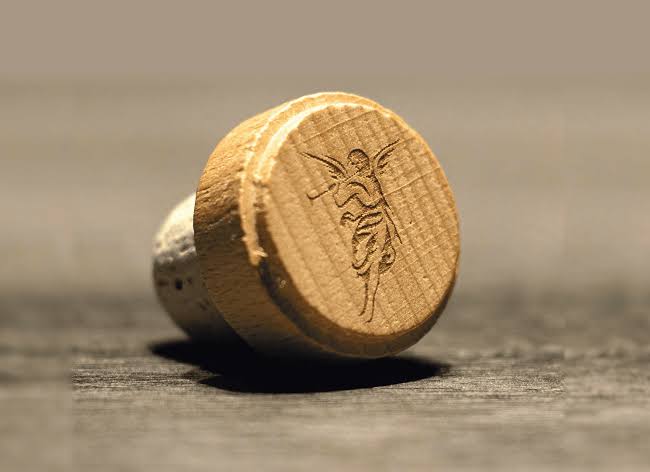
The top can be made from wood, aluminum, glass, plastic, zinc alloy, ceramic, or other decorative materials. For brands that want warmth, texture, and a traditional premium feel, custom wooden bar-top stoppers are often a strong fit for brown spirits, limited editions, and gift packaging.
For custom bar-top corks for liquor bottles, buyers should check shank diameter, shank length, cork compression, insertion force, pull-out force, top weight, and bottle neck compatibility. A closure can look beautiful but still fail if it is too loose, too tight, difficult to open, or unstable during transport.
Synthetic Cork Stoppers
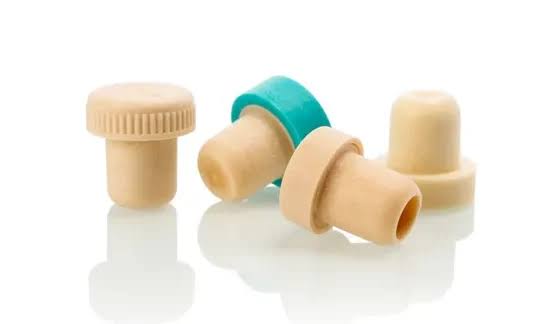
Synthetic cork stoppers are commonly used when brands need consistent dimensions, stable appearance, and reliable production performance. They can be paired with wood, metal, glass, or plastic tops to create premium spirits bottle stoppers at different price levels.
Compared with natural cork, synthetic cork can offer more uniform color, density, and compression. This is useful for brands producing larger batches because every bottle should open and reseal in a predictable way.
Synthetic cork is suitable for whisky, rum, gin, vodka, tequila, brandy, liqueurs, and craft spirits when the closure is correctly matched to the bottle neck finish.
Natural Cork Stoppers
Natural cork is associated with tradition, craftsmanship, and heritage. It is often used when a spirits brand wants a classic, authentic, or premium image.
Natural cork requires careful quality control. Buyers should confirm grade, dimensions, surface appearance, moisture, density, compression behavior, and compatibility with the bottle neck. For international shipments, storage conditions and export packaging also matter because cork is a natural material.
Natural cork works best when the brand wants to communicate tradition and when the packaging system has been properly tested for fit and sealing.
Screw Caps for Liquor Bottles
Screw caps are practical, efficient, and widely used for vodka, gin, liqueurs, mini bottles, RTD spirits, and high-volume spirits packaging. Aluminum screw caps can support color coating, printing, embossing, debossing, top logos, sidewall decoration, and tamper-evident features.
For vodka bottle screw caps and other screw cap projects, buyers should review thread finish, cap diameter, skirt height, liner selection, opening torque, torque retention, reclosure performance, and capping-machine compatibility. A cap that looks correct may still fail if the liner is not compatible with the liquid or if torque is unstable during production.
ROPP Closures for Spirits Bottles
ROPP means roll-on pilfer-proof. ROPP closures are commonly used for high-volume bottling and tamper-evident spirits packaging. During capping, the aluminum cap is rolled onto the bottle neck, forming the thread and creating a secure tamper-evident band.
ROPP closures for spirits bottles are often used for vodka, gin, liqueurs, mini bottles, and export spirits where production speed, tamper evidence, and consistent appearance are important. For ROPP closure projects, buyers should confirm neck profile, cap size, liner, bridge design, torque range, capping head compatibility, and line speed.
Non-Refillable Closures for Anti-Counterfeit Packaging
Non-refillable closures are used when brand protection is a priority. They are especially relevant for premium spirits, export markets, duty-free channels, and regions where bottle refilling or counterfeiting may damage brand reputation.
A non-refillable closure may include a valve, pourer insert, plastic component, tamper-evident band, or other security structure that makes unauthorized refilling more difficult. For whisky, cognac, rum, tequila, and other high-value spirits, this type of closure can help protect both revenue and consumer trust.
Best Closure Type by Packaging Goal
Different buyers may choose different liquor bottle closure solutions depending on their commercial goal. A craft distillery may prioritize premium presentation, while a high-volume bottler may prioritize speed, torque stability, and cost control.
| Buyer Goal | Best Closure Option | Why It Works |
|---|---|---|
| Premium appearance | Bar-top cork or glass stopper | Creates a stronger opening experience and higher perceived value |
| High-speed bottling | ROPP cap or screw cap | Supports efficient capping and tamper evidence |
| Anti-counterfeit protection | Non-refillable closure | Helps reduce refilling and product tampering |
| Cost-controlled packaging | Screw cap or synthetic cork stopper | Balances function, appearance, and cost |
| Luxury gifting | Wood, metal, ceramic, zinc alloy, or glass top | Improves shelf appeal and brand memorability |
| Export spirits | Tamper-evident cap, ROPP cap, or NRF closure | Supports transport security and buyer confidence |
| Private-label spirits | Standard closure with custom decoration | Reduces development time while keeping brand identity |
This table can help buyers narrow the closure direction before requesting samples or production quotations.
How to Choose the Right Closure for Your Liquor Bottle
The best closure is not always the most expensive option. The best closure is the one that fits the bottle, protects the liquid, supports the brand, and performs consistently during production and transport.
| Spirit Category | Recommended Closure | Key Benefit | Technical Check | Branding Opportunity |
|---|---|---|---|---|
| Whisky, rum, brandy | Bar-top cork or T-top stopper | Premium opening experience | Shank diameter, compression, pull-out force | Wood, metal, glass, or engraved top |
| Vodka, gin | Screw cap or ROPP cap | Clean appearance and efficient bottling | Thread finish, torque, liner | Printed aluminum or color-matched cap |
| Tequila, mezcal | Bar-top cork or non-refillable closure | Premium look and brand protection | Neck fit, pour control, security structure | Custom cap shape or luxury finish |
| Liqueurs | Screw cap or bar-top stopper | Convenience and decoration | Liner compatibility, sugar residue risk | Color-coded product series |
| Mini bottles | Screw cap or small ROPP cap | Fast production and compact packaging | Cap size, torque, machine setup | High-volume branded caps |
| Duty-free spirits | Non-refillable or tamper-evident closure | Anti-refill and tamper protection | Market compliance and bottle compatibility | Security-focused packaging |
| Premium gift spirits | Glass, wood, metal, or ceramic top | Luxury presentation | Weight balance and closure stability | Signature visual identity |
Bottle choice and closure choice should be reviewed together. If the glass bottle is still being developed, buyers may coordinate with a specialist in custom spirits bottle projects so the closure, neck finish, shoulder shape, label panel, and overall shelf presentation work as one package.
Before ordering custom liquor bottle closure solutions, prepare the bottle drawing, neck finish, fill volume, alcohol percentage, closure reference, target market, decoration requirements, and annual order estimate.
Liquor Bottle Closure Selection Checklist
Before requesting a quote, buyers should prepare the following information:
- Bottle drawing or bottle sample
- Bottle mouth inner diameter and outer diameter
- Neck finish standard or technical drawing
- Bottle material, shape, and fill volume
- Spirit type and alcohol percentage
- Preferred closure type
- Closure reference image if available
- Required material, color, and finish
- Logo file and artwork requirements
- Tamper-evident or anti-counterfeit needs
- Filling-line speed and capping method
- Target market and destination country
- First order quantity and annual demand estimate
- Required sample timeline and bulk delivery schedule
- Testing, compliance, or documentation requirements
This checklist helps Kandacork Closures recommend a practical closure solution instead of only quoting a general cap or stopper.
Bottle Neck Finish, Fit, and Sealing Performance
Closure performance starts with the bottle neck. If the neck finish and closure design do not match, problems may appear later as leakage, loose fit, cracked caps, difficult opening, unstable torque, or poor filling-line performance.
For bar-top corks, the most important details include shank diameter, shank length, cork compression ratio, insertion force, pull-out force, cap diameter, top weight, and inner bore fit. If the shank is too small, the closure may feel loose. If it is too large, insertion may damage the shank or create excessive opening force.
For screw caps and ROPP caps, buyers should confirm thread profile, cap diameter, skirt height, liner material, bridge design, torque range, torque retention, and capping head compatibility. Complete cartons, trays, bottles, closures, and protective packaging should also be evaluated under realistic transport conditions. The ASTM D4169 distribution testing standard provides a recognized framework for performance testing of shipping units through distribution hazards.
Useful closure performance checks may include:
- Inverted leakage test
- Drop test
- Temperature cycling
- Pull-out force test
- Torque test
- Alcohol compatibility check
- Carton compression check
- Filling-line trial
- Visual inspection after transport simulation
Kandacork Closures can review drawings, closure samples, and bottle samples before bulk production to reduce fit and sealing risks.
Custom Branding Options for Spirits Bottle Closures
A closure is one of the most visible branding surfaces on a spirits bottle. It appears in shelf displays, bar service, ecommerce photography, gift packaging, and consumer unboxing moments.
Custom branding options may include wood tops with laser engraving, aluminum tops with printing, glass stoppers for luxury spirits, metal-plated decorative tops, zinc alloy tops for premium weight, and plastic tops for cost-controlled custom designs. Finishes may include matte, gloss, metallic, brushed, textured, embossed, debossed, or color-matched treatments.
Kandacork’s custom branding for spirits closures can help align the cap or stopper with label material, glass color, capsules, cartons, and gift packaging. For projects requiring more advanced visual identity systems, closure decoration and branding support can help brands coordinate color, surface texture, logo placement, foil effects, and presentation details across multiple packaging components.
For new brands, the closure should not be treated as an isolated component. It should match the bottle shape, label material, capsule, carton, and price position. For established spirits brands, a closure upgrade can refresh the package without changing the entire bottle mold.
Tamper-Evident and Anti-Counterfeit Closure Options
Tamper evidence is especially important in spirits packaging because consumers must trust that the bottle has not been opened, refilled, or altered.
In the United States, the Alcohol and Tobacco Tax and Trade Bureau states that distilled spirits plants and importers must securely affix a tamper-evident closure or similar device to bottles or containers of distilled spirits. The TTB tamper-evident closure requirements are a useful reference for brands selling into or learning from the U.S. regulatory environment.
Common tamper-evident and anti-counterfeit options include:
- ROPP caps with breakable bands
- Shrink sleeves
- Tear-off capsules
- Non-refillable pourer systems
- Security pour inserts
- Breakable bridges
- Tax-strip compatible designs
- QR-enabled authentication
- NFC-enabled connected packaging
- Serialized packaging components
Kandacork Closures develops non-refillable closures for spirits brands that need added security, tamper evidence, and anti-refill protection. For premium and export spirits, anti-counterfeit packaging can protect both sales and brand reputation.
Sustainable Liquor Bottle Closure Solutions
Sustainability in closure design should be practical, specific, and aligned with the brand’s market. Not every project needs the same material strategy.
For some brands, natural cork and responsibly sourced wood can support a traditional and renewable material story. For others, recyclable aluminum caps, lightweight components, reduced plastic content, or simplified material combinations may be more suitable. Premium glass stoppers can support reuse and luxury positioning, while mono-material designs may simplify recycling communication.
Sustainable liquor bottle closure solutions may include:
- Natural cork or technical cork shanks
- Responsibly sourced wood tops where applicable
- Recyclable aluminum caps
- Reduced plastic content
- Lightweight decorative components
- Reusable glass closures
- Fewer mixed-material layers
- Consolidated export packaging
- Packaging designs that reduce damage and replacement waste
For brands pairing closures with glass containers, sustainability decisions may also involve bottle weight, refill or reuse potential, transport efficiency, and recyclability. The Glass Packaging Institute notes that glass can be recycled repeatedly without loss of quality, and its glass recycling guidance is useful background for brands evaluating glass-based packaging strategies.
When the bottle and closure need to be developed together, Kandacork Glass can support premium glass packaging coordination, while Kandacork Eco Glass is relevant for brands exploring glass bottle packaging with a stronger sustainability message.
Sustainability claims should be specific. Instead of saying “eco-friendly closure,” brands should explain the material, sourcing, recyclability, weight reduction, reuse benefit, or packaging-efficiency improvement.
MOQ, Sampling, Lead Time, and Custom Production Process
A custom closure project should follow a clear process. This helps reduce sampling delays, artwork errors, fit problems, and unexpected production costs.
The typical development process includes:
- Share the bottle drawing, neck finish, bottle sample, or reference photo
- Confirm spirit category, alcohol strength, fill volume, and target market
- Select the closure type, such as bar-top cork, screw cap, ROPP, non-refillable closure, capsule, or sleeve
- Confirm technical details such as liner, shank size, torque, pull-out force, pourer insert, or tamper-evident structure
- Develop logo placement, artwork, material, color, and surface finish
- Produce samples for appearance review and fit testing
- Test sealing, opening feel, filling-line compatibility, and transport stability
- Confirm bulk production, inspection standard, export packaging, and shipping plan
MOQ depends on closure type, decoration method, material, tooling requirements, and order complexity. Standard caps and stoppers usually support lower MOQ, while custom molds, exclusive colors, zinc alloy tops, glass stoppers, and complex logo decoration may require higher MOQ.
For urgent projects, Kandacork Closures can first recommend available closure structures before moving to fully custom production. This can help buyers reduce development time while still creating a branded, production-ready closure.
For faster quotation, prepare bottle drawings or neck finish details, bottle samples or clear bottle photos, closure reference images, logo files, preferred materials, first order quantity, estimated annual demand, destination country, required delivery schedule, and compliance or testing requirements.
Why Choose Kandacork Closures for Liquor Bottle Closure Solutions?
Kandacork Closures supports spirits brands, distilleries, private-label bottlers, packaging distributors, and importers that need reliable custom closure supply.
The advantage is not only offering caps or stoppers. Kandacork Closures helps buyers match the right closure system to the bottle, product, brand image, and production process.
Kandacork Closures can support:
- Bar-top corks and T-top stoppers
- Natural cork, synthetic cork, and technical cork options
- Aluminum screw caps
- ROPP closures
- Non-refillable closure concepts
- Decorative wood, glass, metal, zinc alloy, and plastic tops
- Capsules and shrink sleeves
- Logo printing, engraving, embossing, and hot stamping
- Bottle neck compatibility review
- Sample development
- Bulk production coordination
- Export-ready packaging
For premium spirits, the closure should communicate quality before the bottle is opened. For high-volume spirits, it must support speed, consistency, and cost control. For export brands, it must also support safe transport, market compliance, and consumer trust.
If you are developing a whisky, vodka, gin, rum, tequila, brandy, liqueur, or private-label spirits project, Kandacork Closures can help you create production-ready liquor bottle closure solutions that protect the product and strengthen the brand.
FAQ
What is the best closure for liquor bottles?
The best closure depends on the spirit type, bottle neck finish, brand position, and production process. Premium whisky and rum often use bar-top corks. Vodka and gin commonly use screw caps or ROPP caps. Export and duty-free spirits may require tamper-evident or non-refillable closures.
What information is needed for a custom closure quote?
A supplier usually needs the bottle drawing, neck finish, closure style, material preference, logo file, quantity, target market, alcohol percentage, and delivery schedule. A bottle sample is also helpful for fit testing.
Are synthetic corks suitable for premium spirits?
Yes. Synthetic corks can be suitable for premium spirits when they are paired with high-quality decorative tops and tested for fit, compression, and opening feel. They offer consistent dimensions and appearance across production batches.
When should a spirits brand use ROPP closures?
ROPP closures are a strong option for high-volume bottling, tamper-evident packaging, and clean screw-cap presentation. They are often used for vodka, gin, liqueurs, mini bottles, and other spirits where production efficiency and secure sealing are important.
Do liquor bottles need tamper-evident closures?
In many markets, tamper evidence is required or strongly expected for distilled spirits. Brands should check local rules in their target market and choose closures that support consumer confidence, secure transport, and channel requirements.
Can closures be customized with a logo?
Yes. Common customization methods include top printing, side printing, embossing, debossing, laser engraving, hot foil stamping, color coating, matte finishing, metallic finishing, and custom cap shapes.
How can brands reduce leakage risk?
Brands can reduce leakage risk by confirming neck finish compatibility, selecting the correct liner or cork shank, testing torque or pull-out force, checking alcohol compatibility, and conducting transport simulation before bulk production.
What is the difference between a bar-top cork and a screw cap?
A bar-top cork uses a decorative top with a cork or synthetic shank and is often chosen for premium spirits. A screw cap uses a threaded cap and is often chosen for convenience, high-speed bottling, and clean commercial packaging.
What are non-refillable closures used for?
Non-refillable closures are used to reduce unauthorized refilling and improve anti-counterfeit protection. They are especially useful for premium spirits, duty-free products, export markets, and high-risk distribution channels.
How do I choose a liquor bottle closure supplier?
Choose a supplier that can review bottle neck compatibility, recommend closure materials, support logo customization, provide samples, and coordinate bulk production. For spirits packaging, the supplier should understand sealing performance, tamper evidence, alcohol compatibility, and export packaging.
Can I use the same closure for different bottle sizes?
Sometimes, but not always. Different bottle sizes may have different neck finishes, mouth diameters, thread profiles, or cork compression requirements. Each bottle should be checked before bulk ordering.
What is the best custom closure for a premium whisky bottle?
A bar-top cork or T-top stopper is often the best choice for premium whisky because it supports a strong opening experience and allows custom wood, metal, glass, or zinc alloy tops. The final design should be tested for shank fit, pull-out force, and transport stability.
Can Kandacork Closures supply multiple closure components together?
Yes. Kandacork Closures can help coordinate stoppers, caps, decorative tops, capsules, shrink sleeves, and related packaging components for spirits bottle projects.