Quick Answer: What Should Buyers Ask Closure Suppliers?
Buyers should ask closure suppliers about bottle neck finish, inner bore diameter, closure type, shank or liner material, alcohol compatibility, torque or pull-out force, leakage testing, filling-line compatibility, quality documents, MOQ, sample lead time, and bulk production control before approving spirits bottle closures.
For spirits brands and packaging buyers, closure matching questions are not just technical details. They are practical questions that help confirm whether a stopper, cap, cork, liner, or non-refillable closure can fit the bottle, seal the product, run on the filling line, meet market expectations, and support a successful product launch.
Preparing a spirits closure RFQ? Send Kandacork Closures & Stoppers your bottle drawing, neck finish, target closure type, alcohol percentage, and estimated order quantity for an initial compatibility review.
In This Guide
- RFQ checklist for spirits bottle buyers
- Bottle information suppliers need first
- Closure type comparison
- Bar-top stopper, ROPP cap, and screw cap questions
- Fit testing before sample approval
- Supplier evaluation checklist
- Good supplier answer vs red flag
- Documents to request before bulk production
- Sample inquiry email template
- Kandacork closure matching process
- FAQ and structured data markup
Who This Guide Is For
This guide is written for spirits brands, distilleries, private label buyers, importers, distributors, contract bottlers, and packaging purchasing teams that need to compare closure suppliers, request samples, confirm bottle compatibility, or prepare an RFQ before bulk production.
It is especially useful if you are sourcing:
- Bar-top cork stoppers
- T-top stoppers
- Natural cork closures
- Synthetic cork stoppers
- ROPP caps
- Screw caps
- Non-refillable closures
- Custom decorative spirits bottle closures
The goal is simple: help buyers ask better closure matching questions before ordering samples or approving mass production.
Why Closure Matching Matters for Spirits Bottle Packaging
A spirits bottle closure works as part of a full packaging system. The bottle neck, sealing surface, closure body, cork shank, liner, application method, and filling-line conditions must all match.
A closure may look suitable in a product photo but fail during real production. Common problems include loose stoppers, excessive pull-out force, leakage, poor liner compression, cap deformation, cork dust, weak tamper-evident bands, or inconsistent opening feel.
For distilled spirits sold in regulated markets, tamper evidence may also matter. The U.S. Alcohol and Tobacco Tax and Trade Bureau notes that distilled spirits plants and importers must securely affix a tamper-evident closure or similar device to distilled spirits bottles or containers under its tamper-evident closure guidance.
That is why closure matching should happen before sample approval and bulk production, not after a purchase order has already been placed.
Closure Matching RFQ Checklist for Spirits Bottle Buyers
Before contacting a supplier, buyers should prepare the information needed for a proper closure recommendation. This RFQ checklist helps suppliers review the project faster and quote more accurately.
Product Information
- Spirits type:
- Alcohol percentage:
- Filling temperature:
- Target market:
- Annual volume:
- First order quantity:
- Launch date:
Bottle Information
- Bottle capacity:
- Bottle drawing:
- Neck finish:
- Inner bore diameter:
- Outer neck diameter:
- Sealing surface details:
- Physical bottle sample available: yes / no
Closure Information
- Target closure type:
- Top material:
- Shank material:
- Liner material:
- Tamper-evident requirement:
- Non-refillable requirement:
- Decoration method:
- Logo artwork:
- Color reference:
- Sample quantity required:
Production and Logistics
- Filling-line method:
- Capping machine type:
- Required testing:
- Delivery country:
- Packing requirement:
- Documentation requirement:
This RFQ format helps buyers move from a general inquiry to a technical review. It also reduces delays caused by missing drawings, unclear neck finish details, or incomplete decoration requirements.
What Bottle Information Should Buyers Send First?
Bottle capacity alone is not enough to select a closure. A 500 ml liqueur bottle, 700 ml gin bottle, 750 ml whiskey bottle, and 1 L vodka bottle may all use different neck finishes or bore dimensions.
The first question buyers should ask is:
Can you confirm the closure against our exact bottle neck finish and physical bottle sample before bulk production?
A professional supplier should be able to review both the technical drawing and the real glass sample. Drawings show nominal dimensions, while physical bottles reveal actual tolerance, neck roundness, sealing surface quality, and practical fit.
For threaded finishes, the container and closure must match the thread profile, height, diameter, and sealing area. Buyers who are still confirming bottle dimensions can review this related spirits bottle neck finish guide before finalizing stopper, screw cap, or ROPP cap specifications.
If you already have a bottle drawing or physical sample, share it before asking for final pricing. Without this information, a closure quote may be fast, but it may not be reliable.
What Questions Should Buyers Ask About Neck Finish?
The bottle neck finish determines which closure system can work. For cork and bar-top stoppers, the inner bore diameter is critical. For ROPP caps and screw caps, the outer neck finish, thread structure, sealing surface, and cap height become more important.
Ask suppliers:
- What neck finish does this closure require?
- Can you review our bottle drawing?
- Do you need physical bottle samples?
- Which dimensions are most important for this closure type?
- Is this closure designed for a cork bore, CT screw finish, ROPP finish, BVS-style finish, or another neck structure?
- What tolerance range can the closure accept?
- Can you identify possible leakage risks from the drawing?
- Can you coordinate with our bottle supplier or bottling partner?
A warning sign is when a supplier says “standard size” without checking bottle drawings, bottle samples, neck finish, or sealing requirements. In spirits packaging, “standard” can vary by bottle supplier, country, product category, and application method.
Simple Closure Direction Guide
Buyers do not always need a long closure theory lesson. In many projects, the first decision is choosing the right closure direction.
- Choose bar-top cork or T-top stopper if the project prioritizes premium opening feel, reusable closure experience, and custom top decoration.
- Choose ROPP cap if the project prioritizes tamper evidence, high-speed filling, clean aluminum appearance, and export retail security.
- Choose screw cap if the project prioritizes convenience, resealing, cost control, and efficient machine application.
- Choose non-refillable closure if the project prioritizes refill protection, controlled pouring, and anti-counterfeit packaging.
This is only a starting point. Final approval should still depend on bottle neck finish, material compatibility, sample testing, filling-line performance, and supplier documentation.
Closure Type Comparison: What Should Buyers Ask?
Different spirits closure types create different technical risks. Buyers should not use the same questions for cork stoppers, ROPP caps, screw caps, and non-refillable closures. For buyers still comparing format options, Kandacork’s guide to bar-top stoppers vs screw caps vs ROPP closures can support the early selection stage.
| Closure type | Key buyer questions | Main risk if ignored |
|---|---|---|
| Bar-top cork / T-top stopper | What shank diameter and pull-out force are recommended? | Loose fit, tight fit, leakage, poor opening feel |
| Natural cork stopper | What cork grade and compression are suitable? | Cork dust, inconsistent seal, odor risk |
| Synthetic stopper | Is the material compatible with high-ABV spirits? | Deformation, odor, poor reseal |
| ROPP cap | Which neck finish, liner, and machine settings are required? | Leakage, poor band break, cap deformation |
| Screw cap | What liner and torque range should be used? | Under-sealing, over-tightening, thread damage |
| Non-refillable closure | Is the pourer system compatible with the bottle neck? | Assembly failure, poor pouring, counterfeiting risk |
The best closure choice depends on product positioning, bottle design, alcohol content, filling method, market requirements, and cost target.
Bar-Top Stopper Matching Questions
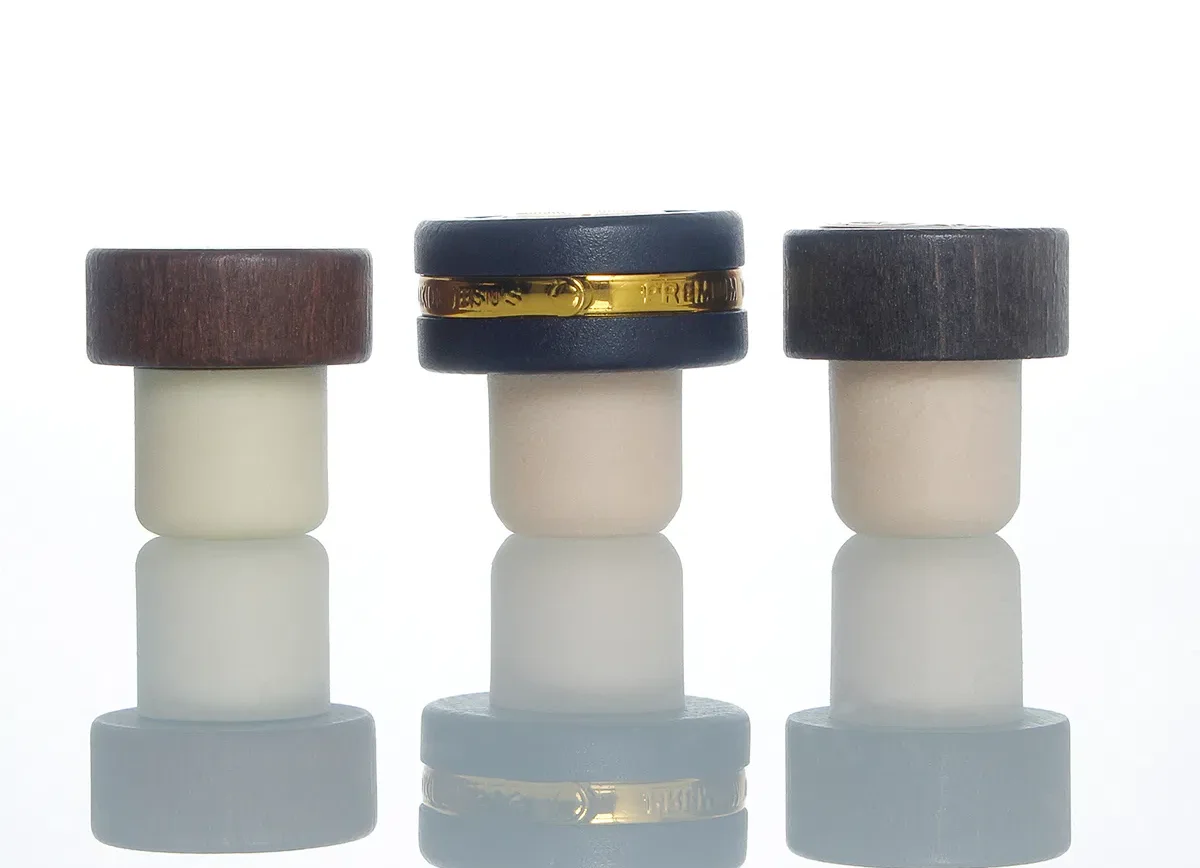
Bar-top stoppers are widely used for whiskey, vodka, rum, gin, tequila, brandy, liqueurs, and premium private label spirits. They usually combine a decorative top with a cork, synthetic, or engineered shank.
Ask suppliers:
- What shank diameter do you recommend for this bottle bore?
- What pull-out force range should we target?
- Is the shank natural cork, micro-agglomerated cork, synthetic cork, or polymer-based?
- Will the material create cork dust, odor, particles, or discoloration?
- Can the stopper maintain sealing performance after repeated opening and reclosing?
For premium spirits, opening feel is part of the customer experience. A stopper that is too loose can feel cheap and may leak during shipment. A stopper that is too tight may frustrate consumers or damage the closure when opened.
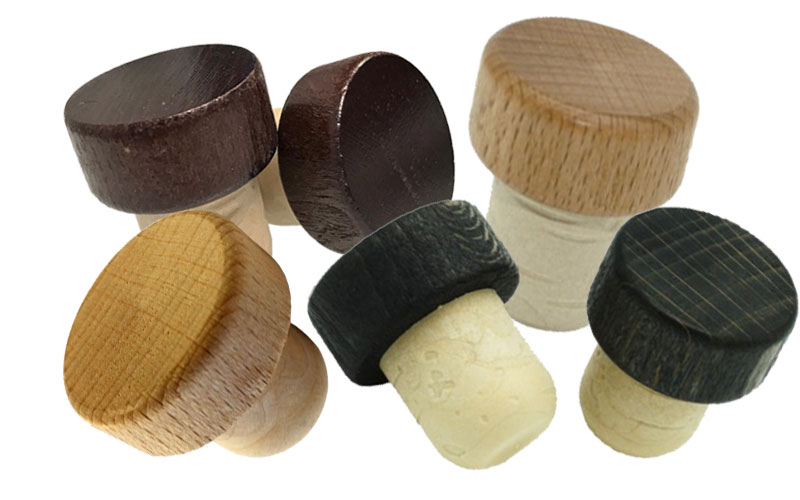
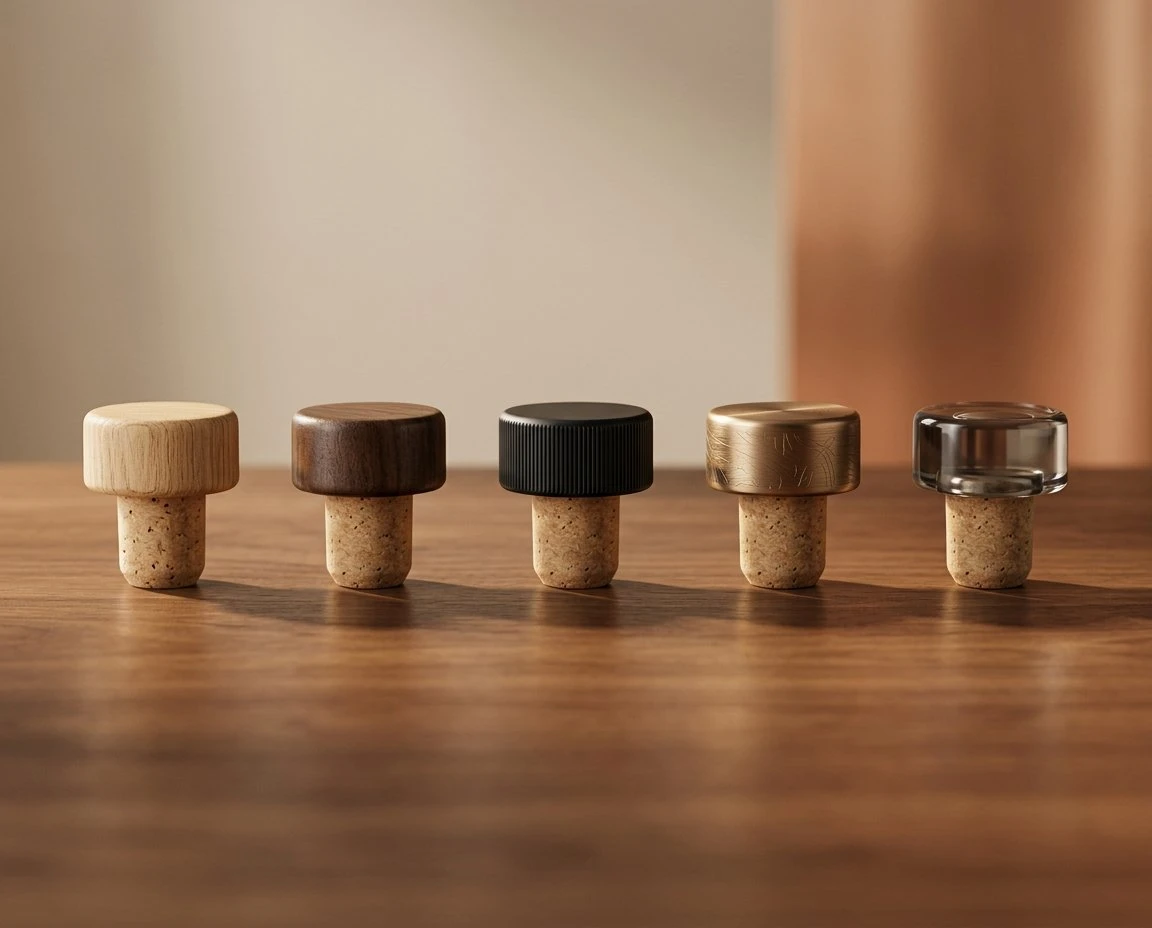
Buyers should also confirm decorative top material, such as wood, plastic, aluminum, zinc alloy, glass-effect material, or custom molded material. Logo engraving, embossing, printing, color matching, and surface finishing should be confirmed before sample approval. For projects that need a product-level starting point, Kandacork supplies bottle stoppers and closures for spirits brands, bottlers, and private label buyers.
ROPP Cap Matching Questions
ROPP caps are often selected for spirits that need tamper evidence, clean appearance, and efficient machine application. They are usually made from aluminum and applied onto a compatible bottle neck finish.
Ask suppliers:
- Which ROPP neck finish does this cap require?
- What liner is suitable for our alcohol percentage?
- What application torque or removal torque should we target?
- Can the cap be tested on our filling or capping equipment?
- Can the tamper-evident band break cleanly after application?
ROPP performance depends on the cap, bottle neck, liner, and capping machine working together. For spirits buyers, this means a ROPP cap should not be approved only by appearance. Buyers should test forming quality, liner compression, pilfer band break, torque, leakage, and decoration alignment.
Screw Cap Matching Questions
Screw caps are used for spirits, liqueurs, mini bottles, ready-to-drink products, and some private label projects. They are convenient, resealable, and suitable for efficient production.
Ask suppliers:
- Which screw neck finish does this cap require?
- Which liner material is recommended?
- What torque range should be used during application?
- Can the cap maintain sealing performance after repeated opening?
- Can the supplier provide samples for line testing?
A screw cap that fits by hand may still fail under filling-line speed, carton compression, vibration, or temperature change. Buyers should confirm liner compression, thread engagement, torque control, leakage testing, and repeated-use performance before bulk production.
For screw caps and ROPP caps, buyers should ask suppliers to confirm both application torque and removal torque. Under-torque may cause leakage, while over-torque may damage liners, threads, or consumer opening experience.
What Material Details Should Buyers Confirm?
Closure material affects sealing performance, product compatibility, cost, appearance, weight, and brand perception.
For the top component, buyers should confirm whether the material is wood, plastic, aluminum, zinc alloy, metalized plastic, glass-effect material, or custom molded material. The best material depends on price target, weight preference, decoration method, and premium positioning.
For cork or bar-top stoppers, the shank material is critical. Common options include natural cork, micro-agglomerated cork, synthetic cork, polymer inserts, and engineered composite materials. For clear spirits such as vodka, gin, and white rum, buyers should ask about particles, odor, discoloration, and material cleanliness.
For ROPP caps and screw caps, the liner is the sealing interface. Buyers should ask:
Is the liner compatible with our alcohol percentage, filling temperature, storage conditions, and export route?
Buyers should also request food-contact documentation. The FDA explains that food-contact packaging components may be subject to regulatory requirements under 21 CFR 174–179 for food-contact materials, which is why material declarations and regulatory status matter in packaging review.
What Fit Testing Should Suppliers Perform Before Sample Approval?
Sample approval should not be based only on appearance. Buyers should test closure samples with the actual bottle.
Ask suppliers:
Can you test this closure on our real bottle sample before confirming bulk production specifications?
Recommended fit tests include:
- Manual insertion or application test
- Pull-out force test for cork or bar-top stoppers
- Torque test for ROPP caps and screw caps
- Cap seating check
- Thread engagement check
- Liner compression review
- Upside-down leakage test
- Opening and reclosing test
- Visual alignment check
- Decoration position check
For export spirits projects, leakage testing is especially important. Long-distance sea freight, warehouse temperature changes, carton compression, and vibration can expose weak closure matching.
Buyers working with contract bottlers should test samples on actual or comparable filling and capping equipment. A closure may work during hand testing but fail during high-speed production.
If you are comparing cork stoppers, synthetic stoppers, ROPP caps, or screw caps, Kandacork can help prepare samples for fit, sealing, and appearance review through its cap and neck compatibility review.
Supplier Evaluation Checklist: 25 Questions Buyers Should Ask
Use this checklist to compare closure suppliers before placing an order.
Before Quotation
- Can you review our bottle drawing?
- Do you need physical bottle samples?
- Which neck finish does this closure require?
- Can you recommend the correct shank diameter or cap size?
- What closure types are suitable for our spirit category?
- What material options do you recommend?
- What decoration methods are available?
- What is the MOQ for standard and custom closures?
Before Sample Approval
- Can you provide samples for fit testing?
- Can you test pull-out force or application torque?
- Can you test leakage in upright and inverted positions?
- Can you confirm liner compatibility with our alcohol percentage?
- Can you check opening and reclosing feel?
- Can you provide decoration samples or color references?
- Can you provide a sample approval record?
Before Bulk Production
- What dimensional tolerance will you control?
- What AQL or inspection method do you use?
- Can you provide production inspection reports?
- How do you control logo alignment and color consistency?
- How do you handle leakage or fit complaints?
- What is the bulk production lead time?
- Which materials or components are outsourced?
Before Export Shipment
- How are closures packed to avoid scratches, deformation, or moisture damage?
- Are cartons labeled by SKU, batch, and production date?
- Can you provide packing details and documents for importers or distributors?
These closure matching questions help buyers move from general product comparison to supplier qualification.
Good Supplier Answer vs Red Flag
Supplier answers often reveal whether they truly understand closure matching. Buyers should compare not only product samples and prices, but also how the supplier responds to technical questions.
| Buyer question | Good supplier answer | Red flag |
|---|---|---|
| Can this closure fit my bottle? | Please send the bottle drawing and samples so we can confirm neck finish, bore, and fit. | It is standard size. |
| Can we use this ROPP cap? | We need to check the ROPP finish, liner, torque, and capping machine. | Any ROPP cap will work. |
| Can you confirm leakage risk? | We recommend fit, torque or pull-out, and leakage testing before approval. | No testing is needed. |
| What documents can you provide? | We can provide drawing, material specification, sample approval sheet, and inspection report. | We only provide photos and price. |
| Can this closure run on our filling line? | Please share machine details or test samples with your bottler before final approval. | If it fits by hand, it will run on the line. |
This table is useful during supplier comparison because it separates experienced technical suppliers from basic product sellers.
Documents Buyers Should Request Before Bulk Production
Professional closure sourcing should include documentation. This helps prevent misunderstandings and protects both the buyer and supplier after sample approval.
| Document | Why it matters |
|---|---|
| Closure technical drawing | Confirms dimensions before tooling or production |
| Bottle neck finish requirement | Confirms bottle and closure compatibility |
| Material specification | Confirms cork, synthetic, liner, top, or cap material |
| Food-contact statement | Supports compliance and material review |
| Liner compatibility information | Helps prevent leakage and product-contact issues |
| Decoration proof | Confirms logo, color, position, and finish |
| Sample approval sheet | Prevents disputes after bulk production |
| Inspection report | Confirms quality before shipment |
| Packing specification | Reduces transport damage and SKU mix-ups |
| MOQ and lead time confirmation | Supports purchasing and launch planning |
If the supplier cannot provide clear specifications, testing records, or inspection information, buyers should be cautious before moving to bulk production.
Common Closure Matching Problems and How to Prevent Them
Many closure problems can be prevented if buyers ask the right supplier questions before sample approval.
| Problem | Possible cause | Prevention |
|---|---|---|
| Stopper too loose | Shank diameter too small or bottle bore tolerance too wide | Confirm bore diameter and test pull-out force |
| Stopper too tight | Shank diameter too large or material too rigid | Adjust shank size or material |
| Cork dust in clear spirits | Low-grade cork or poor finishing | Confirm cork grade and cleaning process |
| ROPP cap leakage | Poor liner compression, wrong neck finish, or capping issue | Review cap, liner, bottle, and machine together |
| Screw cap cross-threading | Thread mismatch or poor application control | Confirm thread finish and torque setting |
| Pilfer band not breaking cleanly | Band design or bottle locking ring mismatch | Test tamper band performance |
| Logo misalignment | Decoration process not controlled | Use approved artwork and inspection standards |
| Carton leakage after shipment | Weak fit or transport stress | Run leakage and transit simulation tests |
A lower unit price is not useful if the closure fails during filling, shipping, or retail handling.
Closure Matching Priorities by Buyer Type
Different buyers should prioritize different risks.
Spirits brands should focus on premium appearance, opening feel, logo decoration, shelf impact, and consumer experience.
Distilleries should focus on leakage prevention, sample testing, small-batch flexibility, filling-line compatibility, and lead time.
Private label buyers should focus on MOQ, custom branding, repeat production, price control, and multi-SKU consistency.
Importers and distributors should focus on export packing, tamper evidence, market compliance, shipment durability, and documentation.
Contract bottlers should focus on torque, capping speed, insertion pressure, rejection rate, and machine compatibility.
This role-based approach helps buyers ask more specific closure matching questions instead of using one generic checklist for every project.
Sample Inquiry Email for Closure Matching
Buyers can copy and customize this message when contacting Kandacork Closures & Stoppers for samples or quotation support.
Hello Kandacork Team,
We are looking for a suitable spirits bottle closure for our project. Please help review the closure compatibility and provide sample or quotation options.
Product type:
Alcohol percentage:
Bottle capacity:
Neck finish:
Bottle drawing available:
Physical sample available:
Target closure type:
Decoration requirement:
Estimated order quantity:
Target market:
Required testing:
Delivery country:
Please let us know the recommended closure structure, sample lead time, MOQ, and quotation details.
Thank you.
This template helps buyers send a complete inquiry instead of only asking for a unit price. It also helps Kandacork evaluate the bottle, closure, decoration, and production requirements more accurately.
How Kandacork Reviews Closure Matching Projects
Kandacork Closures & Stoppers supports spirits brands, distilleries, private label buyers, importers, distributors, bottlers, and packaging teams with bottle and closure compatibility review before production.
Step 1: Review Bottle Drawing and Physical Samples
Kandacork reviews bottle drawings, physical samples, neck finish, inner bore diameter, sealing surface, and tolerance risks.
Step 2: Confirm Neck Finish, Bore, and Sealing Risks
The team checks which closure structures are technically suitable and identifies possible risks such as loose fit, excessive insertion force, poor liner contact, or incompatible thread finish.
Step 3: Recommend Closure Type, Material, and Decoration Route
Based on the bottle and product requirements, Kandacork recommends suitable closure structures such as bar-top stoppers, cork shanks, synthetic stoppers, ROPP caps, screw caps, non-refillable closures, or custom decorative closures.
Step 4: Prepare Samples for Fit, Leakage, Torque, or Pull-Out Review
Kandacork supports sample preparation and fit review, including insertion feel, pull-out force, leakage risk, torque consideration, liner contact, visual alignment, and decoration confirmation.
Step 5: Confirm QC Documents, Packing, and Bulk Production Details
After sample approval, Kandacork supports production control, inspection, carton packing, batch labeling, and export delivery requirements.
For a full bottle, closure, and decoration program, buyers can also coordinate with Kandacork Glass integrated spirits packaging when the project requires bottle development, closure fit, decoration, and export support under one packaging workflow.
Recommended Image SEO Plan
Use original product, sample, or technical images where possible.
| Image idea | Suggested alt text |
|---|---|
| Bottle neck drawing with closure fit area | spirits bottle neck finish for closure matching |
| Bar-top cork stopper and bottle bore | bar-top cork stopper shank fit for spirits bottle |
| ROPP cap with bottle neck comparison | ROPP cap neck finish and liner compatibility |
| Closure sample testing setup | spirits bottle closure fit testing and leakage review |
| Kandacork closure sample collection | Kandacork custom spirits bottle closures and stoppers |
These images can improve user engagement, support image search visibility, and make the technical buying process easier to understand.
FAQ
What are closure matching questions?
Closure matching questions are technical and commercial questions buyers ask suppliers to confirm whether a bottle closure fits the bottle neck finish, product type, filling process, sealing requirement, decoration need, and target market before sample approval or bulk production.
What information should buyers send to a spirits closure supplier?
Buyers should send the bottle drawing, physical bottle sample if available, neck finish, inner bore diameter, spirits type, alcohol percentage, target closure type, decoration requirements, filling-line information, order quantity, and target market.
Why is bottle neck finish important for closure matching?
Bottle neck finish determines whether a cork stopper, bar-top closure, screw cap, ROPP cap, or non-refillable closure can seal and apply correctly. Bottle capacity alone is not enough to choose a closure.
Should buyers test closure samples before bulk production?
Yes. Buyers should test closure samples with the actual bottle for fit, leakage, torque or pull-out force, opening feel, decoration quality, and filling-line compatibility before approving bulk production.
What is the biggest red flag when evaluating a closure supplier?
A major red flag is when a supplier says “standard size” without checking the bottle drawing, neck finish, physical bottle sample, liner material, or testing requirements.