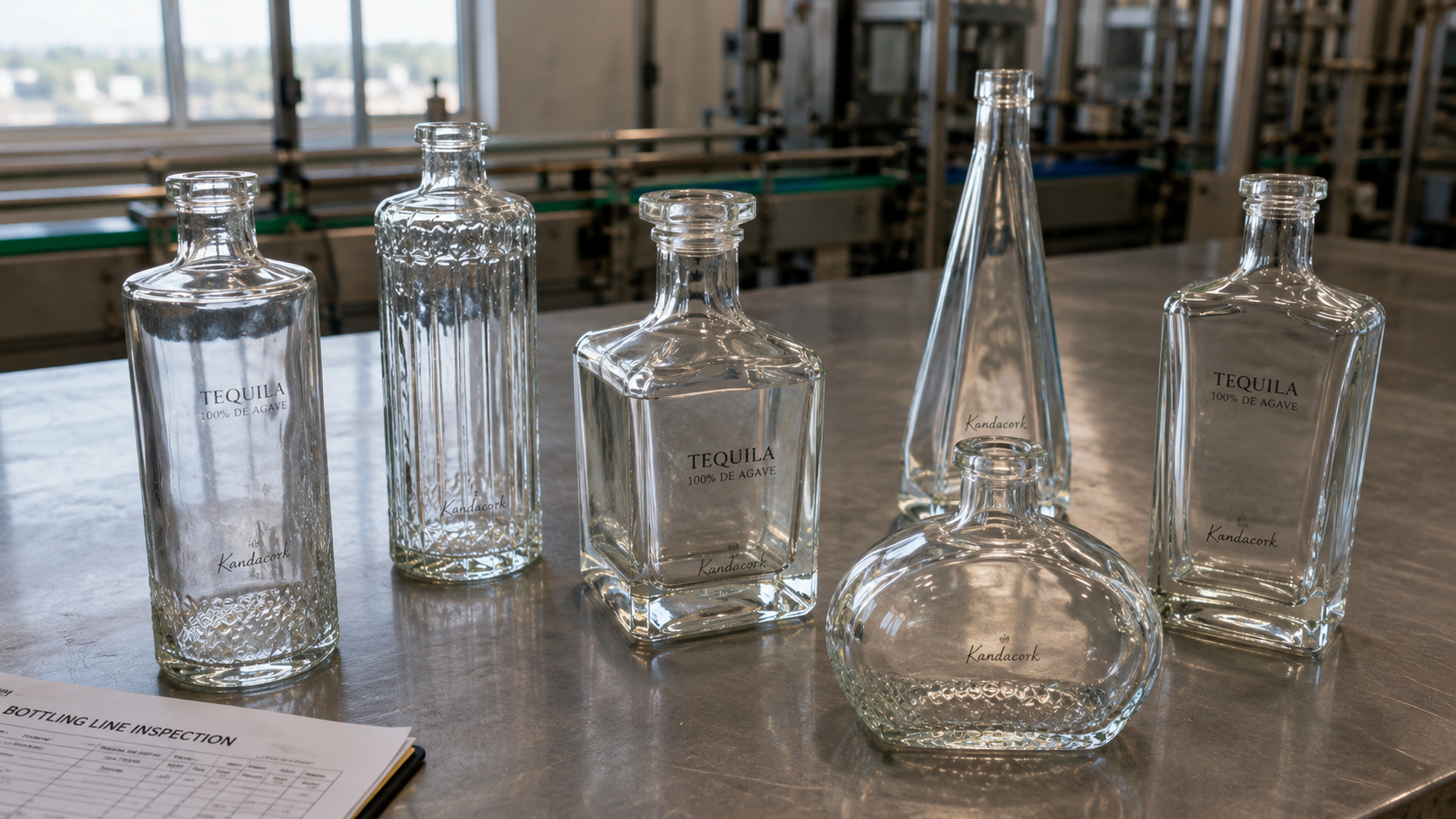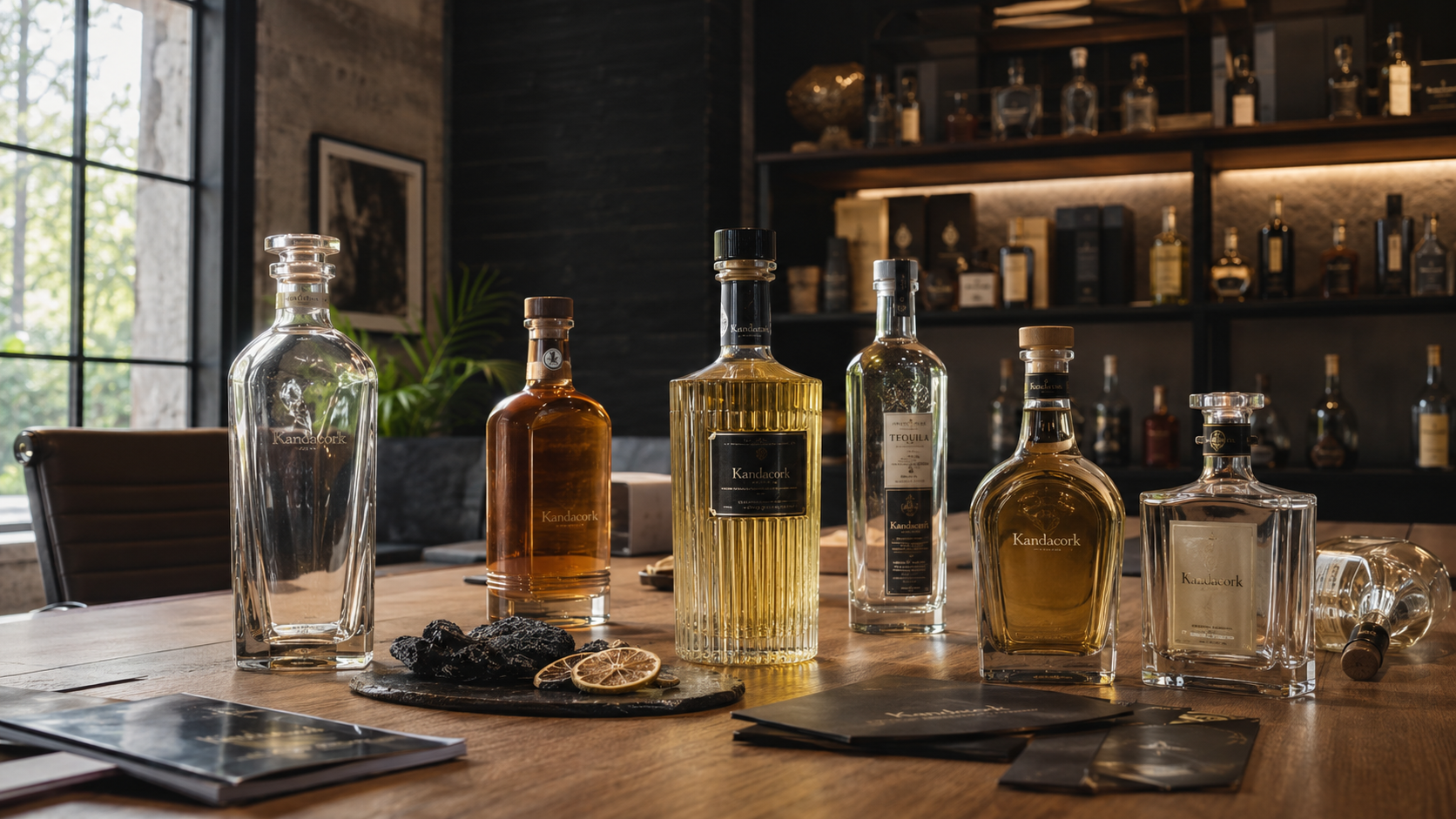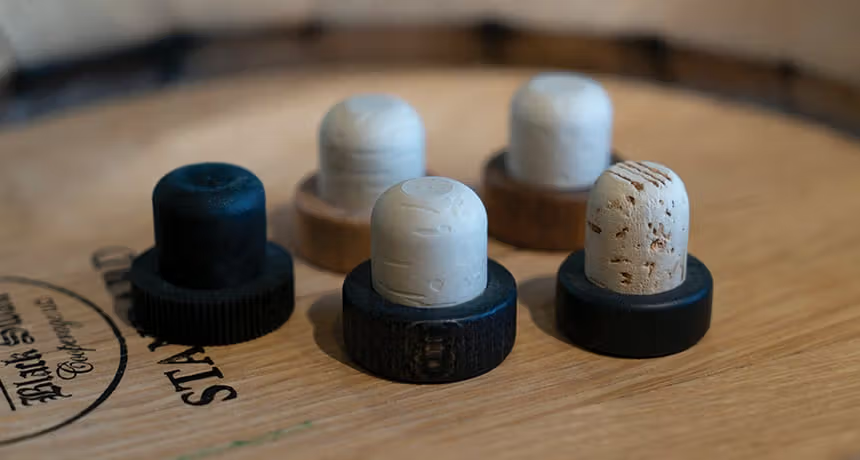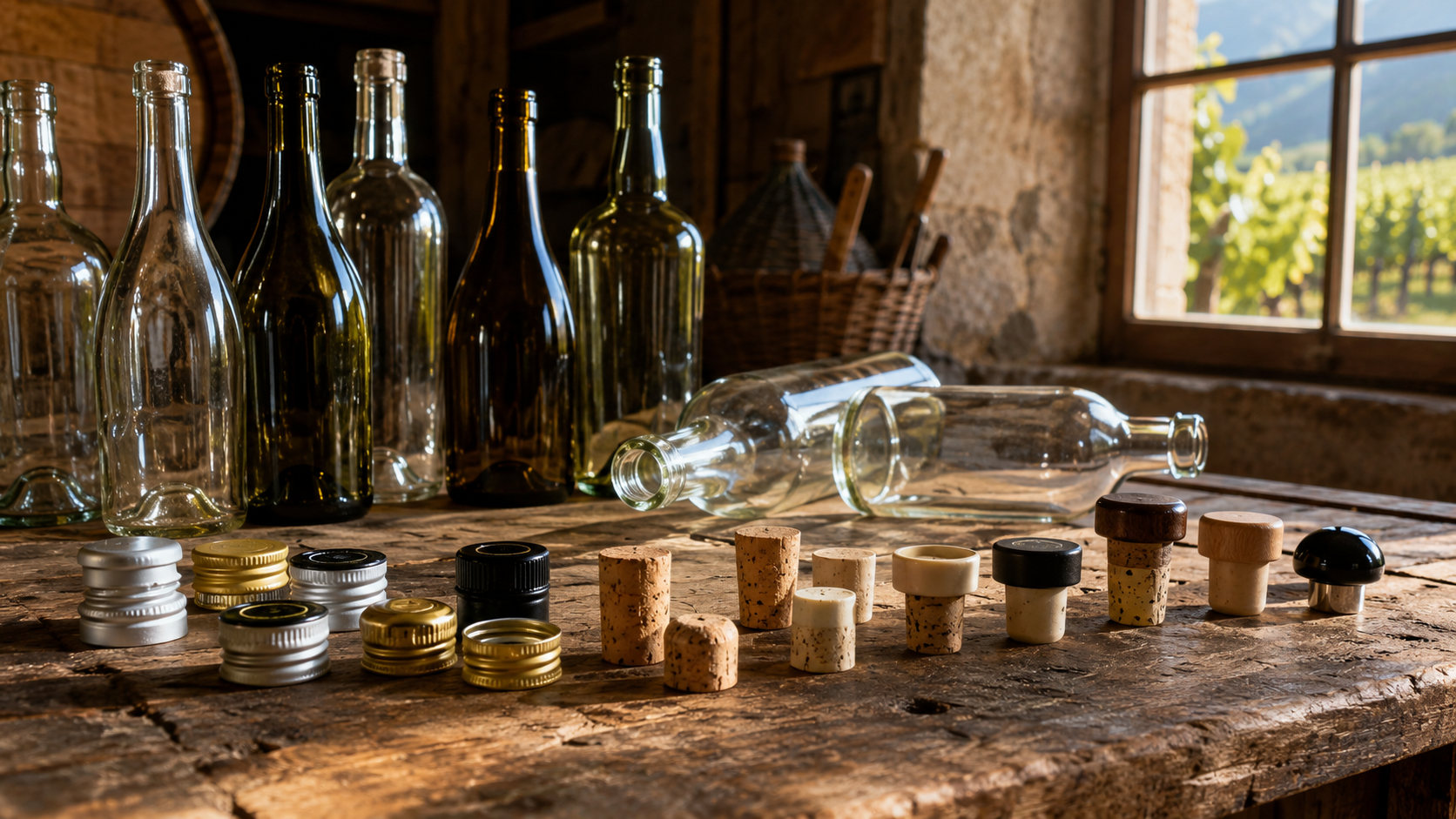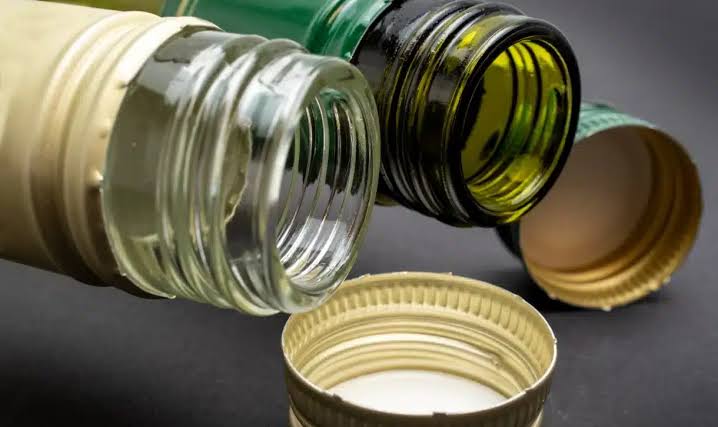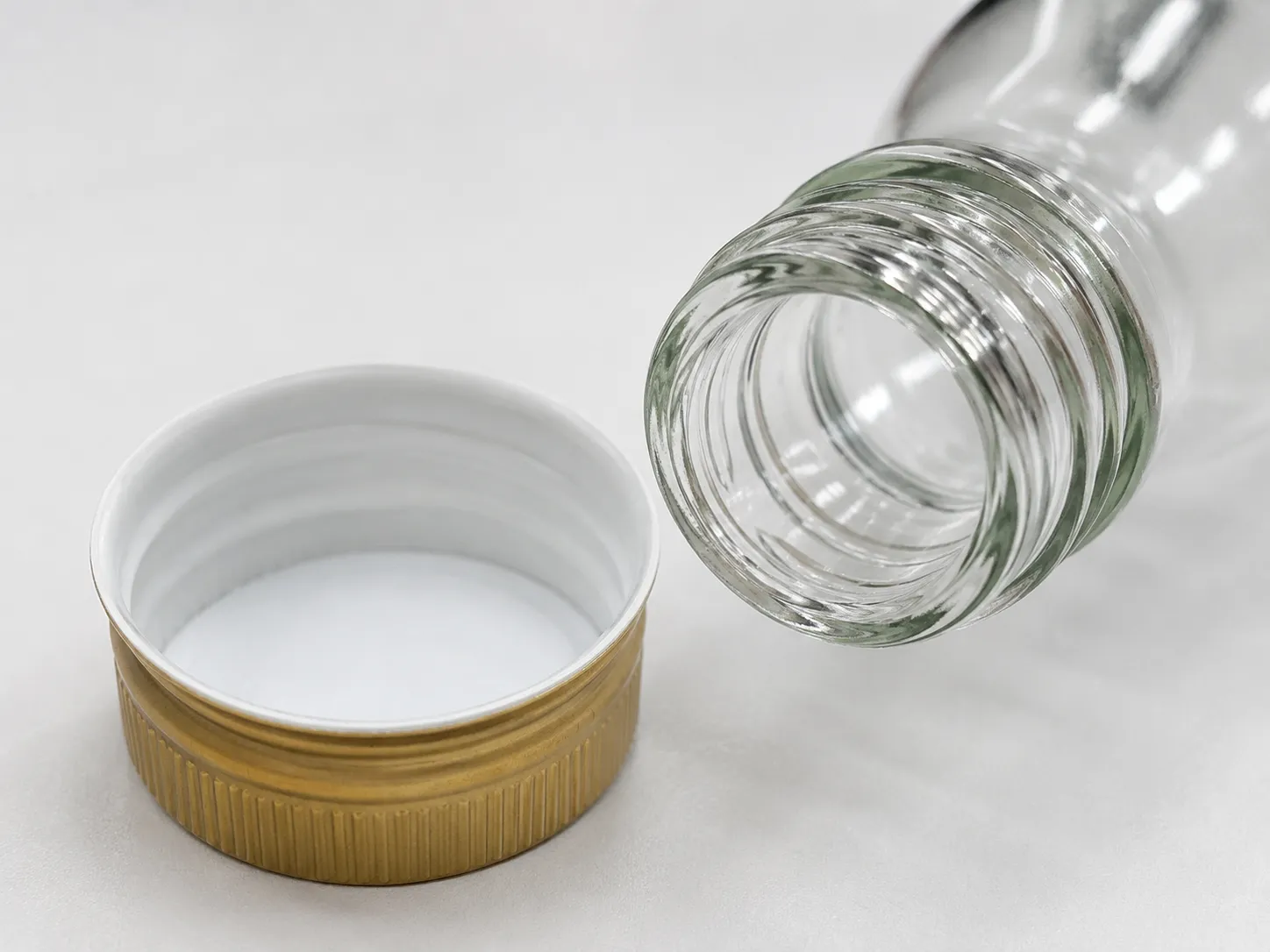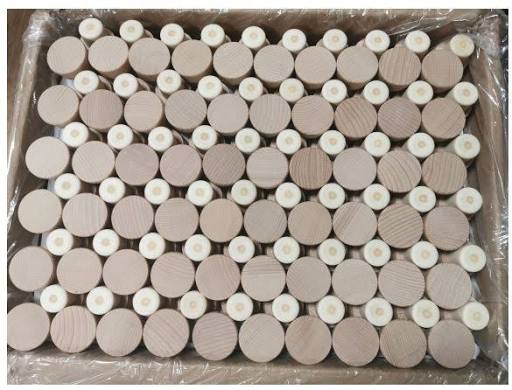
Choosing the right bar-top stopper size affects sealing performance, filling-line efficiency, shelf appearance, and consumer opening experience. For spirits brands, distilleries, private label buyers, importers, bottlers, and packaging teams, stopper fit should be confirmed through bore measurement, shank testing, material selection, and sample approval—not guesswork.
A premium whisky, vodka, gin, rum, tequila, brandy, or liqueur bottle may use heavy glass, a custom mold, a decorated label, and a distinctive cap. But if the closure is too loose, too tight, uneven, or visually unbalanced, the whole packaging project can feel unreliable.
This guide explains how to select a bar-top stopper for custom spirits bottles, compare common size matches, understand bottle bore and shank fit, approve samples, evaluate supplier capability, and prepare a quotation request for Kandacork Closures.
Quick Answer: What Size Bar-Top Stopper Do You Need?
The right bar-top stopper size depends mainly on the bottle’s inner neck diameter, also called the bore. The stopper shank should usually be slightly larger than the bore so it can compress inside the neck and create a secure fit.
A common starting reference is:
| Bottle Neck Bore | Common Stopper Shank | Typical Application |
|---|---|---|
| Around 18.5 mm | Around 19.5 mm shank | Mini bottles, gin, vodka, whisky, small-format spirits |
| Around 21.5 mm | Around 22.5 mm shank | Whisky, rum, tequila, brandy, premium 700 ml / 750 ml bottles |
| 22 mm to 23 mm+ | Larger or custom shank | Heavy glass bottles, luxury spirits, private mold bottles |
| Non-standard bore | Custom-developed shank | Bespoke packaging, limited editions, unusual bottle necks |
These values are useful for early sourcing, but they are not final approval rules. Final fit should be confirmed with bottle drawings, physical samples, shank material testing, insertion checks, and pull-out evaluation.
Common Size Matches for Spirits Bottle Stoppers
Many buyers search by bottle neck opening. The following answers help packaging teams identify a starting point before requesting samples.
| Buyer Question | Short Answer |
|---|---|
| What stopper fits an 18.5 mm bottle neck? | Start by testing a 19.5 mm shank. |
| What stopper fits a 21.5 mm bottle neck? | Start by testing a 22.5 mm shank. |
| Is 19.5 mm a cap size or shank size? | It usually refers to the inserted shank size. |
| Is 22.5 mm suitable for premium spirits bottles? | Often yes, especially for many 21.5 mm bottle openings. |
| Can I order by neck finish only? | No. Confirm the inner bore and sample fit first. |
| Do custom bottles always need custom stoppers? | Not always. Standard shanks may work if the bore and fit are confirmed. |
This table is a sourcing shortcut, not a production specification. Bottle tolerance, neck depth, shank material, cap weight, and filling-line conditions can all change the final result.
What Is a Bar-Top Stopper?
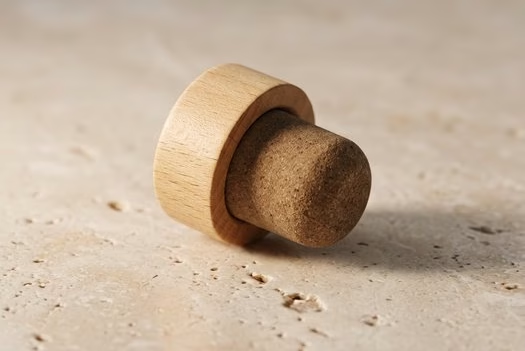
A bar-top stopper is a closure commonly used for spirits bottles. It is also called a T-top stopper, T-top closure, bar-top cork, cork stopper, or spirits bottle stopper.
It usually has two main parts: the cap and the shank.
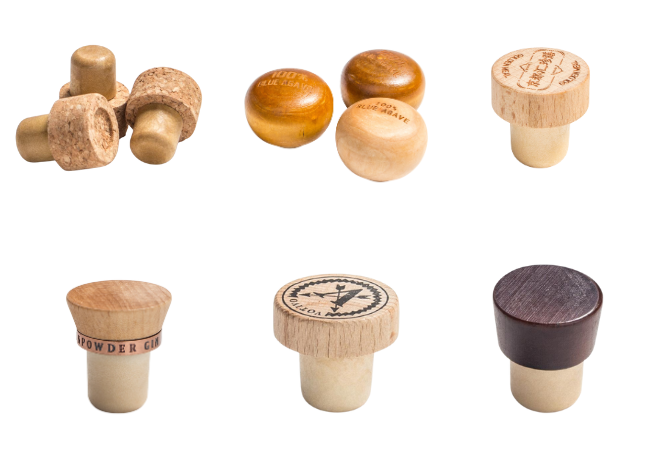
The cap is the visible top part that consumers hold when opening the bottle. It may be made from wood, plastic, aluminum, zinc alloy, glass, ceramic, or a custom composite material.
The shank is the stem inserted into the bottle neck. It creates the sealing contact and controls tightness, insertion feel, seating height, and pull-out performance.
For custom spirits bottles, the cap creates brand identity, while the shank determines functional fit. A beautiful cap cannot solve a wrong shank size. That is why stopper sizing should begin with the bottle neck bore, not with cap appearance.
Cap Diameter vs Shank Diameter
Shank diameter matters most for fit and sealing. Cap diameter matters most for appearance, grip, and brand presentation.
Many closures are described using two measurements: cap diameter and shank diameter. A closure may have a wide decorative top but a smaller inserted stem designed for a specific bottle opening.
Shank diameter controls sealing contact and compression. Shank length affects insertion depth and stability. Cap diameter affects visual balance and grip. Cap height affects premium appearance, capsule clearance, gift-box fit, and secondary packaging.
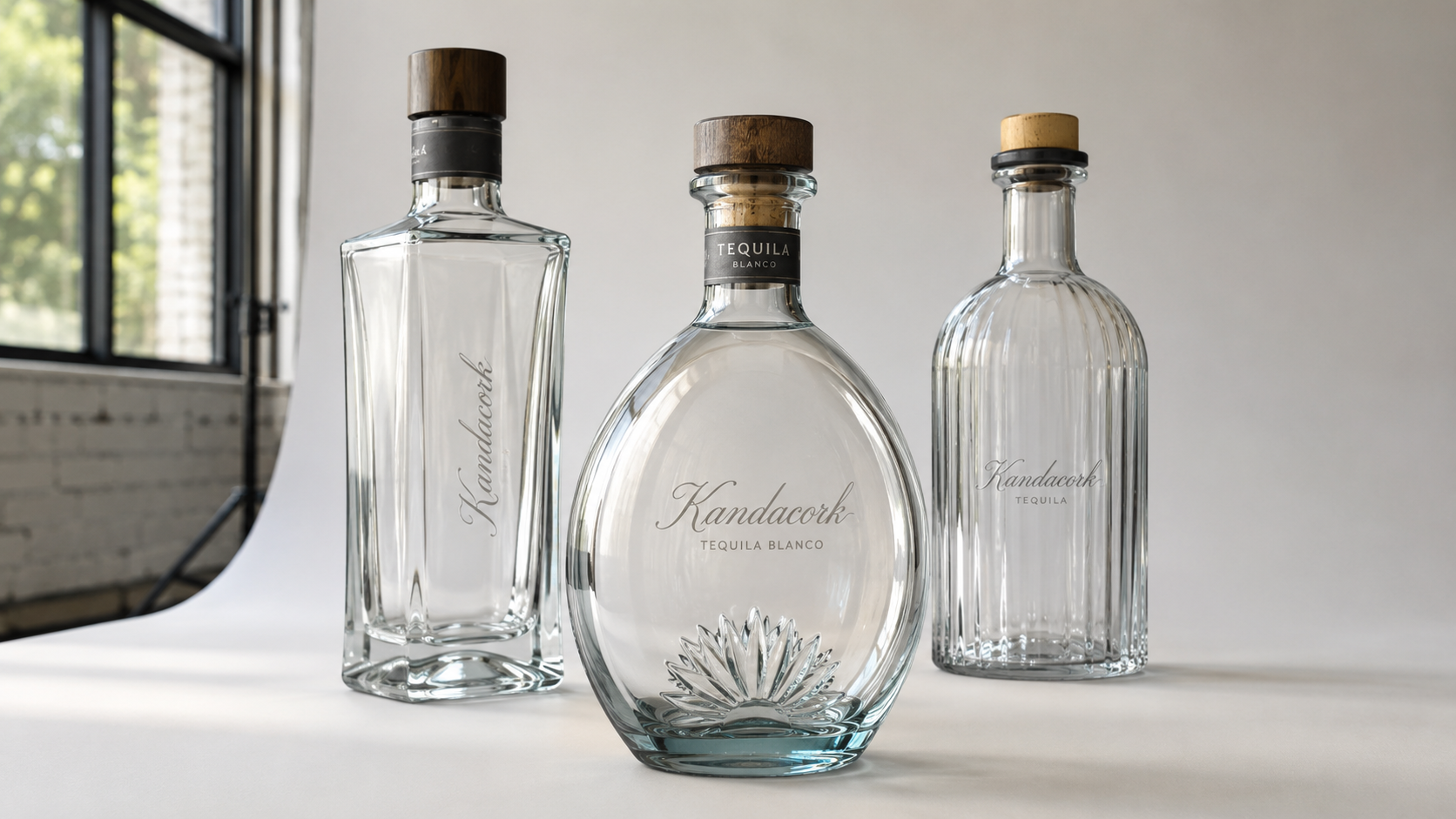
A premium whisky bottle may need a larger wood or metal cap to match a heavy glass base. A minimalist vodka or gin bottle may need a clean, low-profile cap. A tequila or mezcal bottle may use a bold custom shape. In every case, the shank must still fit the bore correctly.
How Bottle Bore, Tolerance, and Shank Size Work Together
The bottle bore, stopper shank, and glass tolerance should be reviewed together. A size chart can help buyers start, but the final stopper should be approved with actual bottles.
Why the 1 mm Larger Rule Is Only a Starting Point
Many spirits bottles use a stopper shank around 1 mm larger than the bottle opening. This rule works because the shank must compress against the inside of the neck.
For example, an 18.5 mm bottle opening may start with a 19.5 mm shank. A 21.5 mm opening may start with a 22.5 mm shank.
However, this rule can fail when the real bottle neck differs from the drawing. Custom glass bottles often have tolerance variation, ovality, conicity, inner wall differences, or internal pinch points. The same stated bore may behave differently across production batches.
18.5 mm vs 21.5 mm Bottle Neck
The 18.5 mm and 21.5 mm neck openings are common references in spirits packaging, but they are not universal standards for every custom bottle.
An 18.5 mm opening is often used for smaller bottles, mini bottles, slim spirits bottles, and some gin, vodka, whisky, and liqueur formats. A 19.5 mm shank is often tested first.
A 21.5 mm opening is common in many premium 700 ml and 750 ml spirits bottles. A 22.5 mm shank is often tested first for whisky, rum, tequila, brandy, and premium packaging projects.
Bottle Neck Tolerance and Bore Measurement
A bottle drawing may show a 21.5 mm bore, but the actual bottle may not be exactly 21.5 mm at every point inside the neck. Glass manufacturing has tolerances. The internal neck may be slightly oval, tapered, or uneven.
This matters because bar-top stoppers rely on physical compression. If the neck has a tight internal point, the stopper may be difficult to insert. If the inner neck widens deeper down, the closure may feel secure at the mouth but less stable below the top contact area.
Important bottle-neck factors include inner bore tolerance, neck depth, mouth roundness, bore ovality, internal taper, pinch points, glass wall thickness, batch variation, fill height, and cap seating area.
For high-volume spirits packaging, Kandacork Closures recommends checking several bottle samples, not only one bottle. If possible, buyers should test bottles from different production batches before approving bulk closure production.
Bar-Top Stopper Fit Approval Workflow
For custom spirits bottle projects, stopper fit should be approved through a controlled workflow. This prevents buyers from relying only on a size chart, product photo, or unverified recommendation.
| Step | Action | Why It Matters |
|---|---|---|
| Review bottle drawing | Check bore, neck depth, finish, tolerance, and drawing version | Confirms starting technical data |
| Measure bottle samples | Test several real bottles, not only one sample | Finds production variation |
| Select starting shank size | Use 19.5 mm, 22.5 mm, or custom options based on bore | Narrows the sample range |
| Test insertion | Check force, seating height, and cap alignment | Prevents bottling problems |
| Test pull-out feel | Confirm consumer opening experience | Protects premium brand perception |
| Check leakage and transport risk | Review inversion, vibration, carton, and shipping conditions | Reduces complaint risk |
| Approve final sample | Lock the size, material, cap, and decoration before production | Controls bulk-order consistency |
This workflow is especially important for private mold bottles, luxury spirits packaging, export shipments, multi-SKU private label projects, and automated filling lines.
How to Measure a Custom Spirits Bottle
Start with the bottle drawing. Ask the bottle supplier for a technical drawing that includes the inner bore, neck depth, tolerance, finish type, mouth outer diameter, sealing contact area, and drawing revision version.
Then measure physical samples. Use several bottles from the same batch. For large orders, export projects, or long-term private label programs, request samples from more than one batch.
Measure inside the neck, not only the top opening. A bottle may have a different diameter at different depths. This is especially important for custom molded spirits bottles, heavy glass bottles, luxury bottles, and bottles with unusual neck shapes.
After measurement, test the actual stopper. Check whether the shank inserts smoothly, sits at the correct height, holds securely, and pulls out with a comfortable consumer feel.
For sourcing teams, the best practice is to record the bottle drawing, sample batch, measured bore, stopper shank diameter, shank material, insertion result, pull-out feel, and seating height before approving production.
Fit Testing Checklist Before Bulk Production
A stopper sample should be tested with the actual bottle before mass production. Product photos and size charts are not enough.
Use this checklist before approving a bar-top stopper order:
| Test Item | What to Check |
|---|---|
| Insertion force | Stopper enters smoothly without excessive pressure |
| Seating height | Cap sits level and consistent across bottles |
| Pull-out feel | Consumer can open the bottle comfortably |
| Fit security | Stopper does not feel loose or unstable |
| Leak test | Filled bottle remains sealed under realistic handling |
| Inversion check | Closure resists leakage during short inversion tests |
| Vibration check | Stopper remains secure during transport simulation |
| Cap alignment | Top does not tilt or sit unevenly |
| Capsule clearance | Cap works with shrink sleeves, capsules, or tamper bands |
| Filling-line compatibility | Closure works with manual or automatic insertion process |
For export shipments, buyers should also consider carton design, palletization, temperature variation, vibration, and long-distance handling. Packaging performance references such as ASTM D4169 distribution testing can be useful when evaluating shipping-unit performance.
Before confirming bulk closure production, Kandacork Closures can help review bottle samples, stopper shank size, cap material, decoration requirements, and packaging conditions.
Practical Fit Notes from Custom Closure Projects
A stopper that feels secure by hand may still need vibration and leakage testing for export shipments. Long-distance transport can reveal movement that is not obvious during a simple desktop fit check.
A larger cap can improve premium appearance, but it also makes tilt, uneven seating, or cap-height variation more visible. Luxury spirits bottles should be checked for visual alignment across multiple samples.
Private mold bottles should be tested with more than one glass sample because neck tolerance can vary between batches. Multi-SKU private label projects often benefit from consistent synthetic shanks and controlled cap color systems to support repeatable sourcing.
Stopper Shank Material Comparison
The right shank material depends on technical performance, brand positioning, cost target, and order scale.
| Shank Material | Best For | Key Fit Consideration |
|---|---|---|
| Synthetic cork | Consistency, private label, multi-SKU projects | Stable diameter and repeatable compression |
| Natural cork | Heritage, craft, premium storytelling | Natural variation requires careful sample testing |
| Micro-agglomerated cork | Balanced cork appearance and controlled performance | More uniform than many natural cork options |
| Polymer-based shank | High-volume or custom color projects | Precise sizing and strong repeatability |
For buyers comparing stable, repeatable closure options, custom synthetic bar-top stoppers are often selected for dimensional consistency and large-volume production. Natural cork supports traditional appearance and tactile character. Micro-agglomerated cork can balance cork-based identity with more predictable performance. Polymer-based shanks are useful when precise sizing, color options, or bulk consistency matter most.
Material choice should always be tested with the actual bottle. A shank material that works well for one bottle neck may feel too tight or too loose in another.
Cap Materials for Custom Spirits Bottle Branding
The cap is the most visible part of the closure. It affects shelf impact, hand feel, and brand identity.
Wood caps communicate craft, warmth, tradition, and premium character. Metal caps create a refined, modern, and luxury impression. Plastic caps offer flexibility, color control, and cost efficiency. Glass caps create a clean, upscale appearance for transparent bottles, minimalist labels, and premium spirits packaging.
Custom caps can combine materials, special colors, molded shapes, textures, engraving, embossing, debossing, hot foil stamping, screen printing, or logo inserts. For projects where the closure must carry a logo, crest, texture, or coordinated finish, custom branding for spirits closures helps align the stopper with the bottle, label, capsule, and full brand system.
Standard or Custom Bar-Top Stopper?
A standard stopper is best when the bottle uses a common neck size, the launch timeline is short, and the buyer wants faster sampling with lower development risk.
A custom bar-top stopper is best when the bottle has a private mold, unusual neck profile, premium cap design, special material requirement, or long-term brand identity goal.
Common 18.5 mm bores often start with 19.5 mm shank samples. Common 21.5 mm bores often start with 22.5 mm shank samples. Private mold bottles should be reviewed with real samples before approval. Heavy-base luxury bottles may need a larger cap for visual balance. Export shipments should include leak and vibration checks. Gift sets should confirm cap height, box clearance, and visual alignment.
Many projects begin with standard shank testing and then move to custom cap development. This allows the buyer to reduce fit risk while still creating a distinctive brand appearance.
Recommended Starting Options for Sample Requests
When requesting samples, buyers should describe the bottle opening, spirits category, cap style, and project goal. This helps the supplier recommend a practical starting option.
For an 18.5 mm bottle opening, start by testing a 19.5 mm synthetic shank. For a 21.5 mm bottle opening, start by testing a 22.5 mm synthetic or cork-based shank. Buyers evaluating metal-head projects can also review an aluminium stopper fit and shank size guide to understand how neck ID, seating height, and material choice affect approval.
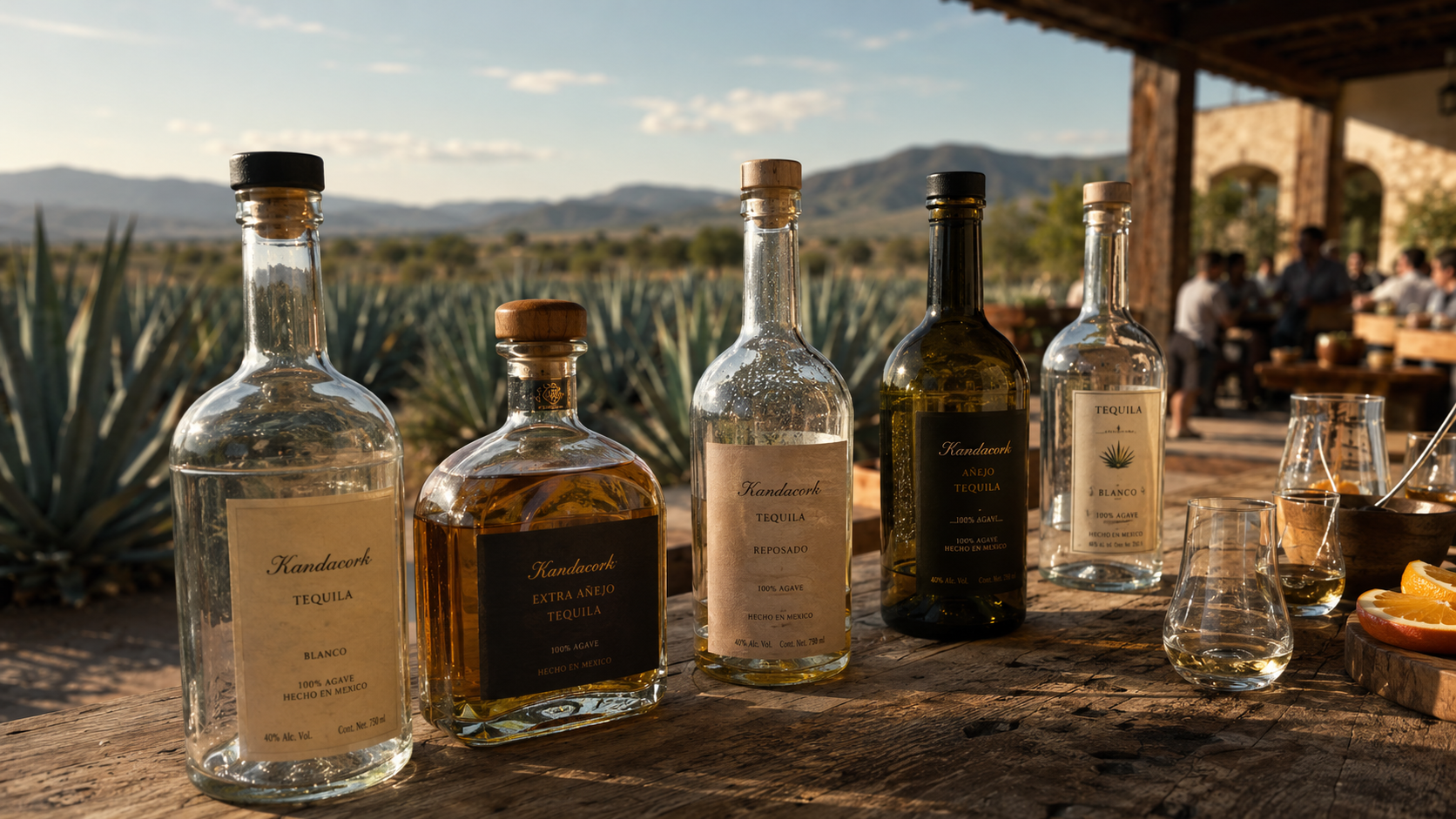
For premium whisky or rum, review a larger cap diameter and controlled pull-out feel. For vodka or gin, test a clean cap design with a consistent synthetic shank. For tequila or mezcal, review cap shape, seating stability, and visual balance. For export shipments, add leak, vibration, and carton testing.
This section helps move the project from general research to sample development. The more specific the sample request, the faster Kandacork Closures can recommend a workable stopper direction.
How to Evaluate a Bar-Top Stopper Supplier
A strong supplier should do more than quote a unit price. The supplier should help confirm fit, select materials, develop samples, control decoration, and manage quality for bulk production.
Use this supplier evaluation table:
| Supplier Capability | Why It Matters |
|---|---|
| Bottle drawing review | Helps prevent wrong stopper size selection |
| Physical sample testing | Confirms real-world fit before bulk production |
| Standard and custom shank options | Supports both fast launch and custom projects |
| Multiple cap materials | Helps match different brand positions |
| Logo decoration capability | Supports premium visual identity |
| Tolerance and QC control | Improves batch consistency |
| Export packaging support | Reduces transport and handling risk |
| Multi-SKU project handling | Useful for private label buyers and distributors |
| Reorder management | Helps maintain consistency across future batches |
| Clear technical communication | Reduces mistakes between buyer, bottle supplier, and filler |
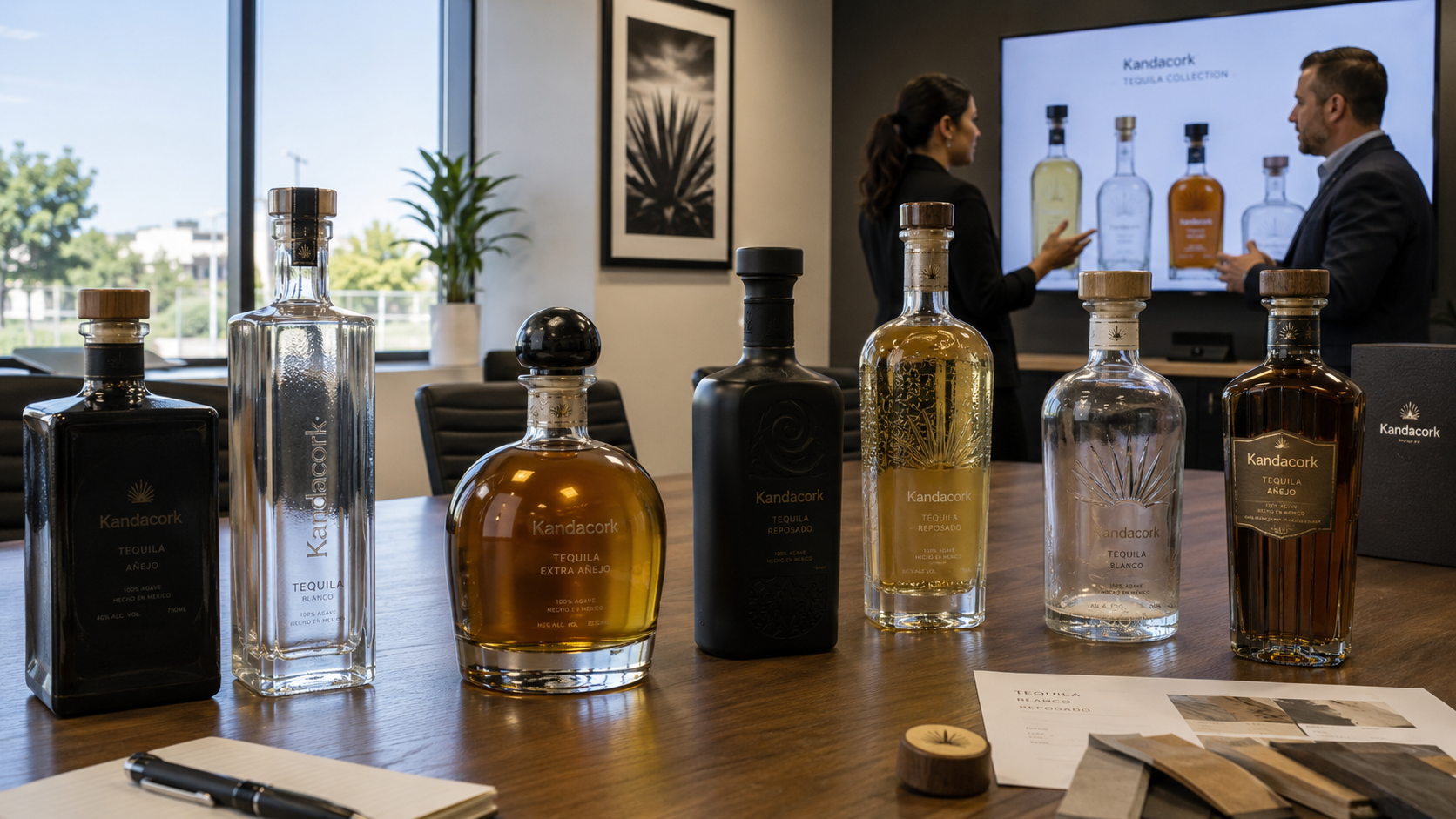
Different buyers prioritize different details. Distilleries often care about pull-out feel and premium presentation. Private label buyers care about consistency, MOQ, and multi-SKU matching. Importers care about export packing and documentation. Bottlers care about insertion force, cap seating height, and filling-line compatibility.
For business buyers, supplier capability often matters as much as closure price. A lower-cost stopper can become expensive if it delays bottling, leaks during transport, or creates inconsistent consumer experience. When comparing stopper systems with other premium closure materials, a glass stopper neck finish matching guide can help buyers think more clearly about bore size, sealing compression, pull force, and leak testing.
Food Contact and Compliance Considerations
For export or regulated markets, buyers should request food-contact documentation for shanks, coatings, colorants, adhesives, and surface treatments when applicable. Requirements may differ by market, material type, product category, and supply chain role.
For U.S. projects, buyers may need to consider FDA food-contact expectations. For European market projects, buyers may need to consider EU food contact material principles, including safety, inertness, traceability, and documentation. Final compliance review should be confirmed with the supplier, importer, testing laboratory, or regulatory consultant.
RFQ Checklist and Template
A clear RFQ helps Kandacork Closures recommend the right stopper faster.
Prepare the following information before requesting a quote:
- Bottle drawing
- Bottle photos
- Physical bottle samples if available
- Inner neck diameter
- Neck depth
- Bottle capacity
- Bottle material and finish
- Spirit type and ABV
- Target sales market
- Preferred shank material
- Preferred cap material
- Cap diameter or style direction
- Logo artwork
- Decoration method
- Order quantity
- Required sample quantity
- Target launch date
- Packing requirement
- Shipping destination
You can also use this simple RFQ format:
Please quote bar-top stoppers for a custom spirits bottle project.
Bottle bore: ___ mm
Neck depth: ___ mm
Bottle capacity: ___ ml
Spirit type: whisky / vodka / gin / rum / tequila / brandy / liqueur / other
Preferred shank: synthetic cork / natural cork / micro-agglomerated cork / polymer
Preferred cap material: wood / plastic / aluminum / zinc alloy / glass / custom
Cap finish: matte / gloss / metallic / natural wood / custom color
Logo method: engraving / embossing / debossing / printing / hot foil / undecided
Quantity: ___ pcs
Target market: ___
Need samples: yes / no
Bottle samples available: yes / no
Target launch date: ___
Shipping destination: ___
If you do not know the correct stopper size, send the bottle drawing and sample photos first. A closure supplier can help review the bottle neck, suggest a starting shank size, and prepare sample options.
Common Mistakes to Avoid
Do not choose a stopper only by cap appearance. The shank determines fit.
Do not assume every 18.5 mm or 21.5 mm bottle performs the same. Bottle tolerance and internal neck shape can change the result.
Do not skip sample testing. A stopper that looks correct in a product photo may not fit your actual bottle.
Do not ignore pull-out feel. A closure should feel secure but still comfortable for consumers to open.
Do not forget capsules, tamper bands, sleeves, gift boxes, or display packaging. Cap height and diameter must work with the full packaging system. If the bottle, closure, decoration, and export packing need to be planned together, complete spirits packaging programs can help buyers coordinate the wider project beyond the stopper itself.
FAQ
What size bar-top stopper fits an 18.5 mm bottle neck?
A 19.5 mm shank is often used as the starting option for an 18.5 mm bottle opening. Actual fit depends on glass tolerance, shank material, neck depth, and pull-out requirements.
What size bar-top stopper fits a 21.5 mm bottle neck?
A 22.5 mm shank is often used as the starting option for a 21.5 mm bottle opening. This is common for whisky, rum, tequila, brandy, and premium spirits bottles.
Is shank diameter more important than cap diameter?
Yes. Shank diameter controls fit and sealing contact. Cap diameter affects grip, visual balance, and brand presentation. Both should be specified before sampling.
Why does my stopper feel too tight or too loose?
A stopper may feel wrong because of bottle neck tolerance, internal pinch points, shank material hardness, excessive insertion depth, or bottle batch variation. Testing multiple bottle samples helps identify the cause.
Do custom spirits bottles need custom stoppers?
Not always. Some custom bottles can use standard shank sizes. However, private mold bottles, unusual neck profiles, luxury cap shapes, or strict branding requirements may need custom stopper development.
Should I test stopper samples before bulk production?
Yes. Sample testing helps confirm insertion force, seating height, pull-out feel, leak resistance, cap alignment, and filling-line compatibility before bulk purchasing.
Request Samples or a Quotation from Kandacork Closures
The right bar-top stopper size is not chosen by guesswork. It is confirmed through bottle drawings, inner bore measurement, physical samples, material selection, and fit testing.
For custom spirits bottle projects, Kandacork Closures helps buyers connect technical fit with brand presentation. Whether you need a standard stopper for a common bottle neck or a custom closure for a premium private mold bottle, the process should begin with the bottle bore, shank size, cap design, and sample review.
Send Kandacork Closures your bottle drawing, bore size, neck depth, bottle samples or photos, target spirit category, preferred cap material, logo artwork, and order quantity. Our team can recommend starting shank sizes, prepare sample options, review fit performance, and support quotation for standard or custom bar-top stopper projects through the closure and stopper quote request page.