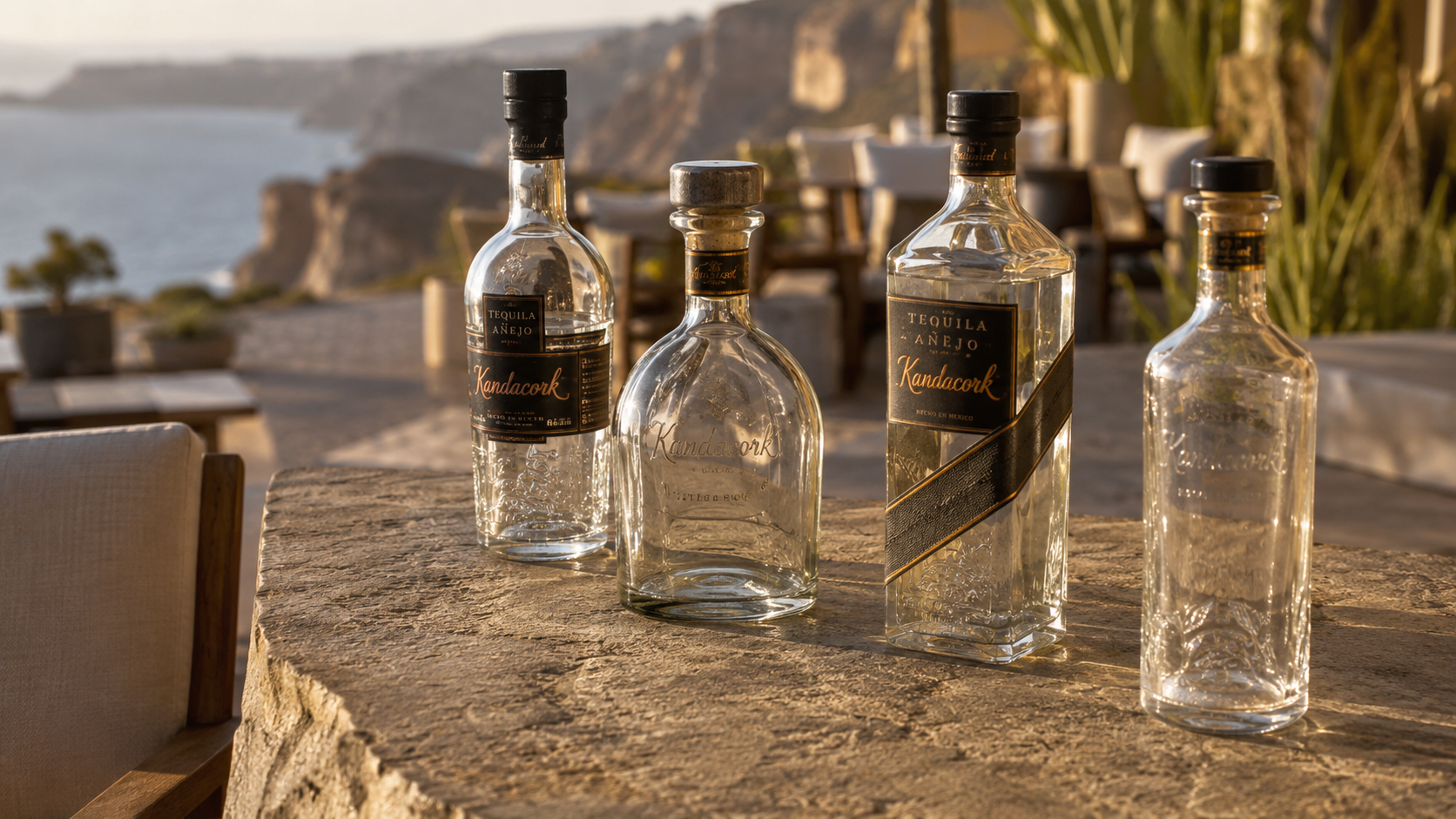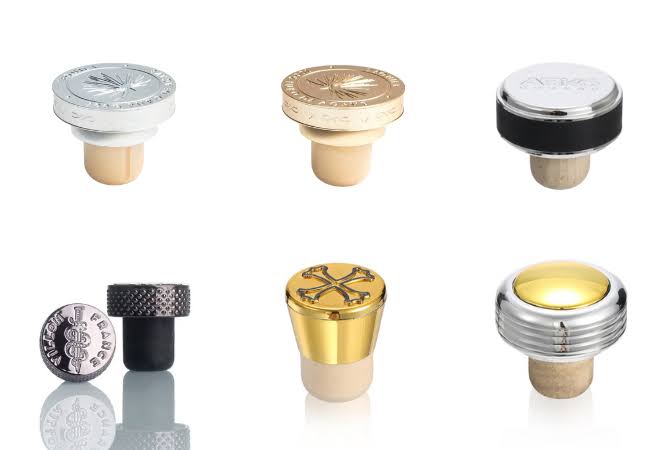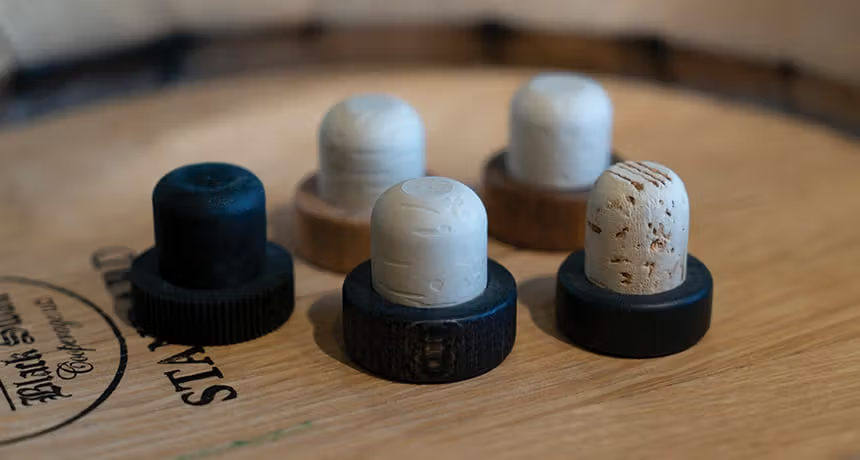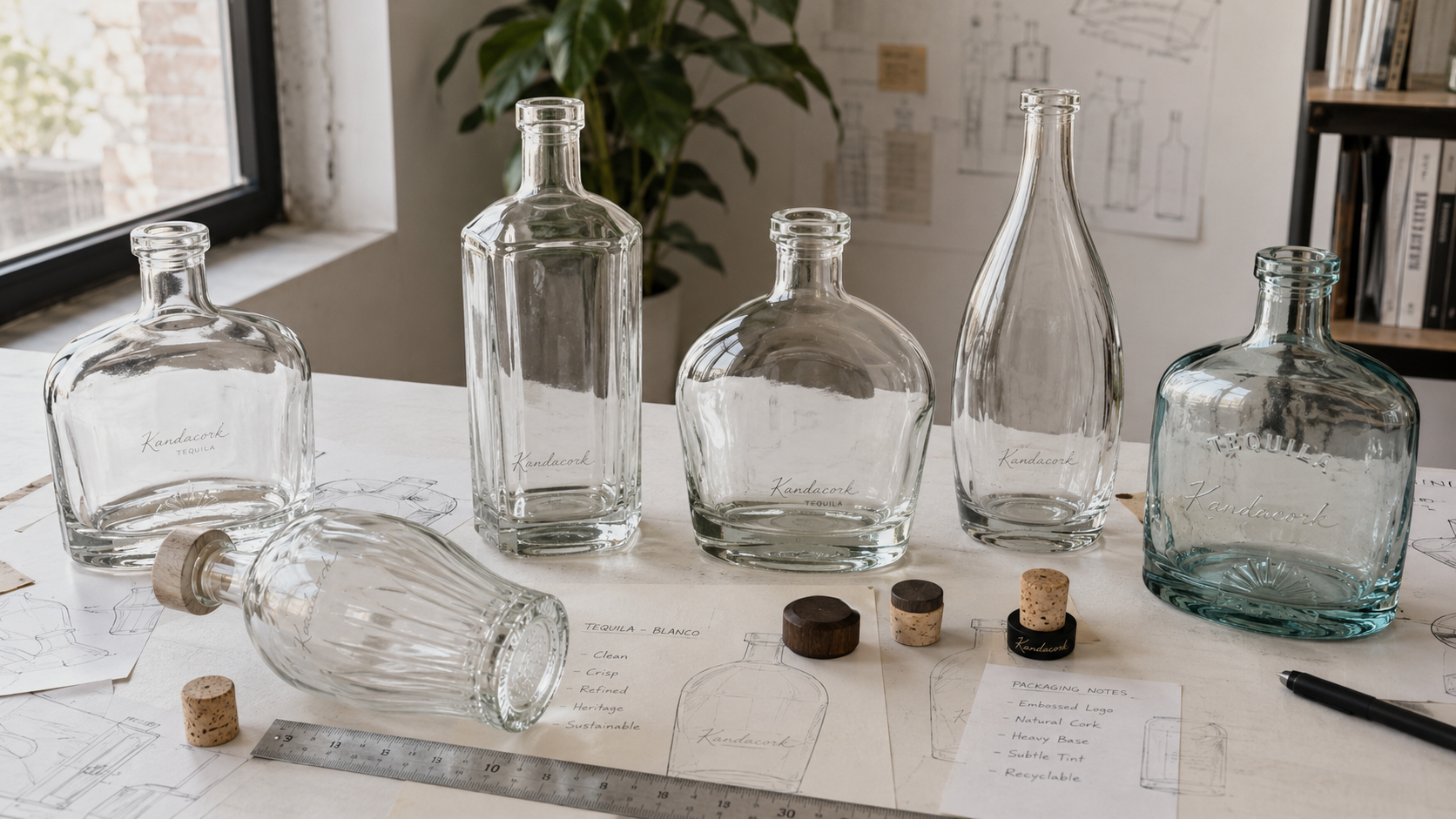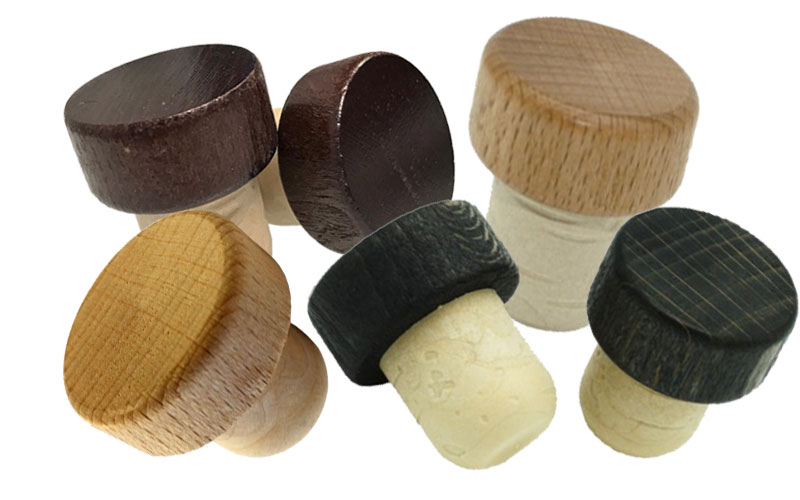
Bar-top stoppers and screw caps serve different packaging needs in spirits projects. This guide compares their structure, fit requirements, opening experience, sealing method, branding options and production considerations to help buyers choose the right direction.
Quick Recommendation
| Buyer Need | Recommended Choice |
|---|---|
| Premium shelf appeal | Bar-top stopper |
| Traditional opening experience | Bar-top stopper |
| High-speed capping | Screw cap or ROPP closure |
| Built-in tamper evidence | Screw cap or ROPP closure |
| Luxury limited edition | Custom bar-top stopper |
| Mini bottles or RTD spirits | Screw cap |
| Export spirits with security needs | Screw cap, ROPP closure, or stopper with capsule |
| Custom branded packaging | Bar-top stopper or decorated screw cap |
A quick recommendation is useful for early planning, but the final decision should always be confirmed by bottle drawings, physical samples, filling-line details, and sealing tests. For spirits brands developing a complete bottle and closure system, working with a specialist partner for custom spirits bottles can also help align neck finish, bottle weight, closure type, and decoration from the beginning of the project.
Bar-Top Stoppers and Screw Caps Explained
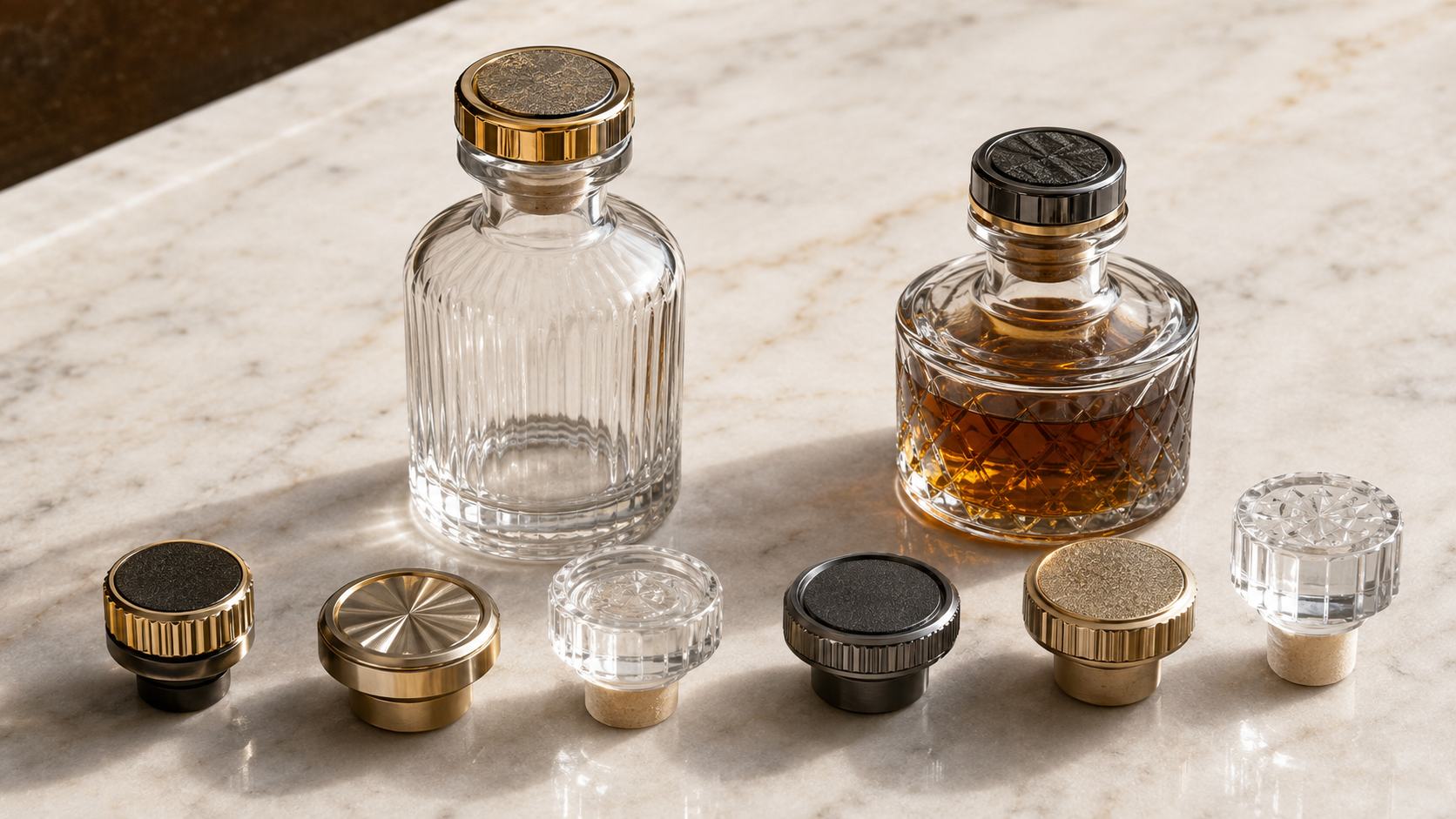
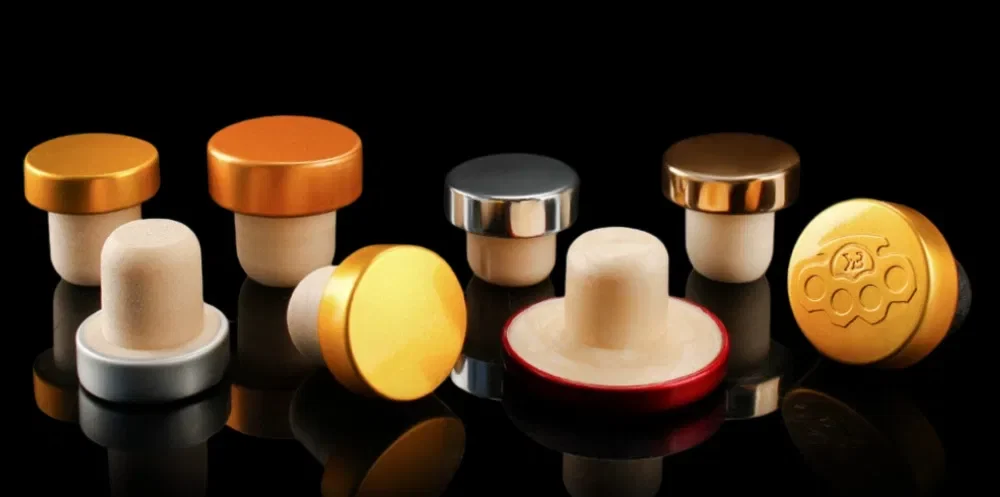
Bar-top stoppers, also called T-top stoppers or bar-top corks, combine a visible top head with an inserted shank. The head may be made from wood, aluminum, plastic, glass, resin, ceramic, or metal. The shank may use natural cork, agglomerated cork, synthetic cork, or TPE. The shank compresses inside the bottle neck and creates a push-fit seal.
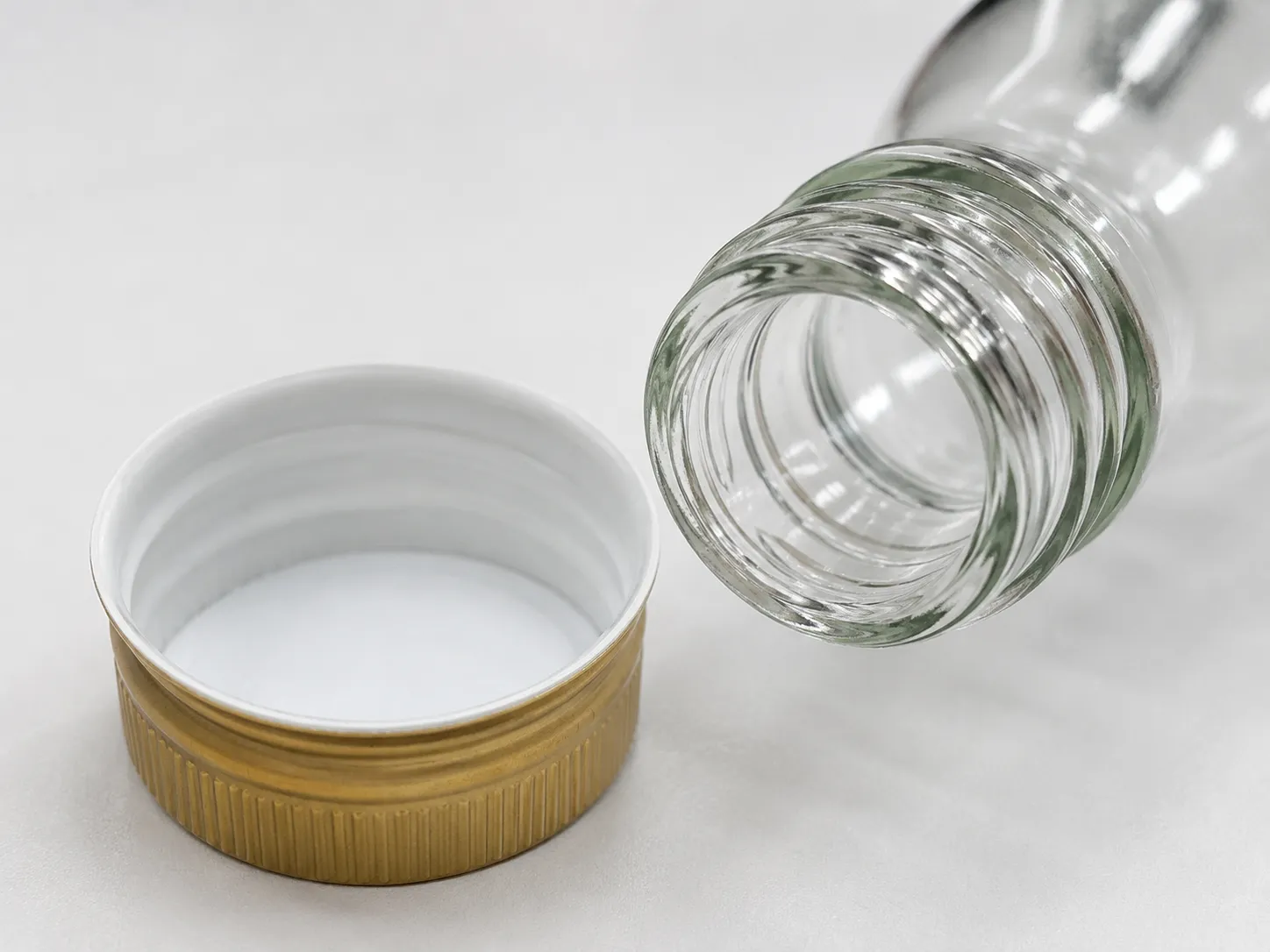
Screw caps fit threaded bottle necks. They close by rotating onto the bottle finish and may include an inner liner, tamper-evident band, ROPP structure, anti-refill insert, or plastic/aluminum shell. Screw caps are widely used for spirits, wine-style bottles, mini bottles, RTD products, and export packaging.
The key difference is the sealing method. Bar-top stoppers seal by compression inside the bottle neck. Screw caps seal by thread engagement, liner contact, and controlled torque. Both can be customized for premium packaging, but they serve different production and branding needs.
For spirits brands, bar-top stoppers and screw caps should be evaluated as part of a complete packaging system. The bottle neck, closure material, liner or shank, filling equipment, capsule or sleeve, carton packing, and retail presentation all affect final performance.
Bar-Top Stoppers vs Screw Caps: Quick Comparison
| Factor | Bar-Top Stoppers | Screw Caps |
|---|---|---|
| Bottle neck type | Cork-mouth or T-top neck finish | Threaded or ROPP neck finish |
| Sealing method | Compression shank inside bottle neck | Threaded closure with liner or formed aluminum skirt |
| Consumer experience | Premium pull-out opening | Twist-open convenience |
| Brand perception | Traditional, craft, luxury, tactile | Modern, secure, efficient, practical |
| Customization options | Head shape, material, logo, color, texture | Printing, embossing, color, liner, pilfer band |
| Tamper evidence | Often paired with capsule or shrink sleeve | Can include pilfer-proof or tamper-evident band |
| Production speed | Depends on stopper and corking setup | Often suitable for faster automated lines |
| Typical use | Whisky, rum, gin, tequila, brandy, premium spirits | Vodka, gin, liqueurs, RTDs, mini bottles, export spirits |
| Key technical check | Shank diameter, insertion force, pull-out force | Thread profile, torque, liner, pilfer band |
| Best-fit buyer | Brands prioritizing shelf impact and opening ritual | Brands prioritizing efficiency, security, and repeatability |
Both closure types can support premium spirits packaging. A walnut wood bar-top stopper can make a whisky bottle feel traditional and handcrafted. A decorated aluminum screw cap can create a clean, secure, and modern appearance for vodka, gin, tequila, or liqueurs.
Best Closure Choice by Buyer Scenario
| Buyer Scenario | Recommended Closure | Reason |
|---|---|---|
| Premium whisky, bourbon, or rum | Custom bar-top stopper | Strong shelf appeal and traditional opening experience |
| High-speed bottling line | Screw cap or ROPP closure | Faster application and more repeatable torque control |
| Export spirits requiring visible security | Screw cap or stopper with capsule | Better tamper-evident presentation |
| Luxury limited-edition bottle | Custom bar-top stopper | More design freedom for material, shape, and top decoration |
| Mini bottle or RTD spirits | Screw cap | Cost-efficient, compact, and production-friendly |
| Craft gin or boutique spirits | Bar-top stopper or premium screw cap | Choice depends on bottle design and brand personality |
| Private-label spirits range | Screw cap or plastic T-top stopper | Stable cost, scalable supply, and flexible decoration |
| Gift box or collector bottle | Wood, metal, glass, or resin bar-top stopper | Stronger tactile value and display impact |
This table gives buyers a practical starting point. However, the final closure should still be confirmed through bottle neck review, sample testing, filling-line trials, and packaging compatibility checks.
Choosing Between Bar-Top Stoppers and Screw Caps
The easiest way to choose between bar-top stoppers and screw caps is to start with the bottle neck finish. A cork-mouth bottle usually requires a bar-top stopper, while a threaded bottle usually requires a screw cap or ROPP closure.
After confirming the bottle neck, buyers should evaluate the product’s brand level. Premium whisky, aged rum, brandy, tequila, and limited-edition spirits often benefit from custom bar-top stoppers because the closure becomes part of the opening ritual. Vodka, gin, liqueurs, RTDs, and mini bottles often use screw caps because consumers expect fast, clean, and convenient opening.
Tamper evidence is another major factor. In the United States, the Alcohol and Tobacco Tax and Trade Bureau notes that distilled spirits plants and importers are required to securely affix a tamper-evident closure or similar device to bottles or containers of distilled spirits, making closure security an important early design consideration for export-oriented brands and U.S. market projects. Buyers can review the relevant TTB distilled spirits closure guidance when planning compliance expectations.
Filling-line compatibility should also be checked early. A closure that looks perfect in a sample box may still create issues if insertion force, extraction force, torque, cap feeding, or application speed is not suitable for the production line.
Before bulk ordering custom bar-top stoppers and screw caps, buyers should test real samples on real bottles. This is the most reliable way to check fit, sealing, opening feel, visual alignment, carton compatibility, and transport performance.
Technical Specification Snapshot
| Specification Area | Bar-Top Stopper | Screw Cap |
|---|---|---|
| Main fit data | Neck bore, shank diameter, shank length | Thread finish, cap diameter, skirt height |
| Key performance test | Insertion force and extraction force | Application torque and opening torque |
| Main sealing part | Cork, synthetic cork, or TPE shank | Liner and thread engagement |
| Security option | Capsule, shrink sleeve, or non-refill insert | Pilfer band, ROPP system, or non-refill insert |
| Visual branding area | Top head, side surface, material texture | Top panel, sidewall, embossing, printing |
| Common risk | Loose fit, hard extraction, leakage | Incorrect torque, liner mismatch, weak pilfer band |
| Best sample test | Pull-out feel and leak test | Torque test and leak test |
This technical snapshot helps buyers compare closure systems before discussing tooling, decoration, MOQ, and lead time with a supplier.
Bar-Top Stoppers for Premium Spirits Packaging
Bar-top stoppers are a strong choice when the closure needs to communicate craftsmanship, tradition, and premium value. Many consumers associate a pull-out stopper with whisky, rum, tequila, mezcal, gin, brandy, and high-end liqueurs.
A custom bar-top stopper can also act as a brand signature. The head shape, material, color, texture, and logo decoration can make the bottle easier to recognize on the shelf. For limited editions and gift packaging, the stopper may become one of the most memorable parts of the total design.
Common bar-top stopper head materials include:
- Wood: warm, traditional, and suitable for whisky, bourbon, rum, brandy, and craft spirits.
- Aluminum: lightweight, modern, and suitable for vodka, gin, tequila, and premium liqueurs.
- Plastic: cost-efficient, color-flexible, and stable for private-label or high-volume spirits.
- Glass: elegant and suitable for luxury liqueurs, perfume-style spirits, and collector bottles.
- Metal: heavier and more premium, often used for flagship spirits and special releases.
- Resin or composite materials: useful for custom shapes, molded textures, and creative decoration.
The shank is equally important. Natural cork offers a traditional look and feel. Agglomerated cork can balance cost and natural appearance. Synthetic cork and TPE shanks provide more consistent diameter, compression, and moisture resistance for repeat production.
For best results, buyers should confirm the internal neck bore, shank diameter, shank length, insertion force, pull-out force, leak resistance, and performance after storage and transport. A stopper should feel secure, open comfortably, and maintain a consistent seal across production batches.
For flagship SKUs, collectible releases, and high-value gift packaging, custom metal stoppers can add weight, visual authority, and a more substantial hand feel to the bottle presentation.
Screw Caps for Efficient and Secure Spirits Packaging
Screw caps are often selected when the project requires production efficiency, tamper evidence, clean opening, and repeatable sealing. They are widely used for vodka, gin, liqueurs, RTD spirits, mini bottles, flavored spirits, and export-oriented bottles.
A screw cap can be simple or premium. A basic cap may use plastic or aluminum with an inner liner. A premium cap may use decorated aluminum, precise sidewall printing, embossing, a specialty liner, a pilfer-proof band, or a non-refillable insert.
Screw caps are especially practical when:
- The bottle has a threaded neck finish.
- The filling line already uses capping equipment.
- The buyer needs visible tamper evidence.
- The project requires stable application torque.
- The brand needs a resealable closure for frequent use.
- The product range includes many SKUs.
- The buyer wants better cost control for medium- or high-volume orders.
ROPP closures, or roll-on pilfer-proof caps, are commonly used for spirits because the aluminum shell is formed over the bottle finish during capping. When the consumer opens the bottle, the pilfer band breaks or separates to show that the bottle has been opened. For threaded spirits bottles, custom ROPP closures can be engineered around cap diameter, thread profile, skirt height, liner selection, and line performance.
For screw caps, buyers should confirm cap diameter, skirt height, thread profile, liner type, application torque, opening torque, pilfer band function, and compatibility with the bottling line. These details directly affect user experience, leakage risk, and production efficiency.
Key Fit and Sealing Factors for Buyers
The performance of bar-top stoppers and screw caps depends on the match between the bottle and closure. A beautiful closure can still fail if the neck finish, liner, thread, shank, or torque range is incorrect.
Before ordering bulk spirits closures, buyers should prepare bottle drawings, physical bottle samples, filling-line details, target markets, alcohol content, and expected annual volume. This allows the supplier to recommend a closure system that is attractive, practical, and scalable.
| Technical Point | Why It Matters |
|---|---|
| Bottle neck finish | Determines whether the bottle needs a stopper, screw cap, ROPP cap, or special closure |
| Internal neck bore | Critical for selecting shank diameter and compression |
| Thread profile | Determines screw cap compatibility |
| Head diameter | Affects appearance, grip, carton fit, and brand style |
| Shank diameter | Affects sealing strength, insertion force, and pull-out force |
| Shank length | Affects stability, contact area, and opening feel |
| Liner material | Affects sealing, alcohol compatibility, and torque performance |
| Insertion force | Must be secure without damaging bottles or slowing production |
| Extraction force | Must feel premium but still open comfortably |
| Opening torque | Important for screw caps and ROPP closures |
| Leak testing | Helps reduce shipment risk and customer complaints |
| Line trial | Confirms production compatibility before full order |
For food-contact components such as liners, inserts, shanks, adhesives, and coated parts, buyers should consider the intended market and material documentation. The U.S. FDA explains that food-contact substances include packaging and components that come into contact with food, which is relevant when evaluating closure materials for alcoholic beverages and related liquid products through FDA food-contact packaging information.
Spirits packaging should be tested under practical conditions. A sample may work on a desk but perform differently after filling, capping, palletizing, temperature changes, vibration, export shipping, or long warehouse storage.
Common Closure Failure Causes
Many closure problems happen because the closure is selected too late in the packaging process. When buyers choose the bottle first and only consider the closure afterward, compatibility problems become more likely.
Common causes of closure failure include:
- Mismatch between shank diameter and internal neck bore
- Incorrect screw cap thread profile
- Weak or incompatible liner selection
- Excessive or insufficient application torque
- Poor pilfer band break performance
- Inconsistent head diameter or shank length
- Insufficient pull-out force
- Excessive insertion force
- Poor capsule or sleeve fit
- Decoration damage during transport
- Inadequate carton protection
- No filling-line trial before mass production
The best way to prevent these issues is to involve the closure supplier early. Bottle drawings, samples, and filling-line details should be reviewed before tooling, decoration, and bulk production are confirmed.
Materials, Colors, and Custom Branding Options
Closures are not only functional packaging components. They are also brand surfaces. On a retail shelf, the stopper or cap can communicate price level, category, personality, and quality before the consumer reads the label.
Kandacork Closures supports custom branding for bar-top stoppers and screw caps across different material and finish systems. Buyers can coordinate closure design with bottle shape, label paper, capsule color, gift box artwork, and brand guidelines. For projects where the closure must match label printing, embossing, hot stamping, coating, or full bottle decoration, a dedicated decoration and branding partner can help keep the total pack visually consistent.
Common customization options include:
- Pantone color matching
- Matte, gloss, satin, brushed, metallic, or soft-touch finishes
- Natural wood tones or stained wood effects
- Embossed or debossed logos
- Laser engraving
- Hot foil stamping
- Pad printing or screen printing
- Top disc inserts
- Sidewall texture
- Ribbed or smooth grip areas
- Printed aluminum ROPP caps
- Coordinated capsules and shrink sleeves
- Anti-counterfeit or non-refillable components
For premium spirits, small visual details matter. A matte black aluminum cap can suggest modern luxury. A walnut wood stopper can support a heritage whisky story. A gold metal top can suit tequila, brandy, or limited-edition spirits. A bright color-matched plastic T-top may work well for flavored spirits, RTDs, and private-label ranges.
A strong closure design should look intentional. It should feel like part of the total packaging system rather than a generic component added at the end.
Applications by Spirits Category
Different spirits categories use bar-top stoppers and screw caps in different ways. The right closure should match the product, bottle design, retail price, and consumer expectation.
Whisky, Bourbon, and Scotch
Whisky packaging often benefits from bar-top stoppers because the opening ritual supports tradition and premium perception. Wood, metal, and aluminum heads are common choices. Natural cork, agglomerated cork, or synthetic shanks can be selected depending on brand expectations, export conditions, and production stability.
For entry-level whisky or high-volume private-label whisky, screw caps and ROPP closures can also be practical. They may be preferred when tamper evidence, automated capping, and cost control are more important than a pull-out opening experience.
Vodka and Gin
Vodka and gin brands often use clean and modern packaging. Aluminum screw caps, ROPP closures, plastic T-top stoppers, and glass stoppers can all work depending on the brand story.
A minimalist vodka brand may choose a tall aluminum screw cap with precise sidewall printing. A craft gin brand may prefer a wood or plastic bar-top stopper with botanical color cues. A premium gin may combine an aluminum T-top with a coordinated capsule for a refined neck presentation.
Rum, Tequila, and Mezcal
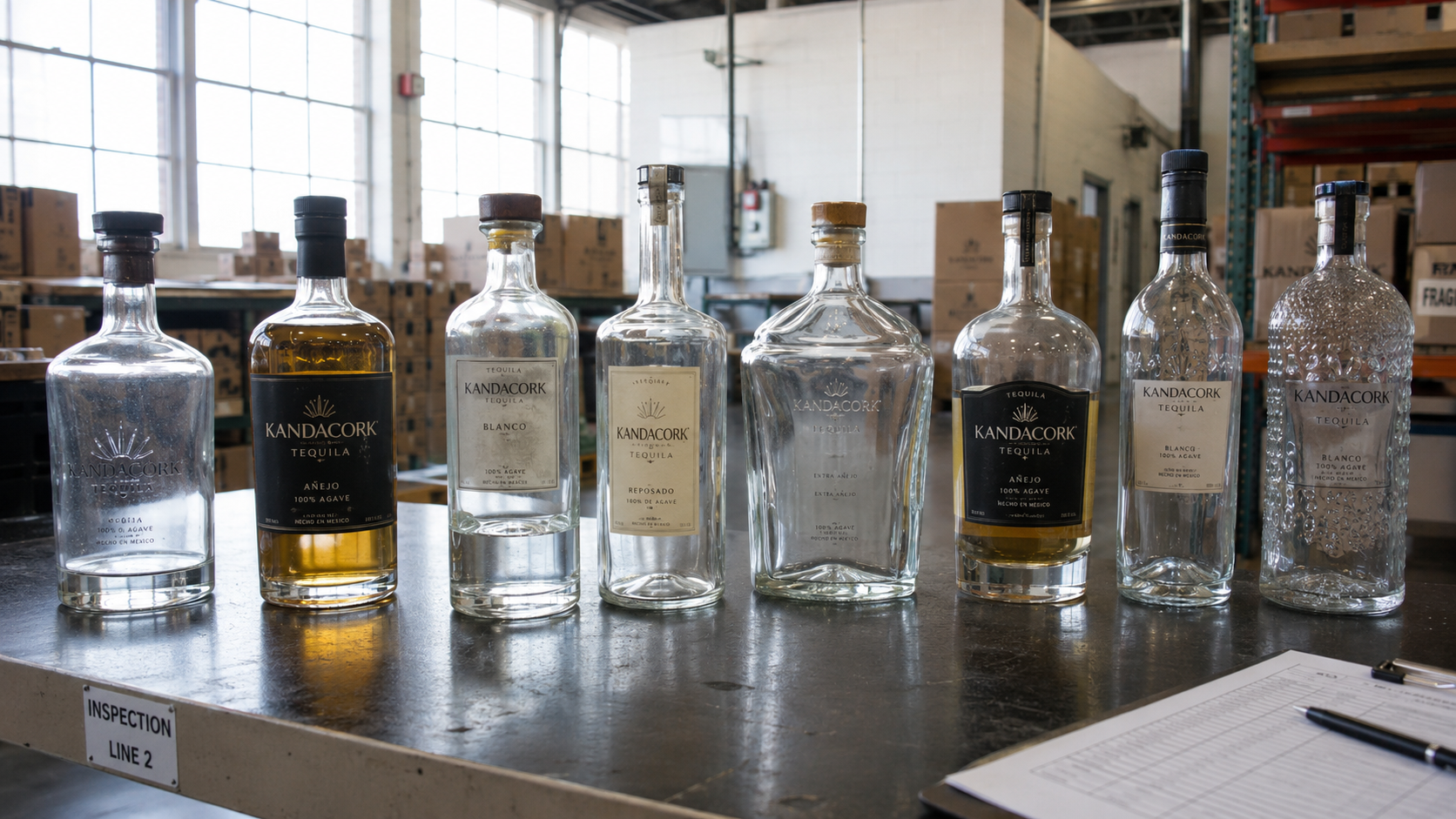
Rum, tequila, and mezcal packaging often benefits from strong material character. Wood, textured plastic, metal, ceramic-style resin, and custom-shaped tops can help express origin, craftsmanship, and flavor profile.
For export markets, tamper evidence and anti-refill protection may be important. In these cases, a bar-top stopper may be paired with a capsule, shrink sleeve, or non-refillable system. Screw caps and ROPP closures can also be used when security and line efficiency are more important than a pull-out ritual.
Brandy, Liqueurs, and Specialty Spirits
Brandy and liqueur packaging often uses decorative closures to support gift appeal. Glass, metal, wood, and colored plastic stoppers can work well for these categories.
For sweet liqueurs, cream liqueurs, and flavored spirits, buyers should pay close attention to liner compatibility, sealing performance, and cleanliness around the neck. Screw caps may be preferred when consumers expect easy resealing and frequent use.
Mini Bottles and RTD Spirits
Mini bottles and RTD spirits often prioritize speed, cost, and consistency. Screw caps are usually practical because they support automated application, tamper evidence, and efficient packing.
Premium miniatures and gift sets may still use small bar-top stoppers when the goal is to create a luxury sample experience.
Bottle, Closure, and Glass Packaging Alignment
Closure selection is easier when the bottle and neck finish are developed with the final cap or stopper in mind. Bottle weight, neck bore, thread detail, shoulder shape, label panel, capsule area, carton layout, and retail display all influence how the closure performs and looks.
A heavy glass whisky bottle may need a broad wood or metal stopper to maintain visual balance. A tall vodka bottle may look better with a slim decorated screw cap. A premium liqueur bottle may use a glass top stopper to create a collectible look. A compact RTD bottle may require a lightweight screw cap that supports fast packing and retail convenience.
For buyers managing bottle sourcing, closure matching, decoration, and export packing together, an integrated Kandacork Glass packaging solution can help reduce mismatches between bottle design, closure engineering, and final brand presentation.
OEM and ODM Development Process for Custom Closures
A successful custom closure project should follow a structured development process. This reduces risk, improves communication, and helps buyers move from concept to mass production with fewer problems.
Kandacork Closures can support buyers through a complete development path, including:
- Project brief review with bottle drawings, samples, product category, target market, order volume, artwork, and closure preference
- Bottle neck and finish review to confirm whether the project needs a bar-top stopper, screw cap, ROPP closure, capsule, or non-refillable system
- Closure recommendation based on material, head size, shank type, cap dimension, liner option, and decoration method
- Design confirmation for color, logo position, sidewall artwork, top surface design, finish, and packing requirements
- Prototype sampling for visual review, fit testing, and internal approval
- Sealing and line testing for insertion, extraction, torque, leakage, carton fit, and consumer opening experience
- Mass production approval after specifications, tolerances, QC standards, and packing details are confirmed
- Bulk production, inspection, packing, labeling, and export shipment preparation
This process is especially important for custom bar-top stoppers and screw caps because small dimensional differences can affect sealing, appearance, and filling-line efficiency.
Quality Control and Compliance Considerations
Spirits closures must do more than look good. They must protect the product, meet buyer specifications, and support regulatory expectations in the destination market.
For the European Union, food-contact packaging materials should align with the safety and inertness principles described by the European Commission for EU food-contact material legislation. For buyers selling across multiple markets, this means material selection, documentation, and supplier communication should be handled early rather than after the closure design is approved.
A practical QC program for bar-top stoppers and screw caps may include:
- Incoming material inspection
- Dimensional checks
- Color and finish inspection
- Logo position inspection
- Shank diameter and compression checks
- Insertion force testing
- Extraction or pull-out force testing
- Opening and application torque testing
- Liner inspection
- Leak testing
- Visual defect sorting
- Carton and pallet protection checks
- Batch traceability records
- Pre-shipment inspection
Quality control should also follow a repeatable process. The ISO 9001 quality management standard is widely used as a framework for consistent products, customer requirements, and continual improvement, and buyers can reference ISO 9001 quality management principles when discussing supplier process control, inspection records, corrective actions, and batch-to-batch consistency.
For international buyers, documentation can also matter. Depending on the project, buyers may request technical drawings, specifications, material declarations, food-contact statements, QC reports, sample approval records, and third-party testing reports.
Sustainability and Packaging Efficiency
Sustainability in spirits packaging is not limited to one material choice. It involves right-weighting, durable packaging, recyclable components where feasible, reduced transport damage, efficient carton design, and closure systems that protect the product throughout its lifecycle.
For closures, practical sustainability questions include:
- Can the closure be produced with stable dimensions to reduce rejects?
- Can carton protection reduce breakage and rework?
- Can materials be selected to match the brand’s recycling or reuse goals?
- Can packaging weight be reduced without damaging premium perception?
- Can bottle, stopper, cap, sleeve, and carton choices be coordinated from the beginning?
The World Packaging Organisation promotes circular design thinking across primary, secondary, and tertiary packaging, which is relevant when buyers evaluate the full bottle, closure, label, carton, and logistics system rather than only one component. Packaging teams can use this broader perspective when reviewing circular packaging design principles for spirits projects.
For brands developing lower-impact packaging, closure durability and product protection should remain priorities. A closure that leaks, breaks, stains labels, or fails in transit can create more waste than a slightly heavier but more reliable design.
For buyers exploring glass bottle options alongside closure development, custom glass packaging can support bottle, decoration, and closure coordination for premium spirits and related categories.
Quote Checklist for Custom Bar-Top Stoppers and Screw Caps
A clear quote request helps the supplier recommend the right closure faster. It also reduces misunderstandings about size, material, color, decoration, MOQ, and lead time.
Before requesting a quote, prepare:
- Bottle drawing or neck finish specification
- Physical bottle sample if available
- Target closure type
- Product category and alcohol content
- Target order quantity and annual forecast
- Logo file, artwork, or brand guideline
- Pantone color reference or finish sample
- Preferred material and decoration method
- Destination market
- Filling-line speed and capping method
- Tamper-evident or anti-refill requirements
- Required documents or compliance statements
- Packing and shipping requirements
For custom bar-top stoppers and screw caps, physical samples are strongly recommended. Drawings are useful, but real bottle and closure testing gives a more reliable view of sealing, opening feel, torque, fit, and visual balance.
Supplier Selection Criteria
A reliable closure supplier should understand both design and engineering. The lowest unit price is not always the best value if the closure creates leakage, line stoppages, unstable color, weak branding, poor tamper evidence, or inconsistent repeat orders.
A strong supplier should be able to review the bottle neck finish before confirming the closure. They should also provide samples, support decoration development, check fit and sealing, and explain realistic MOQ and lead time.
Buyers should also confirm whether the supplier can support multiple closure systems. A supplier that offers both bar-top stoppers and screw caps can recommend the best option for the project instead of forcing one closure type.
For long-term spirits packaging programs, repeatability is critical. Stable dimensions, color consistency, tooling records, batch control, and export packing all affect the buyer’s ability to maintain the same packaging quality across future orders.
For high-security spirits programs, non-refillable closures may also be considered when the buyer needs added protection against refilling, product substitution, or market-specific security risks.
Need Help Matching Closures to Your Bottle?
Kandacork Closures can review your bottle drawing, physical sample, target closure style, and order quantity to recommend suitable bar-top stoppers, screw caps, ROPP closures, capsules, or shrink sleeves.
Share your bottle neck details, artwork, destination market, filling-line requirements, and expected annual volume to start a custom closure quote. Early closure matching can help reduce leakage risk, decoration issues, production delays, and unnecessary tooling changes.
For luxury liqueurs, collectible bottles, and premium display packaging, custom glass stoppers can also be considered when a transparent, refined, and display-ready closure top fits the brand concept.
FAQ: Bar-Top Stoppers and Screw Caps
Are bar-top stoppers better than screw caps?
Bar-top stoppers are better for premium presentation and traditional opening, while screw caps are better for threaded bottles, tamper evidence, and high-speed production. The better option depends on bottle design, filling line, target market, and brand position.
Can screw caps be used for premium spirits?
Yes. Screw caps can be used for premium spirits when they are designed with high-quality materials, precise printing, strong color control, reliable liners, and a bottle shape that supports the brand image. Aluminum ROPP closures and decorated screw caps can look premium when matched with the right bottle and label design.
What size bar-top stopper do I need?
The correct bar-top stopper size depends on the internal bottle neck bore, shank diameter, shank length, head diameter, and required extraction force. Buyers should send bottle drawings or physical samples and test real closure samples before confirming mass production.
Do bar-top stoppers need tamper-evident protection?
Bar-top stoppers often need a capsule, shrink sleeve, tear band, non-refillable insert, or another tamper-evident system for spirits packaging. The right security method depends on destination market requirements, retailer expectations, bottle design, and brand protection goals.
Which closure is better for automated bottling lines?
Screw caps and ROPP closures are often better for high-speed automated bottling lines because they support controlled torque and consistent application. Bar-top stoppers can also work on production lines when shank dimensions, insertion force, corking equipment, and line trials are properly confirmed.
What information should I send for a custom closure quote?
Send bottle drawings, bottle samples if available, target order quantity, spirit type, alcohol content, market destination, preferred closure type, artwork, logo file, color reference, filling-line information, and required documents or compliance statements.
Can Kandacork Closures supply both bar-top stoppers and screw caps?
Yes. Kandacork Closures supplies custom bar-top stoppers, screw caps, ROPP closures, non-refillable closures, capsules, and shrink sleeves for spirits packaging projects. Buyers can request closure matching, custom branding, sampling, and bulk production support.
Conclusion
Bar-top stoppers and screw caps both play important roles in spirits packaging. Bar-top stoppers are ideal when the brand needs a premium, tactile, and traditional opening experience. Screw caps are ideal when the project requires thread compatibility, tamper evidence, production efficiency, and repeatable sealing.
For most buyers, the best closure is not chosen from a catalog alone. It should be selected after reviewing the bottle neck finish, brand positioning, filling-line setup, market requirements, and packaging budget.
The Kandacork Closures team helps spirits brands develop custom bar-top stoppers and screw caps that balance design, sealing performance, production efficiency, and bulk supply reliability. To start a custom closure project, send your bottle drawing, physical sample, artwork, target order quantity, and market requirements for a practical closure recommendation.