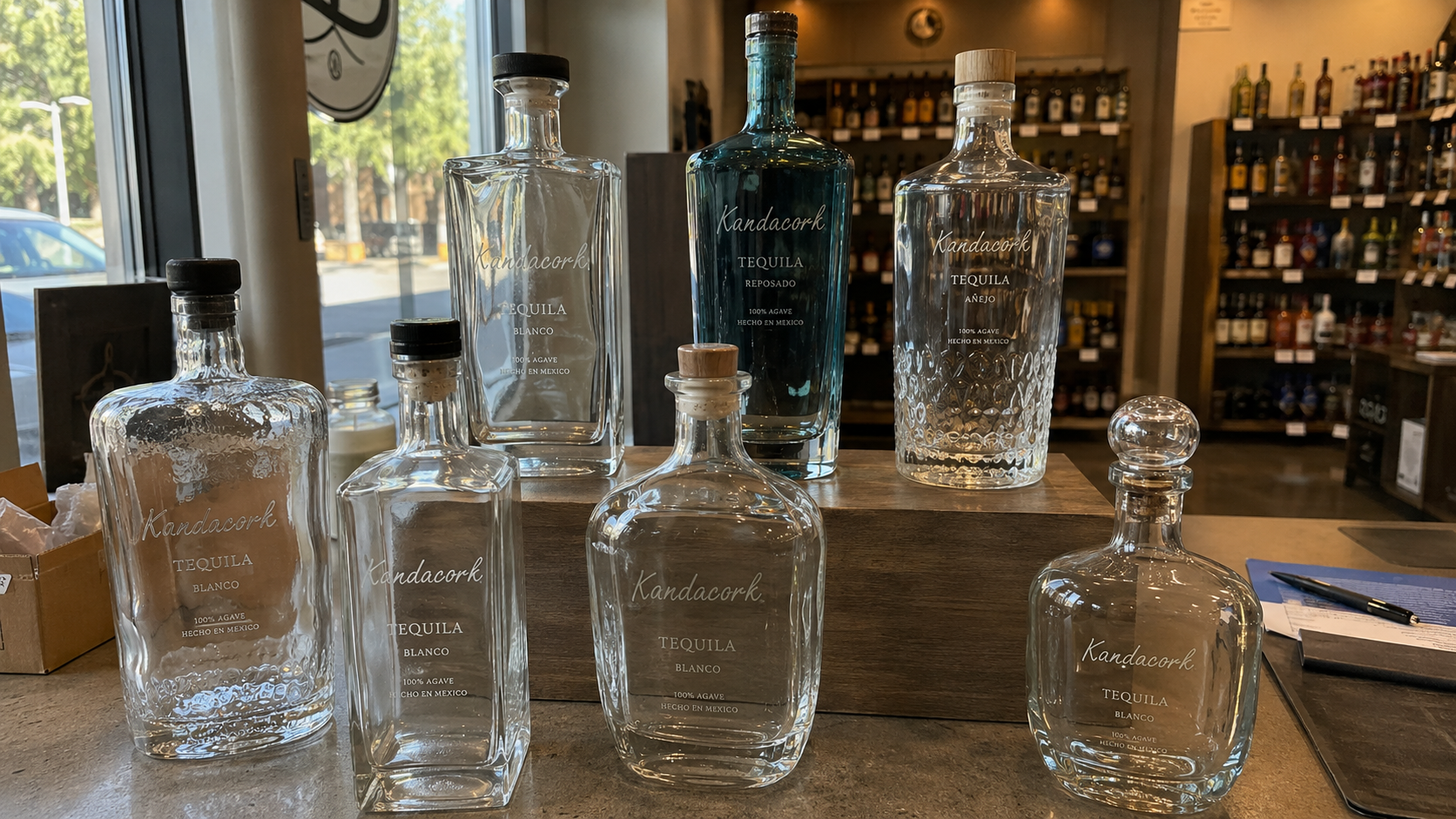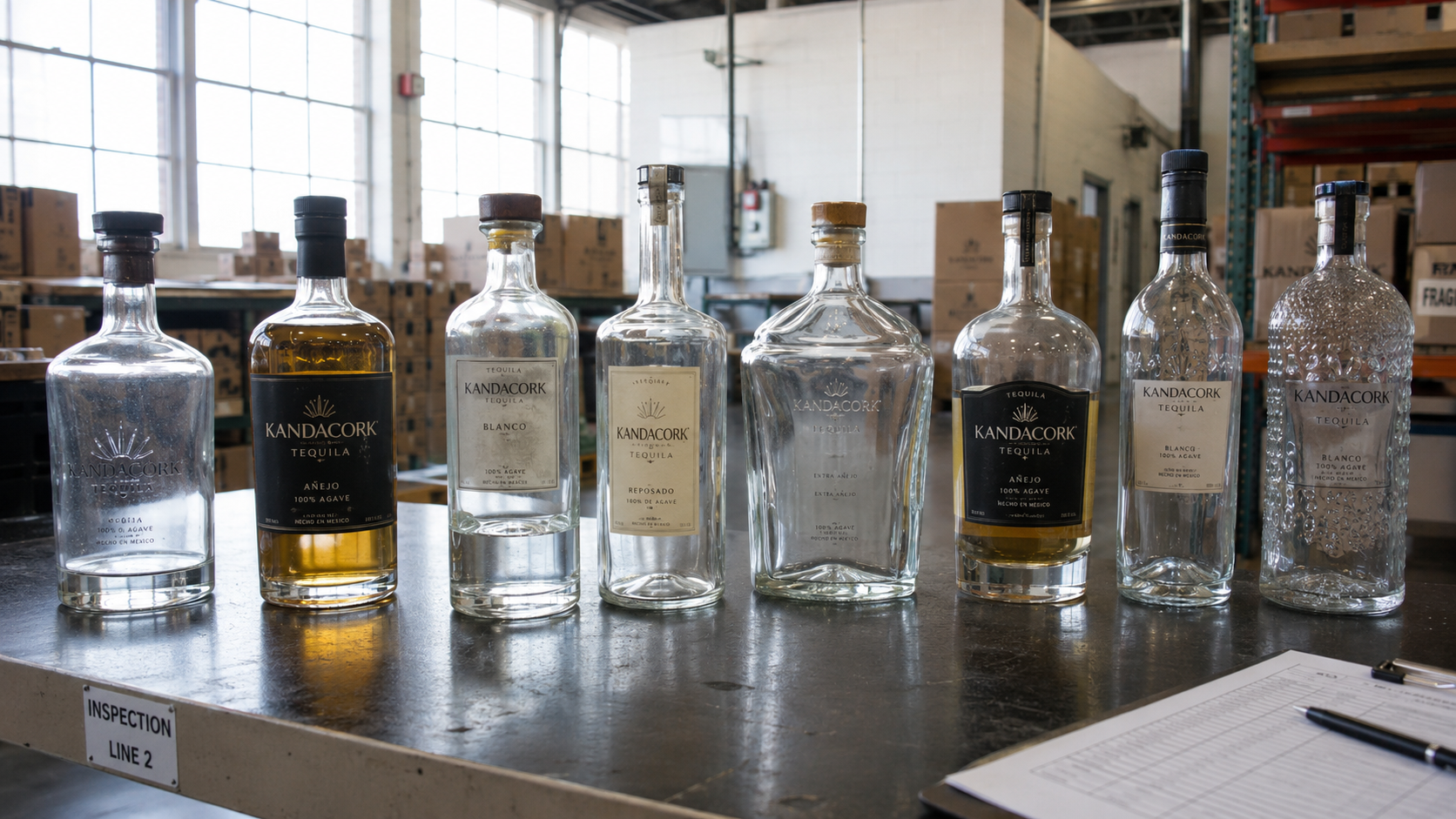
Synthetic Stoppers for Spirits Bottles: Quick Answer
Synthetic stopper performance depends on material selection, compression behavior and bottle neck compatibility. This guide explains how buyers can review shank size, fit testing, material appearance and bulk quality consistency before production.
Why Synthetic Stoppers Matter in Spirits Packaging
A spirits stopper is one of the first physical details a customer touches after removing the capsule or tamper-evident seal. The opening moment should feel secure, clean, and intentional. If the stopper feels loose, difficult to remove, poorly finished, or visually mismatched, it can weaken the perceived value of the whole bottle.
For packaging teams, the stopper also has a practical role. It must fit the neck bore, hold under compression, resist leakage, work with the filling line, survive carton packing, and stay consistent across repeat orders. These requirements become more important when a brand sells across multiple markets or manages several SKUs in the same bottle family.
Synthetic stoppers for spirits bottles solve many of these problems by offering controlled material behavior, stable dimensions, repeatable appearance, and flexible customization. They are especially useful when a brand wants a cork-like or bar-top presentation but needs better control over color, fit, shape, and bulk supply.
For new spirits projects, stopper selection should happen alongside bottle development. A premium bottle, label, closure, capsule, and carton should be engineered as one packaging system. If the stopper is selected too late, buyers may face fit issues, decoration conflicts, or launch delays.
What Are Synthetic Stoppers for Spirits Bottles?
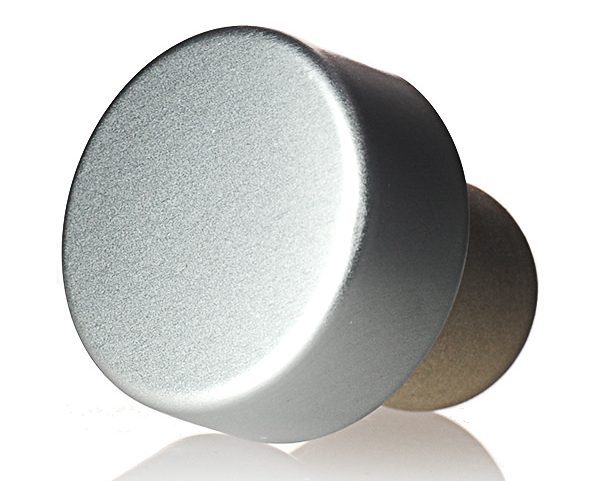
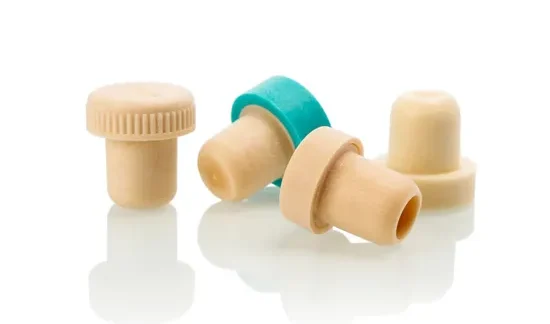
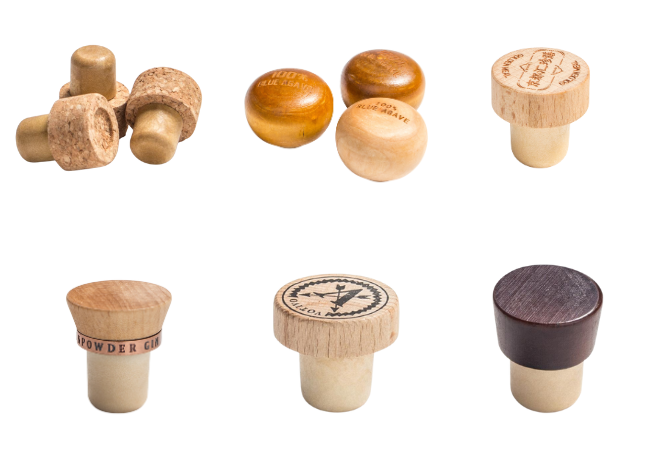
Synthetic stoppers are engineered closures designed for cork-finish or bar-top spirits bottles. They may be made from synthetic cork, polymer, TPE, plastic composite, or a combined structure with a decorative top and functional shank.
A typical stopper includes two main parts.
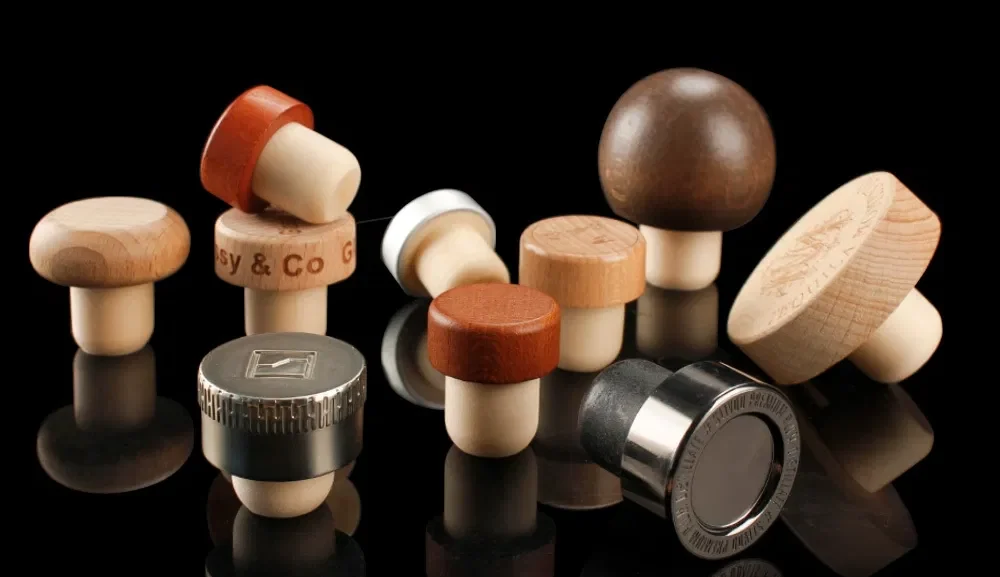
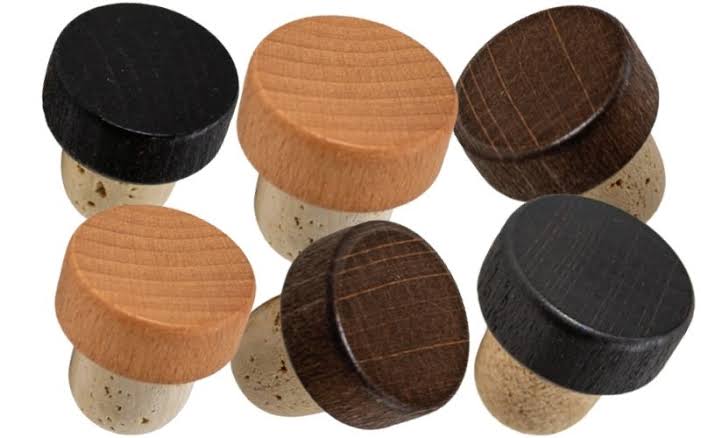
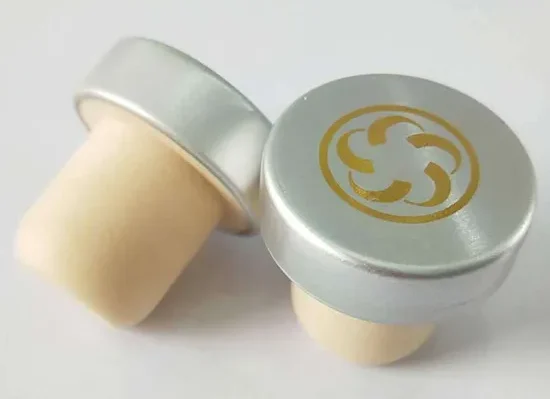
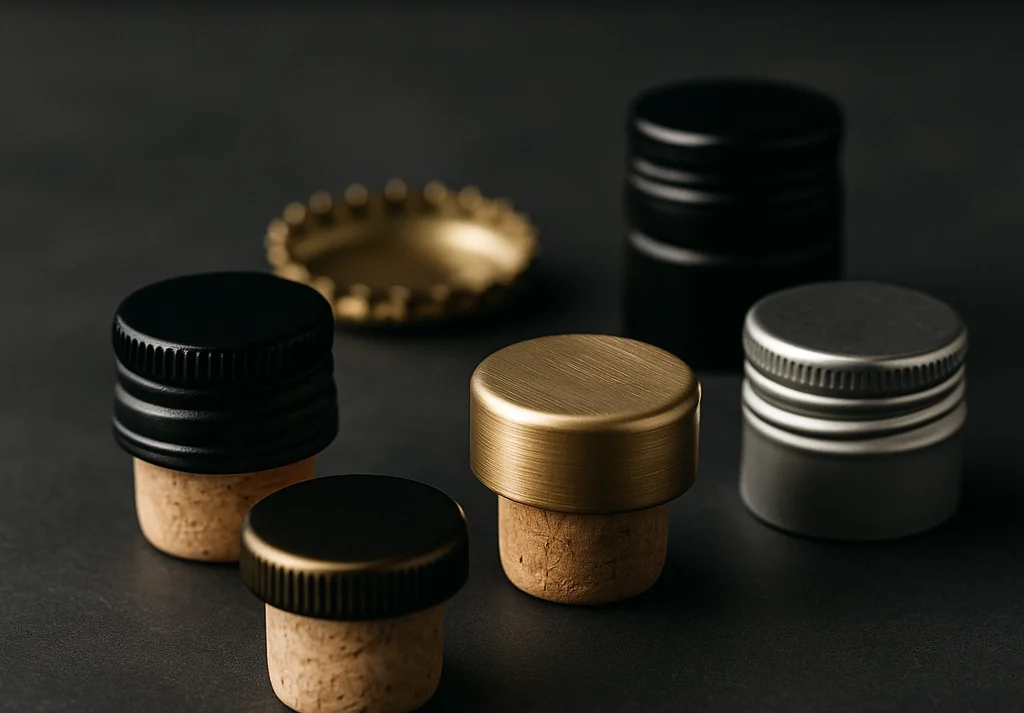
The top is the visible brand element. It can be made from polymer, plastic, wood, aluminum, zamac, glass, or a custom decorative material. The top influences shelf appeal, touch, color identity, and premium perception.
The shank is inserted into the bottle neck. It creates holding force and sealing contact. The shank may be synthetic cork, engineered polymer, TPE, or another controlled-compression material.
Common buyer terms include synthetic bar-top stoppers, synthetic cork stoppers, T-top stoppers, synthetic shank closures, liquor bottle stoppers, custom bottle closures for spirits, and bulk bottle stoppers.
When Spirits Brands Should Choose Synthetic Stoppers
Synthetic stoppers are a strong choice when a spirits brand needs consistency. Natural materials can vary in density, elasticity, grain, color, and texture. Synthetic materials are engineered for more predictable performance, which helps packaging teams manage insertion force, pull-out force, compression, and appearance.
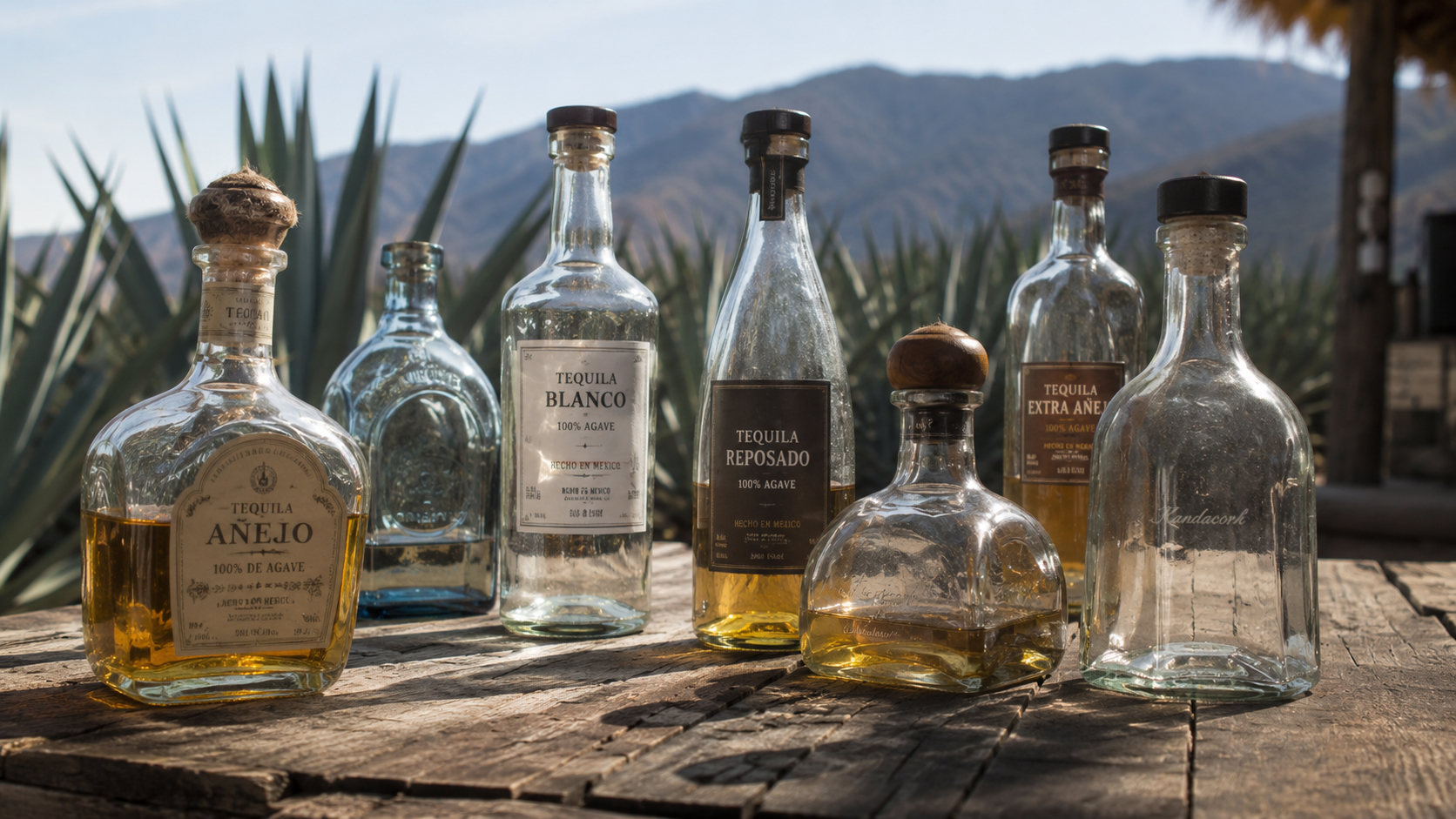
They are also useful for multi-SKU packaging. A gin range can keep one validated shank size and change the top color by botanical variant. A vodka brand can use a clean polymer top for minimalist positioning. A rum brand can use darker tones or wood-effect finishes for warmth and depth. A tequila or mezcal brand can choose a custom molded top to reinforce a distinctive bottle shape.
For brands still selecting the bottle itself, coordinating stopper fit with custom spirits bottle development can reduce the risk of neck mismatch, awkward proportions, and late-stage packaging changes.
Synthetic Bar-Top Stoppers vs Natural Cork and Other Closure Options
| Closure Type | Best For | Main Advantage | Watch Point |
|---|---|---|---|
| Synthetic stopper | Multi-SKU spirits, repeat orders, private-label projects | Consistent fit, controlled appearance, scalable supply | Needs bottle neck fit testing |
| Synthetic cork stopper | Cork-like appearance with better dimensional control | Familiar look with improved repeatability | Confirm compression and alcohol compatibility |
| Natural cork stopper | Heritage, craft, traditional positioning | Natural material story and premium association | More variation in appearance and mechanical behavior |
| Plastic stopper | Cost-sensitive or modern packaging | Flexible color and mold options | May need premium finishing for luxury products |
| Aluminum top stopper | Premium spirits and high shelf impact | Metallic finish and strong tactile value | Higher cost and decoration complexity |
| Wooden top stopper | Whisky, rum, brandy, craft spirits | Warm tactile feel and classic bar-top style | Batch color and grain variation |
Synthetic stoppers for spirits bottles are best for brands that need consistent fit, custom decoration, repeatable bulk supply, and reliable performance across multiple product lines. Natural cork is stronger for heritage storytelling. Metal or wooden tops are useful when tactile luxury is the main priority.
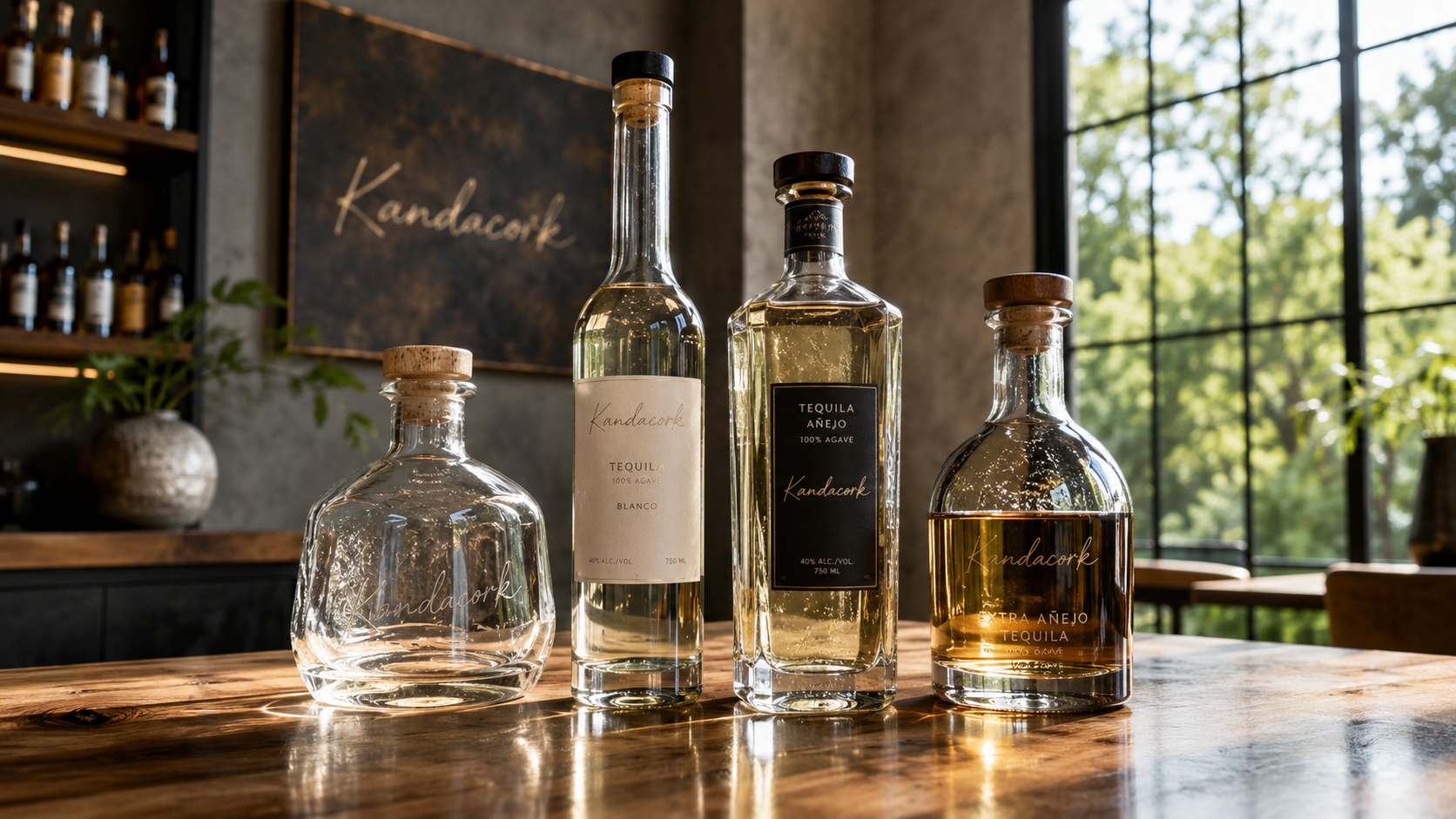
Kandacork’s complete closure and stopper range allows buyers to compare synthetic stoppers with related closure options before approving a full spirits packaging system.
Synthetic Stoppers vs Natural Cork
Natural cork has a strong traditional image and can support heritage positioning for whisky, brandy, rum, and craft spirits. It offers a natural material story that some premium buyers value.
However, natural cork can vary in density, grain, texture, elasticity, and color. Those variations may be acceptable for certain brand stories, but they can create challenges for large-scale production, strict color control, or multi-market repeat orders.
Synthetic stoppers are usually better when the buyer needs predictable dimensions, consistent appearance, repeatable pull force, and controlled fit across bottle families. They are not automatically “better” in every case, but they are often more practical for brands that need reliable industrial performance with a premium bar-top look.
Synthetic Stoppers vs Plastic, Wooden, and Aluminum Tops
Some synthetic stoppers are made with polymer or plastic components, but a spirits-grade synthetic stopper is not the same as a simple plastic plug. It must fit the bottle neck correctly, hold securely, open smoothly, reseal reliably, and support the brand’s visual identity.
For projects focused on cost efficiency and color flexibility, plastic T-top stoppers can be a practical option. With the right profile, texture, and decoration, plastic tops can work for both value programs and modern premium packaging.
For whisky, rum, brandy, and craft spirits, wooden bar-top stoppers can add warmth, tactility, and traditional shelf appeal. For luxury spirits, limited editions, and hero SKUs, aluminium bar-top stoppers can add weight, metallic finish, and a stronger premium feel.
Many premium closures combine these top materials with synthetic or engineered shanks. This gives the buyer both brand impact and controlled fit performance.
How to Choose the Right Synthetic Stopper Size
The most important measurement is the internal neck bore. This is the opening inside the bottle neck where the stopper shank is inserted. Even a small difference in neck bore can change fit, sealing, insertion force, and pull-out force.
Before ordering synthetic stoppers for spirits bottles, buyers should confirm the bottle drawing, neck bore diameter, tolerance, roundness, neck finish type, seating depth, filling-line method, and target opening feel.
The shank must compress slightly when inserted into the bottle neck. This compression creates holding force and helps maintain a secure seal. If the shank is too small, the stopper may feel loose or leak. If the shank is too large, it may be difficult to insert or remove.
Seating depth also affects function and appearance. If the stopper sits too high, the bottle may look unfinished. If it sits too deep, the top may interfere with the neck finish or appear visually unbalanced. Top diameter should also match the bottle style. A slim vodka bottle may need a low-profile top, while a heavy-base whisky or rum bottle may need a larger cap for visual balance.
Physical bottle samples are strongly recommended before bulk production. Catalog dimensions are useful, but they cannot replace real fit testing.
Testing Synthetic Stoppers Before Bulk Production
Synthetic stoppers should be validated before mass production, especially for export spirits, high-ABV products, luxury bottles, heavy-base bottles, and limited editions.
A practical validation process should include hand-fit checks, insertion trials, pull-out force testing, leak testing, inversion checks, carton packing review, temperature exposure review, and transit vibration evaluation. These tests help confirm that the closure performs under real production and logistics conditions, not only in a sample room.
For export whisky or rum, leakage testing should be repeated after carton vibration and temperature exposure. For private-label vodka or RTD spirits, a standard synthetic stopper structure with custom printing may reduce development time while preserving production stability. For a multi-SKU gin range, keeping one validated shank size and changing the top color can help protect line performance while creating strong flavor differentiation.
The right supplier should be able to review bottle samples, recommend shank dimensions, provide pilot samples, and help buyers avoid predictable problems before full production.
Materials and Construction Options for Custom Synthetic Stoppers
One-piece synthetic polymer stoppers provide a clean, modern, and consistent appearance. They are often used for vodka, gin, RTD spirits, and minimalist premium packaging. They can be molded in different colors and finishes, making them suitable for brands that want a controlled visual system.
Synthetic cork stoppers create a cork-like appearance while improving dimensional control. They are commonly used for whisky, rum, brandy, liqueur, and classic bar-top spirits packaging. They work well when a brand wants a familiar cork impression with more predictable repeat production.
TPE and engineered polymer shanks can be tuned for compression, flexibility, and fit. These options are useful when the bottle neck requires specific sealing behavior or when the filling line needs stable insertion performance.
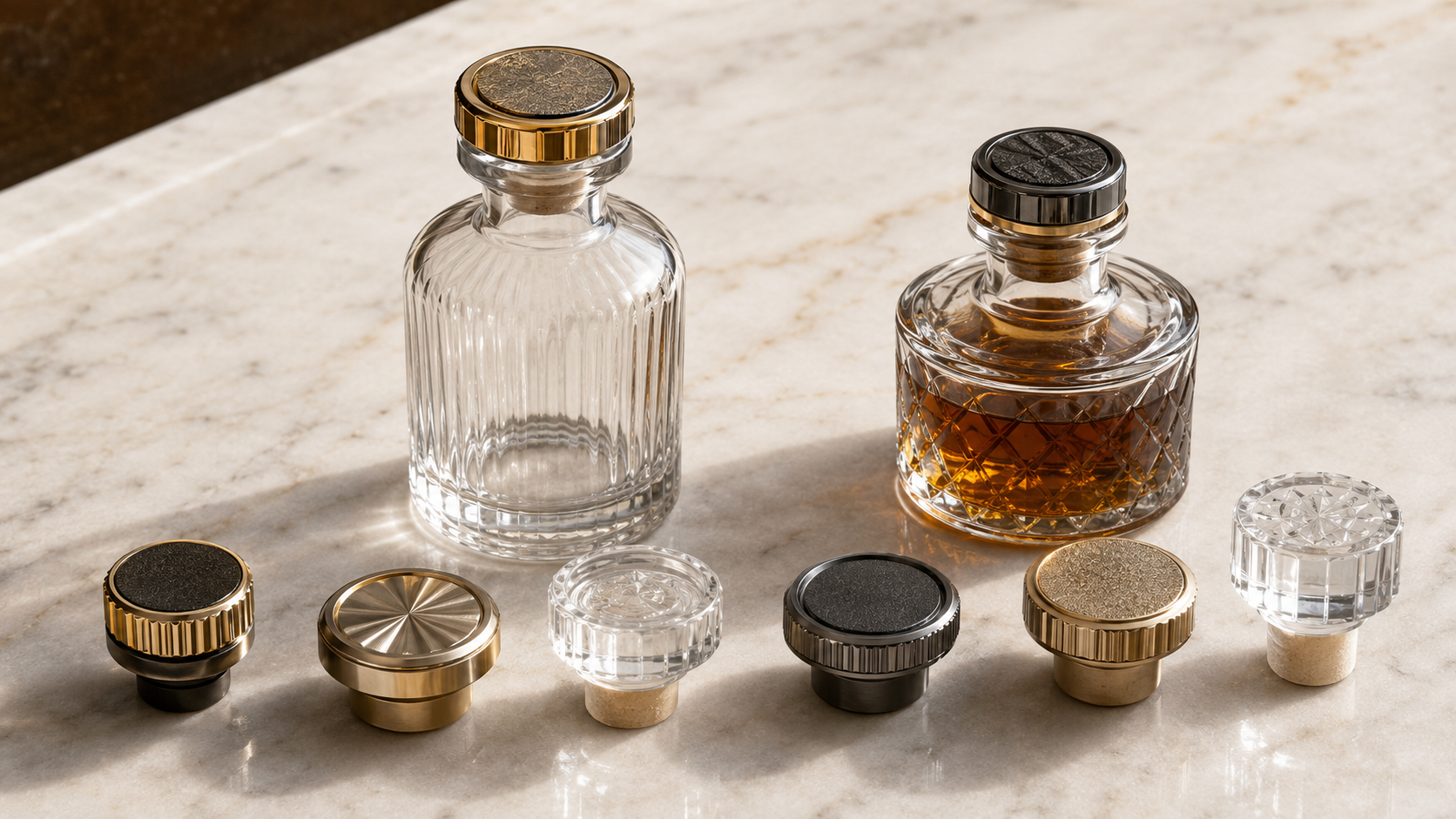
Premium projects often use multi-material stoppers. A synthetic shank may be combined with a wooden, aluminum, glass, zamac, or decorated polymer top. This allows the brand to create a luxury appearance while maintaining controlled fit performance.
Decoration, Color, and Brand Presentation
A stopper should match the bottle, label, capsule, gift box, and brand story. It should look planned, not added at the end of development.
Common stopper top shapes include flat, dome, rounded, cylindrical, low-profile, tall premium, ribbed side, tapered, and custom molded profiles. Common finishes include matte, gloss, ribbed, textured, metallic, transparent, wood-effect, stone-effect, and color-matched surfaces.
Decoration methods may include printing, hot foil stamping, embossing, debossing, laser marking, molded texture, sidewall decoration, and insert medallions. For projects where bottle surface design and stopper branding must work together, coordinated glass bottle decoration and branding can help align color, artwork, logo placement, and production durability.
For multi-SKU spirits brands, color consistency is critical. A small color shift between batches can weaken shelf presentation when bottles are displayed together. Buyers should approve stopper samples under real lighting and keep signed reference samples for future comparison.
Food-Contact, Compliance, and Quality Considerations
Synthetic stoppers for spirits bottles should be reviewed as beverage-contact packaging components. Buyers should request appropriate documentation for material composition, food-contact suitability, traceability, and quality control.
In the European Union, EU Regulation 10/2011 is relevant for plastic materials and articles intended to come into contact with food. In the United States, the FDA provides information on food-contact substances guidance, which is relevant when evaluating materials used in beverage packaging.
For distilled spirits sold in the U.S., TTB distilled spirits closure guidance is important because distilled spirits containers generally require a securely affixed tamper-evident closure or similar device. For supplier evaluation, ISO 9001 quality management can help buyers assess whether a manufacturer has structured systems for repeatability, corrective action, documentation, and continuous improvement.
For larger programs, the GS1 Global Traceability Standard is also useful when brands need clearer identification and traceability across suppliers, cartons, batches, and markets.
Compliance should not be treated as a final paperwork step. It should be part of the early specification process, especially when a brand plans to sell in multiple countries.
Buying Considerations for Bulk Synthetic Stoppers
A good quote depends on accurate technical and commercial information. Buyers should prepare the bottle drawing, bottle sample, internal neck bore diameter, neck tolerance, desired top size, preferred material, spirit type, ABV, target market, annual volume, first order quantity, decoration artwork, color reference, packaging timeline, filling-line method, and testing requirements.
MOQ and lead time depend on whether the project uses an existing structure, custom color, custom decoration, or a new mold. Standard stopper programs are usually faster. Custom logo, color, or molded-top projects need more time for sampling and approval. New tooling requires the most planning.
For brands managing bottle, closure, decoration, and export packing together, integrated Kandacork Glass packaging coordination can help align technical development across different packaging components. For brands with environmental goals, sustainable glass packaging options may also be considered when evaluating bottle weight, recyclability, refill concepts, and closure compatibility.
Best Applications by Spirits Category
Whisky packaging often uses bar-top stoppers to communicate tradition and premium quality. Synthetic cork shanks with wooden, polymer, or metal tops can provide a strong balance of classic appearance and repeatable fit.
Vodka brands often prefer clean, modern, minimal closures. One-piece synthetic stoppers, white polymer tops, transparent tops, and metallic finishes can work well for premium or private-label vodka packaging.
Gin brands frequently use color, botanical cues, and decorative details. Synthetic stoppers can be customized to match green, blue, clear, frosted, or colored gin bottles, while keeping a consistent shank structure across the range.
Rum packaging often benefits from warm tones, textured finishes, and darker closure colors. Synthetic cork stoppers with wood-effect or dark decorative tops can support aged, spiced, or premium rum positioning.
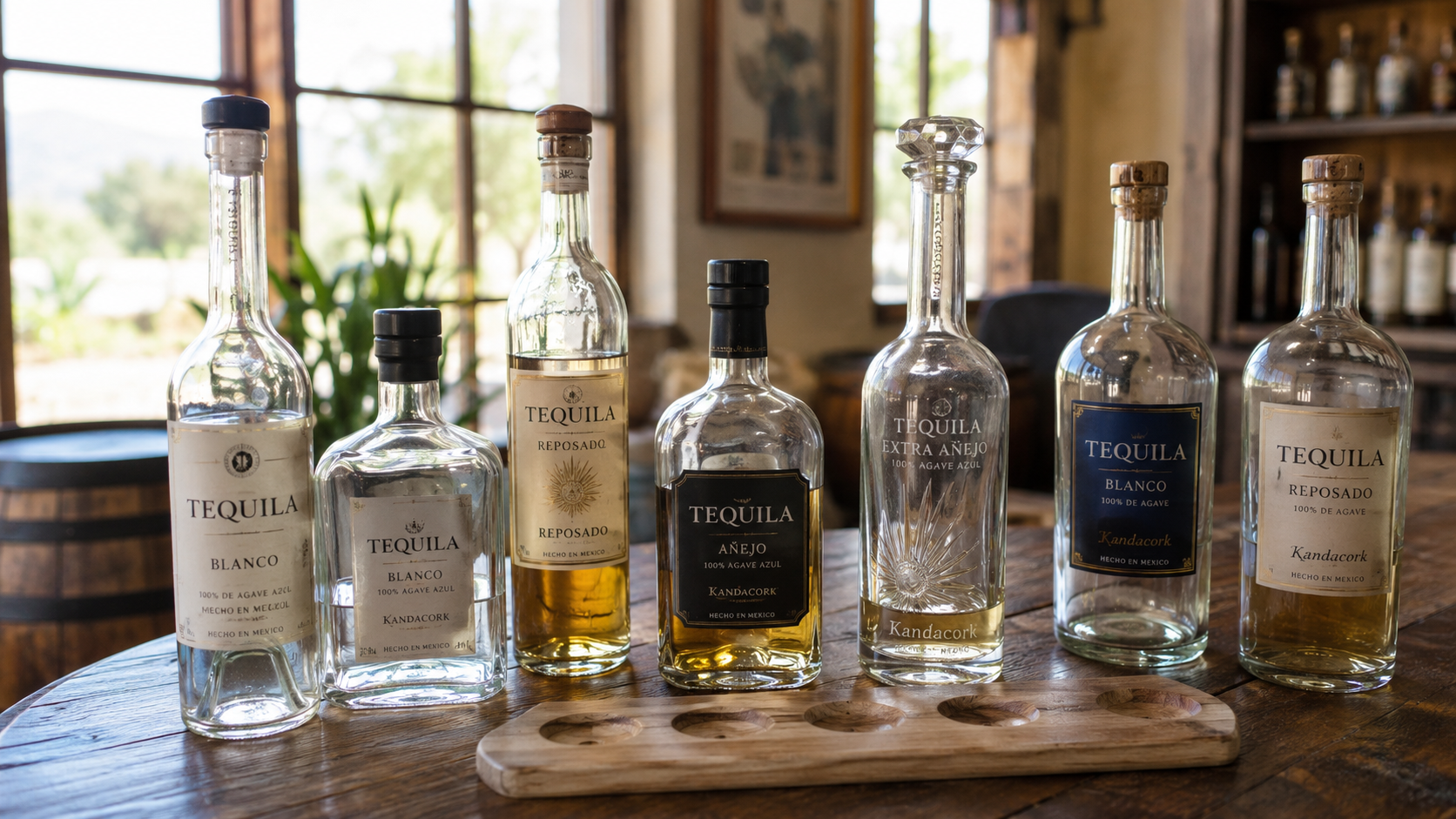
Tequila and mezcal brands often use distinctive bottle shapes and symbolic decoration. Custom molded tops, embossed patterns, and premium materials can help the closure support regional identity and shelf impact.
Liqueurs and ready-to-drink spirits often need scalable, cost-controlled packaging. Synthetic stoppers can support consistent fit, colorful branding, and repeat production across multiple flavors.
Why Choose Kandacork Closures
Kandacork Closures supports spirits brands, distilleries, bottlers, importers, and packaging buyers with custom and bulk synthetic stoppers for spirits bottles.
The team helps buyers connect bottle drawings, physical samples, closure materials, decoration methods, fit requirements, and production needs into one practical closure solution. This is important because a stopper cannot be judged by appearance alone. It must fit the glass, work on the line, protect the liquid, and support the brand.
Kandacork Closures can support synthetic bar-top stoppers, synthetic cork stoppers, polymer stoppers, custom stopper tops, logo decoration, color matching, multi-SKU closure programs, sample development, fit review, and bulk supply.
For a new project, buyers can request a closure quote with the bottle drawing, sample, target spirit category, ABV, order quantity, and decoration requirements. Kandacork Closures can then help develop a synthetic stopper that fits the bottle, supports the brand image, and performs reliably in production.
FAQ
Are synthetic stoppers suitable for spirits bottles?
Yes. Synthetic stoppers are suitable for spirits bottles when brands need consistent neck fit, repeatable sealing, clean appearance, and custom decoration for whisky, vodka, gin, rum, tequila, liqueur, and private-label packaging.
What size synthetic stopper do I need?
The correct synthetic stopper size depends on the bottle’s internal neck bore, neck tolerance, shank diameter, seating depth, and target compression. Buyers should confirm bottle drawings, test physical samples, and check insertion force, pull-out force, and leakage before approving bulk production.
Can synthetic stoppers be customized?
Yes. Synthetic stoppers for spirits bottles can be customized with different top shapes, colors, textures, printed logos, embossing, debossing, hot foil, inserts, and side decoration.
Are synthetic stoppers better than natural cork?
Synthetic stoppers are better for projects that prioritize repeatability, controlled dimensions, color consistency, and scalable supply. Natural cork may be better when the brand wants a traditional natural material story.
Do synthetic stoppers work for high-ABV spirits?
Synthetic stoppers can work for high-ABV spirits, but the material should be reviewed for the specific spirit type, ABV, storage conditions, and target market. Fit testing, leakage testing, and material review are recommended before mass production.
What is the difference between a synthetic stopper and a synthetic cork stopper?
A synthetic stopper may be made from polymer, TPE, or other engineered materials. A synthetic cork stopper usually has a cork-like shank appearance but is made from controlled synthetic or composite material.
How should brands test synthetic stoppers before ordering in bulk?
Brands should test fit, insertion force, pull-out force, leakage, appearance, line compatibility, carton packing, temperature exposure, and transit stability before approving bulk production.
What information is needed for a custom stopper quote?
Buyers should provide the bottle drawing, bottle sample, neck bore diameter, spirit type, ABV, order quantity, target market, color reference, artwork, decoration requirements, and launch timeline.
Conclusion
Synthetic stoppers for spirits bottles should be selected by fit, material, sealing behavior, decoration, compliance, and supply planning.
The right closure protects the spirit, supports the brand, improves production consistency, and gives the customer a confident opening experience. For distilleries, bottlers, private-label brands, and spirits packaging buyers, the best next step is to develop the stopper together with the bottle, decoration, and filling requirements.
A well-matched synthetic stopper is not just a closure. It is part of a complete spirits packaging system built for shelf appeal, technical reliability, and long-term supply.