Introduction: Why Neck Finish Measurement Matters
For spirits brands, distilleries, private label buyers, importers, distributors, bottlers, and packaging buyers, closure selection is not only about appearance. A screw cap or ROPP closure may look correct in a catalog, but if the bottle neck finish does not match, the final package can leak, apply poorly, lose tamper-evident function, or fail during filling.
To measure bottle neck finish correctly, buyers need to check more than the mouth opening. The thread diameter, finish height, sealing surface, bore diameter, thread start, cap skirt height, liner type, and capping method all affect closure performance.
This is especially important in spirits packaging. A standard screw cap is usually pre-threaded and twisted onto the bottle. A ROPP closure, short for roll-on pilfer proof, is typically an aluminum closure formed onto the bottle finish during capping. That means the bottle, cap, liner, tamper-evident band, and capping equipment must work as one system.
Kandacork Closures helps spirits packaging buyers review bottle finishes, match screw caps and custom ROPP closures for spirits bottles, recommend liner options, prepare samples, and support quotation planning before bulk production.
Not sure about your neck finish code? Kandacork Closures can review your bottle drawing, bottle sample, or current cap sample before recommending screw cap or ROPP closure options.
Quick Answer: How Do You Measure Bottle Neck Finish?
To measure bottle neck finish for screw caps and ROPP closures, use a digital caliper to measure the outside diameter across the bottle threads, identify the thread style, check finish height, inspect the sealing surface, and verify cap height. For ROPP closures, also confirm bead geometry, tamper-band engagement, liner compatibility, and capping equipment setup.
For screw caps, confirm the thread outside diameter, thread finish style, cap inner diameter, finish height, liner type, sealing surface, and application torque.
For ROPP closures, confirm the ROPP finish type, cap diameter, cap skirt height, tamper-evident bead area, liner structure, capping head compatibility, bridge break, and removal torque.
5-Minute Neck Finish Measurement SOP
Use this quick process before requesting closure samples or a quotation.
Clean the bottle neck. Dust, label residue, glass chips, or liquid residue can affect caliper contact and measurement accuracy.
Measure the T dimension across the outermost threads. This is the outside thread diameter and usually the first measurement used to identify the nominal cap size.
Measure the H dimension from the top sealing surface to the bottom of the neck finish. This helps confirm cap height and ROPP skirt fit.
Measure the I dimension across the inner bore. This affects filling, pouring, inserts, flow restrictors, and product flow.
Check the thread style. If you cannot identify whether the finish is 28-400, 28-410, 30 mm ROPP, BVS, or PP28, request a bottle drawing from the bottle supplier.
Photograph the neck from the front, side, and top. Photos help the closure supplier review thread form, bead shape, sealing surface, and finish height.
Send the measurements, photos, drawing, bottle sample, and current cap sample to the closure supplier. For ROPP closures, also confirm the capping machine or bottling partner.
Bottle Neck Finish Measurement Table: T, E, I, S, and H
Packaging engineers often describe a bottle neck finish with standard dimensional terms. Buyers do not need to become engineers, but they should understand these measurements before requesting closure samples.
| Measurement | What It Means | How to Check It | Why It Matters |
|---|---|---|---|
| T Dimension | Outside diameter across the bottle threads | Digital caliper | Determines the nominal cap diameter |
| E Dimension | Outside diameter of the neck below the thread | Digital caliper | Helps verify thread depth and cap engagement |
| I Dimension | Inner bore diameter | Digital caliper | Affects filling, pouring, inserts, and flow |
| S Dimension | Distance from top sealing surface to thread start | Drawing or caliper | Affects thread engagement and cap orientation |
| H Dimension | Total neck finish height | Digital caliper or drawing | Affects cap height, liner contact, and ROPP skirt fit |
The T dimension is usually the first measurement buyers check when trying to identify cap size. However, a correct T dimension does not guarantee closure compatibility. Thread style, finish height, cap design, liner compression, and tolerance range must also match.
What Is a Bottle Neck Finish?
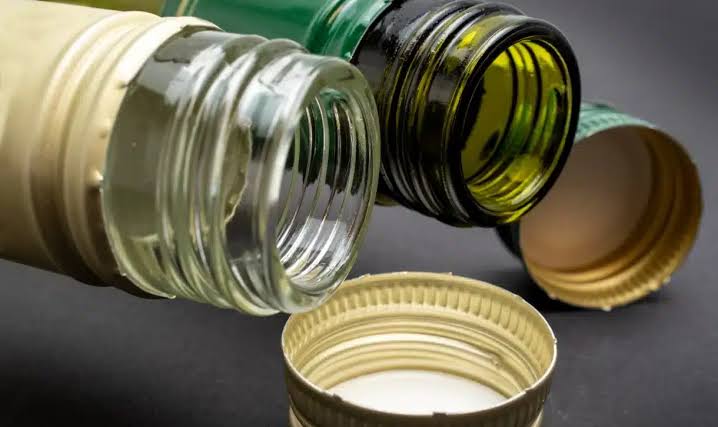
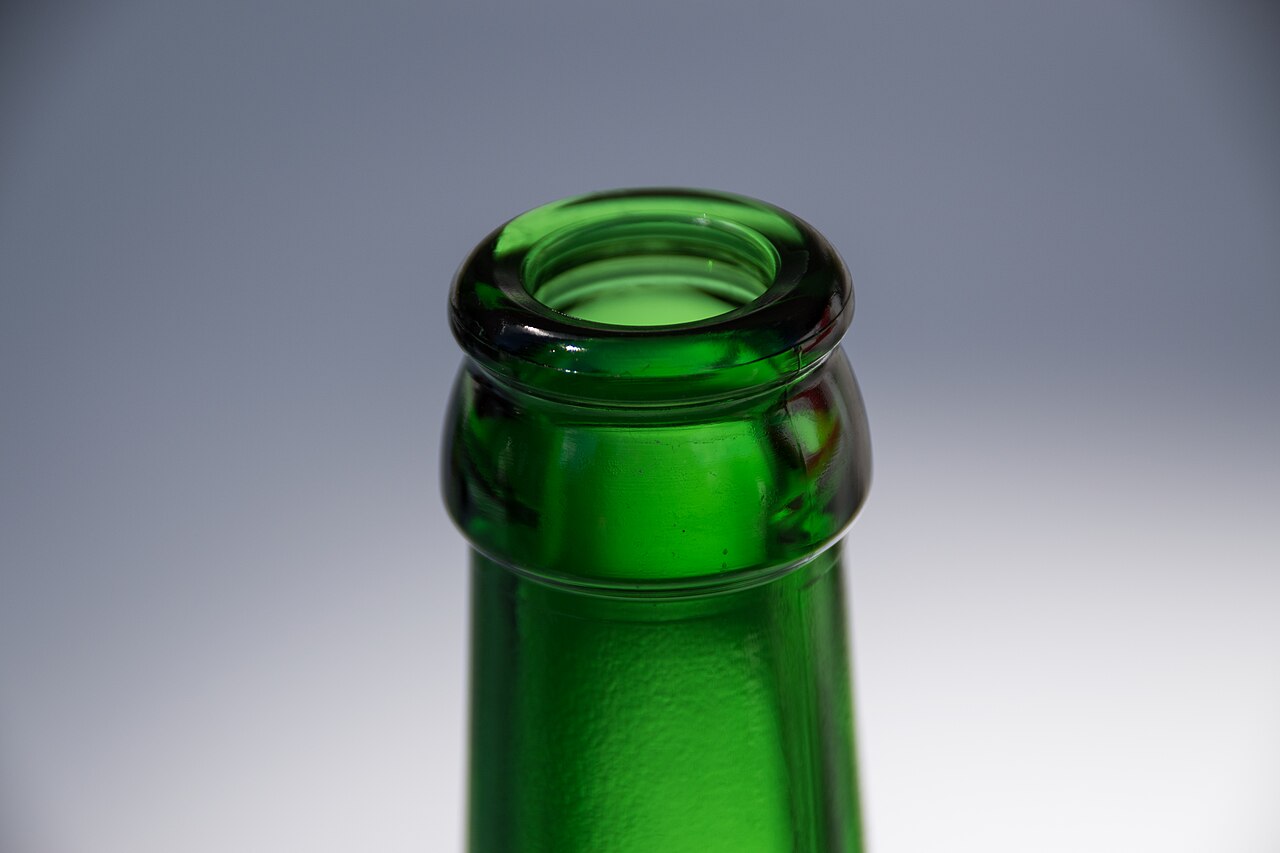
A bottle neck finish is the engineered top section of the bottle where the closure connects. It may include threads, sealing surface, bore, bead, transfer ring, finish height, and other features required for screw caps, ROPP closures, stoppers, pourers, or tamper-evident systems.
In simple terms, the bottle neck finish determines which closure can fit the bottle.
For a standard screw cap, the neck finish controls how the cap threads engage with the bottle threads and how the liner compresses against the sealing surface. For a ROPP closure, the finish also controls how the aluminum cap forms around the bottle thread area and how the tamper-evident band locks below the bead.
Common bottle neck finish examples include 28-400, 28-410, 30 mm ROPP, 18 × 12 ROPP, BVS 30H60, PP28, and aluminum screw cap finishes for spirits bottles.
A 28 mm cap is not automatically compatible with every 28 mm bottle. Diameter is only one part of the fit.
Screw Cap vs ROPP Closure: Key Difference
Standard screw caps and ROPP closures may both be used on spirits bottles, but they are applied differently.
A standard screw cap is normally manufactured with internal threads. During application, the cap is twisted onto the bottle’s existing thread finish. This means the cap thread, bottle thread, liner, and application torque must be compatible. For a deeper fitment workflow, buyers can compare their measurements with this screw cap thread finish matching guide.
A ROPP closure is usually an aluminum shell applied by capping equipment. Rollers form the closure around the bottle finish, creating the thread profile and tamper-evident band engagement during application. This means ROPP selection depends on the bottle finish, cap size, liner, bead geometry, capping head setup, roller adjustment, bottle support, and line speed.
For buyers, the practical difference is simple: a screw cap may be easier to test by hand, while a ROPP closure should be tested with the actual bottle and capping equipment before bulk production.
Which Finish Standard Should Buyers Confirm Before Ordering Caps?
Professional closure sourcing should not rely only on catalog photos or rough measurements. For commercial spirits projects, buyers should check bottle drawings, physical samples, and recognized finish systems.
Technical references such as CETIE finish data sheets can help packaging teams understand finish dimensions and closure compatibility, but buyers should still confirm the actual bottle drawing and sample before approving production.
If Your Bottle Uses 28-400 or 28-410
Confirm the full screw thread finish, not only the 28 mm diameter. A 28-400 cap and a 28-410 cap should not be treated as interchangeable unless the bottle and closure supplier confirm compatibility.
Buyers should check the thread style, finish height, liner contact, application torque, and sealing surface.
If Your Bottle Uses 30 mm ROPP
Confirm diameter, cap height, bead geometry, tamper-band engagement, and capping head compatibility. A 30 mm ROPP description is not enough by itself because ROPP performance depends on how the aluminum closure is formed onto the bottle.
If Your Bottle Uses BVS 30H60
Confirm the bottle drawing, aluminum closure specification, liner structure, and bottling equipment. BVS-style finishes are common in wine, spirits, liqueur, and beverage packaging, but the full drawing and tolerance range still need to be checked.
If Your Supplier Only Gives a Photo
Request a technical drawing or send a bottle sample to the closure supplier. Photos help identify general shape, but they do not confirm thread profile, finish height, tolerance, bead geometry, or liner compression.
The practical rule is simple: use the bottle drawing, physical bottle sample, and closure supplier’s technical review together. Do not approve a bulk cap order based only on the stated diameter.
What You Need Before Measuring or Requesting Samples
Before you measure bottle neck finish or request closure samples, prepare a few basic items.
A digital caliper is the most useful tool for measuring thread diameter, cap inner diameter, neck outside diameter, inner bore, and finish height in millimeters. For better accuracy, measure several bottles from the same production batch because glass bottles can have tolerance variation.
A bottle technical drawing is even more valuable. It should show the neck finish code, dimensional tolerances, bore, finish height, sealing surface, thread profile, and bead details.
A physical bottle sample is strongly recommended. A drawing shows what the bottle should be; a sample shows what the bottle actually is. This is important when bottles come from different factories, when a distillery changes bottle suppliers, or when imported bottles are used for private label spirits programs.
If you already have a cap sample, send that too. For screw caps, the supplier can check cap inner diameter, thread style, liner type, cap height, and tamper-evident band structure. For ROPP closures, the supplier can review cap diameter, skirt height, tamper-band height, liner thickness, and top panel structure.
How to Measure Bottle Neck Finish for Screw Caps
Standard screw caps are common in spirits packaging because they offer reclosability, flexible decoration, simple application, and efficient sourcing.
Measure the Outside Diameter Across the Bottle Threads
Place the digital caliper across the outermost bottle threads. This gives the T dimension. Record the measurement in millimeters.
Do not measure only the bottle opening. The mouth opening is the I dimension, not the cap size.
If the outside thread diameter is approximately 28 mm, the bottle may belong to the 28 mm cap family. However, the exact thread finish must still be confirmed.
Identify the Thread Finish Style
A screw cap finish is often written as two numbers, such as 28-400 or 28-410.
The first number usually refers to the nominal diameter in millimeters. The second number refers to the thread style or finish series. A 28-400 closure and a 28-410 closure should not be treated as interchangeable unless the bottle and cap supplier confirm compatibility.
Thread style affects how the cap advances during tightening, how the liner compresses, and how the final seal performs.
Measure the Cap Inner Diameter
If you have the cap sample, measure the inside diameter from one inner wall to the opposite inner wall. This should correspond to the bottle’s thread outside diameter.
Do not rely only on visual comparison. Two caps can look similar but have different thread profiles, liner thicknesses, skirt heights, or tamper-evident band designs.
Check the Sealing Surface and Liner
The sealing surface is the area where the liner contacts the bottle. It must be smooth, level, and compatible with the selected liner.
For spirits packaging, liner choice matters. Alcohol content, flavor compounds, botanical oils, sugar content, and storage conditions can affect sealing performance. A closure for vodka may not require the same liner as high-proof whisky, botanical gin, cream liqueur, or syrup-based liqueur.
Common liner options may include EPE liners, foam liners, Saranex-type liners, Sarantin-type liners, and other alcohol-compatible sealing systems. In the United States, buyers reviewing closure gaskets and food-contact polymer materials may also need to consider applicable requirements such as 21 CFR §177.1210 for closures with sealing gaskets.
The final liner choice should be tested with the actual product and bottle.
Test Application and Removal Torque
Torque is the rotational force used to apply or remove a screw cap. Too little torque can lead to leakage. Too much torque can damage the cap, deform the liner, strip threads, or create a poor consumer opening experience.
For commercial production, application torque and removal torque should be tested with the actual bottle, cap, liner, and capping machine.
Before ordering bulk screw caps, request samples and test them on real bottles. Check hand application, machine application, leakage, cap alignment, decoration quality, and shelf appearance.
How to Measure Bottle Neck Finish for ROPP Closures
ROPP closures are widely used in spirits and beverage packaging because they provide tamper evidence, clean aluminum appearance, and efficient machine application. However, ROPP fit is more technical than standard screw cap fit.
Confirm the ROPP Finish Type
Start by identifying the ROPP finish type from the bottle drawing or supplier specification. Common descriptions may include 18 mm ROPP, 28 mm ROPP, 30 mm ROPP, PP28, BVS, or diameter × height formats.
If the project involves spirits, liqueurs, wine-based products, or edible oils, buyers may also encounter BVS or BVP-style screw finishes. These should be verified using the bottle supplier’s drawing and the closure supplier’s cap specification.
Measure Cap Diameter and Skirt Height
For ROPP closures, cap height is critical. A cap that is too short may not cover the required thread and tamper-band area. A cap that is too tall may interfere with the bottle shoulder or create a poor visual result.
Measure the nominal cap diameter, total cap height, skirt height, tamper-evident band height, liner thickness, and top panel structure.
ROPP caps are often described by diameter × height, such as 30 × 60 mm. However, this description is not enough by itself. The bottle finish and capping setup must also match. Buyers comparing application requirements can also review the differences between ROPP closures and screw caps for spirits brands.
Check the Tamper-Evident Bead Area
The tamper-evident band must engage correctly below the bottle bead. When the consumer opens the bottle, the bridges should break cleanly and the band should perform as intended.
If the bead geometry is wrong, the band may not lock, may tear during capping, may spin with the cap, or may create inconsistent opening performance.
This is one of the most important reasons to test ROPP closures with actual bottle samples.
Verify Capping Equipment Compatibility
ROPP closures require suitable capping equipment. The capping head, rollers, pressure, thread-forming process, and bottle support must be correctly configured.
Before bulk ordering, confirm the capping method, capping head type, roller setup, line speed, bottle support, closure feeding method, required removal torque, and bridge break performance.
A ROPP closure that looks correct on the bottle may still fail if the capping machine is not adjusted properly.
Run a Line Trial
For commercial spirits packaging, a ROPP closure should be tested under real or simulated production conditions.
A proper trial should evaluate leakage, cap deformation, thread formation, tamper-band break, removal torque, visual alignment, liner compression, and consumer opening feel.
For export projects, the trial should also consider shipping vibration, warehouse temperature changes, pallet movement, and retail handling.
Common Neck Finish Codes for Spirits Bottles
Spirits packaging buyers may encounter several common finish descriptions.
| Finish / Code | Common Use | Buyer Notes |
|---|---|---|
| 28-400 | Screw caps and general closures | Confirm thread style and liner |
| 28-410 | Taller continuous thread closures | Not interchangeable with 28-400 |
| 30 mm ROPP | Spirits, beverages, oils | Confirm cap height and bead engagement |
| 18 × 12 ROPP | Miniatures and small bottles | Requires correct capping setup |
| 30 × 60 mm ROPP / BVS-style cap | Wine, spirits, liqueurs | Check finish drawing and capping head |
| BVS 30H60 | Aluminum screw closure systems | Common in premium beverage packaging |
| PP28 | Beverage and liquid packaging | Confirm liner and finish tolerance |
These codes are useful starting points, but buyers should always confirm the full drawing and tolerance range before ordering closures.
For teams sourcing bottles and closures together, a complete packaging review can also include matching the glass bottle finish with the closure system. Kandacork Spirits provides a related overview of spirits bottle closure systems for projects where the bottle, closure, decoration, and filling line need to be considered together.
Screw Cap vs ROPP: Commercial Comparison
The right closure depends on the bottle, product, filling line, brand positioning, and distribution market.
| Factor | Standard Screw Cap | ROPP Closure | Buyer Decision |
|---|---|---|---|
| Tamper evidence | Optional or separate | Integrated tamper-evident band | ROPP is often stronger for retail security |
| Equipment | Lower complexity | Requires ROPP capping head | Confirm bottler capability before ordering |
| Fit risk | Thread and liner mismatch | Finish, bead, liner, and roller setup | ROPP needs line testing |
| Appearance | Flexible material and decoration | Clean aluminum premium look | Match brand positioning |
| Sampling | Easier to hand test | Must test with machine | Send bottles before quote |
| Cost structure | Often simpler | May need equipment setup | Compare total packaging cost |
| Best use case | Small batches, flexible projects, simple sourcing | Retail spirits, tamper-evident packaging, automated lines | Choose based on product and line requirements |
A standard screw cap may be suitable for smaller projects, simple filling lines, or flexible private label programs. A ROPP closure may be better for spirits brands that need tamper evidence, aluminum appearance, export confidence, and automated capping consistency.
Common Measurement Mistakes
Measuring Only the Bottle Opening
The bottle opening is the inner bore, not the closure size. To measure bottle neck finish for screw caps, buyers should measure across the outermost bottle threads.
Assuming All 28 mm Caps Are the Same
A 28 mm diameter does not guarantee compatibility. The thread finish, cap height, liner, sealing surface, and tolerance range must also match.
Ignoring ROPP Cap Height
ROPP closures are not selected by diameter alone. The cap height must match the thread-forming area and tamper-evident bead.
Using Catalog Photos Instead of Drawings
Photos help evaluate appearance, but they do not confirm technical fit. A bottle drawing or finish specification sheet is much more reliable.
Ordering Bulk Closures Without Samples
Even when the finish code looks correct, sample testing is essential. Small tolerance differences can affect torque, leakage, and tamper-band performance.
Forgetting the Capping Line
The same closure may perform differently on manual, semi-automatic, and automatic capping lines. The capping method must be considered before final approval.
Troubleshooting: What Closure Problems Reveal About Neck Finish Fit
If a closure problem appears during sampling or production, the issue is often related to neck finish compatibility, liner selection, torque, or capping equipment.
| Problem | Likely Cause | What to Check |
|---|---|---|
| Cap leaks after filling | Wrong liner, poor sealing surface, low torque, or finish mismatch | Check liner, T dimension, sealing land, H dimension, and application torque |
| Cap spins but does not tighten | Thread mismatch or stripped thread engagement | Compare 28-400 vs 28-410, check full drawing, and test cap thread fit |
| ROPP band breaks during capping | Bead mismatch, cap height issue, or roller pressure problem | Check bead geometry, skirt height, bridge design, and capping head setup |
| Cap looks tilted | Uneven application, finish height issue, or bottle support problem | Check H dimension, capping pressure, bottle support, and cap alignment |
| Cap is difficult to open | Excess torque or excessive liner compression | Test removal torque and review capping machine settings |
| ROPP cap wrinkles | Roller setup issue, cap height mismatch, or material deformation | Check skirt height, roller adjustment, cap material, and line speed |
| Tamper band does not break cleanly | Bridge design, bead engagement, or application pressure issue | Test bridge break, bead position, and closure application settings |
A troubleshooting table is useful because it connects technical measurements with real production outcomes. For buyers, it also helps decide whether the issue belongs with the bottle supplier, closure supplier, liner supplier, or bottling line.
Closure RFQ Checklist
To speed up technical review, prepare the following information before requesting closure samples or a quotation:
- Bottle technical drawing with neck finish tolerance
- Physical bottle sample
- Current cap sample, if available
- Neck finish code, such as 28-400, 30 mm ROPP, or BVS 30H60
- Product type, such as whisky, vodka, gin, rum, tequila, or liqueur
- Alcohol percentage
- Filling temperature
- Capping method
- Required tamper evidence
- Closure material preference
- Liner requirement
- Decoration method
- Target order quantity
- Export market
- Required sample date
- Launch timeline
This information helps the closure supplier recommend the right screw cap or ROPP closure more quickly and accurately.
Supplier Capability Checklist
Before choosing a closure supplier, buyers should evaluate more than unit price. A qualified screw cap or ROPP supplier should be able to:
- Review bottle drawings and identify neck finish requirements
- Match screw caps, aluminum caps, and ROPP closures to the correct bottle finish
- Recommend alcohol-compatible liner options
- Provide samples and support capping trials
- Support decoration, export packaging, and bulk production quality control
For spirits brands and private label buyers, this technical support can reduce project risk. Kandacork Closures’ quality and testing support helps connect sample review, dimensional checks, fit testing, appearance inspection, and export packing control into one practical closure supply workflow.
Two Real-World Buyer Examples
Private Label Whisky Using a 700 ml Glass Bottle
A private label buyer finds a 700 ml spirits bottle and wants a 30 × 60 mm aluminum ROPP closure. The buyer should not approve the cap based only on the 30 mm diameter. The closure supplier needs the bottle drawing or sample to check the ROPP finish, cap skirt height, bead engagement, liner, and capping equipment compatibility.
Importer Using Bottles from Two Factories
An importer sources bottles from two factories. Both factories describe the finish as 30 mm ROPP, but the tolerance range and bead geometry may differ. The same cap may perform differently on each bottle. Physical samples from both factories should be tested before bulk closure production.
These examples show why closure sourcing should combine measurement, drawing review, sample testing, and production-line validation.
FAQ
How do I measure bottle neck finish for a screw cap?
Use a digital caliper to measure across the outside of the bottle threads. This gives the T dimension. Then confirm the thread style, finish height, cap inner diameter, liner type, and sealing surface.
Is a 28 mm cap always compatible with a 28 mm bottle neck?
No. A 28 mm diameter only confirms the general size family. Thread finish, cap height, liner, sealing surface, and tolerance range must also match.
What is the difference between 28-400 and 28-410?
28-400 and 28-410 may share a 28 mm nominal diameter, but the thread style and closure engagement are different. Do not treat them as interchangeable without supplier confirmation.
What does ROPP mean?
ROPP means roll-on pilfer proof. It is a closure system where an aluminum cap is rolled or formed onto the bottle finish, usually with an integrated tamper-evident band.
Can I use a ROPP cap on any screw neck bottle?
No. ROPP closures require a compatible ROPP or BVS-style finish, correct bead geometry, suitable cap height, proper liner, and appropriate capping equipment.
Why does a cap leak even when the diameter is correct?
A cap may leak if the thread style, liner, sealing surface, torque, finish height, or tolerance range is wrong. Diameter alone does not guarantee sealing performance.
Should I send a bottle sample before ordering custom caps?
Yes. A bottle sample helps verify fit, liner compression, cap height, tamper-band engagement, and production feasibility. A technical drawing is also recommended.
Should I choose screw caps or ROPP closures for premium spirits?
Both can work. Screw caps may be simpler for smaller projects, while ROPP closures are often preferred for tamper evidence, aluminum appearance, and automated production.