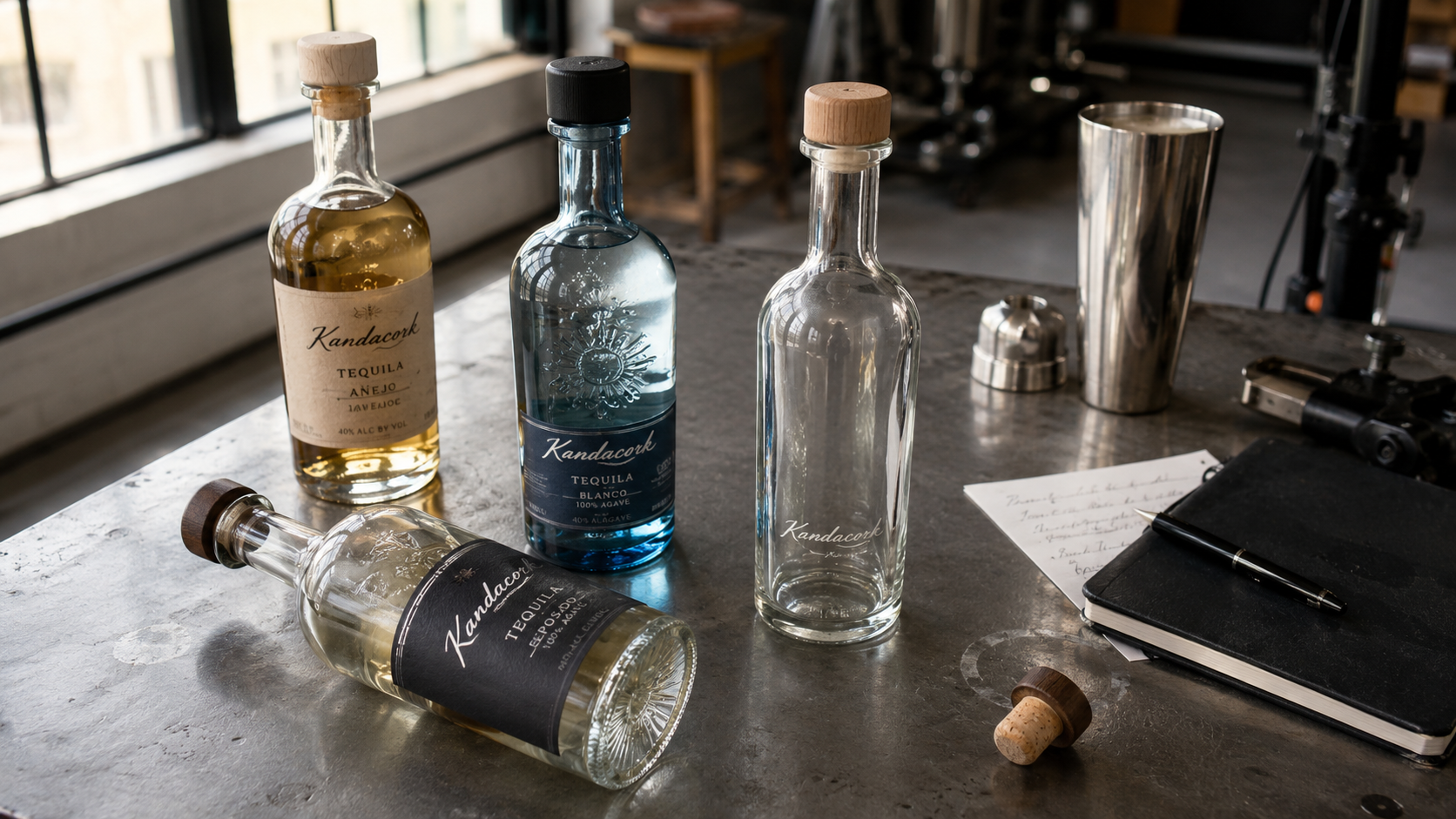
Liquor bottle closures should be selected based on both visual identity and technical fit. This guide helps buyers compare stoppers, caps, shanks, liners, finishes and sampling requirements for spirits packaging projects.
Liquor Bottle Stopper and Cap Basics
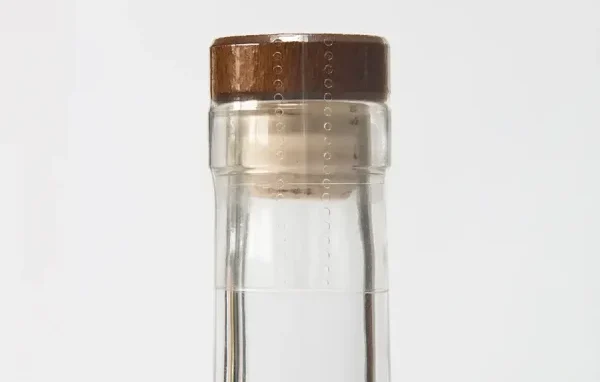
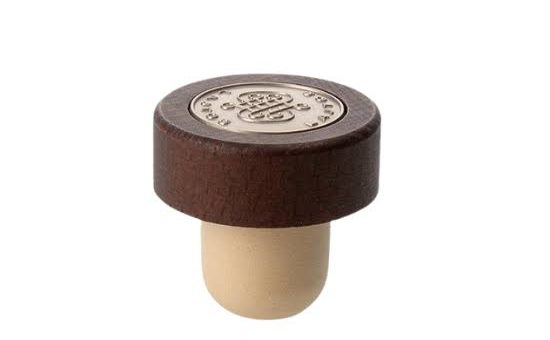
A liquor bottle stopper usually includes a visible decorative top and an inserted sealing shank. The top may be made from wood, aluminum, plastic, glass, zinc alloy, ceramic, or composite materials. The shank may use natural cork, micro-agglomerated cork, synthetic cork, or elastomer material depending on the bottle neck, filling line, alcohol content, and desired opening feel.
A liquor bottle cap usually seals through threads, liner compression, torque, or roll-on application. Common options include aluminum screw caps, plastic screw caps, ROPP caps, tamper-evident caps, and non-refillable caps. These closures are often chosen for high-volume filling, controlled opening torque, resealing convenience, and visible first-opening protection.
For a buyer, the closure decision should start with the bottle. Neck finish, bore diameter, sealing surface, glass tolerance, shoulder shape, and closure height all affect the final result. A closure that looks premium in a sample photo may still fail if the shank is too loose, the liner is not suitable for alcohol, the cap does not match the thread, or the closure cannot run smoothly on the bottling line.
Comparing Liquor Bottle Stoppers and Caps
| Closure Type | Best Used For | Main Advantages | Buyer Notes |
|---|---|---|---|
| Bar-top cork stopper | Whisky, rum, brandy, cognac, tequila, gin, premium spirits | Premium feel, reusable, highly customizable | Test shank fit, pull-out force, odor neutrality, and bottle neck tolerance |
| Screw cap | Vodka, gin, liqueurs, mini bottles, RTD spirits | Efficient, resealable, cost-effective, suitable for automation | Match liner, thread, torque, and alcohol compatibility |
| ROPP cap | Automated filling lines and tamper-evident spirits packaging | Secure sealing, machine-applied, visible first-opening protection | Requires compatible neck finish and capping equipment |
| Glass stopper | Luxury spirits, decanters, gift packs, limited editions | High-end appearance and strong visual differentiation | Requires precise fit, protective packing, and transport testing |
| Non-refillable closure | Export spirits, duty-free, premium brands, anti-counterfeit packaging | Supports brand protection and tamper control | Test pourer function, leakage, opening feel, and anti-refill performance |
| Capsule or shrink sleeve | Neck decoration and tamper-evident support | Improves shelf presentation and brand consistency | Match material, shrink performance, and bottle neck profile |
This comparison helps buyers narrow the right direction before requesting samples. Kandacork’s broader stopper and closure range supports brands that need standard components, semi-custom adjustments, or fully customized closure systems for new spirits launches and repeat bulk orders.
Best Closure by Use Case
| Use Case | Recommended Closure Option |
|---|---|
| Premium whisky bottle | Wooden bar-top cork stopper with capsule |
| High-volume vodka bottle | Aluminum screw cap or ROPP cap |
| Luxury decanter | Glass stopper or custom zinc alloy stopper |
| Export anti-counterfeit spirits | Non-refillable closure with tamper-evident structure |
| Mini spirits bottle | Small screw cap or compact ROPP cap |
| Gift-pack spirits | Bar-top cork stopper with custom top and shrink capsule |
| Craft rum or brandy | Wooden-top stopper with natural or micro-agglomerated cork |
| Modern gin packaging | Aluminum-top stopper, glass stopper, or printed screw cap |
| Liqueur bottle | Screw cap or ROPP cap with compatible liner |
| Private-label spirits | Standard or custom closure based on MOQ, budget, and brand level |
The final choice should always be confirmed through bottle matching, sample testing, and filling-line evaluation. Closure performance depends on the complete system: bottle, neck finish, cap or stopper, liner or shank, liquid, machine settings, and transport conditions.
Bar-Top Cork Stoppers for Premium Spirits
Bar-top cork stoppers are widely used for premium spirits because they create a strong opening ritual. The consumer does not simply unscrew a cap; they pull, hear, feel, and handle a branded object. This tactile experience is one reason bar-top stoppers remain popular for whisky, rum, brandy, cognac, tequila, mezcal, gin, liqueurs, and limited-edition spirits.
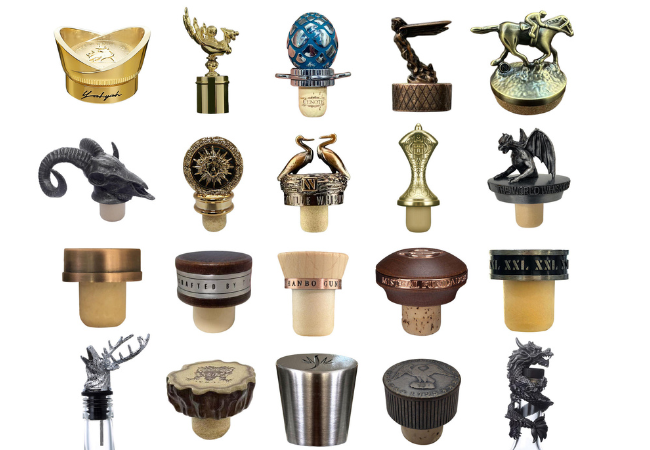
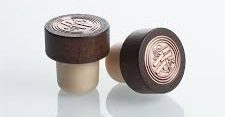
A bar-top stopper normally includes a decorative head and a sealing shank. Wood communicates craft, warmth, and tradition. Aluminum creates a clean and modern appearance. Zinc alloy and metal tops add weight and a luxury feel. Plastic tops can be cost-effective and suitable for high-volume private-label lines when shape, texture, and color are designed carefully.
Custom wooden bar-top stoppers are especially suitable for whisky, rum, tequila, gin, brandy, and gift packaging. Buyers can develop different head profiles, wood tones, logo methods, cork or synthetic shank combinations, and capsule pairings to match the bottle and label system.
For performance, the stopper should be tested with the actual bottle. Important checks include insertion force, pull-out force, shank compression, bottle neck tolerance, odor neutrality, leakage resistance, and long-term fit after storage. A stopper should feel secure during shipment but comfortable for the consumer to open.
Screw Caps for Liquor Bottles
Screw caps are practical, efficient, and widely used in spirits packaging. They are suitable for vodka, gin, liqueurs, flavored spirits, mini bottles, ready-to-drink products, and value-to-mid-range spirits lines. They are also useful when brands need fast filling, consistent application, and easy consumer resealing.
A screw cap may be made from aluminum or plastic. The liner is a critical part of the closure because it must work with the bottle sealing surface and the liquid inside. Spirits can contain alcohol, aroma compounds, botanicals, sugars, acids, colors, and flavoring ingredients, so the liner should be evaluated for sealing, swelling, odor, taste neutrality, and storage behavior.
Aluminum screw caps can be decorated with side printing, top printing, embossing, debossing, hot stamping, matte coating, gloss coating, metallic effects, and custom colors. Plastic screw caps can support cost efficiency, flexible color matching, and light weight for larger-volume programs.
For automated filling lines, buyers should confirm application torque, removal torque, liner compression, thread compatibility, cap height, and capping-head settings before mass production. A cap that is too loose can leak; a cap that is too tight can damage the opening experience.
ROPP Caps for Spirits Bottles
ROPP means roll-on pilfer-proof. A ROPP cap is usually an aluminum closure applied by a capping machine. During application, the cap is rolled onto the bottle neck and forms threads around the neck finish. Many ROPP caps include a tamper-evident band that breaks when the bottle is opened.
Custom ROPP closures are commonly used for vodka, gin, whisky, brandy, liqueurs, mini bottles, and other spirits lines that require machine-applied sealing and visible first-opening protection. They are especially useful for brands using automated production or seeking a clean, contemporary closure appearance.
ROPP performance depends on compatibility between the bottle neck finish, cap size, aluminum shell, liner, tamper band, capping head, and machine settings. Poor compatibility can cause loose caps, hard opening, broken bands, leakage, or inconsistent thread formation.
Before mass production, brands should test application torque, removal torque, inverted leakage, tamper-band break behavior, liner compression, and visual appearance after capping. Trial runs on the actual filling line are strongly recommended when the cap is used for a new bottle or new market.
Glass, Metal, and Luxury Stopper Options
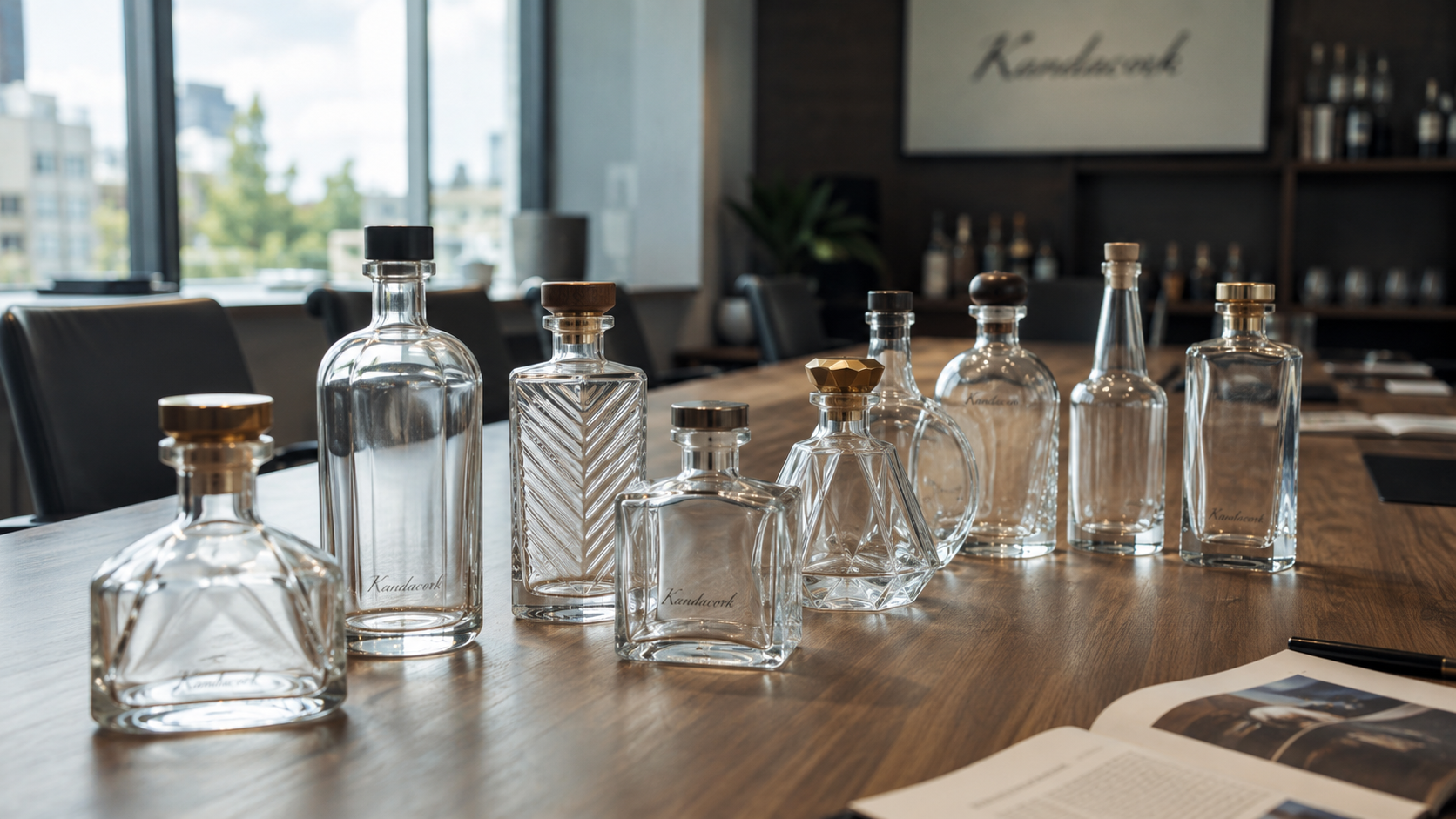
Glass stoppers are often selected for luxury spirits, decanters, collectible bottles, and limited-edition gift packaging. They create a high-end visual effect because the closure becomes part of the bottle’s sculptural identity. A glass stopper may be clear, colored, frosted, faceted, molded, or combined with another sealing component.
Metal and zinc alloy stoppers provide weight, a cold-touch feel, and strong perceived value. They work well for flagship whisky, tequila, gin, cognac, brandy, and limited-edition spirits where the closure is expected to support a luxury retail price.
Luxury stoppers require careful engineering. The fit between stopper and bottle neck must be consistent, and the packaging must protect the closure during export shipment. Buyers should review dimensional tolerance, sealing method, surface finish, scratch resistance, breakage risk, inner tray design, and carton protection before final approval.
Non-Refillable Closures for Brand Protection
Non-refillable closures help prevent bottles from being refilled after the original spirit is consumed. They are useful for premium spirits, duty-free channels, export markets, and regions where counterfeit alcohol creates brand, revenue, and consumer-safety risks.
A non-refillable closure may include an aluminum shell, plastic insert, pourer system, valve structure, tamper-evident band, and decorative outer component. The goal is to support controlled pouring, visible first-opening evidence, and stronger brand protection.
Kandacork develops non-refillable closures for spirits brands that need anti-refill protection across different bottle neck finishes, price tiers, and destination markets. These closures should be tested for pour speed, leakage, alcohol compatibility, opening feel, valve behavior, cap removal resistance, and consumer usability.
For premium brands, a non-refillable system can be combined with custom color, embossing, side printing, decorative capsules, and security-oriented packaging details.
Capsules and Shrink Sleeves for Neck Presentation
Capsules and shrink sleeves are often used with liquor bottle stoppers and caps to improve the neck appearance and support tamper-evident packaging. They are common for whisky, brandy, rum, gin, tequila, liqueurs, and gift spirits.
Common options include PVC shrink capsules, PET shrink capsules, aluminum capsules, polylaminate capsules, and printed sleeves. These components can be customized with brand colors, logos, tear strips, matte finishes, metallic effects, and decorative patterns.
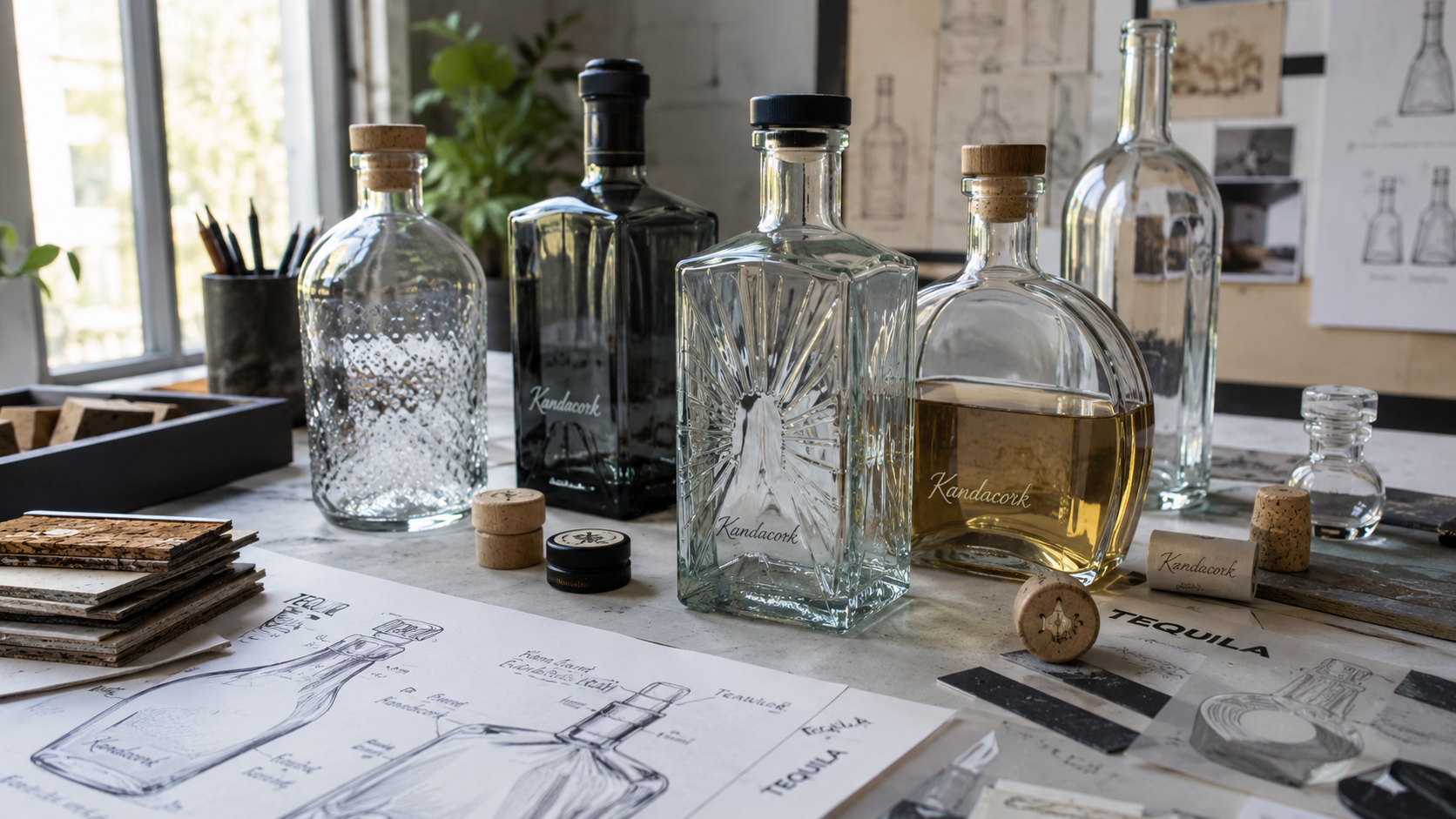
A capsule should match the bottle neck shape, closure height, shoulder profile, and shrinking equipment. Poor fit can cause wrinkles, uneven shrinkage, weak tear-strip performance, or a low-quality shelf appearance. When bottles, closures, and decoration are being developed together, brands can coordinate with custom spirits bottle development support to reduce mismatch between structure, closure fit, and final presentation.
Closure Selection by Spirit Type
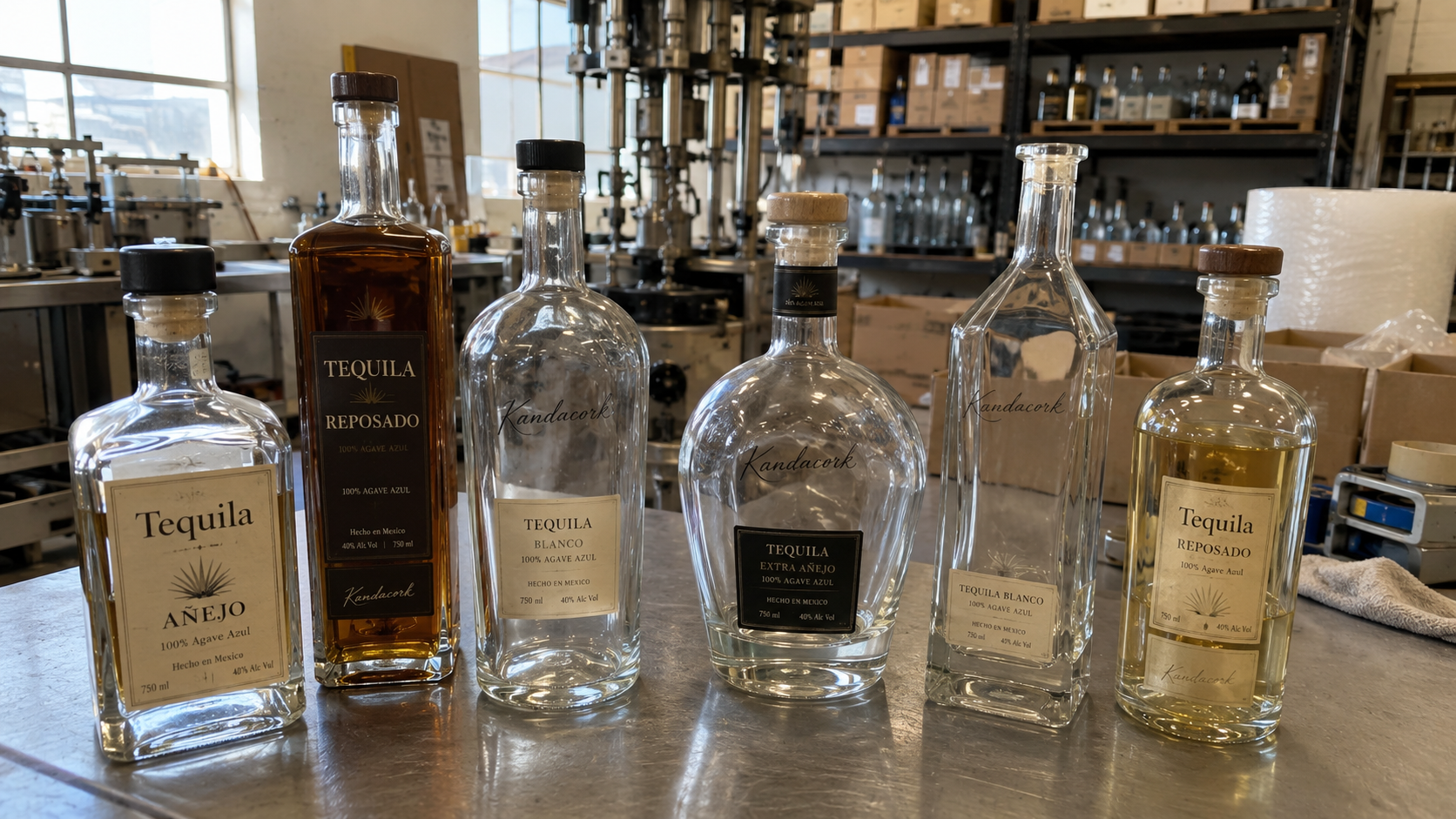
Whisky, rum, brandy, and cognac often benefit from bar-top cork stoppers, wooden-top stoppers, metal-top stoppers, and premium capsules. These closures support a traditional, crafted, and higher-value brand image.
Vodka and gin often use aluminum screw caps, ROPP caps, glass stoppers, or modern bar-top closures. Clean closure design can match minimalist bottle shapes, clear glass, frosted glass, and contemporary label systems.
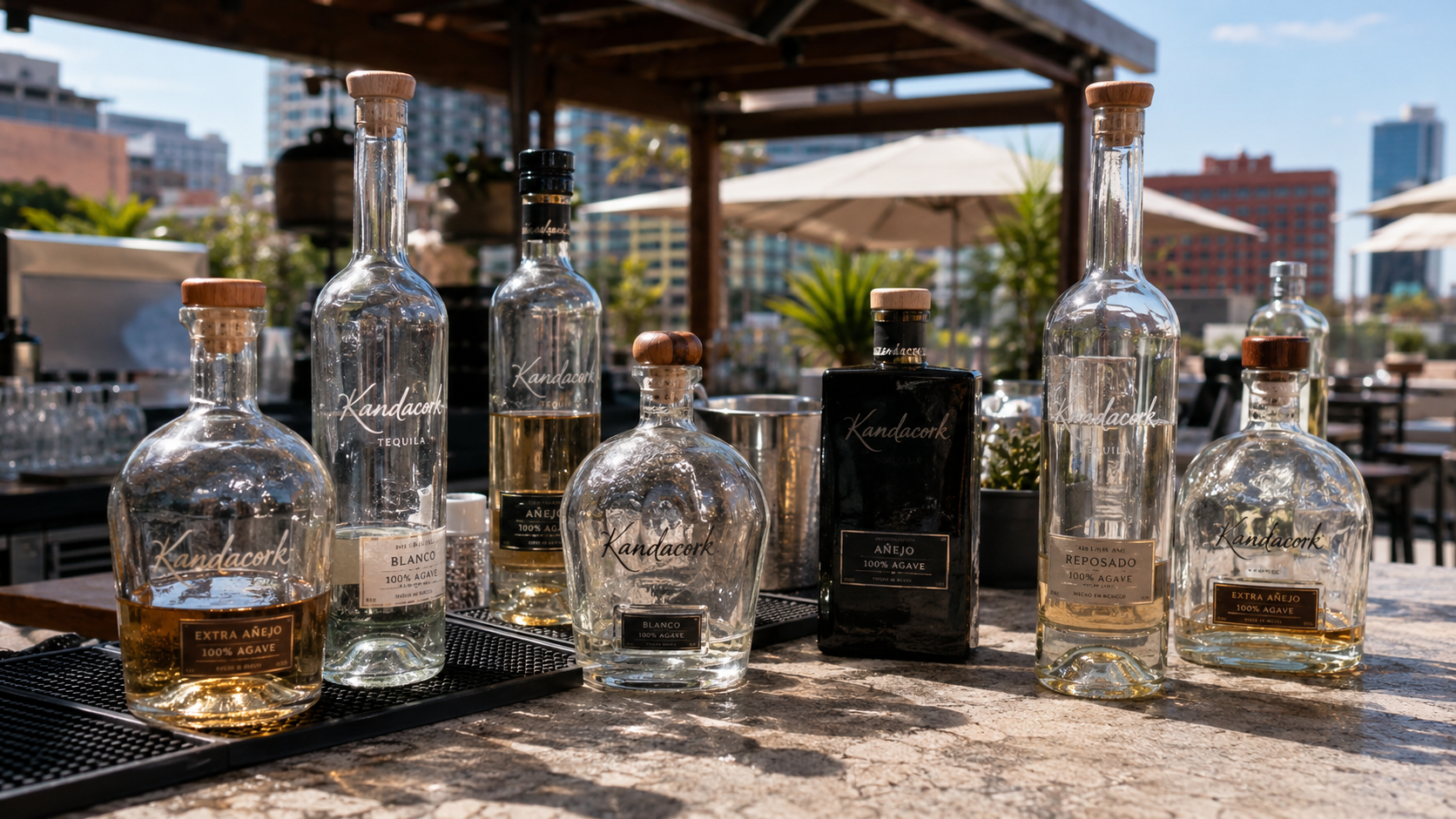
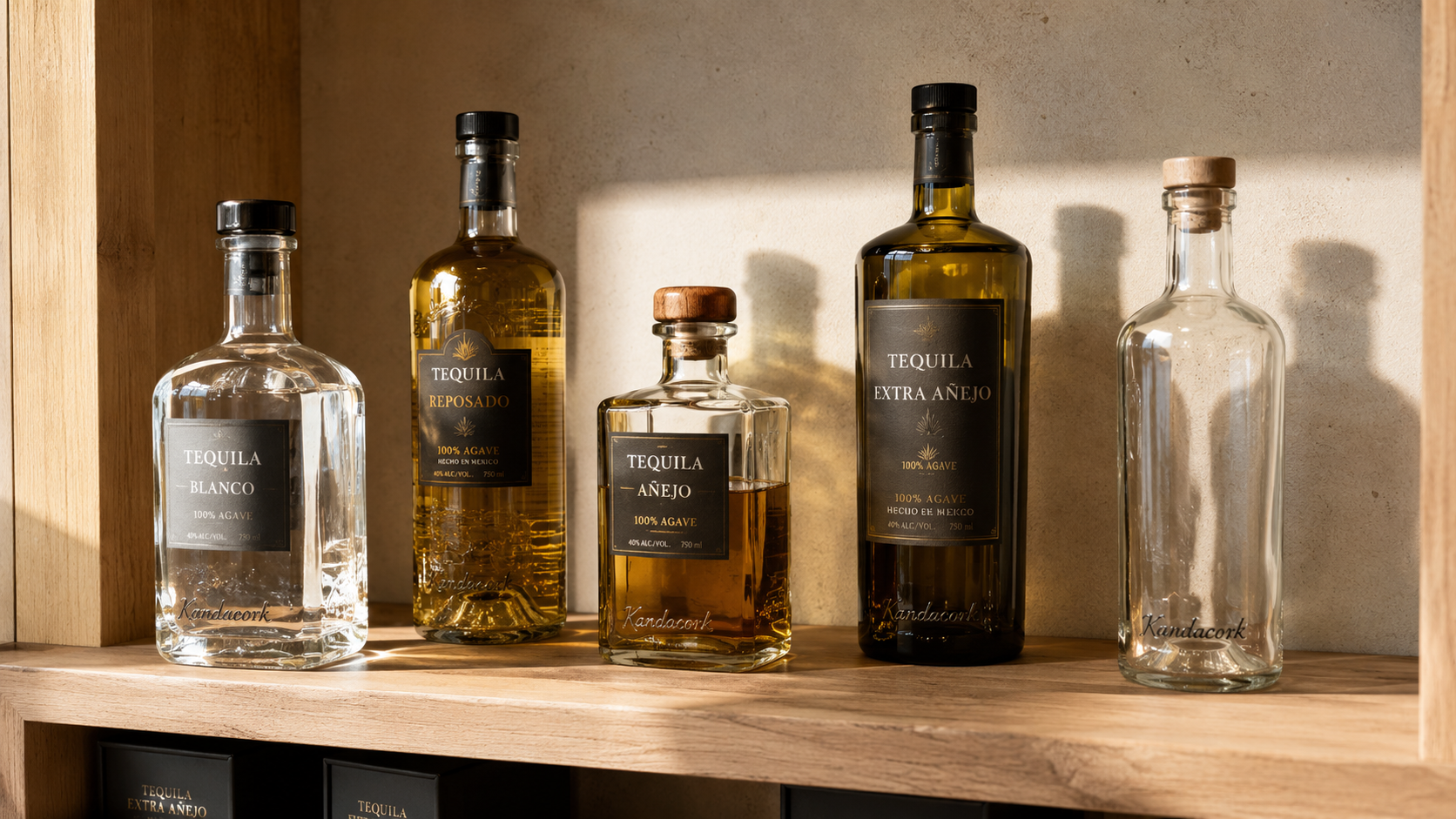
Tequila and mezcal brands often use bold closure designs, including wooden stoppers, aluminum tops, colored caps, synthetic shanks, and decorative capsules. Packaging in this category frequently communicates origin, craft, personality, and shelf impact.
Liqueurs and flavored spirits often use screw caps, ROPP caps, or cost-efficient custom closures. These products may require careful liner selection because sugar, acid, coloring, and flavoring ingredients can influence closure performance.
Mini bottles usually require small screw caps, small ROPP caps, or compact stoppers. The closure must be easy to apply, easy to open, and suitable for high-volume packing.
RTD spirits and cocktail products often need practical, resealable, and cost-controlled closures. Screw caps and tamper-evident caps are common choices for this category.
Closure Selection by Brand Positioning
Entry-level spirits usually need closures that balance cost, sealing reliability, and production speed. Plastic screw caps, aluminum caps, and standard closures are often suitable.
Mid-range spirits can use custom aluminum caps, printed screw caps, synthetic cork stoppers, and branded capsules. These options improve shelf appearance while keeping production efficient.
Premium spirits often use wooden bar-top stoppers, aluminum-top stoppers, glass stoppers, zinc alloy tops, or special-finish closures. These closures support stronger brand differentiation and a more memorable opening experience.
Luxury spirits may require custom-molded closures, heavy metal tops, engraved glass stoppers, special textures, anti-counterfeit features, and gift-box-ready packaging. For these projects, the closure should be developed together with the bottle, label, carton, and decoration plan. For bottle artwork, coating, printing, hot foil, badges, and surface effects, brands can coordinate closure decisions with bottle decoration and branding requirements.
Materials and Customization Options
Liquor bottle stoppers and caps can be customized through material selection, color, shape, finish, logo method, liner, shank, and packaging.
Common top materials include wood, aluminum, plastic, glass, zinc alloy, ceramic, and composite materials. Common sealing and liner materials include natural cork, micro-agglomerated cork, synthetic cork, elastomer shanks, PE liners, EPE liners, Saranex liners, TPE liners, and other alcohol-compatible structures.
Common decoration methods include logo printing, laser engraving, hot stamping, embossing, debossing, side printing, top printing, PMS color matching, wood staining, anodized aluminum, matte coating, gloss coating, metallic finish, and custom mold development.
The best customization choice depends on brand image, order quantity, budget, bottle design, production timeline, and target market. A premium whisky bottle may need a wooden bar-top stopper with laser engraving, while a vodka brand may prefer an aluminum screw cap with clean side printing and metallic finish.
For brands that need bottle and closure development together, Kandacork Glass bottle platforms can help align bottle shape, neck finish, weight, decoration area, and closure fit as one packaging system.
Technical Information Needed Before Bulk Ordering
A smooth closure project starts with accurate technical information. Before requesting a quotation or sample, buyers should prepare the details needed for fit, sealing, decoration, and production planning.
Recommended information includes:
- Bottle drawing or physical bottle sample
- Bottle neck finish
- Closure diameter and height
- Target closure type
- Spirit type and alcohol content
- Filling temperature
- Storage and transport conditions
- Capping or insertion equipment
- Pull-out force requirement for stoppers
- Application torque and removal torque for caps
- Tamper-evident requirement
- Non-refillable requirement
- Logo artwork
- Decoration method
- Color reference or PMS code
- Target order quantity
- Sample quantity
- Export carton and pallet requirements
- Destination market
Providing this information helps the supplier recommend suitable liquor bottle stoppers and caps more accurately. It also reduces sampling delays and lowers the risk of mismatch between closure, bottle, and filling line.
How Kandacork Reduces Closure Mismatch Risk
Closure mismatch is one of the most common problems in spirits packaging. A cap may look correct but fail during torque testing. A stopper may fit one bottle sample but feel too loose or too tight across production bottles. A capsule may match the closure but wrinkle after shrinking because the bottle shoulder or neck profile was not considered.
Kandacork reduces mismatch risk by reviewing bottle drawings, physical bottle samples, neck finish dimensions, target closure style, filling-line requirements, decoration expectations, and export packing needs before sampling.
For stopper projects, the review may include top diameter, shank material, shank diameter, insertion depth, pull-out force, and odor neutrality. For cap projects, it may include cap size, liner type, thread compatibility, torque performance, tamper-band function, and capping-machine suitability.
This process helps buyers avoid late-stage packaging problems and supports more stable results from first sample to repeat bulk orders.
Sample Approval and Testing Process
For custom spirits packaging, sample testing should happen before mass production. A visual match is not enough. The closure must be tested for fit, seal, usability, filling-line compatibility, and transport performance.
A practical approval process may include:
- Bottle and neck finish review
- Closure drawing confirmation
- Material and decoration confirmation
- First sample production
- Visual inspection
- Fit and insertion test
- Leakage and inverted storage test
- Pull-out force test for stoppers
- Torque test for screw caps and ROPP caps
- Tamper-evident band test
- Filling-line trial
- Transport simulation
- Final sample approval
- Mass production confirmation
Testing conditions should be agreed according to the bottle, closure, product, and market. Leakage testing may include upright storage, inverted storage, side-position storage, vibration simulation, or temperature variation. Torque testing may include application torque, removal torque, and re-closure performance. Stopper testing may include insertion force, pull-out force, dimensional stability, and sensory review.
For transport performance, packaging teams often refer to recognized distribution-testing frameworks such as ASTM D4169 when designing shipping simulations for cartons, pallets, and export routes. The exact method should be adapted to the closure type, bottle weight, carton design, and destination market.
Quality, Compliance, and Food-Contact Considerations
Spirits closures may include components that contact the liquid, bottle mouth, or product environment. Buyers should pay attention to food-contact material suitability, odor neutrality, alcohol compatibility, and material traceability.
In the United States, the FDA explains that food-contact substances can include food packaging and its components. For spirits packaging, this makes liner, insert, shank, coating, adhesive, and printing-material selection important when there is direct or indirect contact risk.
In the European Union, food-contact materials are guided by safety and inertness principles under the EU framework for food contact materials. For buyers, the practical concern is whether closure materials could affect product safety, composition, odor, or taste.
For distilled spirits sold in the U.S. market, the Alcohol and Tobacco Tax and Trade Bureau notes that tamper-evident closure requirements apply to distilled spirits bottles and containers. This is especially relevant for brands planning regulated retail, export distribution, or duty-free channels.
Quality control for liquor bottle stoppers and caps may include material inspection, dimensional inspection, visual appearance checks, color consistency review, logo position inspection, surface finish inspection, liner inspection, cork or shank fit testing, pull-out force testing, torque testing, leakage testing, inverted storage testing, odor review, tamper-evident function testing, packing inspection, and batch traceability documentation.
Quality systems built around repeatable processes, corrective actions, and continual improvement are often aligned with principles found in ISO 9001 quality management. For buyers, the key expectation is not only that one sample works, but that the approved result can be reproduced consistently in bulk production and repeat orders.
Measurable Testing Points for Custom Closures
| Test Item | What It Checks | Why It Matters |
|---|---|---|
| Dimensional inspection | Diameter, height, shank size, liner fit, thread match | Confirms closure-to-bottle compatibility |
| Pull-out force test | Opening force for bar-top stoppers | Prevents loose stoppers or difficult opening |
| Application torque test | Force used to apply screw caps or ROPP caps | Supports stable capping-line performance |
| Removal torque test | Force required for first opening | Improves consumer usability |
| Leakage test | Seal performance in upright, inverted, or side-position storage | Reduces product loss and complaints |
| Liner compression check | Contact between liner and bottle sealing surface | Supports sealing reliability |
| Tamper-band test | Break behavior after first opening | Confirms visible tamper evidence |
| Odor and sensory review | Possible odor or taste impact | Protects spirit quality and brand reputation |
| Decoration adhesion test | Ink, foil, coating, or logo durability | Reduces scratching, peeling, and visual defects |
| Packing inspection | Inner trays, bags, cartons, pallets | Prevents transport damage and surface defects |
These testing points should be adapted to the actual bottle and closure design. A high-end glass stopper, a wooden bar-top cork, an aluminum screw cap, and a non-refillable closure all require different evaluation methods.
Common Closure Problems and How to Prevent Them
Leakage often happens when the closure, liner, shank, or bottle neck finish does not match correctly. The solution is to test the closure with the actual bottle and liquid before production.
Loose stoppers may result from incorrect shank diameter, bottle neck tolerance variation, insufficient compression, or unsuitable material. Pull-out force testing helps confirm whether the stopper is secure but still easy to open.
Caps that are too tight or too loose may result from incorrect torque settings, liner selection, cap dimensions, or thread compatibility. Application torque and removal torque should be tested during sampling.
Poor decoration quality may result from unsuitable surface treatment, weak ink adhesion, poor artwork conversion, or insufficient protection during packing. Decoration samples should be checked under normal lighting and retail display conditions.
Transport damage may result from inadequate inner trays, loose packing, weak cartons, or poor palletization. Export packaging should protect closure surfaces from scratches, dents, dust, moisture, and compression.
Supplier Capabilities for Custom Closure Projects
A custom liquor bottle closure supplier should do more than provide a product list. The supplier should help align design, material, function, decoration, testing, production, and logistics.
Useful supplier capabilities include closure style recommendation, bottle and neck finish review, material selection support, liner and shank recommendation, logo decoration support, color matching, custom mold development, sample production, fit and sealing test support, bulk production, export packaging, repeat-order consistency, and documentation support.
Kandacork supports custom closure development for spirits brands, glass bottle distributors, packaging importers, private-label spirits companies, and distilleries. Product options include bar-top cork stoppers, wooden stoppers, aluminum-top stoppers, plastic-top stoppers, glass stoppers, screw caps, ROPP caps, capsules, shrink sleeves, and non-refillable closures.
For buyers managing broader packaging portfolios beyond spirits, Kandacork’s broader glass packaging programs can support bottles, jars, matched closures, decoration-ready surfaces, and export packaging coordination across multiple product categories.
Kandacork Closures for Bulk Spirits Packaging
Kandacork helps buyers develop liquor bottle stoppers and caps that match both brand identity and technical packaging needs. The company supports closure projects for whisky, vodka, gin, rum, tequila, mezcal, brandy, cognac, liqueurs, mini bottles, RTD spirits, gift packs, and private-label spirits.
For custom projects, buyers can send bottle drawings, physical bottle samples, logo files, material preferences, target quantity, decoration requirements, filling-line information, and destination market details. Kandacork can then recommend suitable closure structures, materials, finishes, and sample options.
Custom closure options include bar-top cork stoppers, wooden-top stoppers, aluminum-top stoppers, plastic-top stoppers, glass stoppers, zinc alloy closures, screw caps, ROPP caps, non-refillable closures, capsules, shrink sleeves, custom decorative tops, and custom color and logo finishes.
The goal is to help buyers create packaging that seals reliably, looks professional, supports brand recognition, and performs consistently from sampling to repeat bulk orders.
FAQ
What is the best stopper for liquor bottles?
The best stopper depends on the bottle neck, spirit type, filling process, and brand positioning. Premium whisky, rum, brandy, cognac, tequila, and gin often use bar-top cork stoppers, while vodka, liqueurs, mini bottles, and high-volume spirits often use screw caps or ROPP caps.
What is the difference between a liquor bottle stopper and a cap?
A liquor bottle stopper usually seals by inserting a cork, synthetic cork, or elastomer shank into the bottle neck. A cap usually seals through threads, torque, liner compression, or roll-on application. Stoppers are often selected for premium presentation, while caps are often selected for efficiency and tamper evidence.
Are screw caps suitable for premium spirits?
Screw caps can be suitable for premium spirits when the material, liner, decoration, and bottle design are carefully selected. Aluminum screw caps with embossing, printing, anodized finishes, or custom colors can create a clean and premium appearance while supporting efficient filling-line performance.
What is a ROPP cap for spirits bottles?
A ROPP cap is a roll-on pilfer-proof aluminum closure applied by a capping machine. It forms threads around the bottle neck and often includes a tamper-evident band. ROPP caps are commonly used for spirits that require secure sealing, automation, and visible first-opening protection.
Can liquor bottle stoppers be customized with a logo?
Liquor bottle stoppers can be customized with logo printing, laser engraving, hot stamping, embossing, debossing, metal medallions, wood staining, custom colors, and special surface finishes. Caps can also be customized with top printing, side printing, embossing, anodizing, and metallic effects.
What information is needed for a custom closure quote?
A supplier usually needs the bottle drawing or sample, neck finish, closure type, material preference, logo artwork, decoration method, order quantity, spirit type, alcohol content, filling-line information, packaging requirements, and destination market.
How can leakage in liquor bottle packaging be prevented?
Leakage prevention starts with matching the closure to the bottle neck. Buyers should test liner compression, cork or shank fit, pull-out force, application torque, removal torque, and inverted storage performance. Samples should be tested with the actual bottle and liquid before mass production.
Can one closure design be used across multiple bottle sizes?
One closure design can sometimes be used across multiple bottle sizes if the neck finish and closure specifications are compatible. Many spirits brands use one closure style across mini, standard, and gift bottles, but every bottle size should be tested before production approval.
What closures are best for anti-counterfeit spirits packaging?
Non-refillable closures, tamper-evident ROPP caps, security capsules, and custom decorated closures are commonly used for anti-counterfeit spirits packaging. The best option depends on the market, bottle design, price level, and required protection level.
How do I request samples for custom liquor bottle stoppers and caps?
To request samples, prepare your bottle drawing or physical bottle sample, neck finish, target closure type, logo artwork, decoration requirements, spirit type, and estimated order quantity. Kandacork can review these details and recommend suitable sample options for testing.
Conclusion
Custom liquor bottle stoppers and caps do more than close a bottle. They protect the spirit, support consumer trust, improve shelf presentation, and communicate brand value from the first touch.
For spirits brands, the right closure should balance sealing performance, premium appearance, tamper evidence, filling-line compatibility, cost control, export packaging reliability, and repeat-order consistency. A strong closure program begins with the bottle neck, continues through sample testing, and ends with stable bulk production.
Send your bottle drawing, physical bottle sample, logo artwork, closure concept, destination market, and estimated order quantity to request samples and a bulk quotation for custom liquor bottle stoppers and caps.