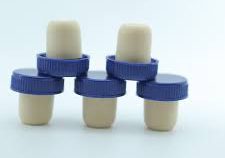
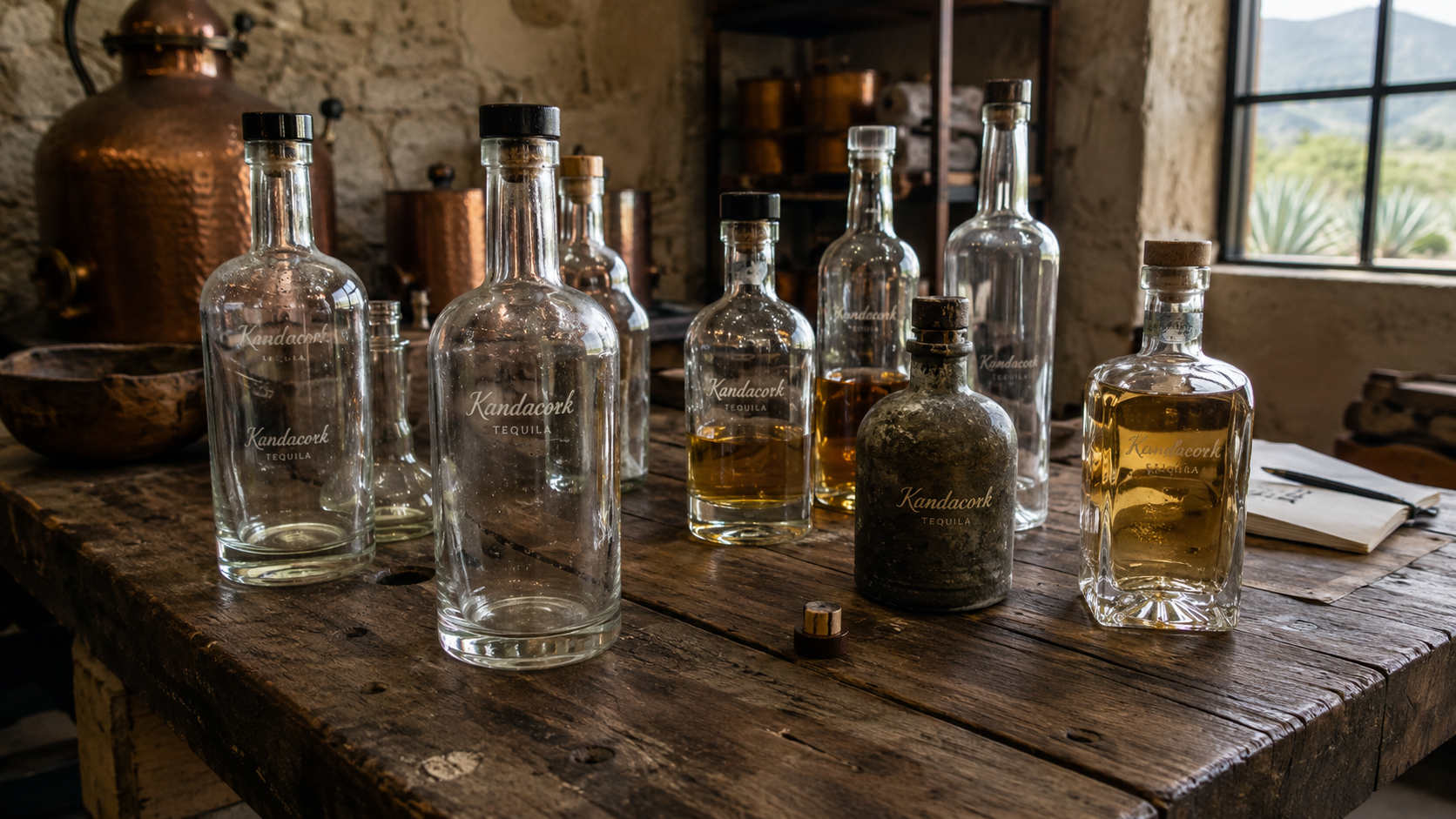
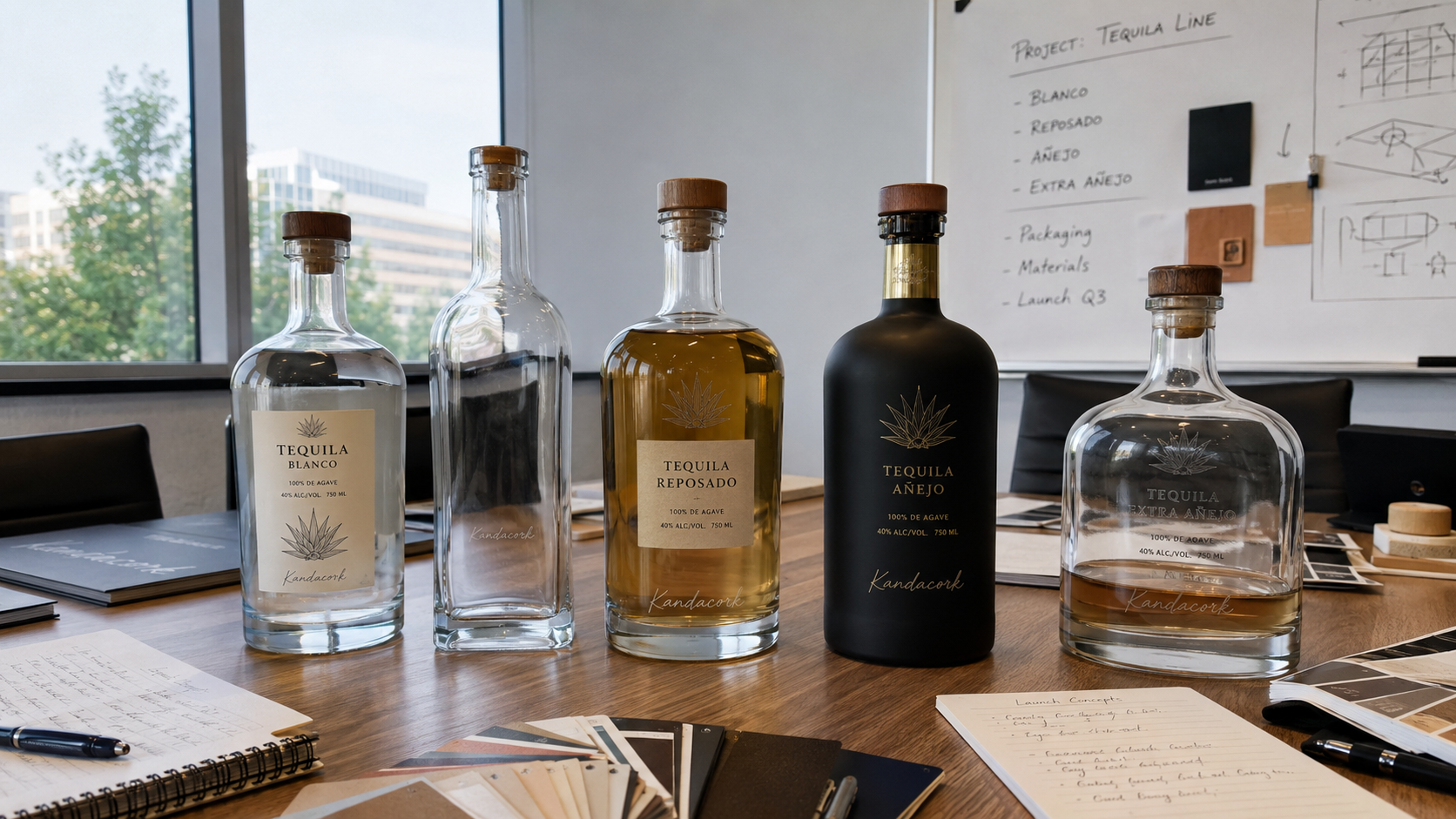
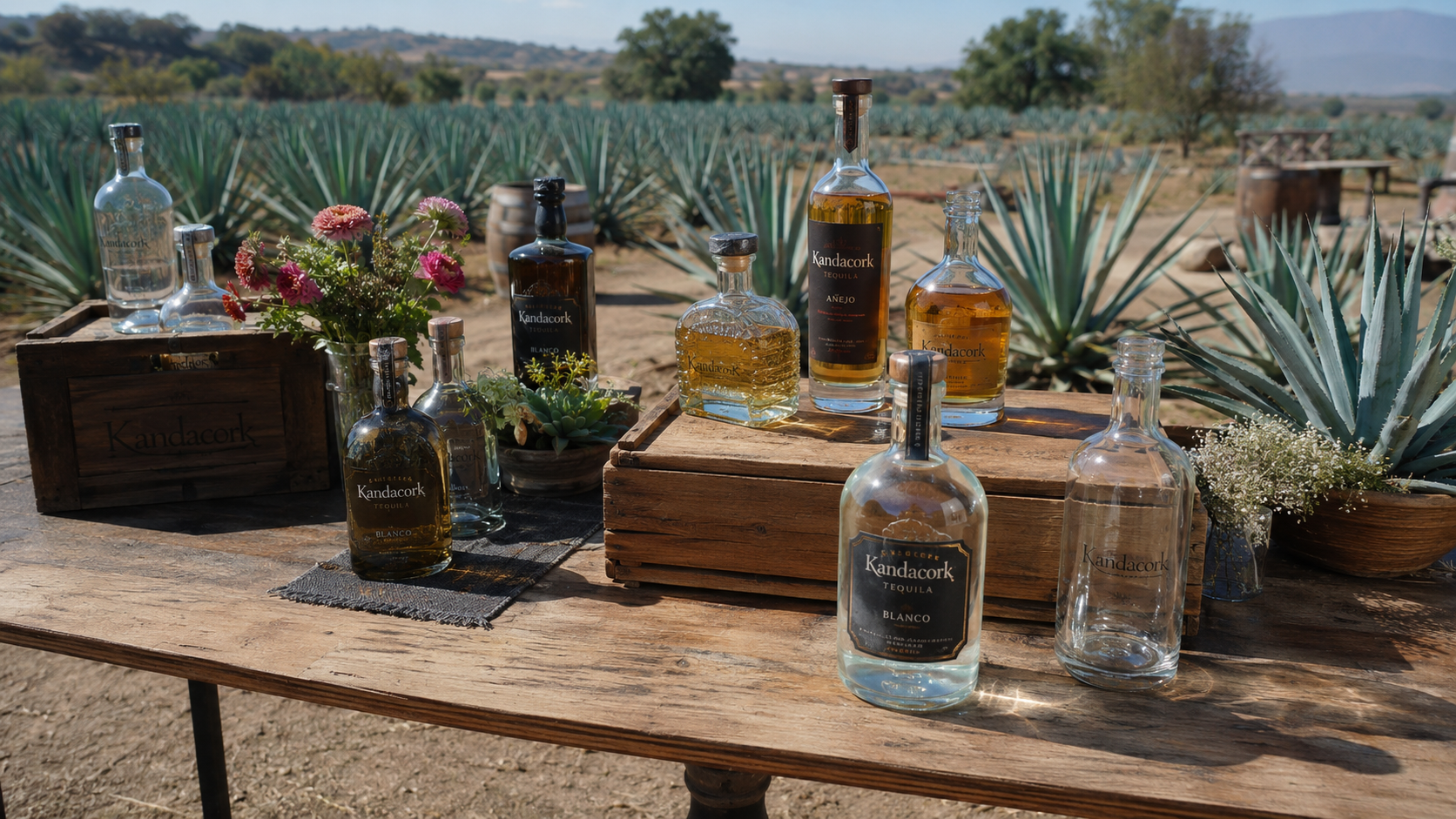
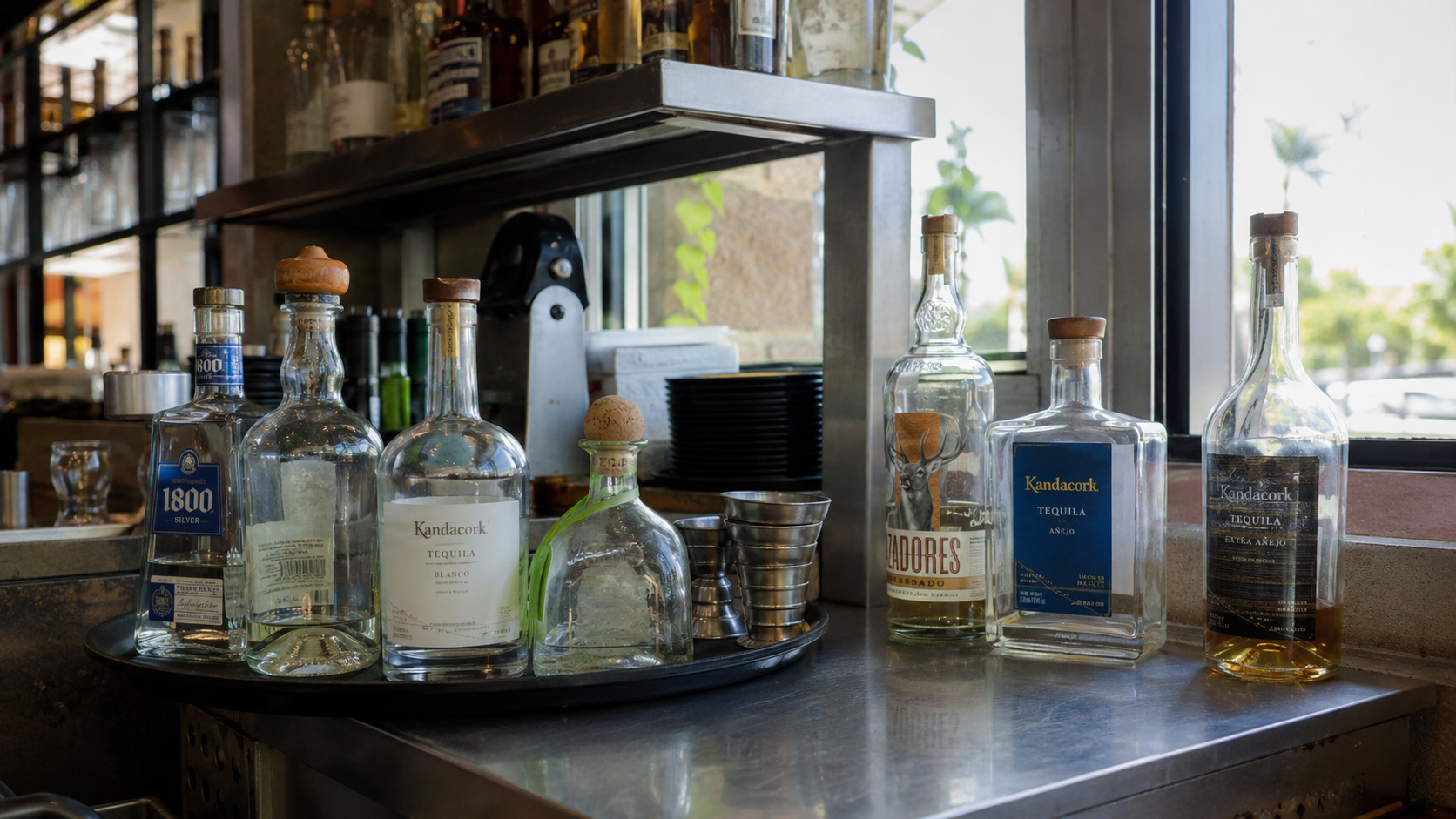
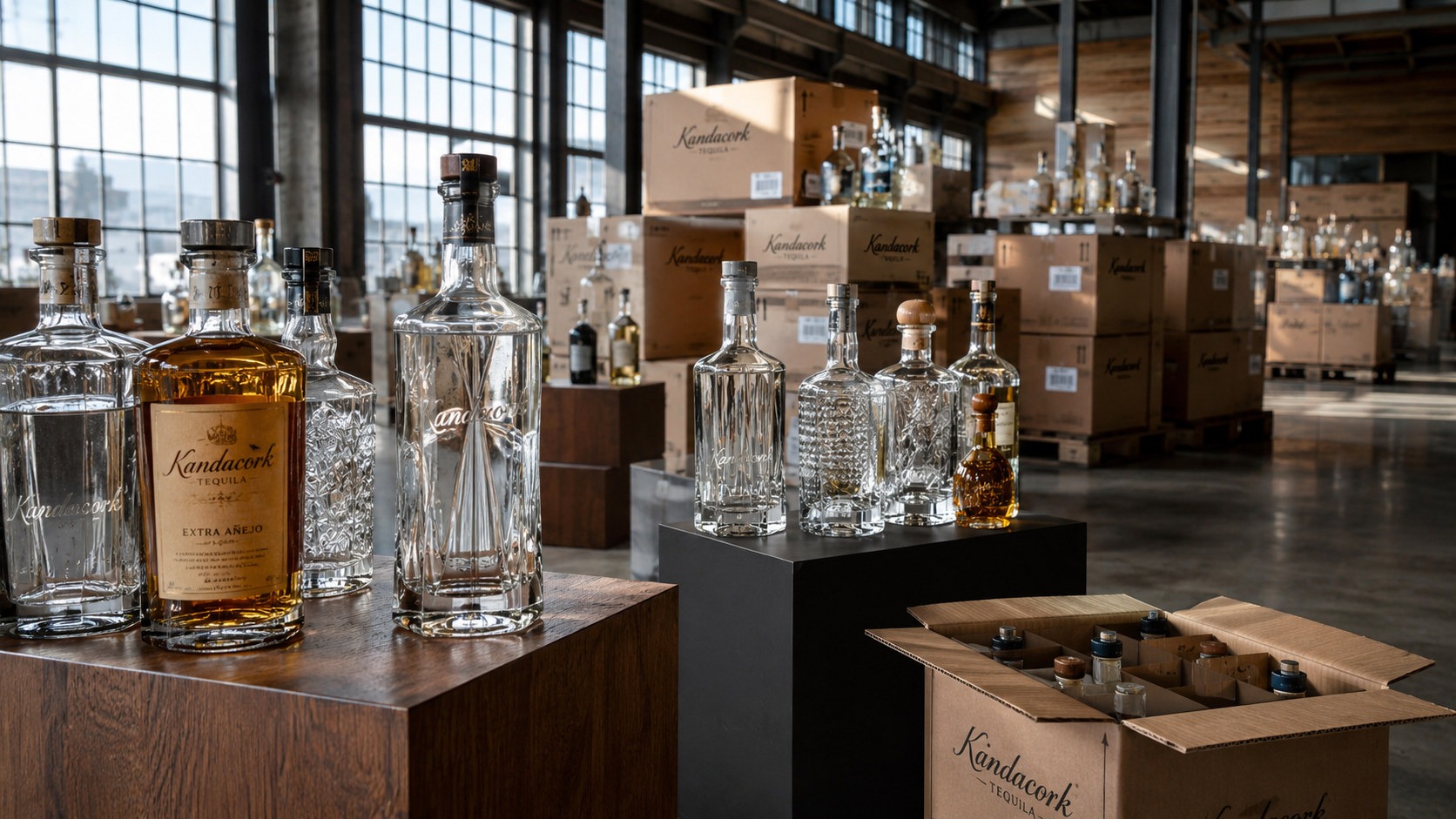
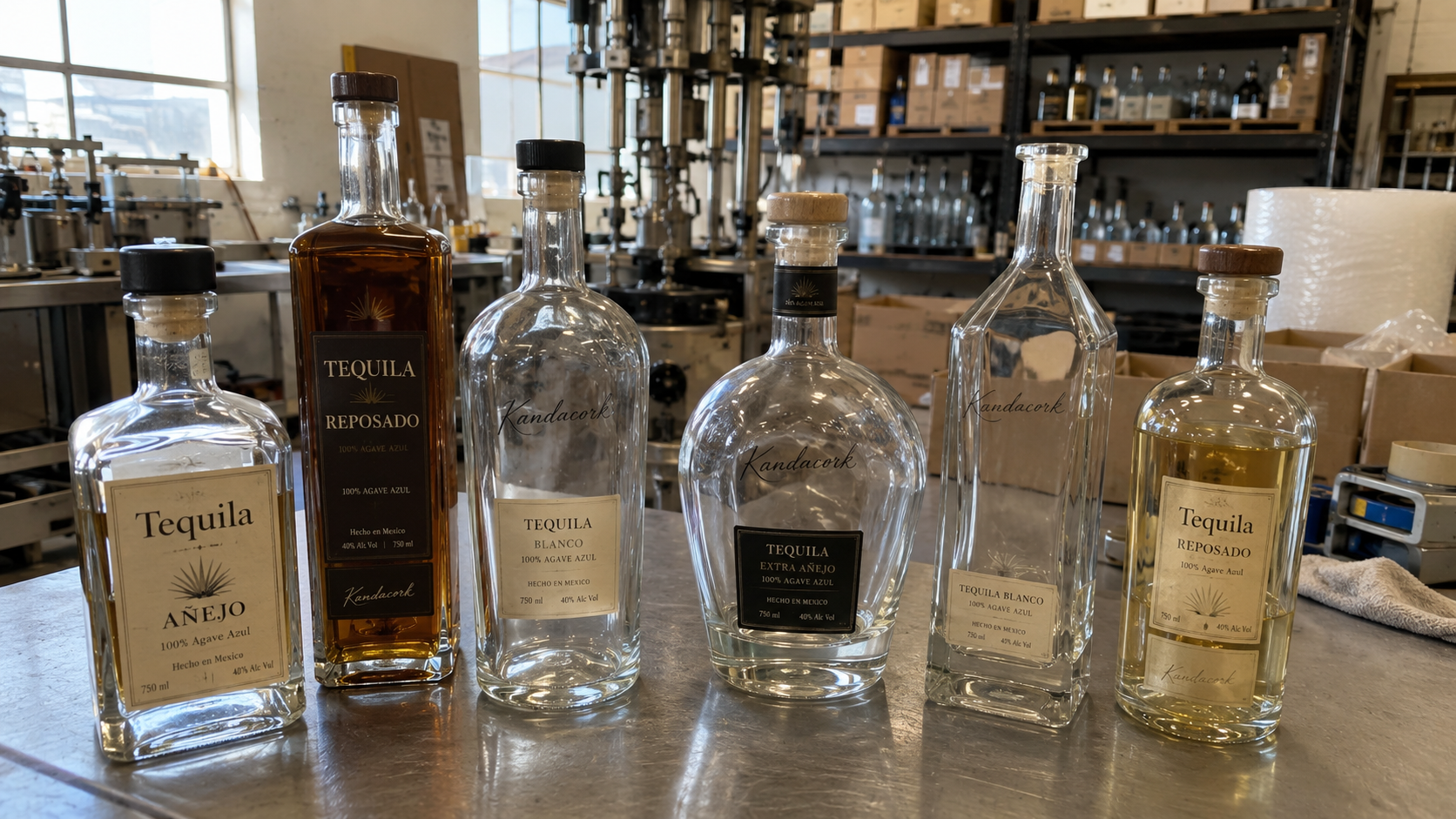
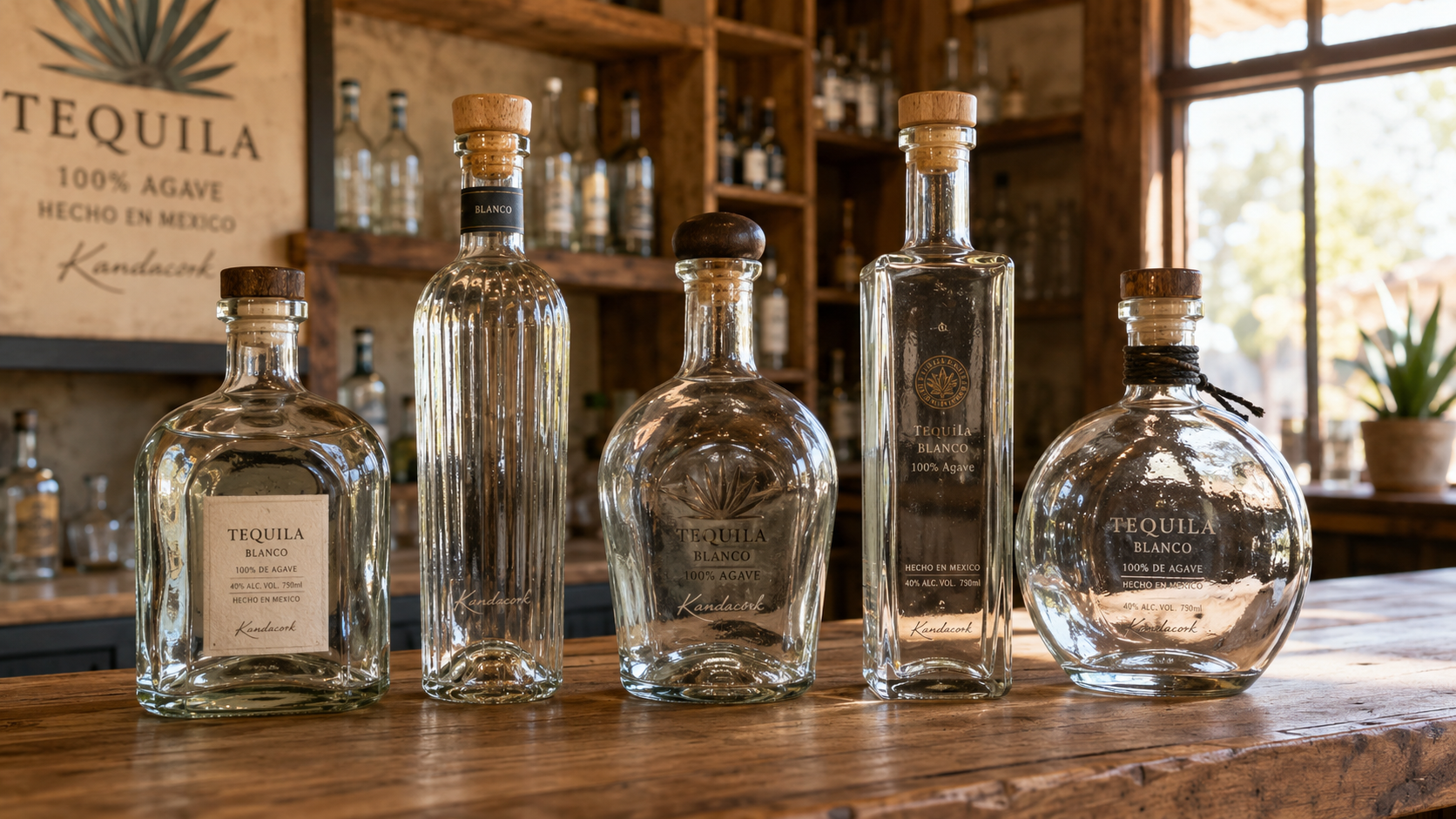
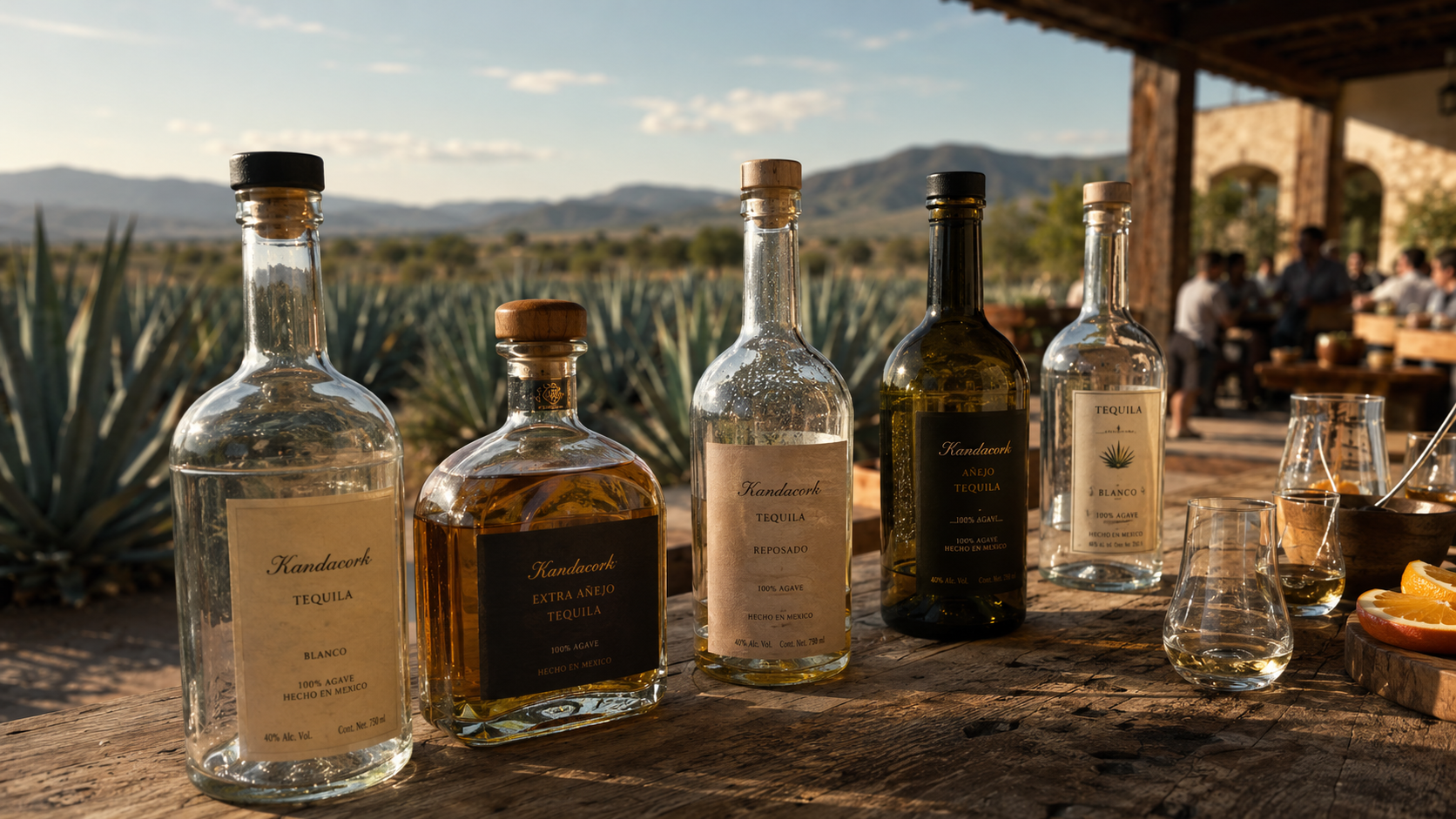
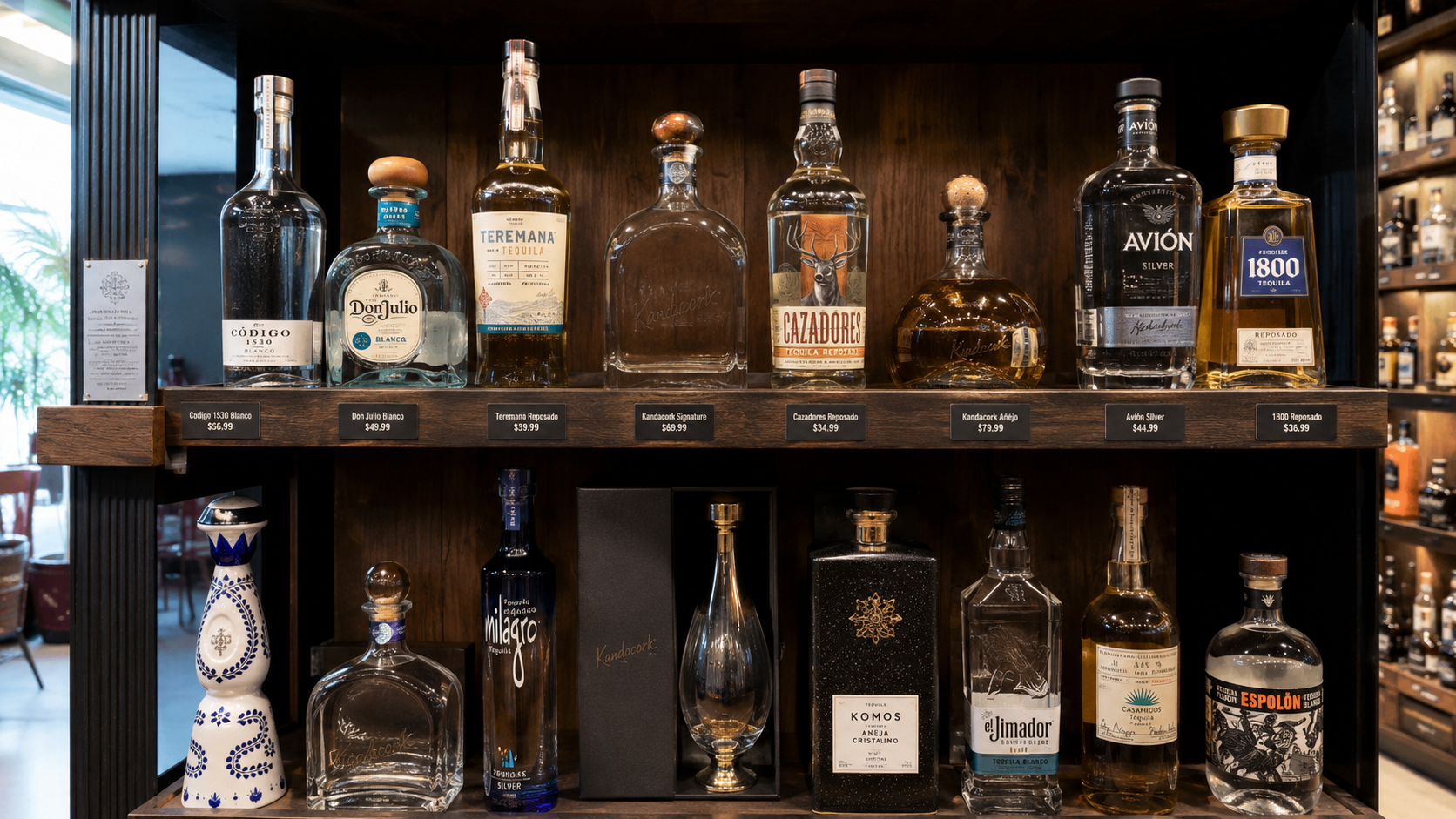
Wooden stoppers are best for spirits brands that want a natural, craft, heritage, or barrel-aged look. Metal stoppers are better for premium bottles that need weight, shine, luxury cues, and strong shelf impact. Both can seal well when paired with the right cork or synthetic shank and tested against the bottle neck.
For packaging buyers, the choice between wooden stoppers vs metal stoppers is not simply about appearance. The stopper affects how the bottle feels in the hand, how the brand is perceived on shelf, how the closure performs during filling and shipping, and how confidently the consumer opens the bottle.
A craft bourbon brand may choose dark stained wood with laser engraving to echo oak barrels and small-batch production. A premium vodka brand may choose brushed aluminum for a clean, modern identity. A luxury tequila brand may choose a plated metal stopper to match a heavy-base bottle and gift box.
The right stopper should match your spirit category, bottle structure, brand positioning, retail price, target market, filling process, and sustainability goals.
Wooden Stoppers vs Metal Stoppers: Short Answer
Wooden stoppers are ideal when the brand needs warmth, natural texture, craft character, and a premium but approachable image. They are widely used for whisky, bourbon, rum, brandy, craft gin, mezcal, herbal liqueurs, and limited-edition spirits with an artisanal story.
Metal stoppers are ideal when the brand needs weight, precision, durability, and stronger luxury impact. They are often used for premium whisky, high-end vodka, modern gin, tequila, collector bottles, gift packs, and travel retail products.
The stopper head creates the visual and tactile impression. The shank creates the functional seal. That is why the final decision should consider cap material, shank material, bottle bore, dimensional tolerance, insertion force, extraction force, coating quality, surface durability, and batch traceability.
What Are Wooden Stoppers?
Wooden stoppers are bar-top or T-top closures made with a wooden cap attached to a natural cork, micro-agglomerated cork, or synthetic shank. The wood cap is the visible branding surface, while the shank fits inside the bottle neck and provides the compression seal.
For spirits brands that want a warm, tactile, and premium closure finish, wooden bar-top stoppers are often a strong choice. They can be produced with natural wood tones, stained finishes, painted surfaces, laser engraving, debossed logos, side printing, or decorative inserts.
Common wood options may include beech, oak, ash, maple, walnut, birch, rubberwood, and engineered wood. The best choice depends on target appearance, unit cost, decoration method, supply stability, and documentation requirements.
Wood works especially well when the brand story is connected to barrels, aging, nature, provenance, botanicals, craft production, or handmade value. This is why wooden bottle stoppers are common in whisky, rum, brandy, gin, mezcal, and liqueur packaging.
Advantages of Wooden Stoppers
Wooden stoppers offer a warm and natural hand feel. Unlike highly polished metal or standard plastic, wood gives the closure an organic touch that can make the bottle feel crafted and intentional.
They also provide strong visual flexibility. A light natural wood stopper can support a clean botanical gin. A dark stained stopper can suit an aged rum or whisky. A matte black wooden cap can help a modern spirits brand achieve a more contemporary look without losing tactile warmth.
Wooden stoppers can also support responsible sourcing stories when the buyer specifies suitable documentation. For example, the Forest Stewardship Council chain-of-custody system is commonly used to support traceability claims for certified forest-based materials.
From a commercial perspective, wooden stoppers are often practical for core premium SKUs. They can create a custom premium look without always requiring the same tooling investment as complex die-cast or plated metal caps.
Limitations of Wooden Stoppers
Wood is a natural material, so variation must be managed. Grain pattern, color tone, density, and absorption can vary between batches. Buyers should define acceptable color range, grain visibility, coating gloss, logo position, dimensional tolerance, and surface smoothness during sample approval.
Wood also requires proper finishing. Poor coating can lead to swelling, staining, rough texture, uneven gloss, or weak logo definition. For high-volume projects, the supplier should validate moisture control, sanding consistency, coating adhesion, incoming material inspection, and batch-to-batch stability.
A wooden cap may not create the same heavy luxury feeling as zinc alloy, stainless steel, or aluminum. If the goal is a high-weight, collector-style closure for an ultra-premium release, metal may deliver stronger perceived value.
What Are Metal Stoppers?
Metal stoppers are bar-top closures made with aluminum, zinc alloy, stainless steel, or another metal cap attached to a cork or synthetic shank. The metal head gives the closure weight, structure, shine, and a premium visual signature.
For brands that need a more substantial hand feel, custom metal stoppers can be specified with brushed, polished, plated, anodized, painted, engraved, embossed, debossed, knurled, or inlaid finishes.
Common finish directions include silver, gold, copper, bronze, black, gunmetal, rose gold, matte aluminum, and chrome-like effects. Metal can also be paired with enamel, medallions, textured sidewalls, or custom sculpted forms.
In the wooden stoppers vs metal stoppers decision, metal is often chosen when the closure needs to feel substantial and highly premium. A heavy metal stopper can reinforce a thick glass base, luxury label, embossed carton, or collector bottle design.
Advantages of Metal Stoppers
Metal stoppers communicate weight and durability quickly. When a consumer opens the bottle, the cool touch and heavier hand feel can reinforce the impression of quality.
Metal also offers excellent decoration potential. A brand can use plating, engraving, embossed crests, debossed typography, textured edges, or color-matched finishes to create a distinctive closure. This is useful for limited editions, luxury gift boxes, travel retail launches, and high-margin SKUs where visual differentiation matters.
Metal stoppers often suit modern brand codes. Premium vodka, contemporary gin, luxury tequila, and high-end whisky brands frequently use metal closures because the material supports precision, structure, and strong shelf presence.
Limitations of Metal Stoppers
Metal stoppers usually involve higher cost when they require custom molds, die-casting, CNC processing, plating, polishing, complex finishing, or multi-part assembly. They may also add shipping weight and increase packaging cost.
Surface quality must be controlled carefully. Plated, painted, or polished metal caps should be tested for scratching, fingerprints, corrosion resistance, color consistency, edge smoothness, coating adhesion, and performance during filling, capping, packing, and transport.
Sustainability claims also need careful wording. Metal can support recyclability messaging, but many premium spirits stoppers are mixed-material components. A metal head attached to a cork or synthetic shank may require separation for ideal recycling.
Wooden Stoppers vs Metal Stoppers: Comparison Table
| Factor | Wooden Stoppers | Metal Stoppers |
|---|---|---|
| Brand impression | Natural, warm, craft, heritage, artisanal | Modern, luxury, bold, heavy, collectible |
| Best categories | Whisky, rum, brandy, craft gin, mezcal, liqueurs | Whisky, vodka, tequila, luxury gin, super-premium rum |
| Tactile feel | Warm, organic, textured | Cool, smooth, heavy, precise |
| Customization | Staining, painting, laser engraving, printing, debossing, badges | Plating, brushing, polishing, engraving, embossing, debossing, inlays |
| Cost profile | Often practical for core premium SKUs | Often better for higher-margin premium SKUs |
| Visual consistency | Natural variation must be controlled | Finish and plating consistency must be controlled |
| Sustainability story | Responsible sourcing and renewable material potential | Recyclable material potential, but separation matters |
| Sealing performance | Depends on shank, bore, tolerance, and testing | Depends on shank, bore, tolerance, and testing |
Which Stopper Should Your Brand Choose?
| Buyer Goal | Recommended Stopper | Reason |
|---|---|---|
| Craft whisky with barrel-aged storytelling | Wooden stopper | Reinforces oak, aging, tradition, and craft |
| Super-premium whisky gift box | Metal stopper | Adds weight, luxury, and collector appeal |
| Botanical gin with natural positioning | Wooden stopper | Supports botanical, organic, and small-batch cues |
| Modern gin with bold shelf design | Metal stopper | Matches metallic labels, colored glass, and premium visual impact |
| Cost-controlled premium rum SKU | Wooden stopper | Offers custom appearance with practical scalability |
| Luxury rum for travel retail | Metal stopper | Creates stronger shelf presence and gift value |
| Premium vodka with clean design | Metal stopper | Reinforces precision, clarity, and modernity |
| Mezcal with artisanal identity | Wooden stopper | Matches earthy, natural, handmade brand codes |
| Limited-edition tequila | Metal stopper | Supports weight, collectability, and decorative finishes |
| Eco-positioned packaging concept | Depends on specification | Requires review of sourcing, recyclability, coatings, and separation |
Stopper Choice by SKU Tier
| SKU Tier | Best Stopper Choice | Reason |
|---|---|---|
| Core premium | Wooden stopper | Creates a premium look with scalable cost and flexible decoration |
| Super-premium | Metal stopper | Adds weight, shelf impact, and stronger luxury perception |
| Craft limited release | Wooden stopper | Supports authenticity, small-batch value, and natural storytelling |
| Luxury gift set | Metal stopper | Improves perceived value and collector appeal |
| Travel retail exclusive | Metal stopper | Delivers high visual impact in competitive retail environments |
| Eco-positioned SKU | Depends on documentation | Requires sourcing, recyclability, coating, and separation review |
| Multi-SKU product family | Wooden or metal | Choose based on brand hierarchy, price tier, and design consistency |
Sealing Performance: What Actually Determines the Seal?
A common buyer question is whether wooden stoppers or metal stoppers seal better. The direct answer is that the head material does not determine sealing performance by itself.
The seal is mainly created by the shank and the bottle neck. A wooden cap with the right shank can seal well. A metal cap with the wrong shank can perform poorly. The reverse is also true.
Important sealing factors include bottle bore diameter, neck finish tolerance, shank diameter, shank taper, insertion depth, compression recovery, insertion force, extraction force, alcohol compatibility, storage temperature, shipping conditions, and filling-line handling.
Natural cork shanks offer tradition, elasticity, and a classic spirits feel. Micro-agglomerated cork shanks can improve dimensional consistency because they are engineered from cork granules and binders. Synthetic shanks can provide controlled dimensions for specific packaging requirements.
For any custom spirits bottle closure, buyers should test the complete closure system. That means testing the cap, shank, bottle neck, filling process, storage position, carton configuration, and shipping environment together.
Bottle Fit and Closure Compatibility
The stopper should be selected together with the bottle, not after the bottle is already finalized. Neck finish, bore diameter, shoulder shape, glass weight, punt depth, label placement, and filling-line setup all influence the final closure decision.
Brands developing new glass packaging can coordinate closure fit earlier by working with specialist bottle teams such as Kandacork Spirits, where bottle structure, neck finish, and closure matching can be considered together.
For existing bottles, physical samples are essential. Drawings are useful, but real samples allow insertion tests, extraction tests, visual review, and handling checks. Even small tolerance differences in the bore can affect how secure or comfortable the stopper feels.
For brands comparing several closure formats, Kandacork’s broader bottle stoppers and closures range can help buyers evaluate wooden stoppers, metal stoppers, plastic T-top closures, ROPP caps, and other closure systems for different SKUs.
Compliance and Food-Contact Considerations
Compliance should be addressed early in the stopper development process. For spirits brands, the key question is not only whether the cap looks good, but whether all relevant components are suitable for the intended beverage and target market.
The stopper head, shank, adhesive, coating, colorant, varnish, insert, liner, and any product-contact surface should be reviewed separately. In many stopper designs, the cap head may not touch the liquid directly, but the shank and lower assembly materials may be closer to the product-contact zone.
For the U.S. market, the FDA food-contact substances program is an important reference for packaging materials and components that may contact food or beverages. For distilled spirits sold in the United States, the TTB distilled spirits labeling guidance is also relevant when evaluating the broader bottle-and-label system.
For the European Union, packaging teams often review food-contact expectations against the European Commission food contact materials legislation, including general principles for materials intended to come into contact with food.
Buyers should request documentation appropriate to the target market. This may include food-contact material declarations, coating information, migration-related documentation where relevant, safety data sheets, production traceability, batch traceability, incoming material inspection records, final inspection reports, and AQL inspection standards.
Durability and Production Testing
A premium stopper should be tested before mass production. Sampling protects the brand from leakage, loose fit, difficult opening, damaged finishes, inconsistent logo quality, and poor consumer experience.
Recommended testing may include bottle fit testing, manual insertion testing, machine insertion testing, leak testing, inversion testing, pull-out force testing, extraction force testing, vibration testing, temperature exposure testing, coating adhesion testing, surface scratch testing, alcohol-contact review, and long-term storage observation.
For wooden stoppers, buyers should pay attention to coating stability, moisture control, color consistency, laser engraving quality, surface smoothness, dimensional tolerance, and cap-to-shank alignment.
For metal stoppers, buyers should pay attention to plating thickness, scratch resistance, corrosion resistance, fingerprint visibility, edge smoothness, color consistency, cap weight tolerance, and surface finish stability.
A supplier with structured quality procedures can improve repeatability from sample approval to mass production. The ISO 9001 quality management standard is widely recognized for quality management systems and can help buyers frame expectations around process control, customer requirements, documented information, performance evaluation, and continual improvement.
Cost Considerations for Wooden and Metal Stoppers
The cost of wooden stoppers vs metal stoppers depends on material, size, shank type, order quantity, tooling, finish, decoration, tolerance requirements, and inspection standards.
Wooden stoppers are often more flexible for growing brands and core premium lines. A stained wooden cap with laser engraving can create a custom premium look without overly complex tooling. This makes wood attractive for whisky, rum, gin, and liqueur brands that want a strong identity while controlling packaging cost.
Metal stoppers often require more investment, especially when the project involves die-casting, CNC processing, plating, polishing, embossing, debossing, inserts, or custom molds. However, the extra cost may be justified when the bottle is positioned as luxury, limited edition, gift-ready, or collectible.
A practical way to evaluate cost is to compare the closure investment against the bottle’s retail price, margin, sales channel, and brand tier. If the stopper helps justify a higher price point or improves shelf conversion, metal may be worthwhile. If the goal is natural premium appeal with scalable customization, wood may deliver stronger value.
Sustainability: Wood, Metal, and Real Packaging Trade-Offs
Sustainability should be specific, not generic. A wooden stopper is not automatically sustainable, and a metal stopper is not automatically unsustainable. The real impact depends on sourcing, production, coating, recyclability, material separation, transport weight, and the full packaging design.
For wooden bottle stoppers, buyers may ask whether the wood is responsibly sourced, whether chain-of-custody documentation is available, whether coatings are appropriate, and whether the final design supports the brand’s environmental claims.
For metal bottle stoppers, buyers may ask about metal type, recycled content, plating process, surface treatment, cap weight, recyclability, and whether the metal cap can be separated from the shank after use.
Glass weight also matters. Brands planning heavyweight spirits bottles, collector packaging, or sustainable glass programs can coordinate structural decisions with Kandacork Eco Glass to balance premium appearance with packaging responsibility.
The most credible sustainability claims are measurable, documented, and connected to the actual package structure. Buyers should avoid vague wording and focus on what can be proven: material type, source documentation, coating selection, recyclability, reduced weight, reuse potential, or improved transport efficiency.
Customization Options for Wooden Stoppers
Wooden stoppers provide many decoration possibilities for spirits brands.
Common options include natural wood finish, stained wood, painted wood, matte lacquer, gloss lacquer, laser engraving, hot stamping, screen printing, debossed logos, sidewall printing, top logos, metal badges, and combined wood-metal constructions.
For a craft whisky brand, dark stained wood with laser engraving can create a barrel-aged and traditional feeling. For a botanical gin brand, light wood with a simple printed logo can support a clean and natural identity. For a spiced rum brand, warm brown wood with a branded top mark can communicate depth, sweetness, and heritage.
When color and surface finish need to match labels, capsules, bottle coating, or cartons, Kandacork’s colors and finishes for custom spirits closures can help buyers align stopper appearance with the full packaging system.
Customization Options for Metal Stoppers
Metal stoppers allow a different type of premium expression.
Common options include brushed aluminum, polished zinc alloy, plated gold, plated copper, matte black, gunmetal, embossed logo, debossed crest, engraved typography, textured edge, knurled sidewall, enamel insert, medallion insert, and custom sculpted forms.
For a luxury tequila brand, a plated metal stopper can match a heavy-base bottle and premium carton. For a vodka brand, brushed metal can create a clean, cold, precise look. For a high-end gin brand, a colored metal closure can connect with label foil, bottle coating, or screen-printed decoration.
If the stopper needs to coordinate with label effects, screen printing, bottle coating, cartons, or visual identity systems, Kandacork Decor can support broader decoration and branding decisions across the package.
Metal is especially useful when the stopper must become a signature brand asset rather than a simple closure.
Alternative Closure Options
Wooden and metal stoppers are not the only closure choices. Some spirits brands may choose ROPP closures, screw caps, non-refillable closures, plastic T-top stoppers, capsules, or shrink sleeves depending on price point, market, line speed, and security requirements.
For clean contemporary packaging or automated bottling lines, custom ROPP closures may be more suitable than bar-top stoppers. ROPP caps are often used when brands need tamper evidence, reliable application torque, and efficient line performance.
For high-risk markets or premium products vulnerable to refilling, non-refillable systems may also be worth reviewing. The best closure strategy may combine aesthetics, sealing performance, tamper evidence, anti-refill features, and consumer convenience.
Specification Checklist for Buyers
Before requesting a quote for custom bottle stoppers, prepare clear technical and commercial information.
Useful details include spirit category, bottle volume, bottle drawing, bore diameter, neck finish tolerance, closure insertion depth, target insertion force, target extraction force, shank material preference, cap material preference, decoration method, color reference, annual quantity, launch timeline, target markets, sustainability requirements, filling-line requirements, packaging format, and sample expectations.
Physical bottle samples are highly recommended. Drawings are useful, but real bottle samples allow fit testing, insertion testing, visual review, and practical handling evaluation.
For multi-category packaging programs, buyers can also coordinate bottle structure, closures, decoration, and production planning through Kandacork Glass to reduce mismatch between components.
RFQ Preparation: How to Get an Accurate Stopper Recommendation
To receive an accurate stopper recommendation, prepare your bottle drawing, bore diameter, spirit category, annual quantity, preferred material, decoration idea, target market, and launch schedule.
Kandacork Closures can then compare wooden and metal stopper options, recommend suitable shank materials, check technical fit, and prepare samples for fit and finish review. This helps reduce delays, avoid closure mismatch, and improve confidence before mass production.
For new product launches, buyers should also share the target retail price, brand positioning, expected filling method, carton or gift-box design, and sustainability requirements. These details help determine whether a wooden stopper, metal stopper, or hybrid construction will deliver the best balance of performance, cost, and perceived value.
To begin a custom closure project, packaging teams can request a closure quote with bottle drawings, physical samples, target annual quantity, preferred finish, logo artwork, and launch requirements.
Why Work with Kandacork Closures?
Kandacork Closures supports spirits brands comparing wooden stoppers vs metal stoppers for custom packaging projects. The team can help buyers evaluate stopper material, shank type, bottle fit, decoration method, sampling needs, and production requirements.
For whisky, rum, gin, vodka, tequila, brandy, liqueur, and gift-pack spirits, the stopper should be treated as part of the complete brand experience. A well-designed closure does more than close the bottle. It supports the product story, improves shelf appeal, enhances the opening moment, and helps the consumer remember the brand.
Kandacork Closures can support projects involving wooden bar-top stoppers, metal bottle stoppers, cork shank stoppers, synthetic shank closures, custom logo stoppers, premium liquor bottle closures, and packaging development for new spirits launches.
When the closure also needs to coordinate with jars, bottles, accessories, or broader packaging formats, Kandacork Glass Packaging can support multi-category glass packaging development.
FAQ
Are wooden stoppers better than metal stoppers?
Wooden stoppers are better for brands that want a natural, craft, warm, or heritage image. Metal stoppers are better for brands that want a modern, heavy, luxury, or collectible image. The best choice depends on your spirit category, bottle design, retail price, and brand positioning.
Do wooden and metal stoppers seal differently?
The head material does not determine the seal by itself. Sealing performance depends mainly on the shank material, bottle bore, neck tolerance, insertion depth, and testing. Both wooden and metal stoppers can seal well when correctly specified.
Are metal stoppers more expensive than wooden stoppers?
Metal stoppers are often more expensive when they require custom molds, die-casting, plating, polishing, engraving, or multi-part assembly. Wooden stoppers can be more cost-effective for core premium products, especially when using staining, laser engraving, or simple logo decoration.
Which stopper is better for premium spirits bottles?
For warm, craft, aged, or botanical premium spirits, wooden stoppers are often the better choice. For luxury, modern, limited-edition, or collector spirits, metal stoppers may create stronger shelf impact and perceived value.
Can wooden stoppers and metal stoppers be customized?
Yes. Wooden stoppers can be stained, painted, laser engraved, printed, debossed, or combined with metal badges. Metal stoppers can be plated, brushed, polished, engraved, embossed, debossed, knurled, or finished in custom colors.
What information is needed to quote a custom stopper?
A supplier usually needs the bottle drawing, bore diameter, spirit type, annual quantity, preferred cap material, shank material, decoration method, target market, and launch timeline. Physical bottle samples are also helpful for fit testing.
Which stopper is best for whisky bottles?
Wooden stoppers are often best for craft whisky, bourbon, and barrel-aged spirits because they reinforce oak, aging, and heritage cues. Metal stoppers are better for luxury whisky, collector releases, and gift-box products where weight and shelf impact are more important.
Which stopper is best for gin bottles?
Wooden stoppers are a strong choice for botanical, natural, craft, and apothecary-style gin brands. Metal stoppers are better for modern, colorful, luxury, or design-led gin bottles that need a sharper visual statement.
Conclusion
The choice between wooden stoppers vs metal stoppers should be based on brand positioning, technical fit, cost, customization, compliance, sustainability, and production validation.
Wooden stoppers communicate warmth, nature, craftsmanship, and authenticity. They are ideal for spirits brands that want a premium but approachable closure with strong storytelling value.
Metal stoppers communicate weight, precision, modernity, and luxury. They are ideal for high-end spirits, gift packs, limited editions, collector bottles, and products where the closure must create a strong first impression.
Both options can perform well when engineered correctly. The best result comes from matching the stopper material with the bottle neck, shank structure, decoration method, target market, filling process, and consumer expectation.
For spirits brands developing custom closures, Kandacork Closures can help compare wooden and metal stopper options, review technical requirements, prepare samples, and create a closure solution that supports both packaging performance and brand value.