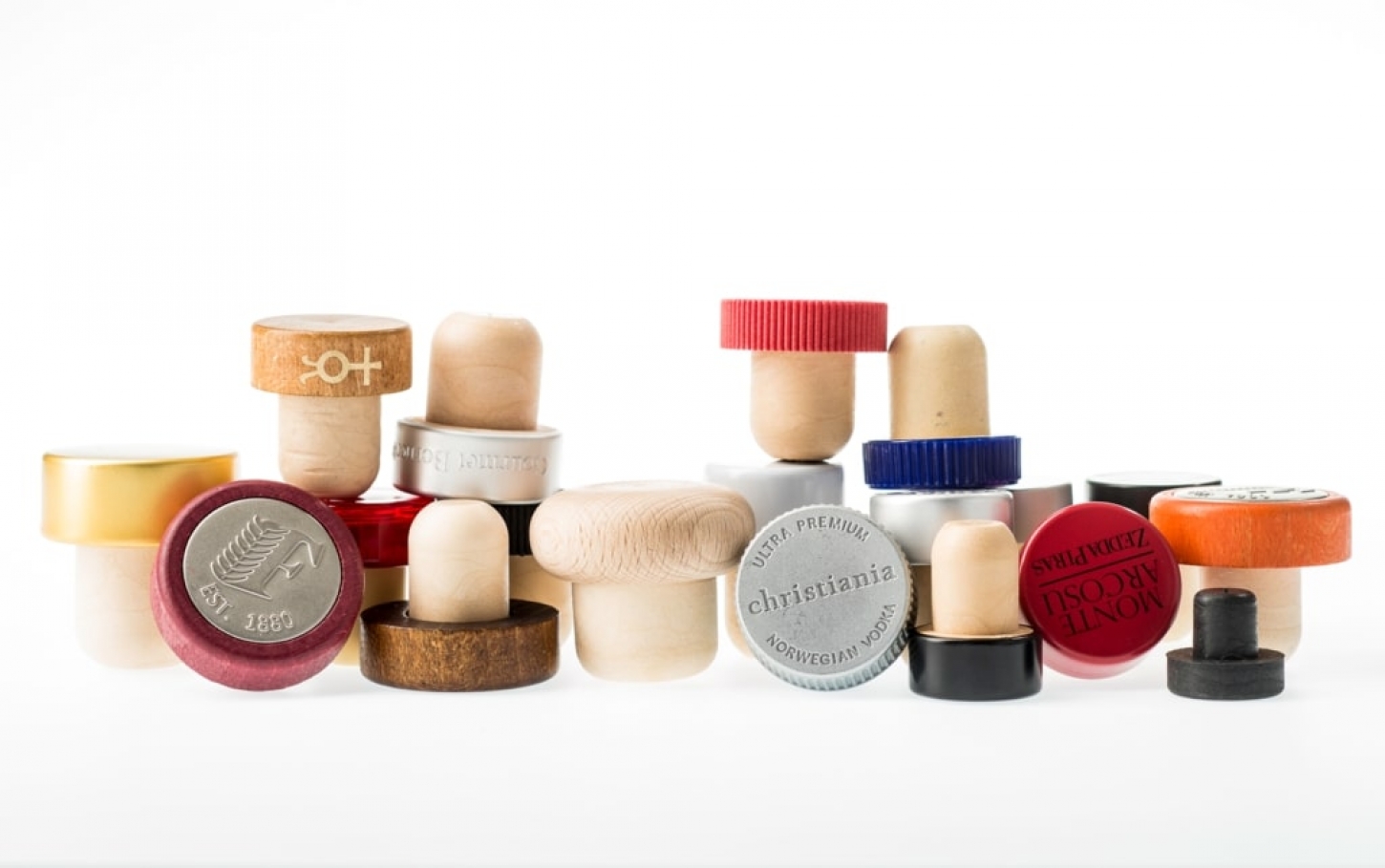
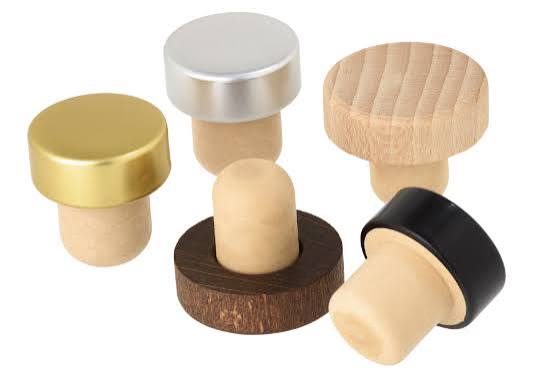
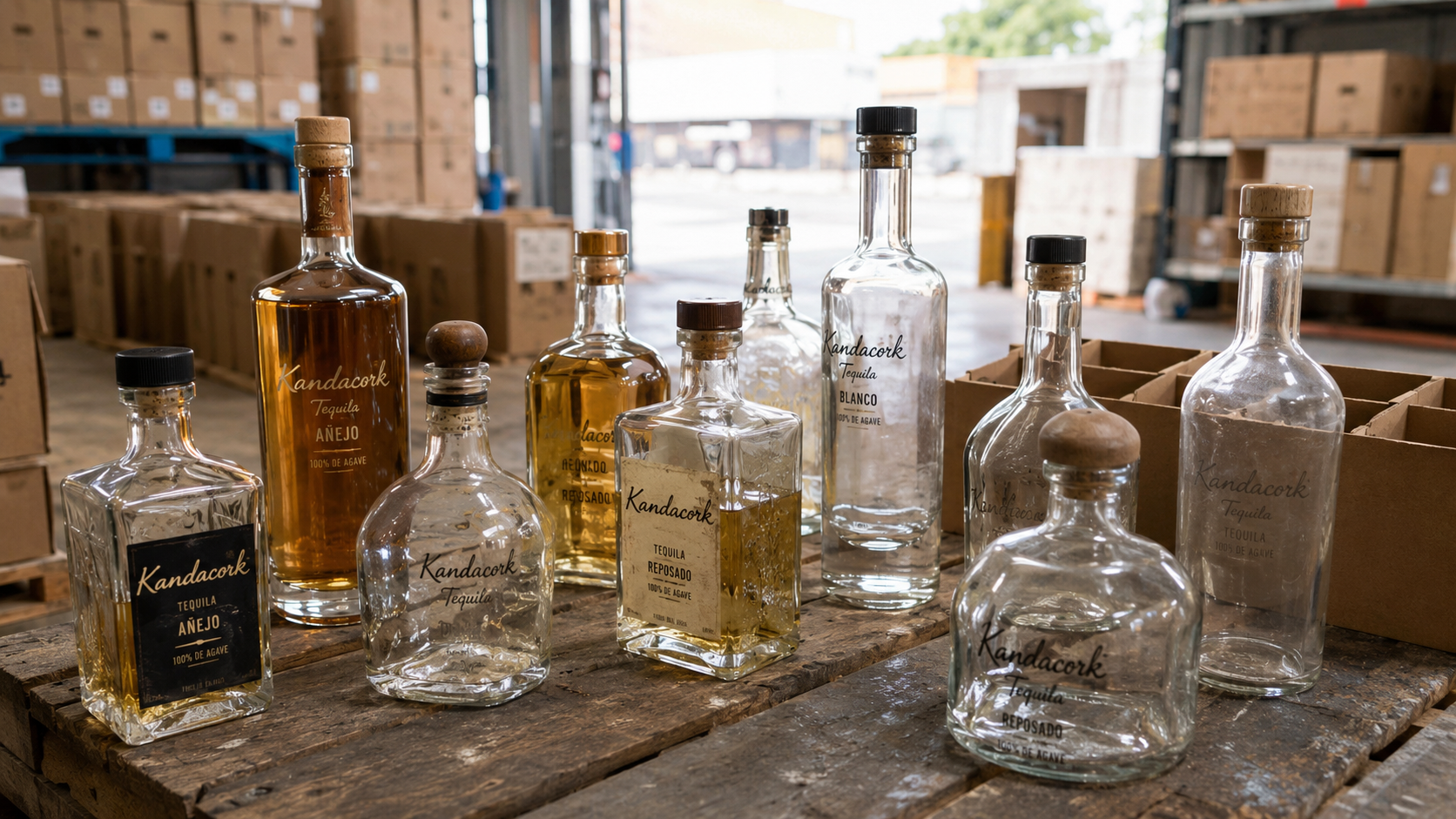
Screw caps and ROPP closures are sometimes compared as similar cap systems, but they have different neck finish and torque requirements. This guide explains the technical differences that buyers should understand before choosing a closure direction.
What Is a Standard Screw Cap?
A standard screw cap is a pre-threaded closure that twists onto a compatible bottle neck finish. The cap already has internal threads before it reaches the filling line, so application is usually straightforward: place the cap on the bottle and tighten it to the correct torque.
Screw caps are used across beverages, food, personal care, cosmetics, oils, pharmaceuticals, and specialty packaging. Depending on the project, they may be made from plastic, PP, HDPE, aluminum, tinplate, or composite materials. They may also include liners such as foam liners, PE liners, induction liners, pressure-sensitive liners, or specialty barrier liners.
The main advantage of a screw cap is flexibility. It is familiar to consumers, easy to open, easy to reclose, and suitable for many manual, semi-automatic, and automatic capping systems. For small-batch products, seasonal launches, and packaging lines that change bottle formats often, screw caps can reduce production complexity.
However, not every screw cap provides tamper evidence by itself. Some screw cap systems require a shrink band, tear band, induction seal, tamper-evident liner, or secondary packaging. This is one of the main reasons buyers compare screw caps vs ROPP closures before choosing a final bottle closure.
What Is a ROPP Closure?
A ROPP closure is a Roll-On Pilfer-Proof closure. It is usually made from aluminum or aluminum alloy and applied with a compatible ROPP capping machine. During application, the cap shell is placed over the bottle neck, and rollers form the aluminum around the glass finish to create the thread and tamper-evident band.
In simple terms, a ROPP closure becomes fully functional on the bottle during capping. When the consumer opens the bottle for the first time, the pilfer band breaks and provides visible first-opening evidence.
ROPP closures are widely used for spirits, wine, olive oil, syrups, pharmaceuticals, and premium beverage packaging. In spirits packaging, they are common for vodka, gin, rum, tequila, whisky, brandy, liqueur, mini liquor bottles, and private-label alcohol brands. For projects requiring aluminum ROPP caps with liners, pilfer bands, and line-trial support, Kandacork offers custom ROPP closures designed around bottle finish and filling-line requirements.
A ROPP closure can support a clean cylindrical profile, reliable reclosure, strong tamper evidence, and premium shelf presentation. It can also be customized with color coating, matte finish, gloss finish, metallic effects, top printing, side printing, embossing, debossing, knurling, and hot foil stamping.
Screw Caps vs ROPP Closures: Main Differences
| Factor | Standard Screw Caps | ROPP Closures |
|---|---|---|
| Thread structure | Pre-threaded before application | Threads are formed during capping |
| Application method | Twisted onto the bottle neck | Rolled onto the bottle with ROPP equipment |
| Tamper evidence | Optional, depending on design | Usually built into the pilfer-proof band |
| Reclosability | Strong consumer reclosure | Reclosable after first opening |
| Equipment requirement | Lower complexity in many projects | Requires compatible ROPP capping machine |
| Bottle compatibility | Needs matching threaded neck finish | Needs compatible ROPP neck finish |
| Liner importance | Important for sealing and torque | Critical for sealing, torque, and product stability |
| Brand appearance | Flexible and functional | Premium, clean, and spirits-friendly |
| Best use case | Flexible production and easy reclosing | Spirits, wine, export beverages, and tamper-evident packaging |
| Common risk if mismatched | Leakage, loose fit, poor torque | Poor thread forming, bridge damage, leakage, hard opening |
This comparison shows why screw caps vs ROPP closures is not only a cap selection question. It is a complete packaging-system decision involving the bottle, closure, liner, liquid, filling line, and quality-control process.
Which Closure Should You Choose?
| Buyer situation | Better choice |
|---|---|
| Small-batch spirits launch | Standard screw cap |
| Export liquor bottle | ROPP closure |
| Premium vodka, gin, rum, or tequila bottle | ROPP closure |
| No ROPP capping equipment available | Standard screw cap |
| Strong visible tamper evidence required | ROPP closure |
| Frequent bottle-size changes | Standard screw cap |
| Premium aluminum closure appearance required | ROPP closure |
| Lowest equipment complexity required | Standard screw cap |
| Automated spirits filling line | ROPP closure, if bottle finish is compatible |
| Separate shrink band or induction seal already planned | Standard screw cap may be suitable |
For many spirits brands, ROPP closures are the stronger choice when shelf appearance, tamper evidence, and retail confidence are priorities. Standard screw caps are often better when flexibility, lower equipment complexity, or frequent production changes matter more.
Key Difference: Pre-Threaded Cap vs Roll-On Closure
The most important difference between screw caps vs ROPP closures is how the closure becomes functional on the bottle.
A standard screw cap already has internal threads before application. It is tightened onto a matching threaded finish. The final sealing result depends on cap diameter, thread profile, liner compression, material structure, application torque, and bottle finish tolerance.
A ROPP closure is applied differently. It starts as an aluminum cap shell. During capping, the ROPP machine applies downward pressure while rollers form the closure around the bottle neck. This creates the thread profile and shapes the pilfer-proof band.
This difference affects sourcing and production planning. Standard screw caps require careful matching, but they are usually easier to test on simple capping systems. ROPP closures require additional checks, including cap shell hardness, roller setup, pilfer-band position, bridge strength, thread forming, and opening torque.
Industry bodies such as Cetie publish technical guidance related to metallic screw-capping, glass finishes, and closure defects. For premium spirits bottles, this kind of technical discipline matters because a closure may look attractive but still fail if it does not seal correctly, open smoothly, break cleanly, or survive transport.
Which Closure Gives Better Tamper Evidence?
ROPP closures usually provide stronger built-in tamper evidence because the pilfer-proof band is part of the closure system. When the consumer opens the bottle for the first time, the band separates from the cap skirt or breaks at the bridges. This gives a visible sign that the bottle has been opened.
Standard screw caps can also be tamper-evident, but the method depends on the design. Some screw caps include a breakaway band. Others rely on shrink sleeves, induction liners, pressure-sensitive liners, or additional secondary packaging.
For spirits brands, tamper evidence supports more than product safety. It also improves retail confidence, export-market readiness, brand protection, and consumer trust. General tamper-resistant packaging principles, such as those described in the eCFR requirements for tamper-evident packaging for applicable regulated product categories, emphasize the value of visible indicators or barriers.
For spirits packaging, buyers should also consider local market rules, retailer requirements, and distribution-channel expectations. If tamper evidence is a top priority, ROPP closures are often the more direct solution. If easy application and low equipment complexity are more important, a tamper-evident screw cap or screw cap with a secondary seal may be suitable.
Which Closure Is Easier for Filling Lines?
For simple filling lines, standard screw caps are usually easier to manage. They are common on manual lines, bench-top cappers, semi-automatic systems, and automatic rotary cappers. They are also useful when a brand changes bottle formats frequently.
ROPP closures require a more controlled application process. The bottle must have a compatible ROPP neck finish, and the capping machine must form the cap correctly. If the rollers are misaligned, the downward pressure is wrong, or the cap and bottle finish are not matched, the result can include weak threads, damaged pilfer bridges, leakage, poor opening torque, or cosmetic defects.
This does not mean ROPP closures are difficult. On a compatible production line, they can be efficient and consistent. Many spirits and wine producers choose ROPP closures because they combine sealing, reclosure, premium appearance, and tamper evidence in one closure format. The broader Kandacork Closures and Stoppers range allows buyers to compare screw caps, ROPP caps, bar-top stoppers, capsules, and security closures within one packaging program.
When comparing screw caps vs ROPP closures, filling-line reality should come before appearance. The best closure is the one that performs reliably at the required speed, with the actual bottle and actual liquid.
Bottle Neck Finish and Liner Matching
A closure cannot perform well without the correct bottle finish. The neck finish controls how the cap sits, how the liner compresses, how the threads engage, and how the tamper-evident band breaks.
For screw caps, buyers should confirm cap diameter, thread profile, closure height, liner type, bottle finish tolerance, and target application torque. For ROPP closures, buyers should also confirm the ROPP finish, cap shell specification, pilfer-band position, bridge design, and capping-machine setup.
The liner is equally important. Spirits contain alcohol, aroma compounds, botanical extracts, sugars, acids, and sometimes oils. A poor liner choice can cause leakage, aroma loss, flavor impact, swelling, poor torque, or long-term stability issues.
For spirits bottles, common liner priorities include alcohol compatibility, low odor transfer, good compression recovery, leakage resistance, and stable opening torque. Buyers should test the closure with the actual liquid or a realistic product simulant before approving bulk production.
A responsible buyer should never order caps based only on diameter. The cap, liner, bottle finish, liquid formula, capping equipment, and transport environment must work together. When the bottle itself is still being selected, a coordinated source for spirits bottle packaging can help align glass shape, neck finish, closure format, and decoration plan from the beginning.
Quality-Control Checks Before Bulk Production
A strong closure project should include sample testing before mass production. This is especially important for spirits bottles because alcohol content, transport distance, storage position, and retail handling can all affect closure performance.
Recommended checks include bottle-neck finish verification, cap diameter and closure height confirmation, liner compatibility review, application torque test, opening torque test, leakage test, inversion test, pilfer-band break test, visual inspection, decoration scratch-resistance review, color consistency check, and export-packaging review.
For ROPP closures, buyers should pay special attention to bridge break consistency, roller marks, skirt deformation, thread formation, and whether the cap opens smoothly after capping. For standard screw caps, buyers should check thread engagement, liner compression, retorque performance, and whether the cap loosens during transport.
Transport validation also matters. ASTM describes performance testing for shipping containers and systems as a way to evaluate shipping units against distribution hazards such as handling, vibration, and compression. For spirits closures, this supports practical testing of sealed bottles, cartons, and pallets before export shipments.
These quality checks help prevent common problems such as leaking bottles, hard opening, spinning caps, broken bands, scuffed decoration, and inconsistent shelf appearance.
Common Mistakes When Choosing Screw Caps or ROPP Closures
Many closure problems happen before production begins. They are usually caused by incomplete technical information, skipped testing, or choosing a cap based only on appearance.
One common mistake is ordering by diameter only. A cap with the correct diameter can still fail if the neck finish, thread profile, liner compression, or closure height is wrong.
Another mistake is choosing a liner without alcohol compatibility testing. Spirits can interact with liner materials, especially when the product contains botanicals, sugar, acidity, oils, or high alcohol content. This can affect sealing, odor, taste, swelling, and torque stability.
Some buyers approve decoration before testing production handling. A beautiful matte, metallic, printed, or hot-stamped closure still needs scratch-resistance checks, carton-rub checks, and filling-line handling review. For brands developing coordinated colorways, foils, and tactile finishes, dedicated closure colors and finishes support can help keep decorative choices practical for production.
For ROPP closures, a major mistake is ordering caps before confirming machine compatibility. The capping head, rollers, pressure, speed, and bottle finish all affect thread forming and pilfer-band performance. For standard screw caps, a common mistake is assuming any threaded cap will seal correctly. Application torque, liner recovery, thread engagement, and bottle tolerance still need to be tested.
Branding and Shelf Presentation
The closure is part of the bottle’s visual identity. In premium spirits packaging, the cap often influences how consumers judge quality before they read the label.
Standard screw caps can be simple, clean, and practical. They can be color-matched, printed, ribbed, smooth, glossy, matte, or paired with sleeves and labels. They work well for functional products, mid-market packaging, and brands that prioritize flexibility.
ROPP closures often deliver a more premium spirits appearance. Their aluminum body can create a smooth, tall, elegant profile. Decoration options may include embossing, debossing, top printing, side printing, metallic coating, hot foil stamping, textured finishes, and custom color matching. For teams that need label, closure, capsule, and carton elements to work as one visual system, decoration and branding support can simplify the transition from concept to production.
Sidewall design is especially important because the cap is touched every time the bottle is opened. Ribbing, knurling, smooth lacquer, embossed details, and logo placement all affect grip, visibility, and perceived quality. Kandacork’s sidewall design options help turn the handling area of the cap into a functional branding surface.
When comparing screw caps vs ROPP closures, buyers should evaluate both function and brand expression. The best closure protects the product, supports the filling line, and strengthens the brand story.
Cost and Procurement Considerations
The cheapest cap is not always the lowest-cost packaging solution. A low unit price can become expensive if the closure causes leakage, production downtime, high rejection rates, inconsistent opening torque, or poor shelf presentation.
Standard screw caps may have lower equipment barriers and flexible sourcing options. They can be attractive for small runs, frequent packaging changes, and general-purpose applications.
ROPP closures may require more technical setup, but they can reduce the need for separate tamper-evident components. They also support a premium aluminum finish and efficient automated production when the bottle and machine are compatible.
Buyers should compare total packaging cost, including cap unit price, liner specification, decoration method, tooling and sampling, MOQ, capping equipment, changeover time, quality-control testing, rejection risk, export packaging, freight, and storage requirements.
For growing spirits brands, the best decision is based on the total closure system, not the cap price alone. Standards organizations such as ISO group packaging and distribution standards in ways that reflect how broad packaging quality can be, from materials and transport to testing and management systems.
Sustainability and Material Considerations
Closure selection also affects sustainability claims, recycling expectations, and long-term brand positioning. Aluminum ROPP closures are valued for their premium appearance, light weight, and recyclability, while plastic screw caps may offer low weight, flexibility, and cost advantages depending on the market and recycling infrastructure.
The Aluminum Association describes aluminum as a highly recyclable material, which is one reason aluminum closures remain attractive for premium beverage packaging. At the same time, real sustainability depends on local collection systems, material combinations, inks, coatings, liners, and whether the final pack is easy for consumers and recyclers to separate.
Glass choice also matters. Brands developing custom bottle shapes, heavier bases, or unique neck finishes can coordinate closure planning with Kandacork Glass to reduce mismatch risk between bottle design and cap selection. For buyers prioritizing lightweighting, recycled-content discussions, or packaging circularity, Kandacork Eco Glass can support broader glass-packaging decisions alongside closure selection.
A practical sustainability decision should consider the full pack: bottle, closure, liner, label, capsule, carton, pallet, shipping distance, and end-market recycling reality.
Screw Caps vs ROPP Closures for Spirits Packaging: Final Selection Guide
For spirits packaging, the best closure depends on how the product will be filled, shipped, displayed, opened, and resealed. A low-cost closure may not be the best choice if it weakens tamper evidence, damages premium shelf appeal, or causes production downtime.
Choose screw caps if the brand needs simple application, flexible bottle formats, easy reclosing, and lower equipment complexity. They are practical for smaller production runs, frequent packaging changes, and projects where tamper evidence is handled with another system.
Choose ROPP closures if the brand needs integrated tamper evidence, a premium aluminum appearance, and strong suitability for retail or export spirits packaging. They are especially valuable when the filling line has compatible ROPP equipment and the bottle neck finish is designed for roll-on application.
| Choose standard screw caps if… | Choose ROPP closures if… |
|---|---|
| You need simple application | You need built-in tamper evidence |
| You change bottle formats often | You use compatible ROPP capping machinery |
| You want lower equipment complexity | You want a premium aluminum appearance |
| You use a secondary tamper seal | You want integrated pilfer-proof packaging |
| You produce small or flexible batches | You sell spirits through retail or export channels |
| You need broad cap-format flexibility | You want consistent premium shelf presentation |
This final comparison gives buyers a fast way to understand screw caps vs ROPP closures before moving into sample testing and supplier quotation.
Buyer Checklist Before Ordering
Before requesting a quote, prepare the technical and commercial details that affect closure selection. A complete request should include bottle drawing or neck-finish drawing, bottle sample photos or physical samples, closure diameter and height, product type, alcohol content, filling temperature, filling method, filling-line speed, capping-machine type, liner requirement, tamper-evidence requirement, color standard, logo artwork, order quantity, destination market, and packaging requirements.
This information helps the supplier recommend the right closure faster. It also reduces the risk of sample failure, incorrect sizing, poor sealing, or production delay.
Kandacork Closures helps packaging buyers choose custom screw caps, ROPP closures, and bottle closure solutions for spirits, beverages, food, and specialty packaging. To receive a faster recommendation, buyers can send project details through the custom closure quote page.
A well-selected closure should do three things: seal the product, support the brand, and run efficiently in production. Kandacork Closures helps buyers move from closure idea to production-ready packaging with fewer technical surprises.
FAQ
Are ROPP closures the same as screw caps?
No. ROPP closures are related to screw-cap packaging, but they are not the same as standard screw caps. A standard screw cap usually has pre-formed threads before application. A ROPP closure is rolled onto the bottle neck during capping, forming the thread and tamper-evident band.
Are ROPP closures better than screw caps?
ROPP closures are better when the project needs built-in tamper evidence, premium aluminum appearance, and controlled machine application. Screw caps are better when the project needs simple application, flexible production, and easy reclosure with lower equipment complexity.
Do ROPP closures require special machinery?
Yes. Most ROPP closures require a compatible ROPP capping machine. The machine uses pressure and rollers to form the closure onto the bottle neck. Without the right equipment and setup, the closure may not seal or open correctly.
Can standard screw caps be tamper-evident?
Yes. Standard screw caps can be designed with tamper-evident bands, induction liners, shrink sleeves, or other security features. The best option depends on the product, bottle, filling line, and market requirement.
Which closure is better for spirits bottles?
For many spirits bottles, ROPP closures are preferred because they combine tamper evidence, reclosure, aluminum appearance, and premium shelf presentation. However, standard screw caps may be better for small-batch projects, flexible production, or products that do not require integrated pilfer-proof packaging.
What should I test before bulk ordering?
Before bulk ordering, test bottle fit, liner compatibility, leakage resistance, opening torque, closing torque, pilfer-band break, decoration quality, transport performance, and filling-line application. For ROPP closures, also test thread forming and capping-machine consistency.
What information should I send to a closure supplier?
Send the bottle drawing, neck finish, closure size, product type, ABV, filling speed, capping machine details, liner requirement, artwork, color standard, order quantity, and destination market. These details help the supplier recommend the correct closure faster.
Conclusion: Choose the Closure as a Complete System
The decision between screw caps vs ROPP closures should be based on the complete packaging system. A closure must match the bottle finish, liner, product formula, capping equipment, brand position, distribution channel, and consumer experience.
Standard screw caps offer simplicity, flexibility, and familiar reclosure. ROPP closures offer built-in tamper evidence, premium aluminum presentation, and strong suitability for spirits packaging.
For spirits brands, private-label suppliers, and beverage packaging buyers, the safest approach is to confirm samples before bulk production. Share your bottle drawing, product type, closure size, artwork, quantity, and filling-line details with Kandacork Closures to receive a practical recommendation for your next custom screw cap or ROPP closure project.