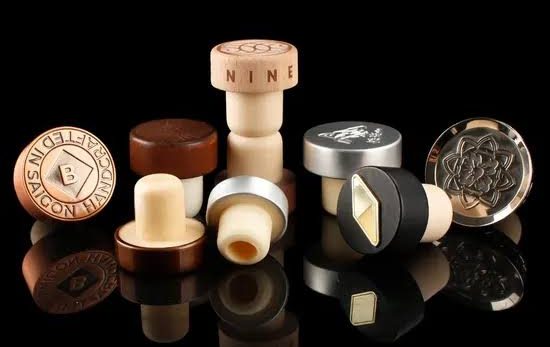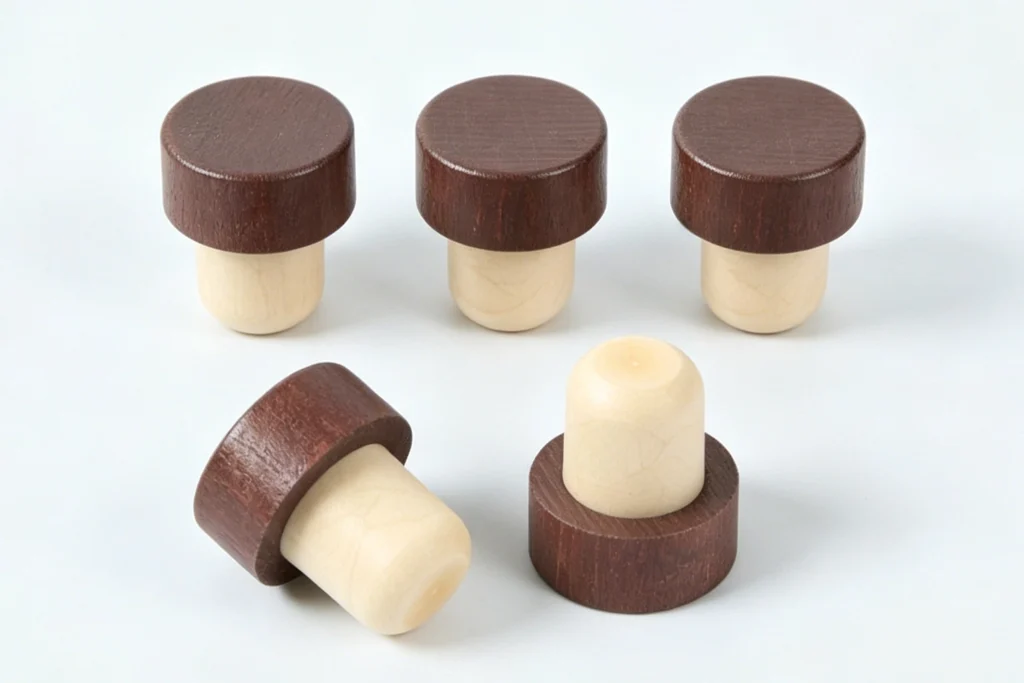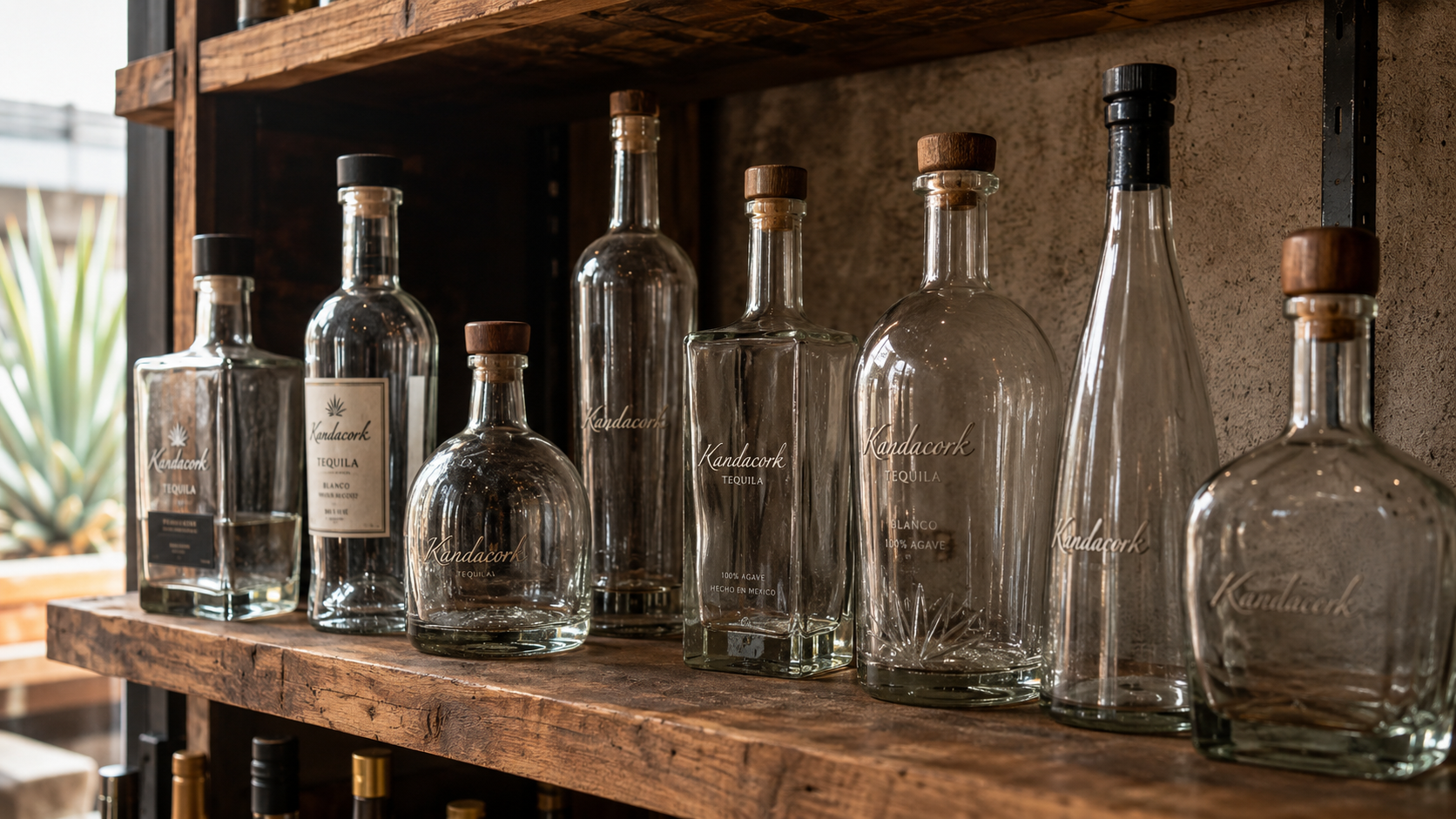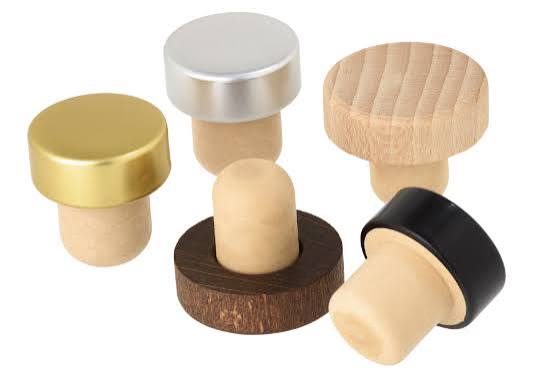
Choosing between ROPP closures vs non-refillable closures is a practical packaging decision, not just a cap-style preference. The right closure affects sealing performance, tamper evidence, refill resistance, filling-line speed, brand presentation, consumer trust, and export readiness.
Quick answer: ROPP closures are roll-on aluminum caps designed for efficient sealing, visible tamper evidence, reclosure, and high-speed capping. Non-refillable closures are security closures designed to prevent unauthorized refilling, support controlled pouring, and protect product authenticity. For premium spirits, ROPP non-refillable closures often provide the best balance because they combine roll-on application with anti-refill protection.
For whisky, vodka, gin, rum, tequila, brandy, liqueurs, and ready-to-drink spirits, the best closure depends on the bottle neck finish, capping equipment, target market, product value, anti-counterfeit risk, decoration requirements, and consumer opening experience.
What Are ROPP Closures for Spirits Bottles?
ROPP means roll-on pilfer-proof. ROPP closures are usually aluminum or aluminum-alloy caps applied to compatible bottle neck finishes with ROPP capping equipment. During application, capping rollers form the cap thread around the glass finish and create the tamper-evident pilfer band.
Unlike a pre-threaded screw cap, a standard ROPP cap is shaped during capping. The bottle neck acts as the forming profile, so the closure and neck finish must be matched carefully. When applied correctly, ROPP closures provide stable sealing, smooth opening, reliable reclosure, and clear first-opening evidence.
Spirits brands often choose custom ROPP closures when they need a clean metallic appearance, repeatable line performance, and flexible brand decoration. ROPP caps can support top printing, side printing, embossing, debossing, knurled sidewalls, color coating, matte finishes, gloss finishes, brushed effects, and metallic finishes.
ROPP closures are especially useful for vodka, gin, rum, tequila, whisky, liqueurs, RTD spirits, mini bottles, private-label products, and export-ready spirits lines that need consistent closure application at scale.
What Are Non-Refillable Closures for Spirits Bottles?
Non-refillable closures are security closures designed to make unauthorized refilling difficult after the original bottle has been opened. They are widely used for premium spirits, hospitality bottles, duty-free products, export ranges, and markets where refilling or counterfeiting can damage brand trust.
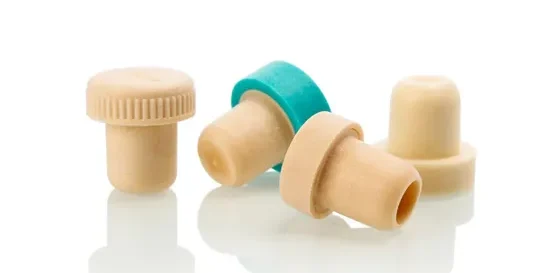
A non-refillable closure may use an internal pourer insert, valve structure, snap-fit component, anti-refill device, aluminum outer shell, plastic fitment, tamper-evident band, or controlled-pour system. Its purpose is not only to close the bottle, but also to protect the liquid’s identity after sale.
For spirits buyers, non-refillable closures are valuable when a bottle may remain visible and reusable in bars, hotels, restaurants, clubs, duty-free shops, or secondary channels. They also improve the serving experience when the pourer is designed for smooth flow, drip control, and consistent dosage.
Common benefits include anti-refill protection, anti-counterfeiting support, controlled pouring, product authenticity protection, stronger hospitality-channel security, premium opening feel, and higher distributor confidence.
ROPP Closures vs Non-Refillable Closures: Main Difference
The main difference is that ROPP describes the application method, while non-refillable describes the security function.
ROPP closures are best when the priority is sealing, high-speed bottling, visible tamper evidence, reclosure, and aluminum decoration. Non-refillable closures are best when the priority is refill prevention, controlled pouring, anti-counterfeit protection, and premium product security.
These categories can overlap. A ROPP closure can be non-refillable if it includes a suitable anti-refill insert or pourer system. This is why many premium spirits brands compare standard ROPP, standard non-refillable, and ROPP non-refillable formats before choosing a final closure.
| Selection Point | Standard ROPP Closures | Non-Refillable Closures |
|---|---|---|
| Main role | Sealing, reclosure, tamper evidence | Refill prevention, controlled pouring, security |
| Typical structure | Aluminum shell, liner, pilfer band | Aluminum shell, insert, valve, pourer, tamper feature |
| Application | ROPP capping machine | ROPP, screw, snap-on, or specialized application |
| Anti-refill function | Not automatic | Core function |
| Pouring control | Basic unless insert is added | Often strong |
| Branding | Strong aluminum decoration | Strong, depending on outer shell and fitment |
| Best use case | Efficient spirits bottling | Premium spirits and higher-risk channels |
| Balanced choice | ROPP non-refillable closure | ROPP non-refillable closure |
A domestic vodka brand may choose standard ROPP closures for efficient production and a clean shelf look. A premium tequila exporter may choose non-refillable closures for refill protection in hospitality channels. A rum or whisky brand may choose ROPP non-refillable closures to combine decorated aluminum branding with controlled pouring and stronger product security.
Are ROPP Closures Non-Refillable?
Not always. Standard ROPP closures are usually tamper-evident because the pilfer band breaks when the consumer first opens the bottle. However, tamper evidence is not the same as anti-refill protection.
A ROPP closure becomes non-refillable only when it includes an internal anti-refill insert, pourer fitment, valve-style component, or other security structure that makes refilling difficult. This hybrid design is common in premium spirits packaging because it preserves the production advantages of ROPP while adding a stronger layer of brand protection.
In the United States, the Alcohol and Tobacco Tax and Trade Bureau notes that distilled spirits bottles must use a closure or similar device that is broken to access the contents, making TTB distilled spirits closure guidance an important reference for brands planning U.S. market entry. Export brands should also confirm the local requirements of each target market because closure, labeling, and tamper-evident expectations can vary by region.
When to Choose Standard ROPP Closures
Choose standard ROPP closures when your main goals are efficient sealing, scalable production, visible tamper evidence, clean aluminum branding, and a reliable reclosure experience.
Standard ROPP closures are often a strong fit for brands with stable retail distribution, lower refill risk, and existing ROPP capping equipment. They are practical for high-volume spirits lines because they combine repeatable application with a professional finish.
Standard ROPP closures are commonly used for:
- Vodka and gin lines needing clean, modern branding
- Rum and whisky products with efficient filling requirements
- Liqueurs and RTD spirits that need reclosure
- Miniature and promotional bottle formats
- Private-label spirits projects
- Mid-volume and high-volume filling lines
For example, a growing gin brand may choose a color-matched ROPP cap to coordinate with label artwork, glass color, and capsule presentation. If the brand later enters a higher-risk export market, it may upgrade selected SKUs to a ROPP non-refillable closure while keeping visual consistency across the range.
When to Choose Non-Refillable Closures
Choose non-refillable closures when your main goals are anti-refill security, controlled pouring, product authenticity, and stronger brand protection after sale.
These closures are especially useful for premium spirits exposed to refilling, tampering, or unauthorized reuse after opening. This can happen in hospitality venues, duty-free retail, nightclubs, export distribution, and markets where counterfeit activity is more common.
Non-refillable closures are a strong fit for:
- Premium tequila and mezcal bottles
- Export whisky packaging
- High-value rum and brandy lines
- Luxury vodka bottles
- Liqueurs needing controlled pouring
- Duty-free and hospitality channels
- Products with stronger anti-counterfeit needs
For example, a tequila brand sold through bars may need a closure that supports controlled pouring while reducing the risk that an empty bottle is refilled with a lower-quality liquid. In that case, the cost of a non-refillable closure may be justified by the value of brand protection.
Best Closure by Spirits Category
Different spirits categories have different closure priorities. Bottle shape, liquid viscosity, alcohol strength, serving environment, and brand value all affect the best choice.
Vodka: Standard ROPP closures work well for clean branding and high-speed filling. Premium vodka brands may use ROPP non-refillable closures when export security or hospitality protection is important.
Gin: Custom ROPP closures are strong for modern, botanical-inspired branding. A gin brand can pair a colored cap with decorated glass, label texture, and a coordinated neck finish to create a complete packaging system.
Tequila and mezcal: Non-refillable and ROPP non-refillable closures are often suitable because these categories frequently emphasize origin, authenticity, premium presentation, and controlled pouring.
Whisky: Premium whisky brands may choose non-refillable closures when authenticity protection is important in bars, hotels, clubs, or export markets. Standard ROPP may suit more cost-sensitive or high-volume whisky products.
Rum: Rum brands can benefit from ROPP non-refillable closures when they need decoration flexibility, controlled pouring, and security for premium aged or export products.
Liqueurs: Controlled-pour non-refillable closures are useful because viscosity and drip management can directly affect the serving experience.
RTD spirits: Standard ROPP closures may be suitable when speed, consistency, and cost-efficient production are more important than advanced anti-refill protection.
Technical Specifications to Confirm Before Ordering
A closure should never be selected by appearance alone. Buyers should confirm the technical details that determine whether the closure can fit, seal, apply, open, pour, and ship correctly.
Important specifications include bottle drawing, neck finish type, cap diameter, cap height, bore diameter, shell material, liner material, insert material, application torque, removal torque, pilfer band bridge strength, capping machine type, filling-line speed, alcohol compatibility, leak-test method, storage conditions, shipping conditions, decoration process, and required security level.
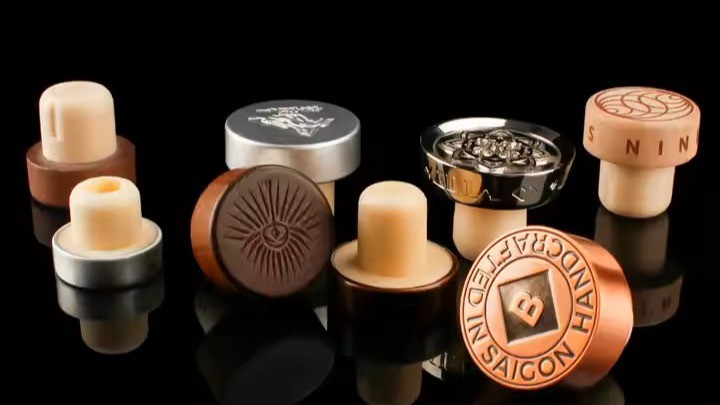
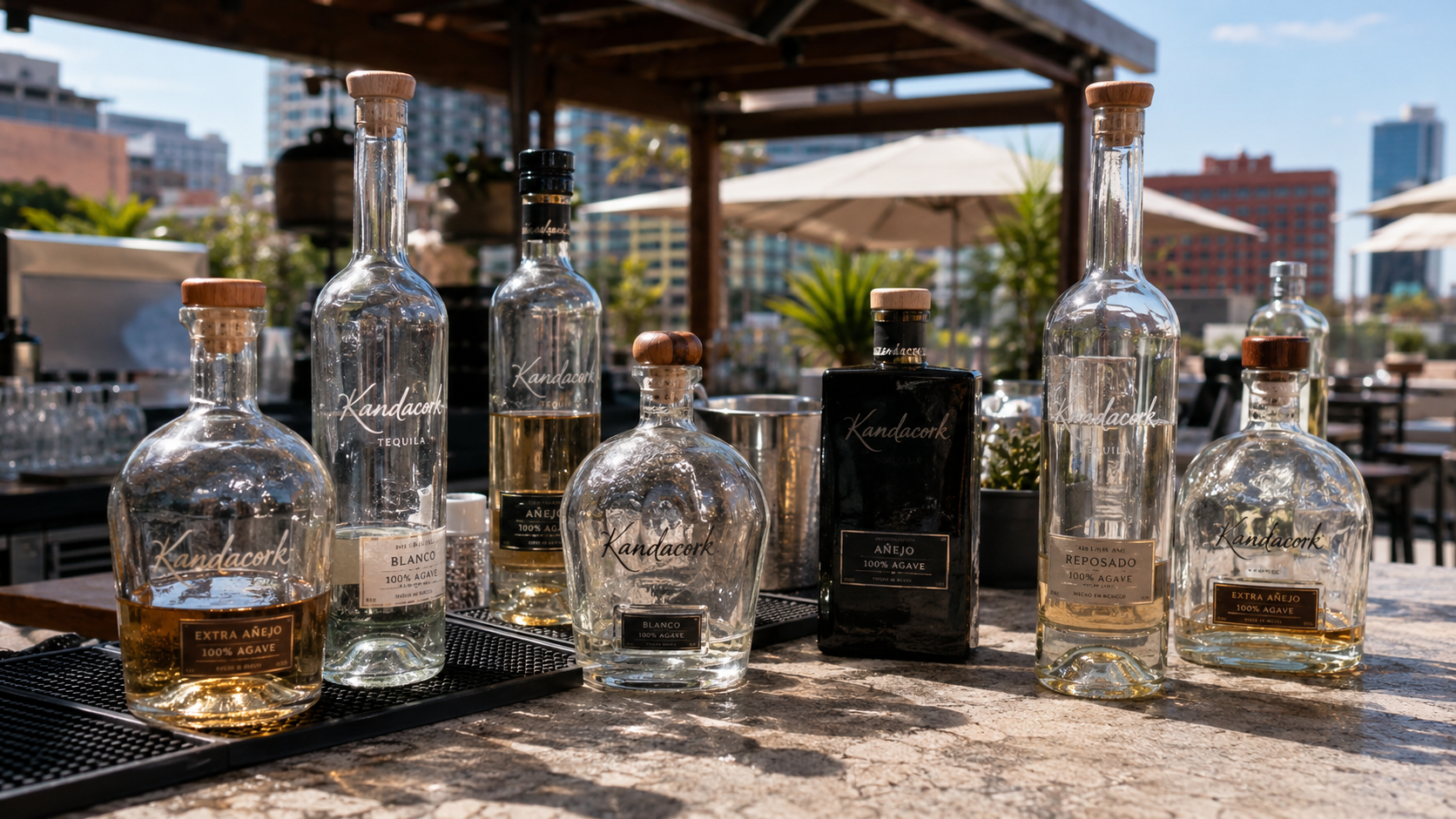
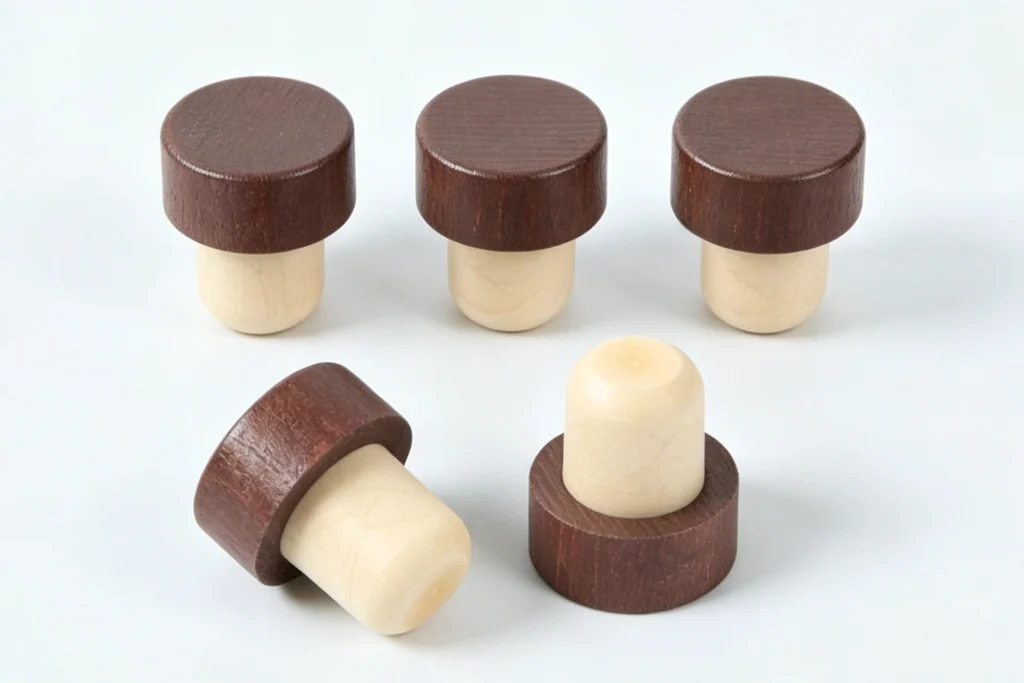
For buyers developing a complete bottle and closure system, Kandacork Closures can support a broader custom closure and stopper range that includes ROPP caps, screw caps, bar-top stoppers, non-refillable systems, capsules, shrink sleeves, and pourer-related options. This helps packaging teams compare not only one closure type, but the best closure family for the bottle, product, and price tier.
Bottle Neck Finish and Closure Compatibility
Bottle neck finish is one of the most important factors in closure selection. ROPP closures require a compatible roll-on neck finish so the aluminum shell can form correctly around the glass. Non-refillable closures may require a specific bore diameter, inner neck geometry, bead structure, snap-fit area, or pourer fitment.
If the neck finish is wrong, the closure may leak, rotate poorly, apply inconsistently, damage the pilfer band, or fail to provide proper anti-refill performance. That is why buyers should provide bottle drawings, neck measurements, tolerance details, and physical samples whenever possible.
Industry resources such as the CETIE bottling guides emphasize the importance of matching containers and closure systems in real bottling conditions. For commercial spirits projects, this means the bottle, cap, liner, insert, equipment, and product should be reviewed together, not separately.
Filling Line and Capping Equipment
ROPP closures normally require ROPP capping equipment with forming rollers. These rollers shape the aluminum cap onto the bottle finish and create the tamper-evident band. If the roller profile, pressure, or capping head setup is wrong, the closure may apply unevenly or open poorly.
Non-refillable closures may require ROPP capping, screw application, snap-on application, press-on application, or specialized assembly depending on the structure. Before choosing a closure, confirm line speed, capping machine type, capping head setup, roller profile, chuck compatibility, bottle handling stability, and operator control.
For buyers unsure whether their bottle finish and closure are compatible, a cap and neck compatibility review can reduce sampling errors, line-trial delays, and bulk-order mismatch risks.
Liner, Material, and Food-Contact Compatibility
The liner affects seal integrity, opening torque, leakage resistance, product protection, and shelf stability. For spirits, liner selection should consider alcohol strength, liquid composition, headspace, storage temperature, transport vibration, product volatility, and aroma sensitivity.
A poor liner match can lead to leakage, inconsistent torque, odor transfer, flavor impact, or seal failure. Inserts and pourers also need material review because they may contact the liquid during storage or pouring.
Packaging teams should evaluate food-contact suitability for liners, inserts, coatings, and colorants. The U.S. Food and Drug Administration provides information on food-contact substances used in packaging, while export brands should confirm applicable requirements in each sales region, including European food-contact material expectations for safety and inertness when products are sold into the EU market.
Pourer Design and Consumer Experience
For non-refillable closures, pourer design is a central performance feature. The pourer controls flow rate, drip behavior, refill resistance, and serving feel.
A high-proof vodka may need a different flow profile from a dense cream liqueur. A tequila used in cocktail service may need fast, smooth controlled pouring. A premium whisky may prioritize a refined opening feel and clean pour. A rum brand may need a pourer that supports both bar service and gift-pack presentation.
Good pourer design improves usability and reinforces product value. Poor pourer design can cause dripping, slow pouring, inconsistent flow, consumer frustration, or weak anti-refill protection.
Torque, Pilfer Band, and Opening Feel
Torque affects both bottling performance and consumer satisfaction. If the closure is too loose, leakage risk increases. If it is too tight, consumers may struggle to open the bottle.
For ROPP closures, buyers should review application torque, removal torque, roller pressure, pilfer bridge formation, pilfer band break, thread quality, liner compression, and reclosure feel. For non-refillable closures, buyers should also evaluate opening force, pourer stability, anti-refill function, and flow consistency.
Official ASTM packaging standards include methods related to packaging, seal integrity, leak testing, and automated torque testing. Even when a project does not require a specific ASTM method, the principle is useful: closure performance should be measured, not assumed.
Decoration, Branding, and Shelf Impact
A closure is part of the brand system. It should coordinate with the bottle shape, glass color, label stock, capsule, embossing, carton, and visual position of the product.
ROPP closures are strong for aluminum decoration because the cap surface can carry color, logos, textures, top graphics, sidewall graphics, and premium finishes. Non-refillable closures can also be highly branded, but the structure may require more coordination because the outer shell, insert, tamper band, and pourer must work together.
Kandacork Closures supports closure color and finish options for brands that want a cap system aligned with their label, bottle, and packaging family. For more complex visual programs, sibling teams can also support decoration and branding support across bottle decoration, closure appearance, and premium packaging presentation.
Sustainability and Packaging System Thinking
Closure selection should also consider recyclability, material separation, total pack weight, decoration choices, and compatibility with the glass bottle. A premium closure should protect the product without creating unnecessary complexity for the packaging system.
Glass remains a preferred spirits packaging material because of its premium look, product protection, and recycling potential. The Glass Packaging Institute provides useful glass recycling facts and benefits, including information on glass recycling and recycled glass use.
For brands planning new bottle families, it is useful to review the closure and bottle together. Kandacork’s sibling-brand ecosystem can support custom spirits bottles, custom glass bottle packaging, and eco glass packaging options so the closure, glass weight, finish, decoration, and export packaging are considered as one complete system.
Testing Before Bulk Production
Testing is essential before mass production. A closure should be evaluated with the actual bottle, actual filling setup, and actual product conditions whenever possible.
Recommended tests include bottle fit, capping application, leak resistance, application torque, removal torque, pilfer band break, opening feel, reclosure performance, pourer flow, inversion behavior, transport simulation, temperature exposure, line-speed trial, decoration durability, and packing stability.
Testing helps prevent production delays, leakage claims, customer complaints, poor opening experience, and packaging redesign costs. It also gives the brand owner, bottler, and closure supplier a shared technical basis for approving bulk production.
Common Buyer Mistakes to Avoid
Do not choose a closure based only on appearance. A closure must fit the bottle, seal the liquid, run on the filling line, open correctly, pour properly, and survive transport.
Do not assume every ROPP closure is non-refillable. Standard ROPP closures are usually tamper-evident, but they do not automatically prevent refilling.
Do not assume every non-refillable closure fits every spirits bottle. Non-refillable systems depend on neck finish, bore diameter, insert design, closure structure, and capping method.
Do not skip line trials. A sample that works by hand may not run reliably at commercial speed.
Do not ignore consumer experience. A premium bottle that is hard to open, leaks after reclosure, or pours poorly can weaken brand perception even if the packaging looks attractive.
Procurement Checklist for Closure Buyers
Before requesting samples or pricing, prepare the information that a closure supplier needs to make a practical recommendation:
- Spirit category
- Bottle capacity
- Bottle drawing
- Neck finish specification
- Bore diameter
- Alcohol percentage
- Target market
- Sales channel
- Annual order quantity
- Required security level
- Capping equipment type
- Desired line speed
- Closure color
- Decoration requirements
- Pouring requirement
- Sample testing timeline
- Launch deadline
- Compliance expectations
This information helps the supplier recommend a closure based on real production needs rather than assumptions from bottle photos.
Request a ROPP or Non-Refillable Closure Recommendation
Kandacork Closures supports spirits brands that need standard ROPP closures, non-refillable closures, ROPP non-refillable systems, tamper-evident closures, controlled-pour closures, and premium spirits closure solutions.
For buyers comparing ROPP closures vs non-refillable closures, Kandacork Closures can help with closure structure selection, bottle finish review, liner compatibility, sample matching, pourer design evaluation, decoration feasibility, capping-line compatibility, anti-refill security level selection, and pre-production testing support.
To receive a practical recommendation, provide bottle drawings, bottle sample photos, neck finish details, spirit category, alcohol percentage, target market, annual order volume, filling-line information, desired security level, decoration requirements, and launch timeline. You can request a custom closure quote to compare the right closure route before confirming samples or bulk production.
FAQ
Are ROPP closures the same as non-refillable closures?
No. ROPP closures describe a roll-on capping method, while non-refillable closures describe an anti-refill security function. A ROPP closure can become non-refillable when it includes an internal anti-refill insert, pourer, or valve-style component.
Which is better for spirits bottles, ROPP or non-refillable?
ROPP closures are better for efficient sealing, high-speed capping, visible tamper evidence, reclosure, and aluminum branding. Non-refillable closures are better for refill prevention, controlled pouring, anti-counterfeit protection, and premium product security.
Can a ROPP closure be non-refillable?
Yes. A ROPP closure can be non-refillable when it combines a roll-on aluminum shell with an anti-refill insert or pourer structure. This hybrid option is often used for premium spirits, export products, and hospitality channels.
Do non-refillable closures require special bottles?
Often, yes. Non-refillable closures may require a specific neck finish, bore diameter, snap bead, inner neck profile, or pourer fit. Bottle drawings and physical samples should be checked before bulk production.
Do ROPP closures require special capping equipment?
Yes. ROPP closures normally require ROPP capping equipment with forming rollers. The rollers shape the aluminum shell around the bottle finish and form the tamper-evident band.
Are non-refillable closures worth the higher cost?
They can be worth the higher cost when the product is premium, exported, sold through hospitality channels, or exposed to refill risk. The added security helps protect brand value, product authenticity, and consumer trust.
What should be tested before ordering closures in bulk?
Test bottle fit, capping performance, leak resistance, application torque, removal torque, pilfer band break, reclosure feel, pourer flow, anti-refill function, decoration durability, and filling-line compatibility.
Conclusion
The best choice between ROPP closures vs non-refillable closures depends on the product, bottle, market, filling line, and security risk.
Standard ROPP closures are ideal when a spirits brand needs efficient sealing, visible tamper evidence, reclosure, aluminum decoration, and scalable production. Non-refillable closures are ideal when refill prevention, controlled pouring, product authenticity, and anti-counterfeit protection are more important.
For many premium spirits brands, ROPP non-refillable closures offer the most balanced solution. They combine the production benefits of ROPP closures with the security advantages of non-refillable closures.
Kandacork Closures can help spirits brands review bottle compatibility, compare closure structures, prepare samples, evaluate decoration options, and select a closure system that supports production performance, brand protection, and a better consumer experience.