Introduction
Choosing between plastic bar-top stoppers and wooden bar-top stoppers is not only a packaging style decision. For spirits brands, distilleries, private label buyers, importers, distributors, and bottlers, the stopper affects shelf appeal, sealing performance, opening feel, unit cost, production consistency, and quotation accuracy.
A bar-top stopper is one of the first components consumers touch when opening a spirits bottle. It should match the bottle design, support the brand story, fit the neck correctly, and perform reliably during filling, storage, shipping, and repeated use.
This guide compares plastic and wood bar-top closures from a B2B purchasing perspective. It helps packaging buyers evaluate material choice, decoration methods, technical fit, supplier capability, compliance documents, sample testing, and RFQ preparation. For buyers reviewing broader closure structures, Kandacork Closures provides custom spirits bottle closures and stoppers for projects that require bottle-neck matching, material selection, sampling, and bulk supply support.
Direct Answer: Which Stopper Should You Choose?
Plastic bar-top stoppers are usually better for cost control, color consistency, lightweight export packaging, private label spirits, promotional programs, and repeatable multi-SKU production. Wooden bar-top stoppers are usually better for premium positioning, natural texture, tactile warmth, limited editions, and spirits brands that need a more traditional or artisanal look.
The final choice should be confirmed through bottle neck fit, shank material, leakage testing, opening force, decoration compatibility, supplier documentation, and sample approval.
For faster sampling, buyers should prepare bottle neck data, shank preference, artwork, target quantity, and destination market before comparing stopper materials.
What Is a Bar-Top Stopper?
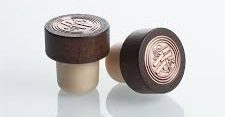
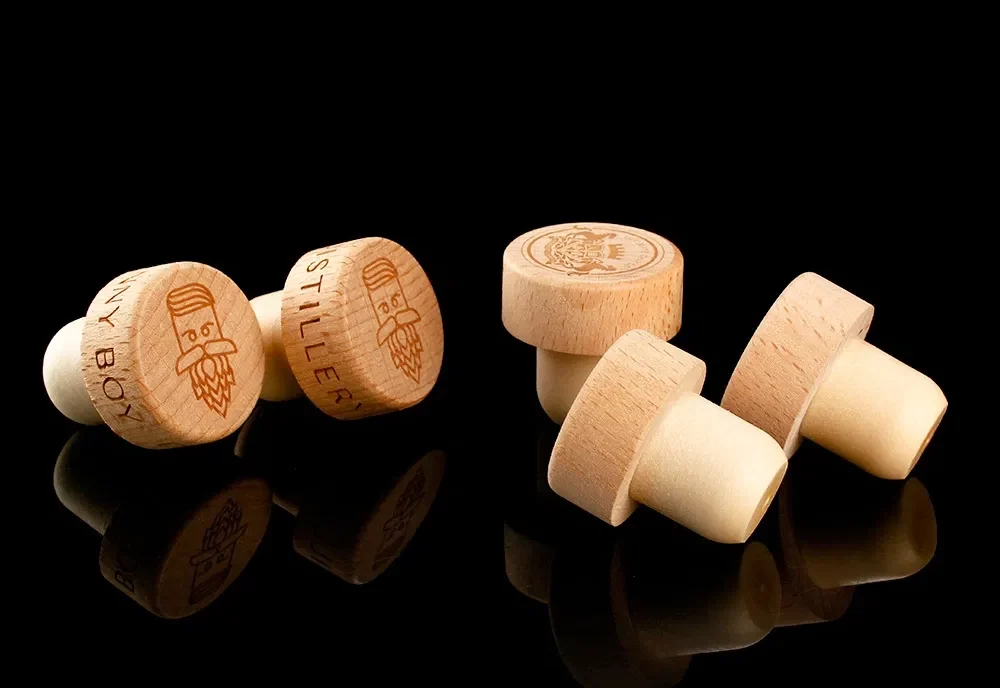
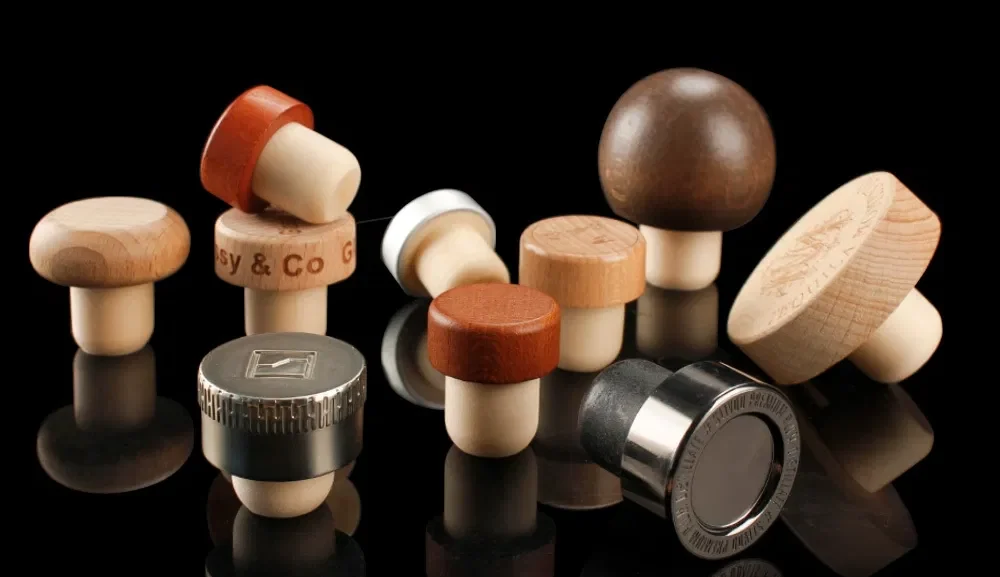
A bar-top stopper, also called a T-top stopper or bartop cork, usually has two main parts: the visible top head and the shank inserted into the bottle neck.
The top head creates the visual identity and hand feel. It may be made from plastic, wood, metal, ceramic, glass, acrylic-style material, or a composite structure. In this article, the focus is on plastic stopper heads and wooden stopper heads.
The shank is the sealing part. It may use natural cork, micro-agglomerated cork, synthetic cork, or another engineered sealing material. In many spirits packaging projects, the shank controls sealing performance more than the head material.
For purchasing accuracy, buyers should treat the head material and shank specification as two separate decisions. The head defines brand appearance, while the shank defines bottle fit and sealing performance.
Other stopper head materials, such as aluminum, glass, ceramic, and acrylic-style heads, may also be used for specific packaging concepts. However, plastic and wood remain two practical choices when buyers compare cost, customization, shelf appeal, and production scalability.
Plastic vs Wooden Bar-Top Stoppers: Quick Comparison
| Comparison Factor | Plastic Bar-Top Stoppers | Wooden Bar-Top Stoppers |
|---|---|---|
| Best for | Private label, high-volume, color-coded spirits ranges | Premium spirits, craft brands, limited editions |
| Cost control | Strong | Medium |
| Visual consistency | Very strong | Natural variation |
| Brand image | Modern, clean, scalable, controlled | Natural, warm, premium, crafted |
| Decoration | Molded logo, embossing, debossing, pad printing, hot foil, color molding | Laser engraving, staining, varnishing, top printing, side printing |
| Color matching | Easier to control | Requires approved tolerance samples |
| Hand feel | Lightweight, clean, practical | Warm, tactile, substantial |
| Main technical risks | Resin selection, coating durability, bonding strength | Moisture, grain variation, coating stability, odor control |
| Sustainability review | Resin type, PCR possibility, recycling reality, food-contact suitability | Wood sourcing, coating disclosure, chain-of-custody evidence |
| Ideal spirits | Vodka, gin, liqueur, mini spirits, promotional lines | Whisky, rum, tequila, brandy, cognac, craft gin |
Plastic Bar-Top Stoppers: Best Uses and Benefits
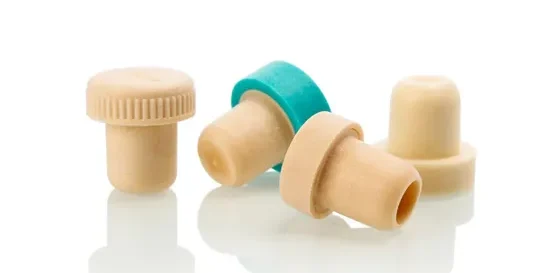
Plastic bar-top stoppers are widely used in spirits packaging because they are consistent, flexible, and commercially efficient. They are often selected for vodka, gin, liqueur, mini spirits, promotional bottles, private label programs, and multi-SKU product families.
Plastic is strong when repeatability matters. A molded plastic stopper head can maintain consistent dimensions, surface texture, color, and decoration quality across large production runs. This is useful when a buyer needs the same matte black, gloss white, deep red, transparent, metallic-look, or custom brand color across several batches.
Plastic is also practical for lightweight export packaging. For importers and distributors shipping in volume, closure weight can affect carton design, freight efficiency, and handling.
Another advantage is design flexibility. Plastic stopper heads can be round, square, fluted, domed, flat, ribbed, transparent, opaque, matte, glossy, or textured. For private label spirits, this allows buyers to build a consistent packaging system across different bottle shapes and spirits categories. Buyers comparing cost-controlled closure options can also review Kandacork’s guide to plastic bar-top stoppers for spirits bottles for more detail on plastic stopper applications.
Decoration Options for Plastic Bar-Top Stoppers
Common decoration options include molded logos, embossing, debossing, pad printing, screen printing, hot foil effects, metallic-look coating, color molding, matte finishing, gloss finishing, surface texture, and transparent acrylic-style appearance.
Plastic works well for brands that want clean visual control. It can support modern spirits packaging, promotional editions, seasonal lines, and color-coded product families. For example, one bottle series may use different stopper colors for vodka, gin, rum, liqueur, and flavored spirits.
When Plastic Is the Better Choice
Choose plastic bar-top stoppers when the project requires cost control, high color consistency, lightweight packaging, scalable production, molded branding, or repeatable decoration across multiple SKUs.
Plastic is especially suitable for private label spirits, high-volume retail programs, promotional packaging, color-coded ranges, and modern brand systems that require a clean and consistent shelf appearance.
Wooden Bar-Top Stoppers: Best Uses and Benefits
Wooden bar-top stoppers are chosen for their premium, natural, and tactile qualities. They are common in craft spirits, aged spirits, gift packaging, heritage bottle designs, and limited-edition releases.
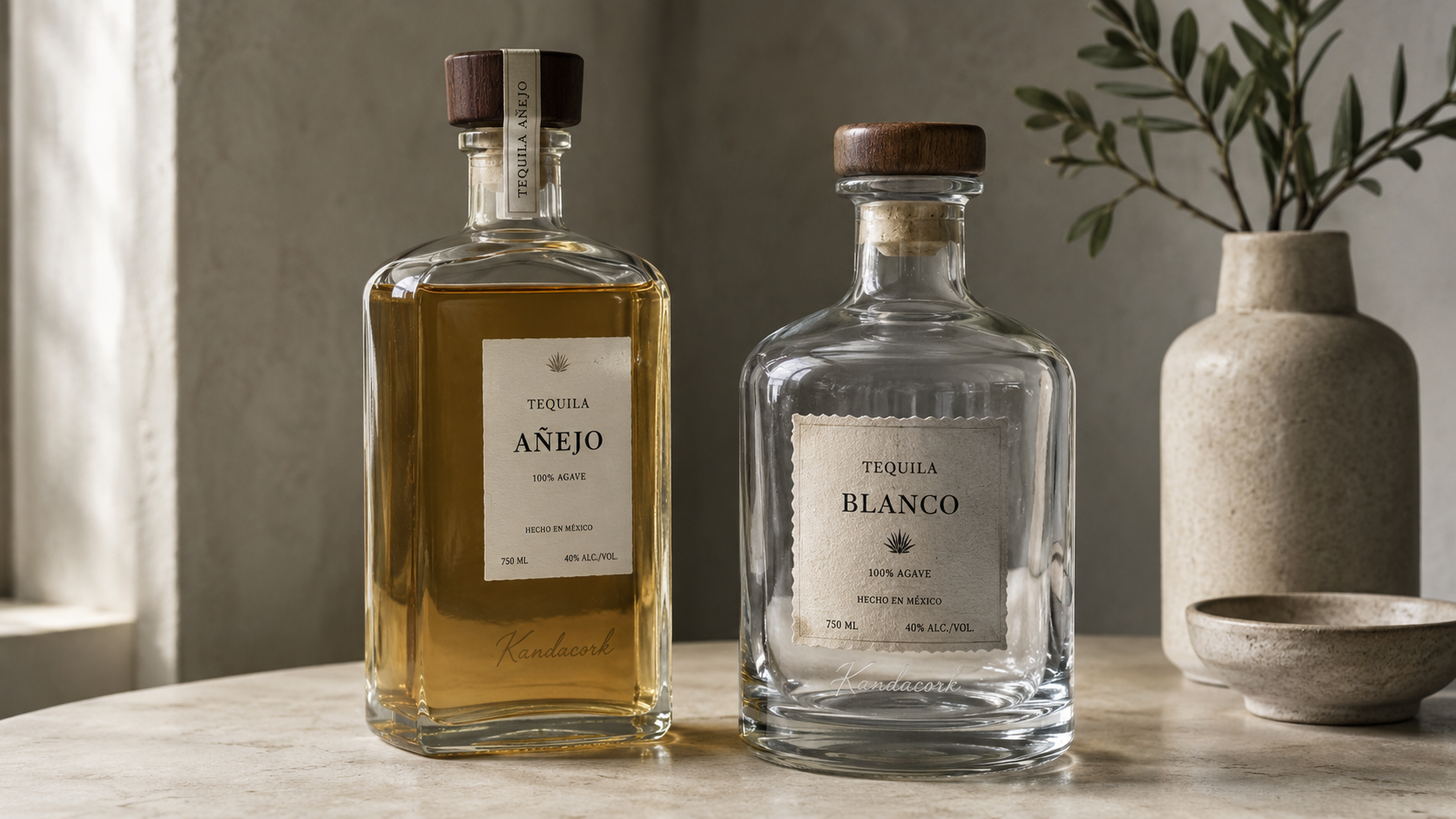
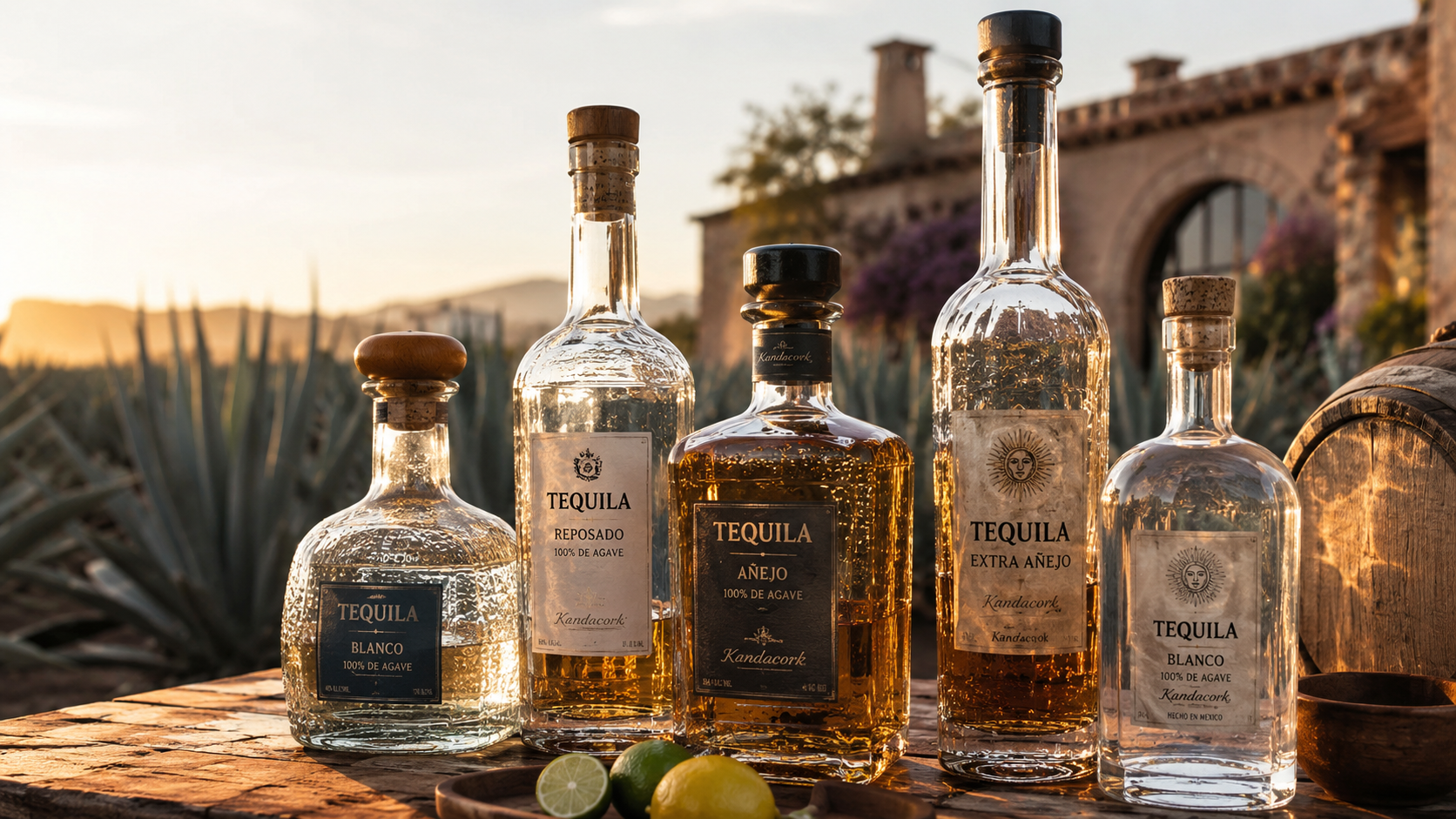
Wood creates a warmer impression than standard plastic. It can communicate craftsmanship, tradition, authenticity, and higher perceived value. This makes wooden heads suitable for whisky, rum, tequila, brandy, cognac, craft gin, and other spirits where packaging storytelling matters.
A wooden stopper can also improve the opening experience. When consumers open the bottle, the closure feels solid and substantial. This small tactile moment can support premium pricing and reinforce the brand identity.
Wood also works well with natural paper labels, cork textures, wooden gift boxes, vintage bottle shapes, embossed glass, and dark spirits packaging. For whisky-focused projects, Kandacork’s wooden bar-top stopper buyer guide explains how wood finish, shank material, logo decoration, and bottle fit work together in premium closure development.
Decoration Options for Wooden Bar-Top Stoppers
Wooden bar-top stoppers can support laser engraving, top printing, side printing, hot stamping, staining, varnishing, color coating, natural grain selection, and metal badge or insert decoration.
Laser engraving is especially effective for premium spirits because it creates a permanent and tactile brand mark. Staining can help match the stopper to labels, cartons, capsules, or brand color systems. Varnish can improve smoothness and create a more refined finish.
However, wood is a natural material. Grain, density, and color absorption may vary from piece to piece. This variation can be part of the premium appeal, but it must be controlled through approved tolerance samples before bulk production.
When Wood Is the Better Choice
Choose wooden bar-top stoppers when the brand needs premium shelf impact, natural texture, tactile warmth, laser engraving, heritage storytelling, or a craft spirits identity.
Wood is a strong option for aged rum, whisky, tequila, brandy, cognac, craft gin, gift sets, limited releases, and packaging concepts that benefit from natural material cues.
Technical Fit and Testing Checklist
The stopper head attracts attention, but the shank determines sealing performance. A beautiful closure can fail if the shank does not match the bottle neck.
Before approving plastic or wooden bar-top stoppers, buyers should confirm the following technical points:
| Technical Item | Why It Matters |
|---|---|
| Bottle neck inner diameter | Determines suitable shank diameter |
| Neck bore tolerance | Prevents loose or overly tight fit |
| Shank diameter | Controls compression and sealing |
| Shank height | Affects insertion depth and stability |
| Cap diameter | Influences visual balance and grip |
| Cap height | Affects bottle proportion and hand feel |
| Cap-shank bonding strength | Prevents separation during opening |
| Insertion force | Supports smooth bottling and user experience |
| Extraction force | Controls opening feel |
| Leakage resistance | Protects product and shipping reliability |
| Alcohol compatibility | Reviews exposure risk from vapor or contact |
| Surface durability | Reduces scratching, coating failure, dents, or rubbing marks |
| Transport resistance | Helps confirm export safety |
Many spirits bottles start with a shank diameter slightly larger than the bottle neck inner diameter to create friction fit. However, the final specification should be approved through real bottle fit testing, leakage testing, insertion force, and extraction force, especially for custom spirits bottles.
The goal is to balance seal security, bottling efficiency, comfortable opening force, visual quality, and shipping reliability.
Need Sample Advice?
Need to compare plastic and wooden bar-top stoppers for a real bottle project? Send Kandacork Closures your bottle drawing, neck inner diameter, preferred material, logo artwork, and target quantity for sample advice and quotation support.
Best Stopper Choice by Spirits Category
Different spirits categories often need different closure strategies.
| Spirits Category | Recommended Direction | Reason |
|---|---|---|
| Vodka | Plastic or acrylic-style plastic | Clean, modern, color-consistent appearance |
| Gin | Plastic for modern gin; wood for craft gin | Depends on botanical, premium, or craft positioning |
| Rum | Wood for aged or premium rum; plastic for value ranges | Wood supports warmth and heritage |
| Whisky | Wood | Strong premium and tactile association |
| Tequila / Mezcal | Wood | Natural, earthy, craft-oriented identity |
| Brandy / Cognac | Wood | Traditional, refined, premium look |
| Liqueur | Plastic | Color matching, seasonal branding, and cost control |
| Mini spirits | Plastic | Lightweight, efficient, and scalable |
| Gift sets | Wood or premium decorated plastic | Depends on target price and brand story |
Plastic is not automatically low-end, and wood is not automatically the best choice. The right material depends on price level, bottle design, spirits category, distribution channel, and production requirements.
For brands developing bottles, closures, and packaging presentation together, Kandacork Spirits can support broader spirits bottle development while Kandacork Closures focuses on stopper structure, fit, and finish.
Sustainability, Compliance, and Supplier Documentation
Sustainability and compliance claims should be specific and documented. Buyers should avoid vague claims unless the supplier can provide clear evidence.
For plastic bar-top stoppers, review resin type, recycled content possibility, PCR availability, colorant stability, recyclability limitations, food-contact suitability, coating information, and adhesive details. For U.S. beverage packaging projects, buyers may refer to the U.S. Food and Drug Administration for food-contact substance and packaging considerations.
For wooden bar-top stoppers, review wood species, sourcing documentation, coating materials, odor control, moisture control, and chain-of-custody evidence. The Forest Stewardship Council provides Chain of Custody certification for companies handling forest-based products, which may support responsible sourcing claims when applicable.
Supplier quality systems, export packing review, sample approval records, and batch inspection also matter. A reliable stopper project should connect material selection, neck fit, surface finish, branding requirements, and shipping protection before bulk production.
How Kandacork Closures Supports Stopper Development
Kandacork Closures supports spirits brands, distilleries, bottlers, importers, distributors, and private label buyers from material selection to bulk production. The process connects design goals with real bottle performance.
Kandacork Closures can support custom stopper projects by matching plastic or wooden heads with suitable natural cork, synthetic cork, or micro-agglomerated cork shanks, then confirming the structure through bottle sample fit testing before bulk quotation.
Material and Structure Review
The project starts with bottle details, spirits category, brand positioning, target market, closure reference images, and expected order quantity.
Kandacork Closures can help review whether a plastic stopper head, wooden stopper head, or another closure structure is better for the project. The team can also compare shank options based on bottle neck fit, sealing requirements, opening feel, and production needs.
Decoration and Sample Development
After the structure is confirmed, the next step is to define cap diameter, cap height, shank diameter, shank height, color, decoration method, surface finish, and packing requirements.
For plastic bar-top stoppers, sample review should focus on color accuracy, surface quality, logo detail, mold precision, bonding strength, and bottle fit.
For wooden bar-top stoppers, sample review should focus on grain tolerance, stain consistency, engraving quality, coating durability, odor control, bonding strength, and bottle fit.
Kandacork’s bar-top stopper development support helps buyers review top material, shank material, shank diameter, logo method, surface finish, and bottle-fit requirements before confirming custom samples.
Testing and Quality Control
Before bulk production, buyers should test neck fit, leakage resistance, opening feel, resealability, surface durability, visual consistency, and packing protection.
A capable supplier should support dimensional inspection, color tolerance control, surface finish inspection, bonding strength review, batch consistency, defect control, packing inspection, and approved sample records.
Testing should use the actual bottle whenever possible. Packaging approval based only on photos is risky, especially when bottle neck tolerance or shank compression has not been verified.
RFQ and Bulk Production
A complete RFQ helps the supplier provide faster and more accurate pricing.
| RFQ Information | Why It Helps |
|---|---|
| Bottle drawing | Confirms neck finish and dimensional requirements |
| Physical bottle sample | Allows real fit testing |
| Neck inner diameter | Helps select shank diameter |
| Spirits category | Supports material and positioning recommendations |
| Preferred stopper material | Plastic, wood, or open recommendation |
| Shank preference | Natural cork, synthetic cork, or other option |
| Logo artwork | Needed for engraving, printing, molding, or stamping |
| Color reference | Helps control plastic color or wood stain direction |
| Target quantity | Affects MOQ, tooling, and unit price |
| Destination market | Helps identify documentation expectations |
| Packing requirement | Supports export safety and carton planning |
| Delivery schedule | Helps assess lead time and production planning |
Request Sample Support from Kandacork Closures
Planning a spirits bottle project? Share your bottle drawing, neck data, artwork, stopper material preference, target quantity, and destination market with Kandacork Closures. The team can help compare stopper structures, confirm fit samples, and prepare a project-based quotation.
FAQ
Are plastic bar-top stoppers lower quality than wooden stoppers?
No. Plastic bar-top stoppers are not automatically lower quality. They are often better for color consistency, cost control, scalable production, and private label spirits programs. Wooden stoppers are better when the brand needs natural texture, tactile warmth, and premium storytelling.
Which stopper is better for premium spirits?
Wooden bar-top stoppers are often preferred for premium whisky, rum, tequila, brandy, cognac, and limited-edition spirits because they provide natural shelf appeal and a warmer hand feel. Premium decorated plastic can also work for modern luxury spirits when the design requires precision and consistency.
Which stopper is better for private label spirits?
Plastic bar-top stoppers are often better for private label spirits because they support repeatable color, controlled unit cost, scalable production, and flexible decoration. Wood can be used for premium private label projects where natural appearance and higher perceived value are important.
Does the stopper head material affect leakage?
The stopper head affects appearance, grip, weight, and hand feel. Leakage performance depends mainly on the shank material, shank diameter, bottle neck tolerance, compression, insertion force, extraction force, and fit testing.
Can wooden bar-top stoppers be used for high-volume production?
Yes. Wooden bar-top stoppers can be used for high-volume production, but buyers should control wood grading, moisture level, color tolerance, coating stability, bonding strength, and packing protection before confirming bulk orders.
Can plastic bar-top stoppers look premium?
Yes. Plastic stoppers can look premium when they use high-quality molding, matte finishes, metallic-look effects, hot foil, embossed logos, debossed details, translucent acrylic-style heads, or refined surface textures.
What information should buyers provide before requesting samples?
Buyers should provide the bottle drawing, physical bottle sample, neck inner diameter, spirits category, preferred stopper material, shank preference, logo artwork, color reference, target quantity, destination market, and required documentation.
Conclusion
Plastic bar-top stoppers are best for projects that need cost control, color consistency, lightweight packaging, and scalable production. Wooden bar-top stoppers are better for spirits brands that need a premium, natural, and tactile packaging experience.
The right choice depends on brand positioning, bottle neck fit, shank selection, decoration method, documentation, and sample testing. Kandacork Closures can help buyers compare stopper structures, develop samples, verify fit, and prepare accurate quotations based on real bottle requirements.
Suggested Image ALT Text
- plastic bar-top stopper for spirits bottle closure
- wooden bar-top stopper with cork shank for premium spirits
- plastic vs wooden bar-top stoppers comparison for spirits packaging
Suggested Schema Markup
Recommended structured data for publishing:
- Article Schema
- BreadcrumbList Schema
- Organization Schema
- Service Schema or Product Schema for custom bar-top stopper development