Quick Answer
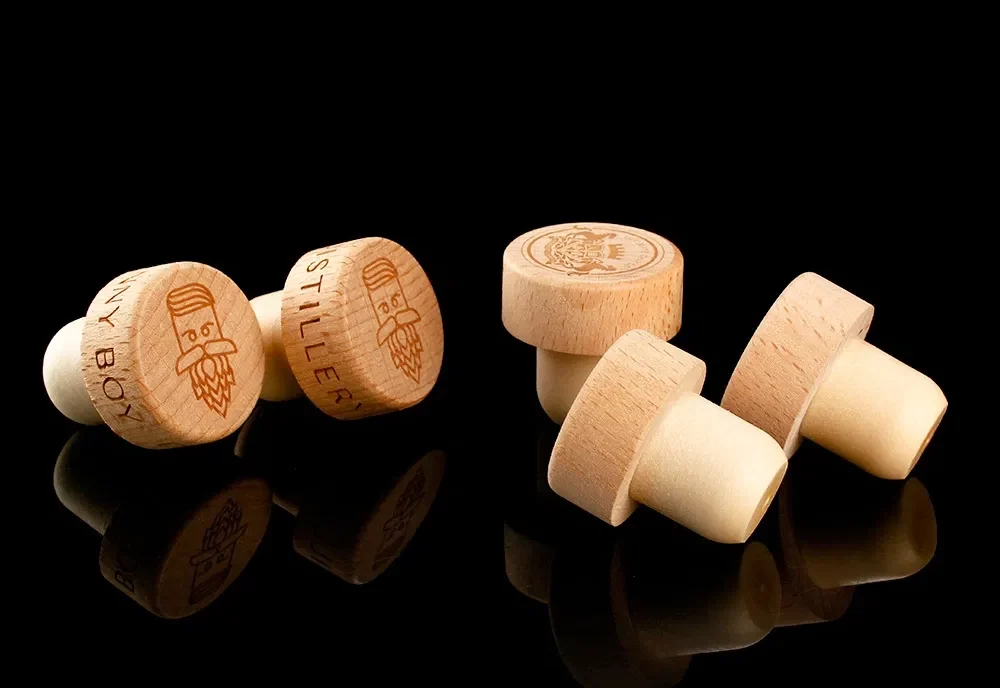
Hot foil logo bar-top stoppers are premium bottle closures with a metallic logo stamped onto wood, aluminum, plastic, or metal heads. They help spirits brands improve shelf appeal while keeping the closure aligned with bottle-neck fit, sealing performance, artwork requirements, sample approval, and bulk quality control.
Best for: premium spirits, private label upgrades, gift packs, limited editions, and brands that need metallic logo detail.
Check before ordering: stopper material, foil area, logo file, neck bore, shank diameter, sample approval, and packing protection.
Send for quotation: bottle drawing, logo file, foil color, stopper material, quantity, destination market, and launch schedule.
Why Hot Foil Logo Bar-Top Stoppers Matter for Spirits Packaging
In premium spirits packaging, the closure is more than a functional component. It is one of the first physical details a customer sees, touches, and remembers. A well-designed bar-top stopper can make a bottle feel complete, while a poorly matched closure can weaken the whole packaging presentation.
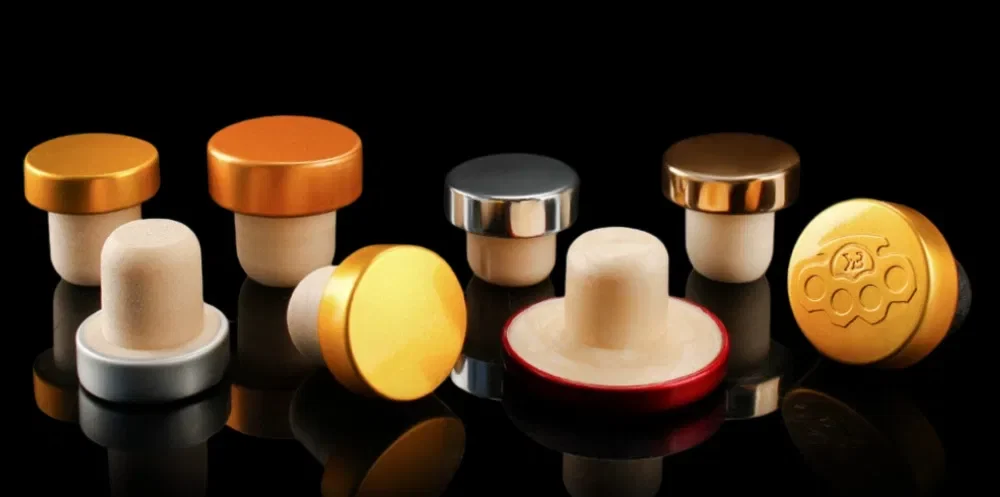
Hot foil logo bar-top stoppers give spirits brands a refined way to add metallic branding to the bottle top. A gold, silver, copper, bronze, or rose-gold foil logo can connect the closure with the label, capsule, bottle decoration, or gift box.
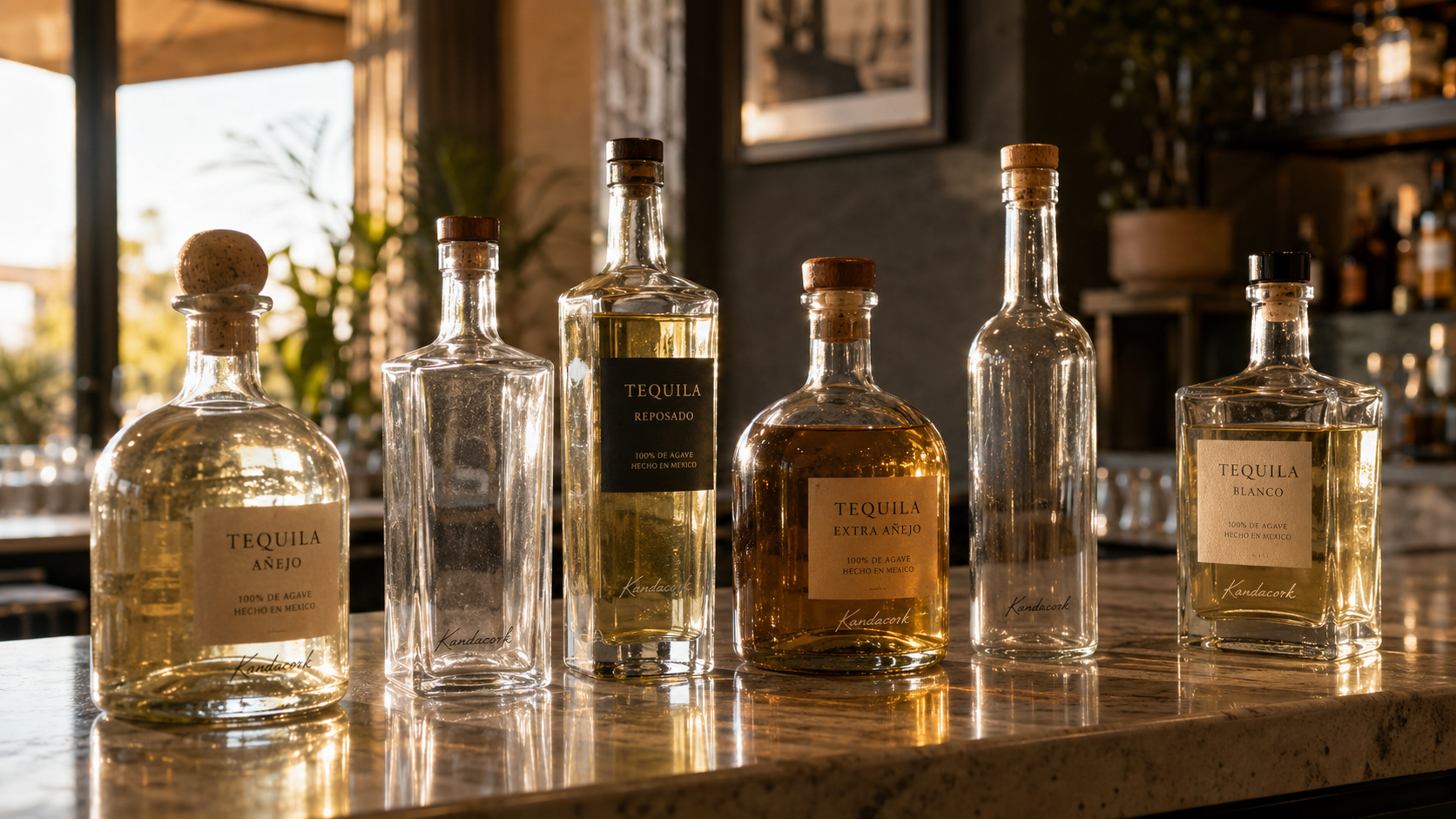
For whisky, gin, rum, vodka, tequila, brandy, liqueur, craft spirits, and private label programs, this detail can improve shelf impact and perceived value. It is especially useful for premium releases, limited editions, tasting-room products, travel retail packaging, and gift sets.
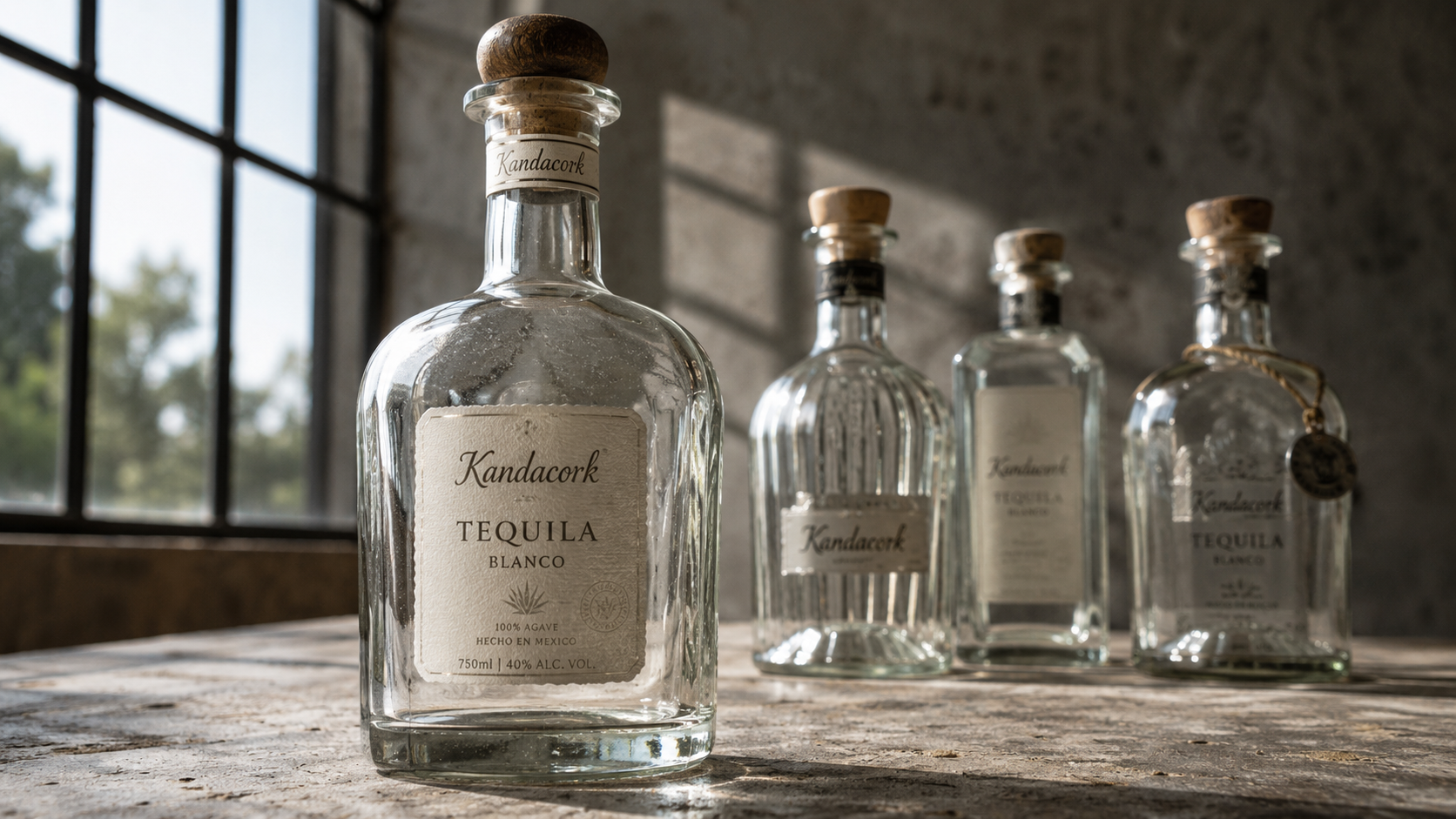
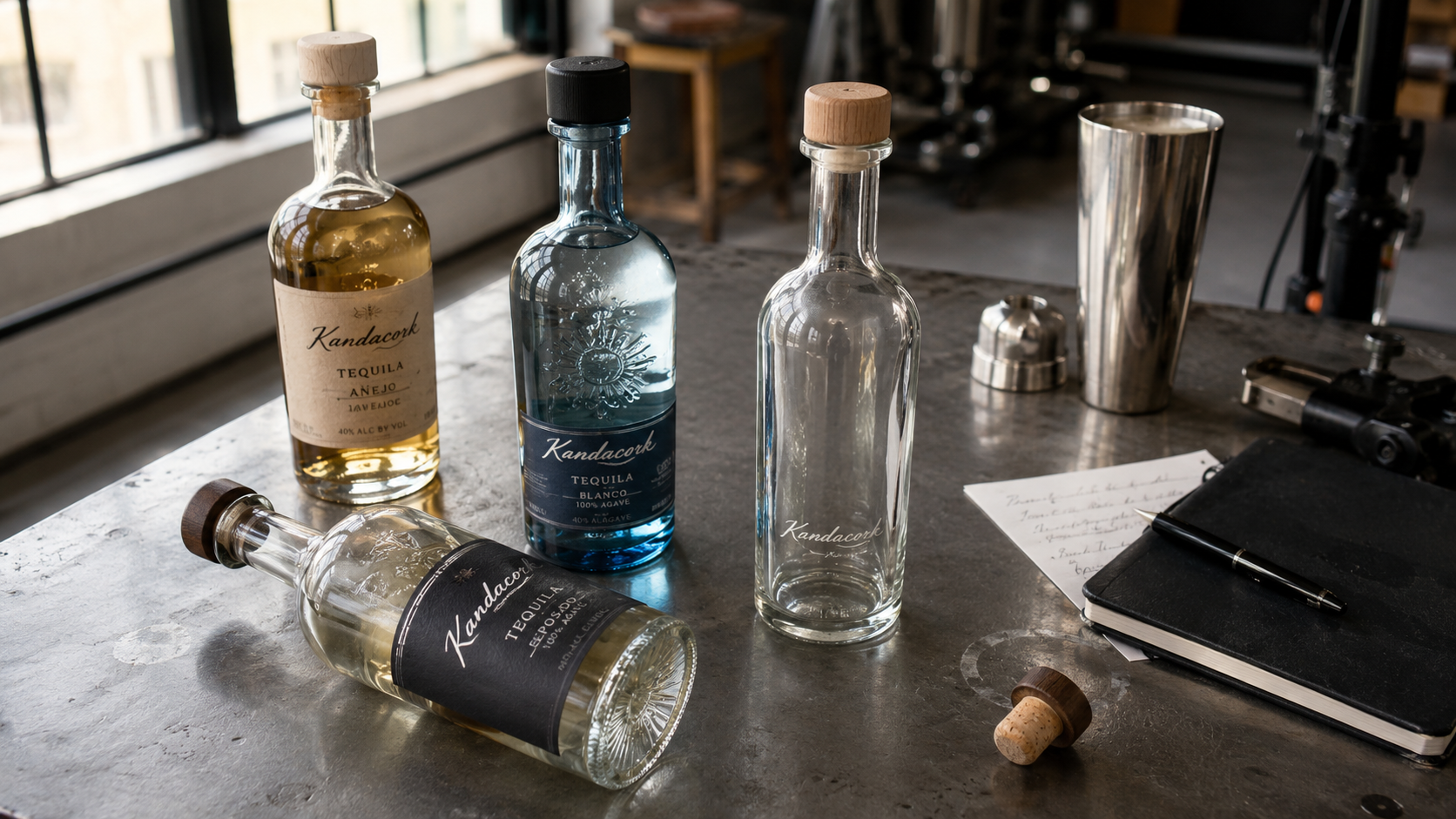
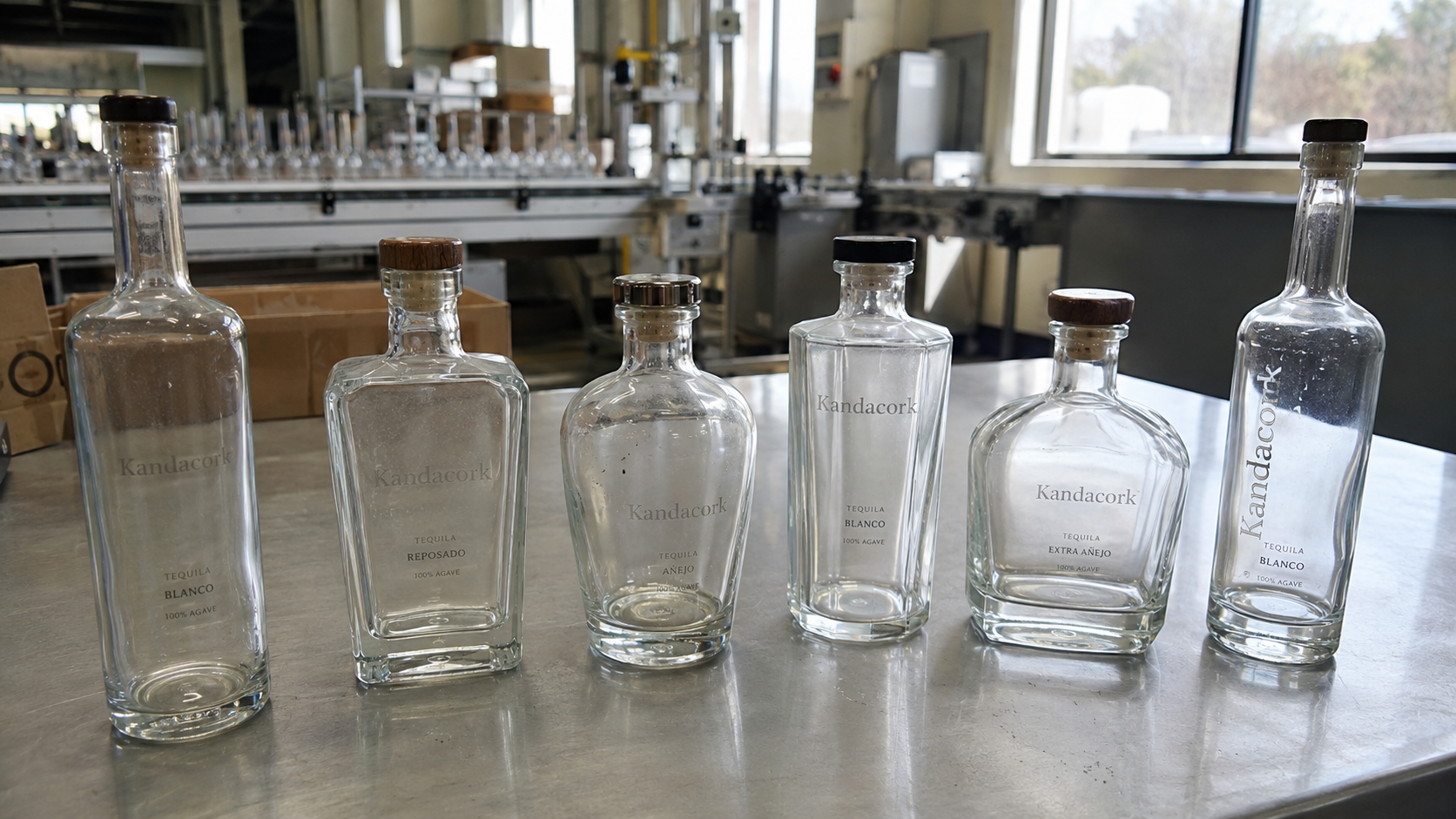
Kandacork Closures helps spirits brands, distilleries, bottlers, importers, distributors, and packaging buyers develop custom bar-top stopper options that balance brand appearance with technical performance.
What Are Hot Foil Logo Bar-Top Stoppers?
Hot foil logo bar-top stoppers are T-top bottle closures made with a decorative head and a sealing shank. The head may be made from wood, aluminum, plastic, Zamak, glass, ceramic, resin, or composite materials. The shank may use natural cork, micro-agglomerated cork, synthetic cork, or polymer-based sealing material.
Hot foil stamping uses heat, pressure, metallic foil, and a custom die to transfer the logo onto the stopper surface. Compared with ordinary printing, foil stamping creates a brighter metallic effect and a stronger premium cue.
Common buyer terms include hot foil logo stoppers, foil-stamped bar-top closures, hot stamped T-top stoppers, custom logo cork stoppers, metallic logo bottle stoppers, custom T-top stoppers, and premium spirits bottle closures.
The purpose is simple: the stopper must seal the bottle, support the brand identity, and look consistent with the full packaging system.
When Should Spirits Brands Choose Hot Foil Logo Stoppers?
Hot foil logo bar-top stoppers are a good choice when a brand wants a metallic logo, luxury accent, or stronger shelf presence without redesigning the full bottle.
They are suitable for premium spirits bottle projects, craft distillery packaging, private label spirits upgrades, limited-edition bottle releases, holiday packaging, gift sets, travel retail products, and bottle designs with metallic labels, capsules, or cartons.
Hot foil is best for clear logos, monograms, crests, short wordmarks, borders, and simple brand marks. It may not be ideal for tiny legal text, complex gradients, photographic artwork, very rough surfaces, or designs that require many colors.
If the artwork is too detailed, buyers may need to consider embossing, debossing, laser engraving, pad printing, screen printing, or a metal insert instead.
Stopper-Specific Hot Foil Requirements
Hot foil on a stopper is different from hot foil on a flat label or a large bottle surface. A stopper top usually has a smaller decoration area, so the logo must be simpler, cleaner, and easier to read at reduced size.
For stopper projects, the most important requirements include surface stability, stamping area, logo simplification, foil adhesion, and packing protection. A flat top insert often gives cleaner foil edges than direct stamping on open-grain wood. A coated aluminum or plastic surface may also give better transfer consistency than an untreated or textured surface.
Sidewall hot foil is usually more complex than top stamping because it depends on curvature, fixture control, and logo placement tolerance. If the logo must appear on the side of the stopper, the buyer should confirm whether the surface height, radius, and material finish can support stable foil transfer.
In many stopper projects, the first failed sample is not caused by foil color, but by artwork that is too thin for the available stamping area. For this reason, artwork review should happen before tooling.
For export cartons, decorated heads should be protected from direct friction. Even a well-stamped foil logo can be scratched if finished closures are packed without proper separation or surface protection. If the stopper project is part of a wider decorated bottle program, buyers can also coordinate closure artwork with hot foil stamping for spirits packaging to keep metallic details consistent across the full pack.
Best Materials for Custom Hot Foil Bar-Top Stoppers
The stopper material affects appearance, hand feel, durability, decoration performance, and cost. The right choice depends on the spirit category, brand positioning, bottle design, and target budget.
| Stopper Material | Best For | Hot Foil Suitability | Buyer Notes |
|---|---|---|---|
| Wooden head | Whisky, rum, brandy, craft gin | High on smooth or insert surfaces | Check wood grain, coating, moisture control, and flat stamping area |
| Aluminum head | Vodka, gin, tequila, liqueur | Medium to high depending on finish | Match foil with anodized, brushed, matte, or polished surfaces |
| Plastic head | Private label, volume spirits, promotional ranges | Medium to high after surface testing | Good cost control; confirm heat resistance and foil adhesion |
| Zamak or metal head | Luxury whisky, tequila, rum, cognac | Project-dependent | Consider embossing, plating, enamel, inserts, or combined decoration |
| Glass or ceramic head | Collector bottles and luxury editions | Limited and project-specific | Requires review for adhesion, surface shape, and packing protection |
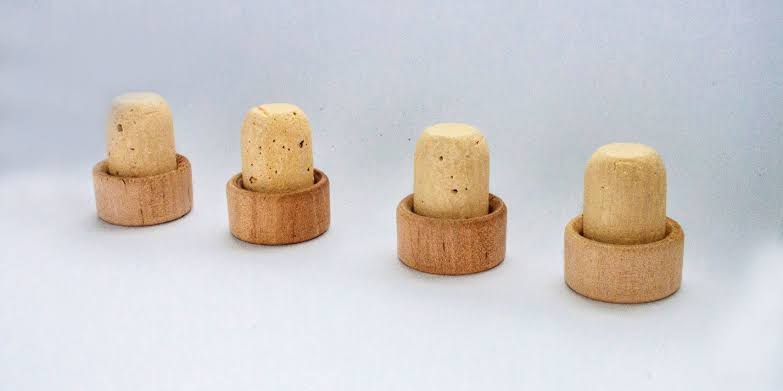
Wooden stoppers are often selected for heritage, craft, and aged-spirit packaging. They create a warm and natural feeling. Hot foil works best when the wood surface is smooth, coated, or designed with a flat top insert.
Aluminum stoppers offer a clean and modern look. They work well for contemporary gin, vodka, tequila, and liqueur packaging. The foil color should contrast clearly with the base finish.
Plastic stoppers are practical for volume production and private label programs. With proper surface testing, hot foil can upgrade plastic closures at a controlled cost. For buyers still comparing material direction, a plastic vs wooden stopper comparison can help clarify cost, appearance, and production priorities.
Metal and Zamak stoppers are used when the closure needs weight and luxury feel. These projects may combine hot foil with embossing, debossing, plating, enamel, or medallion inserts. For high-end spirits projects, a metal vs wooden stopper guide can help buyers compare hand feel, branding space, and premium positioning.
Buyer Decision Matrix for Custom Stopper Projects
Different buyers have different priorities. A craft distillery may care most about natural feel, while a private label buyer may focus on cost, consistency, and repeat orders.
| Buyer Priority | Recommended Direction |
|---|---|
| Lowest cost with custom logo | Plastic head + synthetic shank + simple hot foil logo |
| Craft or natural brand feel | Wooden head + cork or micro-agglomerated shank |
| Modern premium look | Aluminum head + clean metallic foil logo |
| Luxury hand feel | Zamak or metal head + embossing, insert, or foil accent |
| Best repeatability | Synthetic or micro-agglomerated shank with controlled head finish |
| High visual impact | Hot foil logo matched with label foil, capsule, and gift box |
| Limited-edition packaging | Wood, metal, or Zamak head with special foil color or insert |
| Multi-SKU private label range | Plastic or aluminum head with consistent logo position and color system |
This matrix can help buyers narrow the direction before requesting samples. The final choice should still be confirmed with bottle neck fit, artwork review, and physical sample testing.
Hot Foil vs Embossing, Laser Engraving, and Printing
Hot foil is not the only decoration option for custom bar-top stoppers. The best method depends on the logo, material, surface, quantity, and desired brand effect.
| Decoration Method | Best Use | Visual Effect | Limitation |
|---|---|---|---|
| Hot foil | Metallic logo and luxury accent | Bright, reflective, premium | Not ideal for tiny text or gradients |
| Embossing / debossing | Tactile brand marks | Raised or pressed dimensional effect | Requires tooling and suitable material |
| Laser engraving | Permanent mark on wood or selected coated surfaces | Clean, precise, craft-oriented | Limited color effect |
| Pad or screen printing | Flat-color logos and graphic marks | Flexible and economical | Usually less premium than metallic foil |
| Metal insert or medallion | Ultra-premium stopper top | Luxury badge effect | Higher cost and more complex structure |
Hot foil is best when the brand wants metallic clarity. Embossing is better for tactile depth. Printing is better when color flexibility matters. Laser engraving is useful when a permanent, craft-style mark is preferred.
For some premium projects, two decoration methods can be combined. For example, a wooden stopper may use a debossed logo with gold foil inside the mark. A metal stopper may use an embossed top with a small foil accent or decorative insert.
Artwork Requirements Before Sampling
Artwork preparation has a major impact on sample quality. For hot foil logo bar-top stoppers, vector artwork is strongly recommended.
Buyers should provide AI, EPS, editable PDF, or other vector files. The logo should have clean outlines, enough spacing, suitable line thickness, and a clear foil area. Low-resolution JPG or PNG files may help as visual references, but they are usually not accurate enough for tooling.
Before sampling, confirm logo size, logo position, foil color target, stamping area, line thickness, surface material, top-view or side-view placement, and die or tooling requirements.
Very thin strokes, tiny text, dense patterns, gradients, and complex textures may not transfer cleanly. A logo that looks sharp on a large screen can lose clarity when reduced to a small stopper top.
Not sure whether your logo is suitable for hot foil stamping? Send your vector artwork, bottle drawing, preferred stopper material, and foil color target to Kandacork Closures for sample review. For top-facing marks, crests, icons, medallions, and logo panels, custom closure top surface design support can help align artwork with the available stamping area.
Shank Selection and Bottle Neck Fit for Spirits Bottles
The decorative head creates the visual effect, but the shank determines closure performance. A hot foil logo stopper should never be approved only by appearance.
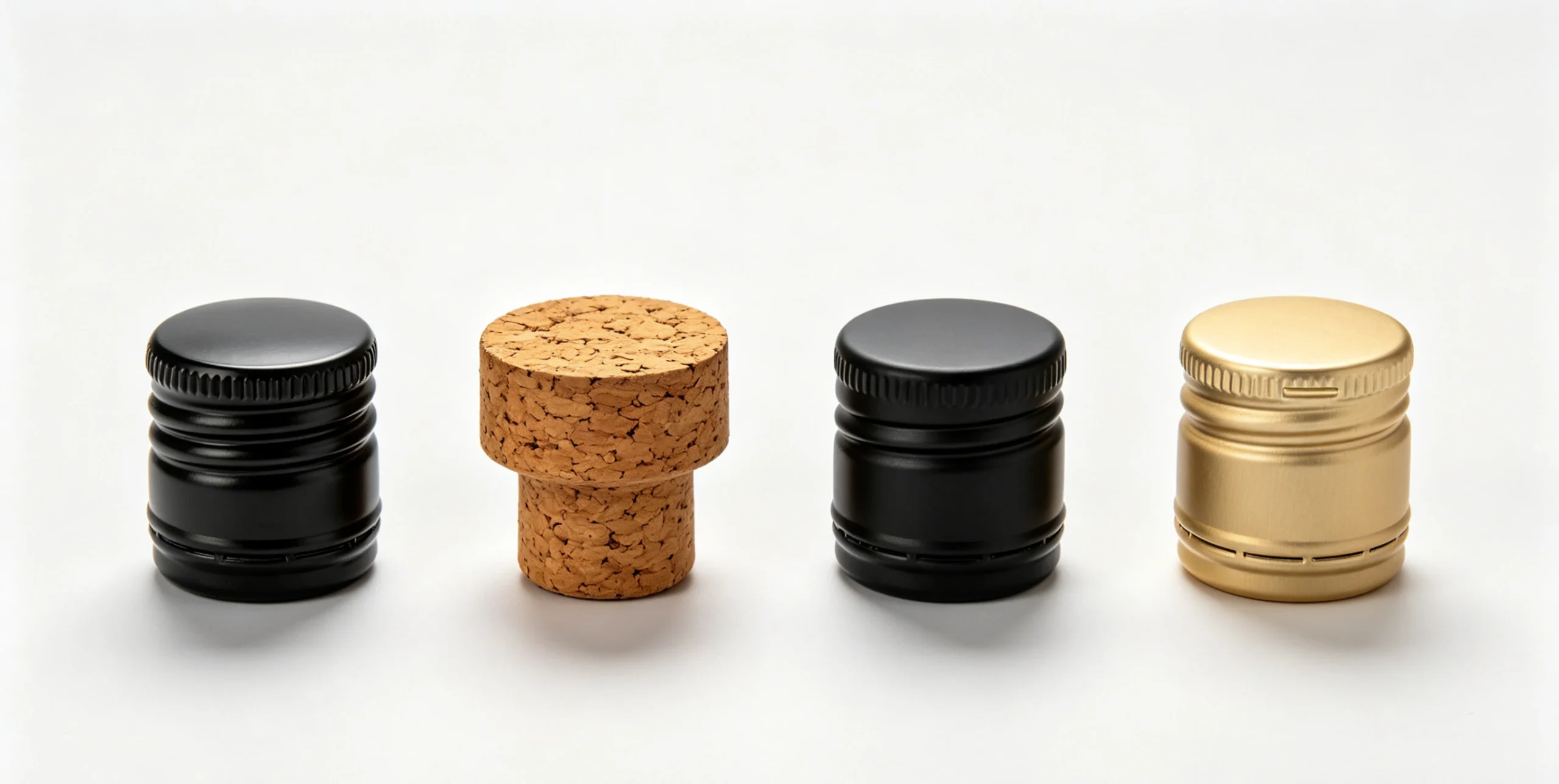
Common shank options include natural cork, micro-agglomerated cork, synthetic cork, and polymer-based shanks. Natural cork provides a traditional premium image. Micro-agglomerated cork offers more controlled consistency. Synthetic cork can provide stable dimensions and predictable compression for volume bottling.
Important fitment details include bottle neck bore, neck finish, shank diameter, insertion depth, insertion force, pull-out force, seal tightness, leakage risk, alcohol compatibility, head-to-shank bonding, transport conditions, and storage conditions.
If the shank is too loose, the stopper may leak or feel low quality. If it is too tight, it may be difficult to insert or remove. A good bar-top stopper should seal securely while giving the consumer a controlled opening experience.
For new projects, buyers should provide bottle drawings, neck finish drawings, or physical bottle samples before bulk production.
Sample Approval Checklist for Hot Foil Logo Stoppers
Sample approval should cover both decoration quality and closure performance. A sample that looks attractive but fails fitment, adhesion, or packing tests is not ready for production.
Before approval, check logo position accuracy, foil edge sharpness, complete foil transfer, foil adhesion, rub resistance, foil color consistency, surface scratches, correct head material, correct shank material, shank diameter, straight assembly, head-to-shank bonding, insertion and pull-out feel, basic leakage risk, alignment with label, capsule, and carton, and packing protection.
During bulk production, the supplier should control material consistency, logo placement tolerance, foil brightness, shank dimensions, surface cleanliness, assembly strength, batch traceability, and carton protection.
Export packing is especially important. Hot foil surfaces may scratch if finished stoppers are packed without suitable separation or surface protection. For large orders, buyers should confirm how stoppers will be packed, labeled, boxed, and shipped.
Compliance and Food-Contact Considerations
Spirits packaging buyers should review the regulatory expectations of the destination market. In the European Union, food-contact material legislation includes Regulation (EC) No 1935/2004 as a general framework for materials and articles intended to come into contact with food. In the United States, spirits packaging and labeling claims may also need to align with TTB distilled spirits labeling guidance.
The decorative top may not directly touch the liquid, but the shank may contact the bottle neck, alcohol vapor, or product. This makes material selection important.
Buyers should ask suppliers about food-contact material declarations, shank material suitability, plastic material compliance where relevant, coating and foil safety review, traceability records, and destination-market requirements.
For quality management, ISO 9001 can be used as a familiar reference when reviewing supplier systems. For shipment performance, ASTM or ISTA packaging test methods may help guide transport packaging evaluation.
Matching Hot Foil Stoppers with Full Spirits Packaging
A premium stopper should match the full packaging system. It should not look like an isolated part added at the end of development.
Packaging buyers should compare the stopper with the bottle glass color, bottle shape, label material, label foil, capsule color, neck decoration, gift box, carton, and liquid color.
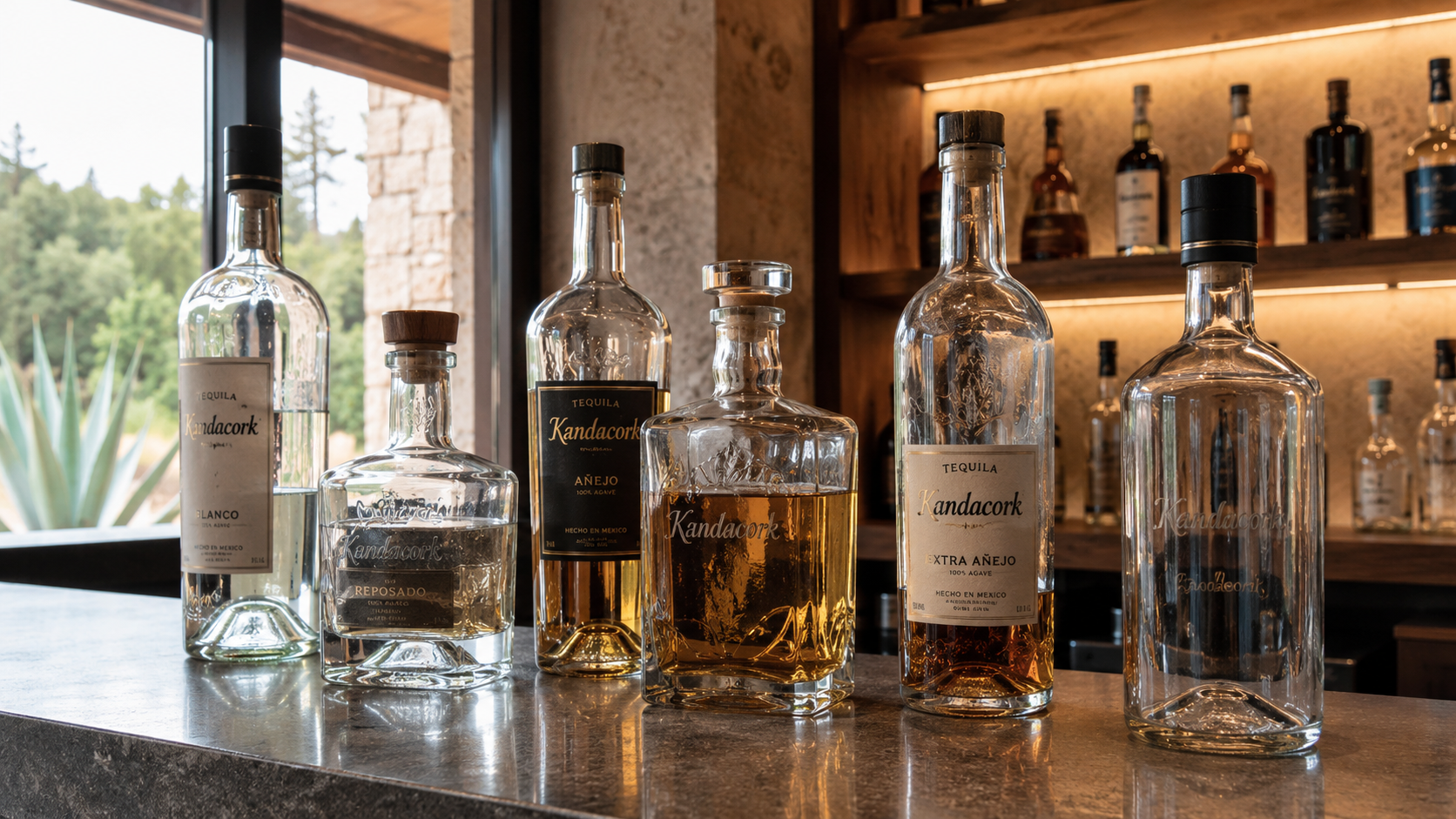
For example, a whisky brand with a cream label and gold typography may choose a dark wooden stopper with a gold hot foil logo. A gin brand with a frosted bottle and silver botanical details may use an aluminum stopper with a silver or black foil logo. A rum brand with amber glass and warm label tones may select a walnut-style wooden stopper with copper foil.
The goal is not to add decoration everywhere. The goal is to make every packaging element support the same brand message.
Custom Stopper Development Process
A clear development process helps reduce sampling delays and quality risks. For custom hot foil bar-top stoppers, the process usually includes:
- Review the bottle drawing, neck bore, or physical bottle sample.
- Select the stopper head material and shank material.
- Review the logo file, foil area, and stamping position.
- Confirm tooling requirements, foil color, and sample plan.
- Produce samples for decoration and bottle fit review.
- Check foil clarity, adhesion, rub resistance, insertion feel, and pull-out performance.
- Approve the final sample before bulk production.
- Pack decorated stoppers with suitable protection for shipment.
This process helps buyers evaluate both appearance and function before committing to large-volume production.
How to Choose a Custom Stopper Supplier and Prepare an RFQ
Choosing a supplier for hot foil logo bar-top stoppers should involve more than comparing unit price. A capable supplier should understand closure fitment, decoration feasibility, material compatibility, quality inspection, and export packing.
Before selecting a supplier, ask:
- Can the supplier review bottle neck fit?
- Can they recommend head and shank material combinations?
- Can they support wood, aluminum, plastic, and metal stopper options?
- Can they produce samples before bulk production?
- Can they explain hot foil tooling requirements?
- Can they offer other decoration methods if hot foil is not ideal?
- Can they inspect foil adhesion, logo clarity, shank diameter, and assembly strength?
- Can they protect decorated stoppers during packing and shipment?
- Can they support repeat orders with consistent logo position and foil color?
To request a sample or quotation, buyers should prepare the spirit category, bottle capacity, bottle drawing, neck bore, stopper head material, shank material, logo artwork file, foil color target, logo position, estimated order quantity, target launch date, destination market, packing requirements, and reference images.
A request such as “gold foil logo on wooden bar-top stopper for a 700ml whisky bottle” is useful, but it is not complete. A stronger RFQ includes bottle neck details, logo file, preferred material, shank type, foil color reference, sample quantity, and estimated bulk volume.
RFQ Template for Packaging Buyers
Use this template when contacting Kandacork Closures:
We are sourcing hot foil logo bar-top stoppers for a [spirit category] bottle. The bottle size is [700ml / 750ml / other], and the neck bore is [dimension if available]. We prefer a [wood / aluminum / plastic / metal] head with a [natural cork / synthetic cork / micro-agglomerated cork] shank.
Please review the attached logo file and recommend a suitable stopper structure, foil color, logo position, sample lead time, MOQ, tooling cost, and bulk quotation. Our target launch date is [date], and the destination market is [country or region].
Common Mistakes to Avoid
One common mistake is choosing the decoration before confirming bottle fit. The stopper must first work as a closure.
Another mistake is using artwork that is too detailed for the available stamping area. Small hot foil logos need simplified shapes and clean spacing.
Buyers should also avoid approving only a digital rendering. Physical samples are necessary to check foil transfer, surface finish, hand feel, bottle fit, and packaging alignment.
Other mistakes include ignoring foil rub resistance, overlooking shank diameter tolerance, comparing only unit price, forgetting export packing protection, and changing artwork after tooling approval.
Avoiding these issues can reduce delays, cost increases, and quality disputes.
FAQ
What are hot foil logo bar-top stoppers used for?
Hot foil logo bar-top stoppers are used to add a metallic brand mark to spirits bottle closures. They help premium spirits brands improve shelf presentation while keeping the closure connected to bottle fit, sealing performance, and packaging design.
Can hot foil be used on wooden bar-top stoppers?
Yes. Hot foil can be used on wooden bar-top stoppers when the surface is smooth, stable, and properly finished. Flat top areas or inserts usually give cleaner results than rough natural grain.
Which stopper material is best for hot foil logos?
Wood, aluminum, and plastic can all work, depending on the surface and brand goal. Wood is strong for craft and heritage packaging, aluminum is good for modern premium brands, and plastic is useful for controlled-cost private label projects.
Is hot foil better than embossing for stopper logos?
Hot foil is better for metallic shine and visual contrast. Embossing is better for tactile depth. Premium spirits projects may combine both methods when the material and budget allow.
What artwork file is needed for hot foil stamping?
Vector artwork is usually preferred. AI, EPS, or editable PDF files help create accurate stamping dies and cleaner logo edges.
How do I check bottle neck fit before ordering bar-top stoppers?
Provide bottle drawings or physical bottle samples. The supplier can review neck bore, shank diameter, insertion depth, pull-out feel, sealing performance, and leakage risk.
What information is needed for a custom stopper quotation?
Send the bottle drawing, neck details, logo file, foil color target, stopper material preference, shank material preference, quantity, destination market, and launch schedule.