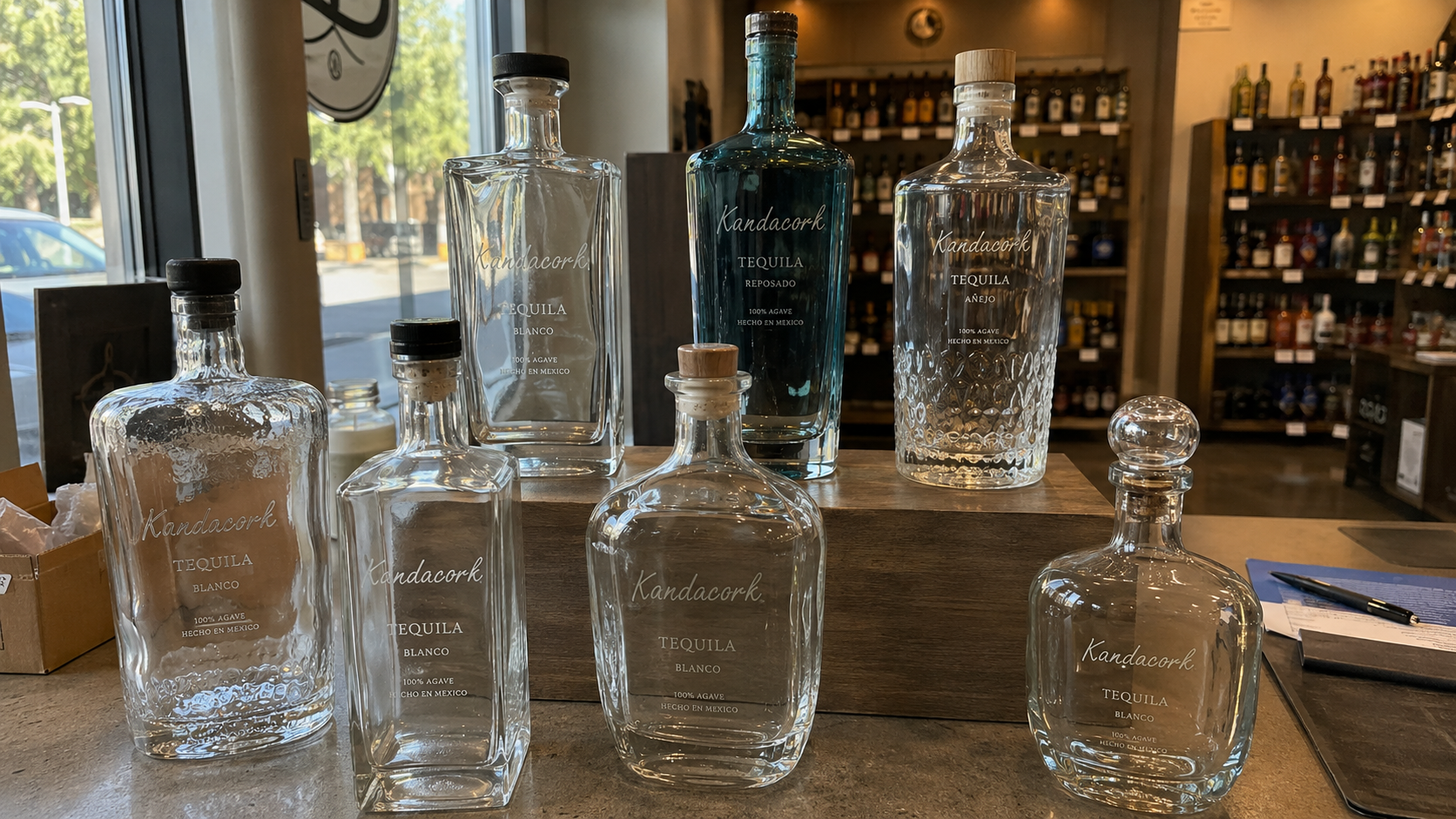
Cork-look and standard synthetic stoppers can serve different branding and production needs. This guide explains how appearance, material structure, compression, fit consistency and buyer expectations differ between these stopper options.
Quick Answer: What Is the Difference?
Synthetic cork vs synthetic stoppers comes down to component versus finished closure.
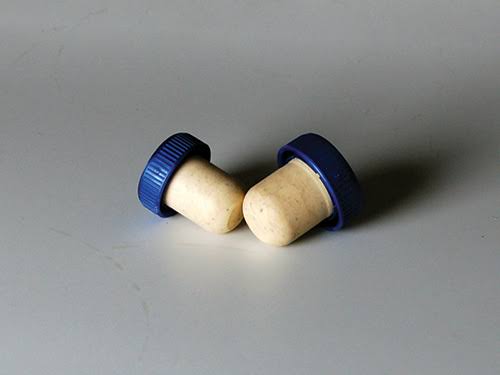
A synthetic cork is usually the sealing shank or cork-like insert. A synthetic stopper is usually the complete bottle closure, including the shank, cap, finish, decoration, and brand presentation.
For most retail-ready spirits bottles, synthetic stoppers are the more complete buying category because they combine sealing, resealing, handling, customization, and shelf appearance. The synthetic cork helps seal the bottle. The synthetic stopper helps seal, open, reseal, decorate, and position the bottle in the market.
Buyer Decision Summary
Choose synthetic cork when you mainly need a cork-like sealing insert with consistent diameter, controlled compression, and predictable fit.
Choose synthetic stoppers when you need a complete spirits bottle closure with sealing performance, resealability, cap design, brand presentation, and bulk production consistency.
For many spirits packaging projects, synthetic bar-top stoppers are more practical than buying a shank alone because the cap, grip, visual proportion, and decoration all influence how the finished bottle feels in the hand.
What Is Synthetic Cork?
Synthetic cork is a cork-like closure component made from engineered material rather than natural cork bark. Depending on the product design, it may be made from polymer foam, thermoplastic material, TPE-style compounds, or other synthetic materials designed to compress into the bottle neck and recover after insertion.
The main function of synthetic cork is sealing. It must fit the bottle neck, create stable contact pressure, resist deformation, and maintain reliable closure performance through storage, transport, and repeated use.
For packaging buyers, the key specifications usually include shank diameter, insertion depth, compression recovery, extraction force, surface finish, alcohol compatibility, and odor neutrality.
Synthetic cork is often selected because it offers more dimensional consistency than many lower-grade natural corks. It can also reduce issues such as cork dust, crumbling, and natural cork variability. In wine packaging, closure discussions often focus on oxygen transmission and cork taint. In spirits packaging, the focus is usually bottle neck fit, resealing, premium appearance, and production stability.
What Is a Synthetic Stopper?
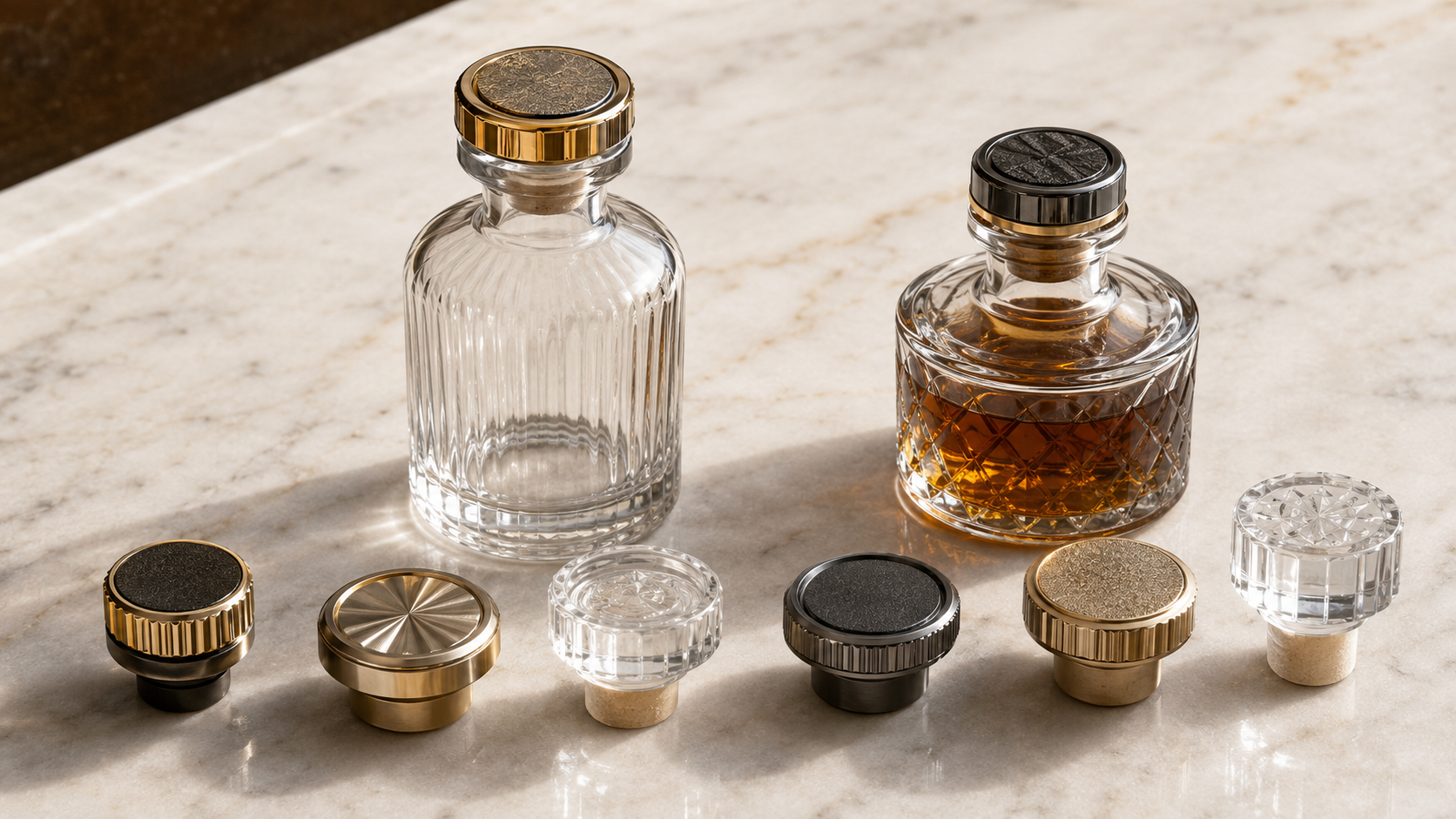
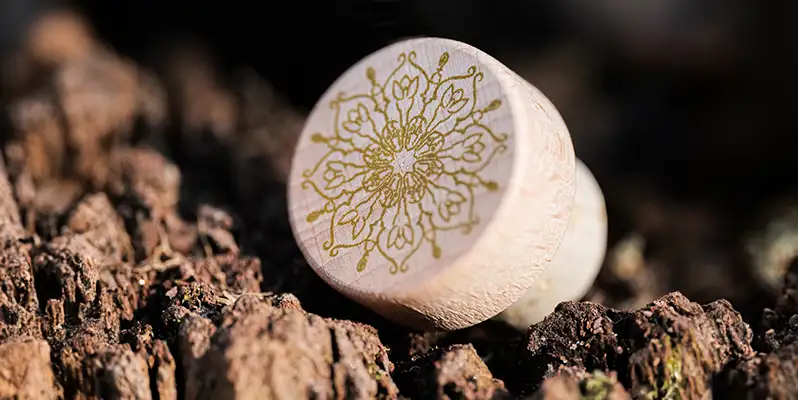
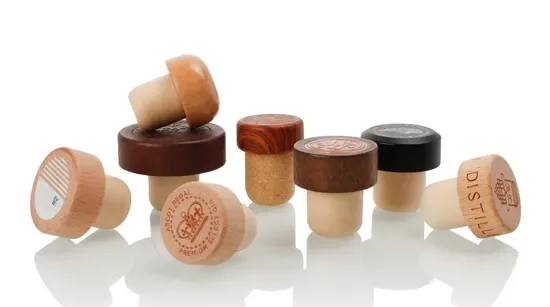
A synthetic stopper is usually the finished closure product. It may include a synthetic cork shank, plastic shank, T-top head, bar-top cap, decorative surface, colored component, wood-effect top, metalized top, or custom branded finish.
This is why synthetic cork vs synthetic stoppers is an important sourcing question. The cork-like part seals the bottle, but the full stopper determines how the closure looks, feels, opens, reseals, and supports the brand.
Spirits bottles are often opened and closed many times after purchase. Consumers expect the stopper to pull out cleanly, feel secure, and reseal the bottle after each pour. A poorly designed stopper can make a premium bottle feel cheap, even when the glass, liquid, and label are well executed.
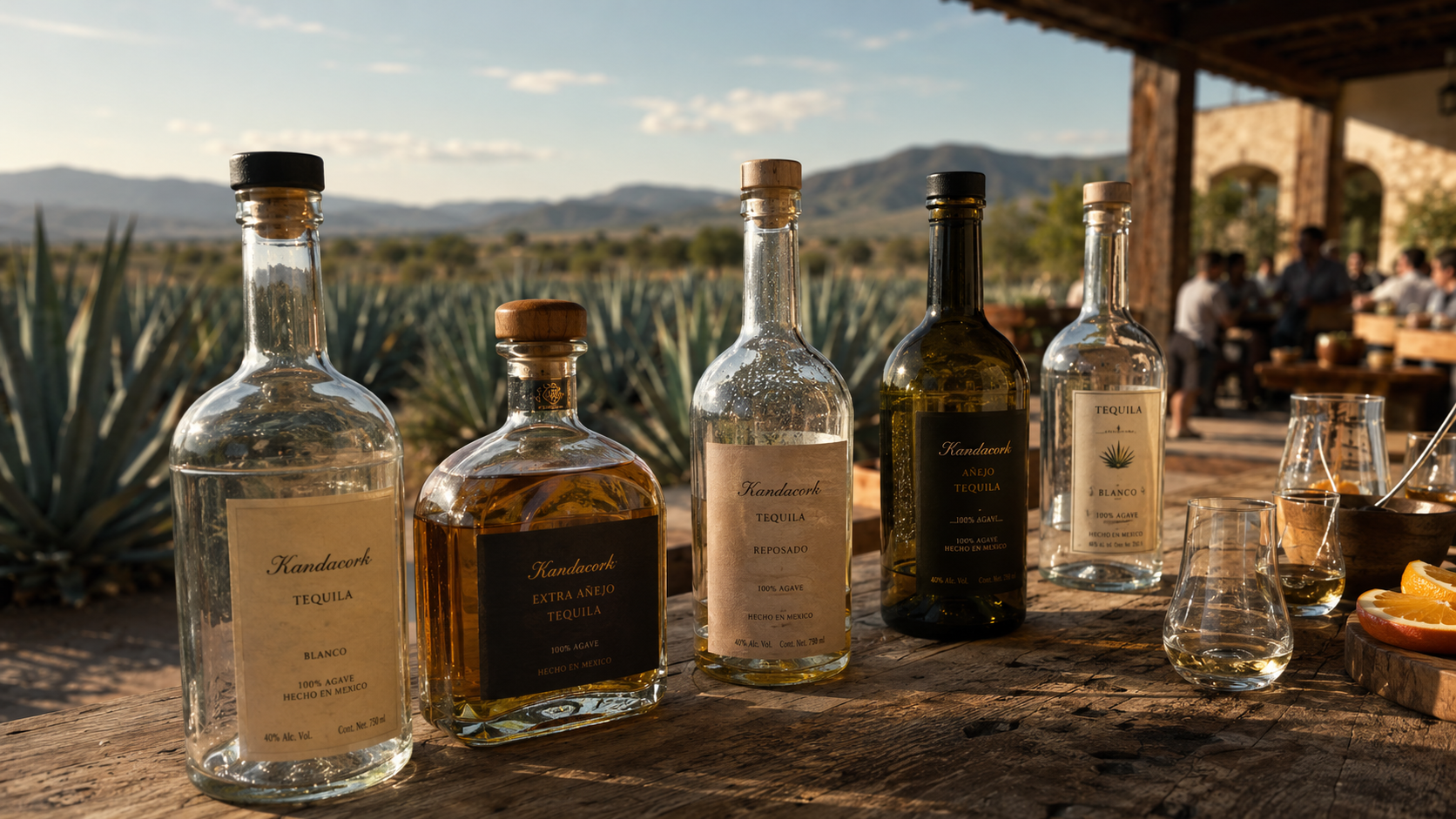
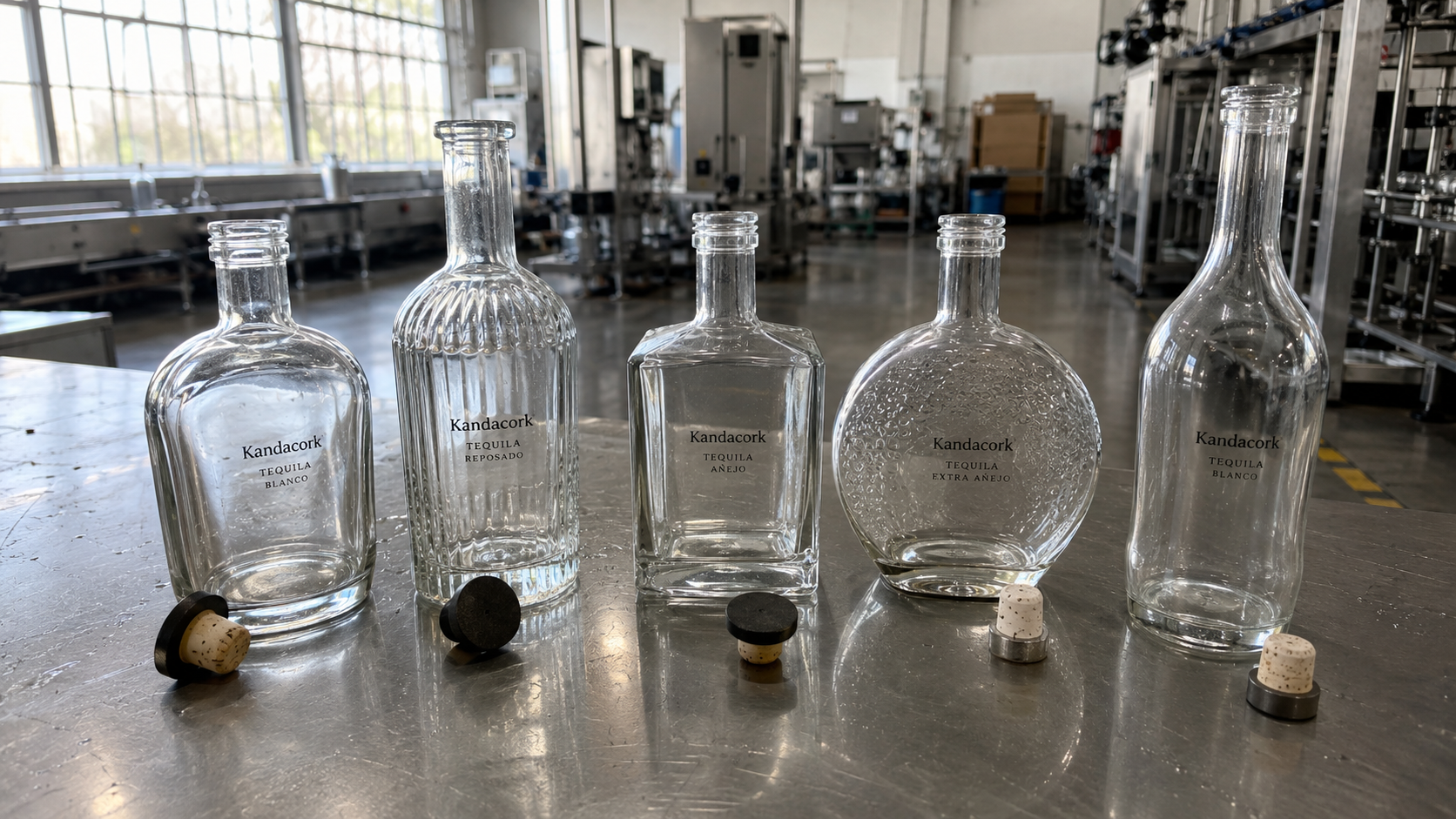
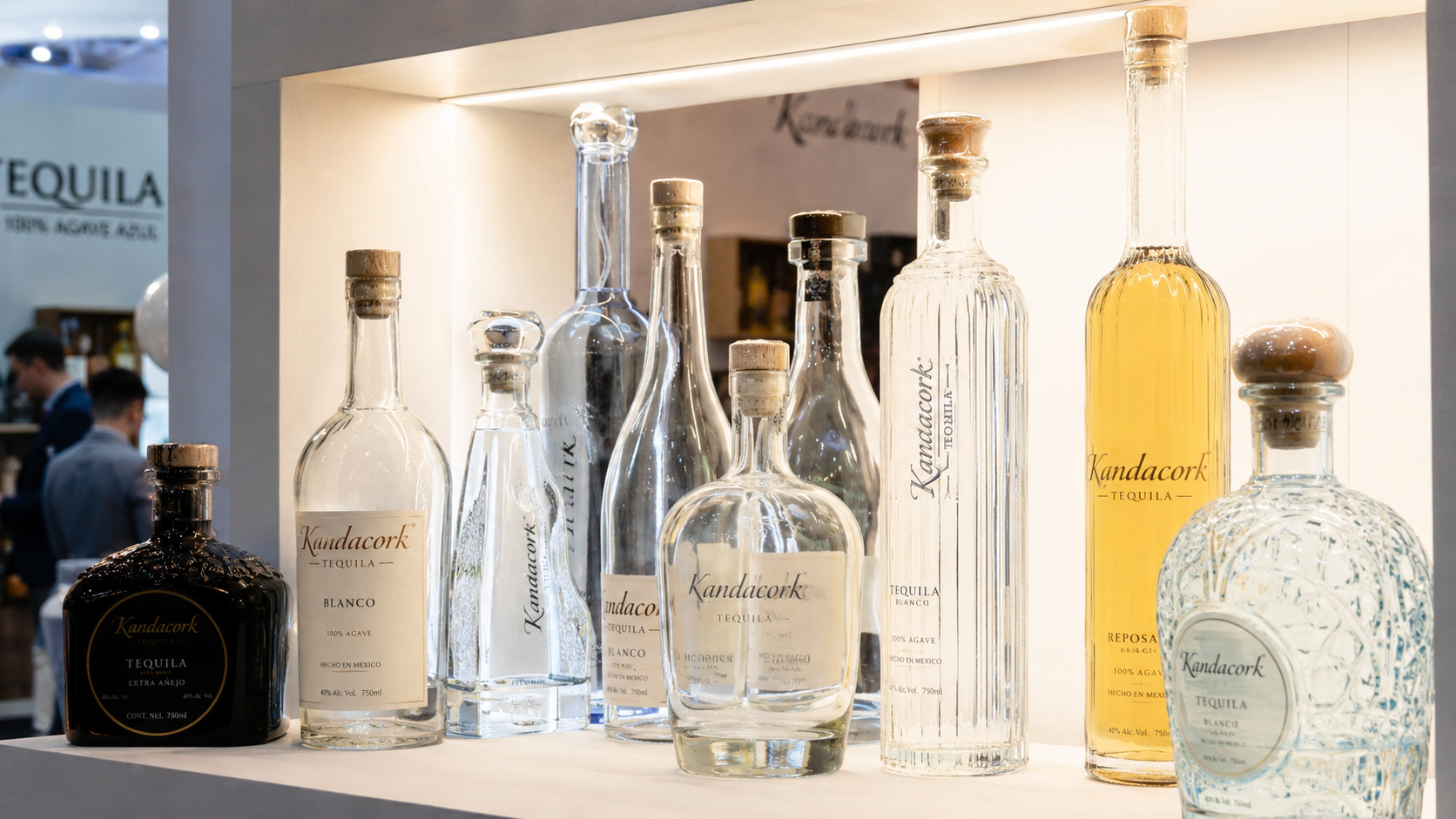
Synthetic stoppers also support visual differentiation. A gin brand may choose a bright or translucent cap to match botanical packaging. A rum brand may prefer a dark wood-look top. A tequila or mezcal brand may need a distinctive closure shape that supports a craft or heritage image. A vodka brand may choose a clean, minimal, modern stopper.
Synthetic Cork vs Synthetic Stoppers Comparison
| Factor | Synthetic Cork | Synthetic Stopper |
|---|---|---|
| Main meaning | Cork-like sealing component | Complete bottle closure system |
| Main role | Seals inside the bottle neck | Seals, opens, reseals, and presents the brand |
| Typical component | Shank, plug, or insert | Shank plus cap or bar-top head |
| Buyer concern | Diameter, compression, recovery, neutrality | Fit, finish, material, decoration, usability |
| Common application | Wine closures and some bottle closures | Spirits, liqueurs, premium beverages, private-label packaging |
| Customization level | Usually limited | Higher customization potential |
| Best use case | Technical sealing consistency | Complete spirits packaging solution |
The practical takeaway is simple: synthetic cork focuses on sealing performance, while synthetic stoppers combine sealing performance with appearance, usability, and brand value.
Why the Difference Matters for Spirits Bottles
Spirits packaging has different priorities from wine packaging. Wine closure discussions often focus on aging, oxygen transmission rate, cellar storage, and cork taint. These are important in closure science, but spirits brands usually face a different set of packaging requirements.
A whisky, gin, vodka, rum, tequila, mezcal, brandy, or liqueur bottle usually needs a closure that can be opened and resealed repeatedly. The stopper must provide a secure first impression, a smooth pull, a stable reseal, and a finished appearance that matches the bottle and label design.
A synthetic cork may solve the sealing challenge. A synthetic stopper solves the broader packaging challenge. It affects how the product performs during shipping, how it looks on the shelf, how the consumer experiences the first opening, and how consistently the bottling line can operate.
Small dimensional differences can create large production problems. If the shank is too tight, insertion may be difficult and extraction force may be too high. If the shank is too loose, the bottle may leak or reseal poorly. If the cap looks too small, too light, or poorly matched, the bottle may lose premium appeal.
A well-specified synthetic stopper balances engineering, usability, and branding.
Technical Specifications Buyers Should Confirm
Before ordering synthetic stoppers in bulk, buyers should confirm technical specifications with the supplier and test the closure on the actual bottle.
| Specification | Why It Matters | Buyer Action |
|---|---|---|
| Inner neck diameter | Determines whether the shank will fit correctly | Provide bottle drawing and physical samples |
| Neck tolerance | Affects consistency across bottle batches | Confirm tolerance range with the glass supplier |
| Shank diameter | Controls sealing pressure and extraction force | Test multiple shank sizes if needed |
| Insertion depth | Influences stability and appearance | Confirm with filled-bottle testing |
| Compression recovery | Helps the shank maintain contact with the neck | Ask for material and performance guidance |
| Extraction force | Affects consumer opening experience | Test for smooth but secure removal |
| Cap diameter | Impacts visual balance and handling | Match cap size to bottle design |
| Cap material | Influences weight, feel, and brand positioning | Compare plastic, wood-look, metal-look, or composite options |
| Alcohol compatibility | Protects flavor, odor, and material stability | Test with the actual spirit formula |
| Packing format | Affects production handling and cleanliness | Confirm bulk packing, dust control, and shipping protection |
For beverage and spirits packaging, material suitability is important because closure components may contact the product, the product vapor, or the inside of the bottle neck. The U.S. FDA explains that food packaging and other substances that come into contact with food are regulated as food contact substances when applicable. For European market planning, the European Commission also frames packaging materials intended to contact food under food contact material safety principles.
For U.S. spirits projects, buyers should also consider distilled spirits closure and container rules. The eCFR section on liquor bottle, label, and closure requirements states that spirits containers of one gallon or less must have a securely affixed closure or device before withdrawal from bond or customs custody. This makes closure selection a packaging performance issue as well as a brand presentation issue.
Bottle Neck Fit and Closure Performance
Bottle neck fit is the first technical requirement in the synthetic cork vs synthetic stoppers decision. The stopper must match the bottle’s inner neck diameter, neck taper, tolerance range, and filling conditions.
A stopper that works well in one bottle may not work in another, even when both bottles have the same nominal capacity. A 750 ml whisky bottle, 700 ml gin bottle, or 500 ml liqueur bottle may use a different neck finish depending on the glass manufacturer and mold design.
For complex projects, a cap and neck compatibility review helps confirm whether the proposed stopper matches the actual bottle neck, closure height, insertion depth, cap proportion, and filling-line requirements.
Dry fit testing is useful, but it is not enough. Buyers should test filled bottles under realistic storage and shipping conditions. The test should include leakage, insertion feel, extraction force, resealing, odor neutrality, cap alignment, and visual appearance after transport.
Compression Recovery and Extraction Force
Compression recovery describes how well the synthetic cork or shank returns toward its original shape after being compressed into the bottle neck. Good recovery helps maintain sealing pressure over time.
Extraction force is the effort required to remove the stopper. For spirits, this is especially important because the bottle is opened more than once. A stopper that is too tight can frustrate consumers. A stopper that is too loose can feel cheap or create leakage risk.
The best synthetic stoppers offer a controlled balance. They should feel secure during handling and transport, but still open smoothly when the consumer pulls the cap.
Premium spirits packaging depends on this tactile experience. The sound, pull, grip, and reseal all contribute to perceived quality.
Odor Neutrality and Alcohol Compatibility
A stopper used for spirits should not add unwanted odor, flavor, or visual contamination. Alcohol can interact with unsuitable materials, especially when products have high ABV, sugar, botanical extracts, colorants, or flavor compounds.
Gin may contain botanical oils and aromatic compounds. Liqueurs may contain sugar and flavor additives. High-proof spirits may require additional compatibility testing. Dark spirits such as whisky, rum, and brandy may place more emphasis on long-term storage appearance and premium opening feel.
For this reason, buyers should test synthetic stoppers with the actual liquid, not only with water or an empty bottle. The test should reflect real storage time, shipping conditions, market requirements, and export routes.
Best Synthetic Stopper Choices by Spirits Category
| Spirits Category | Closure Priority | Recommended Stopper Direction |
|---|---|---|
| Whisky | Premium feel, stable resealing, classic presentation | Synthetic stoppers for whisky bottles with substantial bar-top cap design |
| Vodka | Clean appearance, modern finish, consistent fit | Minimal synthetic stoppers for vodka bottles with smooth cap finish |
| Gin | Color matching, botanical branding, shelf distinction | Synthetic bar-top stoppers for gin with decorative color or shape |
| Rum | Warm visual tone, premium cap texture, secure fit | Dark, wood-look, or textured synthetic stoppers for rum bottles |
| Tequila | Distinctive shape, craft image, strong shelf identity | Custom synthetic stoppers for tequila bottles with unique cap profile |
| Mezcal | Artisanal appearance, tactile character, authenticity | Textured or natural-look synthetic stopper design |
| Brandy | Elegant presentation, smooth opening, classic finish | Premium synthetic stopper with refined cap material |
| Liqueur | Resealability, compatibility with sugar and flavors | Alcohol-compatible synthetic closures tested with the actual formula |
This category-based approach improves sourcing accuracy. Instead of choosing only by price or material, buyers can match the stopper to the spirit category, brand story, and bottle design.
When the bottle itself is still in development, coordinating the stopper with custom spirits bottles can help the packaging team align neck finish, bottle weight, closure diameter, label layout, and shelf presentation from the beginning.
Synthetic Cork vs Natural Cork vs Plastic Stopper
Many buyers compare synthetic cork with natural cork and plastic stoppers before making a final decision.
Natural cork has a traditional image and strong sustainability perception, especially in wine and premium beverages. It can look familiar and high-end. However, natural cork can vary in density, appearance, and mechanical performance. Lower-grade natural cork may crumble, chip, or create inconsistent extraction.
Synthetic cork offers controlled dimensions and reduced natural variation. It can be easier to standardize across large production runs. For spirits brands that need reliable fit and stable production, this consistency can be valuable.
Plastic stoppers can be cost-effective and visually flexible. However, not all plastic closures deliver a premium feel. The result depends on material quality, cap weight, surface finish, color, and bottle match.
For spirits brands, the best choice is rarely based on material alone. The best choice is the closure system that matches the product’s price point, bottle design, distribution channel, and customer experience.
When Should You Choose Synthetic Cork?
Choose synthetic cork when the main requirement is a cork-like sealing component with consistent dimensions.
Synthetic cork may be suitable when you need:
- Stable bottle neck fit
- Reduced variation compared with lower-grade natural cork
- Clean insertion and removal
- Lower risk of cork crumbling
- Scalable closure supply
- A cork-like function without relying on natural cork
This option can work for standard bottle formats, cost-sensitive packaging, private-label programs, and projects where technical sealing consistency is the main priority.
However, if your product also needs a premium finished appearance, custom cap design, branded top, or stronger shelf impact, synthetic stoppers are usually the more complete solution.
When Should You Choose Synthetic Stoppers?
Choose synthetic stoppers when you need a finished closure for retail-ready spirits packaging.
Synthetic stoppers are usually better when you care about:
- Premium shelf appearance
- Smooth opening and resealing
- Custom cap shape
- Cap color matching
- Wood-look, metal-look, or plastic cap options
- Brand decoration
- Bottle-specific fit
- Large-order consistency
- Private-label differentiation
In the synthetic cork vs synthetic stoppers comparison, spirits brands often choose synthetic stoppers because they solve both performance and presentation needs.
A synthetic stopper can support the brand story. A dark cap can make a rum bottle feel rich and mature. A bright cap can help a flavored gin stand out. A minimalist cap can support a premium vodka identity. A textured or craft-inspired top can fit tequila and mezcal packaging.
For projects that need logo printing, color systems, coatings, embossing, or coordinated bottle graphics, closure design should be developed alongside spirits decoration and branding so the cap, bottle, label, and carton feel like one complete packaging system.
Sample Approval Criteria for Synthetic Stoppers
Sample approval is one of the most important steps before a bulk closure order. A sample should not be approved only because it looks good on the bottle. It should also pass practical performance checks.
Use the following criteria before confirming bulk synthetic stoppers:
- No leakage after filled-bottle storage testing
- Smooth insertion without neck damage
- Stable extraction force across multiple bottle samples
- Secure resealing after repeated opening and closing
- No unwanted odor after liquid contact
- No visible swelling, deformation, cracking, or discoloration
- Clean cap alignment after insertion
- Consistent appearance across the sample batch
- No dust, debris, or surface contamination
- No visible deformation after transport simulation
- Good visual balance between cap size, bottle shoulder, and label design
For export-oriented packaging, transport testing should consider vibration, shock, compression, and handling conditions. The International Safe Transit Association provides packaging performance resources through ISTA, which can help brands think more systematically about distribution risk.
Quality control should also be repeatable. ISO describes ISO 9001 as a globally recognized quality management standard focused on meeting customer expectations and improving performance. For closure buyers, this reinforces the value of documented specifications, inspection steps, and repeatable production controls.
For stopper projects that require production validation, sealing and leakage tests help evaluate whether the closure performs under realistic storage, filling, and shipping conditions before the buyer approves mass production.
Procurement Workflow for Bulk Synthetic Stoppers
A clear procurement workflow helps buyers avoid fit problems and production delays.
Start by confirming the bottle drawing, inner neck diameter, and tolerance range. Then define the desired closure style, including shank material, cap material, cap diameter, cap height, color, finish, and branding requirements.
Next, request samples and test them with actual bottles. Check insertion force, extraction force, leakage, resealability, cap alignment, odor neutrality, alcohol compatibility, and shelf appearance. If the bottle will be shipped internationally, include transport simulation and storage-condition testing.
After sample approval, confirm bulk order details such as quantity, packaging format, lead time, quality inspection standard, and shipment method.
For private-label spirits and growing distilleries, this process makes the sourcing decision more predictable and reduces the risk of ordering a closure that looks good in photos but performs poorly in production.
If the bottle, closure, decoration, and export packing need to be coordinated as one program, an integrated glass bottle and closure partner can help reduce mismatches between glass structure, stopper fit, decoration areas, and shipment requirements.
What to Send for a Faster Recommendation
The more complete your project information is, the faster a closure supplier can recommend the right synthetic stopper.
| Send This Information | Why It Helps |
|---|---|
| Bottle drawing | Confirms neck dimensions, opening size, and closure fit |
| Physical bottle sample | Allows real fit, insertion, and extraction testing |
| Filled bottle sample, if available | Supports leakage, resealing, and compatibility review |
| Spirit type and ABV | Helps assess alcohol-contact requirements |
| Cap style preference | Guides material, shape, color, and finish recommendations |
| Target brand position | Helps match closure appearance to value, premium, or luxury packaging |
| Order quantity | Helps confirm production method, customization feasibility, and pricing direction |
| Export market | Helps identify packaging, shipping, and documentation needs |
| Filling method | Helps evaluate manual, semi-automatic, or automatic insertion requirements |
| Timeline | Helps plan sampling, approval, production, and delivery |
This information helps avoid guesswork. It also allows the supplier to recommend a closure based on real bottle conditions rather than only bottle capacity or product category.
Sustainability and Packaging System Considerations
Synthetic stoppers should be evaluated as part of the full packaging system, not as isolated components. A lightweight cap may reduce shipping weight, while a more premium cap may improve shelf impact and gift-pack positioning. A closure that can be separated from glass more easily may also support downstream sorting or recovery goals in some markets.
Glass bottle selection, closure fit, decoration method, carton design, and pallet loading all influence the final sustainability and logistics profile. Brands exploring recycled or lower-impact bottle programs may also consider eco glass packaging when planning the bottle and stopper together.
The most practical approach is to define sustainability goals early, then balance them with safety, compatibility, production reliability, and market expectations. A closure that fails in shipping, leaks during storage, or weakens consumer trust is not sustainable from a commercial perspective.
Common Mistakes to Avoid
Treating Synthetic Cork and Synthetic Stopper as the Same Thing
The biggest mistake is assuming both terms always mean the same product. They are related, but not identical. The synthetic cork is usually the sealing material. The synthetic stopper is the finished closure.
Buying Only by Price
Low-cost closures can become expensive if they cause leakage, poor shelf appearance, production delays, or customer complaints. Price matters, but it should be evaluated together with fit, quality, consistency, and brand value.
Ignoring Bottle Neck Tolerance
Even small neck variations can affect stopper performance. Buyers should test closures with real bottles from the actual production batch whenever possible.
Skipping Filled-Bottle Testing
Dry testing does not show the full picture. Filled bottles should be tested under realistic storage and shipping conditions before bulk approval.
Forgetting the Opening Experience
A stopper is part of the customer’s first physical interaction with the product. If it feels loose, overly tight, poorly aligned, or visually weak, it can reduce the premium impression of the bottle.
How Kandacork Closures Helps Spirits Brands
Kandacork Closures supports spirits brands, bottlers, and packaging buyers that need reliable closure solutions for commercial production. Buyers comparing synthetic cork vs synthetic stoppers can also review the wider bottle stoppers and closures range to compare synthetic cork, synthetic bar-top stoppers, wooden stoppers, aluminum stoppers, plastic stoppers, glass stoppers, screw caps, ROPP closures, and other closure formats.
A strong closure supplier should ask about more than the closure style. It should understand the bottle, liquid, insertion method, storage conditions, target market, brand positioning, and bulk order expectations.
Kandacork Closures can support discussions around stopper style, bottle neck fit, shank sizing, cap appearance, sampling, customization, and scalable supply. This helps buyers reduce sourcing risk and make the final packaging feel more intentional.
Need help matching a synthetic stopper to your bottle? Send your bottle drawing, neck diameter, target cap style, spirit type, ABV, and order quantity through the custom closure quote page to receive a closure recommendation and sample plan.
FAQ
Are synthetic corks and synthetic stoppers the same?
No. A synthetic cork usually refers to the cork-like sealing component, while a synthetic stopper usually refers to the complete closure system, including the shank and top.
What is the main difference between synthetic cork and synthetic stopper?
The main difference is that synthetic cork focuses on the sealing insert, while a synthetic stopper includes the sealing insert plus the cap, finish, design, and brand presentation.
Which is better for spirits packaging?
For most finished spirits bottles, synthetic stoppers are usually more practical because they combine sealing, resealing, appearance, and customization. Synthetic cork is important, but it is only one part of the closure decision.
Are synthetic cork stoppers suitable for liquor bottles?
Yes. Synthetic cork stoppers can be suitable for liquor bottles when they are properly matched to the bottle neck, tested with the actual liquid, and confirmed for resealing and transport performance.
Can synthetic stoppers be used for whisky, rum, gin, vodka, and tequila?
Yes. Synthetic stoppers can be used for whisky, rum, gin, vodka, tequila, mezcal, brandy, and liqueurs when the shank size, cap design, and material compatibility are matched to the bottle and liquid.
Do synthetic corks cause cork taint?
Synthetic corks are designed to avoid the natural cork-related risk of TCA cork taint. However, all closure materials should still be evaluated for odor neutrality, food-contact suitability, and product compatibility.
Can synthetic stoppers be customized?
Yes. Synthetic stoppers can often be customized by cap material, cap color, top shape, shank size, finish, and decoration method. Customization depends on supplier capability, order quantity, and technical requirements.
Are synthetic stoppers suitable for high-proof spirits?
They can be suitable, but high-proof spirits require careful material compatibility testing. Buyers should test the stopper with the actual liquid, bottle, storage conditions, and expected shelf life.
How do I choose the right synthetic stopper size?
The correct size depends on the bottle’s inner neck diameter, tolerance, insertion depth, and desired extraction force. Do not choose only by bottle capacity. Always confirm with bottle drawings, samples, and fit testing.
Are synthetic stoppers only for low-cost spirits?
No. Synthetic stoppers can be used for value, mid-range, and premium spirits. The final perception depends on closure design, cap material, finish, bottle match, and brand execution.
What should I test before ordering synthetic stoppers in bulk?
Test insertion, extraction force, leakage, resealability, odor neutrality, alcohol compatibility, cap alignment, and transport performance. Use filled bottles and realistic storage conditions before confirming mass production.
Conclusion
The difference between synthetic cork vs synthetic stoppers is more than wording.
A synthetic cork is usually the sealing component. A synthetic stopper is the complete closure system that supports sealing, opening, resealing, bottle appearance, and brand identity.
For spirits brands, the smarter buying decision should consider bottle neck fit, compression recovery, extraction force, alcohol compatibility, cap design, production method, sustainability goals, and customer experience. The right closure should protect the liquid, support the brand, and perform consistently in bulk production.
If you are sourcing closures for whisky, vodka, gin, rum, tequila, mezcal, brandy, liqueur, or private-label spirits, choosing the right synthetic stopper can help your bottle look better, open better, ship better, and sell with more confidence.