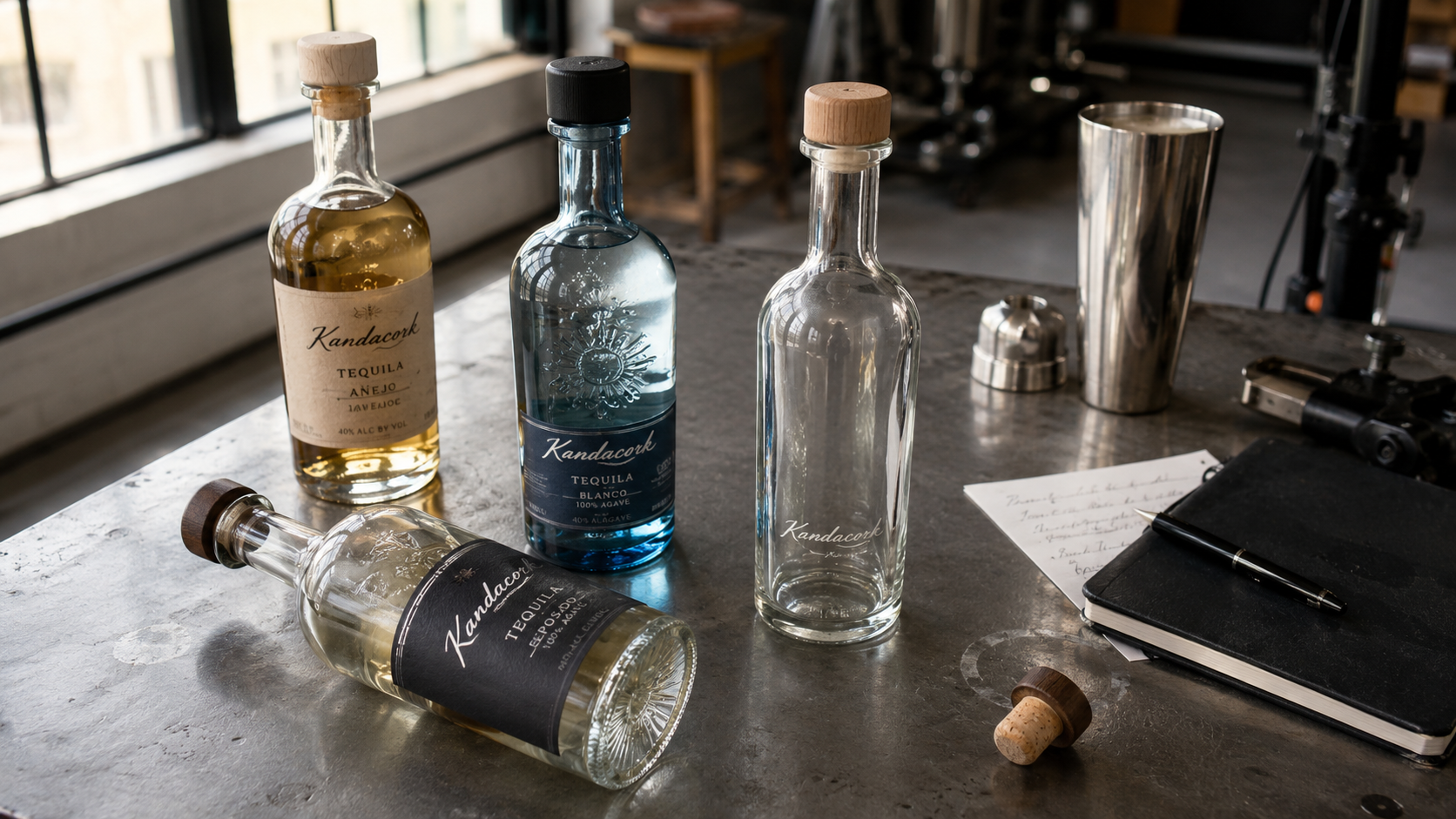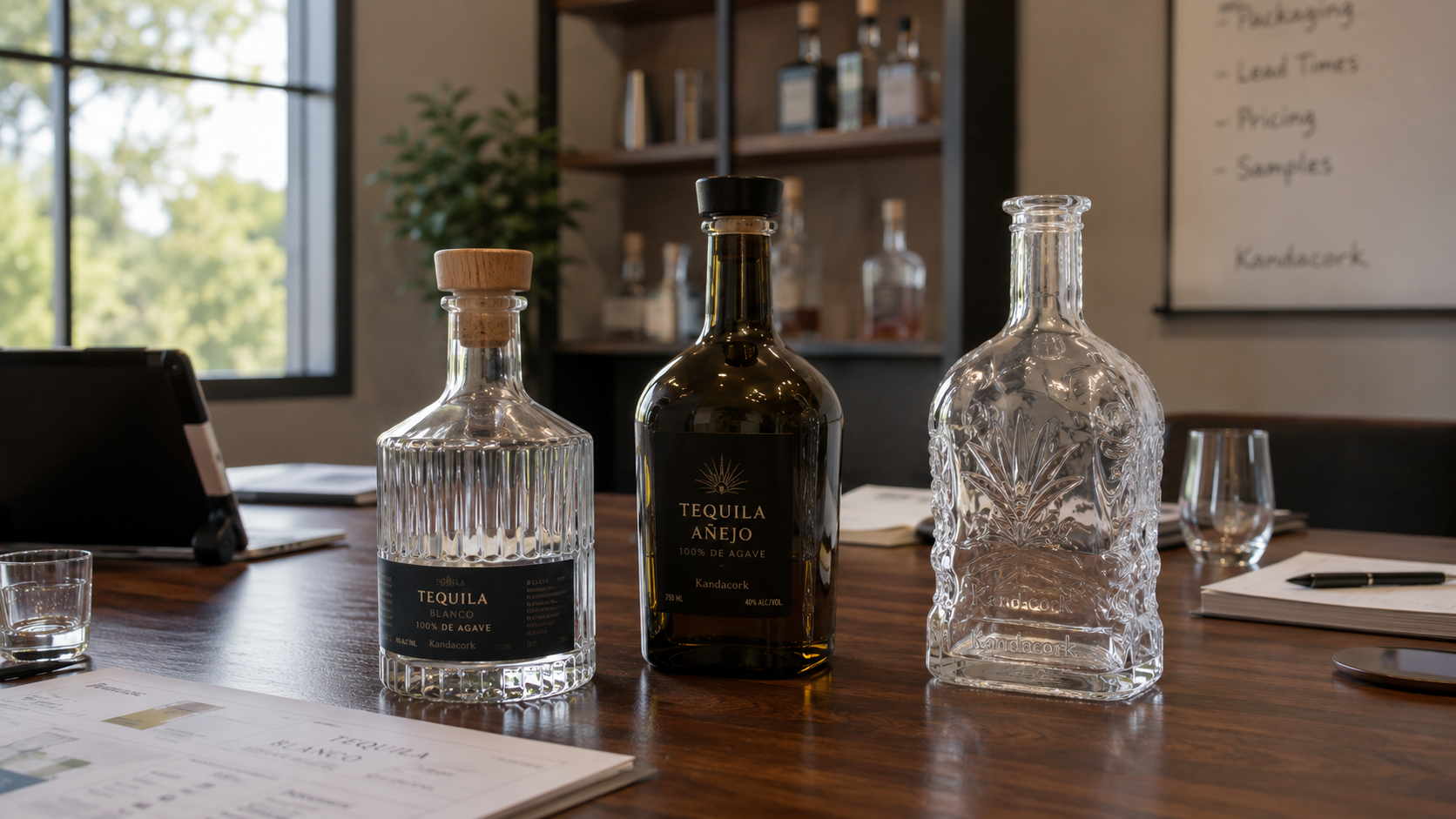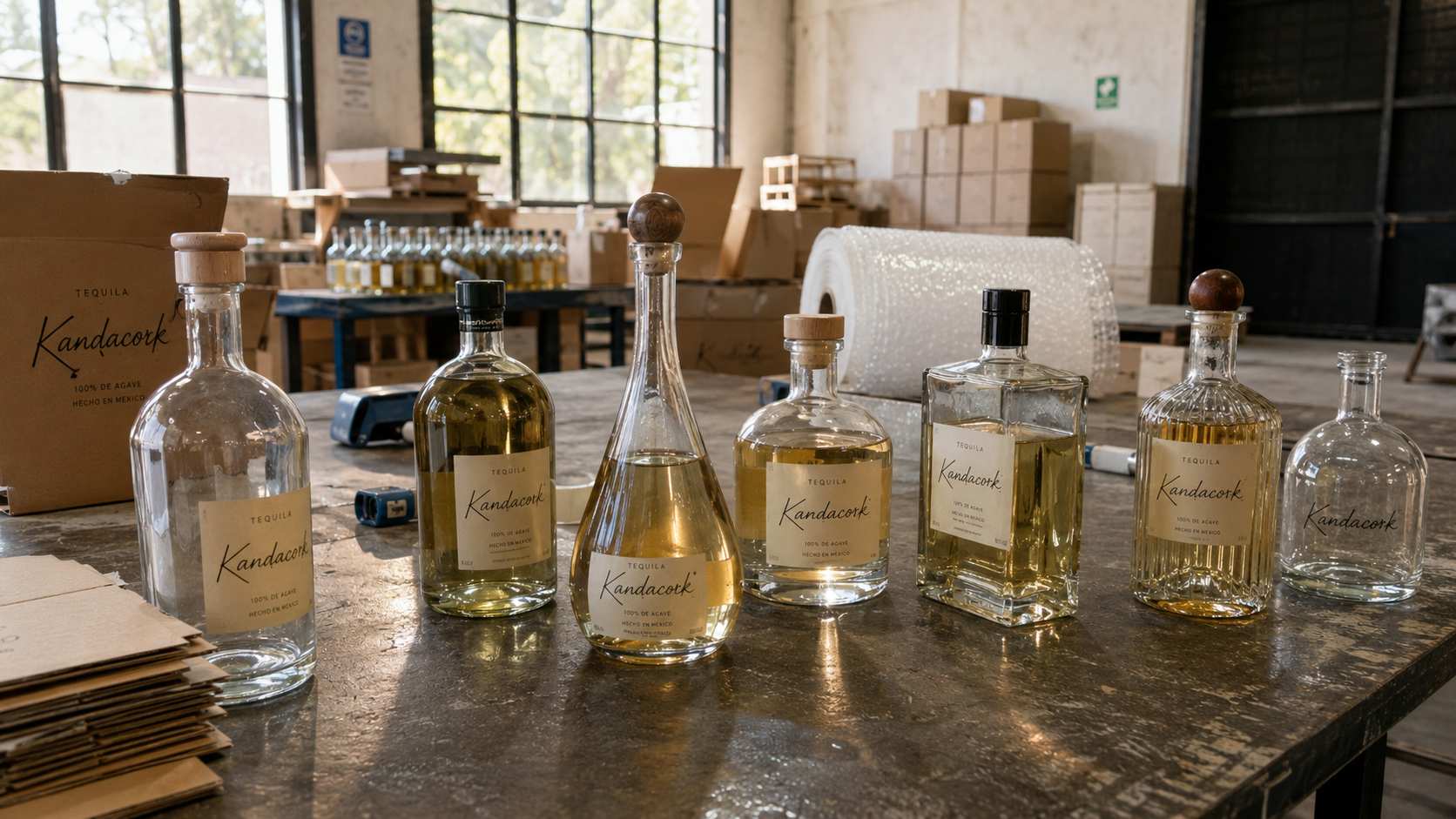
What Are the Best Wooden Bar-Top Stopper Wood Types?
The most common wooden bar-top stopper wood types are beech and birch because they machine smoothly, finish consistently, and support scalable production for spirits bottles. Maple, oak, walnut, and bamboo are also used when brands need a more refined, heritage, luxury, or sustainability-focused closure design.
For most whisky, rum, gin, vodka, tequila, brandy, liqueur, and craft spirits projects, beech is the safest all-around choice. It offers a clean grain, strong finishing flexibility, and reliable performance for custom logo decoration. Birch is also practical for light, minimalist, and high-volume bottle closure programs.
The best wooden stopper is not selected by wood species alone. It is created by matching the wood type, surface finish, cap shape, cork or synthetic shank, bottle bore, spirits category, and branding method as one complete closure system.
Why Wood Type Matters in Premium Bar-Top Closures
A wooden bar-top stopper is more than a small packaging component. It affects how the bottle looks on the shelf, how the consumer feels when opening it, and how clearly the brand communicates quality. For premium spirits, the stopper often becomes part of the drinking ritual.
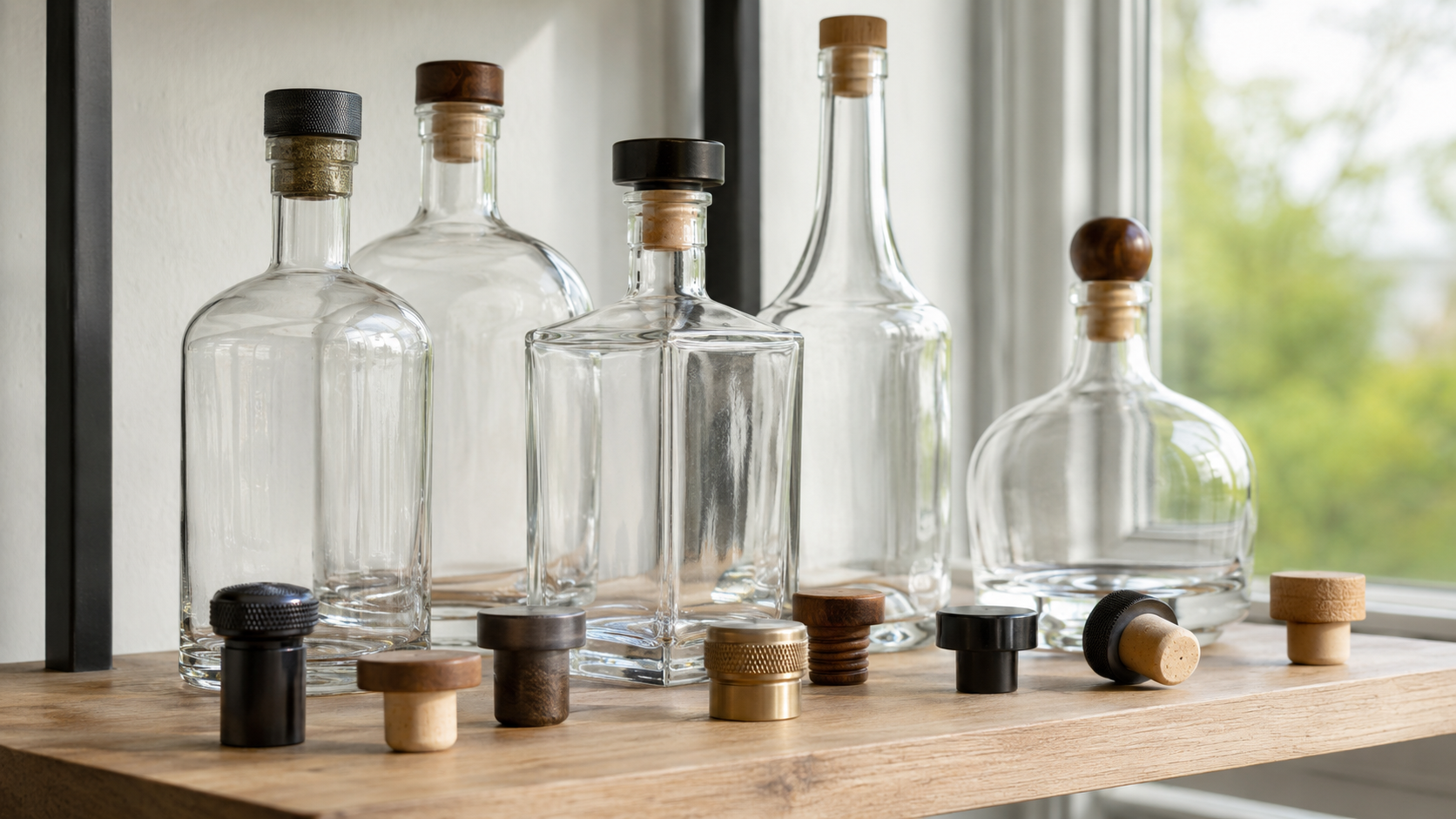
A dark walnut-finish stopper can make a whisky bottle feel mature and collectible. A pale beech or birch stopper can help a gin or vodka bottle feel clean, botanical, and modern. A rustic oak-style finish can support tequila, mezcal, rum, and craft spirits with a more handmade story.
This is why many brand owners work with a specialist closure supplier such as Kandacork Closures instead of treating the stopper as a generic accessory. The right closure needs to look premium, fit the bottle correctly, work on the filling line, and remain consistent across repeat orders.
The wood head is the visible branding component. The shank is the functional sealing component. If the wood top looks premium but the shank does not fit the bottle correctly, the package may suffer from leakage, difficult opening, inconsistent insertion, or poor consumer experience.
Quick Recommendation: Which Wood Type Should You Choose?
| Buyer Need | Best Wood Option | Why It Works |
|---|---|---|
| Best all-around choice | Beech | Smooth, versatile, cost-effective, and easy to finish |
| Best clean modern look | Birch or maple | Pale tone and minimalist appearance |
| Best heritage spirits look | Oak | Strong association with barrels, aging, and craft spirits |
| Best luxury appearance | Walnut or walnut finish | Dark premium visual impact |
| Best cost-controlled premium look | Beech with walnut finish | Premium appearance with practical production cost |
| Best sustainability story | Bamboo or FSC-certified wood | Supports eco-positioning when documentation is available |
| Best for laser engraving | Beech, birch, maple | Light surface improves logo contrast |
| Best for high-volume OEM production | Beech or birch | Reliable machining and finish consistency |
Most buyers choose beech for custom wooden bar-top stoppers because it balances cost, finish quality, machining stability, and production flexibility. Birch is a strong alternative for clean, light packaging. Oak and walnut are better for premium storytelling, while bamboo and certified wood options can support sustainability-focused branding.
What Is a Wooden Bar-Top Stopper?
A wooden bar-top stopper, also called a wood T-top closure, bar-top cork, wood head cork stopper, or wooden bottle stopper, is a resealable closure commonly used for spirits packaging.
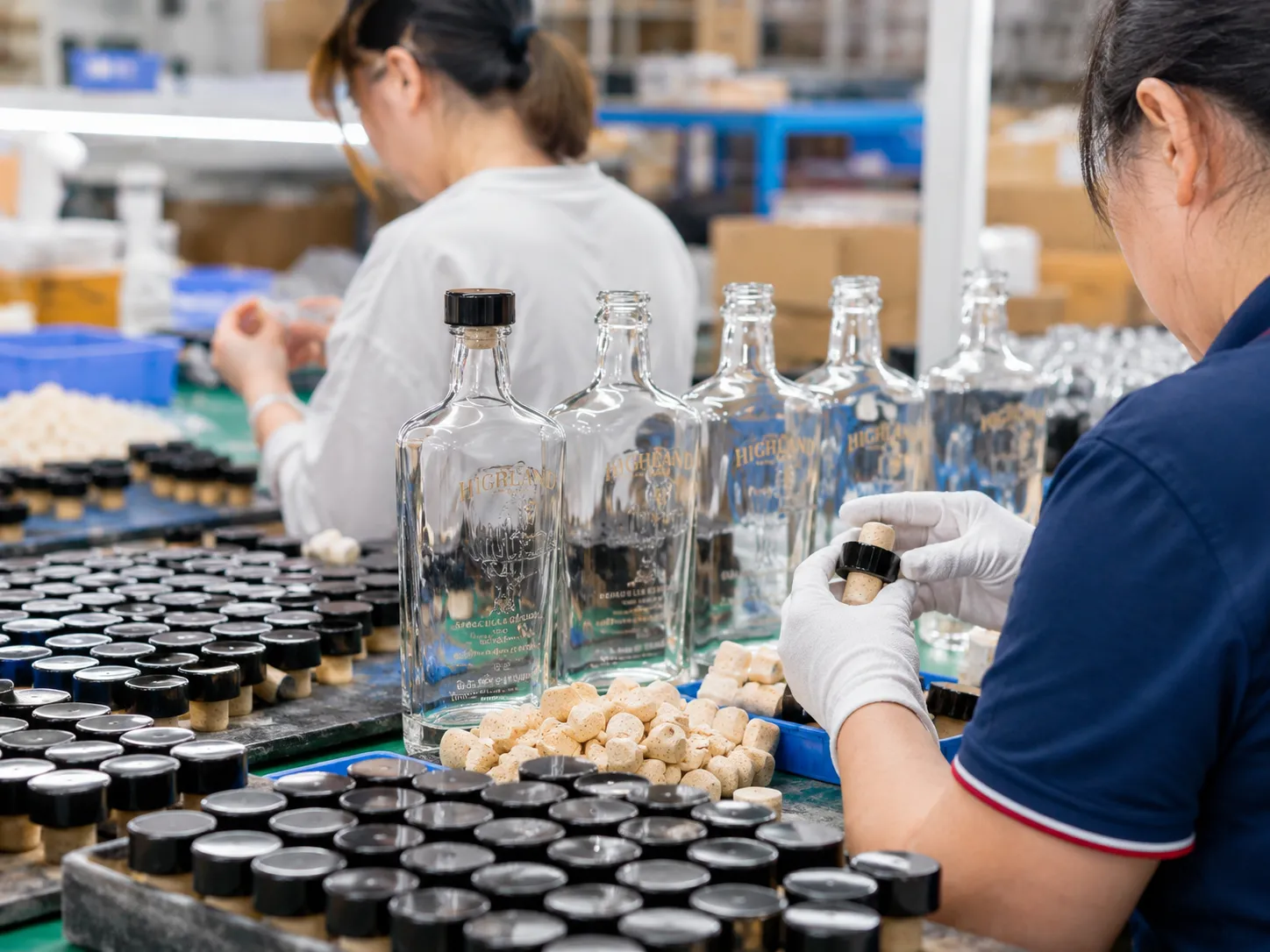
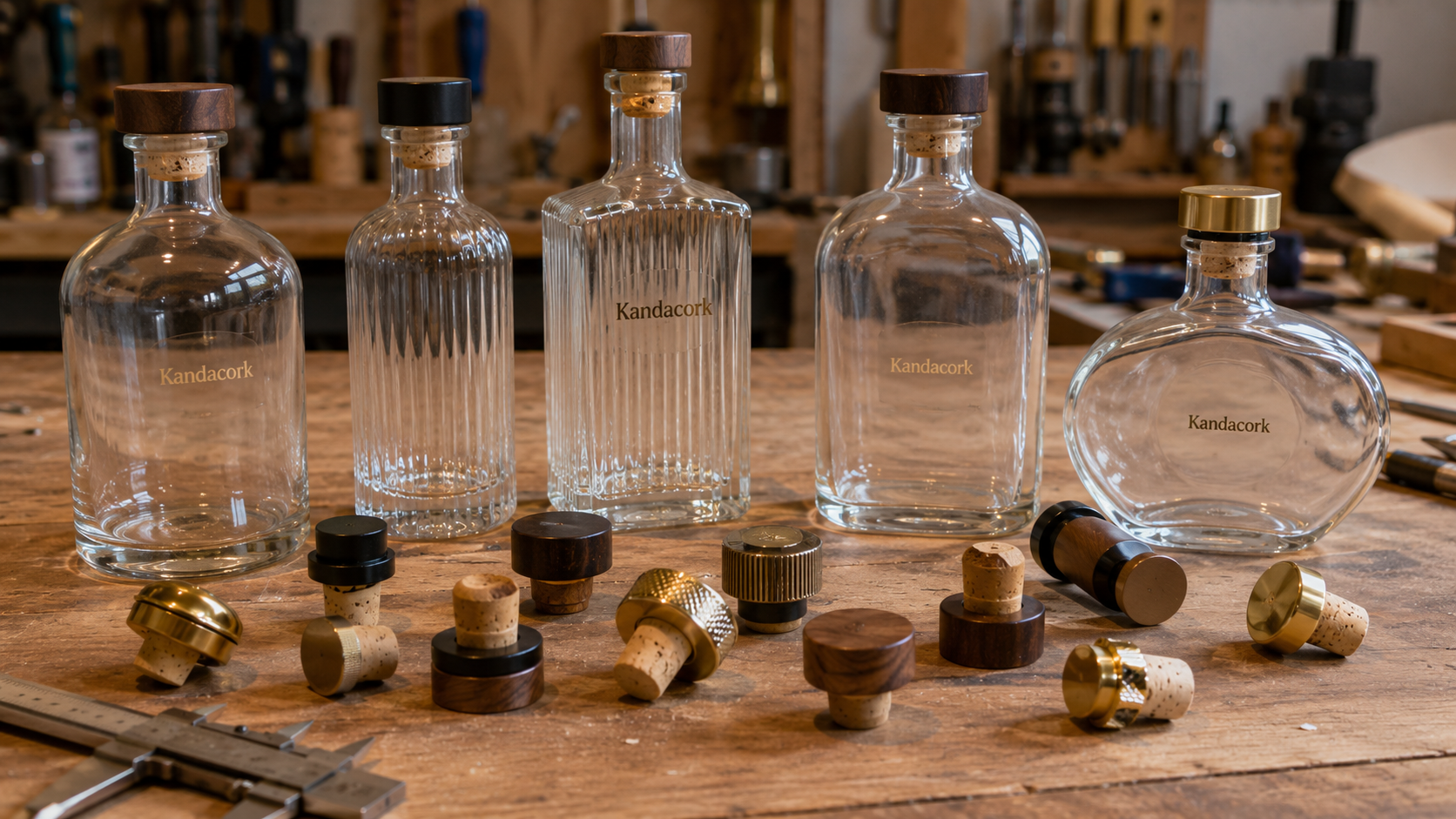
It has two main parts: a wooden top or cap used for grip, branding, and visual presentation, and a cork, agglomerated cork, micro-agglomerated cork, or synthetic shank inserted into the bottle neck.
The wooden top does not create the seal by itself. The shank provides the fit and sealing function. This is why spirits brands must evaluate both the visible wood head and the lower shank when choosing wood types for wooden bar-top stoppers.
This closure style is widely used for whisky, rum, gin, vodka, tequila, mezcal, brandy, cognac, liqueurs, and craft spirits because it combines resealability, premium appearance, and strong customization potential. A well-specified stopper also supports production efficiency because cap diameter, shank diameter, bottle bore, and extraction force all affect bottling-line performance.
For buyers comparing different bottle stoppers and closures, the key is to define the closure as a full system rather than choosing the top material alone.
Common Wooden Bar-Top Stopper Wood Types
Beech Wood
Beech is one of the most widely used wooden bar-top stopper wood types for spirits bottles. It has a light natural tone, smooth surface, fine grain, and reliable machining behavior.
Beech is popular because it can be finished in many ways. It can be used with clear varnish, matte stain, glossy stain, black coating, brown coating, walnut-color finish, laser engraving, burned branding, printing, or debossing. This flexibility makes it suitable for both premium and high-volume closure programs.
For whisky, rum, gin, vodka, brandy, liqueur, and private-label spirits, beech often provides the best balance of appearance, cost, availability, and customization performance.
Beech is especially useful when a brand wants one base material that can support multiple SKUs, different bottle families, or seasonal limited editions. If a spirits company needs natural wood for one product, black stained wood for another, and a walnut-color finish for a premium expression, beech can often support all three directions with strong consistency.
Birch Wood
Birch is another practical choice for wooden bar-top stoppers. It usually has a pale color, smooth texture, and clean appearance. It works well for modern, minimalist, and light-toned packaging designs.
Birch can be a strong choice for gin, vodka, botanical spirits, and private-label projects that need consistent production and a natural-looking cap. It also accepts common stains and coatings, although the final result depends on surface preparation, grain consistency, and finish control.
When comparing beech and birch, beech is often selected for broader finish flexibility, while birch is useful when the design direction is clean, pale, simple, and production-oriented.
Maple Wood
Maple has a refined pale tone and subtle grain. It can make a wooden bar-top stopper feel clean, premium, and understated.
Maple is a good option for brands that want a bright, modern closure for gin, vodka, botanical spirits, and limited-edition packaging. It works well with clear varnish, matte coatings, and precise logo marking.
The main consideration is commercial practicality. Maple may cost more or require more sourcing control than beech or birch. For premium projects, however, it can support a more distinctive bottle presentation.
Oak Wood
Oak is strongly associated with barrel aging, whisky, bourbon, rum, brandy, and traditional spirits production. This makes it valuable for brands that want a heritage or craft identity.
Oak has a more visible grain than beech or birch. This can create a natural, mature, and premium look, but it also requires careful finishing. Strong grain variation may affect logo clarity, especially for small text, fine-line icons, or detailed brand marks.
Oak is most suitable when the brand wants an authentic aged-spirit story. It can work well for whisky, bourbon, aged rum, brandy, cognac, and craft distillery packaging.
Walnut and Walnut-Finish Wood
Walnut creates a dark, elegant, and luxury appearance. Real walnut can be used for premium whisky, rum, cognac, brandy, and limited-edition spirits closures.
However, buyers should understand the difference between real walnut and walnut-color finish. Many commercial “walnut” stoppers are made from beech, birch, or another production wood with a walnut-colored stain or coating.
This is not automatically a disadvantage. A walnut finish on beech can deliver a premium dark look at a more practical cost. Real walnut may be better when the brand wants authentic material storytelling and is willing to support a higher closure budget.
Bamboo and Sustainable Wood Options
Bamboo and other responsibly sourced wood options can support sustainability-focused spirits packaging. Bamboo offers a natural appearance and can fit eco-conscious brand positioning.
For any sustainability claim, buyers should request documentation. FSC forest management certification can support responsible sourcing claims when the actual material, chain of custody, and supplier documentation match the brand’s intended statement.
Bamboo and alternative woods should always be tested for machining quality, finish adhesion, logo clarity, and consistency before mass production.
Wood Type Comparison for Spirits Bottle Closures
| Wood Type | Visual Style | Best Application | Decoration Suitability | Commercial Fit |
|---|---|---|---|---|
| Beech | Light, smooth, fine grain | Whisky, gin, rum, vodka, liqueurs | Laser engraving, printing, staining, varnishing | Best all-around OEM choice |
| Birch | Pale, clean, smooth | Gin, vodka, minimalist brands | Engraving, light staining, natural finish | Good for consistent production |
| Maple | Refined, bright, subtle | Botanical spirits, vodka, premium gin | Fine engraving, clear varnish, matte coating | Premium minimalist option |
| Oak | Strong grain, mature look | Whisky, bourbon, rum, brandy | Burned logo, rustic engraving | Best for heritage storytelling |
| Walnut | Dark, elegant, luxury | Cognac, whisky, rum, limited editions | Premium engraving, polished finish | Higher-end material option |
| Bamboo | Natural, eco-focused | Sustainable spirits brands | Simple engraving, natural finish | Best with sourcing documentation |
For buyers building a complete bottle system, the stopper should also match the glass shape, label material, shoulder profile, and closure line. A minimalist gin bottle may need a pale wood cap and fine engraving, while an aged rum bottle may benefit from a darker stained stopper, heavier base glass, and a warmer label palette. Brands that are still developing bottle concepts can coordinate closure choice with spirits bottle design to keep the full package visually coherent.
Best Wood Types by Spirits Category
| Spirits Category | Recommended Wood Direction | Best Finish Style | Branding Method |
|---|---|---|---|
| Whisky and bourbon | Beech, oak, walnut, walnut finish | Dark brown, black, smoked, barrel-inspired | Laser engraving, burned logo, debossing |
| Rum | Beech, oak, walnut finish | Warm brown, rustic, tropical, aged tone | Burned logo, side engraving, printed emblem |
| Gin | Beech, birch, maple | Pale natural, matte, botanical, clean color | Laser engraving, fine printing |
| Vodka | Birch, maple, beech | White, pale wood, black, minimalist | Clean print, subtle engraving |
| Tequila and mezcal | Oak-style, rustic beech, bamboo | Natural grain, smoked, craft texture | Burned logo, debossing |
| Brandy and cognac | Walnut, walnut finish, polished beech | Dark glossy, satin brown, luxury tone | Engraving, metal insert, premium embossing |
| Liqueurs | Beech, birch, custom color finish | Brand-matched color, glossy or matte | Printing, color bands, logo top |
The best wood type should match both the liquid and the brand position. A high-proof craft bourbon may need a dark, tactile stopper that feels substantial in the hand. A botanical gin may need a lighter cap that supports freshness, clarity, and botanical cues. A luxury cognac or brandy may need a darker polished finish with a more refined top profile.
Beech vs Birch: Which Is Better for Wooden Bar-Top Closures?
Beech is usually the better all-around choice for wooden bar-top stoppers because it is versatile, smooth, and suitable for many finishes and decoration methods. Birch is also a strong option when the brand wants a clean, light, consistent appearance for high-volume or minimalist spirits packaging.
Choose beech if your priority is flexibility. It works well for natural, stained, painted, engraved, and premium closure designs. It can support many spirits categories and is often practical for OEM and private-label packaging.
Choose birch if your priority is a pale, clean, simple, and consistent visual style. Birch can be especially suitable for gin, vodka, botanical spirits, and modern bottle designs.
Before finalizing either option, test actual samples on the production bottle. Wood appearance, coating behavior, logo contrast, shank fit, insertion force, and extraction force should all be reviewed before mass production.
Not sure whether beech or birch fits your bottle design? Kandacork’s wooden bar-top stoppers team can review bottle drawings, finish targets, logo artwork, and spirits category requirements before sample development.
Wood Type vs Wood Finish
Many sourcing mistakes happen because buyers confuse wood type with wood finish.
“Black wood stopper” usually means black-stained or black-coated wood. “Brown wood stopper” often means brown-stained beech or birch. “Walnut stopper” may mean real walnut, but it may also mean walnut-color finish. “Natural wood stopper” may refer to beech, birch, maple, bamboo, or another light wood.
The wood species affects grain, machining, stability, surface texture, and cost. The finish affects color, gloss, logo contrast, tactile feel, and shelf appearance.
Common finish options include natural unvarnished wood, clear varnish, matte stain, glossy stain, black coating, brown coating, walnut-color stain, smoked or burned effects, painted custom colors, and oil-look finishes.
For laser engraving, light wood and matte finishes usually provide better contrast. For premium dark stoppers, black or walnut-color finishes can look elegant, but the logo should be tested to confirm readability.
When a closure needs to match labels, capsules, bottle coating, or gift-pack colors, the finish should be developed as part of the full brand system. Coordinating custom colors and finishes early helps reduce mismatch between stopper samples and final production packaging.
Best Wood Types for Custom Logo Decoration
Custom logo decoration is one of the main reasons brands choose wooden bar-top stoppers. The best wooden bar-top stopper wood types for logo work depend on the decoration method.
Laser engraving works well on beech, birch, and maple because lighter surfaces create stronger contrast. It can also work on stained surfaces, but dark coatings may reduce visibility.
Burned branding is effective for whisky, rum, tequila, mezcal, and craft spirits. It creates a rustic and permanent mark that fits heritage or handmade brand stories.
Pad printing works best when the wood surface is smooth and the coating is stable. It is useful for logos that require color, fine details, or consistent brand identity across multiple packaging components.
Debossing and embossing can create a tactile premium effect, but tooling, wood hardness, and cap shape must be tested carefully.
For limited editions, brands can also consider decorative top inserts, metal coins, epoxy domes, sidewall engraving, or colored rings. More advanced closure decoration and branding can help the stopper connect with the bottle label, capsule, secondary packaging, and retail display.
For laser engraving, dark staining, burned branding, or printed logos, request finish samples before confirming mass production. This helps verify logo contrast, surface smoothness, and brand consistency.
Shank Material: Natural Cork, Agglomerated Cork, or Synthetic
The wood top creates the visual experience, but the shank controls sealing performance. A premium wooden top cannot compensate for a poorly matched shank.
Natural cork has a traditional image and is valued for elasticity and natural material appeal. It can support premium positioning when natural packaging is important.
Agglomerated cork is made from cork granules and is often used for more controlled dimensions and practical production consistency.
Micro-agglomerated cork uses finer cork particles and may provide improved uniformity compared with standard agglomerated cork.
Synthetic shanks are designed for dimensional consistency, low cork dust, and stable production performance. They can be suitable for brands that need predictable insertion and extraction behavior. Buyers comparing cork and synthetic inserts can also review synthetic bottle stoppers when dimensional repeatability, clean appearance, and line stability are priorities.
The right shank depends on bottle bore, alcohol content, storage conditions, production speed, closure budget, and target market. For spirits packaging, sample testing is essential.
Important Product Attributes for Custom Wooden Stoppers
When requesting OEM wooden stoppers or private-label spirits closures, buyers should define both visual and technical attributes.
Key product attributes include cap diameter, cap height, cap shape, wood species, finish color, gloss level, logo method, shank diameter, shank length, shank material, bottle bore compatibility, bottle neck finish, insertion force, extraction force, pull-out force, MOQ, sample testing requirements, and export carton specifications.
These details help a supplier understand whether the project requires a standard wooden bar-top stopper, a custom logo wooden stopper, or a fully customized spirits bottle closure.
For brands that are still adjusting bottle shape, glass color, neck finish, and stopper style together, working with a broader custom glass packaging partner can help prevent design conflicts between the bottle, closure, label, and outer packaging.
Manufacturing and Quality Control Details Buyers Should Know
Wood is a natural material, so moisture control is important. If wood is too dry, too wet, or poorly conditioned, it may crack, shrink, expand, or distort during storage and transport.
Surface sanding also matters. A poorly sanded wood top can feel rough, absorb stain unevenly, or produce inconsistent logo results. Smooth sanding supports better coating adhesion and a more premium hand feel.
Coating quality should be checked carefully. A finish should not peel, chip, transfer color, or create unwanted odor. For beverage packaging projects, buyers should confirm that coatings, inks, adhesives, and other components are suitable for the intended packaging environment. The FDA food-contact packaging guidance explains that packaging components and substances that contact food can fall within food-contact considerations.
Bottle-fit testing is one of the most important steps. Small differences in bottle bore can change insertion force, extraction force, leakage risk, and user experience. The stopper should be tested with the actual production bottle, not only a reference bottle.
Key quality control points include wood moisture control, grain consistency, cap diameter tolerance, cap height tolerance, surface sanding quality, stain consistency, varnish consistency, logo position, logo clarity, adhesive bonding strength, shank diameter tolerance, shank length tolerance, insertion force, extraction force, pull-out force, leak testing, odor control, and carton protection for export shipping.
These details help distinguish a professional spirits closure supplier from a generic stopper vendor.
Common Sourcing Mistakes When Buying Wooden Bar-Top Stoppers
Many buyers select a wooden stopper based only on appearance. This can cause problems later during bottling, shipping, or retail use.
A common mistake is choosing a wood color without confirming the actual wood species. “Walnut color” and real walnut are not the same. “Black wood” and black-coated beech are also not the same.
Another mistake is confirming production without bottle-fit samples. Even if a stopper looks correct, the shank may be too tight, too loose, too short, or incompatible with the actual bottle bore.
Some buyers also overlook logo contrast. A detailed logo may look good on artwork but become unclear after staining, engraving, or coating.
Brands should also avoid making sustainability claims without documentation. Responsible sourcing, FSC certification, packaging recovery claims, and food-contact suitability should be supported with records where relevant.
Wooden Bar-Top Stopper Specification Checklist
Before requesting a quotation, prepare clear technical and branding information. This helps the supplier recommend the right wooden bar-top stopper wood types and avoid unnecessary sample revisions.
Useful quotation details include the bottle neck drawing, bottle bore diameter, required shank diameter, required shank length, wood top diameter, wood top height, preferred wood type, preferred finish color, gloss or matte level, logo artwork, logo method, shank material preference, spirits category, alcohol by volume, target market, annual order volume, sample quantity, MOQ expectation, lead time requirement, and export packaging requirement.
Buyers developing bottle and closure systems together should also review secondary packaging, shipping cartons, market positioning, and sustainability goals. For brands moving toward lighter or lower-impact packaging formats, eco glass packaging may influence the closure’s weight, finish, and material story.
Send the bottle neck drawing, target wood finish, logo file, and annual volume to request a custom closure quote with a more accurate stopper recommendation.
Sustainability and Compliance Considerations
Wooden bar-top stoppers can support a natural and premium brand image, but sustainability and compliance claims should be handled carefully.
For food and beverage packaging sold in Europe, the European Commission’s food-contact materials framework explains that food-contact materials are evaluated because substances may transfer into food and affect safety, taste, smell, or appearance. For spirits closures, this makes material selection, coating review, supplier documentation, and intended-use testing important parts of responsible packaging development.
For international spirits projects, quality systems and documentation can also be important. ISO 22000 food safety management provides a recognized framework for managing food safety hazards across the food chain, which can be relevant when buyers evaluate suppliers, production controls, and quality documentation.
For brands selling distilled spirits in the United States, packaging and branding teams should also consider market-specific requirements. The TTB distilled spirits labeling resources are relevant for brand owners preparing product labels and packaging for U.S. distribution.
A wooden stopper supplier does not replace a regulatory consultant, but a professional closure partner should be able to provide material information, sample records, specification details, and production quality documentation when required.
Why Choose Kandacork Closures for Custom Wooden Bar-Top Stoppers
Kandacork Closures supports spirits brands, bottle suppliers, distilleries, and private-label companies that need custom wooden bar-top stoppers for commercial packaging projects.
The company helps buyers specify the full closure system, including wood type, cap shape, surface finish, logo decoration, shank material, bottle fit, sample testing, and export packaging.
This support is valuable because a closure must perform visually and technically. A beautiful stopper that fits poorly can create leakage, difficult opening, bottling-line issues, or inconsistent consumer experience. A functional stopper that does not match the brand can reduce shelf impact.
Kandacork Closures helps customers compare wooden bar-top stopper wood types and develop closure solutions for whisky, rum, gin, vodka, tequila, mezcal, brandy, cognac, liqueur, and craft spirits bottles.
FAQ
What is the best wood for wooden bar-top stoppers?
Beech is usually the best all-around wood for wooden bar-top stoppers because it is smooth, versatile, easy to machine, and suitable for staining, varnishing, engraving, printing, and custom finishing. Birch, maple, oak, walnut, and bamboo can also be suitable depending on brand style, budget, and sustainability goals.
Why is beech wood commonly used for bar-top cork capsules?
Beech is commonly used because it has a clean appearance, fine grain, smooth texture, and strong finishing flexibility. It can support natural, stained, painted, engraved, and premium closure designs, making it practical for many spirits bottle projects.
Is birch better than beech for wooden T-top closures?
Birch is not always better than beech. Birch is a good choice for clean, pale, minimalist designs and consistent production. Beech is usually more versatile for different finishes, spirits categories, and decoration methods. The better choice depends on the bottle design and brand positioning.
Are black wood stoppers made from black wood?
Most black wood stoppers are not made from naturally black wood. They are usually made from beech, birch, or another production wood that has been stained, painted, or coated black. Buyers should confirm whether the supplier is describing the wood species or the surface finish.
What is the difference between real walnut and walnut-color finish?
Real walnut is an actual wood species with a naturally dark and premium appearance. Walnut-color finish usually means another wood, such as beech or birch, has been stained or coated to look like walnut. Both can work, but they have different cost, sourcing, and storytelling implications.
Which wood type is best for laser engraved bar-top stoppers?
Beech, birch, and maple are often strong choices for laser engraved wooden bar-top stoppers because their lighter surfaces can create better logo contrast. Dark stained or black coated stoppers can also be engraved, but logo visibility should be tested before production.
Can wooden bar-top stoppers be used for high-proof spirits?
Wooden bar-top stoppers can be used for high-proof spirits when the shank material, adhesive, coating, and bottle fit are suitable for the product. The wooden top mainly affects appearance and grip, while sealing performance depends on the shank and bottle-neck compatibility.
What is the difference between the wooden top and the cork shank?
The wooden top is the visible cap used for grip, branding, and decoration. The cork or synthetic shank is the lower part inserted into the bottle neck to provide sealing performance. Both parts must be specified correctly for a reliable spirits closure.
Can Kandacork Closures make custom logo wooden stoppers?
Kandacork Closures can support custom logo wooden stoppers using decoration options such as laser engraving, burned branding, pad printing, debossing, sidewall decoration, custom colors, and special cap shapes, depending on the project requirements.
What information is needed to quote custom wooden bar-top stoppers?
A supplier usually needs the bottle neck drawing, bore diameter, shank size, wood top size, preferred wood type, finish, logo artwork, shank material, order quantity, target market, and sample requirements. These details help create accurate pricing and reduce development delays.
Conclusion: Choose Wood Type, Finish, and Shank as One Complete Closure System
The best wooden bar-top stopper is not chosen by wood species alone. It is developed by matching wood type, surface finish, cap shape, logo method, shank material, bottle bore, spirits category, target market, and brand positioning.
For many spirits brands, beech is the most versatile choice. Birch is strong for clean and minimalist packaging. Maple can support refined premium designs. Oak works well for barrel-aged and heritage spirits. Walnut and walnut finishes create luxury appeal. Bamboo can support sustainability-focused packaging when sourcing documentation is available.
If your brand is developing whisky, rum, gin, vodka, tequila, mezcal, brandy, cognac, liqueur, or craft spirits packaging, choosing the right wooden bar-top stopper wood types can improve shelf appeal, consumer experience, and packaging reliability. The strongest result comes from treating the closure as part of the full bottle system: wood top, shank, finish, decoration, bottle fit, and export-ready quality control.