Bar-top stopper manufacturing involves more than attaching a top to a shank. This guide explains the main production steps, including material selection, tooling, finishing, logo application, shank assembly, quality inspection and export packing for liquor brands.
Custom Spirits Stoppers for Distilleries, Bottlers and Packaging Brands
A professional spirits stoppers manufacturer helps buyers solve practical packaging problems: stopper fit, sealing reliability, decoration consistency, material selection, MOQ planning and stable delivery. For spirits brands, the closure is both a functional component and a visible part of the product identity.
Distilleries and packaging buyers often face issues such as loose fit, difficult insertion, inconsistent color, damaged decorative tops, cork dust, poor logo definition or delayed sampling. These problems can affect production efficiency, retail presentation and buyer confidence.
Kandacork supports OEM and ODM closure development for spirits packaging projects. Buyers can provide bottle drawings, bottle samples, inner neck diameter, logo artwork, preferred material, order quantity and destination market. Based on these details, the closure structure, shank material, decoration method and export packaging can be matched to the project.
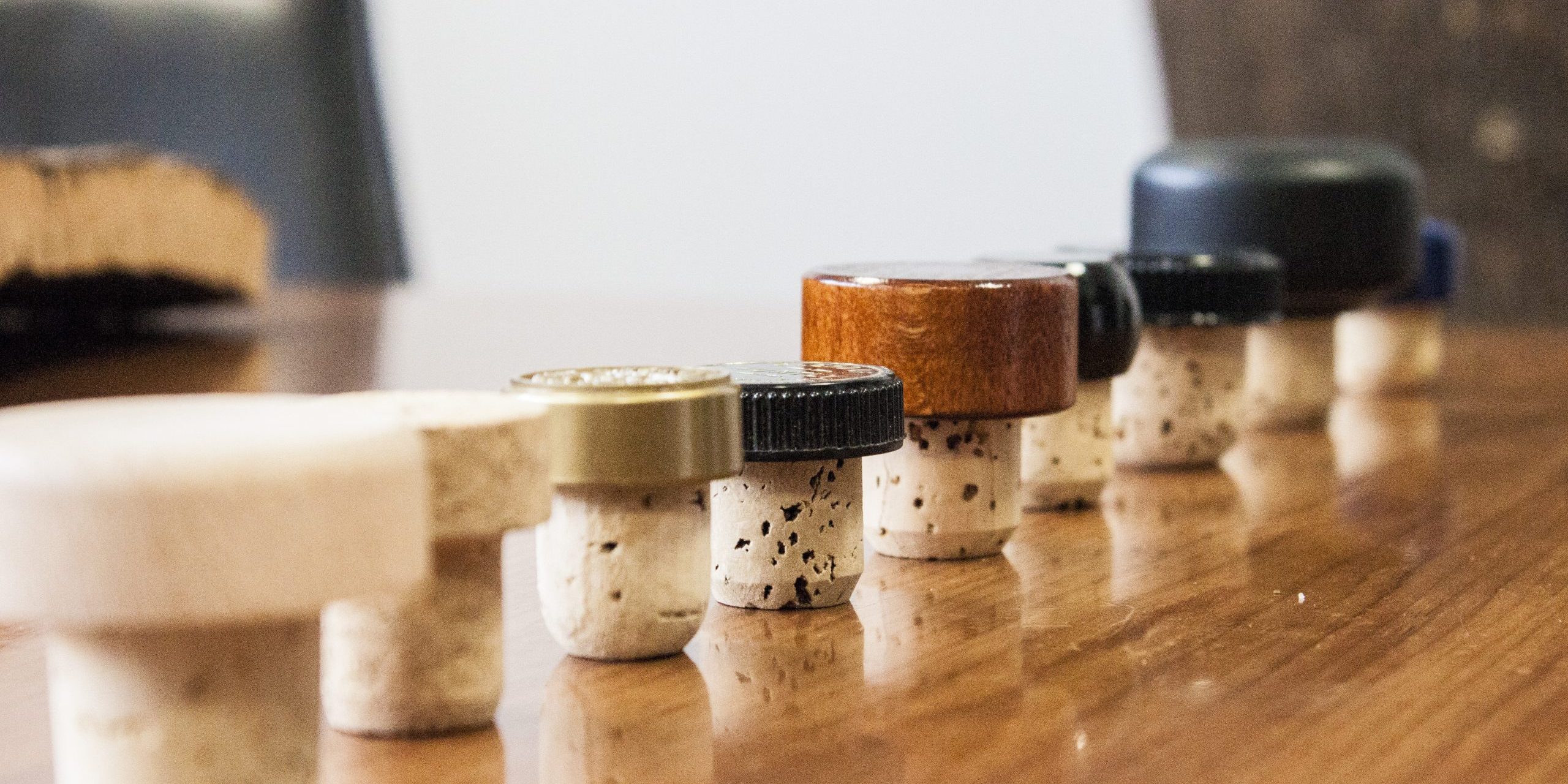
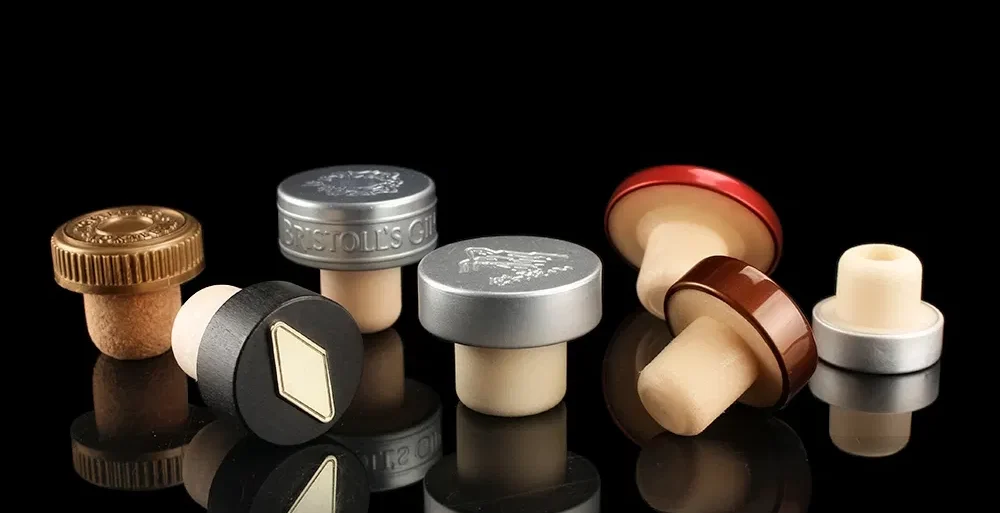
A spirits stoppers manufacturer designs and produces closures for liquor bottles, including bar-top stoppers, cork stoppers, synthetic cork stoppers, wooden stoppers, aluminum stoppers, glass stoppers and metal decorative closures. A qualified manufacturer should also support bottle fit testing, logo customization, sample development, quality control and bulk production.
Product Categories for Custom Spirits Stoppers
Kandacork supplies a broad range of bottle stoppers and closures for spirits brands that need both functional sealing and branded presentation. Different product categories are suitable for different spirits, bottle shapes and price positions.
| Product Category | Main Application |
|---|---|
| Wooden bar-top stoppers | Whiskey, rum, brandy, tequila and craft spirits |
| Aluminum spirits stoppers | Vodka, gin, tequila and modern liquor brands |
| Synthetic cork closures | High-volume spirits bottling and private-label projects |
| Natural cork shank stoppers | Premium whiskey, cognac, brandy and rum |
| Glass and crystal stoppers | Luxury spirits, gift packaging and limited editions |
| Decorative metal stoppers | Premium tequila, whiskey, cognac and collector bottles |
| Custom molded T-top stoppers | Signature bottle lines and brand-owned closure designs |
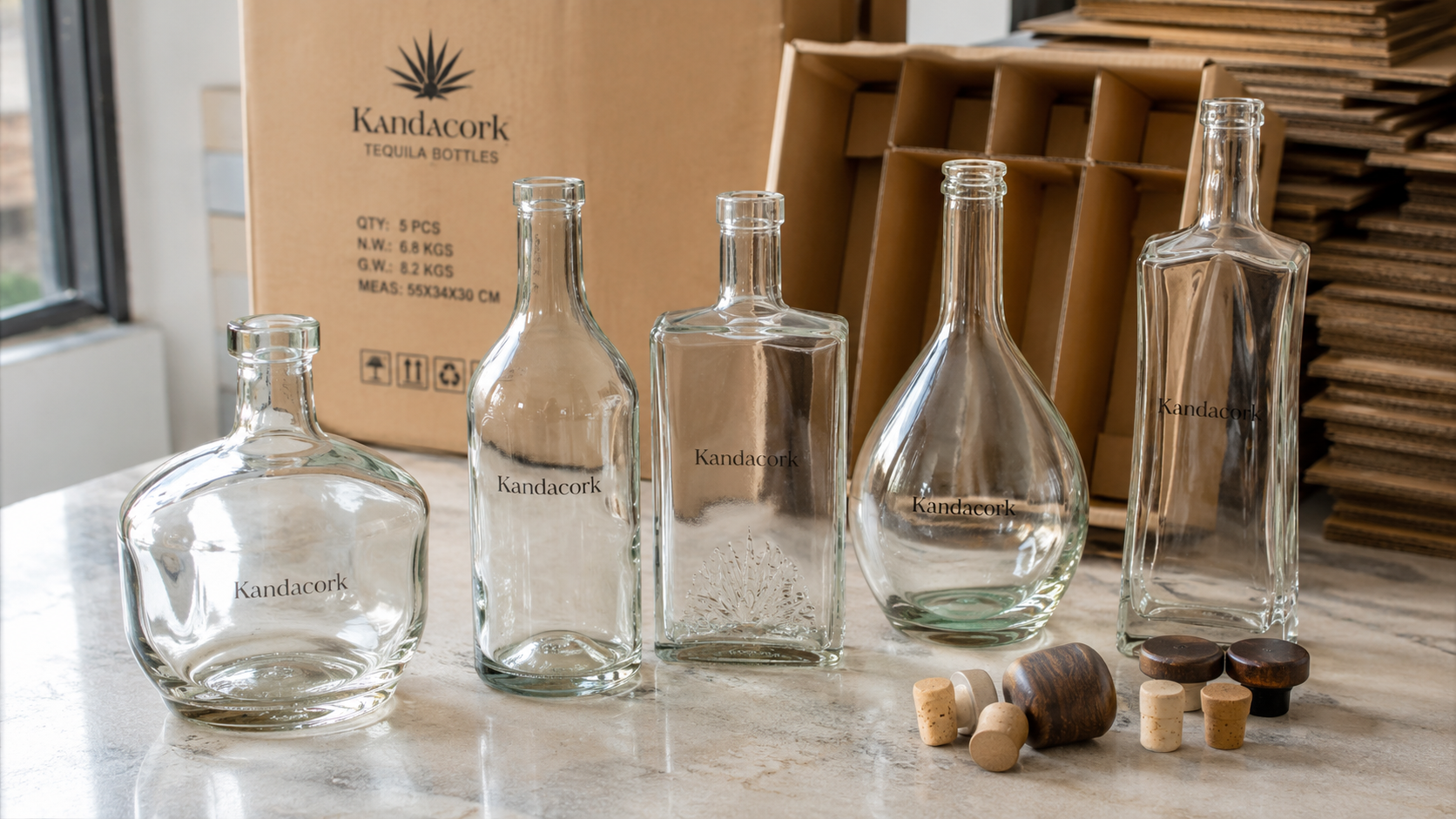
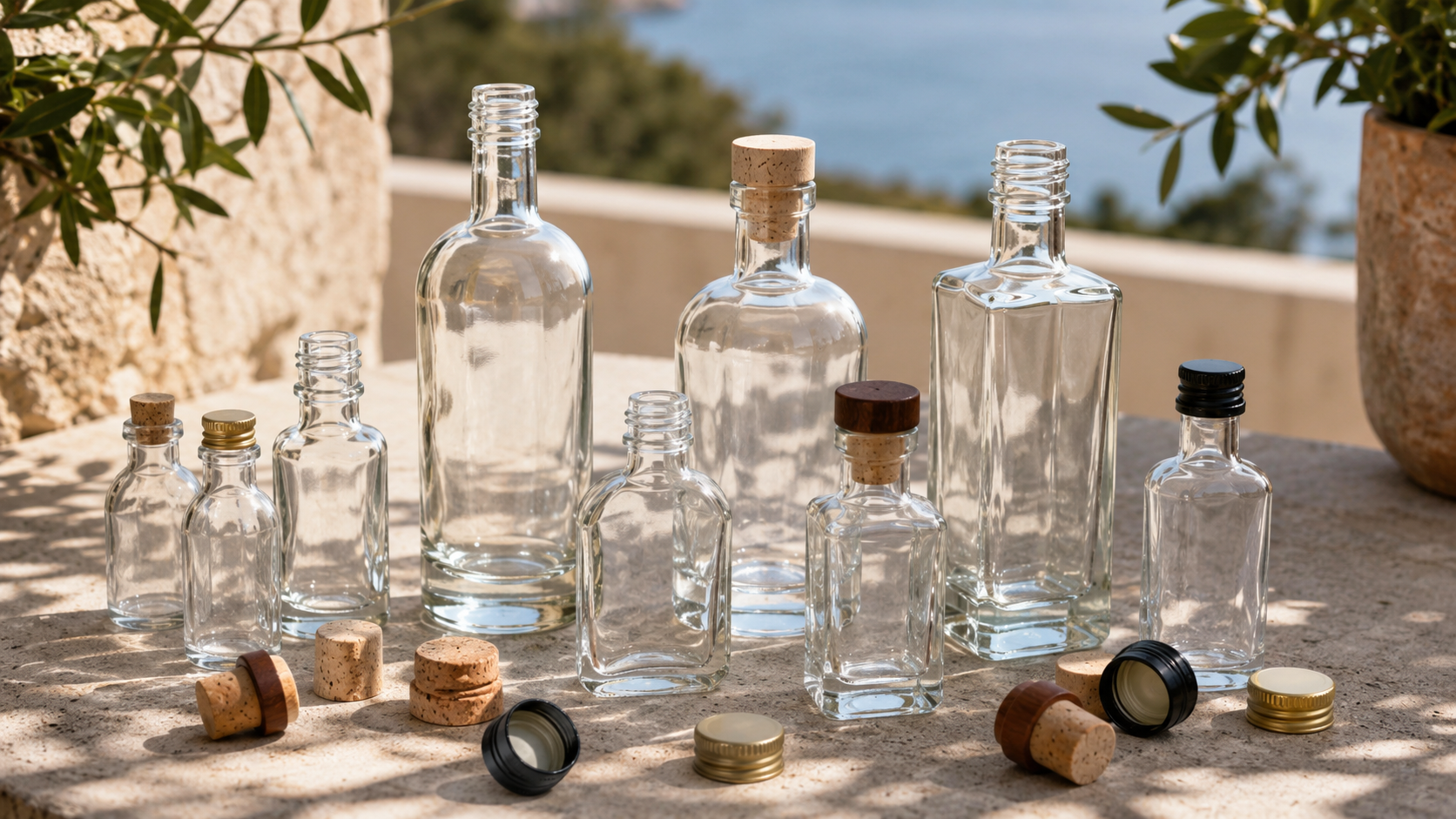
For a complete spirits packaging program, the closure should be considered alongside the bottle structure, decoration zone, label area, capsule system and shipping pack. Buyers developing new bottle formats may also coordinate stopper selection with custom spirits bottles to improve compatibility from the beginning of the project.
Kandacork Manufacturing Capabilities
Kandacork focuses on custom bottle closure manufacturing for spirits brands that need reliable fit, brand-specific decoration and export-ready supply. The goal is to help buyers move from concept to sample approval and then to repeatable bulk production.
| Capability | Available Support |
|---|---|
| Stopper materials | Wood, aluminum, plastic, natural cork, micro-agglomerated cork, synthetic cork, glass, crystal, zinc alloy |
| Closure types | Bar-top stoppers, T-top stoppers, cork shank stoppers, synthetic cork closures, decorative spirits stoppers |
| Custom decoration | Laser engraving, printing, embossing, debossing, hot stamping, metal badge, color matching |
| OEM/ODM support | Custom top shape, material pairing, logo design, surface finish, packaging requirement |
| Sample support | Existing samples, custom samples, bottle fit review, logo sample confirmation |
| Quality inspection | Dimension check, visual inspection, logo position check, fit testing, bonding check, packing inspection |
| Buyer support | Bottle matching, quotation, sample approval, bulk order communication, export packing |
Send your bottle drawing or inner neck diameter to Kandacork for stopper size recommendation before confirming a bulk order.
Technical Specifications for Custom Spirits Stoppers
Technical specifications matter because spirits bottles vary by neck finish, inner diameter, closure style and brand positioning. A stopper that works well for a heavy whiskey bottle may not be suitable for a slim vodka bottle or a decorative liqueur bottle.
| Specification Item | Common Options |
|---|---|
| Top material | Wood, aluminum, plastic, glass, crystal, zinc alloy, mixed material |
| Shank material | Natural cork, micro-agglomerated cork, synthetic cork, PE/synthetic material |
| Top shape | Round, flat, mushroom, dome, cylinder, faceted, custom molded |
| Decoration | Laser engraving, printing, embossing, debossing, hot stamping, metal badge |
| Surface finish | Natural wood, stained wood, matte coating, glossy coating, brushed metal, polished metal, anodized color |
| Bottle compatibility | Whiskey, vodka, gin, rum, tequila, brandy, cognac, liqueur and craft spirits bottles |
| Application method | Manual insertion, semi-automatic bottling, automated filling line |
| Custom support | OEM/ODM design, sample development, logo application, custom mold development |
| Packing options | Inner bag, carton, divider, pallet, export-ready packaging |
A strong spirits stoppers manufacturer should not only offer attractive closure designs. It should also help buyers confirm shank size, stopper compression, pull-out feel, visual consistency and packing protection before mass production.
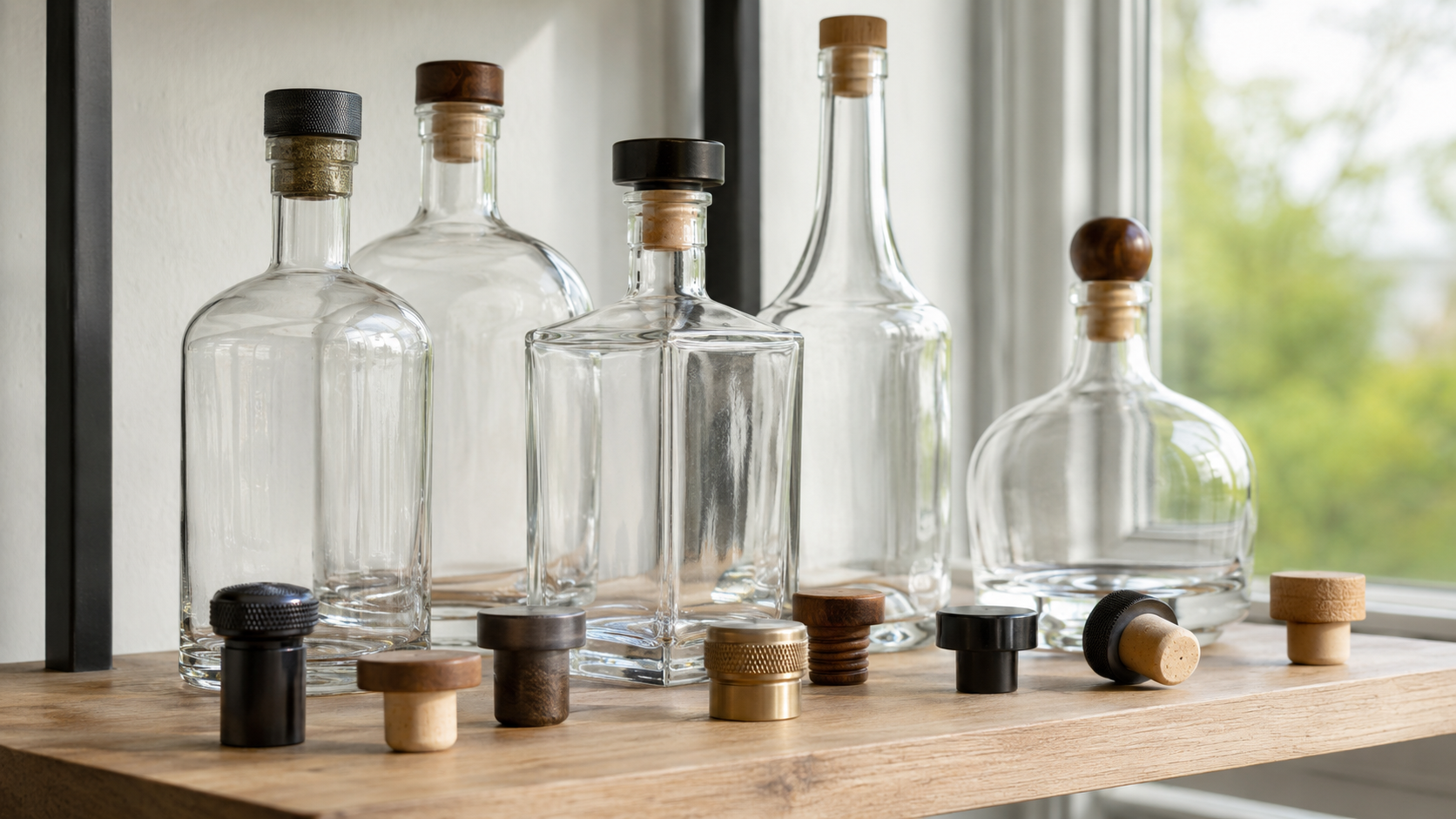
Wooden, Aluminum, Synthetic, Cork, Glass and Metal Stopper Options
Different spirits categories require different closure styles. Kandacork manufactures multiple stopper types so buyers can match the closure to bottle design, retail positioning and consumer experience.
| Stopper Type | Best For | Advantages | Considerations | Custom Options |
|---|---|---|---|---|
| Wooden bar-top stopper | Whiskey, rum, tequila, brandy, craft spirits | Premium feel, natural texture, warm brand language | Natural color variation may occur | Engraving, printing, stain color, custom shape |
| Aluminum stopper | Vodka, gin, tequila, modern spirits | Clean look, durable surface, modern appearance | Higher cost than basic plastic tops | Anodizing, embossing, printing, brushed finish |
| Synthetic cork stopper | High-volume spirits bottling | Stable dimensions, consistent appearance | Less traditional than natural cork | Shank size, color, top pairing |
| Natural cork stopper | Premium and heritage spirits | Classic feel, traditional appeal | Natural material variation | Cork grading, top pairing, logo top |
| Glass or crystal stopper | Luxury spirits, gift sets, limited editions | High visual impact, premium shelf appeal | Fragility and higher cost | Custom mold, decorative shape |
| Metal decorative stopper | Premium tequila, whiskey, cognac, collector bottles | Heavy hand feel, luxury positioning | Requires careful surface protection | Logo badge, plating, custom shape |
Wooden Bar-Top Stoppers
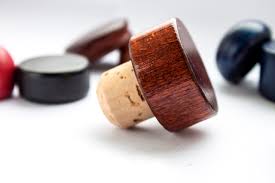
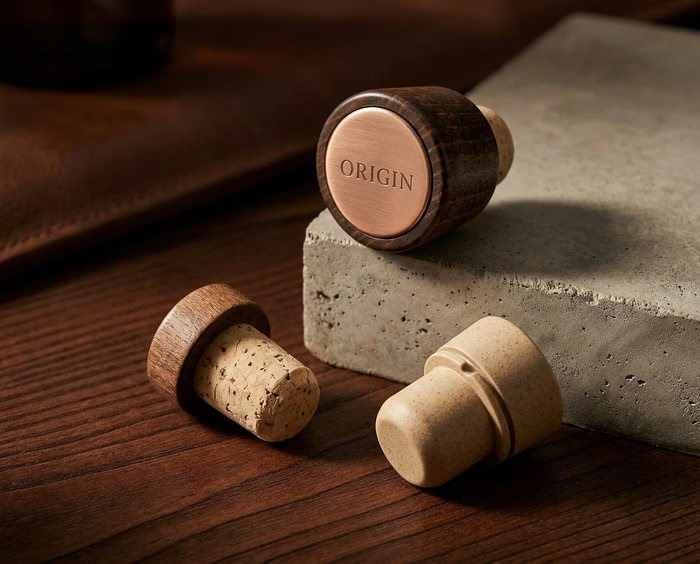
Wooden bar-top stoppers are widely used for whiskey, bourbon, rum, tequila, brandy and craft spirits. They create a warm, premium and traditional appearance. Wood can be customized by shape, stain color, laser engraving, logo printing, debossing or metal badge decoration.
For brands that want a handcrafted, natural or heritage look, wood-top stoppers offer strong shelf impact. They are suitable for small-batch spirits, gift packaging, limited editions and premium product lines.
Aluminum Stoppers
Aluminum bar-top stoppers provide a clean, modern and durable appearance. They are often chosen for vodka, gin, tequila and contemporary spirits brands. Aluminum tops can be anodized, brushed, polished, embossed, printed or color-matched to the bottle and label system.
For brands that need a premium but minimalist closure, aluminum is a strong option. It pairs well with clear glass, frosted bottles, tall bottle shapes and modern label designs.
Synthetic Cork Stoppers
Synthetic cork closures are selected for dimensional consistency, stable appearance and reliable performance in bulk production. They are suitable for larger bottling projects where uniform fit and consistent supply are important.
Synthetic shanks can be paired with wood, aluminum, plastic, glass or metal tops. For brands that need predictable closure behavior and controlled appearance, synthetic cork is often a practical solution.
Natural Cork and Micro-Agglomerated Cork Shanks
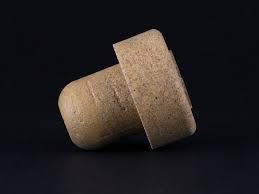
Natural cork and micro-agglomerated cork shanks are commonly used for premium spirits closures. Natural cork provides a traditional look and tactile feel, while micro-agglomerated cork can offer more uniformity.
The Natural Cork Council quality standards describe moisture, dimensional and visual grading practices for cork shipments. For spirits buyers, this reinforces an important point: cork-based closures should be selected and inspected as functional packaging components, not only as decorative details.
Glass, Crystal and Metal Stoppers
Glass, crystal and decorative metal stoppers are used for high-end spirits, gift sets, collector bottles and luxury limited editions. These closures create strong visual differentiation and can be developed together with custom bottle designs.
A luxury stopper should feel intentional. Top diameter, height, edge radius, weight, surface texture and logo placement all influence consumer perception before the bottle is opened.
Best Stopper by Spirit Type
Choosing the right stopper depends on the spirit category, bottle style, price positioning and brand story. This table gives buyers a practical starting point before sampling.
| Spirit Type | Recommended Stopper | Why It Works |
|---|---|---|
| Whiskey / Bourbon | Wood-top cork stopper, metal-top stopper, natural cork shank | Premium hand feel, heritage image, strong shelf presence |
| Vodka | Aluminum stopper, glass stopper, synthetic cork closure | Clean, modern, minimal and high-consistency appearance |
| Gin | Aluminum, glass or colored synthetic closure | Supports botanical, contemporary and premium positioning |
| Rum | Wood, cork, metal or custom decorative stopper | Works well with aged, craft, tropical or natural branding |
| Tequila | Metal, wood, glass or custom molded stopper | Strong identity, gift appeal and premium presentation |
| Brandy / Cognac | Wood, cork, crystal or metal stopper | Classic, elegant and suitable for luxury bottle lines |
| Liqueur | Color-matched stopper, synthetic cork, glass top | Flexible for flavored products and decorative packaging |
For brands coordinating closure design with coating, embossing, printing, foil or bottle graphics, Decoration & Branding support can help align the stopper, bottle and visual identity into one production-ready packaging system.
How to Choose the Right Stopper for a Spirits Bottle
The best stopper is not always the most expensive one. The best stopper is the closure that fits the bottle correctly, supports the brand image, works with the filling process and provides the intended opening experience.
Match the Bottle Neck and Shank Diameter
Bottle fit is the first technical priority. Buyers should confirm the bottle’s inner neck diameter, neck finish, tolerance range and closure application method before ordering custom spirits stoppers.
A bar-top closure usually includes a decorative top and a shank. The shank must enter the bottle neck with enough compression to seal the bottle securely, but not so much that insertion becomes difficult. If the shank is too loose, the stopper may feel unstable or fail to seal properly. If it is too tight, it may slow down production or create a poor consumer experience.
| Buyer Information Needed | Why It Matters |
|---|---|
| Bottle inner neck diameter | Determines stopper shank size and compression |
| Bottle drawing or bottle sample | Confirms physical compatibility |
| Filling method | Helps choose tolerance and packing style |
| Spirit category | Supports material and design selection |
| Logo artwork | Determines decoration method and surface size |
| Target quantity | Affects MOQ, tooling and unit cost |
| Destination market | Helps review packaging and compliance requirements |
Confirm Sealing Performance and Pull-Out Feel
A premium spirits closure should feel secure when inserted and smooth when opened. Pull-out feel is especially important for whiskey, cognac, tequila and other premium categories where the opening moment affects brand perception.
For bulk production, consistency is essential. The stopper should not vary noticeably from bottle to bottle. This is why sample approval, dimensional inspection, bottle fit review and batch control matter before shipment.
Consider Manual Bottling vs Automated Bottling Lines
Craft distilleries may use hand-applied stoppers, while larger bottlers may use semi-automatic or automated insertion systems. The bottling method affects the recommended shank size, tolerance range, top shape and packing orientation.
| Bottling Method | Suitable Closure Considerations |
|---|---|
| Manual insertion | More flexible for craft brands, small batches and sample-stage projects |
| Semi-automatic bottling | Requires more consistent dimensions and practical packing format |
| Automated bottling line | Requires tighter tolerance, repeatable stopper geometry and line testing |
| Gift-pack assembly | Requires surface protection, clean decoration and stable packaging orientation |
If your project includes both bottle development and closure matching, Kandacork Glass can support a broader packaging discussion around bottle structure, decoration, closure fit and export preparation.
Custom Spirits Stopper Options: Logo, Material, Color and Shape
Customization is one of the main reasons buyers search for a spirits stoppers manufacturer instead of buying standard stock closures. A custom stopper turns a functional packaging component into a brand asset.
Logo Decoration
Common logo decoration options include laser engraving, screen printing, pad printing, embossing, debossing, hot stamping, metal logo badges and custom molded symbols.
For premium spirits, logo placement must be clean and consistent. If the top surface is small, the logo may need to be simplified. If the top surface is larger, the brand can use engraving, texture, metal details or multi-material decoration.
Preferred logo artwork formats include AI, PDF, EPS, SVG or high-resolution image files. Vector artwork is usually better for engraving, printing, embossing and hot stamping because it helps preserve clean edges and accurate proportions.
Top Materials and Shapes
Top material determines appearance, hand feel and brand positioning. Kandacork supports wood, aluminum, plastic, glass, crystal, zinc alloy and mixed-material designs.
Common shapes include round tops, flat tops, mushroom tops, dome tops, tall cylindrical tops, faceted tops and custom molded shapes. A custom shape can help a spirits brand create stronger recognition across shelves, bars and gift packaging.
Color and Surface Finish
Surface finish is especially important for spirits branding. A matte black aluminum stopper communicates a different message from a natural oak top, polished silver cap or transparent glass stopper.
Possible finishes include natural wood stain, matte coating, glossy coating, metallic finish, brushed aluminum, polished metal, anodized color, printed color and custom molded color. The closure color should work with the bottle, label, capsule, carton and brand identity.
Custom Mold Development
If standard stopper shapes do not match the brand concept, custom mold development may be required. Custom molding is useful for signature bottle lines, limited editions and private-label spirits brands that want stronger differentiation.
Before mold development, buyers should confirm the target bottle, stopper dimensions, top material, shank material, logo design, order quantity and expected timeline. Sample approval should come before mass production.
Sample Approval and Bulk Production Workflow
A clear project workflow helps reduce mistakes and delays. Kandacork can support buyers from initial concept review to export shipment.
| Project Stage | What Happens | Buyer Input Needed |
|---|---|---|
| Project review | Bottle type, stopper style and target market are reviewed | Bottle drawing, bottle sample or inner neck diameter |
| Material selection | Top material and shank material are recommended | Brand positioning, spirit type, budget range |
| Design confirmation | Logo, surface finish, color and top shape are confirmed | Logo file, color reference, decoration preference |
| Sample development | Existing or custom sample is prepared for review | Sample requirement and delivery details |
| Bottle fit testing | Stopper fit, insertion feel and pull-out feel are checked | Bottle sample if available |
| Bulk production | Approved design moves to mass production | Confirmed order quantity and packing requirement |
| Inspection and packing | Dimensions, appearance, logo and packaging are checked | Shipping marks and delivery instructions |
Buyers who need coordinated glass, closure and accessory development can also explore integrated bottle and closure systems to reduce compatibility risks between separate packaging components.
Common Mistakes When Ordering Custom Spirits Stoppers
Many closure problems happen before production starts. Buyers can reduce risk by confirming technical details early and testing samples before bulk orders.
Common mistakes include:
- Ordering before confirming the bottle inner neck diameter.
- Choosing a stopper material based only on appearance.
- Ignoring manual, semi-automatic or automated bottling compatibility.
- Using complex logos on very small stopper tops.
- Skipping bottle fit testing before mass production.
- Forgetting tamper-evident packaging requirements in the target market.
- Comparing suppliers only by unit price instead of total project reliability.
- Failing to confirm packaging protection for painted, printed, glass or metal tops.
A good custom spirits stopper project should begin with bottle data, material selection, logo review, sample approval and packaging confirmation.
Manufacturing, Quality Control and Bulk Supply
A dependable spirits stoppers manufacturer should combine design flexibility with production discipline. Custom spirits stoppers must look attractive, but they also need stable dimensions, secure bonding, clean finishing, proper packing and predictable delivery.
Factory Production Capabilities
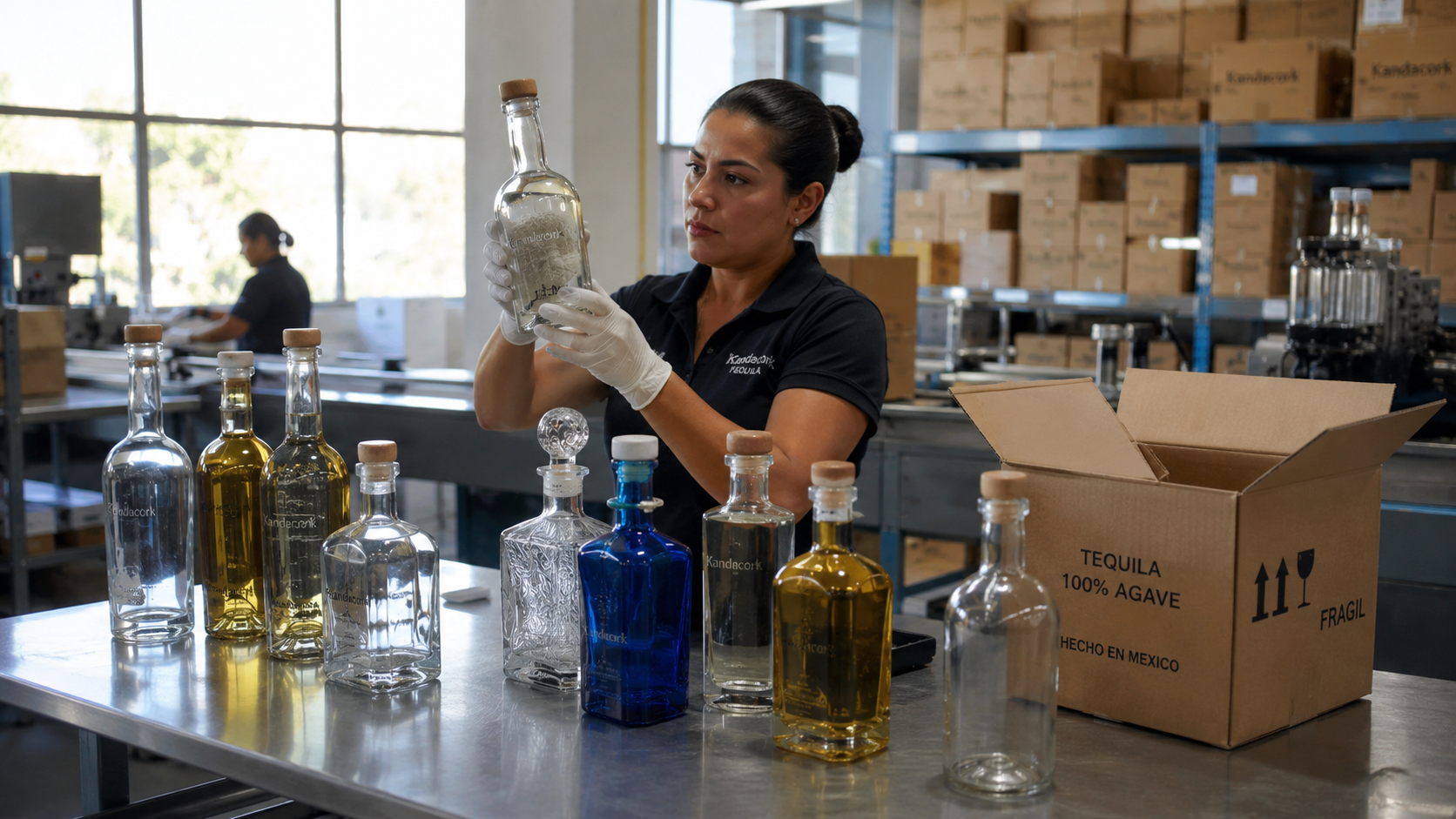
Kandacork supports standard stopper selection, OEM design, custom top development, cork and synthetic shank options, decorative surface treatment, logo application and export packaging. Products can be supplied to spirits brands, distilleries, glass bottle suppliers, packaging distributors and filling companies.
A complete closure project may include material selection, bottle fit review, sample production, surface finishing, logo decoration, quality inspection and export packing. This process helps reduce risk before bulk orders.
Quality Checks Before Shipment
Quality control for spirits stoppers may include dimension inspection, bottle neck fit testing, visual surface inspection, logo position review, color consistency check, shank bonding inspection, pull-out feel evaluation and carton packing inspection.
For broader quality management, ISO standards provide internationally agreed frameworks that help organizations define consistent processes, reduce failures and improve product and service quality. For packaging buyers, this supports the expectation that suppliers should use repeatable inspection steps rather than relying only on visual approval.
Packaging and Export Logistics
Bulk closure packaging should protect decorative tops and shanks from deformation, abrasion, moisture and contamination. Premium metal, glass, painted or printed tops may require additional protection compared with basic synthetic closures.
Export-ready packaging may include inner bags, dividers, cartons and pallets for long-distance transport and warehouse handling. For projects that involve broader glass bottle supply, Kandacork Glass Packaging can support custom glass packaging, matched closures and export coordination.
Compliance, Food Contact and Market Considerations
Spirits closure requirements vary by destination market, bottle type and complete packaging system. Buyers should confirm local regulations with importers, bottlers or compliance advisors before finalizing mass production.
For the U.S. market, the TTB tamper-evident closure guidance states that distilled spirits plants and importers must securely affix a tamper-evident closure or similar device to bottles or containers of distilled spirits. This does not mean every bar-top stopper alone provides tamper evidence. Many spirits packages combine a stopper with a capsule, shrink sleeve, security band, tax strip or other tamper-evident feature.
Food-contact suitability is also important when the shank, liner, coating or other closure component may come into contact with the product. The U.S. FDA explains that food contact substances can include food packaging and its components, along with adhesives, colorants and other substances used in packaging surfaces. Buyers should confirm that relevant materials are appropriate for the intended market and use conditions.
For sustainability planning, the Glass Packaging Institute notes that glass can be recycled endlessly without loss in quality or purity. Closure design should still be considered as part of the complete packaging system, especially when brands want recyclable, refillable or easier-to-sort packaging.
MOQ, Samples, Lead Time and Inquiry Process
When selecting a spirits stoppers manufacturer, buyers should not compare only unit price. The total project cost includes sample development, mold cost, decoration setup, quality risk, production lead time, packaging method and communication efficiency.
MOQ and Samples
MOQ depends on material, top design, shank type, decoration method and whether custom mold development is required. Standard stopper options usually have lower MOQ than fully customized shapes.
Existing samples can usually be prepared faster than custom logo samples. Custom samples are recommended when buyers need to confirm bottle fit, logo placement, color, surface finish, opening feel or packaging compatibility.
Lead Time
Lead time depends on project complexity. A standard stopper with logo printing is usually faster than a custom metal, glass or molded closure. Mold development, color matching, surface finishing, logo decoration and bulk packing can all affect the production schedule.
To reduce delays, buyers should provide complete specifications at the beginning of the project. Confirmed sample lead time, bulk production lead time and MOQ ranges should be reviewed according to the final material, decoration method and quantity.
How to Request a Quote
To receive an accurate quote, send the following information:
| Quote Requirement | Example Details |
|---|---|
| Stopper type | Wood, aluminum, synthetic cork, natural cork, glass, metal or mixed material |
| Bottle information | Inner neck diameter, drawing, bottle sample or bottle photo |
| Top design | Diameter, height, shape and surface finish |
| Shank requirement | Cork, micro-agglomerated cork, synthetic cork or other material |
| Logo decoration | Engraving, printing, embossing, hot stamping or badge |
| Artwork file | AI, PDF, EPS, SVG or high-resolution artwork preferred |
| Quantity | Trial order, regular bulk order or annual demand |
| Market | U.S., EU, UK, Asia-Pacific or other destination |
| Packaging | Bulk carton, divider, pallet or custom packing |
| Delivery destination | Port, warehouse or freight forwarder location |
To start a project, contact the closure team with your bottle drawing, inner neck diameter, stopper idea, logo artwork, target quantity and delivery destination.
FAQ
What does a spirits stoppers manufacturer do?
A spirits stoppers manufacturer designs and produces closures for liquor bottles, including bar-top stoppers, cork stoppers, synthetic cork stoppers, wooden stoppers, aluminum stoppers, glass stoppers and metal decorative closures. The manufacturer may also support bottle fit testing, logo customization, sample development, quality inspection and bulk supply.
How do I choose the right stopper for a liquor bottle?
Choose a liquor bottle stopper based on the bottle’s inner neck diameter, shank material, sealing requirements, brand positioning, filling method and destination market. For premium whiskey, wood or metal tops are common. For vodka and gin, aluminum, glass or synthetic closures are often used.
What is the difference between a bar-top stopper and a cork stopper?
A bar-top stopper usually combines a decorative top with a cork or synthetic shank. A cork stopper may refer only to the cork portion or to a complete cork-based closure. Bar-top closures are common in spirits packaging because they improve both sealing function and brand presentation.
What is the best stopper for premium whiskey?
Premium whiskey brands often choose wood-top, cork-shank, metal-top or mixed-material stoppers. The best choice depends on the bottle shape, brand story, target retail price, desired hand feel and opening experience.
What is the best stopper for vodka or gin?
Vodka and gin brands often use aluminum, synthetic cork, glass or clean modern bar-top closures. These materials support a sharp, contemporary appearance and can be matched with clear, frosted or colored glass bottles.
Can Kandacork help if I only have a bottle sample?
Yes. A bottle sample can help Kandacork recommend stopper size, shank material and closure structure. If a technical drawing is also available, the sampling and quotation process can be faster.
Do spirits stoppers need tamper-evident packaging?
In many markets, spirits packaging may require tamper-evident features. A bar-top stopper may need to be combined with a capsule, shrink sleeve, security band or another tamper-evident component. Buyers should confirm final requirements for the destination market and complete packaging system.
What information should I provide for a custom spirits stopper quote?
Provide the bottle inner neck diameter, bottle drawing or sample, stopper material, top shape, logo artwork, decoration method, order quantity, packaging requirement and delivery destination. These details help the manufacturer recommend a suitable stopper and quote accurately.
What logo file format is best for custom spirits stoppers?
Vector files such as AI, PDF, EPS or SVG are preferred for custom spirits stoppers because they help preserve logo clarity during engraving, printing, embossing or hot stamping. High-resolution image files may also be useful for reference.
Should I test samples before bulk production?
Yes. Sample testing helps confirm bottle fit, stopper appearance, logo placement, insertion feel, pull-out feel and packaging protection before mass production. It is especially important for custom molded, painted, glass, metal or premium decorative stoppers.
Why Choose Kandacork as Your Spirits Stoppers Manufacturer?
Kandacork helps spirits brands move from closure idea to production-ready packaging. Instead of offering only standard items, Kandacork focuses on bottle compatibility, custom design, sample review, practical manufacturing and bulk supply.
As a spirits stoppers manufacturer, Kandacork supports custom bar-top stoppers for whiskey, vodka, gin, rum, tequila, brandy, cognac and liqueurs. Available options include wood, aluminum, synthetic cork, natural cork, glass, crystal, plastic and metal closures.
Kandacork can help with logo engraving, printing, embossing, hot stamping, custom decorative finishes, stopper size recommendations, OEM/ODM closure development, export packaging and international project communication.
A stopper is a small component, but it can strongly influence how consumers judge a bottle before tasting the spirit. The right stopper helps protect the product, support the brand image and create a more memorable opening experience.
Contact Kandacork for custom spirits stoppers, bottle matching support, sample development and OEM manufacturing solutions for your next liquor packaging project.